Ontologies for Clinical
Research
Wolfgang Kuchinke
CRI Meeting 10.6.2016
Duesseldorf, Germany
What are Ontologies?
• Representation with names and
categories, properties and relations
between concepts and entities of a
domain of knowledge
• Way of showing the properties of a
subject area and how they are related
From Wiki
Purpose
• Limitation of the complexity of
information and organization of data
into information and knowledge
• New ontologies improve the process
of problem solving
• Ease the combination of knowledge
from different domains
W. Kuchinke (2016)
Main Components
• Individuals
– Instances or objects
• Classes
– Sets, collections, concepts, objects
• Attributes
– Aspects, properties, features, characteristics or parameters
• Relations
– Ways in which classes and individuals are related to one
another
• Restrictions
– Descriptions of what must be true in some assertions
• Rules
– Statements in the form of if-then statements that describe
logical inferences that can be drawn from an assertion
From Wiki
W. Kuchinke (2016)
OBO Foundry
• The Open Biological and Biomedical Ontologies
(OBO) Foundry is a group dedicated of building
and maintaining ontologies of life sciences
• Establishment of principles for ontology
development and a suite of interoperable
reference ontologies in the biomedical domain
• Structured reference for terms of different
research fields and their interconnections
– ex: phenotypes of different species
• http://www.obofoundry.org/
From Wiki
W. Kuchinke (2016)
Open Biological and
Biomedical Ontologies
• Effort to create ontologies for the use in
biological and medical domains
• The creation of OBO in 2001 was inspired by
the efforts of the Gene Ontology project
• OBO forms part of the resources of the U.S.
National Center for Biomedical Ontology
(NCBIO) and the NCBO's BioPortal
• It is an initiative by OBO Foundry
– Ontologies that form part of the OBO Foundry have
to adhere to the OBO principles and have to pass a
series of reviews
Web Ontology Language
• The Web Ontology Language (OWL) is a family
of knowledge representation languages
• Ontologies are defining the structure of
knowledge
– Suitable knowledge representation is necessary
– Nouns represent classes of objects and verbs
represent relations between objects
• The OWL languages are characterized by
formal semantics
– XML standard for objects called Resource
Description Framework (RDF)
From Wiki
Ontology-Based Data
Integration in Clinical Research
• Data from electronic medical records
comprise structured but often uncoded
elements, which often are not using
standard terminologies
• Need to reuse and share such data for
secondary research purposes
• Identification of relevant data elements
• Ontology based connection of medical
concepts of source systems and target
systems for data sharing
W. Kuchinke (2016)
Ontology for Clinical Trial
Data Integration
• Integrated clinical terminologies are necessary
for an efficient clinical trial system
• The design and outcomes of a clinical trial can be
improved through use of clinical terminologies
• Heterogeneity exists between clinical
terminologies and clinical systems
– Problem of integrating local clinical terminologies with
globally defined concepts and terminologies
– Often ambiguous, inconsistent and overlapping clinical
terminologies
• Use of formal ontologies to overcome these
challenges
W. Kuchinke (2016)
Matching Patient Records to
Clinical Trials
• Need to bridge the semantic gap between
raw patient data, such as laboratory tests or
medication data, and the way the clinician
interprets these data and uses them for
health care and research
• Matching patients to clinical trials can be
seen as a type of semantic retrieval
• One way is the integration of large ontologies
(e.g. SNOMED)
• Dealing with noisy and inconsistent data
W. Kuchinke (2016)
Ontologies for clinical
research
• Clinical Trial Ontology (CTO)
• Ontology of Clinical Research (OCRe)
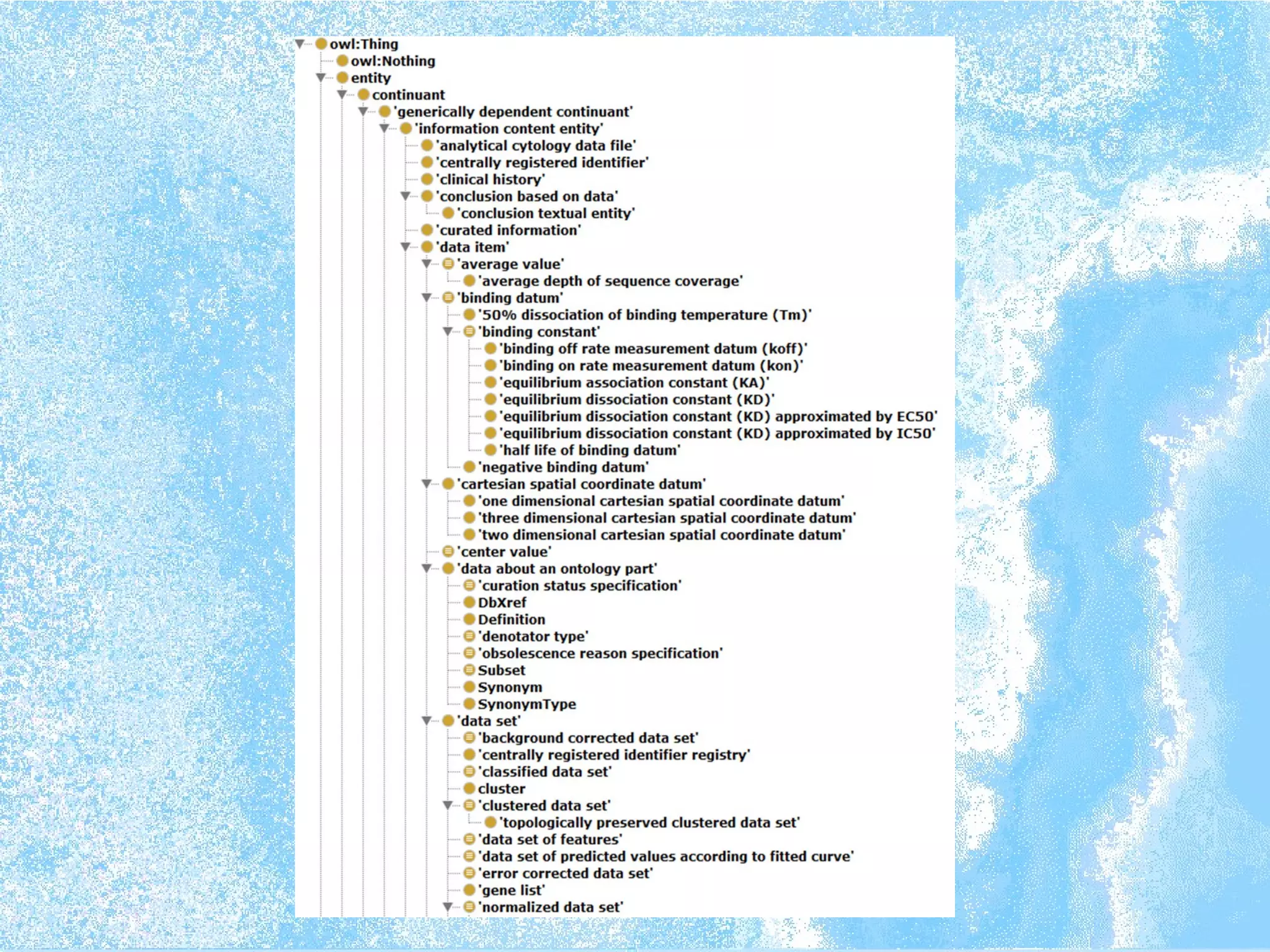
• Ontology for Biomedical Investigations (OBI)
• Cochrane PICO Ontology
• ACGT Master Ontology
• Basic Formal Ontology (BFO)
W. Kuchinke (2016)
Ontologies
Clinical Trial Ontology (CTO)
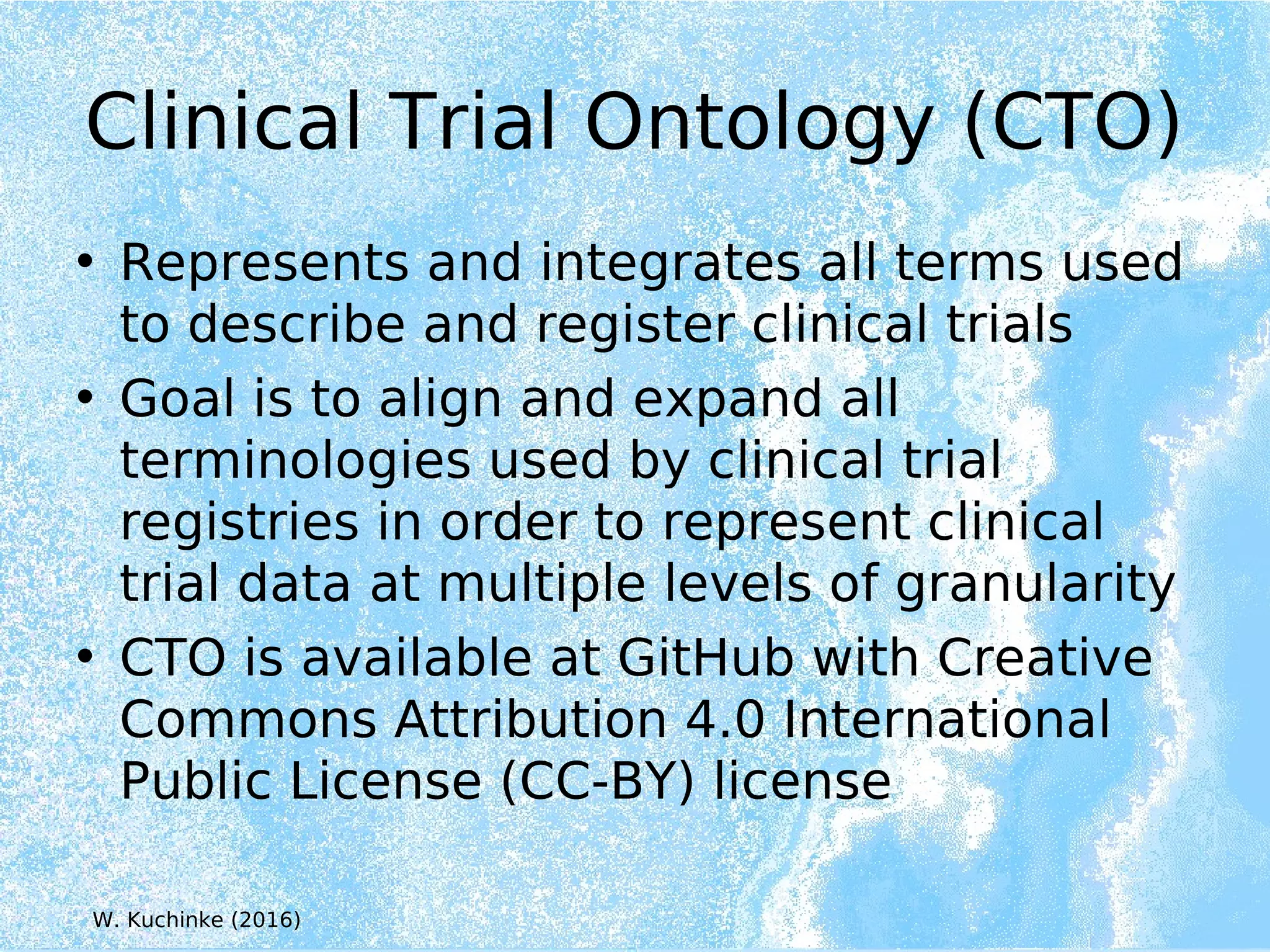
• Represents and integrates all terms used
to describe and register clinical trials
• Goal is to align and expand all
terminologies used by clinical trial
registries in order to represent clinical
trial data at multiple levels of granularity
• CTO is available at GitHub with Creative
Commons Attribution 4.0 International
Public License (CC-BY) license
W. Kuchinke (2016)
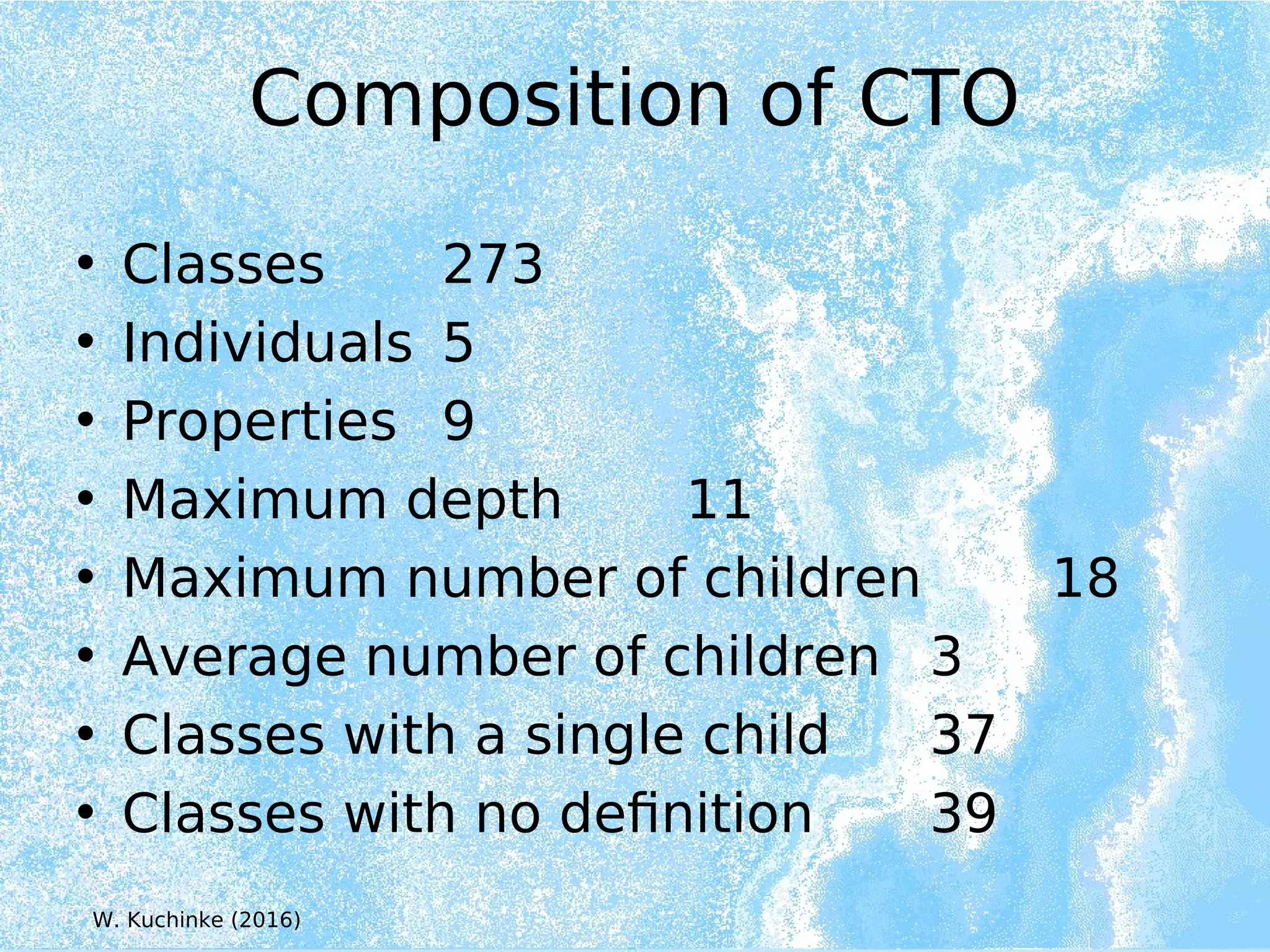
Composition of CTO
• Classes 273
• Individuals 5
• Properties 9
• Maximum depth 11
• Maximum number of children 18
• Average number of children 3
• Classes with a single child 37
• Classes with no definition 39
W. Kuchinke (2016)
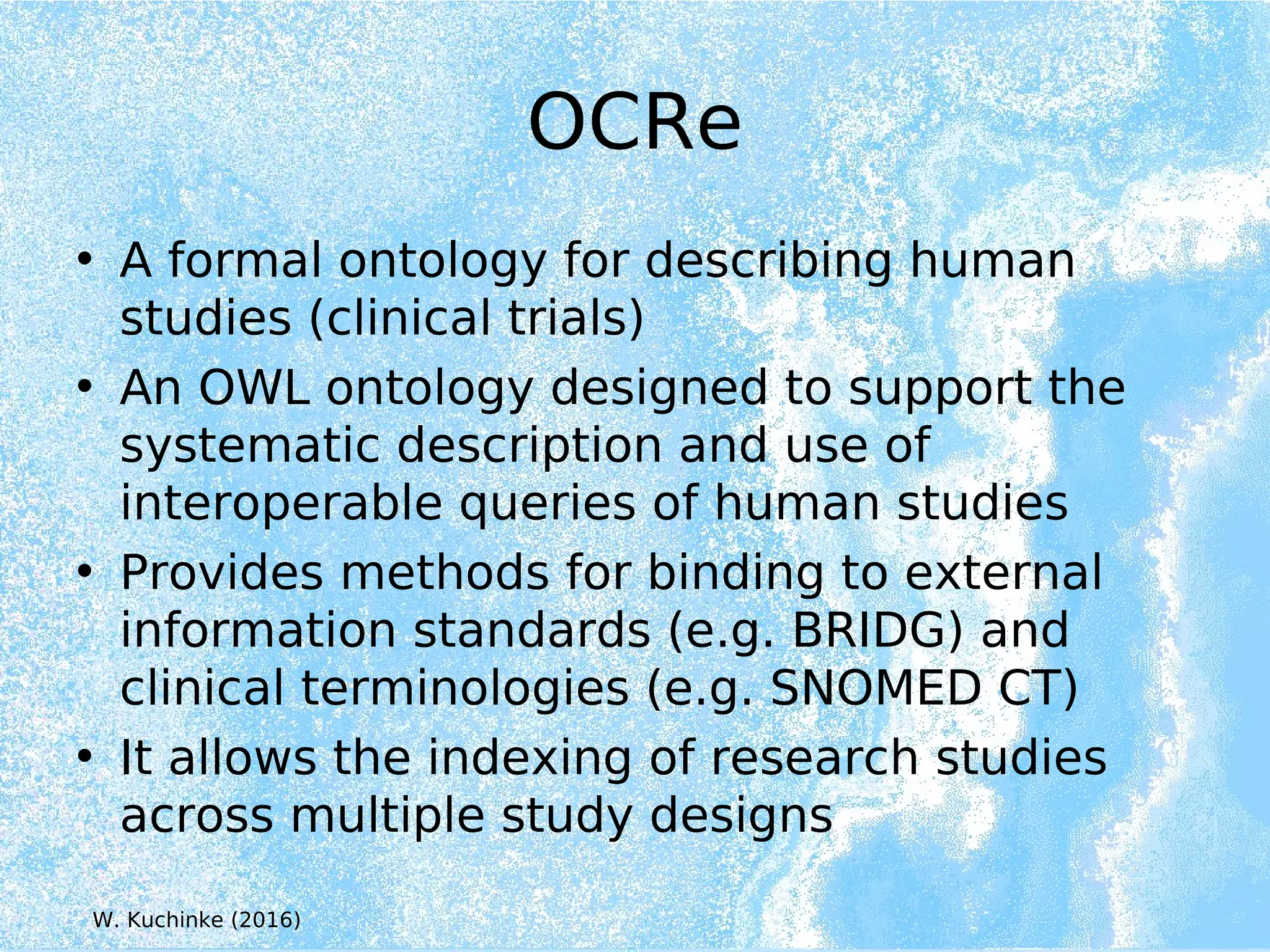
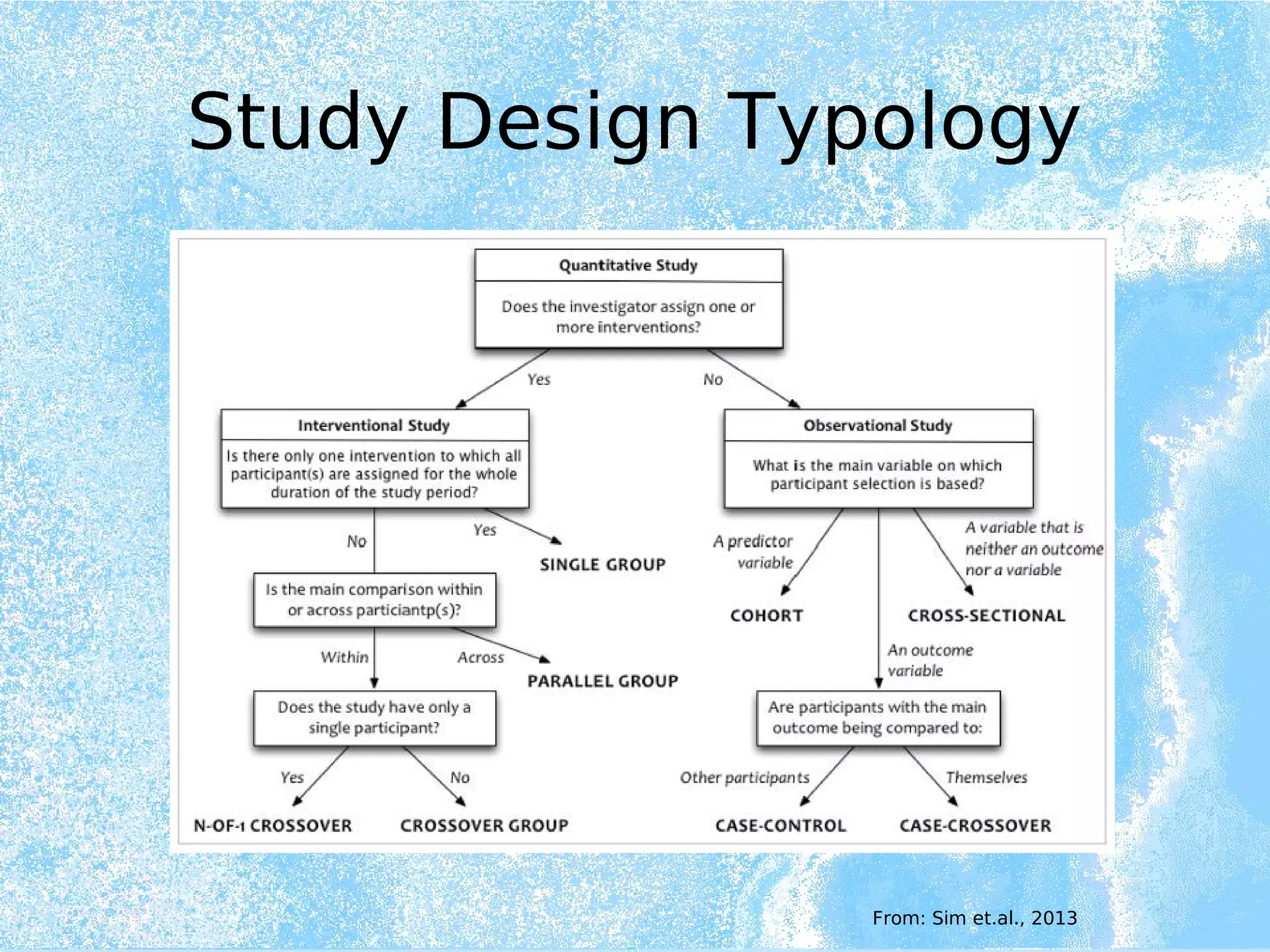
OCRe
• A formal ontology for describing human
studies (clinical trials)
• An OWL ontology designed to support the
systematic description and use of
interoperable queries of human studies
• Provides methods for binding to external
information standards (e.g. BRIDG) and
clinical terminologies (e.g. SNOMED CT)
• It allows the indexing of research studies
across multiple study designs
W. Kuchinke (2016)
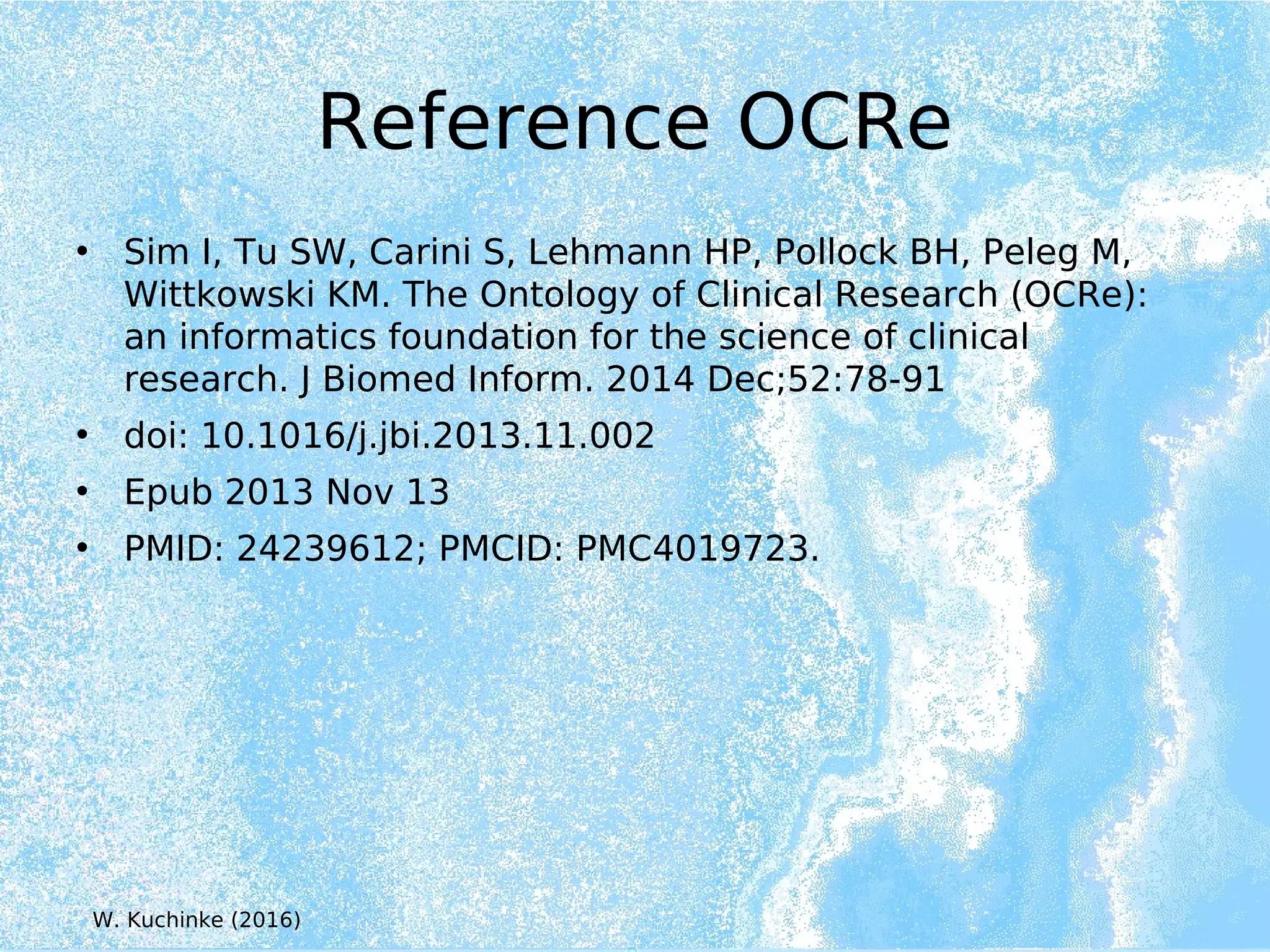
Reference OCRe
• Sim I, Tu SW, Carini S, Lehmann HP, Pollock BH, Peleg M,
Wittkowski KM. The Ontology of Clinical Research (OCRe):
an informatics foundation for the science of clinical
research. J Biomed Inform. 2014 Dec;52:78-91
• doi: 10.1016/j.jbi.2013.11.002
• Epub 2013 Nov 13
• PMID: 24239612; PMCID: PMC4019723.
W. Kuchinke (2016)
Study Design Typology
From: Sim et.al., 2013
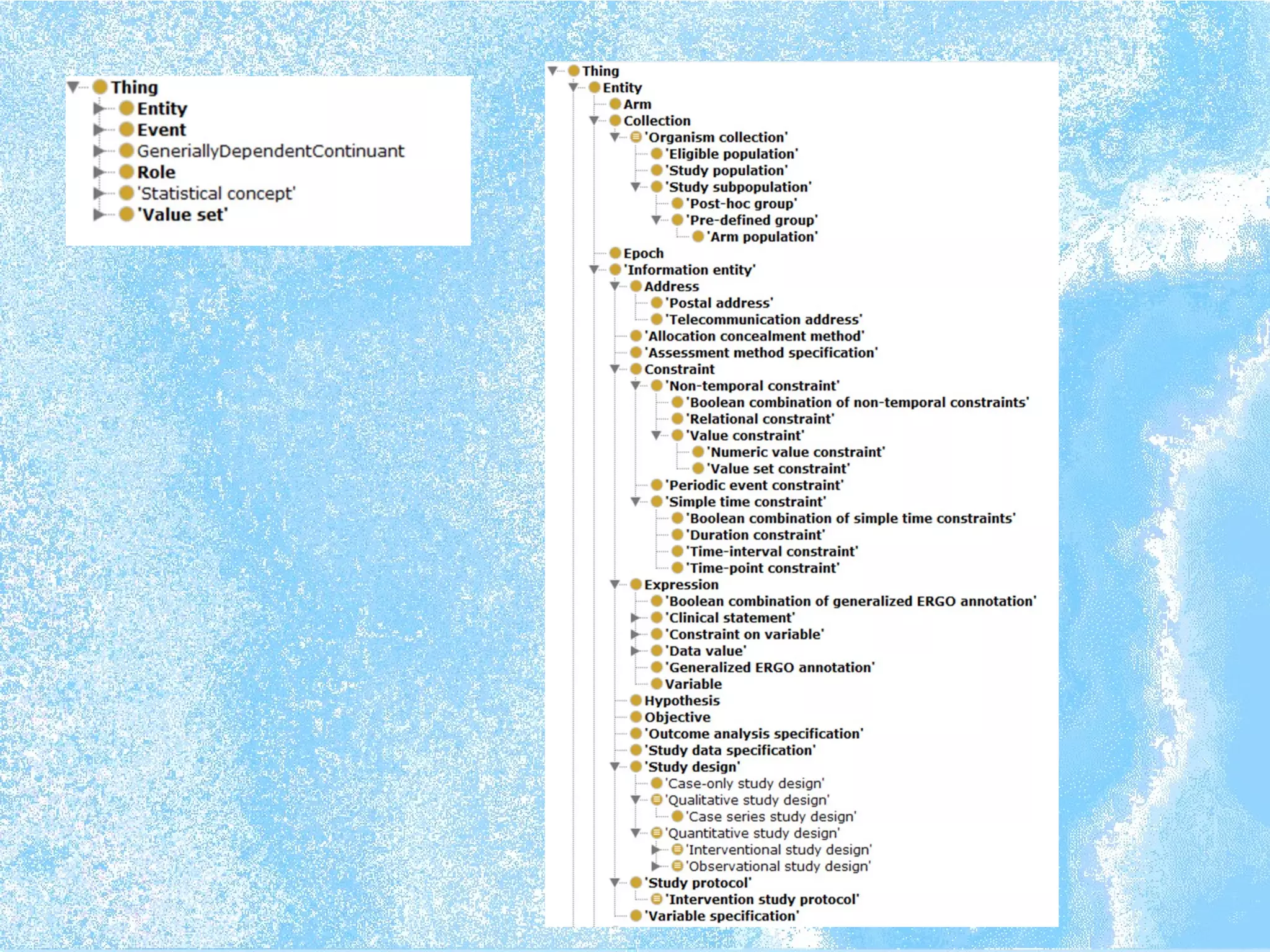
Ontology for Biomedical
Investigations (OBI)
• An integrated ontology for the
description of biological and clinical
investigations
• Universal terms, that are applicable
across various biological and
technological domains
• Domain-specific terms relevant only to
a given domain
• Supports the consistent annotation of
biomedical investigations
Reference OBI
• Bandrowski A, Brinkman R, Brochhausen M, Brush MH, Bug B,
Chibucos MC, Clancy K, Courtot M, Derom D, Dumontier M,
Fan L, Fostel J, Fragoso G, Gibson F, Gonzalez-Beltran A,
Haendel MA, He Y, Heiskanen M, Hernandez-Boussard T,
Jensen M, Lin Y, Lister AL, Lord P, Malone J, Manduchi E,
McGee M, Morrison N, Overton JA, Parkinson H, Peters B,
Rocca-Serra P, Ruttenberg A, Sansone SA, Scheuermann RH,
Schober D, Smith B, Soldatova LN, Stoeckert CJ Jr, Taylor CF,
Torniai C, Turner JA, Vita R, Whetzel PL, Zheng J.
• The Ontology for Biomedical Investigations. PLoS One. 2016
Apr 29;11(4):e0154556.
• doi: 10.1371/journal.pone.0154556
• PMID: 27128319
• http://obi-ontology.org/
W. Kuchinke (2016)
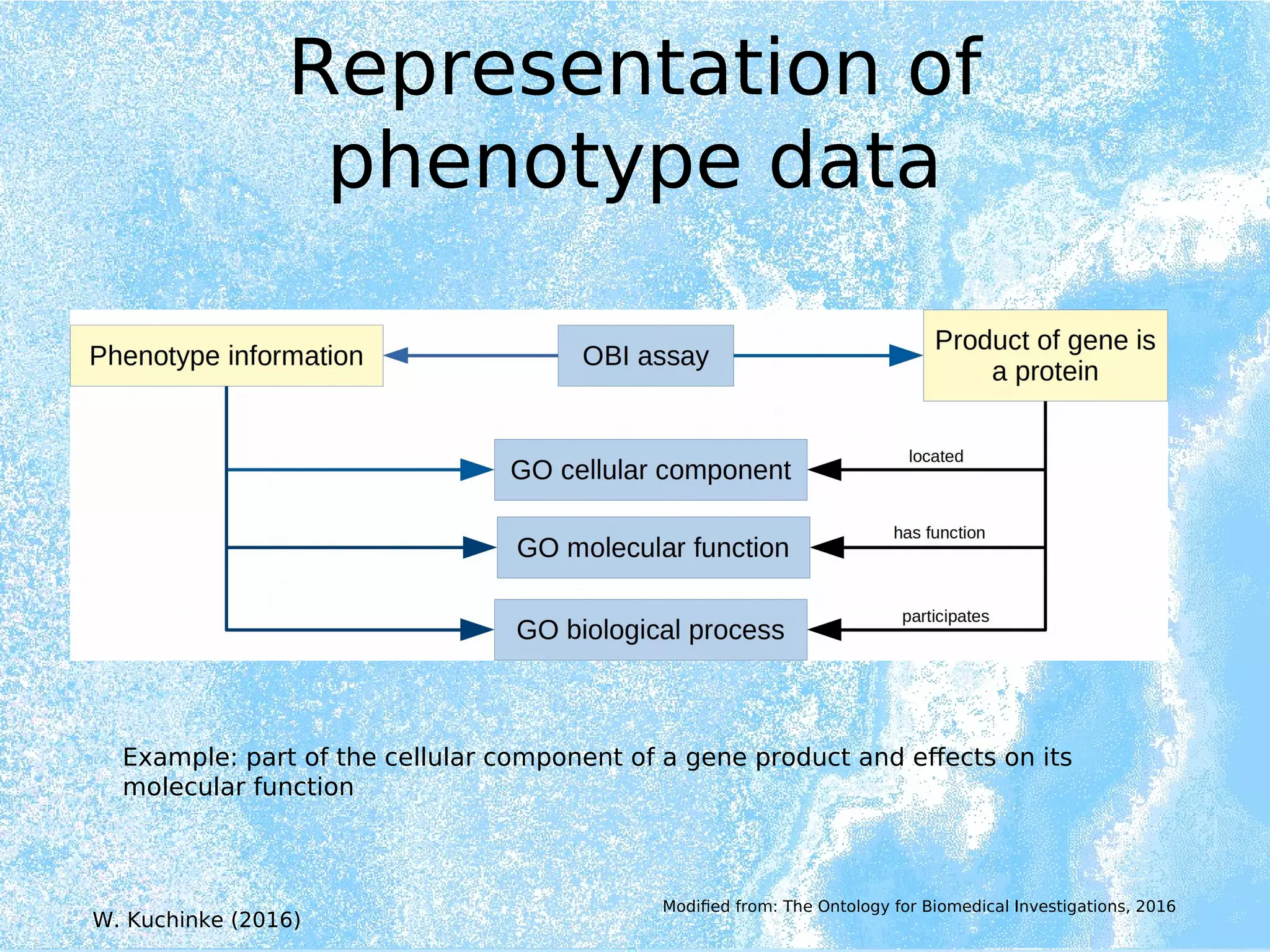
Representation of
phenotype data
Example: part of the cellular component of a gene product and effects on its
molecular function
Modified from: The Ontology for Biomedical Investigations, 2016
W. Kuchinke (2016)
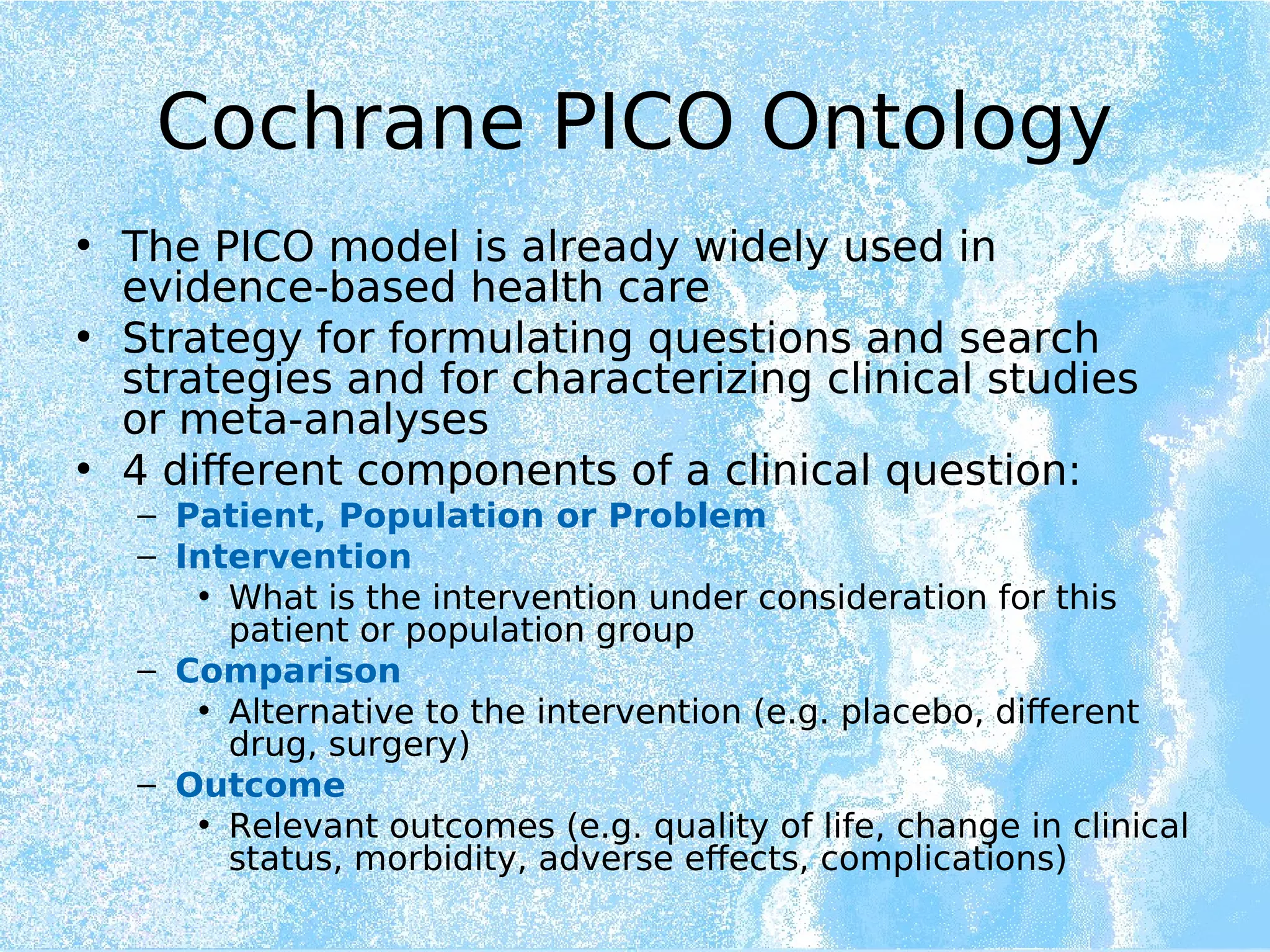
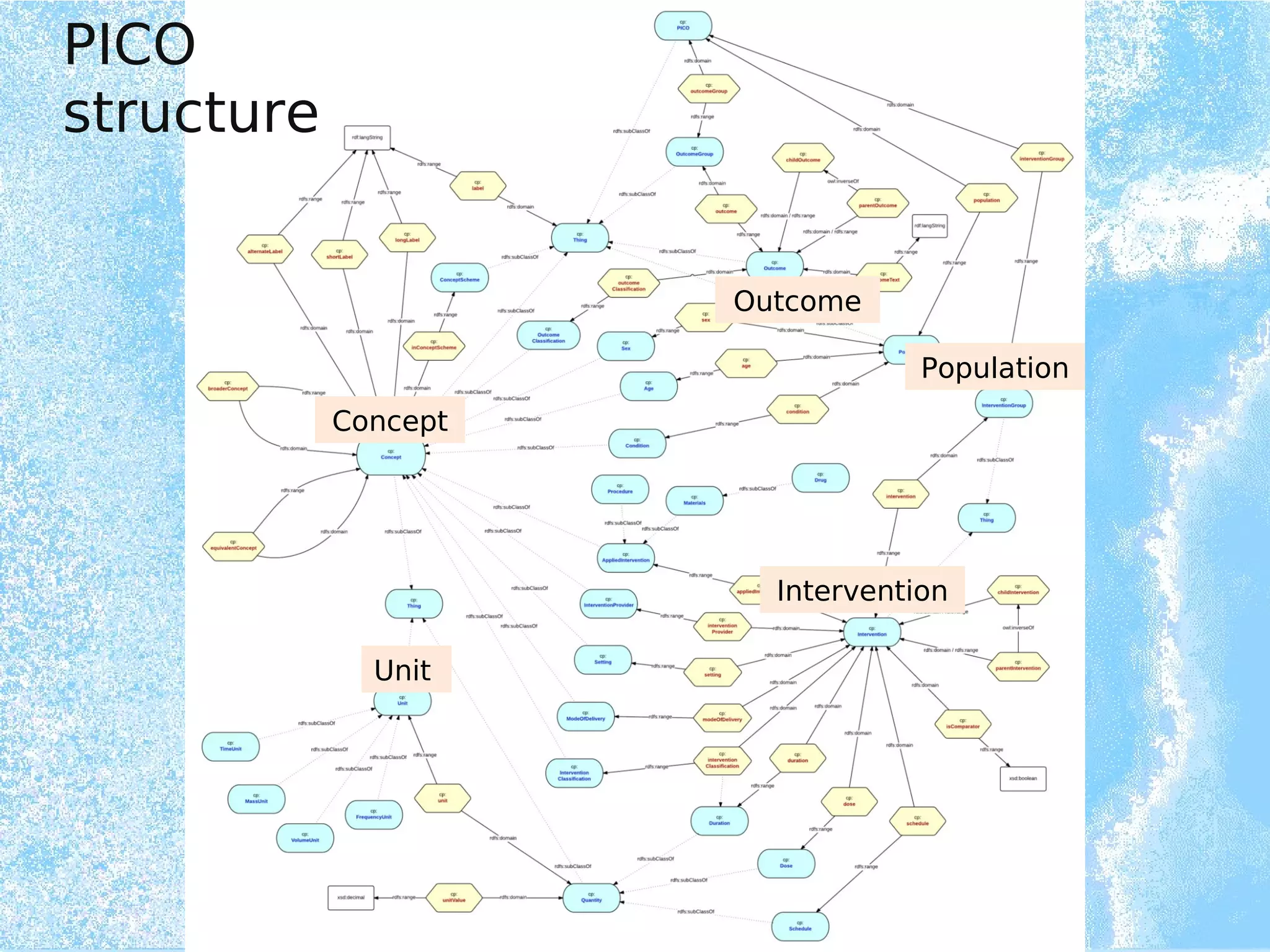
Cochrane PICO Ontology
• The PICO model is already widely used in
evidence-based health care
• Strategy for formulating questions and search
strategies and for characterizing clinical studies
or meta-analyses
• 4 different components of a clinical question:
– Patient, Population or Problem
– Intervention
• What is the intervention under consideration for this
patient or population group
– Comparison
• Alternative to the intervention (e.g. placebo, different
drug, surgery)
– Outcome
• Relevant outcomes (e.g. quality of life, change in clinical
status, morbidity, adverse effects, complications)
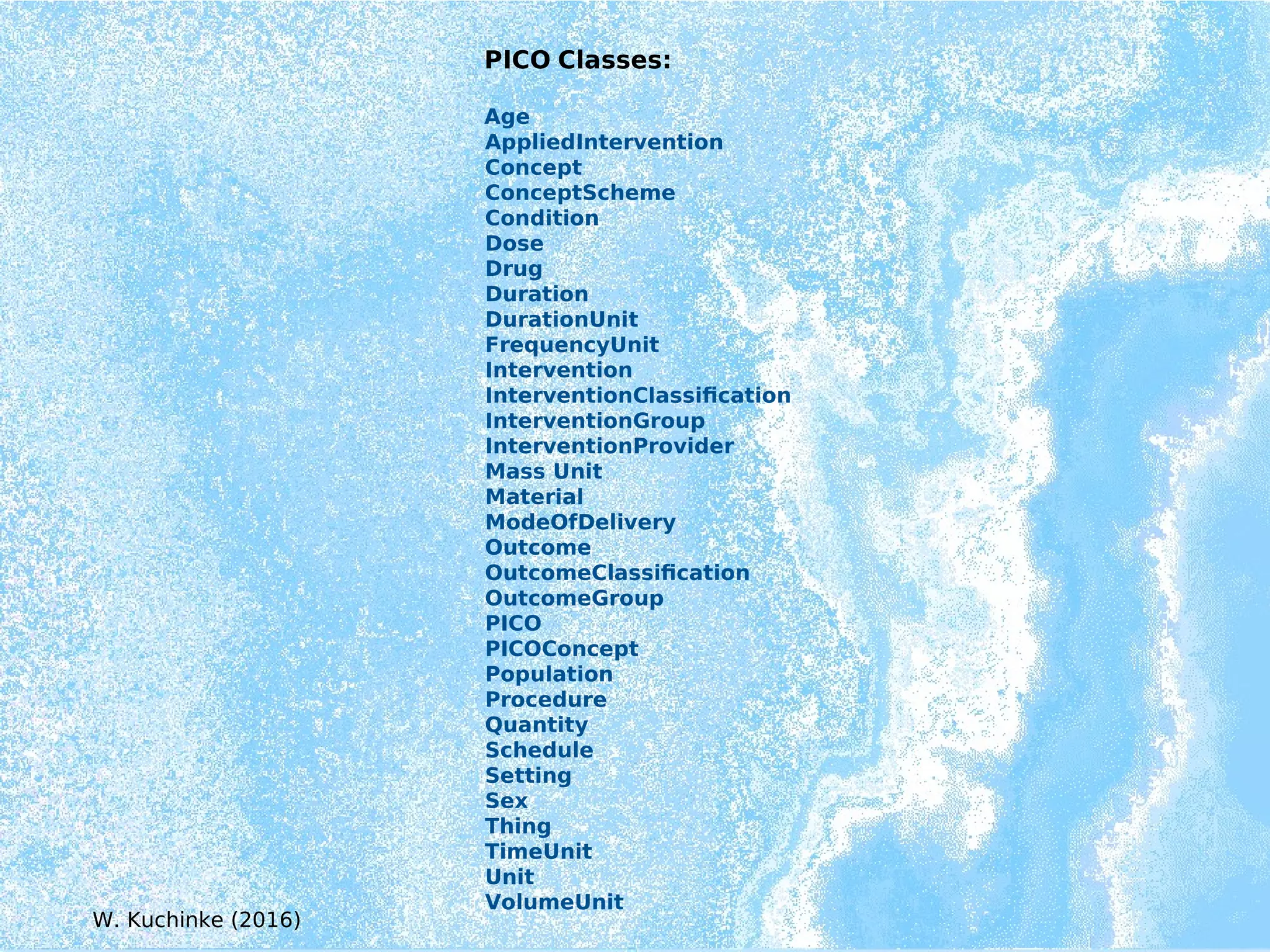
PICO Classes:
Age
AppliedIntervention
Concept
ConceptScheme
Condition
Dose
Drug
Duration
DurationUnit
FrequencyUnit
Intervention
InterventionClassification
InterventionGroup
InterventionProvider
Mass Unit
Material
ModeOfDelivery
Outcome
OutcomeClassification
OutcomeGroup
PICO
PICOConcept
Population
Procedure
Quantity
Schedule
Setting
Sex
Thing
TimeUnit
Unit
VolumeUnit
W. Kuchinke (2016)
Concept
Outcome
Unit
Intervention
Population
PICO
structure
ACGT Master Ontology
• Represents the domain of cancer
research and management considering
computational traceability
• The ACGT MO is written in OWL-DL and
presented as an .owl file
• It is re-using Basic Formal Ontology
(BFO) as upper level and the OBO
Relation Ontology
• https://www.uni-saarland.de/institut/ifomis/activities/
acgt-master-ontology.html
W. Kuchinke (2016)
Reference ACGT MO
• Brochhausen M, Spear AD, Cocos C, Weiler G, Martín L,
Anguita A, Stenzhorn H, Daskalaki E, Schera F, Schwarz U,
Sfakianakis S, Kiefer S, Dörr M, Graf N, Tsiknakis M. The
ACGT Master Ontology and its applications--towards an
ontology-driven cancer research and management system.
J Biomed Inform. 2011 Feb;44(1):8-25.
• doi: 10.1016/j.jbi.2010.04.008
• Epub 2010 May 11. PMID: 20438862; PMCID: PMC5755590.
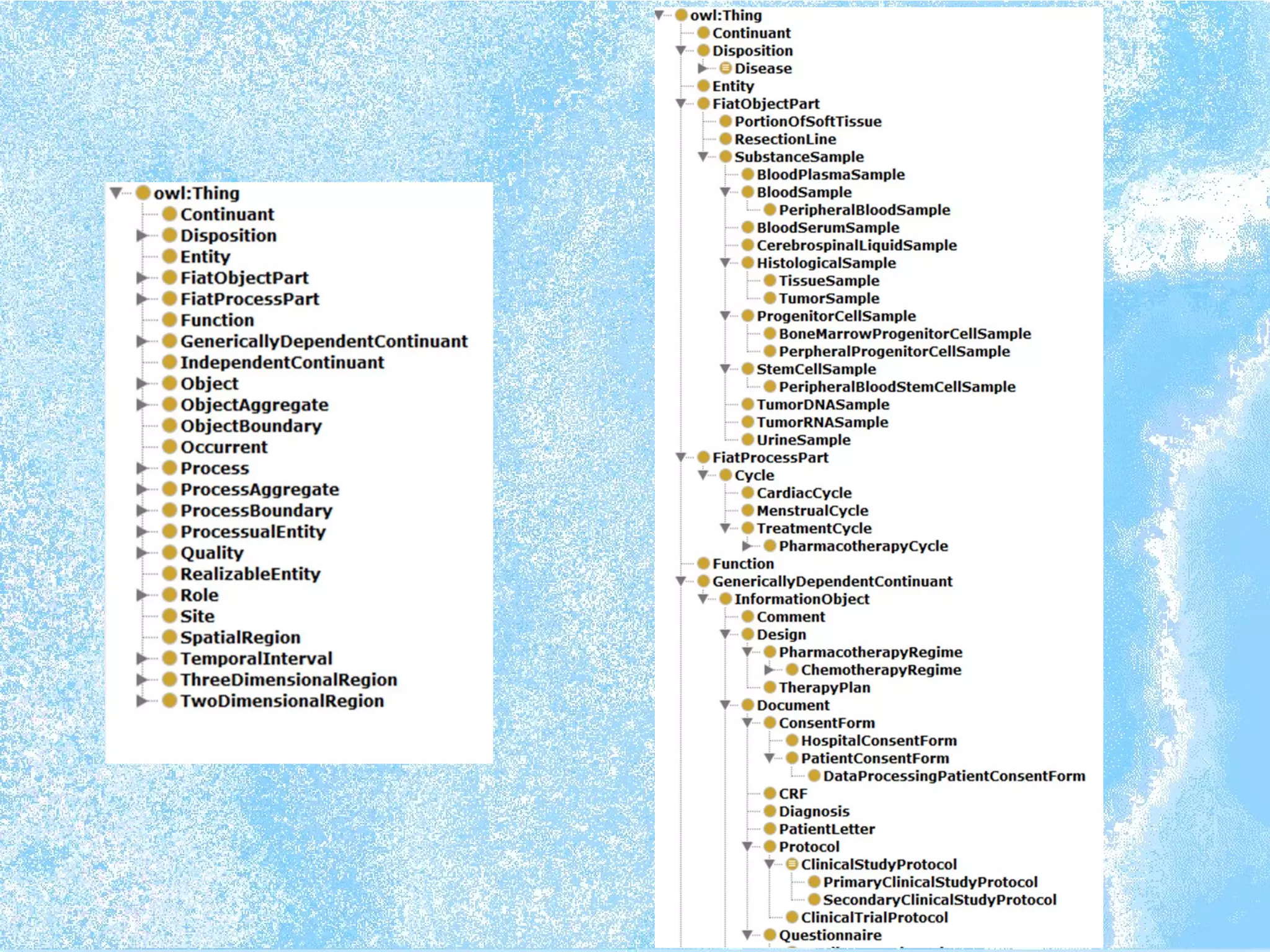
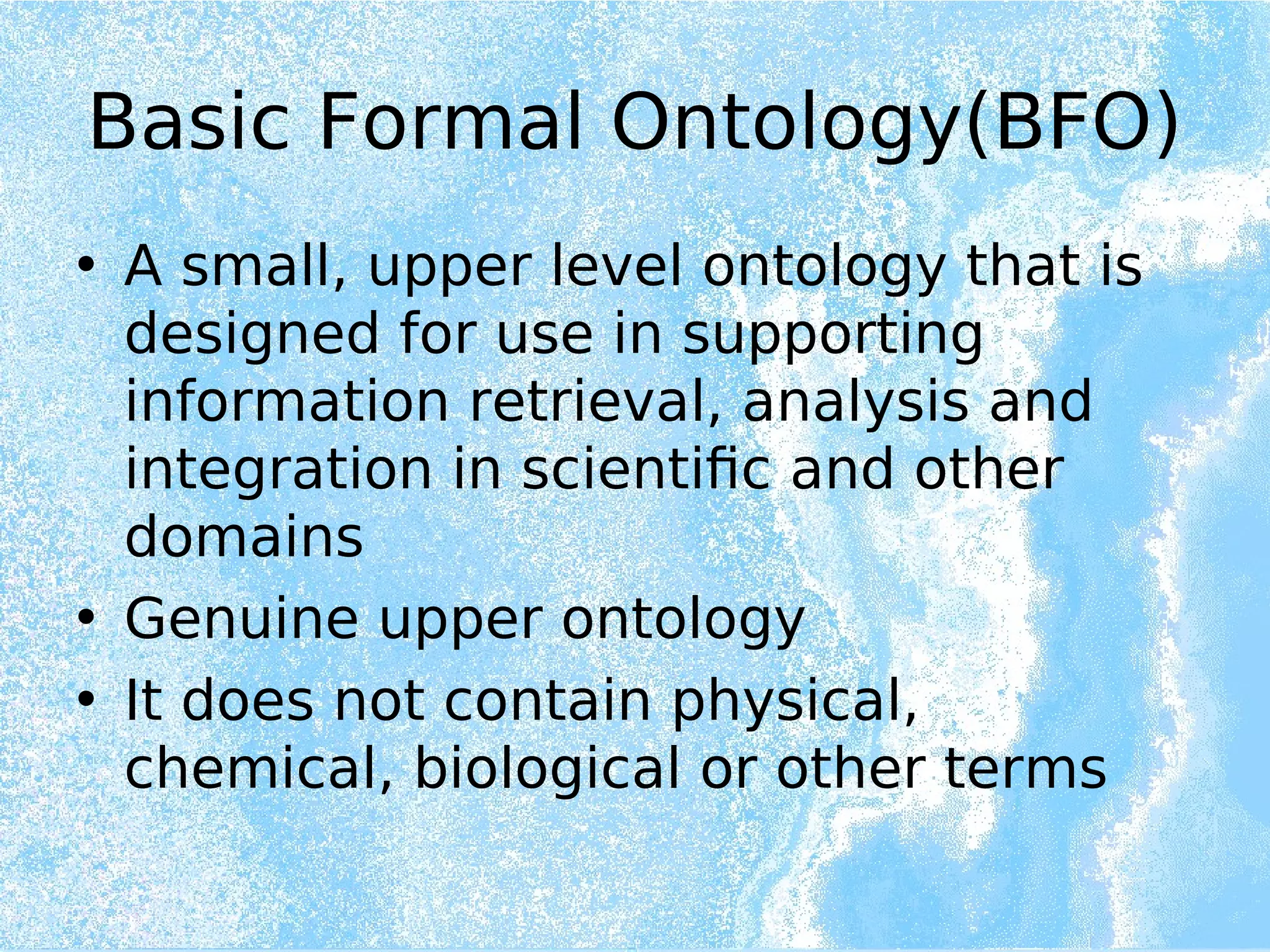
Basic Formal Ontology(BFO)
• A small, upper level ontology that is
designed for use in supporting
information retrieval, analysis and
integration in scientific and other
domains
• Genuine upper ontology
• It does not contain physical,
chemical, biological or other terms
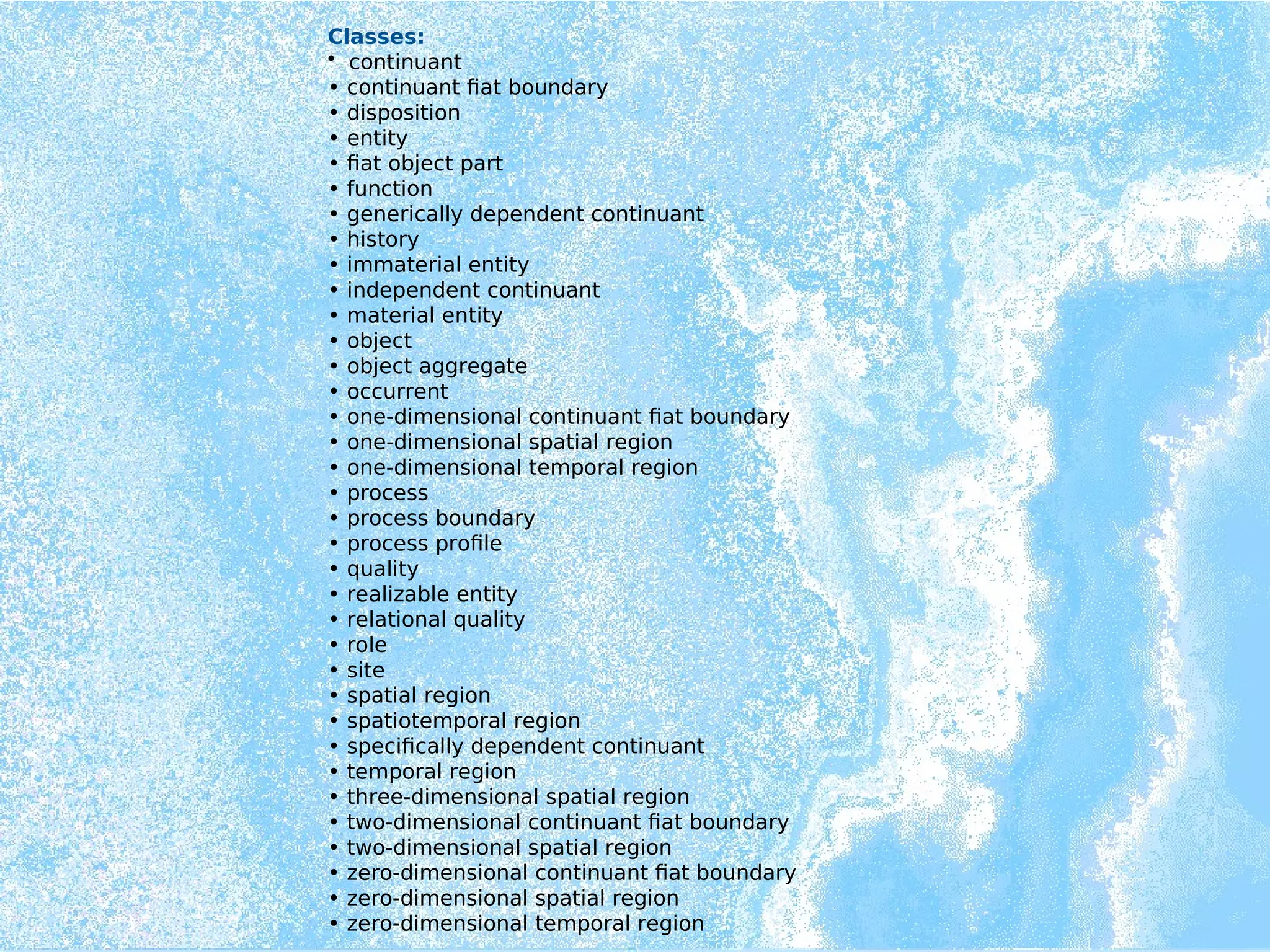
Classes:
• continuant
• continuant fiat boundary
• disposition
• entity
• fiat object part
• function
• generically dependent continuant
• history
• immaterial entity
• independent continuant
• material entity
• object
• object aggregate
• occurrent
• one-dimensional continuant fiat boundary
• one-dimensional spatial region
• one-dimensional temporal region
• process
• process boundary
• process profile
• quality
• realizable entity
• relational quality
• role
• site
• spatial region
• spatiotemporal region
• specifically dependent continuant
• temporal region
• three-dimensional spatial region
• two-dimensional continuant fiat boundary
• two-dimensional spatial region
• zero-dimensional continuant fiat boundary
• zero-dimensional spatial region
• zero-dimensional temporal region
Aim of project
• Using ontologies to enable data
reuse and data sharing between pre-
clinical research, clinical phase I –
phase III clinical trials and health
care research.
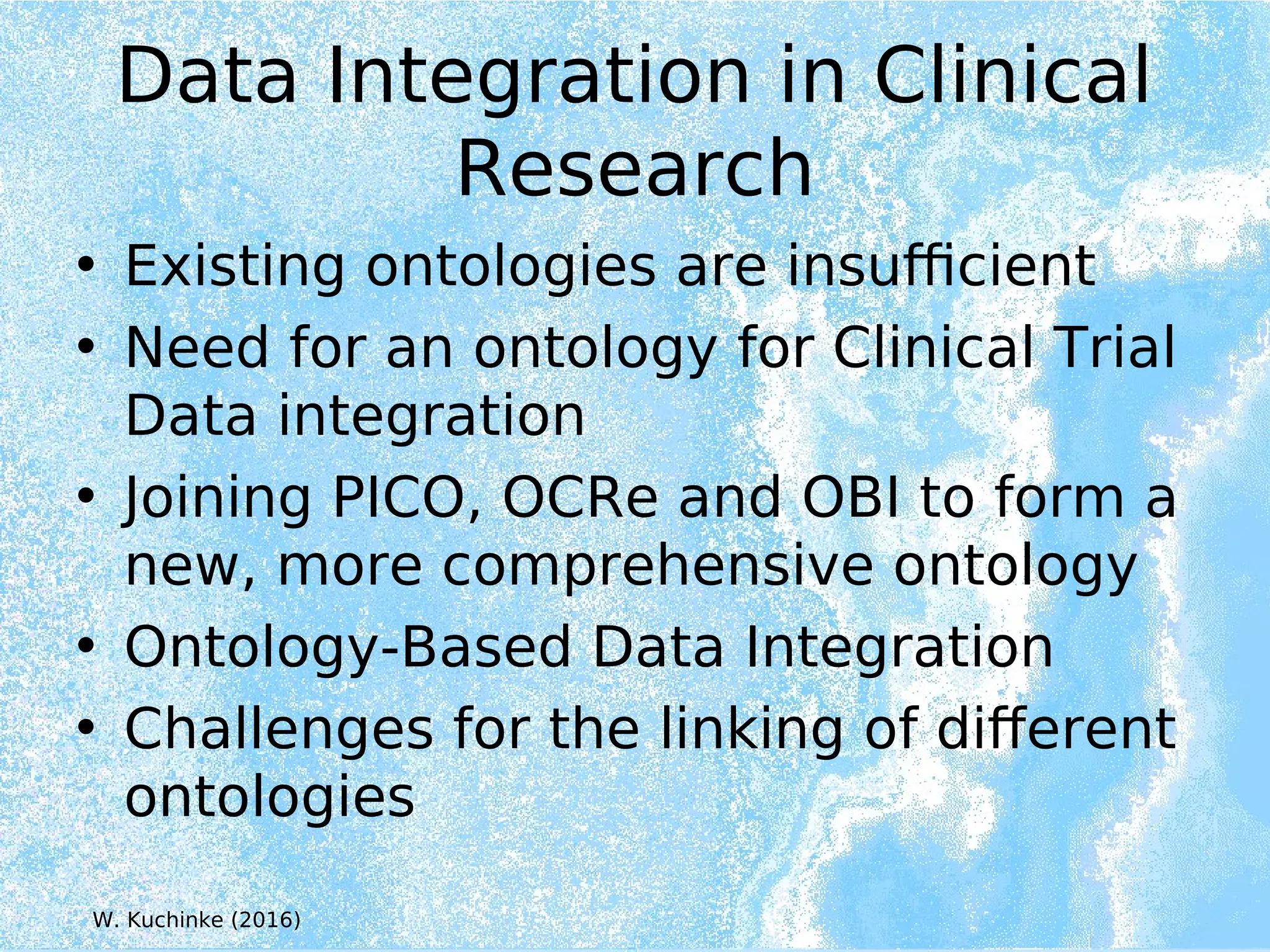
Data Integration in Clinical
Research
• Existing ontologies are insufficient
• Need for an ontology for Clinical Trial
Data integration
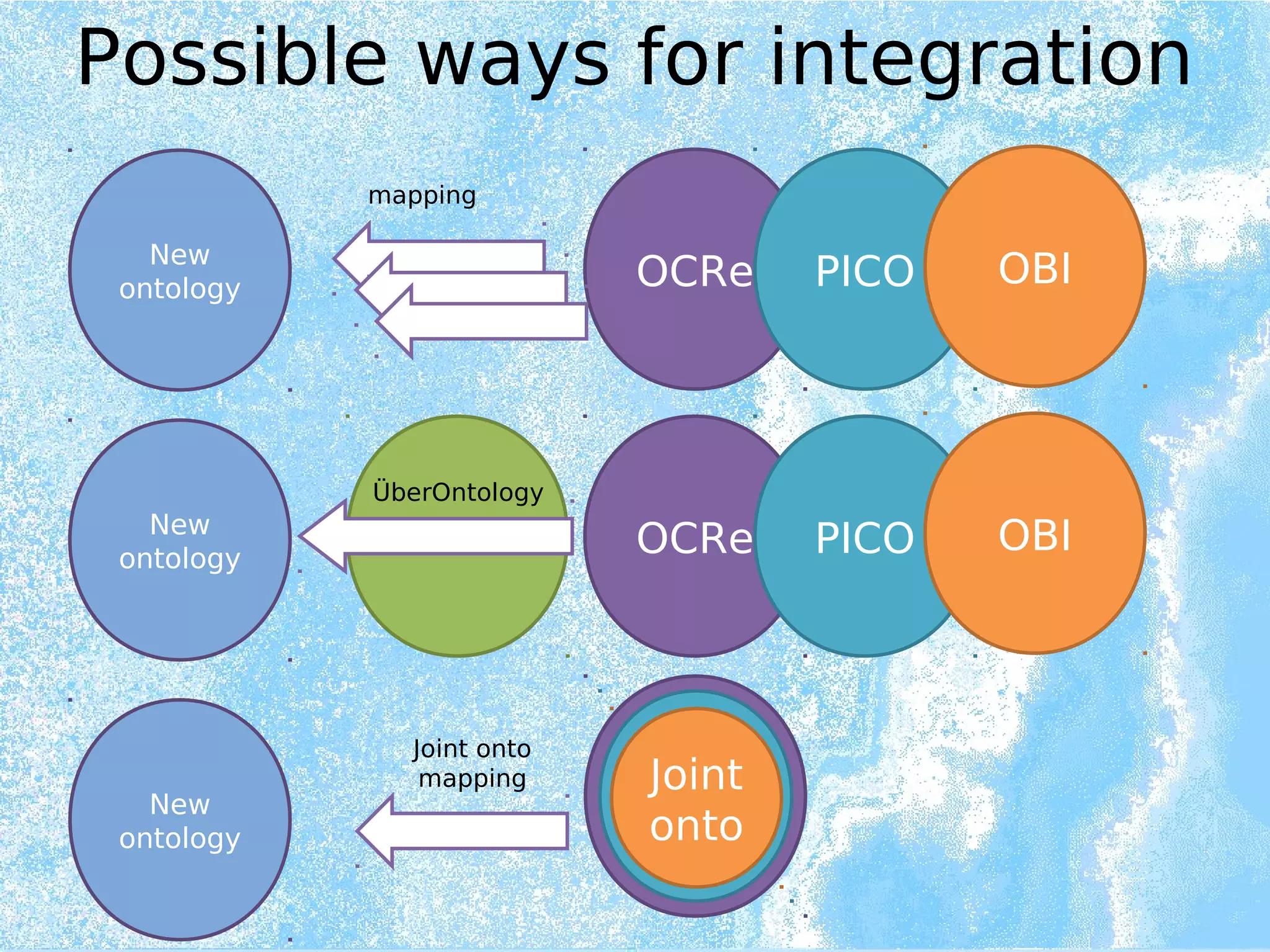
• Joining PICO, OCRe and OBI to form a
new, more comprehensive ontology
• Ontology-Based Data Integration
• Challenges for the linking of different
ontologies
W. Kuchinke (2016)
Possible ways for integration
OCRe PICO OBI
OCRe PICO OBI
OCRe
PICO
Joint
onto
mapping
ÜberOntology
Joint onto
mapping
New
ontology
New
ontology
New
ontology
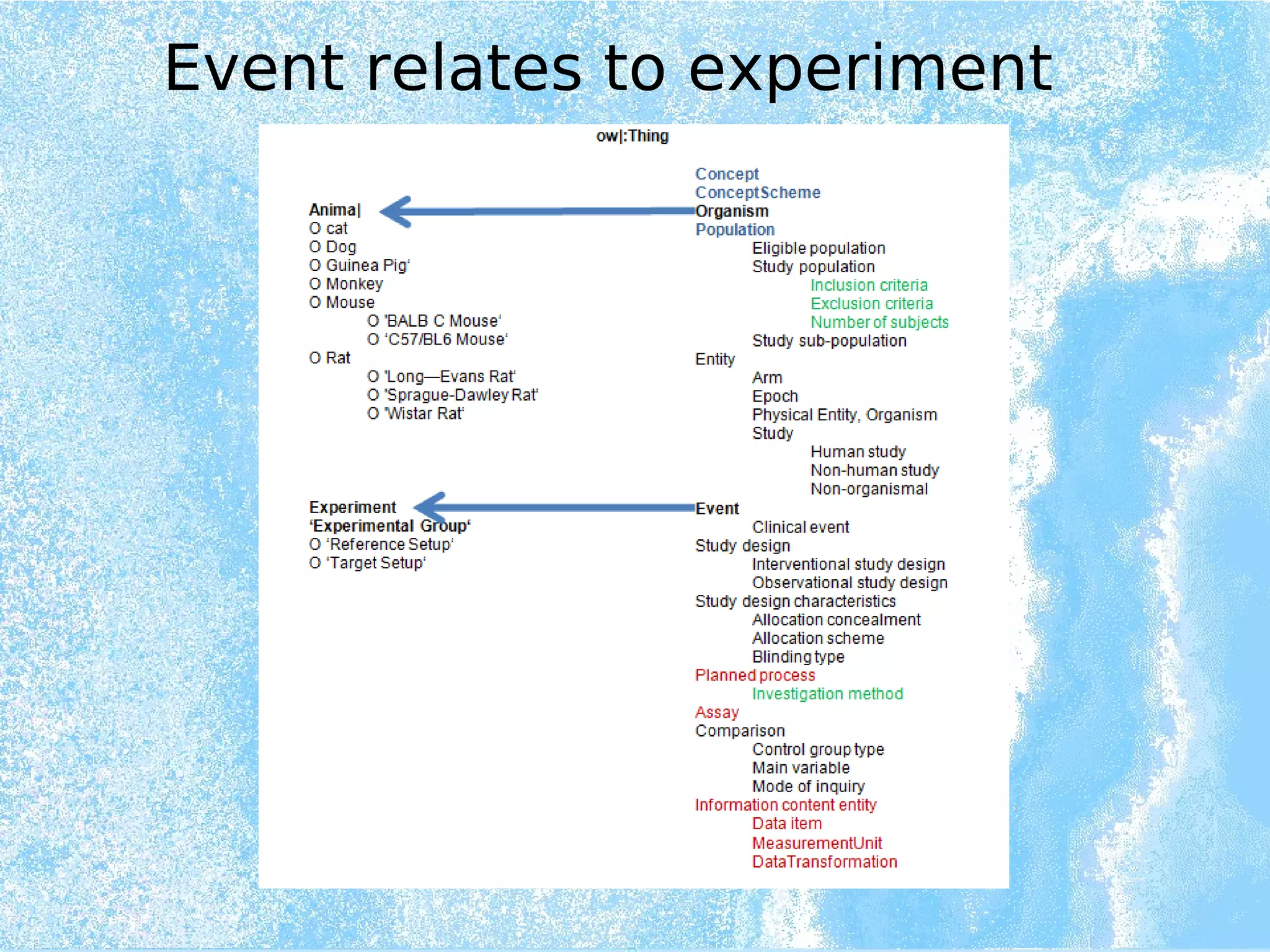
Event relates to experiment
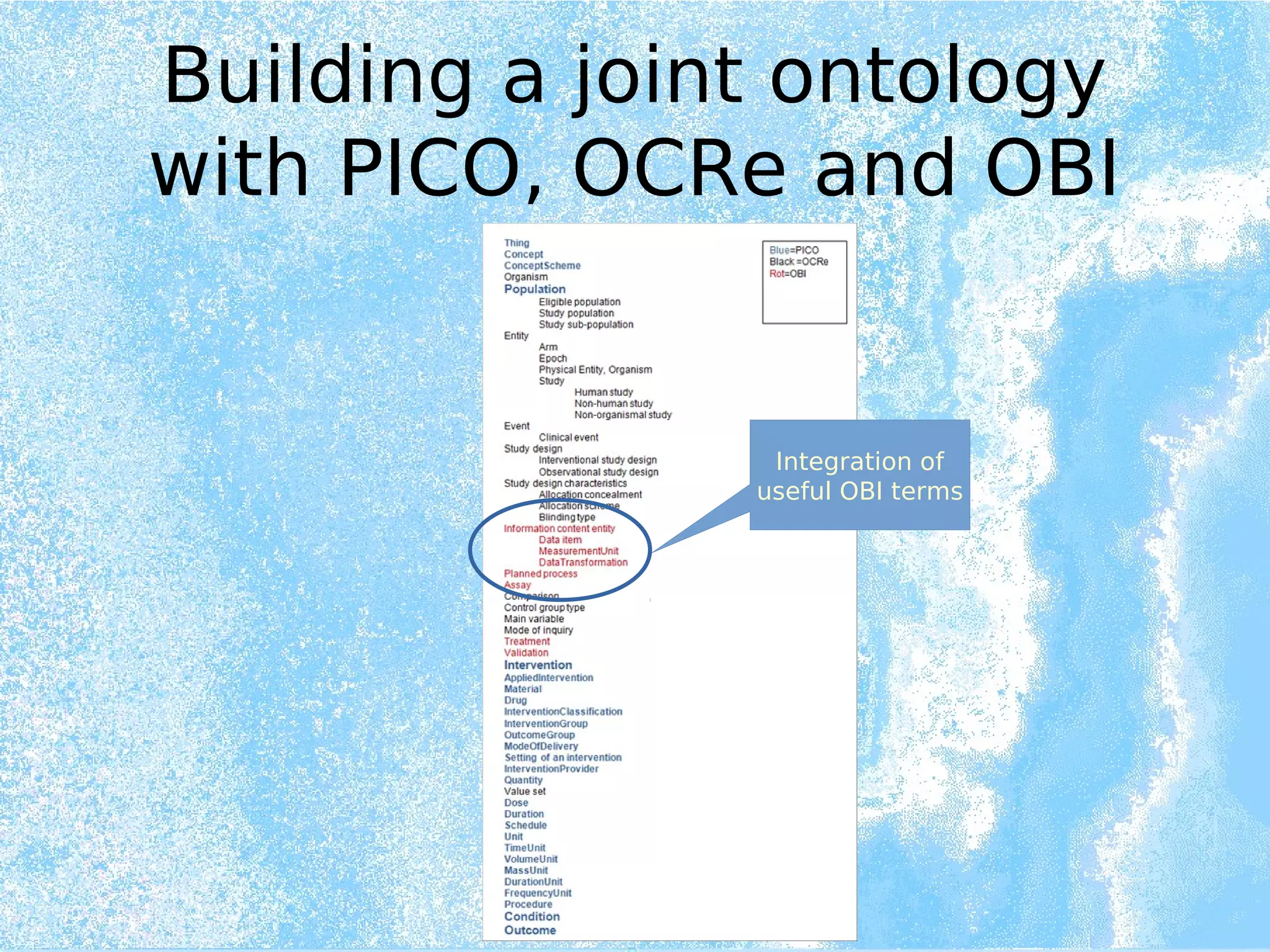
Building a joint ontology
with PICO, OCRe and OBI
Integration of
useful OBI terms
Contact
Wolfgang Kuchinke
UDUS, Duesseldorf, Germany
wolfgang.kuchinke@uni-duesseldorf.de

Ontologies for Clinical Research - Assessment and Development

  • 1.
    Ontologies for Clinical Research WolfgangKuchinke CRI Meeting 10.6.2016 Duesseldorf, Germany
  • 2.
    What are Ontologies? •Representation with names and categories, properties and relations between concepts and entities of a domain of knowledge • Way of showing the properties of a subject area and how they are related From Wiki
  • 3.
    Purpose • Limitation ofthe complexity of information and organization of data into information and knowledge • New ontologies improve the process of problem solving • Ease the combination of knowledge from different domains W. Kuchinke (2016)
  • 4.
    Main Components • Individuals –Instances or objects • Classes – Sets, collections, concepts, objects • Attributes – Aspects, properties, features, characteristics or parameters • Relations – Ways in which classes and individuals are related to one another • Restrictions – Descriptions of what must be true in some assertions • Rules – Statements in the form of if-then statements that describe logical inferences that can be drawn from an assertion From Wiki W. Kuchinke (2016)
  • 5.
    OBO Foundry • TheOpen Biological and Biomedical Ontologies (OBO) Foundry is a group dedicated of building and maintaining ontologies of life sciences • Establishment of principles for ontology development and a suite of interoperable reference ontologies in the biomedical domain • Structured reference for terms of different research fields and their interconnections – ex: phenotypes of different species • http://www.obofoundry.org/ From Wiki W. Kuchinke (2016)
  • 6.
    Open Biological and BiomedicalOntologies • Effort to create ontologies for the use in biological and medical domains • The creation of OBO in 2001 was inspired by the efforts of the Gene Ontology project • OBO forms part of the resources of the U.S. National Center for Biomedical Ontology (NCBIO) and the NCBO's BioPortal • It is an initiative by OBO Foundry – Ontologies that form part of the OBO Foundry have to adhere to the OBO principles and have to pass a series of reviews
  • 7.
    Web Ontology Language •The Web Ontology Language (OWL) is a family of knowledge representation languages • Ontologies are defining the structure of knowledge – Suitable knowledge representation is necessary – Nouns represent classes of objects and verbs represent relations between objects • The OWL languages are characterized by formal semantics – XML standard for objects called Resource Description Framework (RDF) From Wiki
  • 8.
    Ontology-Based Data Integration inClinical Research • Data from electronic medical records comprise structured but often uncoded elements, which often are not using standard terminologies • Need to reuse and share such data for secondary research purposes • Identification of relevant data elements • Ontology based connection of medical concepts of source systems and target systems for data sharing W. Kuchinke (2016)
  • 9.
    Ontology for ClinicalTrial Data Integration • Integrated clinical terminologies are necessary for an efficient clinical trial system • The design and outcomes of a clinical trial can be improved through use of clinical terminologies • Heterogeneity exists between clinical terminologies and clinical systems – Problem of integrating local clinical terminologies with globally defined concepts and terminologies – Often ambiguous, inconsistent and overlapping clinical terminologies • Use of formal ontologies to overcome these challenges W. Kuchinke (2016)
  • 10.
    Matching Patient Recordsto Clinical Trials • Need to bridge the semantic gap between raw patient data, such as laboratory tests or medication data, and the way the clinician interprets these data and uses them for health care and research • Matching patients to clinical trials can be seen as a type of semantic retrieval • One way is the integration of large ontologies (e.g. SNOMED) • Dealing with noisy and inconsistent data W. Kuchinke (2016)
  • 11.
    Ontologies for clinical research •Clinical Trial Ontology (CTO) • Ontology of Clinical Research (OCRe) • Ontology for Biomedical Investigations (OBI) • Cochrane PICO Ontology • ACGT Master Ontology • Basic Formal Ontology (BFO) W. Kuchinke (2016)
  • 12.
  • 13.
    Clinical Trial Ontology(CTO) • Represents and integrates all terms used to describe and register clinical trials • Goal is to align and expand all terminologies used by clinical trial registries in order to represent clinical trial data at multiple levels of granularity • CTO is available at GitHub with Creative Commons Attribution 4.0 International Public License (CC-BY) license W. Kuchinke (2016)
  • 14.
    Composition of CTO •Classes 273 • Individuals 5 • Properties 9 • Maximum depth 11 • Maximum number of children 18 • Average number of children 3 • Classes with a single child 37 • Classes with no definition 39 W. Kuchinke (2016)
  • 15.
    OCRe • A formalontology for describing human studies (clinical trials) • An OWL ontology designed to support the systematic description and use of interoperable queries of human studies • Provides methods for binding to external information standards (e.g. BRIDG) and clinical terminologies (e.g. SNOMED CT) • It allows the indexing of research studies across multiple study designs W. Kuchinke (2016)
  • 16.
    Reference OCRe • SimI, Tu SW, Carini S, Lehmann HP, Pollock BH, Peleg M, Wittkowski KM. The Ontology of Clinical Research (OCRe): an informatics foundation for the science of clinical research. J Biomed Inform. 2014 Dec;52:78-91 • doi: 10.1016/j.jbi.2013.11.002 • Epub 2013 Nov 13 • PMID: 24239612; PMCID: PMC4019723. W. Kuchinke (2016)
  • 17.
  • 19.
    Ontology for Biomedical Investigations(OBI) • An integrated ontology for the description of biological and clinical investigations • Universal terms, that are applicable across various biological and technological domains • Domain-specific terms relevant only to a given domain • Supports the consistent annotation of biomedical investigations
  • 20.
    Reference OBI • BandrowskiA, Brinkman R, Brochhausen M, Brush MH, Bug B, Chibucos MC, Clancy K, Courtot M, Derom D, Dumontier M, Fan L, Fostel J, Fragoso G, Gibson F, Gonzalez-Beltran A, Haendel MA, He Y, Heiskanen M, Hernandez-Boussard T, Jensen M, Lin Y, Lister AL, Lord P, Malone J, Manduchi E, McGee M, Morrison N, Overton JA, Parkinson H, Peters B, Rocca-Serra P, Ruttenberg A, Sansone SA, Scheuermann RH, Schober D, Smith B, Soldatova LN, Stoeckert CJ Jr, Taylor CF, Torniai C, Turner JA, Vita R, Whetzel PL, Zheng J. • The Ontology for Biomedical Investigations. PLoS One. 2016 Apr 29;11(4):e0154556. • doi: 10.1371/journal.pone.0154556 • PMID: 27128319 • http://obi-ontology.org/ W. Kuchinke (2016)
  • 21.
    Representation of phenotype data Example:part of the cellular component of a gene product and effects on its molecular function Modified from: The Ontology for Biomedical Investigations, 2016 W. Kuchinke (2016)
  • 23.
    Cochrane PICO Ontology •The PICO model is already widely used in evidence-based health care • Strategy for formulating questions and search strategies and for characterizing clinical studies or meta-analyses • 4 different components of a clinical question: – Patient, Population or Problem – Intervention • What is the intervention under consideration for this patient or population group – Comparison • Alternative to the intervention (e.g. placebo, different drug, surgery) – Outcome • Relevant outcomes (e.g. quality of life, change in clinical status, morbidity, adverse effects, complications)
  • 24.
  • 25.
  • 26.
    ACGT Master Ontology •Represents the domain of cancer research and management considering computational traceability • The ACGT MO is written in OWL-DL and presented as an .owl file • It is re-using Basic Formal Ontology (BFO) as upper level and the OBO Relation Ontology • https://www.uni-saarland.de/institut/ifomis/activities/ acgt-master-ontology.html W. Kuchinke (2016)
  • 27.
    Reference ACGT MO •Brochhausen M, Spear AD, Cocos C, Weiler G, Martín L, Anguita A, Stenzhorn H, Daskalaki E, Schera F, Schwarz U, Sfakianakis S, Kiefer S, Dörr M, Graf N, Tsiknakis M. The ACGT Master Ontology and its applications--towards an ontology-driven cancer research and management system. J Biomed Inform. 2011 Feb;44(1):8-25. • doi: 10.1016/j.jbi.2010.04.008 • Epub 2010 May 11. PMID: 20438862; PMCID: PMC5755590.
  • 29.
    Basic Formal Ontology(BFO) •A small, upper level ontology that is designed for use in supporting information retrieval, analysis and integration in scientific and other domains • Genuine upper ontology • It does not contain physical, chemical, biological or other terms
  • 30.
    Classes: • continuant • continuantfiat boundary • disposition • entity • fiat object part • function • generically dependent continuant • history • immaterial entity • independent continuant • material entity • object • object aggregate • occurrent • one-dimensional continuant fiat boundary • one-dimensional spatial region • one-dimensional temporal region • process • process boundary • process profile • quality • realizable entity • relational quality • role • site • spatial region • spatiotemporal region • specifically dependent continuant • temporal region • three-dimensional spatial region • two-dimensional continuant fiat boundary • two-dimensional spatial region • zero-dimensional continuant fiat boundary • zero-dimensional spatial region • zero-dimensional temporal region
  • 31.
    Aim of project •Using ontologies to enable data reuse and data sharing between pre- clinical research, clinical phase I – phase III clinical trials and health care research.
  • 32.
    Data Integration inClinical Research • Existing ontologies are insufficient • Need for an ontology for Clinical Trial Data integration • Joining PICO, OCRe and OBI to form a new, more comprehensive ontology • Ontology-Based Data Integration • Challenges for the linking of different ontologies W. Kuchinke (2016)
  • 33.
    Possible ways forintegration OCRe PICO OBI OCRe PICO OBI OCRe PICO Joint onto mapping ÜberOntology Joint onto mapping New ontology New ontology New ontology
  • 34.
    Event relates toexperiment
  • 35.
    Building a jointontology with PICO, OCRe and OBI Integration of useful OBI terms
  • 36.
    Contact Wolfgang Kuchinke UDUS, Duesseldorf,Germany wolfgang.kuchinke@uni-duesseldorf.de