Lessons from the 2013 IOM
Evaluation of PEPFAR:
Use of Case-Based
Approaches
Bridget Kelly
Evaluation of PEPFAR - Congressional Charge
U.S. Congress mandated
that the Institute of
Medicine assess and
evaluate the
“performance” and “impact
on health” of PEPFAR.
Evaluation Design:
Fit for Purpose and Feasibility
• Retrospective
• Hybrid Design
• Mixed Methods
• Nested, in-depth case-based
approaches
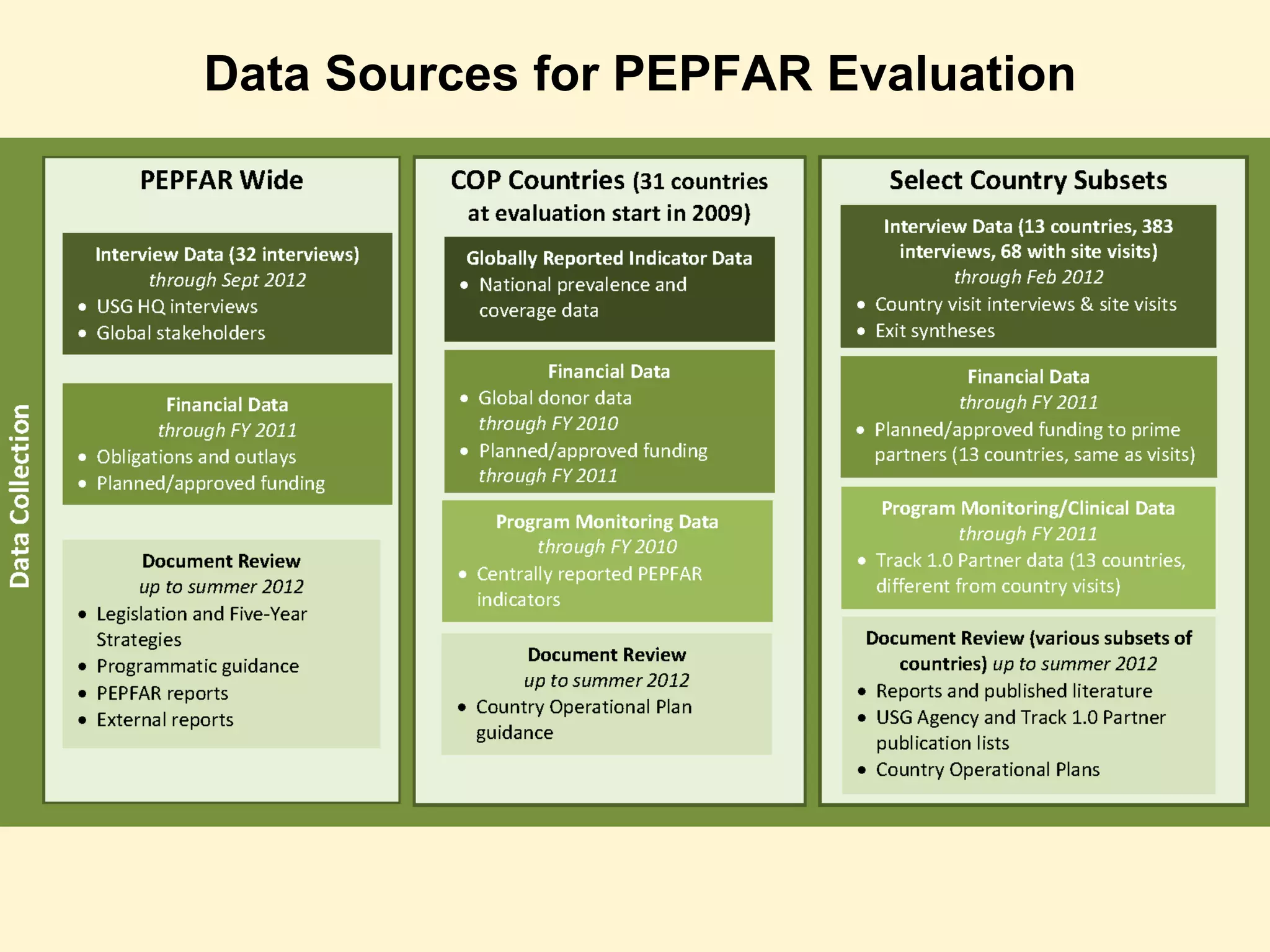
Data Sources for PEPFAR Evaluation
Nested Case-Based Approaches
• Country selection process
• By topic
• By individual country
• By subsets of countries (aggregated
data)
Tools for Case-Based Approaches
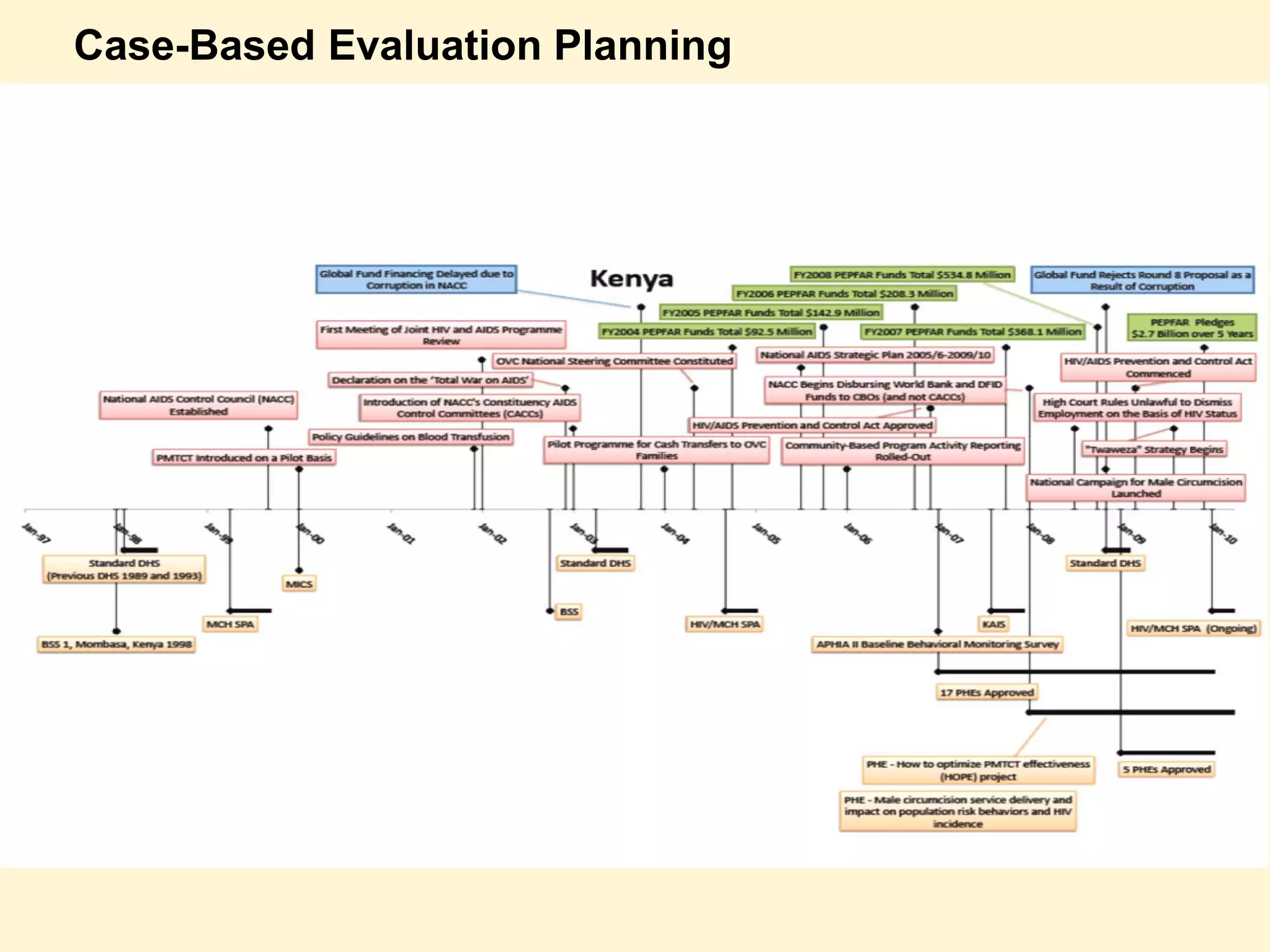
Chronologies/Histories (Country briefs; Timelines for
context, guidance, activities)
Time trends (PEPFAR data, partner data, global data)
Document review (Guidance documents, operational plans
by HQ and country, published literature)
Interviews (semi-structured)
Iterative group discussions for analyses and
interpretation (across whole and subsets of evaluation
team)
Triangulation among data sources and analyses
(interview/document/programmatic/clinical/financial)
Case-Based Evaluation Planning
88
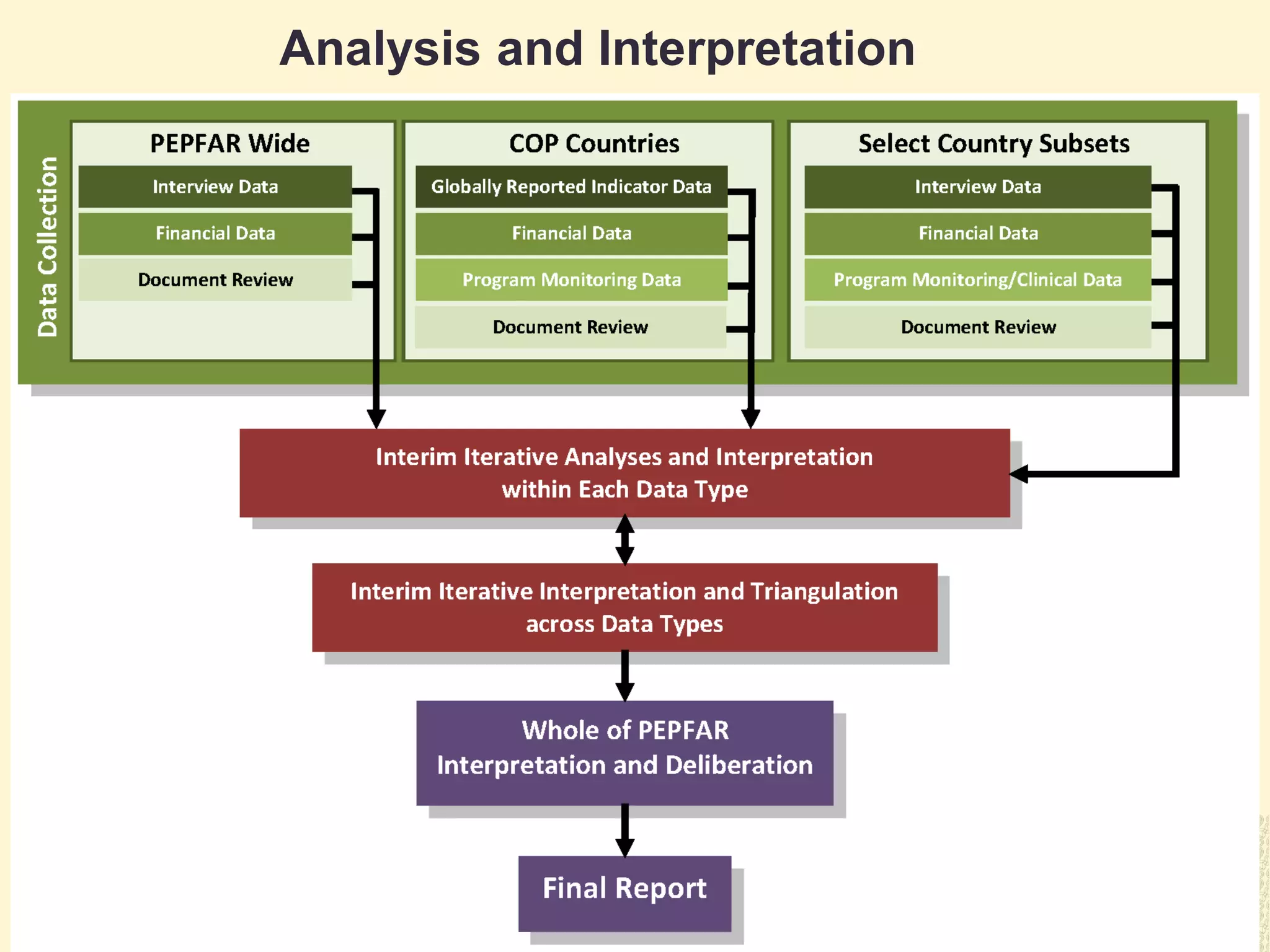
Analysis and Interpretation
What did we learn from use of case-
based approaches?
Appropriate and relevant for learning about and
within complexity
Expands and enriches the tools available
beyond indicators and metrics
Lends credibility through techniques to help
understand “how” and “why” questions.
Triangulation is critical for analysis and
interpretation
Takeaways
• No need to be intimidated
• No need to be apologetic
• What is a “case”?
• More than you might think
• What does “best practice” mean in
this context?
• Fit-for-purpose
• Informed and intentional
• Well-documented
Full report available:
www.iom.edu/pepfar2
For Evaluation
Approach and Methods:
Chapter 2
Appendix C

Lessons from the 2013 IOM Evaluation of PEPFAR: Use of Case-Based Approaches

  • 1.
    Lessons from the2013 IOM Evaluation of PEPFAR: Use of Case-Based Approaches Bridget Kelly
  • 2.
    Evaluation of PEPFAR- Congressional Charge U.S. Congress mandated that the Institute of Medicine assess and evaluate the “performance” and “impact on health” of PEPFAR.
  • 3.
    Evaluation Design: Fit forPurpose and Feasibility • Retrospective • Hybrid Design • Mixed Methods • Nested, in-depth case-based approaches
  • 4.
    Data Sources forPEPFAR Evaluation
  • 5.
    Nested Case-Based Approaches •Country selection process • By topic • By individual country • By subsets of countries (aggregated data)
  • 6.
    Tools for Case-BasedApproaches Chronologies/Histories (Country briefs; Timelines for context, guidance, activities) Time trends (PEPFAR data, partner data, global data) Document review (Guidance documents, operational plans by HQ and country, published literature) Interviews (semi-structured) Iterative group discussions for analyses and interpretation (across whole and subsets of evaluation team) Triangulation among data sources and analyses (interview/document/programmatic/clinical/financial)
  • 7.
  • 8.
  • 9.
    What did welearn from use of case- based approaches? Appropriate and relevant for learning about and within complexity Expands and enriches the tools available beyond indicators and metrics Lends credibility through techniques to help understand “how” and “why” questions. Triangulation is critical for analysis and interpretation
  • 10.
    Takeaways • No needto be intimidated • No need to be apologetic • What is a “case”? • More than you might think • What does “best practice” mean in this context? • Fit-for-purpose • Informed and intentional • Well-documented
  • 11.
    Full report available: www.iom.edu/pepfar2 ForEvaluation Approach and Methods: Chapter 2 Appendix C