Robert	
  P.	
  Vietzke,	
  Execu3ve	
  Director,	
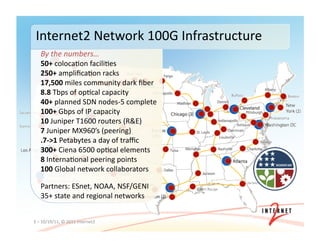
  Network	
  Services	
  
rvietzke@internet2.edu	
  
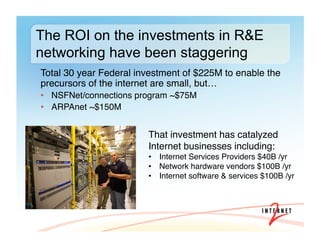
Mathew	
  P.	
  Davy,	
  InCNTRE	
  Director	
  and	
  IU	
  Chief	
  Network	
  Architect	
  
mpd@indiana.edu	
  
Open	
  Network	
  Summit	
  -­‐	
  October	
  19,	
  2011	
  
10/19/11	
  –	
  2	
  –	
  ©Internet2	
  2009	
  
Internet2	
  the	
  Community:	
  
•  Internet2	
  was	
  formed	
  by	
  34	
  	
  
universi3es	
  in	
  1996	
  
•  200+	
  Higher	
  Ed	
  members	
  are	
  
core	
  of	
  Internet2	
  
•  Over	
  40	
  corporate	
  members	
  
collaborate	
  on	
  advanced	
  
network	
  and	
  applica3ons	
  
•  11	
  corporate	
  members	
  
counted	
  at	
  this	
  summit	
  
3	
  –	
  10/19/11,	
  ©	
  2011	
  Internet2	
  
Internet2	
  Network	
  100G	
  Infrastructure	
  
By	
  the	
  numbers…	
  
50+	
  coloca3on	
  facili3es	
  
250+	
  amplifica3on	
  racks	
  
17,500	
  miles	
  community	
  dark	
  fiber	
  
8.8	
  Tbps	
  of	
  op3cal	
  capacity	
  
40+	
  planned	
  SDN	
  nodes-­‐5	
  complete	
  
100+	
  Gbps	
  of	
  IP	
  capacity	
  
10	
  Juniper	
  T1600	
  routers	
  (R&E)	
  
7	
  Juniper	
  MX960’s	
  (peering)	
  
.7-­‐>1	
  Petabytes	
  a	
  day	
  of	
  traffic	
  
300+	
  Ciena	
  6500	
  op3cal	
  elements	
  
8	
  Interna3onal	
  peering	
  points	
  
100	
  Global	
  network	
  collaborators	
  
Partners:	
  ESnet,	
  NOAA,	
  NSF/GENI	
  
35+	
  state	
  and	
  regional	
  networks	
  
•  Thousands	
  of	
  the	
  leading	
  thinkers	
  collabora3ng	
  in	
  an	
  
open	
  environment	
  to	
  advance	
  the	
  Internet	
  and	
  
advanced	
  applica3ons.	
  
•  As	
  a	
  community,	
  we	
  create	
  markets.	
  
•  We	
  create	
  markets	
  by	
  incuba3ng	
  great	
  ideas	
  from	
  
prototypes	
  to	
  early	
  adop4on	
  at	
  scale	
  in	
  the	
  3me	
  before	
  
they	
  are	
  commercially	
  viable.	
  
4	
  –	
  10/19/11,	
  ©	
  2009	
  Internet2	
  
What	
  is	
  the	
  research	
  and	
  educa3on	
  
“community”?	
  
•  The research and education community has played a
seminal role in the creation of the modern Internet and
the applications that have made it the transformative
technology of the 20th and 21st century

•  The story is on-going-- not simply historical. What we
do today sets the groundwork for next stages of
Internet development#
Opportunity for innovation begins with
understanding history.
Total 30 year Federal investment of $225M to enable the
precursors of the internet are small, but…#
•  NSFNet/connections program ~$75M#
•  ARPAnet ~$150M#
The ROI on the investments in R&E
networking have been staggering
That investment has catalyzed
Internet businesses including:#
•  Internet Services Providers $40B /yr#
•  Network hardware vendors $100B /yr#
•  Internet software & services $100B /yr#
•  First commercial Internet companies were spun out of R&E networks #
–  Merit Network co-created ANS#
–  The Center	
  for	
  Seismic	
  Studies	
  in	
  Northern	
  Virginia	
  created UUNET#
–  Nysernet created PSINet#
•  WWW and web browsers and early commercial sites created
avalanche of demand for commercial Internet presence#
–  The first web browsers were created by CERN and NCSA at the University of
Illinois Urbana-Champaign#
–  First US web server came online at Stanfordʼs SLAC.#
•  Reality: The Internet became the de facto standard because that s
where the action was... #
•  A new open platform that some argued would never work because it
couldnʼt scale, wasnʼt robust enough, lacked management, etc…#
•  Now the ISP Market is $40B+ annually and Internet Software and
Services Market is $100B+ annually #
Vignette: The Commercial Internet
•  Workstations (Sun Micro from Stanford, BSD from Berkley)#
•  Routers (CISCO from Stanford)#
•  Network caching (Akamai from MIT)#
•  Security/IDS (Arbor Networks from Univ. of Michigan)#
•  Content: Facebook (Harvard) Google (Stanford)#
•  The entire Internet world evolved from the
bandwidth rich environment in labs and on
campuses that started with the ARPAnet and
NSFnet#
Leading companies have their roots in
research networks and campuses
•  Many companies have been created or re-invented
through innovations in the R&E community #
•  Even those who have been reluctant to lead change
have become major beneficiaries of that innovation#
•  The research and education community has been the
source of the disruptive technologies that enabled
whole new industries and changed existing ones#
•  We led and continue to lead thinking from bandwidth
scarcity to bandwidth availability #
•  We moved and continue to move the world from
proprietary to open#
•  We still need this incubation capability#
Whole new markets driving the global
economy have emerged from R&E innovation
•  Demand follows application availability (which needs
large scale operating environments to enable adoption)#
–  Commercial approaches tend to limit use to find ROI#
–  Innovation platforms need to encourage utilization#
•  Real applications tend to evolve from ubiquitous
deployment in real communities, which R&E has
traditionally enabled. #
–  small demo pilots don t provide adequate scale and real-world
conditions for applications to take off#
•  We	
  need	
  to	
  create	
  a	
  plaiorm	
  for	
  future	
  innova3on	
  that	
  
enables	
  new	
  thinking	
  and	
  capabili3es	
  at	
  increased	
  scale#
Going forward: We can t predict the
future, but we can stimulate innovation

A National/Global SDN Innovation Platform: NDDI / OS3E

  • 3.
    Robert  P.  Vietzke,  Execu3ve  Director,  Network  Services   rvietzke@internet2.edu   Mathew  P.  Davy,  InCNTRE  Director  and  IU  Chief  Network  Architect   mpd@indiana.edu   Open  Network  Summit  -­‐  October  19,  2011  
  • 4.
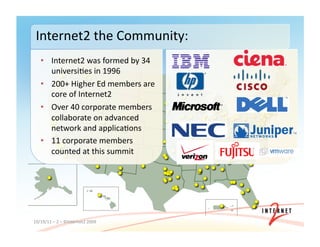
    10/19/11  –  2  –  ©Internet2  2009   Internet2  the  Community:   •  Internet2  was  formed  by  34     universi3es  in  1996   •  200+  Higher  Ed  members  are   core  of  Internet2   •  Over  40  corporate  members   collaborate  on  advanced   network  and  applica3ons   •  11  corporate  members   counted  at  this  summit  
  • 5.
    3  –  10/19/11,  ©  2011  Internet2   Internet2  Network  100G  Infrastructure   By  the  numbers…   50+  coloca3on  facili3es   250+  amplifica3on  racks   17,500  miles  community  dark  fiber   8.8  Tbps  of  op3cal  capacity   40+  planned  SDN  nodes-­‐5  complete   100+  Gbps  of  IP  capacity   10  Juniper  T1600  routers  (R&E)   7  Juniper  MX960’s  (peering)   .7-­‐>1  Petabytes  a  day  of  traffic   300+  Ciena  6500  op3cal  elements   8  Interna3onal  peering  points   100  Global  network  collaborators   Partners:  ESnet,  NOAA,  NSF/GENI   35+  state  and  regional  networks  
  • 6.
    •  Thousands  of  the  leading  thinkers  collabora3ng  in  an   open  environment  to  advance  the  Internet  and   advanced  applica3ons.   •  As  a  community,  we  create  markets.   •  We  create  markets  by  incuba3ng  great  ideas  from   prototypes  to  early  adop4on  at  scale  in  the  3me  before   they  are  commercially  viable.   4  –  10/19/11,  ©  2009  Internet2   What  is  the  research  and  educa3on   “community”?  
  • 7.
    •  The researchand education community has played a seminal role in the creation of the modern Internet and the applications that have made it the transformative technology of the 20th and 21st century
 •  The story is on-going-- not simply historical. What we do today sets the groundwork for next stages of Internet development# Opportunity for innovation begins with understanding history.
  • 8.
    Total 30 yearFederal investment of $225M to enable the precursors of the internet are small, but…# •  NSFNet/connections program ~$75M# •  ARPAnet ~$150M# The ROI on the investments in R&E networking have been staggering That investment has catalyzed Internet businesses including:# •  Internet Services Providers $40B /yr# •  Network hardware vendors $100B /yr# •  Internet software & services $100B /yr#
  • 9.
    •  First commercialInternet companies were spun out of R&E networks # –  Merit Network co-created ANS# –  The Center  for  Seismic  Studies  in  Northern  Virginia  created UUNET# –  Nysernet created PSINet# •  WWW and web browsers and early commercial sites created avalanche of demand for commercial Internet presence# –  The first web browsers were created by CERN and NCSA at the University of Illinois Urbana-Champaign# –  First US web server came online at Stanfordʼs SLAC.# •  Reality: The Internet became the de facto standard because that s where the action was... # •  A new open platform that some argued would never work because it couldnʼt scale, wasnʼt robust enough, lacked management, etc…# •  Now the ISP Market is $40B+ annually and Internet Software and Services Market is $100B+ annually # Vignette: The Commercial Internet
  • 10.
    •  Workstations (SunMicro from Stanford, BSD from Berkley)# •  Routers (CISCO from Stanford)# •  Network caching (Akamai from MIT)# •  Security/IDS (Arbor Networks from Univ. of Michigan)# •  Content: Facebook (Harvard) Google (Stanford)# •  The entire Internet world evolved from the bandwidth rich environment in labs and on campuses that started with the ARPAnet and NSFnet# Leading companies have their roots in research networks and campuses
  • 11.
    •  Many companieshave been created or re-invented through innovations in the R&E community # •  Even those who have been reluctant to lead change have become major beneficiaries of that innovation# •  The research and education community has been the source of the disruptive technologies that enabled whole new industries and changed existing ones# •  We led and continue to lead thinking from bandwidth scarcity to bandwidth availability # •  We moved and continue to move the world from proprietary to open# •  We still need this incubation capability# Whole new markets driving the global economy have emerged from R&E innovation
  • 12.
    •  Demand followsapplication availability (which needs large scale operating environments to enable adoption)# –  Commercial approaches tend to limit use to find ROI# –  Innovation platforms need to encourage utilization# •  Real applications tend to evolve from ubiquitous deployment in real communities, which R&E has traditionally enabled. # –  small demo pilots don t provide adequate scale and real-world conditions for applications to take off# •  We  need  to  create  a  plaiorm  for  future  innova3on  that   enables  new  thinking  and  capabili3es  at  increased  scale# Going forward: We can t predict the future, but we can stimulate innovation