TEAM TEACHING IN THE AGE OF E-COLLABORATION Flavio Manganello September, 3 2009 Università Politecnica delle Marche Facoltà di Ingegneria DIIGA
Online team teaching Design Evaluation Management Knowledge sharing Reciprocal help [Trentin, 1998] Co ordination Co decision Co llaboration
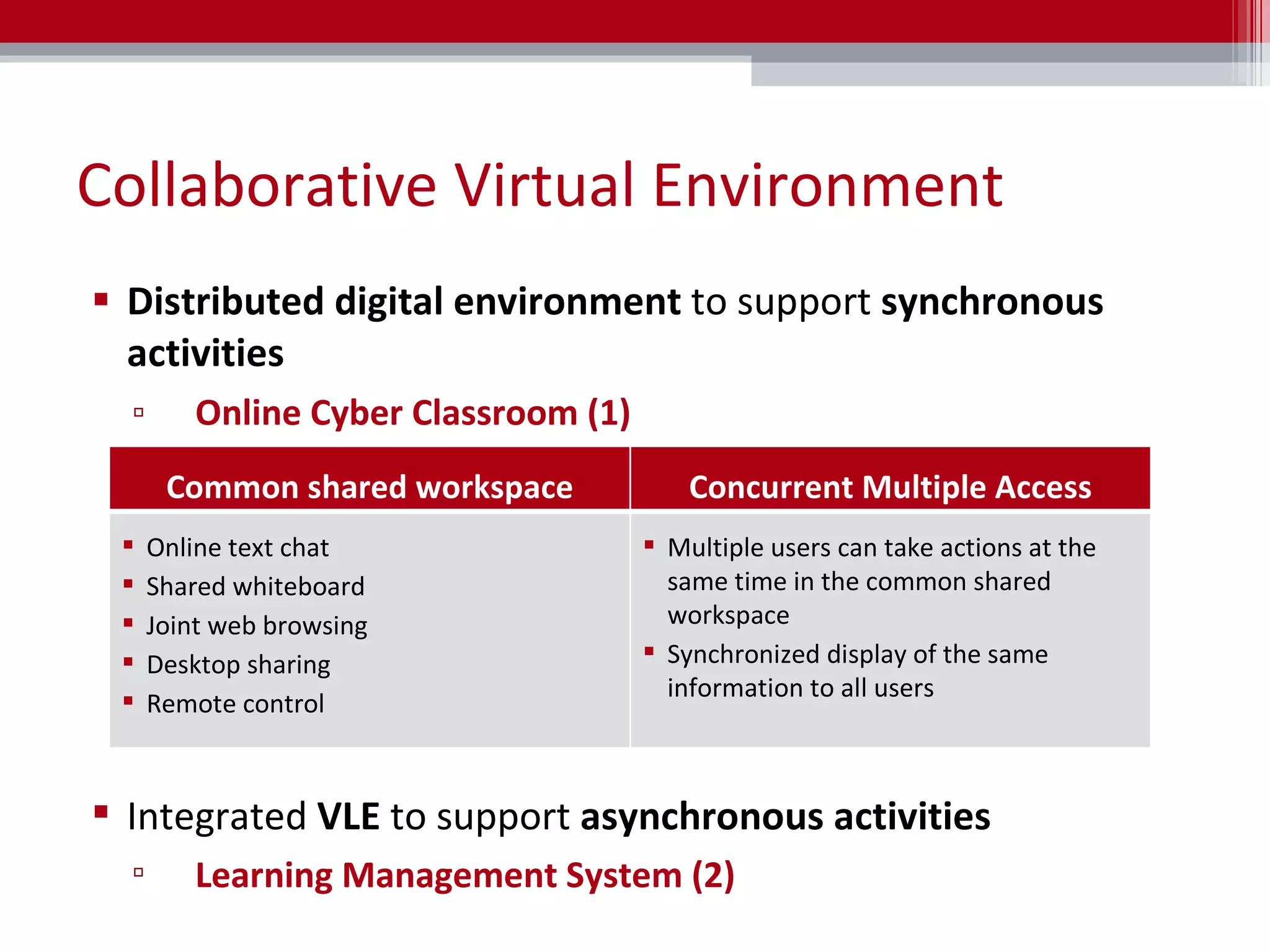
Collaborative Virtual Environment Distributed digital environment  to support  synchronous activities Online Cyber Classroom (1) Integrated  VLE  to support  asynchronous activities  Learning Management System (2) Common shared workspace Concurrent Multiple Access Online text chat Shared whiteboard Joint web browsing Desktop sharing Remote control Multiple users can take actions at the same time in the common shared workspace Synchronized display of the same information to all users
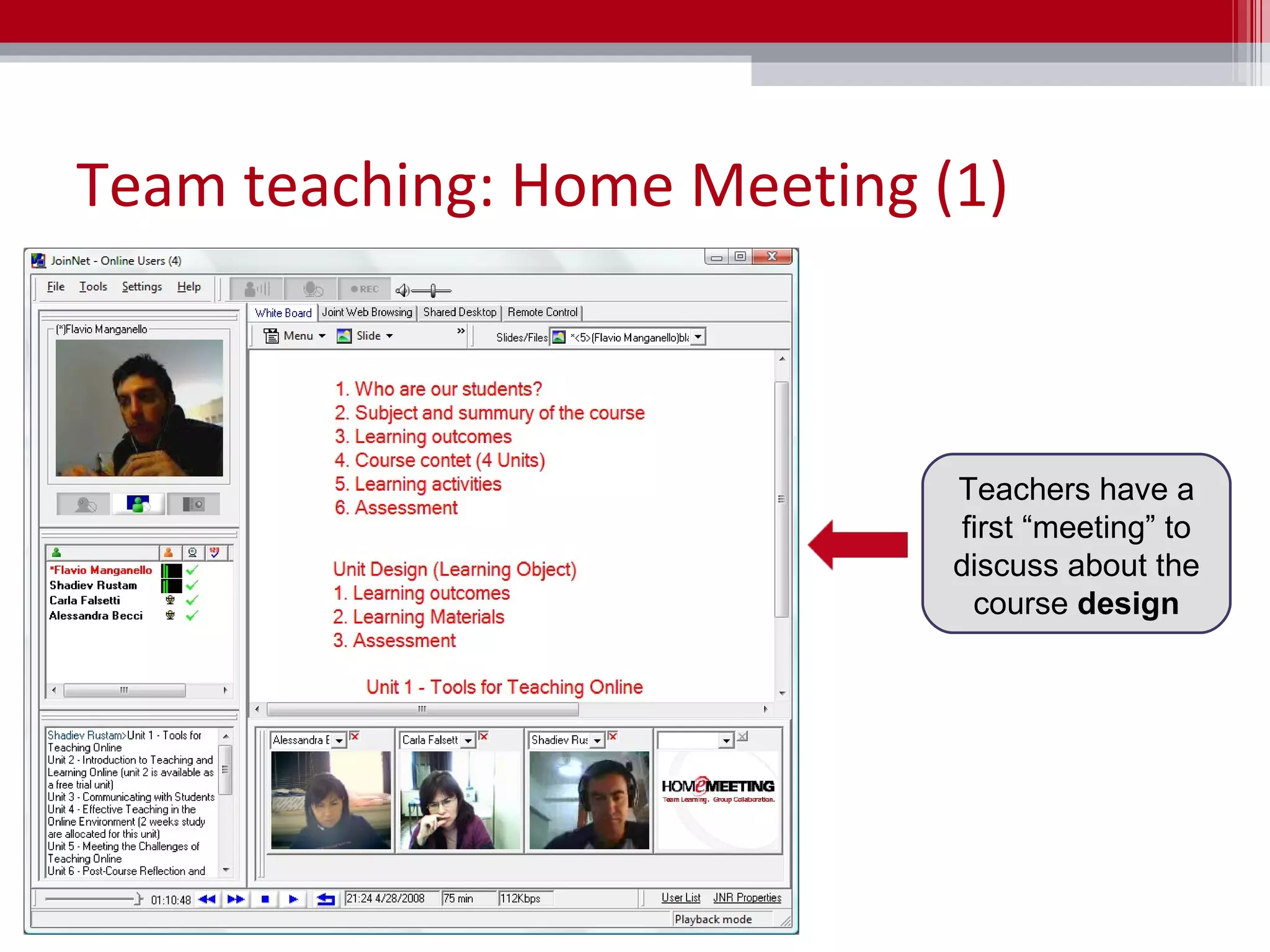
Team teaching: Home Meeting (1) Teachers have a first “meeting” to discuss about the course  design
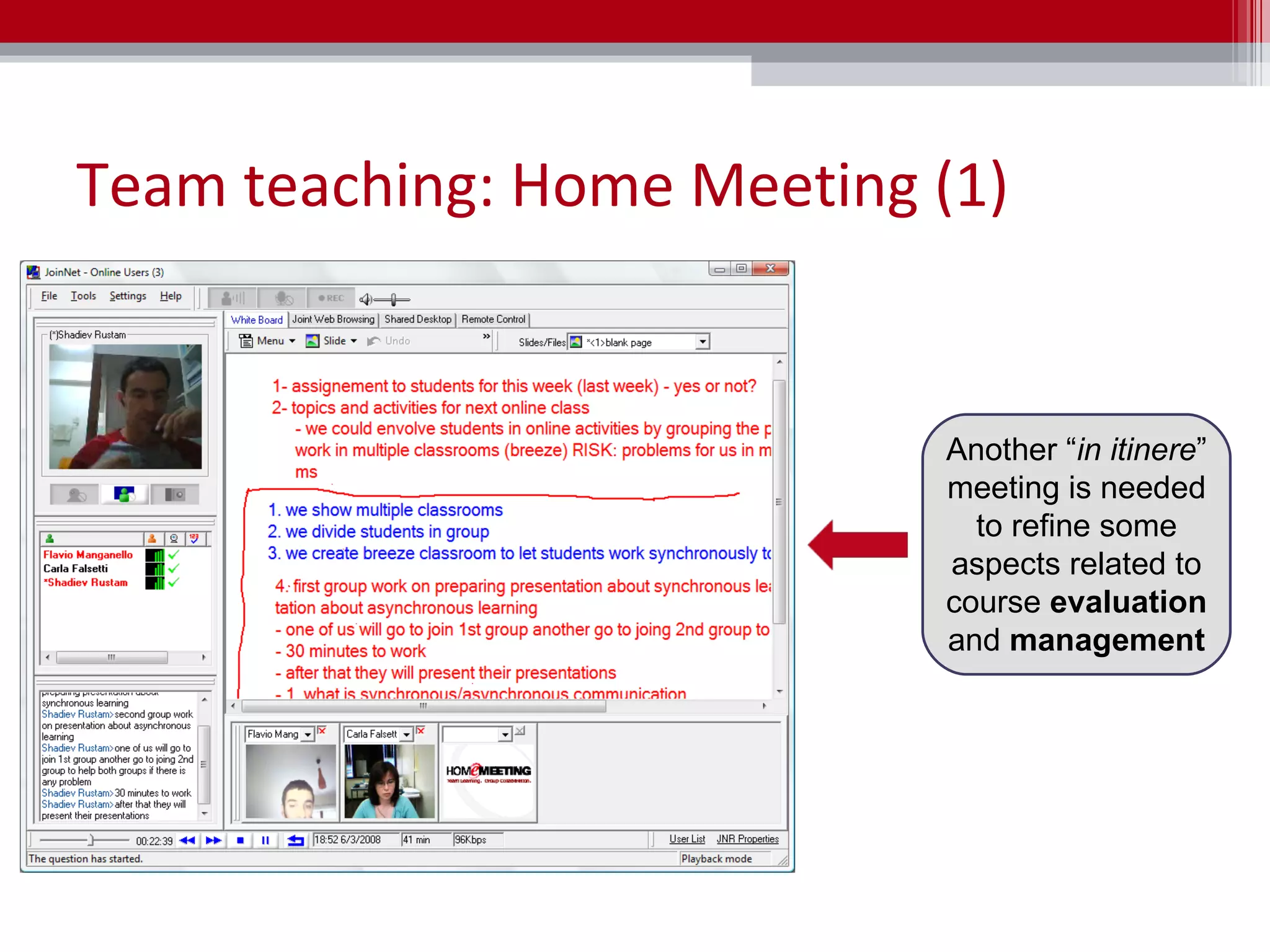
Team teaching: Home Meeting (1) Another “ in itinere ” meeting is needed to refine some aspects related to course  evaluation  and  management
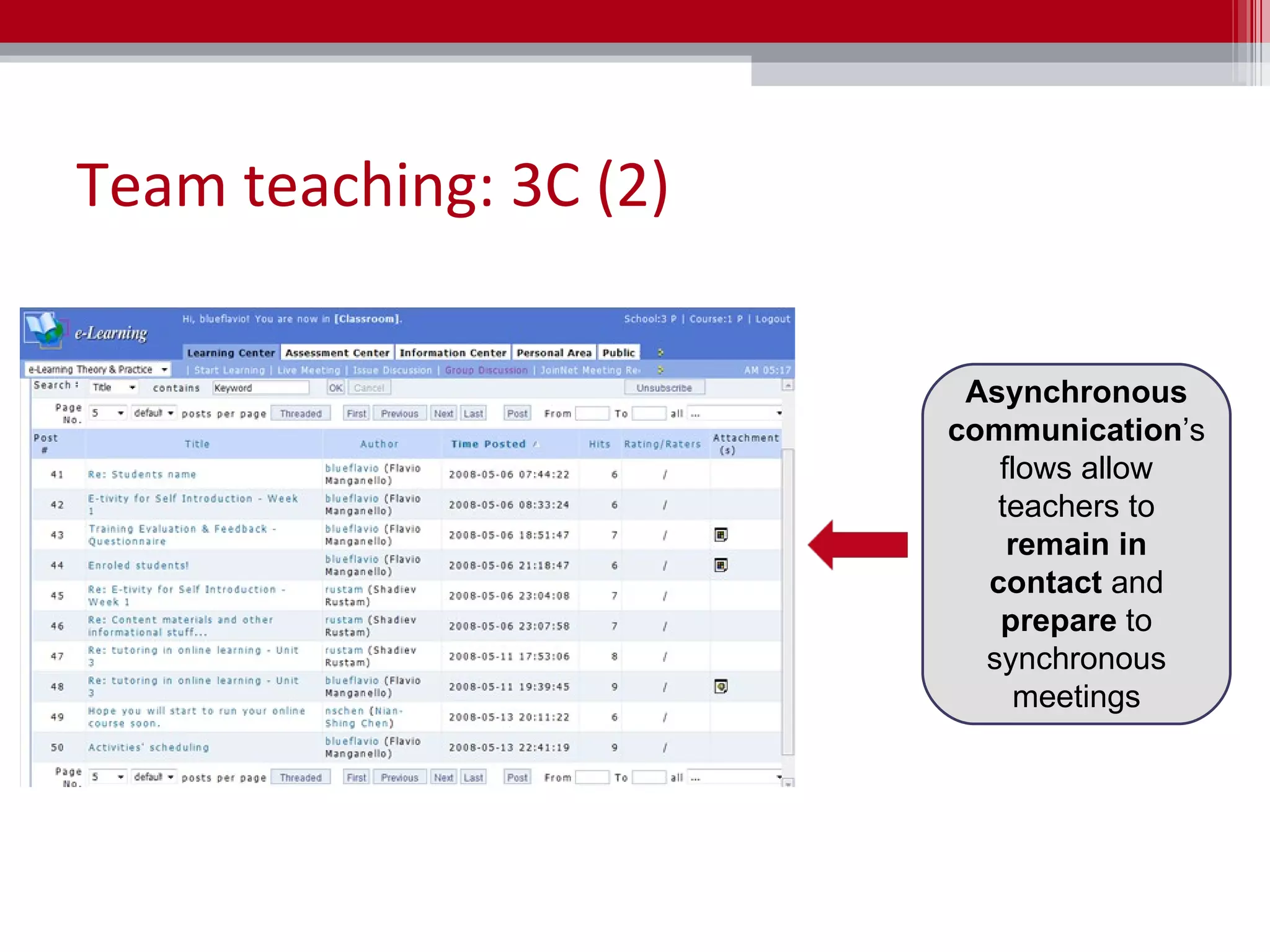
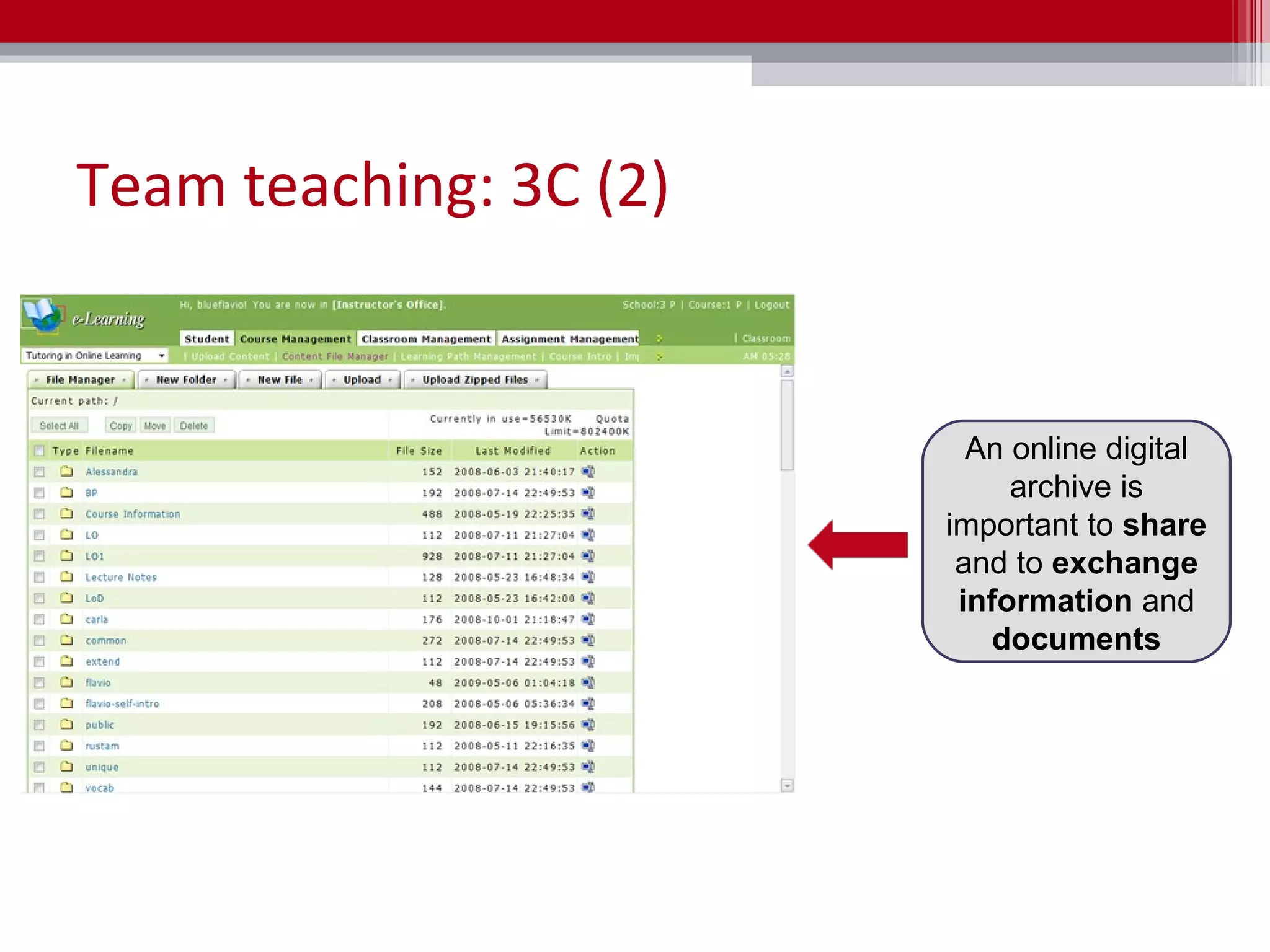
Team teaching: 3C (2) Asynchronous communication ’s flows allow teachers to  remain in contact  and  prepare  to synchronous meetings
Team teaching: 3C (2) An online digital archive is important to  share  and to  exchange   information  and  documents
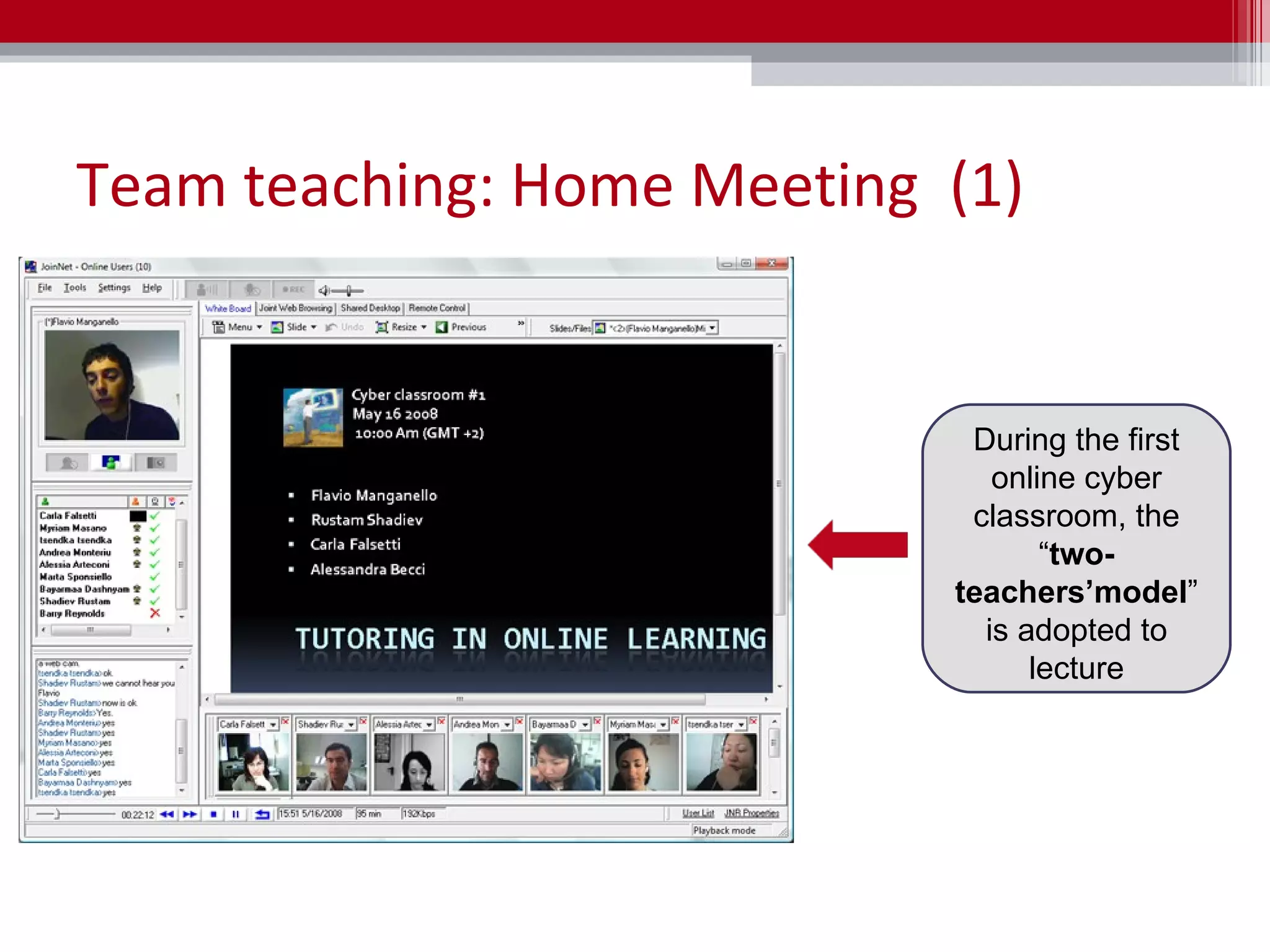
Team teaching: Home Meeting  (1) During the first online cyber classroom, the “ two-teachers’model ” is adopted to lecture
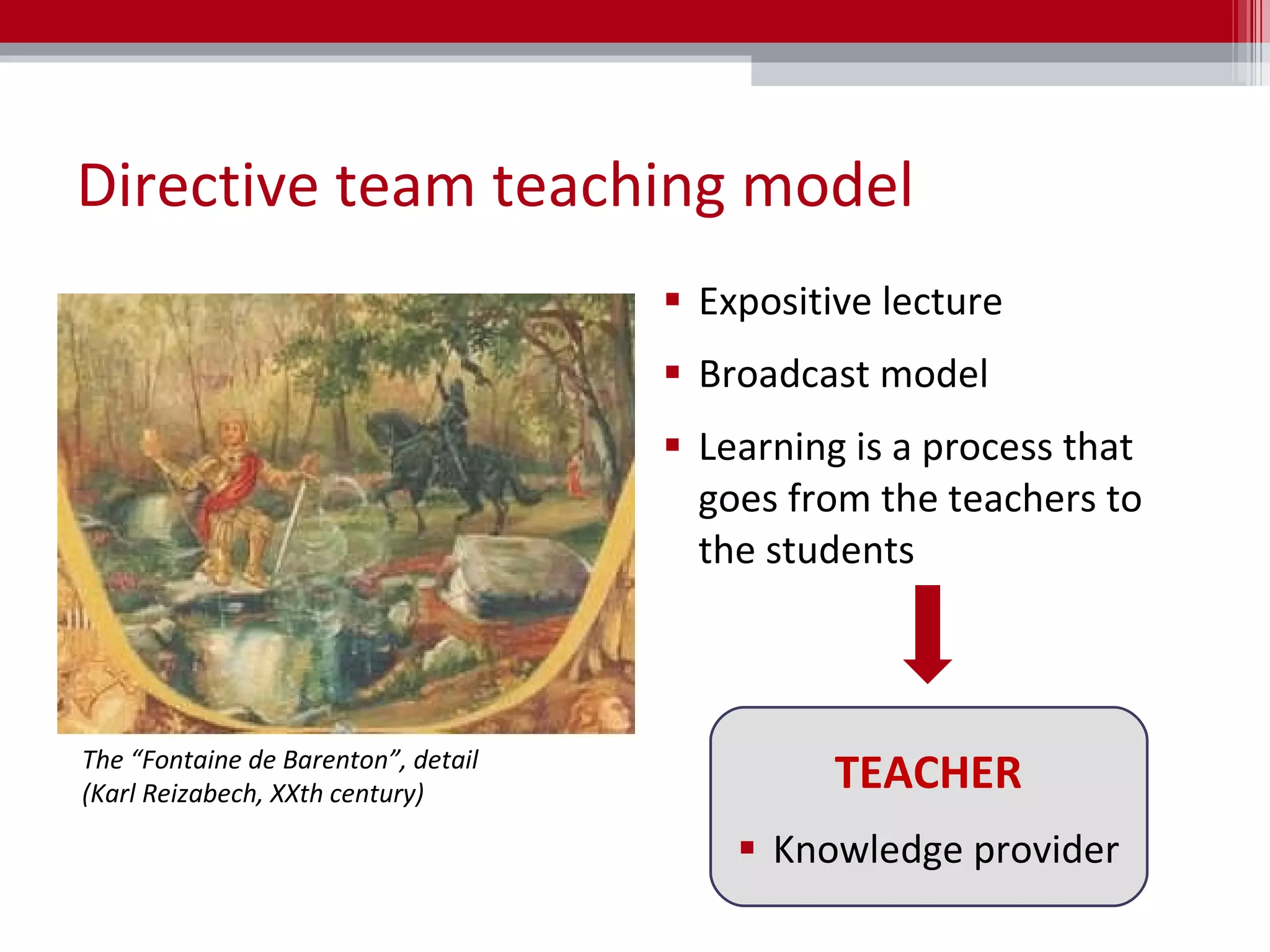
Expositive lecture Broadcast model  Learning is a process that goes from the teachers to the students TEACHER Knowledge provider Directive team teaching model The “Fontaine de Barenton”, detail (Karl Reizabech, XXth century)
Collaborative team teaching model Problem Based Learning  Meaningful Learning [Ausubel, 1962] Scaffolding [Bruner, 1976] TEACHER Facilitator, coach From the movie “Friday Night Lights” (2004)
Team teaching models [Chen, 2004] Directive models Collaborative models Synchronous activities (online cyber classroom) Two-teachers model One concentrates on lecturing, the other one concentrates on responding to questions in the text chatroom Three-teachers model One concentrates on lecturing, the second one concentrates on responding to questions in the text chatroom, the third one concentrates on preparing material to the whiteboard Asynchronous/distributed activities  Two-teachers (or tutors) Management of a community of practice or of a learning community Synchronous activities (online cyber classroom) Two-teachers (or facilitators) Management of a web seminar or of a student-led discussion
Some key points Definition of  activities  and choice of a  pedagogical model Definition of  technological tools Definition of an  (inter)relations’ model  among actors Teachers ’  coordination Analysis of  teachers’  profiles  and definition of  roles Management of  leadership Implementation of a “ script ”  Elements of “ project management ” Management of technological tools Multimedial environment
Reflections Teachers' step forward Personal and professional  identity Performance  [Maragliano, 2009] Vocation to collaboration Collaboration is a process that happens if particular  instrumental abilities  subsist, not only related to the technology Behavioral aspects of digital collaboration and communication Virtual Ethnography  [Hine, 2000] Media Richness  or  Media Naturalness  [Kock, 2005] Mutual confidence  and  trust

Team teaching in the age of e-collaboration

  • 1.
    TEAM TEACHING INTHE AGE OF E-COLLABORATION Flavio Manganello September, 3 2009 Università Politecnica delle Marche Facoltà di Ingegneria DIIGA
  • 2.
    Online team teachingDesign Evaluation Management Knowledge sharing Reciprocal help [Trentin, 1998] Co ordination Co decision Co llaboration
  • 3.
    Collaborative Virtual EnvironmentDistributed digital environment to support synchronous activities Online Cyber Classroom (1) Integrated VLE to support asynchronous activities Learning Management System (2) Common shared workspace Concurrent Multiple Access Online text chat Shared whiteboard Joint web browsing Desktop sharing Remote control Multiple users can take actions at the same time in the common shared workspace Synchronized display of the same information to all users
  • 4.
    Team teaching: HomeMeeting (1) Teachers have a first “meeting” to discuss about the course design
  • 5.
    Team teaching: HomeMeeting (1) Another “ in itinere ” meeting is needed to refine some aspects related to course evaluation and management
  • 6.
    Team teaching: 3C(2) Asynchronous communication ’s flows allow teachers to remain in contact and prepare to synchronous meetings
  • 7.
    Team teaching: 3C(2) An online digital archive is important to share and to exchange information and documents
  • 8.
    Team teaching: HomeMeeting (1) During the first online cyber classroom, the “ two-teachers’model ” is adopted to lecture
  • 9.
    Expositive lecture Broadcastmodel Learning is a process that goes from the teachers to the students TEACHER Knowledge provider Directive team teaching model The “Fontaine de Barenton”, detail (Karl Reizabech, XXth century)
  • 10.
    Collaborative team teachingmodel Problem Based Learning Meaningful Learning [Ausubel, 1962] Scaffolding [Bruner, 1976] TEACHER Facilitator, coach From the movie “Friday Night Lights” (2004)
  • 11.
    Team teaching models[Chen, 2004] Directive models Collaborative models Synchronous activities (online cyber classroom) Two-teachers model One concentrates on lecturing, the other one concentrates on responding to questions in the text chatroom Three-teachers model One concentrates on lecturing, the second one concentrates on responding to questions in the text chatroom, the third one concentrates on preparing material to the whiteboard Asynchronous/distributed activities Two-teachers (or tutors) Management of a community of practice or of a learning community Synchronous activities (online cyber classroom) Two-teachers (or facilitators) Management of a web seminar or of a student-led discussion
  • 12.
    Some key pointsDefinition of activities and choice of a pedagogical model Definition of technological tools Definition of an (inter)relations’ model among actors Teachers ’ coordination Analysis of teachers’ profiles and definition of roles Management of leadership Implementation of a “ script ” Elements of “ project management ” Management of technological tools Multimedial environment
  • 13.
    Reflections Teachers' stepforward Personal and professional identity Performance [Maragliano, 2009] Vocation to collaboration Collaboration is a process that happens if particular instrumental abilities subsist, not only related to the technology Behavioral aspects of digital collaboration and communication Virtual Ethnography [Hine, 2000] Media Richness or Media Naturalness [Kock, 2005] Mutual confidence and trust