ONLINE SAFETY,
SECURITY AND
NETIQUETTE
Gellie Meia Guzman, TII
Netiquette is a combination of
the words network and
etiquette. It is a set of rules for
behaving properly online.
“
THE CORE RULES OF NETIQUETTE
Rule 1: Remember the human.
Rule 2: Adhere to the same standards of behavior
online that you follow in real life.
Rule 3: Know where you are in cyberspace.
Rule 4: respect other people’s time and bandwidth.
Rule 5: Make yourself look goof online.
Rule 6: Share expert knowledge.
Rule 7: Help keep flame wars under control.
Rule 8: Respect other people’s privacy.
Rule 9: Don’t abuse your power.
Rule 10: Be forgiving of other people’s mistakes.
Flame War
▸ Is a series of flame post or messages in a thread
that are considered derogatory in nature or are
completely off-topic.
▸ Often these flames are posted for the sole purpose
of offending or upsetting other users.
▸ The flame becomes a flame war when other users
respond to the thread with their own flame
message.
KINDS OF ONLINE
THREATS
ONLINE THREAT
Is deemed any malicious act that attempts to gain
access to computer network without authorization
or permission from the owners.
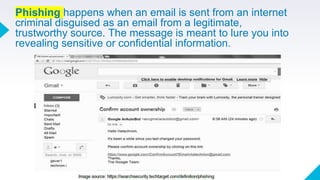
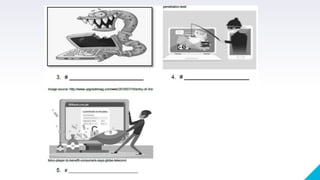
Phishing happens when an email is sent from an internet
criminal disguised as an email from a legitimate,
trustworthy source. The message is meant to lure you into
revealing sensitive or confidential information.
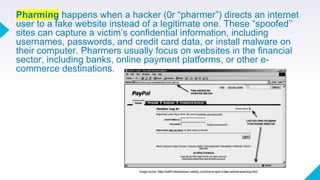
Pharming happens when a hacker (0r “pharmer”) directs an internet
user to a fake website instead of a legitimate one. These “spoofed’’
sites can capture a victim’s confidential information, including
usernames, passwords, and credit card data, or install malware on
their computer. Pharmers usually focus on websites in the financial
sector, including banks, online payment platforms, or other e-
commerce destinations.
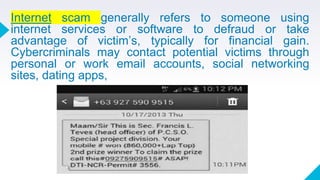
Internet scam generally refers to someone using
internet services or software to defraud or take
advantage of victim’s, typically for financial gain.
Cybercriminals may contact potential victims through
personal or work email accounts, social networking
sites, dating apps,
Internet robots are also known as spiders, crawlers,
and web bots, it is a software application that is
programmed to do certain tasks. Bots are automated
which means they run according to their instructions
without a human user.
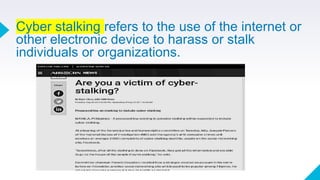
Cyber stalking refers to the use of the internet or
other electronic device to harass or stalk
individuals or organizations.
Cyberbullying refers to the act of
tormenting, harassing, or embarrassing
another person using the internet.
Spoofing happens when someone or
something pretends to be something else to
gain our confidence, get access to our
systems, steal data, steal money, or spread
malware.
References
1. ABS-CBN News Topic Page on Identity-theft. Retrieved from https://news.abs-cbn.com/list/tag/identity-theft. Retrieved on May 22, 2020.
2. National Center for Missing and Exploited Children. (n.d.). NSTeens: Can you keep it private. Retrieved from
3. Netiquette Quiz. Retrieved from https://www.nku.edu/~rkdrury/experiment/netiquette_quiz.htm. Retrieved on May 22, 2020.
4. Quiambao, Angelito. (2018, Jul. 23). Online safety, security, ethics, and etiquette. Retrieved from https://www.slideshare.net/AngelitoQuiambao/online-safety-security-ethics-
amp-etiquette. Retrieved on May 22, 2020.
5. Belcic, Ivan. (2019, Nov. 7). What is pharming and how to protect against attacks. Retrieved from https://www.avg.com/en/signal/what-is-pharming. Retrieved on May 22,
2020.
Images
1. https://twitter.com/Parkster00/status/1246347088625045504
2. Shea, Virginia. (2011). Netiquette. Retrieved from http://www.albion.com/netiquette/introduction.html. Retrieved on May 22, 2020.
3. https://searchsecurity.techtarget.com/definition/phishing
4. https://ed451phishnpharm.weebly.com/how-to-spot-a-fake-website-pharming.html
5. Chua, Ryan (2011, May 24). ABS-CBN News. Are you a victim of cyber-stalking. Retrieved from https://news.abs-cbn.com/nation/05/24/11/are-you-
victim-cyber-stalking. Retrieved on May 22, 2020.
6. Andrade, Jeannette. (2012, June 2). Teen arrested for Facebook blackmail. Retrieved from https://technology.inquirer.net/11673/teen-arrested-for-
facebook-blackmail. Retrieved on May 22, 2020.
7. https://www.avg.com/en/signal/what-is-spyware
8. https://itigic.com/tag/adware/
9. https://dlpng.com/png/6702600
10. https://www.gtmaritime.com/free-phishing-penetration-test/
11. http://www.upgrademag.com/web/2018/07/18/entry-of-3rd-telco-player-to-benefit-consumers-says-globe-telecom/
12. https://shieldguide.wordpress.com/2017/03/12/think-before-you-click/
ONLINE SAFETY, SECURITY AND NETIQUETTE.pptx

ONLINE SAFETY, SECURITY AND NETIQUETTE.pptx

  • 1.
  • 2.
    Netiquette is acombination of the words network and etiquette. It is a set of rules for behaving properly online.
  • 3.
    “ THE CORE RULESOF NETIQUETTE Rule 1: Remember the human. Rule 2: Adhere to the same standards of behavior online that you follow in real life. Rule 3: Know where you are in cyberspace. Rule 4: respect other people’s time and bandwidth. Rule 5: Make yourself look goof online. Rule 6: Share expert knowledge. Rule 7: Help keep flame wars under control. Rule 8: Respect other people’s privacy. Rule 9: Don’t abuse your power. Rule 10: Be forgiving of other people’s mistakes.
  • 4.
    Flame War ▸ Isa series of flame post or messages in a thread that are considered derogatory in nature or are completely off-topic. ▸ Often these flames are posted for the sole purpose of offending or upsetting other users. ▸ The flame becomes a flame war when other users respond to the thread with their own flame message.
  • 8.
  • 9.
    ONLINE THREAT Is deemedany malicious act that attempts to gain access to computer network without authorization or permission from the owners.
  • 10.
    Phishing happens whenan email is sent from an internet criminal disguised as an email from a legitimate, trustworthy source. The message is meant to lure you into revealing sensitive or confidential information.
  • 11.
    Pharming happens whena hacker (0r “pharmer”) directs an internet user to a fake website instead of a legitimate one. These “spoofed’’ sites can capture a victim’s confidential information, including usernames, passwords, and credit card data, or install malware on their computer. Pharmers usually focus on websites in the financial sector, including banks, online payment platforms, or other e- commerce destinations.
  • 12.
    Internet scam generallyrefers to someone using internet services or software to defraud or take advantage of victim’s, typically for financial gain. Cybercriminals may contact potential victims through personal or work email accounts, social networking sites, dating apps,
  • 13.
    Internet robots arealso known as spiders, crawlers, and web bots, it is a software application that is programmed to do certain tasks. Bots are automated which means they run according to their instructions without a human user.
  • 14.
    Cyber stalking refersto the use of the internet or other electronic device to harass or stalk individuals or organizations.
  • 15.
    Cyberbullying refers tothe act of tormenting, harassing, or embarrassing another person using the internet.
  • 16.
    Spoofing happens whensomeone or something pretends to be something else to gain our confidence, get access to our systems, steal data, steal money, or spread malware.
  • 23.
    References 1. ABS-CBN NewsTopic Page on Identity-theft. Retrieved from https://news.abs-cbn.com/list/tag/identity-theft. Retrieved on May 22, 2020. 2. National Center for Missing and Exploited Children. (n.d.). NSTeens: Can you keep it private. Retrieved from 3. Netiquette Quiz. Retrieved from https://www.nku.edu/~rkdrury/experiment/netiquette_quiz.htm. Retrieved on May 22, 2020. 4. Quiambao, Angelito. (2018, Jul. 23). Online safety, security, ethics, and etiquette. Retrieved from https://www.slideshare.net/AngelitoQuiambao/online-safety-security-ethics- amp-etiquette. Retrieved on May 22, 2020. 5. Belcic, Ivan. (2019, Nov. 7). What is pharming and how to protect against attacks. Retrieved from https://www.avg.com/en/signal/what-is-pharming. Retrieved on May 22, 2020. Images 1. https://twitter.com/Parkster00/status/1246347088625045504 2. Shea, Virginia. (2011). Netiquette. Retrieved from http://www.albion.com/netiquette/introduction.html. Retrieved on May 22, 2020. 3. https://searchsecurity.techtarget.com/definition/phishing 4. https://ed451phishnpharm.weebly.com/how-to-spot-a-fake-website-pharming.html 5. Chua, Ryan (2011, May 24). ABS-CBN News. Are you a victim of cyber-stalking. Retrieved from https://news.abs-cbn.com/nation/05/24/11/are-you- victim-cyber-stalking. Retrieved on May 22, 2020. 6. Andrade, Jeannette. (2012, June 2). Teen arrested for Facebook blackmail. Retrieved from https://technology.inquirer.net/11673/teen-arrested-for- facebook-blackmail. Retrieved on May 22, 2020. 7. https://www.avg.com/en/signal/what-is-spyware 8. https://itigic.com/tag/adware/ 9. https://dlpng.com/png/6702600 10. https://www.gtmaritime.com/free-phishing-penetration-test/ 11. http://www.upgrademag.com/web/2018/07/18/entry-of-3rd-telco-player-to-benefit-consumers-says-globe-telecom/ 12. https://shieldguide.wordpress.com/2017/03/12/think-before-you-click/