Online Community
Building
&
e-Activism
WELCOME!
Presenters
• David Keyes, Seattle Department of Infomration
Technology- Community Technology Program
• Phillip Duggan, Pinehurst Community Council &
City of Seattle technology advisory board
• Joe Szilagyi, Westwood-Roxhill-Arbor Heights
Community Council & West Seattle Transit
Coalition
• Vicky Yuki , Seattle Department of Infomration
Technology- Community Technology Program
• Host: Lindsey Greene, PACE Intern, Seattle
Department of Neighborhoods
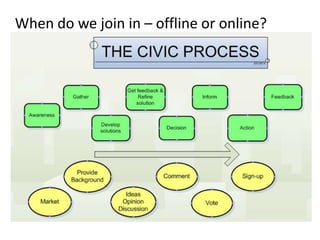
When do we join in – offline or online?
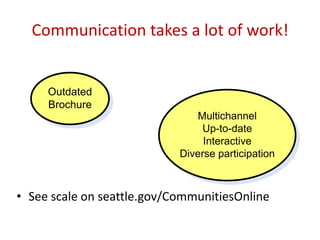
Communication takes a lot of work!
• See scale on seattle.gov/CommunitiesOnline
Multichannel
Up-to-date
Interactive
Diverse participation
Outdated
Brochure
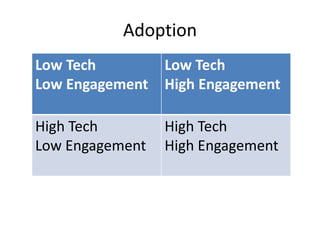
Adoption
Low Tech
Low Engagement
Low Tech
High Engagement
High Tech
Low Engagement
High Tech
High Engagement
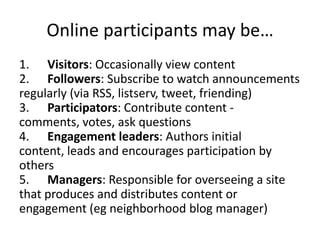
Online participants may be…
1. Visitors: Occasionally view content
2. Followers: Subscribe to watch announcements
regularly (via RSS, listserv, tweet, friending)
3. Participators: Contribute content -
comments, votes, ask questions
4. Engagement leaders: Authors initial
content, leads and encourages participation by
others
5. Managers: Responsible for overseeing a site
that produces and distributes content or
engagement (eg neighborhood blog manager)
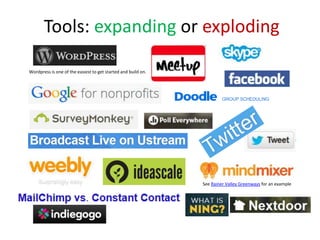
Tools: expanding or exploding
Wordpress is one of the easiest to get started and build on.
See Rainer Valley Greenways for an example
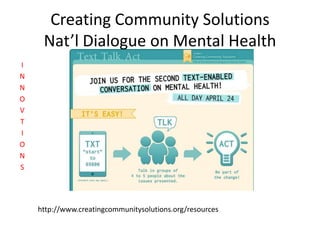
Creating Community Solutions
Nat’l Dialogue on Mental Health
http://www.creatingcommunitysolutions.org/resources
I
N
N
O
V
T
I
O
N
S
The Conundrum!
• Post it where? How often?
• Email
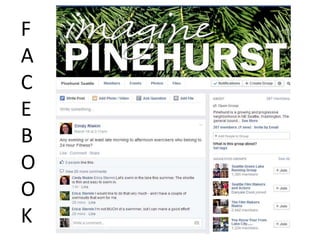
• Facebook
• Twitter
• Website
• Street kiosk
• Newspaper
• Etc etc etc
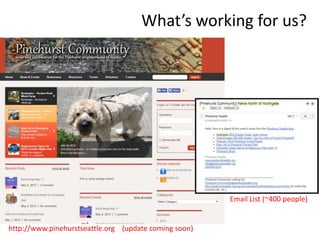
What’s working for us?
http://www.pinehurstseattle.org (update coming soon)
Email List (~400 people)
F
A
C
E
B
O
O
K
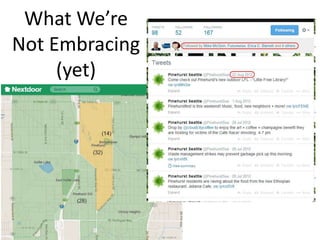
What We’re
Not Embracing
(yet)
What Next For Pinehurst?
• More involvement – We’ve got 400-600 people in
a 9600 person neighborhood on our various lists.
– A small fraction of that participate regularly.
• More diversity of participation:
– Race, income, renters
– Group 001200-3 has a median income of $26,786 and
is
Whites:65.5%, Hispanics:5.1%, Blacks:12.8%, Asians:1
2.9%, Others:8.8%
– Group 000600-6 has a median income of $75,750 and
is
Whites:59.6%, Hispanics:7.1%, Blacks:9.4%, Asians:21.
6%, Others:9.4%
What’s working for us?
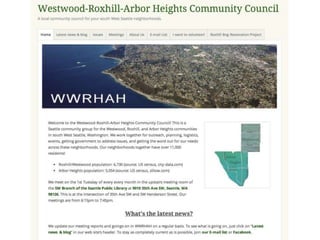
wwrhah.wordpress.com
How we used the Internet
for two West Seattle groups
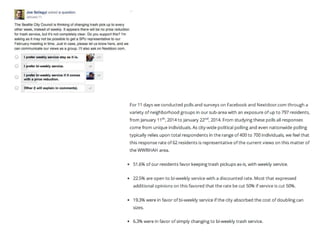
WWRHAH Group:
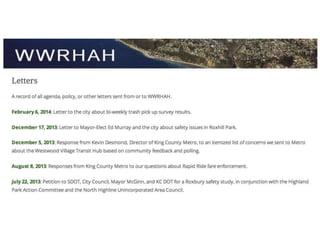
Mostly documentation
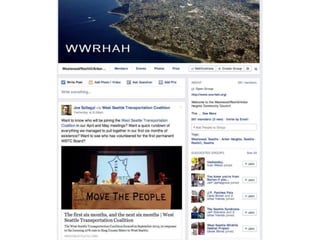
Facebook is our main meeting space
We use Facebook polling heavily
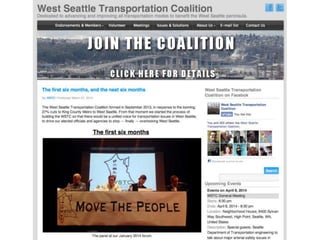
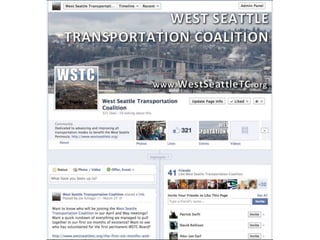
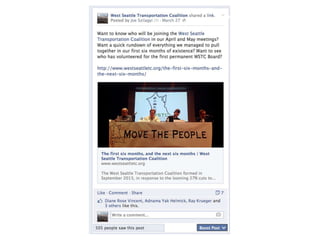
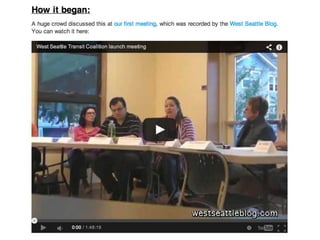
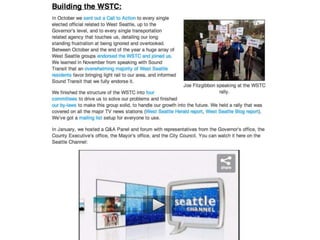
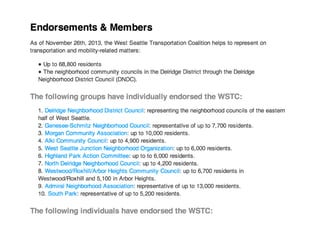
WSTC Group:
Mostly to establish our presence
To advertise our meetings
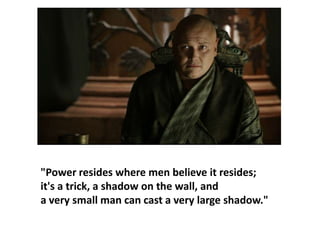
"Power resides where men believe it resides;
it's a trick, a shadow on the wall, and
a very small man can cast a very large shadow."
What we do with the
West Seattle Transportation Coalition
(WSTC)
How the WSTC did it
in our first six months
from September 2013 to now
Small discussion
• What’s working for us?
• What’s not?
• What would we like to do?
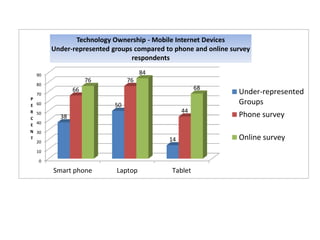
• 89% have cell phones
• 58% have smart phones
• More laptops (72%) & mobile (smartphone &
tablets, 66%) than desktops (55%).
• Higher education: more likely to use and own
computer, smartphone or tablet.
• Those with more than one internet device
tend to be younger, male, and have more
income.
Results of Seattle Tech Survey
0
10
20
30
40
50
60
70
80
90
Smart phone Laptop Tablet
38
50
14
66
76
44
76
84
68
P
E
R
C
E
N
T
Technology Ownership - Mobile Internet Devices
Under-represented groups compared to phone and online survey
respondents
Under-represented
Groups
Phone survey
Online survey
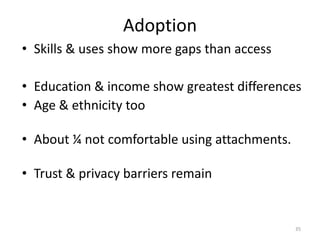
• Skills & uses show more gaps than access
• Education & income show greatest differences
• Age & ethnicity too
• About ¼ not comfortable using attachments.
• Trust & privacy barriers remain
35
Adoption
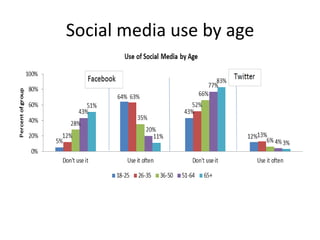
Social media use by age
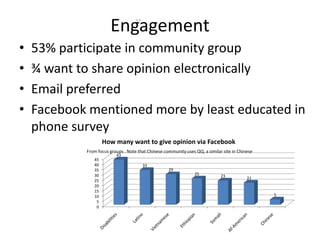
• 53% participate in community group
• ¾ want to share opinion electronically
• Email preferred
• Facebook mentioned more by least educated in
phone survey
37
Engagement
0
5
10
15
20
25
30
35
40
45
43
33
29
25 23 21
5
How many want to give opinion via Facebook
From focus groups . Note that Chinese community uses QQ, a similar site in Chinese
Conclusions
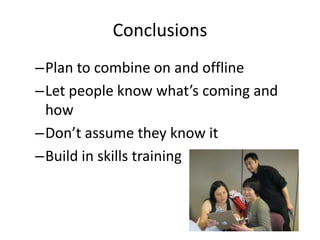
–Plan to combine on and offline
–Let people know what’s coming and
how
–Don’t assume they know it
–Build in skills training
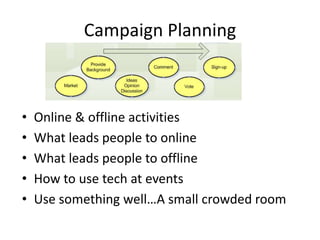
Campaign Planning
• Online & offline activities
• What leads people to online
• What leads people to offline
• How to use tech at events
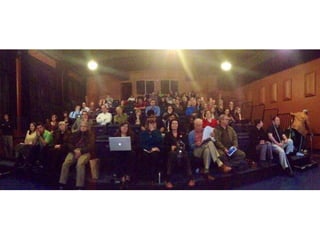
• Use something well…A small crowded room
The most popular social media sites
Planning & Expanding your toolkit
Which one is most useful?
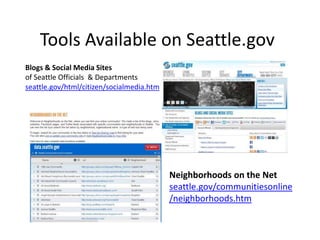
Tools Available on Seattle.gov
Blogs & Social Media Sites
of Seattle Officials & Departments
seattle.gov/html/citizen/socialmedia.htm
Neighborhoods on the Net
seattle.gov/communitiesonline
/neighborhoods.htm
Tools Available on Seattle.gov
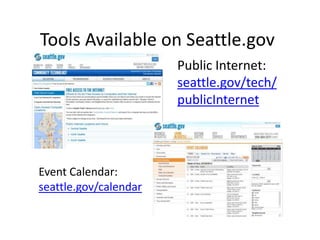
Public Internet:
seattle.gov/tech/
publicInternet
Event Calendar:
seattle.gov/calendar
Strategy exercise
• Pick a topic and plan activities on and offline
over 4 months.
Tips for multilingual
• Bing/Google translate can be embedded
• Don’t rely on them
• Short abstract can be enough to identify
interest
• Better deep than wide
• Consider using video shorts
• Translation teams needed
Online Community
Building & e-Activism
Thanks! Feedback?
Next?
Other good e-civic resources
• Matt Leighninger: Deliberative Democracy
Coalition
– Using Online Tools to Engage – and be Engaged by
–The Public
• America Speaks
• Non-profit tech resources:
Idealware.org & Techsoup.org
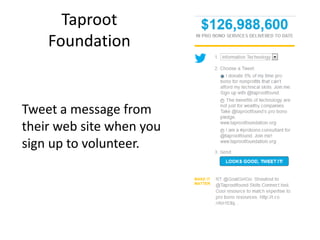
Taproot
Foundation
Tweet a message from
their web site when you
sign up to volunteer.
• Where to look up whether a web site address
(url or domain name) are taken:
http://www.internic.net/whois.html
• Fundraising:
• PBS article on crowdfunding tools (alt to
Kickstarter fees)

Online civic engagement & community building workshop Seattle 3 25-14

  • 1.
  • 2.
    Presenters • David Keyes,Seattle Department of Infomration Technology- Community Technology Program • Phillip Duggan, Pinehurst Community Council & City of Seattle technology advisory board • Joe Szilagyi, Westwood-Roxhill-Arbor Heights Community Council & West Seattle Transit Coalition • Vicky Yuki , Seattle Department of Infomration Technology- Community Technology Program • Host: Lindsey Greene, PACE Intern, Seattle Department of Neighborhoods
  • 3.
    When do wejoin in – offline or online?
  • 4.
    Communication takes alot of work! • See scale on seattle.gov/CommunitiesOnline Multichannel Up-to-date Interactive Diverse participation Outdated Brochure
  • 5.
    Adoption Low Tech Low Engagement LowTech High Engagement High Tech Low Engagement High Tech High Engagement
  • 6.
    Online participants maybe… 1. Visitors: Occasionally view content 2. Followers: Subscribe to watch announcements regularly (via RSS, listserv, tweet, friending) 3. Participators: Contribute content - comments, votes, ask questions 4. Engagement leaders: Authors initial content, leads and encourages participation by others 5. Managers: Responsible for overseeing a site that produces and distributes content or engagement (eg neighborhood blog manager)
  • 7.
    Tools: expanding orexploding Wordpress is one of the easiest to get started and build on. See Rainer Valley Greenways for an example
  • 8.
    Creating Community Solutions Nat’lDialogue on Mental Health http://www.creatingcommunitysolutions.org/resources I N N O V T I O N S
  • 9.
    The Conundrum! • Postit where? How often? • Email • Facebook • Twitter • Website • Street kiosk • Newspaper • Etc etc etc
  • 10.
    What’s working forus? http://www.pinehurstseattle.org (update coming soon) Email List (~400 people)
  • 11.
  • 12.
  • 13.
    What Next ForPinehurst? • More involvement – We’ve got 400-600 people in a 9600 person neighborhood on our various lists. – A small fraction of that participate regularly. • More diversity of participation: – Race, income, renters – Group 001200-3 has a median income of $26,786 and is Whites:65.5%, Hispanics:5.1%, Blacks:12.8%, Asians:1 2.9%, Others:8.8% – Group 000600-6 has a median income of $75,750 and is Whites:59.6%, Hispanics:7.1%, Blacks:9.4%, Asians:21. 6%, Others:9.4%
  • 14.
    What’s working forus? wwrhah.wordpress.com
  • 15.
    How we usedthe Internet for two West Seattle groups WWRHAH Group: Mostly documentation Facebook is our main meeting space We use Facebook polling heavily WSTC Group: Mostly to establish our presence To advertise our meetings
  • 16.
    "Power resides wheremen believe it resides; it's a trick, a shadow on the wall, and a very small man can cast a very large shadow."
  • 22.
    What we dowith the West Seattle Transportation Coalition (WSTC)
  • 26.
    How the WSTCdid it in our first six months from September 2013 to now
  • 32.
    Small discussion • What’sworking for us? • What’s not? • What would we like to do?
  • 33.
    • 89% havecell phones • 58% have smart phones • More laptops (72%) & mobile (smartphone & tablets, 66%) than desktops (55%). • Higher education: more likely to use and own computer, smartphone or tablet. • Those with more than one internet device tend to be younger, male, and have more income. Results of Seattle Tech Survey
  • 34.
    0 10 20 30 40 50 60 70 80 90 Smart phone LaptopTablet 38 50 14 66 76 44 76 84 68 P E R C E N T Technology Ownership - Mobile Internet Devices Under-represented groups compared to phone and online survey respondents Under-represented Groups Phone survey Online survey
  • 35.
    • Skills &uses show more gaps than access • Education & income show greatest differences • Age & ethnicity too • About ¼ not comfortable using attachments. • Trust & privacy barriers remain 35 Adoption
  • 36.
  • 37.
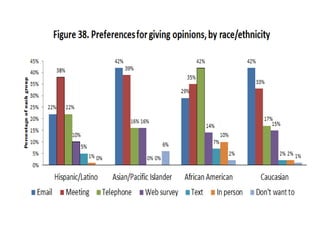
    • 53% participatein community group • ¾ want to share opinion electronically • Email preferred • Facebook mentioned more by least educated in phone survey 37 Engagement 0 5 10 15 20 25 30 35 40 45 43 33 29 25 23 21 5 How many want to give opinion via Facebook From focus groups . Note that Chinese community uses QQ, a similar site in Chinese
  • 39.
    Conclusions –Plan to combineon and offline –Let people know what’s coming and how –Don’t assume they know it –Build in skills training
  • 40.
    Campaign Planning • Online& offline activities • What leads people to online • What leads people to offline • How to use tech at events • Use something well…A small crowded room
  • 41.
    The most popularsocial media sites Planning & Expanding your toolkit
  • 42.
    Which one ismost useful?
  • 44.
    Tools Available onSeattle.gov Blogs & Social Media Sites of Seattle Officials & Departments seattle.gov/html/citizen/socialmedia.htm Neighborhoods on the Net seattle.gov/communitiesonline /neighborhoods.htm
  • 45.
    Tools Available onSeattle.gov Public Internet: seattle.gov/tech/ publicInternet Event Calendar: seattle.gov/calendar
  • 46.
    Strategy exercise • Picka topic and plan activities on and offline over 4 months.
  • 47.
    Tips for multilingual •Bing/Google translate can be embedded • Don’t rely on them • Short abstract can be enough to identify interest • Better deep than wide • Consider using video shorts • Translation teams needed
  • 48.
    Online Community Building &e-Activism Thanks! Feedback? Next?
  • 49.
    Other good e-civicresources • Matt Leighninger: Deliberative Democracy Coalition – Using Online Tools to Engage – and be Engaged by –The Public • America Speaks • Non-profit tech resources: Idealware.org & Techsoup.org
  • 50.
    Taproot Foundation Tweet a messagefrom their web site when you sign up to volunteer.
  • 51.
    • Where tolook up whether a web site address (url or domain name) are taken: http://www.internic.net/whois.html • Fundraising: • PBS article on crowdfunding tools (alt to Kickstarter fees)

Editor's Notes

  • #17 Do any of you watch Game of Thrones? One character explained the nature of power and authority to another in one episode like thisYour group has authority if it is believed to have authority
  • #18 Maintain a constant website presence that is constantly updatedLook professionalSpend time making it look inviting and professionalThe website isn’t the point – it’s just a billboard and online library Your group and it’s actions are the point
  • #19 Establish a core way to reach your members – what works for one group may not work for othersWork to YOUR specific demographics and figure that outCross pollinate info and groups that are alliesConstant updates; your group should be a core facet and hub of your area eventuallyThere are some email lists for established neighborhood groups that have 10,000 plus members in some Eastern cities like Washington DC
  • #20 Writing a letter from your group is one of your most powerful weaponsEstablish yourself, Identify yourself, How many people do you speak for?Then use that authority when needed Copy the press and media when you do, put out press releases
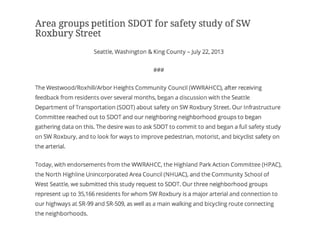
  • #21 Be boldIf you think the system is hindering you somehow, never be afraid to bend, break, or redefine the rulesWe were frustrated about our safety issues and being told it could take years to fixso we made an alliance with other groups in and out of the city and appealed directly outside of the Department of Neighborhoods and District systems, copying the mediaWe came with evidence speaking on behalf of a LOT of people – less than a year later SDOT is about to fix our street after generations of decay this summer
  • #22 Our trash letter
  • #24 That small spark of an alliance became a fire with the 17% Metro cuts we’re voting on in AprilWest Seattle was going to get an EXTRA 10% cuts from WSDOT money running outWe got angry and asked, “Can we make a bigger alliance to fix this and other problems?”
  • #25 We went heavily to Facebook, twitter, email lists and phone calls to get the word out
  • #26 It worked and we got a ton done in our first six months using every online tool we could useWe brought a ton of media attention to the extra 10% cutsWe got onto KIRO, KOMO, KING, the Governor, WSDOT Secretary, County, and everyone else knows about us and it worked for that first major fight
  • #28 We put out the call every way we could specifically to the leadership of all the West Seattle groups and invited them to a meetingWe told everyone up front what the goal was – find a solution to these problemsWe knew it wouldn’t happen that night, so we made the WSTC
  • #29 We had a protest rally at the busiest part of West Seattle at the height of the rush hour commute. We invited the offices of Governor, County Exec, Mayor, and City Council to a forum to answer questions about why our transportation problems are overlookedNEVER be afraid to invite people, ALWAYS try to get people to your meetings – guests Q&As drive action from the guests and drives attendanceAdvertise everything as you go
  • #30 We made a specific point of asking every single group in West Seattle to endorse and join us by going TO their meetings and appealing to them. You need footwork like this as well, but then say what you did and put it out frontRemember the quote: “Power resides where men believe it resides”
  • #31 Be a shark – one win is nothingKeep constantly moving, plan six months ahead at least if you can
  • #32 If you do that, you’ll start getting bigger crowds and more engagement – our record so far is just over 100
  • #36 Nearly 77% use email on a regular basis, about ¼ aren’t comfortable using attachments.
  • #38 David