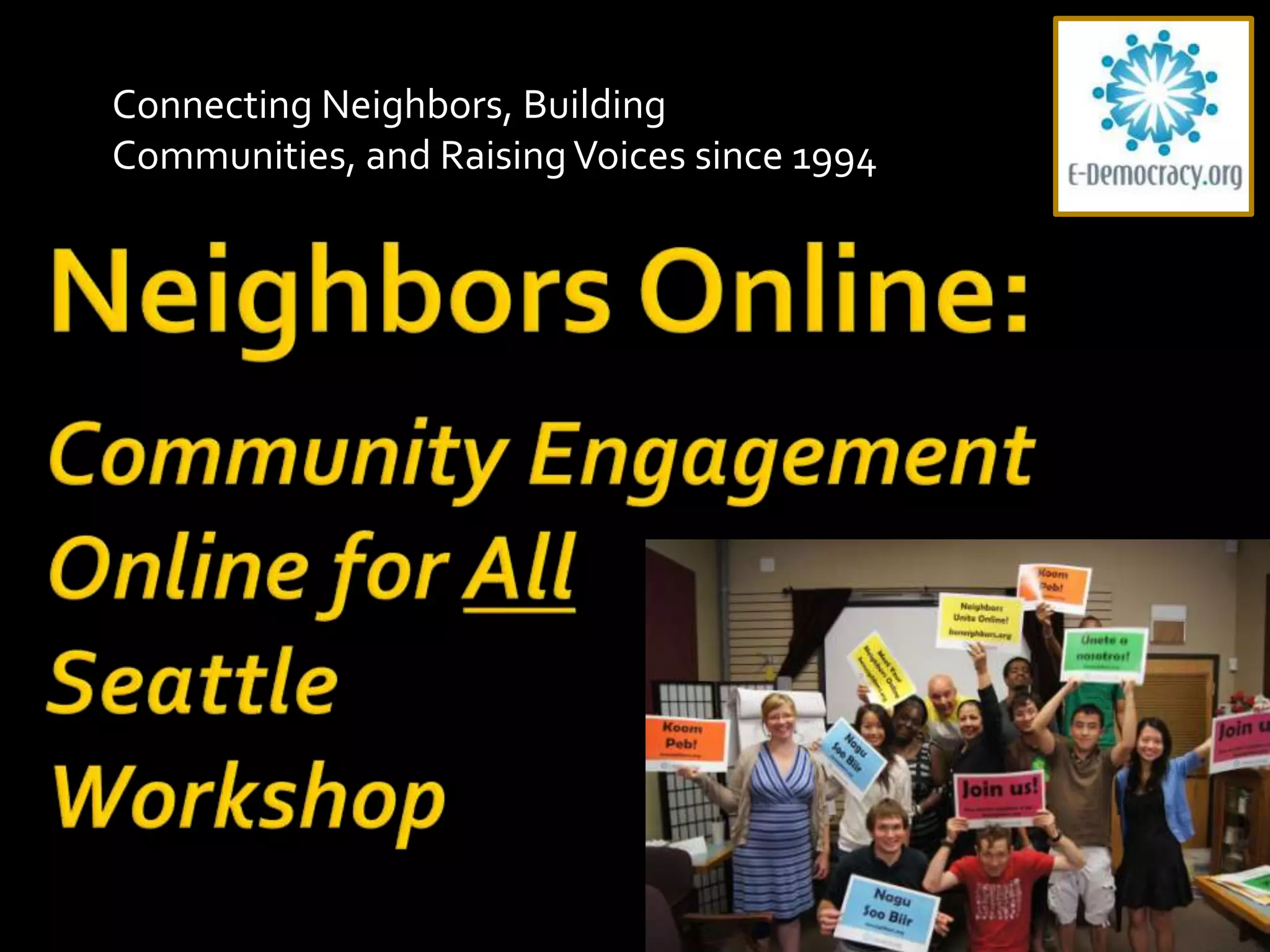




Connecting Neighbors, Building
Communities, and Raising Voices since 1994
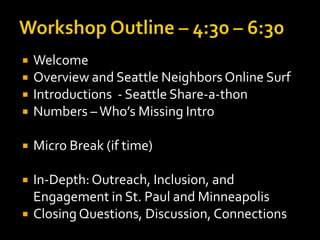
   Welcome
   Overview and Seattle Neighbors Online Surf
   Introductions - Seattle Share-a-thon
   Numbers – Who’s Missing Intro

   Micro Break (if time)

   In-Depth: Outreach, Inclusion, and
    Engagement in St. Paul and Minneapolis
   Closing Questions, Discussion, Connections
   Social connections, family-friendly
   Safety and crime prevention
   Mutual benefit , sharing stuff
   Greater voices and civic engagement
   Social capital generator
   Openness and inclusion (if done right)
   = Stronger communities

   Resources: Block Activities, Block Connectors,
    Locals Online, Soul of the Community
   Two-way online “groups” at core

   Connecting at two primary levels:
     Block-level, neighborhood crime watch
     ▪ Very Private, Covering ~100 households, typically
       resident-only, often “cc:” e-mail chains

     Neighborhood/Community-wide
     ▪ Public , Semi-Public (request to join), or Private -
       Covering hundreds to thousands of households
27% of adult Net users (22% overall) use

    “digital tools to talk to their
    neighbors and keep informed
    about community issues.”
   Source: Neighbors Online study from PewInternet.org, 2010
   “Joiners” – 10.5% of adult Net users
    members of neighborhood e-mail lists, forums, or
    social network site groups

   Includes 7% on e-lists/forums or ~10 million
    folks across ~20,000 to 40,000 online spaces
    – DC, Seattle, Mpls, etc. have deep history

   Source: Neighbors Online study from PewInternet.org, 2010
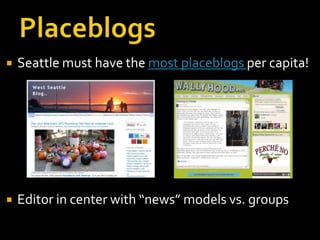
   Seattle must have the most placeblogs per capita!


   Editor in center with “news” models vs. groups
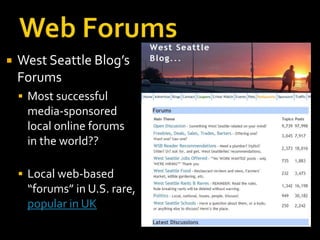
   West Seattle Blog’s
    Forums
     Most successful
     media-sponsored
     local online forums
     in the world??

     Local web-based
     “forums” in U.S. rare,
     popular in UK
Imagine a shared e-mail box for
 your neighborhood:

neighbors@inyourarea.org
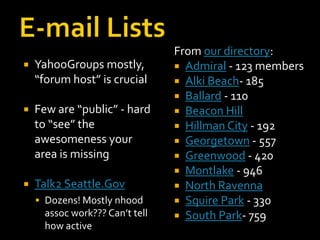
From our directory:
   YahooGroups mostly,           Admiral - 123 members
    “forum host” is crucial       Alki Beach- 185
                                  Ballard - 110
   Few are “public” - hard       Beacon Hill
    to “see” the                  Hillman City - 192
    awesomeness your              Georgetown - 557
    area is missing               Greenwood - 420
                                  Montlake - 946
   Talk2 Seattle.Gov             North Ravenna
     Dozens! Mostly nhood        Squire Park - 330
      assoc work??? Can’t tell    South Park- 759
      how active
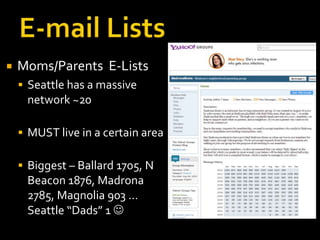
   Moms/Parents E-Lists
     Seattle has a massive
     network ~20

     MUST live in a certain area

     Biggest – Ballard 1705, N
     Beacon 1876, Madrona
     2785, Magnolia 903 …
     Seattle “Dads” 1 
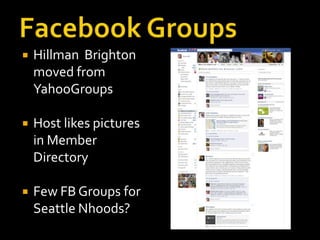
   Hillman Brighton
    moved from
    YahooGroups

   Host likes pictures
    in Member
    Directory

   Few FB Groups for
    Seattle Nhoods?
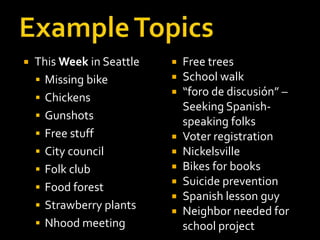
   This Week in Seattle      Free trees
     Missing bike            School walk
     Chickens
                              “foro de discusión” –
                               Seeking Spanish-
     Gunshots
                               speaking folks
     Free stuff              Voter registration
     City council            Nickelsville
     Folk club               Bikes for books
     Food forest
                              Suicide prevention
                              Spanish lesson guy
     Strawberry plants
                              Neighbor needed for
     Nhood meeting            school project
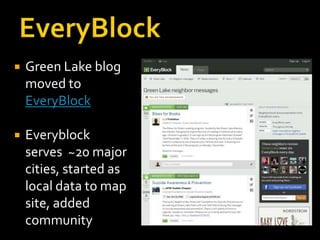
   Green Lake blog
    moved to
    EveryBlock

   Everyblock
    serves ~20 major
    cities, started as
    local data to map
    site, added
    community
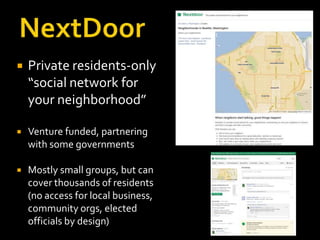
   Private residents-only
    “social network for
    your neighborhood”

   Venture funded, partnering
    with some governments

   Mostly small groups, but can
    cover thousands of residents
    (no access for local business,
    community orgs, elected
    officials by design)
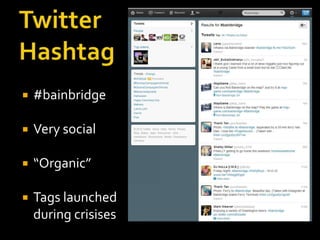
   #bainbridge

   Very social

   “Organic”

   Tags launched
    during crisises
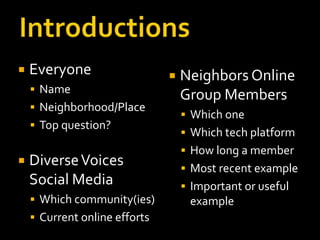
   Everyone                      Neighbors Online
     Name
                                   Group Members
     Neighborhood/Place
                                    Which one
     Top question?
                                    Which tech platform
                                    How long a member
   Diverse Voices                  Most recent example
    Social Media                    Important or useful
     Which community(ies)          example
     Current online efforts
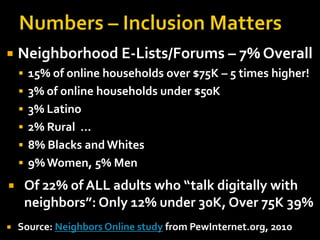
   Neighborhood E-Lists/Forums – 7% Overall
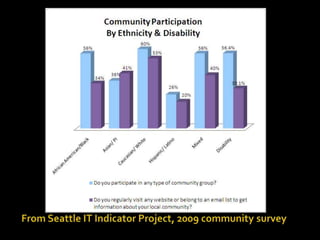
     15% of online households over $75K – 5 times higher!
     3% of online households under $50K
     3% Latino
     2% Rural …
     8% Blacks and Whites
     9% Women, 5% Men

    Of 22% of ALL adults who “talk digitally with
     neighbors”: Only 12% under 30K, Over 75K 39%
   Source: Neighbors Online study from PewInternet.org, 2010
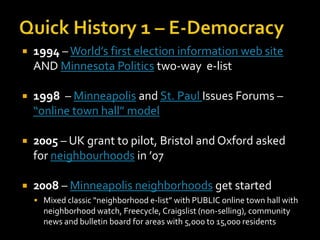
   1994 – World’s first election information web site
    AND Minnesota Politics two-way e-list

   1998 – Minneapolis and St. Paul Issues Forums –
    “online town hall” model

   2005 – UK grant to pilot, Bristol and Oxford asked
    for neighbourhoods in ’07

   2008 – Minneapolis neighborhoods get started
     Mixed classic “neighborhood e-list” with PUBLIC online town hall with
      neighborhood watch, Freecycle, Craigslist (non-selling), community
      news and bulletin board for areas with 5,000 to 15,000 residents
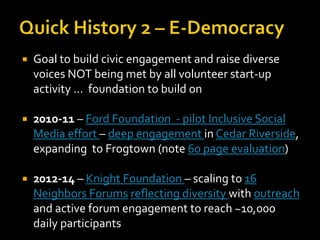
   Goal to build civic engagement and raise diverse
    voices NOT being met by all volunteer start-up
    activity … foundation to build on

   2010-11 – Ford Foundation - pilot Inclusive Social
    Media effort – deep engagement in Cedar Riverside,
    expanding to Frogtown (note 60 page evaluation)

   2012-14 – Knight Foundation – scaling to 16
    Neighbors Forums reflecting diversity with outreach
    and active forum engagement to reach ~10,000
    daily participants
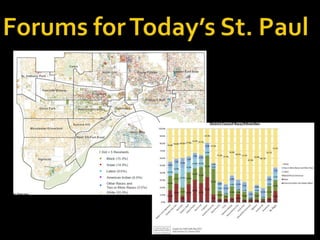
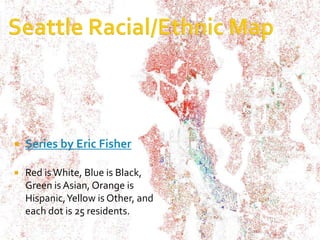
   Series by Eric Fisher

   Red is White, Blue is Black,
    Green is Asian, Orange is
    Hispanic, Yellow is Other, and
    each dot is 25 residents.
   1.Create online spaces for neighbors to
    connect with each other in the ways that
    they want.

   2. Make sure these spaces are as
    representative as possible of the
    neighborhoods themselves.

   3. Create opportunities for people who do
    not usually have a voice in their
    neighborhoods, to have a voice.
 “Local” online public places to:
  share information, events, ideas
  discuss neighborhood issues
  gather diverse people in an open place
  take action and promote solutions

  Our neighborhood-level Issues Forums are powered by
   two-way group communication
  We host over 40 neighbors/community forums in 17
   communities across 3 countries today
   Public (vs. private groups)
   Open access (vs. invite only)
   Publicly searchable archive
    (vs. member only access)
   Local scope
   Encourage strong civility
   Must use real names, accountability
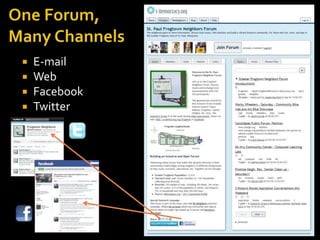
   E-mail
   Web
   Facebook
   Twitter
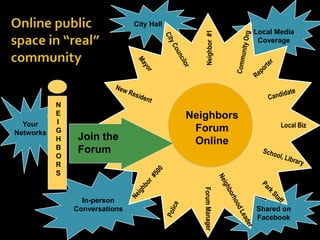
City Hall
                                                            Local Media


                                              Neighbor #1
                                                             Coverage


           N
           E                               Neighbors
  Your     I                                                       Local Biz
Networks   G                                Forum
           H    Join the                    Online
           B    Forum
           O
           R
           S


                 In-person
               Conversations                                Shared on
                                                            Facebook
 Action

 Discussion


 Announcements
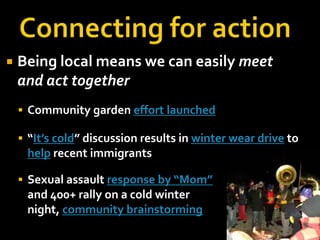
   Being local means we can easily meet
    and act together
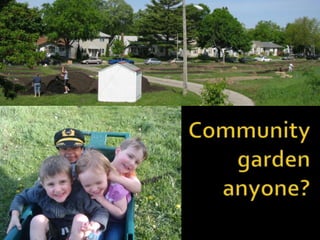
     Community garden effort launched

     “It’s cold” discussion results in winter wear drive to
     help recent immigrants

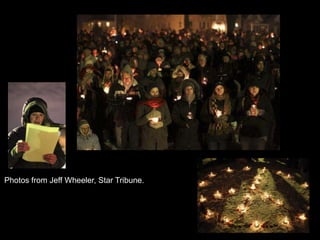
     Sexual assault response by “Mom”
     and 400+ rally on a cold winter
     night, community brainstorming
Photos from Jeff Wheeler, Star Tribune.
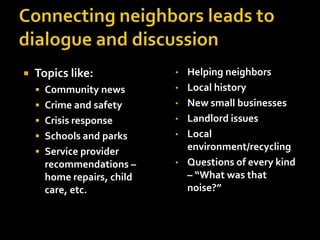
   Topics like:            • Helping neighbors
     Community news        • Local history

     Crime and safety      • New small businesses

     Crisis response       • Landlord issues

     Schools and parks     • Local

     Service provider
                              environment/recycling
      recommendations –     • Questions of every kind
      home repairs, child     – “What was that
      care, etc.              noise?”
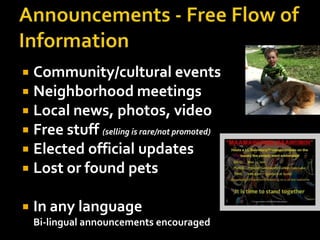
 Community/cultural events
 Neighborhood meetings
 Local news, photos, video
 Free stuff (selling is rare/not promoted)
 Elected official updates
 Lost or found pets


   In any language
    Bi-lingual announcements encouraged
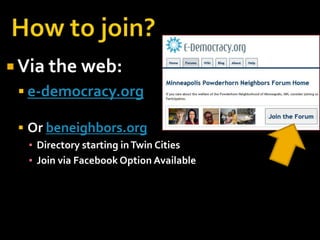
 Via the web:
  e-democracy.org

  Or beneighbors.org
  ▪ Directory starting in Twin Cities
  ▪ Join via Facebook Option Available
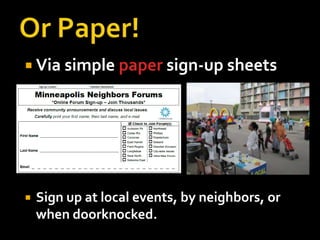
 Via simple paper sign-up sheets


   Sign up at local events, by neighbors, or
    when doorknocked.
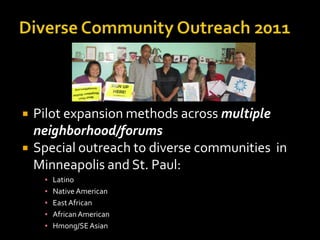
   Pilot expansion methods across multiple
    neighborhood/forums
   Special outreach to diverse communities in
    Minneapolis and St. Paul:
     ▪   Latino
     ▪   Native American
     ▪   East African
     ▪   African American
     ▪   Hmong/SE Asian
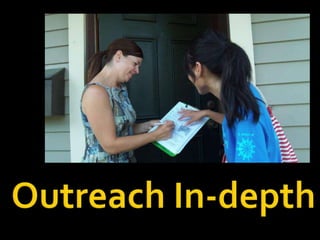
   Face-to-face outreach, paper signup sheets,
    and a personal approach are by far the most
    successful recruiting methods

   Building trust is essential. Knowing that
    “someone like me” is on the forum makes a
    difference.

   Personal invitations and direct support help
    people get started with posting.
                                                   54
   Partnering with respected neighborhood event
    organizers creates opportunities to participate
    in community activities and offer people the
    chance to sign up for our forums.

   Understanding people’s needs and helping find
    ways for those needs to be addressed through
    the forum smoothes the path for their
    participation and continued involvement.

   Ford foundation funded, 2010-2011
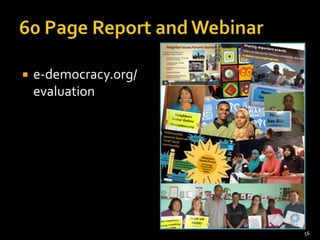
   e-democracy.org/
    evaluation


                       56
   Members: Forum provides new information and
    alternative viewpoints

   Elected officials pay attention to forum posts

   Community organizations who actively participated
    found it relevant and rewarding

   Range and depth of conversations dependent on
    forum members’ willingness to share opinions, ask
    questions, and seek input
 Goal: Recruit and engage 10,000+ Saint Paulites
 by 2014

 Focus outreach on highly diverse, immigrant
 and low-income communities online

 Knight Foundation funded, 625K 3 year grant
 (through end of 2014)

 Applied Ford lessons
   Utilize grassroots community organizing
    techniques to bring a diversity of neighbors
    onto the forums.

   Bring in around 3000 new members over the
    summer and begin building relationships in
    Saint Paul communities.

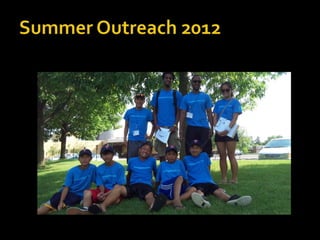
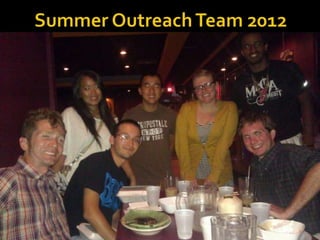
   Hire ~10 multi-lingual outreach team
    members working 15 hours a week
   1.Create online spaces for neighbors to connect
    with each other in the ways that they want to.

   2. Make sure that these spaces are as
    representative as possible of the neighborhoods
    themselves.

   3. Create opportunities for people who do not
    usually have a voice in their neighborhoods, to
    have a voice.
                                                      62
1. Research and set goals.


                             63
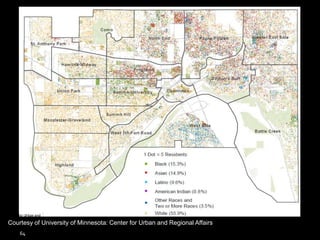
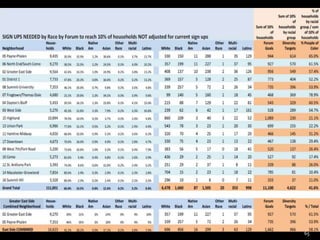
Courtesy of University of Minnesota: Center for Urban and Regional Affairs
    64
65
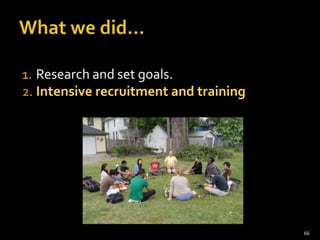
1. Research and set goals.
2. Intensive recruitment and training


                                        66
1. Research and set goals.
2. Intensive recruitment and training
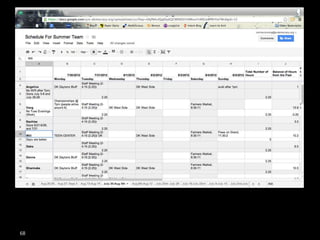
3. Utilized shared access tools to manage
  logistics increasing mobility and capacity of
  team (Google Docs, etc.)


67
68
1. Research and set goals.
2. Intensive recruitment and training
3. Utilized open access tools to manage
  logistics increasing mobility and capacity of
  team
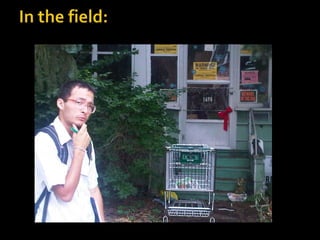
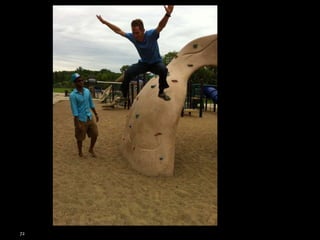
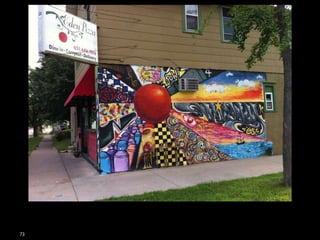
4. Lots of on the ground outreach!


                                                  69
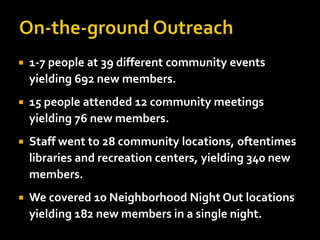
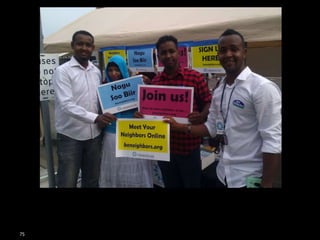
   1-7 people at 39 different community events
    yielding 692 new members.
   15 people attended 12 community meetings
    yielding 76 new members.
   Staff went to 28 community locations, oftentimes
    libraries and recreation centers, yielding 340 new
    members.
   We covered 10 Neighborhood Night Out locations
    yielding 182 new members in a single night.
72
73
1. Research and set goals.
2. Intensive recruitment and training
3. Utilized open access tools to manage
  logistics increasing mobility and capacity of
  team
4. Lots of on the ground outreach!
5. Remembering to think long term about
  empowerment and voice.

                                                  74
75
1.   Surname analysis shows 30%+ of targeted
     forums appear to be from racial/ ethnic
     communites.
2.   We launched neighbors forums in 16 of 17
     Saint Paul neighborhoods.
3.   Saint Paul neighbors forums virtually
     doubled from 2,863 on June 4 to 5,609 on
     September 11, resulting in 48.96% of the the
     total Stp membership being new!
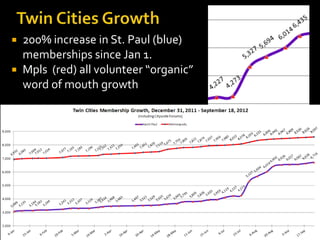
 200% increase in St. Paul (blue)
  memberships since Jan 1.
 Mpls (red) all volunteer “organic”
  word of mouth growth
1. Build up local volunteer capacity in forum
  engagement developing deep relationships
  in community - goal:

    Forums that better reflect the diversity of
    neighbors in the “virtual room.”

2. Ensure partnerships to be mutually beneficial

3. Execute an intense forum engagement plan
                                                   78
   Do you work with minority/low income/
    immigrant populations?

   Are you interested in building up a network
    that allows more neighbors to connect with
    each other?


                                                  79
Public outreach
 http://beneighbors.org


Webinars, training:
 http://e-democracy.org/learn
 http://e-democracy.org/locals
   We’d love to connect with you more!
   Corrine.bruning@e-democracy.org
   612-229-4471

   OR
   ~ Steven Clift - clift@e-democracy.org

   On Twitter @edemo
   More: e-democracy.org/contact
                                             81
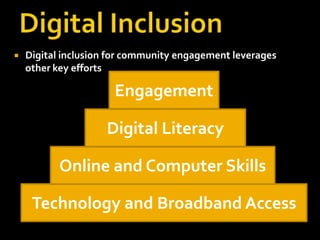
   Digital inclusion for community engagement leverages
    other key efforts

                      Engagement

                    Digital Literacy

           Online and Computer Skills

     Technology and Broadband Access
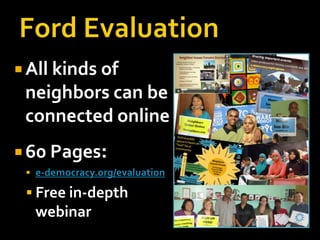
 All kinds of
 neighbors can be
 connected online
 60 Pages:
  e-democracy.org/evaluation

  Free in-depth
  webinar
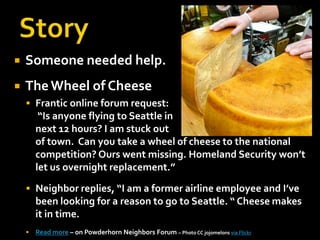
   Someone needed help.
   The Wheel of Cheese
     Frantic online forum request:
         “Is anyone flying to Seattle in
        next 12 hours? I am stuck out
        of town. Can you take a wheel of cheese to the national
        competition? Ours went missing. Homeland Security won’t
        let us overnight replacement.”
     Neighbor replies, “I am a former airline employee and I’ve
        been looking for a reason to go to Seattle. “ Cheese makes
        it in time.
       Read more – on Powderhorn Neighbors Forum – Photo CC jojomelons via Flickr
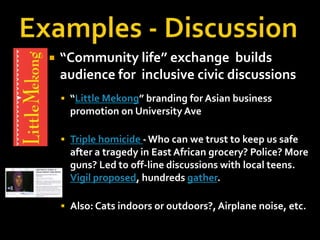
   “Community life” exchange builds
    audience for inclusive civic discussions
     “Little Mekong” branding for Asian business
      promotion on University Ave

     Triple homicide - Who can we trust to keep us safe
      after a tragedy in East African grocery? Police? More
      guns? Led to off-line discussions with local teens.
      Vigil proposed, hundreds gather.

     Also: Cats indoors or outdoors?, Airplane noise, etc.
You


   Everyone welcome
     Residents, local workers, business owners


   People who “serve” the community
     Local governments, non-profits, etc.


   Outreach essential:
     Diverse communities: http://e-democracy.org/inclusion
     100 members for strong opening
     1050 members on largest forum today, ~25% households
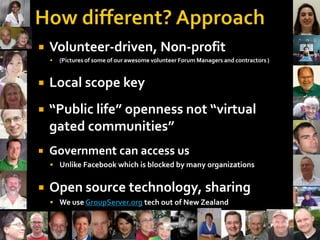
   Volunteer-driven, Non-profit
       (Pictures of some of our awesome volunteer Forum Managers and contractors )


   Local scope key
   “Public life” openness not “virtual
    gated communities”
   Government can access us
     Unlike Facebook which is blocked by many organizations


   Open source technology, sharing
     We use GroupServer.org tech out of New Zealand
   Post announcements and events – reach
    hundreds for free

   Monitor the community agenda, advocate and
    organize locally

   Answer questions, share info

   Connect people to your programs

   Encourage your members/clients/etc. to join us
 Neighbors Forums promote:
  Community building
  Neighbors helping neighbors
  Sharing/reusing things very locally
  Engagement with government and
   accountability
  And much more
 Civility matters
  Real names build trust
  No name calling
  Post just 2 times a day (on most forums)
   spreads participation, retains audience
  Facilitated by local volunteer “Forum
   Manager,” rules are enforced
  Major contrast with often anonymous,
   nasty online news comments
 Online advantages
  24 x 7 – Anytime, anywhere convenience
  Engage people unable to attend meetings,
   with limited mobility, two jobs, children
  Less intimidating for some – open and
   accessible “ice breaker” into public life
  Local approach coupled with in-person
   activities increases value and trust – Online
   only would be a major disadvantage
   Join your local Neighbors Forum today!
   Every community needs a vibrant local online place
    that makes your part of the world a better .
     The lowest cost model for effectively building real
      community and civic participation available today(?)
     Start a forum. You can make this happen in your
      neighborhood. If you don’t who will?
   Contact us:
     http://e-democracy.org/contact
     team@e-democracy.org @edemo - Twitter
     Tel/Text: +1-651-400-0880
   Yes, we reach people “where they are” via
    many channels and technologies

   Our “unified” integrated public forums
     Facebook Page – Forum excerpts
     Twitter – Topic headlines
     “Blog” style Web Feed – Full-text
     E-mail and web options – Most accessible, required to post

   E-mail key to active “bridge building” and
    mobile use – old-fashioned but EFFECTIVE
   Stat tuned for more knowledge sharing
     Inclusive Social Media Lessons, Evaluation
     How to Start a Forum - Detailed
     Forum Manager How-to Webinar


   Follow our blog for updates:
     http://blog.e-democracy.org
   Key existing resources
     http://e-democracy.org/if - Guidebook and more
     http://e-democracy.org/webinars
   Our neighborhood-level “Issues
    Forum”:
     24 forums across St. Paul and Minneapolis
      ▪ Many new forums - join our funded start-up campaign now
     25 start-up forums in Christchurch, New Zealand
      ▪ Created for post-quake recovery by two volunteers
     5 in the United Kingdom
      ▪ Where our “neighbourhood” level work started

     11 “city-wide” online town hall “Issues Forums”
      ▪ Extensive details: http://e-democracy.org/if
      ▪ City-level forums provide place for city-wide issues and politics
      ▪ Includes five Greater Minnesota towns
   Request one:                     Recipe
     http://e-democracy.org           100 start-up members
     http://tcneighbors.org           1 local volunteer “Forum
     We technically set it up          Manager” –You?
                                       Paper sign-ups at
   Outreach essential                  community events
                                       E-mail outreach, e-letter
   10+ forums in start-up              signed by initial members
    mode                               Friendly round of virtual
                                        introductions with real
                                        people using real names
   Lessons/training from:              to build trust
     http://e-democracy.org/if
 Strong “critical mass” launch is key to success
 Need mix of local institutions – parks, officials,
  places of worship, community groups AND everyday
  residents
 Forum Manager plays crucial role – needed to
  “seed” forum with announcements until community
  groups begin to do it themselves
 ~10% of households across forum area is a magic
  threshold for “self-generative” community life
 Forum facilitation prevents difficult topics from
  turning into “flame wars” – one blow out can kill a
  forum
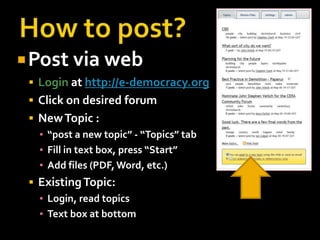
 Post via web
  Login at http://e-democracy.org
  Click on desired forum
  New Topic :
   ▪ “post a new topic” - “Topics” tab
   ▪ Fill in text box, press “Start”
   ▪ Add files (PDF, Word, etc.)
  Existing Topic:
   ▪ Login, read topics
   ▪ Text box at bottom
   Connect your neighbors and neighborhood?

   Make your community better? Improve civic
    engagement?

   Raise diverse voices? Share local information?

   Do all this cost-effectively leveraging volunteers?

   If yes, here is an introduction on Neighbors Issues
    Forums from E-Democracy.org
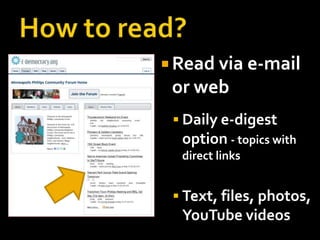
 Read via e-mail
 or web
  Daily e-digest
  option - topics with
  direct links


  Text, files, photos,
  YouTube videos
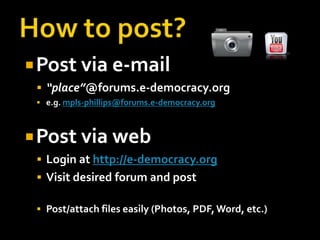
 Post via e-mail
  “place”@forums.e-democracy.org
  e.g. mpls-phillips@forums.e-democracy.org


 Post via web
  Login at http://e-democracy.org
  Visit desired forum and post

  Post/attach files easily (Photos, PDF, Word, etc.)
   Dozens of companies are getting into
    the neighbor connecting business

   Visit the local social media directory

   Join the Locals Online community of
    practice to join people from .org, .coms,
    and many independent free spirits

Neighbors Online: Community Engagement for All Seattle Workshop

  • 1.
    Connecting Neighbors, Building Communities,and Raising Voices since 1994
  • 2.
    Welcome  Overview and Seattle Neighbors Online Surf  Introductions - Seattle Share-a-thon  Numbers – Who’s Missing Intro  Micro Break (if time)  In-Depth: Outreach, Inclusion, and Engagement in St. Paul and Minneapolis  Closing Questions, Discussion, Connections
  • 6.
    Social connections, family-friendly  Safety and crime prevention  Mutual benefit , sharing stuff  Greater voices and civic engagement  Social capital generator  Openness and inclusion (if done right)  = Stronger communities  Resources: Block Activities, Block Connectors, Locals Online, Soul of the Community
  • 7.
    Two-way online “groups” at core  Connecting at two primary levels:  Block-level, neighborhood crime watch ▪ Very Private, Covering ~100 households, typically resident-only, often “cc:” e-mail chains  Neighborhood/Community-wide ▪ Public , Semi-Public (request to join), or Private - Covering hundreds to thousands of households
  • 8.
    27% of adultNet users (22% overall) use “digital tools to talk to their neighbors and keep informed about community issues.”  Source: Neighbors Online study from PewInternet.org, 2010
  • 9.
    “Joiners” – 10.5% of adult Net users members of neighborhood e-mail lists, forums, or social network site groups  Includes 7% on e-lists/forums or ~10 million folks across ~20,000 to 40,000 online spaces – DC, Seattle, Mpls, etc. have deep history  Source: Neighbors Online study from PewInternet.org, 2010
  • 11.
    Seattle must have the most placeblogs per capita!  Editor in center with “news” models vs. groups
  • 12.
    West Seattle Blog’s Forums  Most successful media-sponsored local online forums in the world??  Local web-based “forums” in U.S. rare, popular in UK
  • 13.
    Imagine a sharede-mail box for your neighborhood: neighbors@inyourarea.org
  • 14.
    From our directory:  YahooGroups mostly,  Admiral - 123 members “forum host” is crucial  Alki Beach- 185  Ballard - 110  Few are “public” - hard  Beacon Hill to “see” the  Hillman City - 192 awesomeness your  Georgetown - 557 area is missing  Greenwood - 420  Montlake - 946  Talk2 Seattle.Gov  North Ravenna  Dozens! Mostly nhood  Squire Park - 330 assoc work??? Can’t tell  South Park- 759 how active
  • 15.
    Moms/Parents E-Lists  Seattle has a massive network ~20  MUST live in a certain area  Biggest – Ballard 1705, N Beacon 1876, Madrona 2785, Magnolia 903 … Seattle “Dads” 1 
  • 16.
    Hillman Brighton moved from YahooGroups  Host likes pictures in Member Directory  Few FB Groups for Seattle Nhoods?
  • 17.
    This Week in Seattle  Free trees  Missing bike  School walk  Chickens  “foro de discusión” – Seeking Spanish-  Gunshots speaking folks  Free stuff  Voter registration  City council  Nickelsville  Folk club  Bikes for books  Food forest  Suicide prevention  Spanish lesson guy  Strawberry plants  Neighbor needed for  Nhood meeting school project
  • 18.
    Green Lake blog moved to EveryBlock  Everyblock serves ~20 major cities, started as local data to map site, added community
  • 19.
    Private residents-only “social network for your neighborhood”  Venture funded, partnering with some governments  Mostly small groups, but can cover thousands of residents (no access for local business, community orgs, elected officials by design)
  • 20.
    #bainbridge  Very social  “Organic”  Tags launched during crisises
  • 23.
    Everyone  Neighbors Online  Name Group Members  Neighborhood/Place  Which one  Top question?  Which tech platform  How long a member  Diverse Voices  Most recent example Social Media  Important or useful  Which community(ies) example  Current online efforts
  • 25.
    Neighborhood E-Lists/Forums – 7% Overall  15% of online households over $75K – 5 times higher!  3% of online households under $50K  3% Latino  2% Rural …  8% Blacks and Whites  9% Women, 5% Men  Of 22% of ALL adults who “talk digitally with neighbors”: Only 12% under 30K, Over 75K 39%  Source: Neighbors Online study from PewInternet.org, 2010
  • 27.
    1994 – World’s first election information web site AND Minnesota Politics two-way e-list  1998 – Minneapolis and St. Paul Issues Forums – “online town hall” model  2005 – UK grant to pilot, Bristol and Oxford asked for neighbourhoods in ’07  2008 – Minneapolis neighborhoods get started  Mixed classic “neighborhood e-list” with PUBLIC online town hall with neighborhood watch, Freecycle, Craigslist (non-selling), community news and bulletin board for areas with 5,000 to 15,000 residents
  • 28.
    Goal to build civic engagement and raise diverse voices NOT being met by all volunteer start-up activity … foundation to build on  2010-11 – Ford Foundation - pilot Inclusive Social Media effort – deep engagement in Cedar Riverside, expanding to Frogtown (note 60 page evaluation)  2012-14 – Knight Foundation – scaling to 16 Neighbors Forums reflecting diversity with outreach and active forum engagement to reach ~10,000 daily participants
  • 29.
    Series by Eric Fisher  Red is White, Blue is Black, Green is Asian, Orange is Hispanic, Yellow is Other, and each dot is 25 residents.
  • 38.
    1.Create online spaces for neighbors to connect with each other in the ways that they want.  2. Make sure these spaces are as representative as possible of the neighborhoods themselves.  3. Create opportunities for people who do not usually have a voice in their neighborhoods, to have a voice.
  • 40.
     “Local” onlinepublic places to:  share information, events, ideas  discuss neighborhood issues  gather diverse people in an open place  take action and promote solutions  Our neighborhood-level Issues Forums are powered by two-way group communication  We host over 40 neighbors/community forums in 17 communities across 3 countries today
  • 41.
    Public (vs. private groups)  Open access (vs. invite only)  Publicly searchable archive (vs. member only access)  Local scope  Encourage strong civility  Must use real names, accountability
  • 42.
    E-mail  Web  Facebook  Twitter
  • 43.
    City Hall Local Media Neighbor #1 Coverage N E Neighbors Your I Local Biz Networks G Forum H Join the Online B Forum O R S In-person Conversations Shared on Facebook
  • 44.
  • 45.
    Being local means we can easily meet and act together  Community garden effort launched  “It’s cold” discussion results in winter wear drive to help recent immigrants  Sexual assault response by “Mom” and 400+ rally on a cold winter night, community brainstorming
  • 47.
    Photos from JeffWheeler, Star Tribune.
  • 48.
    Topics like: • Helping neighbors  Community news • Local history  Crime and safety • New small businesses  Crisis response • Landlord issues  Schools and parks • Local  Service provider environment/recycling recommendations – • Questions of every kind home repairs, child – “What was that care, etc. noise?”
  • 49.
     Community/cultural events Neighborhood meetings  Local news, photos, video  Free stuff (selling is rare/not promoted)  Elected official updates  Lost or found pets  In any language Bi-lingual announcements encouraged
  • 50.
     Via theweb:  e-democracy.org  Or beneighbors.org ▪ Directory starting in Twin Cities ▪ Join via Facebook Option Available
  • 51.
     Via simplepaper sign-up sheets  Sign up at local events, by neighbors, or when doorknocked.
  • 53.
    Pilot expansion methods across multiple neighborhood/forums  Special outreach to diverse communities in Minneapolis and St. Paul: ▪ Latino ▪ Native American ▪ East African ▪ African American ▪ Hmong/SE Asian
  • 54.
    Face-to-face outreach, paper signup sheets, and a personal approach are by far the most successful recruiting methods  Building trust is essential. Knowing that “someone like me” is on the forum makes a difference.  Personal invitations and direct support help people get started with posting. 54
  • 55.
    Partnering with respected neighborhood event organizers creates opportunities to participate in community activities and offer people the chance to sign up for our forums.  Understanding people’s needs and helping find ways for those needs to be addressed through the forum smoothes the path for their participation and continued involvement.  Ford foundation funded, 2010-2011
  • 56.
    e-democracy.org/ evaluation 56
  • 57.
    Members: Forum provides new information and alternative viewpoints  Elected officials pay attention to forum posts  Community organizations who actively participated found it relevant and rewarding  Range and depth of conversations dependent on forum members’ willingness to share opinions, ask questions, and seek input
  • 59.
     Goal: Recruitand engage 10,000+ Saint Paulites by 2014  Focus outreach on highly diverse, immigrant and low-income communities online  Knight Foundation funded, 625K 3 year grant (through end of 2014)  Applied Ford lessons
  • 61.
    Utilize grassroots community organizing techniques to bring a diversity of neighbors onto the forums.  Bring in around 3000 new members over the summer and begin building relationships in Saint Paul communities.  Hire ~10 multi-lingual outreach team members working 15 hours a week
  • 62.
    1.Create online spaces for neighbors to connect with each other in the ways that they want to.  2. Make sure that these spaces are as representative as possible of the neighborhoods themselves.  3. Create opportunities for people who do not usually have a voice in their neighborhoods, to have a voice. 62
  • 63.
    1. Research andset goals. 63
  • 64.
    Courtesy of Universityof Minnesota: Center for Urban and Regional Affairs 64
  • 65.
  • 66.
    1. Research andset goals. 2. Intensive recruitment and training 66
  • 67.
    1. Research andset goals. 2. Intensive recruitment and training 3. Utilized shared access tools to manage logistics increasing mobility and capacity of team (Google Docs, etc.) 67
  • 68.
  • 69.
    1. Research andset goals. 2. Intensive recruitment and training 3. Utilized open access tools to manage logistics increasing mobility and capacity of team 4. Lots of on the ground outreach! 69
  • 70.
    1-7 people at 39 different community events yielding 692 new members.  15 people attended 12 community meetings yielding 76 new members.  Staff went to 28 community locations, oftentimes libraries and recreation centers, yielding 340 new members.  We covered 10 Neighborhood Night Out locations yielding 182 new members in a single night.
  • 72.
  • 73.
  • 74.
    1. Research andset goals. 2. Intensive recruitment and training 3. Utilized open access tools to manage logistics increasing mobility and capacity of team 4. Lots of on the ground outreach! 5. Remembering to think long term about empowerment and voice. 74
  • 75.
  • 76.
    1. Surname analysis shows 30%+ of targeted forums appear to be from racial/ ethnic communites. 2. We launched neighbors forums in 16 of 17 Saint Paul neighborhoods. 3. Saint Paul neighbors forums virtually doubled from 2,863 on June 4 to 5,609 on September 11, resulting in 48.96% of the the total Stp membership being new!
  • 77.
     200% increasein St. Paul (blue) memberships since Jan 1.  Mpls (red) all volunteer “organic” word of mouth growth
  • 78.
    1. Build uplocal volunteer capacity in forum engagement developing deep relationships in community - goal: Forums that better reflect the diversity of neighbors in the “virtual room.” 2. Ensure partnerships to be mutually beneficial 3. Execute an intense forum engagement plan 78
  • 79.
    Do you work with minority/low income/ immigrant populations?  Are you interested in building up a network that allows more neighbors to connect with each other? 79
  • 80.
    Public outreach  http://beneighbors.org Webinars,training:  http://e-democracy.org/learn  http://e-democracy.org/locals
  • 81.
    We’d love to connect with you more!  Corrine.bruning@e-democracy.org  612-229-4471  OR  ~ Steven Clift - clift@e-democracy.org  On Twitter @edemo  More: e-democracy.org/contact 81
  • 85.
    Digital inclusion for community engagement leverages other key efforts Engagement Digital Literacy Online and Computer Skills Technology and Broadband Access
  • 86.
     All kindsof neighbors can be connected online  60 Pages:  e-democracy.org/evaluation  Free in-depth webinar
  • 87.
    Someone needed help.  The Wheel of Cheese  Frantic online forum request: “Is anyone flying to Seattle in next 12 hours? I am stuck out of town. Can you take a wheel of cheese to the national competition? Ours went missing. Homeland Security won’t let us overnight replacement.”  Neighbor replies, “I am a former airline employee and I’ve been looking for a reason to go to Seattle. “ Cheese makes it in time.  Read more – on Powderhorn Neighbors Forum – Photo CC jojomelons via Flickr
  • 88.
    “Community life” exchange builds audience for inclusive civic discussions  “Little Mekong” branding for Asian business promotion on University Ave  Triple homicide - Who can we trust to keep us safe after a tragedy in East African grocery? Police? More guns? Led to off-line discussions with local teens. Vigil proposed, hundreds gather.  Also: Cats indoors or outdoors?, Airplane noise, etc.
  • 89.
    You  Everyone welcome  Residents, local workers, business owners  People who “serve” the community  Local governments, non-profits, etc.  Outreach essential:  Diverse communities: http://e-democracy.org/inclusion  100 members for strong opening  1050 members on largest forum today, ~25% households
  • 90.
    Volunteer-driven, Non-profit  (Pictures of some of our awesome volunteer Forum Managers and contractors )  Local scope key  “Public life” openness not “virtual gated communities”  Government can access us  Unlike Facebook which is blocked by many organizations  Open source technology, sharing  We use GroupServer.org tech out of New Zealand
  • 91.
    Post announcements and events – reach hundreds for free  Monitor the community agenda, advocate and organize locally  Answer questions, share info  Connect people to your programs  Encourage your members/clients/etc. to join us
  • 92.
     Neighbors Forumspromote:  Community building  Neighbors helping neighbors  Sharing/reusing things very locally  Engagement with government and accountability  And much more
  • 93.
     Civility matters  Real names build trust  No name calling  Post just 2 times a day (on most forums) spreads participation, retains audience  Facilitated by local volunteer “Forum Manager,” rules are enforced  Major contrast with often anonymous, nasty online news comments
  • 94.
     Online advantages  24 x 7 – Anytime, anywhere convenience  Engage people unable to attend meetings, with limited mobility, two jobs, children  Less intimidating for some – open and accessible “ice breaker” into public life  Local approach coupled with in-person activities increases value and trust – Online only would be a major disadvantage
  • 95.
    Join your local Neighbors Forum today!  Every community needs a vibrant local online place that makes your part of the world a better .  The lowest cost model for effectively building real community and civic participation available today(?)  Start a forum. You can make this happen in your neighborhood. If you don’t who will?  Contact us:  http://e-democracy.org/contact  team@e-democracy.org @edemo - Twitter  Tel/Text: +1-651-400-0880
  • 97.
    Yes, we reach people “where they are” via many channels and technologies  Our “unified” integrated public forums  Facebook Page – Forum excerpts  Twitter – Topic headlines  “Blog” style Web Feed – Full-text  E-mail and web options – Most accessible, required to post  E-mail key to active “bridge building” and mobile use – old-fashioned but EFFECTIVE
  • 98.
    Stat tuned for more knowledge sharing  Inclusive Social Media Lessons, Evaluation  How to Start a Forum - Detailed  Forum Manager How-to Webinar  Follow our blog for updates:  http://blog.e-democracy.org  Key existing resources  http://e-democracy.org/if - Guidebook and more  http://e-democracy.org/webinars
  • 99.
    Our neighborhood-level “Issues Forum”:  24 forums across St. Paul and Minneapolis ▪ Many new forums - join our funded start-up campaign now  25 start-up forums in Christchurch, New Zealand ▪ Created for post-quake recovery by two volunteers  5 in the United Kingdom ▪ Where our “neighbourhood” level work started  11 “city-wide” online town hall “Issues Forums” ▪ Extensive details: http://e-democracy.org/if ▪ City-level forums provide place for city-wide issues and politics ▪ Includes five Greater Minnesota towns
  • 100.
    Request one:  Recipe  http://e-democracy.org  100 start-up members  http://tcneighbors.org  1 local volunteer “Forum  We technically set it up Manager” –You?  Paper sign-ups at  Outreach essential community events  E-mail outreach, e-letter  10+ forums in start-up signed by initial members mode  Friendly round of virtual introductions with real people using real names  Lessons/training from: to build trust  http://e-democracy.org/if
  • 101.
     Strong “criticalmass” launch is key to success  Need mix of local institutions – parks, officials, places of worship, community groups AND everyday residents  Forum Manager plays crucial role – needed to “seed” forum with announcements until community groups begin to do it themselves  ~10% of households across forum area is a magic threshold for “self-generative” community life  Forum facilitation prevents difficult topics from turning into “flame wars” – one blow out can kill a forum
  • 102.
     Post viaweb  Login at http://e-democracy.org  Click on desired forum  New Topic : ▪ “post a new topic” - “Topics” tab ▪ Fill in text box, press “Start” ▪ Add files (PDF, Word, etc.)  Existing Topic: ▪ Login, read topics ▪ Text box at bottom
  • 103.
    Connect your neighbors and neighborhood?  Make your community better? Improve civic engagement?  Raise diverse voices? Share local information?  Do all this cost-effectively leveraging volunteers?  If yes, here is an introduction on Neighbors Issues Forums from E-Democracy.org
  • 104.
     Read viae-mail or web  Daily e-digest option - topics with direct links  Text, files, photos, YouTube videos
  • 105.
     Post viae-mail  “place”@forums.e-democracy.org  e.g. mpls-phillips@forums.e-democracy.org  Post via web  Login at http://e-democracy.org  Visit desired forum and post  Post/attach files easily (Photos, PDF, Word, etc.)
  • 106.
    Dozens of companies are getting into the neighbor connecting business  Visit the local social media directory  Join the Locals Online community of practice to join people from .org, .coms, and many independent free spirits