CONSTANT
CHANGE!?
How to generate Repeat Business with Key Accounts
Matthias Caesar
SAP Language Services, Feb. 27th 03
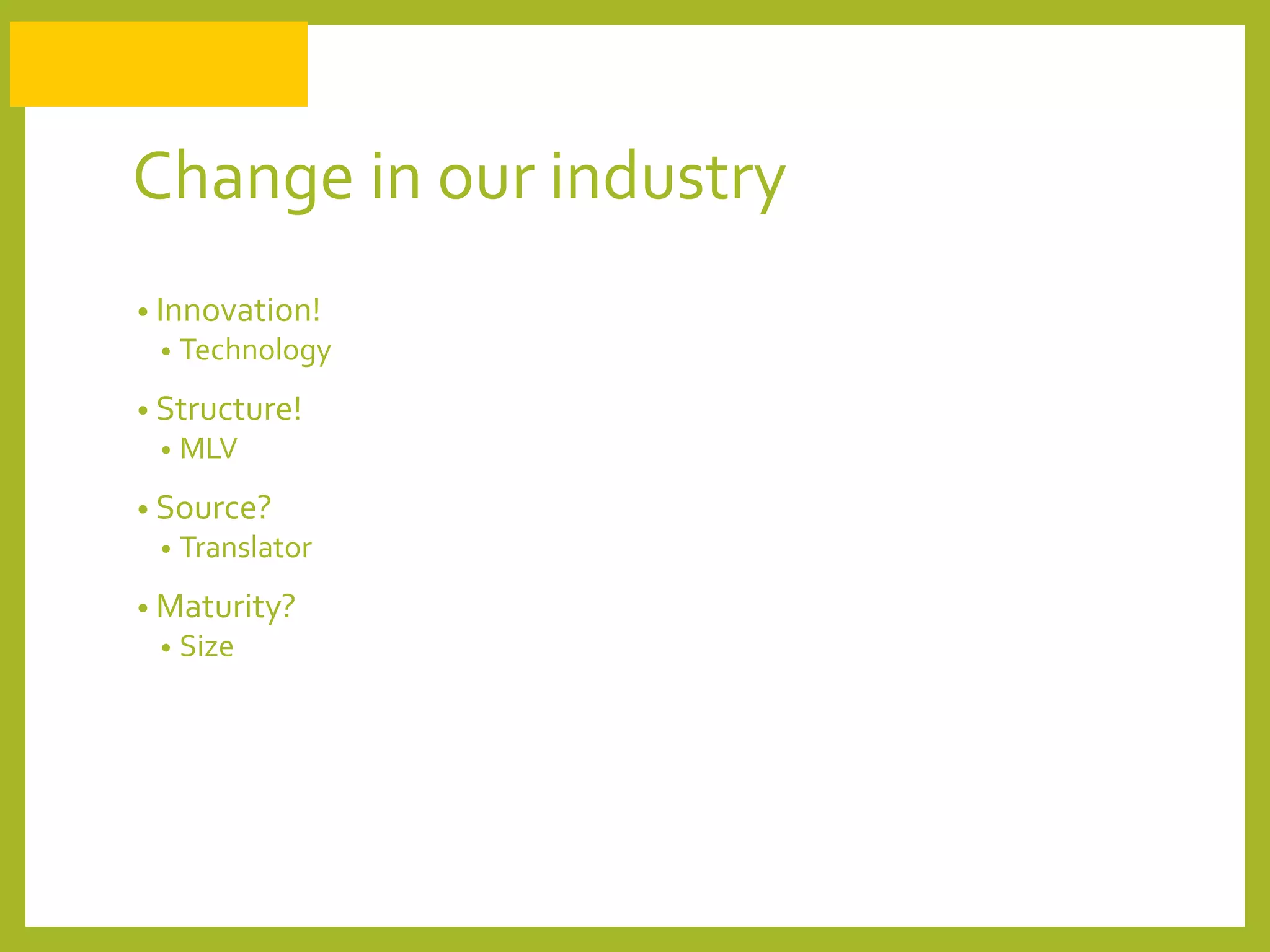
Change in our industry
• Innovation!
• Technology
• Structure!
• MLV
• Source?
• Translator
• Maturity?
• Size
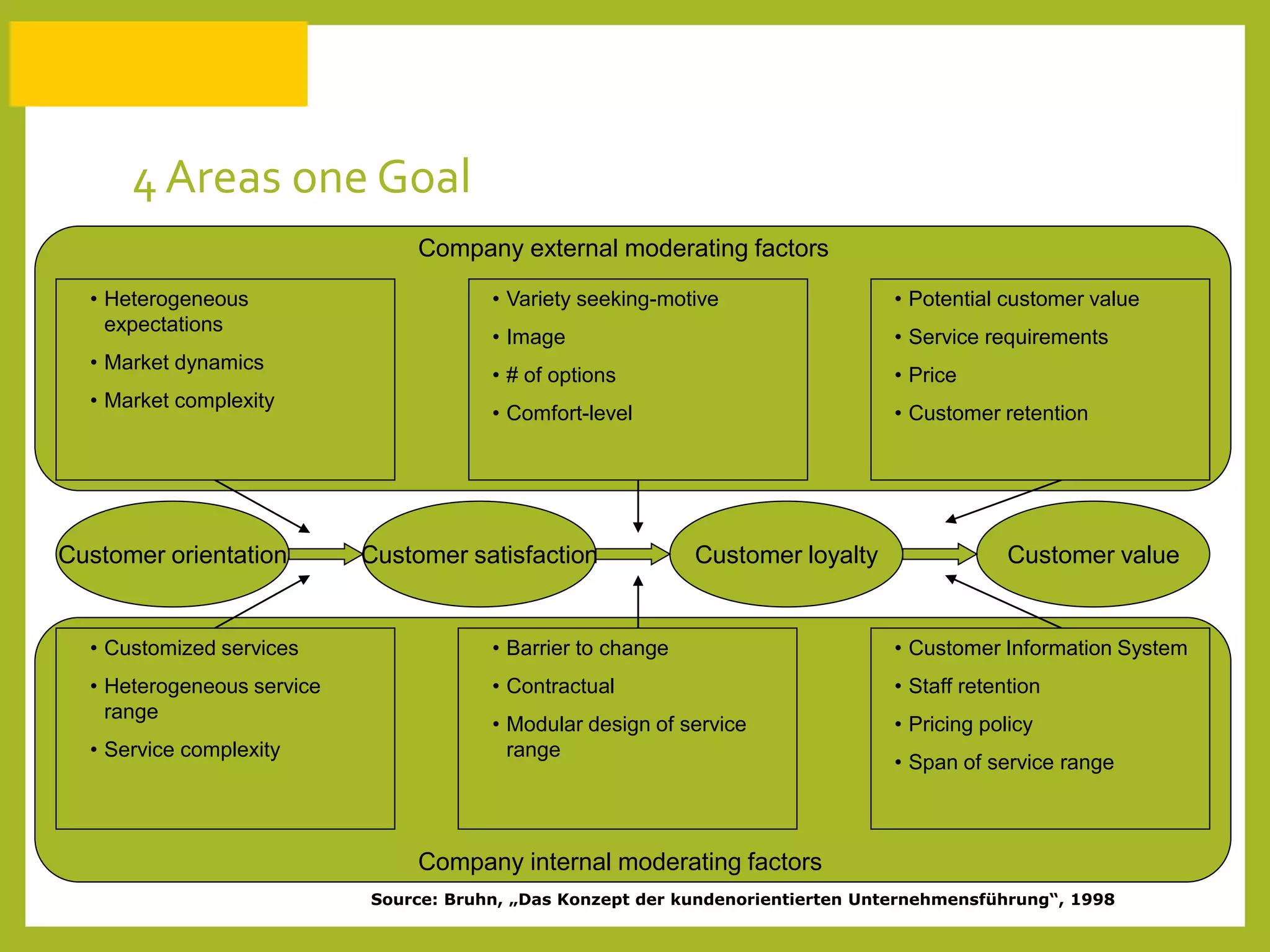
4 Areas one Goal
Source: Bruhn, „Das Konzept der kundenorientierten Unternehmensführung“, 1998
Customer orientation Customer satisfaction Customer loyalty Customer value
Company internal moderating factors
Company external moderating factors
• Heterogeneous
expectations
• Market dynamics
• Market complexity
• Variety seeking-motive
• Image
• # of options
• Comfort-level
• Potential customer value
• Service requirements
• Price
• Customer retention
• Customized services
• Heterogeneous service
range
• Service complexity
• Barrier to change
• Contractual
• Modular design of service
range
• Customer Information System
• Staff retention
• Pricing policy
• Span of service range
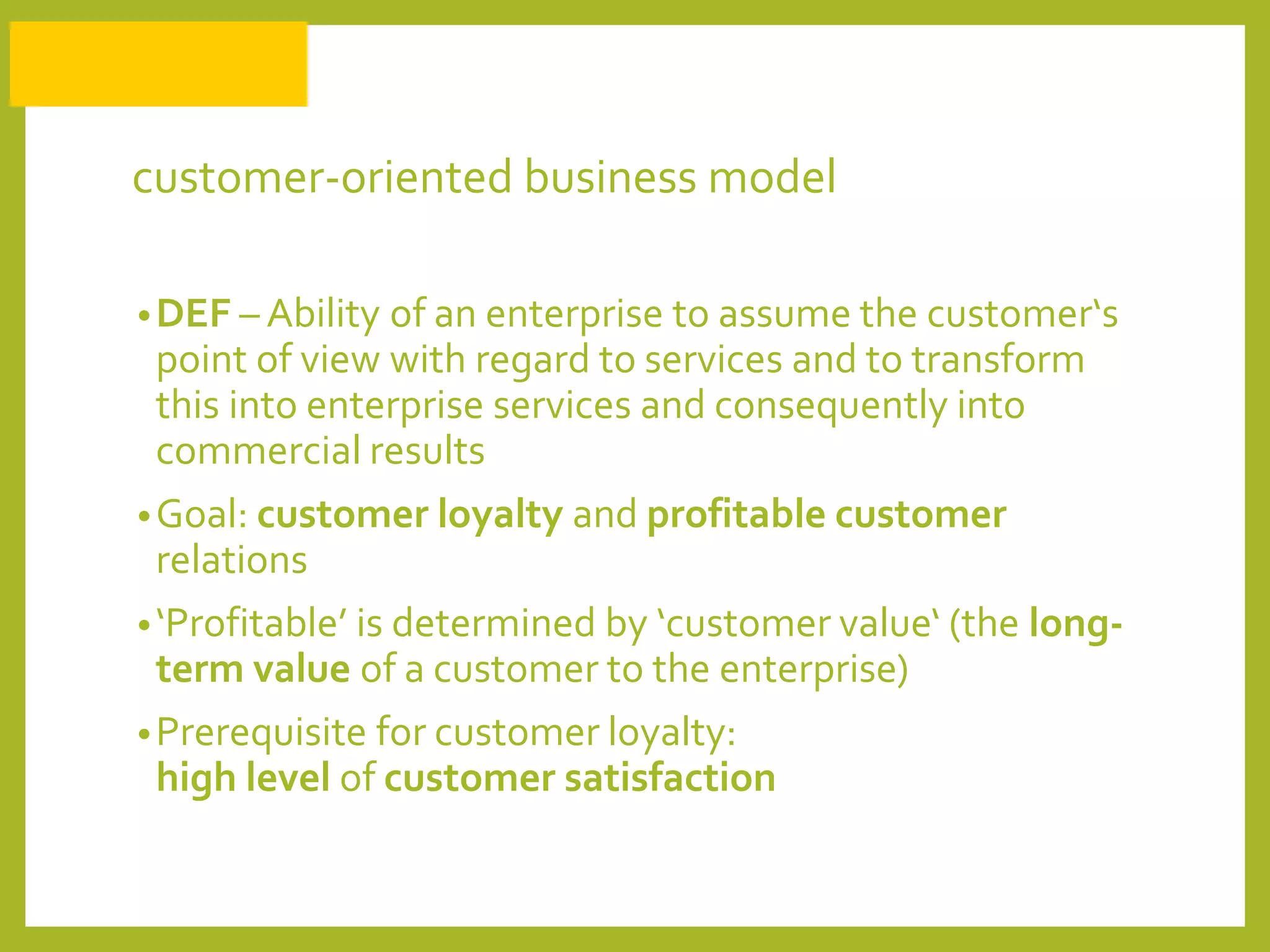
customer-oriented business model
•DEF – Ability of an enterprise to assume the customer‘s
point of view with regard to services and to transform
this into enterprise services and consequently into
commercial results
•Goal: customer loyalty and profitable customer
relations
•‘Profitable’ is determined by ‘customer value‘ (the long-
term value of a customer to the enterprise)
•Prerequisite for customer loyalty:
high level of customer satisfaction
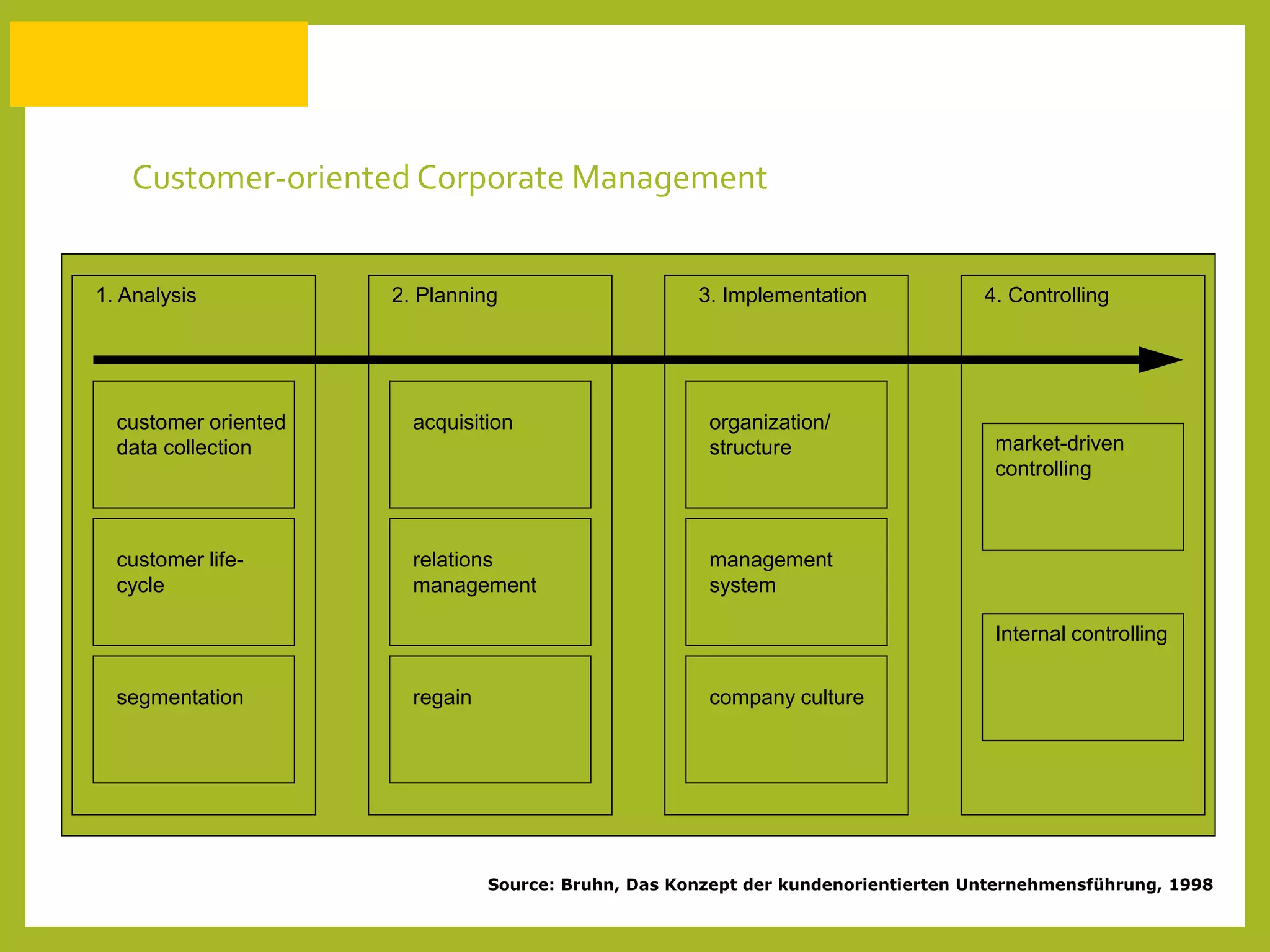
Customer-oriented Corporate Management
Wechselbarrieren
Source: Bruhn, Das Konzept der kundenorientierten Unternehmensführung, 1998
1. Analysis 2. Planning 3. Implementation 4. Controlling
customer oriented
data collection
customer life-
cycle
segmentation
acquisition
relations
management
regain
organization/
structure
management
system
company culture
market-driven
controlling
Internal controlling
0
1
2
3
4
5
innovative
creative
regional
product-oriented
customer-oriented
tailored
reasonable
nitch
traditional
hands-on
international
brand
slow
standard
expensive
general
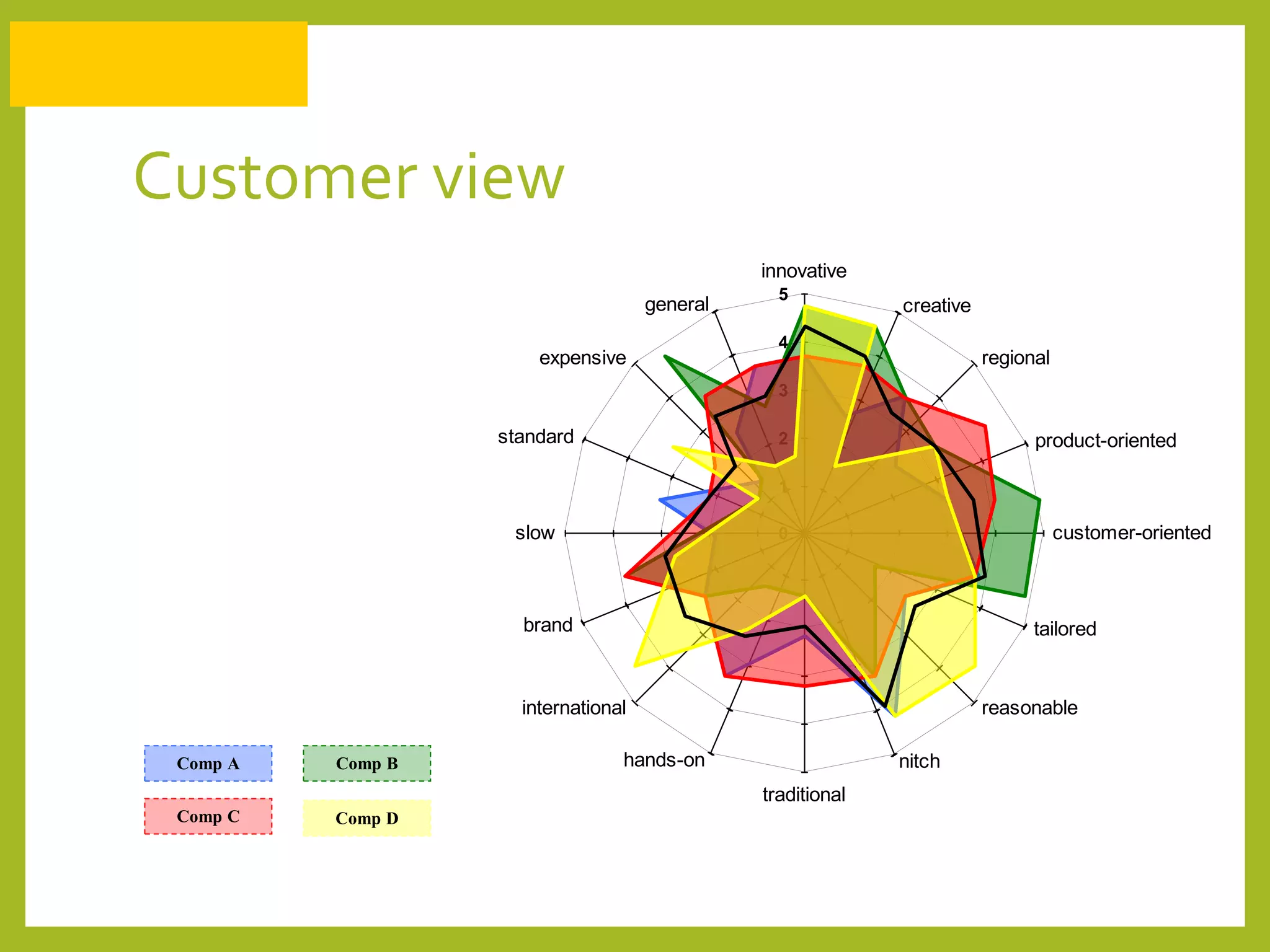
Customer view
Comp A
Comp C Comp D
Comp B
0
1
2
3
4
5
innovative
creative
regional
product-oriented
customer-oriented
tailored
reasonable
nitch
traditional
hands-on
international
brand
slow
standard
expensive
general
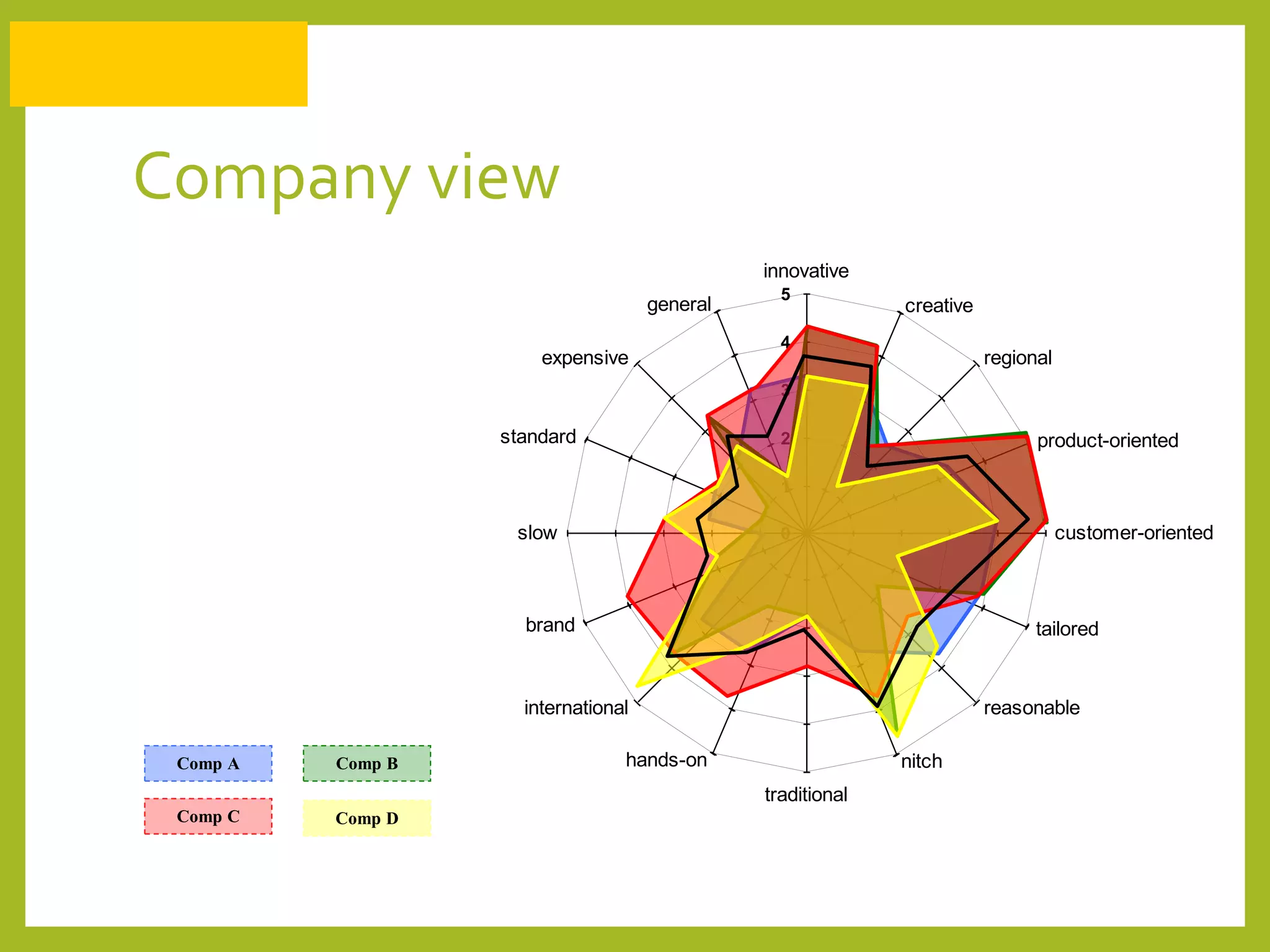
Company view
Comp A
Comp C Comp D
Comp B
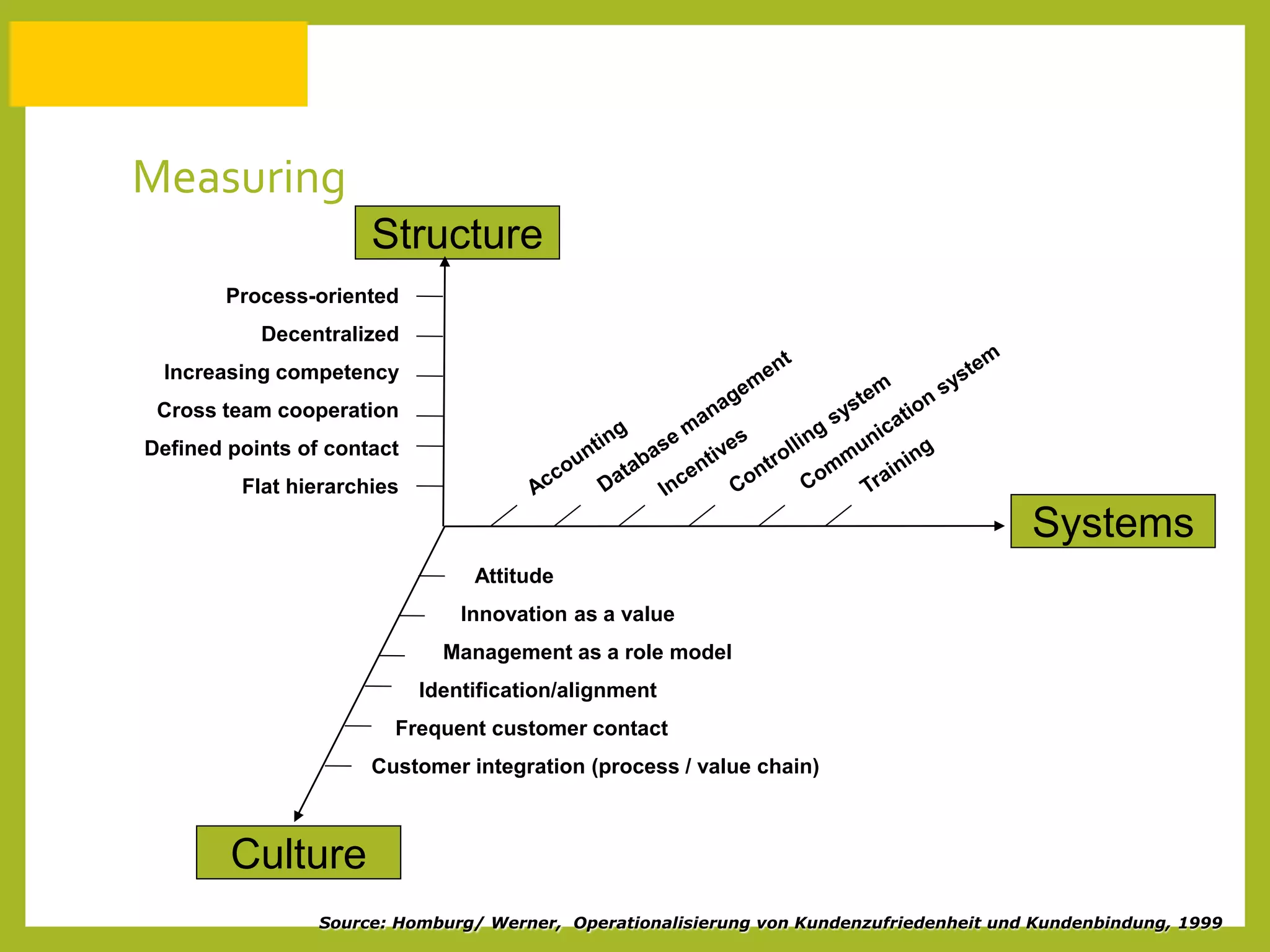
Measuring
Source: Homburg/ Werner, Operationalisierung von Kundenzufriedenheit und Kundenbindung, 1999
Structure
Systems
Culture
Attitude
Innovation as a value
Management as a role model
Identification/alignment
Frequent customer contact
Customer integration (process / value chain)
Process-oriented
Decentralized
Increasing competency
Cross team cooperation
Defined points of contact
Flat hierarchies
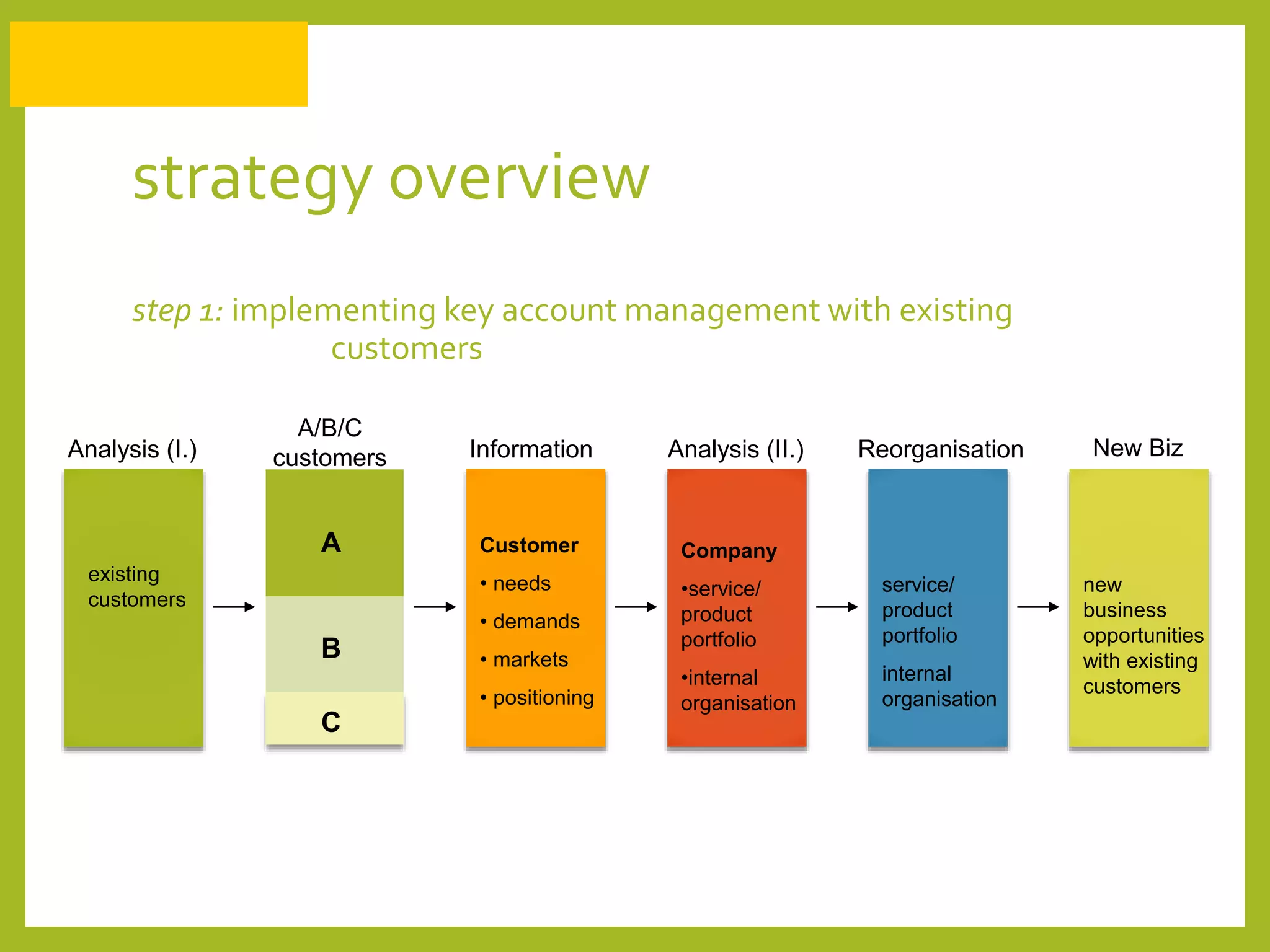
strategy overview
step 1: implementing key account management with existing
customers
A
B
C
New BizAnalysis (I.)
existing
customers
A/B/C
customers Information
Customer
• needs
• demands
• markets
• positioning
ReorganisationAnalysis (II.)
Company
•service/
product
portfolio
•internal
organisation
service/
product
portfolio
internal
organisation
new
business
opportunities
with existing
customers
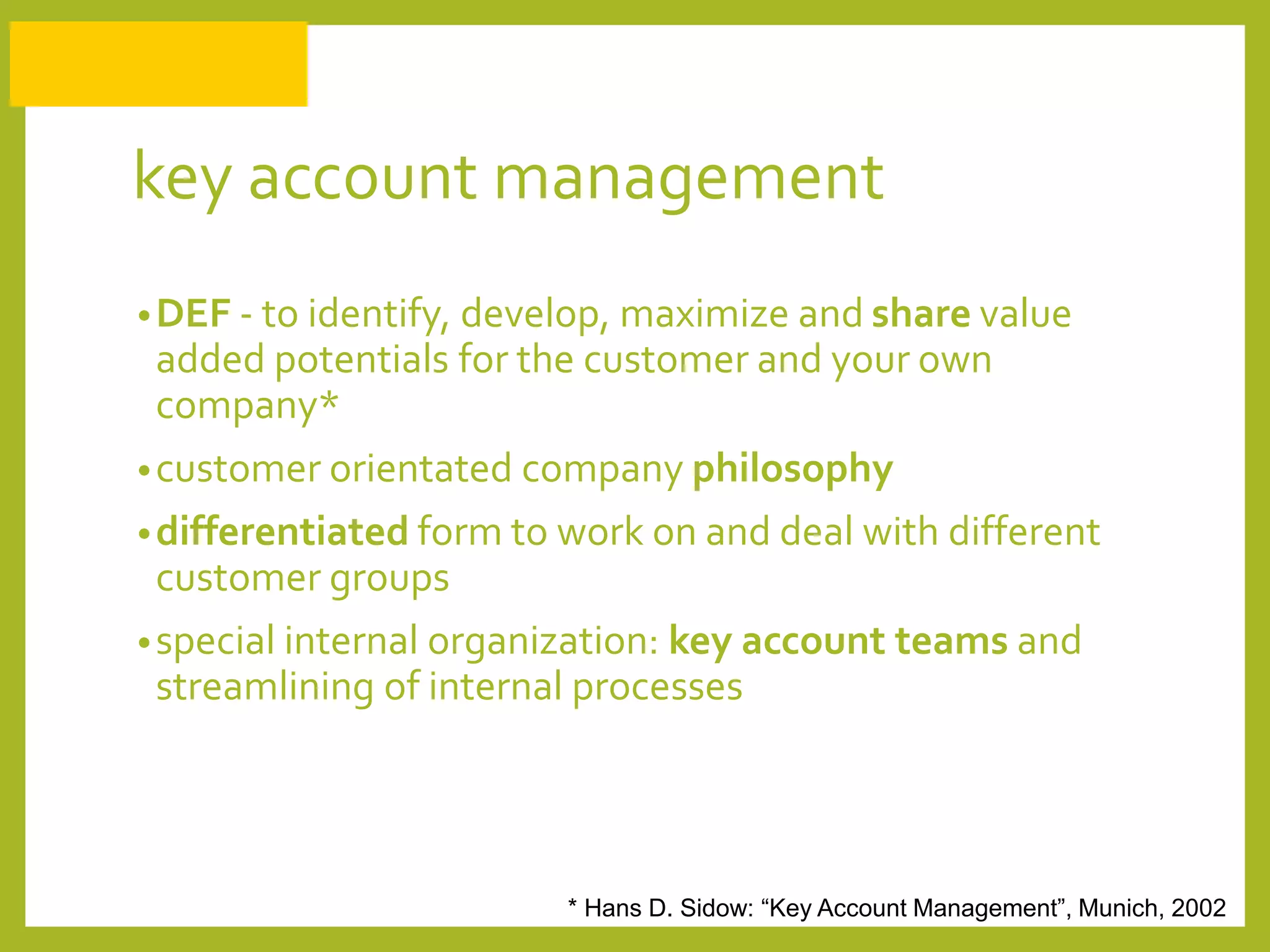
key account management
•DEF - to identify, develop, maximize and share value
added potentials for the customer and your own
company*
•customer orientated company philosophy
•differentiated form to work on and deal with different
customer groups
•special internal organization: key account teams and
streamlining of internal processes
* Hans D. Sidow: “Key Account Management”, Munich, 2002
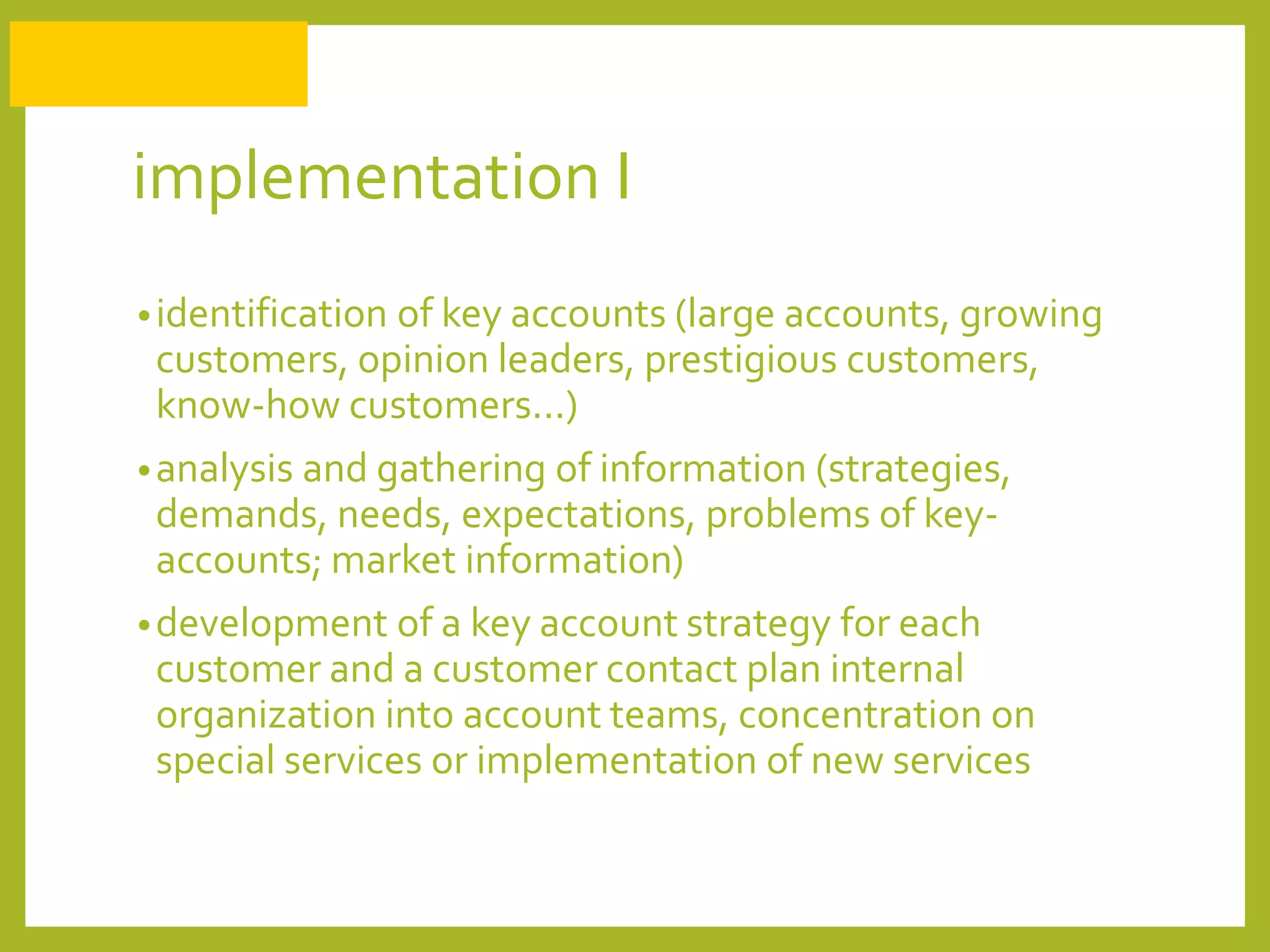
implementation I
•identification of key accounts (large accounts, growing
customers, opinion leaders, prestigious customers,
know-how customers...)
•analysis and gathering of information (strategies,
demands, needs, expectations, problems of key-
accounts; market information)
•development of a key account strategy for each
customer and a customer contact plan internal
organization into account teams, concentration on
special services or implementation of new services
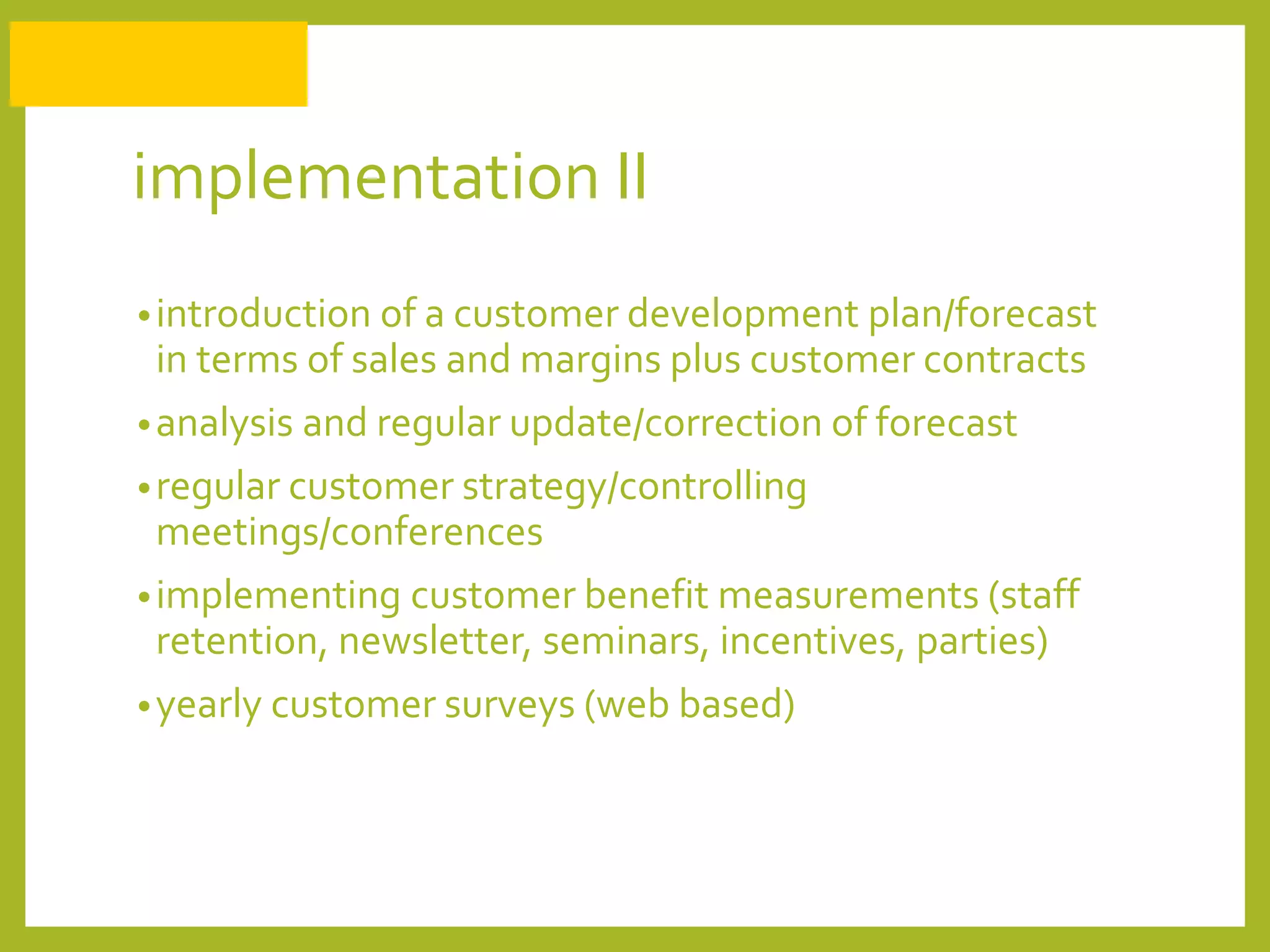
implementation II
•introduction of a customer development plan/forecast
in terms of sales and margins plus customer contracts
•analysis and regular update/correction of forecast
•regular customer strategy/controlling
meetings/conferences
•implementing customer benefit measurements (staff
retention, newsletter, seminars, incentives, parties)
•yearly customer surveys (web based)
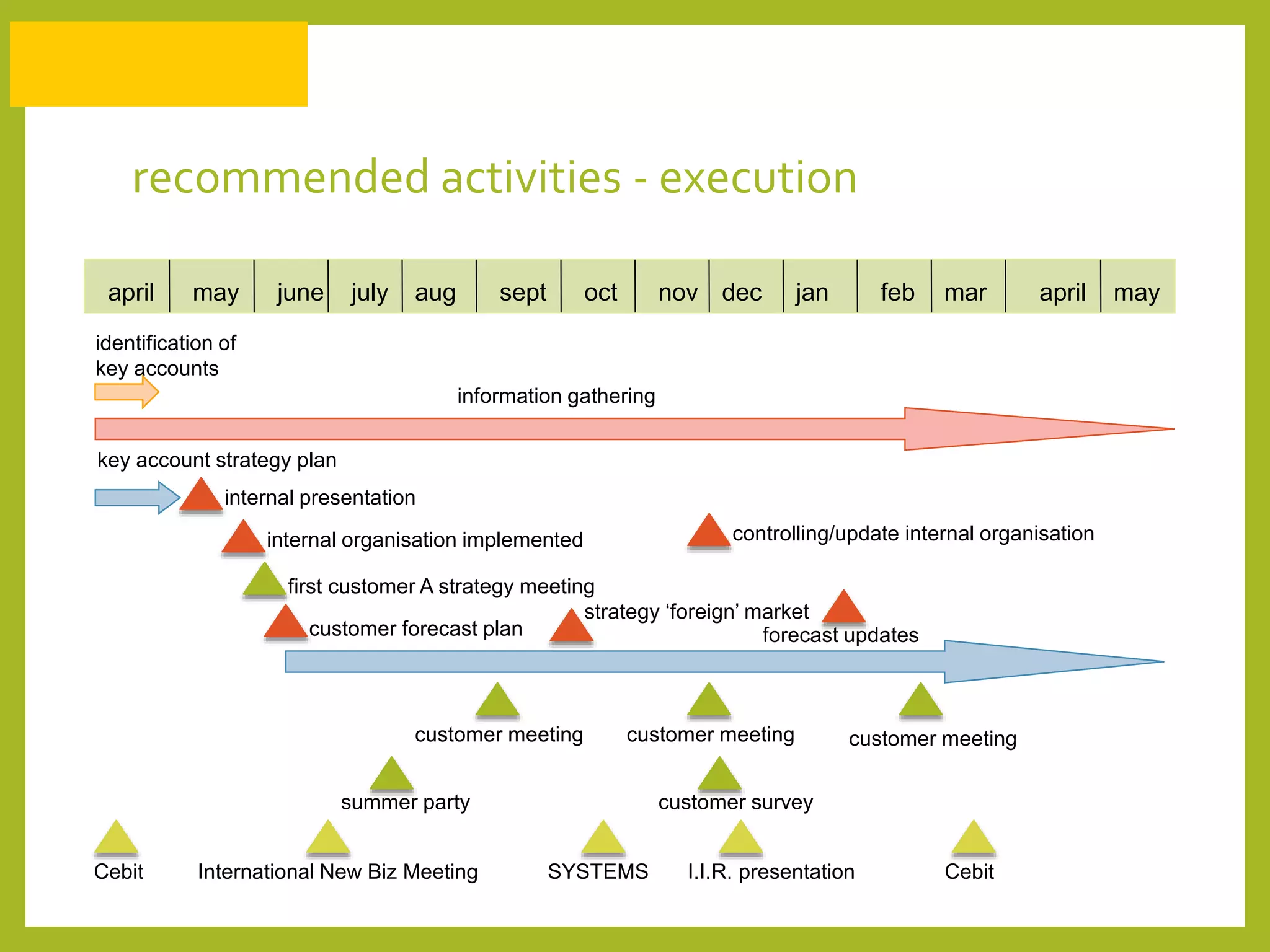
recommended activities - execution
april july aug sept oct nov dec jan feb mar april mayjunemay
identification of
key accounts
information gathering
key account strategy plan
internal presentation
first customer A strategy meeting
internal organisation implemented
customer forecast plan forecast updates
customer meeting customer meeting customer meeting
customer surveysummer party
International New Biz Meeting SYSTEMSCebit Cebit
controlling/update internal organisation
I.I.R. presentation
strategy ‘foreign’ market
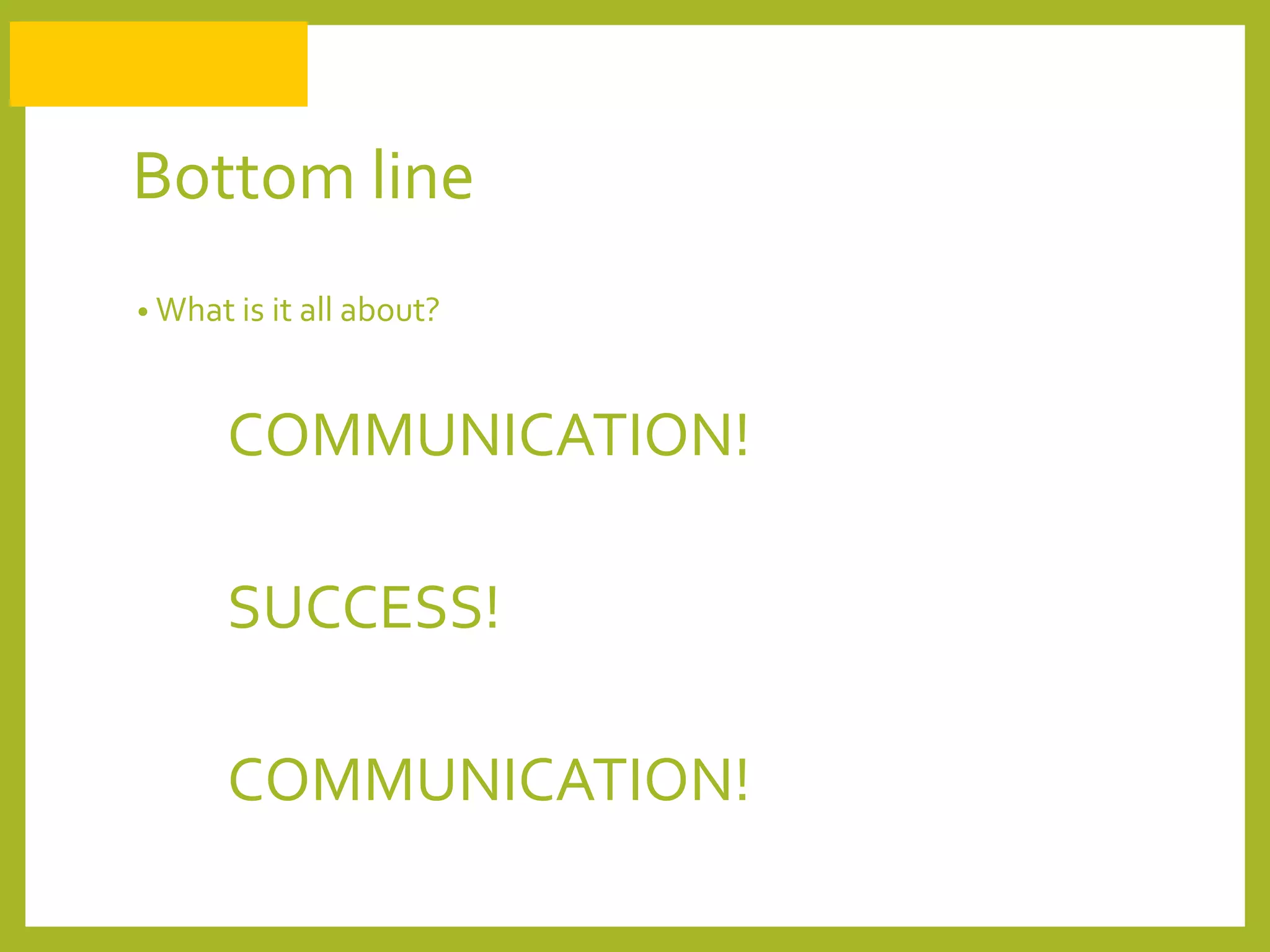
Bottom line
• What is it all about?
COMMUNICATION!
SUCCESS!
COMMUNICATION!
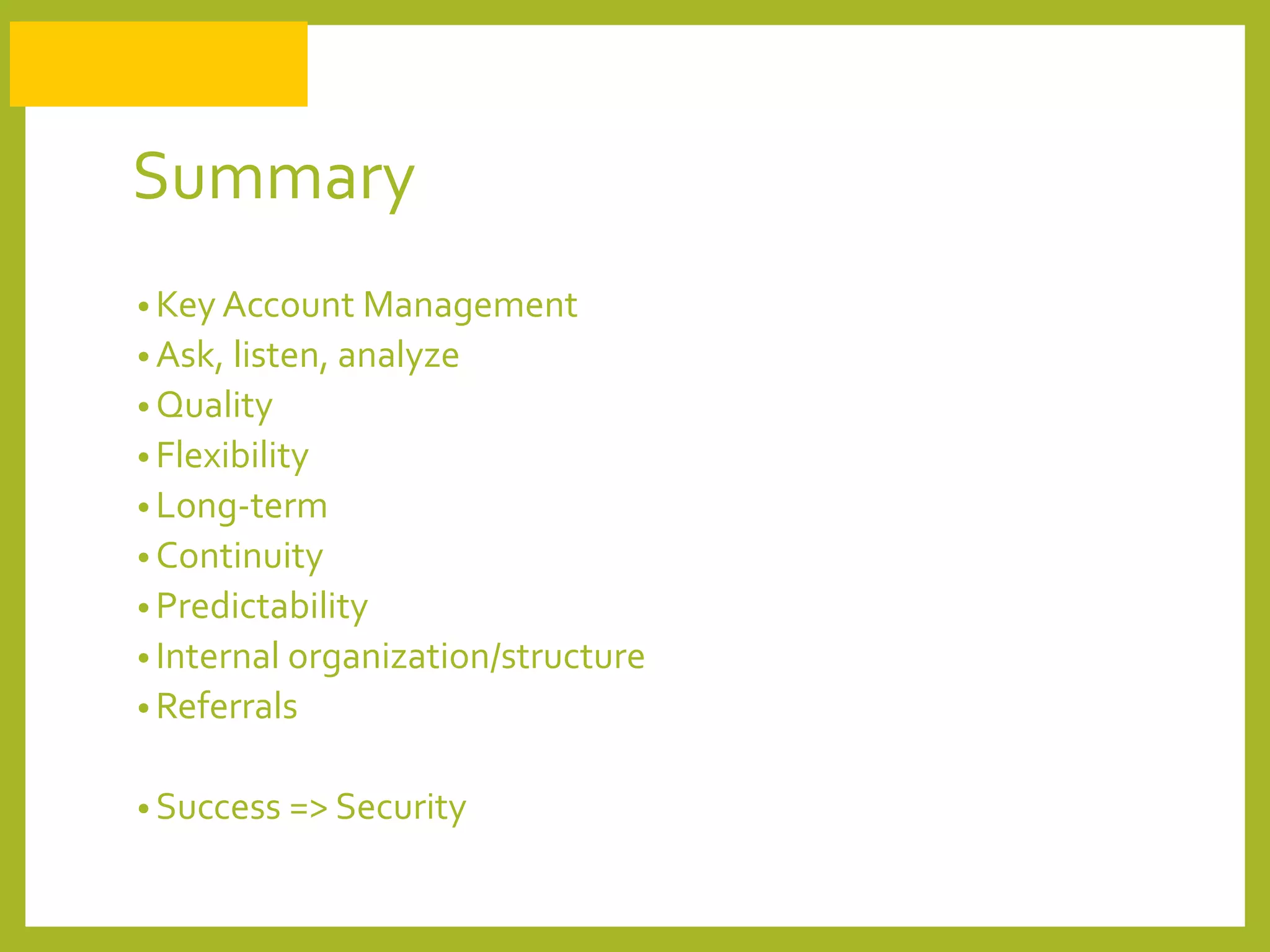
Summary
• Key Account Management
• Ask, listen, analyze
• Quality
• Flexibility
• Long-term
• Continuity
• Predictability
• Internal organization/structure
• Referrals
• Success => Security
Q&A - Discussion
• Thank you very much!

On Key Account Management, Matthias Caesar @ SAP in 2003

  • 1.
    CONSTANT CHANGE!? How to generateRepeat Business with Key Accounts Matthias Caesar SAP Language Services, Feb. 27th 03
  • 2.
    Change in ourindustry • Innovation! • Technology • Structure! • MLV • Source? • Translator • Maturity? • Size
  • 3.
    4 Areas oneGoal Source: Bruhn, „Das Konzept der kundenorientierten Unternehmensführung“, 1998 Customer orientation Customer satisfaction Customer loyalty Customer value Company internal moderating factors Company external moderating factors • Heterogeneous expectations • Market dynamics • Market complexity • Variety seeking-motive • Image • # of options • Comfort-level • Potential customer value • Service requirements • Price • Customer retention • Customized services • Heterogeneous service range • Service complexity • Barrier to change • Contractual • Modular design of service range • Customer Information System • Staff retention • Pricing policy • Span of service range
  • 4.
    customer-oriented business model •DEF– Ability of an enterprise to assume the customer‘s point of view with regard to services and to transform this into enterprise services and consequently into commercial results •Goal: customer loyalty and profitable customer relations •‘Profitable’ is determined by ‘customer value‘ (the long- term value of a customer to the enterprise) •Prerequisite for customer loyalty: high level of customer satisfaction
  • 5.
    Customer-oriented Corporate Management Wechselbarrieren Source:Bruhn, Das Konzept der kundenorientierten Unternehmensführung, 1998 1. Analysis 2. Planning 3. Implementation 4. Controlling customer oriented data collection customer life- cycle segmentation acquisition relations management regain organization/ structure management system company culture market-driven controlling Internal controlling
  • 6.
  • 7.
  • 8.
    Measuring Source: Homburg/ Werner,Operationalisierung von Kundenzufriedenheit und Kundenbindung, 1999 Structure Systems Culture Attitude Innovation as a value Management as a role model Identification/alignment Frequent customer contact Customer integration (process / value chain) Process-oriented Decentralized Increasing competency Cross team cooperation Defined points of contact Flat hierarchies
  • 9.
    strategy overview step 1:implementing key account management with existing customers A B C New BizAnalysis (I.) existing customers A/B/C customers Information Customer • needs • demands • markets • positioning ReorganisationAnalysis (II.) Company •service/ product portfolio •internal organisation service/ product portfolio internal organisation new business opportunities with existing customers
  • 10.
    key account management •DEF- to identify, develop, maximize and share value added potentials for the customer and your own company* •customer orientated company philosophy •differentiated form to work on and deal with different customer groups •special internal organization: key account teams and streamlining of internal processes * Hans D. Sidow: “Key Account Management”, Munich, 2002
  • 11.
    implementation I •identification ofkey accounts (large accounts, growing customers, opinion leaders, prestigious customers, know-how customers...) •analysis and gathering of information (strategies, demands, needs, expectations, problems of key- accounts; market information) •development of a key account strategy for each customer and a customer contact plan internal organization into account teams, concentration on special services or implementation of new services
  • 12.
    implementation II •introduction ofa customer development plan/forecast in terms of sales and margins plus customer contracts •analysis and regular update/correction of forecast •regular customer strategy/controlling meetings/conferences •implementing customer benefit measurements (staff retention, newsletter, seminars, incentives, parties) •yearly customer surveys (web based)
  • 13.
    recommended activities -execution april july aug sept oct nov dec jan feb mar april mayjunemay identification of key accounts information gathering key account strategy plan internal presentation first customer A strategy meeting internal organisation implemented customer forecast plan forecast updates customer meeting customer meeting customer meeting customer surveysummer party International New Biz Meeting SYSTEMSCebit Cebit controlling/update internal organisation I.I.R. presentation strategy ‘foreign’ market
  • 14.
    Bottom line • Whatis it all about? COMMUNICATION! SUCCESS! COMMUNICATION!
  • 15.
    Summary • Key AccountManagement • Ask, listen, analyze • Quality • Flexibility • Long-term • Continuity • Predictability • Internal organization/structure • Referrals • Success => Security
  • 16.
    Q&A - Discussion •Thank you very much!