Downloaded 390 times
![OMG DDS Adoptions
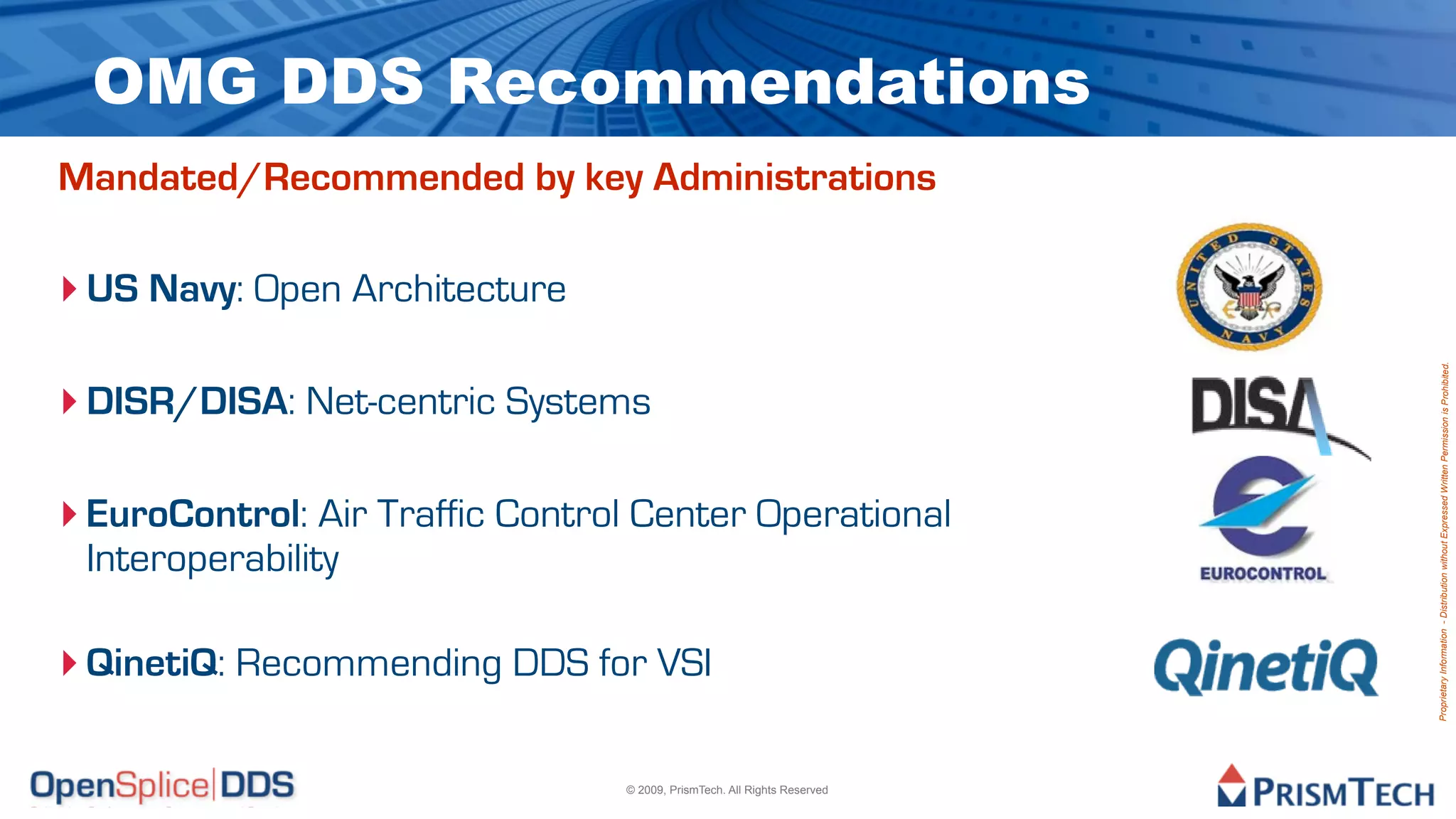
Adopted by Most Challenging International Programs
‣ US FCS/SOSCOE
Proprietary Information - Distribution without Expressed Written Permission is Prohibited.
‣ European Next Generation Flight Data Processor
‣ US ZUMWALT [DDG(1000)]
‣ VTID adopting DDS for the architectural demonstrator
© 2009, PrismTech. All Rights Reserved](https://image.slidesharecdn.com/01-omg-dds-tutorial-090713122815-phpapp02/75/OMG-DDS-Tutorial-Part-I-9-2048.jpg)


![Hello-pub.cpp (Default QoS)
int main(int argc, char* argv[]) { swatch::hello sample;
if (!parse_args(argc, argv)) std::stringstream ss;
return 1;
for (int i = 0; i < N; ++i) {
// -- init the SIMD runtime ss << i;
Proprietary Information - Distribution without Expressed Written Permission is Prohibited.
simd::Runtime::init(); std::string tmp = ss.str() + "." + message;
ss.str("");
// -- create the DDS Topic sample.name = DDS::string_dup(tmp.c_str());
simd::Topic<swatch::hello> helloTopic("helloTopic"); std::cout << "<<= " << sample.name << std::endl;
writer.write(sample);
// -- create the DDS DataWriter usleep(period*1000);
simd::DataWriter<swatch::hello> writer(helloTopic, }
dwqos); std::cout << "[done]" << std::endl;
return 0; }
Only 3-lines of DDS-Specific Code Business Logic
© 2009, PrismTech. All Rights Reserved](https://image.slidesharecdn.com/01-omg-dds-tutorial-090713122815-phpapp02/75/OMG-DDS-Tutorial-Part-I-111-2048.jpg)
![Hello-pub.cpp
int main(int argc, char* argv[]) {
if (!parse_args(argc, argv))
return 1;
swatch::hello sample;
// -- init the SIMD runtime
simd::Runtime::init(); std::stringstream ss;
simd::TopicQos tqos; for (int i = 0; i < N; ++i) {
ss << i;
tqos.set_reliable();
Proprietary Information - Distribution without Expressed Written Permission is Prohibited.
tqos.set_transient(); std::string tmp = ss.str() + "." + message;
ss.str("");
// -- create the DDS Topic sample.name = DDS::string_dup(tmp.c_str());
std::cout << "<<= " << sample.name << std::endl;
simd::Topic<swatch::hello> helloTopic("helloTopic",
tqos); writer.write(sample);
usleep(period*1000);
simd::DataWriterQos dwqos(tqos);
dwqos.set_keep_last(history_depth); }
std::cout << "[done]" << std::endl;
dwqos.set_auto_dispose(false);
return 0; }
// -- create the DDS DataWriter Business Logic
simd::DataWriter<swatch::hello> writer(helloTopic,
dwqos);
© 2009, PrismTech. All Rights Reserved](https://image.slidesharecdn.com/01-omg-dds-tutorial-090713122815-phpapp02/75/OMG-DDS-Tutorial-Part-I-112-2048.jpg)
![Hello-sub.cpp (Default QoS)
int main(int argc, char* argv[]) { swatch::helloSeq samples;
if (!parse_args(argc, argv)) DDS::SampleInfoSeq infos;
return 1;
while (true) {
// -- init the SIMD runtime reader.read(samples, infos);
Proprietary Information - Distribution without Expressed Written Permission is Prohibited.
simd::Runtime::init(); for (int i = 0; i < samples.length(); ++i) {
std::cout << "=>> " << samples[i].name
// -- create the DDS Topic << std::endl;
simd::Topic<swatch::hello> helloTopic("helloTopic"); }
if (samples.length() > 0)
// -- create the DDS DataReader std::cout << "--" << std::endl;
simd::DataReader<swatch::hello> reader(helloTopic); reader.return_loan(samples, infos);
usleep(period*1000);
}
return 0;}
Only 3-lines of DDS-Specific Code
Business Logic
© 2009, PrismTech. All Rights Reserved](https://image.slidesharecdn.com/01-omg-dds-tutorial-090713122815-phpapp02/75/OMG-DDS-Tutorial-Part-I-113-2048.jpg)
![Hello-sub.cpp
int main(int argc, char* argv[]) {
if (!parse_args(argc, argv))
return 1; swatch::helloSeq samples;
// -- init the SIMD runtime DDS::SampleInfoSeq infos;
simd::Runtime::init();
while (true) {
simd::TopicQos tqos; reader.read(samples, infos);
Proprietary Information - Distribution without Expressed Written Permission is Prohibited.
tqos.set_reliable(); for (int i = 0; i < samples.length(); ++i) {
tqos.set_transient(); std::cout << "=>> " << samples[i].name
<< std::endl;
// -- create the DDS Topic }
simd::Topic<swatch::hello> helloTopic("helloTopic", if (samples.length() > 0)
tqos); std::cout << "--" << std::endl;
simd::DataReaderQos drqos(tqos); reader.return_loan(samples, infos);
drqos.set_keep_last(history_depth); usleep(period*1000);
}
// -- create the DDS DataReader return 0;}
simd::DataReader<swatch::hello> reader(helloTopic,
drqos); Business Logic
© 2009, PrismTech. All Rights Reserved](https://image.slidesharecdn.com/01-omg-dds-tutorial-090713122815-phpapp02/75/OMG-DDS-Tutorial-Part-I-114-2048.jpg)

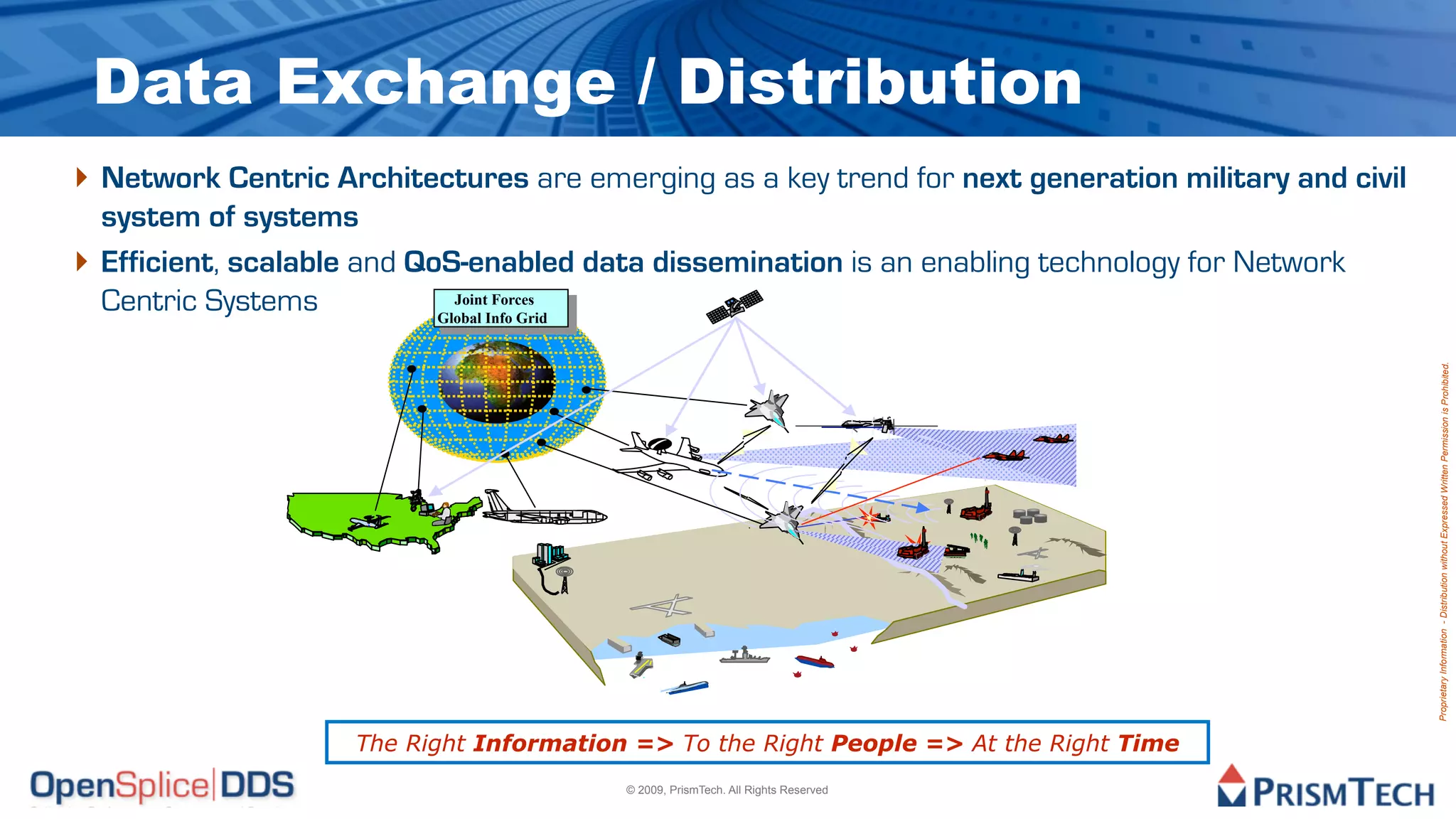
The document discusses the OpenSplice DDS, emphasizing its performance, scalability, and applicability across various domains such as defense, aerospace, and financial services. It highlights the DDS standard's ability to address data distribution challenges through a data-centric publish/subscribe model, advocating for its adoption in modern network-centric architectures. Key use cases and architectural principles are presented to illustrate the benefits of DDS in providing efficient and real-time data dissemination.
Overview of OpenSplice DDS, performance, openness, and freedom presented by Angelo Corsaro.
Agenda includes defining motivating forces, standards, architectural principles, and programming model.
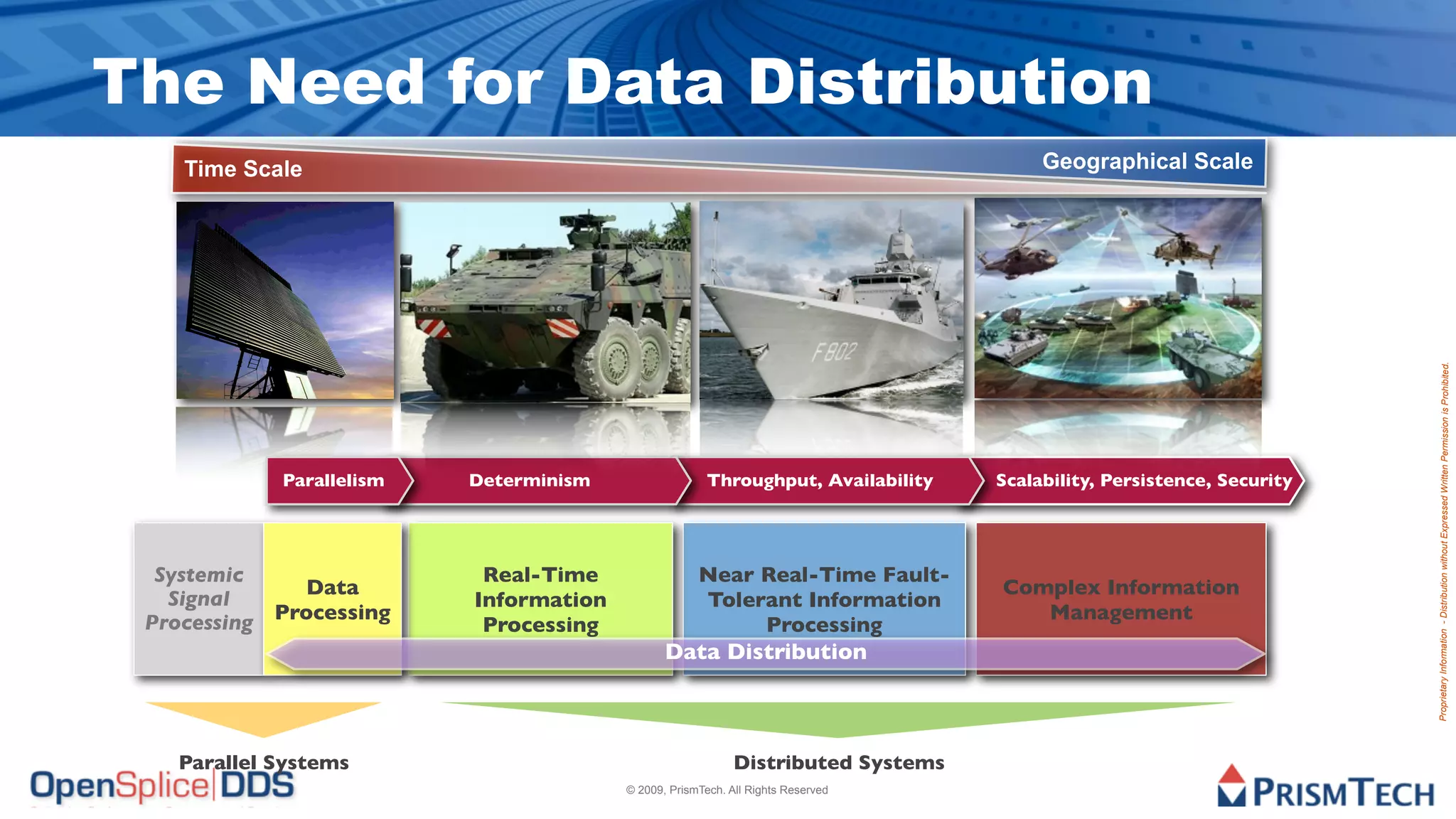
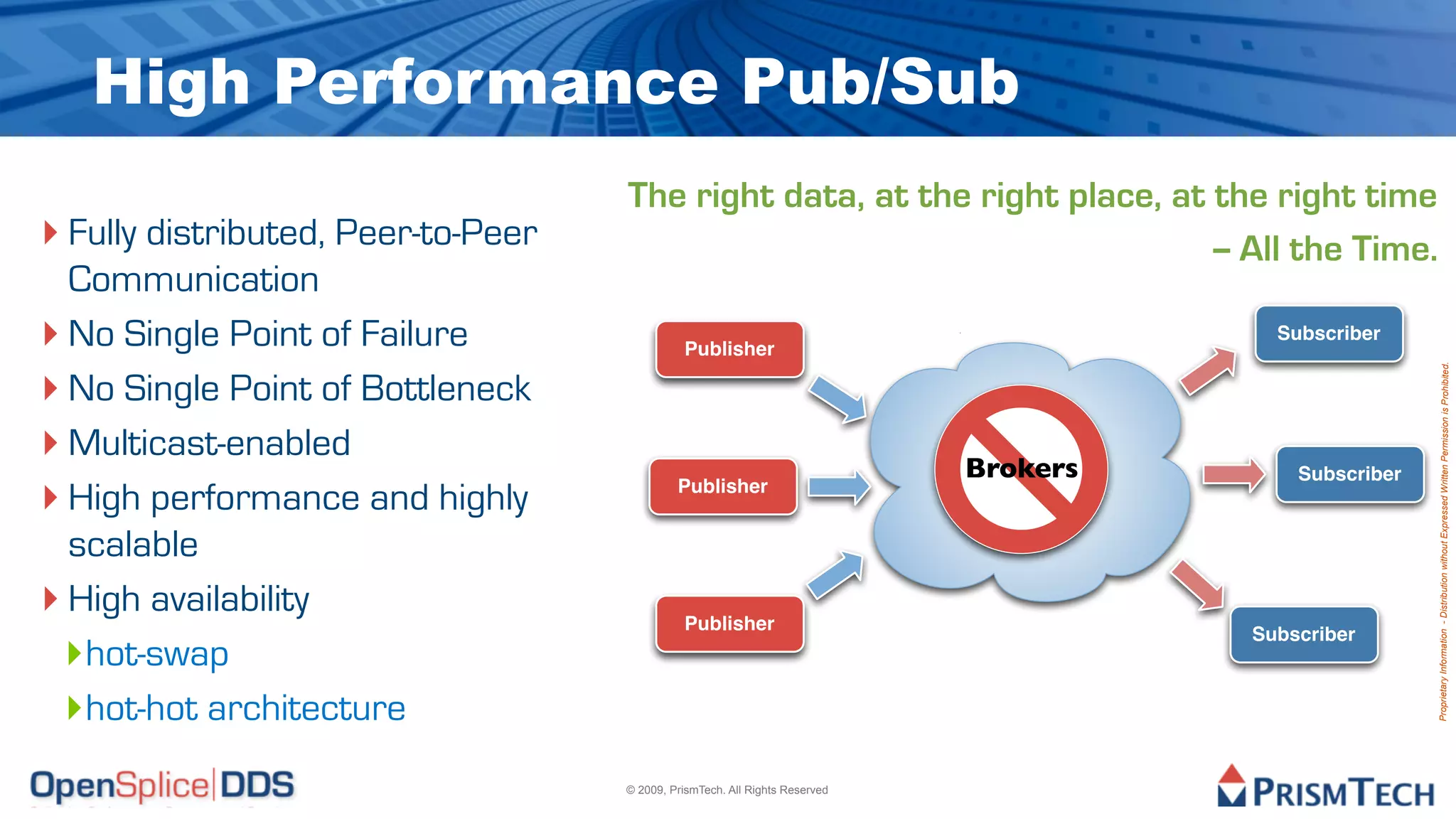
Importance of data distribution to handle parallel, real-time, complex systems across military and civil applications.
Agenda includes defining motivating forces, standards, architectural principles, and programming model.
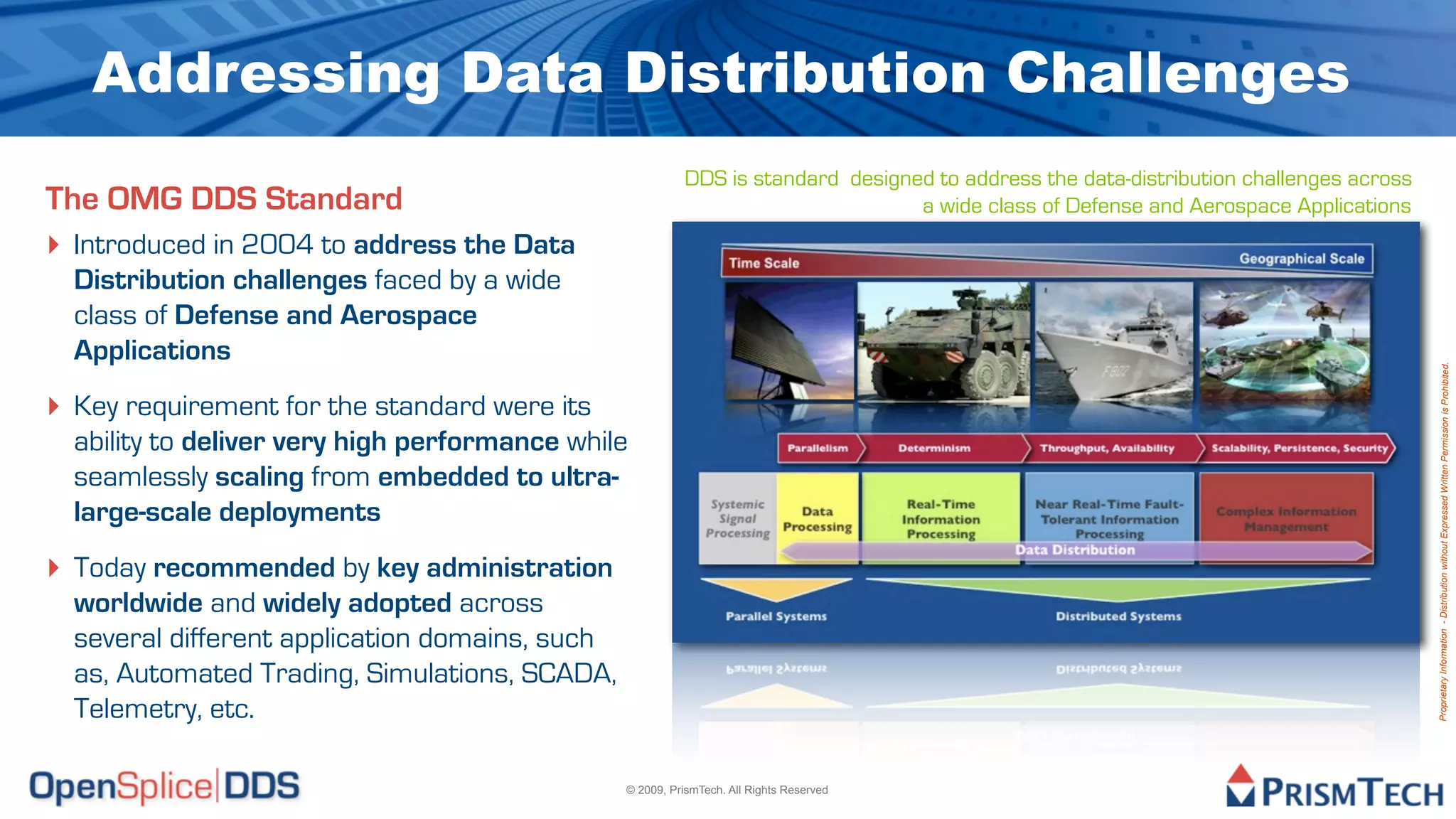
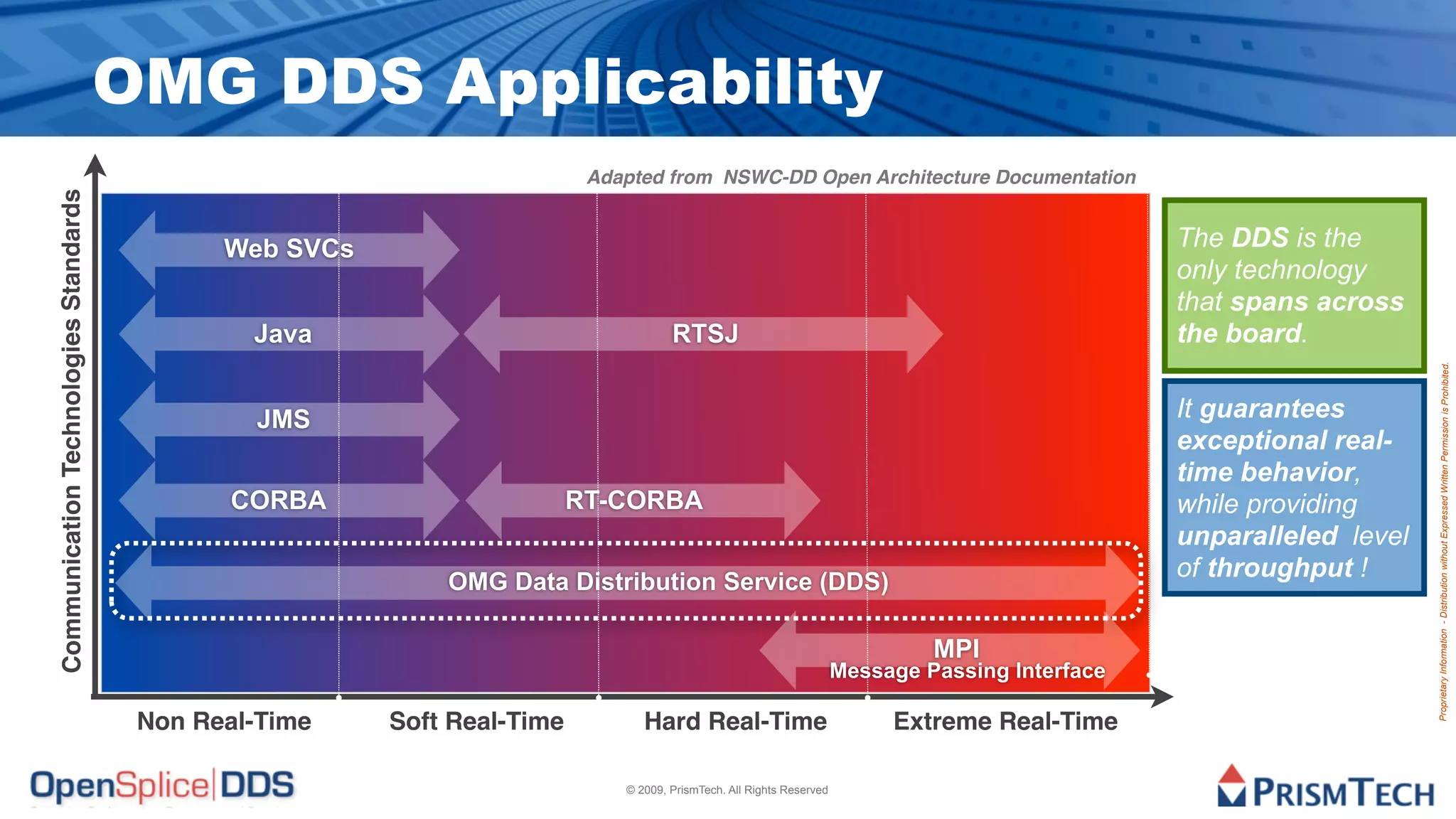
Importance of data distribution to handle parallel, real-time, complex systems across military and civil applications.Overview of the DDS standard established in 2004 for addressing data distribution challenges, including relevant applications.
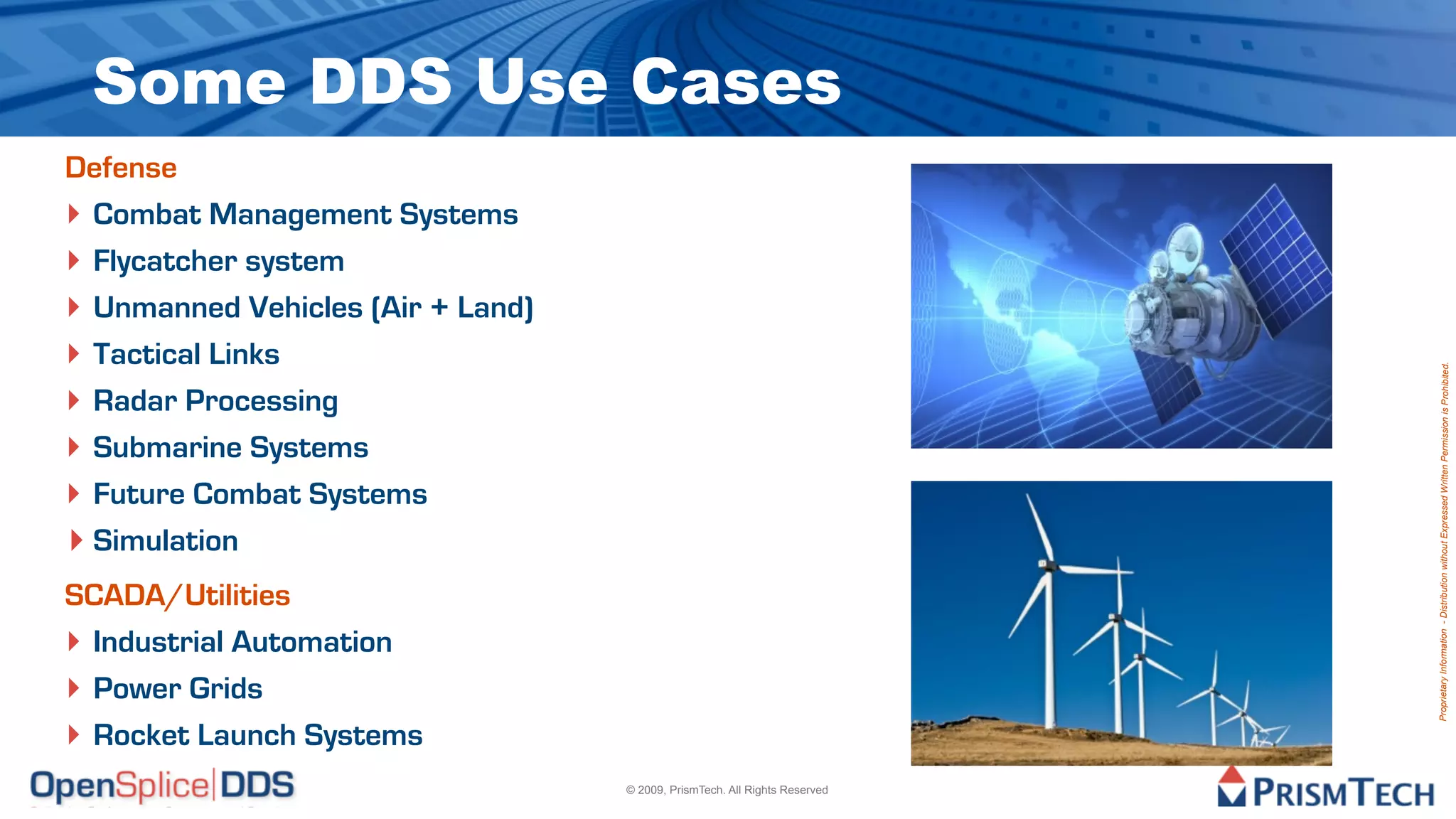
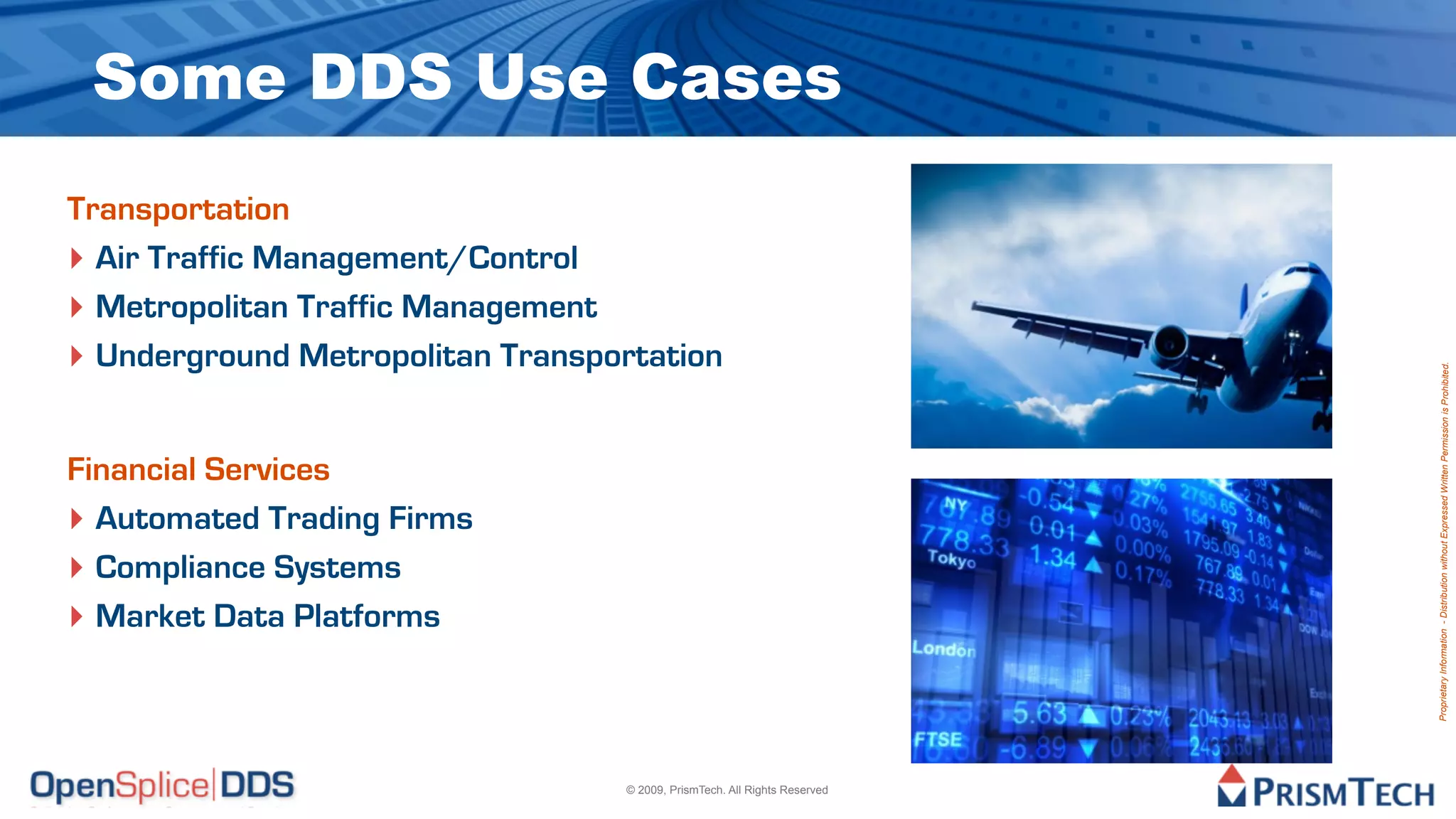
Applications of DDS in defense, transportation, and financial services showcasing versatility and practical deployment.
Agenda includes defining motivating forces, standards, architectural principles, and programming model.
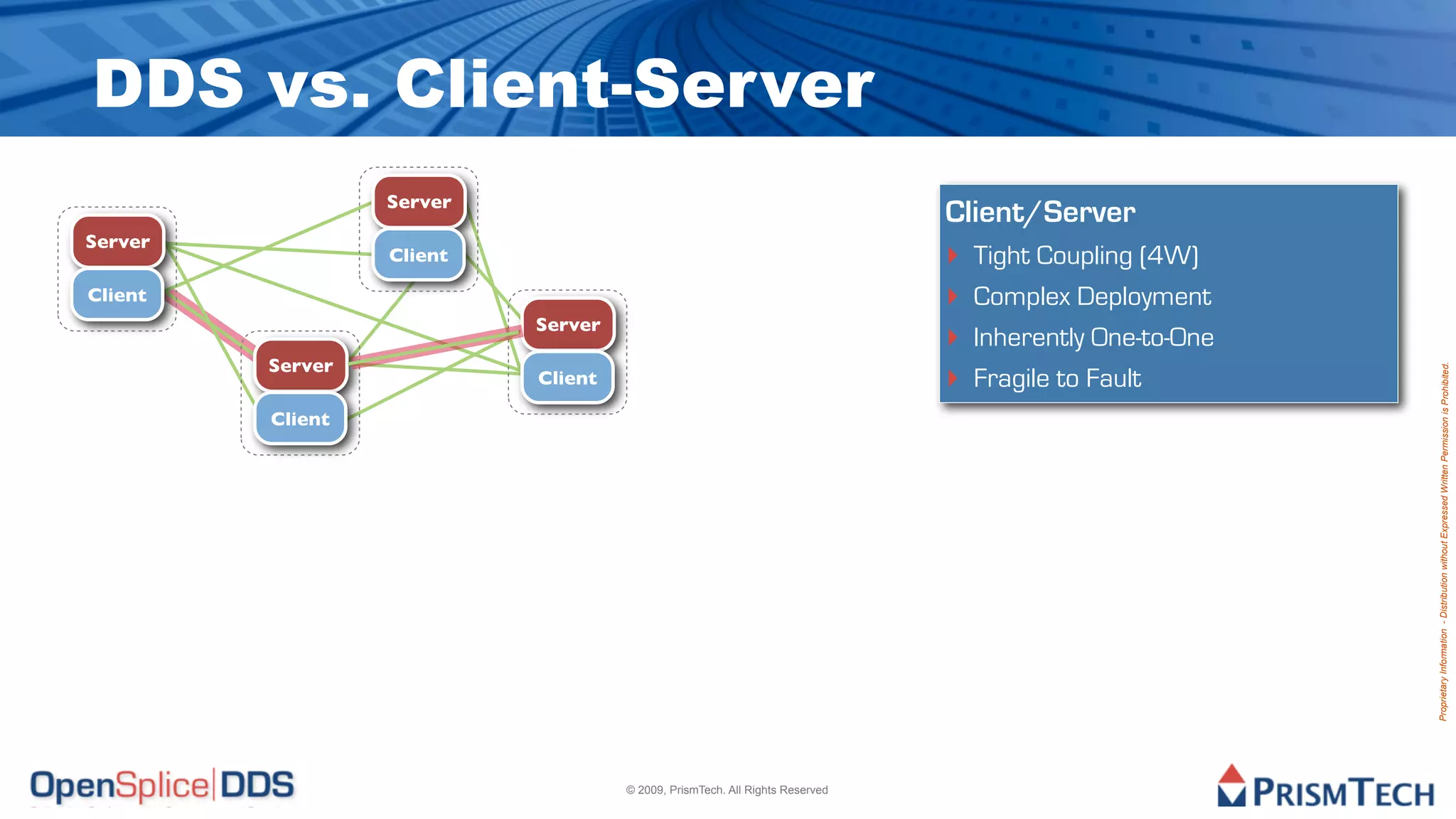
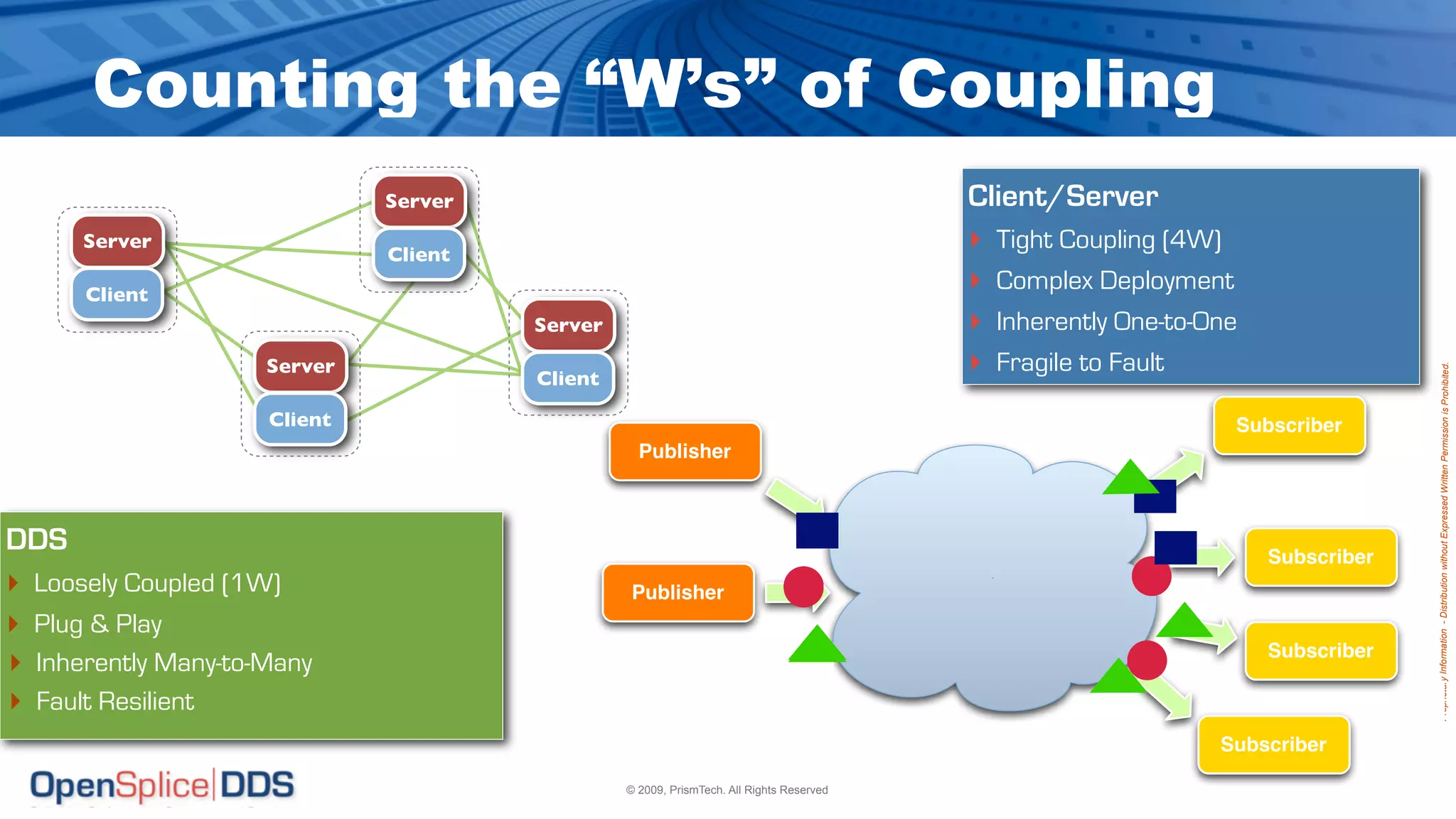
Comparisons between DDS and client-server models emphasizing loose coupling and benefits of DDS.
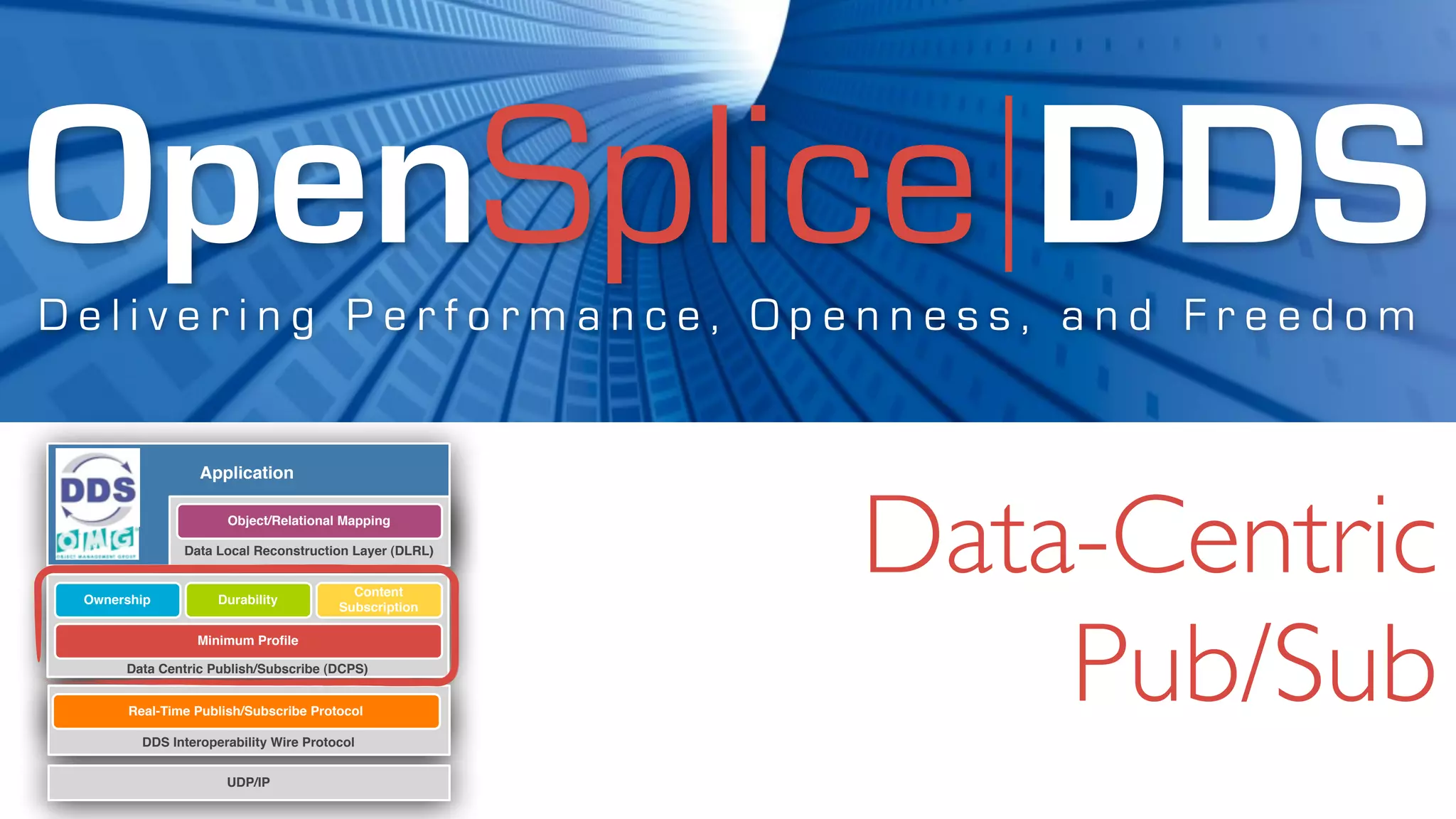
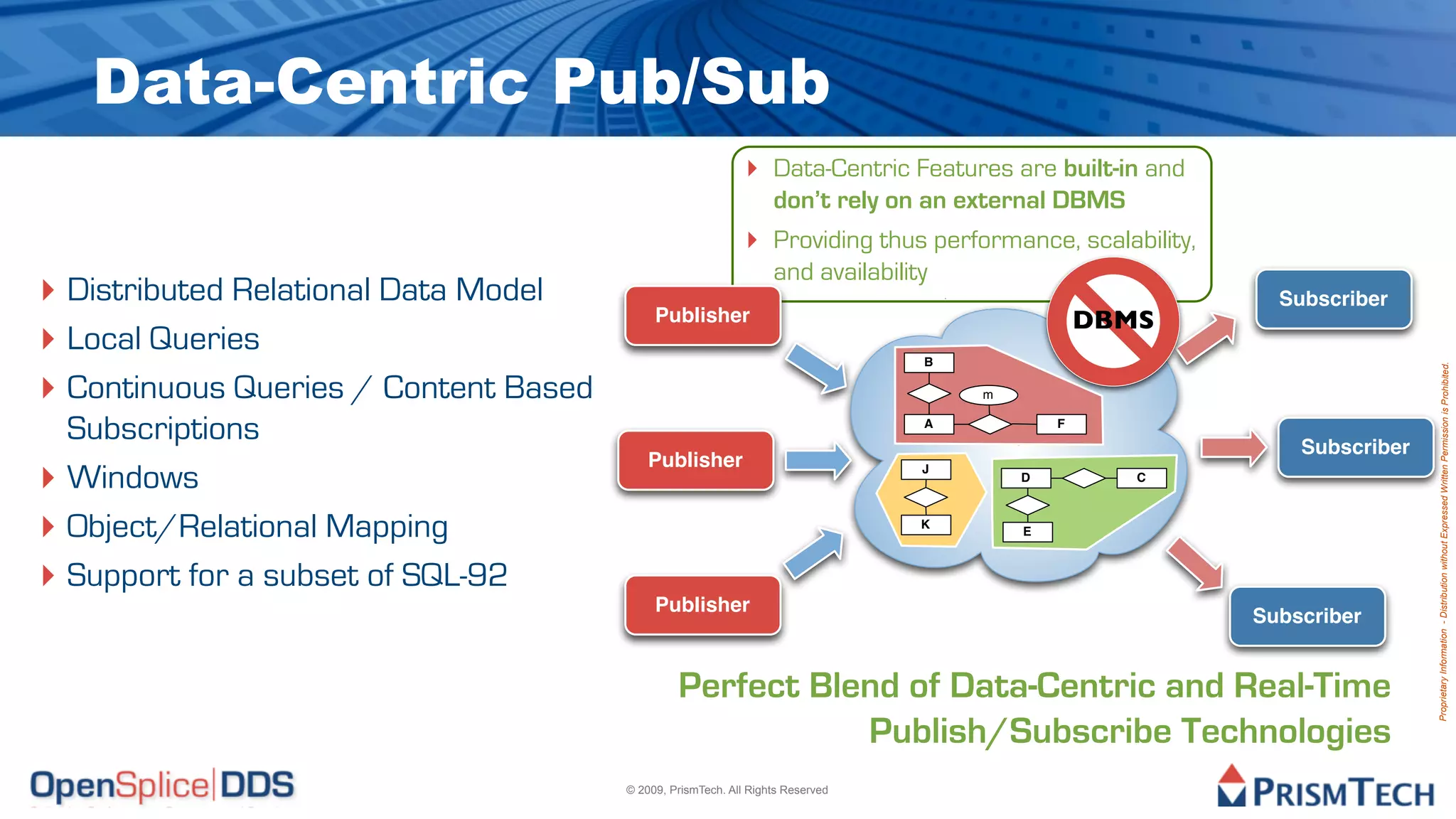
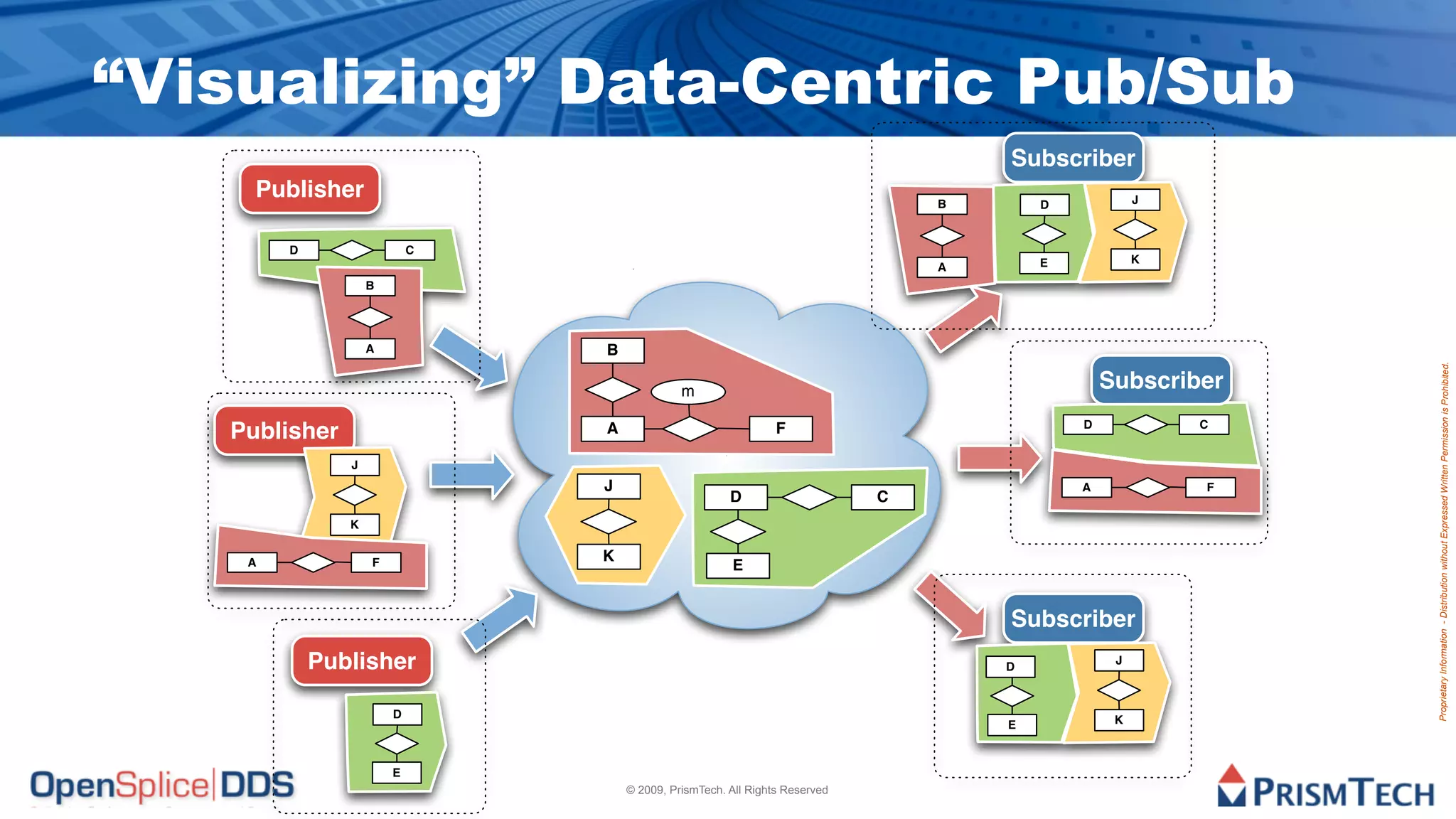
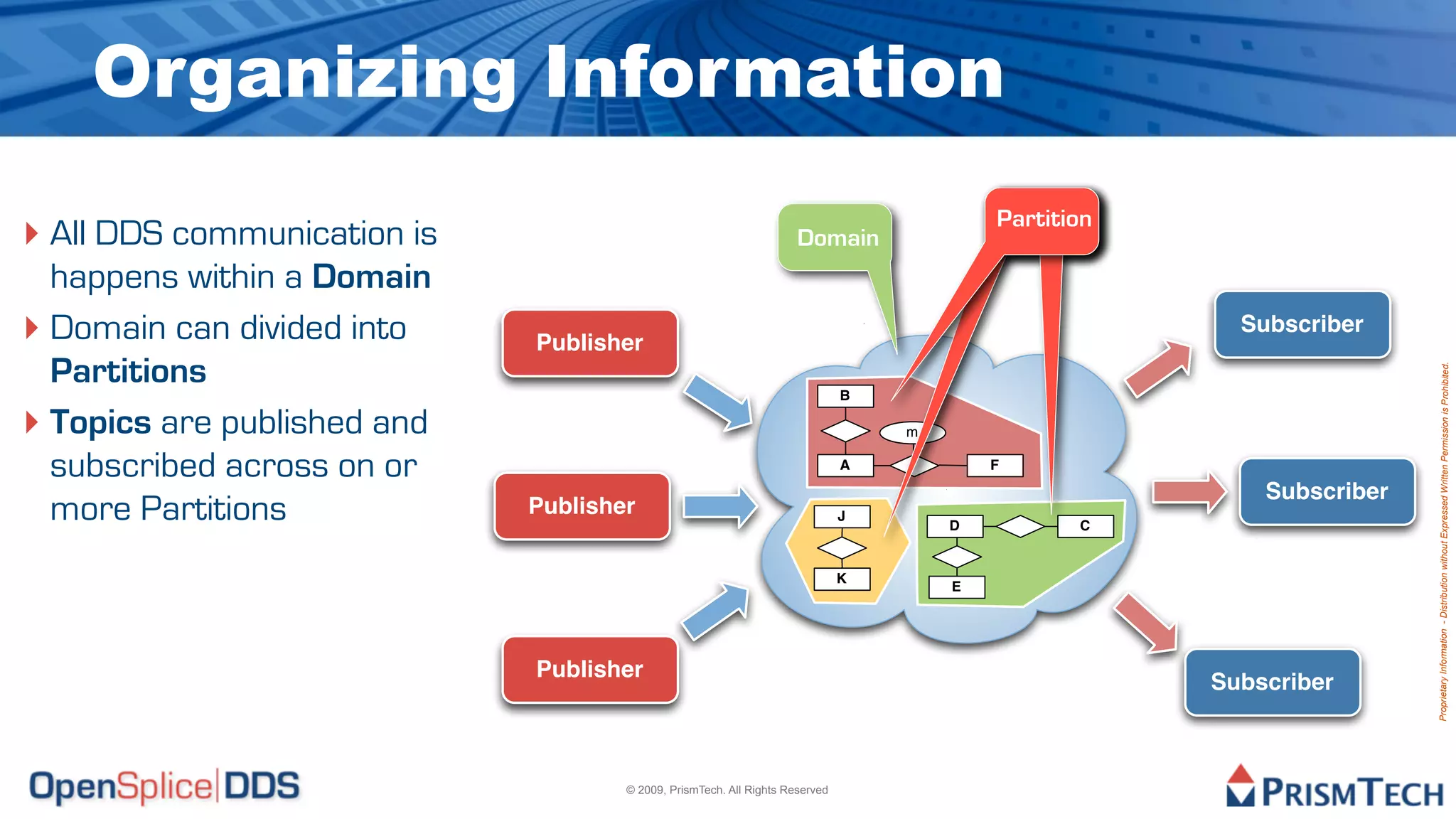
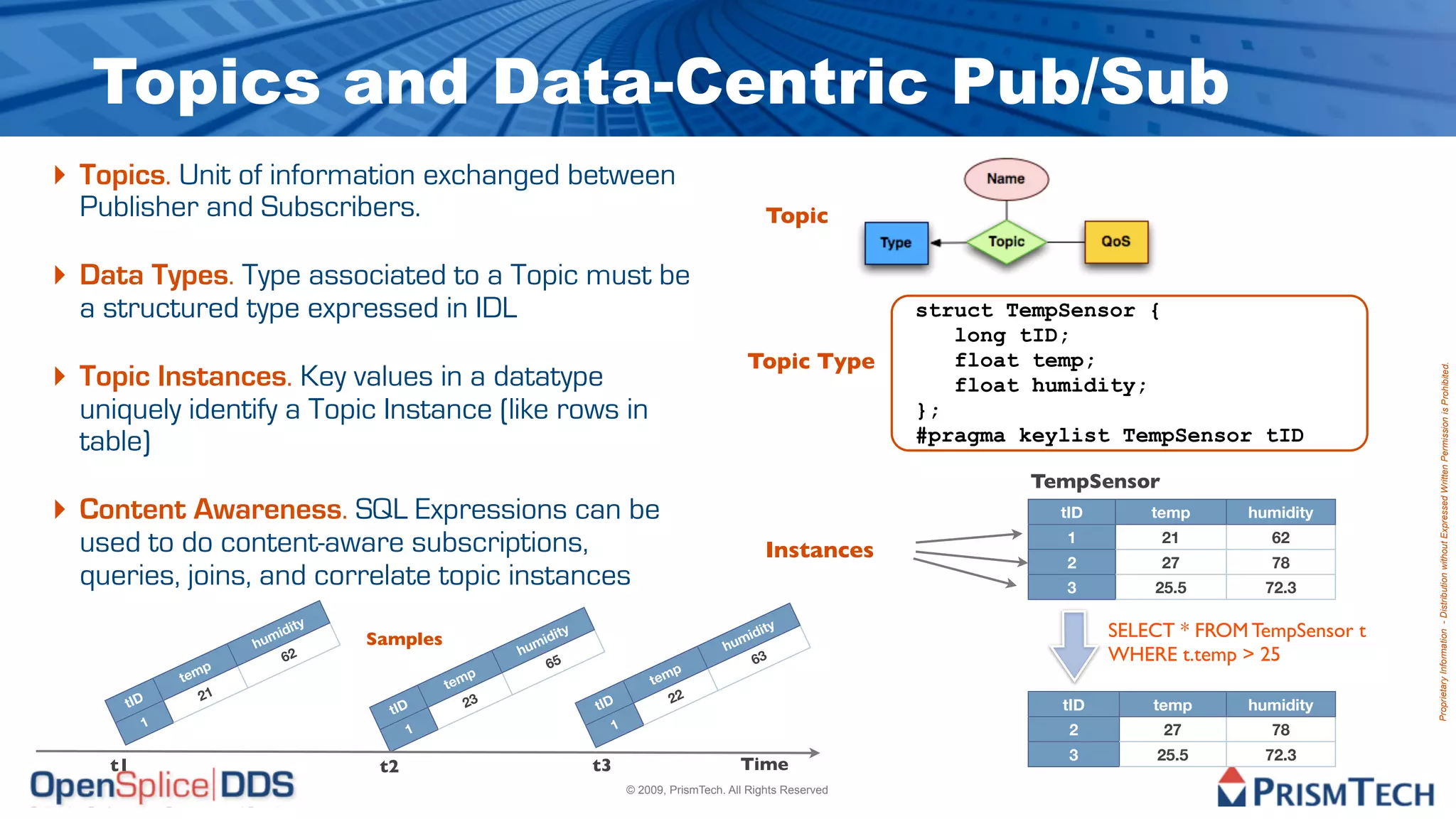
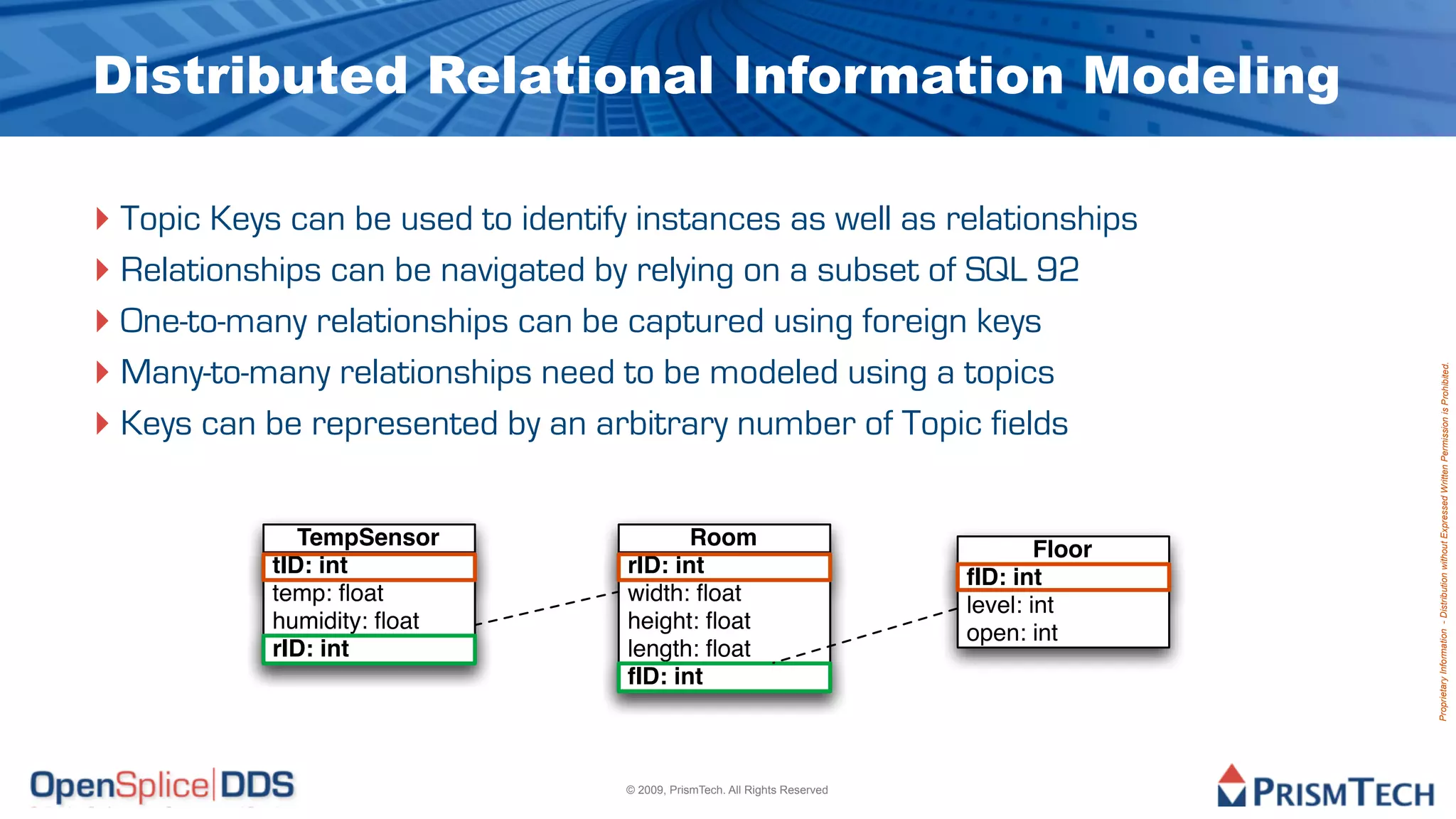
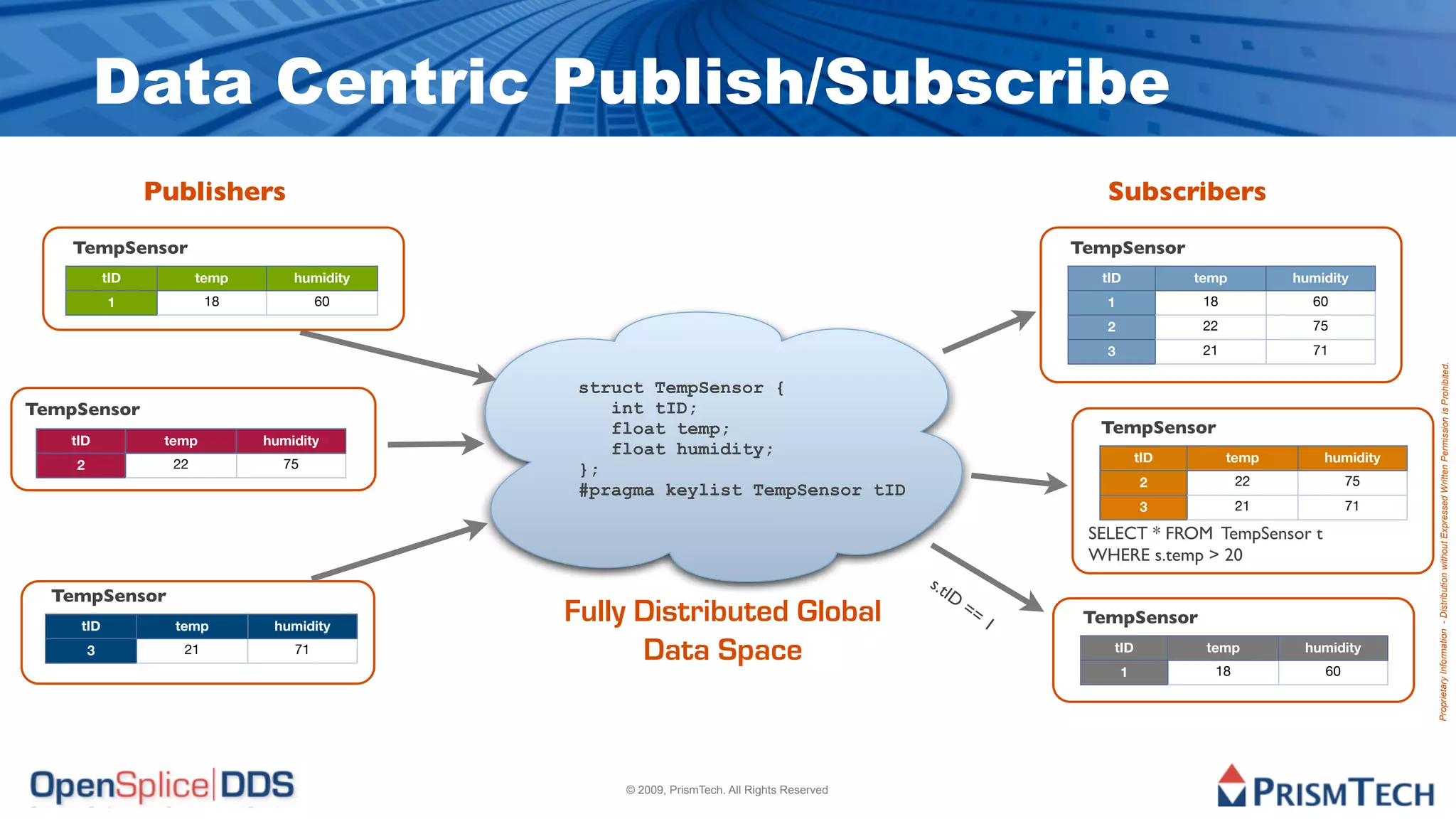
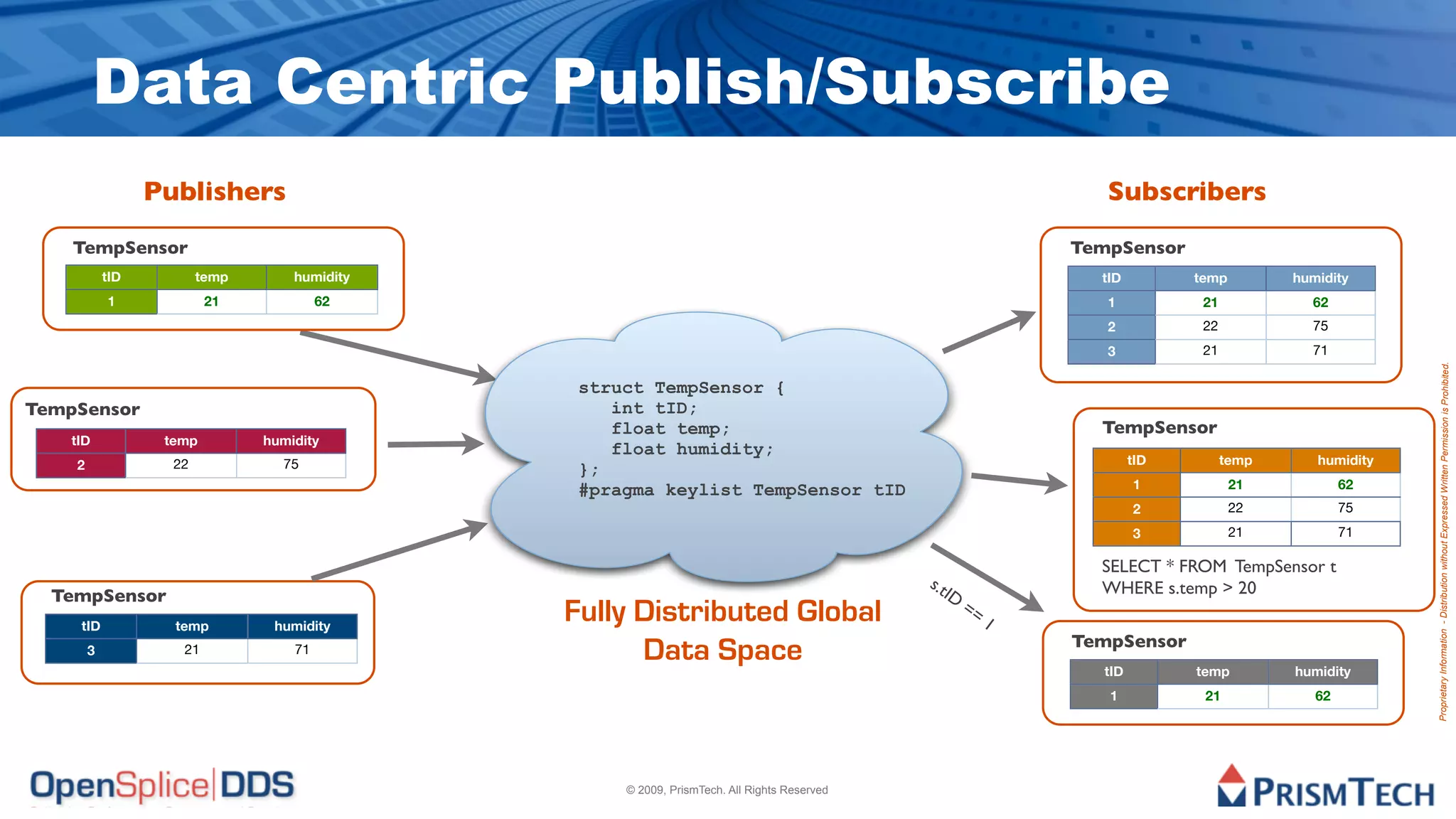
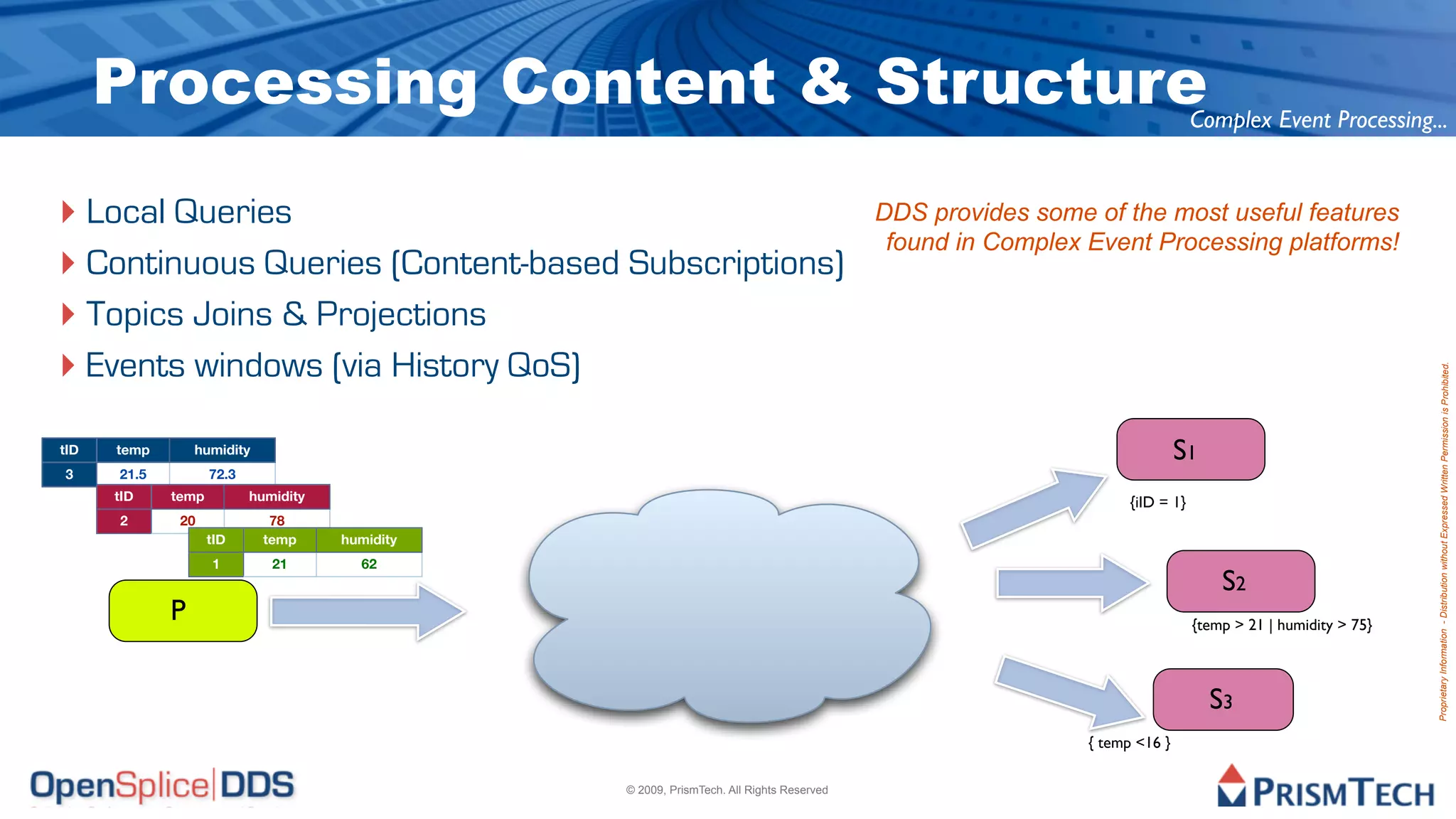
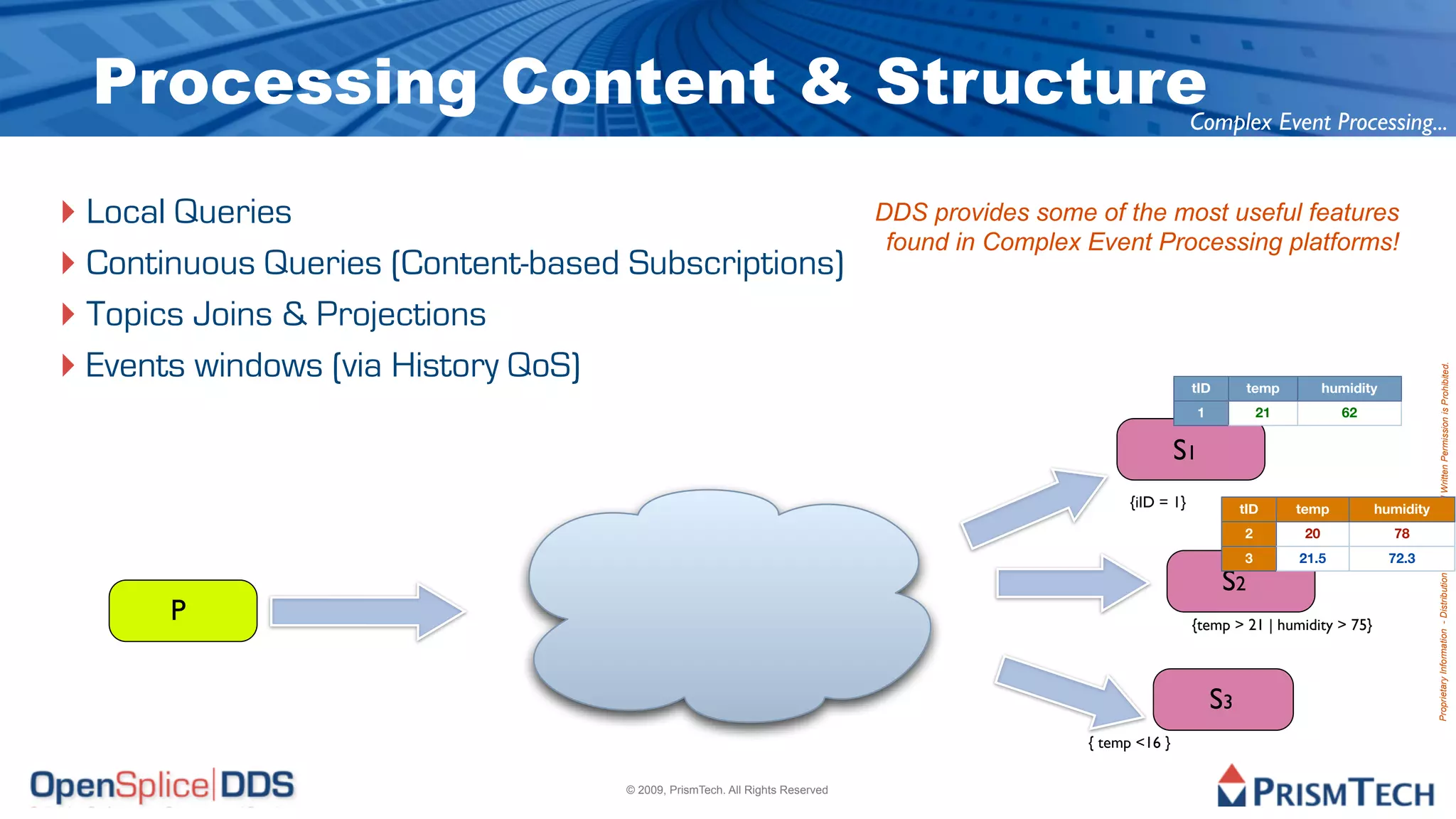
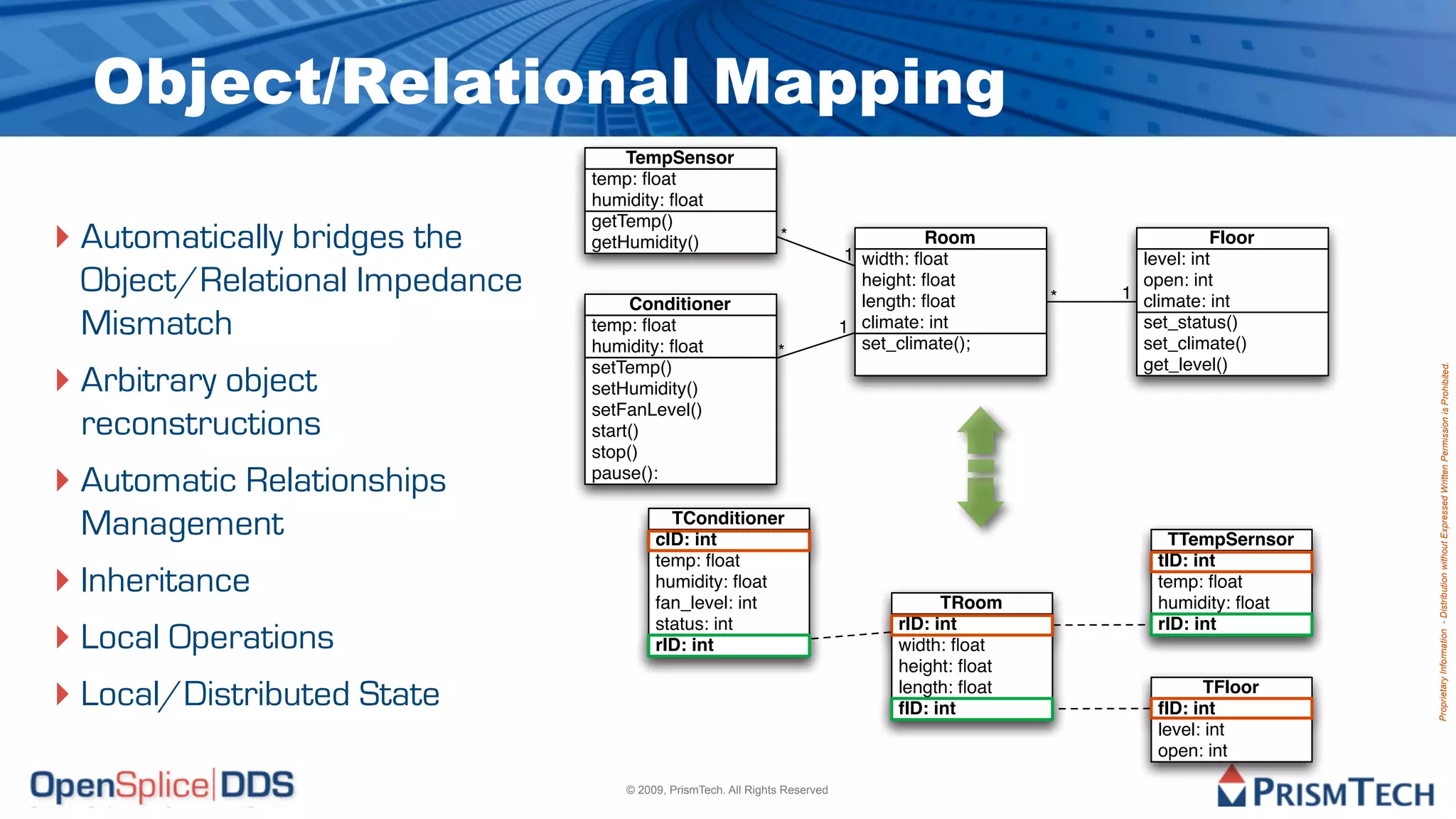
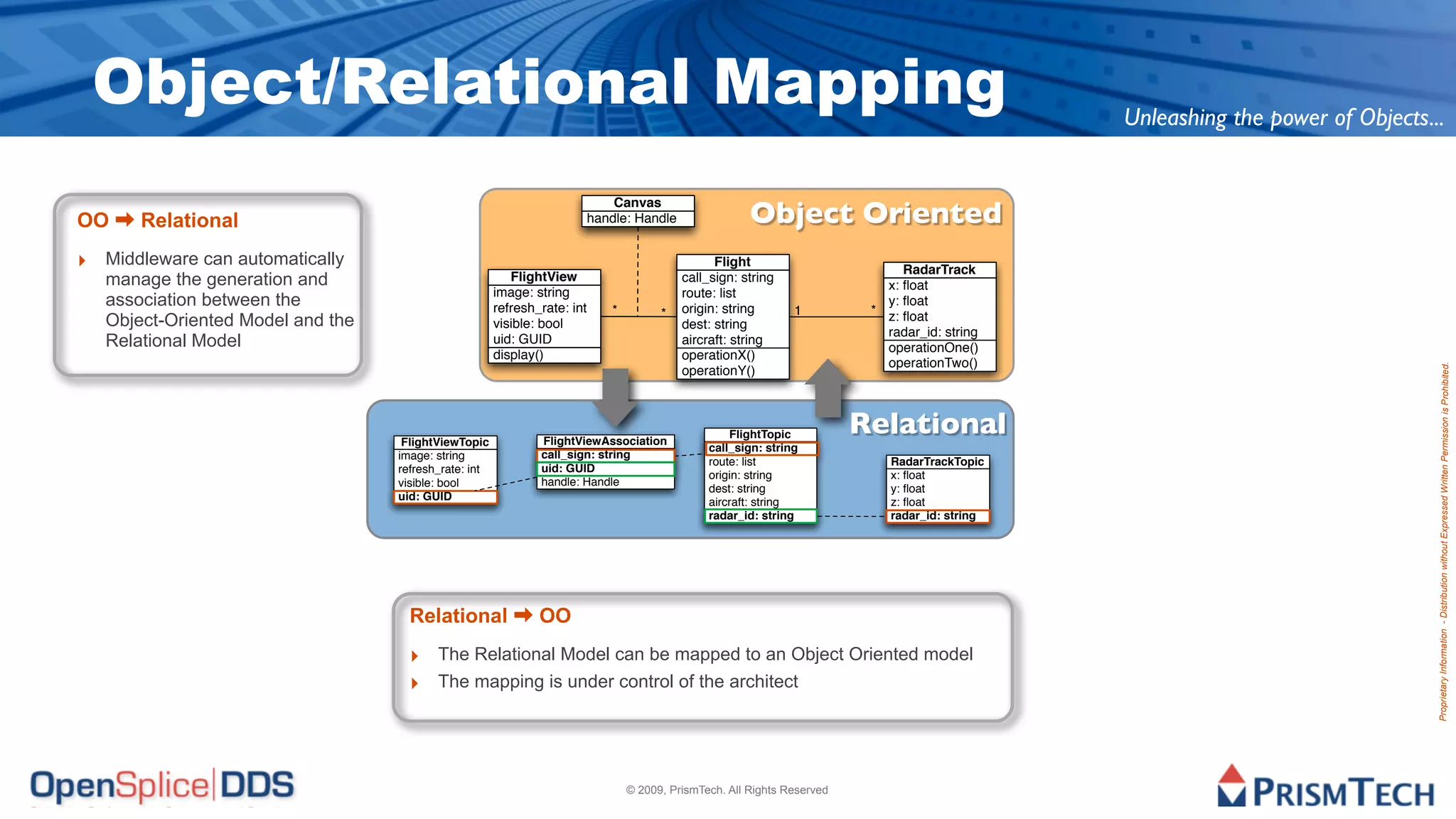
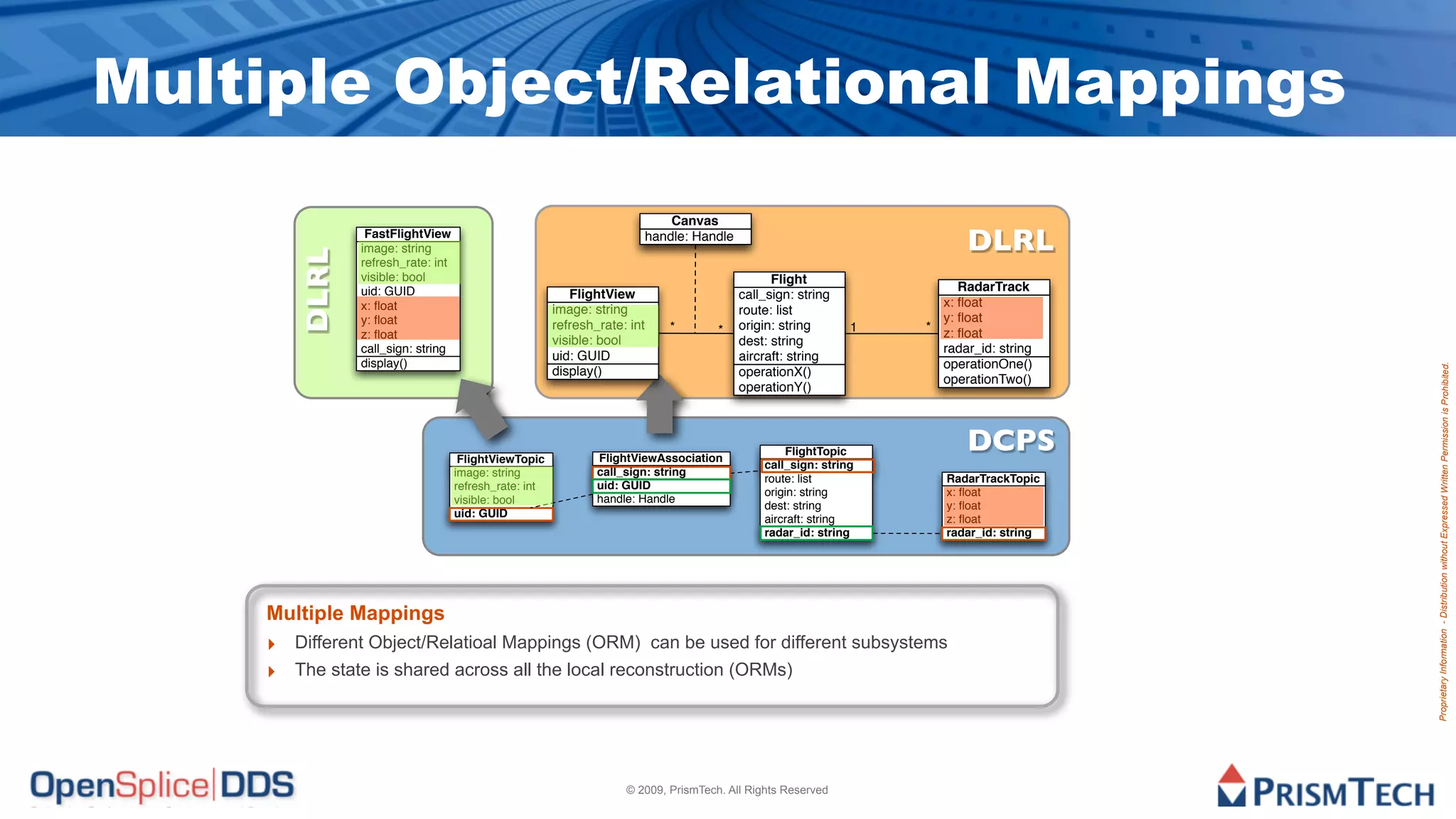
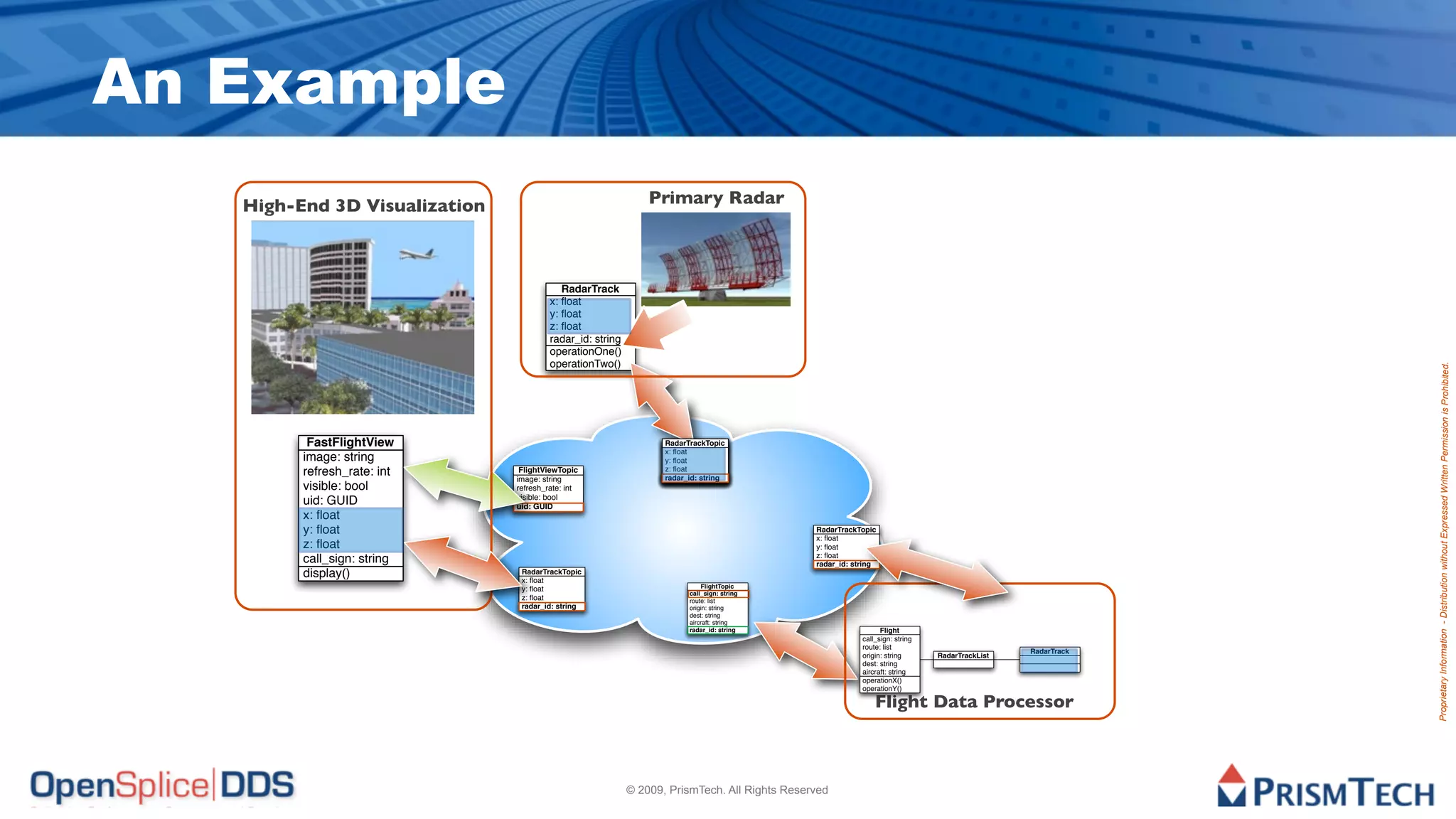
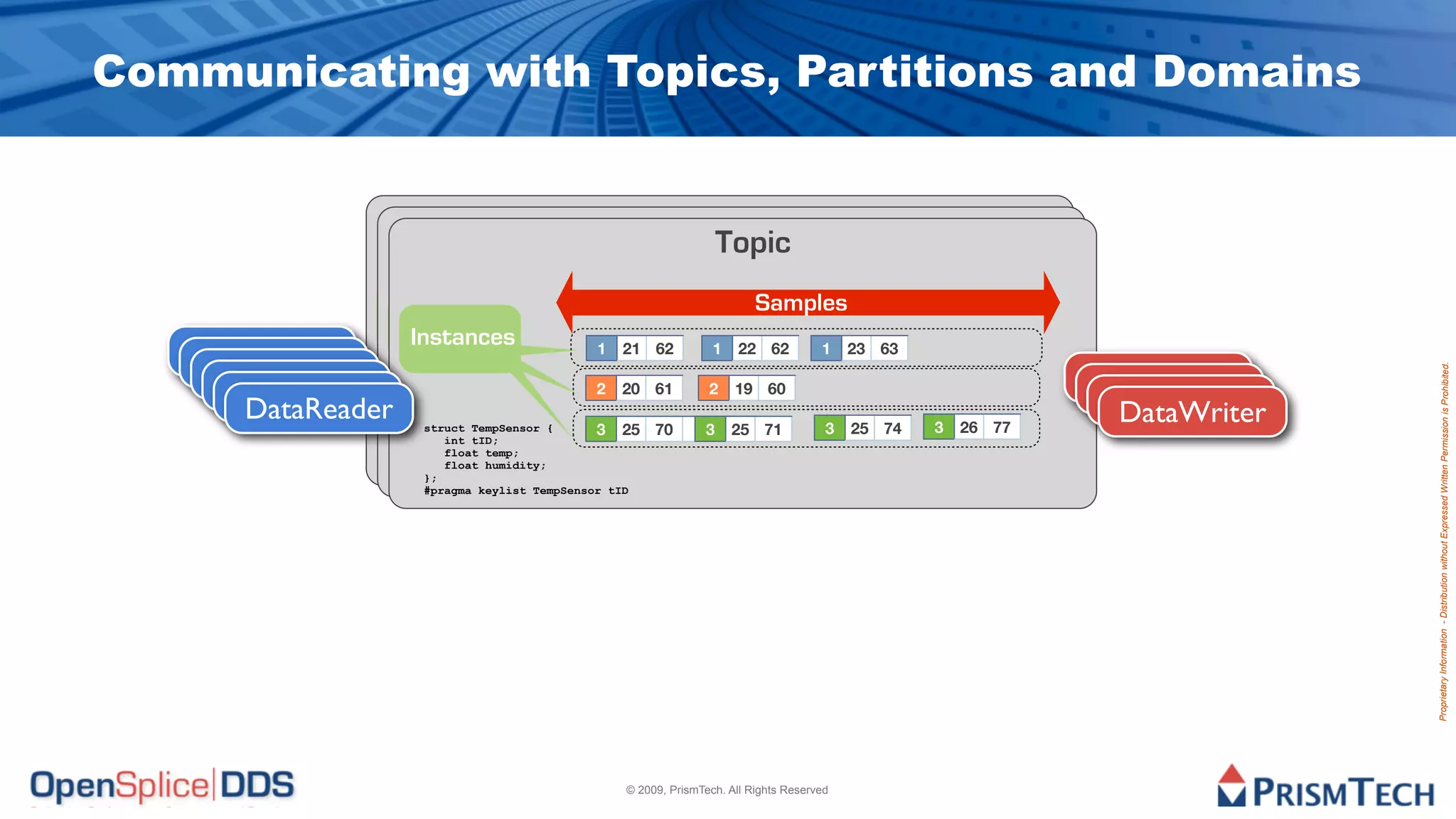
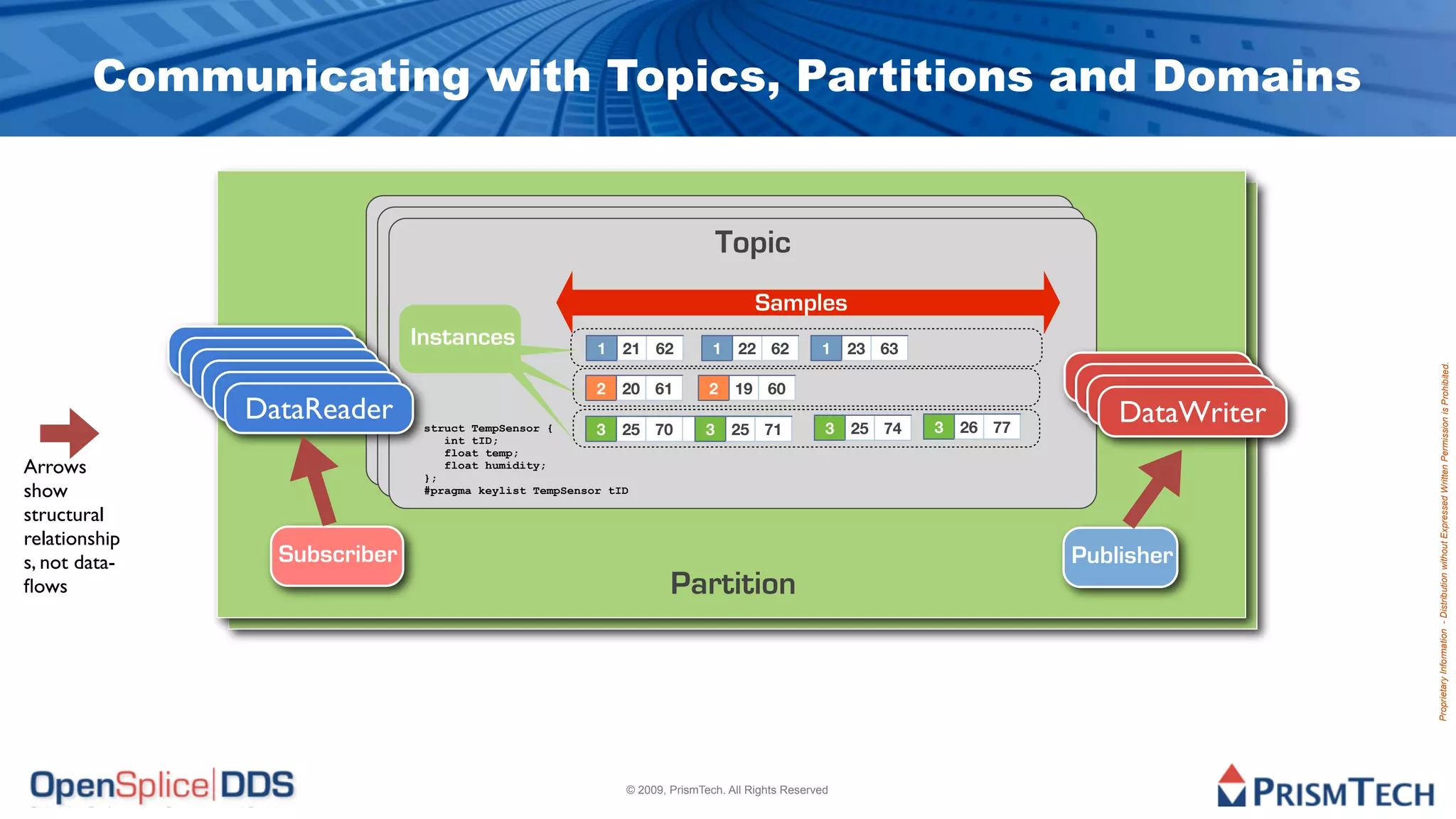
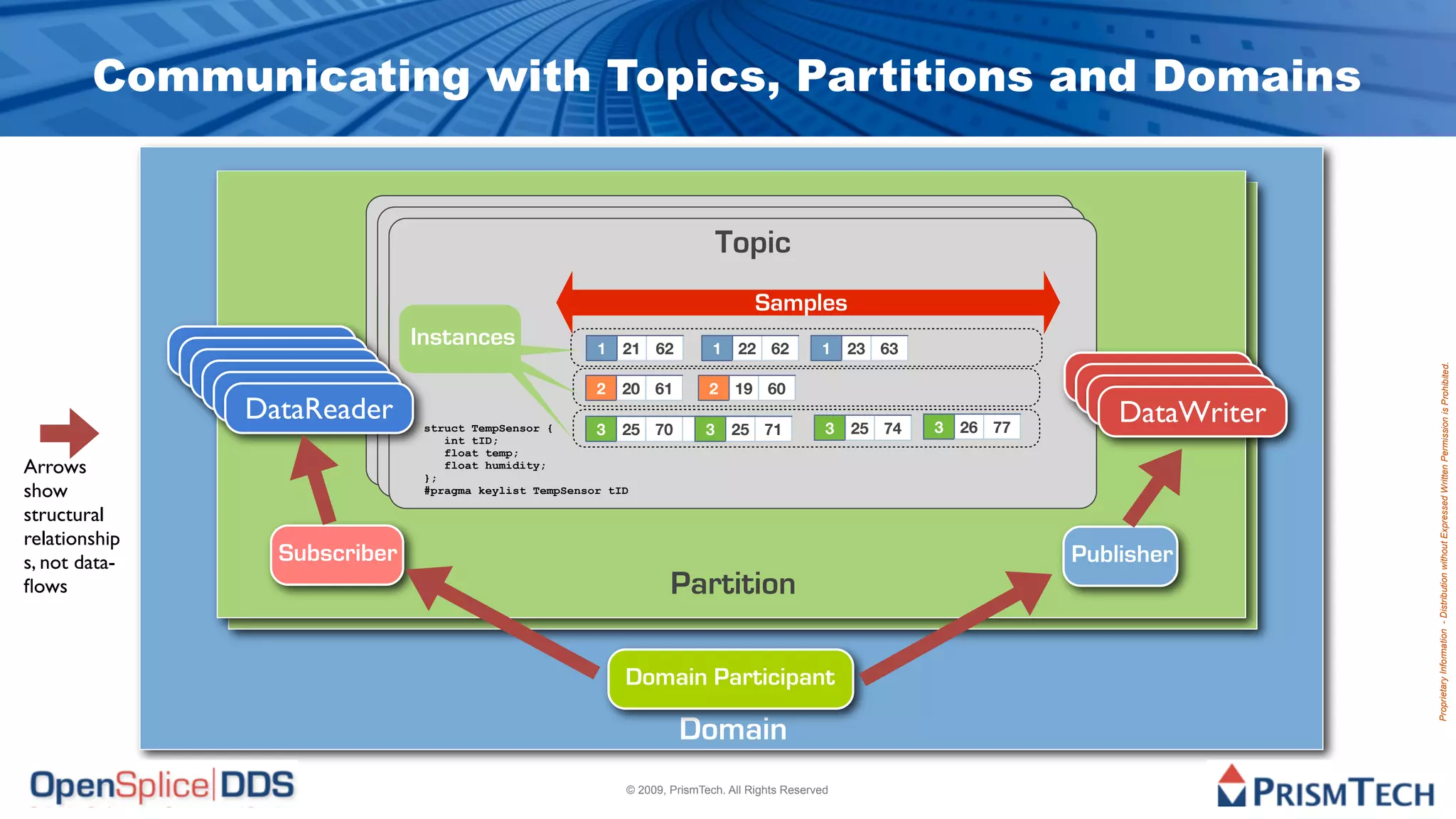
Overview of the DDS Data-Centric approach, including structure, relationships, mapping, and data querying features.
Overview of the DDS Data-Centric approach, including structure, relationships, mapping, and data querying features.
Overview of the DDS Data-Centric approach, including structure, relationships, mapping, and data querying features.
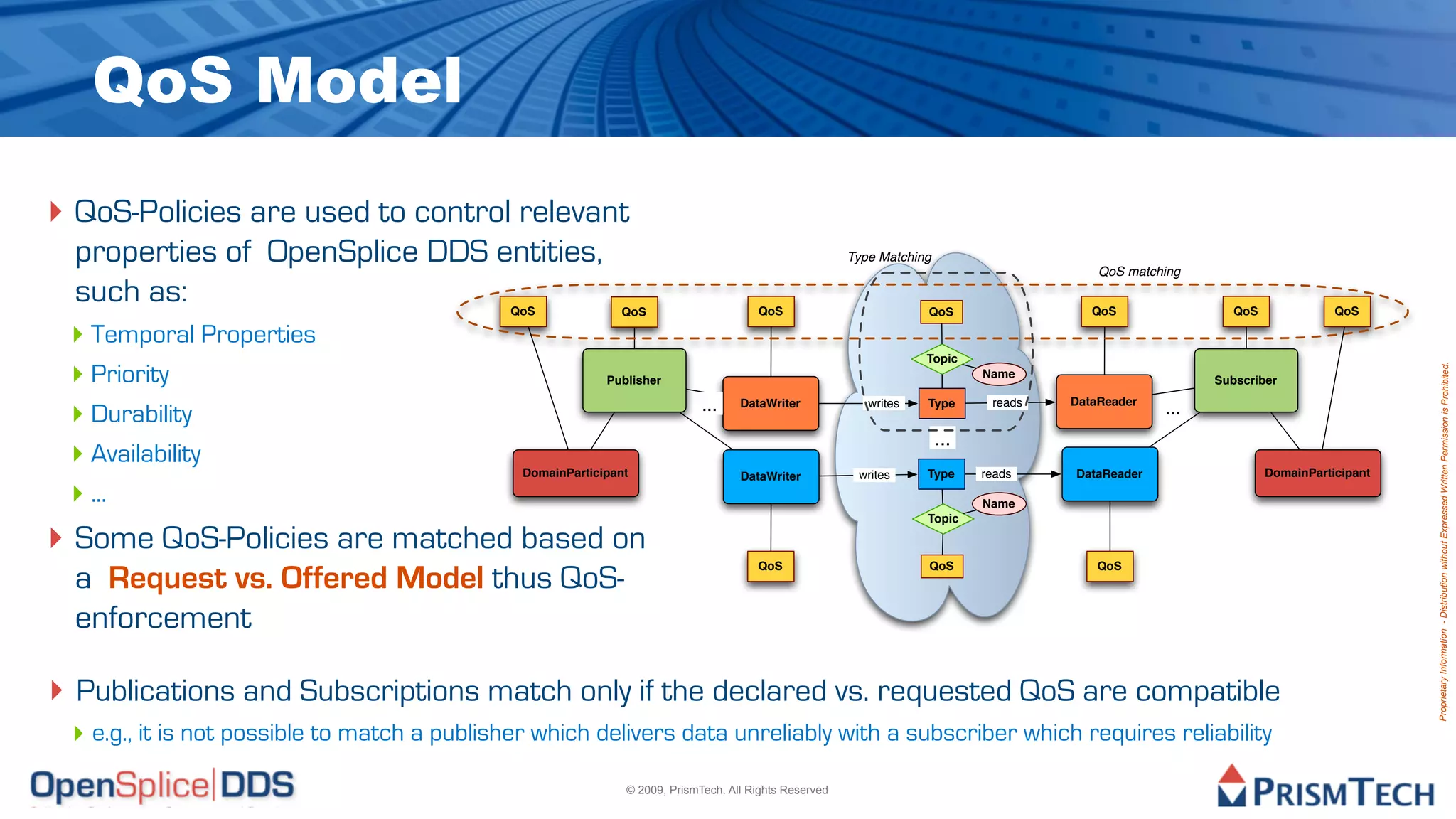
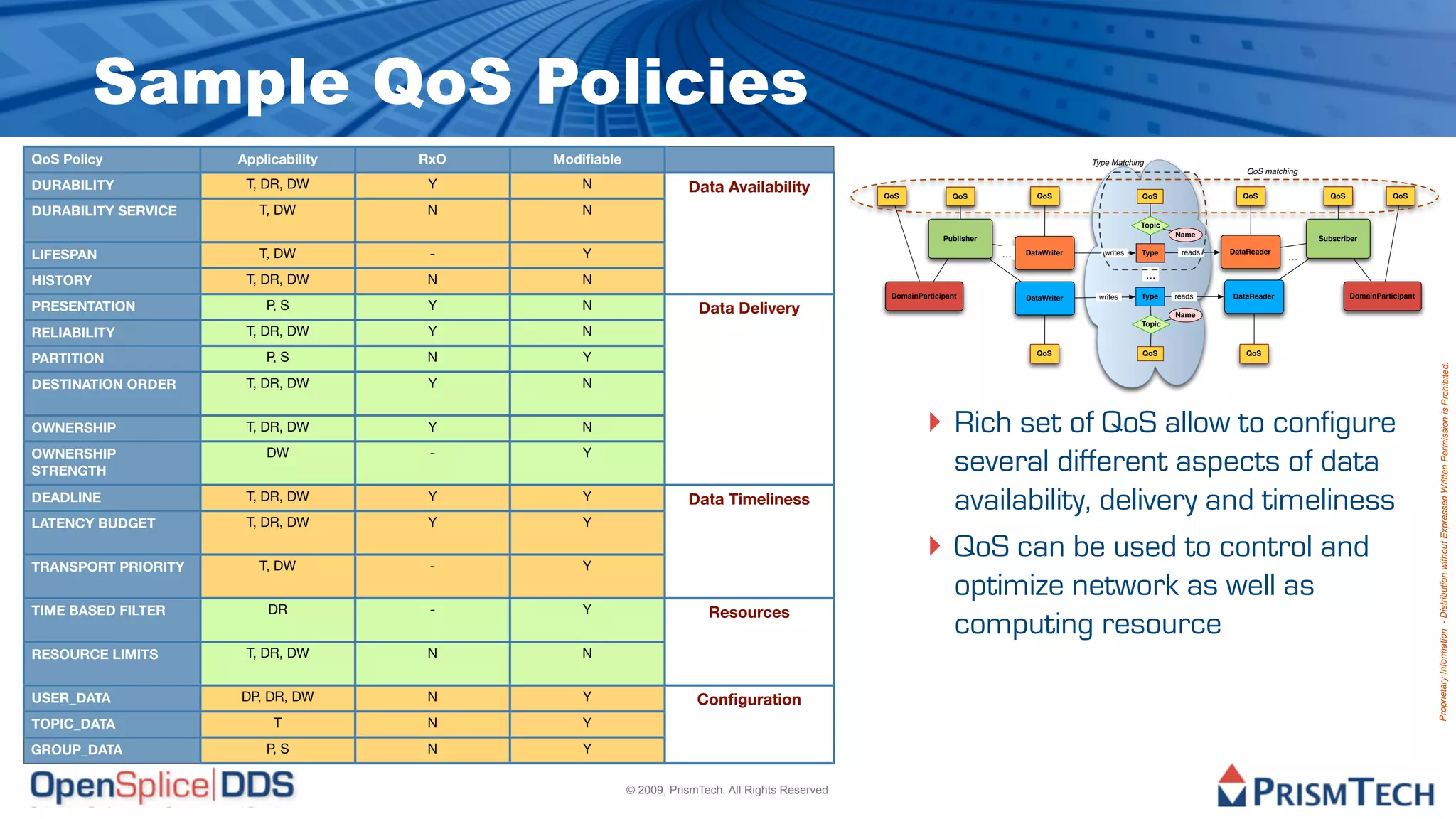
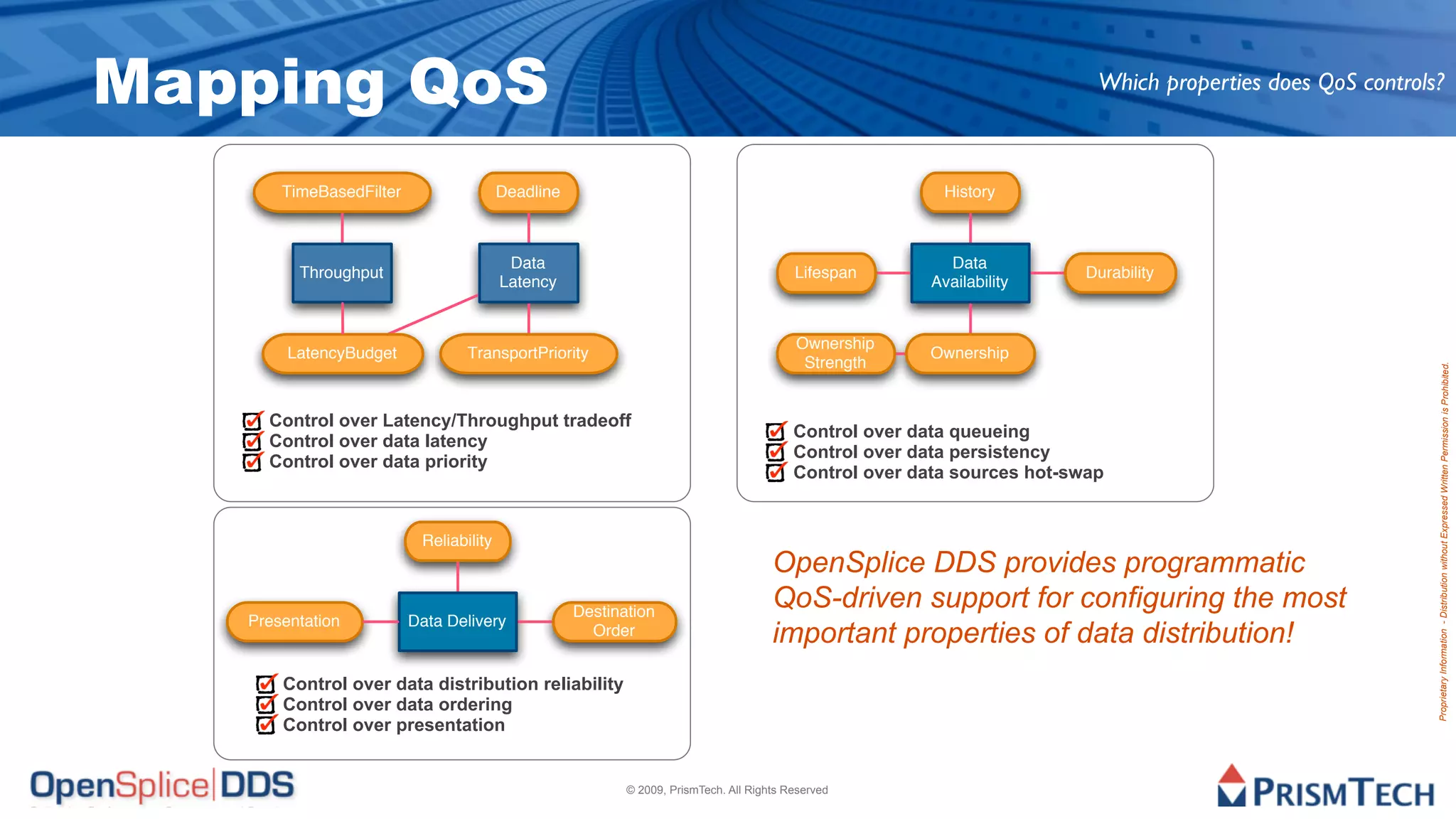
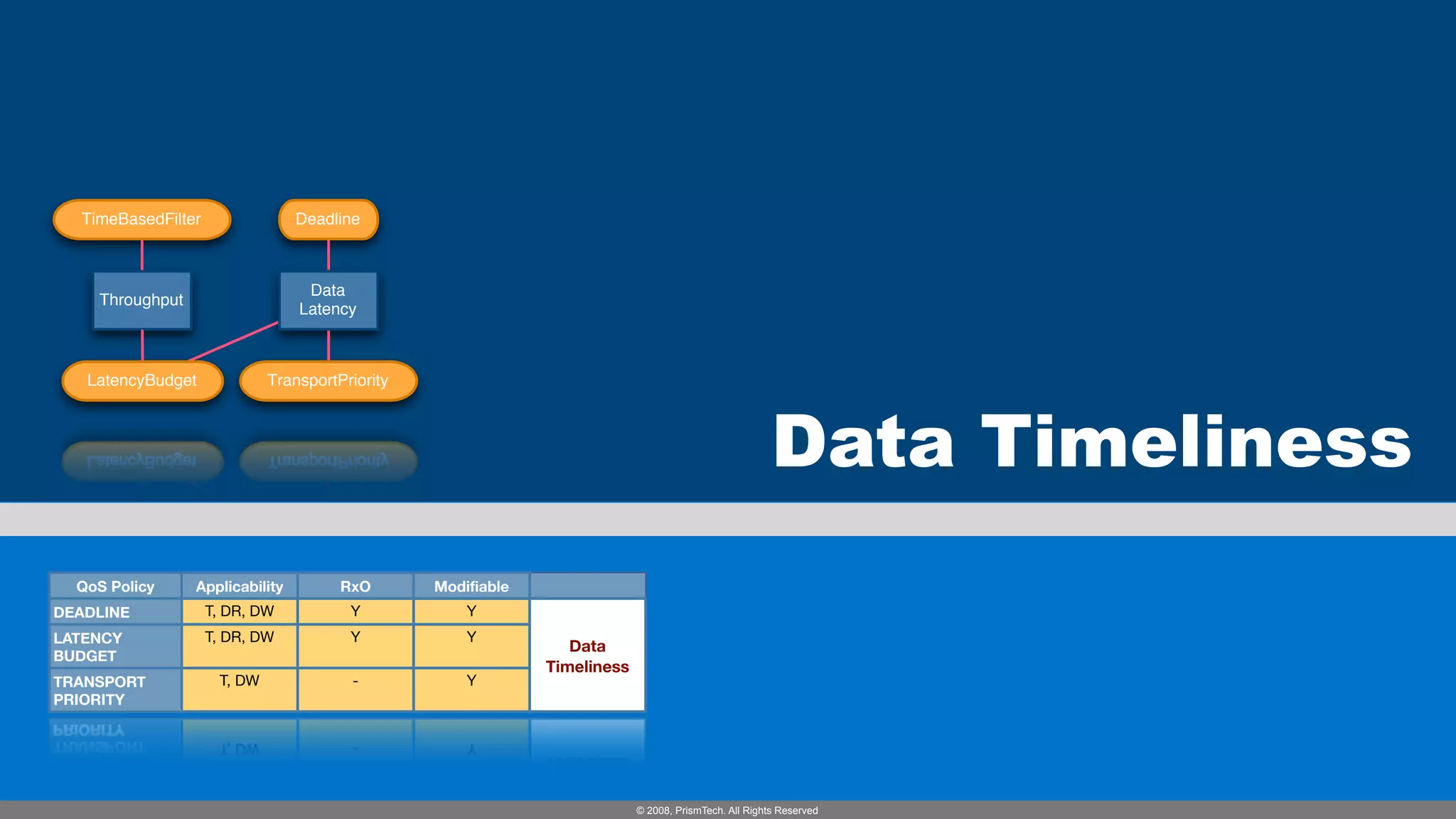
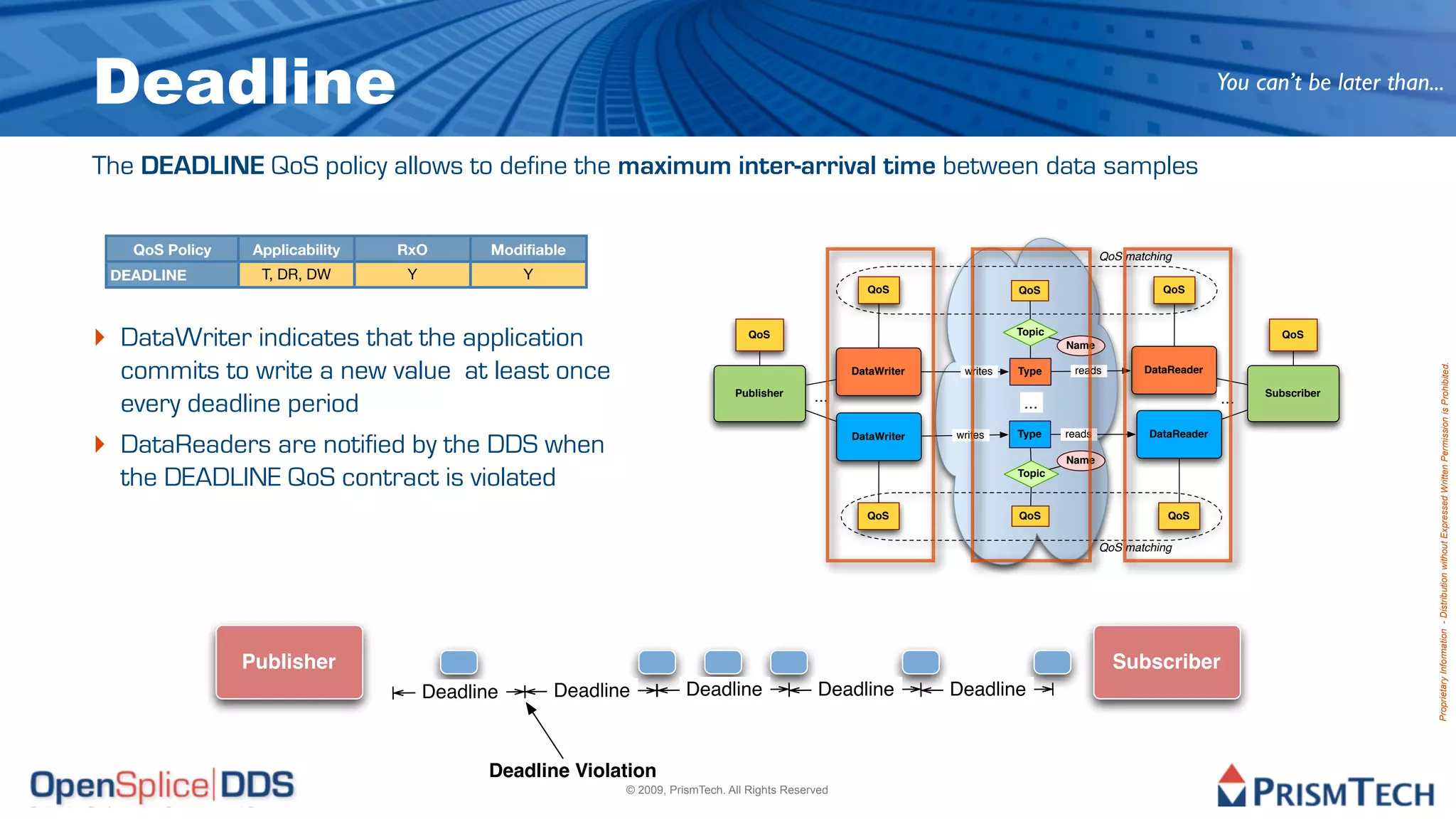
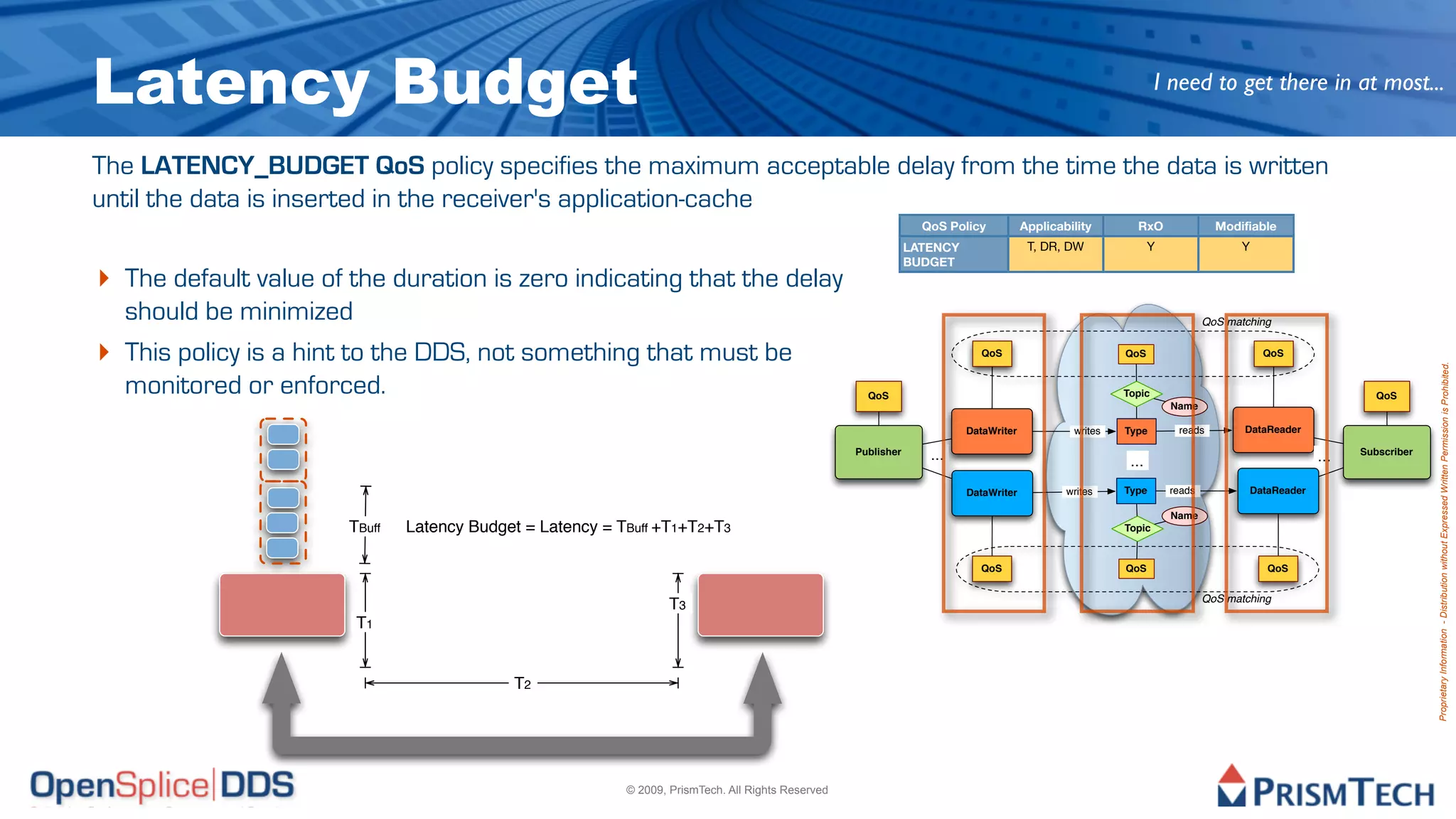
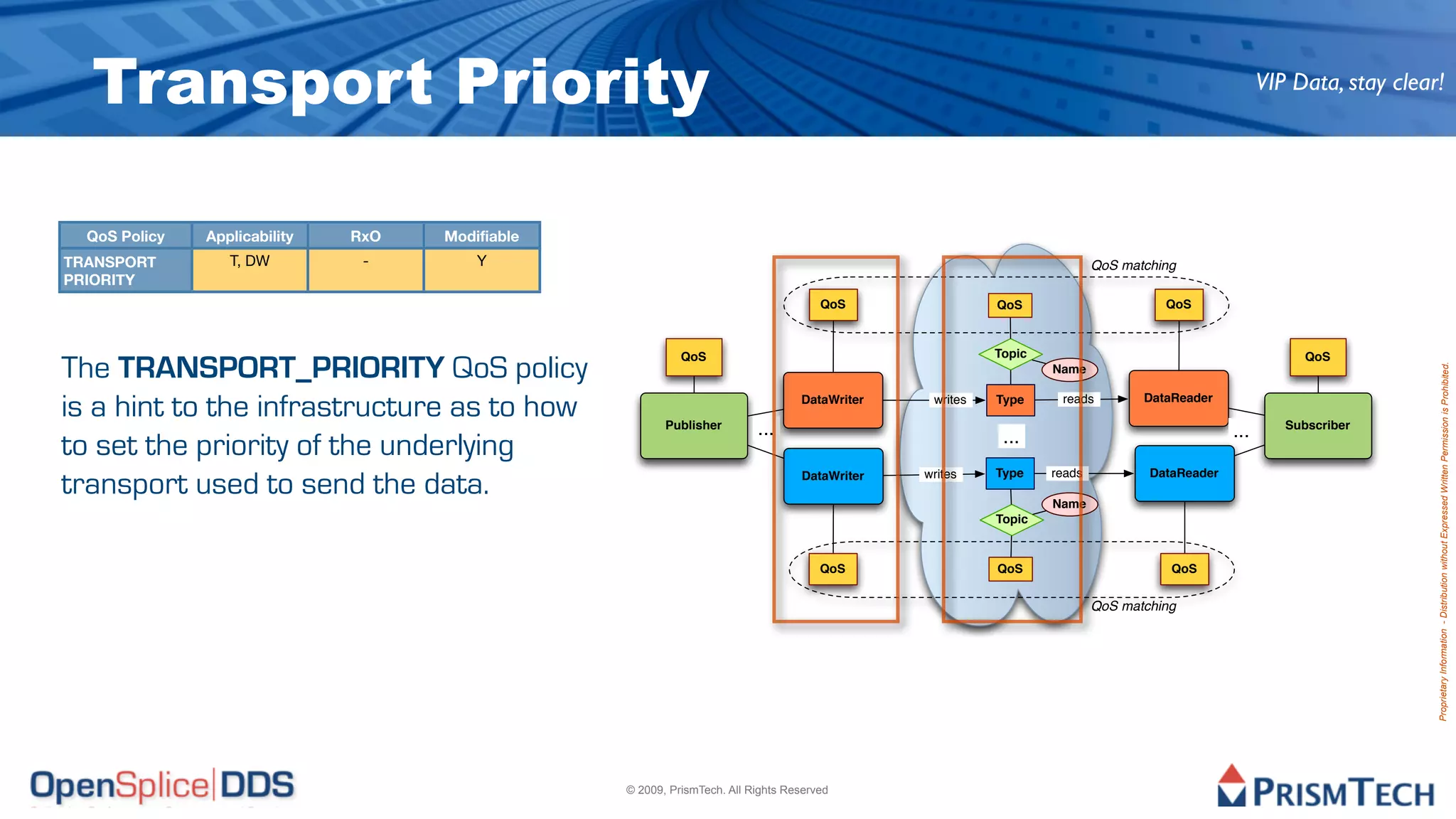
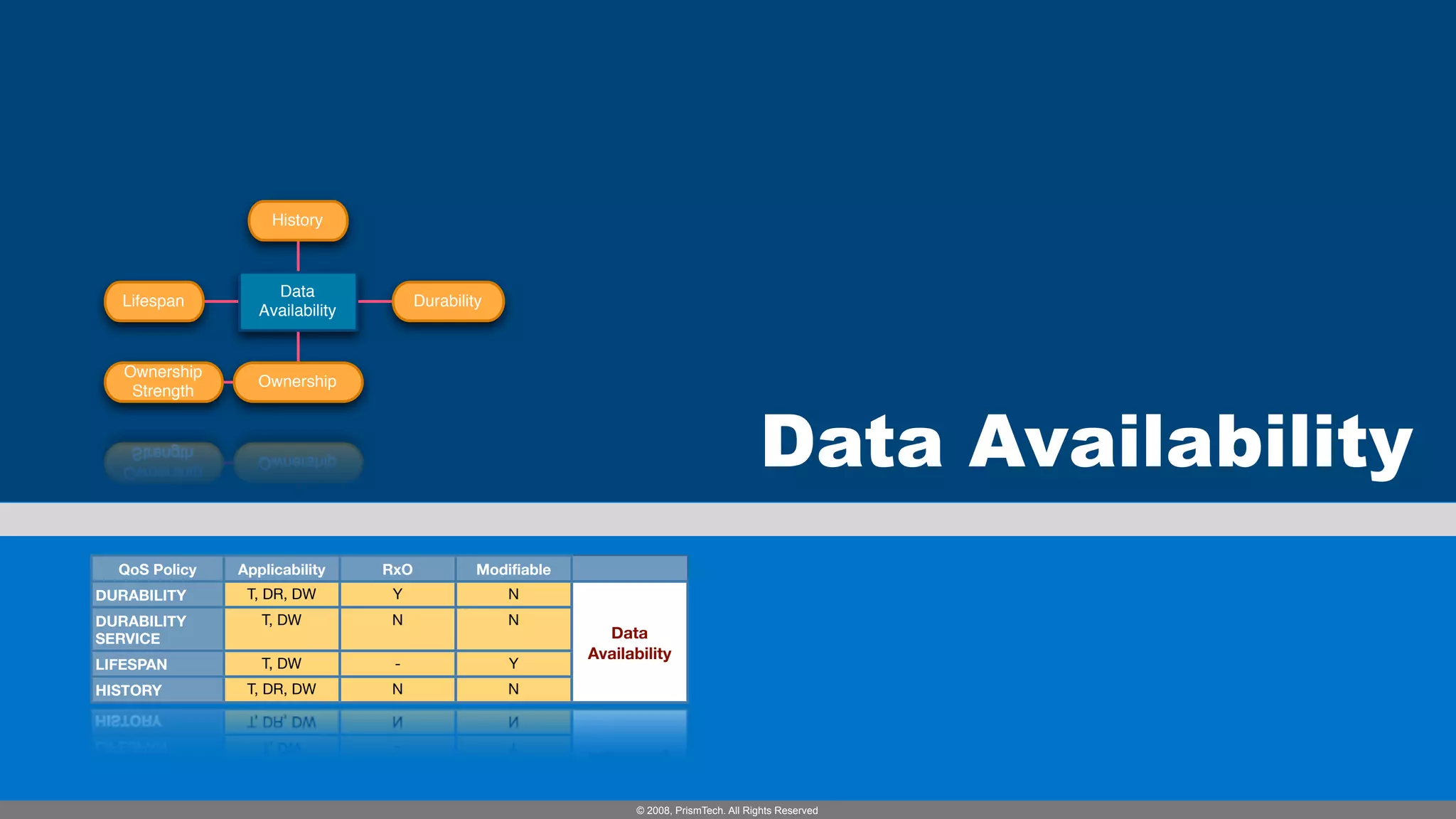
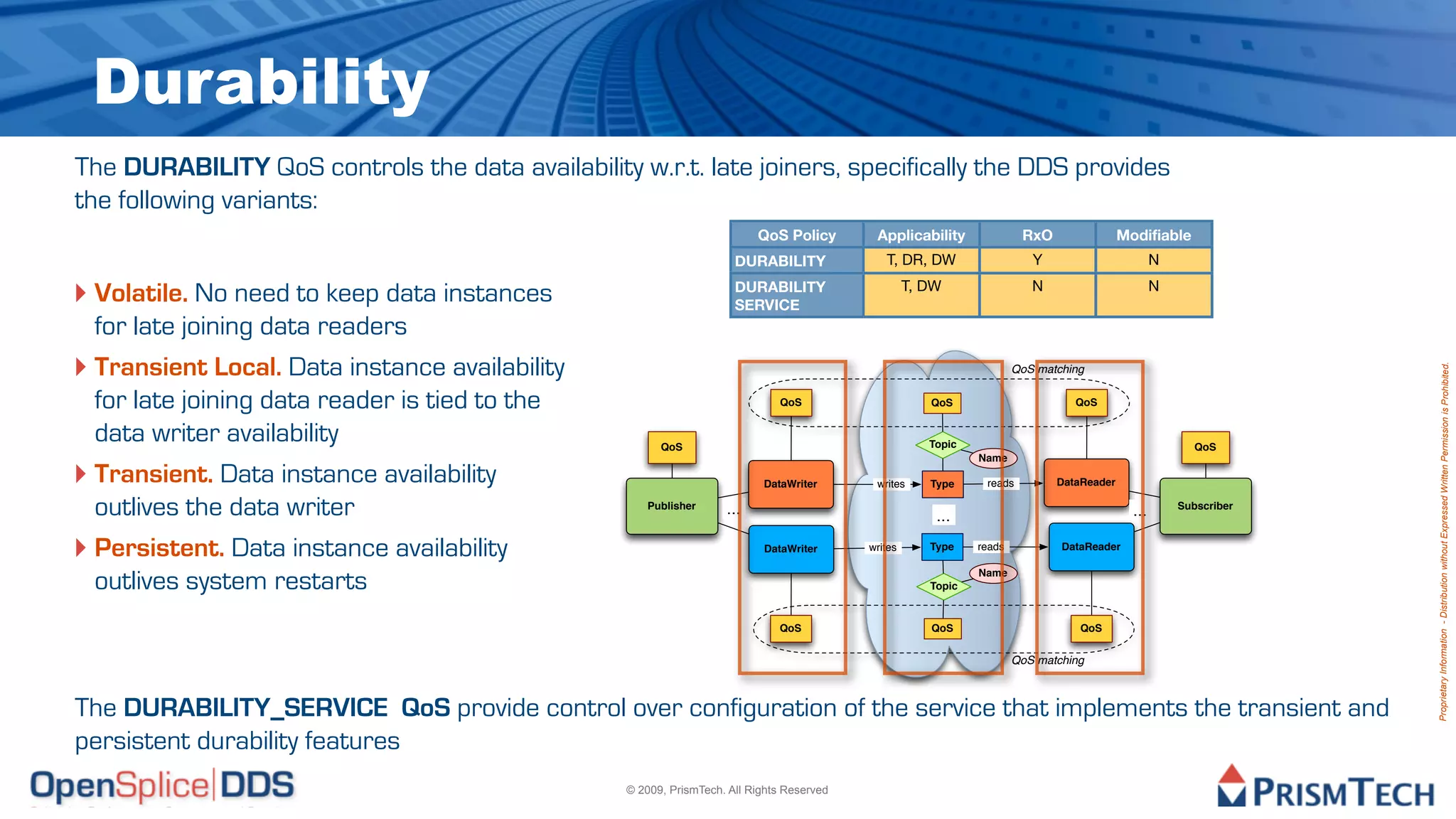
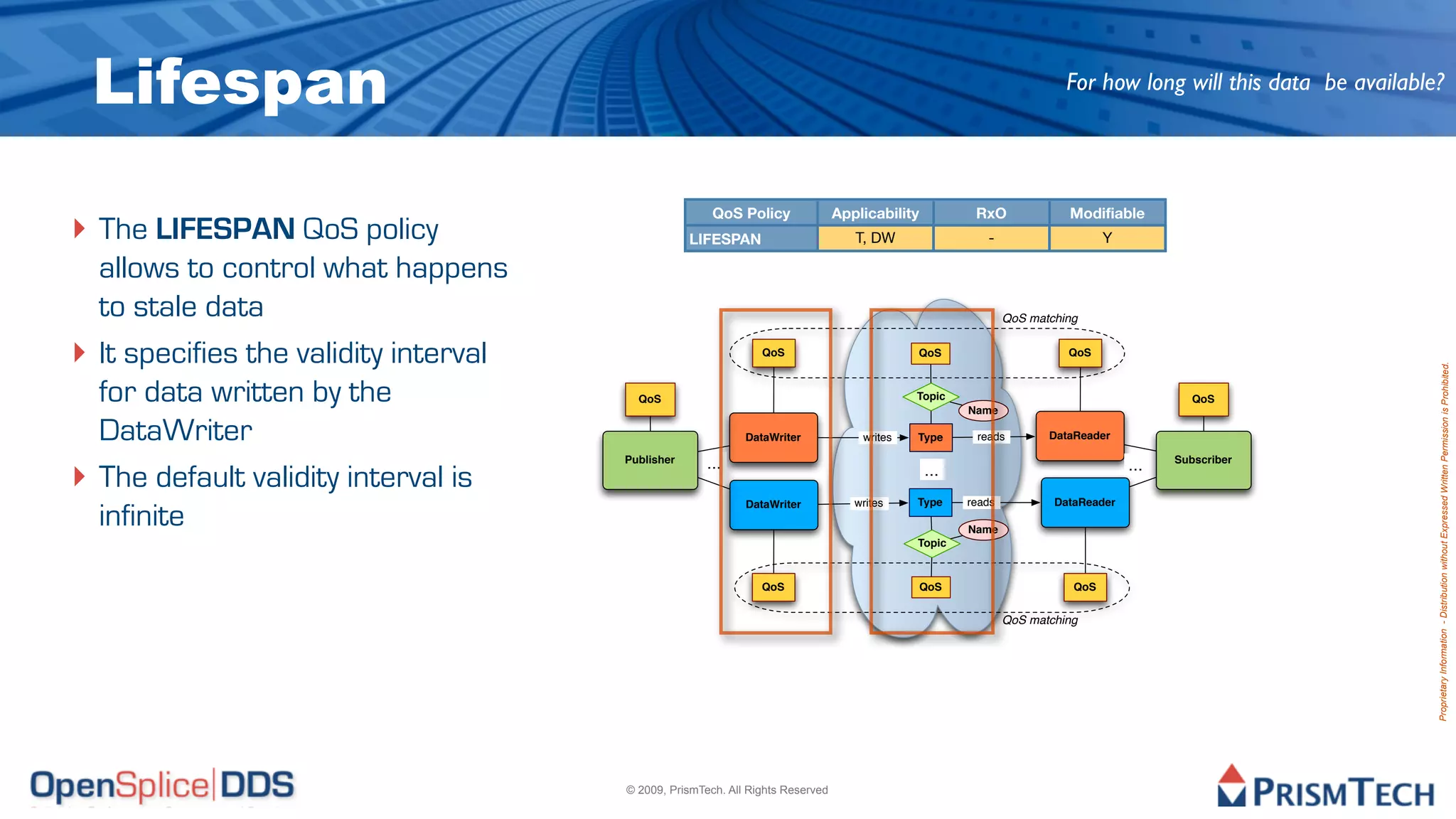
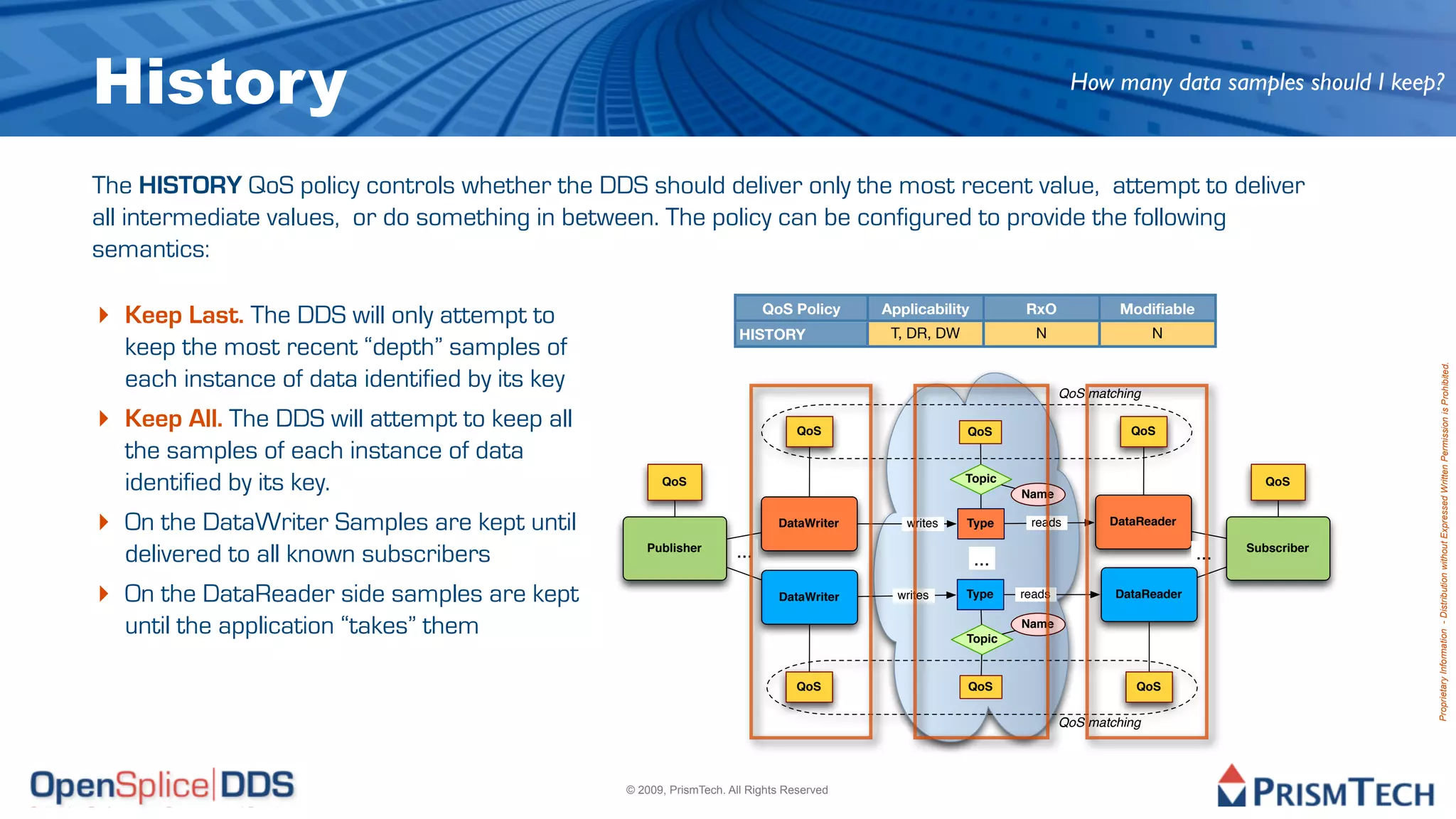
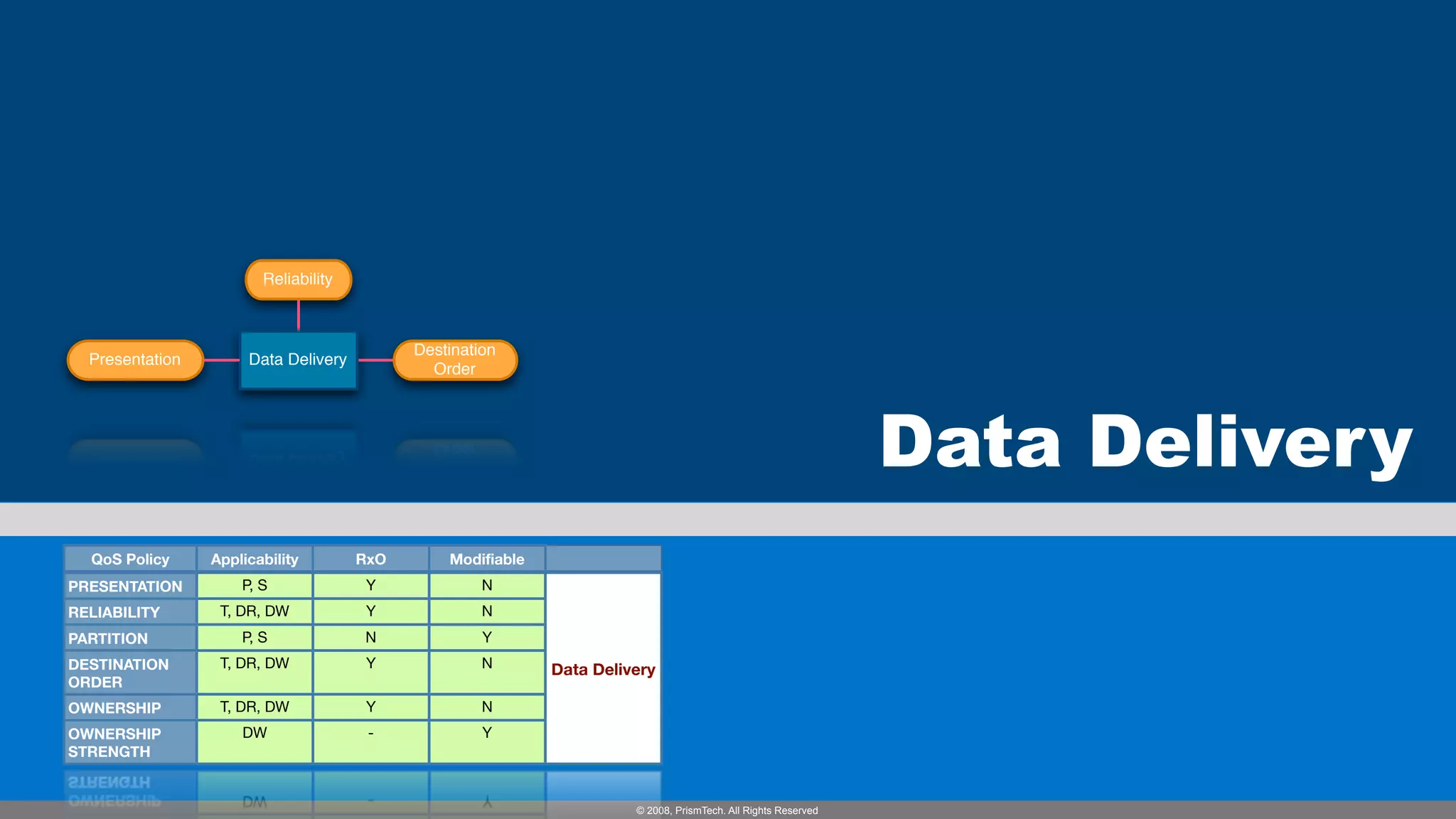
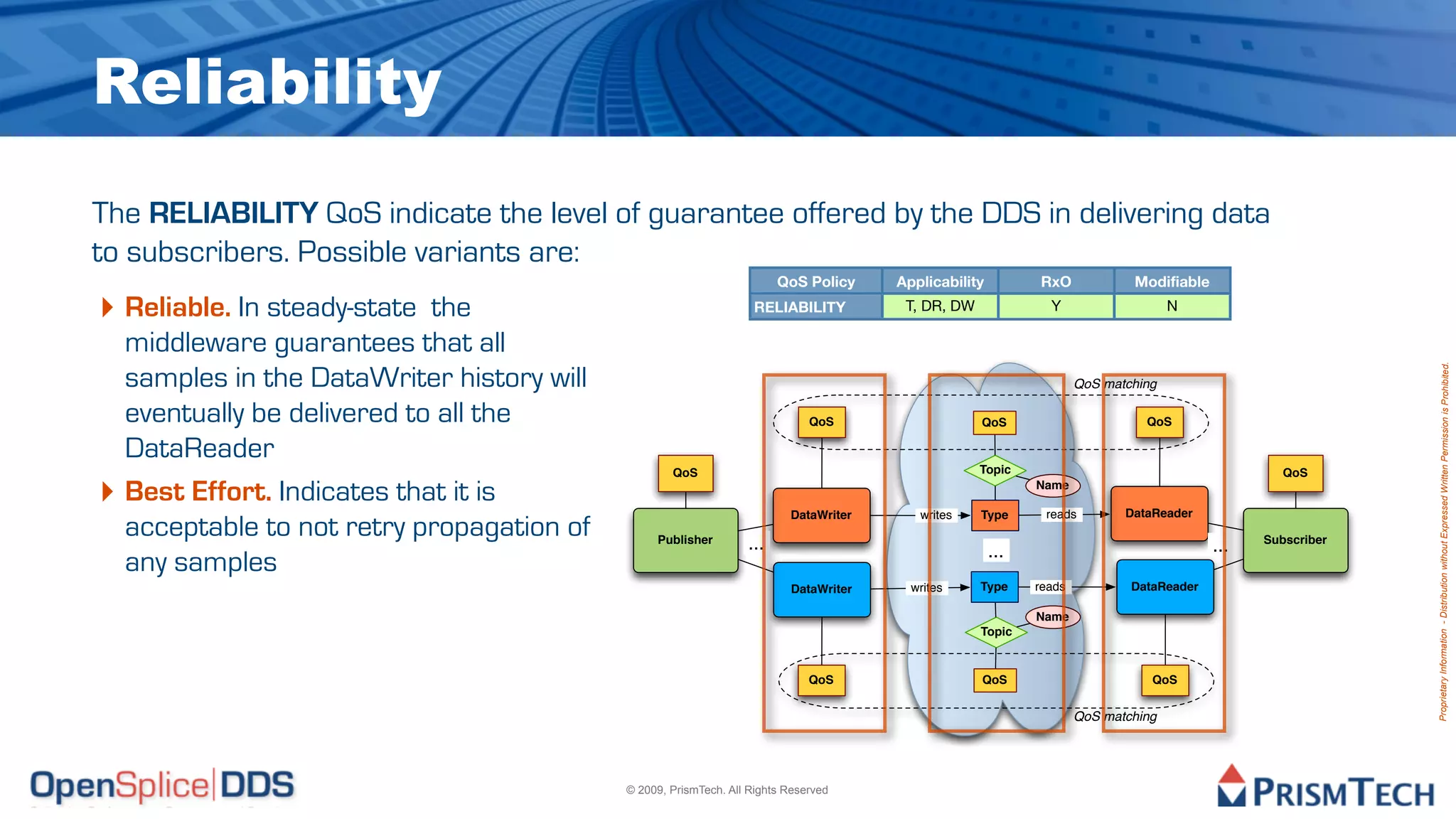
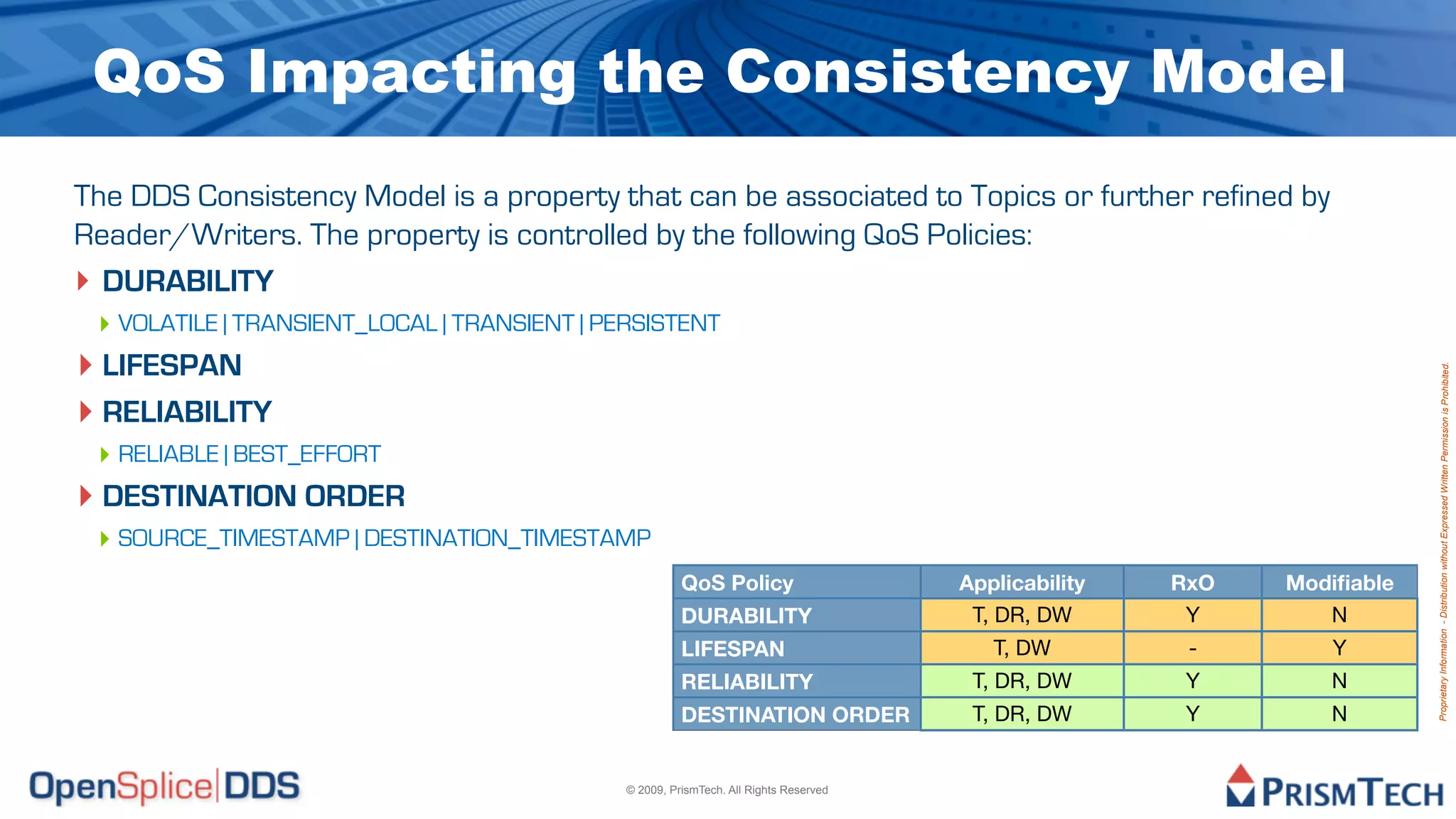
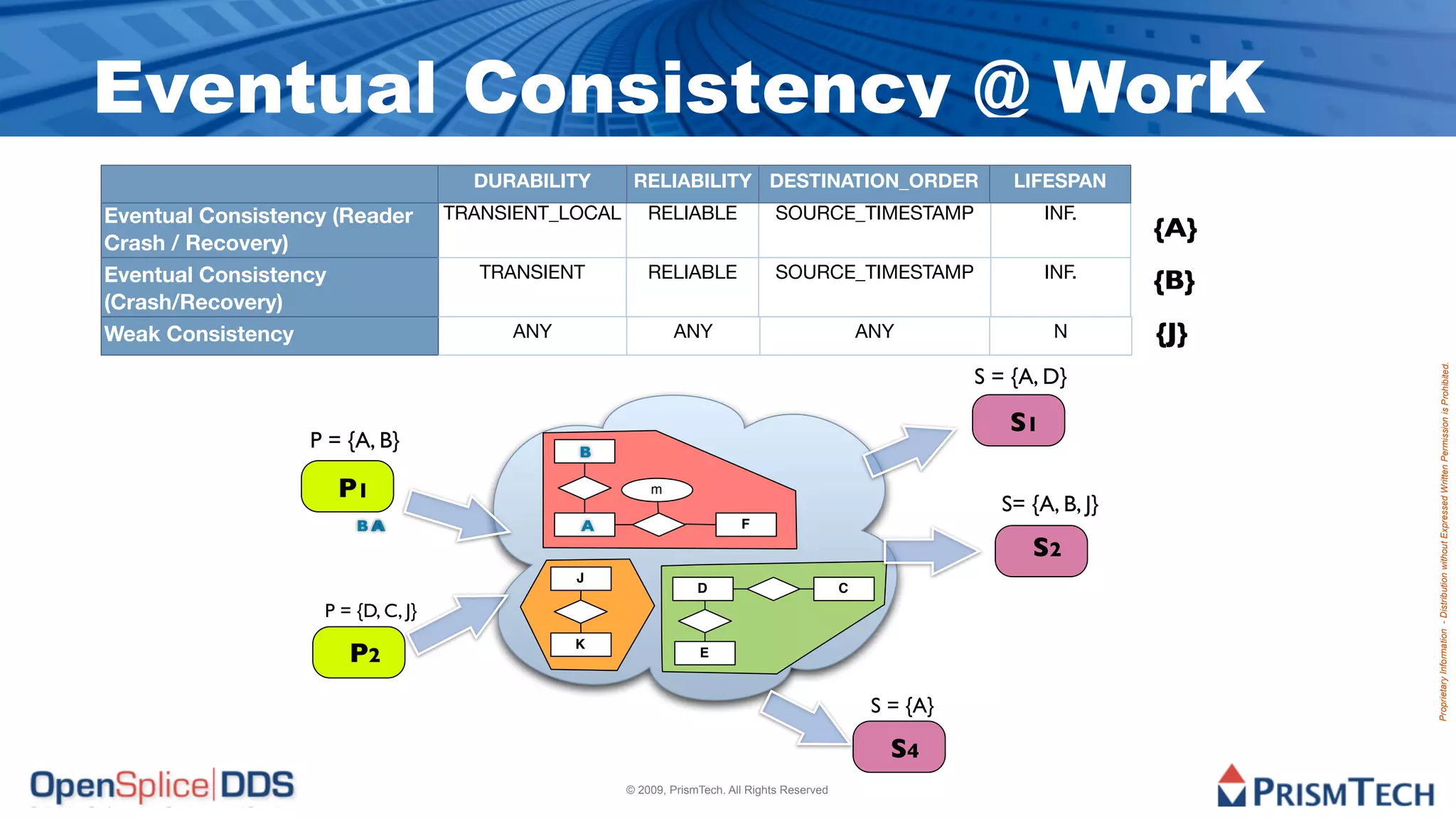
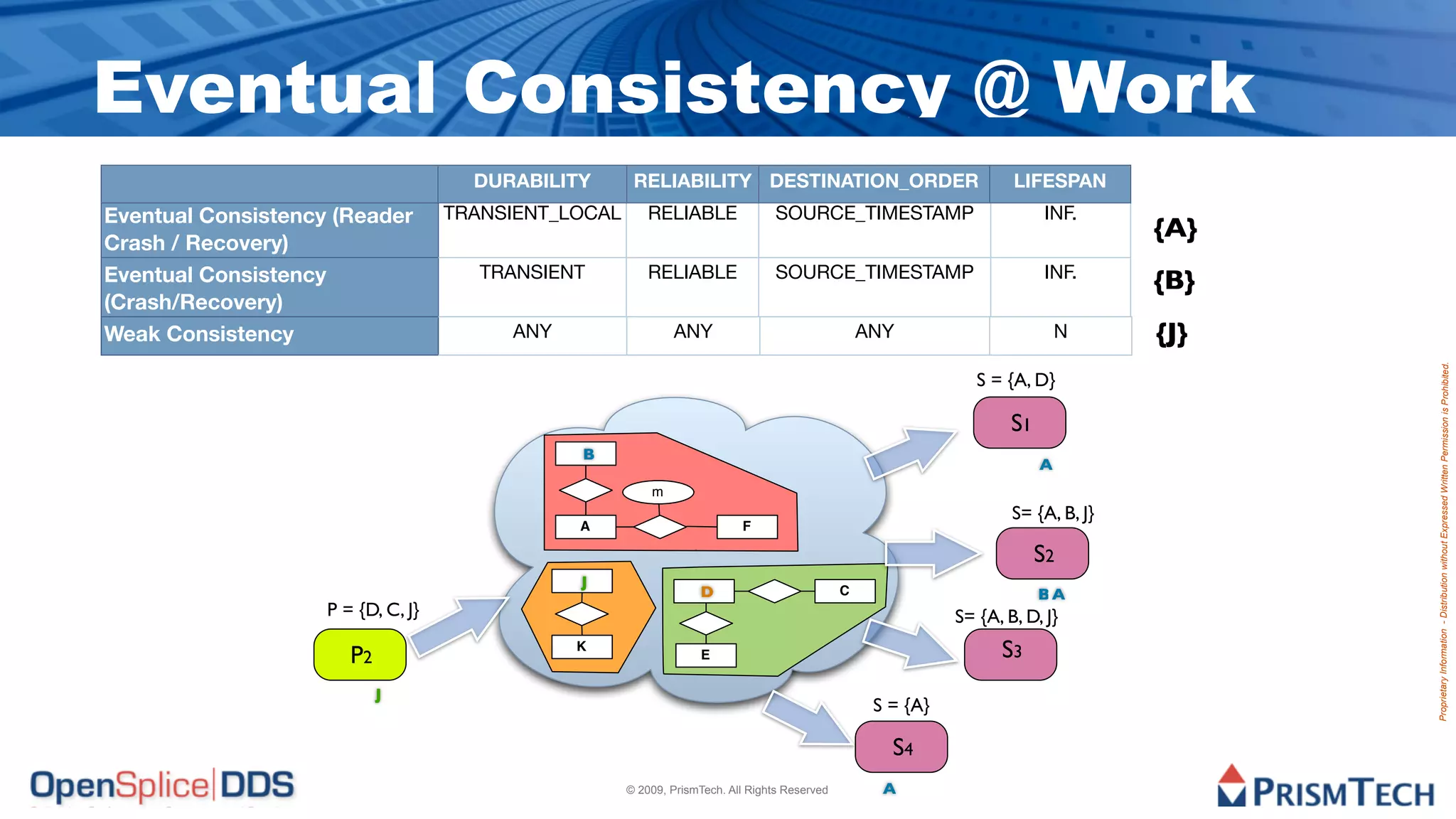
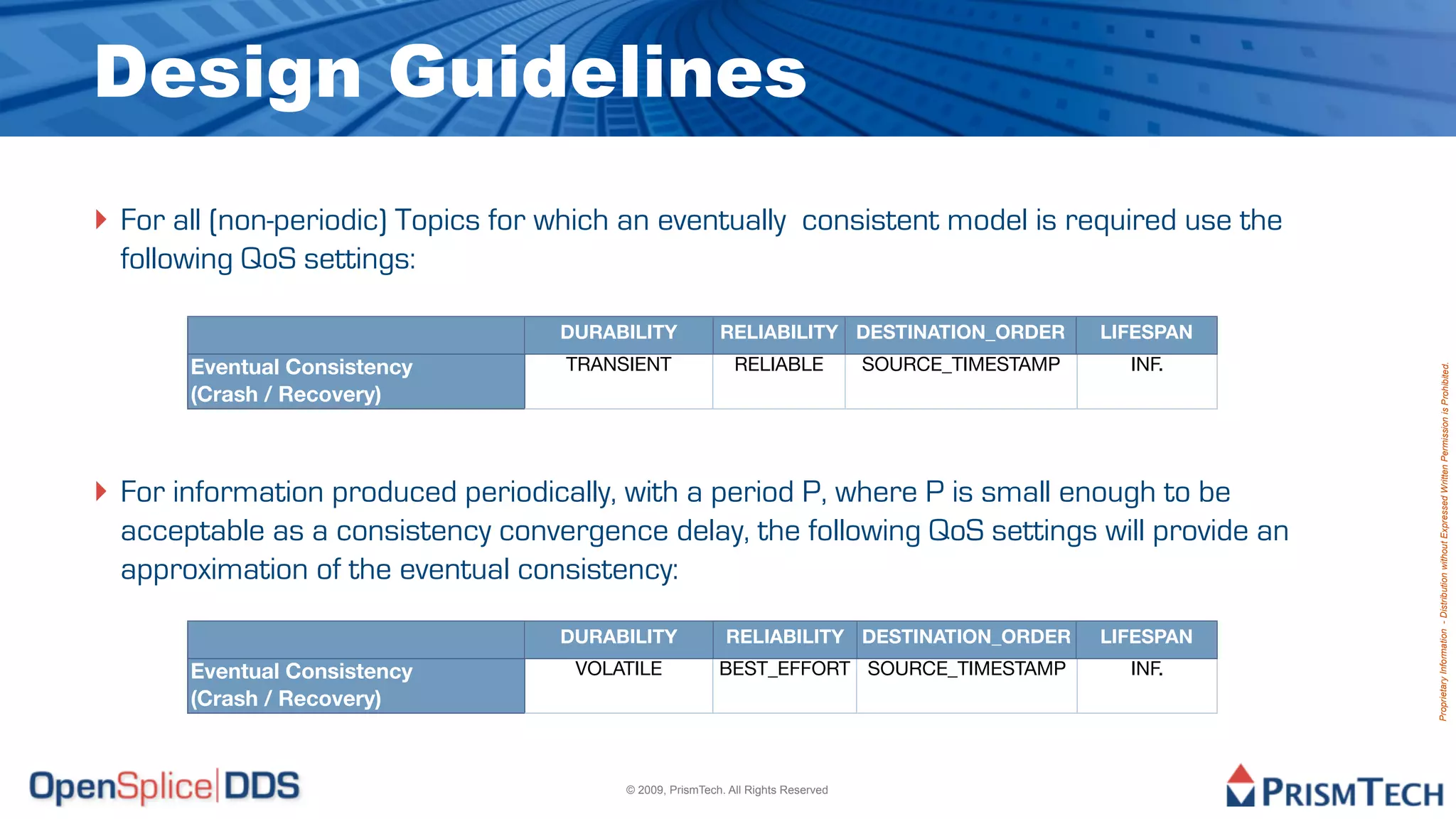
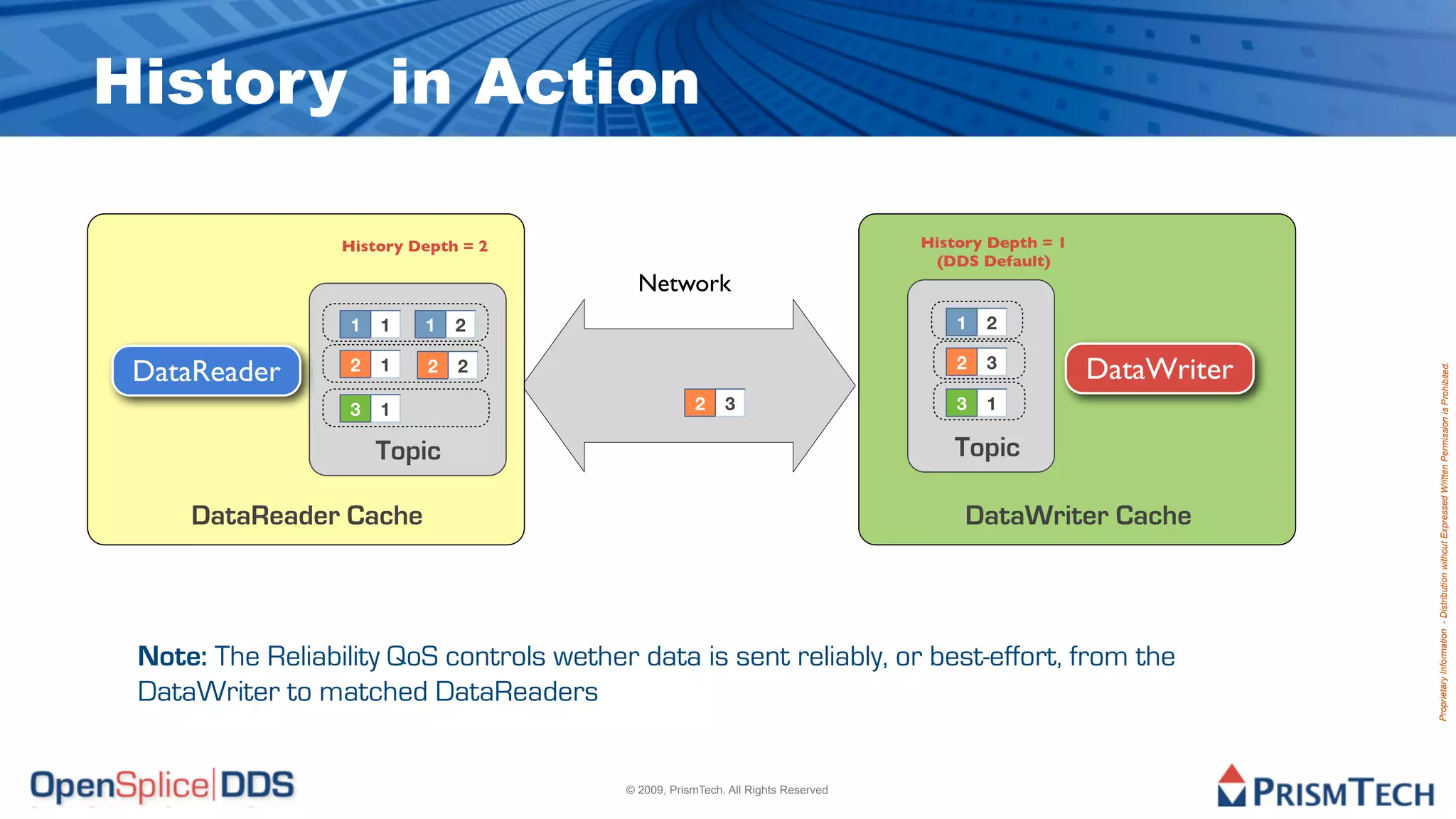
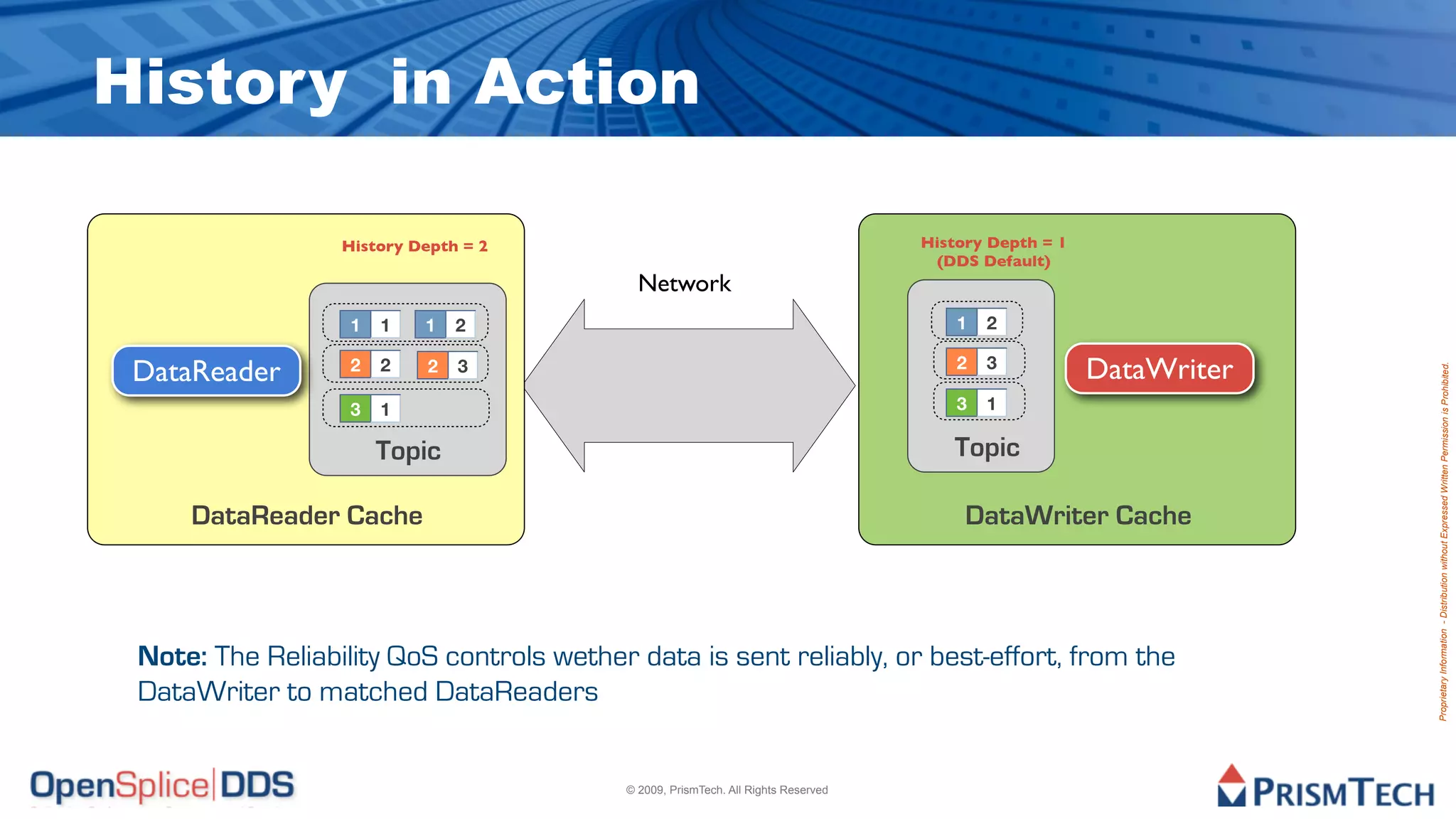
QoS policies influencing DDS operations, covering durability, reliability, performance, and consistency in data sharing.
QoS policies influencing DDS operations, covering durability, reliability, performance, and consistency in data sharing.
Agenda includes defining motivating forces, standards, architectural principles, and programming model.
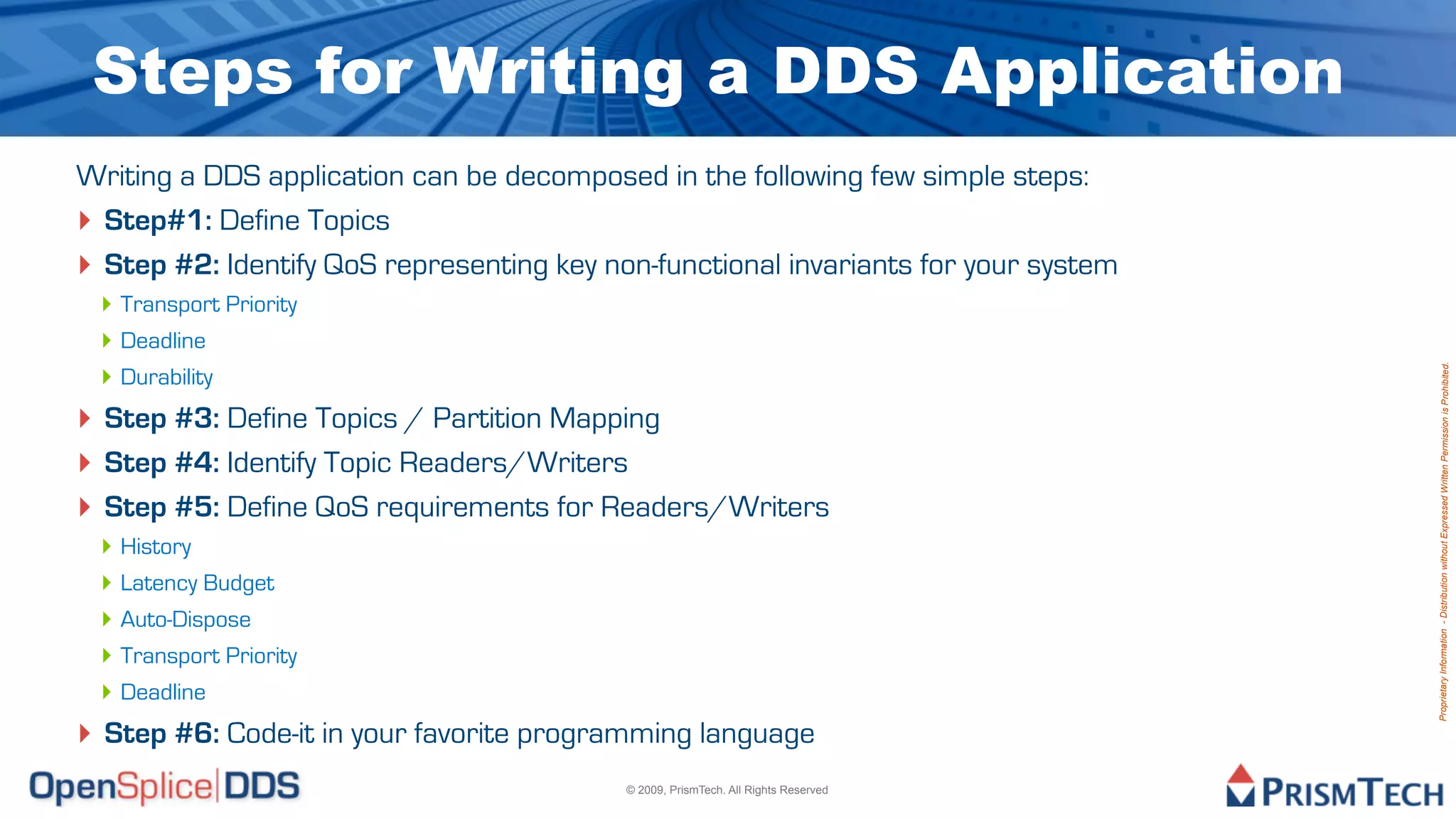
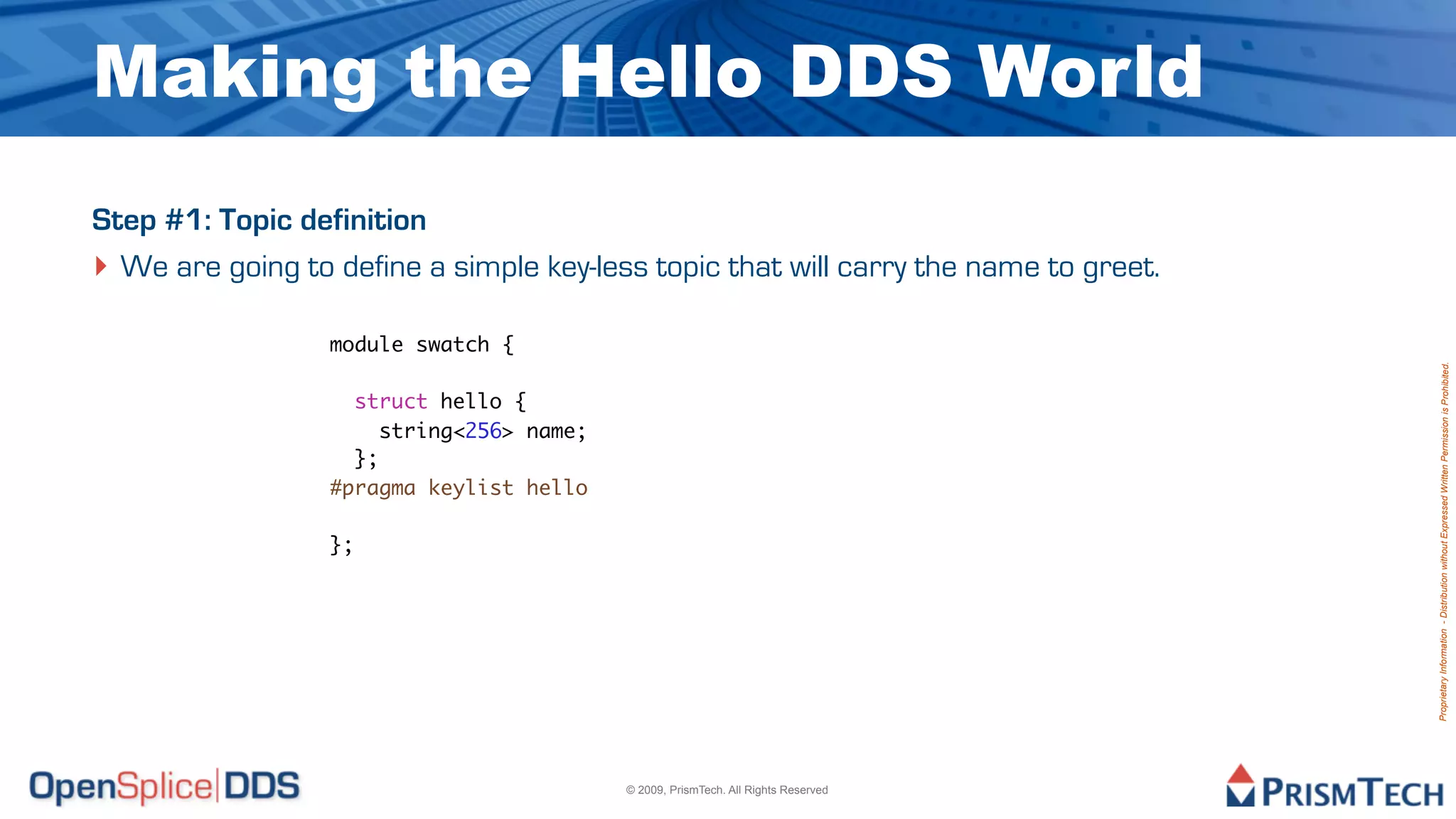
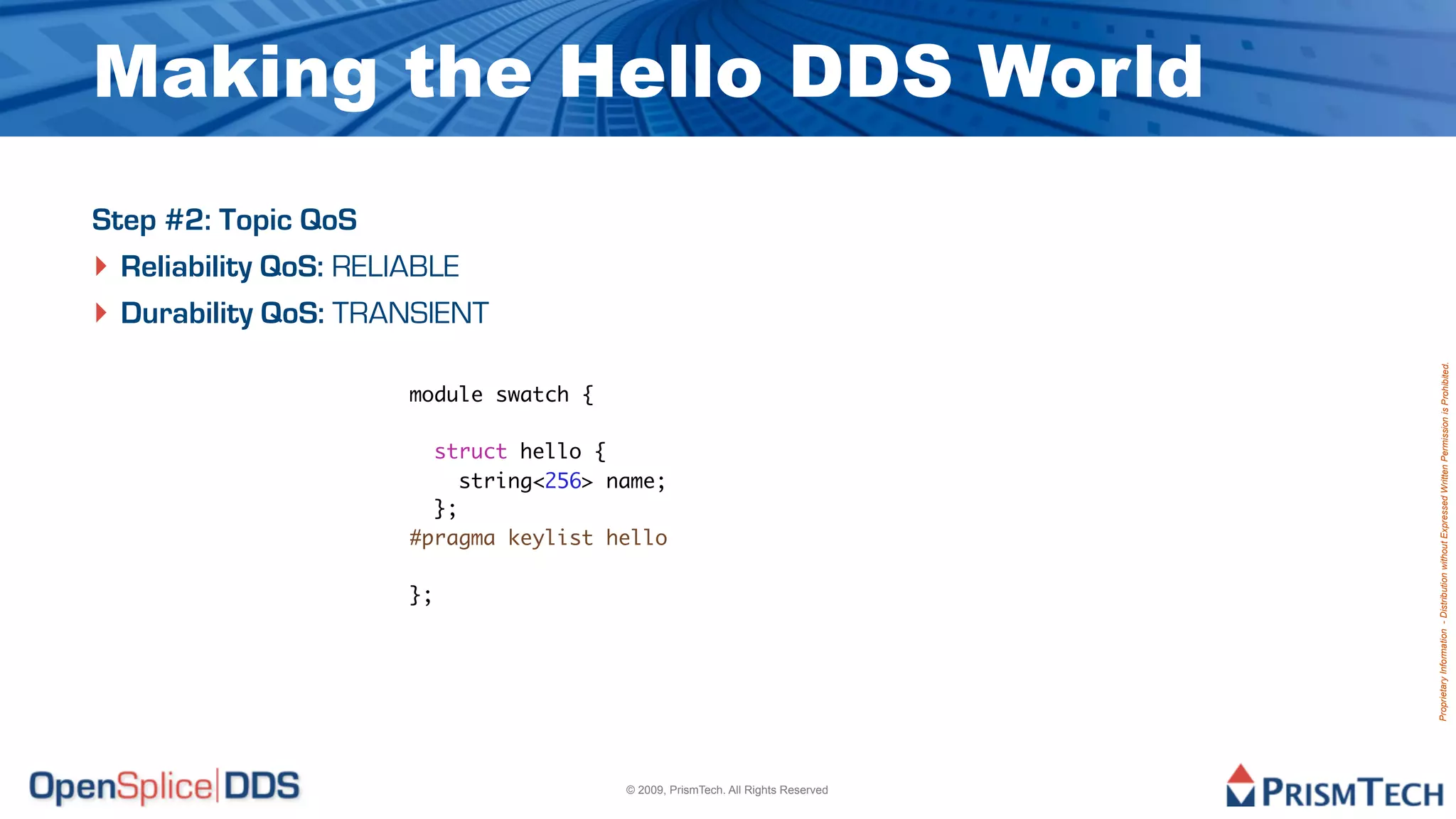
Steps to develop a DDS application including topic definitions, QoS settings, and coding requirements.
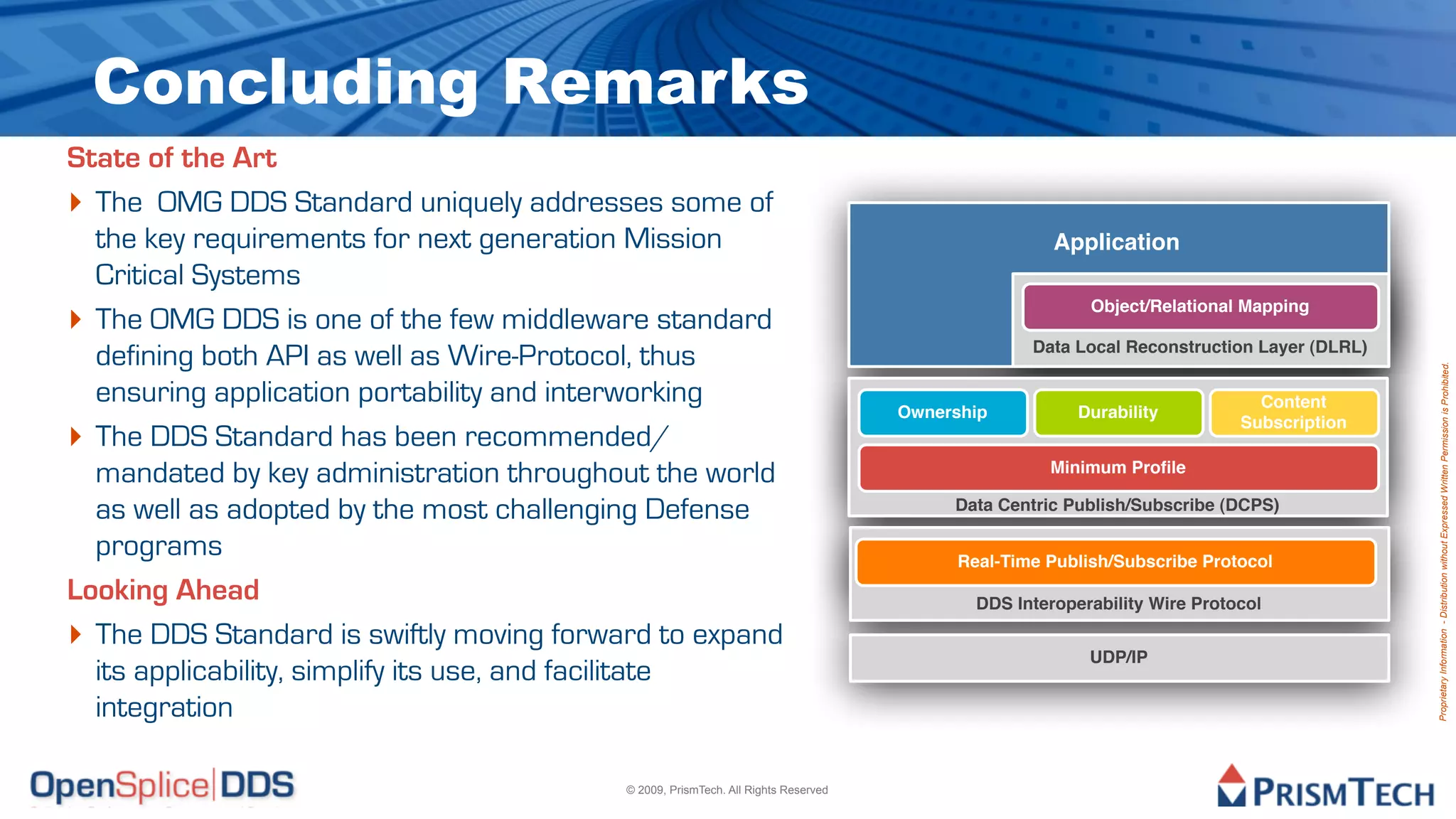
Wrap-up of DDS capabilities for mission-critical systems, emphasizing portability, interworking, and future enhancements.
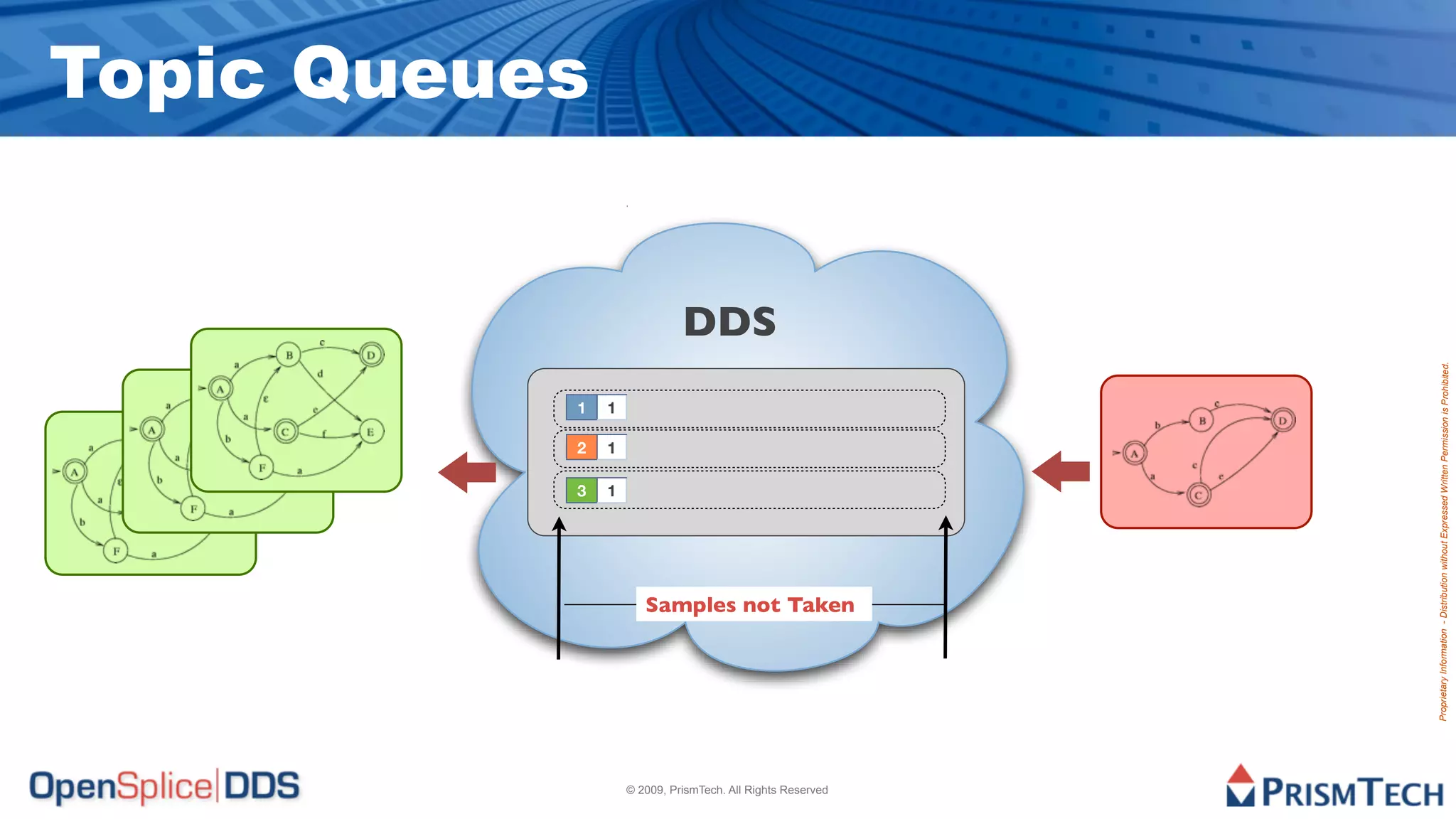
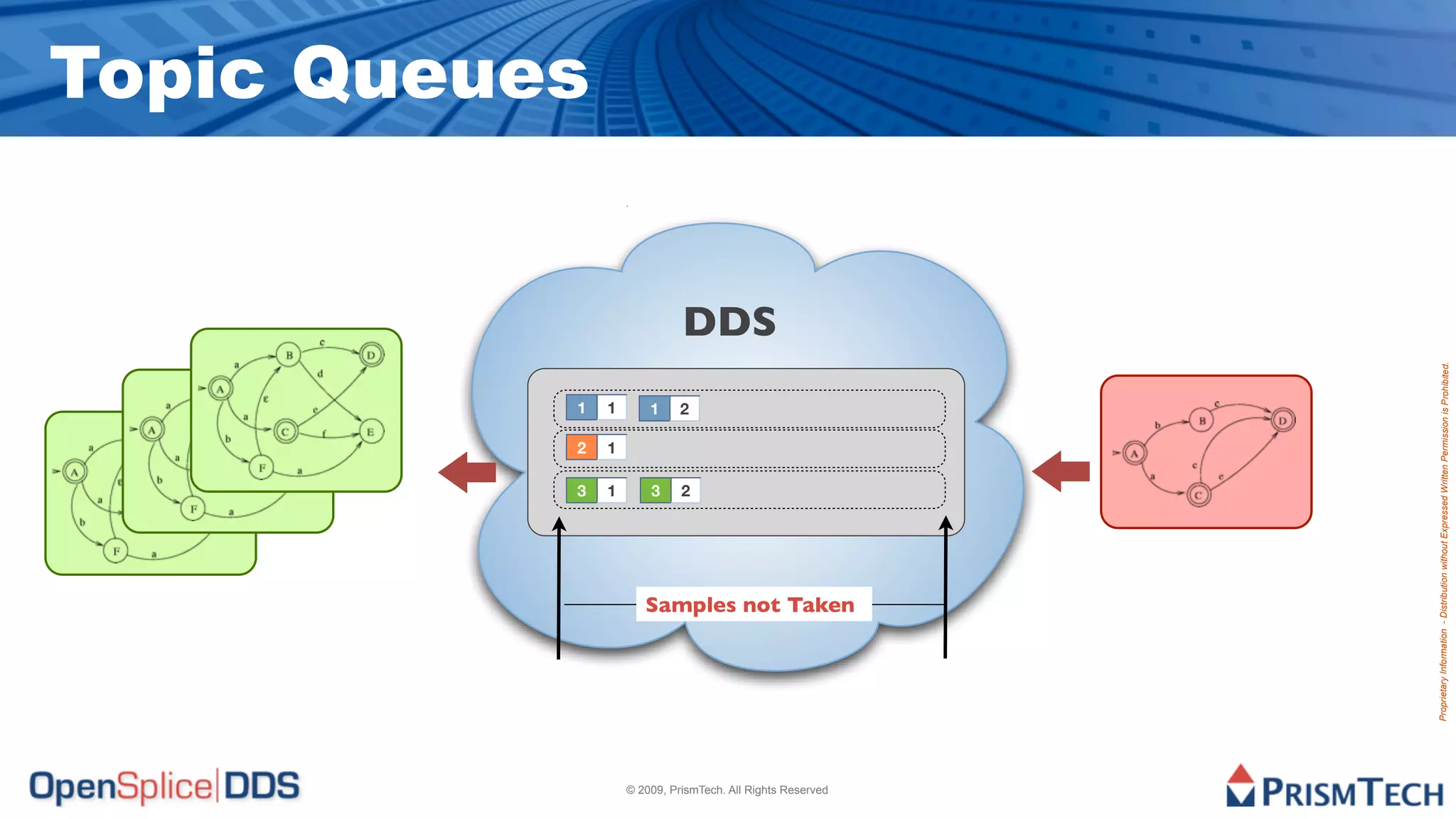
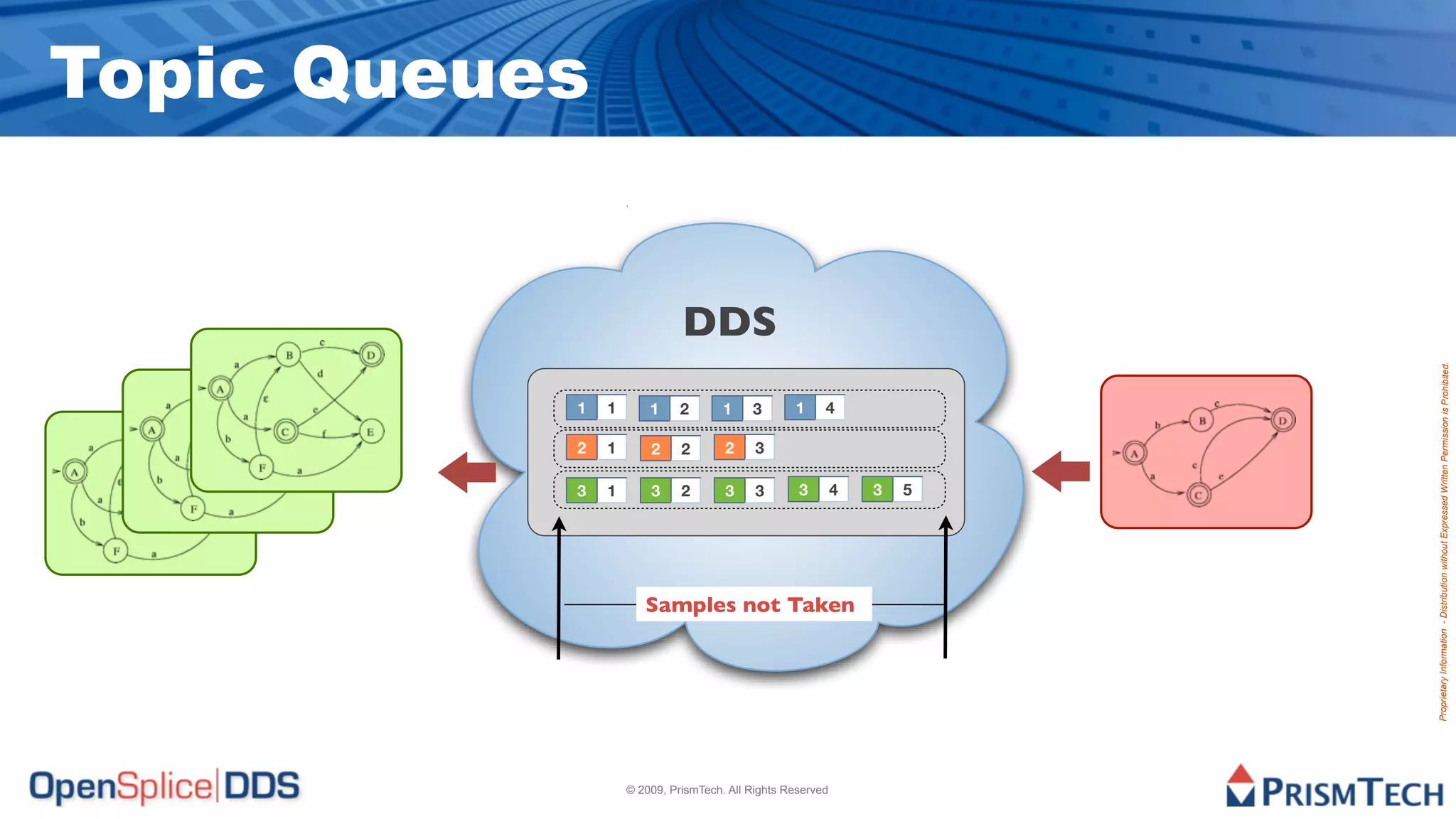
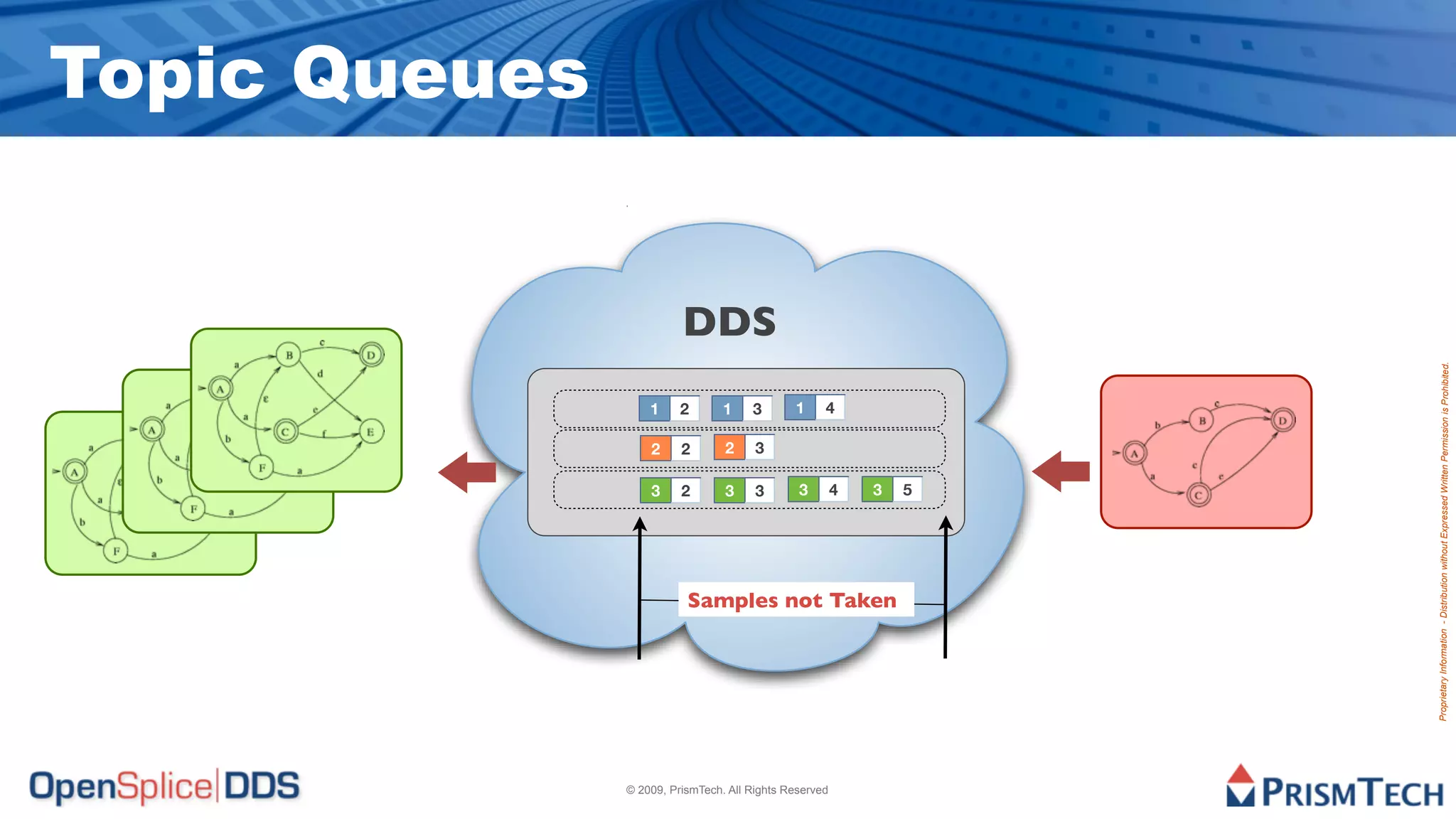
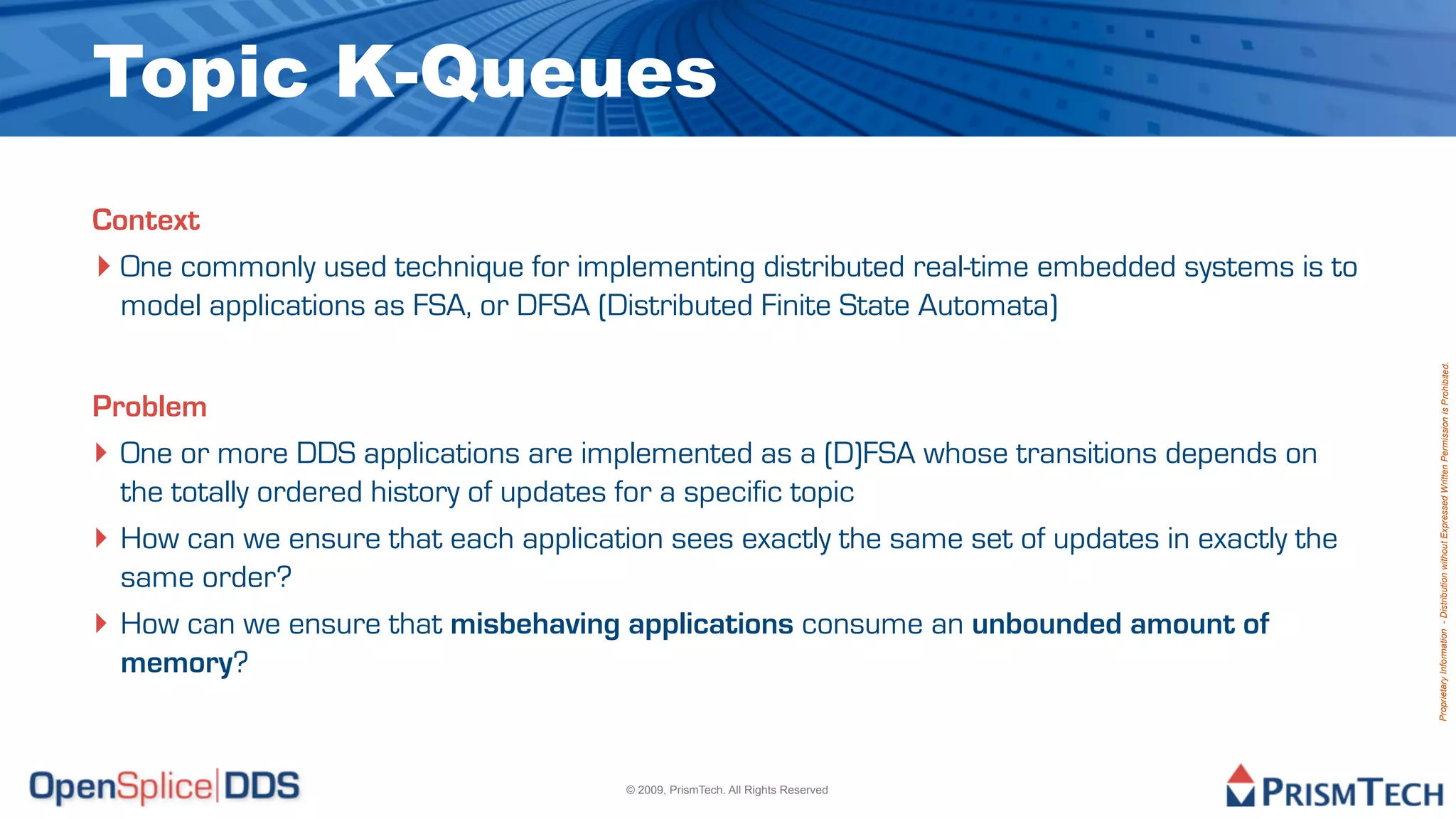
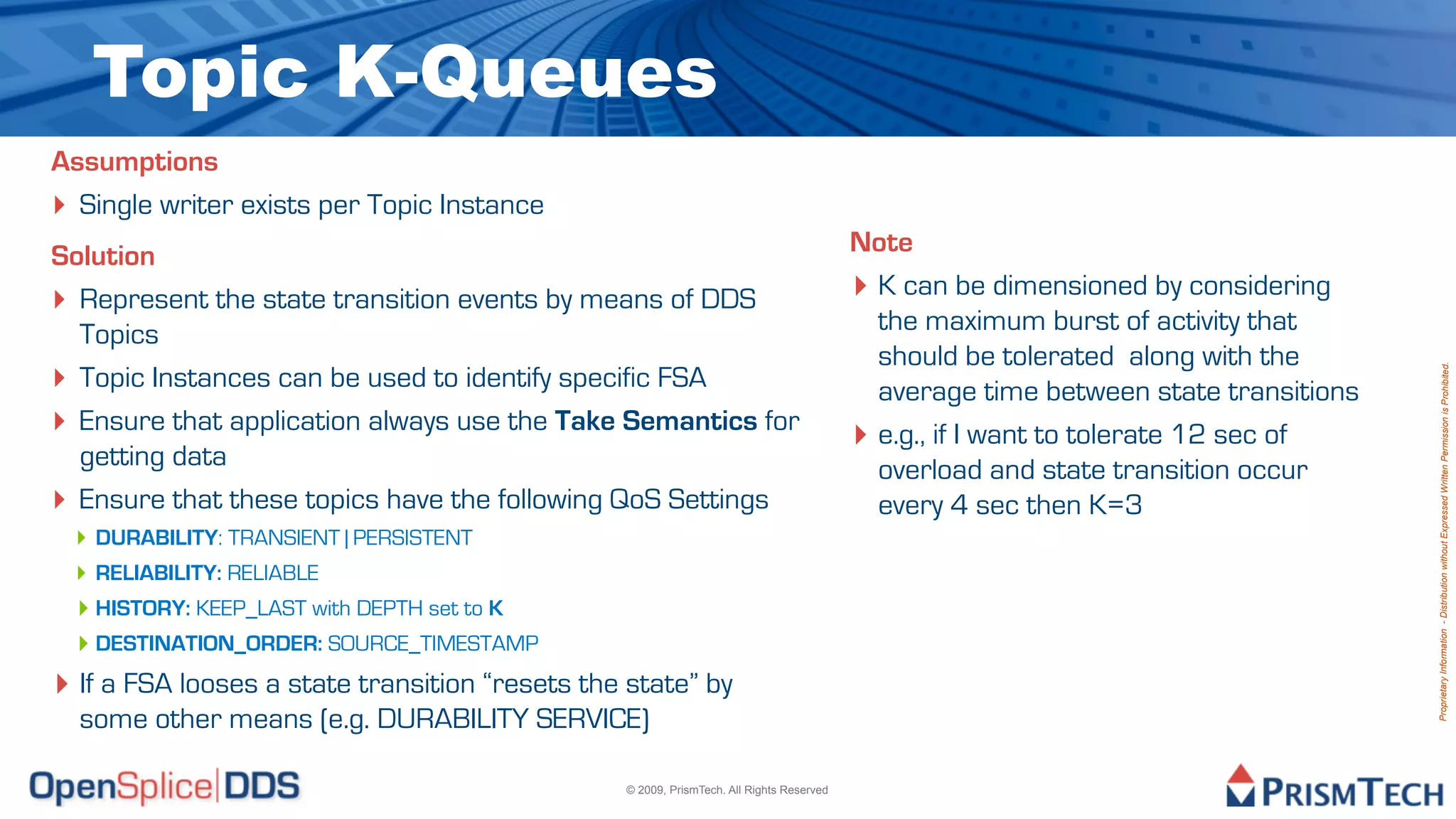
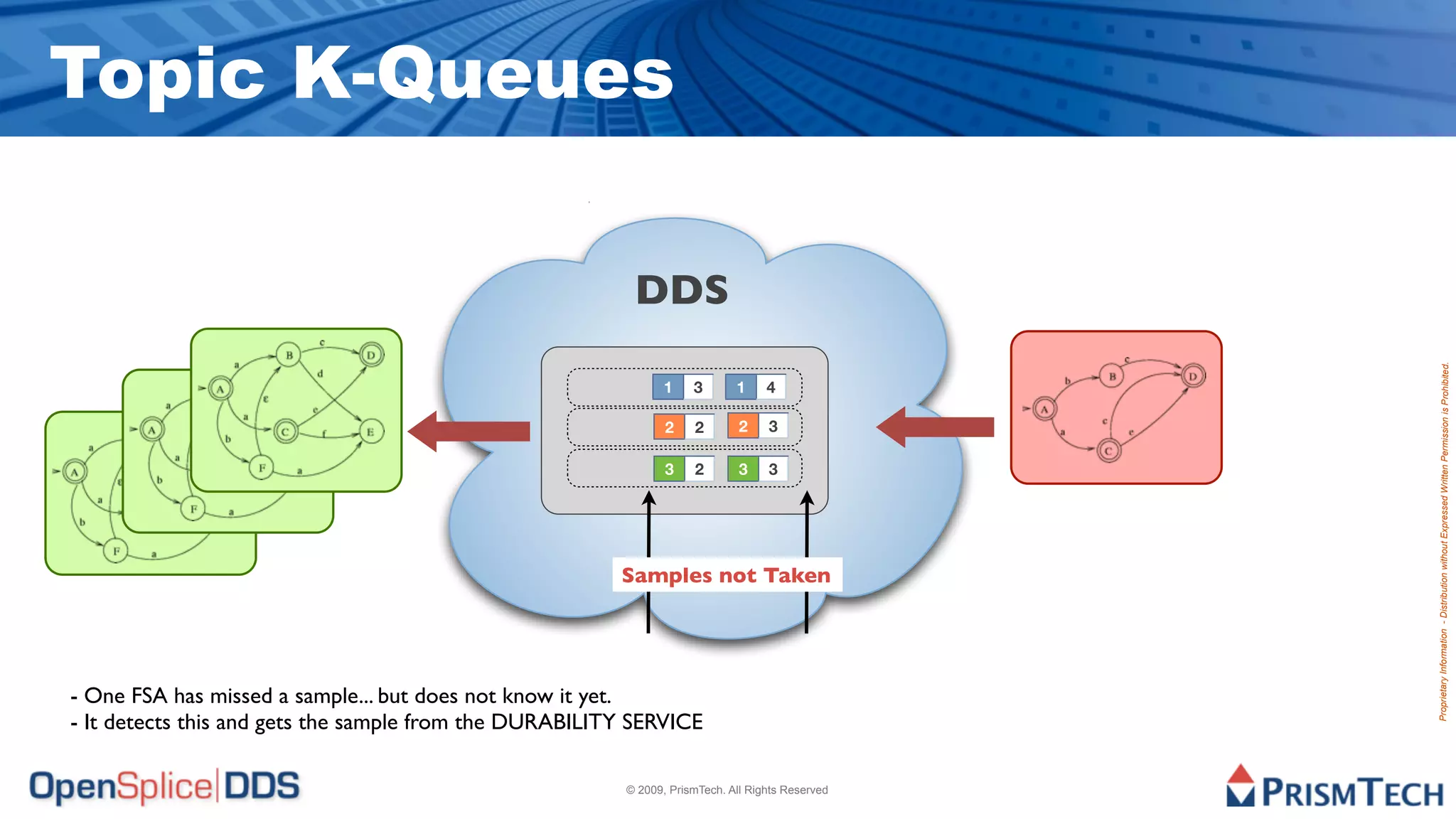
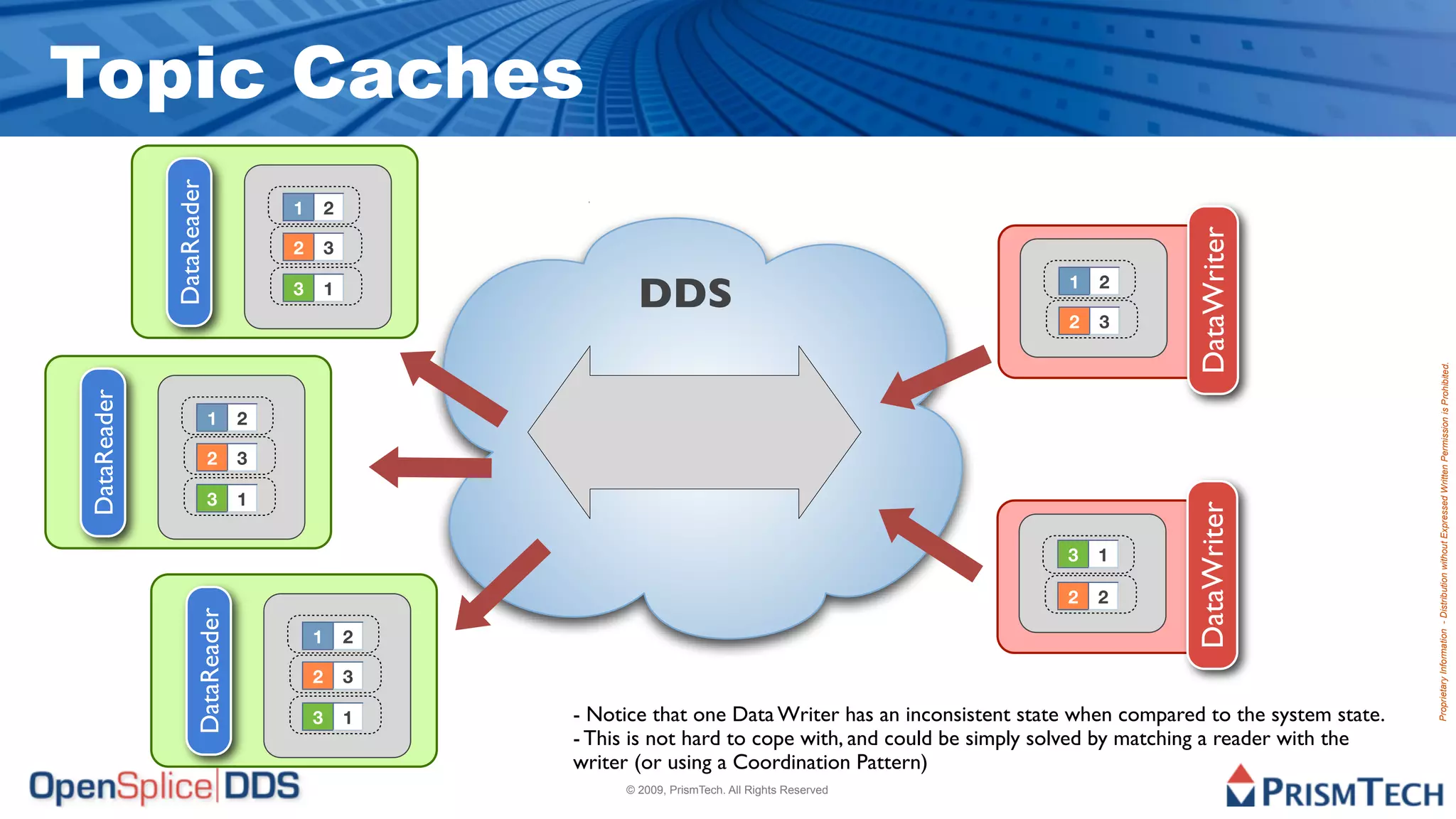
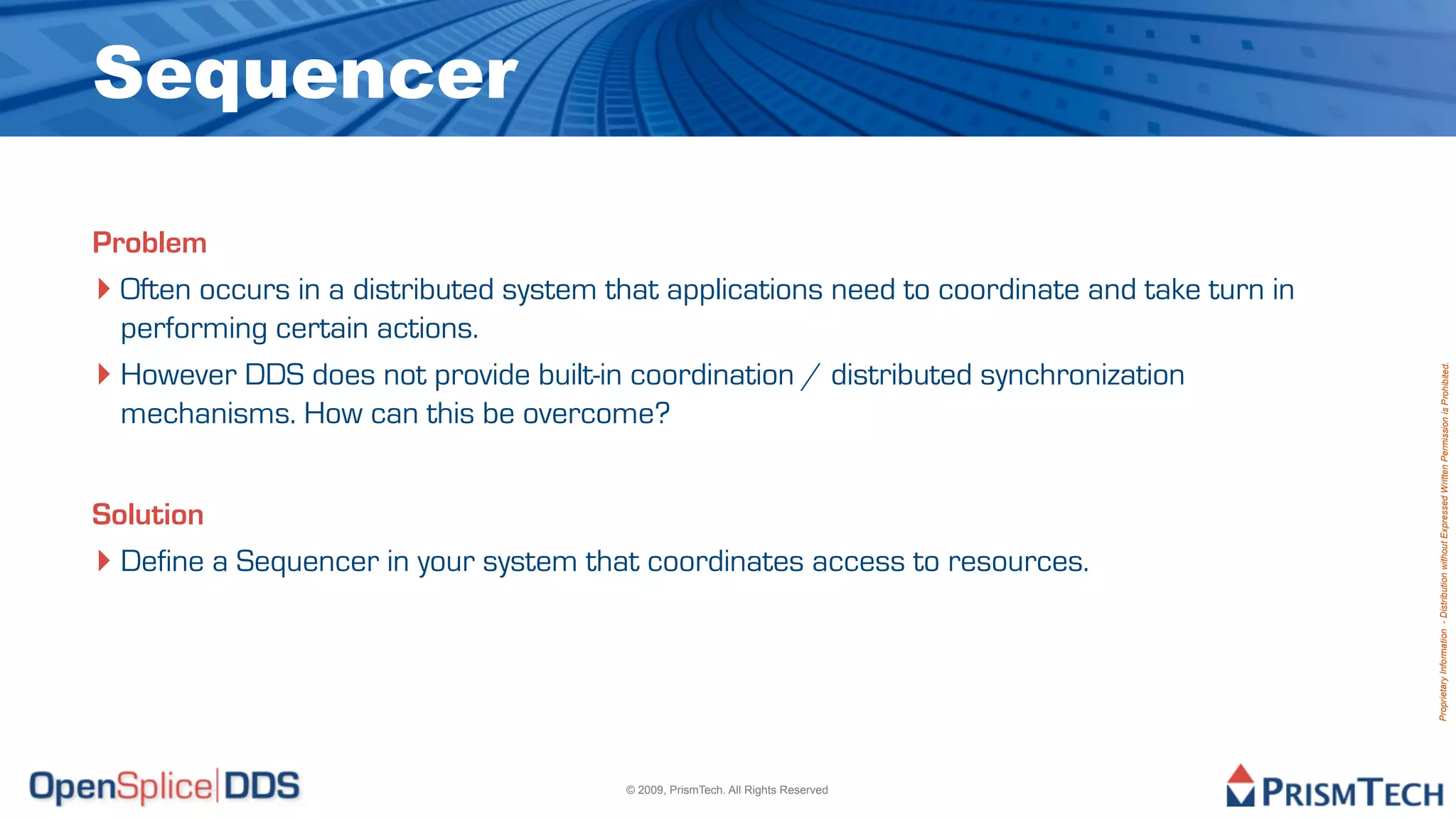
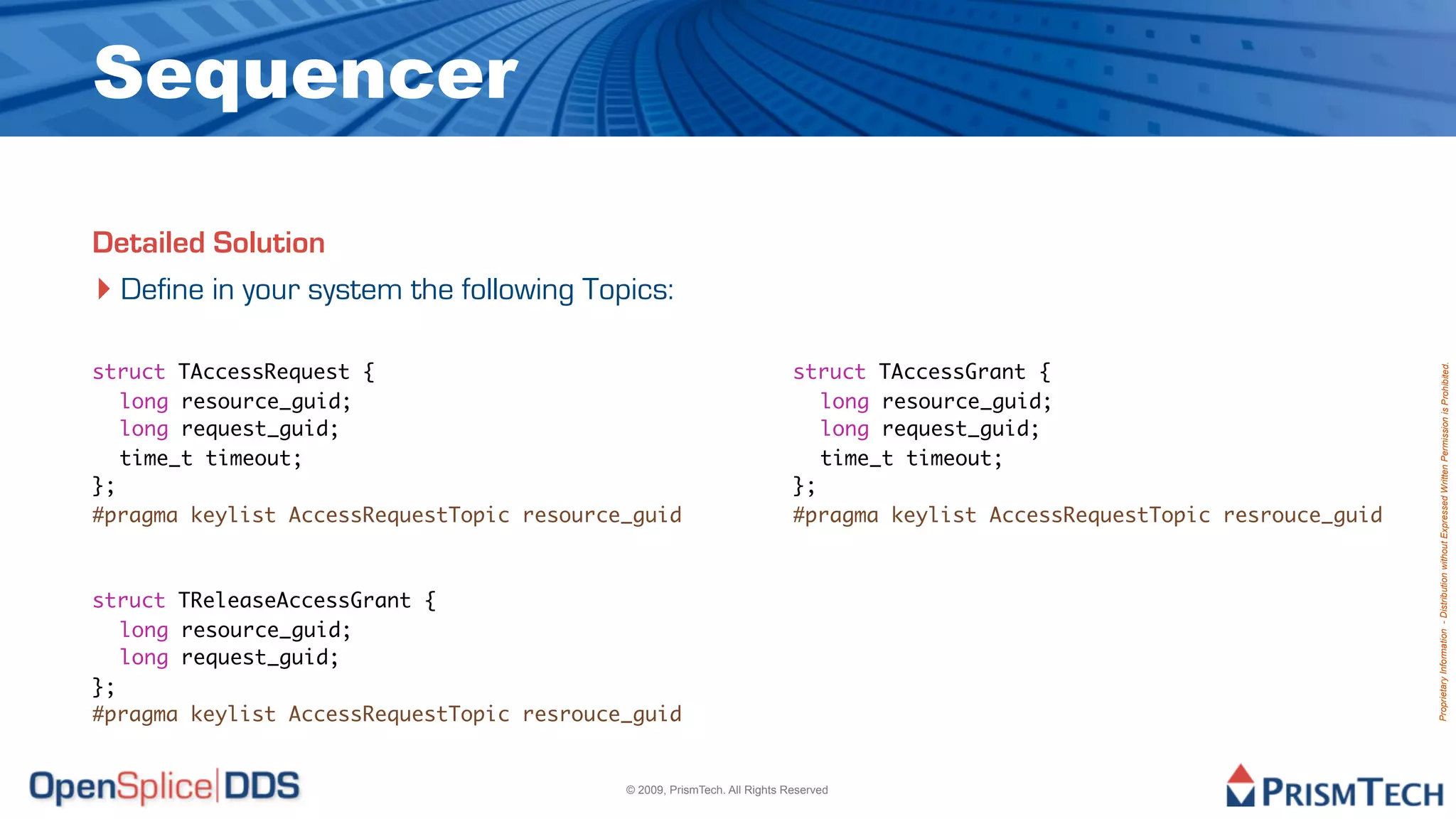
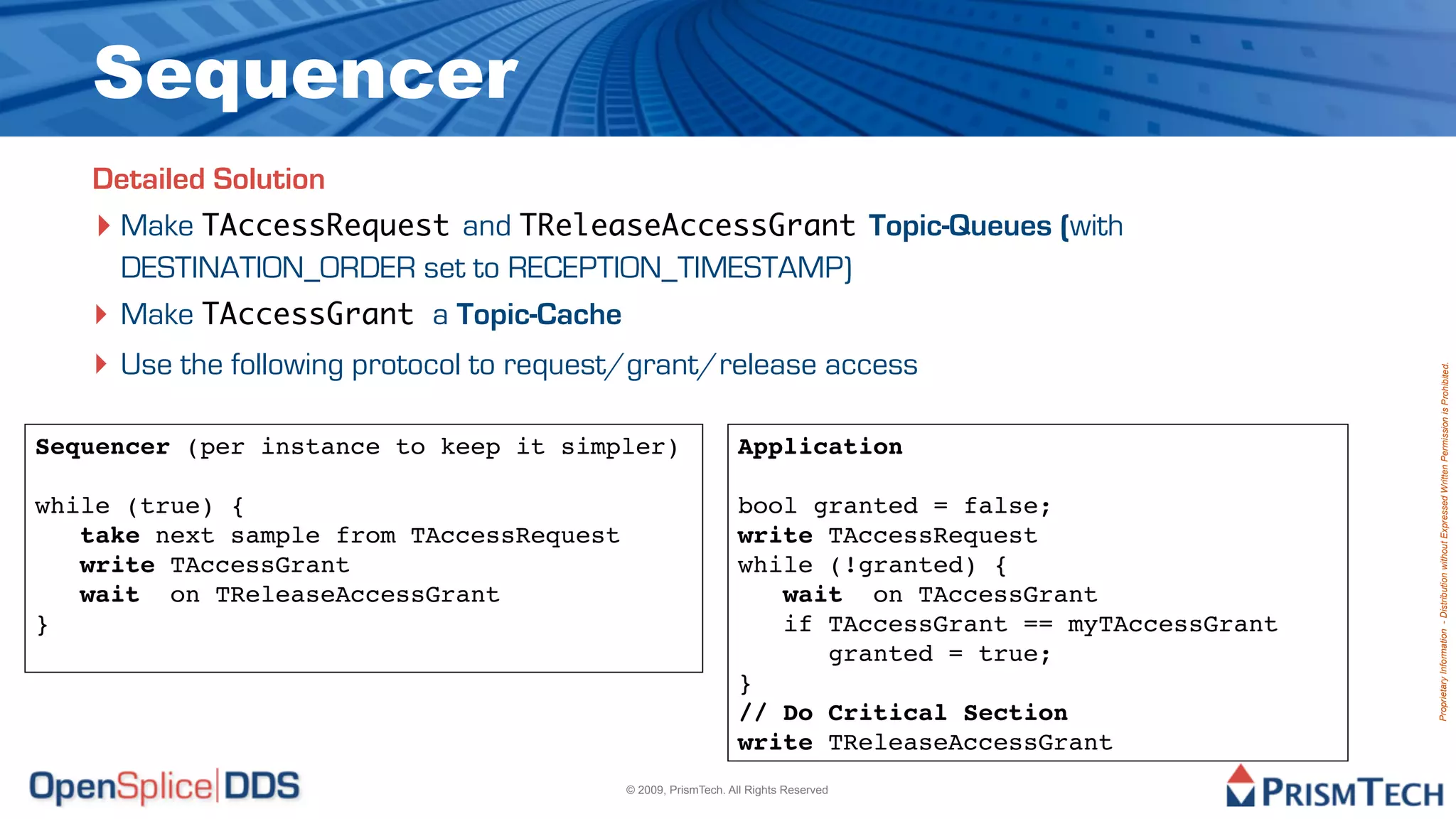
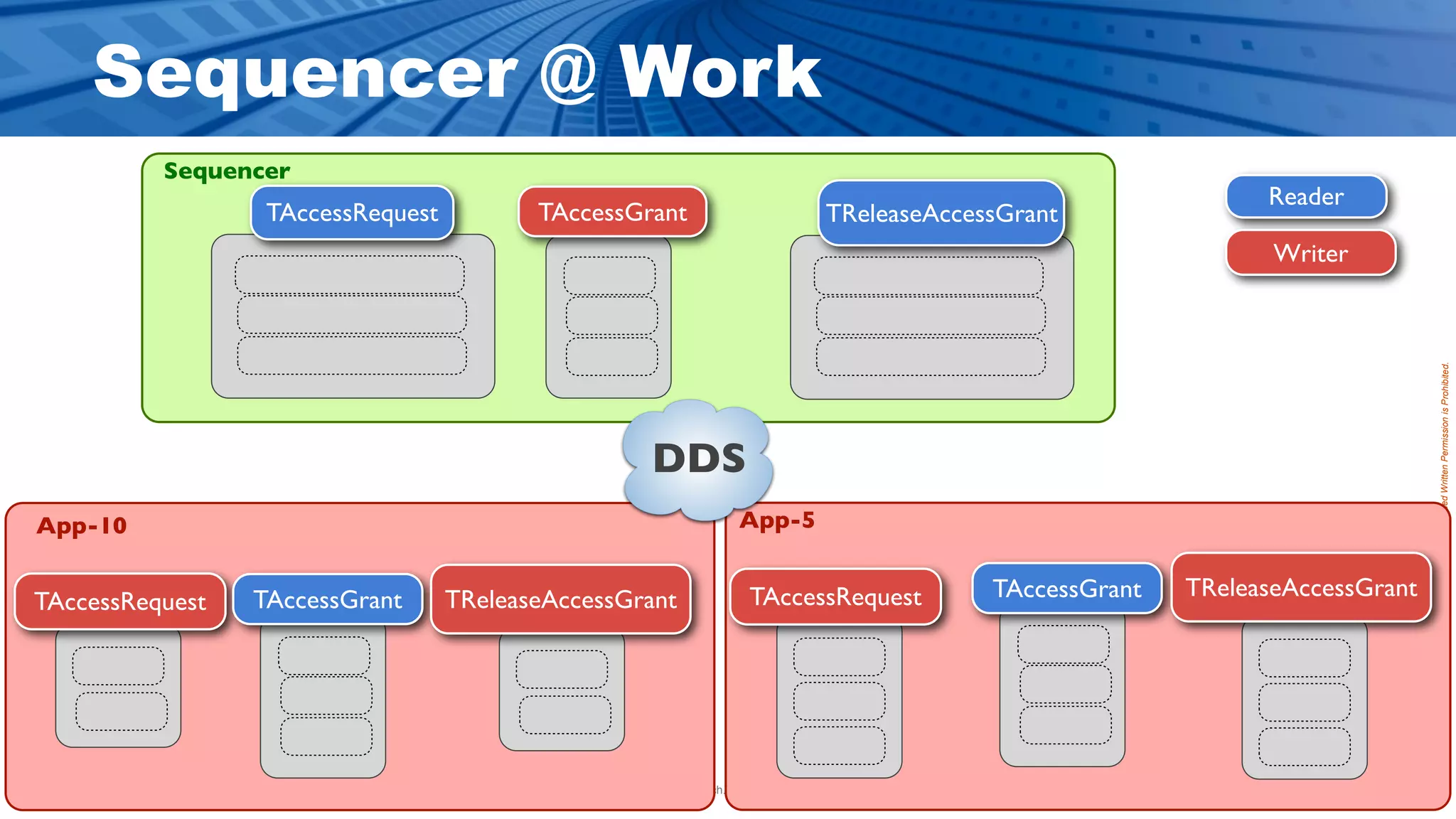
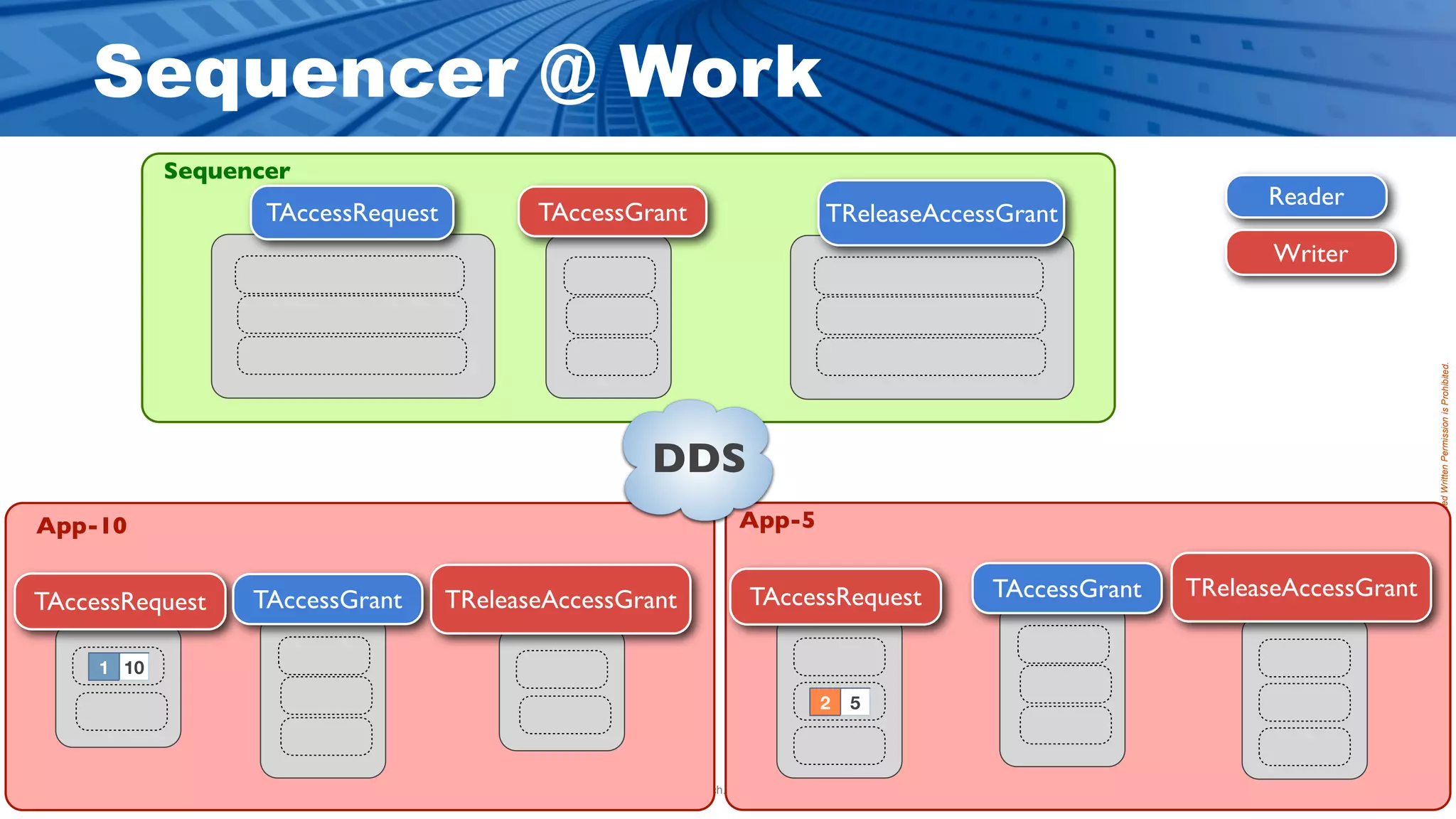
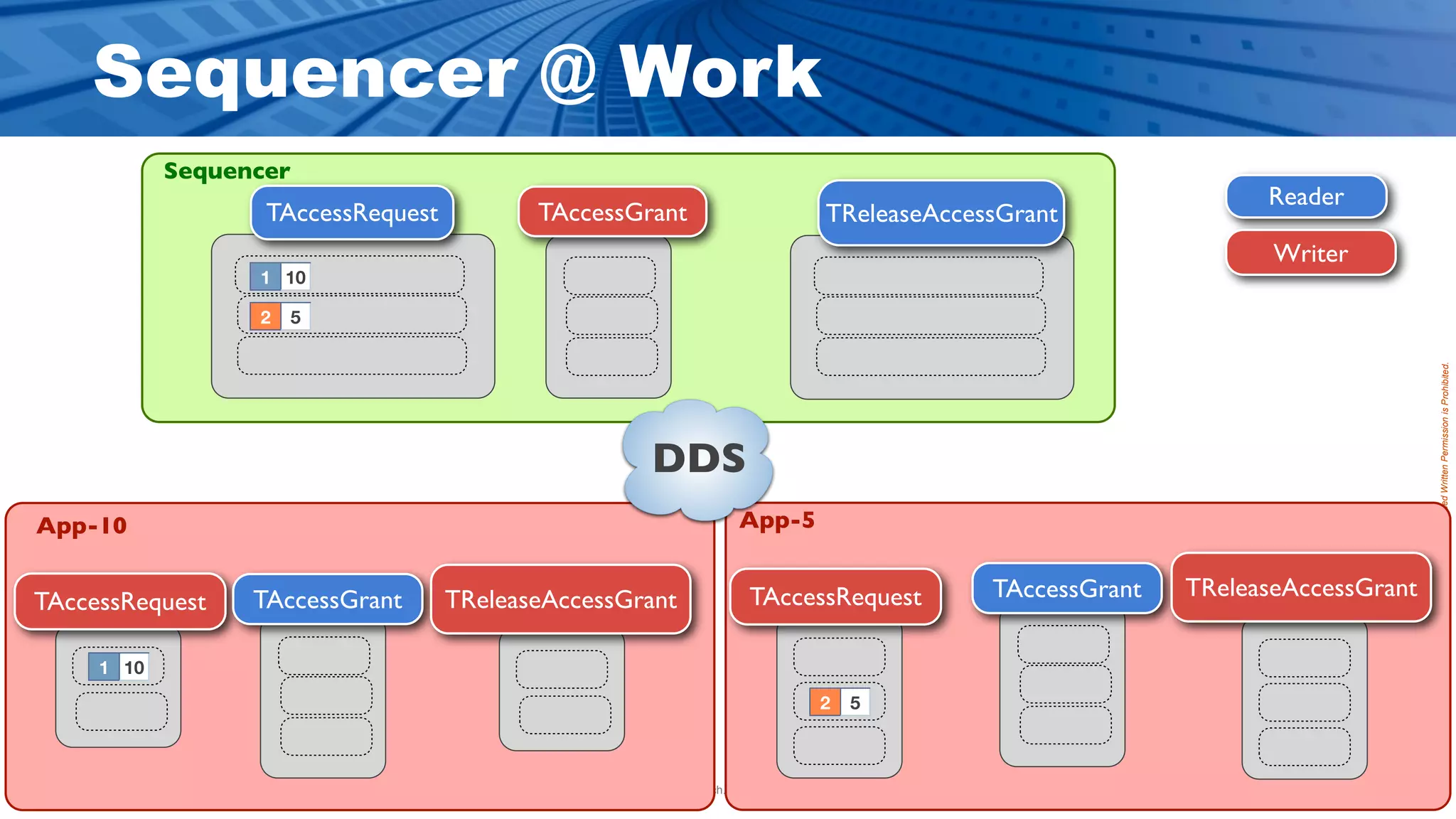
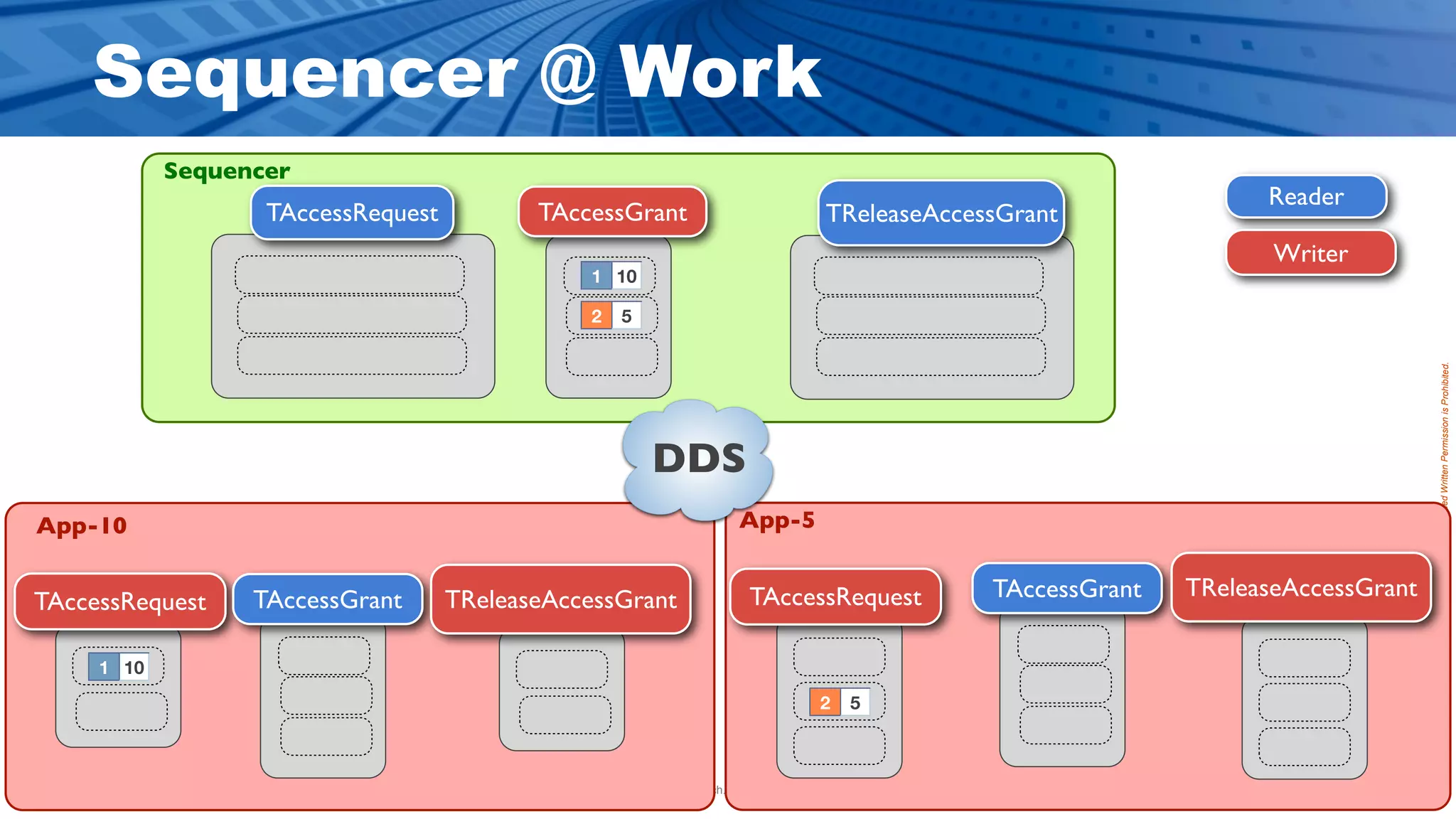
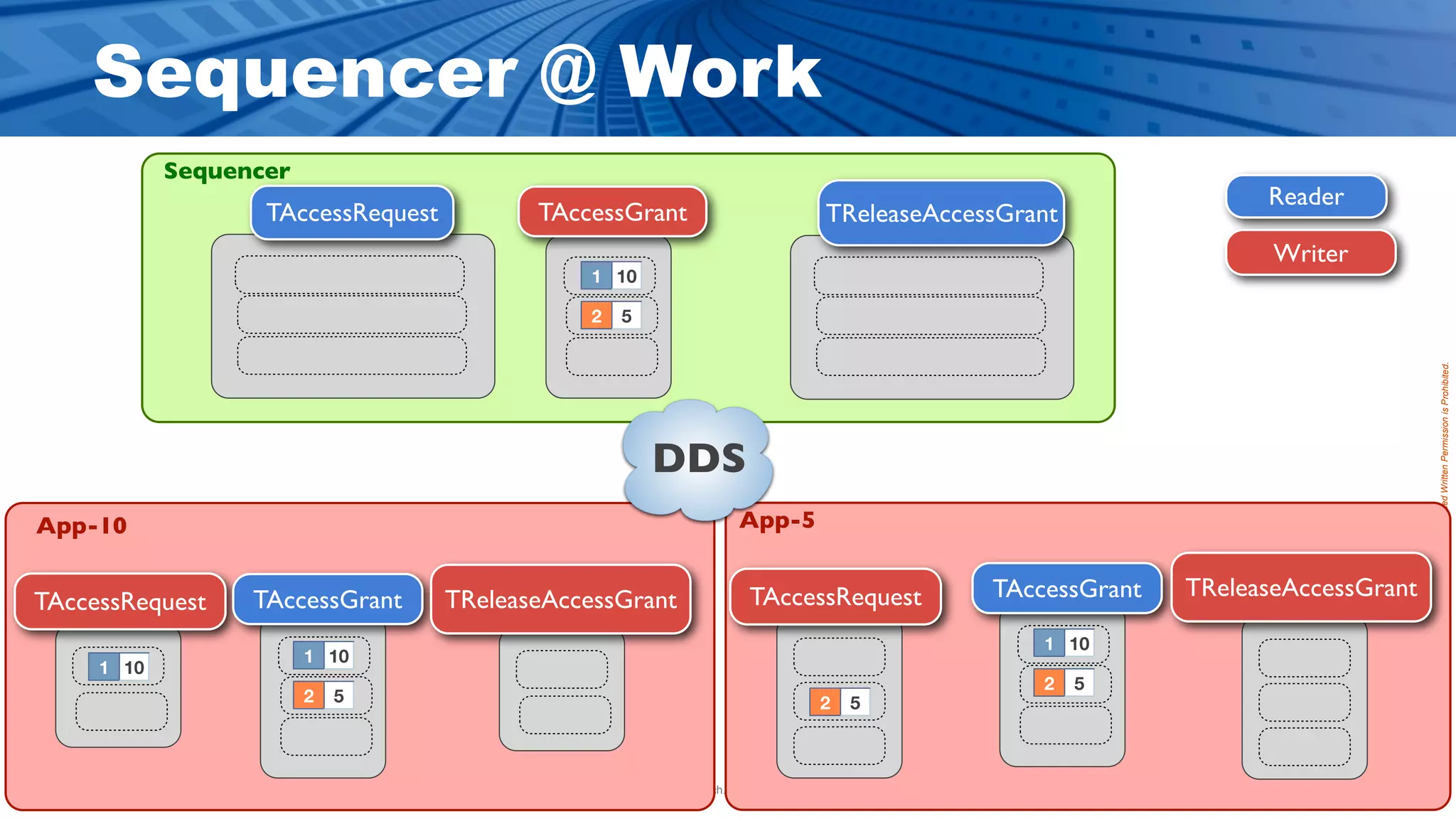
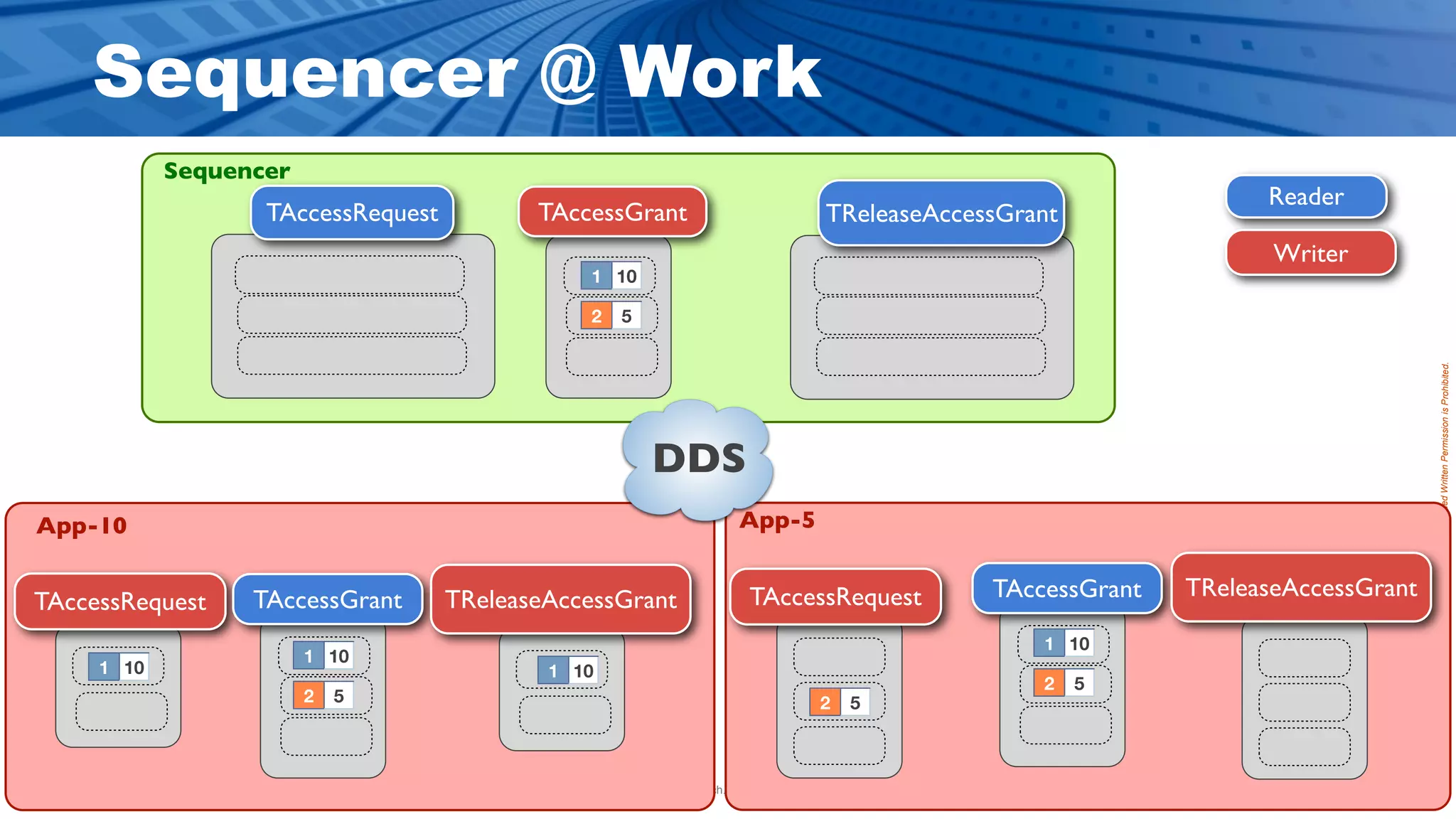
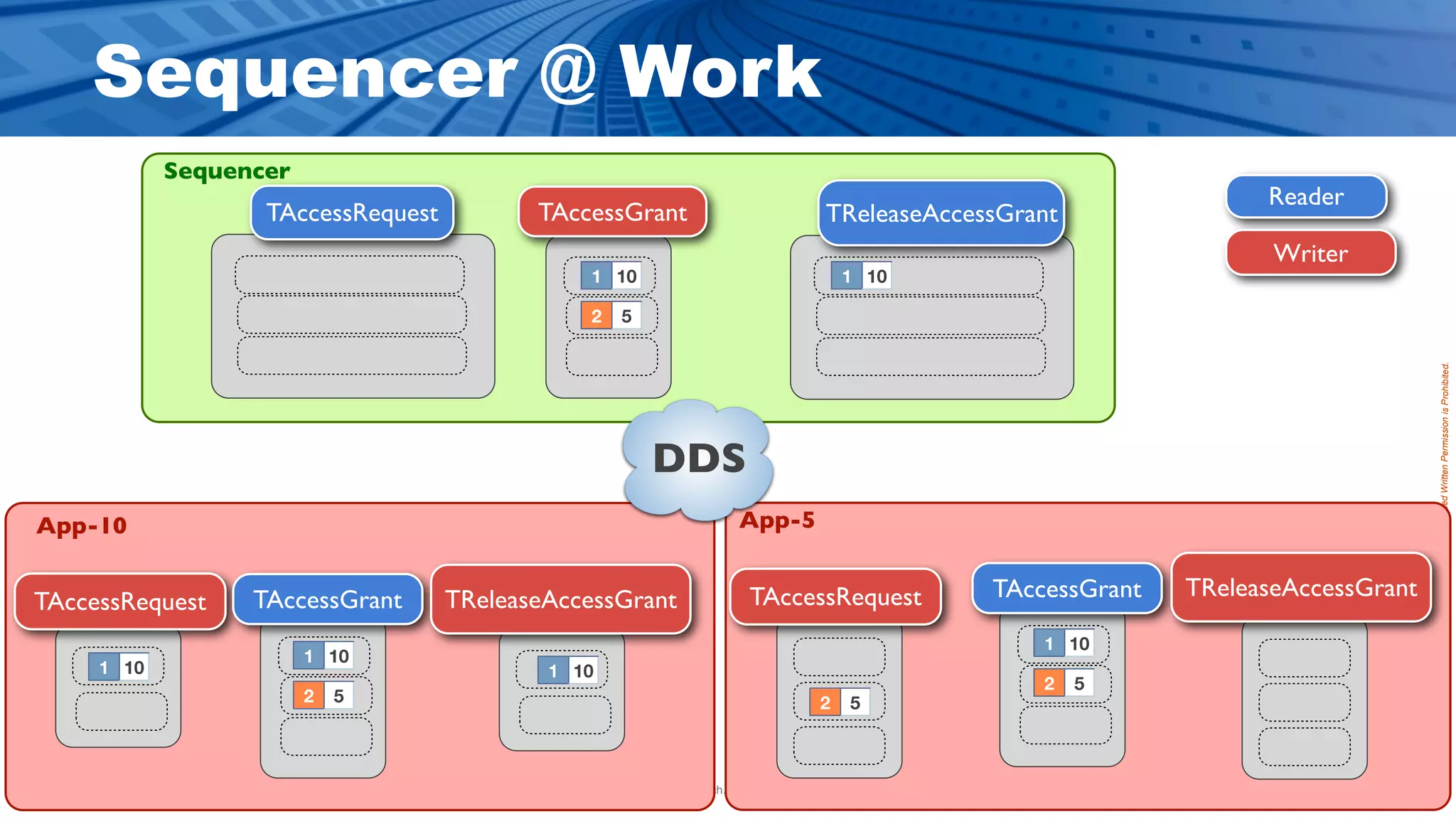
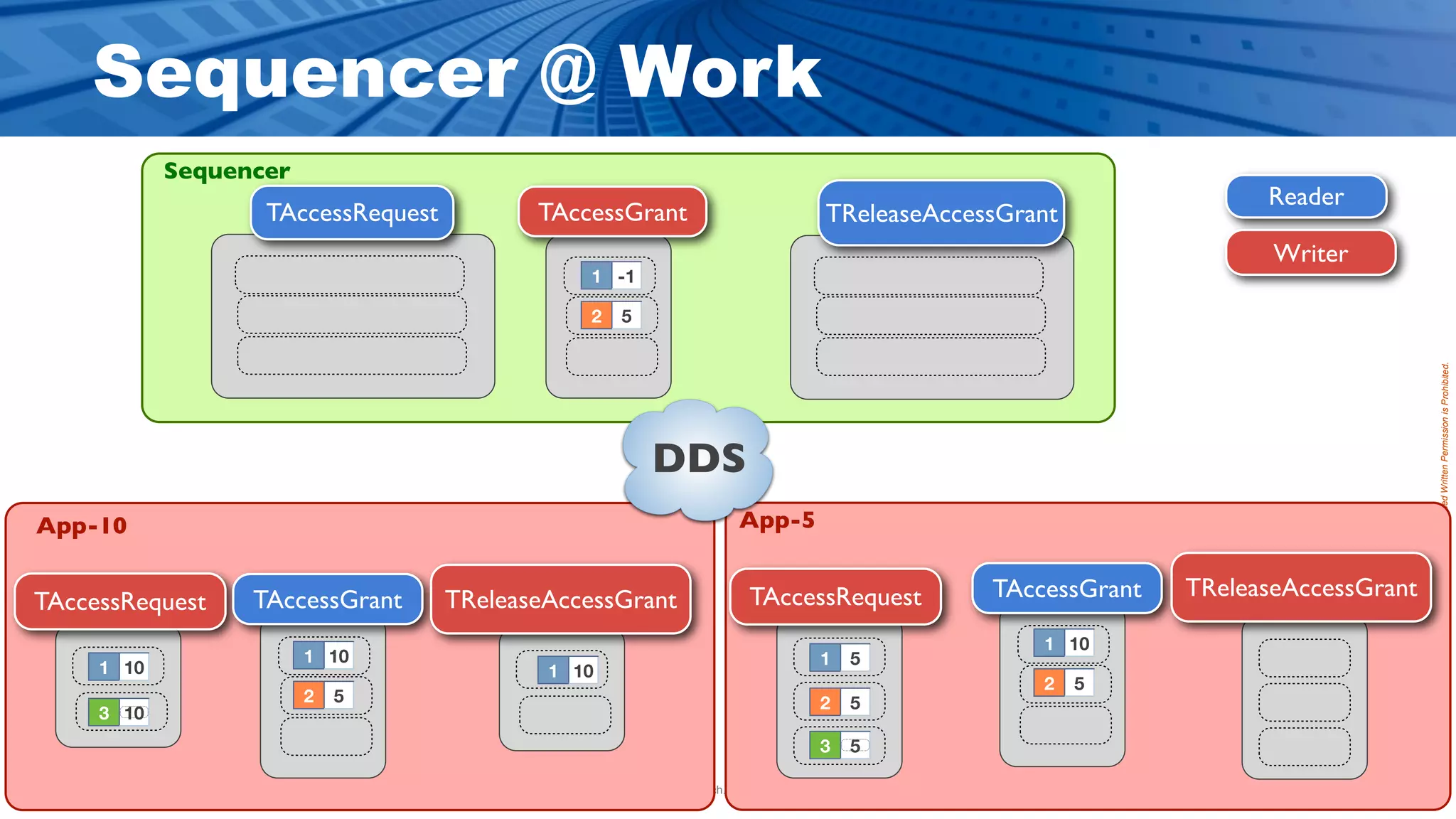
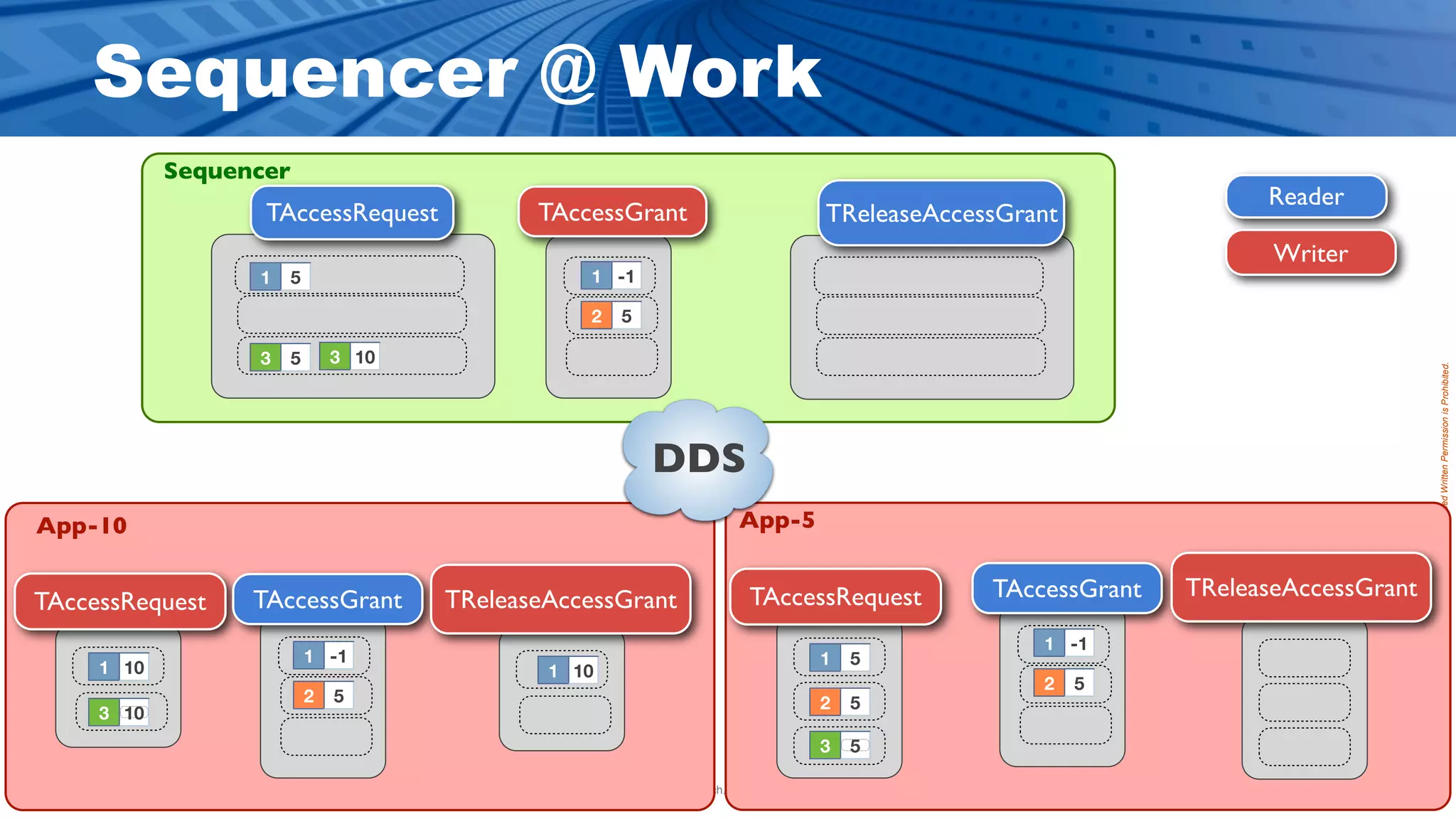
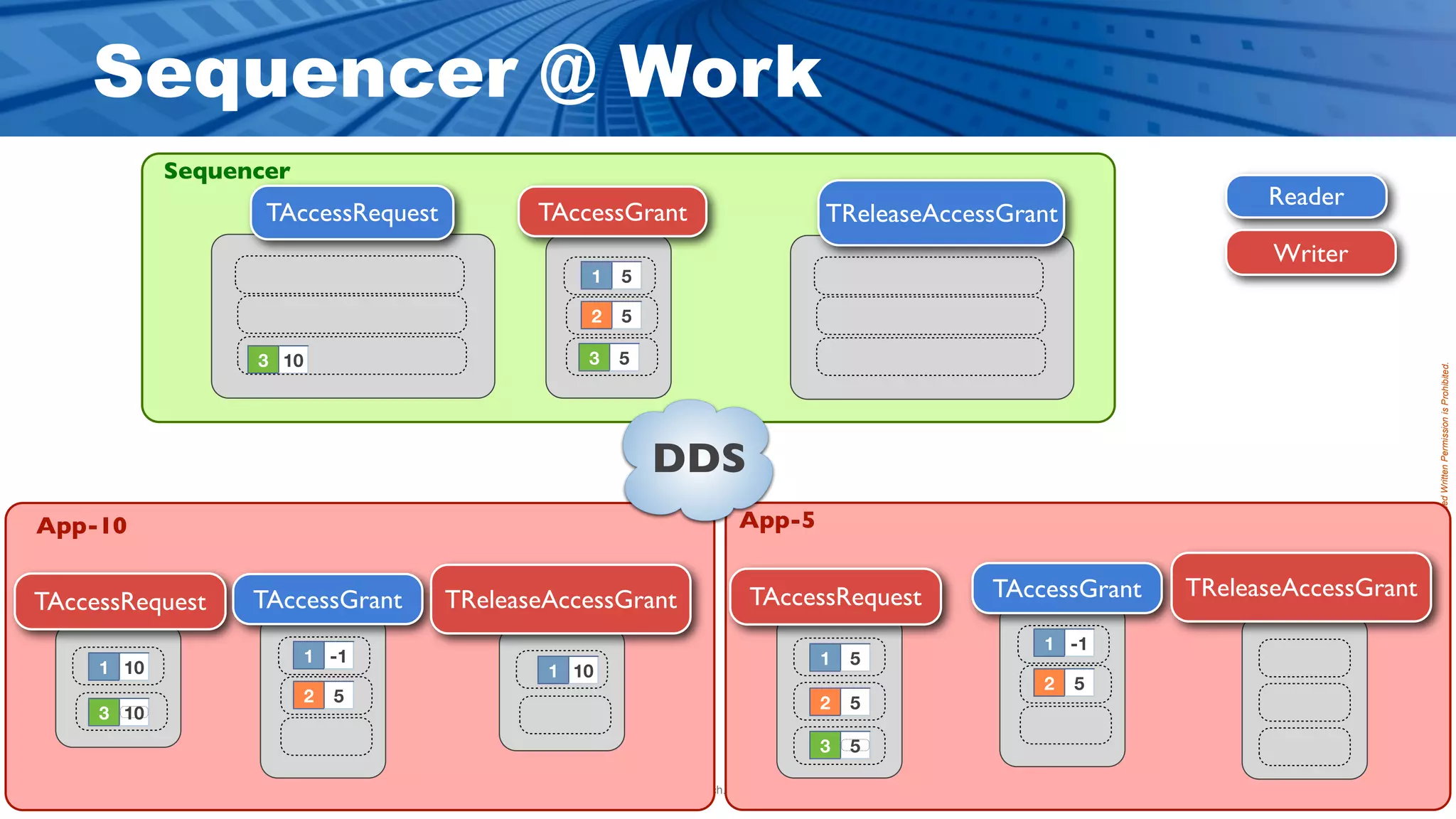
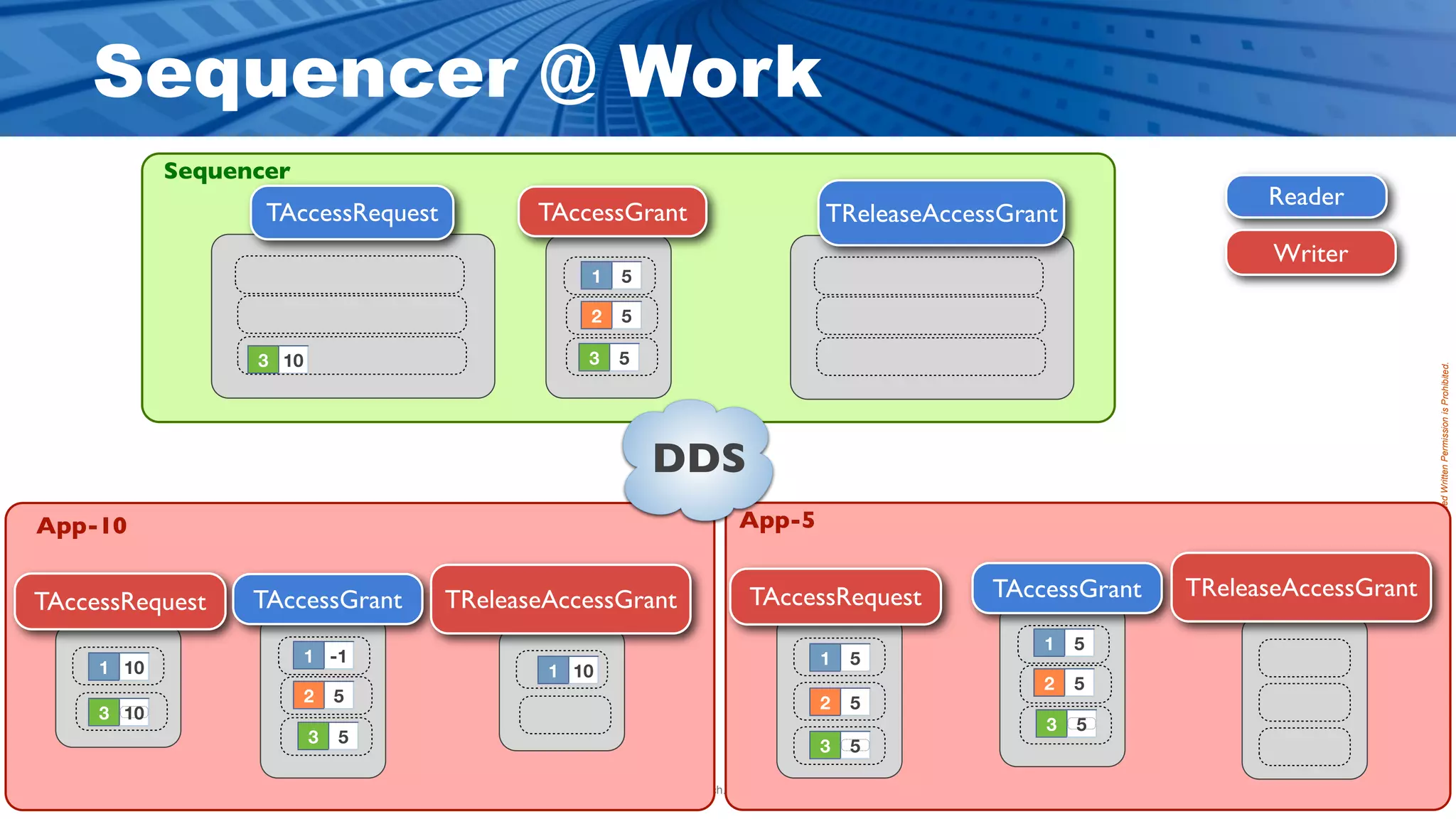
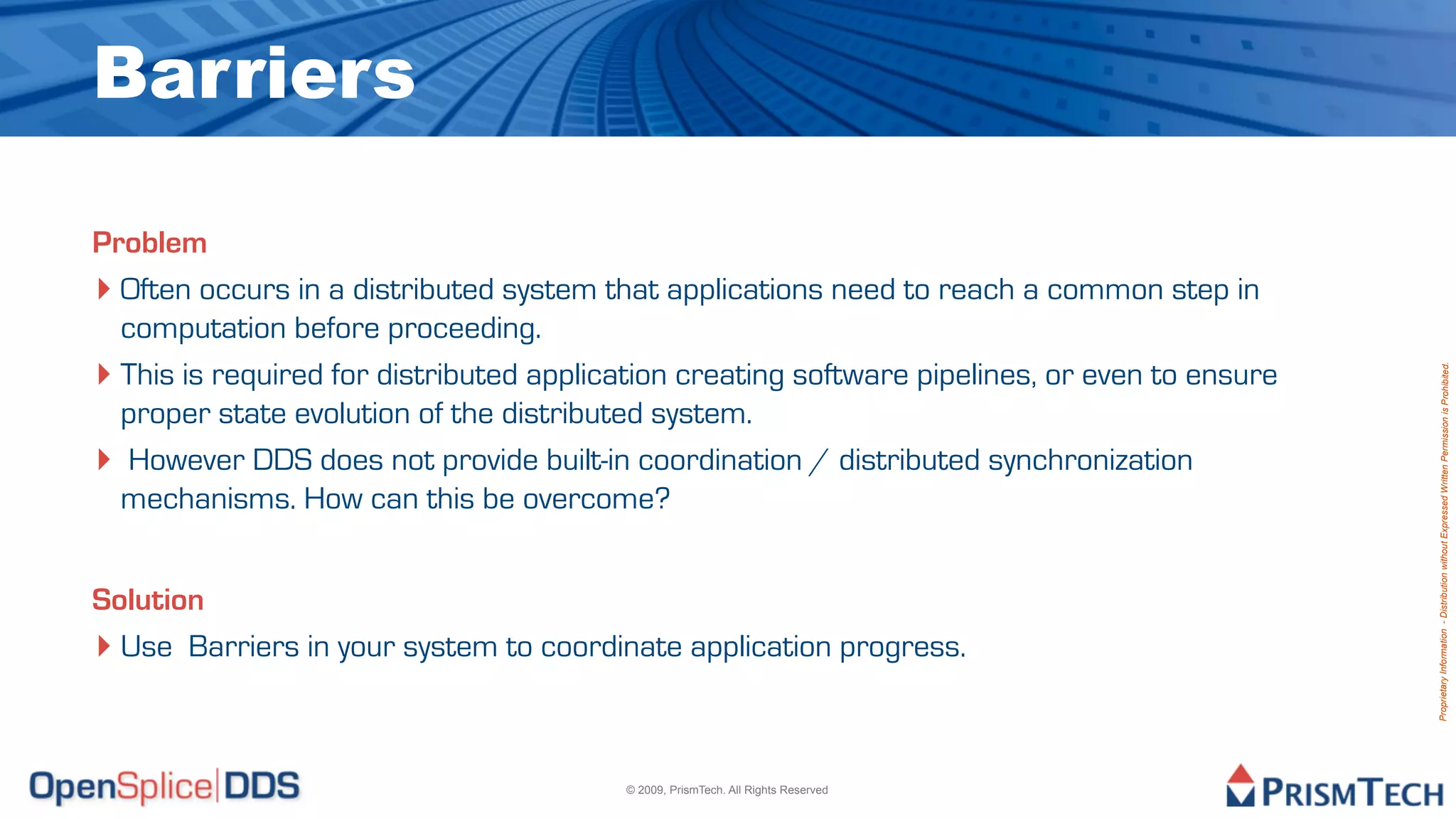
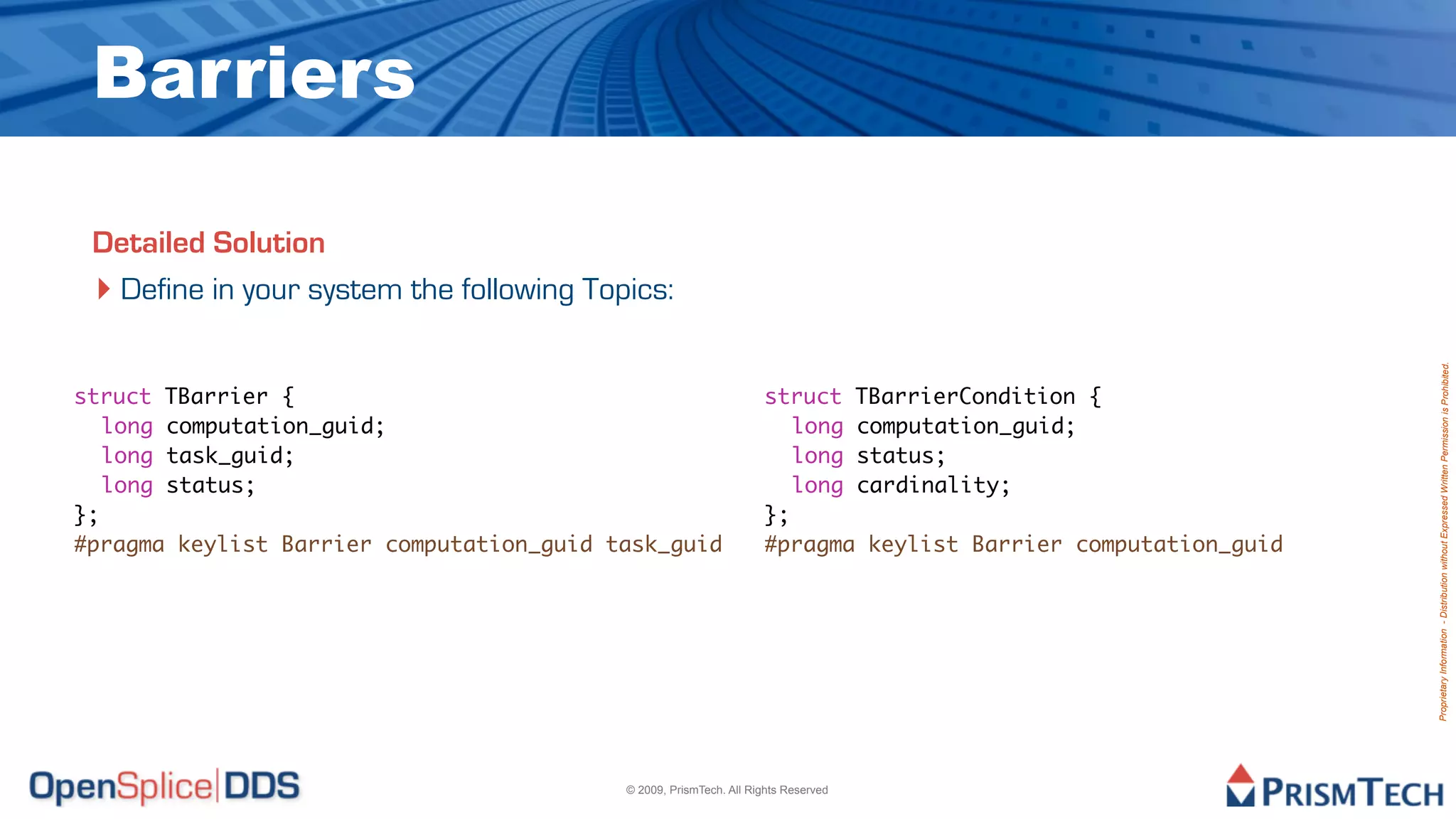
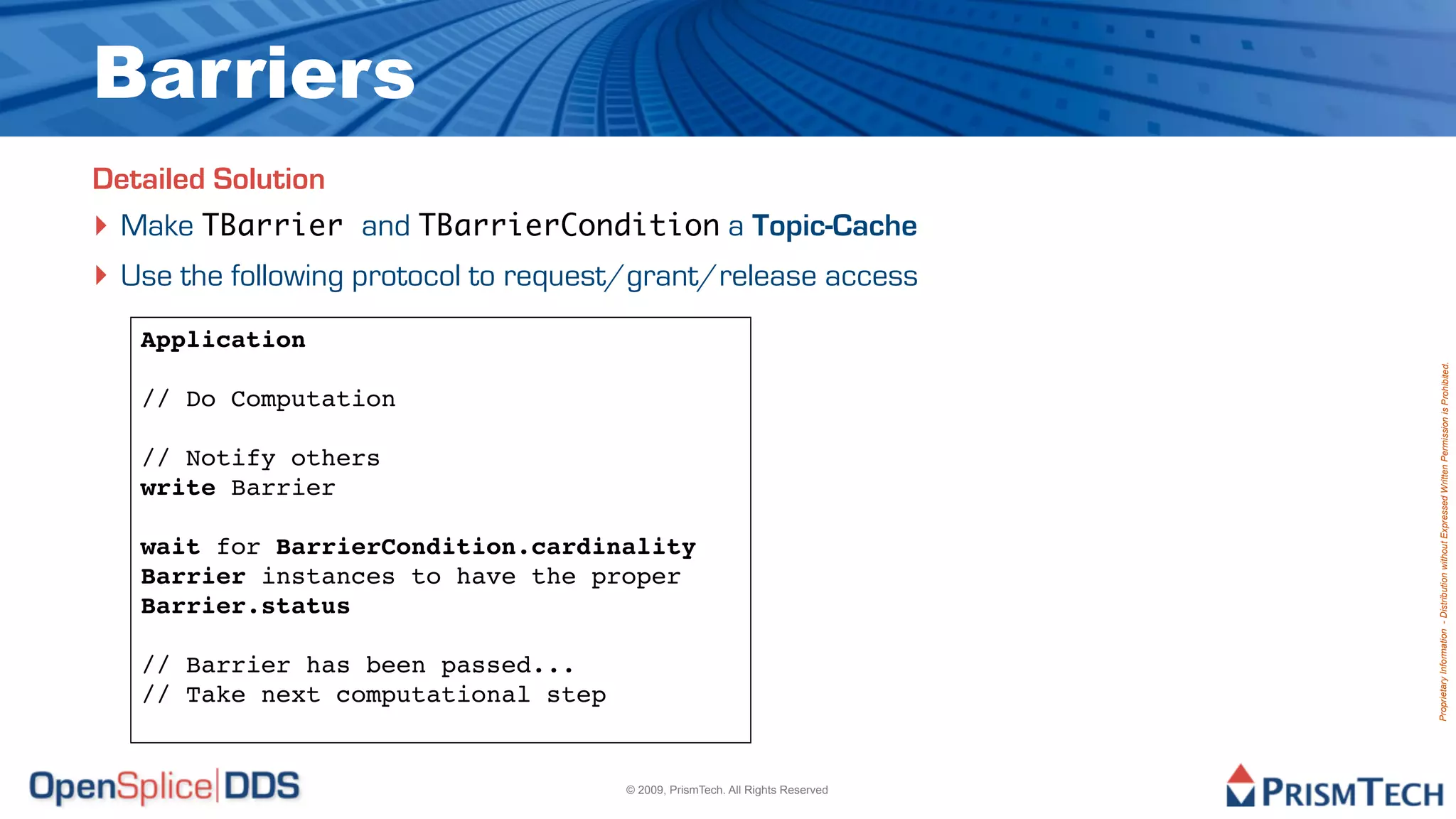
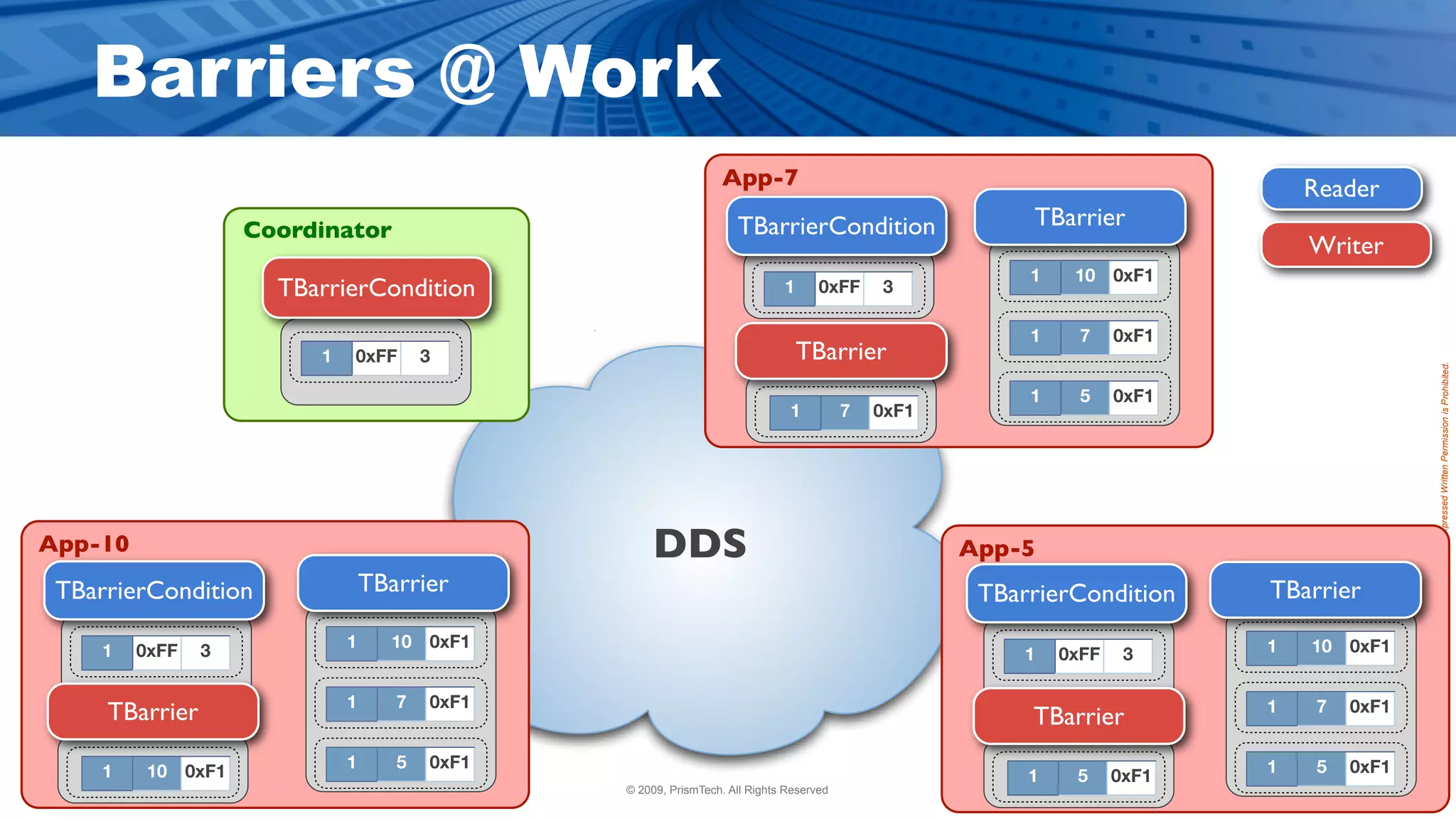
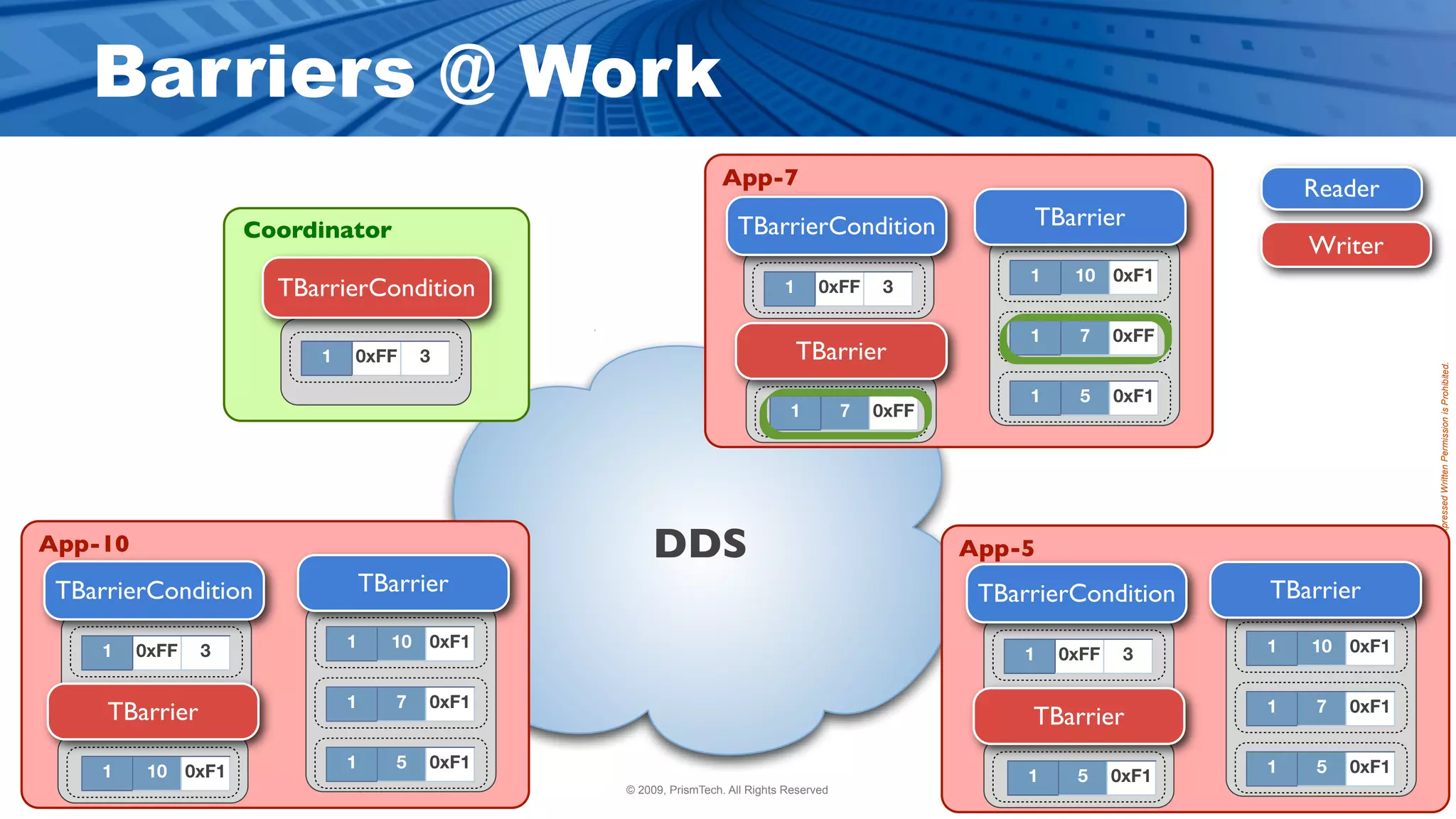
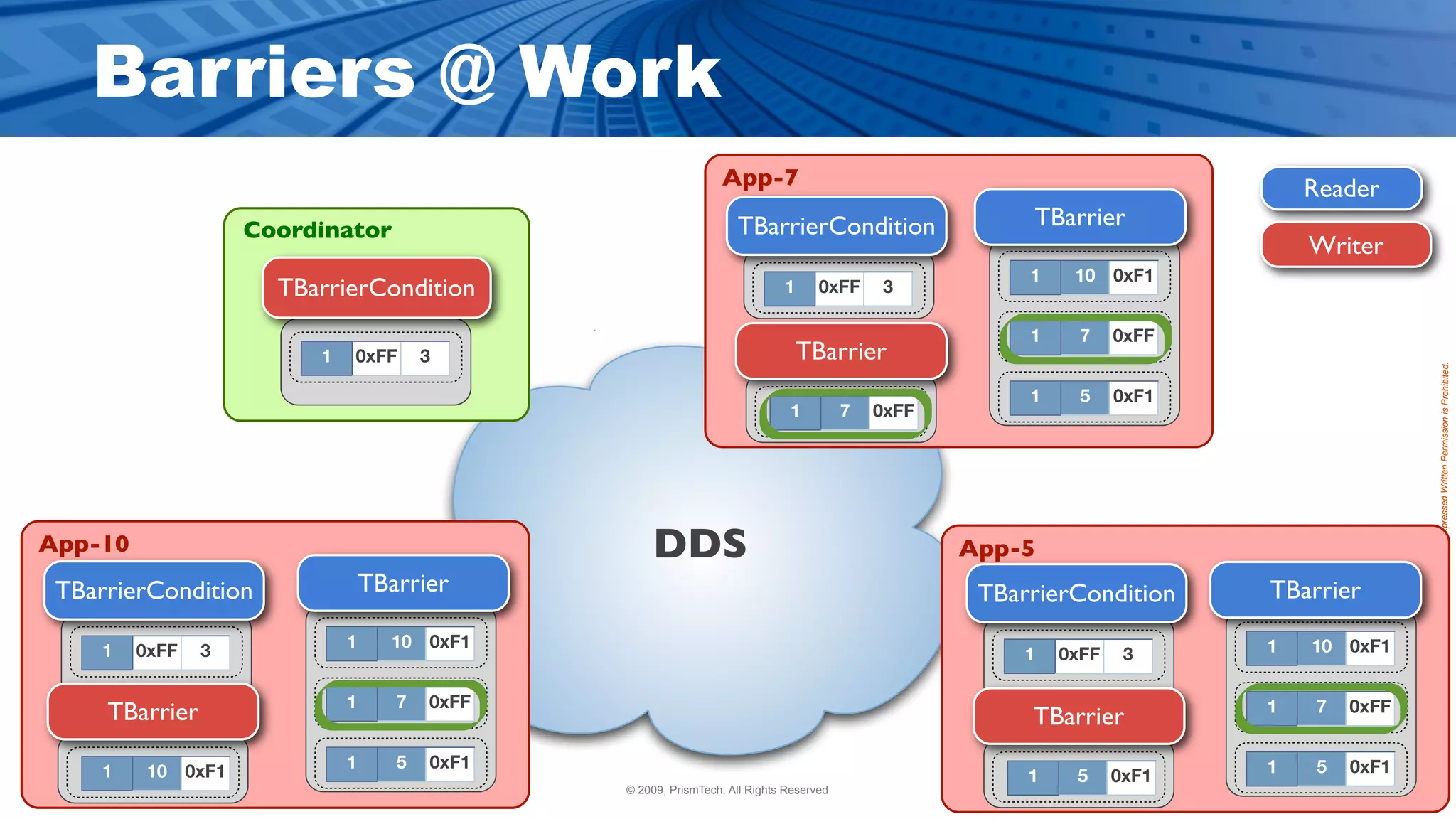
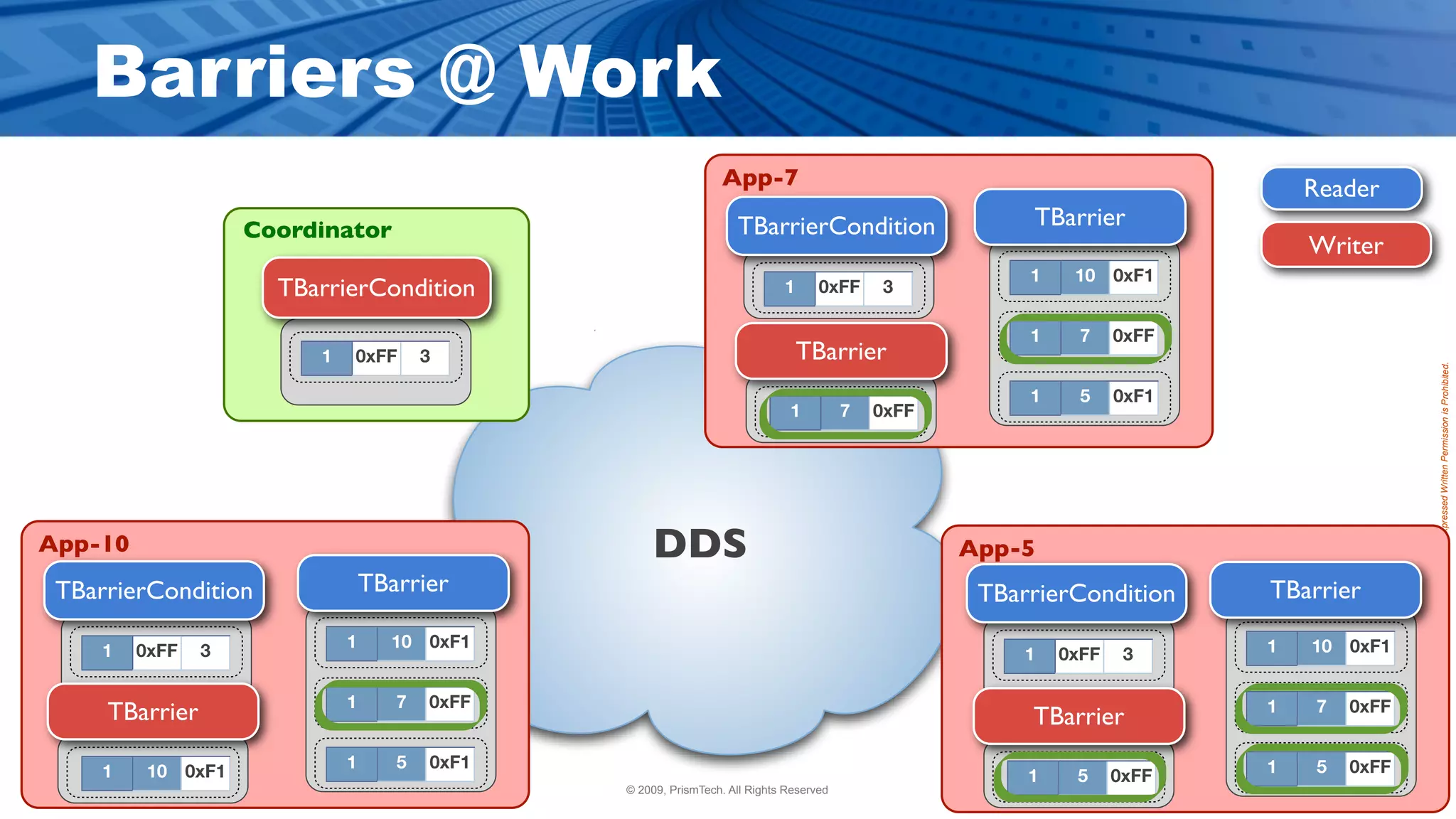
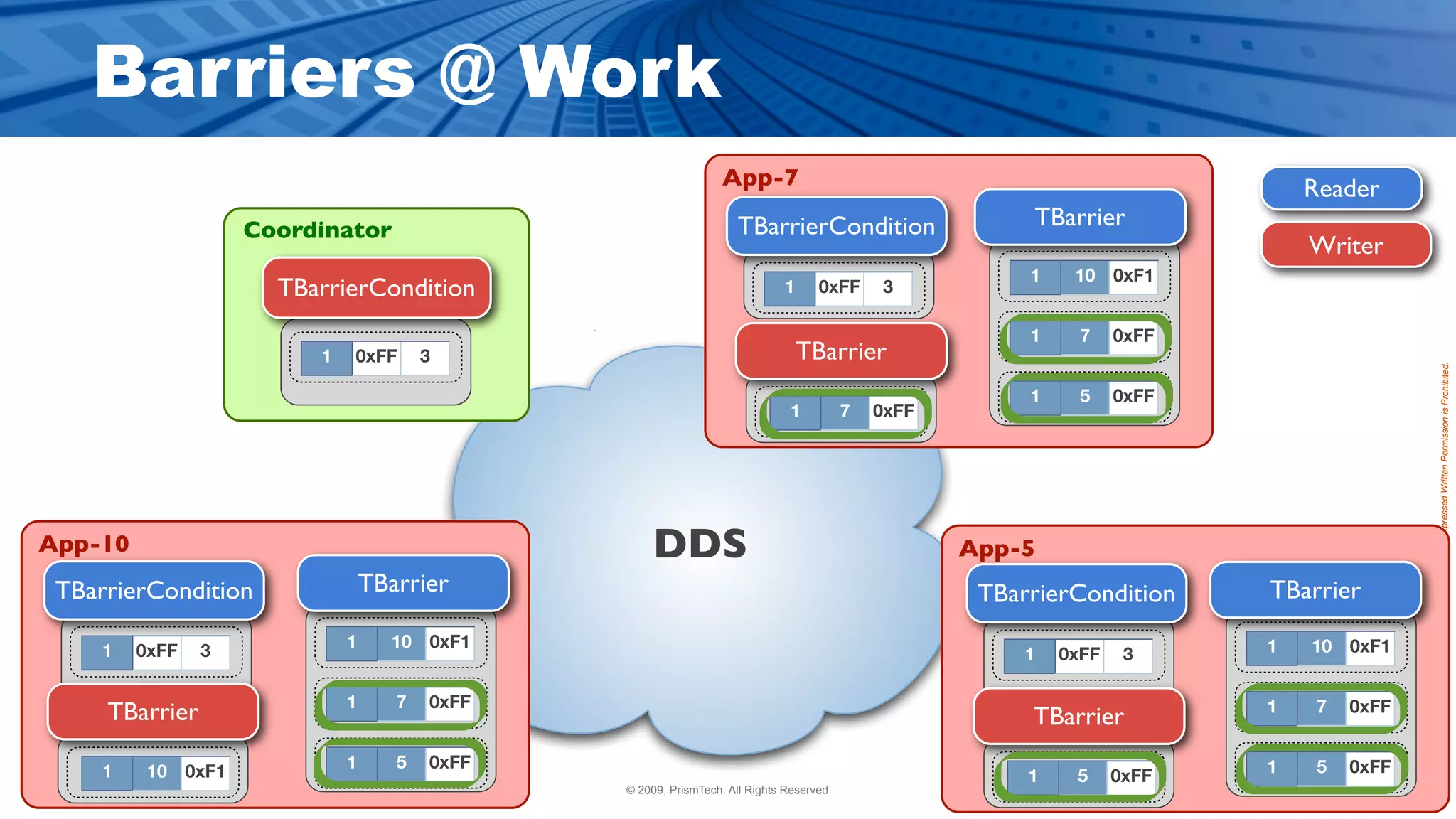
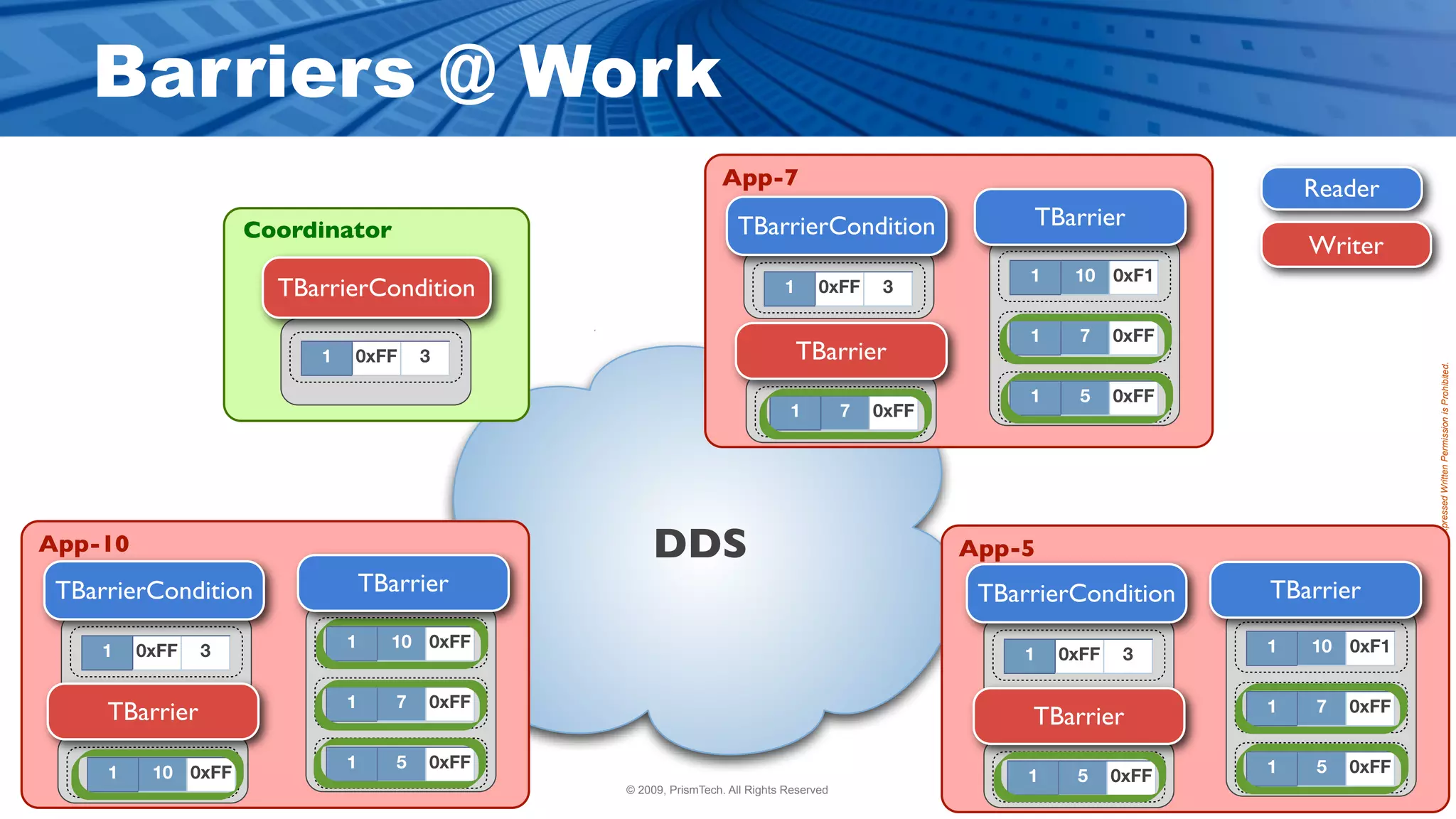
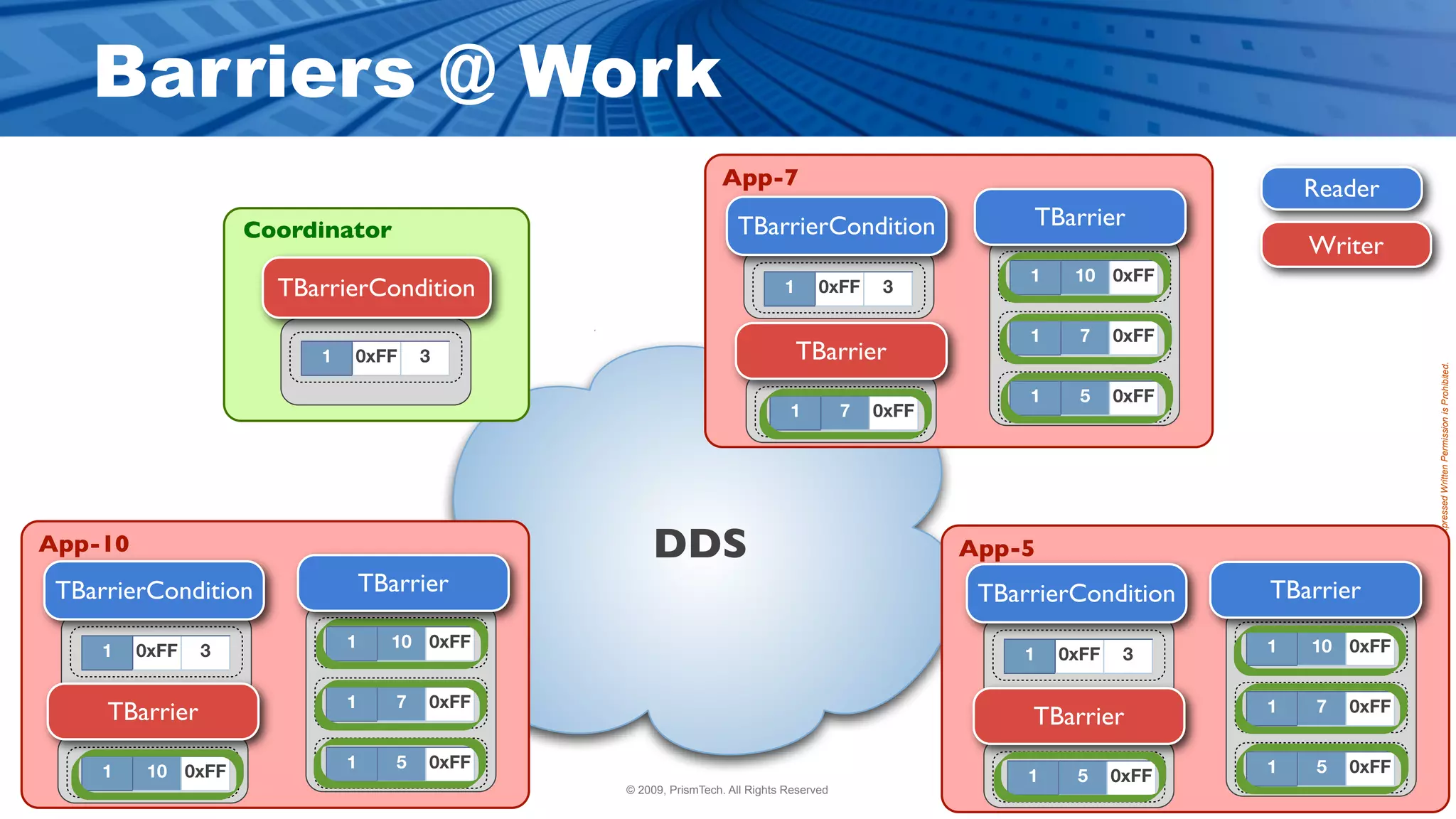
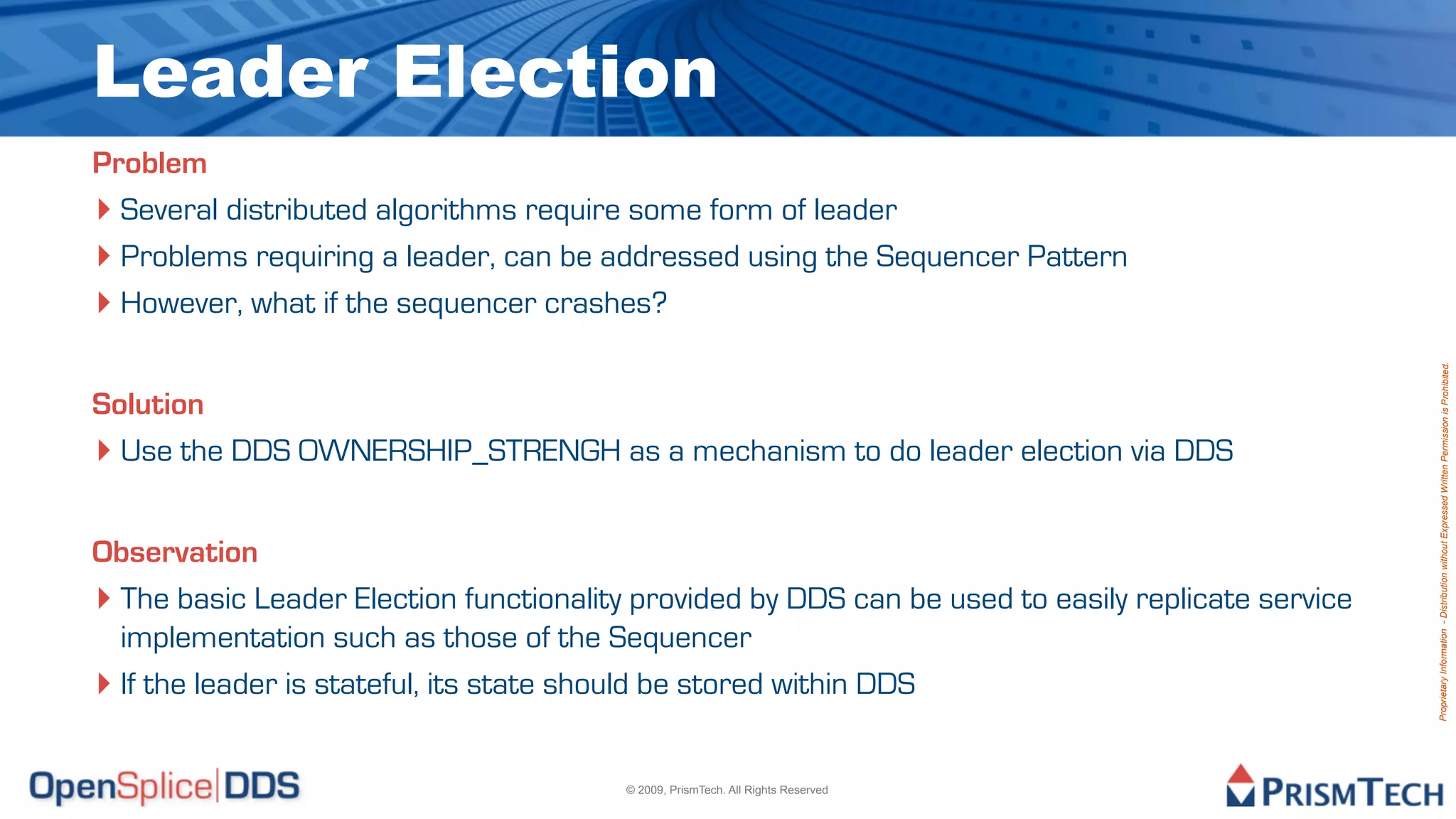
Discussion on implementing topics, sequencer patterns, and barriers for managing synchronization in distributed systems.
Discussion on implementing topics, sequencer patterns, and barriers for managing synchronization in distributed systems.


