. WOLKITE UNIVERSISTY
PEDIATRICS AND CHILD HEALTH NURSING FOR 3rd YEAR
NURSING STUDENTS
NEUROLOGIC INFECTIONS AND
DISORDERS
October 31, 2024
Wolkite, Ethiopia
BY: Agerie. A (BSc nursing, MSc in PCHN)
pediatrics nursing by Agerie. A. 1
10/31/2024
Presentation Outline
COMMON NEUROLOGIC INFECTIONS AND DISORDERS
1. Meningitis
2. Epilepsy/Seizure
10/31/2024 pediatrics nursing by Agerie. A. 2
Learning Objectives
At the end of this lesson, the students will be able to:
Discuss the definition, etiology, risk factor, pathophysiology,
classification, clinical manifestation, differential diagnosis, actual and
potential nursing diagnosis, investigation, complication and nursing and
medical treatment of the common Neurologic infections and disorders.
pediatrics nursing by Agerie. A. 3
10/31/2024
Meningitis
 Meningitis is an inflammation of the meninges that surrounds the brain and
spinal cord
• Meningitis can be caused by
– Bacteria, Viruses
– Parasites and fungi
– As well as by non-infectious causes
 Classified as aseptic, septic and tuberculosis meningitis
4
10/31/2024 pediatrics nursing by Agerie. A.
Meningitis cont…
1. Aseptic meningitis- refers either viral or other causes of meningeal
irritation (e.g. brain abscess or blood) in the subarachnoid spaces
 Viruses are the most common causes but less killer.
2. Septic meningitis- is caused by bacteria: meningococcus/ Neisseria
Meningitides, Staphylococcus or influenza bacillus.
 Bacterial meningitis is associated with significant mortality and morbidity
5
10/31/2024 pediatrics nursing by Agerie. A.
Route of infection
 Hematogenous spread
 Droplet infection through the upper airways
 Contagious spread from adjacent sites
 Direct from injury
6
10/31/2024 pediatrics nursing by Agerie. A.
A. Bacterial Meningitis
 One of the most potentially serious infections occurring in infants and older children
 The inflammation is caused by a bacterial infection and can be life-threatening
 Also known septic/pyogenic meningitis
 Outcome varies according to M. organism, age and immune status
 Mortality rate as high as 50% if untreated
 Long-term effects
 Meningococcal meningitis can lead to profound shock and death
7
10/31/2024 pediatrics nursing by Agerie. A.
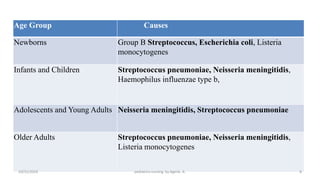
Age Group Causes
Newborns Group B Streptococcus, Escherichia coli, Listeria
monocytogenes
Infants and Children Streptococcus pneumoniae, Neisseria meningitidis,
Haemophilus influenzae type b,
Adolescents and Young Adults Neisseria meningitidis, Streptococcus pneumoniae
Older Adults Streptococcus pneumoniae, Neisseria meningitidis,
Listeria monocytogenes
8
10/31/2024 pediatrics nursing by Agerie. A.
Risk factors for meningitis
 Lack of immunity to specific pathogens associated with
young age
 Recent colonization with pathogenic bacteria
 Close contact with individuals having disease
 Crowding/poverty
 Black race and Male gender
 Un vaccinated children
9
10/31/2024 pediatrics nursing by Agerie. A.
Mode of transmission
 Person to person through respiratory tract secretions
or droplets
 Direct inoculation of Mos via injury
10
10/31/2024 pediatrics nursing by Agerie. A.
C/Ms of meningitis
 Has Two Predominant Patterns.
1. Less common but dramatic presentation:
 Sudden onset with rapidly progressive manifestations of shock,
purpura, disseminated intravascular coagulation (DIC), and
reduced level of consciousness often progress to coma or death within
24 hr.
11
10/31/2024 pediatrics nursing by Agerie. A.
C/Ms of meningitis cont…
2. More often, meningitis is preceded by several days of fever
accompanied by URT or GI Symptoms, followed by
nonspecific signs of CNS infection lethargy & irritability.
12
10/31/2024 pediatrics nursing by Agerie. A.
C/Ms of meningitis cont…
C/Ms are depend on the age of the patient
 Nonspecific S/S associated with a systemic infection:
• Headache
• Fever
• anorexia
• symptoms of URTI
• Myalgias
• Tachycardia
• Hypotension
13
10/31/2024 pediatrics nursing by Agerie. A.
C/Ms of meningitis cont…
 Manifestations of meningeal irritation
 Nuchal rigidity/neck stiffness
 Back pain
 Seizures (focal or generalized)
 Photophobia (fear of bright light)
 Phonophobia (fear of loud sound)
14
10/31/2024 pediatrics nursing by Agerie. A.
Manifestations of Meningeal irritation cont..
 Kernig sign
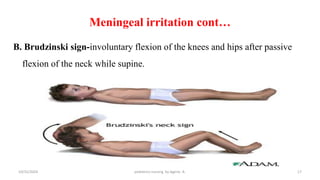
 Brudzinski sign
 Alterations of mental status
 Increased ICP(headache, emesis, bulging fontanel or diastasis
(widening of the sutures)
15
10/31/2024 pediatrics nursing by Agerie. A.
Meningeal irritation cont..
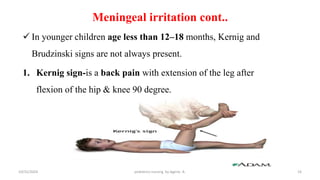
 In younger children age less than 12–18 months, Kernig and
Brudzinski signs are not always present.
1. Kernig sign-is a back pain with extension of the leg after
flexion of the hip & knee 90 degree.
16
10/31/2024 pediatrics nursing by Agerie. A.
Meningeal irritation cont…
B. Brudzinski sign-involuntary flexion of the knees and hips after passive
flexion of the neck while supine.
17
10/31/2024 pediatrics nursing by Agerie. A.
Investigations
• Investigations for patients with meningitis include:
– CBC and ESR
– Serum electrolyte and organ function tests.
– lumbar puncture for CSF
 Clinical presentation-Meningitis is suspected clinically but
confirmed by lumbar puncture.
18
10/31/2024 pediatrics nursing by Agerie. A.
On CSF analysis,
• Color of CSF becomes cloudy
• Increased WBCs in the CSF which is neutrophil
predominant ,
• Decreased glucose in CSF ,
• Increased protein in CSF
• Gram stain and culture can also be positive.
19
10/31/2024 pediatrics nursing by Agerie. A.
Contraindications for LP
1. Evidence of increased ICP such as cranial nerve palsy with a depressed level of
consciousness, hypertension and bradycardia.
2. Severe cardiopulmonary compromise(shock).
3. Skin infection overlying the site of the LP.
4. Thrombocytopenia is a relative contraindication for LP.
20
10/31/2024 pediatrics nursing by Agerie. A.
Differential Diagnosis
 Infection:
1. Generalized infection of the CNS
Bacteria [Tb meningitis, Syphilis]
Fungi [Histoplasma ,Candida…]
Viruses [Enteroviruses , HSV]
2. Focal infections of the CNS
Brain abscess, Para meningeal abscess
 Non infectious diseases:
Malignancy, toxins
21
10/31/2024 pediatrics nursing by Agerie. A.
Treatment
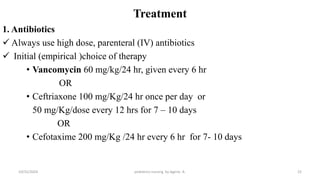
1. Antibiotics
 Always use high dose, parenteral (IV) antibiotics
 Initial (empirical )choice of therapy
• Vancomycin 60 mg/kg/24 hr, given every 6 hr
OR
• Ceftriaxone 100 mg/Kg/24 hr once per day or
50 mg/Kg/dose every 12 hrs for 7 – 10 days
OR
• Cefotaxime 200 mg/Kg /24 hr every 6 hr for 7- 10 days
22
10/31/2024 pediatrics nursing by Agerie. A.
Treatment cont…
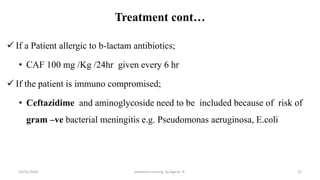
 If a Patient allergic to b-lactam antibiotics;
• CAF 100 mg /Kg /24hr given every 6 hr
 If the patient is immuno compromised;
• Ceftazidime and aminoglycoside need to be included because of risk of
gram –ve bacterial meningitis e.g. Pseudomonas aeruginosa, E.coli
23
10/31/2024 pediatrics nursing by Agerie. A.
Rx For how long?
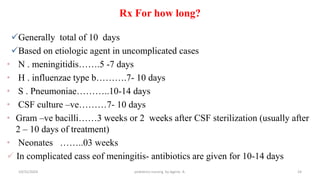
Generally total of 10 days
Based on etiologic agent in uncomplicated cases
• N . meningitidis…….5 -7 days
• H . influenzae type b……….7- 10 days
• S . Pneumoniae………..10-14 days
• CSF culture –ve………7- 10 days
• Gram –ve bacilli……3 weeks or 2 weeks after CSF sterilization (usually after
2 – 10 days of treatment)
• Neonates ……..03 weeks
 In complicated cass eof meningitis- antibiotics are given for 10-14 days
24
10/31/2024 pediatrics nursing by Agerie. A.
Treatment cont…
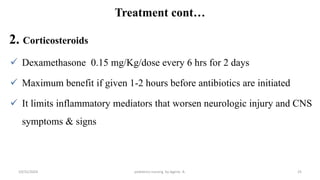
2. Corticosteroids
 Dexamethasone 0.15 mg/Kg/dose every 6 hrs for 2 days
 Maximum benefit if given 1-2 hours before antibiotics are initiated
 It limits inflammatory mediators that worsen neurologic injury and CNS
symptoms & signs
25
10/31/2024 pediatrics nursing by Agerie. A.
Nursing Care Management
 Evaluating the child for pain and implementing appropriate relief measures are
important during the initial 24 to 72 hours.
 Keep the room as quiet as possible, and keep environmental stimuli at a minimum
 The nurse should avoid actions that cause pain or increase discomfort,
 Assess early signs of CVS, and metabolic complications.
 Neurologic assessment such as:-
Pupillary reflexes,
Level of conciseness,
Motor strength,
Breathing pattern, and
Evaluation for seizures,
26
10/31/2024 pediatrics nursing by Agerie. A.
Cont…
V/S should be monitored frequently.
Patients should initially kept NPO
Careful monitoring and recording of intake and output
IV Fluid therapy
 If a patient is normovolemic (normal BP), IV fluid should be restricted.
 The goal of such therapy is to avoid increase in ICP without compromising blood flow and
oxygen delivery to vital organs.
Seizure control
Family support
27
10/31/2024 pediatrics nursing by Agerie. A.
B. Nonbacterial (Aseptic) Meningitis
• The term aseptic meningitis refers to the onset of meningeal symptom without
bacterial growth from CSF cultures.
• Aseptic meningitis is caused by many different viruses
• Enterovirus most common
• The onset may be abrupt or gradual, and many of the presenting signs and symptoms
are the same as bacterial meningitis.
• The clinical course of viral meningitis is much shorter and typically without any
significant complications
10/31/2024 pediatrics nursing by Agerie. A. 28
B. Nonbacterial (Aseptic) Meningitis
 Lower morbidity/mortality rate
 Self-limiting
 Diagnosis is based on clinical features and CSF findings.
 Treatment is primarily symptomatic, such as analgesics for headache and muscle pain,
maintenance of hydration, rest, antipyretics and positioning for comfort.
 Nursing care is similar to the care of the child with bacterial meningitis.
10/31/2024 pediatrics nursing by Agerie. A. 29
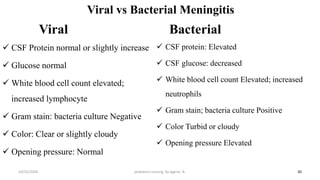
Viral vs Bacterial Meningitis
Viral
 CSF Protein normal or slightly increase
 Glucose normal
 White blood cell count elevated;
increased lymphocyte
 Gram stain: bacteria culture Negative
 Color: Clear or slightly cloudy
 Opening pressure: Normal
Bacterial
 CSF protein: Elevated
 CSF glucose: decreased
 White blood cell count Elevated; increased
neutrophils
 Gram stain; bacteria culture Positive
 Color Turbid or cloudy
 Opening pressure Elevated
30
10/31/2024 pediatrics nursing by Agerie. A.
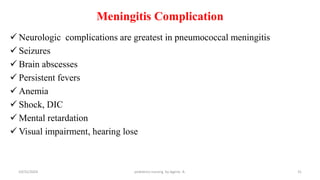
Meningitis Complication
 Neurologic complications are greatest in pneumococcal meningitis
 Seizures
 Brain abscesses
 Persistent fevers
 Anemia
 Shock, DIC
 Mental retardation
 Visual impairment, hearing lose
31
10/31/2024 pediatrics nursing by Agerie. A.
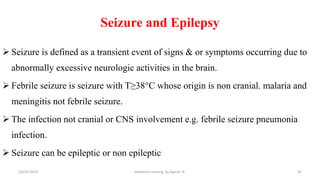
Seizure and Epilepsy
 Seizure is defined as a transient event of signs & or symptoms occurring due to
abnormally excessive neurologic activities in the brain.
 Febrile seizure is seizure with T≥38°C whose origin is non cranial. malaria and
meningitis not febrile seizure.
 The infection not cranial or CNS involvement e.g. febrile seizure pneumonia
infection.
 Seizure can be epileptic or non epileptic
10/31/2024 pediatrics nursing by Agerie. A. 32
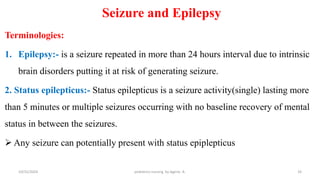
Seizure and Epilepsy
Terminologies:
1. Epilepsy:- is a seizure repeated in more than 24 hours interval due to intrinsic
brain disorders putting it at risk of generating seizure.
2. Status epilepticus:- Status epilepticus is a seizure activity(single) lasting more
than 5 minutes or multiple seizures occurring with no baseline recovery of mental
status in between the seizures.
 Any seizure can potentially present with status epiplepticus
33
10/31/2024 pediatrics nursing by Agerie. A.
3. Aura:- is A brief sensory experience of seizure/epilepsy
Example: a feeling of weakness, dizziness, strange sensations in an arm or leg &
numbness, that occur before the onset of some seizures.
4. Epileptic cry:- is a cry occurring in some seizure caused by a thoracic &
abdominal spasm.
5. Ictal :- refers to the time of a seizure during which client usually experiences
unconsciousness behavior or activity.
6. Post- Ictal :- refers to the time immediately after a seizure during which client
usually experiences some changes in consciousness, behavior or activity. 34
10/31/2024 pediatrics nursing by Agerie. A.
Pathophysiology
• In the brain, our neurons are tasked with handling and transmitting information. There are two types of
neurons. excitatory and inhibitory neurons.
• Excitatory neurons produce “an action” or cause “excitement” by releasing a neurotransmitter
called glutamate , this is an excitatory neurotransmitter.
• Inhibitory neurons “stop an action” or cause inhibition by releasing an inhibitory neurotransmitter
called GABA.
• If there is an imbalance of excitatory neurons vs. inhibitory neurons seizures will occur. For example,
if there is not enough GABA being released, too much excitation will occur leading to seizure activity.
• Seizures occur from a malfunction of hypersensitive neurons in the cerebral cortex & the
limbic centers in the hippocampus.
10/31/2024 pediatrics nursing by Agerie. A. 35
Classification of Epileptic Seizure
The International League Against Epilepsy (ILAE) operationally classified
epileptic seizure into 4 categories.
1. Generalized seizure
2. Focal onset seizure (Partial seizure)
3. Unclassified seizures
4. Unknown onset seizures
36
10/31/2024 pediatrics nursing by Agerie. A.
I. Generalized seizure
 Generalized seizure is the first clinical and EEG changes indicate
synchronous involvement of all of both hemispheres.
37
10/31/2024 pediatrics nursing by Agerie. A.
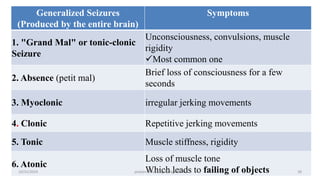
Generalized Seizures
(Produced by the entire brain)
Symptoms
1. "Grand Mal" or tonic-clonic
Seizure
Unconsciousness, convulsions, muscle
rigidity
Most common one
2. Absence (petit mal)
Brief loss of consciousness for a few
seconds
3. Myoclonic irregular jerking movements
4. Clonic Repetitive jerking movements
5. Tonic Muscle stiffness, rigidity
6. Atonic
Loss of muscle tone
Which leads to failing of objects 38
10/31/2024 pediatrics nursing by Agerie. A.
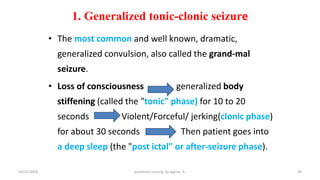
• The most common and well known, dramatic,
generalized convulsion, also called the grand-mal
seizure.
• Loss of consciousness generalized body
stiffening (called the "tonic" phase) for 10 to 20
seconds Violent/Forceful/ jerking(clonic phase)
for about 30 seconds Then patient goes into
a deep sleep (the "post ictal" or after-seizure phase).
1. Generalized tonic-clonic seizure
39
10/31/2024 pediatrics nursing by Agerie. A.
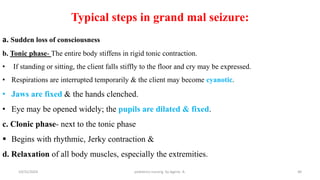
a. Sudden loss of consciousness
b. Tonic phase- The entire body stiffens in rigid tonic contraction.
• If standing or sitting, the client falls stiffly to the floor and cry may be expressed.
• Respirations are interrupted temporarily & the client may become cyanotic.
• Jaws are fixed & the hands clenched.
• Eye may be opened widely; the pupils are dilated & fixed.
c. Clonic phase- next to the tonic phase
 Begins with rhythmic, Jerky contraction &
d. Relaxation of all body muscles, especially the extremities.
Typical steps in grand mal seizure:
40
10/31/2024 pediatrics nursing by Agerie. A.
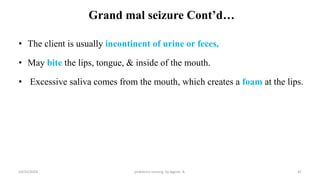
Grand mal seizure Cont’d…
• The client is usually incontinent of urine or feces,
• May bite the lips, tongue, & inside of the mouth.
• Excessive saliva comes from the mouth, which creates a foam at the lips.
41
10/31/2024 pediatrics nursing by Agerie. A.
 Usually start at 5-8 year of age
 They do not have an aura
 Usually last for only a few seconds (loss of consciousness for few seconds ) i.e.
 “blanking out” or staring into space for short periods
• The child interrupts an activity and stares blankly.
• These seizures begin and end immediately and may occur several times a day.
 Do not have a postictal period
2. Absence seizures
42
10/31/2024 pediatrics nursing by Agerie. A.
3. Myoclonic seizures
 Characterized by short duration(extremely brief <0.1seconds) of muscle
contraction
 Rapid, bilaterally symmetric muscle contractions
 The Patient may describe the jerks as brief electrical shocks.
4. Clonic seizures
 Consist of rhythmic, fast muscle contractions and slightly longer relaxations;
43
10/31/2024 pediatrics nursing by Agerie. A.
5. Tonic seizures
 Are characterized by increased tone or rigidity (usually lasting 2 sec up to
several minutes)
6. Atonic seizures
 Are characterized by flaccidity and lack of movement.
 A sudden and general loss of muscle tone, particularly in the arms and legs,
which often results in a fall of objects from hands.
44
10/31/2024 pediatrics nursing by Agerie. A.
II. Focal onset seizure
 Focal onset seizure is the first clinical and electroencephalographic (EEG)
changes suggest initial activation of a system of neurons limited to part of one
cerebral hemisphere.
 Focal seizures can be described as motor or non-motor seizures.
 Further characterized by preserved or impaired consciousness,
A. Focal aware seizure:- (previously called simple partial seizures ), in which
consciousness is not impaired,
45
10/31/2024 pediatrics nursing by Agerie. A.
B. Focal seizures with impaired awareness
• Focal seizures with impaired awareness (previously called complex partial
seizures ), in which consciousness is affected.
• Last 1-2 min and are often preceded by an aura
• With an alteration of consciousness
• Seizures often begin with a motionless stare or arrest of activity.
46
10/31/2024 pediatrics nursing by Agerie. A.
C. Generalization Descriptor
• Previously called secondary generalized seizure
• Start as simple or complex partial seizures with subsequent clinical generalization
• Mostly such seizures last 1-2 min
 Clinical Manifestations:
 Tongue biting,
 urinary and stool incontinence,
 vomiting with risk of aspiration
47
10/31/2024 pediatrics nursing by Agerie. A.
III. Unclassified seizures
A. Neonatal Seizures
1) Subtle Seizures :-These are the most common type in neonates, often hard to
recognize due to the lack of distinct movements.
 Symptoms may include:-
 Eye deviation (often to one side)
 Chewing or sucking movements
 Lip smacking
 Brief, irregular respiratory changes
 Apnea (breathing cessation)
48
10/31/2024 pediatrics nursing by Agerie. A.
Neonatal Seizures cont…
2) Clonic Seizures
 Characterized by rhythmic jerking movements, which can be:
 Focal clonic
 Affecting one limb or one side of the body, with repetitive, slow movements.
 Multifocal clonic
 Jerking in multiple areas that can shift from one limb or side of the body to another,
 Multifocal are migratory in nature
49
10/31/2024 pediatrics nursing by Agerie. A.
Neonatal Seizures cont…
3) Tonic Seizures :-These seizures involve sustained, rigid posturing of limbs or body. Can be
focal or generalized
 Focal tonic seizures:
 Affecting one limb or part of the body.
 Include persistent posturing of a limb or posturing of trunk or neck in an asymmetric way
often with persistent horizontal eye deviation
 Cannot be provoked by stimulation or suppressed by restraint
 Generalized tonic seizures:
 Involving the entire body, often seen as stiffness in the whole body.
 Include bilateral tonic limb extensions or tonic flexions of the upper extremities often
associated with tonic extension of the lower extremities and trunk.
 May be provoked or intensified by stimulation
50
10/31/2024 pediatrics nursing by Agerie. A.
Neonatal Seizures cont…
4) Myoclonic Seizures :-
 Brief, sudden, and shock-like muscle contractions.
 May be provoked by stimulation
 They are less common and can be:
 Focal myoclonic: Affecting one part of the body.
 Multifocal myoclonic: Involving multiple parts of the body.
 Generalized myoclonic: Affecting the whole body.
51
10/31/2024 pediatrics nursing by Agerie. A.
Causes of Neonatal Seizures
 Neonatal seizures can be caused by various conditions, including:
 Hypoxic-ischemic encephalopathy (HIE): Due to lack of oxygen during birth.
 Infections: Such as meningitis or encephalitis.
 Intracranial hemorrhage: Bleeding in the brain.
 Metabolic disorders: Hypoglycemia, hypocalcemia, or electrolyte imbalances.
 Genetic disorders: Certain syndromes or metabolic genetic diseases.
 Structural brain abnormalities: Such as brain malformations or strokes.
 Recognizing and promptly treating the underlying cause of neonatal seizures is critical to
minimize long-term neurological damage and improve outcomes.
10/31/2024 pediatrics nursing by Agerie. A. 52
B. Infantile spasms
• Are sudden generalized jerks lasting 1-2 sec.
• distinguished from generalized tonic spells by their shorter duration
• As peak activity is reached, hundreds of spasms may occur in a 24-hour period
• Usually involve the muscles of the neck, trunk, and extremities
53
10/31/2024 pediatrics nursing by Agerie. A.
Infantile spasms cont…
• Flexor spasms -sudden flexion of the neck, trunk, arms, and legs, and
contraction of the abdominal muscles
• Extensor spasms —abrupt extension of the neck and trunk, with abduction or
adduction of the arms or legs
• Mixed spasms —Mixture of flexor-extensor spasms
54
10/31/2024 pediatrics nursing by Agerie. A.
Treatment of Infantile Spasm
• Is best treated with adrenocorticotropic hormone (ACTH)
• ACTH is gradually tapered over the next 9 weeks
• Predinsolone 2mg/kg (anti inflammatory)
55
10/31/2024 pediatrics nursing by Agerie. A.
IV Unknown onset seizure
 Unknown onset seizure is there is not enough clinical information
available to determine if the seizure is focal or generalized.
10/31/2024 pediatrics nursing by Agerie. A. 56
Diagnostic modalities of seizure
• Random blood sugar,
• Lumbar puncture
• Metabolic study (Urine for quantitative organic acids)
• Complete blood count , Electrolyte
• Renal function test, Liver function test
• Electroencephalogram(EEG), MRI, CT scan
57
10/31/2024 pediatrics nursing by Agerie. A.
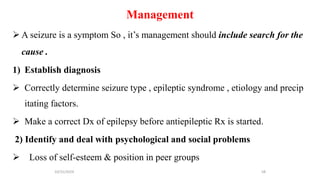
Management
 A seizure is a symptom So , it’s management should include search for the
cause .
1) Establish diagnosis
 Correctly determine seizure type , epileptic syndrome , etiology and precip
itating factors.
 Make a correct Dx of epilepsy before antiepileptic Rx is started.
2) Identify and deal with psychological and social problems
 Loss of self-esteem & position in peer groups
10/31/2024 58
Cont…
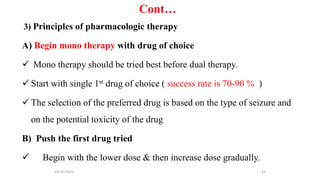
3) Principles of pharmacologic therapy
A) Begin mono therapy with drug of choice
 Mono therapy should be tried best before dual therapy.
 Start with single 1st drug of choice ( success rate is 70-90 % )
 The selection of the preferred drug is based on the type of seizure and
on the potential toxicity of the drug
B) Push the first drug tried
 Begin with the lower dose & then increase dose gradually.
10/31/2024 59
C. Add or change additional drugs
D. If the first drug of choice fails to control seizure (dose dependent side effects appear or max
imal dose is reached) , change or add medication
• If mono therapy fails , combine the two best working drugs already tried (Dual therapy)
• Poor compliance with therapy is the most common reason for poor control of seizures or re
currences.
• Cautious in using valproate in preschool children because of the increased risk of liver da
mage.
N.B. Use maximum of 3 drugs.
 Surgical therapy may be considered in children with medically intractable epilepsy
10/31/2024 60
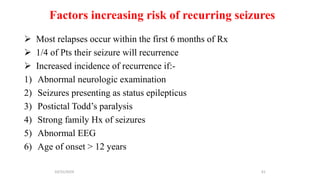
Factors increasing risk of recurring seizures
 Most relapses occur within the first 6 months of Rx
 1/4 of Pts their seizure will recurrence
 Increased incidence of recurrence if:-
1) Abnormal neurologic examination
2) Seizures presenting as status epilepticus
3) Postictal Todd’s paralysis
4) Strong family Hx of seizures
5) Abnormal EEG
6) Age of onset > 12 years
10/31/2024 61
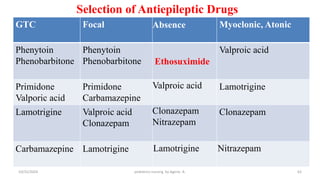
Selection of Antiepileptic Drugs
GTC Focal Absence Myoclonic, Atonic
Phenytoin
Phenobarbitone
Phenytoin
Phenobarbitone Ethosuximide
Valproic acid
Primidone
Valporic acid
Primidone
Carbamazepine
Valproic acid Lamotrigine
Lamotrigine Valproic acid
Clonazepam
Clonazepam
Nitrazepam
Clonazepam
Carbamazepine Lamotrigine Lamotrigine Nitrazepam
62
10/31/2024 pediatrics nursing by Agerie. A.
When to withdraw AED?
 Antiepileptic drug therapy should be maintained
for a minimum of 2 seizure-free years for a patient with no risk factors .
 Drugs should be withdrawn slowly .
 Rapid tapering of therapy precipitates seizures
 Special caution is required when discontinuing benzodiazepines (especial
ly clonazepam) and barbiturates (e.g. phenobarbital ) .
63
10/31/2024 pediatrics nursing by Agerie. A.
Medically intractable epilepsy
- Many cases of so-called “intractable” epilepsy are caused by
• Improper Dx of seizure type (resulting in use of improper antiepileptic drug
s)
• Failure to push the drugs used to the maximal dosage
• Failure to use all available antiepileptic drugs
Consider ketogenic diet for patients whose seizures are refractory to
anti-convulsants.
10/31/2024 64
Surgery
 Surgery: to remove an area of the brain that is causing the seizure….example: focal se
izures that arise from temporal lobe (temporal lobectomy)
 Temporal lobectomy
 Non-temporal resections
 Corpus callostomy
 Hemispherectomy
10/31/2024 65
Status Epilepticus
 Continuous seizure activity or recurrent seizure activity without regaining of
consciousness lasting for >5 minutes
 Febrile status epilepticus is the most common type of status epilepticus in
children
Refractory status epilepticus
 Is status epilepticus that failed to respond to therapy
 Usually failed to respond with at least 2 or 3 specified medication treatments
66
10/31/2024 pediatrics nursing by Agerie. A.
Treatment of status Epilepticus
• ABC of life
• Intravenous lorazepam or diazepam
• Phenobarbital 20 mg/kg loading dose Or
• Phenytoin 20 mg/Kg loading dose
• Valproate as a third-line medication
• Monitor for respiratory depression
67
10/31/2024 pediatrics nursing by Agerie. A.
Thank you
• Comments?
• Supplements?
• Complements?
• Questions?
10/31/2024 pediatrics nursing by Agerie. A. 68

2. Nursing noteNeurological disorders.pdf

  • 1.
    . WOLKITE UNIVERSISTY PEDIATRICSAND CHILD HEALTH NURSING FOR 3rd YEAR NURSING STUDENTS NEUROLOGIC INFECTIONS AND DISORDERS October 31, 2024 Wolkite, Ethiopia BY: Agerie. A (BSc nursing, MSc in PCHN) pediatrics nursing by Agerie. A. 1 10/31/2024
  • 2.
    Presentation Outline COMMON NEUROLOGICINFECTIONS AND DISORDERS 1. Meningitis 2. Epilepsy/Seizure 10/31/2024 pediatrics nursing by Agerie. A. 2
  • 3.
    Learning Objectives At theend of this lesson, the students will be able to: Discuss the definition, etiology, risk factor, pathophysiology, classification, clinical manifestation, differential diagnosis, actual and potential nursing diagnosis, investigation, complication and nursing and medical treatment of the common Neurologic infections and disorders. pediatrics nursing by Agerie. A. 3 10/31/2024
  • 4.
    Meningitis  Meningitis isan inflammation of the meninges that surrounds the brain and spinal cord • Meningitis can be caused by – Bacteria, Viruses – Parasites and fungi – As well as by non-infectious causes  Classified as aseptic, septic and tuberculosis meningitis 4 10/31/2024 pediatrics nursing by Agerie. A.
  • 5.
    Meningitis cont… 1. Asepticmeningitis- refers either viral or other causes of meningeal irritation (e.g. brain abscess or blood) in the subarachnoid spaces  Viruses are the most common causes but less killer. 2. Septic meningitis- is caused by bacteria: meningococcus/ Neisseria Meningitides, Staphylococcus or influenza bacillus.  Bacterial meningitis is associated with significant mortality and morbidity 5 10/31/2024 pediatrics nursing by Agerie. A.
  • 6.
    Route of infection Hematogenous spread  Droplet infection through the upper airways  Contagious spread from adjacent sites  Direct from injury 6 10/31/2024 pediatrics nursing by Agerie. A.
  • 7.
    A. Bacterial Meningitis One of the most potentially serious infections occurring in infants and older children  The inflammation is caused by a bacterial infection and can be life-threatening  Also known septic/pyogenic meningitis  Outcome varies according to M. organism, age and immune status  Mortality rate as high as 50% if untreated  Long-term effects  Meningococcal meningitis can lead to profound shock and death 7 10/31/2024 pediatrics nursing by Agerie. A.
  • 8.
    Age Group Causes NewbornsGroup B Streptococcus, Escherichia coli, Listeria monocytogenes Infants and Children Streptococcus pneumoniae, Neisseria meningitidis, Haemophilus influenzae type b, Adolescents and Young Adults Neisseria meningitidis, Streptococcus pneumoniae Older Adults Streptococcus pneumoniae, Neisseria meningitidis, Listeria monocytogenes 8 10/31/2024 pediatrics nursing by Agerie. A.
  • 9.
    Risk factors formeningitis  Lack of immunity to specific pathogens associated with young age  Recent colonization with pathogenic bacteria  Close contact with individuals having disease  Crowding/poverty  Black race and Male gender  Un vaccinated children 9 10/31/2024 pediatrics nursing by Agerie. A.
  • 10.
    Mode of transmission Person to person through respiratory tract secretions or droplets  Direct inoculation of Mos via injury 10 10/31/2024 pediatrics nursing by Agerie. A.
  • 11.
    C/Ms of meningitis Has Two Predominant Patterns. 1. Less common but dramatic presentation:  Sudden onset with rapidly progressive manifestations of shock, purpura, disseminated intravascular coagulation (DIC), and reduced level of consciousness often progress to coma or death within 24 hr. 11 10/31/2024 pediatrics nursing by Agerie. A.
  • 12.
    C/Ms of meningitiscont… 2. More often, meningitis is preceded by several days of fever accompanied by URT or GI Symptoms, followed by nonspecific signs of CNS infection lethargy & irritability. 12 10/31/2024 pediatrics nursing by Agerie. A.
  • 13.
    C/Ms of meningitiscont… C/Ms are depend on the age of the patient  Nonspecific S/S associated with a systemic infection: • Headache • Fever • anorexia • symptoms of URTI • Myalgias • Tachycardia • Hypotension 13 10/31/2024 pediatrics nursing by Agerie. A.
  • 14.
    C/Ms of meningitiscont…  Manifestations of meningeal irritation  Nuchal rigidity/neck stiffness  Back pain  Seizures (focal or generalized)  Photophobia (fear of bright light)  Phonophobia (fear of loud sound) 14 10/31/2024 pediatrics nursing by Agerie. A.
  • 15.
    Manifestations of Meningealirritation cont..  Kernig sign  Brudzinski sign  Alterations of mental status  Increased ICP(headache, emesis, bulging fontanel or diastasis (widening of the sutures) 15 10/31/2024 pediatrics nursing by Agerie. A.
  • 16.
    Meningeal irritation cont.. In younger children age less than 12–18 months, Kernig and Brudzinski signs are not always present. 1. Kernig sign-is a back pain with extension of the leg after flexion of the hip & knee 90 degree. 16 10/31/2024 pediatrics nursing by Agerie. A.
  • 17.
    Meningeal irritation cont… B.Brudzinski sign-involuntary flexion of the knees and hips after passive flexion of the neck while supine. 17 10/31/2024 pediatrics nursing by Agerie. A.
  • 18.
    Investigations • Investigations forpatients with meningitis include: – CBC and ESR – Serum electrolyte and organ function tests. – lumbar puncture for CSF  Clinical presentation-Meningitis is suspected clinically but confirmed by lumbar puncture. 18 10/31/2024 pediatrics nursing by Agerie. A.
  • 19.
    On CSF analysis, •Color of CSF becomes cloudy • Increased WBCs in the CSF which is neutrophil predominant , • Decreased glucose in CSF , • Increased protein in CSF • Gram stain and culture can also be positive. 19 10/31/2024 pediatrics nursing by Agerie. A.
  • 20.
    Contraindications for LP 1.Evidence of increased ICP such as cranial nerve palsy with a depressed level of consciousness, hypertension and bradycardia. 2. Severe cardiopulmonary compromise(shock). 3. Skin infection overlying the site of the LP. 4. Thrombocytopenia is a relative contraindication for LP. 20 10/31/2024 pediatrics nursing by Agerie. A.
  • 21.
    Differential Diagnosis  Infection: 1.Generalized infection of the CNS Bacteria [Tb meningitis, Syphilis] Fungi [Histoplasma ,Candida…] Viruses [Enteroviruses , HSV] 2. Focal infections of the CNS Brain abscess, Para meningeal abscess  Non infectious diseases: Malignancy, toxins 21 10/31/2024 pediatrics nursing by Agerie. A.
  • 22.
    Treatment 1. Antibiotics  Alwaysuse high dose, parenteral (IV) antibiotics  Initial (empirical )choice of therapy • Vancomycin 60 mg/kg/24 hr, given every 6 hr OR • Ceftriaxone 100 mg/Kg/24 hr once per day or 50 mg/Kg/dose every 12 hrs for 7 – 10 days OR • Cefotaxime 200 mg/Kg /24 hr every 6 hr for 7- 10 days 22 10/31/2024 pediatrics nursing by Agerie. A.
  • 23.
    Treatment cont…  Ifa Patient allergic to b-lactam antibiotics; • CAF 100 mg /Kg /24hr given every 6 hr  If the patient is immuno compromised; • Ceftazidime and aminoglycoside need to be included because of risk of gram –ve bacterial meningitis e.g. Pseudomonas aeruginosa, E.coli 23 10/31/2024 pediatrics nursing by Agerie. A.
  • 24.
    Rx For howlong? Generally total of 10 days Based on etiologic agent in uncomplicated cases • N . meningitidis…….5 -7 days • H . influenzae type b……….7- 10 days • S . Pneumoniae………..10-14 days • CSF culture –ve………7- 10 days • Gram –ve bacilli……3 weeks or 2 weeks after CSF sterilization (usually after 2 – 10 days of treatment) • Neonates ……..03 weeks  In complicated cass eof meningitis- antibiotics are given for 10-14 days 24 10/31/2024 pediatrics nursing by Agerie. A.
  • 25.
    Treatment cont… 2. Corticosteroids Dexamethasone 0.15 mg/Kg/dose every 6 hrs for 2 days  Maximum benefit if given 1-2 hours before antibiotics are initiated  It limits inflammatory mediators that worsen neurologic injury and CNS symptoms & signs 25 10/31/2024 pediatrics nursing by Agerie. A.
  • 26.
    Nursing Care Management Evaluating the child for pain and implementing appropriate relief measures are important during the initial 24 to 72 hours.  Keep the room as quiet as possible, and keep environmental stimuli at a minimum  The nurse should avoid actions that cause pain or increase discomfort,  Assess early signs of CVS, and metabolic complications.  Neurologic assessment such as:- Pupillary reflexes, Level of conciseness, Motor strength, Breathing pattern, and Evaluation for seizures, 26 10/31/2024 pediatrics nursing by Agerie. A.
  • 27.
    Cont… V/S should bemonitored frequently. Patients should initially kept NPO Careful monitoring and recording of intake and output IV Fluid therapy  If a patient is normovolemic (normal BP), IV fluid should be restricted.  The goal of such therapy is to avoid increase in ICP without compromising blood flow and oxygen delivery to vital organs. Seizure control Family support 27 10/31/2024 pediatrics nursing by Agerie. A.
  • 28.
    B. Nonbacterial (Aseptic)Meningitis • The term aseptic meningitis refers to the onset of meningeal symptom without bacterial growth from CSF cultures. • Aseptic meningitis is caused by many different viruses • Enterovirus most common • The onset may be abrupt or gradual, and many of the presenting signs and symptoms are the same as bacterial meningitis. • The clinical course of viral meningitis is much shorter and typically without any significant complications 10/31/2024 pediatrics nursing by Agerie. A. 28
  • 29.
    B. Nonbacterial (Aseptic)Meningitis  Lower morbidity/mortality rate  Self-limiting  Diagnosis is based on clinical features and CSF findings.  Treatment is primarily symptomatic, such as analgesics for headache and muscle pain, maintenance of hydration, rest, antipyretics and positioning for comfort.  Nursing care is similar to the care of the child with bacterial meningitis. 10/31/2024 pediatrics nursing by Agerie. A. 29
  • 30.
    Viral vs BacterialMeningitis Viral  CSF Protein normal or slightly increase  Glucose normal  White blood cell count elevated; increased lymphocyte  Gram stain: bacteria culture Negative  Color: Clear or slightly cloudy  Opening pressure: Normal Bacterial  CSF protein: Elevated  CSF glucose: decreased  White blood cell count Elevated; increased neutrophils  Gram stain; bacteria culture Positive  Color Turbid or cloudy  Opening pressure Elevated 30 10/31/2024 pediatrics nursing by Agerie. A.
  • 31.
    Meningitis Complication  Neurologiccomplications are greatest in pneumococcal meningitis  Seizures  Brain abscesses  Persistent fevers  Anemia  Shock, DIC  Mental retardation  Visual impairment, hearing lose 31 10/31/2024 pediatrics nursing by Agerie. A.
  • 32.
    Seizure and Epilepsy Seizure is defined as a transient event of signs & or symptoms occurring due to abnormally excessive neurologic activities in the brain.  Febrile seizure is seizure with T≥38°C whose origin is non cranial. malaria and meningitis not febrile seizure.  The infection not cranial or CNS involvement e.g. febrile seizure pneumonia infection.  Seizure can be epileptic or non epileptic 10/31/2024 pediatrics nursing by Agerie. A. 32
  • 33.
    Seizure and Epilepsy Terminologies: 1.Epilepsy:- is a seizure repeated in more than 24 hours interval due to intrinsic brain disorders putting it at risk of generating seizure. 2. Status epilepticus:- Status epilepticus is a seizure activity(single) lasting more than 5 minutes or multiple seizures occurring with no baseline recovery of mental status in between the seizures.  Any seizure can potentially present with status epiplepticus 33 10/31/2024 pediatrics nursing by Agerie. A.
  • 34.
    3. Aura:- isA brief sensory experience of seizure/epilepsy Example: a feeling of weakness, dizziness, strange sensations in an arm or leg & numbness, that occur before the onset of some seizures. 4. Epileptic cry:- is a cry occurring in some seizure caused by a thoracic & abdominal spasm. 5. Ictal :- refers to the time of a seizure during which client usually experiences unconsciousness behavior or activity. 6. Post- Ictal :- refers to the time immediately after a seizure during which client usually experiences some changes in consciousness, behavior or activity. 34 10/31/2024 pediatrics nursing by Agerie. A.
  • 35.
    Pathophysiology • In thebrain, our neurons are tasked with handling and transmitting information. There are two types of neurons. excitatory and inhibitory neurons. • Excitatory neurons produce “an action” or cause “excitement” by releasing a neurotransmitter called glutamate , this is an excitatory neurotransmitter. • Inhibitory neurons “stop an action” or cause inhibition by releasing an inhibitory neurotransmitter called GABA. • If there is an imbalance of excitatory neurons vs. inhibitory neurons seizures will occur. For example, if there is not enough GABA being released, too much excitation will occur leading to seizure activity. • Seizures occur from a malfunction of hypersensitive neurons in the cerebral cortex & the limbic centers in the hippocampus. 10/31/2024 pediatrics nursing by Agerie. A. 35
  • 36.
    Classification of EpilepticSeizure The International League Against Epilepsy (ILAE) operationally classified epileptic seizure into 4 categories. 1. Generalized seizure 2. Focal onset seizure (Partial seizure) 3. Unclassified seizures 4. Unknown onset seizures 36 10/31/2024 pediatrics nursing by Agerie. A.
  • 37.
    I. Generalized seizure Generalized seizure is the first clinical and EEG changes indicate synchronous involvement of all of both hemispheres. 37 10/31/2024 pediatrics nursing by Agerie. A.
  • 38.
    Generalized Seizures (Produced bythe entire brain) Symptoms 1. "Grand Mal" or tonic-clonic Seizure Unconsciousness, convulsions, muscle rigidity Most common one 2. Absence (petit mal) Brief loss of consciousness for a few seconds 3. Myoclonic irregular jerking movements 4. Clonic Repetitive jerking movements 5. Tonic Muscle stiffness, rigidity 6. Atonic Loss of muscle tone Which leads to failing of objects 38 10/31/2024 pediatrics nursing by Agerie. A.
  • 39.
    • The mostcommon and well known, dramatic, generalized convulsion, also called the grand-mal seizure. • Loss of consciousness generalized body stiffening (called the "tonic" phase) for 10 to 20 seconds Violent/Forceful/ jerking(clonic phase) for about 30 seconds Then patient goes into a deep sleep (the "post ictal" or after-seizure phase). 1. Generalized tonic-clonic seizure 39 10/31/2024 pediatrics nursing by Agerie. A.
  • 40.
    a. Sudden lossof consciousness b. Tonic phase- The entire body stiffens in rigid tonic contraction. • If standing or sitting, the client falls stiffly to the floor and cry may be expressed. • Respirations are interrupted temporarily & the client may become cyanotic. • Jaws are fixed & the hands clenched. • Eye may be opened widely; the pupils are dilated & fixed. c. Clonic phase- next to the tonic phase  Begins with rhythmic, Jerky contraction & d. Relaxation of all body muscles, especially the extremities. Typical steps in grand mal seizure: 40 10/31/2024 pediatrics nursing by Agerie. A.
  • 41.
    Grand mal seizureCont’d… • The client is usually incontinent of urine or feces, • May bite the lips, tongue, & inside of the mouth. • Excessive saliva comes from the mouth, which creates a foam at the lips. 41 10/31/2024 pediatrics nursing by Agerie. A.
  • 42.
     Usually startat 5-8 year of age  They do not have an aura  Usually last for only a few seconds (loss of consciousness for few seconds ) i.e.  “blanking out” or staring into space for short periods • The child interrupts an activity and stares blankly. • These seizures begin and end immediately and may occur several times a day.  Do not have a postictal period 2. Absence seizures 42 10/31/2024 pediatrics nursing by Agerie. A.
  • 43.
    3. Myoclonic seizures Characterized by short duration(extremely brief <0.1seconds) of muscle contraction  Rapid, bilaterally symmetric muscle contractions  The Patient may describe the jerks as brief electrical shocks. 4. Clonic seizures  Consist of rhythmic, fast muscle contractions and slightly longer relaxations; 43 10/31/2024 pediatrics nursing by Agerie. A.
  • 44.
    5. Tonic seizures Are characterized by increased tone or rigidity (usually lasting 2 sec up to several minutes) 6. Atonic seizures  Are characterized by flaccidity and lack of movement.  A sudden and general loss of muscle tone, particularly in the arms and legs, which often results in a fall of objects from hands. 44 10/31/2024 pediatrics nursing by Agerie. A.
  • 45.
    II. Focal onsetseizure  Focal onset seizure is the first clinical and electroencephalographic (EEG) changes suggest initial activation of a system of neurons limited to part of one cerebral hemisphere.  Focal seizures can be described as motor or non-motor seizures.  Further characterized by preserved or impaired consciousness, A. Focal aware seizure:- (previously called simple partial seizures ), in which consciousness is not impaired, 45 10/31/2024 pediatrics nursing by Agerie. A.
  • 46.
    B. Focal seizureswith impaired awareness • Focal seizures with impaired awareness (previously called complex partial seizures ), in which consciousness is affected. • Last 1-2 min and are often preceded by an aura • With an alteration of consciousness • Seizures often begin with a motionless stare or arrest of activity. 46 10/31/2024 pediatrics nursing by Agerie. A.
  • 47.
    C. Generalization Descriptor •Previously called secondary generalized seizure • Start as simple or complex partial seizures with subsequent clinical generalization • Mostly such seizures last 1-2 min  Clinical Manifestations:  Tongue biting,  urinary and stool incontinence,  vomiting with risk of aspiration 47 10/31/2024 pediatrics nursing by Agerie. A.
  • 48.
    III. Unclassified seizures A.Neonatal Seizures 1) Subtle Seizures :-These are the most common type in neonates, often hard to recognize due to the lack of distinct movements.  Symptoms may include:-  Eye deviation (often to one side)  Chewing or sucking movements  Lip smacking  Brief, irregular respiratory changes  Apnea (breathing cessation) 48 10/31/2024 pediatrics nursing by Agerie. A.
  • 49.
    Neonatal Seizures cont… 2)Clonic Seizures  Characterized by rhythmic jerking movements, which can be:  Focal clonic  Affecting one limb or one side of the body, with repetitive, slow movements.  Multifocal clonic  Jerking in multiple areas that can shift from one limb or side of the body to another,  Multifocal are migratory in nature 49 10/31/2024 pediatrics nursing by Agerie. A.
  • 50.
    Neonatal Seizures cont… 3)Tonic Seizures :-These seizures involve sustained, rigid posturing of limbs or body. Can be focal or generalized  Focal tonic seizures:  Affecting one limb or part of the body.  Include persistent posturing of a limb or posturing of trunk or neck in an asymmetric way often with persistent horizontal eye deviation  Cannot be provoked by stimulation or suppressed by restraint  Generalized tonic seizures:  Involving the entire body, often seen as stiffness in the whole body.  Include bilateral tonic limb extensions or tonic flexions of the upper extremities often associated with tonic extension of the lower extremities and trunk.  May be provoked or intensified by stimulation 50 10/31/2024 pediatrics nursing by Agerie. A.
  • 51.
    Neonatal Seizures cont… 4)Myoclonic Seizures :-  Brief, sudden, and shock-like muscle contractions.  May be provoked by stimulation  They are less common and can be:  Focal myoclonic: Affecting one part of the body.  Multifocal myoclonic: Involving multiple parts of the body.  Generalized myoclonic: Affecting the whole body. 51 10/31/2024 pediatrics nursing by Agerie. A.
  • 52.
    Causes of NeonatalSeizures  Neonatal seizures can be caused by various conditions, including:  Hypoxic-ischemic encephalopathy (HIE): Due to lack of oxygen during birth.  Infections: Such as meningitis or encephalitis.  Intracranial hemorrhage: Bleeding in the brain.  Metabolic disorders: Hypoglycemia, hypocalcemia, or electrolyte imbalances.  Genetic disorders: Certain syndromes or metabolic genetic diseases.  Structural brain abnormalities: Such as brain malformations or strokes.  Recognizing and promptly treating the underlying cause of neonatal seizures is critical to minimize long-term neurological damage and improve outcomes. 10/31/2024 pediatrics nursing by Agerie. A. 52
  • 53.
    B. Infantile spasms •Are sudden generalized jerks lasting 1-2 sec. • distinguished from generalized tonic spells by their shorter duration • As peak activity is reached, hundreds of spasms may occur in a 24-hour period • Usually involve the muscles of the neck, trunk, and extremities 53 10/31/2024 pediatrics nursing by Agerie. A.
  • 54.
    Infantile spasms cont… •Flexor spasms -sudden flexion of the neck, trunk, arms, and legs, and contraction of the abdominal muscles • Extensor spasms —abrupt extension of the neck and trunk, with abduction or adduction of the arms or legs • Mixed spasms —Mixture of flexor-extensor spasms 54 10/31/2024 pediatrics nursing by Agerie. A.
  • 55.
    Treatment of InfantileSpasm • Is best treated with adrenocorticotropic hormone (ACTH) • ACTH is gradually tapered over the next 9 weeks • Predinsolone 2mg/kg (anti inflammatory) 55 10/31/2024 pediatrics nursing by Agerie. A.
  • 56.
    IV Unknown onsetseizure  Unknown onset seizure is there is not enough clinical information available to determine if the seizure is focal or generalized. 10/31/2024 pediatrics nursing by Agerie. A. 56
  • 57.
    Diagnostic modalities ofseizure • Random blood sugar, • Lumbar puncture • Metabolic study (Urine for quantitative organic acids) • Complete blood count , Electrolyte • Renal function test, Liver function test • Electroencephalogram(EEG), MRI, CT scan 57 10/31/2024 pediatrics nursing by Agerie. A.
  • 58.
    Management  A seizureis a symptom So , it’s management should include search for the cause . 1) Establish diagnosis  Correctly determine seizure type , epileptic syndrome , etiology and precip itating factors.  Make a correct Dx of epilepsy before antiepileptic Rx is started. 2) Identify and deal with psychological and social problems  Loss of self-esteem & position in peer groups 10/31/2024 58
  • 59.
    Cont… 3) Principles ofpharmacologic therapy A) Begin mono therapy with drug of choice  Mono therapy should be tried best before dual therapy.  Start with single 1st drug of choice ( success rate is 70-90 % )  The selection of the preferred drug is based on the type of seizure and on the potential toxicity of the drug B) Push the first drug tried  Begin with the lower dose & then increase dose gradually. 10/31/2024 59
  • 60.
    C. Add orchange additional drugs D. If the first drug of choice fails to control seizure (dose dependent side effects appear or max imal dose is reached) , change or add medication • If mono therapy fails , combine the two best working drugs already tried (Dual therapy) • Poor compliance with therapy is the most common reason for poor control of seizures or re currences. • Cautious in using valproate in preschool children because of the increased risk of liver da mage. N.B. Use maximum of 3 drugs.  Surgical therapy may be considered in children with medically intractable epilepsy 10/31/2024 60
  • 61.
    Factors increasing riskof recurring seizures  Most relapses occur within the first 6 months of Rx  1/4 of Pts their seizure will recurrence  Increased incidence of recurrence if:- 1) Abnormal neurologic examination 2) Seizures presenting as status epilepticus 3) Postictal Todd’s paralysis 4) Strong family Hx of seizures 5) Abnormal EEG 6) Age of onset > 12 years 10/31/2024 61
  • 62.
    Selection of AntiepilepticDrugs GTC Focal Absence Myoclonic, Atonic Phenytoin Phenobarbitone Phenytoin Phenobarbitone Ethosuximide Valproic acid Primidone Valporic acid Primidone Carbamazepine Valproic acid Lamotrigine Lamotrigine Valproic acid Clonazepam Clonazepam Nitrazepam Clonazepam Carbamazepine Lamotrigine Lamotrigine Nitrazepam 62 10/31/2024 pediatrics nursing by Agerie. A.
  • 63.
    When to withdrawAED?  Antiepileptic drug therapy should be maintained for a minimum of 2 seizure-free years for a patient with no risk factors .  Drugs should be withdrawn slowly .  Rapid tapering of therapy precipitates seizures  Special caution is required when discontinuing benzodiazepines (especial ly clonazepam) and barbiturates (e.g. phenobarbital ) . 63 10/31/2024 pediatrics nursing by Agerie. A.
  • 64.
    Medically intractable epilepsy -Many cases of so-called “intractable” epilepsy are caused by • Improper Dx of seizure type (resulting in use of improper antiepileptic drug s) • Failure to push the drugs used to the maximal dosage • Failure to use all available antiepileptic drugs Consider ketogenic diet for patients whose seizures are refractory to anti-convulsants. 10/31/2024 64
  • 65.
    Surgery  Surgery: toremove an area of the brain that is causing the seizure….example: focal se izures that arise from temporal lobe (temporal lobectomy)  Temporal lobectomy  Non-temporal resections  Corpus callostomy  Hemispherectomy 10/31/2024 65
  • 66.
    Status Epilepticus  Continuousseizure activity or recurrent seizure activity without regaining of consciousness lasting for >5 minutes  Febrile status epilepticus is the most common type of status epilepticus in children Refractory status epilepticus  Is status epilepticus that failed to respond to therapy  Usually failed to respond with at least 2 or 3 specified medication treatments 66 10/31/2024 pediatrics nursing by Agerie. A.
  • 67.
    Treatment of statusEpilepticus • ABC of life • Intravenous lorazepam or diazepam • Phenobarbital 20 mg/kg loading dose Or • Phenytoin 20 mg/Kg loading dose • Valproate as a third-line medication • Monitor for respiratory depression 67 10/31/2024 pediatrics nursing by Agerie. A.
  • 68.
    Thank you • Comments? •Supplements? • Complements? • Questions? 10/31/2024 pediatrics nursing by Agerie. A. 68