How Energy Conservation Can Save You Money!
June 27th, 2013
AEP Workshop
Scott A. Strahley, PE, CEA
 Certified Auditors
 Knowledge of Water Systems
 Operations and Processes
vs.
 Equipment and Lights
 Alternative Energy
 Short-Term
 Long-Term
 Water Quality?
 Financial Goals?
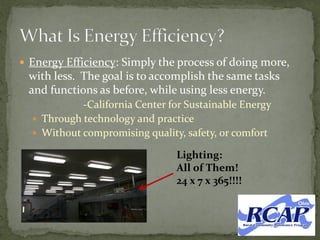
 Energy Efficiency: Simply the process of doing more,
with less. The goal is to accomplish the same tasks
and functions as before, while using less energy.
-California Center for Sustainable Energy
 Through technology and practice
 Without compromising quality, safety, or comfort
Lighting:
All of Them!
24 x 7 x 365!!!!
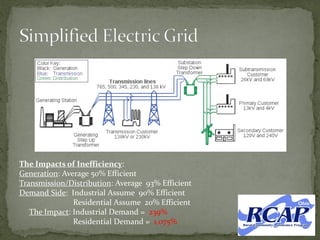
The Impacts of Inefficiency:
Generation: Average 50% Efficient
Transmission/Distribution: Average 93% Efficient
Demand Side: Industrial Assume 90% Efficient
Residential Assume 20% Efficient
The Impact: Industrial Demand = 239%
Residential Demand = 1,075%
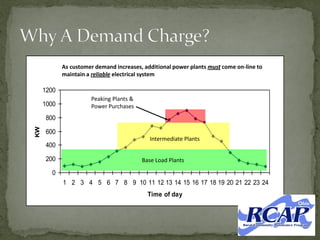
0
200
400
600
800
1000
1200
1 2 3 4 5 6 7 8 9 10 11 12 13 14 15 16 17 18 19 20 21 22 23 24
Time of day
KW
Peaking Plants &
Power Purchases
As customer demand increases, additional power plants must come on-line to
maintain a reliable electrical system
Intermediate Plants
Base Load Plants
 Estimates Are Indicating That:
 Nearly 4% of the nation’s electricity is consumed with
respect to water and wastewater facilities
 Within the next 15 years, the cost of energy will increase
approximately 20%
 An increase in utility budgeting will most likely result in
increased customer billing charges
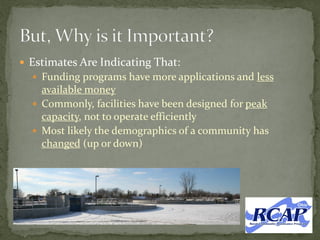
 Estimates Are Indicating That:
 Funding programs have more applications and less
available money
 Commonly, facilities have been designed for peak
capacity, not to operate efficiently
 Most likely the demographics of a community has
changed (up or down)
 Understand Your Billing
 Structure (Classification, Tariff, etc.)
 Quantities (kW, kWh, kVAR, Power Factor, etc.)
 Accuracy (Estimated, Monthly, Yearly Averages)
 Understand Your Facility
 Processes
 Flows
 Equipment
 Goals
 USEPA’s Energy Star Portfolio Manager
 All Facility Types
 USEPA’s Energy Audit Tool
 Water and Wastewater Systems
 US Dept. of Energy Equipment Evaluation Tools
 PSAT – Pump System Assessment Tool
 MotorMaster +
 Simple Excel Spreadsheet
 RCAP’s Free Assessment (Small & Medium)
 Or Other Program?
 Pump Assessment
 Avg. Pump Efficiency is Below 40%
 Over 10% of Pumps Below 10% Efficiency
 SAIC Wisconsin Focus on Energy
 Evaluation of 1,690 Pumps at 20 Process Plants
 Due to:
 Throttling of Valves
 Over-Sizing of Pumps
 ‘We’ve Always Done It That Way’ Mentality
“Pump Slow……Pump Long”
 Motor Assessment:
 Replace vs. Repair vs. Burnout
 Repair typically is a Rewind
 Efficiency Can Drop 2-4 % per Rewind
 Study by Ontario Hydro on 10-15 kW Motors
 -0.3% to -3.4% Efficiency Drop
 Typical Cost is 30-60% of a Standard
 Burnout negates Standard Costs
 Only cost of upgrade included in SPB
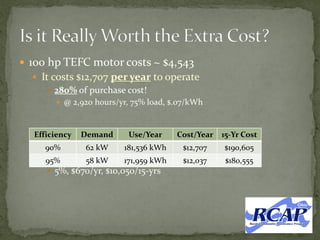
 100 hp TEFC motor costs ~ $4,543
 It costs $12,707 per year to operate
 280% of purchase cost!
 @ 2,920 hours/yr, 75% load, $.07/kWh
 Premium Efficient Saves!
 5%, $670/yr, $10,050/15-yrs
Efficiency Demand Use/Year Cost/Year 15-Yr Cost
90% 62 kW 181,536 kWh $12,707 $190,605
95% 58 kW 171,959 kWh $12,037 $180,555
 VFD’s are used for:
 Controlling Speed
 Starting and Acceleration Controls
 Reducing Operating Costs
 VFD’s will only save (energy) costs when used with a
varying load. If the load does not vary, or only varies
slightly, there may be no energy savings. The wider
the variation, the more likely for savings.
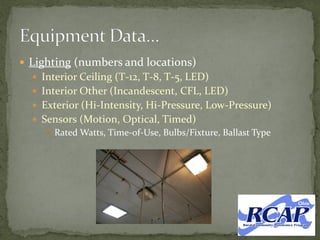
 Lighting (numbers and locations)
 Interior Ceiling (T-12, T-8, T-5, LED)
 Interior Other (Incandescent, CFL, LED)
 Exterior (Hi-Intensity, Hi-Pressure, Low-Pressure)
 Sensors (Motion, Optical, Timed)
 Rated Watts, Time-of-Use, Bulbs/Fixture, Ballast Type
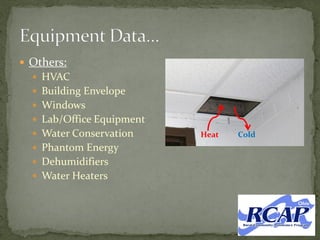
 Others:
 HVAC
 Building Envelope
 Windows
 Lab/Office Equipment
 Water Conservation
 Phantom Energy
 Dehumidifiers
 Water Heaters
Heat Cold
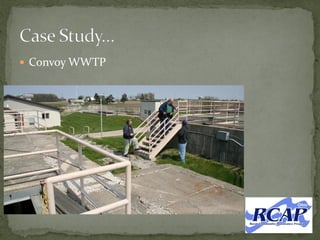
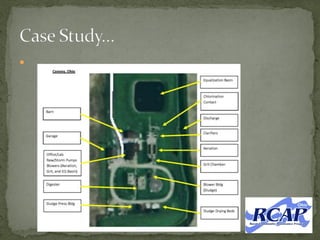
 Convoy WWTP

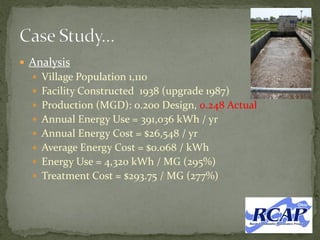
 Analysis
 Village Population 1,110
 Facility Constructed 1938 (upgrade 1987)
 Production (MGD): 0.200 Design, 0.248 Actual
 Annual Energy Use = 391,036 kWh / yr
 Annual Energy Cost = $26,548 / yr
 Average Energy Cost = $0.068 / kWh
 Energy Use = 4,320 kWh / MG (295%)
 Treatment Cost = $293.75 / MG (277%)
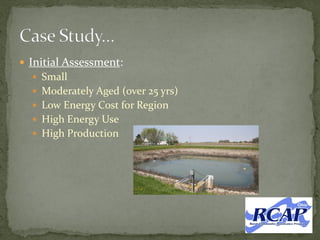
 Initial Assessment:
 Small
 Moderately Aged (over 25 yrs)
 Low Energy Cost for Region
 High Energy Use
 High Production
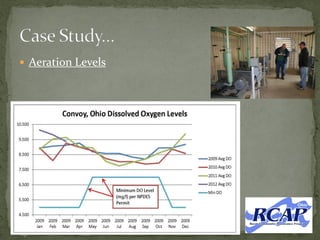
 Aeration Levels
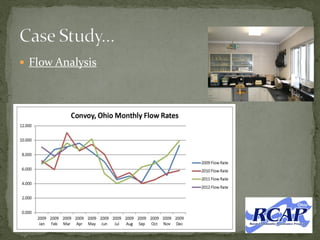
 Flow Analysis
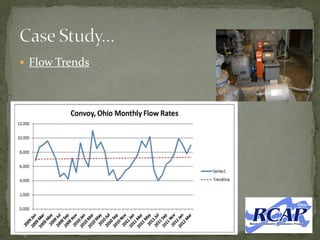
 Flow Trends
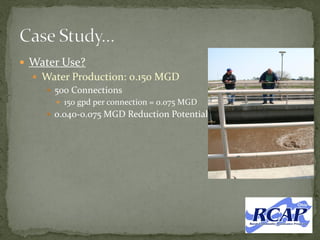
 Water Use?
 Water Production: 0.150 MGD
 500 Connections
 150 gpd per connection = 0.075 MGD
 0.040-0.075 MGD Reduction Potential
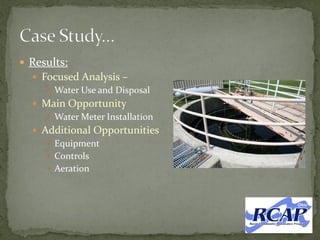
 Results:
 Focused Analysis –
 Water Use and Disposal
 Main Opportunity
 Water Meter Installation
 Additional Opportunities
 Equipment
 Controls
 Aeration
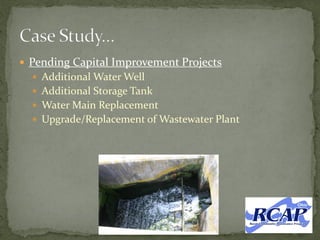
 Pending Capital Improvement Projects
 Additional Water Well
 Additional Storage Tank
 Water Main Replacement
 Upgrade/Replacement of Wastewater Plant
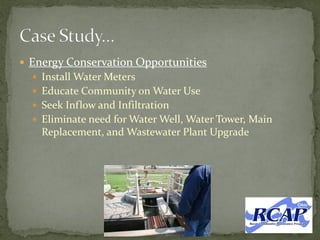
 Energy Conservation Opportunities
 Install Water Meters
 Educate Community on Water Use
 Seek Inflow and Infiltration
 Eliminate need for Water Well, Water Tower, Main
Replacement, and Wastewater Plant Upgrade
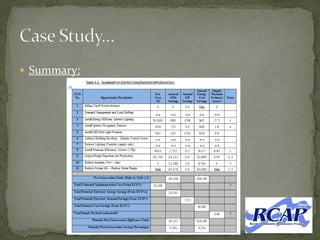
 Summary:
 Grant Efforts
 Direct Contracting
 Workshops
 Trainings
 Average 25% Savings
 Energy and Costs
 Less than 1-Year Simple Payback
 Benchmark Your Facility
 Compare to Similar Facilities / Systems
 Form An Energy Team
 Define Your Goals
 Decide on Level of Audit (I, II, or III)
 Implementation is Key!
 Track Results
 Pursue Alternative Energy (Renewable)
 Seek Incentives!
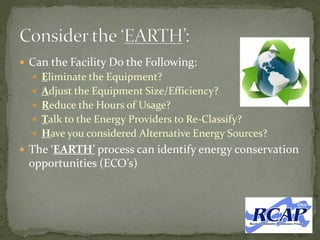
 Can the Facility Do the Following:
 Eliminate the Equipment?
 Adjust the Equipment Size/Efficiency?
 Reduce the Hours of Usage?
 Talk to the Energy Providers to Re-Classify?
 Have you considered Alternative Energy Sources?
 The ‘EARTH’ process can identify energy conservation
opportunities (ECO’s)
 Thank you for your interest! RCAP National Initiative
Ohio RCAP Initiative
Contact:
Scott Strahley, PE, CEA
219 S. Front Street
PO Box 590
Fremont, Ohio 43420
Ph: 419-334-4034
sastrahley@wsos.org

What Every Small Water System Must Know About Potential Audit Pitfalls and Where to Focus Efforts

  • 1.
    How Energy ConservationCan Save You Money! June 27th, 2013 AEP Workshop Scott A. Strahley, PE, CEA
  • 2.
     Certified Auditors Knowledge of Water Systems  Operations and Processes vs.  Equipment and Lights  Alternative Energy
  • 3.
     Short-Term  Long-Term Water Quality?  Financial Goals?
  • 6.
     Energy Efficiency:Simply the process of doing more, with less. The goal is to accomplish the same tasks and functions as before, while using less energy. -California Center for Sustainable Energy  Through technology and practice  Without compromising quality, safety, or comfort Lighting: All of Them! 24 x 7 x 365!!!!
  • 8.
    The Impacts ofInefficiency: Generation: Average 50% Efficient Transmission/Distribution: Average 93% Efficient Demand Side: Industrial Assume 90% Efficient Residential Assume 20% Efficient The Impact: Industrial Demand = 239% Residential Demand = 1,075%
  • 9.
    0 200 400 600 800 1000 1200 1 2 34 5 6 7 8 9 10 11 12 13 14 15 16 17 18 19 20 21 22 23 24 Time of day KW Peaking Plants & Power Purchases As customer demand increases, additional power plants must come on-line to maintain a reliable electrical system Intermediate Plants Base Load Plants
  • 10.
     Estimates AreIndicating That:  Nearly 4% of the nation’s electricity is consumed with respect to water and wastewater facilities  Within the next 15 years, the cost of energy will increase approximately 20%  An increase in utility budgeting will most likely result in increased customer billing charges
  • 11.
     Estimates AreIndicating That:  Funding programs have more applications and less available money  Commonly, facilities have been designed for peak capacity, not to operate efficiently  Most likely the demographics of a community has changed (up or down)
  • 12.
     Understand YourBilling  Structure (Classification, Tariff, etc.)  Quantities (kW, kWh, kVAR, Power Factor, etc.)  Accuracy (Estimated, Monthly, Yearly Averages)  Understand Your Facility  Processes  Flows  Equipment  Goals
  • 13.
     USEPA’s EnergyStar Portfolio Manager  All Facility Types  USEPA’s Energy Audit Tool  Water and Wastewater Systems  US Dept. of Energy Equipment Evaluation Tools  PSAT – Pump System Assessment Tool  MotorMaster +  Simple Excel Spreadsheet  RCAP’s Free Assessment (Small & Medium)  Or Other Program?
  • 14.
     Pump Assessment Avg. Pump Efficiency is Below 40%  Over 10% of Pumps Below 10% Efficiency  SAIC Wisconsin Focus on Energy  Evaluation of 1,690 Pumps at 20 Process Plants  Due to:  Throttling of Valves  Over-Sizing of Pumps  ‘We’ve Always Done It That Way’ Mentality “Pump Slow……Pump Long”
  • 15.
     Motor Assessment: Replace vs. Repair vs. Burnout  Repair typically is a Rewind  Efficiency Can Drop 2-4 % per Rewind  Study by Ontario Hydro on 10-15 kW Motors  -0.3% to -3.4% Efficiency Drop  Typical Cost is 30-60% of a Standard  Burnout negates Standard Costs  Only cost of upgrade included in SPB
  • 16.
     100 hpTEFC motor costs ~ $4,543  It costs $12,707 per year to operate  280% of purchase cost!  @ 2,920 hours/yr, 75% load, $.07/kWh  Premium Efficient Saves!  5%, $670/yr, $10,050/15-yrs Efficiency Demand Use/Year Cost/Year 15-Yr Cost 90% 62 kW 181,536 kWh $12,707 $190,605 95% 58 kW 171,959 kWh $12,037 $180,555
  • 17.
     VFD’s areused for:  Controlling Speed  Starting and Acceleration Controls  Reducing Operating Costs  VFD’s will only save (energy) costs when used with a varying load. If the load does not vary, or only varies slightly, there may be no energy savings. The wider the variation, the more likely for savings.
  • 18.
     Lighting (numbersand locations)  Interior Ceiling (T-12, T-8, T-5, LED)  Interior Other (Incandescent, CFL, LED)  Exterior (Hi-Intensity, Hi-Pressure, Low-Pressure)  Sensors (Motion, Optical, Timed)  Rated Watts, Time-of-Use, Bulbs/Fixture, Ballast Type
  • 19.
     Others:  HVAC Building Envelope  Windows  Lab/Office Equipment  Water Conservation  Phantom Energy  Dehumidifiers  Water Heaters Heat Cold
  • 20.
  • 21.
  • 22.
     Analysis  VillagePopulation 1,110  Facility Constructed 1938 (upgrade 1987)  Production (MGD): 0.200 Design, 0.248 Actual  Annual Energy Use = 391,036 kWh / yr  Annual Energy Cost = $26,548 / yr  Average Energy Cost = $0.068 / kWh  Energy Use = 4,320 kWh / MG (295%)  Treatment Cost = $293.75 / MG (277%)
  • 23.
     Initial Assessment: Small  Moderately Aged (over 25 yrs)  Low Energy Cost for Region  High Energy Use  High Production
  • 24.
  • 25.
  • 26.
  • 27.
     Water Use? Water Production: 0.150 MGD  500 Connections  150 gpd per connection = 0.075 MGD  0.040-0.075 MGD Reduction Potential
  • 28.
     Results:  FocusedAnalysis –  Water Use and Disposal  Main Opportunity  Water Meter Installation  Additional Opportunities  Equipment  Controls  Aeration
  • 29.
     Pending CapitalImprovement Projects  Additional Water Well  Additional Storage Tank  Water Main Replacement  Upgrade/Replacement of Wastewater Plant
  • 30.
     Energy ConservationOpportunities  Install Water Meters  Educate Community on Water Use  Seek Inflow and Infiltration  Eliminate need for Water Well, Water Tower, Main Replacement, and Wastewater Plant Upgrade
  • 31.
  • 32.
     Grant Efforts Direct Contracting  Workshops  Trainings  Average 25% Savings  Energy and Costs  Less than 1-Year Simple Payback
  • 33.
     Benchmark YourFacility  Compare to Similar Facilities / Systems  Form An Energy Team  Define Your Goals  Decide on Level of Audit (I, II, or III)  Implementation is Key!  Track Results  Pursue Alternative Energy (Renewable)  Seek Incentives!
  • 34.
     Can theFacility Do the Following:  Eliminate the Equipment?  Adjust the Equipment Size/Efficiency?  Reduce the Hours of Usage?  Talk to the Energy Providers to Re-Classify?  Have you considered Alternative Energy Sources?  The ‘EARTH’ process can identify energy conservation opportunities (ECO’s)
  • 35.
     Thank youfor your interest! RCAP National Initiative Ohio RCAP Initiative Contact: Scott Strahley, PE, CEA 219 S. Front Street PO Box 590 Fremont, Ohio 43420 Ph: 419-334-4034 sastrahley@wsos.org