OEDEMA
DEFINITION
Accumulation of excessive amount of tissue
fluid in the subcutaneous tissue due to
increase in extravascular (interstitial)
component of the extracellular fluid volume
resulting in swelling of tissue.
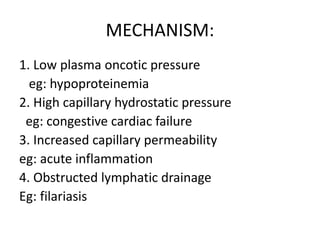
MECHANISM:
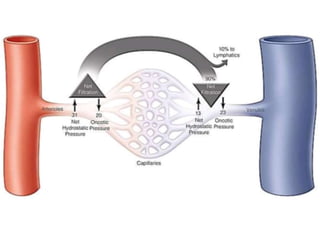
1. Low plasma oncotic pressure
eg: hypoproteinemia
2. High capillary hydrostatic pressure
eg: congestive cardiac failure
3. Increased capillary permeability
eg: acute inflammation
4. Obstructed lymphatic drainage
Eg: filariasis
SYMPTOMS:
1. Localized swelling (feet, ankles,
hands)/swelling of whole body
2. Facial puffiness
3. Bloating
4. Rapid weight gain (10-15% increase in body
weight)
5. Pain and tightness of the affected part
6. Breathlessness
EXAMINATION:
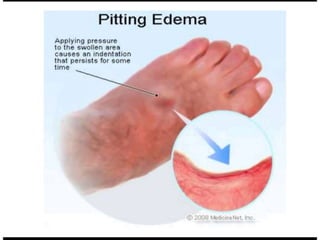
• Pedal edema: apply firm pressure with tip of right
thumb for atleast 15 sec to maximally upto 30 sec
over medial malleolus, above medial malleolus,
lower end of tibia (medial surface), upper part of
shin bone. Look for any dimple or pitting i.e
indentation.
Pitting edema reflects increased interstitial fluid
Non pitting edema reflect protein deposition.
• AMBULATORY PATIENT:
Edema on the dependent part i.e pedal edema
(ankle), sacral edema
CAUSES OF PITTING EDEMA:
• Congestive cardiac failure
• Cirrhosis of liver
• Nephrotic syndrome
• Hypoproteinemia with severe anaemia eg: protein
losing enteropathy, starvation, kwashiorkor
• Pericardial effusion
• Constrictive pericarditis
• Drugs: amlodipine, cortocosteroids, estrogen
• Venous obstruction (SVC syndrome, IVC syndrome,
varicose veins in legs, DVT)
Causes of Non-pitting edema
• Myxoedema (infiltative edema due to deposition of
mucinous material)
• Lymphatic edema (late stage): peau d’orange appearance of
skin
eg: deposition of protein rich fluid in filariasis
Malignant infiltration
Radiation injury
• Angioneurotic edema
• Chronic venous obstruction
• Scleredema (post-streptoccocal, self limited, painless
edematous induration of face, scalp, neck, trunk and upper
extremities)
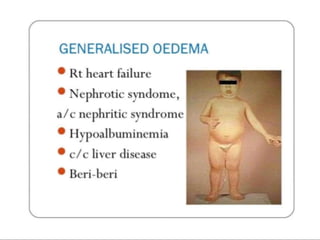
Oedema in Systemic Diseases
• Congestive cardiac failure:
Legs – face – ascites
• Nephrotic syndrome:
Face (periorbital puffiness) – legs – ascites
• Cirrhosis of liver:
Ascites – legs – face
• Nutritional edema:
oedema feet with puffiness of face - ascites
OEDEMA.pptx............................. .

OEDEMA.pptx............................. .

  • 1.
  • 3.
    DEFINITION Accumulation of excessiveamount of tissue fluid in the subcutaneous tissue due to increase in extravascular (interstitial) component of the extracellular fluid volume resulting in swelling of tissue.
  • 4.
    MECHANISM: 1. Low plasmaoncotic pressure eg: hypoproteinemia 2. High capillary hydrostatic pressure eg: congestive cardiac failure 3. Increased capillary permeability eg: acute inflammation 4. Obstructed lymphatic drainage Eg: filariasis
  • 6.
    SYMPTOMS: 1. Localized swelling(feet, ankles, hands)/swelling of whole body 2. Facial puffiness 3. Bloating 4. Rapid weight gain (10-15% increase in body weight) 5. Pain and tightness of the affected part 6. Breathlessness
  • 7.
    EXAMINATION: • Pedal edema:apply firm pressure with tip of right thumb for atleast 15 sec to maximally upto 30 sec over medial malleolus, above medial malleolus, lower end of tibia (medial surface), upper part of shin bone. Look for any dimple or pitting i.e indentation. Pitting edema reflects increased interstitial fluid Non pitting edema reflect protein deposition. • AMBULATORY PATIENT: Edema on the dependent part i.e pedal edema (ankle), sacral edema
  • 9.
    CAUSES OF PITTINGEDEMA: • Congestive cardiac failure • Cirrhosis of liver • Nephrotic syndrome • Hypoproteinemia with severe anaemia eg: protein losing enteropathy, starvation, kwashiorkor • Pericardial effusion • Constrictive pericarditis • Drugs: amlodipine, cortocosteroids, estrogen • Venous obstruction (SVC syndrome, IVC syndrome, varicose veins in legs, DVT)
  • 10.
    Causes of Non-pittingedema • Myxoedema (infiltative edema due to deposition of mucinous material) • Lymphatic edema (late stage): peau d’orange appearance of skin eg: deposition of protein rich fluid in filariasis Malignant infiltration Radiation injury • Angioneurotic edema • Chronic venous obstruction • Scleredema (post-streptoccocal, self limited, painless edematous induration of face, scalp, neck, trunk and upper extremities)
  • 11.
    Oedema in SystemicDiseases • Congestive cardiac failure: Legs – face – ascites • Nephrotic syndrome: Face (periorbital puffiness) – legs – ascites • Cirrhosis of liver: Ascites – legs – face • Nutritional edema: oedema feet with puffiness of face - ascites