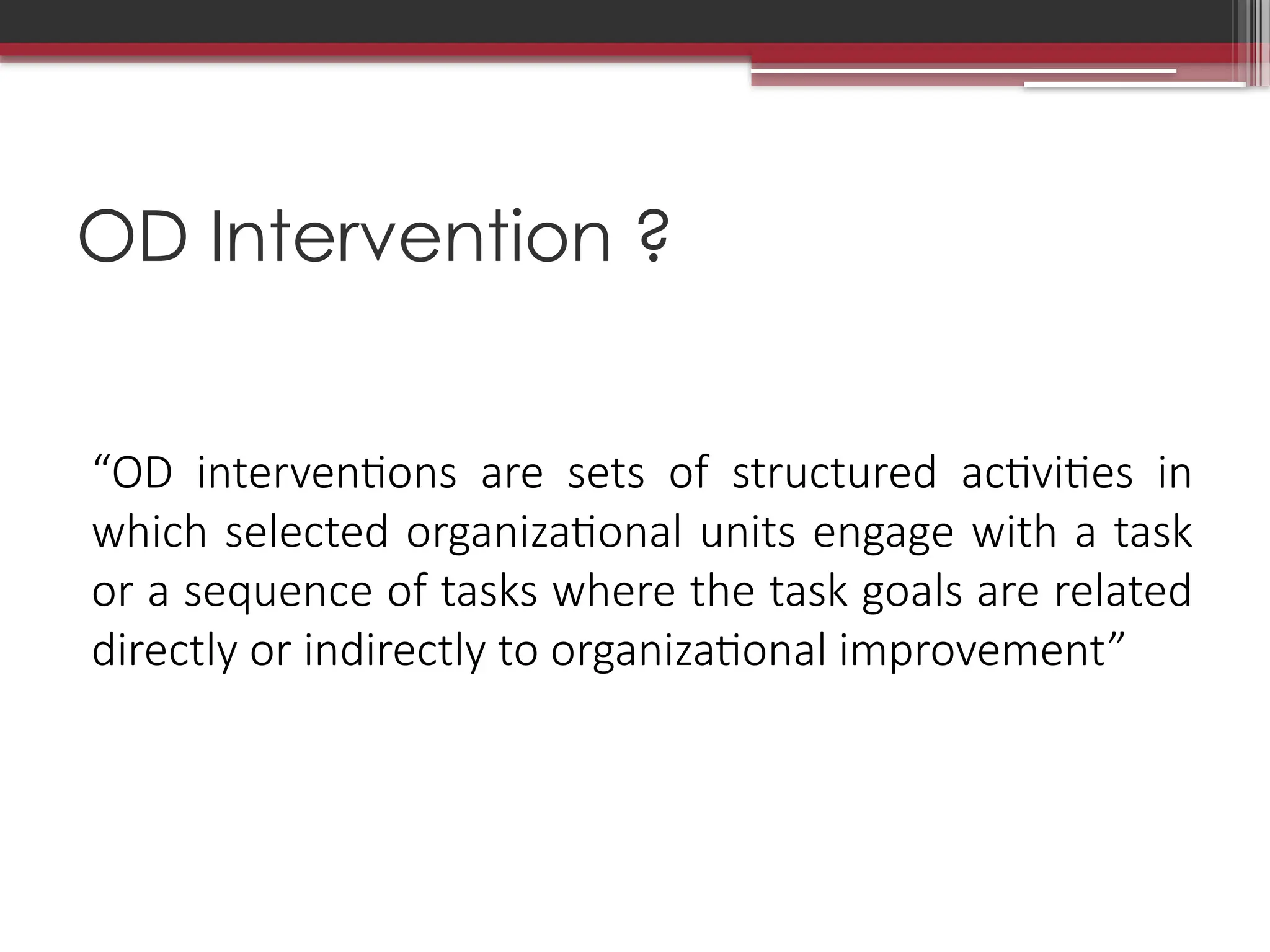
OD Intervention ?
“ODinterventions are sets of structured activities in
which selected organizational units engage with a task
or a sequence of tasks where the task goals are related
directly or indirectly to organizational improvement”
3.
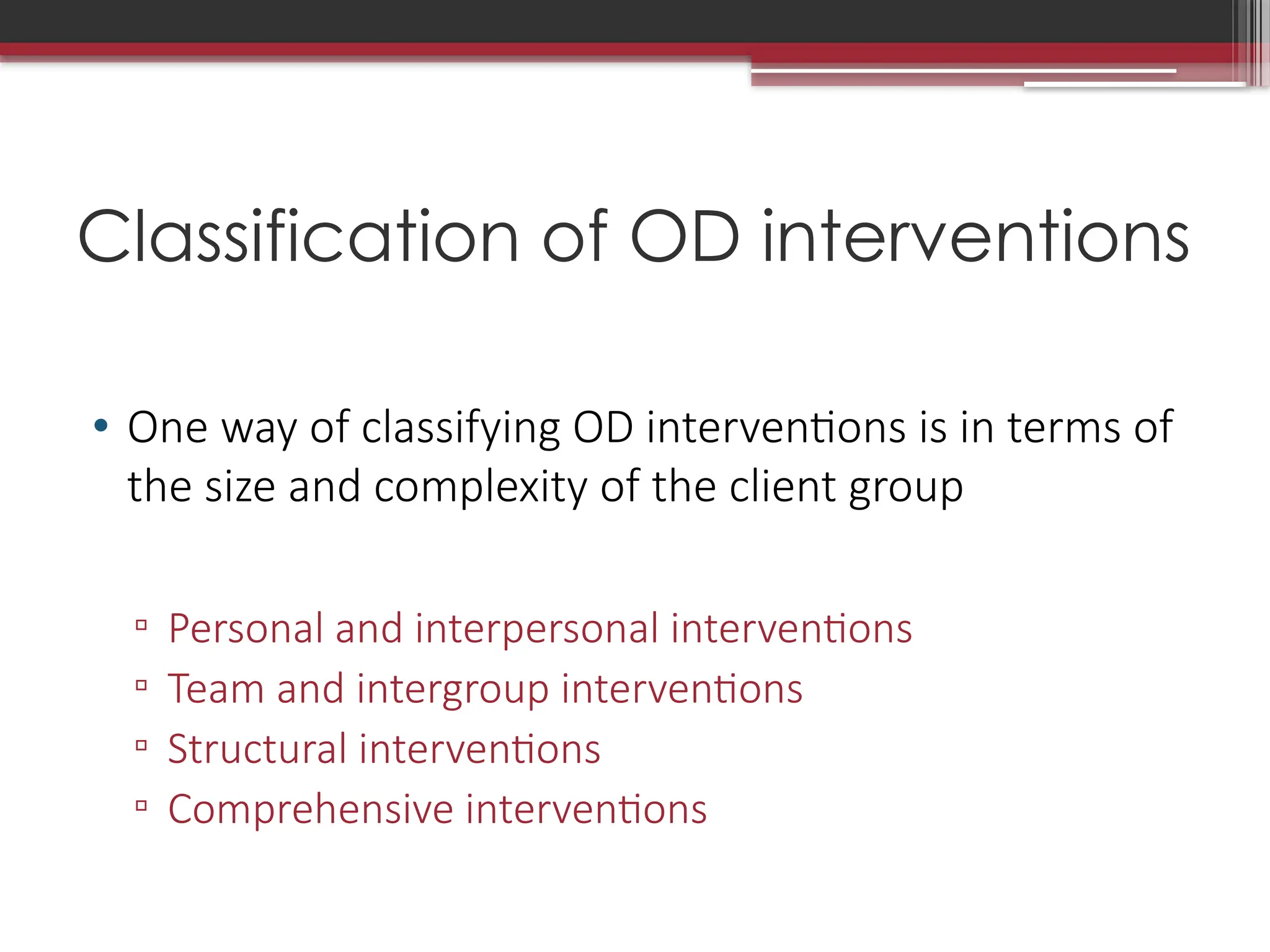
Classification of ODinterventions
• One way of classifying OD interventions is in terms of
the size and complexity of the client group
▫ Personal and interpersonal interventions
▫ Team and intergroup interventions
▫ Structural interventions
▫ Comprehensive interventions
4.
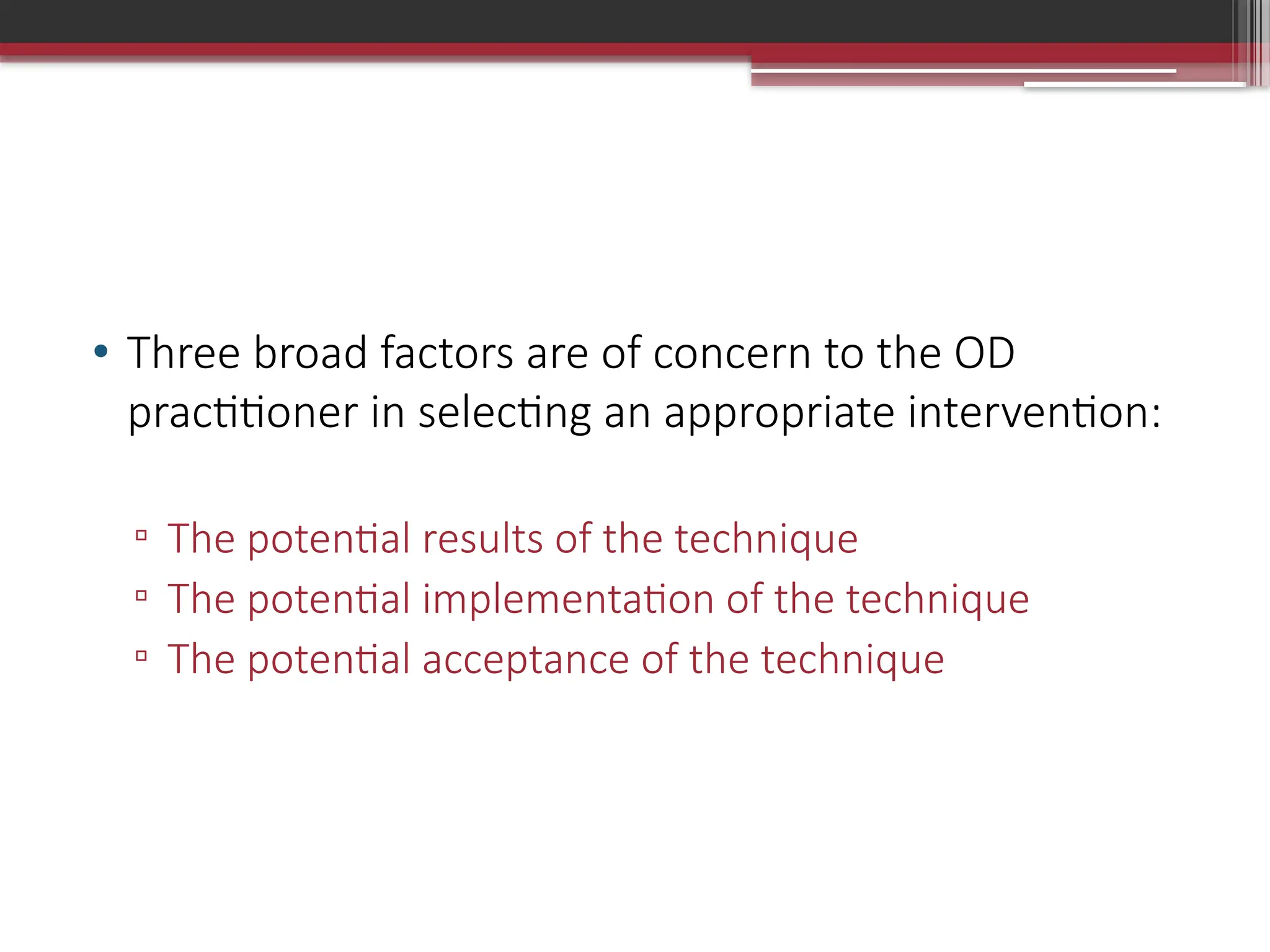
• Three broadfactors are of concern to the OD
practitioner in selecting an appropriate intervention:
▫ The potential results of the technique
▫ The potential implementation of the technique
▫ The potential acceptance of the technique
5.
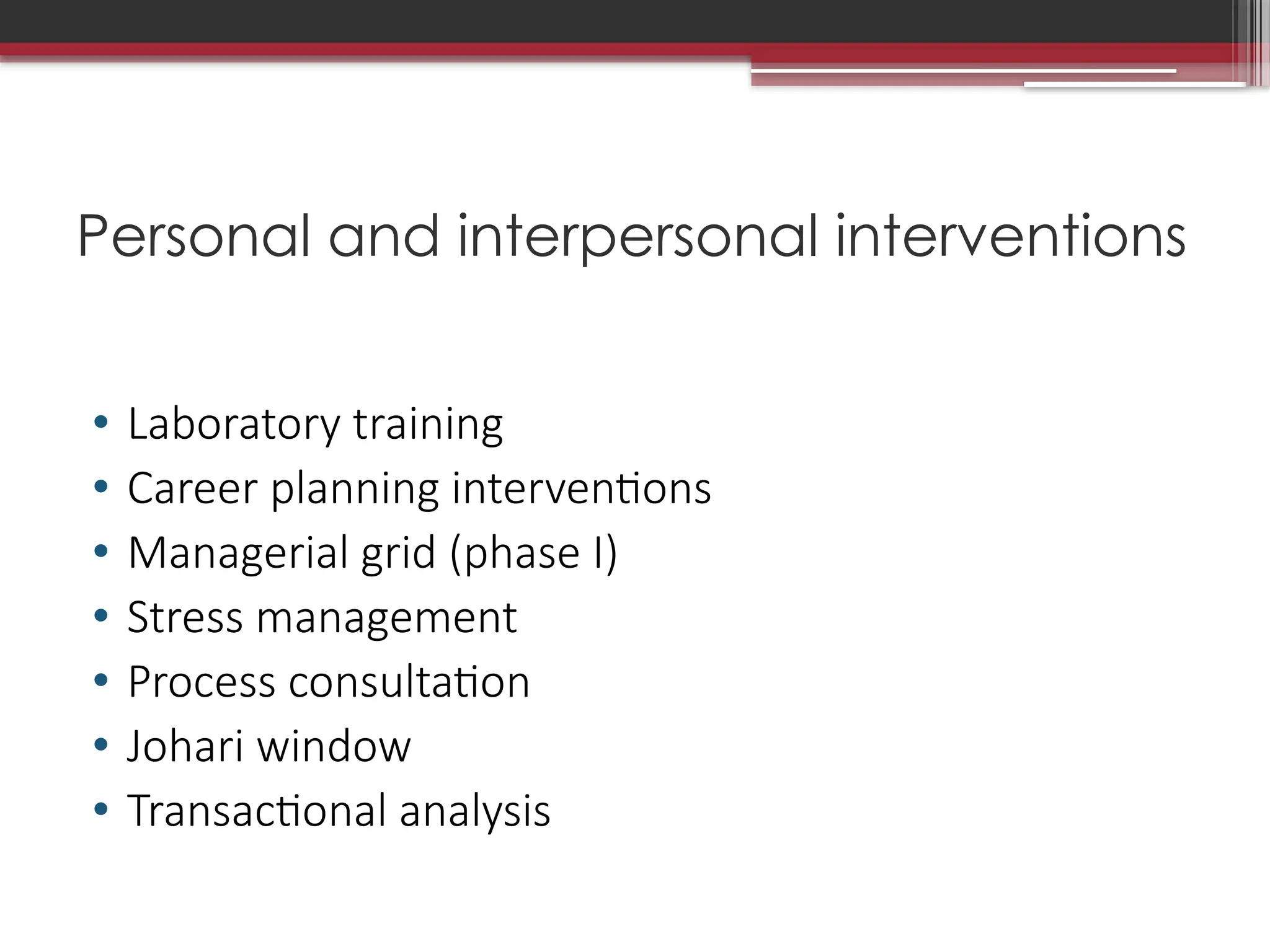
Personal and interpersonalinterventions
• Laboratory training
• Career planning interventions
• Managerial grid (phase I)
• Stress management
• Process consultation
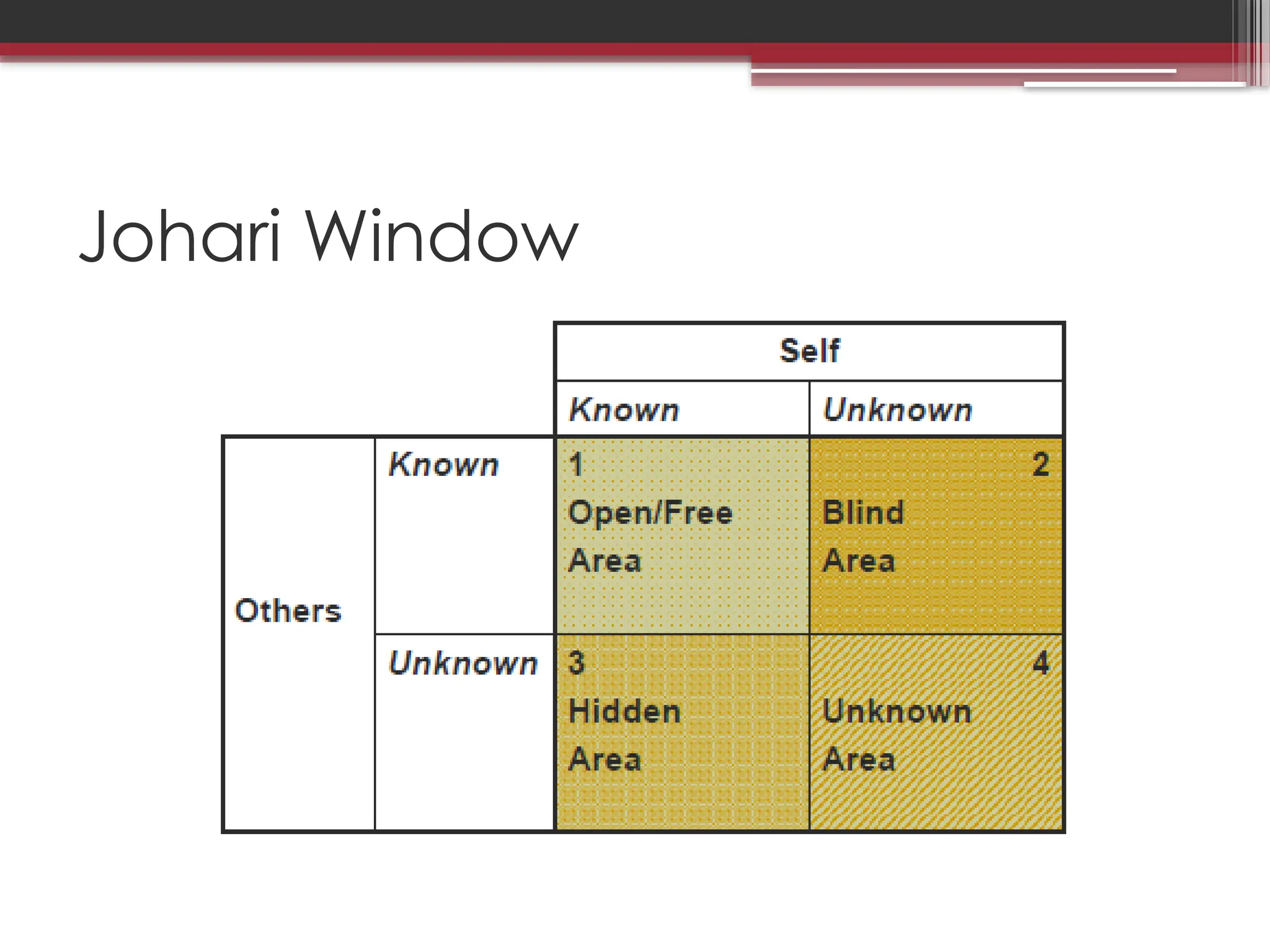
• Johari window
• Transactional analysis
6.
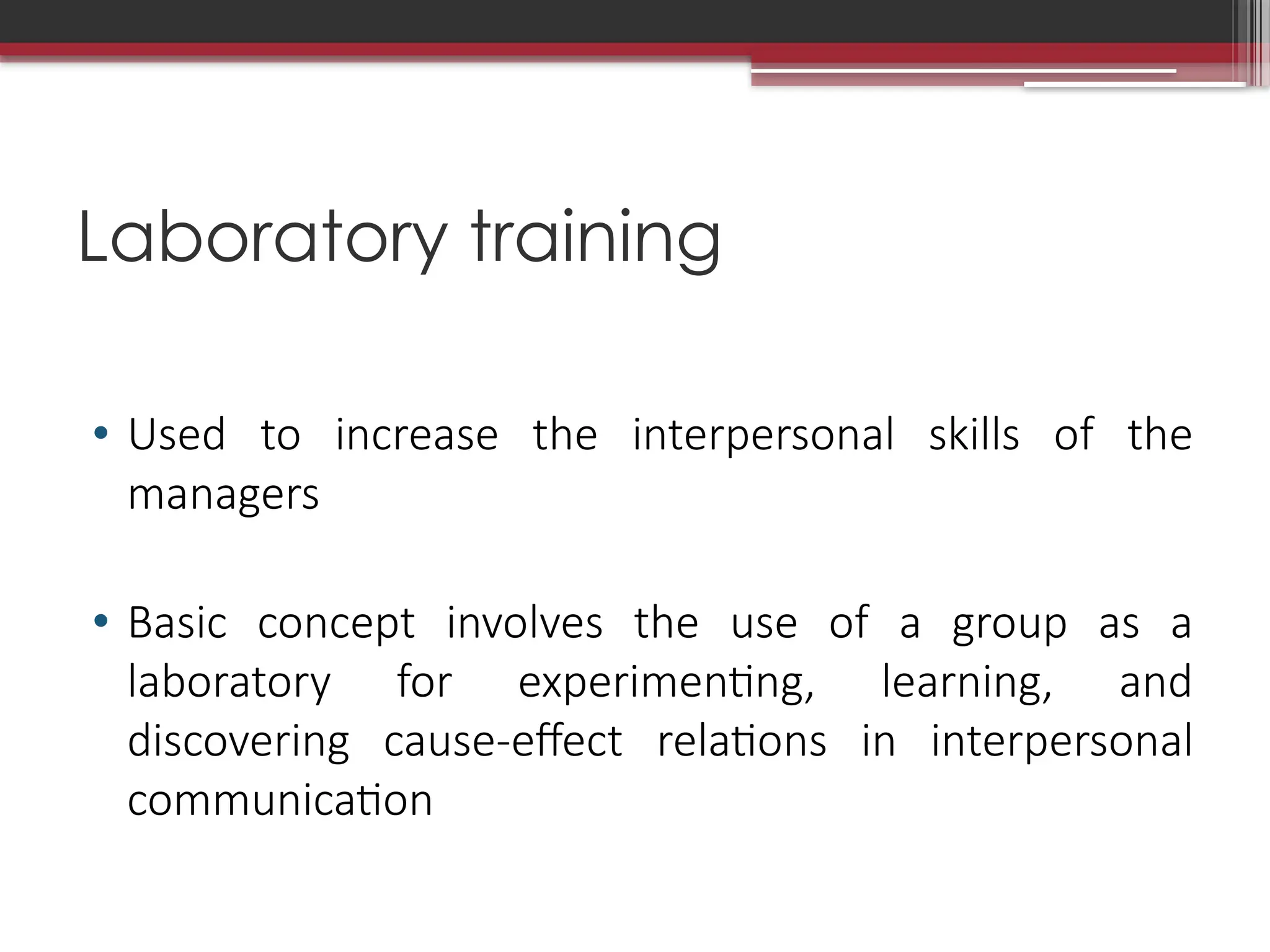
Laboratory training
• Usedto increase the interpersonal skills of the
managers
• Basic concept involves the use of a group as a
laboratory for experimenting, learning, and
discovering cause-effect relations in interpersonal
communication
7.
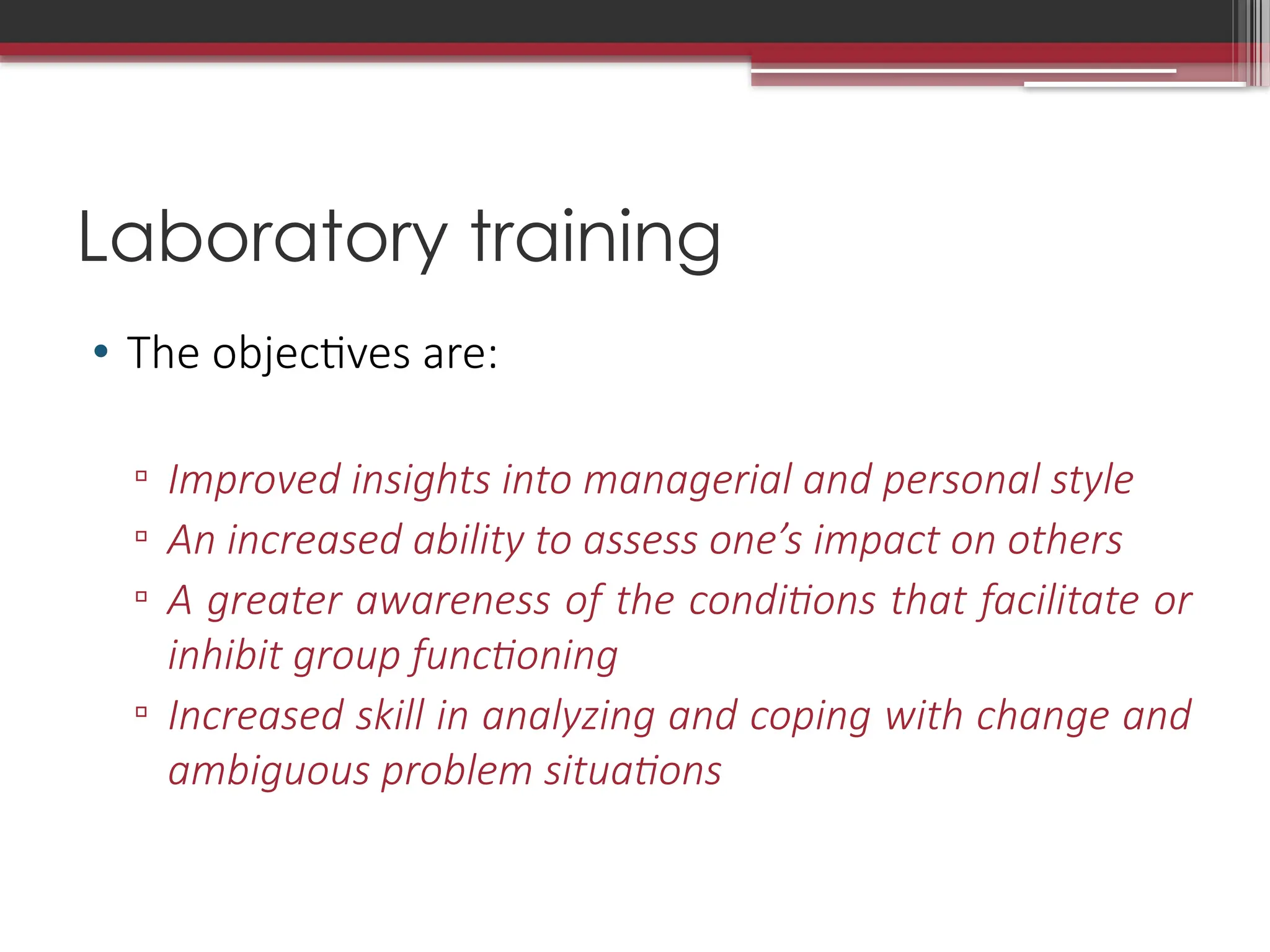
Laboratory training
• Theobjectives are:
▫ Improved insights into managerial and personal style
▫ An increased ability to assess one’s impact on others
▫ A greater awareness of the conditions that facilitate or
inhibit group functioning
▫ Increased skill in analyzing and coping with change and
ambiguous problem situations
8.
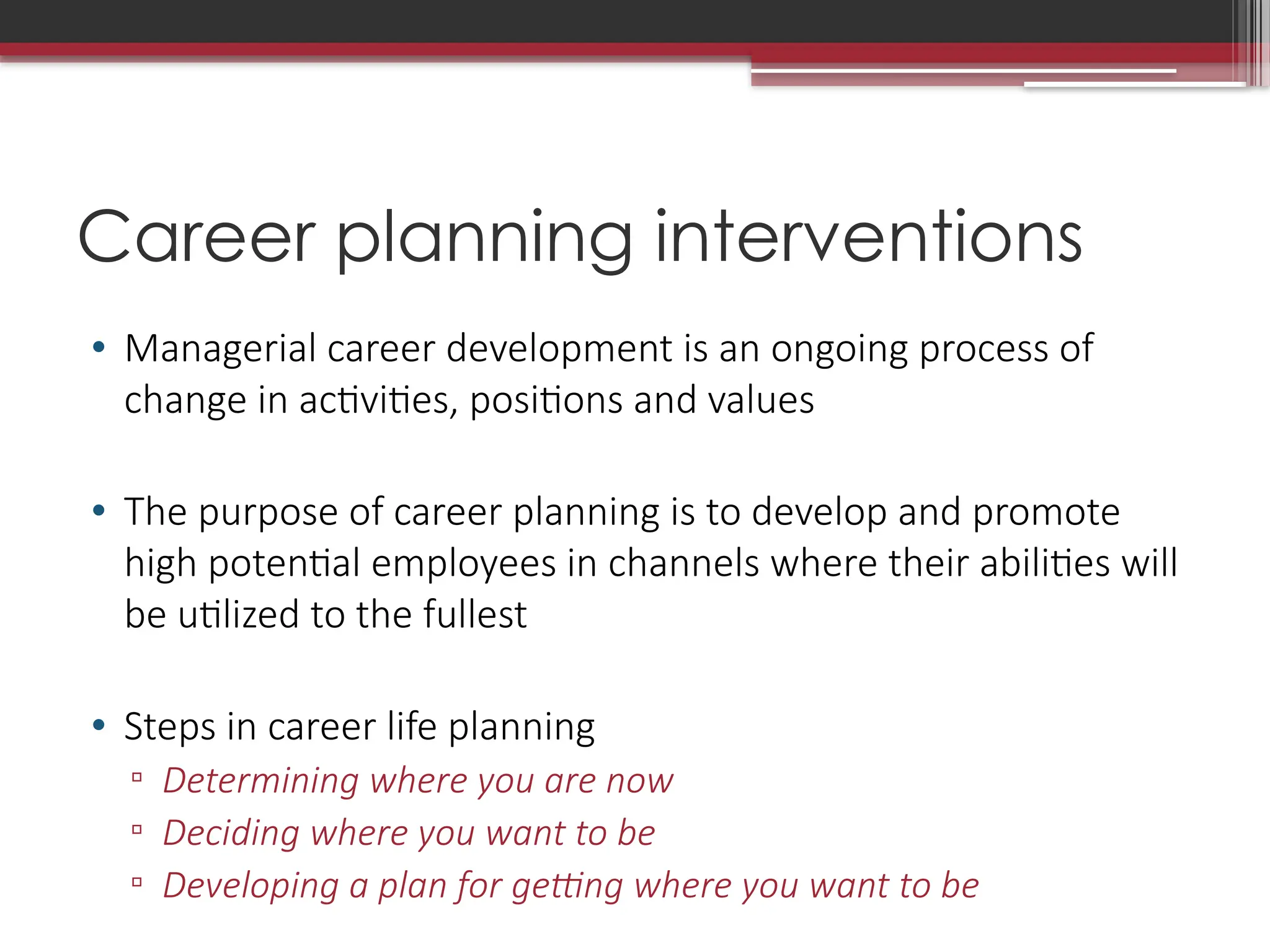
Career planning interventions
•Managerial career development is an ongoing process of
change in activities, positions and values
• The purpose of career planning is to develop and promote
high potential employees in channels where their abilities will
be utilized to the fullest
• Steps in career life planning
▫ Determining where you are now
▫ Deciding where you want to be
▫ Developing a plan for getting where you want to be
9.
Managerial grid (PhaseI)
• The first phase of the grid focuses on personal and
interpersonal interventions
• A grid seminar is conducted by in-company managers
• Focus of the training is to give attention to assessing
an individual’s managerial styles, problem solving,
critiquing and communication skills
• Managers learn to become 9,9 managers
10.
Stress management
• Biofeedback
•Meditation
• Counseling
• Training programs in stress management
• Wellness programs
• Seminars on job burnout
Transactional analysis
• TAis a way to help people understand each other
more effectively
• TA model assumes that every person has three ego
states
▫ The parent
▫ The adult
▫ The child
13.
Transactional analysis
• Atransaction is a unit of communication and can of 3 types
▫ Complementary
▫ Crossed
▫ Ulterior
• Depending upon experiences there can be 4 life positions
▫ I am OK, you are OK
▫ I am OK, you are not OK
▫ I am not OK, you are OK
▫ I am not OK, you are not OK


![Organisation_Development[1] - Read-Only.pptx](https://cdn.slidesharecdn.com/ss_thumbnails/organisationdevelopment1-read-only-221130085621-2542eeee-thumbnail.jpg?width=640&height=640&fit=bounds)


