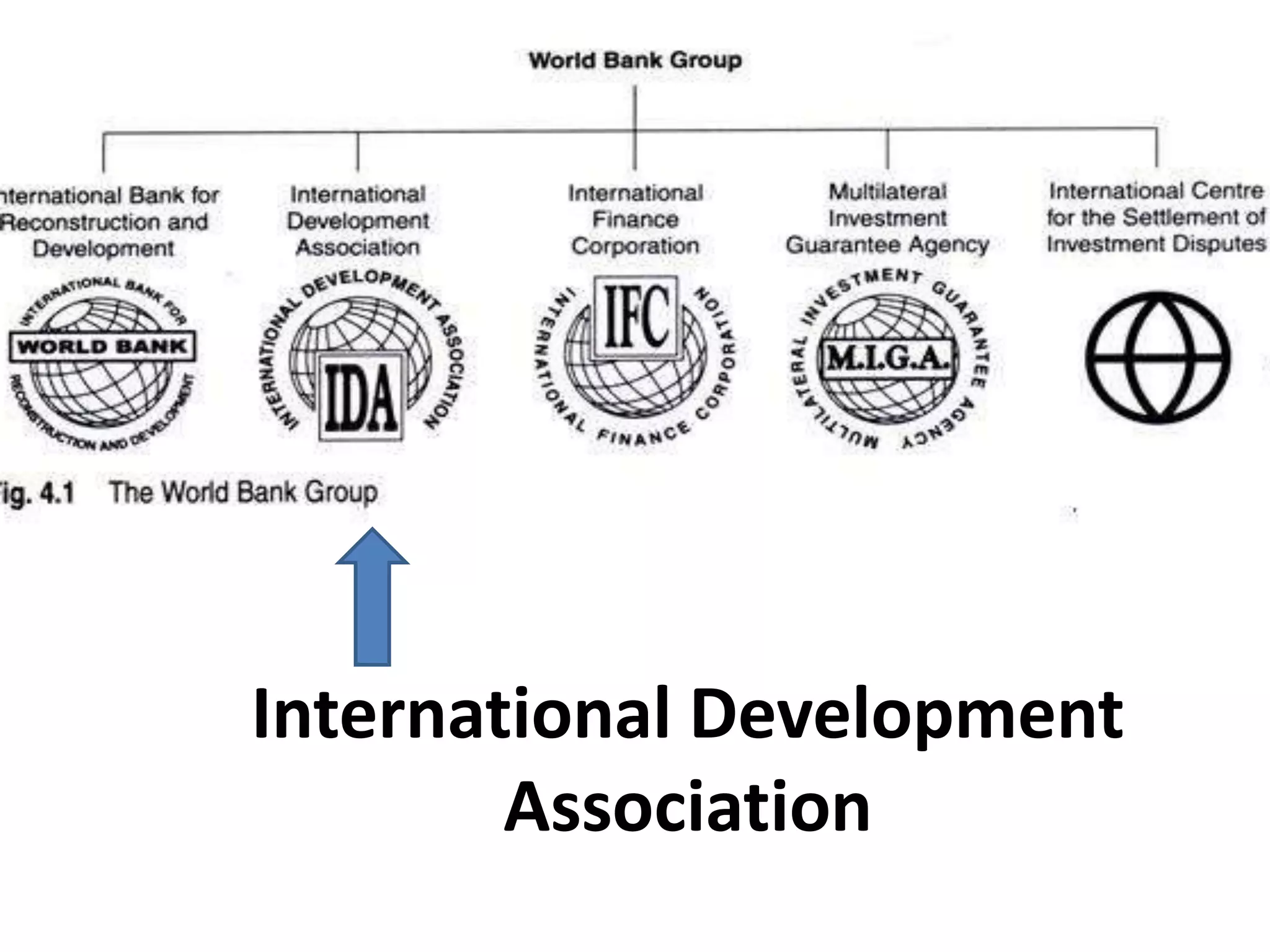
International Development
Association
It offers concessional loans and grants to the
world’s poorest developing countries
Established in the year 1960
Headquarters at Washington D.C.
Membership of 173 countries
President is Jim Yong Kim
It is the world banks fund for the poorest
countries
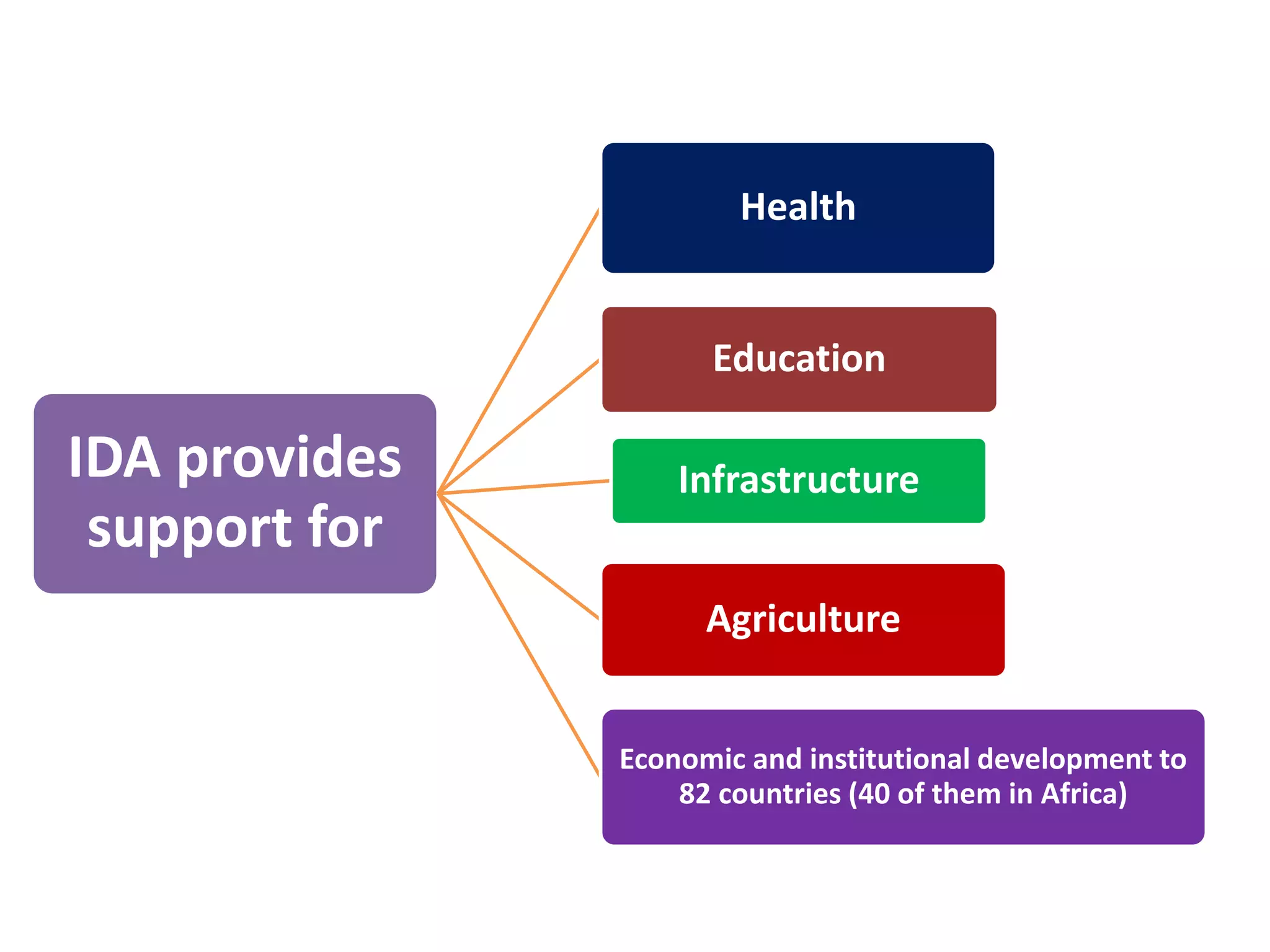
IDA provides
support for
Health
Education
Infrastructure
Agriculture
Economic and institutional development to
82 countries (40 of them in Africa)
Objectives of
IDA
To provide development
finance on easy terms to
the less developed
member countries
To provide assistance for
poverty alleviation in the
poorest countries
To provide finance at a
concessional interest rates in
order to promote economic
development, raise
productivity and living
standards in less developed
nations
Provides long term
loans at zero interest
to the poorest of the
developing countries
Supports efficient and effective
programs to reduce poverty
and improve the quality of life
in its poorest member countries
Helps build the human capital,
policies, institutions, and physical
infrastructure needed to bring about
equitable and sustainable growth
IDA’s goal is to reduce the
disparities across and
within countries, to bring
more people into the
mainstream.
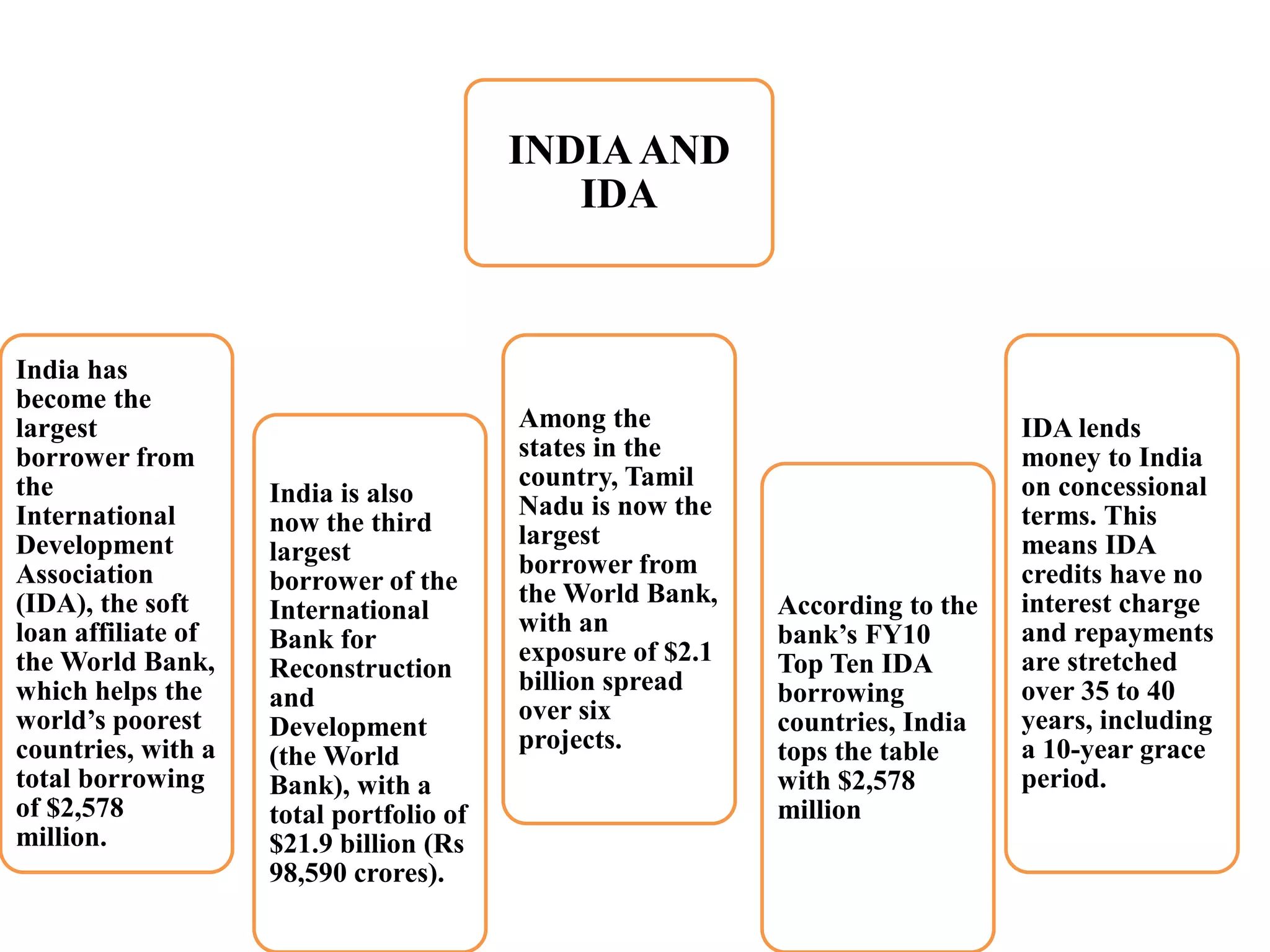
INDIAAND
IDA
India has
become the
largest
borrower from
the
International
Development
Association
(IDA), the soft
loan affiliate of
the World Bank,
which helps the
world’s poorest
countries, with a
total borrowing
of $2,578
million.
India is also
now the third
largest
borrower of the
International
Bank for
Reconstruction
and
Development
(the World
Bank), with a
total portfolio of
$21.9 billion (Rs
98,590 crores).
Among the
states in the
country, Tamil
Nadu is now the
largest
borrower from
the World Bank,
with an
exposure of $2.1
billion spread
over six
projects.
According to the
bank’s FY10
Top Ten IDA
borrowing
countries, India
tops the table
with $2,578
million
IDA lends
money to India
on concessional
terms. This
means IDA
credits have no
interest charge
and repayments
are stretched
over 35 to 40
years, including
a 10-year grace
period.

OBJECTIVES & ROLE OF IDA

  • 1.
  • 2.
    It offers concessionalloans and grants to the world’s poorest developing countries Established in the year 1960 Headquarters at Washington D.C. Membership of 173 countries President is Jim Yong Kim It is the world banks fund for the poorest countries
  • 3.
    IDA provides support for Health Education Infrastructure Agriculture Economicand institutional development to 82 countries (40 of them in Africa)
  • 4.
    Objectives of IDA To providedevelopment finance on easy terms to the less developed member countries To provide assistance for poverty alleviation in the poorest countries To provide finance at a concessional interest rates in order to promote economic development, raise productivity and living standards in less developed nations Provides long term loans at zero interest to the poorest of the developing countries Supports efficient and effective programs to reduce poverty and improve the quality of life in its poorest member countries Helps build the human capital, policies, institutions, and physical infrastructure needed to bring about equitable and sustainable growth IDA’s goal is to reduce the disparities across and within countries, to bring more people into the mainstream.
  • 5.
    INDIAAND IDA India has become the largest borrowerfrom the International Development Association (IDA), the soft loan affiliate of the World Bank, which helps the world’s poorest countries, with a total borrowing of $2,578 million. India is also now the third largest borrower of the International Bank for Reconstruction and Development (the World Bank), with a total portfolio of $21.9 billion (Rs 98,590 crores). Among the states in the country, Tamil Nadu is now the largest borrower from the World Bank, with an exposure of $2.1 billion spread over six projects. According to the bank’s FY10 Top Ten IDA borrowing countries, India tops the table with $2,578 million IDA lends money to India on concessional terms. This means IDA credits have no interest charge and repayments are stretched over 35 to 40 years, including a 10-year grace period.