Case Study
Large City Building Modeling
Commercial buildings can save over 20% of their uildi g’s e erg
consumption with retrofit glass technology, in which a secondary glass
panel is installed behind existing single glazed glass windows.
To demonstrate the unique opportunity for building owners, city
planners, and utility companies to increase the energy efficiency of their
commercial buildings through retrofitting glass, Thermolite created a
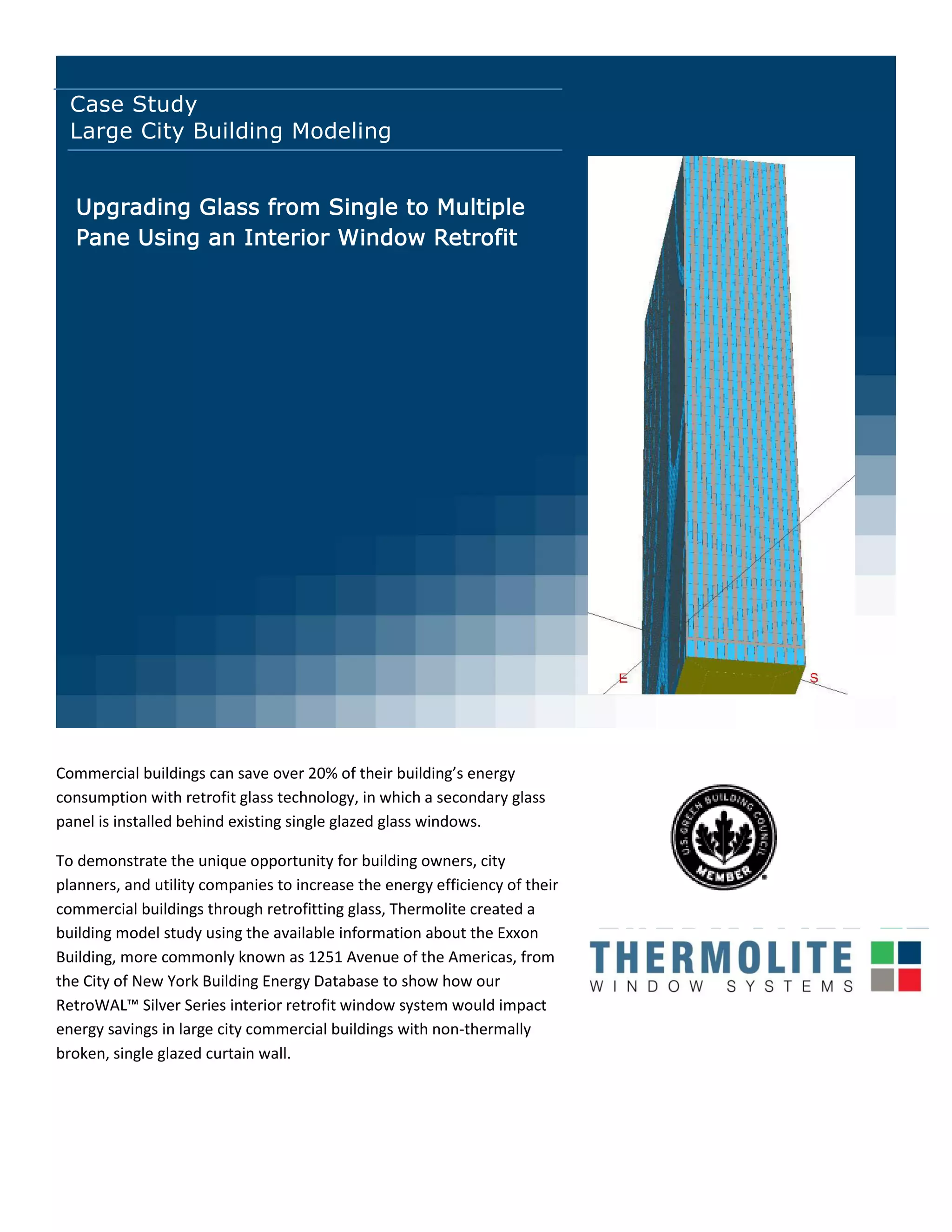
building model study using the available information about the Exxon
Building, more commonly known as 1251 Avenue of the Americas, from
the City of New York Building Energy Database to show how our
RetroWAL™ Sil er Series i terior retrofit i do s ste ould i pa t
energy savings in large city commercial buildings with non-thermally
broken, single glazed curtain wall.
Upgrading Glass from Single to Multiple
Pane Using an Interior Window Retrofit
Methodology:
The first step in our analysis calculates the improved thermal performance of the Thermolite retrofit system compared
to the existing window. Air infiltration improvement
is based on laboratory results.
The model was first run using the following factors
approximated by Window 6.3 fenestration software
and test data:
 Existing window U Values
 Solar Heat Gain Coefficients (SHGC)
 Air infiltrations
New values using the same software and test data
were then placed into the model and rerun to
approximate the energy savings of a window retrofit.
In this case -
The next step in the analysis is to construct a whole building analysis and match the
results with the EUI or energy utility index provided to us from the City of New York. A
baseline model of the energy consumption and demand was calculated and compared
with a new simulation of the improved Thermolite window system.
Thermolite then applied this calibrated building base model to buildings in large cities throughout the US in order to
determine what areas of country benefit the
most from our RetroWAL™ Sil er Series
window retrofit. Weather files using
Heating Degree Days (HDD) and Cooling
Degree Days (CDD) were placed into the
base model and run for a total of 10
metropolitan cities. Local utility energy cost
data was also considered as a variable in
these different locations. Analysis was
performed on the detail of the New York
City model building in order to take into account the effects of convection, conduction, and radiation.
Baseline Single Pane glass in existing curtain wall:
 U-value = 1.16
 SHGC = .77
 Infiltration= .50 cfm/ft^2 of glass (at 25 mph)
Baseline plus Thermolite Silver Series- single to double:
 U-value= .55
 SHGC= .65
 Infiltration=.04 CFM/ft^2 of glass
The data indicates that:
 61.7% of the improvement in energy performance was the result of improved thermal resistance (U
value)
 33.2% of the savings is attributed to air infiltration reduction.
 Just the remaining 5.1% was due to the reduction of solar heat gain.
Results:
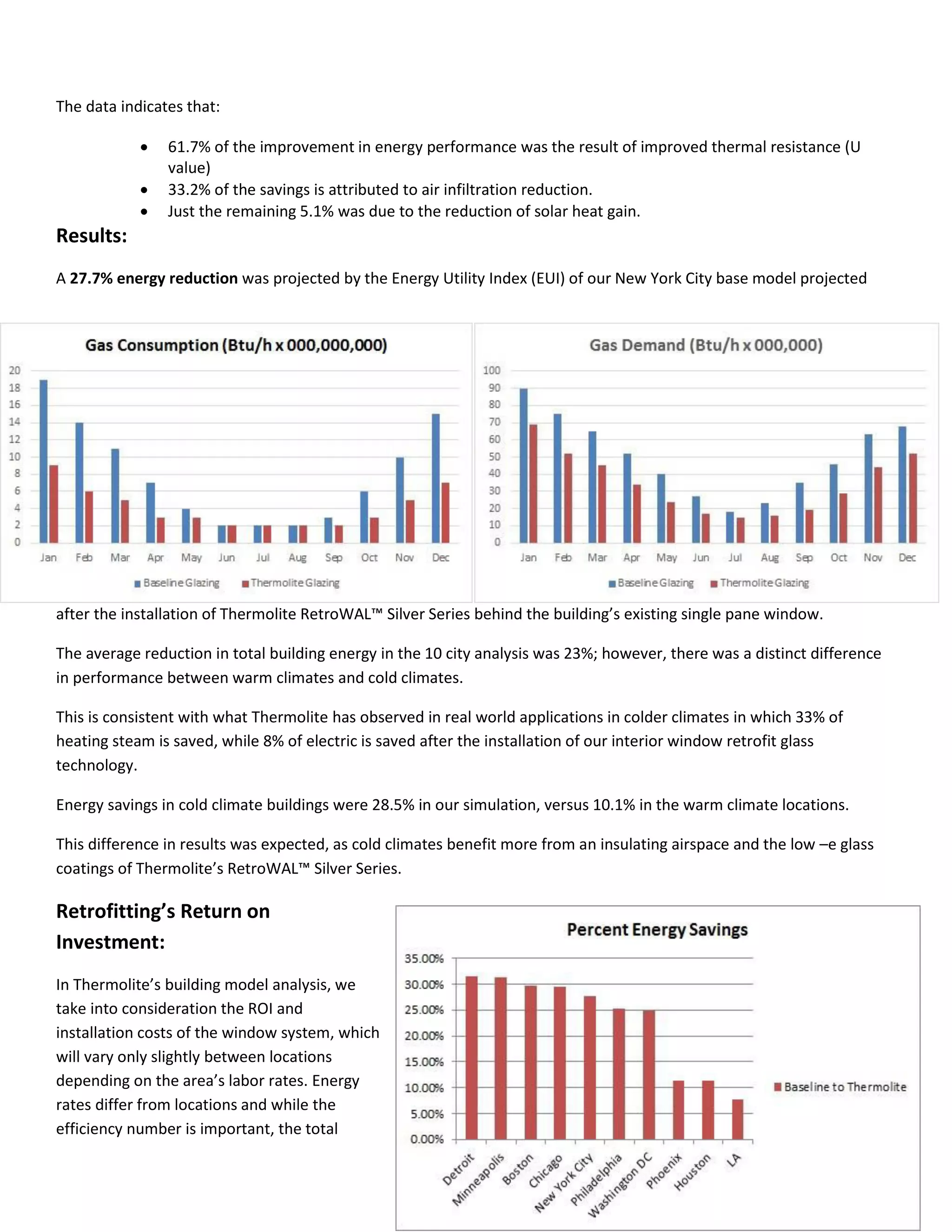
A 27.7% energy reduction was projected by the Energy Utility Index (EUI) of our New York City base model projected
after the i stallatio of Ther olite RetroWAL™ Sil er Series ehi d the uildi g’s e isti g si gle pa e i do .
The average reduction in total building energy in the 10 city analysis was 23%; however, there was a distinct difference
in performance between warm climates and cold climates.
This is consistent with what Thermolite has observed in real world applications in colder climates in which 33% of
heating steam is saved, while 8% of electric is saved after the installation of our interior window retrofit glass
technology.
Energy savings in cold climate buildings were 28.5% in our simulation, versus 10.1% in the warm climate locations.
This difference in results was expected, as cold climates benefit more from an insulating airspace and the low –e glass
coati gs of Ther olite’s RetroWAL™ Sil er Series.
Retrofitting’s Return on
Investment:
In Ther olite’s building model analysis, we
take into consideration the ROI and
installation costs of the window system, which
will vary only slightly between locations
depe di g o the area’s la or rates. Energy
rates differ from locations and while the
efficiency number is important, the total
energy savings will depend on local utility source and site costs.
The average cost for the installed window costs were assumed to be on average $20 per square foot for ROI analysis;
however, this cost will vary depending factors, such as existing window type, new glass selection, and installation labor
arrangement in each particular market.
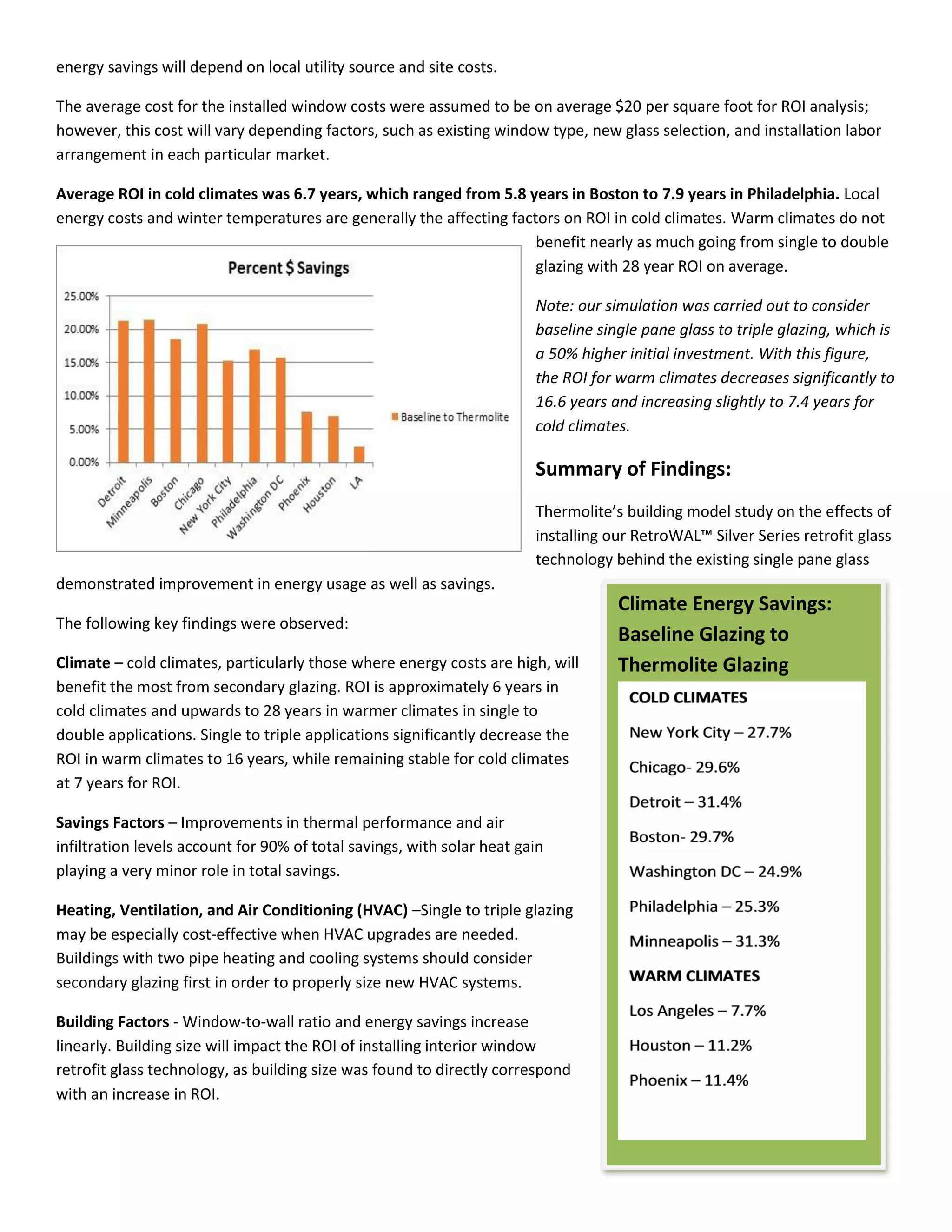
Average ROI in cold climates was 6.7 years, which ranged from 5.8 years in Boston to 7.9 years in Philadelphia. Local
energy costs and winter temperatures are generally the affecting factors on ROI in cold climates. Warm climates do not
benefit nearly as much going from single to double
glazing with 28 year ROI on average.
Note: our simulation was carried out to consider
baseline single pane glass to triple glazing, which is
a 50% higher initial investment. With this figure,
the ROI for warm climates decreases significantly to
16.6 years and increasing slightly to 7.4 years for
cold climates.
Summary of Findings:
Ther olite’s uildi g odel stud o the effe ts of
installing our RetroWAL™ Sil er Series retrofit glass
technology behind the existing single pane glass
demonstrated improvement in energy usage as well as savings.
The following key findings were observed:
Climate – cold climates, particularly those where energy costs are high, will
benefit the most from secondary glazing. ROI is approximately 6 years in
cold climates and upwards to 28 years in warmer climates in single to
double applications. Single to triple applications significantly decrease the
ROI in warm climates to 16 years, while remaining stable for cold climates
at 7 years for ROI.
Savings Factors – Improvements in thermal performance and air
infiltration levels account for 90% of total savings, with solar heat gain
playing a very minor role in total savings.
Heating, Ventilation, and Air Conditioning (HVAC) –Single to triple glazing
may be especially cost-effective when HVAC upgrades are needed.
Buildings with two pipe heating and cooling systems should consider
secondary glazing first in order to properly size new HVAC systems.
Building Factors - Window-to-wall ratio and energy savings increase
linearly. Building size will impact the ROI of installing interior window
retrofit glass technology, as building size was found to directly correspond
with an increase in ROI.
Climate Energy Savings:
Baseline Glazing to
Thermolite Glazing
Thermolite is a member of the U.S. Green Building Council®.
© 2014 Therm-O-Lite Windows, Inc.
www.thermolitewindows.com
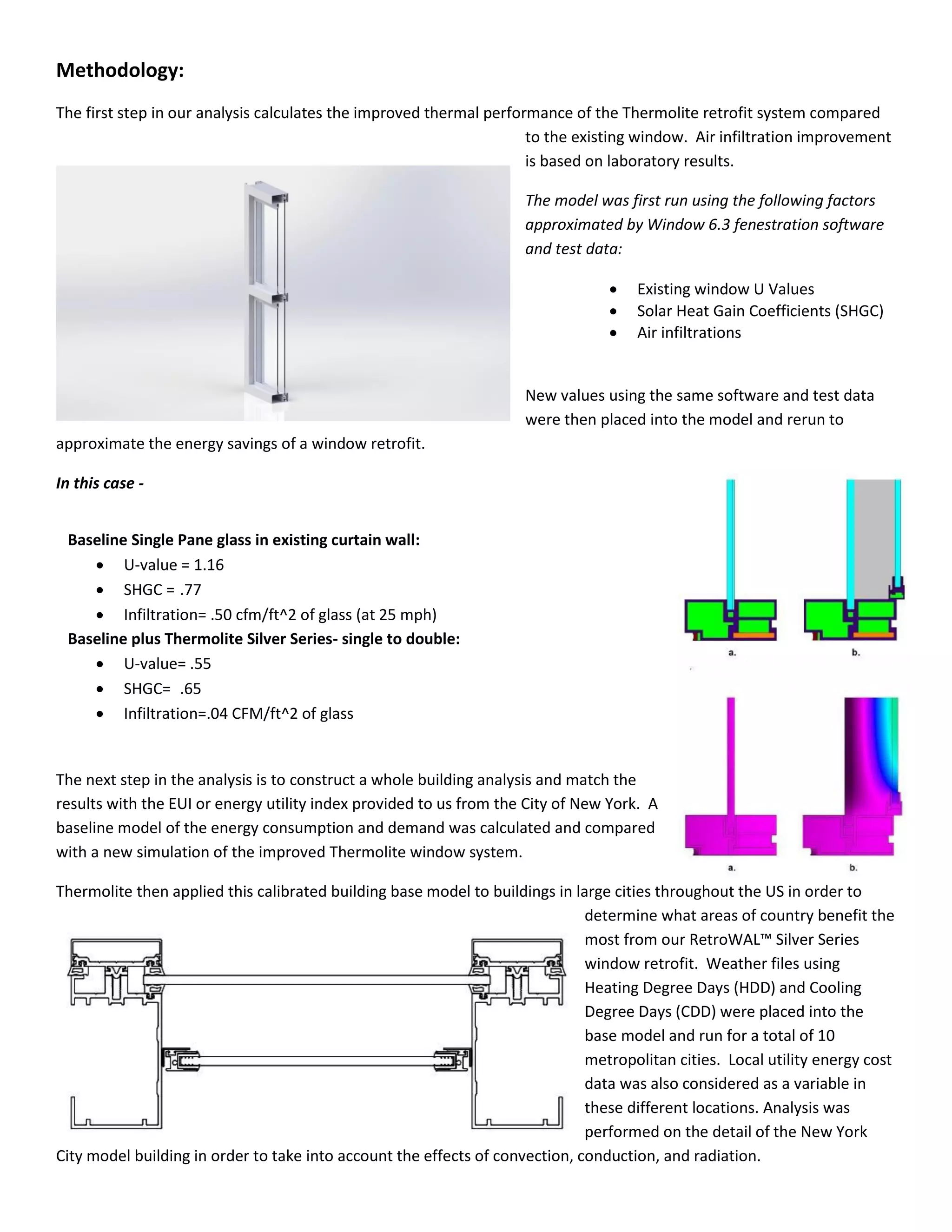
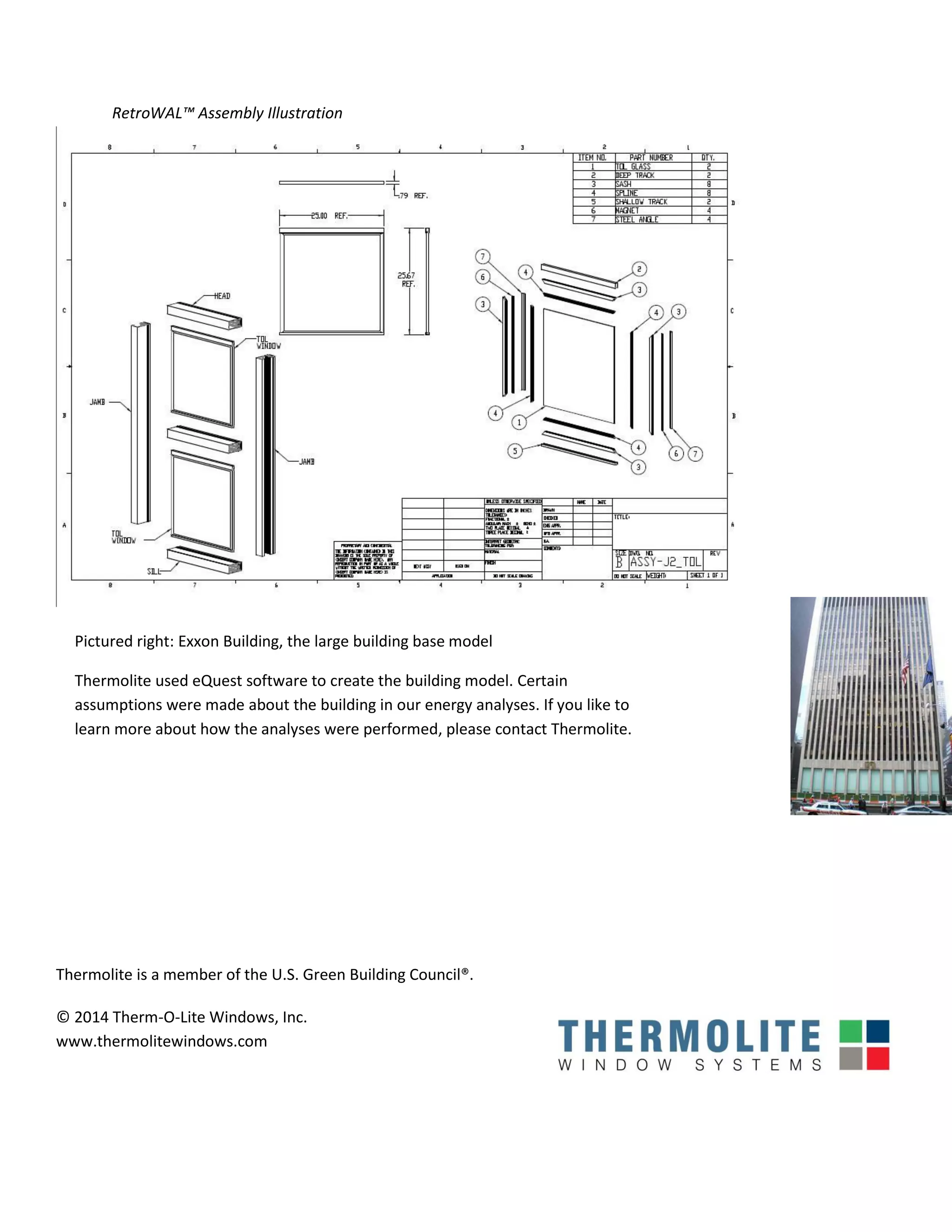
RetroWAL™ Assembly Illustration
Pictured right: Exxon Building, the large building base model
Thermolite used eQuest software to create the building model. Certain
assumptions were made about the building in our energy analyses. If you like to
learn more about how the analyses were performed, please contact Thermolite.

NYC Large Building Model Case Study_Final

  • 1.
    Case Study Large CityBuilding Modeling Commercial buildings can save over 20% of their uildi g’s e erg consumption with retrofit glass technology, in which a secondary glass panel is installed behind existing single glazed glass windows. To demonstrate the unique opportunity for building owners, city planners, and utility companies to increase the energy efficiency of their commercial buildings through retrofitting glass, Thermolite created a building model study using the available information about the Exxon Building, more commonly known as 1251 Avenue of the Americas, from the City of New York Building Energy Database to show how our RetroWAL™ Sil er Series i terior retrofit i do s ste ould i pa t energy savings in large city commercial buildings with non-thermally broken, single glazed curtain wall. Upgrading Glass from Single to Multiple Pane Using an Interior Window Retrofit
  • 2.
    Methodology: The first stepin our analysis calculates the improved thermal performance of the Thermolite retrofit system compared to the existing window. Air infiltration improvement is based on laboratory results. The model was first run using the following factors approximated by Window 6.3 fenestration software and test data:  Existing window U Values  Solar Heat Gain Coefficients (SHGC)  Air infiltrations New values using the same software and test data were then placed into the model and rerun to approximate the energy savings of a window retrofit. In this case - The next step in the analysis is to construct a whole building analysis and match the results with the EUI or energy utility index provided to us from the City of New York. A baseline model of the energy consumption and demand was calculated and compared with a new simulation of the improved Thermolite window system. Thermolite then applied this calibrated building base model to buildings in large cities throughout the US in order to determine what areas of country benefit the most from our RetroWAL™ Sil er Series window retrofit. Weather files using Heating Degree Days (HDD) and Cooling Degree Days (CDD) were placed into the base model and run for a total of 10 metropolitan cities. Local utility energy cost data was also considered as a variable in these different locations. Analysis was performed on the detail of the New York City model building in order to take into account the effects of convection, conduction, and radiation. Baseline Single Pane glass in existing curtain wall:  U-value = 1.16  SHGC = .77  Infiltration= .50 cfm/ft^2 of glass (at 25 mph) Baseline plus Thermolite Silver Series- single to double:  U-value= .55  SHGC= .65  Infiltration=.04 CFM/ft^2 of glass
  • 3.
    The data indicatesthat:  61.7% of the improvement in energy performance was the result of improved thermal resistance (U value)  33.2% of the savings is attributed to air infiltration reduction.  Just the remaining 5.1% was due to the reduction of solar heat gain. Results: A 27.7% energy reduction was projected by the Energy Utility Index (EUI) of our New York City base model projected after the i stallatio of Ther olite RetroWAL™ Sil er Series ehi d the uildi g’s e isti g si gle pa e i do . The average reduction in total building energy in the 10 city analysis was 23%; however, there was a distinct difference in performance between warm climates and cold climates. This is consistent with what Thermolite has observed in real world applications in colder climates in which 33% of heating steam is saved, while 8% of electric is saved after the installation of our interior window retrofit glass technology. Energy savings in cold climate buildings were 28.5% in our simulation, versus 10.1% in the warm climate locations. This difference in results was expected, as cold climates benefit more from an insulating airspace and the low –e glass coati gs of Ther olite’s RetroWAL™ Sil er Series. Retrofitting’s Return on Investment: In Ther olite’s building model analysis, we take into consideration the ROI and installation costs of the window system, which will vary only slightly between locations depe di g o the area’s la or rates. Energy rates differ from locations and while the efficiency number is important, the total
  • 4.
    energy savings willdepend on local utility source and site costs. The average cost for the installed window costs were assumed to be on average $20 per square foot for ROI analysis; however, this cost will vary depending factors, such as existing window type, new glass selection, and installation labor arrangement in each particular market. Average ROI in cold climates was 6.7 years, which ranged from 5.8 years in Boston to 7.9 years in Philadelphia. Local energy costs and winter temperatures are generally the affecting factors on ROI in cold climates. Warm climates do not benefit nearly as much going from single to double glazing with 28 year ROI on average. Note: our simulation was carried out to consider baseline single pane glass to triple glazing, which is a 50% higher initial investment. With this figure, the ROI for warm climates decreases significantly to 16.6 years and increasing slightly to 7.4 years for cold climates. Summary of Findings: Ther olite’s uildi g odel stud o the effe ts of installing our RetroWAL™ Sil er Series retrofit glass technology behind the existing single pane glass demonstrated improvement in energy usage as well as savings. The following key findings were observed: Climate – cold climates, particularly those where energy costs are high, will benefit the most from secondary glazing. ROI is approximately 6 years in cold climates and upwards to 28 years in warmer climates in single to double applications. Single to triple applications significantly decrease the ROI in warm climates to 16 years, while remaining stable for cold climates at 7 years for ROI. Savings Factors – Improvements in thermal performance and air infiltration levels account for 90% of total savings, with solar heat gain playing a very minor role in total savings. Heating, Ventilation, and Air Conditioning (HVAC) –Single to triple glazing may be especially cost-effective when HVAC upgrades are needed. Buildings with two pipe heating and cooling systems should consider secondary glazing first in order to properly size new HVAC systems. Building Factors - Window-to-wall ratio and energy savings increase linearly. Building size will impact the ROI of installing interior window retrofit glass technology, as building size was found to directly correspond with an increase in ROI. Climate Energy Savings: Baseline Glazing to Thermolite Glazing
  • 5.
    Thermolite is amember of the U.S. Green Building Council®. © 2014 Therm-O-Lite Windows, Inc. www.thermolitewindows.com RetroWAL™ Assembly Illustration Pictured right: Exxon Building, the large building base model Thermolite used eQuest software to create the building model. Certain assumptions were made about the building in our energy analyses. If you like to learn more about how the analyses were performed, please contact Thermolite.