The Carbon Cycle briefly: Has  stores of carbon  which hold the carbon Atmosphere Soil and lithosphere (fossil fuels) Vegetation Oceans Carbon is TRANSFERRED between stores By respiration and photosynthesis Plants are eaten and die Decomposers Burning of fossil fuels
Nutrient cycling Key terms: Nutrient cycle Biomass Soil Litter May 29, 2009
Recycling of nutrients Ecosystems cycle nutrientd as well as transferring food energy Two types: Micronutrients e.g. sulphur, magnesium Macronutrients e.g. Oxygen, carbon, hydrogen and nitrogen
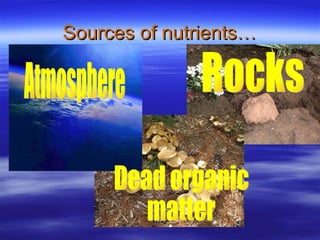
Sources of nutrients… Atmosphere Rocks Dead organic matter
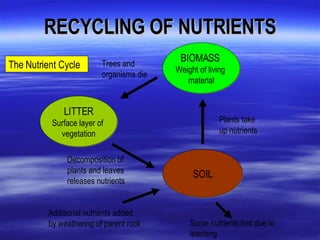
RECYCLING OF NUTRIENTS LITTER Surface layer of  vegetation BIOMASS  Weight of living  material SOIL Additional nutrients added by weathering of parent rock Trees and organisms die Plants take up nutrients Some nutrients lost due to leaching Decomposition of plants and leaves releases nutrients The Nutrient Cycle
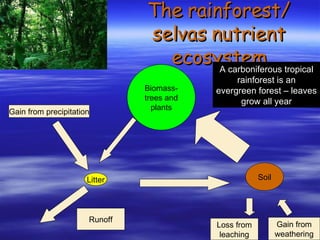
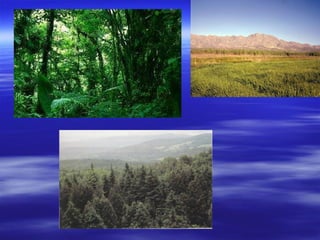
The rainforest/ selvas nutrient ecosystem Biomass-trees and plants Litter Soil Gain from precipitation Gain from weathering Loss from leaching A carboniferous tropical rainforest is an evergreen forest – leaves grow all year Runoff
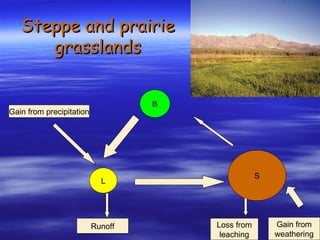
Steppe and prairie grasslands B L S Gain from precipitation Gain from weathering Loss from leaching Runoff
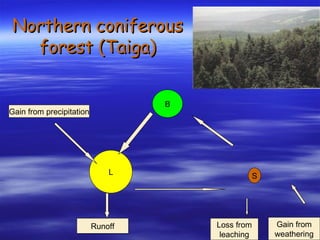
Northern coniferous forest (Taiga) B L S Gain from precipitation Gain from weathering Loss from leaching Runoff
 
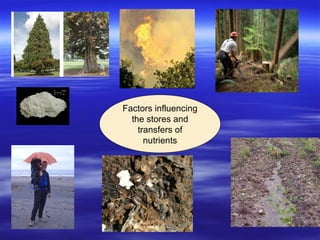
Factors influencing the stores and transfers of nutrients
Homework Complete a written comparison of the selvas (tropical rainforest) nutrient cycle, the prairie nutrient cycle and the taiga nutrient cycle.

Nutrient Cycling

  • 1.
    The Carbon Cyclebriefly: Has stores of carbon which hold the carbon Atmosphere Soil and lithosphere (fossil fuels) Vegetation Oceans Carbon is TRANSFERRED between stores By respiration and photosynthesis Plants are eaten and die Decomposers Burning of fossil fuels
  • 2.
    Nutrient cycling Keyterms: Nutrient cycle Biomass Soil Litter May 29, 2009
  • 3.
    Recycling of nutrientsEcosystems cycle nutrientd as well as transferring food energy Two types: Micronutrients e.g. sulphur, magnesium Macronutrients e.g. Oxygen, carbon, hydrogen and nitrogen
  • 4.
    Sources of nutrients…Atmosphere Rocks Dead organic matter
  • 5.
    RECYCLING OF NUTRIENTSLITTER Surface layer of vegetation BIOMASS Weight of living material SOIL Additional nutrients added by weathering of parent rock Trees and organisms die Plants take up nutrients Some nutrients lost due to leaching Decomposition of plants and leaves releases nutrients The Nutrient Cycle
  • 6.
    The rainforest/ selvasnutrient ecosystem Biomass-trees and plants Litter Soil Gain from precipitation Gain from weathering Loss from leaching A carboniferous tropical rainforest is an evergreen forest – leaves grow all year Runoff
  • 7.
    Steppe and prairiegrasslands B L S Gain from precipitation Gain from weathering Loss from leaching Runoff
  • 8.
    Northern coniferous forest(Taiga) B L S Gain from precipitation Gain from weathering Loss from leaching Runoff
  • 9.
  • 10.
    Factors influencing thestores and transfers of nutrients
  • 11.
    Homework Complete awritten comparison of the selvas (tropical rainforest) nutrient cycle, the prairie nutrient cycle and the taiga nutrient cycle.