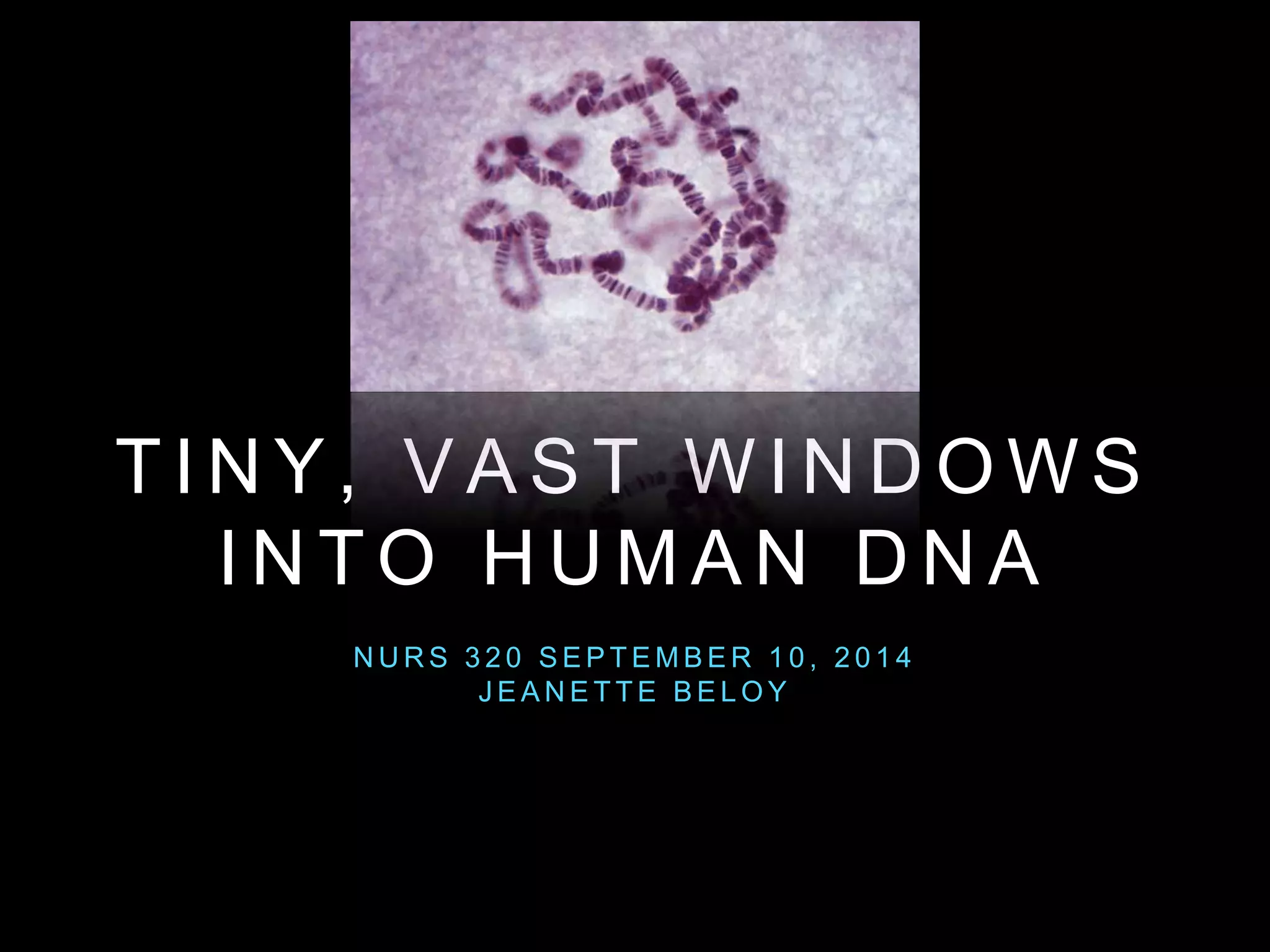
T INY, VAST WINDOWS 
INTO HUMAN DNA 
NURS 3 2 0 SEPTEMBER 1 0 , 2 0 1 4 
JEANET TE BELOY
H A V E Y O U E V E R H E A R D O F T H E S A Y I N G … 
BIG THINGS CAN COME 
FROM SMAL L PACKAGES?
LET ME BRING YOUR 
MIND INTO A 
L I TERAL LY SMAL LER 
A S P E C T … 
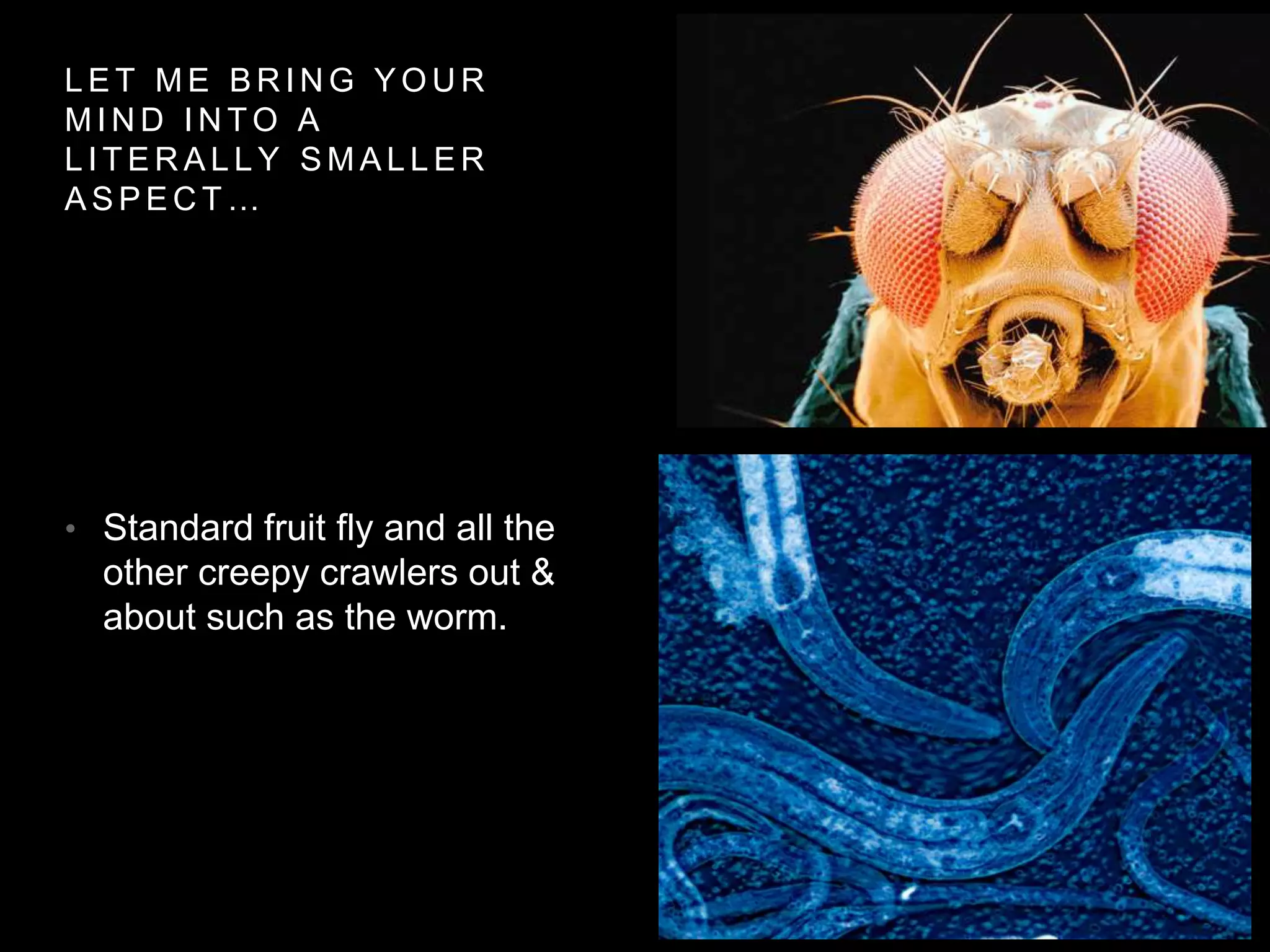
• Standard fruit fly and all the 
other creepy crawlers out & 
about such as the worm.
FROM THESE TWO SMAL L SPECIES 
CAME GREAT DISCOVERY! 
• 1900s: Studies on the fruit fly AKA Drosophila melanogaster 
showed that our genes lie on chromosomes. As well as other 
discoveries like why we sleep and how heart disease 
develops. 
• 1960s: The tiny worm AKA Caenorhabditis elegans made us 
discover how a single egg gives rise to a complete animal. 
Studies with the worm are still ongoing for such experiments 
that include how our brains are wired and why we age. 
BUT THERE’S MORE…
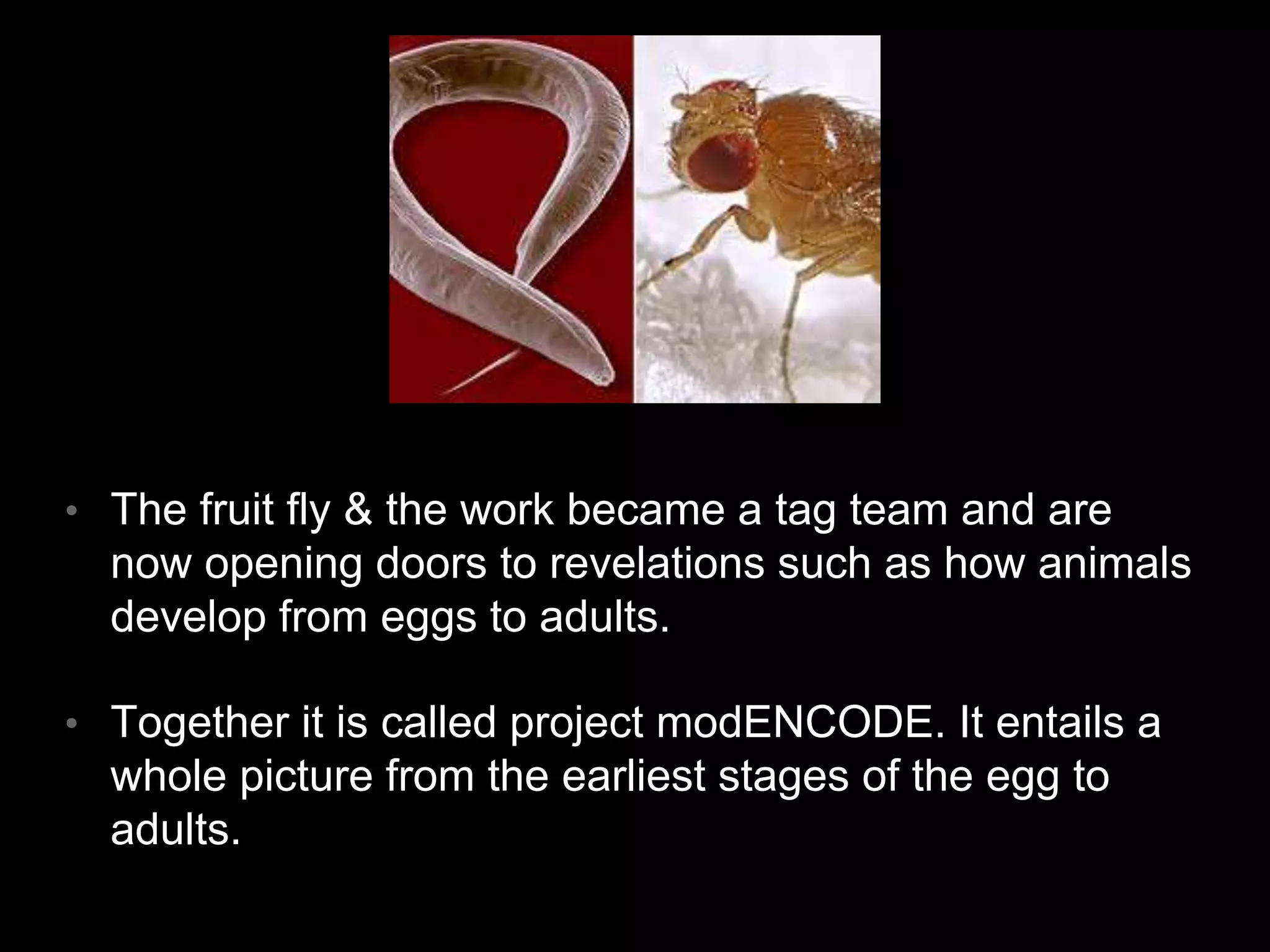
• The fruit fly & the work became a tag team and are 
now opening doors to revelations such as how animals 
develop from eggs to adults. 
• Together it is called project modENCODE. It entails a 
whole picture from the earliest stages of the egg to 
adults.
Robert H. Waterston and all of his colleagues state 
that “exploring the similarity may provide scientists 
with new insights into genetic disorders and disease 
like cancer” (Zimmer, 2014).
IN OTHER WORDS 
• If they can get a whole picture of the miraculous event 
from egg to adult they can further open the secrets of 
how disorders and chaos come into fruition within our 
bodies.
A L I T T LE BIO 1 0 1 
• A gene contains information that a cell can use to 
make a particular molecule. But an animal may only 
use a given gene at a particular time in its life, or in a 
particular organ. 
• This is where histone marks come in. They can open 
up a particular cell with a specific set of DNA to work. 
In other words, it remains to be the key that unlocks a 
specific cell to work in a particular area.
WHAT MODENCODE DID: 
THEY TOOK 
DETAI LED PICTURES 
OF THE MOLECULAR 
DANCE AND 
COMPARED I T TO 
THE 3 SPECIES. 
( FRUI T F LY, WORM & 
HUMANS. )
WHAT 
MODENCODE 
DISCOVERED: 
• Genes turned on & off in the same 
pattern, following a predictable rhythm. 
• There are 16 set of genes that function 
like this. However, they have not found 
in particular what each of them do yet. 
• Histone marks control DNA in much the 
same in ALL 3 species. 
• Different factors switched on the same 
genes in different cells & at different 
stages of development. 
• Yet underneath the complexity, all 3 
species follow a lot of the same rules 
of regulating their genes!
“The potential of such data is enormous.” 
–ALEXANDER STARK (GENOMICIST AT THE RESEARCH 
INST I TUE OF MOLECULAR PATHOLOGY
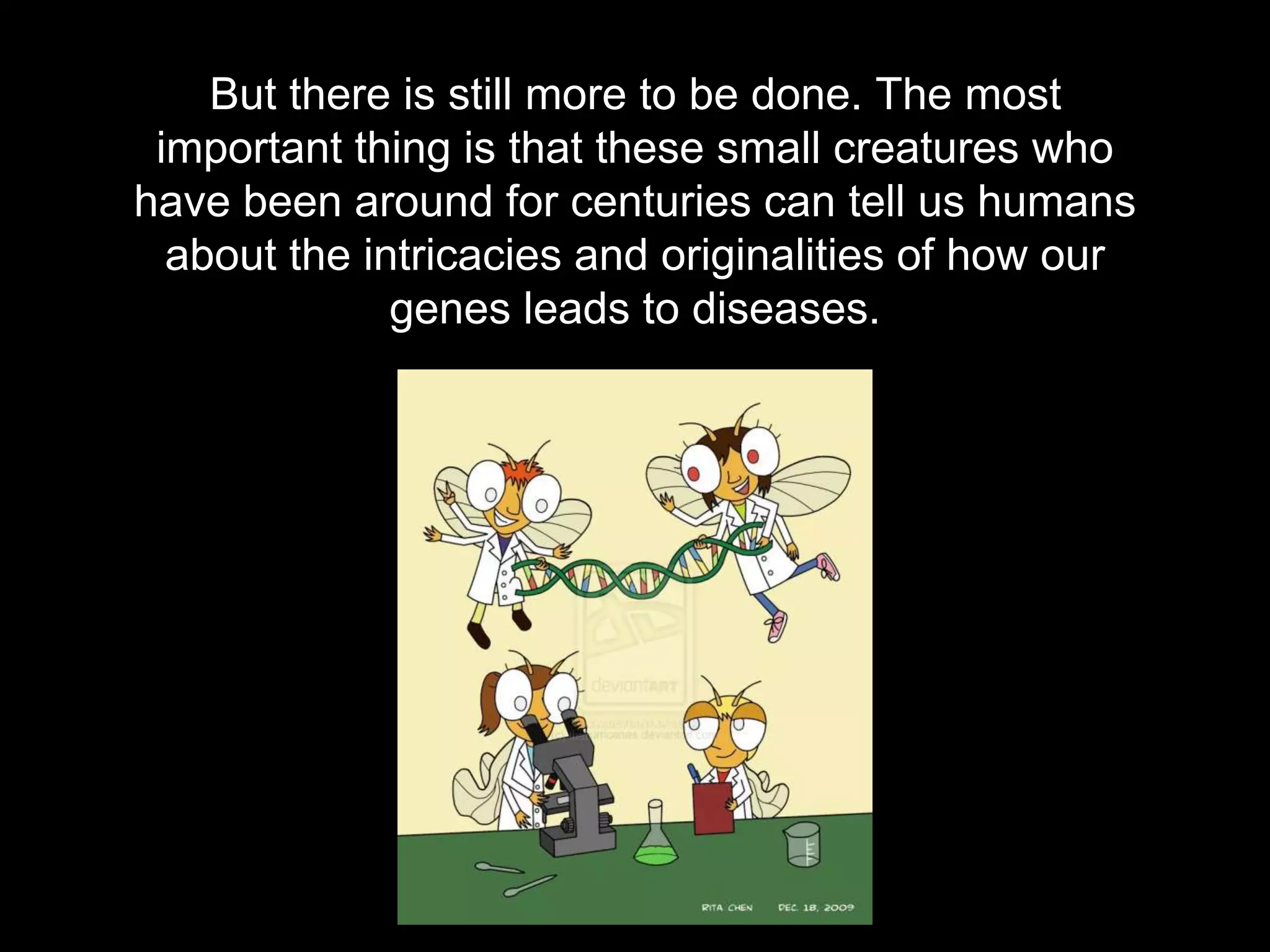
But there is still more to be done. The most 
important thing is that these small creatures who 
have been around for centuries can tell us humans 
about the intricacies and originalities of how our 
genes leads to diseases.

Nurs320 pp presentationdna

  • 1.
    T INY, VASTWINDOWS INTO HUMAN DNA NURS 3 2 0 SEPTEMBER 1 0 , 2 0 1 4 JEANET TE BELOY
  • 2.
    H A VE Y O U E V E R H E A R D O F T H E S A Y I N G … BIG THINGS CAN COME FROM SMAL L PACKAGES?
  • 3.
    LET ME BRINGYOUR MIND INTO A L I TERAL LY SMAL LER A S P E C T … • Standard fruit fly and all the other creepy crawlers out & about such as the worm.
  • 4.
    FROM THESE TWOSMAL L SPECIES CAME GREAT DISCOVERY! • 1900s: Studies on the fruit fly AKA Drosophila melanogaster showed that our genes lie on chromosomes. As well as other discoveries like why we sleep and how heart disease develops. • 1960s: The tiny worm AKA Caenorhabditis elegans made us discover how a single egg gives rise to a complete animal. Studies with the worm are still ongoing for such experiments that include how our brains are wired and why we age. BUT THERE’S MORE…
  • 5.
    • The fruitfly & the work became a tag team and are now opening doors to revelations such as how animals develop from eggs to adults. • Together it is called project modENCODE. It entails a whole picture from the earliest stages of the egg to adults.
  • 6.
    Robert H. Waterstonand all of his colleagues state that “exploring the similarity may provide scientists with new insights into genetic disorders and disease like cancer” (Zimmer, 2014).
  • 7.
    IN OTHER WORDS • If they can get a whole picture of the miraculous event from egg to adult they can further open the secrets of how disorders and chaos come into fruition within our bodies.
  • 8.
    A L IT T LE BIO 1 0 1 • A gene contains information that a cell can use to make a particular molecule. But an animal may only use a given gene at a particular time in its life, or in a particular organ. • This is where histone marks come in. They can open up a particular cell with a specific set of DNA to work. In other words, it remains to be the key that unlocks a specific cell to work in a particular area.
  • 9.
    WHAT MODENCODE DID: THEY TOOK DETAI LED PICTURES OF THE MOLECULAR DANCE AND COMPARED I T TO THE 3 SPECIES. ( FRUI T F LY, WORM & HUMANS. )
  • 10.
    WHAT MODENCODE DISCOVERED: • Genes turned on & off in the same pattern, following a predictable rhythm. • There are 16 set of genes that function like this. However, they have not found in particular what each of them do yet. • Histone marks control DNA in much the same in ALL 3 species. • Different factors switched on the same genes in different cells & at different stages of development. • Yet underneath the complexity, all 3 species follow a lot of the same rules of regulating their genes!
  • 11.
    “The potential ofsuch data is enormous.” –ALEXANDER STARK (GENOMICIST AT THE RESEARCH INST I TUE OF MOLECULAR PATHOLOGY
  • 12.
    But there isstill more to be done. The most important thing is that these small creatures who have been around for centuries can tell us humans about the intricacies and originalities of how our genes leads to diseases.