Error Analysis
Welcome To Our Presentation
SUBMITTED TO:
Name : MD. YOUSUF ALI
Designation : Lecturer in Mathematics
Department of CSE
Team Member
Name : ID :
Shahin 222-15-6362
Maksudul hasan Khoka 222-15-6426
Irfan Sadik 222-15-6545
Farhan Rahman Badhon 222-15-6302
Shatabda Singha 222-15-6417
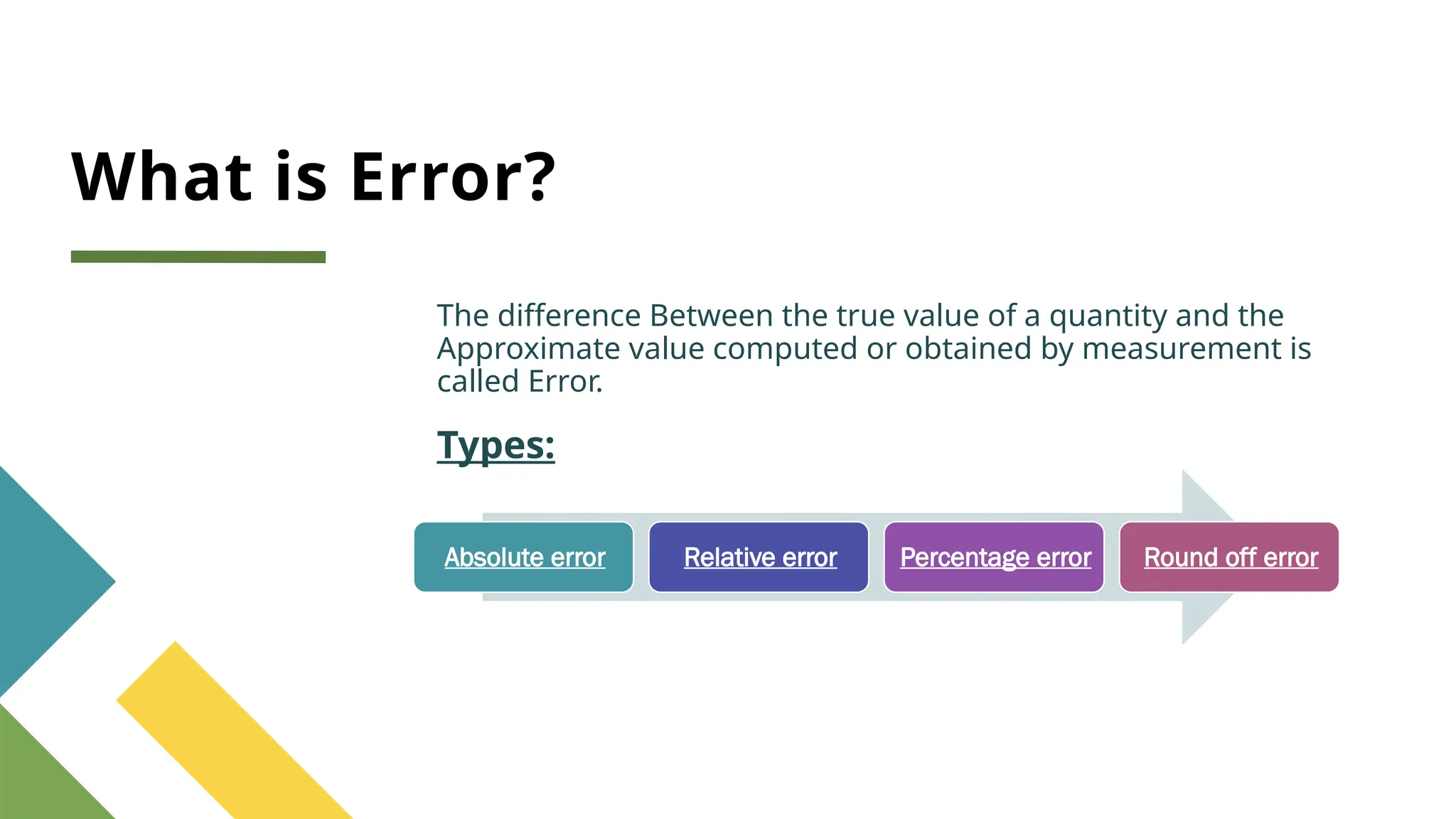
What is Error?
The difference Between the true value of a quantity and the
Approximate value computed or obtained by measurement is
called Error.
Types:
Absolute error Relative error Percentage error Round off error
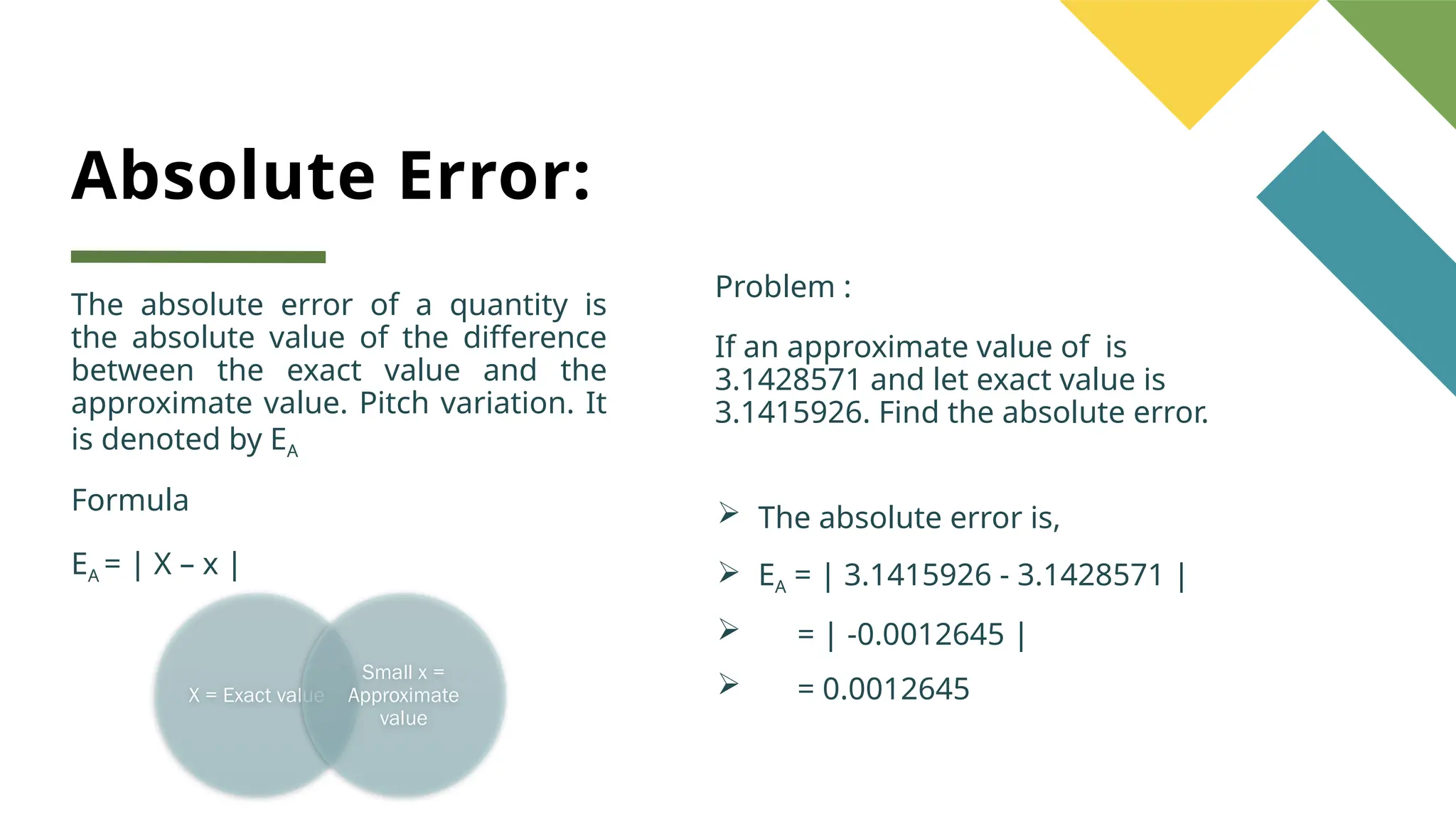
Absolute Error:
The absolute error of a quantity is
the absolute value of the difference
between the exact value and the
approximate value. Pitch variation. It
is denoted by EA
Formula
EA = | X – x |
Problem :
If an approximate value of is
3.1428571 and let exact value is
3.1415926. Find the absolute error.
X = Exact value
Small x =
Approximate
value
 The absolute error is,
 EA = | 3.1415926 - 3.1428571 |
 = | -0.0012645 |
 = 0.0012645
Relative & Percentage Error:
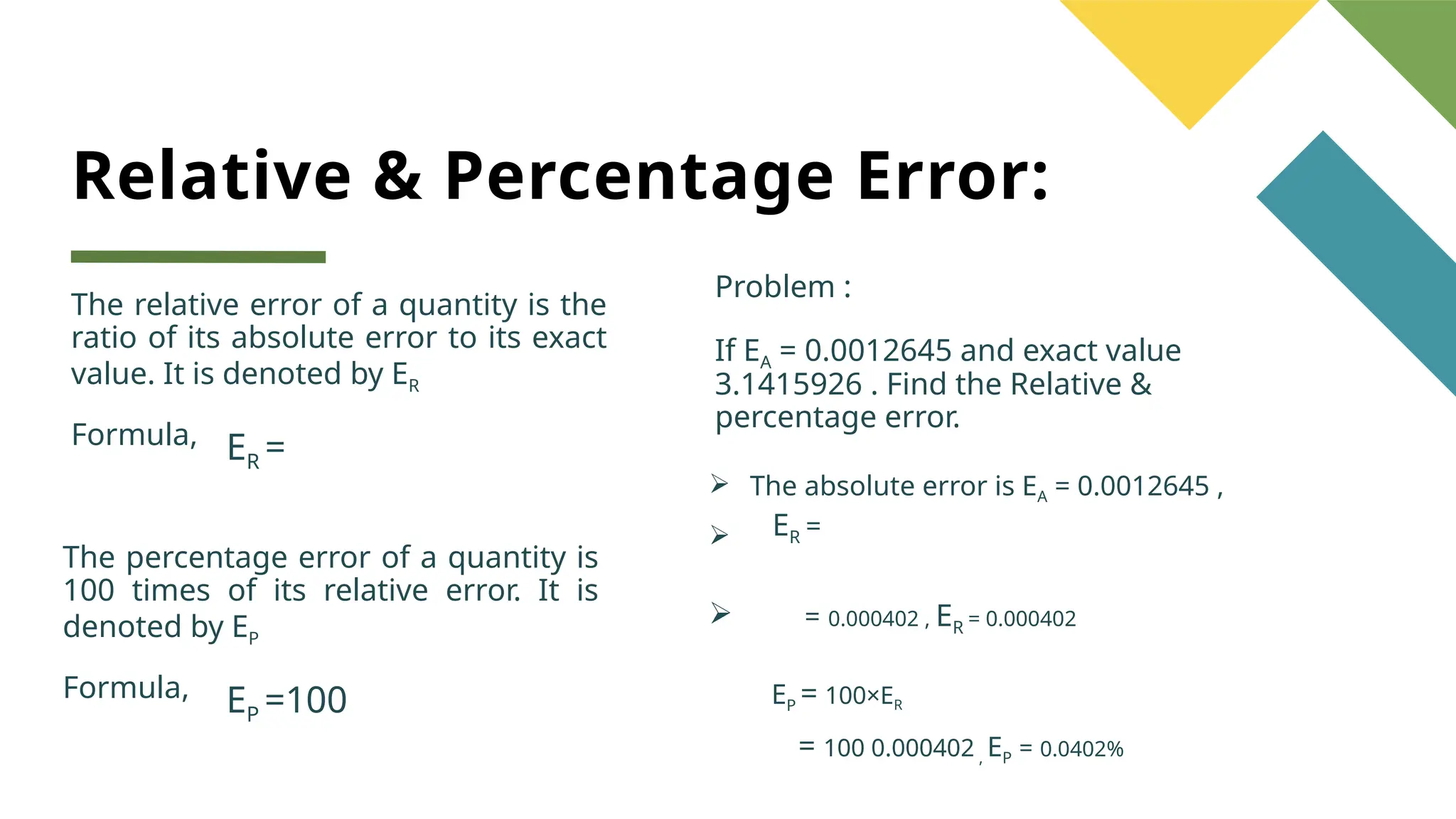
The relative error of a quantity is the
ratio of its absolute error to its exact
value. It is denoted by ER
Formula,
Problem :
If EA = 0.0012645 and exact value
3.1415926 . Find the Relative &
percentage error.
 The absolute error is EA = 0.0012645 ,

 = 0.000402 , ER = 0.000402
EP = 100×ER
= 100 0.000402 , EP = 0.0402%
ER =
The percentage error of a quantity is
100 times of its relative error. It is
denoted by EP
Formula, EP =100
ER =
Round off Error:
The difference between the calculated
approximation of a number and its exact
mathematical value due to rounding.
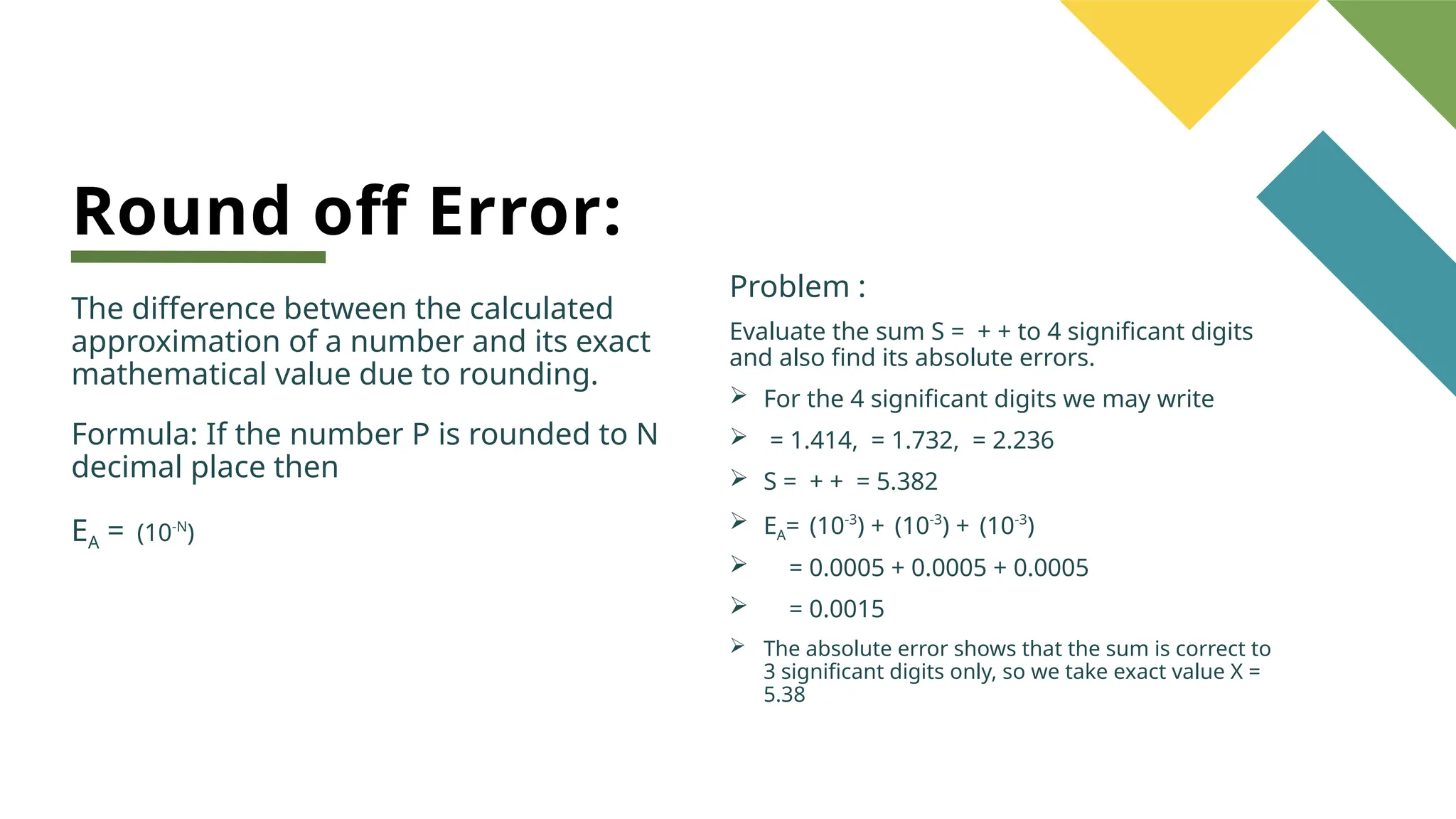
Formula: If the number P is rounded to N
decimal place then
EA = (10-N
)
Problem :
Evaluate the sum S = + + to 4 significant digits
and also find its absolute errors.
 For the 4 significant digits we may write
 = 1.414, = 1.732, = 2.236
 S = + + = 5.382
 EA= (10-3
) + (10-3
) + (10-3
)
 = 0.0005 + 0.0005 + 0.0005
 = 0.0015
 The absolute error shows that the sum is correct to
3 significant digits only, so we take exact value X =
5.38
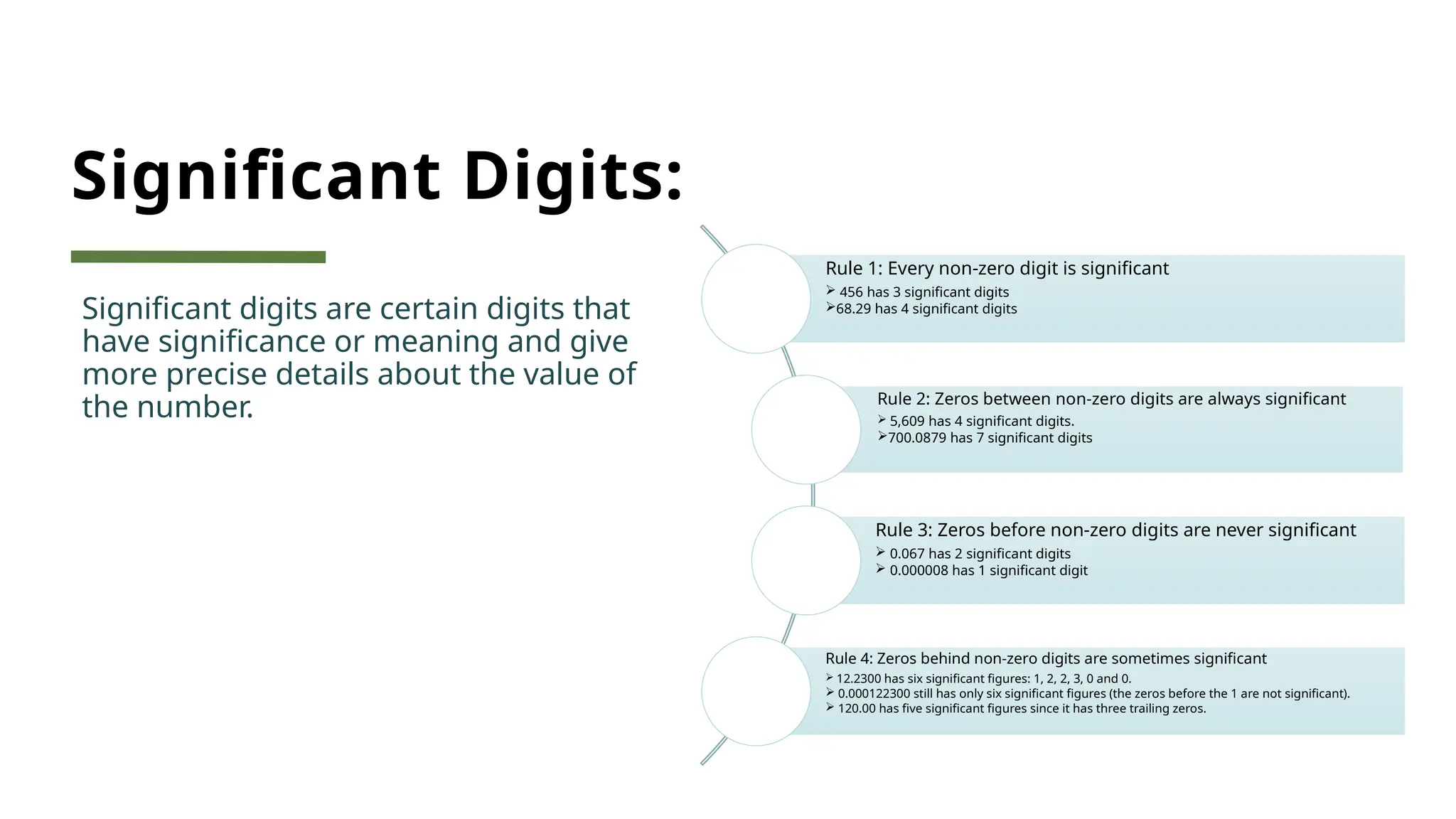
Significant Digits:
Significant digits are certain digits that
have significance or meaning and give
more precise details about the value of
the number.
Rule 1: Every non-zero digit is significant
 456 has 3 significant digits
68.29 has 4 significant digits
Rule 2: Zeros between non-zero digits are always significant
 5,609 has 4 significant digits.
700.0879 has 7 significant digits
Rule 3: Zeros before non-zero digits are never significant
 0.067 has 2 significant digits
 0.000008 has 1 significant digit
Rule 4: Zeros behind non-zero digits are sometimes significant
 12.2300 has six significant figures: 1, 2, 2, 3, 0 and 0.
 0.000122300 still has only six significant figures (the zeros before the 1 are not significant).
 120.00 has five significant figures since it has three trailing zeros.
Conclusion:
Thank you

Numerical methods Error Analysis math.pptx

  • 1.
    Error Analysis Welcome ToOur Presentation SUBMITTED TO: Name : MD. YOUSUF ALI Designation : Lecturer in Mathematics Department of CSE
  • 2.
    Team Member Name :ID : Shahin 222-15-6362 Maksudul hasan Khoka 222-15-6426 Irfan Sadik 222-15-6545 Farhan Rahman Badhon 222-15-6302 Shatabda Singha 222-15-6417
  • 3.
    What is Error? Thedifference Between the true value of a quantity and the Approximate value computed or obtained by measurement is called Error. Types: Absolute error Relative error Percentage error Round off error
  • 4.
    Absolute Error: The absoluteerror of a quantity is the absolute value of the difference between the exact value and the approximate value. Pitch variation. It is denoted by EA Formula EA = | X – x | Problem : If an approximate value of is 3.1428571 and let exact value is 3.1415926. Find the absolute error. X = Exact value Small x = Approximate value  The absolute error is,  EA = | 3.1415926 - 3.1428571 |  = | -0.0012645 |  = 0.0012645
  • 5.
    Relative & PercentageError: The relative error of a quantity is the ratio of its absolute error to its exact value. It is denoted by ER Formula, Problem : If EA = 0.0012645 and exact value 3.1415926 . Find the Relative & percentage error.  The absolute error is EA = 0.0012645 ,   = 0.000402 , ER = 0.000402 EP = 100×ER = 100 0.000402 , EP = 0.0402% ER = The percentage error of a quantity is 100 times of its relative error. It is denoted by EP Formula, EP =100 ER =
  • 6.
    Round off Error: Thedifference between the calculated approximation of a number and its exact mathematical value due to rounding. Formula: If the number P is rounded to N decimal place then EA = (10-N ) Problem : Evaluate the sum S = + + to 4 significant digits and also find its absolute errors.  For the 4 significant digits we may write  = 1.414, = 1.732, = 2.236  S = + + = 5.382  EA= (10-3 ) + (10-3 ) + (10-3 )  = 0.0005 + 0.0005 + 0.0005  = 0.0015  The absolute error shows that the sum is correct to 3 significant digits only, so we take exact value X = 5.38
  • 7.
    Significant Digits: Significant digitsare certain digits that have significance or meaning and give more precise details about the value of the number. Rule 1: Every non-zero digit is significant  456 has 3 significant digits 68.29 has 4 significant digits Rule 2: Zeros between non-zero digits are always significant  5,609 has 4 significant digits. 700.0879 has 7 significant digits Rule 3: Zeros before non-zero digits are never significant  0.067 has 2 significant digits  0.000008 has 1 significant digit Rule 4: Zeros behind non-zero digits are sometimes significant  12.2300 has six significant figures: 1, 2, 2, 3, 0 and 0.  0.000122300 still has only six significant figures (the zeros before the 1 are not significant).  120.00 has five significant figures since it has three trailing zeros.
  • 8.
  • 9.