International Journal of Trend in Scientific Research and Development (IJTSRD)
Volume 6 Issue 2, January-February 2022 Available Online: www.ijtsrd.com e-ISSN: 2456 – 6470
@ IJTSRD | Unique Paper ID – IJTSRD49161 | Volume – 6 | Issue – 2 | Jan-Feb 2022 Page 104
Numerical Investigation of Air Cooled
Condensers using Different Refrigerants
Raghvendra Thakur1
, Ashwini Bhoi2
1
Research Scholar, 2
Assistant Professor,
1,2
Department of Mechanical Engineering, Raipur Institute of Technology, Raipur, Chhattisgarh, India
ABSTRACT
Condensers are an integral part of refrigeration system. The current
research reviews existing work conducted on improving the design
and performance of condenser by varying design and operating
conditions. The comparative studies between different types of
condensers on the basis of COP (coefficient of performance), energy
consumption, refrigeration capacity are also presented. The effect of
operational parameters and other factors along with development of
empirical correlation on performance is also presented.
KEYWORDS: CFD, Condensers, Refrigerant
How to cite this paper: Raghvendra
Thakur | Ashwini Bhoi "Numerical
Investigation of Air Cooled Condensers
using Different
Refrigerants"
Published in
International Journal
of Trend in
Scientific Research
and Development
(ijtsrd), ISSN: 2456-
6470, Volume-6 | Issue-2, February
2022, pp.104-107, URL:
www.ijtsrd.com/papers/ijtsrd49161.pdf
Copyright © 2022 by author(s) and
International Journal of Trend in
Scientific Research and Development
Journal. This is an
Open Access article
distributed under the
terms of the Creative Commons
Attribution License (CC BY 4.0)
(http://creativecommons.org/licenses/by/4.0)
1. INTRODUCTION
Condenser is an important component of any
refrigeration system. In a typical refrigerant
condenser, the refrigerant enters the condenser in a
superheated state. It is first de-superheated and then
condensed by rejecting heat to an external medium.
The refrigerant may leave the condenser as a
saturated or a sub-cooled liquid, depending upon the
temperature of the external medium and design of the
condenser. In actual refrigeration systems with a
finite pressure drop in the condenser or in a system
using a zeotropic refrigerant mixture, the temperature
of the refrigerant changes during the condensation
process also.
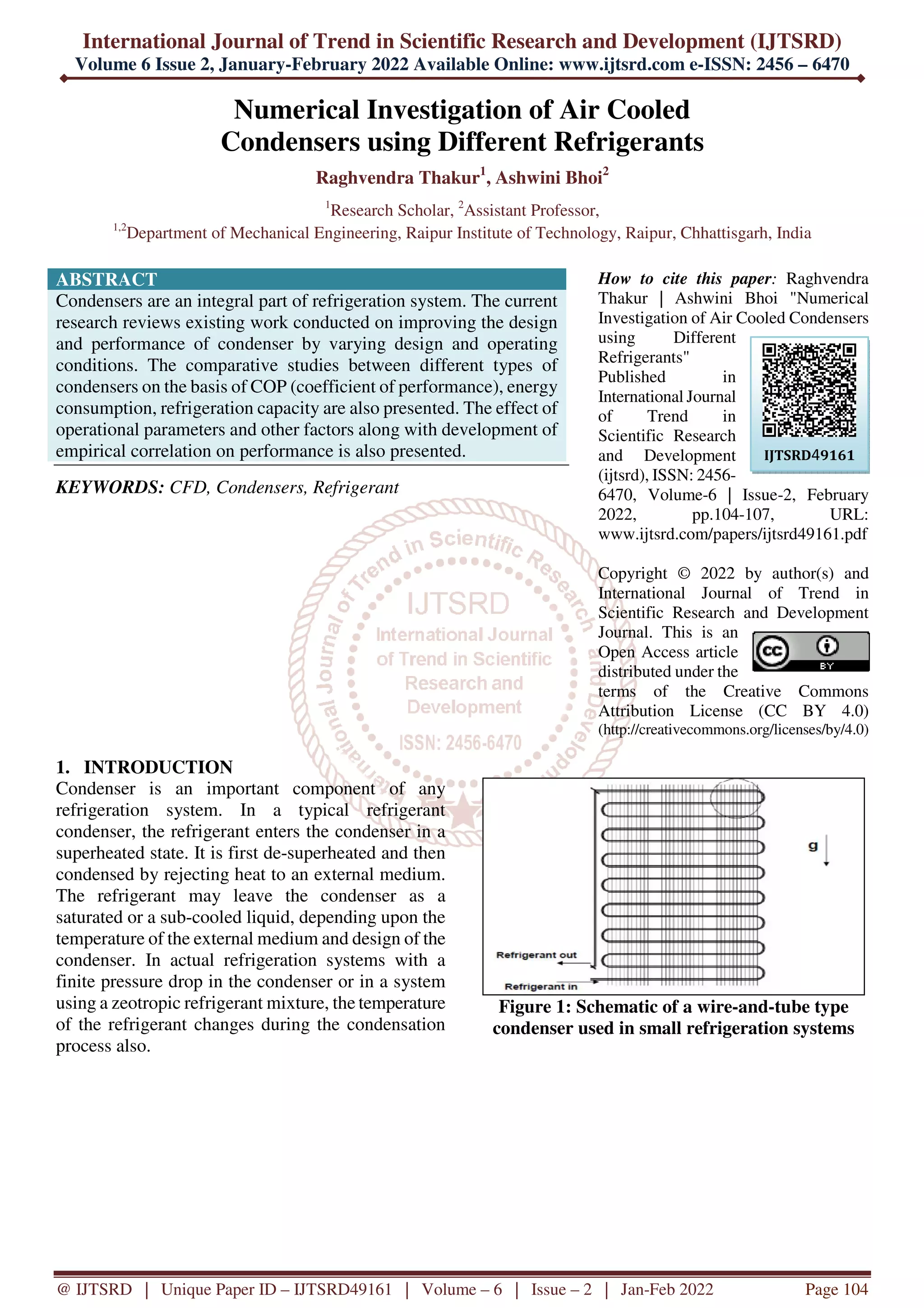
Figure 1: Schematic of a wire-and-tube type
condenser used in small refrigeration systems
IJTSRD49161
International Journal of Trend in Scientific Research and Development @ www.ijtsrd.com eISSN: 2456-6470
@ IJTSRD | Unique Paper ID – IJTSRD49161 | Volume – 6 | Issue – 2 | Jan-Feb 2022 Page 105
The finned type condensers are mounted either below
the refrigerator at an angle or on the backside of the
refrigerator. In case, it is mounted below, then the
warm air rises up and to assist it an air envelope is
formed by providing a jacket on backside of the
refrigerator. The fin spacing is kept large to minimize
the effect of fouling by dust and to allow air to flow
freely with little resistance. In this design, the
condenser tube (in serpentine form) was attached to a
plate and the plate was mounted on the backside of
the refrigerator. The plate acted like a fin and warm
air rose up along it.
2. LITERATURE REVIEW
Ferry (1996) [1] has done a study on treatment of
water for controlling the growth of biological
organisms specially algae. Formation of algae in
stored water is a natural phenomenon which takes
nutrients from water. The formed algae flow into the
water jackets and water pipes of cooling systems from
the tank which are the supply line for cooling water
and the above components are choked with an
accumulation of biological organisms. This
innovative idea relates specifically to control of algae
growth in stored water like in cooling systems.
Apart from that, Wu (1986) [2] had invented an
improved water-cooled air conditioner where a
cooling device to be served as a conventional cooling
tower is combined with the evaporator of the air
conditioner to form a single unit. This model reduces
the cost and also it is easy to install. Some of the
work has also been done in the field of improvement
of performance and consumption of energy of water-
cooled condensers.
As Lee et al (2008) [3] worked on water cooled air-
conditioning systems and developed an empirical
model for predicting the operational performance and
consumption of energy for the use of water-cooled air
conditioners whereas other authors tried boosting the
thermal performance of an air conditioning system
using a cooling water loop and found that the
coefficient of performance is significantly increased.
Similarly, Hu et al (2005) [4] had also worked on the
improvement of performance coefficient of water
cooled air conditioner by employing residential
water-cooled air conditioners with a cellulose pad as
filling material for cooling tower. They observed that
the coefficient of performance of this kind of air
conditioner is higher than the conventional air
conditioner. Some mathematical work had also been
done on a water-cooled air condenser.
Charun et al (2013) [5] have examined the two
refrigerants R134a and R404a in long serpentine
coils. After thorough investigation he concluded that
the condensation process in long coil pipes is
different from that in horizontal pipes. Using this he
coined a new expression for calculating the average
heat transfer coefficient and flow resistance in the
two-phase area which could be used for designing
water cooled serpentine coil condensers.
And Xu et al (2016) [6] simulated the difference in
temperature distribution between shell tube and plate
fin heat exchanger, after experiments were performed
on the two it was found that shell tube heat exchanger
achieved better heat transfer power, especially with
large input. This concludes that the major work had
been done for the improvement of performance
coefficient by applying several methods on water-
cooled condensers. Some of the ways had also
innovated to deal with the algae formation. And the
mathematical work had also been done for calculating
the heat transfer coefficient and flow resistance
Singh et al (2016) [7] have compared the performance
coefficient between air-cooled and water-cooled but
with the help of using evaporative pad in vapour
absorption and compression refrigeration system.
Evaporative pads are made up of cellulose that
improves the coefficient of performance of the system
by reducing the condensing temperature to a great
extent. The refrigerating effect of water-cooled
condenser using evaporative pads exceeds by 2.9-
14.4% and coefficient of performance is improved by
1.5-10.2% when compared with an evaporative
condenser.
Maheshwari et al (2004) [8] have conducted an
experiment in one of the major hospitals in Kuwait to
investigate the performance of water cooled and air
cooled systems in terms of peak power and energy
consumptions.
Hosoz et al (2004) [9] have compared all the three
condensers and found that the water cooled system
had a greater refrigeration capacity by 14.4% and
greater coefficient of performance by 10.2% as
compared to evaporative condensers. On the other
hand, the refrigeration capacity and performance
coefficient of the refrigeration system with
evaporative condenser were higher than the system
with air-cooled condenser by 31.0% and 14.3%
respectively.
Harby et al (2016) [10] have worked on evaporative
condensers in residential cooling systems. He focused
on energy consumption and its related complications
by comparing different types of condensers. This
concludes that the different authors have compared all
three condensers on various aspects such as
performance coefficient, energy consumption,
refrigeration capacity peak power, etc.
International Journal of Trend in Scientific Research and Development @ www.ijtsrd.com eISSN: 2456-6470
@ IJTSRD | Unique Paper ID – IJTSRD49161 | Volume – 6 | Issue – 2 | Jan-Feb 2022 Page 106
Chang et. al. [11] Both COP and cooling capacity of
the system with the micro channel condenser were
higher than those for the round tube condenser in all
test conditions. The refrigerant charge amount and the
refrigerant pressure drop were measured; the results
showed a reduction of charge and pressure drop in the
micro channel condenser. A numerical model
simulated the micro channel condenser with
consideration given to the non-uniform air
distribution at the face of the condenser and
refrigerant distribution in the headers. The results
showed that the effect of the air and refrigerant
distribution was not a significant parameter in
predicting the capacity of the micro channel
condenser experimentally examined.
Liang et. al. [12] This paper describes and analyzes a
novel design of multiple parallel-pass (MPP) micro
channel tube condenser and its applications to
automotive A/C systems. A flow distributor concept
is introduced in MPP condenser in order to enable
parallel flow arrangement in adjacent flow paths.
Throughout analysis of two-phase flow and heat
transfer processes in MPP condenser, a two-phase
zone enlargement technique is developed to enhance
condensation heat transfer and reduce pressure drop.
Performance test results show MPP condenser is able
to improve heat transfer rate as high as 9.5% while its
refrigerant mass flow increases 13.34% when
comparing to a benchmark PF condenser.
Pega et. al. [13] This paper presents experimental
results from a prototype ammonia chiller with an air-
cooled Condenser and a plate evaporator. The main
objectives were charge reduction and compactness of
the system. The charge is reduced to 20 g/kW (2.5
oz/Ton). Two aluminum condensers were evaluated
in the chiller: one with a parallel tube arrangement
between headers and ‘‘micro channel’’ tubes
(hydraulic diameter Dh ¼ 0.7 mm), and the other with
a single serpentine ‘‘macro channel’’ tube (Dh ¼ 4.06
mm). The performances of the chiller and condensers
are compared based on various criteria to other
available ammonia chillers.
Xueqing et. al. [14] This paper presents an
experimental investigation of three liquid vapor
separation condensers (LSC) were tested to evaluate
their ability to automatically separate the liquid and
vapor during condensation. The performance of the
LSC system having the greatest cooling capacity and
energy efficiency ratio (EER) was then compared
with that of the system having a baseline fin-and-tube
condenser for various ambient temperatures. The
results showed that both the cooling capacity and
EER of the two systems were almost the same, with
the LSC having just 67% of the heat transfer area of
the baseline condenser. In addition, the LSC system
was charged with only 80% of the refrigerant in the
baseline system.
Lee et. al. [15] The objective of this study is to
present test results of a fin and tube condenser was
performed using two different configurations of
condenser paths (U and Z type) and two kinds of
refrigerants (R-22 and R-407C) as working fluids. An
integral test facility was constructed to evaluate the
heat transfer capacity of the air and refrigerant sides
of the condenser. Different condenser capacities were
obtained from both the experimental and numerical
results, depending on the paths and refrigerants used.
R-22 performed better than R-407C for the Z-type
path configuration, but no significant difference was
found between results using either refrigerant in the
U-type path configuration. On average, the numerical
results obtained with R-22 were 10.1% greater than
experiment data; using R-407C, results were 10.7%
less than experiment data. The numerical code can be
used as a design tool to develop better condenser
paths.
Ribeiro et. al. [16] In this paper the thermal-hydraulic
performance of micro channel condensers with open-
cell metal foams to enhance the air-side heat transfer
is investigated. Three different copper metal foam
structures with distinct pore densities (10 and 20 PPI)
and porosities (0.893 and 0.947) were tested. A
conventional condenser surface, with copper plain
fins, was also tested for performance comparison
purposes. The experiments were performed at a
condensing temperature of 45 C. The air-side flow
rate ranged from 1.4 X 10 X 3 to 3.3 X 10 X 3 m3/s
(giving face velocities in the range of 2.1e4.9 m/s).
The heat transfer rate, the overall thermal
conductance, power were calculated as part of the
analysis.
Ebrahim et. al. [17] This paper focuses on an
investigation of reduction of energy consumption is a
major concern in the vapor compression refrigeration
cycle especially in the area with very hot weather
conditions (about 50 C), where window-air-
conditioners are usually used to cool homes. In this
article, a new design with high commercialization
potential for incorporating of evaporative cooling in
the condenser of window-airconditioner is introduced
and experimentally investigated. A real air
conditioner is used to test the innovation by putting
two cooling pads in both sides of the air conditioner
and injecting water on them in order to cool down the
air before it passing over the condenser. The
experimental results show that thermodynamic
characteristics of new system are considerably
improved and power consumption decreases by about
International Journal of Trend in Scientific Research and Development @ www.ijtsrd.com eISSN: 2456-6470
@ IJTSRD | Unique Paper ID – IJTSRD49161 | Volume – 6 | Issue – 2 | Jan-Feb 2022 Page 107
16% and the coefficient of performance increases by
about 55%.
3. CONCLUSION
The performance of condensers was evaluated by
various scholars using experimental techniques. The
refrigerants investigated are R-22, R407, R134a and
R404a. The research findings have shown that water
cooled refrigeration system has higher coefficient of
performance as compared to evaporative condenser.
The performance of different condensers are also
presented on the basis of performance coefficient,
energy consumption, refrigeration capacity peak
power, etc.
REFERENCES
[1] Ferry Gerald P. (1996) “Process for eliminating
algae growth in cooling towers” US Patent
3,258,422, 1966 - Google Patents.
[2] Wu Ming W. (1986), “Water-cooled air
conditioner” US Patent 4,603,559, 1986 -
Google Patents
[3] Lee W.L., Chen Hua, Yik F.W.H. (2008),
“Modeling the performance characteristics of
water-cooled air-conditioners” Energy and
Buildings Volume 40, Issue 8, 2008, Pages
1456- 1465
[4] Hu S.S., Huang B.J. (2005), “Study of a high
efficiency residential split water-cooled air
conditioner”, Applied Thermal Engineering
Volume 25, Issues 11–12, August 2005, Pages
1599-1613
[5] CharunHenryk, Bohdal Tadeusz, Czapp Marian
(2013), “Experimental investigation of the
condensation of R134a and R404A refrigerants
in a long, water-cooled, serpentine coils”
Koszalin University of Technology, ul.
Raclawicka 15–17, 75- 620 Koszalin, Poland
Received 10 January 2013, Revised 6 August
2013, Accepted 7 August 2013, Available
online 16 September 2013.
[6] Xu Jingyuan, Hu Jianying, Zhang Limin,
Ercang (2016), “A novel shell-tube water-
cooled heat exchanger for highcapacity pulse-
tube coolers”Applied Thermal Engineering
Volume 106, 5 August 2016, Pages 399-404
[7] Singh Manpreet, Rai Babool and VasudevVikul
(2016), “A Study on Performance Comparison
of Air Cooled and Water Cooled Condenser in
Vapour Absorption and Compression
Refrigeration Systems” IJISET - International
Journal of Innovative Science, Engineering &
Technology, Vol. 3 Issue 4, April 2016.
[8] Maheshwari G. P., Ali A.A. Mulla (2004),
“Comparative Study Between Air-Cooled and
Water-Cooled Condensers of the Air
Conditioning Systems” Kuwait Institute for
Scientific Research
[9] Hosoz M, Kilicarslan A (2004), “Performance
evaluations of refrigeration systems with
air cooled, water cooled and evaporative
condensers” International Journal of Energy
Research, Volume28, Issue8, 25 June 2004,
Pages 683-696
[10] Harby K., GebalyDoaa R., Koura Nader S.,
Hassan Mohamed S. (2016), “Performance
improvement of vapor compression cooling
systems using evaporative condenser: An
overview”, Renewable and Sustainable Energy
Reviews Volume 58, May 2016, Pages 347-360
[11] Chang Yong Park, PegaHrnjak*,1Experimental
and numerical study on microchannel and
round-tube condensers in a R410A residential
air-conditioning system, 31(2008)822–831.
[12] Liang Yea,b,*, Ming Wei Tonga, Xin Zengc,
Design and analysis of multiple parallel-pass
condensers, 32(2009)1153 –1161.
[13] PegaHrnjak*,1, Andy D. Litch, Microchannel
heat exchangers for charge minimization in air-
cooled ammonia condensers and chillers,
31(2008 ) 658 – 668.
[14] Xueqing Chen, Ying Chen*, Lisheng Deng,
Songping Mo, Haiyan Zhang, Experimental
verification of a condenser with liquid vapor
separation in an air conditioning system,51
(2013) 48-54.
[15] J.H. Lee, S.W. Bae 1, K.H. Bang 2, M.H.
Kim*, Experimental and numerical research on
condenser performance for R-22 and R-407C
refrigerants, 25(2002) 372–382.
[16] G.B. Ribeiro, J.R. Barbosa Jr., A.T. Prata,
Performance of micro channel condensers with
metal foams on the air-side Application in
small-scale refrigeration systems, 36(2012)152-
160.
[17] EbrahimHajidavalloo*, Application of
evaporative cooling on the condenser of
window-air-conditioner 27 (2007) 1937–1943

Numerical Investigation of Air Cooled Condensers using Different Refrigerants

  • 1.
    International Journal ofTrend in Scientific Research and Development (IJTSRD) Volume 6 Issue 2, January-February 2022 Available Online: www.ijtsrd.com e-ISSN: 2456 – 6470 @ IJTSRD | Unique Paper ID – IJTSRD49161 | Volume – 6 | Issue – 2 | Jan-Feb 2022 Page 104 Numerical Investigation of Air Cooled Condensers using Different Refrigerants Raghvendra Thakur1 , Ashwini Bhoi2 1 Research Scholar, 2 Assistant Professor, 1,2 Department of Mechanical Engineering, Raipur Institute of Technology, Raipur, Chhattisgarh, India ABSTRACT Condensers are an integral part of refrigeration system. The current research reviews existing work conducted on improving the design and performance of condenser by varying design and operating conditions. The comparative studies between different types of condensers on the basis of COP (coefficient of performance), energy consumption, refrigeration capacity are also presented. The effect of operational parameters and other factors along with development of empirical correlation on performance is also presented. KEYWORDS: CFD, Condensers, Refrigerant How to cite this paper: Raghvendra Thakur | Ashwini Bhoi "Numerical Investigation of Air Cooled Condensers using Different Refrigerants" Published in International Journal of Trend in Scientific Research and Development (ijtsrd), ISSN: 2456- 6470, Volume-6 | Issue-2, February 2022, pp.104-107, URL: www.ijtsrd.com/papers/ijtsrd49161.pdf Copyright © 2022 by author(s) and International Journal of Trend in Scientific Research and Development Journal. This is an Open Access article distributed under the terms of the Creative Commons Attribution License (CC BY 4.0) (http://creativecommons.org/licenses/by/4.0) 1. INTRODUCTION Condenser is an important component of any refrigeration system. In a typical refrigerant condenser, the refrigerant enters the condenser in a superheated state. It is first de-superheated and then condensed by rejecting heat to an external medium. The refrigerant may leave the condenser as a saturated or a sub-cooled liquid, depending upon the temperature of the external medium and design of the condenser. In actual refrigeration systems with a finite pressure drop in the condenser or in a system using a zeotropic refrigerant mixture, the temperature of the refrigerant changes during the condensation process also. Figure 1: Schematic of a wire-and-tube type condenser used in small refrigeration systems IJTSRD49161
  • 2.
    International Journal ofTrend in Scientific Research and Development @ www.ijtsrd.com eISSN: 2456-6470 @ IJTSRD | Unique Paper ID – IJTSRD49161 | Volume – 6 | Issue – 2 | Jan-Feb 2022 Page 105 The finned type condensers are mounted either below the refrigerator at an angle or on the backside of the refrigerator. In case, it is mounted below, then the warm air rises up and to assist it an air envelope is formed by providing a jacket on backside of the refrigerator. The fin spacing is kept large to minimize the effect of fouling by dust and to allow air to flow freely with little resistance. In this design, the condenser tube (in serpentine form) was attached to a plate and the plate was mounted on the backside of the refrigerator. The plate acted like a fin and warm air rose up along it. 2. LITERATURE REVIEW Ferry (1996) [1] has done a study on treatment of water for controlling the growth of biological organisms specially algae. Formation of algae in stored water is a natural phenomenon which takes nutrients from water. The formed algae flow into the water jackets and water pipes of cooling systems from the tank which are the supply line for cooling water and the above components are choked with an accumulation of biological organisms. This innovative idea relates specifically to control of algae growth in stored water like in cooling systems. Apart from that, Wu (1986) [2] had invented an improved water-cooled air conditioner where a cooling device to be served as a conventional cooling tower is combined with the evaporator of the air conditioner to form a single unit. This model reduces the cost and also it is easy to install. Some of the work has also been done in the field of improvement of performance and consumption of energy of water- cooled condensers. As Lee et al (2008) [3] worked on water cooled air- conditioning systems and developed an empirical model for predicting the operational performance and consumption of energy for the use of water-cooled air conditioners whereas other authors tried boosting the thermal performance of an air conditioning system using a cooling water loop and found that the coefficient of performance is significantly increased. Similarly, Hu et al (2005) [4] had also worked on the improvement of performance coefficient of water cooled air conditioner by employing residential water-cooled air conditioners with a cellulose pad as filling material for cooling tower. They observed that the coefficient of performance of this kind of air conditioner is higher than the conventional air conditioner. Some mathematical work had also been done on a water-cooled air condenser. Charun et al (2013) [5] have examined the two refrigerants R134a and R404a in long serpentine coils. After thorough investigation he concluded that the condensation process in long coil pipes is different from that in horizontal pipes. Using this he coined a new expression for calculating the average heat transfer coefficient and flow resistance in the two-phase area which could be used for designing water cooled serpentine coil condensers. And Xu et al (2016) [6] simulated the difference in temperature distribution between shell tube and plate fin heat exchanger, after experiments were performed on the two it was found that shell tube heat exchanger achieved better heat transfer power, especially with large input. This concludes that the major work had been done for the improvement of performance coefficient by applying several methods on water- cooled condensers. Some of the ways had also innovated to deal with the algae formation. And the mathematical work had also been done for calculating the heat transfer coefficient and flow resistance Singh et al (2016) [7] have compared the performance coefficient between air-cooled and water-cooled but with the help of using evaporative pad in vapour absorption and compression refrigeration system. Evaporative pads are made up of cellulose that improves the coefficient of performance of the system by reducing the condensing temperature to a great extent. The refrigerating effect of water-cooled condenser using evaporative pads exceeds by 2.9- 14.4% and coefficient of performance is improved by 1.5-10.2% when compared with an evaporative condenser. Maheshwari et al (2004) [8] have conducted an experiment in one of the major hospitals in Kuwait to investigate the performance of water cooled and air cooled systems in terms of peak power and energy consumptions. Hosoz et al (2004) [9] have compared all the three condensers and found that the water cooled system had a greater refrigeration capacity by 14.4% and greater coefficient of performance by 10.2% as compared to evaporative condensers. On the other hand, the refrigeration capacity and performance coefficient of the refrigeration system with evaporative condenser were higher than the system with air-cooled condenser by 31.0% and 14.3% respectively. Harby et al (2016) [10] have worked on evaporative condensers in residential cooling systems. He focused on energy consumption and its related complications by comparing different types of condensers. This concludes that the different authors have compared all three condensers on various aspects such as performance coefficient, energy consumption, refrigeration capacity peak power, etc.
  • 3.
    International Journal ofTrend in Scientific Research and Development @ www.ijtsrd.com eISSN: 2456-6470 @ IJTSRD | Unique Paper ID – IJTSRD49161 | Volume – 6 | Issue – 2 | Jan-Feb 2022 Page 106 Chang et. al. [11] Both COP and cooling capacity of the system with the micro channel condenser were higher than those for the round tube condenser in all test conditions. The refrigerant charge amount and the refrigerant pressure drop were measured; the results showed a reduction of charge and pressure drop in the micro channel condenser. A numerical model simulated the micro channel condenser with consideration given to the non-uniform air distribution at the face of the condenser and refrigerant distribution in the headers. The results showed that the effect of the air and refrigerant distribution was not a significant parameter in predicting the capacity of the micro channel condenser experimentally examined. Liang et. al. [12] This paper describes and analyzes a novel design of multiple parallel-pass (MPP) micro channel tube condenser and its applications to automotive A/C systems. A flow distributor concept is introduced in MPP condenser in order to enable parallel flow arrangement in adjacent flow paths. Throughout analysis of two-phase flow and heat transfer processes in MPP condenser, a two-phase zone enlargement technique is developed to enhance condensation heat transfer and reduce pressure drop. Performance test results show MPP condenser is able to improve heat transfer rate as high as 9.5% while its refrigerant mass flow increases 13.34% when comparing to a benchmark PF condenser. Pega et. al. [13] This paper presents experimental results from a prototype ammonia chiller with an air- cooled Condenser and a plate evaporator. The main objectives were charge reduction and compactness of the system. The charge is reduced to 20 g/kW (2.5 oz/Ton). Two aluminum condensers were evaluated in the chiller: one with a parallel tube arrangement between headers and ‘‘micro channel’’ tubes (hydraulic diameter Dh ¼ 0.7 mm), and the other with a single serpentine ‘‘macro channel’’ tube (Dh ¼ 4.06 mm). The performances of the chiller and condensers are compared based on various criteria to other available ammonia chillers. Xueqing et. al. [14] This paper presents an experimental investigation of three liquid vapor separation condensers (LSC) were tested to evaluate their ability to automatically separate the liquid and vapor during condensation. The performance of the LSC system having the greatest cooling capacity and energy efficiency ratio (EER) was then compared with that of the system having a baseline fin-and-tube condenser for various ambient temperatures. The results showed that both the cooling capacity and EER of the two systems were almost the same, with the LSC having just 67% of the heat transfer area of the baseline condenser. In addition, the LSC system was charged with only 80% of the refrigerant in the baseline system. Lee et. al. [15] The objective of this study is to present test results of a fin and tube condenser was performed using two different configurations of condenser paths (U and Z type) and two kinds of refrigerants (R-22 and R-407C) as working fluids. An integral test facility was constructed to evaluate the heat transfer capacity of the air and refrigerant sides of the condenser. Different condenser capacities were obtained from both the experimental and numerical results, depending on the paths and refrigerants used. R-22 performed better than R-407C for the Z-type path configuration, but no significant difference was found between results using either refrigerant in the U-type path configuration. On average, the numerical results obtained with R-22 were 10.1% greater than experiment data; using R-407C, results were 10.7% less than experiment data. The numerical code can be used as a design tool to develop better condenser paths. Ribeiro et. al. [16] In this paper the thermal-hydraulic performance of micro channel condensers with open- cell metal foams to enhance the air-side heat transfer is investigated. Three different copper metal foam structures with distinct pore densities (10 and 20 PPI) and porosities (0.893 and 0.947) were tested. A conventional condenser surface, with copper plain fins, was also tested for performance comparison purposes. The experiments were performed at a condensing temperature of 45 C. The air-side flow rate ranged from 1.4 X 10 X 3 to 3.3 X 10 X 3 m3/s (giving face velocities in the range of 2.1e4.9 m/s). The heat transfer rate, the overall thermal conductance, power were calculated as part of the analysis. Ebrahim et. al. [17] This paper focuses on an investigation of reduction of energy consumption is a major concern in the vapor compression refrigeration cycle especially in the area with very hot weather conditions (about 50 C), where window-air- conditioners are usually used to cool homes. In this article, a new design with high commercialization potential for incorporating of evaporative cooling in the condenser of window-airconditioner is introduced and experimentally investigated. A real air conditioner is used to test the innovation by putting two cooling pads in both sides of the air conditioner and injecting water on them in order to cool down the air before it passing over the condenser. The experimental results show that thermodynamic characteristics of new system are considerably improved and power consumption decreases by about
  • 4.
    International Journal ofTrend in Scientific Research and Development @ www.ijtsrd.com eISSN: 2456-6470 @ IJTSRD | Unique Paper ID – IJTSRD49161 | Volume – 6 | Issue – 2 | Jan-Feb 2022 Page 107 16% and the coefficient of performance increases by about 55%. 3. CONCLUSION The performance of condensers was evaluated by various scholars using experimental techniques. The refrigerants investigated are R-22, R407, R134a and R404a. The research findings have shown that water cooled refrigeration system has higher coefficient of performance as compared to evaporative condenser. The performance of different condensers are also presented on the basis of performance coefficient, energy consumption, refrigeration capacity peak power, etc. REFERENCES [1] Ferry Gerald P. (1996) “Process for eliminating algae growth in cooling towers” US Patent 3,258,422, 1966 - Google Patents. [2] Wu Ming W. (1986), “Water-cooled air conditioner” US Patent 4,603,559, 1986 - Google Patents [3] Lee W.L., Chen Hua, Yik F.W.H. (2008), “Modeling the performance characteristics of water-cooled air-conditioners” Energy and Buildings Volume 40, Issue 8, 2008, Pages 1456- 1465 [4] Hu S.S., Huang B.J. (2005), “Study of a high efficiency residential split water-cooled air conditioner”, Applied Thermal Engineering Volume 25, Issues 11–12, August 2005, Pages 1599-1613 [5] CharunHenryk, Bohdal Tadeusz, Czapp Marian (2013), “Experimental investigation of the condensation of R134a and R404A refrigerants in a long, water-cooled, serpentine coils” Koszalin University of Technology, ul. Raclawicka 15–17, 75- 620 Koszalin, Poland Received 10 January 2013, Revised 6 August 2013, Accepted 7 August 2013, Available online 16 September 2013. [6] Xu Jingyuan, Hu Jianying, Zhang Limin, Ercang (2016), “A novel shell-tube water- cooled heat exchanger for highcapacity pulse- tube coolers”Applied Thermal Engineering Volume 106, 5 August 2016, Pages 399-404 [7] Singh Manpreet, Rai Babool and VasudevVikul (2016), “A Study on Performance Comparison of Air Cooled and Water Cooled Condenser in Vapour Absorption and Compression Refrigeration Systems” IJISET - International Journal of Innovative Science, Engineering & Technology, Vol. 3 Issue 4, April 2016. [8] Maheshwari G. P., Ali A.A. Mulla (2004), “Comparative Study Between Air-Cooled and Water-Cooled Condensers of the Air Conditioning Systems” Kuwait Institute for Scientific Research [9] Hosoz M, Kilicarslan A (2004), “Performance evaluations of refrigeration systems with air cooled, water cooled and evaporative condensers” International Journal of Energy Research, Volume28, Issue8, 25 June 2004, Pages 683-696 [10] Harby K., GebalyDoaa R., Koura Nader S., Hassan Mohamed S. (2016), “Performance improvement of vapor compression cooling systems using evaporative condenser: An overview”, Renewable and Sustainable Energy Reviews Volume 58, May 2016, Pages 347-360 [11] Chang Yong Park, PegaHrnjak*,1Experimental and numerical study on microchannel and round-tube condensers in a R410A residential air-conditioning system, 31(2008)822–831. [12] Liang Yea,b,*, Ming Wei Tonga, Xin Zengc, Design and analysis of multiple parallel-pass condensers, 32(2009)1153 –1161. [13] PegaHrnjak*,1, Andy D. Litch, Microchannel heat exchangers for charge minimization in air- cooled ammonia condensers and chillers, 31(2008 ) 658 – 668. [14] Xueqing Chen, Ying Chen*, Lisheng Deng, Songping Mo, Haiyan Zhang, Experimental verification of a condenser with liquid vapor separation in an air conditioning system,51 (2013) 48-54. [15] J.H. Lee, S.W. Bae 1, K.H. Bang 2, M.H. Kim*, Experimental and numerical research on condenser performance for R-22 and R-407C refrigerants, 25(2002) 372–382. [16] G.B. Ribeiro, J.R. Barbosa Jr., A.T. Prata, Performance of micro channel condensers with metal foams on the air-side Application in small-scale refrigeration systems, 36(2012)152- 160. [17] EbrahimHajidavalloo*, Application of evaporative cooling on the condenser of window-air-conditioner 27 (2007) 1937–1943