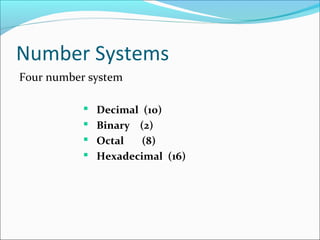
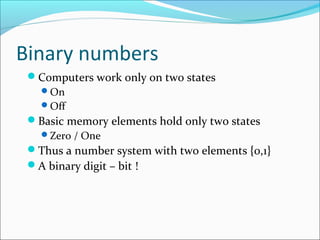
This document introduces different number systems including decimal, binary, octal, and hexadecimal. It explains that computers use the binary system with two states of on and off represented by 1 and 0. The key points covered are:
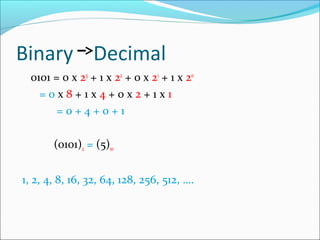
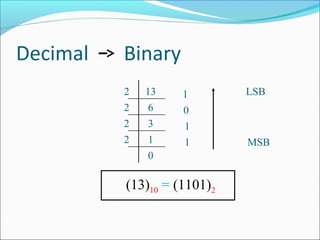
- Binary uses two digits 0 and 1 while decimal uses 0-9. Conversions between the two systems are demonstrated.
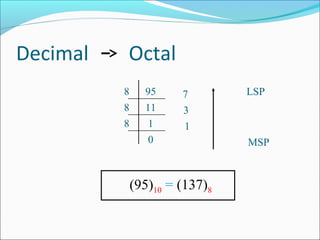
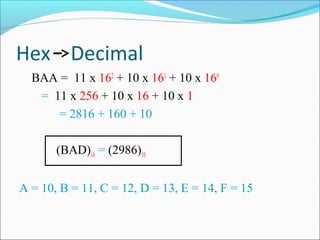
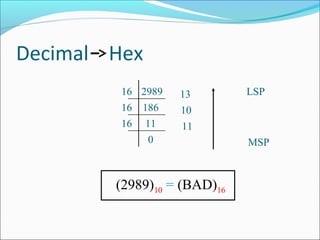
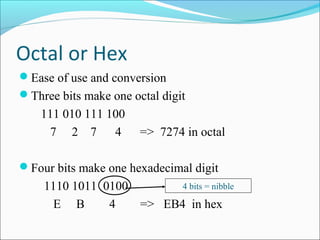
- Octal uses eight digits from 0-7 while hexadecimal uses sixteen digits from 0-9 and A-F. Conversion methods between decimal, octal, and hexadecimal are shown.
- Octal and hexadecimal allow for more compact representation of binary numbers since they can group bits into single digits for the different bases.