Nucleic acid
Types and Structure
By Dr. Farooq Ahmad
Nucleic acids
 Nucleic acids, which are relatively strong acids
found in the nuclei of cells, were first isolated in
1869 by twenty four year old Swiss physician,
Friedrich Miescher.
 The nucleic acids are polymers with molecular
weights as high as 100,000,000 grams per mole.
 They can be broken down, or digested, to form
monomers known as nucleotides.
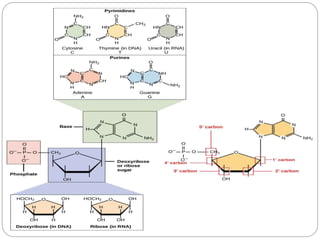
 Each nucleotide contains three units: a sugar, an
 Deoxyribonucleic acid (DNA) and Ribonucleic
acid (RNA). DNA is the genetic material found in
living organisms.
 DNA is found in the nucleus, and other types
of organelles (such as mitochondria and the
chloroplasts of plants).
 Central Dogma: DNA ⟶ RNA ⟶ Protein
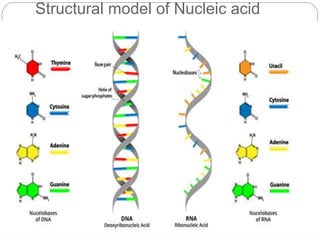
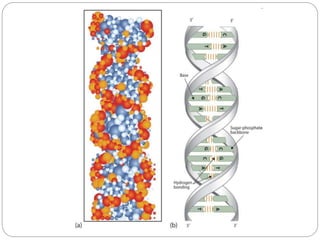
Structural model of Nucleic acid
TYPES OF NUCLEIC ACIDS
Types of DNA
1. B-DNA:
Structure of B-form of DNA has been proposed by Watson and
Crick. It is present in every cell at a very high relative
humidity (92%) and low concentration of ions. It has
antiparallel double helix, rotating clockwise (right hand).
2. A-DNA:
The A-form of DNA is found at 75% relative humidity in the
presence of Na+, K+ or Cs+ ions. It contains eleven base
pairs as compared to ten base pairs of B-DNA.
3. C-DNA:
The C-form of DNA is found at 66% relative humidity in the
presence of lithium (Lit+) ions. As compared to A-and B-
DNA, in C-DNA the number of base pairs per turn is less
4. The D-Form of DNA (D-DNA):
Total number of base pairs per turn of helix is eight. This form is
also called poly (dA-dT) and poly (dG-dC) form.
5. Z-DNA:
Rich and coworkers proposed a left handed (synistral) double
helix model with zig-zag sugar-phosphate back bone running
in antiparallel direction.
6. Single Stranded (ss) DNA:
Almost all the organisms contain double stranded DNA except a
few viruses such as bacteriophage φ × 174 consists of single
stranded circular DNA.
7. Circular and Super Helical DNA:
Almost in all the prokaryotes and a few viruses, the DNA is
Types of RNA
1. mRNA
2. rRNA
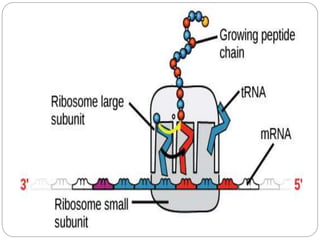
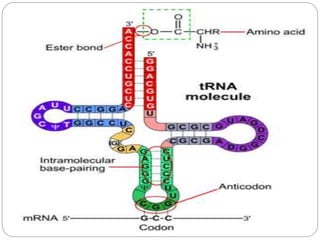
3. tRNA
4. siRNA
5. miRNA
siRNA, is a double-stranded RNA molecules. It is
sometimes known as short interfering RNA or silencing
RNA
miRNA: A microRNA is a small non-coding RNA molecule
(containing about 22 nucleotides) function in regulation
of gene expression.
 The major difference between siRNAs and miRNAs is
that the former inhibit the expression of one specific target
TYPES OF STRUCTURE OF
NUCLEIC ACIDS
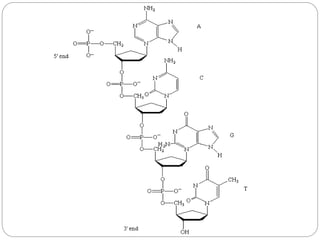
Primary Structure of Nucleic Acids
 Like proteins, nucleic acids have a primary structure that
is defined as the sequence of their nucleotides.
 Unlike proteins, which have 20 different kinds of amino
acids, there are only 4 different kinds of nucleotides in
nucleic acids.
 For amino acid sequences in proteins, the convention is
to write the amino acids in order starting with the N-
terminal amino acid.
 In writing nucleotide sequences for nucleic acids, the
convention is to write the nucleotides 5′ end with
phosphate group
Secondary Structure of DNA
 At Cambridge University in 1953, James D. Watson
and Francis Crick announced that they had a model
for the secondary structure of DNA.
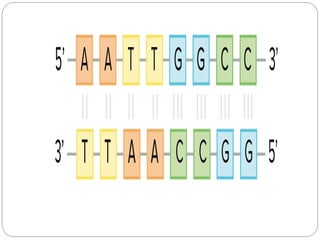
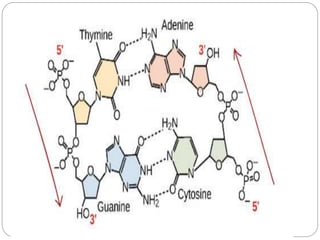
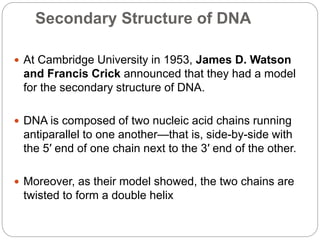
 DNA is composed of two nucleic acid chains running
antiparallel to one another—that is, side-by-side with
the 5′ end of one chain next to the 3′ end of the other.
 Moreover, as their model showed, the two chains are
twisted to form a double helix
Nucleic Acid types and structure.pptx full

Nucleic Acid types and structure.pptx full

  • 1.
    Nucleic acid Types andStructure By Dr. Farooq Ahmad
  • 2.
    Nucleic acids  Nucleicacids, which are relatively strong acids found in the nuclei of cells, were first isolated in 1869 by twenty four year old Swiss physician, Friedrich Miescher.  The nucleic acids are polymers with molecular weights as high as 100,000,000 grams per mole.  They can be broken down, or digested, to form monomers known as nucleotides.  Each nucleotide contains three units: a sugar, an
  • 3.
     Deoxyribonucleic acid(DNA) and Ribonucleic acid (RNA). DNA is the genetic material found in living organisms.  DNA is found in the nucleus, and other types of organelles (such as mitochondria and the chloroplasts of plants).  Central Dogma: DNA ⟶ RNA ⟶ Protein
  • 5.
    Structural model ofNucleic acid
  • 8.
  • 9.
    Types of DNA 1.B-DNA: Structure of B-form of DNA has been proposed by Watson and Crick. It is present in every cell at a very high relative humidity (92%) and low concentration of ions. It has antiparallel double helix, rotating clockwise (right hand). 2. A-DNA: The A-form of DNA is found at 75% relative humidity in the presence of Na+, K+ or Cs+ ions. It contains eleven base pairs as compared to ten base pairs of B-DNA. 3. C-DNA: The C-form of DNA is found at 66% relative humidity in the presence of lithium (Lit+) ions. As compared to A-and B- DNA, in C-DNA the number of base pairs per turn is less
  • 10.
    4. The D-Formof DNA (D-DNA): Total number of base pairs per turn of helix is eight. This form is also called poly (dA-dT) and poly (dG-dC) form. 5. Z-DNA: Rich and coworkers proposed a left handed (synistral) double helix model with zig-zag sugar-phosphate back bone running in antiparallel direction. 6. Single Stranded (ss) DNA: Almost all the organisms contain double stranded DNA except a few viruses such as bacteriophage φ × 174 consists of single stranded circular DNA. 7. Circular and Super Helical DNA: Almost in all the prokaryotes and a few viruses, the DNA is
  • 11.
    Types of RNA 1.mRNA 2. rRNA 3. tRNA 4. siRNA 5. miRNA siRNA, is a double-stranded RNA molecules. It is sometimes known as short interfering RNA or silencing RNA miRNA: A microRNA is a small non-coding RNA molecule (containing about 22 nucleotides) function in regulation of gene expression.  The major difference between siRNAs and miRNAs is that the former inhibit the expression of one specific target
  • 14.
    TYPES OF STRUCTUREOF NUCLEIC ACIDS
  • 15.
    Primary Structure ofNucleic Acids  Like proteins, nucleic acids have a primary structure that is defined as the sequence of their nucleotides.  Unlike proteins, which have 20 different kinds of amino acids, there are only 4 different kinds of nucleotides in nucleic acids.  For amino acid sequences in proteins, the convention is to write the amino acids in order starting with the N- terminal amino acid.  In writing nucleotide sequences for nucleic acids, the convention is to write the nucleotides 5′ end with phosphate group
  • 17.
    Secondary Structure ofDNA  At Cambridge University in 1953, James D. Watson and Francis Crick announced that they had a model for the secondary structure of DNA.  DNA is composed of two nucleic acid chains running antiparallel to one another—that is, side-by-side with the 5′ end of one chain next to the 3′ end of the other.  Moreover, as their model showed, the two chains are twisted to form a double helix