Edit by . M / ABD ELRAHMAN SAYED EWAIS
BENI-SUEF UNIVERSITY
FACULTY OF NURSING
 In a person without diabetes, the pancreas
produces small amounts of insulin (basal insulin)
continuously throughout the day to suppress
hepatic glucose production and a larger amount
of insulin is required when a meal or snack is
eaten.
 Insulin delivery via an insulin pump aims to
mimic this physiological basal-bolus pattern.
Insulin pump therapy can be commenced as early
as at diabetes diagnosis, where the total daily
insulin dose is more typically calculated as 0.3–
0.5 units/kg to reflect lower insulin requirements
 Basal (background) insulin doses provide a
continuous low-dose insulin infusion based on
individual needs. Some patients need higher
basal rates early in the morning (3-8am) and
decreased basal rates in the afternoon.
 When a patient is going to eat a snack or a meal,
they check their blood sugar and determine how
much additional insulin to give through the
pump (called a bolus) based on the blood sugar
and the amount of carbohydrate about to be
eaten.
 Check the current blood glucose level before the meal or
snack.
 Enter the blood glucose value into the pump.
 Count the number of carbohydrates in the food about to
be eaten.
 Enter the amount of carbohydrates into the pump.
 The pump will calculate the prescribed amount of insulin .
 Deliver the bolus dose by pressing the designated buttons
on the pump.
 Do not administer more than 10 minutes before a meal
 If blood sugar is less than 70 mg/dl, wait to give meal
bolus until after meal.
 Basal rates are determined by healthcare providers and will
not need to be adjusted.
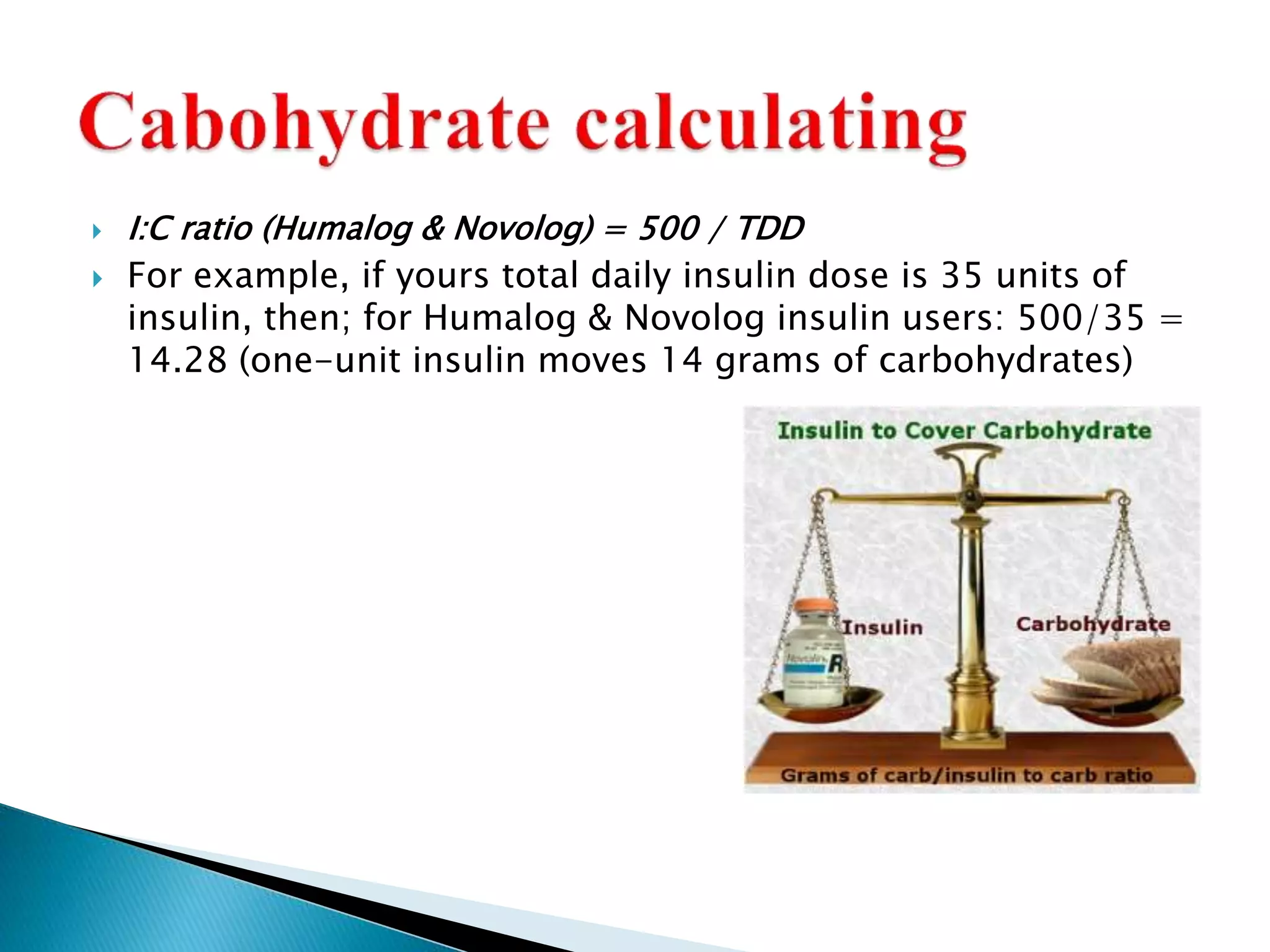
 I:C ratio (Humalog & Novolog) = 500 / TDD
 For example, if yours total daily insulin dose is 35 units of
insulin, then; for Humalog & Novolog insulin users: 500/35 =
14.28 (one-unit insulin moves 14 grams of carbohydrates)
1. Insulin pump
2. Reservoir
3. Infusion Set
4. Infusion Set Insertion
Device
 An insulin pump is approximately the size of a pager.
It has a compartment to hold a small container of
rapid-acting insulin (often aspart or lispro insulin).
 A small plastic catheter is inserted under the and
changed every 2-3 days.
 Leaving the pump site in for longer may cause higher
risk of infection and poor insulin absorption.
 The catheter is soft and flexible. A needle is required
to help insert the catheter, but the needle is removed
after insertion.
 There are devices that can help the patient insert the
catheter. Most people feel that the insertion is similar
to an injection of insulin. In most pumps, clear plastic
tubing carries the insulin from the pump to the
insertion site.
 Insulin pump
 Flexible tubing delivers insulin from the pump reservoir to
the infusion set
 A tiny tube called a cannula is inserted under your skin to
deliver insulin
 Insulin in the blood
 Flexibility in meal times and increased
number of boluses with every meal/snack.
 Programmable basal rates allow varying
amount of basal insulin at different times of
the day.
 Useful tool to prevent severe overnight
hypoglycaemia in children and in those with
hypo unawareness.
 Improved quality of life.
 Reduces the day-to-day variability in blood
glucose profile.
 Insulin pumps store the accurate record of
insulin delivery: basal and boluses.
 The stored record can be downloaded and is
helpful in providing advice to patients and in
determining any missed boluses.
 In very young children precise amount of insulin
(0.025 units) can be delivered.
 Alternative therapy in children with extreme
needle phobia.
 Management of exercise and unpredictable
activity is easier by using temporary basal rate.
 Needs to be attached 24 h a day.
 Pump cannot be taken off for more than 1–
2 h .
 As pump contains only rapid acting insulin,
any interruption in the delivery of insulin
increases the risk of DKA .
 Possible risk of infection at the cannula site .
 Requires more motivation and family support
than multiple daily injections .
 Body image issues .
 Demands extra support and commitment for
successful therapy .
 Management of CSII at schools is very
demanding
◦ Pump stoppage for any reason can lead
to DKA in less than half a day - therefore
blood sugars must be monitored on a
regular basis.
◦ Flow problems tend to occur after
changing infusion sets.
◦ Infections at the site of needle insertions
can occur.
◦ Pump therapy can lead to hypoglycemic
insensitivity.
 Blood glucose monitoring .
 How to program and use the insulin pump.
 Prevention of infection at CSQI .
 Icorporating exercise into daily routine.
 Management of hypoglycemia .
 Meal planing and food choises .
 Special consideration and precautions .
 Teach the child techniques of insertion .
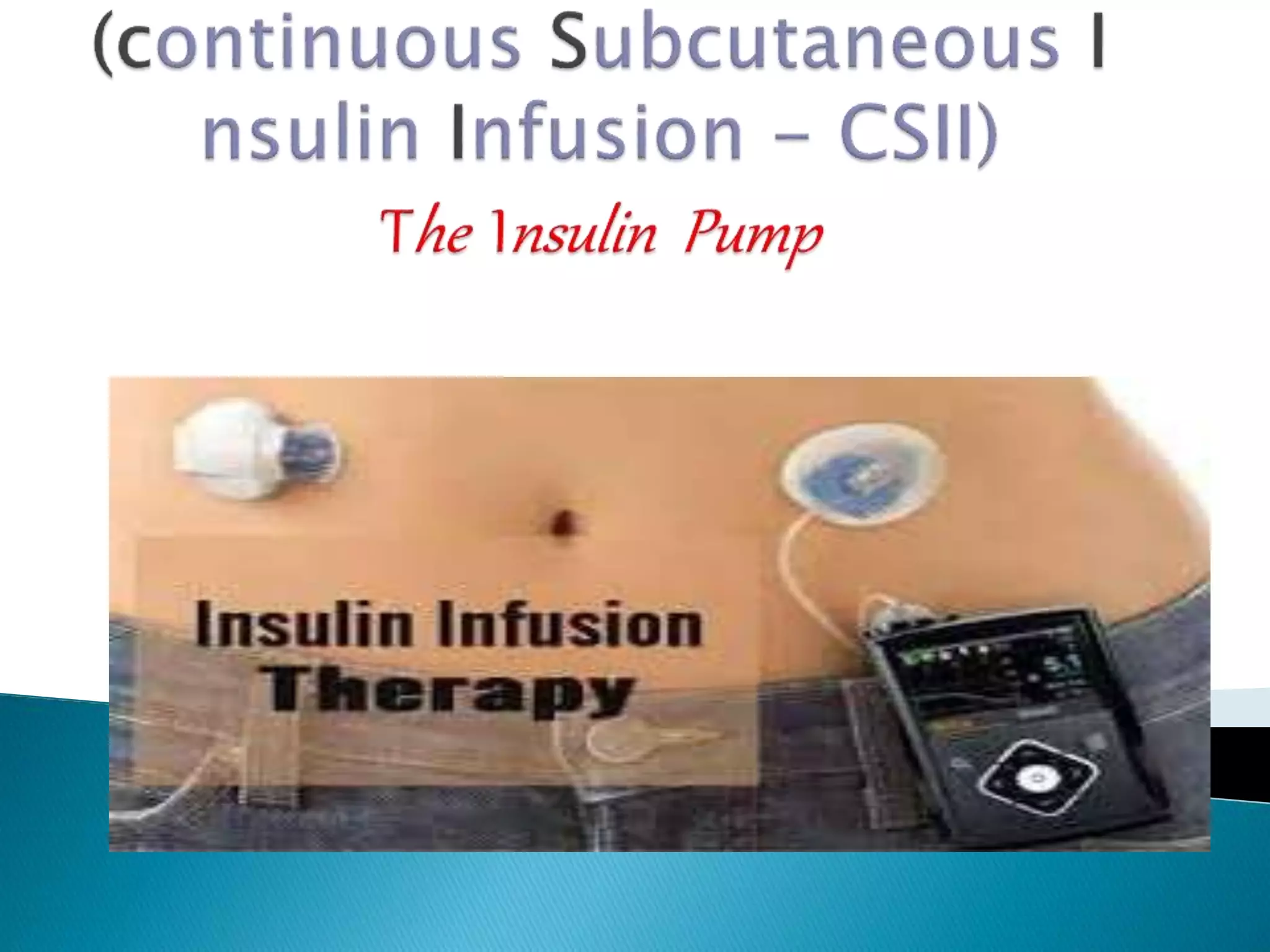
 insulin pump CSII

insulin pump CSII

  • 1.
    Edit by .M / ABD ELRAHMAN SAYED EWAIS BENI-SUEF UNIVERSITY FACULTY OF NURSING
  • 3.
     In aperson without diabetes, the pancreas produces small amounts of insulin (basal insulin) continuously throughout the day to suppress hepatic glucose production and a larger amount of insulin is required when a meal or snack is eaten.  Insulin delivery via an insulin pump aims to mimic this physiological basal-bolus pattern. Insulin pump therapy can be commenced as early as at diabetes diagnosis, where the total daily insulin dose is more typically calculated as 0.3– 0.5 units/kg to reflect lower insulin requirements
  • 4.
     Basal (background)insulin doses provide a continuous low-dose insulin infusion based on individual needs. Some patients need higher basal rates early in the morning (3-8am) and decreased basal rates in the afternoon.  When a patient is going to eat a snack or a meal, they check their blood sugar and determine how much additional insulin to give through the pump (called a bolus) based on the blood sugar and the amount of carbohydrate about to be eaten.
  • 5.
     Check thecurrent blood glucose level before the meal or snack.  Enter the blood glucose value into the pump.  Count the number of carbohydrates in the food about to be eaten.  Enter the amount of carbohydrates into the pump.  The pump will calculate the prescribed amount of insulin .  Deliver the bolus dose by pressing the designated buttons on the pump.  Do not administer more than 10 minutes before a meal  If blood sugar is less than 70 mg/dl, wait to give meal bolus until after meal.  Basal rates are determined by healthcare providers and will not need to be adjusted.
  • 6.
     I:C ratio(Humalog & Novolog) = 500 / TDD  For example, if yours total daily insulin dose is 35 units of insulin, then; for Humalog & Novolog insulin users: 500/35 = 14.28 (one-unit insulin moves 14 grams of carbohydrates)
  • 7.
    1. Insulin pump 2.Reservoir 3. Infusion Set 4. Infusion Set Insertion Device
  • 8.
     An insulinpump is approximately the size of a pager. It has a compartment to hold a small container of rapid-acting insulin (often aspart or lispro insulin).  A small plastic catheter is inserted under the and changed every 2-3 days.  Leaving the pump site in for longer may cause higher risk of infection and poor insulin absorption.  The catheter is soft and flexible. A needle is required to help insert the catheter, but the needle is removed after insertion.  There are devices that can help the patient insert the catheter. Most people feel that the insertion is similar to an injection of insulin. In most pumps, clear plastic tubing carries the insulin from the pump to the insertion site.
  • 9.
     Insulin pump Flexible tubing delivers insulin from the pump reservoir to the infusion set  A tiny tube called a cannula is inserted under your skin to deliver insulin  Insulin in the blood
  • 10.
     Flexibility inmeal times and increased number of boluses with every meal/snack.  Programmable basal rates allow varying amount of basal insulin at different times of the day.  Useful tool to prevent severe overnight hypoglycaemia in children and in those with hypo unawareness.  Improved quality of life.  Reduces the day-to-day variability in blood glucose profile.
  • 11.
     Insulin pumpsstore the accurate record of insulin delivery: basal and boluses.  The stored record can be downloaded and is helpful in providing advice to patients and in determining any missed boluses.  In very young children precise amount of insulin (0.025 units) can be delivered.  Alternative therapy in children with extreme needle phobia.  Management of exercise and unpredictable activity is easier by using temporary basal rate.
  • 12.
     Needs tobe attached 24 h a day.  Pump cannot be taken off for more than 1– 2 h .  As pump contains only rapid acting insulin, any interruption in the delivery of insulin increases the risk of DKA .  Possible risk of infection at the cannula site .
  • 13.
     Requires moremotivation and family support than multiple daily injections .  Body image issues .  Demands extra support and commitment for successful therapy .  Management of CSII at schools is very demanding
  • 14.
    ◦ Pump stoppagefor any reason can lead to DKA in less than half a day - therefore blood sugars must be monitored on a regular basis. ◦ Flow problems tend to occur after changing infusion sets. ◦ Infections at the site of needle insertions can occur. ◦ Pump therapy can lead to hypoglycemic insensitivity.
  • 15.
     Blood glucosemonitoring .  How to program and use the insulin pump.  Prevention of infection at CSQI .  Icorporating exercise into daily routine.  Management of hypoglycemia .  Meal planing and food choises .  Special consideration and precautions .  Teach the child techniques of insertion .