
Northern Ireland
Protestants Vs. Catholics
         Conflict in
   Multi-Ethnic Societies
"Zombie" is one of Cranberries’s biggest singles, reaching number 3 in their
native Ireland, and having a total chart run of 11 weeks. The song reached
number 14 in the UK, with a total chart run of six weeks. It topped the U.S.
Modern Rock chart for six weeks.
Objectives
• 1. History of Northern Ireland before the
  Conflict.
• 2. Causes of Northern Ireland Conflict.
Big Terms
• Protestants and Catholics
• Unionist/Loyalist VS
  Nationalist/Republican
Background
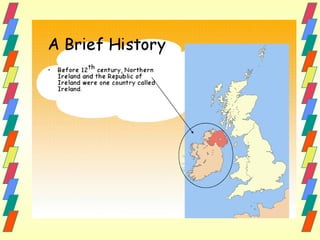
• During the 1100s, Ireland was a united
  country
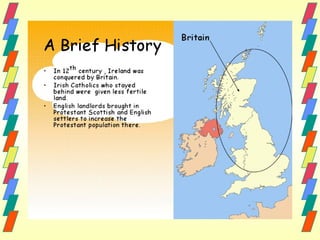
• Subsequently it was conquered by
  England in the 1200s
• The Irish Catholics who stayed behind
  were given the less fertile land
• English landlords brought in Protestant
  Scottish and English settlers into the
  northern parts of Ireland and pushed out
  the local Catholic farmers
Background
• Northern Ireland became
  predominantly Protestant
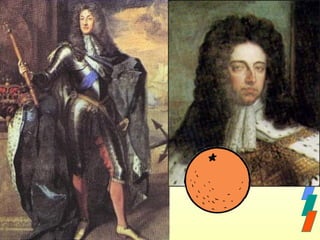
• King James II (Catholic) came to the
  throne and tried to defeat the
  Protestants
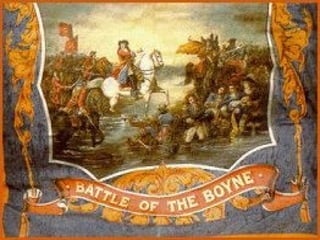
• He failed and was defeated by King
  William of Orange in the Battle of
  Boyne in 1690
Background
• Penal Laws were implemented
  against the Catholics by the
  Protestants to ensure that they had
  complete control of Ireland
  – No Catholic can buy land
  – No Catholic shall be allowed to vote
  – No Catholic can join the army
  – No Catholic may receive higher
    education
Background
• In 1800, Ireland became part of the
  United Kingdom (England)
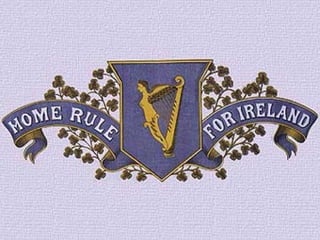
• In the late 1800s, local Irish Catholics
  sought limited self-government
  known as Home Rule
• Hostilities continued and were so
  bad that Britain lost control of the
  southern part of Ireland
Background
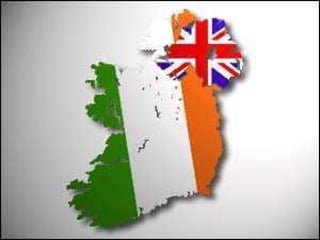
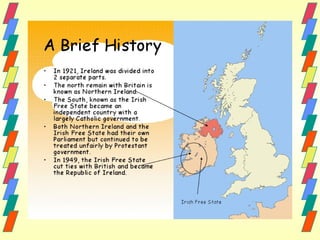
• In 1921, Ireland was divided into 2
  separate parts, based on majority
  religion
  – Northern Ireland (which was
    predominantly Protestant)
  – Southern Ireland (Irish Free State)
    • Had their own parliament but consulted the
      English monarchy regarding foreign affairs
Background
• The Catholics in the North were
  treated very unfairly by the
  government
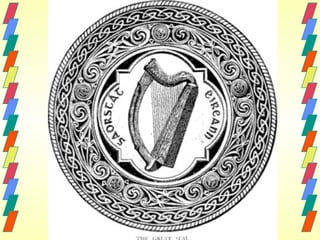
• In 1949, the Irish Free State cut ties
  with Britain and became the Republic
  of Ireland
Background
• Before 1972
  – Northern Ireland had its own parliament
    in Stormont

• Since 1972
  – Northern Ireland has been ruled directly
    by the British parliament in London
  – Northern Ireland is in charge of
    commerce, health and education
  – Ministers are predominantly protestant
Causes of Conflict in
        Northern Ireland
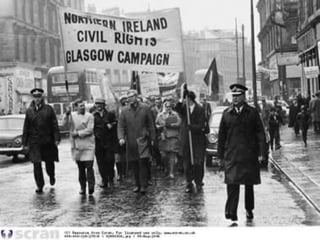
• Catholics and Protestants see themselves
  as 2 different groups
• Lack of common identity prevents
  understanding and co-operation between
  the 2 groups. (This shows that Lack of
  Common Identity is the UNDERLYING
  CAUSE)
• Religious differences cause tension BUT
  ARE NOT a cause of conflict
Causes of Conflict in
         Northern Ireland
•   Divided Loyalties
•   Unequal Allocation of Housing
•   Unequal Employment Opportunities
•   Lack of Voting Rights
•   Lack of Opportunities for Social
    Interaction
Causes of Conflict in
        Northern Ireland
• Divided Loyalties
  – Most Protestants see themselves as
    British and do not want a union with the
    Republic of Ireland as they fear a
    Catholic government would not tolerate
    them and their beliefs
Causes of Conflict in
        Northern Ireland
• Divided Loyalties
  – Catholics see themselves as Irish and
    want to be reunited with the Republic of
    Ireland
  – Catholics are also resentful of the
    history of English conquest where
    Catholics were killed or ill-treated
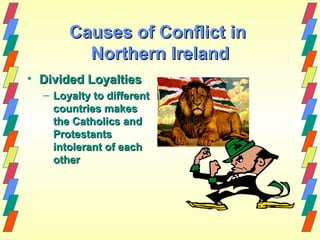
Causes of Conflict in
         Northern Ireland
• Divided Loyalties
  – Loyalty to different
    countries makes
    the Catholics and
    Protestants
    intolerant of each
    other
Causes of Conflict in
        Northern Ireland
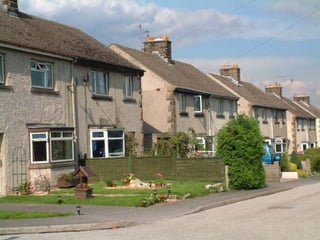
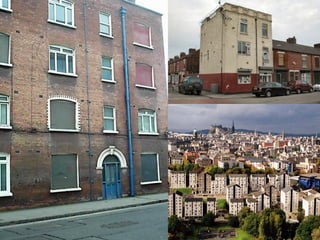
• Unequal Allocation of Housing
  – Provision of housing by city councils
  – Public houses are partly subsidized
  – Housing councils are predominantly
    Protestant
  – Large Catholic families have to wait for
    a long time to get houses
  – Catholics are frustrated by the long wait
Causes of Conflict in
         Northern Ireland
• Unequal Employment Opportunities
  – Competition for jobs
  – Difficult for Catholics to get jobs in the civil
    service
  – Unequal employment opportunities for the
    Catholics despite having similar academic
    qualifications
  – The Catholics felt resentful and frustrated
    because they had no chance of having a bright
    future and supporting their families
Causes of Conflict in
        Northern Ireland
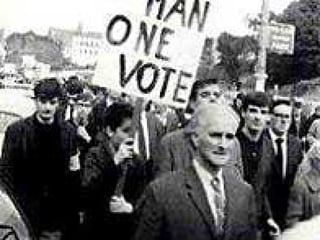
• Lack of Voting Rights
  – Before 1969, voting rights were a
    problem because:
    • Only those who owned houses and
      businesses were entitled to vote in the
      elections
    • Each household was given 2 votes while
      business owners were given more votes
      based on the number of staff they had
Causes of Conflict in
        Northern Ireland
• Lack of Voting Rights
  – Before 1969, voting rights were a
    problem because:
    • As the Protestants were richer and had
      bigger businesses, the Catholics lost out
    • Voting districts were also drawn up to
      include more Protestants
Causes of Conflict in
        Northern Ireland
• Lack of Voting Rights
  – Since 1969, the system is fairer:
    • Everyone has a vote:
       –   if he or she is a British citizen
       –   Was born in Northern Ireland
       –   Lived in the UK for 7 years
    • Voting districts were re-drawn to ensure
      fairness
Causes of Conflict in
        Northern Ireland
• Lack of Opportunities for Social
  Interaction
  – Fully funded public schools for
    Protestants only and partially-funded
    private schools for Catholics only
  – Integrated schools set up by private
    individuals only attract about 5% of the
    total school-going population of
    Northern Ireland
Causes of Conflict in
         Northern Ireland
• Lack of Opportunities for Social
  Interaction
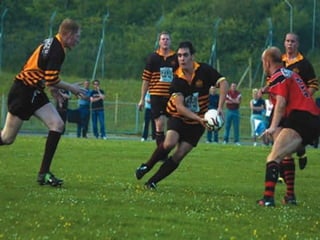
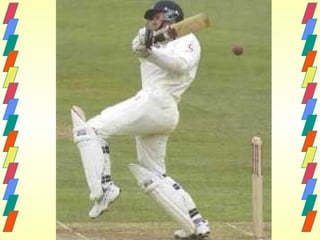
  – Protestant children are taught British history
    and play British sports like rugby, hockey and
    cricket
  – They are loyal to the British and sing the
    British national anthem
  – Nothing about the Catholics or the history of
    Northern Ireland is taught from a neutral
    perspective
Causes of Conflict in
         Northern Ireland
• Lack of Opportunities for Social
  Interaction
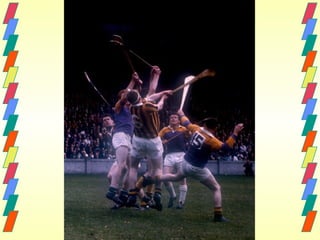
  – Catholic children are taught Irish history and
    play Irish sports like hurling and are taught the
    Irish language and culture
  – They are loyal to the Republic of Ireland and
    see Britain as a foreign country
  – Nothing about the Protestants or the history of
    Northern Ireland is taught from a neutral
    perspective
Causes of Conflict in
        Northern Ireland
• Lack of Opportunities for Social
  Interaction
  – Catholics and Protestants live in
    separate residential areas
  – Opportunities for social interaction are
    reduced
Homework
• “The Irish conflict is mainly caused by a lack of
  social interaction”. How far do you agree with
  this statement? Explain your answer. [12m]

• Remember to deal with the lack of social
  interaction as one of the factors in the issue of
  The Irish Conflict.
• Weigh your lack of social interaction factor
  against the MAIN CAUSE of the conflict
• Is it more important? Less important?

Northern ireland 1 1

  • 1.
    Northern Ireland Protestants Vs.Catholics Conflict in Multi-Ethnic Societies
  • 2.
    "Zombie" is oneof Cranberries’s biggest singles, reaching number 3 in their native Ireland, and having a total chart run of 11 weeks. The song reached number 14 in the UK, with a total chart run of six weeks. It topped the U.S. Modern Rock chart for six weeks.
  • 3.
    Objectives • 1. Historyof Northern Ireland before the Conflict. • 2. Causes of Northern Ireland Conflict.
  • 4.
    Big Terms • Protestantsand Catholics • Unionist/Loyalist VS Nationalist/Republican
  • 10.
    Background • During the1100s, Ireland was a united country • Subsequently it was conquered by England in the 1200s • The Irish Catholics who stayed behind were given the less fertile land • English landlords brought in Protestant Scottish and English settlers into the northern parts of Ireland and pushed out the local Catholic farmers
  • 12.
    Background • Northern Irelandbecame predominantly Protestant • King James II (Catholic) came to the throne and tried to defeat the Protestants • He failed and was defeated by King William of Orange in the Battle of Boyne in 1690
  • 15.
    Background • Penal Lawswere implemented against the Catholics by the Protestants to ensure that they had complete control of Ireland – No Catholic can buy land – No Catholic shall be allowed to vote – No Catholic can join the army – No Catholic may receive higher education
  • 16.
    Background • In 1800,Ireland became part of the United Kingdom (England) • In the late 1800s, local Irish Catholics sought limited self-government known as Home Rule • Hostilities continued and were so bad that Britain lost control of the southern part of Ireland
  • 18.
    Background • In 1921,Ireland was divided into 2 separate parts, based on majority religion – Northern Ireland (which was predominantly Protestant) – Southern Ireland (Irish Free State) • Had their own parliament but consulted the English monarchy regarding foreign affairs
  • 20.
    Background • The Catholicsin the North were treated very unfairly by the government • In 1949, the Irish Free State cut ties with Britain and became the Republic of Ireland
  • 22.
    Background • Before 1972 – Northern Ireland had its own parliament in Stormont • Since 1972 – Northern Ireland has been ruled directly by the British parliament in London – Northern Ireland is in charge of commerce, health and education – Ministers are predominantly protestant
  • 23.
    Causes of Conflictin Northern Ireland • Catholics and Protestants see themselves as 2 different groups • Lack of common identity prevents understanding and co-operation between the 2 groups. (This shows that Lack of Common Identity is the UNDERLYING CAUSE) • Religious differences cause tension BUT ARE NOT a cause of conflict
  • 24.
    Causes of Conflictin Northern Ireland • Divided Loyalties • Unequal Allocation of Housing • Unequal Employment Opportunities • Lack of Voting Rights • Lack of Opportunities for Social Interaction
  • 25.
    Causes of Conflictin Northern Ireland • Divided Loyalties – Most Protestants see themselves as British and do not want a union with the Republic of Ireland as they fear a Catholic government would not tolerate them and their beliefs
  • 26.
    Causes of Conflictin Northern Ireland • Divided Loyalties – Catholics see themselves as Irish and want to be reunited with the Republic of Ireland – Catholics are also resentful of the history of English conquest where Catholics were killed or ill-treated
  • 27.
    Causes of Conflictin Northern Ireland • Divided Loyalties – Loyalty to different countries makes the Catholics and Protestants intolerant of each other
  • 28.
    Causes of Conflictin Northern Ireland • Unequal Allocation of Housing – Provision of housing by city councils – Public houses are partly subsidized – Housing councils are predominantly Protestant – Large Catholic families have to wait for a long time to get houses – Catholics are frustrated by the long wait
  • 31.
    Causes of Conflictin Northern Ireland • Unequal Employment Opportunities – Competition for jobs – Difficult for Catholics to get jobs in the civil service – Unequal employment opportunities for the Catholics despite having similar academic qualifications – The Catholics felt resentful and frustrated because they had no chance of having a bright future and supporting their families
  • 32.
    Causes of Conflictin Northern Ireland • Lack of Voting Rights – Before 1969, voting rights were a problem because: • Only those who owned houses and businesses were entitled to vote in the elections • Each household was given 2 votes while business owners were given more votes based on the number of staff they had
  • 33.
    Causes of Conflictin Northern Ireland • Lack of Voting Rights – Before 1969, voting rights were a problem because: • As the Protestants were richer and had bigger businesses, the Catholics lost out • Voting districts were also drawn up to include more Protestants
  • 34.
    Causes of Conflictin Northern Ireland • Lack of Voting Rights – Since 1969, the system is fairer: • Everyone has a vote: – if he or she is a British citizen – Was born in Northern Ireland – Lived in the UK for 7 years • Voting districts were re-drawn to ensure fairness
  • 37.
    Causes of Conflictin Northern Ireland • Lack of Opportunities for Social Interaction – Fully funded public schools for Protestants only and partially-funded private schools for Catholics only – Integrated schools set up by private individuals only attract about 5% of the total school-going population of Northern Ireland
  • 38.
    Causes of Conflictin Northern Ireland • Lack of Opportunities for Social Interaction – Protestant children are taught British history and play British sports like rugby, hockey and cricket – They are loyal to the British and sing the British national anthem – Nothing about the Catholics or the history of Northern Ireland is taught from a neutral perspective
  • 39.
    Causes of Conflictin Northern Ireland • Lack of Opportunities for Social Interaction – Catholic children are taught Irish history and play Irish sports like hurling and are taught the Irish language and culture – They are loyal to the Republic of Ireland and see Britain as a foreign country – Nothing about the Protestants or the history of Northern Ireland is taught from a neutral perspective
  • 44.
    Causes of Conflictin Northern Ireland • Lack of Opportunities for Social Interaction – Catholics and Protestants live in separate residential areas – Opportunities for social interaction are reduced
  • 45.
    Homework • “The Irishconflict is mainly caused by a lack of social interaction”. How far do you agree with this statement? Explain your answer. [12m] • Remember to deal with the lack of social interaction as one of the factors in the issue of The Irish Conflict. • Weigh your lack of social interaction factor against the MAIN CAUSE of the conflict • Is it more important? Less important?