Non-Profit Public Relations 
COM 270 
Kevin Brett 
November 17, 2014
Non-Profits Can Be Big Business 
• 1.5 million non-profits in the U.S. 
• $2.6 trillion in total assets 
• 501(c) (3) Tax Exempt 
• American Cancer Society: $1 billion in 
revenues; $966 million in expenses 
• Salvation Army: $3.3 billion in revenues; $3 
billion in expenses 
• PBS: $1.8 billion in revenues; $1.5 billion in 
expenses
Most Successful Non-Profits 
1. United Way 
2. Salvation Army 
6. YMCA 
9. Red Cross 
12. Goodwill Industries 
19. Boys and Girls Club 
21. Shriner’s Hospital 
22. American Cancer Society 
23. Habitat for Humanity 
25. Planned Parenthood
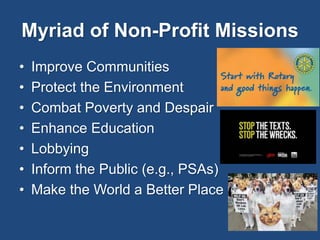
Myriad of Non-Profit Missions 
• Improve Communities 
• Protect the Environment 
• Combat Poverty and Despair 
• Enhance Education 
• Lobbying 
• Inform the Public (e.g., PSAs) 
• Make the World a Better Place
Ethos: Source Credibility 
• Academic or Expert: 67 percent 
• Technical Expert: 66 percent 
• Person Like Yourself: 62 percent 
• Financial or Industry Analyst: 53 percent 
• NGO representative: 52 percent 
• Regular employee: 52 percent 
• CEO: 43 percent 
Source: 2014 Edelman Trust Barometer
Preferences and Choices 
• Community Relations: $63,437 
• Corporate Public Relations: $88,823 
• Financial Communications: $117,233 
• Non-Profit Communications: $62,275
The Competitive World of Non- 
Profits 
• Kaiser (non-profit) vs. CIGNA and Aetna in 
managed care 
• Non-Profits Competing Against Each Other for 
Finite Charitable Funding and Govn. Assistance 
• “Compassion Fatigue” 
• Not immune from controversy: Susan G. Komen 
Foundation and Planned Parenthood 
• PBS and Planned Parenthood Funding
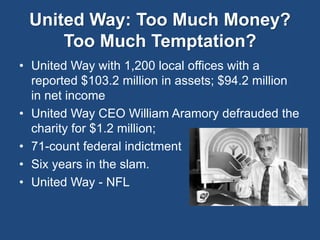
United Way: Too Much Money? 
Too Much Temptation? 
• United Way with 1,200 local offices with a 
reported $103.2 million in assets; $94.2 million 
in net income 
• United Way CEO William Aramory defrauded the 
charity for $1.2 million; 
• 71-count federal indictment 
• Six years in the slam. 
• United Way - NFL
Non-Profits Are Not Immune to 
Reputation and Brand Crisis 
• Lance Armstrong 
• “American Hero” 
• Livestrong 
• Nike 
• United States Postal Service
Teaming with Corporate? 
• Starbucks and EDF 
• Teamed on an environmentally friendly 
coffee cup (e.g., greater use of recycled 
materials)
Still NGO Confrontation 
• Demonstrations by Seattle Audubon and 
Global Exchange 
• Concern for Rain Forests and Species 
• Starbucks is Not Unionized
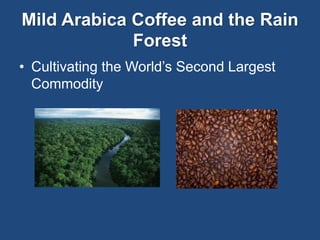
Mild Arabica Coffee and the Rain 
Forest 
• Cultivating the World’s Second Largest 
Commodity
Starbucks and Conservation 
International Strategic Alliance 
• CSR? Fiduciary Responsibility?
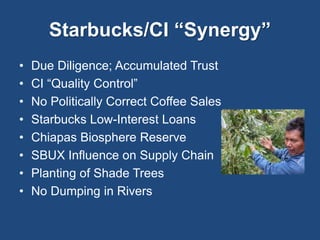
Starbucks/CI “Synergy” 
• Due Diligence; Accumulated Trust 
• CI “Quality Control” 
• No Politically Correct Coffee Sales 
• Starbucks Low-Interest Loans 
• Chiapas Biosphere Reserve 
• SBUX Influence on Supply Chain 
• Planting of Shade Trees 
• No Dumping in Rivers
Starbucks/CI Takeaways 
• Proactive, collaborative working relationships 
with NGOs can directly benefit fiduciary 
responsibility and corporate social responsibility. 
• They are not mutually exclusive terms of art. 
• Inoculate or at least mitigate a MNE against 
hostile NGOs.
Non-Profit Net Plusses 
• NGOs Among Most Trusted in Society; 52 
percent in 2014. 
• Credible Third-Party Sources 
• Not Responsible for Producing Profits 
• Trying to Improve Society 
• Humanitarian Orientation 
• Protect the Environment 
• Fighting Diseases

Non-Profit Public Relations

  • 1.
    Non-Profit Public Relations COM 270 Kevin Brett November 17, 2014
  • 2.
    Non-Profits Can BeBig Business • 1.5 million non-profits in the U.S. • $2.6 trillion in total assets • 501(c) (3) Tax Exempt • American Cancer Society: $1 billion in revenues; $966 million in expenses • Salvation Army: $3.3 billion in revenues; $3 billion in expenses • PBS: $1.8 billion in revenues; $1.5 billion in expenses
  • 3.
    Most Successful Non-Profits 1. United Way 2. Salvation Army 6. YMCA 9. Red Cross 12. Goodwill Industries 19. Boys and Girls Club 21. Shriner’s Hospital 22. American Cancer Society 23. Habitat for Humanity 25. Planned Parenthood
  • 4.
    Myriad of Non-ProfitMissions • Improve Communities • Protect the Environment • Combat Poverty and Despair • Enhance Education • Lobbying • Inform the Public (e.g., PSAs) • Make the World a Better Place
  • 5.
    Ethos: Source Credibility • Academic or Expert: 67 percent • Technical Expert: 66 percent • Person Like Yourself: 62 percent • Financial or Industry Analyst: 53 percent • NGO representative: 52 percent • Regular employee: 52 percent • CEO: 43 percent Source: 2014 Edelman Trust Barometer
  • 6.
    Preferences and Choices • Community Relations: $63,437 • Corporate Public Relations: $88,823 • Financial Communications: $117,233 • Non-Profit Communications: $62,275
  • 7.
    The Competitive Worldof Non- Profits • Kaiser (non-profit) vs. CIGNA and Aetna in managed care • Non-Profits Competing Against Each Other for Finite Charitable Funding and Govn. Assistance • “Compassion Fatigue” • Not immune from controversy: Susan G. Komen Foundation and Planned Parenthood • PBS and Planned Parenthood Funding
  • 8.
    United Way: TooMuch Money? Too Much Temptation? • United Way with 1,200 local offices with a reported $103.2 million in assets; $94.2 million in net income • United Way CEO William Aramory defrauded the charity for $1.2 million; • 71-count federal indictment • Six years in the slam. • United Way - NFL
  • 9.
    Non-Profits Are NotImmune to Reputation and Brand Crisis • Lance Armstrong • “American Hero” • Livestrong • Nike • United States Postal Service
  • 10.
    Teaming with Corporate? • Starbucks and EDF • Teamed on an environmentally friendly coffee cup (e.g., greater use of recycled materials)
  • 11.
    Still NGO Confrontation • Demonstrations by Seattle Audubon and Global Exchange • Concern for Rain Forests and Species • Starbucks is Not Unionized
  • 12.
    Mild Arabica Coffeeand the Rain Forest • Cultivating the World’s Second Largest Commodity
  • 13.
    Starbucks and Conservation International Strategic Alliance • CSR? Fiduciary Responsibility?
  • 14.
    Starbucks/CI “Synergy” •Due Diligence; Accumulated Trust • CI “Quality Control” • No Politically Correct Coffee Sales • Starbucks Low-Interest Loans • Chiapas Biosphere Reserve • SBUX Influence on Supply Chain • Planting of Shade Trees • No Dumping in Rivers
  • 15.
    Starbucks/CI Takeaways •Proactive, collaborative working relationships with NGOs can directly benefit fiduciary responsibility and corporate social responsibility. • They are not mutually exclusive terms of art. • Inoculate or at least mitigate a MNE against hostile NGOs.
  • 16.
    Non-Profit Net Plusses • NGOs Among Most Trusted in Society; 52 percent in 2014. • Credible Third-Party Sources • Not Responsible for Producing Profits • Trying to Improve Society • Humanitarian Orientation • Protect the Environment • Fighting Diseases