NON VIOLENCE
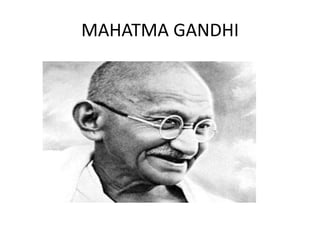
MAHATMA GANDHI
Mohandas Gandhi , often considered a founder of
the nonviolence movement, spread the concept
of ahimsa through his movements and writings,
which then inspired other nonviolent activists.
Non violence is the personal practice of being
harmless to self and others under every
condition. It comes from the bilief that hurting
people, animals or the environment is
unnecessary to achieve an outcome and refers to
a general philosophy of abstention from violence
based on moral, religious or spiritual principles.
• “non violence is a powerful and just weapon.
Indeed, it is a weapon unique in history, which
cuts without wounding and ennobles the man
who wields it”.
-Martin Luther King
• Non violence is not a single virtue or a single
quality of life; it is a congeries of virtues, of
qualities; it is a spirit, a way of life, a religion
or as Gandhi would say , the law of one’s
being.
In Gandhi’s structure , there are two basic pillars
• Truth
• Ahimsa or nonviolence
Non violence is a situation in which someone
avoids fighting or using physical forces,
especially when trying to make political
change.
Types of Non violence
• Non- Resistance: Non resistance rejects all
physical violence on principle and concentrate
on maintaining their own integrity.
• Active Reconciliation: A faith based rejection
of coercion and belief in active goodwill and
reconciliation.
• Moral Resistance: Moral resistance actively
resist evil with peaceful and moral means such
as education and persuasion
• Selective Non violence: The refusal to
participate in particular wars or kinds of wars.
• Passive Resistance: Non violent tactics are
employed because the means for an effective
violent campaign are lacking or are not likely
to succeed.
• Peaceful Resistance: Peaceful resisters
believes that non violent methods are more
effective.
• Non – Violent Direct Action: Practitioners may
view non violence as a moral principle or practical
method. The object is victory rather than
conversion.
• Gandhian Non – Violence(Satyagraha):
Satyagraha aims to attain the truth through love
and right action; it demands the elimination of
violence from the self and from the social,
political and economic environment.
• Non-Violent Revolution: Revolutionaries
believe in the need for basic individual and
social change and regard the major problems
of existing society as structural.
Significance of Non Violence
• “people try non violence for a week, and
when it doesn’t work, they go back to
violence, which hasn’t worked for centuries”
-Theodore Roszak
• Non violence is a philosophy , an existing theory
and a practice, a lifestyle, and means of social,
political and economic struggle as old as history
itself.
• Non violence provides us with tools, the positive
means to oppose and stop wars and preparations
for war, to resist violence, to struggle against
racial, sexual and economic oppression and
discrimination and to seek social justice and
genuine democracy for people throughout the
world.
Gandhian Concept of Non violence
• Non violence lives and grows by
experimentation. Gandhi’s life was an
experiment with truth and the means to truth,
non violence. His life , he said, consisted of
nothing more than these experiments.
• True non violence is religion, for it is a total
commitment to that which the individual
regards as supreme in the world.
• In Gandhi, however, and in every authentic
example of non violence there is a suspicion of
and often a revolt against other worldliness,
excessive ritualism, insistence upon theology,
and ecclesiasticism. For Gandhi non violence
is inconceivable without self renunciation.
• The Tolstoy and Gandhian nonviolence is a
philosophy and strategy for social change that
rejects the use of violence, but at the same
time sees nonviolent action as an alternative
to passive acceptance of oppression or armed
struggle against it.
• Non violence is a policy of using peaceful
methods, as opposed to forceful methods, to
bring about political or social change.
Non violence

Non violence

  • 1.
  • 2.
  • 3.
    Mohandas Gandhi ,often considered a founder of the nonviolence movement, spread the concept of ahimsa through his movements and writings, which then inspired other nonviolent activists. Non violence is the personal practice of being harmless to self and others under every condition. It comes from the bilief that hurting people, animals or the environment is unnecessary to achieve an outcome and refers to a general philosophy of abstention from violence based on moral, religious or spiritual principles.
  • 4.
    • “non violenceis a powerful and just weapon. Indeed, it is a weapon unique in history, which cuts without wounding and ennobles the man who wields it”. -Martin Luther King
  • 5.
    • Non violenceis not a single virtue or a single quality of life; it is a congeries of virtues, of qualities; it is a spirit, a way of life, a religion or as Gandhi would say , the law of one’s being.
  • 6.
    In Gandhi’s structure, there are two basic pillars • Truth • Ahimsa or nonviolence Non violence is a situation in which someone avoids fighting or using physical forces, especially when trying to make political change.
  • 7.
    Types of Nonviolence • Non- Resistance: Non resistance rejects all physical violence on principle and concentrate on maintaining their own integrity. • Active Reconciliation: A faith based rejection of coercion and belief in active goodwill and reconciliation. • Moral Resistance: Moral resistance actively resist evil with peaceful and moral means such as education and persuasion
  • 8.
    • Selective Nonviolence: The refusal to participate in particular wars or kinds of wars. • Passive Resistance: Non violent tactics are employed because the means for an effective violent campaign are lacking or are not likely to succeed. • Peaceful Resistance: Peaceful resisters believes that non violent methods are more effective.
  • 9.
    • Non –Violent Direct Action: Practitioners may view non violence as a moral principle or practical method. The object is victory rather than conversion. • Gandhian Non – Violence(Satyagraha): Satyagraha aims to attain the truth through love and right action; it demands the elimination of violence from the self and from the social, political and economic environment.
  • 10.
    • Non-Violent Revolution:Revolutionaries believe in the need for basic individual and social change and regard the major problems of existing society as structural.
  • 11.
    Significance of NonViolence • “people try non violence for a week, and when it doesn’t work, they go back to violence, which hasn’t worked for centuries” -Theodore Roszak
  • 12.
    • Non violenceis a philosophy , an existing theory and a practice, a lifestyle, and means of social, political and economic struggle as old as history itself. • Non violence provides us with tools, the positive means to oppose and stop wars and preparations for war, to resist violence, to struggle against racial, sexual and economic oppression and discrimination and to seek social justice and genuine democracy for people throughout the world.
  • 13.
    Gandhian Concept ofNon violence • Non violence lives and grows by experimentation. Gandhi’s life was an experiment with truth and the means to truth, non violence. His life , he said, consisted of nothing more than these experiments. • True non violence is religion, for it is a total commitment to that which the individual regards as supreme in the world.
  • 14.
    • In Gandhi,however, and in every authentic example of non violence there is a suspicion of and often a revolt against other worldliness, excessive ritualism, insistence upon theology, and ecclesiasticism. For Gandhi non violence is inconceivable without self renunciation.
  • 15.
    • The Tolstoyand Gandhian nonviolence is a philosophy and strategy for social change that rejects the use of violence, but at the same time sees nonviolent action as an alternative to passive acceptance of oppression or armed struggle against it.
  • 16.
    • Non violenceis a policy of using peaceful methods, as opposed to forceful methods, to bring about political or social change.