APPROACH TO NON RESOLVING PNEUMONIA
Dr. RAJKOTI DNB internal medicine resident
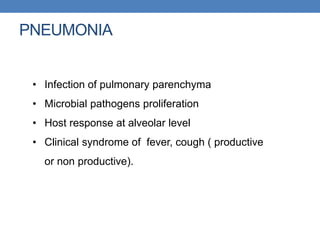
PNEUMONIA
• Infection of pulmonary parenchyma
• Microbial pathogens proliferation
• Host response at alveolar level
• Clinical syndrome of fever, cough ( productive
or non productive).
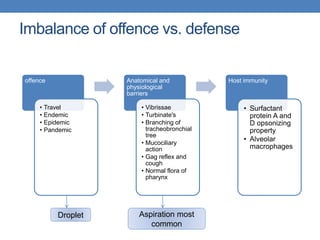
Imbalance of offence vs. defense
offence
• Travel
• Endemic
• Epidemic
• Pandemic
Anatomical and
physiological
barriers
• Vibrissae
• Turbinate's
• Branching of
tracheobronchial
tree
• Mucociliary
action
• Gag reflex and
cough
• Normal flora of
pharynx
Host immunity
• Surfactant
protein A and
D opsonizing
property
• Alveolar
macrophages
Droplet Aspiration most
common
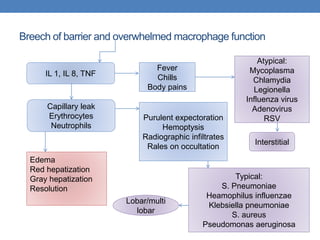
Breech of barrier and overwhelmed macrophage function
IL 1, IL 8, TNF
Capillary leak
Erythrocytes
Neutrophils
Fever
Chills
Body pains
Purulent expectoration
Hemoptysis
Radiographic infiltrates
Rales on occultation
Edema
Red hepatization
Gray hepatization
Resolution
Atypical:
Mycoplasma
Chlamydia
Legionella
Influenza virus
Adenovirus
RSV
Typical:
S. Pneumoniae
Heamophilus influenzae
Klebsiella pneumoniae
S. aureus
Pseudomonas aeruginosa
Lobar/multi
lobar
Interstitial
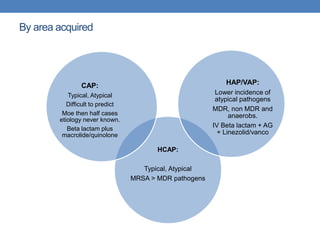
By area acquired
HCAP:
Typical, Atypical
MRSA > MDR pathogens
HAP/VAP:
Lower incidence of
atypical pathogens
MDR, non MDR and
anaerobs.
IV Beta lactam + AG
+ Linezolid/vanco
CAP:
Typical, Atypical
Difficult to predict
Moe then half cases
etiology never known.
Beta lactam plus
macrolide/quinolone
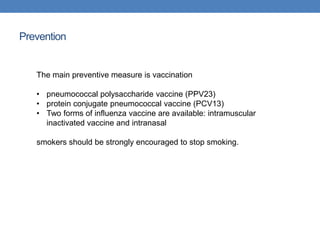
Prevention
The main preventive measure is vaccination
• pneumococcal polysaccharide vaccine (PPV23)
• protein conjugate pneumococcal vaccine (PCV13)
• Two forms of influenza vaccine are available: intramuscular
inactivated vaccine and intranasal
smokers should be strongly encouraged to stop smoking.
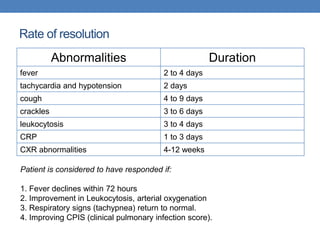
Rate of resolution
Abnormalities Duration
fever 2 to 4 days
tachycardia and hypotension 2 days
cough 4 to 9 days
crackles 3 to 6 days
leukocytosis 3 to 4 days
CRP 1 to 3 days
CXR abnormalities 4-12 weeks
Patient is considered to have responded if:
1. Fever declines within 72 hours
2. Improvement in Leukocytosis, arterial oxygenation
3. Respiratory signs (tachypnea) return to normal.
4. Improving CPIS (clinical pulmonary infection score).
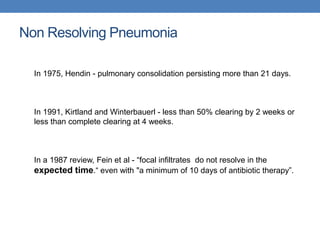
Non Resolving Pneumonia
In 1975, Hendin - pulmonary consolidation persisting more than 21 days.
In 1991, Kirtland and Winterbauerl - less than 50% clearing by 2 weeks or
less than complete clearing at 4 weeks.
In a 1987 review, Fein et al - “focal infiltrates do not resolve in the
expected time.“ even with "a minimum of 10 days of antibiotic therapy”.
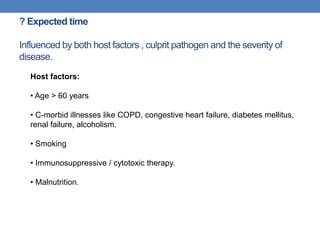
? Expected time
Influenced by both host factors , culprit pathogen and the severity of
disease.
Host factors:
• Age > 60 years
• C-morbid illnesses like COPD, congestive heart failure, diabetes mellitus,
renal failure, alcoholism.
• Smoking
• Immunosuppressive / cytotoxic therapy.
• Malnutrition.
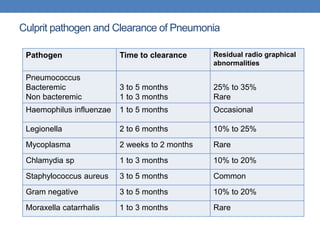
Culprit pathogen and Clearance of Pneumonia
Pathogen Time to clearance Residual radio graphical
abnormalities
Pneumococcus
Bacteremic
Non bacteremic
3 to 5 months
1 to 3 months
25% to 35%
Rare
Haemophilus influenzae 1 to 5 months Occasional
Legionella 2 to 6 months 10% to 25%
Mycoplasma 2 weeks to 2 months Rare
Chlamydia sp 1 to 3 months 10% to 20%
Staphylococcus aureus 3 to 5 months Common
Gram negative 3 to 5 months 10% to 20%
Moraxella catarrhalis 1 to 3 months Rare
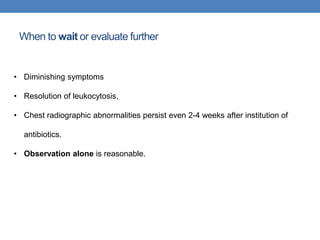
When to wait or evaluate further
• Diminishing symptoms
• Resolution of leukocytosis,
• Chest radiographic abnormalities persist even 2-4 weeks after institution of
antibiotics.
• Observation alone is reasonable.
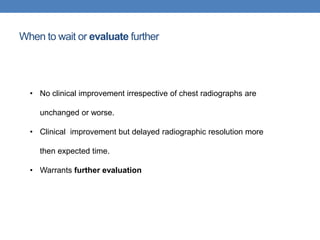
When to wait or evaluate further
• No clinical improvement irrespective of chest radiographs are
unchanged or worse.
• Clinical improvement but delayed radiographic resolution more
then expected time.
• Warrants further evaluation
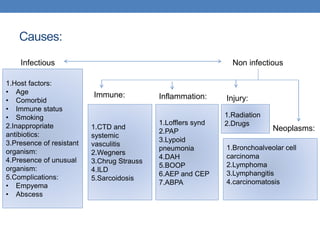
Causes:
Infectious Non infectious
Inflammation:Immune: Injury:
Neoplasms:
1.Host factors:
• Age
• Comorbid
• Immune status
• Smoking
2.Inappropriate
antibiotics:
3.Presence of resistant
organism:
4.Presence of unusual
organism:
5.Complications:
• Empyema
• Abscess
1.CTD and
systemic
vasculitis
2.Wegners
3.Chrug Strauss
4.ILD
5.Sarcoidosis
1.Lofflers synd
2.PAP
3.Lypoid
pneumonia
4.DAH
5.BOOP
6.AEP and CEP
7.ABPA
1.Radiation
2.Drugs
1.Bronchoalveolar cell
carcinoma
2.Lymphoma
3.Lymphangitis
4.carcinomatosis
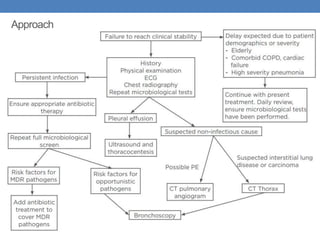
Approach
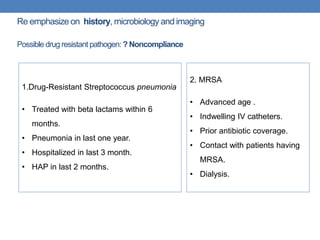
Re emphasize on history, microbiology and imaging
Possible drug resistant pathogen: ? Noncompliance
2. MRSA
• Advanced age .
• Indwelling IV catheters.
• Prior antibiotic coverage.
• Contact with patients having
MRSA.
• Dialysis.
1.Drug-Resistant Streptococcus pneumonia
• Treated with beta lactams within 6
months.
• Pneumonia in last one year.
• Hospitalized in last 3 month.
• HAP in last 2 months.
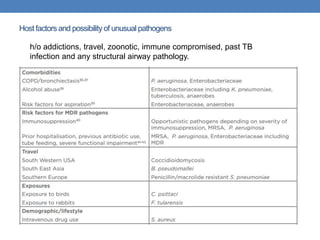
Host factors and possibility of unusual pathogens
h/o addictions, travel, zoonotic, immune compromised, past TB
infection and any structural airway pathology.
Use of drugs cause ILD
Sequestered foci of infection may prevent adequate amount of
antibiotic from reaching site of infection.
• Empyema/Para pneumonic effusion
• Abscess
( Require drainage and appropriate antibiotic therapy)
Possible complications of current illness
Nitrofurantoin. Amiodarone. Methotrexate. Bleomycin . Mitomycin.
Paclitaxel,Docetaxel. Cyclophosphamide .
Possible non infective cause – extra pulmonary symptoms
• Age
• Constitutional symptoms
• Symptoms suggestive of CTD
• Known history of CTD
• Family history
• GERD
• Foreign body
Re emphasize on history, microbiology, Labs and imaging
Infective
• Sputum for gram staining, sputum for culture sensitivity
• Sputum for AFB, GeneXpert, Culture and Sensitivities if tuberculosis is
suspected
• Staining for fungi
• Blood Culture
• Urinary Legionella antigen and streptococcus pneumonia antigen assays
• Stains and culture for bacteria and anaerobes in plural fluid in case of
pleural effusion.
Re emphasize on history, microbiology, Labs and imaging
Non Infective
• D-dimer testing for PE
• Rheumatoid factor, ANA & ANCA in CTD and vasculitis
• Serum angiotensin converting enzyme (SACE) in sarcoidosis
• CUE
• Eosinophilia
Re emphasize on history, microbiology, Labs and imaging
• Serial Chest X-Ray - persistence of radiological opacity
• HRCT Chest -
• plural diseases,
• empyema or abscess,
• mediastinal masses
• non infectious causes - Active interstitial pneumonitis
laboratory and radiological evaluation if the diagnosis of NRP is not certain
BRONCHOSCOPY
• Diagnostic in more than half of the cases of persistent pulmonary opacity
• Direct visualization
• Direct obtaining of samples (PBS, BAL and TBB)
• If FOB is not successful - transthoracic needle aspiration or open lung
biopsy may be done
Case 1:
Particulars: 16 yrs. old boy from karimnagar, 10th class student
Chief complaint: presented on 05/09/17, with shortness of breath
progressed over two days.
Shortness of breath grade IV associated with right pleurisy.
Fever moderate grade intermittent.
No orthopnea and PND.
Present illness:
• apparently normal 10 days ago,
• till he developed shortness of breath grade II - III developed over a day, no
documented fever and no cough.
• Evaluated at near by hospital right plural effusion, thoracocentesis drained
approximately 250 ml of plural fluid said to be hemorrhagic.
• Then came here for further evaluation and management.
• At admission afebrile, tachycardia (PR 130/min), tachypnea (RR 36/min),
hypotension (BP 90/60mmhg).
• Chest oscultation decreased right side air entry.
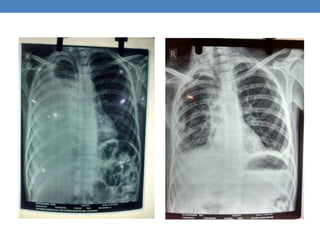
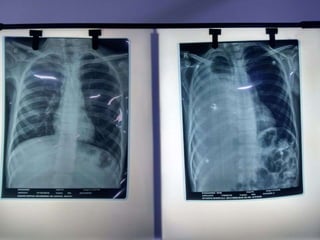
• CXR right parapnumonic effusion, CBP neutrophilic leucocytosis
• started emperical Ceftriaxone plus salbactum and clindamycine. Vit K and FFP
given for PT and INR reversal, ICD placed fluid analysis s/o exudate and
geneXpert negative.
• Lung expanded, symptoms better, drain less then 50ml, ICD removed and
patient discharged on 09./09/17. and again presented with similar complaints on
14/09/17.
Past illness: AIHA and left lower limb DVT on acenocoumarol 1mg and
prednisolone 10mg since 2 months.
Personal history: complete childhood immunization.
• At second admission similar examination findings,
• neutrophilic leukocytosis, empirical cefipime plus tazobactum,
• CXR increased right parapnumonic effusion, ICD placed, serial CXR no
complete expansion,
• Thought loculated empyema, underwent right thoracotomy and
decortication, intra operative sample for culture sterile.
• Complete lung expansion post procedure .
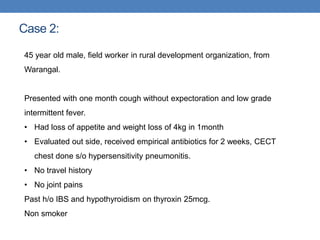
Case 2:
45 year old male, field worker in rural development organization, from
Warangal.
Presented with one month cough without expectoration and low grade
intermittent fever.
• Had loss of appetite and weight loss of 4kg in 1month
• Evaluated out side, received empirical antibiotics for 2 weeks, CECT
chest done s/o hypersensitivity pneumonitis.
• No travel history
• No joint pains
Past h/o IBS and hypothyroidism on thyroxin 25mcg.
Non smoker
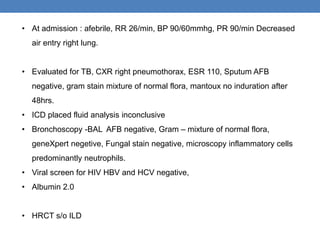
• At admission : afebrile, RR 26/min, BP 90/60mmhg, PR 90/min Decreased
air entry right lung.
• Evaluated for TB, CXR right pneumothorax, ESR 110, Sputum AFB
negative, gram stain mixture of normal flora, mantoux no induration after
48hrs.
• ICD placed fluid analysis inconclusive
• Bronchoscopy -BAL AFB negative, Gram – mixture of normal flora,
geneXpert negetive, Fungal stain negative, microscopy inflammatory cells
predominantly neutrophils.
• Viral screen for HIV HBV and HCV negative,
• Albumin 2.0
• HRCT s/o ILD
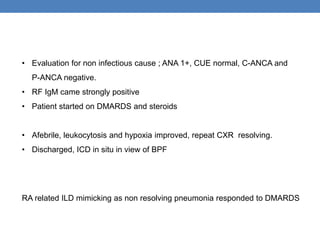
• Evaluation for non infectious cause ; ANA 1+, CUE normal, C-ANCA and
P-ANCA negative.
• RF IgM came strongly positive
• Patient started on DMARDS and steroids
• Afebrile, leukocytosis and hypoxia improved, repeat CXR resolving.
• Discharged, ICD in situ in view of BPF
RA related ILD mimicking as non resolving pneumonia responded to DMARDS
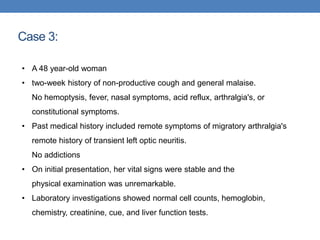
Case 3:
• A 48 year-old woman
• two-week history of non-productive cough and general malaise.
No hemoptysis, fever, nasal symptoms, acid reflux, arthralgia's, or
constitutional symptoms.
• Past medical history included remote symptoms of migratory arthralgia's
remote history of transient left optic neuritis.
No addictions
• On initial presentation, her vital signs were stable and the
physical examination was unremarkable.
• Laboratory investigations showed normal cell counts, hemoglobin,
chemistry, creatinine, cue, and liver function tests.
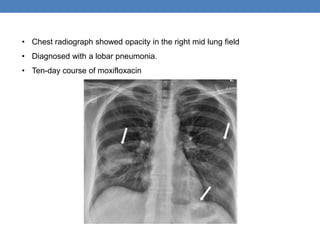
• Chest radiograph showed opacity in the right mid lung field
• Diagnosed with a lobar pneumonia.
• Ten-day course of moxifloxacin
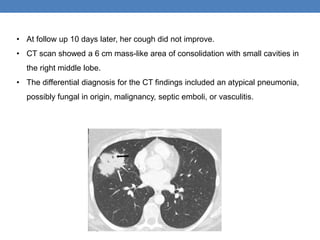
• At follow up 10 days later, her cough did not improve.
• CT scan showed a 6 cm mass-like area of consolidation with small cavities in
the right middle lobe.
• The differential diagnosis for the CT findings included an atypical pneumonia,
possibly fungal in origin, malignancy, septic emboli, or vasculitis.
• Serologies for Histoplasma capsulatum and Blastomyces dermatitidis were
negative.
• Blood cultures not grew pathogen
• Anti-cytoplasmic nuclear antibodies were positive with c-ANCA
suspected ANCA-associated vasculitis.
• Erythrocyte sedimentation rate and C-reactive protein were
elevated
• The core needle biopsies showed necrotizing granulomatous inflammation
• Tuberculin skin test negative
• Started on high dose prednisone (1 mg/kg), and Methotrexate (15 mg/week)
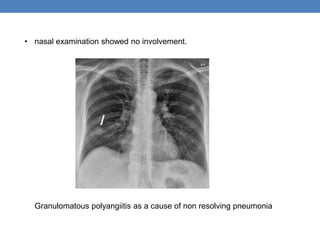
• Within 4 weeks her cough, malaise and CXR improved.
• nasal examination showed no involvement.
Granulomatous polyangiitis as a cause of non resolving pneumonia
Ref :
1. Dennis L. Kasper, Anthony S. Fauci, Stephen L. Hauser, Dan L. Longo, J. Larry Jameson JL, editor.
Harrison’s principles of internal medicine. 19th ed. New York: McGraw-Hill Medical Publishing Division; 2005.
2. Kuru T, Lynch JP. Nonresolving or slowly resolving pneumonia. Clin Chest Med. 1999;20(3):623–51.
3. Shoki A, Gomes MM, Gupta A, Kify O, Pakhale S, Mulpuru S. An important cause of non-resolving
pneumonia. Respir Med Case Reports. 2016;19:40–2.
4. Jayaprakash B, Varkey V, Anithakumari K. Etiology and clinical outcome of non-resolving pneumonia in a
tertiary care centre. J Assoc Physicians India. 2012;60(february):98–101.
5. Finch S, Chalmers JD. Brief Clinical Review : Non-Responding Pneumonia. Eur Med J.
2014;2(October):104–11.
Thank you………

Non resolving pneumonia

  • 1.
    APPROACH TO NONRESOLVING PNEUMONIA Dr. RAJKOTI DNB internal medicine resident
  • 2.
    PNEUMONIA • Infection ofpulmonary parenchyma • Microbial pathogens proliferation • Host response at alveolar level • Clinical syndrome of fever, cough ( productive or non productive).
  • 3.
    Imbalance of offencevs. defense offence • Travel • Endemic • Epidemic • Pandemic Anatomical and physiological barriers • Vibrissae • Turbinate's • Branching of tracheobronchial tree • Mucociliary action • Gag reflex and cough • Normal flora of pharynx Host immunity • Surfactant protein A and D opsonizing property • Alveolar macrophages Droplet Aspiration most common
  • 4.
    Breech of barrierand overwhelmed macrophage function IL 1, IL 8, TNF Capillary leak Erythrocytes Neutrophils Fever Chills Body pains Purulent expectoration Hemoptysis Radiographic infiltrates Rales on occultation Edema Red hepatization Gray hepatization Resolution Atypical: Mycoplasma Chlamydia Legionella Influenza virus Adenovirus RSV Typical: S. Pneumoniae Heamophilus influenzae Klebsiella pneumoniae S. aureus Pseudomonas aeruginosa Lobar/multi lobar Interstitial
  • 5.
    By area acquired HCAP: Typical,Atypical MRSA > MDR pathogens HAP/VAP: Lower incidence of atypical pathogens MDR, non MDR and anaerobs. IV Beta lactam + AG + Linezolid/vanco CAP: Typical, Atypical Difficult to predict Moe then half cases etiology never known. Beta lactam plus macrolide/quinolone
  • 6.
    Prevention The main preventivemeasure is vaccination • pneumococcal polysaccharide vaccine (PPV23) • protein conjugate pneumococcal vaccine (PCV13) • Two forms of influenza vaccine are available: intramuscular inactivated vaccine and intranasal smokers should be strongly encouraged to stop smoking.
  • 7.
    Rate of resolution AbnormalitiesDuration fever 2 to 4 days tachycardia and hypotension 2 days cough 4 to 9 days crackles 3 to 6 days leukocytosis 3 to 4 days CRP 1 to 3 days CXR abnormalities 4-12 weeks Patient is considered to have responded if: 1. Fever declines within 72 hours 2. Improvement in Leukocytosis, arterial oxygenation 3. Respiratory signs (tachypnea) return to normal. 4. Improving CPIS (clinical pulmonary infection score).
  • 8.
    Non Resolving Pneumonia In1975, Hendin - pulmonary consolidation persisting more than 21 days. In 1991, Kirtland and Winterbauerl - less than 50% clearing by 2 weeks or less than complete clearing at 4 weeks. In a 1987 review, Fein et al - “focal infiltrates do not resolve in the expected time.“ even with "a minimum of 10 days of antibiotic therapy”.
  • 9.
    ? Expected time Influencedby both host factors , culprit pathogen and the severity of disease. Host factors: • Age > 60 years • C-morbid illnesses like COPD, congestive heart failure, diabetes mellitus, renal failure, alcoholism. • Smoking • Immunosuppressive / cytotoxic therapy. • Malnutrition.
  • 10.
    Culprit pathogen andClearance of Pneumonia Pathogen Time to clearance Residual radio graphical abnormalities Pneumococcus Bacteremic Non bacteremic 3 to 5 months 1 to 3 months 25% to 35% Rare Haemophilus influenzae 1 to 5 months Occasional Legionella 2 to 6 months 10% to 25% Mycoplasma 2 weeks to 2 months Rare Chlamydia sp 1 to 3 months 10% to 20% Staphylococcus aureus 3 to 5 months Common Gram negative 3 to 5 months 10% to 20% Moraxella catarrhalis 1 to 3 months Rare
  • 11.
    When to waitor evaluate further • Diminishing symptoms • Resolution of leukocytosis, • Chest radiographic abnormalities persist even 2-4 weeks after institution of antibiotics. • Observation alone is reasonable.
  • 12.
    When to waitor evaluate further • No clinical improvement irrespective of chest radiographs are unchanged or worse. • Clinical improvement but delayed radiographic resolution more then expected time. • Warrants further evaluation
  • 13.
    Causes: Infectious Non infectious Inflammation:Immune:Injury: Neoplasms: 1.Host factors: • Age • Comorbid • Immune status • Smoking 2.Inappropriate antibiotics: 3.Presence of resistant organism: 4.Presence of unusual organism: 5.Complications: • Empyema • Abscess 1.CTD and systemic vasculitis 2.Wegners 3.Chrug Strauss 4.ILD 5.Sarcoidosis 1.Lofflers synd 2.PAP 3.Lypoid pneumonia 4.DAH 5.BOOP 6.AEP and CEP 7.ABPA 1.Radiation 2.Drugs 1.Bronchoalveolar cell carcinoma 2.Lymphoma 3.Lymphangitis 4.carcinomatosis
  • 14.
  • 15.
    Re emphasize onhistory, microbiology and imaging Possible drug resistant pathogen: ? Noncompliance 2. MRSA • Advanced age . • Indwelling IV catheters. • Prior antibiotic coverage. • Contact with patients having MRSA. • Dialysis. 1.Drug-Resistant Streptococcus pneumonia • Treated with beta lactams within 6 months. • Pneumonia in last one year. • Hospitalized in last 3 month. • HAP in last 2 months.
  • 16.
    Host factors andpossibility of unusual pathogens h/o addictions, travel, zoonotic, immune compromised, past TB infection and any structural airway pathology.
  • 17.
    Use of drugscause ILD Sequestered foci of infection may prevent adequate amount of antibiotic from reaching site of infection. • Empyema/Para pneumonic effusion • Abscess ( Require drainage and appropriate antibiotic therapy) Possible complications of current illness Nitrofurantoin. Amiodarone. Methotrexate. Bleomycin . Mitomycin. Paclitaxel,Docetaxel. Cyclophosphamide .
  • 18.
    Possible non infectivecause – extra pulmonary symptoms • Age • Constitutional symptoms • Symptoms suggestive of CTD • Known history of CTD • Family history • GERD • Foreign body
  • 19.
    Re emphasize onhistory, microbiology, Labs and imaging Infective • Sputum for gram staining, sputum for culture sensitivity • Sputum for AFB, GeneXpert, Culture and Sensitivities if tuberculosis is suspected • Staining for fungi • Blood Culture • Urinary Legionella antigen and streptococcus pneumonia antigen assays • Stains and culture for bacteria and anaerobes in plural fluid in case of pleural effusion.
  • 20.
    Re emphasize onhistory, microbiology, Labs and imaging Non Infective • D-dimer testing for PE • Rheumatoid factor, ANA & ANCA in CTD and vasculitis • Serum angiotensin converting enzyme (SACE) in sarcoidosis • CUE • Eosinophilia
  • 21.
    Re emphasize onhistory, microbiology, Labs and imaging • Serial Chest X-Ray - persistence of radiological opacity • HRCT Chest - • plural diseases, • empyema or abscess, • mediastinal masses • non infectious causes - Active interstitial pneumonitis
  • 22.
    laboratory and radiologicalevaluation if the diagnosis of NRP is not certain BRONCHOSCOPY • Diagnostic in more than half of the cases of persistent pulmonary opacity • Direct visualization • Direct obtaining of samples (PBS, BAL and TBB) • If FOB is not successful - transthoracic needle aspiration or open lung biopsy may be done
  • 23.
    Case 1: Particulars: 16yrs. old boy from karimnagar, 10th class student Chief complaint: presented on 05/09/17, with shortness of breath progressed over two days. Shortness of breath grade IV associated with right pleurisy. Fever moderate grade intermittent. No orthopnea and PND.
  • 24.
    Present illness: • apparentlynormal 10 days ago, • till he developed shortness of breath grade II - III developed over a day, no documented fever and no cough. • Evaluated at near by hospital right plural effusion, thoracocentesis drained approximately 250 ml of plural fluid said to be hemorrhagic. • Then came here for further evaluation and management. • At admission afebrile, tachycardia (PR 130/min), tachypnea (RR 36/min), hypotension (BP 90/60mmhg).
  • 25.
    • Chest oscultationdecreased right side air entry. • CXR right parapnumonic effusion, CBP neutrophilic leucocytosis • started emperical Ceftriaxone plus salbactum and clindamycine. Vit K and FFP given for PT and INR reversal, ICD placed fluid analysis s/o exudate and geneXpert negative. • Lung expanded, symptoms better, drain less then 50ml, ICD removed and patient discharged on 09./09/17. and again presented with similar complaints on 14/09/17.
  • 26.
    Past illness: AIHAand left lower limb DVT on acenocoumarol 1mg and prednisolone 10mg since 2 months. Personal history: complete childhood immunization. • At second admission similar examination findings, • neutrophilic leukocytosis, empirical cefipime plus tazobactum, • CXR increased right parapnumonic effusion, ICD placed, serial CXR no complete expansion, • Thought loculated empyema, underwent right thoracotomy and decortication, intra operative sample for culture sterile. • Complete lung expansion post procedure .
  • 29.
    Case 2: 45 yearold male, field worker in rural development organization, from Warangal. Presented with one month cough without expectoration and low grade intermittent fever. • Had loss of appetite and weight loss of 4kg in 1month • Evaluated out side, received empirical antibiotics for 2 weeks, CECT chest done s/o hypersensitivity pneumonitis. • No travel history • No joint pains Past h/o IBS and hypothyroidism on thyroxin 25mcg. Non smoker
  • 30.
    • At admission: afebrile, RR 26/min, BP 90/60mmhg, PR 90/min Decreased air entry right lung. • Evaluated for TB, CXR right pneumothorax, ESR 110, Sputum AFB negative, gram stain mixture of normal flora, mantoux no induration after 48hrs. • ICD placed fluid analysis inconclusive • Bronchoscopy -BAL AFB negative, Gram – mixture of normal flora, geneXpert negetive, Fungal stain negative, microscopy inflammatory cells predominantly neutrophils. • Viral screen for HIV HBV and HCV negative, • Albumin 2.0 • HRCT s/o ILD
  • 31.
    • Evaluation fornon infectious cause ; ANA 1+, CUE normal, C-ANCA and P-ANCA negative. • RF IgM came strongly positive • Patient started on DMARDS and steroids • Afebrile, leukocytosis and hypoxia improved, repeat CXR resolving. • Discharged, ICD in situ in view of BPF RA related ILD mimicking as non resolving pneumonia responded to DMARDS
  • 32.
    Case 3: • A48 year-old woman • two-week history of non-productive cough and general malaise. No hemoptysis, fever, nasal symptoms, acid reflux, arthralgia's, or constitutional symptoms. • Past medical history included remote symptoms of migratory arthralgia's remote history of transient left optic neuritis. No addictions • On initial presentation, her vital signs were stable and the physical examination was unremarkable. • Laboratory investigations showed normal cell counts, hemoglobin, chemistry, creatinine, cue, and liver function tests.
  • 33.
    • Chest radiographshowed opacity in the right mid lung field • Diagnosed with a lobar pneumonia. • Ten-day course of moxifloxacin
  • 34.
    • At followup 10 days later, her cough did not improve. • CT scan showed a 6 cm mass-like area of consolidation with small cavities in the right middle lobe. • The differential diagnosis for the CT findings included an atypical pneumonia, possibly fungal in origin, malignancy, septic emboli, or vasculitis.
  • 35.
    • Serologies forHistoplasma capsulatum and Blastomyces dermatitidis were negative. • Blood cultures not grew pathogen • Anti-cytoplasmic nuclear antibodies were positive with c-ANCA suspected ANCA-associated vasculitis. • Erythrocyte sedimentation rate and C-reactive protein were elevated • The core needle biopsies showed necrotizing granulomatous inflammation • Tuberculin skin test negative • Started on high dose prednisone (1 mg/kg), and Methotrexate (15 mg/week) • Within 4 weeks her cough, malaise and CXR improved.
  • 36.
    • nasal examinationshowed no involvement. Granulomatous polyangiitis as a cause of non resolving pneumonia
  • 37.
    Ref : 1. DennisL. Kasper, Anthony S. Fauci, Stephen L. Hauser, Dan L. Longo, J. Larry Jameson JL, editor. Harrison’s principles of internal medicine. 19th ed. New York: McGraw-Hill Medical Publishing Division; 2005. 2. Kuru T, Lynch JP. Nonresolving or slowly resolving pneumonia. Clin Chest Med. 1999;20(3):623–51. 3. Shoki A, Gomes MM, Gupta A, Kify O, Pakhale S, Mulpuru S. An important cause of non-resolving pneumonia. Respir Med Case Reports. 2016;19:40–2. 4. Jayaprakash B, Varkey V, Anithakumari K. Etiology and clinical outcome of non-resolving pneumonia in a tertiary care centre. J Assoc Physicians India. 2012;60(february):98–101. 5. Finch S, Chalmers JD. Brief Clinical Review : Non-Responding Pneumonia. Eur Med J. 2014;2(October):104–11. Thank you………