NON CONVERTIBLE DEBENTURES
(NCD)
What are Debentures?
• Debenture is a debt instrument which is used by companies to borrow
money from general public.
• Most debentures pay a FIXED rate of interest/ Coupon
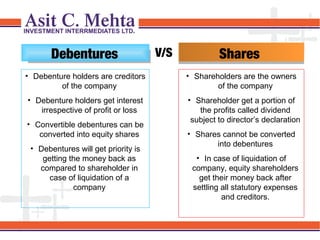
Debentures
• Debenture holders are creditors
of the company
• Debenture holders get interest
irrespective of profit or loss
• Convertible debentures can be
converted into equity shares
• Debentures will get priority is
getting the money back as
compared to shareholder in
case of liquidation of a
company

V/S

Shares
• Shareholders are the owners
of the company
• Shareholder get a portion of
the profits called dividend
subject to director’s declaration
• Shares cannot be converted
into debentures
• In case of liquidation of
company, equity shareholders
get their money back after
settling all statutory expenses
and creditors.
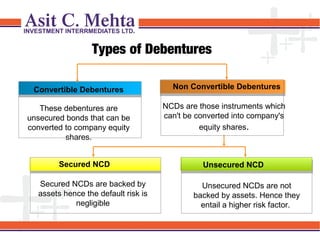
Types of Debentures
Convertible Debentures
These debentures are
unsecured bonds that can be
converted to company equity
shares.
Secured NCD
Secured NCDs are backed by
assets hence the default risk is
negligible

Non Convertible Debentures
NCDs are those instruments which
can't be converted into company's
equity shares.

Unsecured NCD
Unsecured NCDs are not
backed by assets. Hence they
entail a higher risk factor.
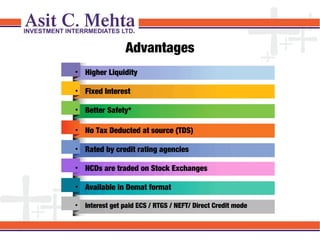
Advantages
• Higher Liquidity
• Fixed Interest
• Better Safety*
• No Tax Deducted at source (TDS)
• Rated by credit rating agencies
• NCDs are traded on Stock Exchanges
• Available in Demat format
•

Interest get paid ECS / RTGS / NEFT/ Direct Credit mode
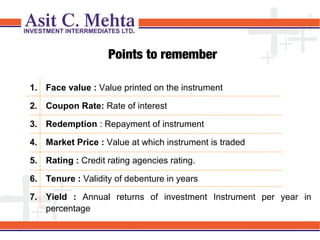
Points to remember
1. Face value : Value printed on the instrument
2. Coupon Rate: Rate of interest
3. Redemption : Repayment of instrument
4. Market Price : Value at which instrument is traded
5. Rating : Credit rating agencies rating.
6. Tenure : Validity of debenture in years
7. Yield : Annual returns of investment Instrument per year in
percentage
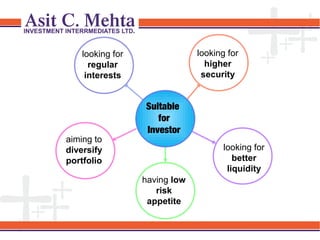
looking for
higher
security

looking for
regular
interests

aiming to
diversify
portfolio

Suitable
for
Investor
looking for
better
liquidity
having low
risk
appetite
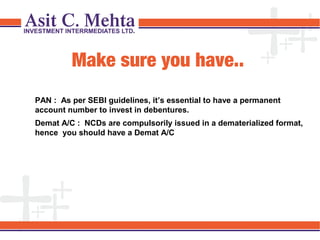
Make sure you have..
PAN : As per SEBI guidelines, it’s essential to have a permanent
account number to invest in debentures.
Demat A/C : NCDs are compulsorily issued in a dematerialized format,
hence you should have a Demat A/C
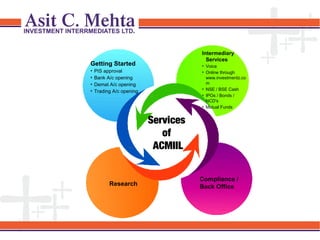
Intermediary
Services

Getting Started
•
•
•
•

• Voice
• Online through
www.investmentz.co
m
• NSE / BSE Cash
• IPOs / Bonds /
NCD's
• Mutual Funds

PIS approval
Bank A/c opening
Demat A/c opening
Trading A/c opening

Services
of
ACMIIL

Research

Compliance /
Back Office
Thank You

Non Convertible Debentures

  • 1.
  • 2.
    What are Debentures? •Debenture is a debt instrument which is used by companies to borrow money from general public. • Most debentures pay a FIXED rate of interest/ Coupon
  • 3.
    Debentures • Debenture holdersare creditors of the company • Debenture holders get interest irrespective of profit or loss • Convertible debentures can be converted into equity shares • Debentures will get priority is getting the money back as compared to shareholder in case of liquidation of a company V/S Shares • Shareholders are the owners of the company • Shareholder get a portion of the profits called dividend subject to director’s declaration • Shares cannot be converted into debentures • In case of liquidation of company, equity shareholders get their money back after settling all statutory expenses and creditors.
  • 4.
    Types of Debentures ConvertibleDebentures These debentures are unsecured bonds that can be converted to company equity shares. Secured NCD Secured NCDs are backed by assets hence the default risk is negligible Non Convertible Debentures NCDs are those instruments which can't be converted into company's equity shares. Unsecured NCD Unsecured NCDs are not backed by assets. Hence they entail a higher risk factor.
  • 5.
    Advantages • Higher Liquidity •Fixed Interest • Better Safety* • No Tax Deducted at source (TDS) • Rated by credit rating agencies • NCDs are traded on Stock Exchanges • Available in Demat format • Interest get paid ECS / RTGS / NEFT/ Direct Credit mode
  • 6.
    Points to remember 1.Face value : Value printed on the instrument 2. Coupon Rate: Rate of interest 3. Redemption : Repayment of instrument 4. Market Price : Value at which instrument is traded 5. Rating : Credit rating agencies rating. 6. Tenure : Validity of debenture in years 7. Yield : Annual returns of investment Instrument per year in percentage
  • 7.
    looking for higher security looking for regular interests aimingto diversify portfolio Suitable for Investor looking for better liquidity having low risk appetite
  • 8.
    Make sure youhave.. PAN : As per SEBI guidelines, it’s essential to have a permanent account number to invest in debentures. Demat A/C : NCDs are compulsorily issued in a dematerialized format, hence you should have a Demat A/C
  • 9.
    Intermediary Services Getting Started • • • • • Voice •Online through www.investmentz.co m • NSE / BSE Cash • IPOs / Bonds / NCD's • Mutual Funds PIS approval Bank A/c opening Demat A/c opening Trading A/c opening Services of ACMIIL Research Compliance / Back Office
  • 10.