Pull quote: This anchors 
the main image and gives 
the reader an insight to 
the type of article inside. 
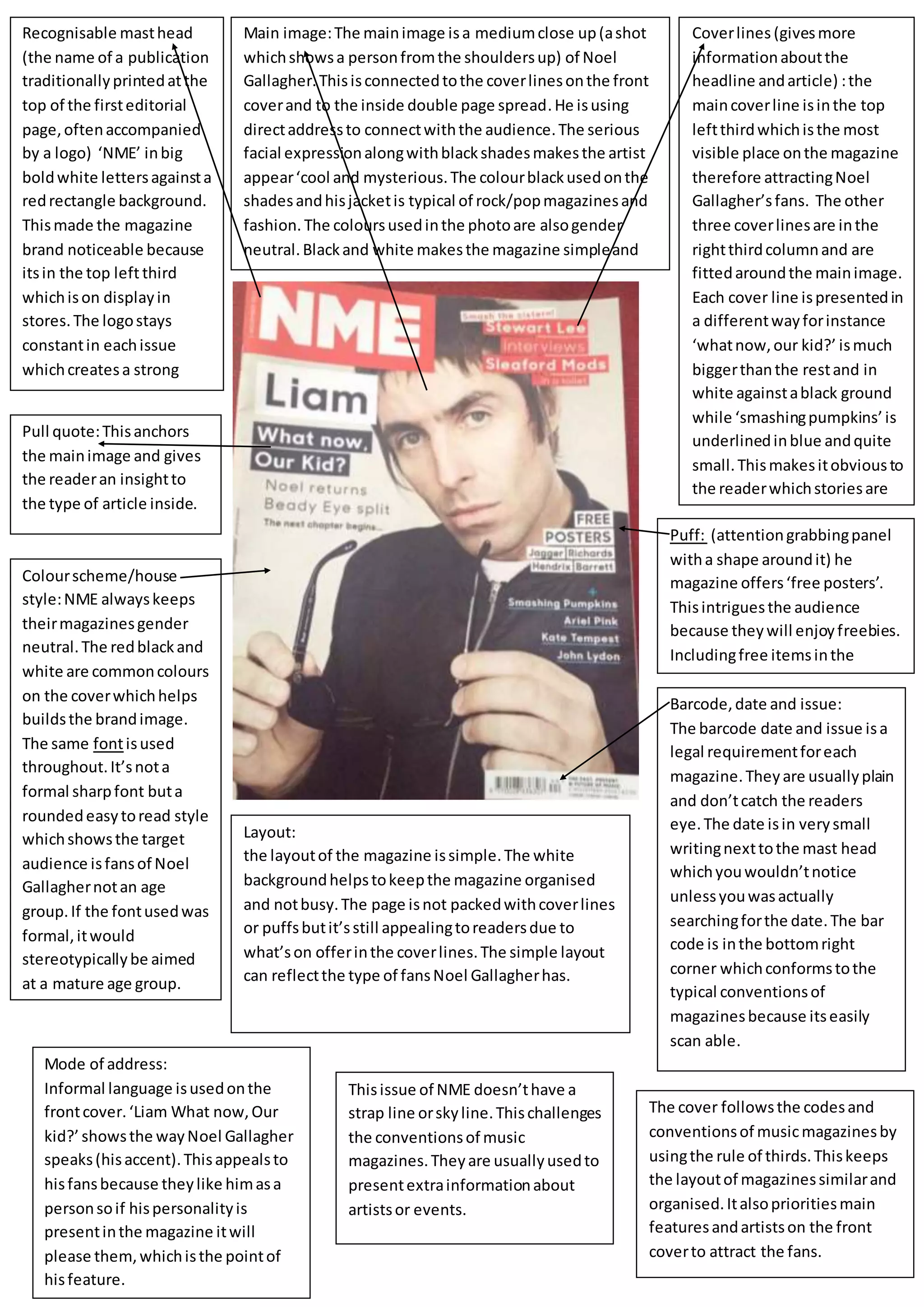
Main image: The main image is a medium close up (a shot 
which shows a person from the shoulders up) of Noel 
Gallagher. This is connected to the cover lines on the front 
cover and to the inside double page spread. He is using 
direct address to connect with the audience. The serious 
facial expression along with black shades makes the artist 
appear ‘cool and mysterious. The colour black used on the 
shades and his jacket is typical of rock/pop magazines and 
fashion. The colours used in the photo are also gender 
neutral. Black and white makes the magazine simple and 
attractive to the eye. 
Recognisable mast head 
(the name of a publication 
traditionally printed at the 
top of the first editorial 
page, often accompanied 
by a logo) ‘NME’ in big 
bold white letters against a 
red rectangle background. 
This made the magazine 
brand noticeable because 
its in the top left third 
which is on display in 
stores. The logo stays 
constant in each issue 
which creates a strong 
magazine identity for 
example if the image 
slightly covered the mast 
head, you would still know 
its NME. 
Cover lines (gives more 
information about the 
headline and article) : the 
main cover line is in the top 
left third which is the most 
visible place on the magazine 
therefore attracting Noel 
Gallagher’s fans. The other 
three cover lines are in the 
right third column and are 
fitted around the main image. 
Each cover line is presented in 
a different way for instance 
‘what now, our kid?’ is much 
bigger than the rest and in 
white against a black ground 
while ‘smashing pumpkins’ is 
underlined in blue and quite 
small. This makes it obvious to 
the reader which stories are 
the main focus of the 
magazine issue. 
Puff: (attention grabbing panel 
with a shape around it) he 
magazine offers ‘free posters’. 
This intrigues the audience 
because they will enjoy freebies. 
Including free items in the 
magazine will make fans buy the 
Bmaargcoazdien,e d matoer aen odft iessnu. e: 
The barcode date and issue is a 
legal requirement for each 
magazine. They are usually plain 
and don’t catch the readers 
eye. The date is in very small 
writing next to the mast head 
which you wouldn’t notice 
unless you was actually 
searching for the date. The bar 
code is in the bottom right 
corner which conforms to the 
typical conventions of 
magazines because its easily 
scan able. 
Colour scheme/house 
style: NME always keeps 
their magazines gender 
neutral. The red black and 
white are common colours 
on the cover which helps 
builds the brand image. 
The same font is used 
throughout. It’s not a 
formal sharp font but a 
rounded easy to read style 
which shows the target 
audience is fans of Noel 
Gallagher not an age 
group. If the font used was 
formal, it would 
stereotypically be aimed 
at a mature age group. 
Layout: 
the layout of the magazine is simple. The white 
background helps to keep the magazine organised 
and not busy. The page is not packed with cover lines 
or puffs but it’s still appealing to readers due to 
what’s on offer in the cover lines. The simple layout 
can reflect the type of fans Noel Gallagher has. 
Mode of address: 
Informal language is used on the 
front cover. ‘Liam What now, Our 
kid?’ shows the way Noel Gallagher 
speaks (his accent). This appeals to 
his fans because they like him as a 
person so if his personality is 
present in the magazine it will 
please them, which is the point of 
his feature. 
This issue of NME doesn’t have a 
strap line or sky line. This challenges 
the conventions of music 
magazines. They are usually used to 
present extra information about 
artists or events. 
The cover follows the codes and 
conventions of music magazines by 
using the rule of thirds. This keeps 
the layout of magazines similar and 
organised. It also priorities main 
features and artists on the front 
cover to attract the fans.

Noel gallagher front cover analysis

  • 1.
    Pull quote: Thisanchors the main image and gives the reader an insight to the type of article inside. Main image: The main image is a medium close up (a shot which shows a person from the shoulders up) of Noel Gallagher. This is connected to the cover lines on the front cover and to the inside double page spread. He is using direct address to connect with the audience. The serious facial expression along with black shades makes the artist appear ‘cool and mysterious. The colour black used on the shades and his jacket is typical of rock/pop magazines and fashion. The colours used in the photo are also gender neutral. Black and white makes the magazine simple and attractive to the eye. Recognisable mast head (the name of a publication traditionally printed at the top of the first editorial page, often accompanied by a logo) ‘NME’ in big bold white letters against a red rectangle background. This made the magazine brand noticeable because its in the top left third which is on display in stores. The logo stays constant in each issue which creates a strong magazine identity for example if the image slightly covered the mast head, you would still know its NME. Cover lines (gives more information about the headline and article) : the main cover line is in the top left third which is the most visible place on the magazine therefore attracting Noel Gallagher’s fans. The other three cover lines are in the right third column and are fitted around the main image. Each cover line is presented in a different way for instance ‘what now, our kid?’ is much bigger than the rest and in white against a black ground while ‘smashing pumpkins’ is underlined in blue and quite small. This makes it obvious to the reader which stories are the main focus of the magazine issue. Puff: (attention grabbing panel with a shape around it) he magazine offers ‘free posters’. This intrigues the audience because they will enjoy freebies. Including free items in the magazine will make fans buy the Bmaargcoazdien,e d matoer aen odft iessnu. e: The barcode date and issue is a legal requirement for each magazine. They are usually plain and don’t catch the readers eye. The date is in very small writing next to the mast head which you wouldn’t notice unless you was actually searching for the date. The bar code is in the bottom right corner which conforms to the typical conventions of magazines because its easily scan able. Colour scheme/house style: NME always keeps their magazines gender neutral. The red black and white are common colours on the cover which helps builds the brand image. The same font is used throughout. It’s not a formal sharp font but a rounded easy to read style which shows the target audience is fans of Noel Gallagher not an age group. If the font used was formal, it would stereotypically be aimed at a mature age group. Layout: the layout of the magazine is simple. The white background helps to keep the magazine organised and not busy. The page is not packed with cover lines or puffs but it’s still appealing to readers due to what’s on offer in the cover lines. The simple layout can reflect the type of fans Noel Gallagher has. Mode of address: Informal language is used on the front cover. ‘Liam What now, Our kid?’ shows the way Noel Gallagher speaks (his accent). This appeals to his fans because they like him as a person so if his personality is present in the magazine it will please them, which is the point of his feature. This issue of NME doesn’t have a strap line or sky line. This challenges the conventions of music magazines. They are usually used to present extra information about artists or events. The cover follows the codes and conventions of music magazines by using the rule of thirds. This keeps the layout of magazines similar and organised. It also priorities main features and artists on the front cover to attract the fans.