A CASE
STUDY
BACKGROUND DETAILS
 It was first published on the 7th
March,1952.
 It focused on new British groups that
were emerging at the time.
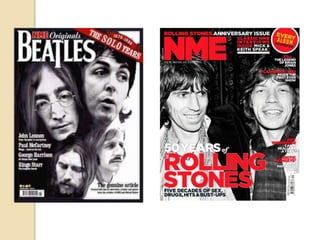
 The Beatles and Rolling Stones were seen on
the front cover of NME magazine frequently.
 Towards the end of the 1960s there was a rise
of the psychedelia genre and the popularity of
British groups continued to grow.
 The magazine was doing very well as it was
selling as many as 200,000 issues per week.
BACKGROUND DETAILS
 The name of the magazines ‘NME’ is
an acronym of the original name of the
magazine ‘New Musical Express’.
 It usually promotes new Indie Rock
music/artists.
 Since its first issue release in 1952, it
has grown to become one of the UK's
biggest magazine sellers.
NME TODAY
 From the 21st March 1998, the
magazine stopped printing on newsprint,
and now has shifted to tabloid size with
full, glossy, colour covers.
 It is distributed weekly.
 Each issue costs £2.50.
 NME sponsors a yearly tour around the
UK for up-and-coming bands.
 NME also has its own website, awards
show, radio station and had a TV
channel which recently closed down in
2012.
TARGET AUDIENCE
 17 - 30 years old.
 69% male, 31% female.
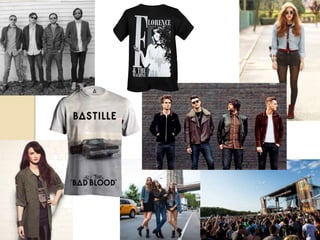
 Those with an interest into new music
and artists and/or people in a band.
They would most likely be interested in
festivals and concerts.
 Are modern, young and enjoy films and
technology. They are enthusiastic about
new entertainment.
 They are dedicated to the magazine as it
has in-depth knowledge on music, films
and technology.
CONTENTS
 The content inside NME magazine
usually includes articles and news on
famous Indie Rock artists, album
reviews with information on festivals
and gigs.
 Some artists that feature frequently in
NME are: Arctic Monkeys, Paramore,
The Horrors, HAIM and My Chemical
Romance.
STYLE
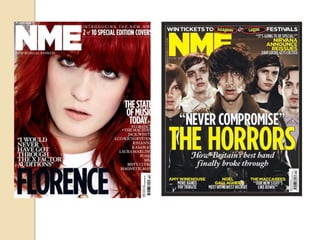
 NME associated itself with the Indie Rock genre and
the iconography that surrounds it, e.g. electric or
acoustic guitars, dark, edgy looking make up, etc.
 NME magazine contains many images to make it
more appealing to the target audience but it is
mostly text-heavy.
 It has a lot of uppercase text in a large, bold,
distressed font.
 The colour scheme of the magazine is red, white,
black and yellow as they are shown frequently on
NME issues. This could be in relation to the male
and female readership.
 NME favours articles over interviews and this is
because the audience are more interested in the
music and are prepared to invest time listening to
music.
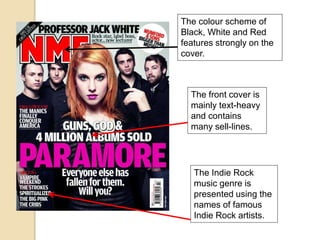
The colour scheme of
Black, White and Red
features strongly on the
cover.
The Indie Rock
music genre is
presented using the
names of famous
Indie Rock artists.
The front cover is
mainly text-heavy
and contains
many sell-lines.
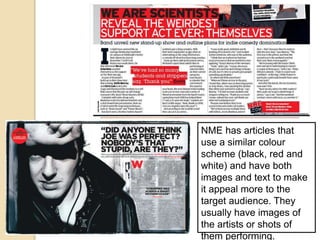
NME has articles that
use a similar colour
scheme (black, red and
white) and have both
images and text to make
it appeal more to the
target audience. They
usually have images of
the artists or shots of
them performing.
MODE OF ADDRESS
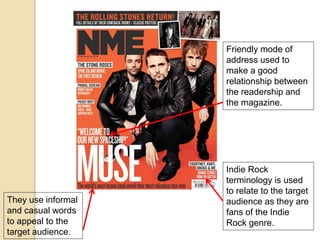
 The mode of address relates to the
target audience by using informal,
friendly and casual words that they
would use.
 The tone of the magazine references
that the readership would be a fan of
Indie Rock music and uses the mode of
address to establish this.
 The language used suggests that the
target audience are ‘modern’ and would
understand the Indie Rock music genre
and this would appeal to them.
Indie Rock
terminology is used
to relate to the target
audience as they are
fans of the Indie
Rock genre.
Friendly mode of
address used to
make a good
relationship between
the readership and
the magazine.
They use informal
and casual words
to appeal to the
target audience.
MODE OF ADDRESS
Examples of mode of address:
 ‘From the rubble to the Ritz’
 ‘Why Britain’s gone silly for the lords
of the indie dance floor’
 ‘Inside their insane new album’
 ‘Guns, God and 4 million albums sold’
 ‘20 years on... The legend and the
legacy of nevermind’
OWNERSHIP
 NME is owned by IPC Media who produce
over 60 media brands.
 They print other magazines such as Marie
Claire, Now and InStyle magazine.
 IPC Media distributes a number of magazines
that are aimed at audiences who are
interested in modern music, recent events
and fashion.
 They reach all of the UK with their magazines
and over 28 million users with their website
 IPC Media have a radio station and TV
channel that promote music as well.
 They have multiple platforms that they use to
reach their audiences.
NME Case Study

NME Case Study

  • 1.
  • 3.
    BACKGROUND DETAILS  Itwas first published on the 7th March,1952.  It focused on new British groups that were emerging at the time.  The Beatles and Rolling Stones were seen on the front cover of NME magazine frequently.  Towards the end of the 1960s there was a rise of the psychedelia genre and the popularity of British groups continued to grow.  The magazine was doing very well as it was selling as many as 200,000 issues per week.
  • 5.
    BACKGROUND DETAILS  Thename of the magazines ‘NME’ is an acronym of the original name of the magazine ‘New Musical Express’.  It usually promotes new Indie Rock music/artists.  Since its first issue release in 1952, it has grown to become one of the UK's biggest magazine sellers.
  • 6.
    NME TODAY  Fromthe 21st March 1998, the magazine stopped printing on newsprint, and now has shifted to tabloid size with full, glossy, colour covers.  It is distributed weekly.  Each issue costs £2.50.  NME sponsors a yearly tour around the UK for up-and-coming bands.  NME also has its own website, awards show, radio station and had a TV channel which recently closed down in 2012.
  • 7.
    TARGET AUDIENCE  17- 30 years old.  69% male, 31% female.  Those with an interest into new music and artists and/or people in a band. They would most likely be interested in festivals and concerts.  Are modern, young and enjoy films and technology. They are enthusiastic about new entertainment.  They are dedicated to the magazine as it has in-depth knowledge on music, films and technology.
  • 9.
    CONTENTS  The contentinside NME magazine usually includes articles and news on famous Indie Rock artists, album reviews with information on festivals and gigs.  Some artists that feature frequently in NME are: Arctic Monkeys, Paramore, The Horrors, HAIM and My Chemical Romance.
  • 11.
    STYLE  NME associateditself with the Indie Rock genre and the iconography that surrounds it, e.g. electric or acoustic guitars, dark, edgy looking make up, etc.  NME magazine contains many images to make it more appealing to the target audience but it is mostly text-heavy.  It has a lot of uppercase text in a large, bold, distressed font.  The colour scheme of the magazine is red, white, black and yellow as they are shown frequently on NME issues. This could be in relation to the male and female readership.  NME favours articles over interviews and this is because the audience are more interested in the music and are prepared to invest time listening to music.
  • 12.
    The colour schemeof Black, White and Red features strongly on the cover. The Indie Rock music genre is presented using the names of famous Indie Rock artists. The front cover is mainly text-heavy and contains many sell-lines.
  • 13.
    NME has articlesthat use a similar colour scheme (black, red and white) and have both images and text to make it appeal more to the target audience. They usually have images of the artists or shots of them performing.
  • 14.
    MODE OF ADDRESS The mode of address relates to the target audience by using informal, friendly and casual words that they would use.  The tone of the magazine references that the readership would be a fan of Indie Rock music and uses the mode of address to establish this.  The language used suggests that the target audience are ‘modern’ and would understand the Indie Rock music genre and this would appeal to them.
  • 15.
    Indie Rock terminology isused to relate to the target audience as they are fans of the Indie Rock genre. Friendly mode of address used to make a good relationship between the readership and the magazine. They use informal and casual words to appeal to the target audience.
  • 16.
    MODE OF ADDRESS Examplesof mode of address:  ‘From the rubble to the Ritz’  ‘Why Britain’s gone silly for the lords of the indie dance floor’  ‘Inside their insane new album’  ‘Guns, God and 4 million albums sold’  ‘20 years on... The legend and the legacy of nevermind’
  • 17.
    OWNERSHIP  NME isowned by IPC Media who produce over 60 media brands.  They print other magazines such as Marie Claire, Now and InStyle magazine.  IPC Media distributes a number of magazines that are aimed at audiences who are interested in modern music, recent events and fashion.  They reach all of the UK with their magazines and over 28 million users with their website  IPC Media have a radio station and TV channel that promote music as well.  They have multiple platforms that they use to reach their audiences.