Whiteboard, LLC
Maximizing Human Capital
NJAPA
East Windsor, New Jersey
May 2-3, 2013
by
Dr. Paul Marciano
1st day of work
Consider . . .
We have new employees at “Hello.”
Employees come to us in a state of readiness to
engage.
What does employee engagement
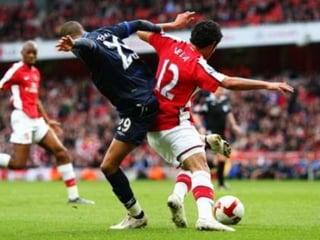
look like on the playing field?
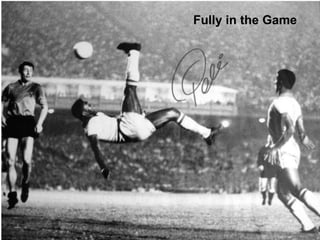
Fully in the Game
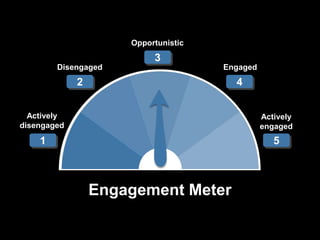
Engagement Meter
1
2
3
4
5
Actively
disengaged
Disengaged
Opportunistic
Engaged
Actively
engaged
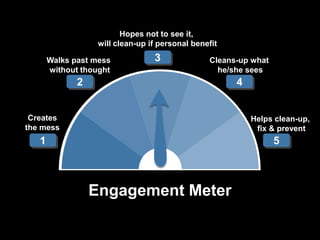
Engagement Meter
1
2
3
4
5
Creates
the mess
Walks past mess
without thought
Hopes not to see it,
will clean-up if personal benefit
Cleans-up what
he/she sees
Helps clean-up,
fix & prevent
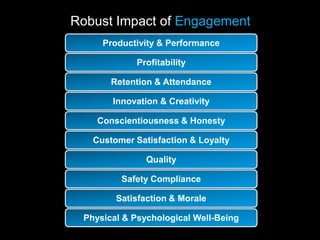
Robust Impact of Engagement
Productivity & Performance
Profitability
Retention & Attendance
Innovation & Creativity
Conscientiousness & Honesty
Customer Satisfaction & Loyalty
Quality
Safety Compliance
Satisfaction & Morale
Physical & Psychological Well-Being
Unfortunately,
not everyone
plays full out.
Costs of Disengagement
• Decreased quality work = Mistakes!
• Poor communication
• Decrease and disruption in client service
• Increased absenteeism
• Decreased staff morale & teamwork
• Turnover
• Loss of expertise
• Advertising & recruitment costs
• Training & development costs
• Increased stress on remaining staff
If we start with engaged employees,
what causes disengagement?
What does it take to create a
culture that nurtures employees?
Most people believe that . . .
employee engagement and motivation are the
same . . . they are not.
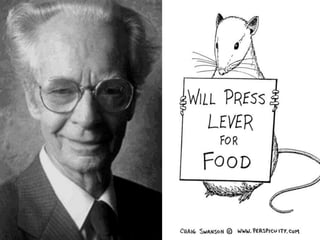
Traditional reward & recognition programs
why programs fail
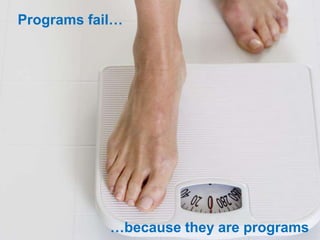
Programs fail…
…because they are programs
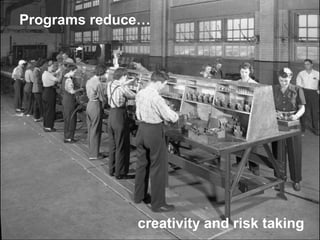
Programs reduce…
creativity and risk taking
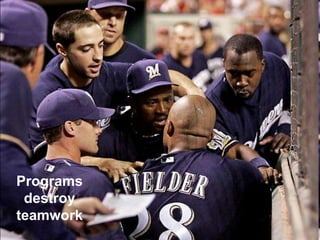
Programs
destroy
teamwork
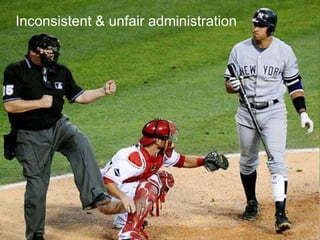
Inconsistent & unfair administration
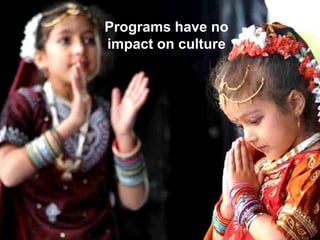
Programs have no
impact on culture
Reward programs…
…reduce overall motivation
Reward programs…
…reduce overall motivation
Don’t worry about how to motivate employees.
It isn’t even the right question.
The question is . . .
. . . how do we engage our people?
Realizing sustainable increases in
employee engagement requires
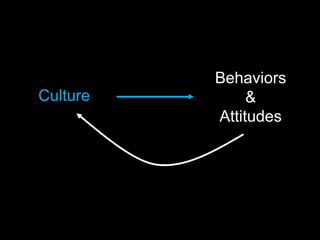
impacting the culture of the organization.
Culture
Behaviors
&
Attitudes
Creating a culture of respect
When you hear the word
“respect” what comes to mind?
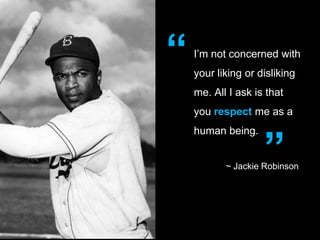
I’m not concerned with
your liking or disliking
me. All I ask is that
you respect me as a
human being.
~ Jackie Robinson
“
”
For many people being respected is even more
important than being liked.
Why is respect so important to
individuals, and political, social and
religious organizations?
Respect is a matter of survival.
As an individual:
When you are respected you are protected.
When you are not respected you are vulnerable.
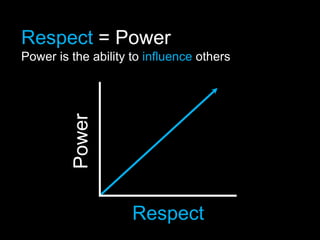
Respect = Power
Power is the ability to influence others
Power
Respect
Think of someone who you really respect.
What is it about that person’s behavior, traits
and characteristics that has you hold them in
such high esteem?
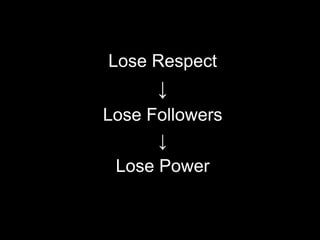
Lose Respect
↓
Lose Followers
↓
Lose Power
Discuss a time when you either lost respect for
someone or you felt disrespected. What were
the circumstances and what impact did it have
on you and your relationship with that person?
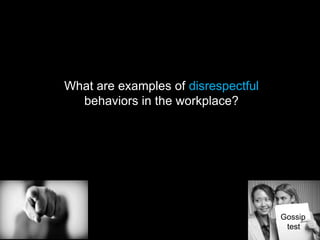
What are examples of disrespectful
behaviors in the workplace?
Gossip
test
When a person feels disrespected at work,
what is the impact on that individual, his/her
team, the organization, and customers?
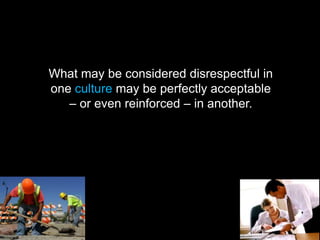
What may be considered disrespectful in
one culture may be perfectly acceptable
– or even reinforced – in another.
What matters is the impact not the intent.
What are examples of respectful
behaviors in the workplace?
“Most people do not listen with the intent to
understand; they listen with the intent to reply.”
~ Stephen Covey
“The most basic of all human needs is the
need to understand and be understood.
The best way to understand people is to
listen to them.”
~ Ralph Nichols
“If there is any one secret of success, it lies
in the ability to get the other person's point
of view and see things from that person's
angle as well as from your own.”
~ Henry Ford
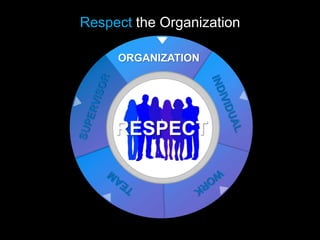
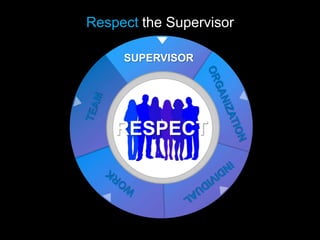
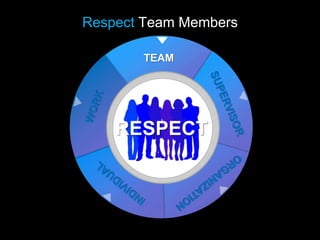
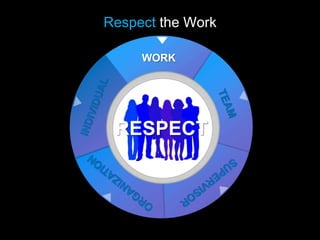
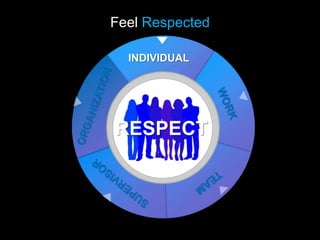
the RESPECT™ model
An actionable philosophy which guides
and directs behavior
Respect the Organization
ORGANIZATION
RESPECT
Respect the Supervisor
SUPERVISOR
RESPECT
Respect Team Members
TEAM
RESPECT
Respect the Work
WORK
RESPECT
Feel Respected
INDIVIDUAL
RESPECT
the RESPECT™ drivers
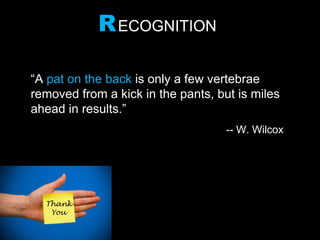
RECOGNITION
“A pat on the back is only a few vertebrae
removed from a kick in the pants, but is miles
ahead in results.”
-- W. Wilcox
Thank
You
Turnkey Solutions & Best Practices
Recognition
• Send a handwritten “thank you” note home
• Spread the word; inform higher ups
• Create a wall of great ideas
• Hold work up as an example
• Increase decision making & autonomy
• Create more opportunities
• Document performance in personnel file
“The most vital task of the leader is to motivate,
inspire, empower and encourage the team's
primary resource -- the unlimited, creative
human potential to find better ways.”
-- Dr. Lewis Losoncy
If he works for you, you work for him.
- Japanese proverb
EMPOWERMENT
Turnkey Solutions & Best Practices
Empowerment
• Create powerful on-boarding and new hire training
programs; set employees up for success
• Ask employees how you can reduce barriers and
help them do their jobs better
• Increase level of cross-training or at least shadowing
• Increase flow of communication, e.g., hold monthly
lunches and invite a leader or team member from
another department to share updates
• Increase level of autonomy and decision making
• Create learning opportunities through delegation
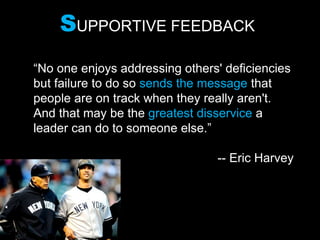
SUPPORTIVE FEEDBACK
“No one enjoys addressing others' deficiencies
but failure to do so sends the message that
people are on track when they really aren't.
And that may be the greatest disservice a
leader can do to someone else.”
-- Eric Harvey
Turnkey Solutions & Best Practices
Supportive Feedback
• Focus on behavior and impact of behavior not attitude
• Schedule time on the calendar for regular feedback
• Utilize “coaching moments” – quick feedback
• Add role-play to supplement verbal comments
• Keep feedback future focused
• Be selective and focused in your feedback; prioritize
• Serve as a role model and ask employees to provide
you with feedback
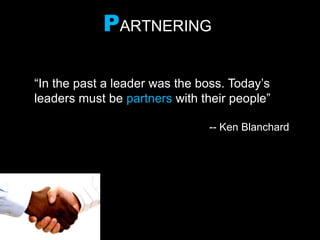
PARTNERING
“In the past a leader was the boss. Today’s
leaders must be partners with their people”
-- Ken Blanchard
Turnkey Solutions & Best Practices
Partnering
• Conduct an internal service assessment
• Develop a mentoring program
• Create an employee council to provide feedback and
have input on organizational decisions – especially
those relevant to their jobs and benefits
• Increase communication through town hall meetings,
weekly newsletters, and a company blog
• Institute a profit sharing or stock option program
• Eliminate differences in benefits and perks, e.g.,
parking spaces, healthcare, and company cars
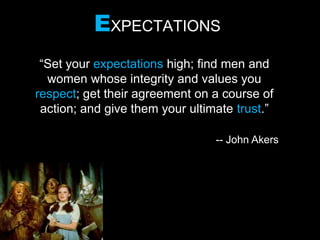
EXPECTATIONS
“Set your expectations high; find men and
women whose integrity and values you
respect; get their agreement on a course of
action; and give them your ultimate trust.”
-- John Akers
Turnkey Solutions & Best Practices
Expectations
• Give job candidates the “real deal”
• Set clear, consistent and challenging goals
• “What gets measured gets done”; track progress
• Document expectations to ensure common
understanding and to hold others accountable
• Put checkpoints in place; especially early
• Hold a “compare expectations” exercise
• Consequate behavior early; “Confused & “Concerned”
• Hold people accountable!
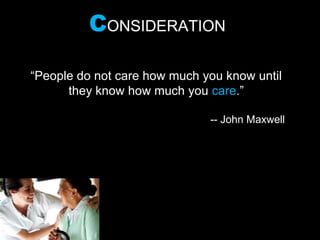
CONSIDERATION
“People do not care how much you know until
they know how much you care.”
-- John Maxwell
Turnkey Solutions & Best Practices
Consideration
• Know your employees, e.g., hobbies, interest, family
• Be on time & follow-up promptly
• Celebrate accomplishments & special days
• Regularly ask employees for their opinions & ideas
• Create flexibility in schedule
• Keep people in the information loop; ask if they would
like to be copied on emails or join meetings
• Give people your full attention during meetings
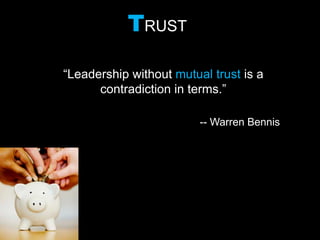
TRUST
“Leadership without mutual trust is a
contradiction in terms.”
-- Warren Bennis
Turnkey Solutions & Best Practices
Trust
• Avoid micro-managing
• Keep your promises
• Own up to mistakes
• Talk to people not about them
• Be honest and direct
• Give credit where credit is due
• Increase autonomy
• “Walk the talk”; don’t say one thing and do another
Where to start?
Be the change you want to see in the world.
-- Mahatma Gandhi
“ ”
What commitment can you make to contribute
to a culture of respect at organization?
Dr. Paul’s Contact Information
Email: Paul@PaulMarciano.com
Website: www.PaulMarciano.com - newsletter, videos, etc.
Connect on LinkedIn: www.linkedin.com/in/paulmarciano/
Join LinkedIn Group: Respect in the Workplace
Twitter: @TheRespectGuy
Phone: 908-268-7272
Address: 120 Main Street, Flemington NJ 08822
Amazon Link to “Carrots and Sticks Don’t Work”
NJAPA Conference

NJAPA Conference

  • 1.
    Whiteboard, LLC Maximizing HumanCapital NJAPA East Windsor, New Jersey May 2-3, 2013 by Dr. Paul Marciano
  • 3.
  • 4.
  • 5.
    We have newemployees at “Hello.”
  • 6.
    Employees come tous in a state of readiness to engage.
  • 7.
    What does employeeengagement look like on the playing field?
  • 8.
  • 9.
  • 10.
    Engagement Meter 1 2 3 4 5 Creates the mess Walkspast mess without thought Hopes not to see it, will clean-up if personal benefit Cleans-up what he/she sees Helps clean-up, fix & prevent
  • 11.
    Robust Impact ofEngagement Productivity & Performance Profitability Retention & Attendance Innovation & Creativity Conscientiousness & Honesty Customer Satisfaction & Loyalty Quality Safety Compliance Satisfaction & Morale Physical & Psychological Well-Being
  • 12.
  • 13.
    Costs of Disengagement •Decreased quality work = Mistakes! • Poor communication • Decrease and disruption in client service • Increased absenteeism • Decreased staff morale & teamwork • Turnover • Loss of expertise • Advertising & recruitment costs • Training & development costs • Increased stress on remaining staff
  • 14.
    If we startwith engaged employees, what causes disengagement?
  • 17.
    What does ittake to create a culture that nurtures employees?
  • 19.
  • 20.
    employee engagement andmotivation are the same . . . they are not.
  • 22.
    Traditional reward &recognition programs
  • 25.
  • 26.
  • 27.
  • 28.
  • 29.
    Inconsistent & unfairadministration
  • 30.
  • 31.
    Reward programs… …reduce overallmotivation Reward programs… …reduce overall motivation
  • 33.
    Don’t worry abouthow to motivate employees.
  • 34.
    It isn’t eventhe right question.
  • 35.
  • 36.
    . . .how do we engage our people?
  • 37.
    Realizing sustainable increasesin employee engagement requires impacting the culture of the organization.
  • 38.
  • 39.
  • 40.
    When you hearthe word “respect” what comes to mind?
  • 41.
    I’m not concernedwith your liking or disliking me. All I ask is that you respect me as a human being. ~ Jackie Robinson “ ”
  • 42.
    For many peoplebeing respected is even more important than being liked.
  • 43.
    Why is respectso important to individuals, and political, social and religious organizations?
  • 44.
    Respect is amatter of survival.
  • 48.
    As an individual: Whenyou are respected you are protected. When you are not respected you are vulnerable.
  • 49.
    Respect = Power Poweris the ability to influence others Power Respect
  • 51.
    Think of someonewho you really respect. What is it about that person’s behavior, traits and characteristics that has you hold them in such high esteem?
  • 52.
  • 55.
    Discuss a timewhen you either lost respect for someone or you felt disrespected. What were the circumstances and what impact did it have on you and your relationship with that person?
  • 57.
    What are examplesof disrespectful behaviors in the workplace? Gossip test
  • 58.
    When a personfeels disrespected at work, what is the impact on that individual, his/her team, the organization, and customers?
  • 59.
    What may beconsidered disrespectful in one culture may be perfectly acceptable – or even reinforced – in another.
  • 60.
    What matters isthe impact not the intent.
  • 63.
    What are examplesof respectful behaviors in the workplace?
  • 64.
    “Most people donot listen with the intent to understand; they listen with the intent to reply.” ~ Stephen Covey
  • 66.
    “The most basicof all human needs is the need to understand and be understood. The best way to understand people is to listen to them.” ~ Ralph Nichols
  • 67.
    “If there isany one secret of success, it lies in the ability to get the other person's point of view and see things from that person's angle as well as from your own.” ~ Henry Ford
  • 68.
  • 69.
    An actionable philosophywhich guides and directs behavior
  • 70.
  • 71.
  • 72.
  • 73.
  • 74.
  • 75.
  • 76.
    RECOGNITION “A pat onthe back is only a few vertebrae removed from a kick in the pants, but is miles ahead in results.” -- W. Wilcox Thank You
  • 77.
    Turnkey Solutions &Best Practices Recognition • Send a handwritten “thank you” note home • Spread the word; inform higher ups • Create a wall of great ideas • Hold work up as an example • Increase decision making & autonomy • Create more opportunities • Document performance in personnel file
  • 78.
    “The most vitaltask of the leader is to motivate, inspire, empower and encourage the team's primary resource -- the unlimited, creative human potential to find better ways.” -- Dr. Lewis Losoncy If he works for you, you work for him. - Japanese proverb EMPOWERMENT
  • 79.
    Turnkey Solutions &Best Practices Empowerment • Create powerful on-boarding and new hire training programs; set employees up for success • Ask employees how you can reduce barriers and help them do their jobs better • Increase level of cross-training or at least shadowing • Increase flow of communication, e.g., hold monthly lunches and invite a leader or team member from another department to share updates • Increase level of autonomy and decision making • Create learning opportunities through delegation
  • 80.
    SUPPORTIVE FEEDBACK “No oneenjoys addressing others' deficiencies but failure to do so sends the message that people are on track when they really aren't. And that may be the greatest disservice a leader can do to someone else.” -- Eric Harvey
  • 81.
    Turnkey Solutions &Best Practices Supportive Feedback • Focus on behavior and impact of behavior not attitude • Schedule time on the calendar for regular feedback • Utilize “coaching moments” – quick feedback • Add role-play to supplement verbal comments • Keep feedback future focused • Be selective and focused in your feedback; prioritize • Serve as a role model and ask employees to provide you with feedback
  • 82.
    PARTNERING “In the pasta leader was the boss. Today’s leaders must be partners with their people” -- Ken Blanchard
  • 83.
    Turnkey Solutions &Best Practices Partnering • Conduct an internal service assessment • Develop a mentoring program • Create an employee council to provide feedback and have input on organizational decisions – especially those relevant to their jobs and benefits • Increase communication through town hall meetings, weekly newsletters, and a company blog • Institute a profit sharing or stock option program • Eliminate differences in benefits and perks, e.g., parking spaces, healthcare, and company cars
  • 84.
    EXPECTATIONS “Set your expectationshigh; find men and women whose integrity and values you respect; get their agreement on a course of action; and give them your ultimate trust.” -- John Akers
  • 85.
    Turnkey Solutions &Best Practices Expectations • Give job candidates the “real deal” • Set clear, consistent and challenging goals • “What gets measured gets done”; track progress • Document expectations to ensure common understanding and to hold others accountable • Put checkpoints in place; especially early • Hold a “compare expectations” exercise • Consequate behavior early; “Confused & “Concerned” • Hold people accountable!
  • 86.
    CONSIDERATION “People do notcare how much you know until they know how much you care.” -- John Maxwell
  • 87.
    Turnkey Solutions &Best Practices Consideration • Know your employees, e.g., hobbies, interest, family • Be on time & follow-up promptly • Celebrate accomplishments & special days • Regularly ask employees for their opinions & ideas • Create flexibility in schedule • Keep people in the information loop; ask if they would like to be copied on emails or join meetings • Give people your full attention during meetings
  • 88.
    TRUST “Leadership without mutualtrust is a contradiction in terms.” -- Warren Bennis
  • 89.
    Turnkey Solutions &Best Practices Trust • Avoid micro-managing • Keep your promises • Own up to mistakes • Talk to people not about them • Be honest and direct • Give credit where credit is due • Increase autonomy • “Walk the talk”; don’t say one thing and do another
  • 90.
  • 91.
    Be the changeyou want to see in the world. -- Mahatma Gandhi “ ”
  • 92.
    What commitment canyou make to contribute to a culture of respect at organization?
  • 94.
    Dr. Paul’s ContactInformation Email: Paul@PaulMarciano.com Website: www.PaulMarciano.com - newsletter, videos, etc. Connect on LinkedIn: www.linkedin.com/in/paulmarciano/ Join LinkedIn Group: Respect in the Workplace Twitter: @TheRespectGuy Phone: 908-268-7272 Address: 120 Main Street, Flemington NJ 08822 Amazon Link to “Carrots and Sticks Don’t Work”