Increasing Human Capital ROI with RESPECT


                     by
             Dr. Paul Marciano


                 Ambrose
              New York City, NY
               June 14, 2012
My goal today is to . . .


   make a difference that makes a
difference for you, your organization,
 your employees, and your clients.
Human capital ROI is directly related to
              employee engagement.
What is employee engagement?
Employee engagement is a psychological
construct which refers to an individual’s
commitment to one’s organization, work,
team, employer, and clients and which is
demonstrated behaviorally through high
levels of discretionary effort.
In other words…
Fully in the Game
What would be the impact if everyone
in your organization played full out?
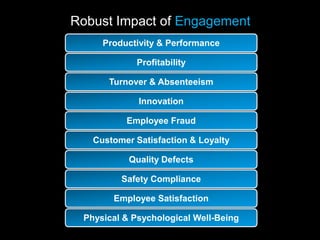
Robust Impact of Engagement
     Productivity & Performance

             Profitability

      Turnover & Absenteeism

             Innovation

          Employee Fraud

   Customer Satisfaction & Loyalty

           Quality Defects

         Safety Compliance

       Employee Satisfaction

 Physical & Psychological Well-Being
Statistical cost of disengaged employees
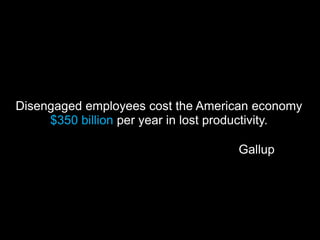
Disengaged employees cost the American economy
     $350 billion per year in lost productivity.

                                     Gallup
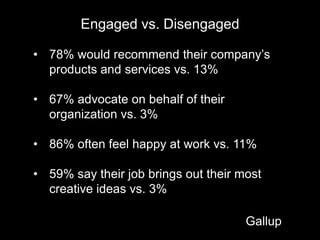
Engaged vs. Disengaged

• 78% would recommend their company’s
  products and services vs. 13%

• 67% advocate on behalf of their
  organization vs. 3%

• 86% often feel happy at work vs. 11%

• 59% say their job brings out their most
  creative ideas vs. 3%

                                      Gallup
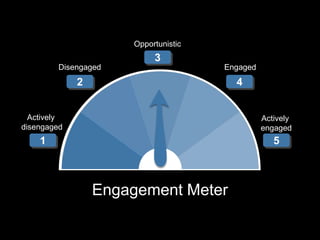
Opportunistic
                           3
         Disengaged                   Engaged
             2                          4


  Actively                                      Actively
disengaged                                      engaged
    1                                              5


                 Engagement Meter
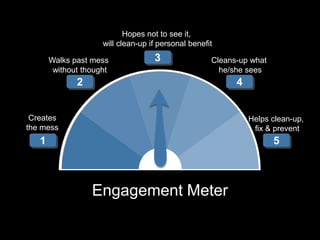
Hopes not to see it,
                     will clean-up if personal benefit

       Walks past mess              3                Cleans-up what
        without thought                                he/she sees
              2                                            4


 Creates                                                       Helps clean-up,
the mess                                                        fix & prevent
   1                                                                  5


                  Engagement Meter
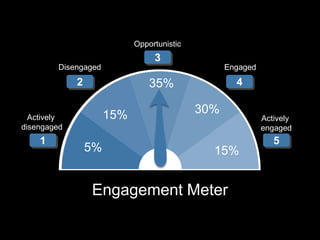
Opportunistic
                                 3
         Disengaged                               Engaged
             2                  35%                 4


                      15%                   30%
  Actively                                                  Actively
disengaged                                                  engaged
    1                                                          5
                 5%                           15%


                 Engagement Meter
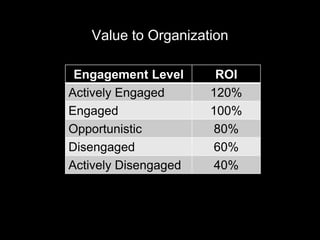
Value to Organization

 Engagement Level      ROI
Actively Engaged      120%
Engaged               100%
Opportunistic          80%
Disengaged             60%
Actively Disengaged    40%
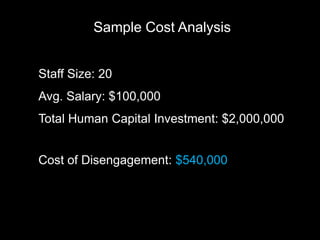
Sample Cost Analysis


Staff Size: 20
Avg. Salary: $100,000
Total Human Capital Investment: $2,000,000


Cost of Disengagement: $540,000
Consider . . .
We have new employees at “Hello.”
1st day of work
My Story
What happened?
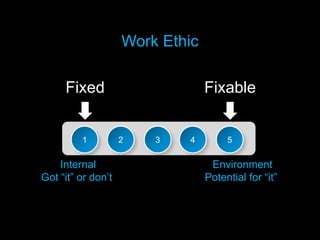
Work Ethic

     Fixed                       Fixable


         1          2   3   4         5

    Internal                      Environment
Got “it” or don’t                Potential for “it”
Create a culture that engages employees
Most people believe that . . .
employee engagement and motivation are the
same . . . they are not
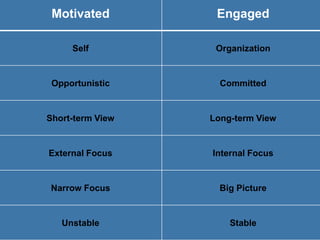
Motivated         Engaged

     Self          Organization


 Opportunistic      Committed


Short-term View   Long-term View


External Focus    Internal Focus


Narrow Focus        Big Picture


   Unstable           Stable
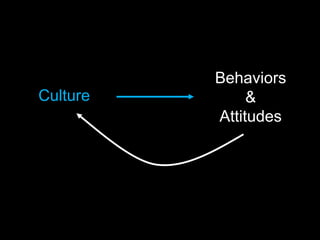
Realizing sustainable increases in
    employee engagement requires
impacting the culture of the organization.
Behaviors
Culture        &
          Attitudes
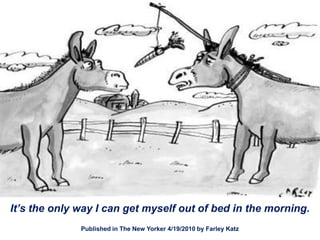
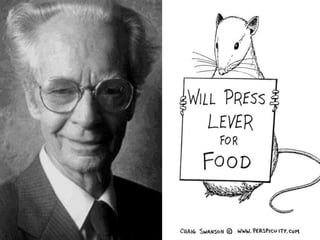
What doesn’t change culture is trying to
motivate employees with carrots & sticks
It’s the only way I can get myself out of bed in the morning.
              Published in The New Yorker 4/19/2010 by Farley Katz
Traditional reward & recognition programs
why programs fail
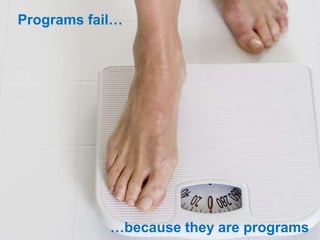
Programs fail…


            …because they are programs
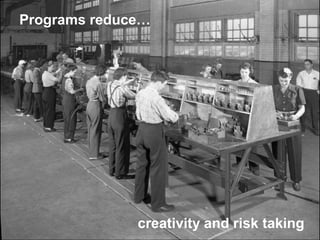
Programs reduce…


              creativity and risk taking
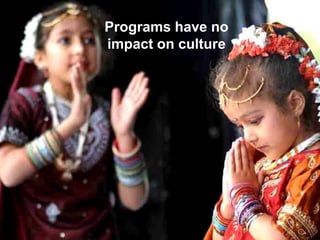
Programs have no
impact on culture
Reward programs…
           Reward programs…


        …reduce overall motivation
               …reduce overall motivation
Don’t worry about how to motivate employees.
It isn’t even the right question.
The question is . . .
how do we engage our employees?
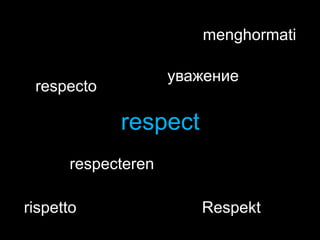
menghormati

                    уважение
 respecto

            respect
      respecteren

rispetto               Respekt
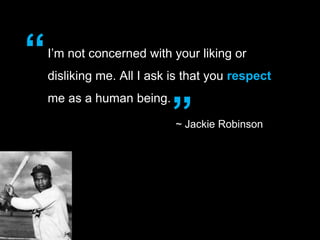
“   I’m not concerned with your liking or
    disliking me. All I ask is that you respect


                           ”
    me as a human being.

                            ~ Jackie Robinson
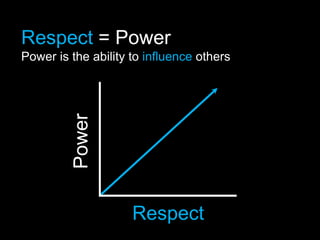
Respect = Power
Power is the ability to influence others

         Power


                     Respect
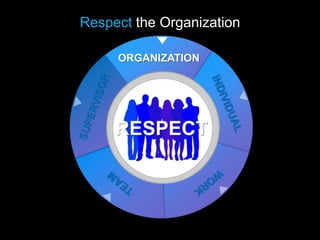
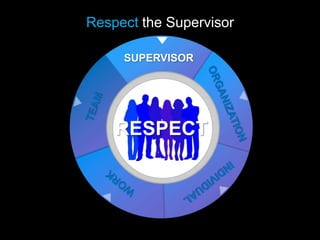
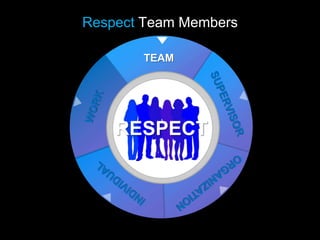
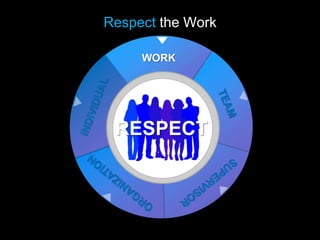
the RESPECT™ model
An actionable philosophy which guides
         and directs behavior
Respect the Organization

     ORGANIZATION


     RESPECT
Respect the Supervisor

     SUPERVISOR


    RESPECT
Respect Team Members

       TEAM


    RESPECT
Respect the Work

     WORK


 RESPECT
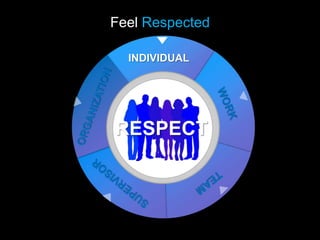
Feel Respected

  INDIVIDUAL


RESPECT
the RESPECT™ drivers
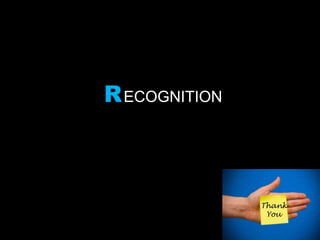
R ECOGNITION


               Thank
                You
Turnkey Solutions & Best Practices
             Recognition

• Send a handwritten “thank you” note home
• Spread the word; inform higher ups
• Hold exemplary work up as an example
EMPOWERMENT
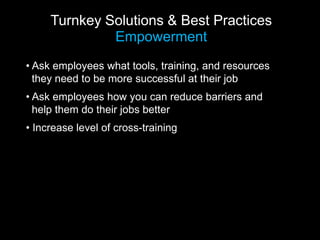
Turnkey Solutions & Best Practices
              Empowerment
• Ask employees what tools, training, and resources
  they need to be more successful at their job
• Ask employees how you can reduce barriers and
  help them do their jobs better
• Increase level of cross-training
SUPPORTIVE FEEDBACK
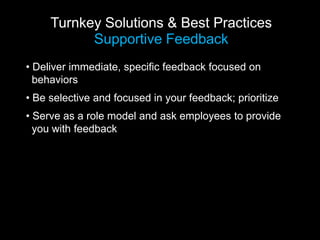
Turnkey Solutions & Best Practices
           Supportive Feedback
• Deliver immediate, specific feedback focused on
  behaviors
• Be selective and focused in your feedback; prioritize
• Serve as a role model and ask employees to provide
  you with feedback
PARTNERING
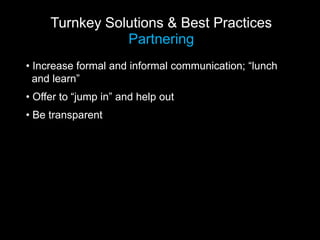
Turnkey Solutions & Best Practices
                Partnering
• Increase formal and informal communication; “lunch
  and learn”
• Offer to “jump in” and help out
• Be transparent
EXPECTATIONS
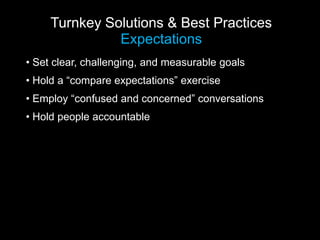
Turnkey Solutions & Best Practices
               Expectations
• Set clear, challenging, and measurable goals
• Hold a “compare expectations” exercise
• Employ “confused and concerned” conversations
• Hold people accountable
CONSIDERATION
Turnkey Solutions & Best Practices
              Consideration
• Take an active and appropriate interest in your staff’s
  personal lives, e.g., hobbies, interest, family
• Be on time for meetings and give your full attention
• Follow-up promptly to emails and phone calls
• Regularly ask employees for their opinions & ideas
TRUST
Turnkey Solutions & Best Practices
                    Trust
• Avoid micro-managing
• Own up to mistakes
• Talk to people not about them
• Increase autonomy and delegate meaningful tasks
• If trust is broken, move on
Where to start?
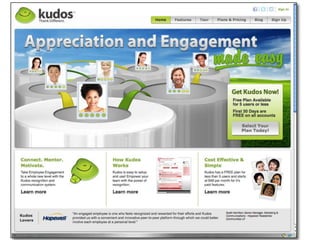
What Is Kudos?

Kudos is the simple & cost effective corporate
social network with a recognition engine at its
core. Kudos creates employee engagement by
enhancing communication, building connections
and supporting collaboration through recognition.
www.KudosNow.com

    RESPECT
“                                             ”
    Be the change you want to see in the world.


                               -- Mahatma Gandhi
Employee Engagement
Employee Engagement

Employee Engagement

  • 1.
    Increasing Human CapitalROI with RESPECT by Dr. Paul Marciano Ambrose New York City, NY June 14, 2012
  • 2.
    My goal todayis to . . . make a difference that makes a difference for you, your organization, your employees, and your clients.
  • 3.
    Human capital ROIis directly related to employee engagement.
  • 4.
    What is employeeengagement?
  • 5.
    Employee engagement isa psychological construct which refers to an individual’s commitment to one’s organization, work, team, employer, and clients and which is demonstrated behaviorally through high levels of discretionary effort.
  • 6.
  • 7.
  • 8.
    What would bethe impact if everyone in your organization played full out?
  • 9.
    Robust Impact ofEngagement Productivity & Performance Profitability Turnover & Absenteeism Innovation Employee Fraud Customer Satisfaction & Loyalty Quality Defects Safety Compliance Employee Satisfaction Physical & Psychological Well-Being
  • 10.
    Statistical cost ofdisengaged employees
  • 11.
    Disengaged employees costthe American economy $350 billion per year in lost productivity. Gallup
  • 12.
    Engaged vs. Disengaged •78% would recommend their company’s products and services vs. 13% • 67% advocate on behalf of their organization vs. 3% • 86% often feel happy at work vs. 11% • 59% say their job brings out their most creative ideas vs. 3% Gallup
  • 13.
    Opportunistic 3 Disengaged Engaged 2 4 Actively Actively disengaged engaged 1 5 Engagement Meter
  • 14.
    Hopes not tosee it, will clean-up if personal benefit Walks past mess 3 Cleans-up what without thought he/she sees 2 4 Creates Helps clean-up, the mess fix & prevent 1 5 Engagement Meter
  • 15.
    Opportunistic 3 Disengaged Engaged 2 35% 4 15% 30% Actively Actively disengaged engaged 1 5 5% 15% Engagement Meter
  • 16.
    Value to Organization Engagement Level ROI Actively Engaged 120% Engaged 100% Opportunistic 80% Disengaged 60% Actively Disengaged 40%
  • 17.
    Sample Cost Analysis StaffSize: 20 Avg. Salary: $100,000 Total Human Capital Investment: $2,000,000 Cost of Disengagement: $540,000
  • 18.
  • 19.
    We have newemployees at “Hello.”
  • 20.
  • 22.
  • 23.
  • 24.
    Work Ethic Fixed Fixable 1 2 3 4 5 Internal Environment Got “it” or don’t Potential for “it”
  • 27.
    Create a culturethat engages employees
  • 28.
  • 29.
    employee engagement andmotivation are the same . . . they are not
  • 31.
    Motivated Engaged Self Organization Opportunistic Committed Short-term View Long-term View External Focus Internal Focus Narrow Focus Big Picture Unstable Stable
  • 32.
    Realizing sustainable increasesin employee engagement requires impacting the culture of the organization.
  • 33.
    Behaviors Culture & Attitudes
  • 34.
    What doesn’t changeculture is trying to motivate employees with carrots & sticks
  • 35.
    It’s the onlyway I can get myself out of bed in the morning. Published in The New Yorker 4/19/2010 by Farley Katz
  • 36.
    Traditional reward &recognition programs
  • 39.
  • 40.
    Programs fail… …because they are programs
  • 41.
    Programs reduce… creativity and risk taking
  • 42.
  • 43.
    Reward programs… Reward programs… …reduce overall motivation …reduce overall motivation
  • 45.
    Don’t worry abouthow to motivate employees.
  • 46.
    It isn’t eventhe right question.
  • 47.
  • 48.
    how do weengage our employees?
  • 49.
    menghormati уважение respecto respect respecteren rispetto Respekt
  • 50.
    I’m not concerned with your liking or disliking me. All I ask is that you respect ” me as a human being. ~ Jackie Robinson
  • 51.
    Respect = Power Poweris the ability to influence others Power Respect
  • 53.
  • 54.
    An actionable philosophywhich guides and directs behavior
  • 55.
    Respect the Organization ORGANIZATION RESPECT
  • 56.
    Respect the Supervisor SUPERVISOR RESPECT
  • 57.
  • 58.
    Respect the Work WORK RESPECT
  • 59.
    Feel Respected INDIVIDUAL RESPECT
  • 60.
  • 61.
    R ECOGNITION Thank You
  • 62.
    Turnkey Solutions &Best Practices Recognition • Send a handwritten “thank you” note home • Spread the word; inform higher ups • Hold exemplary work up as an example
  • 63.
  • 64.
    Turnkey Solutions &Best Practices Empowerment • Ask employees what tools, training, and resources they need to be more successful at their job • Ask employees how you can reduce barriers and help them do their jobs better • Increase level of cross-training
  • 65.
  • 66.
    Turnkey Solutions &Best Practices Supportive Feedback • Deliver immediate, specific feedback focused on behaviors • Be selective and focused in your feedback; prioritize • Serve as a role model and ask employees to provide you with feedback
  • 67.
  • 68.
    Turnkey Solutions &Best Practices Partnering • Increase formal and informal communication; “lunch and learn” • Offer to “jump in” and help out • Be transparent
  • 69.
  • 70.
    Turnkey Solutions &Best Practices Expectations • Set clear, challenging, and measurable goals • Hold a “compare expectations” exercise • Employ “confused and concerned” conversations • Hold people accountable
  • 71.
  • 72.
    Turnkey Solutions &Best Practices Consideration • Take an active and appropriate interest in your staff’s personal lives, e.g., hobbies, interest, family • Be on time for meetings and give your full attention • Follow-up promptly to emails and phone calls • Regularly ask employees for their opinions & ideas
  • 73.
  • 74.
    Turnkey Solutions &Best Practices Trust • Avoid micro-managing • Own up to mistakes • Talk to people not about them • Increase autonomy and delegate meaningful tasks • If trust is broken, move on
  • 75.
  • 77.
    What Is Kudos? Kudosis the simple & cost effective corporate social network with a recognition engine at its core. Kudos creates employee engagement by enhancing communication, building connections and supporting collaboration through recognition.
  • 79.
  • 80.
    ” Be the change you want to see in the world. -- Mahatma Gandhi