RAKESH 
119
Nintendo in few words 
• One of the three largest video game companies 
• Workforce ≈ 5,000 
• Based in Kyoto, Japan 
• Foundation: 1889 
• Three large markets: Japan, Americas and Europe
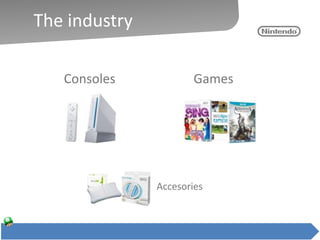
The industry 
Consoles Games 
Accesories
Company Profile 
• Industry(s): Video games, Home 
Entertainment Gaming Systems, 
Portable Gaming Systems. 
• Vision: ““Nintendo continues to 
make efforts for the growth of 
the home entertainment 
industry with a mission that is 
‘to pleasantly surprise people 
and put smiles on the faces of 
everyone involved with 
Nintendo’." – Satoru Iwata 
President/ CEO of Nintendo. 
COMPANY PROFILE
Financial 
20000000 
18000000 
16000000 
14000000 
12000000 
10000000 
8000000 
6000000 
4000000 
2000000 
0 
Blue-2011 
Red-2012 
Green-2013 
COST(000's USD) SALES(000's USD) TOTAL(000's USD) 
COMPANY PROFILE
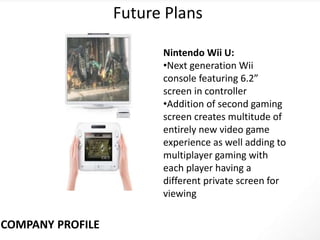
Future Plans 
COMPANY PROFILE 
Nintendo Wii U: 
•Next generation Wii 
console featuring 6.2” 
screen in controller 
•Addition of second gaming 
screen creates multitude of 
entirely new video game 
experience as well adding to 
multiplayer gaming with 
each player having a 
different private screen for 
viewing
Demand 
• 86.01 million Wii systems sold (March 31st 2013) 
• 146.42 million DS hand held systems sold (March 31st 2013) 
• Demand for previously popular games such as Mario kart, 
Zelda, and other games featured for the N64 have decreased 
after being poorly readapted to new generation systems such 
as the Wii 
THE MARKETPLACE 
Top 4 selling games for Wii: 
• Wii Sports 
• Wii Play 
• Mario Kart Wii
Main Competitors 
Sony Microsoft 
THE MARKETPLACE
Internal Conclusion 
• Nintendo Profits to 2/3 in the last year 
• Experiencing price drops for products lower than expected 
demand 
• Low stocks show Nintendo's failure to impress and appeal 
to investors 
• 3D features many impressive abilities such as 3D visuals 
without use of glasses, and variety of features included in 
device previously excluded in Nintendo handhelds 
• 3D lacks adaptation of previous games reducing gaming 
experience 
• Low battery life of 3DS and poor joystick liability of Wii 
controller contributes to lose of customer loyality 
• High cost for hardware and software 
THE MARKETPLACE
Internal Conclusion 
Take advantage of: 
• 55% of gamers play on handheld systems 
• Average age of gamers is 37 
• Sporting/Action games are best selling genres 
• 25.1 billion dollars spent on gaming industry 
of that 15.9 billion is on software the rest on 
hardware and accessories (2013) 
• Lose in sales in Europe/Japan/USA for 
hardware and software 
THE MARKETPLACE
Outside of the Marketplace 
THE BROADER 
ENVIRONMENT 
Potential Opportunities and 
Advantages 
Potential Threats and 
Disadvantages
External Forces 
Economic Forces: 
•Nintendo’s sales are not at risk of fluctuations in the 
economy and interest rates 
•Low manufacturing costs gives Nintendo the ability to 
lower prices if needed 
Social-Cultural Forces: 
•Groups of activist believe video games promote 
violent behaviour in adolescence which may lead to 
bans in some areas 
•Other groups blame video games for obesity epidemic 
and other health issues 
THE BROADER 
ENVIRONMENT
Forces 
Environmental Forces: 
•Environmental activist push manufacturers to use more 
recycled resources and less plastics which Nintendo 
currently uses for its hardware and accessories 
•Nintendo’s appeal to such groups with games such as 
Mario sunshine which is based around cleaning the 
environment 
THE BROADER 
ENVIRONMENT
Analysis Conclusions 
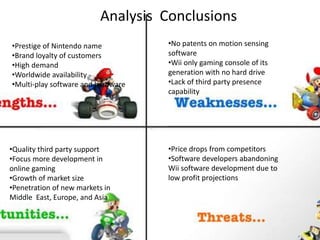
•Prestige of Nintendo name 
•Brand loyalty of customers 
•High demand 
•Worldwide availability 
•Multi-play software and hardware 
•No patents on motion sensing 
software 
•Wii only gaming console of its 
generation with no hard drive 
•Lack of third party presence 
capability 
•Quality third party support 
•Focus more development in 
online gaming 
•Growth of market size 
•Penetration of new markets in 
Middle East, Europe, and Asia 
•Price drops from competitors 
•Software developers abandoning 
Wii software development due to 
low profit projections
Recommendations 
• Push more focus into online game play 
• If new products such as Wii U continue to fail 
to impress consumers pull back focus to 
handheld gaming (follow the numbers) 
• Diversify game genres 
• Continue worldwide expansion
THANK YOU

nintendo

  • 1.
  • 2.
    Nintendo in fewwords • One of the three largest video game companies • Workforce ≈ 5,000 • Based in Kyoto, Japan • Foundation: 1889 • Three large markets: Japan, Americas and Europe
  • 3.
    The industry ConsolesGames Accesories
  • 4.
    Company Profile •Industry(s): Video games, Home Entertainment Gaming Systems, Portable Gaming Systems. • Vision: ““Nintendo continues to make efforts for the growth of the home entertainment industry with a mission that is ‘to pleasantly surprise people and put smiles on the faces of everyone involved with Nintendo’." – Satoru Iwata President/ CEO of Nintendo. COMPANY PROFILE
  • 5.
    Financial 20000000 18000000 16000000 14000000 12000000 10000000 8000000 6000000 4000000 2000000 0 Blue-2011 Red-2012 Green-2013 COST(000's USD) SALES(000's USD) TOTAL(000's USD) COMPANY PROFILE
  • 6.
    Future Plans COMPANYPROFILE Nintendo Wii U: •Next generation Wii console featuring 6.2” screen in controller •Addition of second gaming screen creates multitude of entirely new video game experience as well adding to multiplayer gaming with each player having a different private screen for viewing
  • 7.
    Demand • 86.01million Wii systems sold (March 31st 2013) • 146.42 million DS hand held systems sold (March 31st 2013) • Demand for previously popular games such as Mario kart, Zelda, and other games featured for the N64 have decreased after being poorly readapted to new generation systems such as the Wii THE MARKETPLACE Top 4 selling games for Wii: • Wii Sports • Wii Play • Mario Kart Wii
  • 8.
    Main Competitors SonyMicrosoft THE MARKETPLACE
  • 9.
    Internal Conclusion •Nintendo Profits to 2/3 in the last year • Experiencing price drops for products lower than expected demand • Low stocks show Nintendo's failure to impress and appeal to investors • 3D features many impressive abilities such as 3D visuals without use of glasses, and variety of features included in device previously excluded in Nintendo handhelds • 3D lacks adaptation of previous games reducing gaming experience • Low battery life of 3DS and poor joystick liability of Wii controller contributes to lose of customer loyality • High cost for hardware and software THE MARKETPLACE
  • 10.
    Internal Conclusion Takeadvantage of: • 55% of gamers play on handheld systems • Average age of gamers is 37 • Sporting/Action games are best selling genres • 25.1 billion dollars spent on gaming industry of that 15.9 billion is on software the rest on hardware and accessories (2013) • Lose in sales in Europe/Japan/USA for hardware and software THE MARKETPLACE
  • 11.
    Outside of theMarketplace THE BROADER ENVIRONMENT Potential Opportunities and Advantages Potential Threats and Disadvantages
  • 12.
    External Forces EconomicForces: •Nintendo’s sales are not at risk of fluctuations in the economy and interest rates •Low manufacturing costs gives Nintendo the ability to lower prices if needed Social-Cultural Forces: •Groups of activist believe video games promote violent behaviour in adolescence which may lead to bans in some areas •Other groups blame video games for obesity epidemic and other health issues THE BROADER ENVIRONMENT
  • 13.
    Forces Environmental Forces: •Environmental activist push manufacturers to use more recycled resources and less plastics which Nintendo currently uses for its hardware and accessories •Nintendo’s appeal to such groups with games such as Mario sunshine which is based around cleaning the environment THE BROADER ENVIRONMENT
  • 14.
    Analysis Conclusions •Prestigeof Nintendo name •Brand loyalty of customers •High demand •Worldwide availability •Multi-play software and hardware •No patents on motion sensing software •Wii only gaming console of its generation with no hard drive •Lack of third party presence capability •Quality third party support •Focus more development in online gaming •Growth of market size •Penetration of new markets in Middle East, Europe, and Asia •Price drops from competitors •Software developers abandoning Wii software development due to low profit projections
  • 15.
    Recommendations • Pushmore focus into online game play • If new products such as Wii U continue to fail to impress consumers pull back focus to handheld gaming (follow the numbers) • Diversify game genres • Continue worldwide expansion
  • 16.

Editor's Notes

  • #2 Other companies have not survived.