WHEN WORLDS COLLIDE
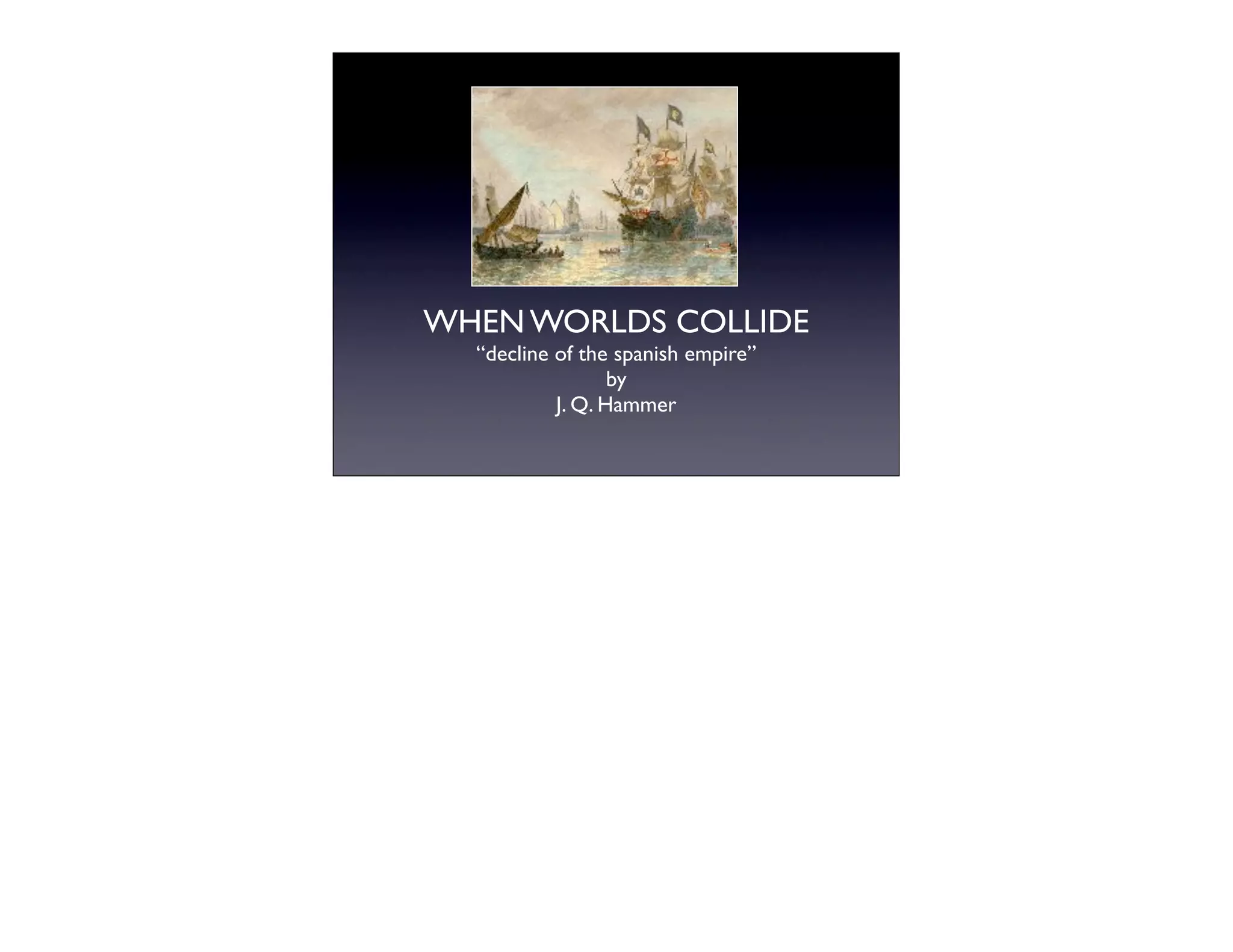
  “decline of the spanish empire”
                  by
           J. Q. Hammer
The Beginning of the End
•   The decline of the Spanish Empire in the late 16th and early
    17th centuries was directly related to a series of bad economic
    policies made by Charles V and Philip II.


•   By overstretching their resources, the monarchs mired Spain in
    tremendous debt as they attempted to crush Protestant
    uprisings and Ottoman incursions into the Mediterranean.


•   This economic crisis was compounded by the inflation caused
    by the massive influx of New World silver and gold.


•   Ultimately, Spain saw few positive, long-term gains as a result of
    their global domination.


•   Spain's standard of living remained one of the lowest in
    Western Europe both during and after the height of the
    empire.
The Empire on Which The Sun Set
•   Faced with wars against England, France and the Netherlands,
    each led by capable leaders, the bankrupted empire found itself
    competing against strong adversaries.


•   Continuing piracy against its shipping in the Atlantic and the
    costly colonial enterprises forced Spain to renegotiate its debts
    in 1596.


•   The crown attempted to reduce its exposure to the different
    conflicts, first signing the Treaty of Vervins with France in 1598,
    recognizing Henry IV as king of France, and restoring many of
    the stipulations of the previous Peace of Cateau-Cambrésis.


•   The Kingdom of England, suffering from a series of repulses at
    sea and from an endless guerrilla war by Catholics in Ireland,
    who were supported by Spain, agreed to the Treaty of London,
    1604, following the accession of the more tractable Stuart King
    James I.
“god is not spanish”
•   The plague devastated Castilian lands between 1596 and 1602, causing the
    deaths of some 600,000 people.


•   A great number of Castilians went to America or died in battle. In 1609, the
    great majority of the Morisco population of Spain was expelled.


•   It is estimated that Castile lost about 25% of its population between 1600 and
    1623. Such a dramatic drop in the population meant the basis for the Crown's
    revenues was dangerously weakened in a time when it was engaged in
    continuous conflict in Europe.


•   Peace with England and France gave Spain an opportunity to focus her energies
    on restoring her rule to the Dutch provinces.


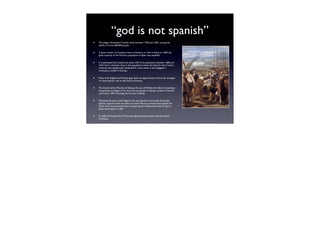
•   The Dutch, led by Maurice of Nassau, the son of William the Silent and perhaps
    the greatest strategist of his time, had succeeded in taking a number of border
    cities since 1590, including the fortress of Breda.


•   Following the peace with England, the new Spanish commander Ambrogio
    Spinola, a general with the ability to match Maurice, pressed hard against the
    Dutch and was prevented from conquering the Netherlands only by Spain's
    latest bankruptcy in 1607.


•   In 1609, the Twelve Years' Truce was signed between Spain and the United
    Provinces.
Glory to the End
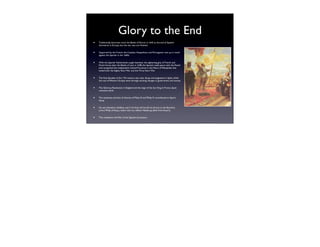
•   Traditionally, historians mark the Battle of Rocroi in 1643 as the end of Spanish
    dominance in Europe, but the war was not finished.


•   Supported by the French, the Catalans, Neapolitans, and Portuguese rose up in revolt
    against the Spanish in the 1640s.


•   With the Spanish Netherlands caught between the tightening grip of French and
    Dutch forces after the Battle of Lens in 1648, the Spanish made peace with the Dutch
    and recognized the independent United Provinces in the Peace of Westphalia that
    ended both the Eighty Years' War and the Thirty Years' War.


•   The final decades of the 17th century saw utter decay and stagnation in Spain, while
    the rest of Western Europe went through exciting changes in government and society.


•   The Glorious Revolution in England and the reign of the Sun King in France, Spain
    remained adrift.


•   The weakness and lack of interest of Philip III and Philip IV contributed to Spain's
    decay.


•   He was therefore childless, and in his final will he left his throne to the Bourbon
    prince Philip of Anjou, rather than to a fellow Habsburg, albeit from Austria.


•   This resulted in the War of the Spanish Succession.

NING Project 5 #6

  • 1.
    WHEN WORLDS COLLIDE “decline of the spanish empire” by J. Q. Hammer
  • 2.
    The Beginning ofthe End • The decline of the Spanish Empire in the late 16th and early 17th centuries was directly related to a series of bad economic policies made by Charles V and Philip II. • By overstretching their resources, the monarchs mired Spain in tremendous debt as they attempted to crush Protestant uprisings and Ottoman incursions into the Mediterranean. • This economic crisis was compounded by the inflation caused by the massive influx of New World silver and gold. • Ultimately, Spain saw few positive, long-term gains as a result of their global domination. • Spain's standard of living remained one of the lowest in Western Europe both during and after the height of the empire.
  • 3.
    The Empire onWhich The Sun Set • Faced with wars against England, France and the Netherlands, each led by capable leaders, the bankrupted empire found itself competing against strong adversaries. • Continuing piracy against its shipping in the Atlantic and the costly colonial enterprises forced Spain to renegotiate its debts in 1596. • The crown attempted to reduce its exposure to the different conflicts, first signing the Treaty of Vervins with France in 1598, recognizing Henry IV as king of France, and restoring many of the stipulations of the previous Peace of Cateau-Cambrésis. • The Kingdom of England, suffering from a series of repulses at sea and from an endless guerrilla war by Catholics in Ireland, who were supported by Spain, agreed to the Treaty of London, 1604, following the accession of the more tractable Stuart King James I.
  • 4.
    “god is notspanish” • The plague devastated Castilian lands between 1596 and 1602, causing the deaths of some 600,000 people. • A great number of Castilians went to America or died in battle. In 1609, the great majority of the Morisco population of Spain was expelled. • It is estimated that Castile lost about 25% of its population between 1600 and 1623. Such a dramatic drop in the population meant the basis for the Crown's revenues was dangerously weakened in a time when it was engaged in continuous conflict in Europe. • Peace with England and France gave Spain an opportunity to focus her energies on restoring her rule to the Dutch provinces. • The Dutch, led by Maurice of Nassau, the son of William the Silent and perhaps the greatest strategist of his time, had succeeded in taking a number of border cities since 1590, including the fortress of Breda. • Following the peace with England, the new Spanish commander Ambrogio Spinola, a general with the ability to match Maurice, pressed hard against the Dutch and was prevented from conquering the Netherlands only by Spain's latest bankruptcy in 1607. • In 1609, the Twelve Years' Truce was signed between Spain and the United Provinces.
  • 5.
    Glory to theEnd • Traditionally, historians mark the Battle of Rocroi in 1643 as the end of Spanish dominance in Europe, but the war was not finished. • Supported by the French, the Catalans, Neapolitans, and Portuguese rose up in revolt against the Spanish in the 1640s. • With the Spanish Netherlands caught between the tightening grip of French and Dutch forces after the Battle of Lens in 1648, the Spanish made peace with the Dutch and recognized the independent United Provinces in the Peace of Westphalia that ended both the Eighty Years' War and the Thirty Years' War. • The final decades of the 17th century saw utter decay and stagnation in Spain, while the rest of Western Europe went through exciting changes in government and society. • The Glorious Revolution in England and the reign of the Sun King in France, Spain remained adrift. • The weakness and lack of interest of Philip III and Philip IV contributed to Spain's decay. • He was therefore childless, and in his final will he left his throne to the Bourbon prince Philip of Anjou, rather than to a fellow Habsburg, albeit from Austria. • This resulted in the War of the Spanish Succession.