A case report : NHL & AIHA,
a diagnostic dilemma
Dr. Abu Yousuf Md. Nazim
HMO,Dept. of Haematology
D.M.C.H.
Dhaka-1200
Name : Mr. Humayun Kabir
Age : 35 years
Sex : Male
Religion : Muslim
Occupation: Emplyee
Address : Mymensingh
Date of Admission: 10.04.2012
Date of examination: 10.04.2012
Ward no: 217
Bed no : 18
Particulars of the patient
A case report….
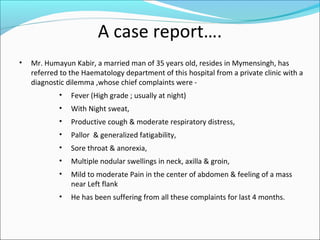
• Mr. Humayun Kabir, a married man of 35 years old, resides in Mymensingh, has
referred to the Haematology department of this hospital from a private clinic with a
diagnostic dilemma ,whose chief complaints were -
• Fever (High grade ; usually at night)
• With Night sweat,
• Productive cough & moderate respiratory distress,
• Pallor & generalized fatigability,
• Sore throat & anorexia,
• Multiple nodular swellings in neck, axilla & groin,
• Mild to moderate Pain in the center of abdomen & feeling of a mass
near Left flank
• He has been suffering from all these complaints for last 4 months.
History of present illness
According to the patient’s statement he was apparently well 4months back and able to
perform his ordinary physical activity, then he developed high grade fever, usually got
worse at night with night sweats & the highest recorded temperature was 103⁰F, . He
also complaints of gradual pallor appearance with generalized fatigability, at the
beginning weakness and fatigue ness were associated with exertion but now a days he
got exhausted even after ordinary physical activity. He has sore throat & has lost
appetite and subsequently he has lost weight by apprx. 10 kg by last 4 months. He also
found multiple painless nodular swellings in neck, axilla & inguinal regions which are
nodular, painless, firm in consistency and a mass near his left flank for the same period.
He was transfused >15 units of fresh whole blood by last 4months. He was admitted in
a private clinic at first later referred to our hospital. With all these complaints he has
got admitted in DMCH for further evaluation and better management.
History of past illness: No significant past medical
history
Immunization history: Immunized as per EPI schedule
Family history: He is the1st
issue of his parents. Other
sib are normal & has no history of such type of disease
 Personal history: Non-smoker and no other bad habits
Socioeconomic condition: He belongs to middle class
family
Drug history: Not allergic to any kind of drug. He took
chemotherapy (ABVD regimen), oral antibiotic and
antipyretic for his illness.
Transfusion History: He received >15 units of fresh
whole blood by last 4 months.
History of past illness
His circumcision was uneventful.
He had no history of skin rash, painful joint swelling or prolonged bleeding after minor
trauma before this illness.
He was normotensive, non diabetic, non asthmatic.
He had no history of tuberculosis, contact with TB patient or no history jaundice &
hepatitis.
• He was transfused with several units of fresh whole blood but in vain.
• Initially lymph node (from axillary lymph node) biopsy report infers as
Hodgkin’s disease, hence he received 2 cycles of ABVD regimen D1
& D21
.
• Later review of the same slide revealed as NHL and he has been given
CHOP-14 regimen as treatment protocol because of highly aggressive
nature of the tumor.
• So, there is a diagnostic dilemma while hematologist and the pathologist
are stick to their diagnosis.
• So immunohistochemistry (CD 3, LCA, CD 20) was sent and reports
negative.
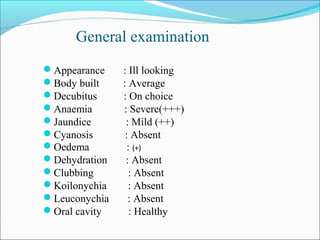
Appearance : Ill looking
Body built : Average
Decubitus : On choice
Anaemia : Severe(+++)
Jaundice : Mild (++)
Cyanosis : Absent
Oedema : (+)
Dehydration : Absent
Clubbing : Absent
Koilonychia : Absent
Leuconychia : Absent
Oral cavity : Healthy
General examination
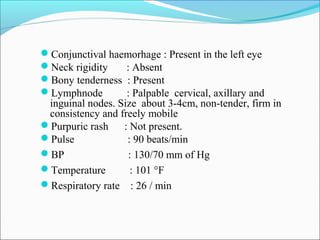
Conjunctival haemorhage : Present in the left eye
Neck rigidity : Absent
Bony tenderness : Present
Lymphnode : Palpable cervical, axillary and
inguinal nodes. Size about 3-4cm, non-tender, firm in
consistency and freely mobile
Purpuric rash : Not present.
Pulse : 90 beats/min
BP : 130/70 mm of Hg
Temperature : 101 °F
Respiratory rate : 26 / min
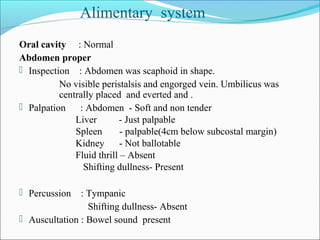
Oral cavity : Normal
Abdomen proper
 Inspection : Abdomen was scaphoid in shape.
No visible peristalsis and engorged vein. Umbilicus was
centrally placed and everted and .
 Palpation : Abdomen - Soft and non tender
Liver - Just palpable
Spleen - palpable(4cm below subcostal margin)
Kidney - Not ballotable
Fluid thrill – Absent
Shifting dullness- Present
 Percussion : Tympanic
Shifting dullness- Absent
 Auscultation : Bowel sound present
Alimentary system
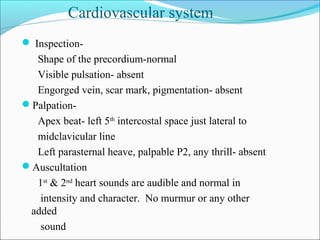
 Inspection-
Shape of the precordium-normal
Visible pulsation- absent
Engorged vein, scar mark, pigmentation- absent
Palpation-
Apex beat- left 5th
intercostal space just lateral to
midclavicular line
Left parasternal heave, palpable P2, any thrill- absent
Auscultation
1st
& 2nd
heart sounds are audible and normal in
intensity and character. No murmur or any other
added
sound
Cardiovascular system
Respiratory system
 Inspection :
Movement of chest –not restricted.
Bilaterally symmetrical.
No visible vein or scar mark
 Palpation :
Trachea –normal in position
Apex beat – left 5th
ICS just medial to mid clavicular
line
 Percussion : Resonant
 Auscultation :
Breath sound - Vesicular
No added sound
Nervous system
All motor and sensory functions along with all jerks
and reflexes were normal
Salient features
Provisional diagnosis
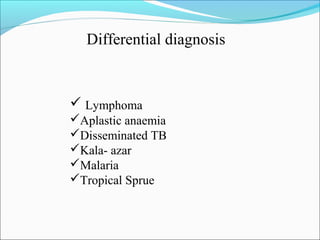
Differential diagnosis
 Lymphoma
Aplastic anaemia
Disseminated TB
Kala- azar
Malaria
Tropical Sprue
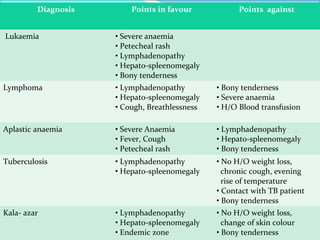
Diagnosis Points in favour Points against
Lukaemia • Severe anaemia
• Petecheal rash
• Lymphadenopathy
• Hepato-spleenomegaly
• Bony tenderness
Lymphoma • Lymphadenopathy
• Hepato-spleenomegaly
• Cough, Breathlessness
• Bony tenderness
• Severe anaemia
• H/O Blood transfusion
Aplastic anaemia • Severe Anaemia
• Fever, Cough
• Petecheal rash
• Lymphadenopathy
• Hepato-spleenomegaly
• Bony tenderness
Tuberculosis • Lymphadenopathy
• Hepato-spleenomegaly
• No H/O weight loss,
chronic cough, evening
rise of temperature
• Contact with TB patient
• Bony tenderness
Kala- azar • Lymphadenopathy
• Hepato-spleenomegaly
• Endemic zone
• No H/O weight loss,
change of skin colour
• Bony tenderness
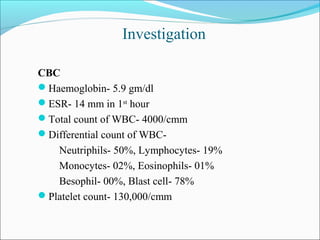
Investigation
CBC
Haemoglobin- 5.9 gm/dl
ESR- 14 mm in 1st
hour
Total count of WBC- 4000/cmm
Differential count of WBC-
Neutriphils- 50%, Lymphocytes- 19%
Monocytes- 02%, Eosinophils- 01%
Besophil- 00%, Blast cell- 78%
Platelet count- 130,000/cmm
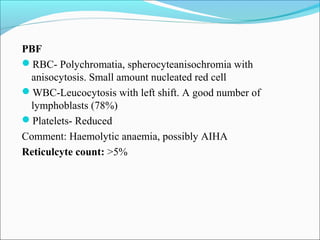
PBF
RBC- Polychromatia, spherocyteanisochromia with
anisocytosis. Small amount nucleated red cell
WBC-Leucocytosis with left shift. A good number of
lymphoblasts (78%)
Platelets- Reduced
Comment: Haemolytic anaemia, possibly AIHA
Reticulcyte count: >5%
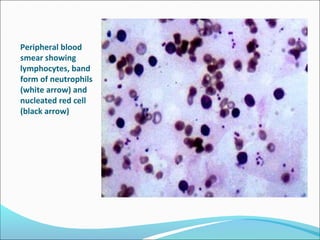
Peripheral blood
smear showing
lymphocytes, band
form of neutrophils
(white arrow) and
nucleated red cell
(black arrow)
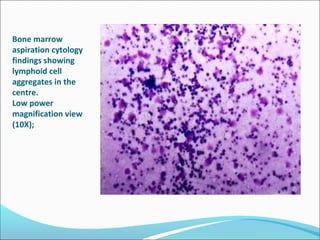
Bone marrow
aspiration cytology
findings showing
lymphoid cell
aggregates in the
centre.
Low power
magnification view
(10X);
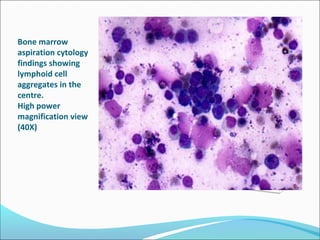
Bone marrow
aspiration cytology
findings showing
lymphoid cell
aggregates in the
centre.
High power
magnification view
(40X)
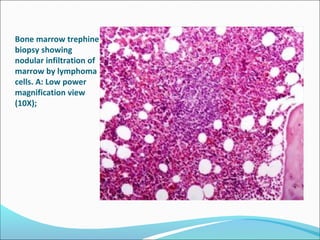
Bone marrow trephine
biopsy showing
nodular infiltration of
marrow by lymphoma
cells. A: Low power
magnification view
(10X);
Pathogenesis of AIHA
 Autoimmune diseases are characterized by loss of tolerance to self
antigens and include a broad variety of conditions like autoimmune
hemolytic anemia (AIHA), systemic lupus erythematosus, rheumatoid
arthritis, Sjogren’s syndrome, inflammatory bowel disease etc. The
concurrence of autoimmune diseases with malignancy is well
documented. One such association is AIHA occurring with non-
Hodgkin’s lymphoma (NHL). The exact pathogenesis of this
association is still speculative. AIHA is relatively uncommon disease
and most often idiopathic. NHL arising from lymphoid tissue refers to
a heterogeneous group of malignancies with varied clinical and
biological features.
Diagnosis of Lymphoma
• Clinical features
• Laboratory findings
Diagnosis of Lymphoma
• Clinical presentation
– Generalized Lymphadenopathy
– Splenomegaly
– B symptoms ( Fever, night sweats, itching etc)
– Abnormal laboratory findings (Cytopenia)
– Extranodal presentation
Diagnosis of Lymphoma
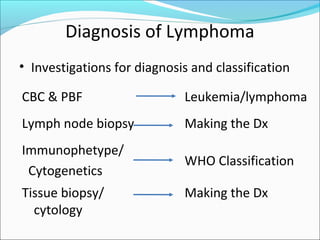
• Investigations for diagnosis and classification
CBC & PBF
Lymph node biopsy
Leukemia/lymphoma
Making the Dx
Immunophetype/
Cytogenetics
WHO Classification
Tissue biopsy/
cytology
Making the Dx
Diagnosis of Lymphoma
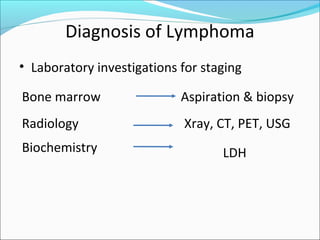
• Laboratory investigations for staging
Bone marrow
Radiology
Biochemistry
Aspiration & biopsy
Xray, CT, PET, USG
LDH
Diagnosis of Lymphoma
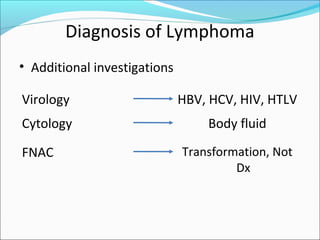
• Additional investigations
Virology HBV, HCV, HIV, HTLV
Cytology Body fluid
FNAC Transformation, Not
Dx
Staging of Lymphoma
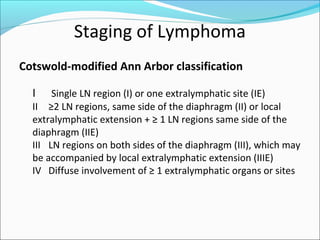
Cotswold-modified Ann Arbor classification
I Single LN region (I) or one extralymphatic site (IE)
II ≥2 LN regions, same side of the diaphragm (II) or local
extralymphatic extension + ≥ 1 LN regions same side of the
diaphragm (IIE)
III LN regions on both sides of the diaphragm (III), which may
be accompanied by local extralymphatic extension (IIIE)
IV Diffuse involvement of ≥ 1 extralymphatic organs or sites
Treatment of Lymphoma
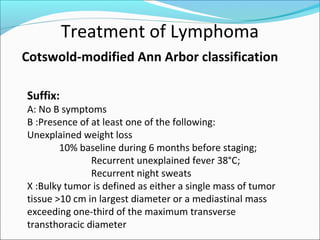
Cotswold-modified Ann Arbor classification
Suffix:
A: No B symptoms
B :Presence of at least one of the following:
Unexplained weight loss
10% baseline during 6 months before staging;
Recurrent unexplained fever 38°C;
Recurrent night sweats
X :Bulky tumor is defined as either a single mass of tumor
tissue >10 cm in largest diameter or a mediastinal mass
exceeding one-third of the maximum transverse
transthoracic diameter
Treatment of Lymphoma
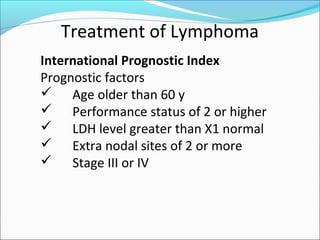
International Prognostic Index
Prognostic factors
 Age older than 60 y
 Performance status of 2 or higher
 LDH level greater than X1 normal
 Extra nodal sites of 2 or more
 Stage III or IV
Treatment of Lymphoma
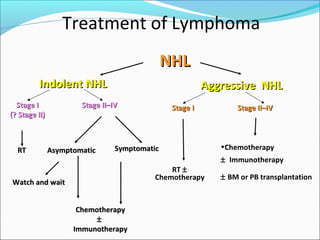
NHLNHL
Stage IStage I
(? Stage II)(? Stage II)
Stage II–IVStage II–IV
RTRT SymptomaticSymptomaticAsymptomaticAsymptomatic
ChemotherapyChemotherapy
±±
ImmunotherapyImmunotherapy
Watch and waitWatch and wait
Indolent NHLIndolent NHL
Stage IStage I Stage II–IVStage II–IV
RT ±
Chemotherapy
Aggressive NHLAggressive NHL
•Chemotherapy
± Immunotherapy
± BM or PB transplantation
Treatment of Lymphoma
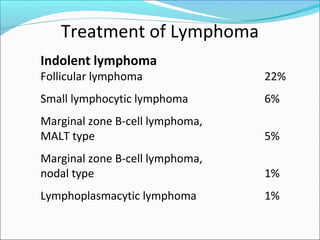
Indolent lymphoma
Follicular lymphoma 22%
Small lymphocytic lymphoma 6%
Marginal zone B-cell lymphoma,
MALT type 5%
Marginal zone B-cell lymphoma,
nodal type 1%
Lymphoplasmacytic lymphoma 1%
Treatment of Lymphoma
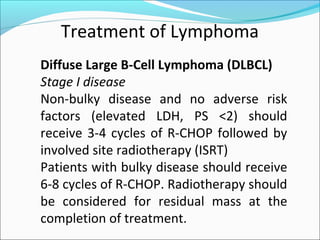
Diffuse Large B-Cell Lymphoma (DLBCL)
Stage I disease
Non-bulky disease and no adverse risk
factors (elevated LDH, PS <2) should
receive 3-4 cycles of R-CHOP followed by
involved site radiotherapy (ISRT)
Patients with bulky disease should receive
6-8 cycles of R-CHOP. Radiotherapy should
be considered for residual mass at the
completion of treatment.
Treatment of Lymphoma
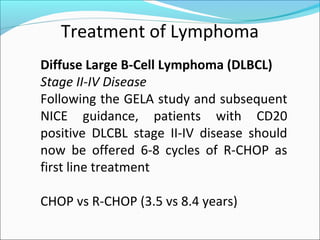
Diffuse Large B-Cell Lymphoma (DLBCL)
Stage II-IV Disease
Following the GELA study and subsequent
NICE guidance, patients with CD20
positive DLCBL stage II-IV disease should
now be offered 6-8 cycles of R-CHOP as
first line treatment
CHOP vs R-CHOP (3.5 vs 8.4 years)
Treatment of Lymphoma
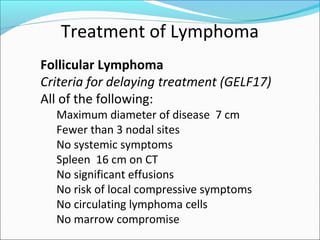
Follicular Lymphoma
Criteria for delaying treatment (GELF17)
All of the following:
Maximum diameter of disease 7 cm
Fewer than 3 nodal sites
No systemic symptoms
Spleen 16 cm on CT
No significant effusions
No risk of local compressive symptoms
No circulating lymphoma cells
No marrow compromise
Treatment of Lymphoma
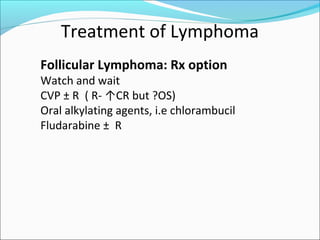
Follicular Lymphoma: Rx option
Watch and wait
CVP ± R ( R- ↑CR but ?OS)
Oral alkylating agents, i.e chlorambucil
Fludarabine ± R
Treatment of Lymphoma
Mantle Cell Lymphoma :
Distinct subtype of B-cell NHL.
The majority of patients are over the age of 60
usually presenting with advanced stage disease.
Conventional CHOP chemotherapy offers 75%
overall response rate (ORR), 7% complete
response (CR) rate but most patients relapse
within 2 years.
Treatment of Lymphoma
Mantle Cell Lymphoma :
CD5+ and CD43+, but CD10− and CD23−
t(11;14) (q13;q32)
CHOP±R (No ↑OS)
FC/FCR
HyperCVAD
Autologus BMT
Treatment of Lymphoma
Burkitt’s Lymphoma/ALL- L3 :
Tumour lysis syndrome is a particular risk
High risk of CNS disease/relapse and intrathecal
treatment.
High-intensity chemotherapy regimens have
been developed for Burkitt’s lymphoma
resulting in a 60-70% long-term survival rate.
Treatment of Lymphoma
Lymphoblastic LymphomaLeukaemia :
ALL like treatment
Treatment of Lymphoma
T cell Lymphoma : (15%)
Aggressive
Common type –
Peripheral T-Cell lymphoma –NOS
Angioimmunoblastic T cell lymphoma
ATL
Common in Asia (Japan)
HTLV infection
Treatment involved antiviral drugs
Treatment of Lymphoma
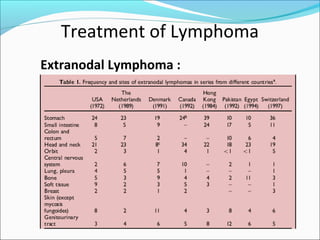
Extranodal Lymphoma :
Treatment of Lymphoma
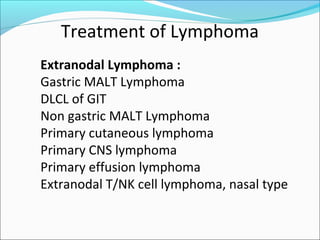
Extranodal Lymphoma :
Gastric MALT Lymphoma
DLCL of GIT
Non gastric MALT Lymphoma
Primary cutaneous lymphoma
Primary CNS lymphoma
Primary effusion lymphoma
Extranodal T/NK cell lymphoma, nasal type
Treatment of Lymphoma
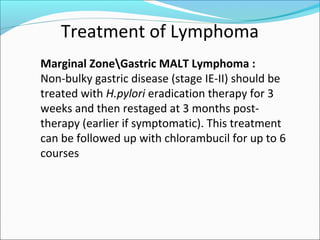
Marginal ZoneGastric MALT Lymphoma :
Non-bulky gastric disease (stage IE-II) should be
treated with H.pylori eradication therapy for 3
weeks and then restaged at 3 months post-
therapy (earlier if symptomatic). This treatment
can be followed up with chlorambucil for up to 6
courses
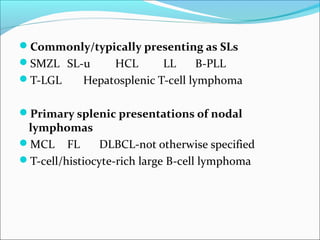
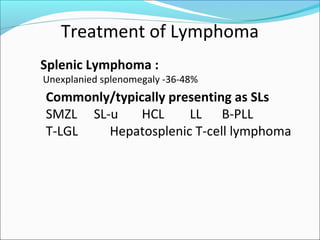
Commonly/typically presenting as SLs
SMZL SL-u HCL LL B-PLL
T-LGL Hepatosplenic T-cell lymphoma
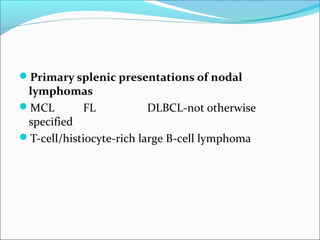
Primary splenic presentations of nodal
lymphomas
MCL FL DLBCL-not otherwise specified
T-cell/histiocyte-rich large B-cell lymphoma
Treatment of Lymphoma
Splenic Lymphoma :
Unexplanied splenomegaly -36-48%
Commonly/typically presenting as SLs
SMZL SL-u HCL LL B-PLL
T-LGL Hepatosplenic T-cell lymphoma
Primary splenic presentations of nodal
lymphomas
MCL FL DLBCL-not otherwise
specified
T-cell/histiocyte-rich large B-cell lymphoma
Treatment of Lymphoma
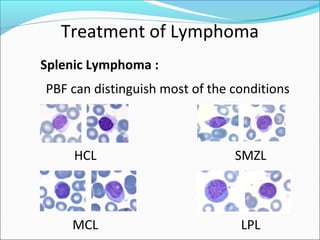
Splenic Lymphoma :
PBF can distinguish most of the conditions
HCL SMZL
MCL LPL
Treatment of Lymphoma
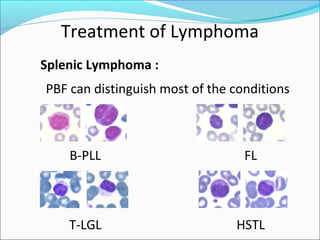
Splenic Lymphoma :
PBF can distinguish most of the conditions
B-PLL FL
T-LGL HSTL
Treatment of Lymphoma
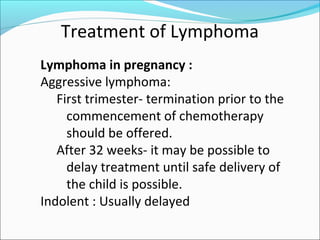
Lymphoma in pregnancy :
Aggressive lymphoma:
First trimester- termination prior to the
commencement of chemotherapy
should be offered.
After 32 weeks- it may be possible to
delay treatment until safe delivery of
the child is possible.
Indolent : Usually delayed
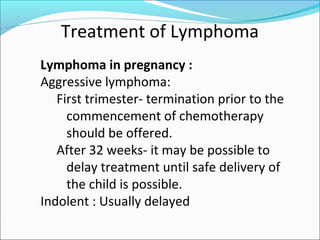
Treatment of Lymphoma
Lymphoma in pregnancy :
Aggressive lymphoma:
First trimester- termination prior to the
commencement of chemotherapy
should be offered.
After 32 weeks- it may be possible to
delay treatment until safe delivery of
the child is possible.
Indolent : Usually delayed
Monoclonal anribobies for diagnosis of lymphoid disorders
Panel of monoclonal antibodies for the diagnosis of lymphoid
disorders
 B cellT cell
First-line SmIg (kappa/lambda), CD19, CD23, FMC7,
mCD79b, mCD22, CD5[*] + CD 20CD2, CD5
Second-line CD11c, CD25, CD103, CD123, CD38, CD138,
CyIgCD3, CD4, CD7, CD8
Optional markers: CD25, CD79a, and natural killer associated (e.g.,
CD16, CD56, CD57, and CD11b).
Panel of monoclonal antibodies for the diagnosis of acute
leukaemias
ALLAML B-lineageT-lineage
First-line CD19, CD22, CD79a, CD10[*]CD7, CD2,
cyCD3CD13, CD33, CD117, anti-MPO TdT, HLA-Dr, CD34
Second-linecymu, SmIgCD1a, CD5, CD4, CD8, anti-
TCRCD41, CD42, CD61, anti-glycophorin A
(Optional markers: CD14, antilysozyme, CD36).
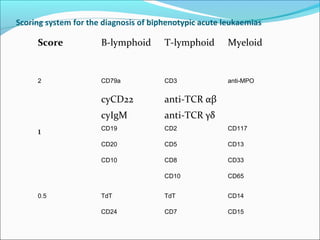
Scoring system for the diagnosis of biphenotypic acute leukaemias
Score B-lymphoid T-lymphoid Myeloid
2 CD79a CD3 anti-MPO
cyCD22 anti-TCR αβ
cyIgM anti-TCR γδ
1 CD19  CD2 CD117
CD20 CD5 CD13
CD10 CD8 CD33 
  CD10 CD65
0.5 TdT TdT CD14 
CD24 CD7 CD15
Thank you

Nhl with aiha dr nazim

  • 1.
    A case report: NHL & AIHA, a diagnostic dilemma Dr. Abu Yousuf Md. Nazim HMO,Dept. of Haematology D.M.C.H. Dhaka-1200
  • 2.
    Name : Mr.Humayun Kabir Age : 35 years Sex : Male Religion : Muslim Occupation: Emplyee Address : Mymensingh Date of Admission: 10.04.2012 Date of examination: 10.04.2012 Ward no: 217 Bed no : 18 Particulars of the patient
  • 3.
    A case report…. •Mr. Humayun Kabir, a married man of 35 years old, resides in Mymensingh, has referred to the Haematology department of this hospital from a private clinic with a diagnostic dilemma ,whose chief complaints were - • Fever (High grade ; usually at night) • With Night sweat, • Productive cough & moderate respiratory distress, • Pallor & generalized fatigability, • Sore throat & anorexia, • Multiple nodular swellings in neck, axilla & groin, • Mild to moderate Pain in the center of abdomen & feeling of a mass near Left flank • He has been suffering from all these complaints for last 4 months.
  • 4.
    History of presentillness According to the patient’s statement he was apparently well 4months back and able to perform his ordinary physical activity, then he developed high grade fever, usually got worse at night with night sweats & the highest recorded temperature was 103⁰F, . He also complaints of gradual pallor appearance with generalized fatigability, at the beginning weakness and fatigue ness were associated with exertion but now a days he got exhausted even after ordinary physical activity. He has sore throat & has lost appetite and subsequently he has lost weight by apprx. 10 kg by last 4 months. He also found multiple painless nodular swellings in neck, axilla & inguinal regions which are nodular, painless, firm in consistency and a mass near his left flank for the same period. He was transfused >15 units of fresh whole blood by last 4months. He was admitted in a private clinic at first later referred to our hospital. With all these complaints he has got admitted in DMCH for further evaluation and better management.
  • 5.
    History of pastillness: No significant past medical history Immunization history: Immunized as per EPI schedule Family history: He is the1st issue of his parents. Other sib are normal & has no history of such type of disease  Personal history: Non-smoker and no other bad habits Socioeconomic condition: He belongs to middle class family Drug history: Not allergic to any kind of drug. He took chemotherapy (ABVD regimen), oral antibiotic and antipyretic for his illness. Transfusion History: He received >15 units of fresh whole blood by last 4 months.
  • 6.
    History of pastillness His circumcision was uneventful. He had no history of skin rash, painful joint swelling or prolonged bleeding after minor trauma before this illness. He was normotensive, non diabetic, non asthmatic. He had no history of tuberculosis, contact with TB patient or no history jaundice & hepatitis.
  • 7.
    • He wastransfused with several units of fresh whole blood but in vain. • Initially lymph node (from axillary lymph node) biopsy report infers as Hodgkin’s disease, hence he received 2 cycles of ABVD regimen D1 & D21 . • Later review of the same slide revealed as NHL and he has been given CHOP-14 regimen as treatment protocol because of highly aggressive nature of the tumor. • So, there is a diagnostic dilemma while hematologist and the pathologist are stick to their diagnosis. • So immunohistochemistry (CD 3, LCA, CD 20) was sent and reports negative.
  • 8.
    Appearance : Illlooking Body built : Average Decubitus : On choice Anaemia : Severe(+++) Jaundice : Mild (++) Cyanosis : Absent Oedema : (+) Dehydration : Absent Clubbing : Absent Koilonychia : Absent Leuconychia : Absent Oral cavity : Healthy General examination
  • 9.
    Conjunctival haemorhage :Present in the left eye Neck rigidity : Absent Bony tenderness : Present Lymphnode : Palpable cervical, axillary and inguinal nodes. Size about 3-4cm, non-tender, firm in consistency and freely mobile Purpuric rash : Not present. Pulse : 90 beats/min BP : 130/70 mm of Hg Temperature : 101 °F Respiratory rate : 26 / min
  • 10.
    Oral cavity :Normal Abdomen proper  Inspection : Abdomen was scaphoid in shape. No visible peristalsis and engorged vein. Umbilicus was centrally placed and everted and .  Palpation : Abdomen - Soft and non tender Liver - Just palpable Spleen - palpable(4cm below subcostal margin) Kidney - Not ballotable Fluid thrill – Absent Shifting dullness- Present  Percussion : Tympanic Shifting dullness- Absent  Auscultation : Bowel sound present Alimentary system
  • 11.
     Inspection- Shape ofthe precordium-normal Visible pulsation- absent Engorged vein, scar mark, pigmentation- absent Palpation- Apex beat- left 5th intercostal space just lateral to midclavicular line Left parasternal heave, palpable P2, any thrill- absent Auscultation 1st & 2nd heart sounds are audible and normal in intensity and character. No murmur or any other added sound Cardiovascular system
  • 12.
    Respiratory system  Inspection: Movement of chest –not restricted. Bilaterally symmetrical. No visible vein or scar mark  Palpation : Trachea –normal in position Apex beat – left 5th ICS just medial to mid clavicular line  Percussion : Resonant  Auscultation : Breath sound - Vesicular No added sound
  • 13.
    Nervous system All motorand sensory functions along with all jerks and reflexes were normal
  • 14.
  • 15.
  • 16.
  • 17.
    Differential diagnosis  Lymphoma Aplasticanaemia Disseminated TB Kala- azar Malaria Tropical Sprue
  • 18.
    Diagnosis Points infavour Points against Lukaemia • Severe anaemia • Petecheal rash • Lymphadenopathy • Hepato-spleenomegaly • Bony tenderness Lymphoma • Lymphadenopathy • Hepato-spleenomegaly • Cough, Breathlessness • Bony tenderness • Severe anaemia • H/O Blood transfusion Aplastic anaemia • Severe Anaemia • Fever, Cough • Petecheal rash • Lymphadenopathy • Hepato-spleenomegaly • Bony tenderness Tuberculosis • Lymphadenopathy • Hepato-spleenomegaly • No H/O weight loss, chronic cough, evening rise of temperature • Contact with TB patient • Bony tenderness Kala- azar • Lymphadenopathy • Hepato-spleenomegaly • Endemic zone • No H/O weight loss, change of skin colour • Bony tenderness
  • 19.
    Investigation CBC Haemoglobin- 5.9 gm/dl ESR-14 mm in 1st hour Total count of WBC- 4000/cmm Differential count of WBC- Neutriphils- 50%, Lymphocytes- 19% Monocytes- 02%, Eosinophils- 01% Besophil- 00%, Blast cell- 78% Platelet count- 130,000/cmm
  • 20.
    PBF RBC- Polychromatia, spherocyteanisochromiawith anisocytosis. Small amount nucleated red cell WBC-Leucocytosis with left shift. A good number of lymphoblasts (78%) Platelets- Reduced Comment: Haemolytic anaemia, possibly AIHA Reticulcyte count: >5%
  • 21.
    Peripheral blood smear showing lymphocytes,band form of neutrophils (white arrow) and nucleated red cell (black arrow)
  • 22.
    Bone marrow aspiration cytology findingsshowing lymphoid cell aggregates in the centre. Low power magnification view (10X);
  • 23.
    Bone marrow aspiration cytology findingsshowing lymphoid cell aggregates in the centre. High power magnification view (40X)
  • 24.
    Bone marrow trephine biopsyshowing nodular infiltration of marrow by lymphoma cells. A: Low power magnification view (10X);
  • 25.
    Pathogenesis of AIHA Autoimmune diseases are characterized by loss of tolerance to self antigens and include a broad variety of conditions like autoimmune hemolytic anemia (AIHA), systemic lupus erythematosus, rheumatoid arthritis, Sjogren’s syndrome, inflammatory bowel disease etc. The concurrence of autoimmune diseases with malignancy is well documented. One such association is AIHA occurring with non- Hodgkin’s lymphoma (NHL). The exact pathogenesis of this association is still speculative. AIHA is relatively uncommon disease and most often idiopathic. NHL arising from lymphoid tissue refers to a heterogeneous group of malignancies with varied clinical and biological features.
  • 26.
    Diagnosis of Lymphoma •Clinical features • Laboratory findings
  • 27.
    Diagnosis of Lymphoma •Clinical presentation – Generalized Lymphadenopathy – Splenomegaly – B symptoms ( Fever, night sweats, itching etc) – Abnormal laboratory findings (Cytopenia) – Extranodal presentation
  • 28.
    Diagnosis of Lymphoma •Investigations for diagnosis and classification CBC & PBF Lymph node biopsy Leukemia/lymphoma Making the Dx Immunophetype/ Cytogenetics WHO Classification Tissue biopsy/ cytology Making the Dx
  • 29.
    Diagnosis of Lymphoma •Laboratory investigations for staging Bone marrow Radiology Biochemistry Aspiration & biopsy Xray, CT, PET, USG LDH
  • 30.
    Diagnosis of Lymphoma •Additional investigations Virology HBV, HCV, HIV, HTLV Cytology Body fluid FNAC Transformation, Not Dx
  • 31.
    Staging of Lymphoma Cotswold-modifiedAnn Arbor classification I Single LN region (I) or one extralymphatic site (IE) II ≥2 LN regions, same side of the diaphragm (II) or local extralymphatic extension + ≥ 1 LN regions same side of the diaphragm (IIE) III LN regions on both sides of the diaphragm (III), which may be accompanied by local extralymphatic extension (IIIE) IV Diffuse involvement of ≥ 1 extralymphatic organs or sites
  • 32.
    Treatment of Lymphoma Cotswold-modifiedAnn Arbor classification Suffix: A: No B symptoms B :Presence of at least one of the following: Unexplained weight loss 10% baseline during 6 months before staging; Recurrent unexplained fever 38°C; Recurrent night sweats X :Bulky tumor is defined as either a single mass of tumor tissue >10 cm in largest diameter or a mediastinal mass exceeding one-third of the maximum transverse transthoracic diameter
  • 33.
    Treatment of Lymphoma InternationalPrognostic Index Prognostic factors  Age older than 60 y  Performance status of 2 or higher  LDH level greater than X1 normal  Extra nodal sites of 2 or more  Stage III or IV
  • 34.
    Treatment of Lymphoma NHLNHL StageIStage I (? Stage II)(? Stage II) Stage II–IVStage II–IV RTRT SymptomaticSymptomaticAsymptomaticAsymptomatic ChemotherapyChemotherapy ±± ImmunotherapyImmunotherapy Watch and waitWatch and wait Indolent NHLIndolent NHL Stage IStage I Stage II–IVStage II–IV RT ± Chemotherapy Aggressive NHLAggressive NHL •Chemotherapy ± Immunotherapy ± BM or PB transplantation
  • 35.
    Treatment of Lymphoma Indolentlymphoma Follicular lymphoma 22% Small lymphocytic lymphoma 6% Marginal zone B-cell lymphoma, MALT type 5% Marginal zone B-cell lymphoma, nodal type 1% Lymphoplasmacytic lymphoma 1%
  • 36.
    Treatment of Lymphoma DiffuseLarge B-Cell Lymphoma (DLBCL) Stage I disease Non-bulky disease and no adverse risk factors (elevated LDH, PS <2) should receive 3-4 cycles of R-CHOP followed by involved site radiotherapy (ISRT) Patients with bulky disease should receive 6-8 cycles of R-CHOP. Radiotherapy should be considered for residual mass at the completion of treatment.
  • 37.
    Treatment of Lymphoma DiffuseLarge B-Cell Lymphoma (DLBCL) Stage II-IV Disease Following the GELA study and subsequent NICE guidance, patients with CD20 positive DLCBL stage II-IV disease should now be offered 6-8 cycles of R-CHOP as first line treatment CHOP vs R-CHOP (3.5 vs 8.4 years)
  • 38.
    Treatment of Lymphoma FollicularLymphoma Criteria for delaying treatment (GELF17) All of the following: Maximum diameter of disease 7 cm Fewer than 3 nodal sites No systemic symptoms Spleen 16 cm on CT No significant effusions No risk of local compressive symptoms No circulating lymphoma cells No marrow compromise
  • 39.
    Treatment of Lymphoma FollicularLymphoma: Rx option Watch and wait CVP ± R ( R- ↑CR but ?OS) Oral alkylating agents, i.e chlorambucil Fludarabine ± R
  • 40.
    Treatment of Lymphoma MantleCell Lymphoma : Distinct subtype of B-cell NHL. The majority of patients are over the age of 60 usually presenting with advanced stage disease. Conventional CHOP chemotherapy offers 75% overall response rate (ORR), 7% complete response (CR) rate but most patients relapse within 2 years.
  • 41.
    Treatment of Lymphoma MantleCell Lymphoma : CD5+ and CD43+, but CD10− and CD23− t(11;14) (q13;q32) CHOP±R (No ↑OS) FC/FCR HyperCVAD Autologus BMT
  • 42.
    Treatment of Lymphoma Burkitt’sLymphoma/ALL- L3 : Tumour lysis syndrome is a particular risk High risk of CNS disease/relapse and intrathecal treatment. High-intensity chemotherapy regimens have been developed for Burkitt’s lymphoma resulting in a 60-70% long-term survival rate.
  • 43.
    Treatment of Lymphoma LymphoblasticLymphomaLeukaemia : ALL like treatment
  • 44.
    Treatment of Lymphoma Tcell Lymphoma : (15%) Aggressive Common type – Peripheral T-Cell lymphoma –NOS Angioimmunoblastic T cell lymphoma ATL Common in Asia (Japan) HTLV infection Treatment involved antiviral drugs
  • 45.
  • 46.
    Treatment of Lymphoma ExtranodalLymphoma : Gastric MALT Lymphoma DLCL of GIT Non gastric MALT Lymphoma Primary cutaneous lymphoma Primary CNS lymphoma Primary effusion lymphoma Extranodal T/NK cell lymphoma, nasal type
  • 47.
    Treatment of Lymphoma MarginalZoneGastric MALT Lymphoma : Non-bulky gastric disease (stage IE-II) should be treated with H.pylori eradication therapy for 3 weeks and then restaged at 3 months post- therapy (earlier if symptomatic). This treatment can be followed up with chlorambucil for up to 6 courses
  • 48.
    Commonly/typically presenting asSLs SMZL SL-u HCL LL B-PLL T-LGL Hepatosplenic T-cell lymphoma Primary splenic presentations of nodal lymphomas MCL FL DLBCL-not otherwise specified T-cell/histiocyte-rich large B-cell lymphoma
  • 49.
    Treatment of Lymphoma SplenicLymphoma : Unexplanied splenomegaly -36-48% Commonly/typically presenting as SLs SMZL SL-u HCL LL B-PLL T-LGL Hepatosplenic T-cell lymphoma
  • 50.
    Primary splenic presentationsof nodal lymphomas MCL FL DLBCL-not otherwise specified T-cell/histiocyte-rich large B-cell lymphoma
  • 51.
    Treatment of Lymphoma SplenicLymphoma : PBF can distinguish most of the conditions HCL SMZL MCL LPL
  • 52.
    Treatment of Lymphoma SplenicLymphoma : PBF can distinguish most of the conditions B-PLL FL T-LGL HSTL
  • 53.
    Treatment of Lymphoma Lymphomain pregnancy : Aggressive lymphoma: First trimester- termination prior to the commencement of chemotherapy should be offered. After 32 weeks- it may be possible to delay treatment until safe delivery of the child is possible. Indolent : Usually delayed
  • 54.
    Treatment of Lymphoma Lymphomain pregnancy : Aggressive lymphoma: First trimester- termination prior to the commencement of chemotherapy should be offered. After 32 weeks- it may be possible to delay treatment until safe delivery of the child is possible. Indolent : Usually delayed
  • 55.
    Monoclonal anribobies fordiagnosis of lymphoid disorders Panel of monoclonal antibodies for the diagnosis of lymphoid disorders  B cellT cell First-line SmIg (kappa/lambda), CD19, CD23, FMC7, mCD79b, mCD22, CD5[*] + CD 20CD2, CD5 Second-line CD11c, CD25, CD103, CD123, CD38, CD138, CyIgCD3, CD4, CD7, CD8 Optional markers: CD25, CD79a, and natural killer associated (e.g., CD16, CD56, CD57, and CD11b). Panel of monoclonal antibodies for the diagnosis of acute leukaemias ALLAML B-lineageT-lineage First-line CD19, CD22, CD79a, CD10[*]CD7, CD2, cyCD3CD13, CD33, CD117, anti-MPO TdT, HLA-Dr, CD34 Second-linecymu, SmIgCD1a, CD5, CD4, CD8, anti- TCRCD41, CD42, CD61, anti-glycophorin A (Optional markers: CD14, antilysozyme, CD36).
  • 56.
    Scoring system forthe diagnosis of biphenotypic acute leukaemias Score B-lymphoid T-lymphoid Myeloid 2 CD79a CD3 anti-MPO cyCD22 anti-TCR αβ cyIgM anti-TCR γδ 1 CD19  CD2 CD117 CD20 CD5 CD13 CD10 CD8 CD33    CD10 CD65 0.5 TdT TdT CD14  CD24 CD7 CD15
  • 57.