Researchers: Professor Barbro
Gustafsson, Dr Regina Santamäki
Fisher, AH and personell from PAF,
Åland University of Applied Sciences
and PAF
Problem gambling, gambling
dependency and gambling addiction as
described by health and social workers
in focus groups interviews
- Gapro care Åland
PhD Anette Häggblom
24 August,
Åbo, NFHK 2011
Concepts
 Gambling addiction,
 Gambling dependency, and
 Problem gambling
Background
Widespread accepted governmental and
nongovernmental financed activity
 Increase of social and health problems
 Costly
Risk
Three groups of persons with high risk
 Positive reinforcement
 Biological aspects
 Motive
Aim
 To provide an overview of health
professionals’ and social workers experiences
of treating persons with gambling problems,
gambling dependency and gambling
addiction.
 To describe the theoretical basis they used
including definitions of gambling problems
and the evidence supporting current
treatment activities.
Method
 Focus groups interviews
Social workers – 3, Mental health workers – 4
Nurses – 4, Physicians - 2
 Open ended questions:
- ”In your opinion, when do you define a
patient having a gambling problem and/or
being addicted to gambling”?
- ”How does a gambling problem/addiction
occur and why”?
 Content analysis of the transcribed verbatim
interviews
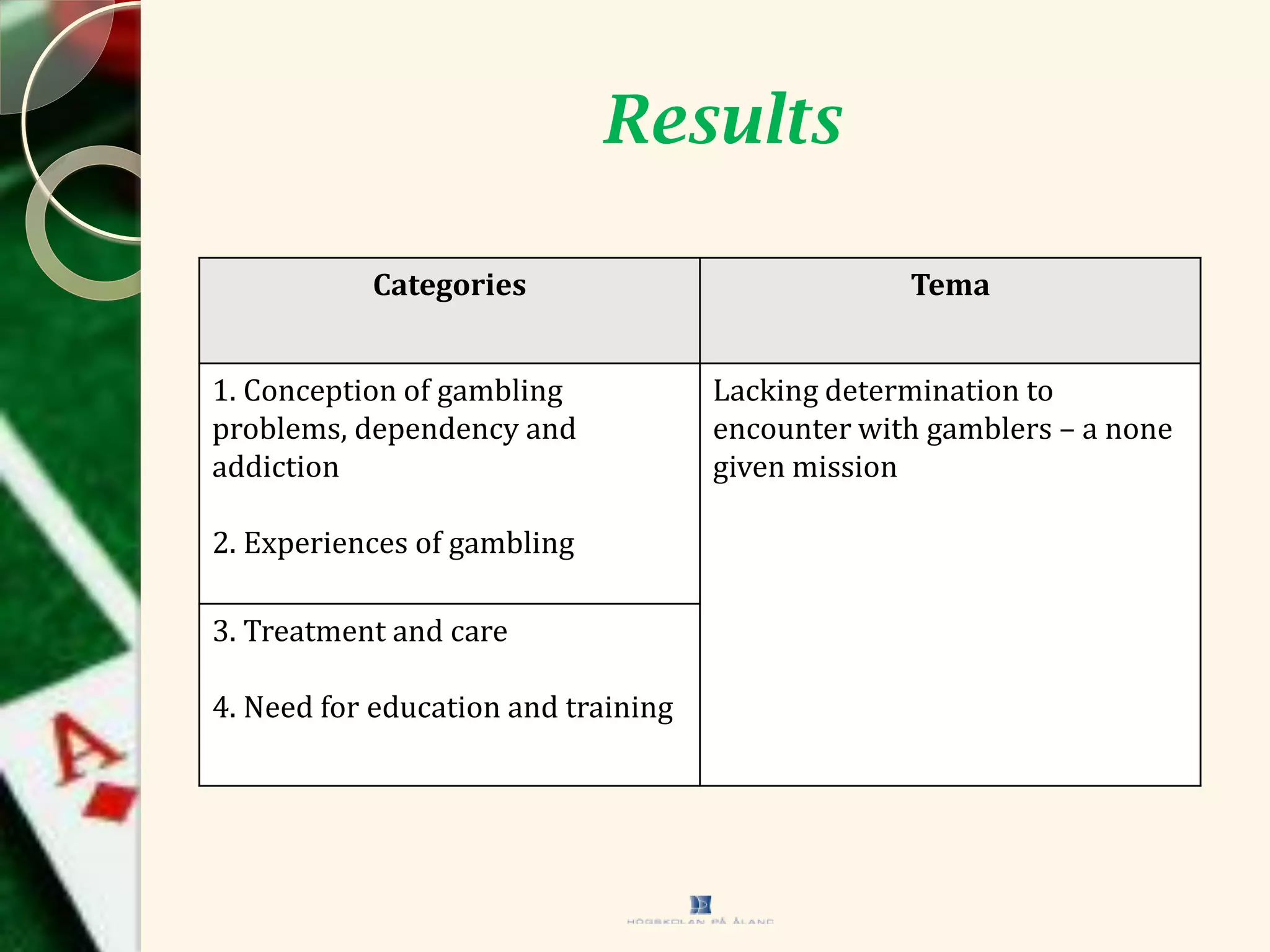
Results
Categories Tema
1. Conception of gambling
problems, dependency and
addiction
2. Experiences of gambling
Lacking determination to
encounter with gamblers – a none
given mission
3. Treatment and care
4. Need for education and training
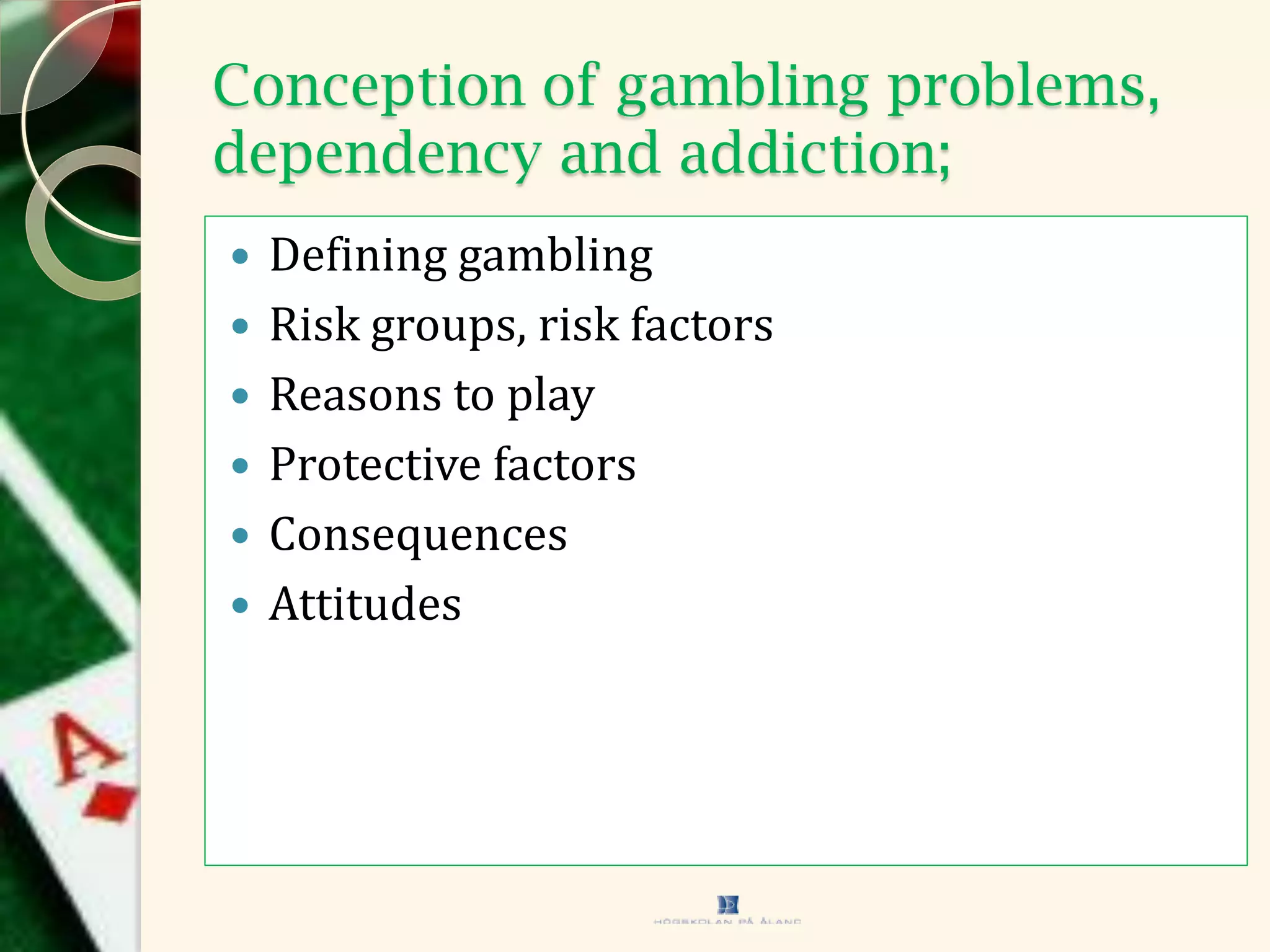
Conception of gambling problems,
dependency and addiction;
 Defining gambling
 Risk groups, risk factors
 Reasons to play
 Protective factors
 Consequences
 Attitudes
Experiences of gambling
 Own gambling experiences
 Friends,
 Patients
Treatment and care
 Identification
 Short comings
Need for education and training
 Limitation of knowledge
 Need for consequent screening
 Need of guidelines
Conclusion
 Health- and social services deliver: resources,
strategies including guidelines,
recommendations etc.
 In-service training to increase knowledge and
clinical skills

Nfhk2011 anette häggblom parallel4

  • 1.
    Researchers: Professor Barbro Gustafsson,Dr Regina Santamäki Fisher, AH and personell from PAF, Åland University of Applied Sciences and PAF Problem gambling, gambling dependency and gambling addiction as described by health and social workers in focus groups interviews - Gapro care Åland PhD Anette Häggblom 24 August, Åbo, NFHK 2011
  • 2.
    Concepts  Gambling addiction, Gambling dependency, and  Problem gambling
  • 3.
    Background Widespread accepted governmentaland nongovernmental financed activity  Increase of social and health problems  Costly
  • 4.
    Risk Three groups ofpersons with high risk  Positive reinforcement  Biological aspects  Motive
  • 5.
    Aim  To providean overview of health professionals’ and social workers experiences of treating persons with gambling problems, gambling dependency and gambling addiction.  To describe the theoretical basis they used including definitions of gambling problems and the evidence supporting current treatment activities.
  • 6.
    Method  Focus groupsinterviews Social workers – 3, Mental health workers – 4 Nurses – 4, Physicians - 2  Open ended questions: - ”In your opinion, when do you define a patient having a gambling problem and/or being addicted to gambling”? - ”How does a gambling problem/addiction occur and why”?  Content analysis of the transcribed verbatim interviews
  • 7.
    Results Categories Tema 1. Conceptionof gambling problems, dependency and addiction 2. Experiences of gambling Lacking determination to encounter with gamblers – a none given mission 3. Treatment and care 4. Need for education and training
  • 8.
    Conception of gamblingproblems, dependency and addiction;  Defining gambling  Risk groups, risk factors  Reasons to play  Protective factors  Consequences  Attitudes
  • 9.
    Experiences of gambling Own gambling experiences  Friends,  Patients
  • 10.
    Treatment and care Identification  Short comings
  • 11.
    Need for educationand training  Limitation of knowledge  Need for consequent screening  Need of guidelines
  • 12.
    Conclusion  Health- andsocial services deliver: resources, strategies including guidelines, recommendations etc.  In-service training to increase knowledge and clinical skills