Download as PDF, PPTX
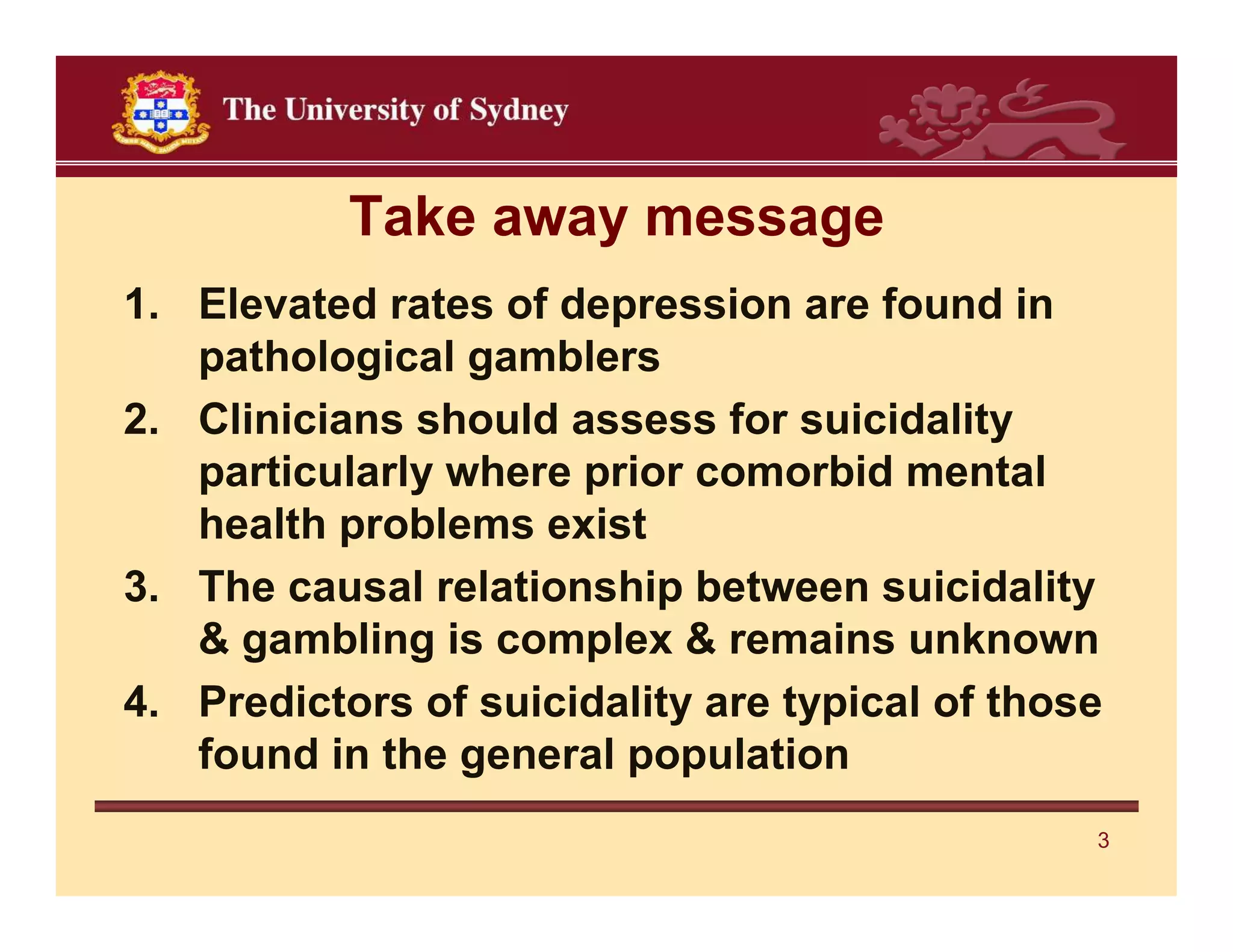
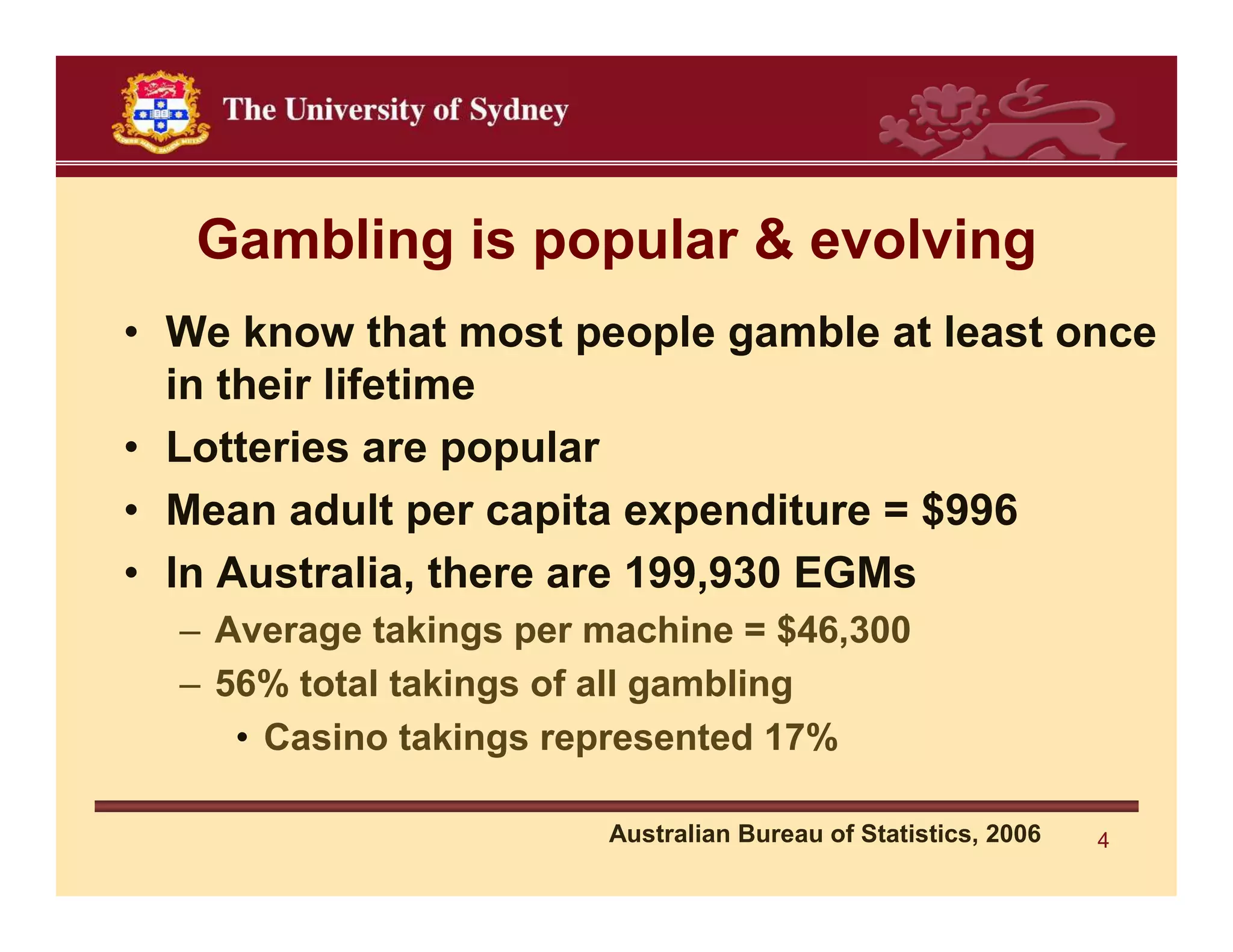
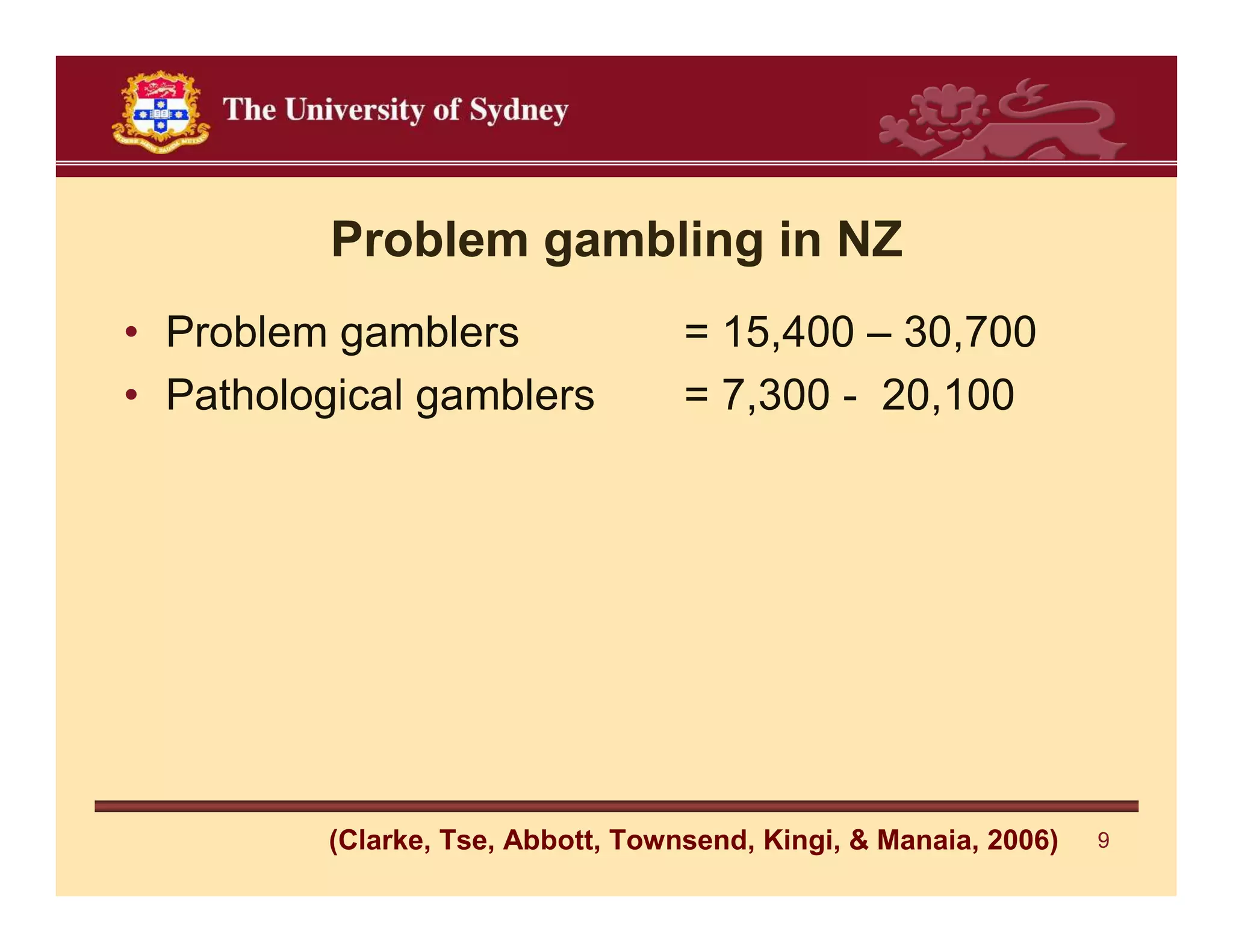
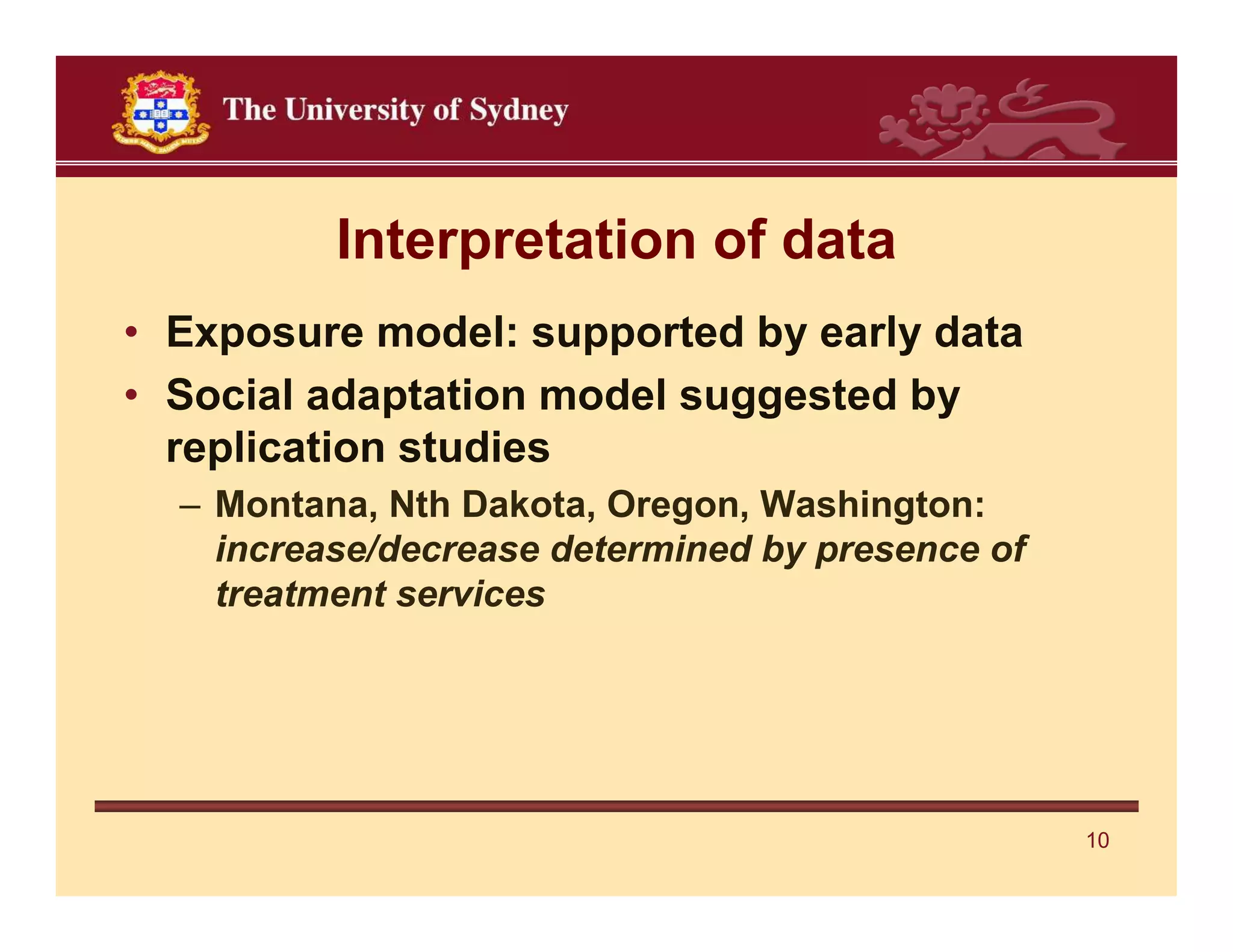
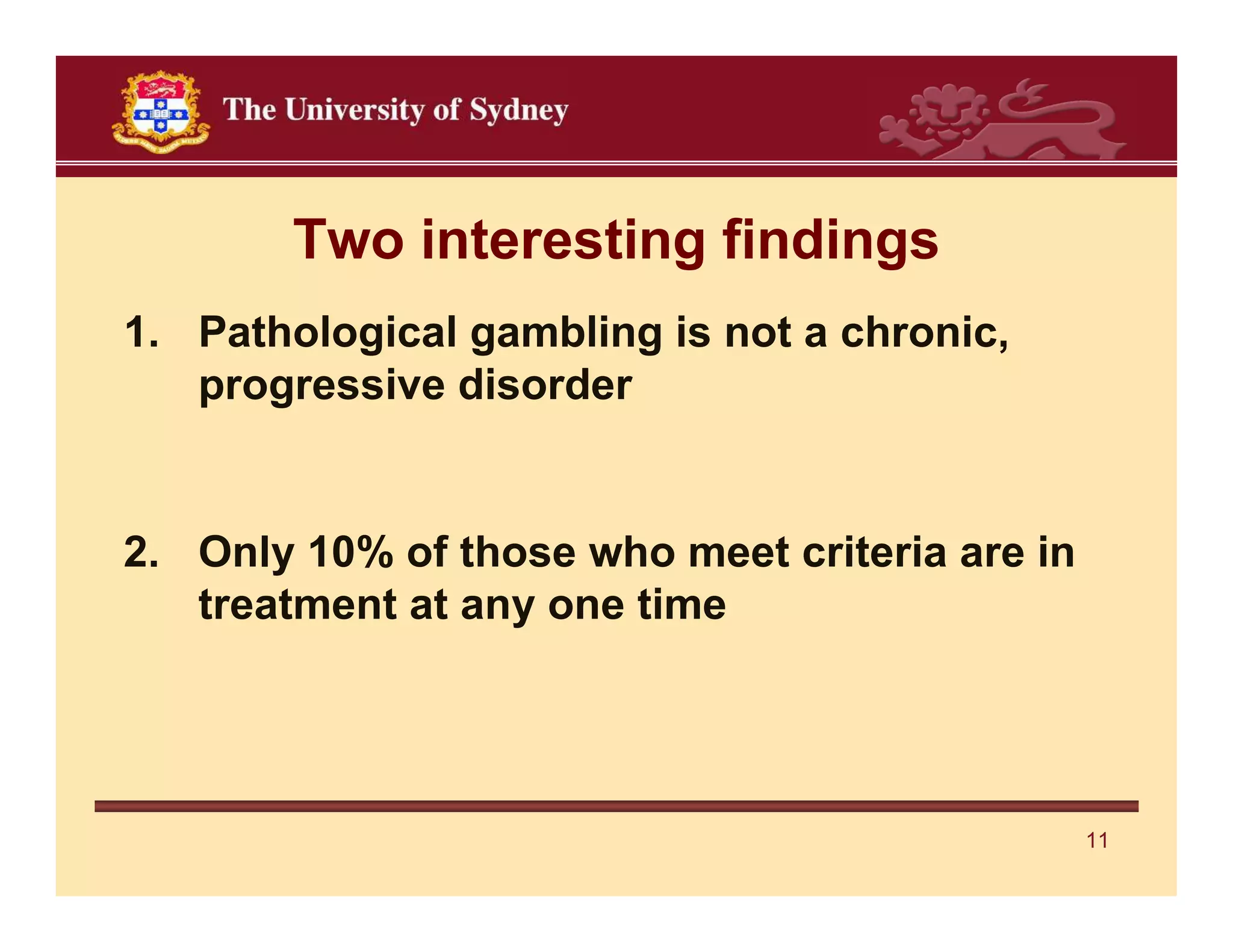


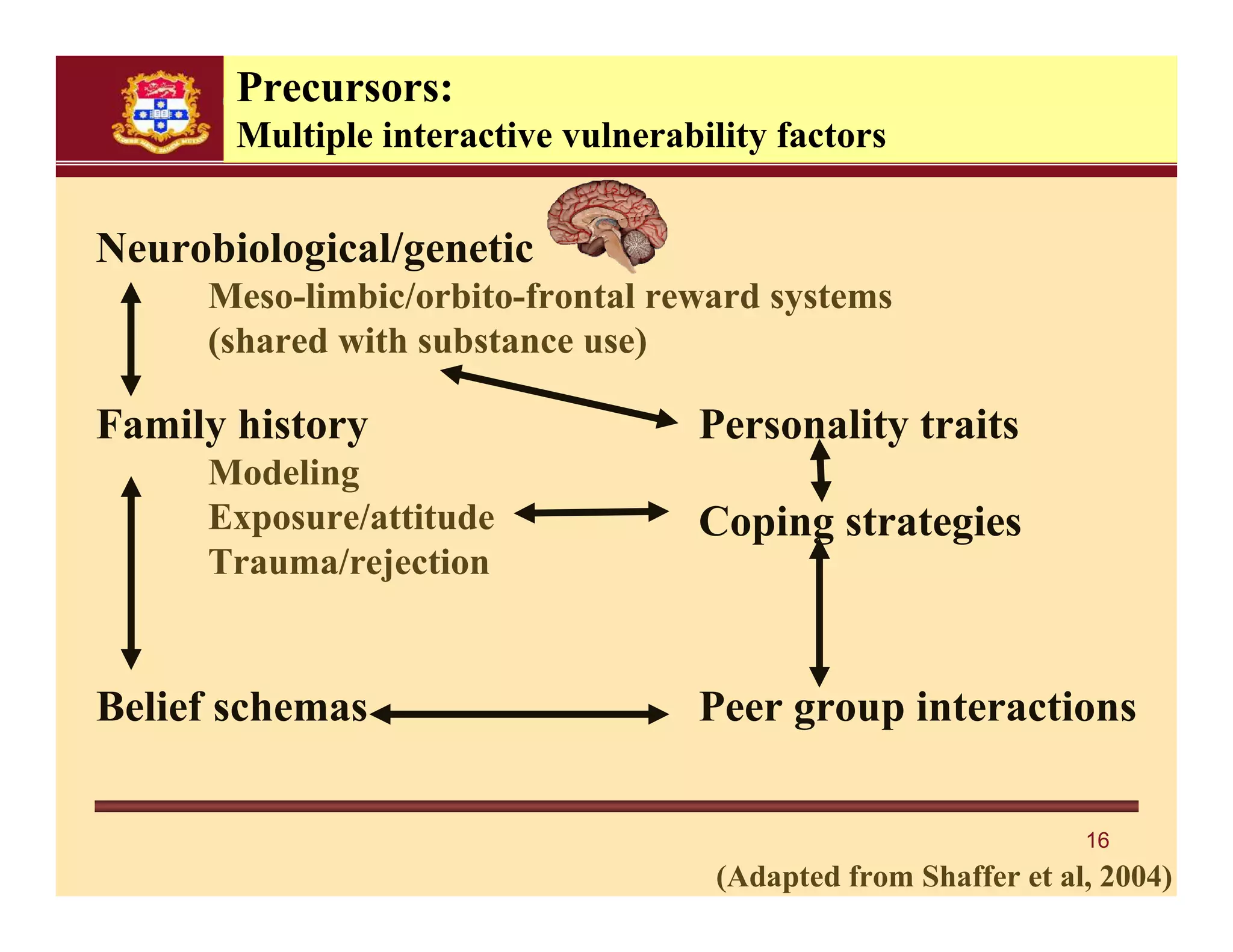
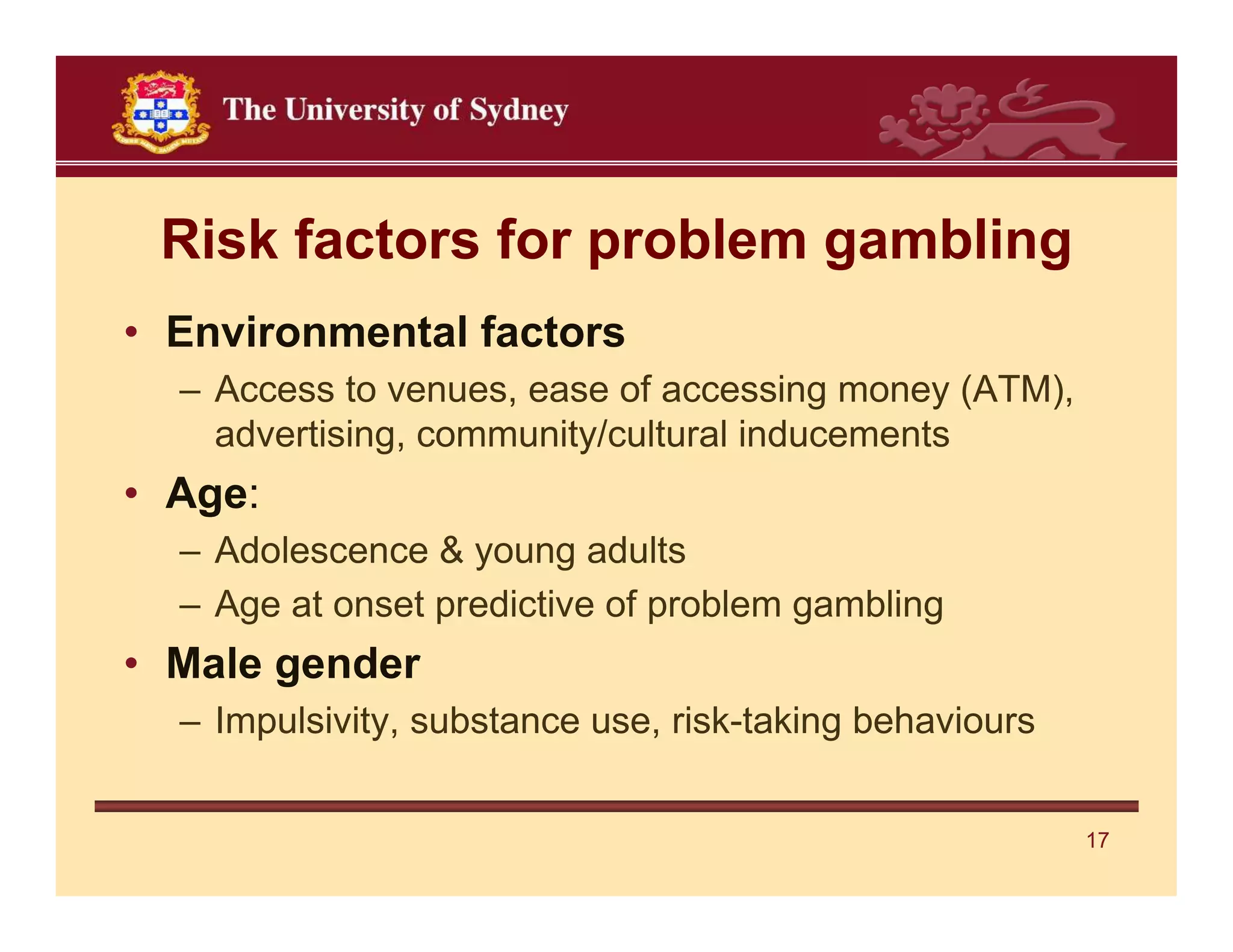
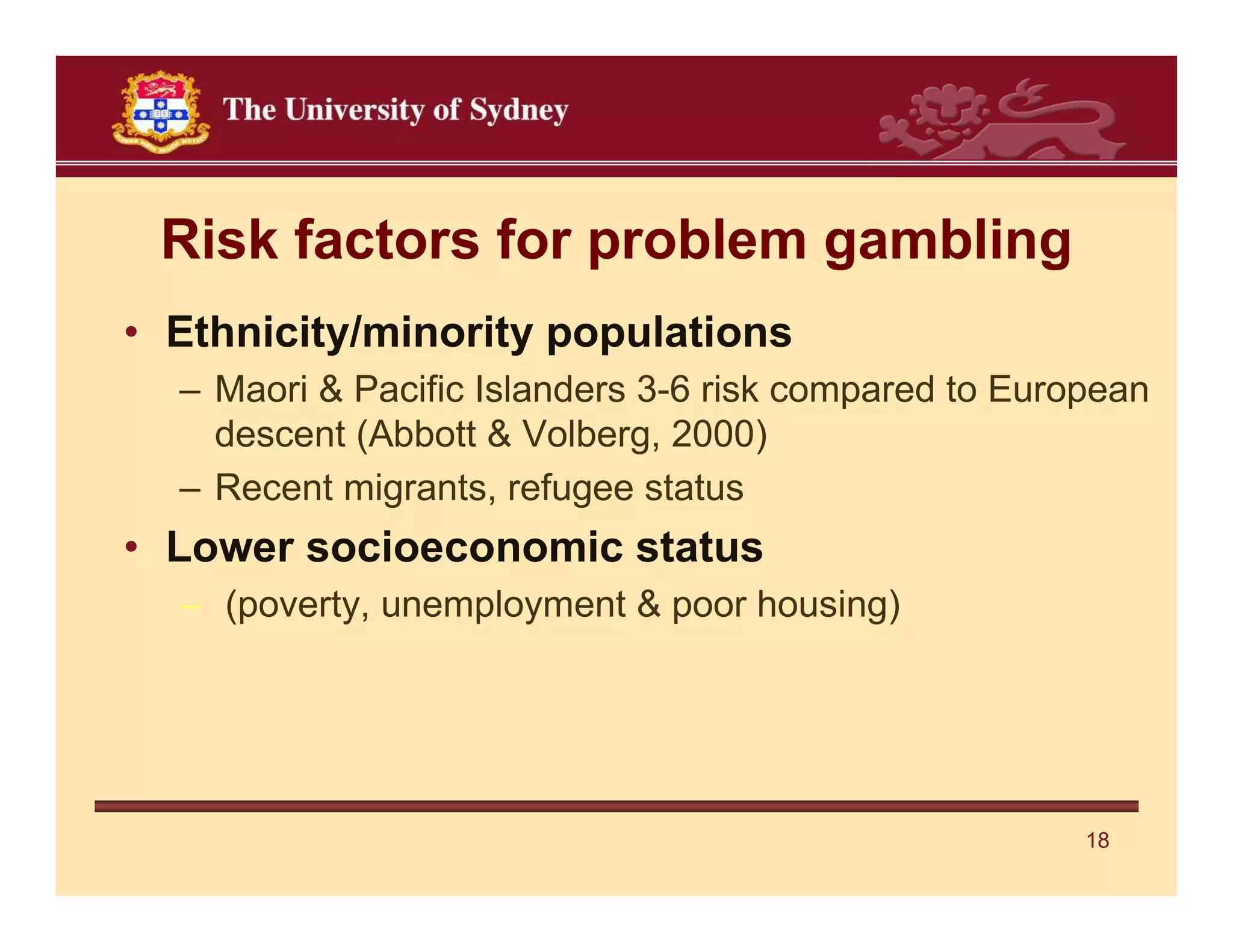
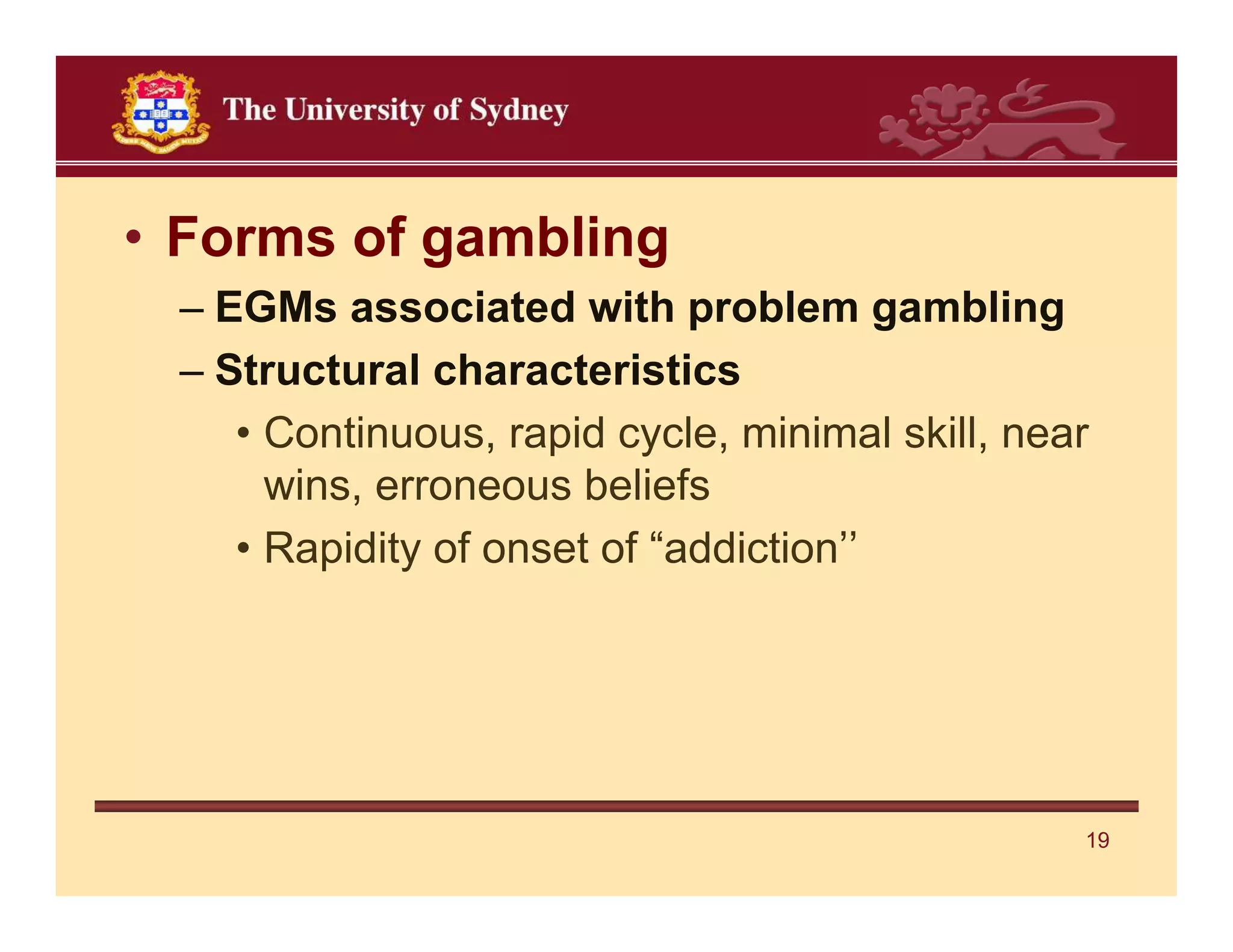
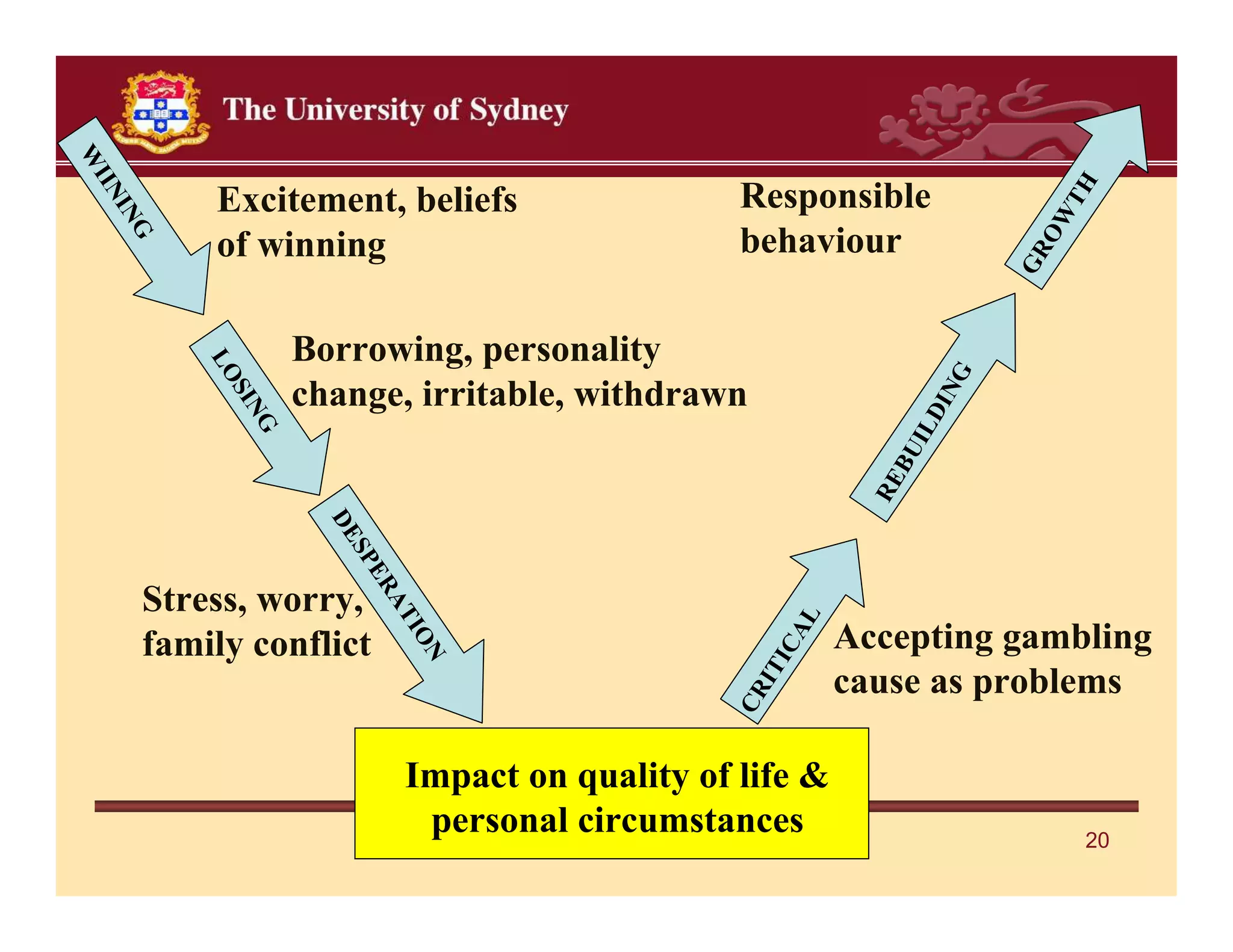
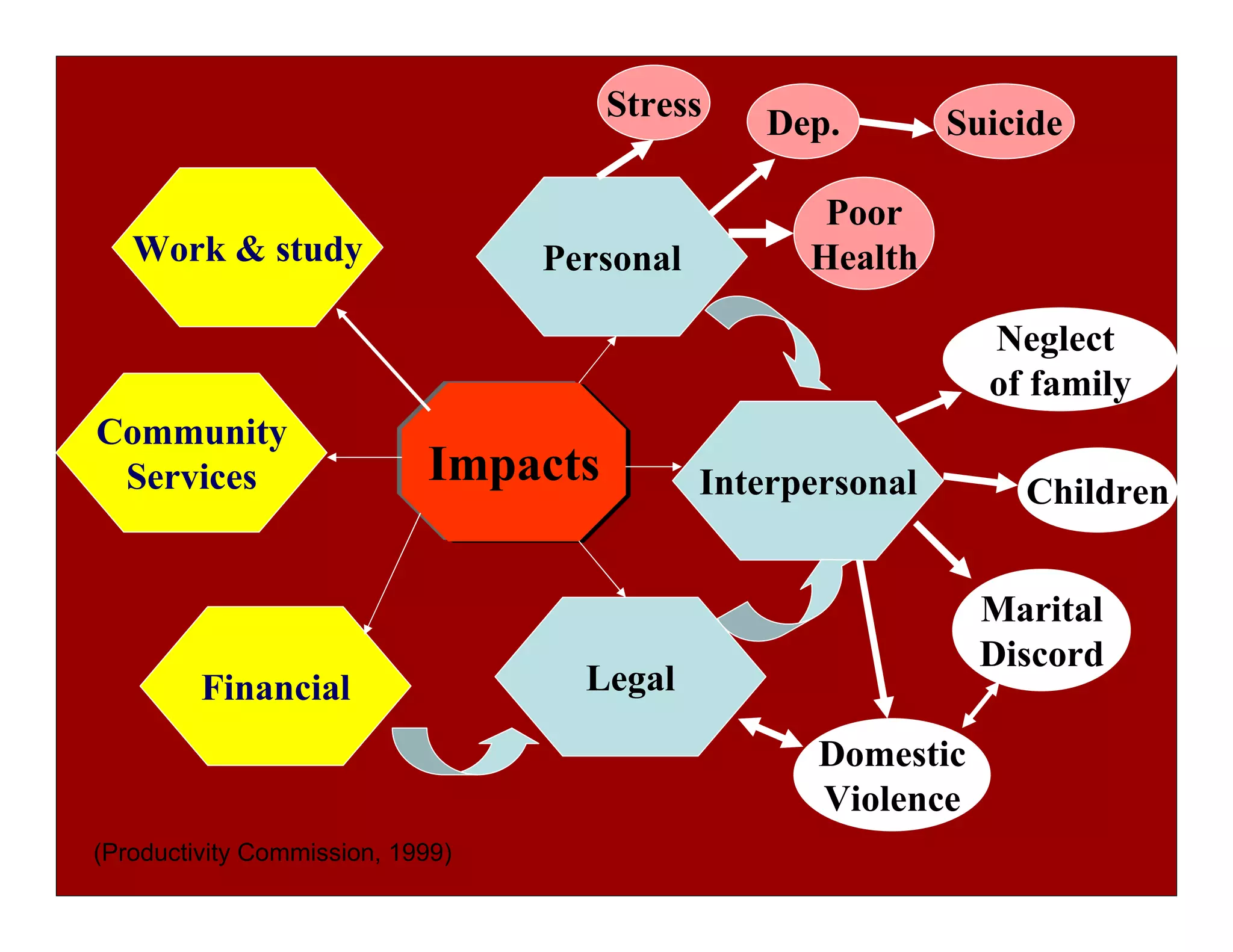
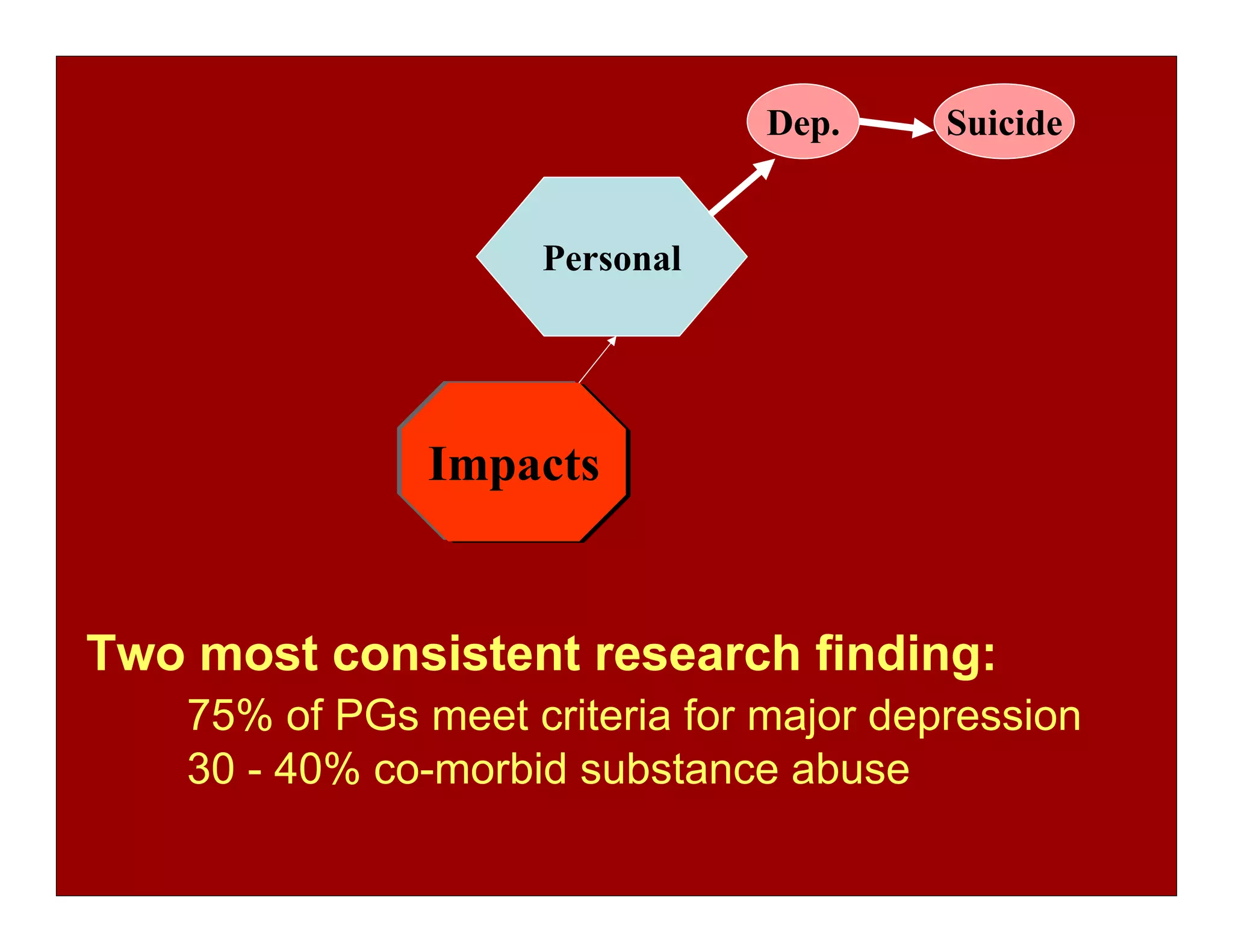
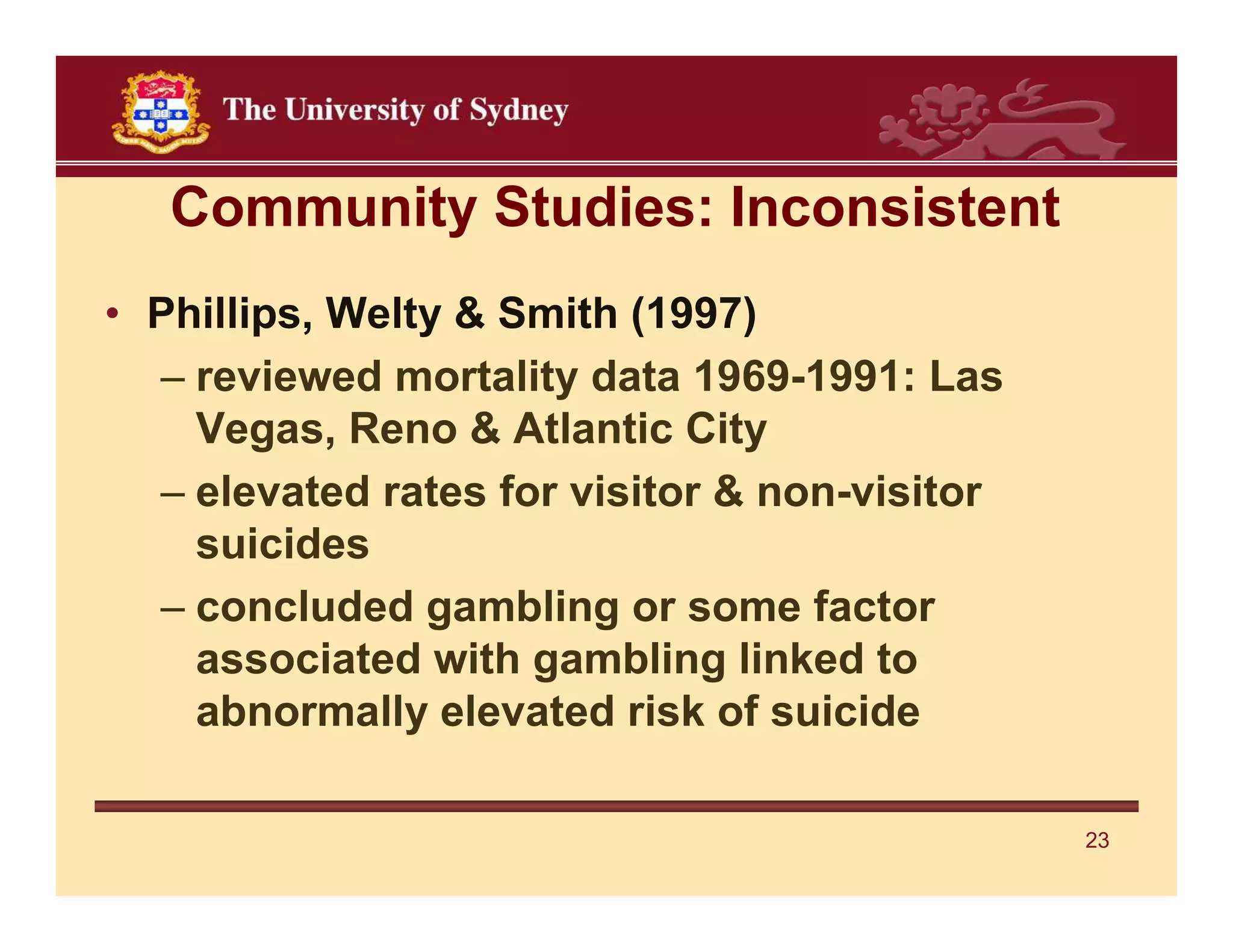
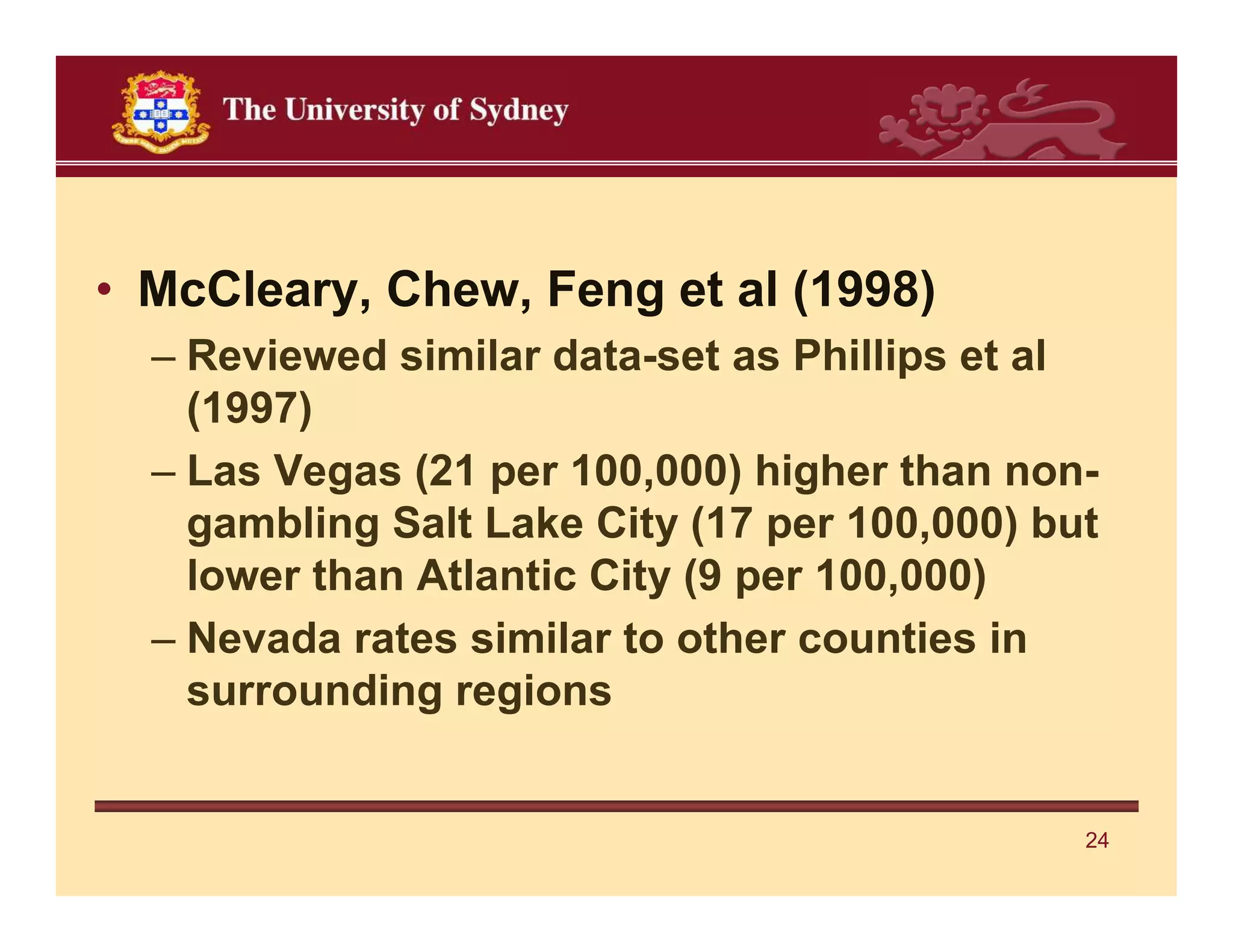
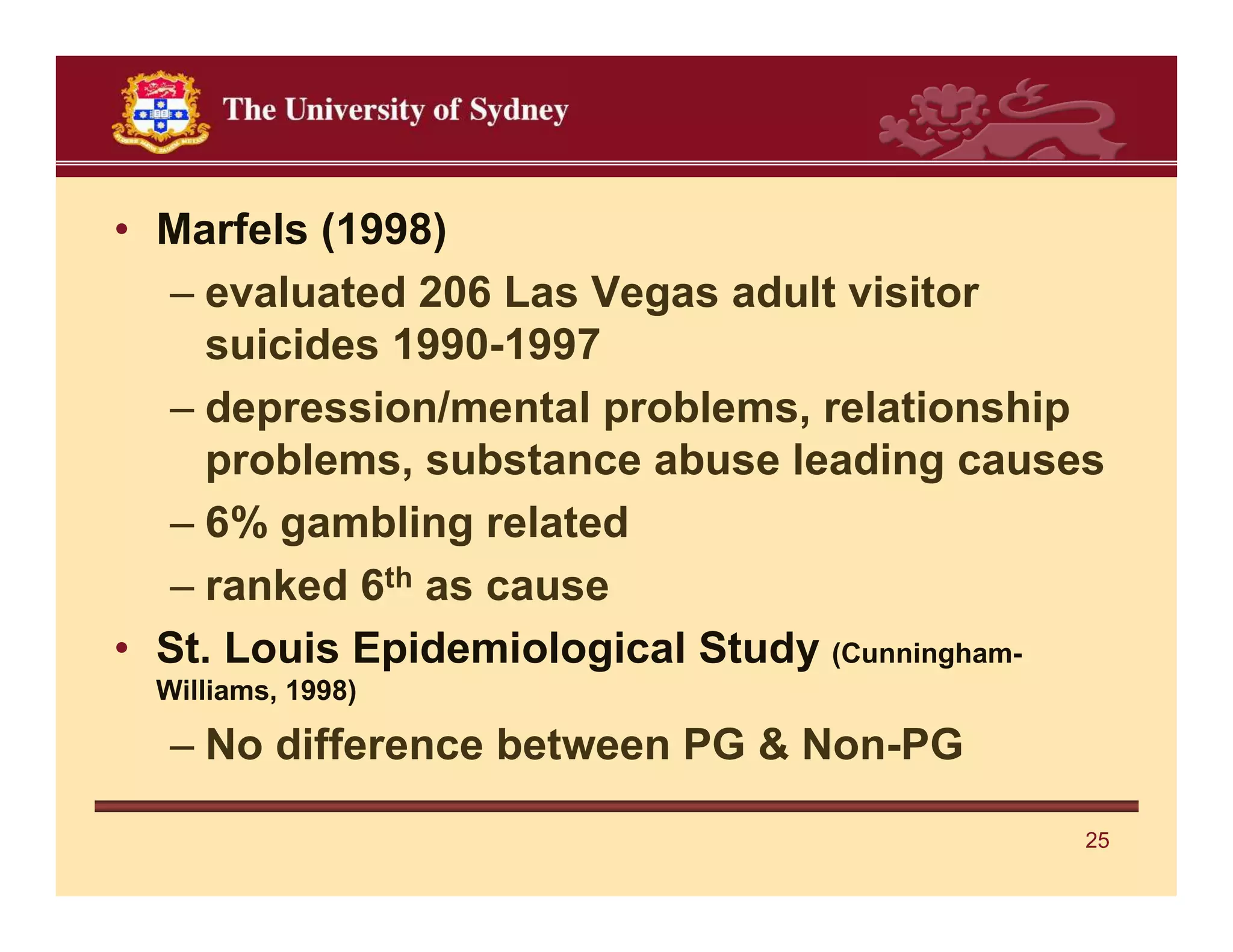
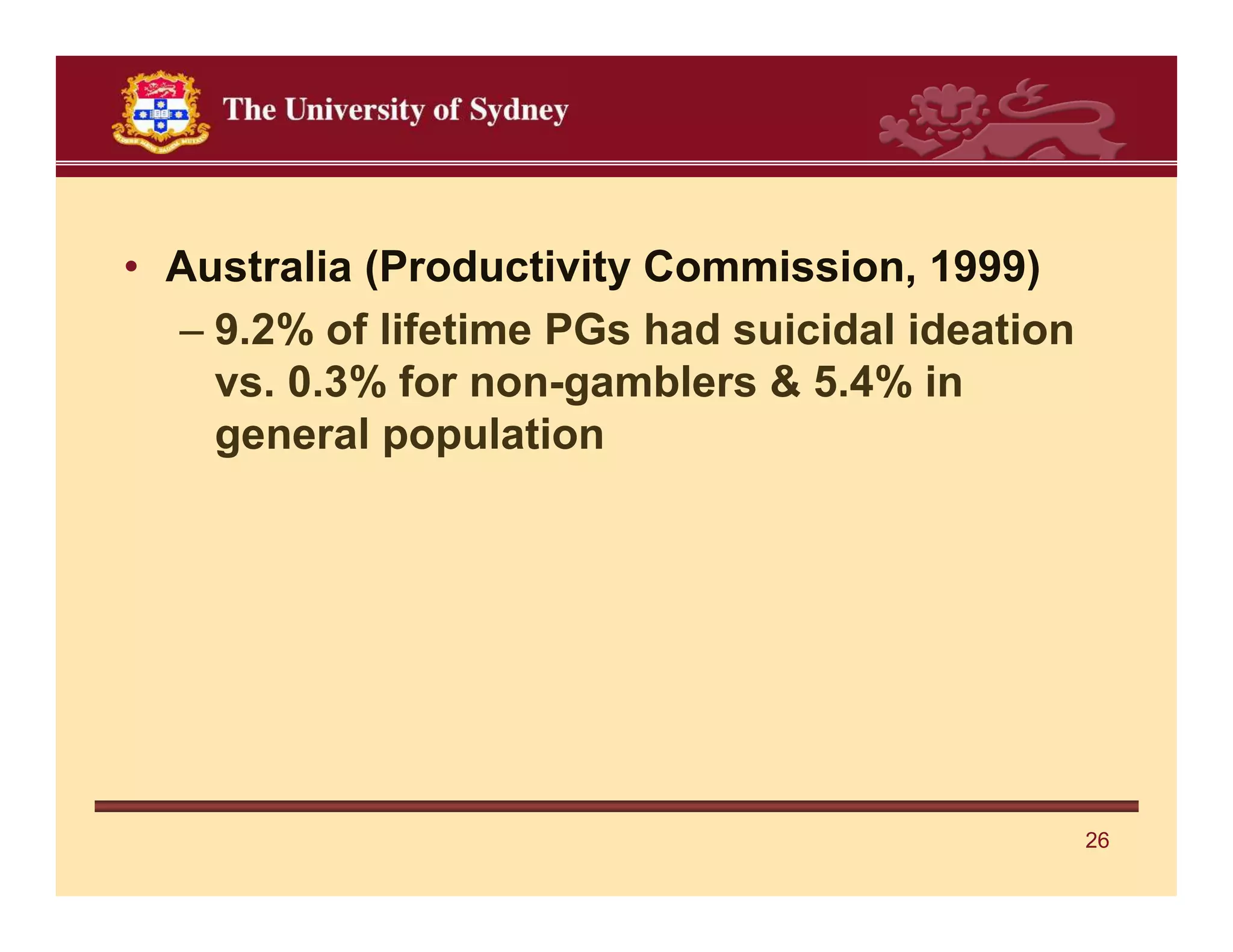
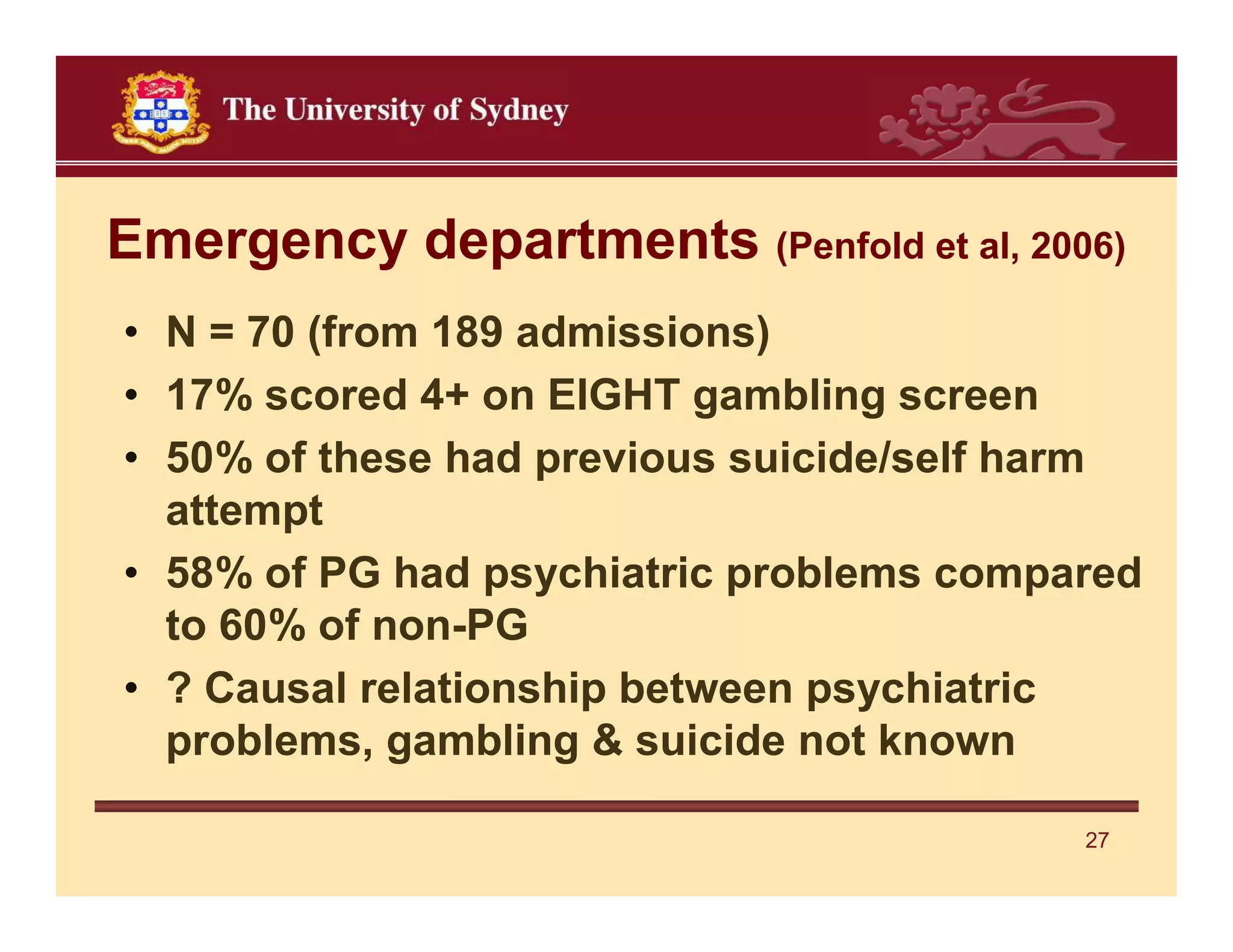
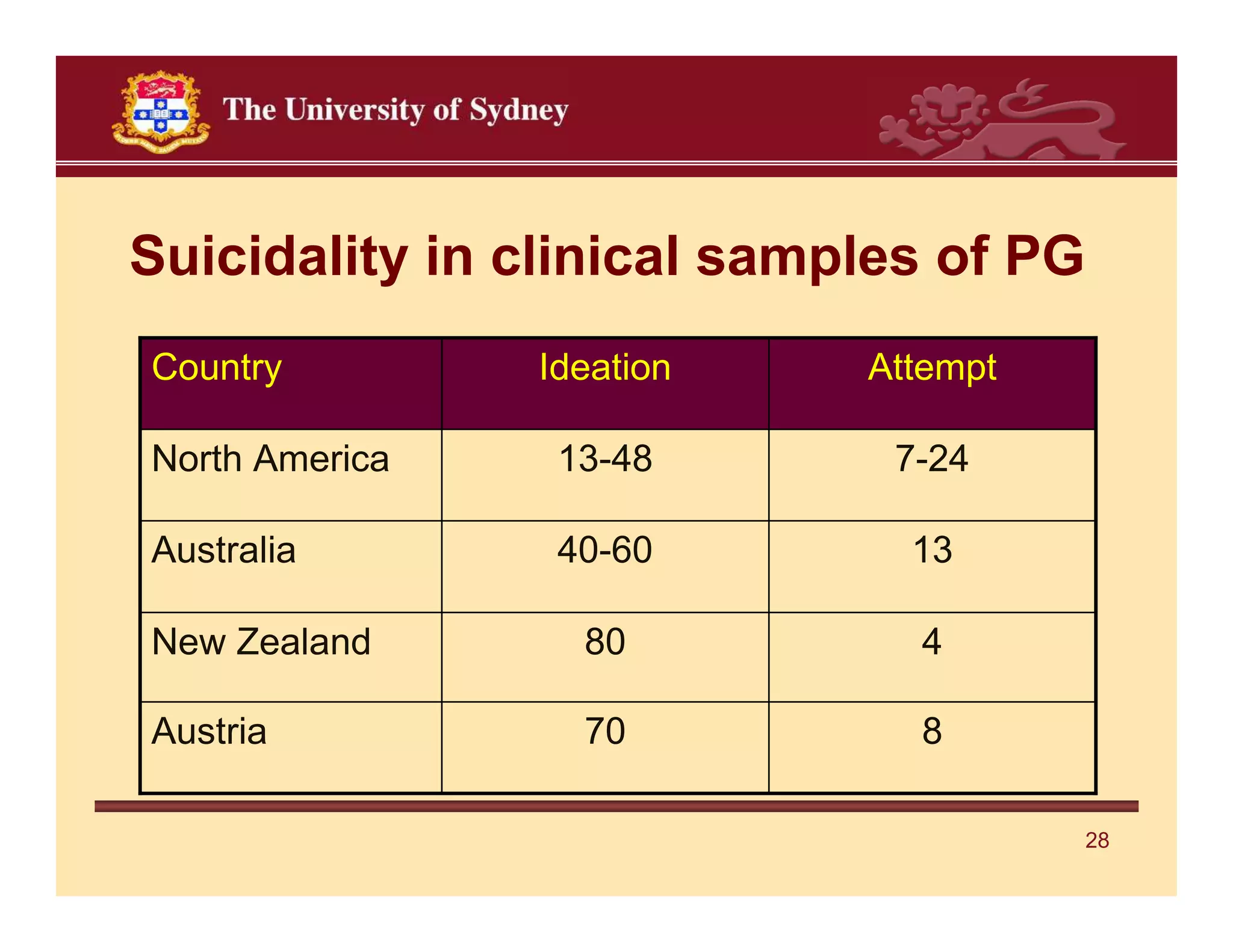
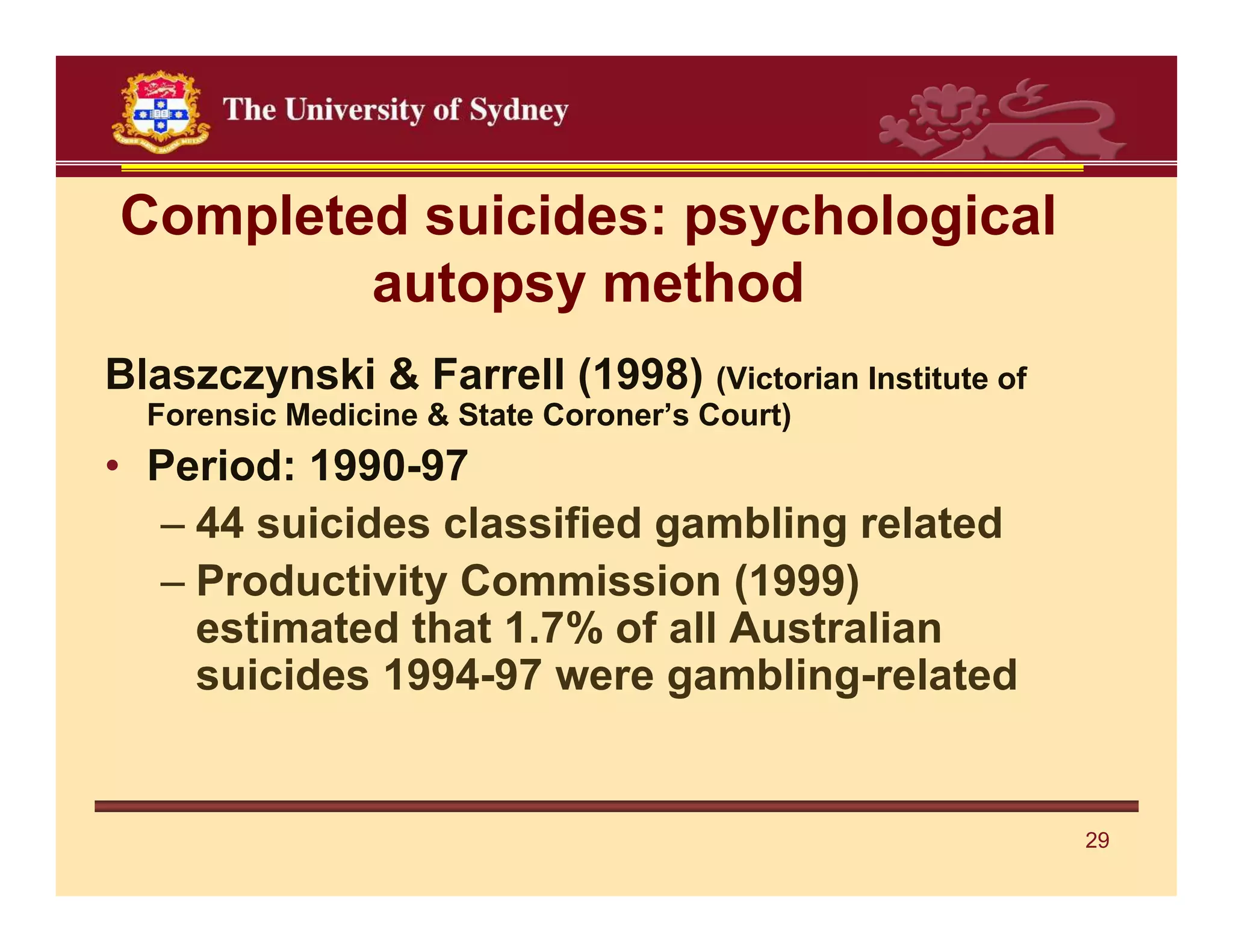
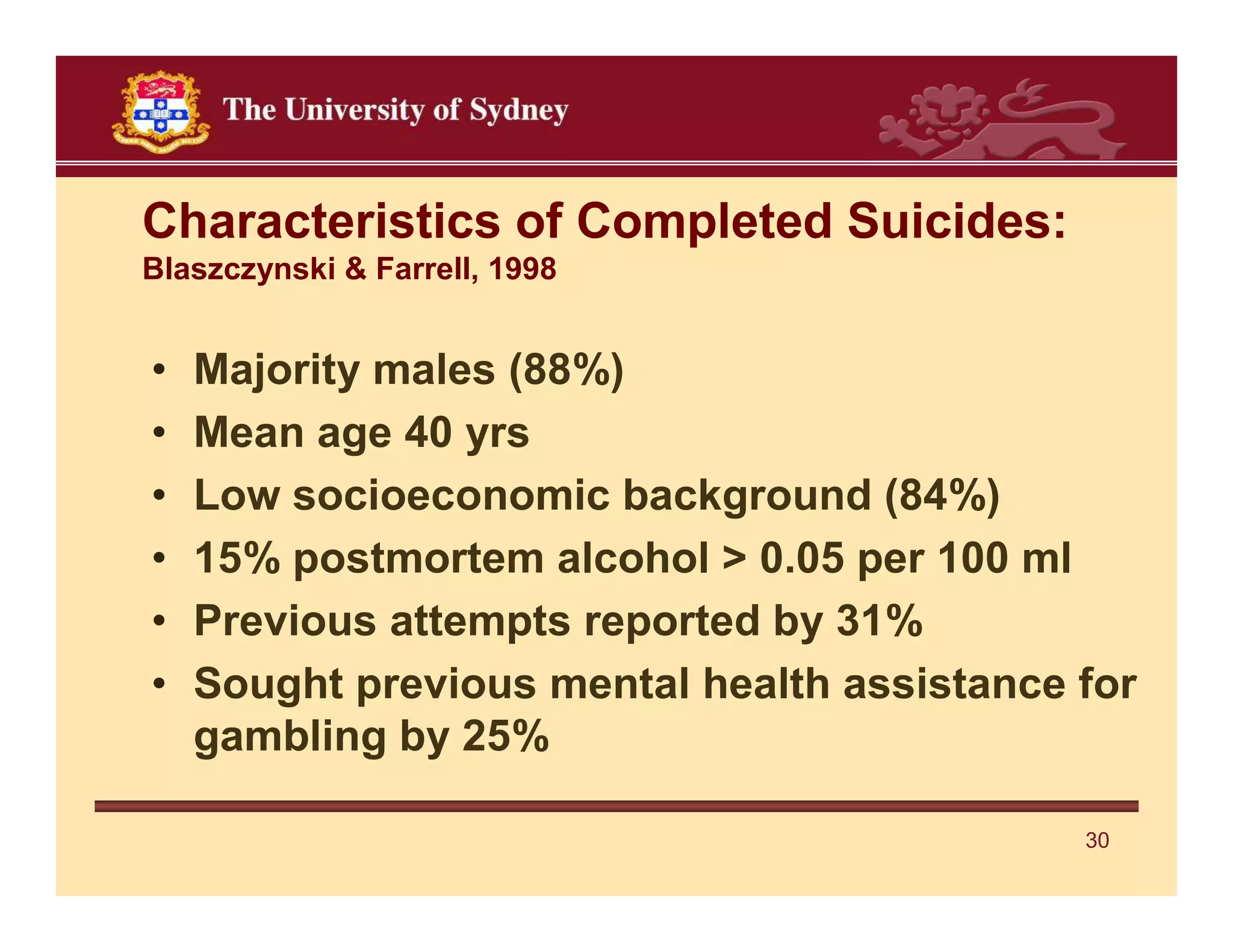
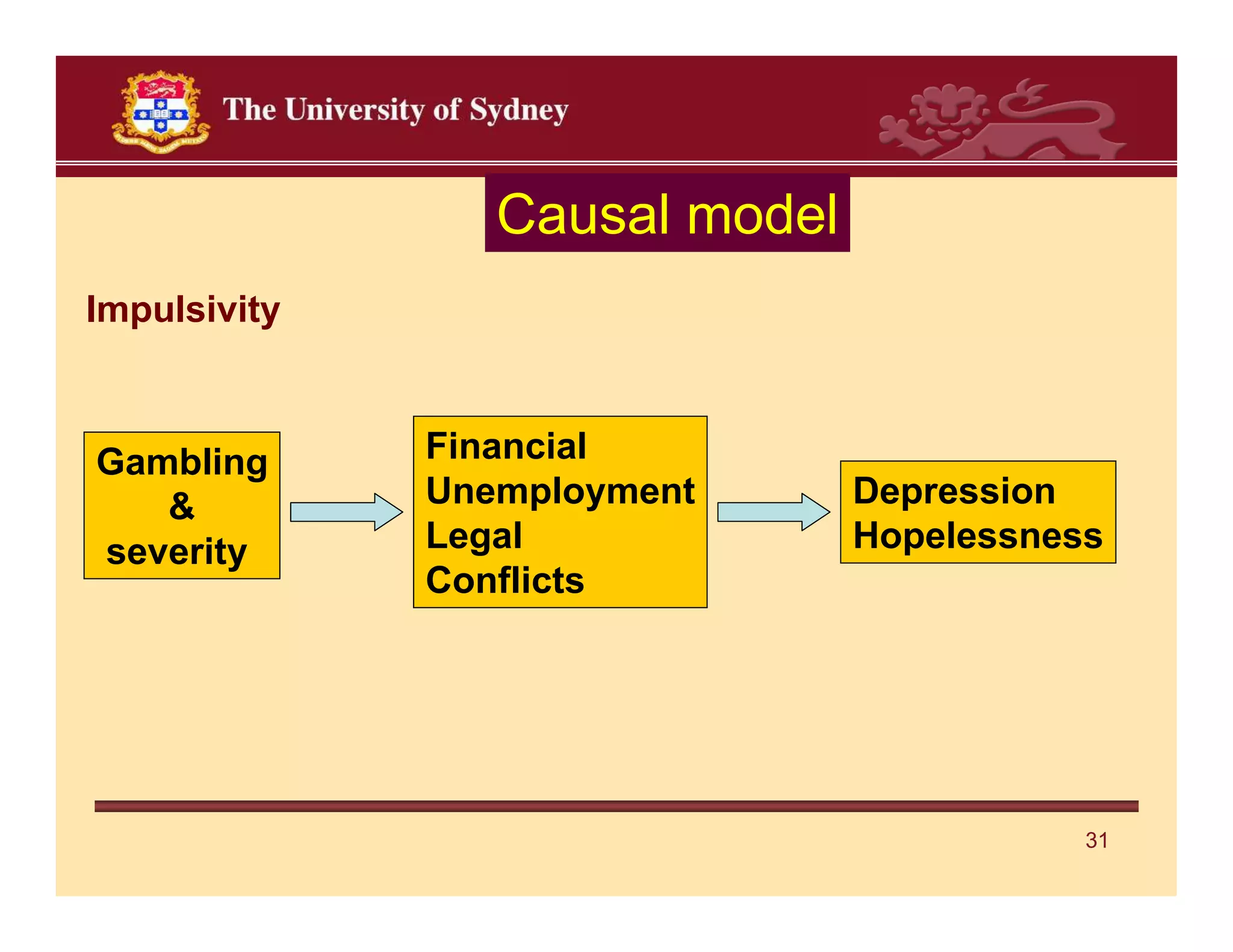
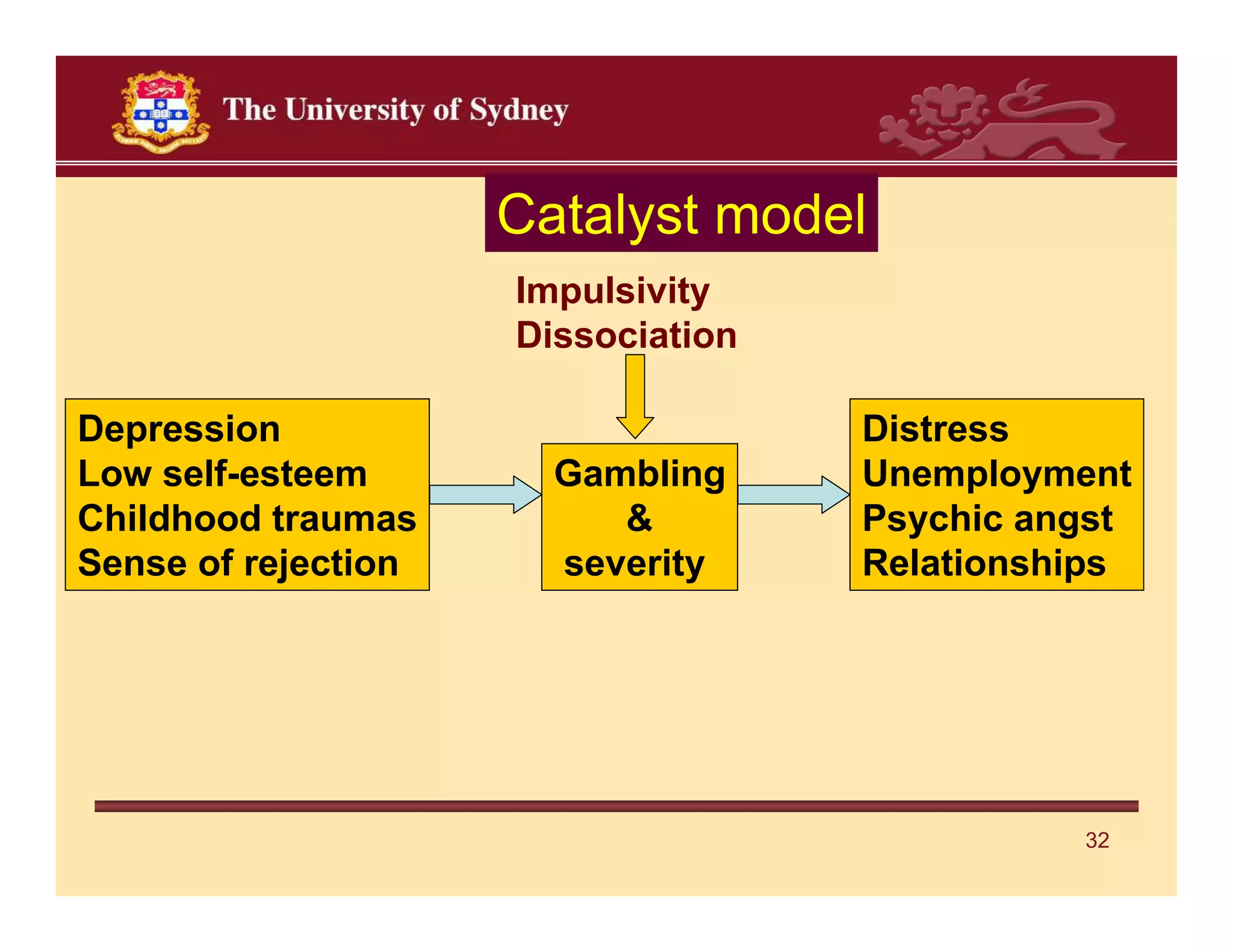
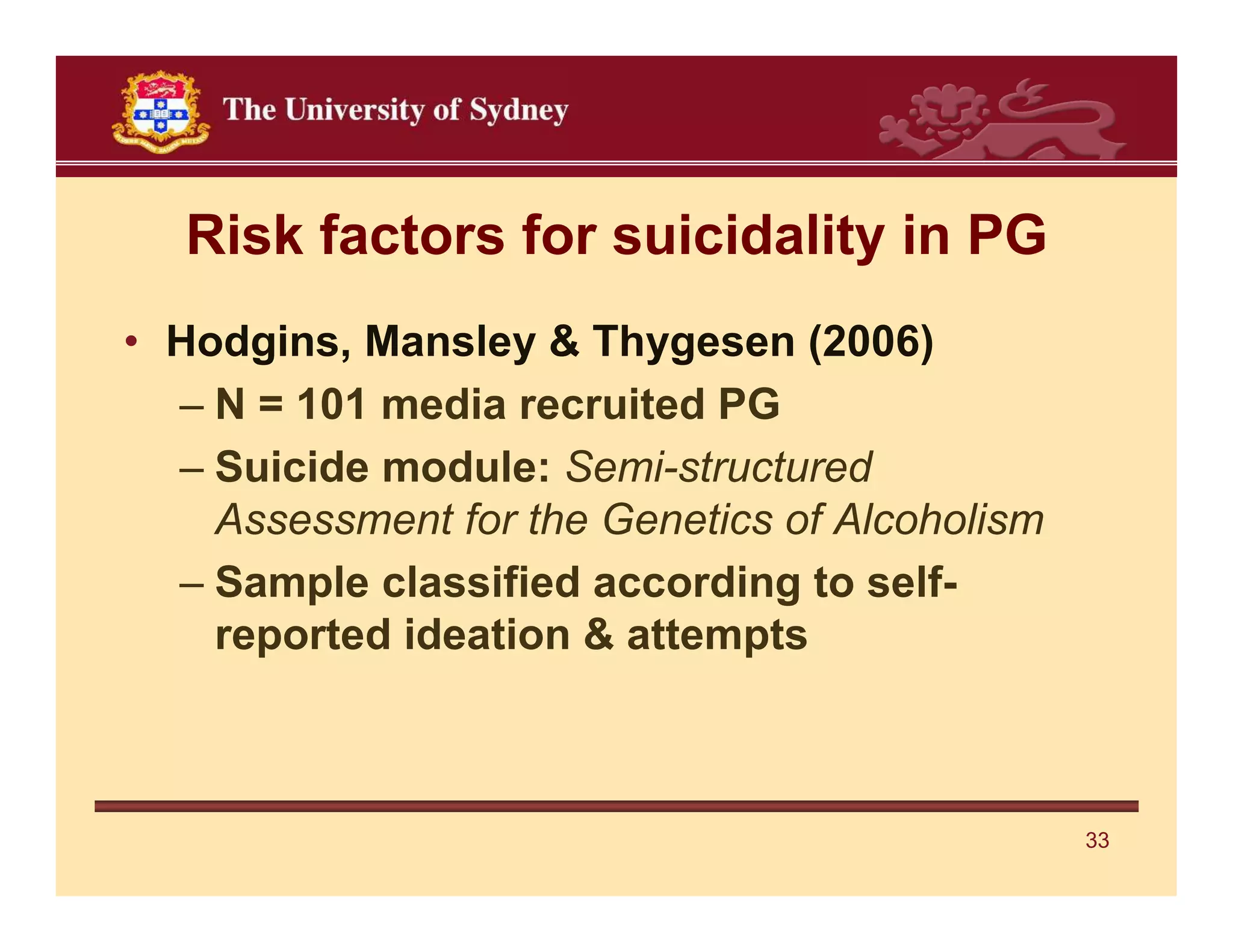
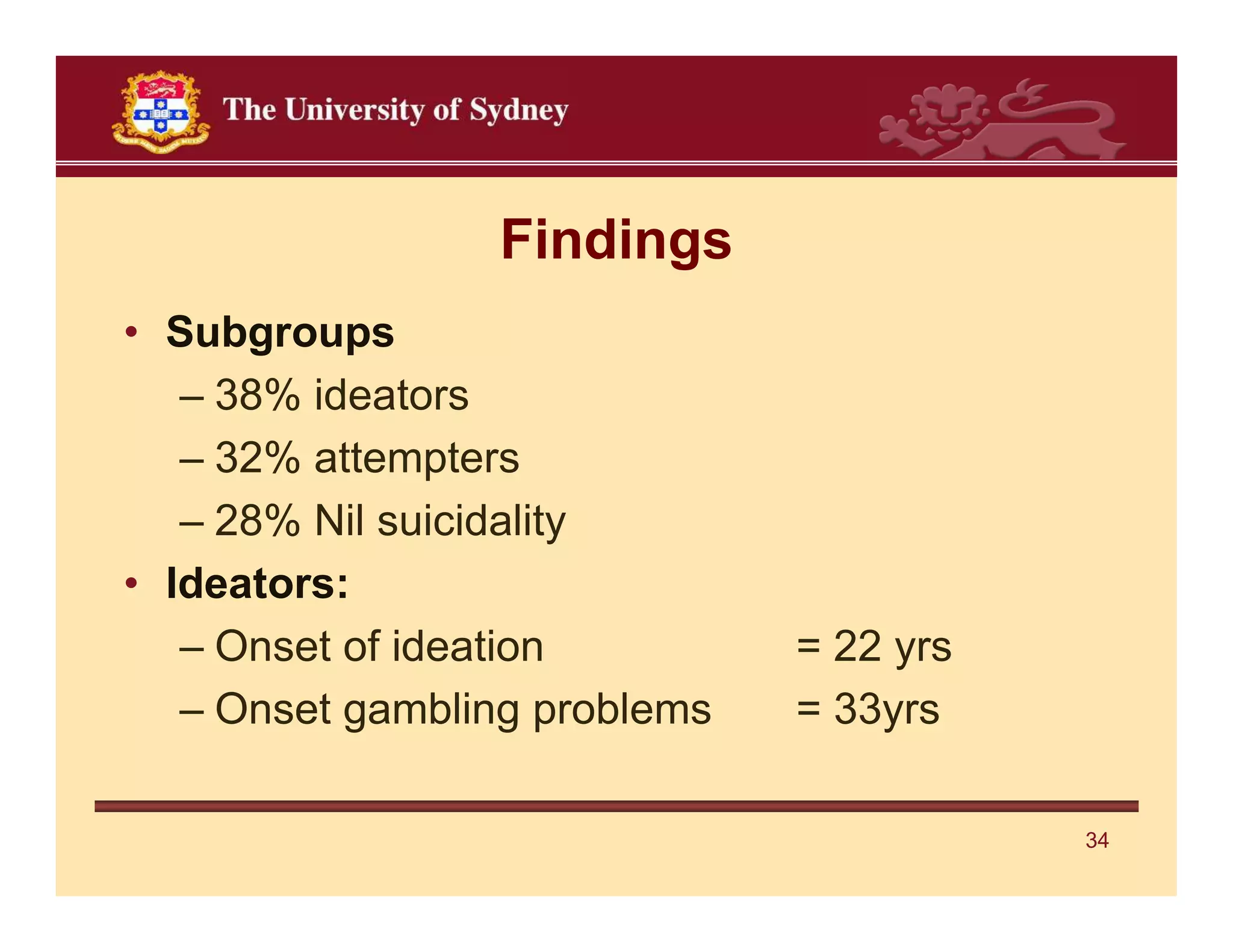
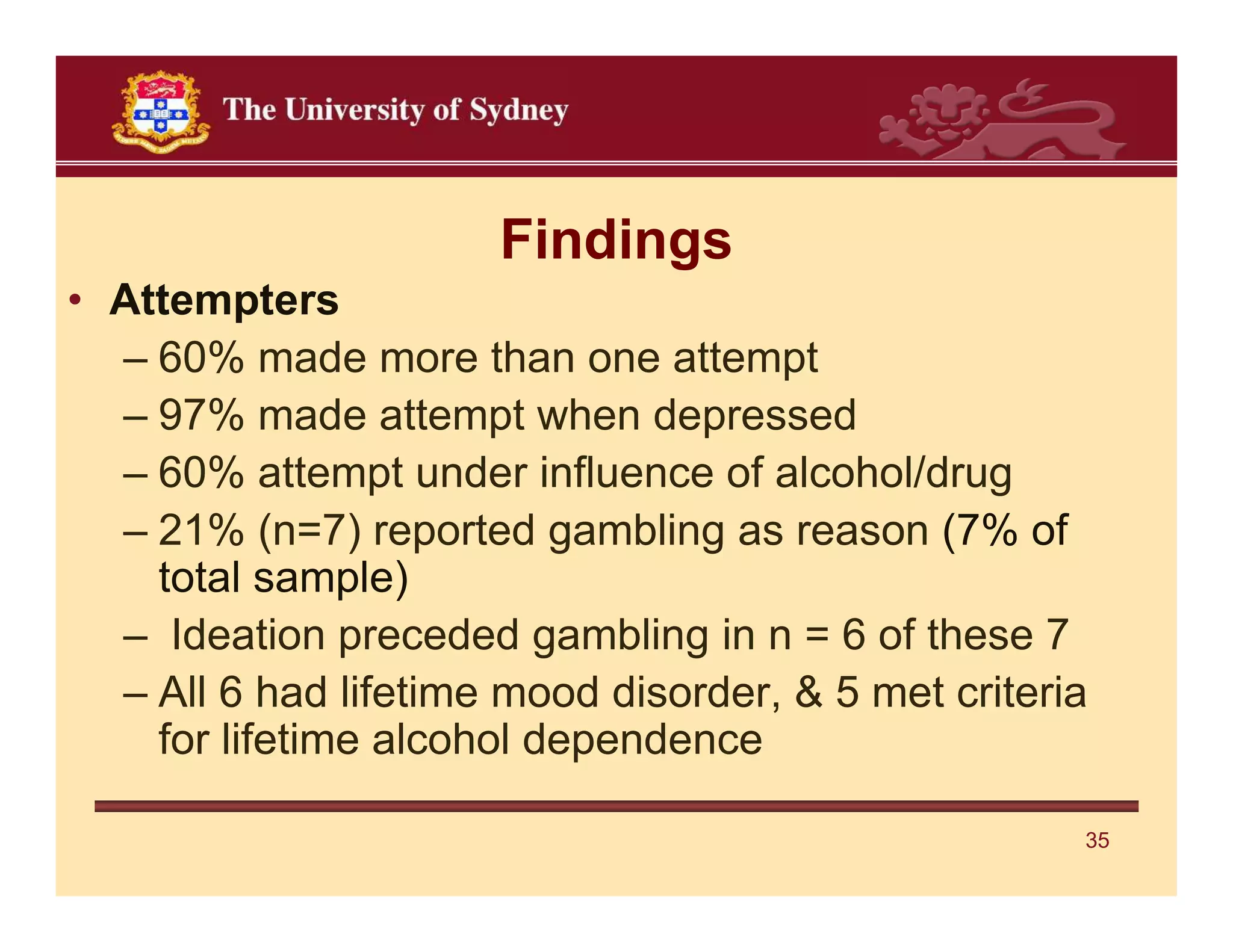
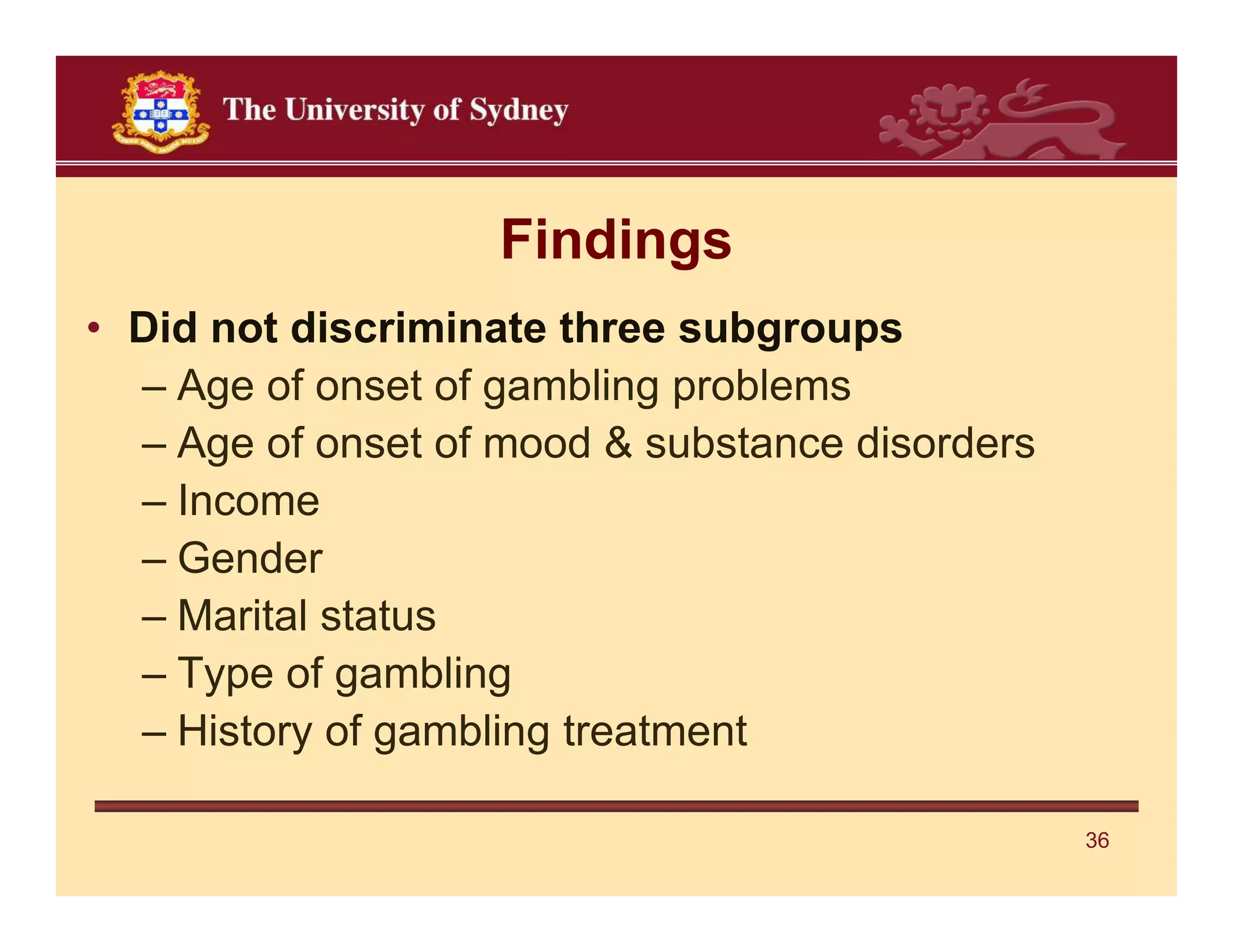
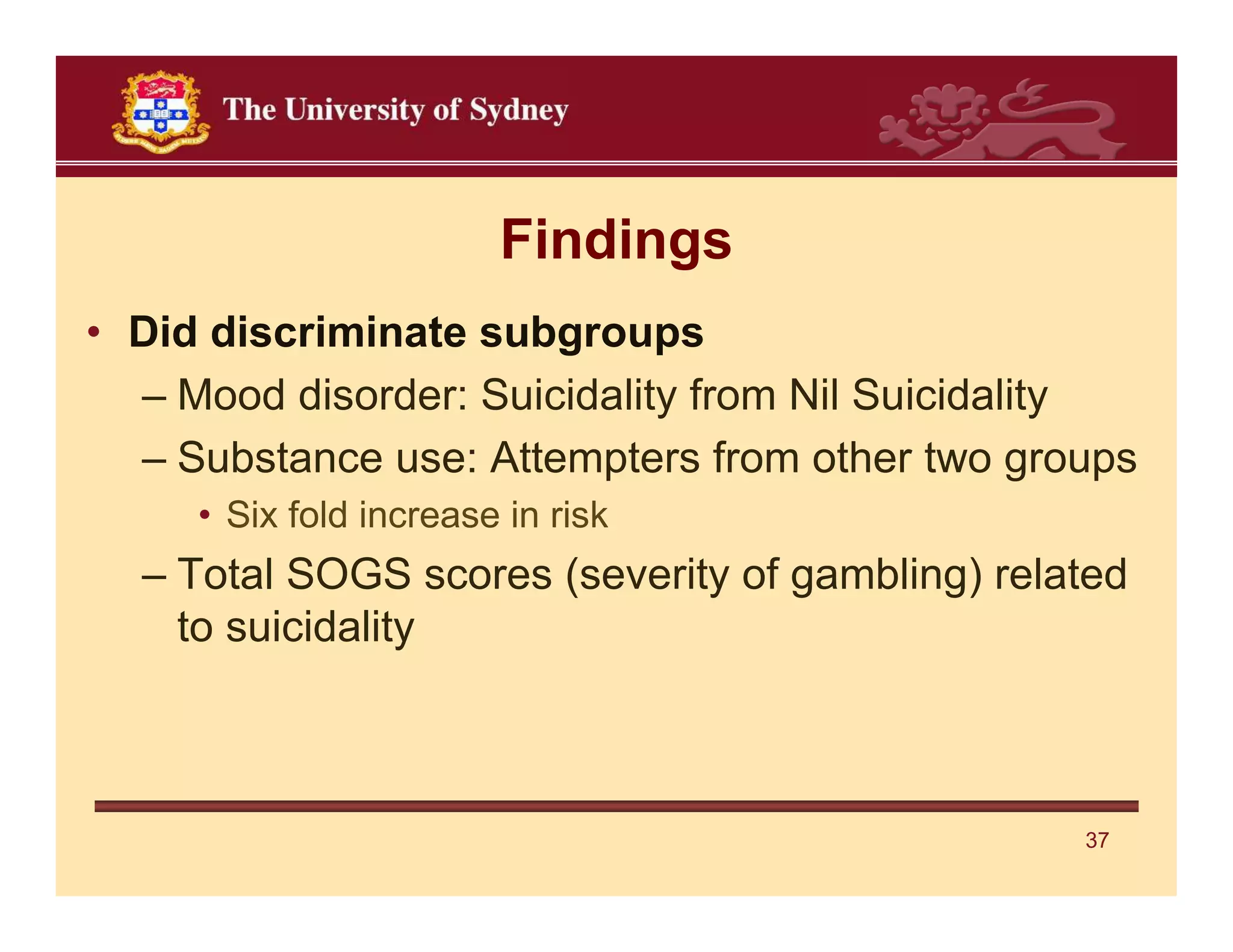
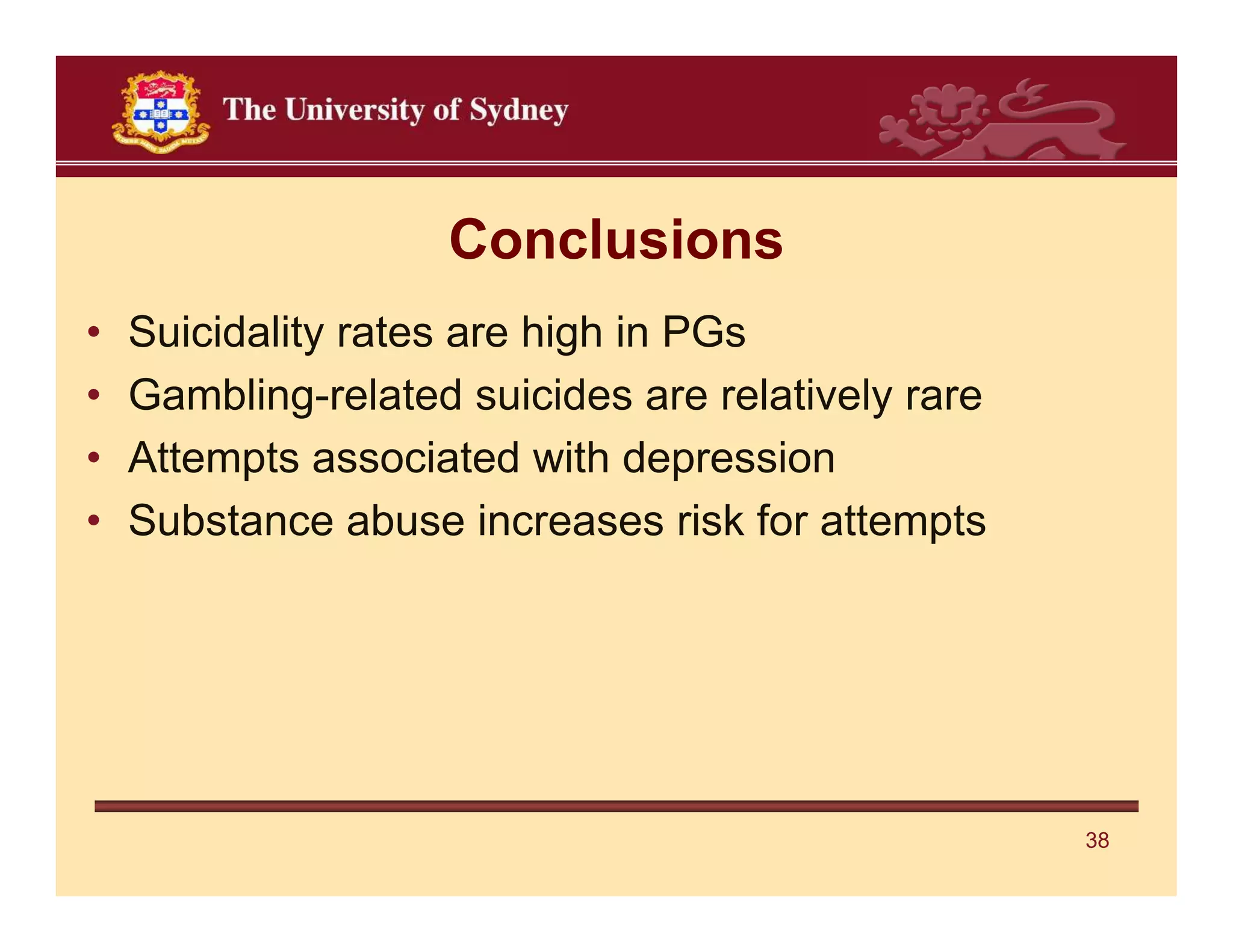
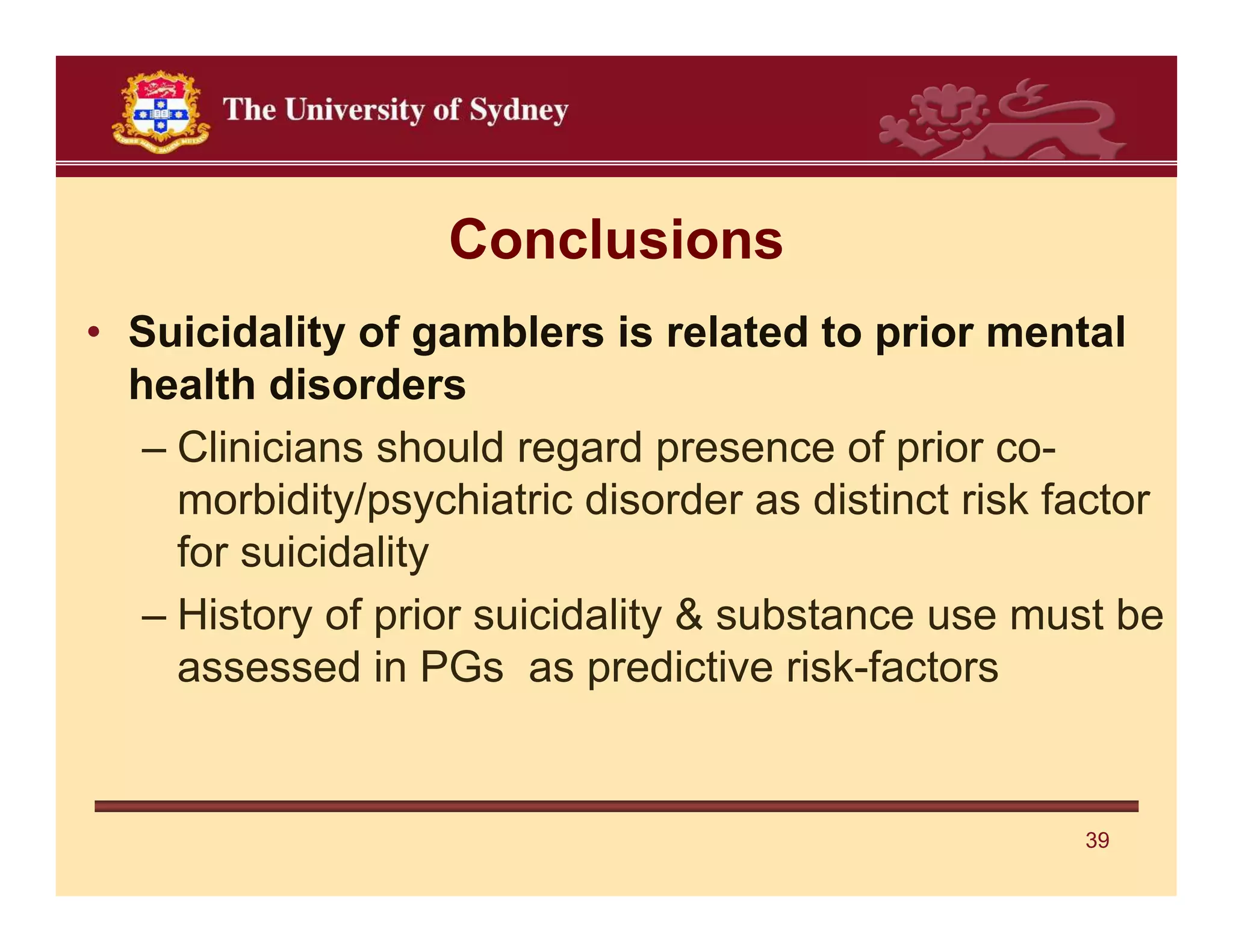
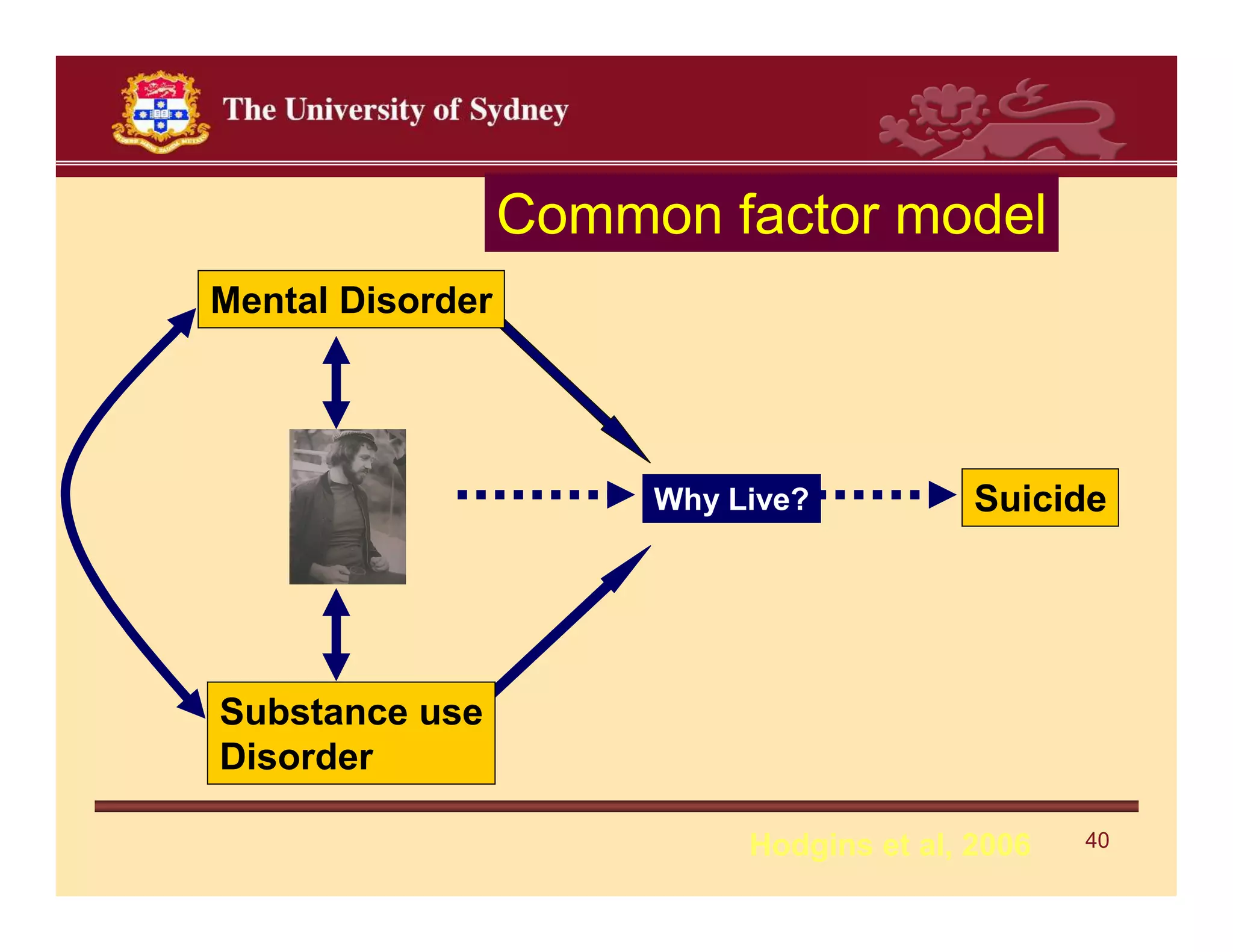
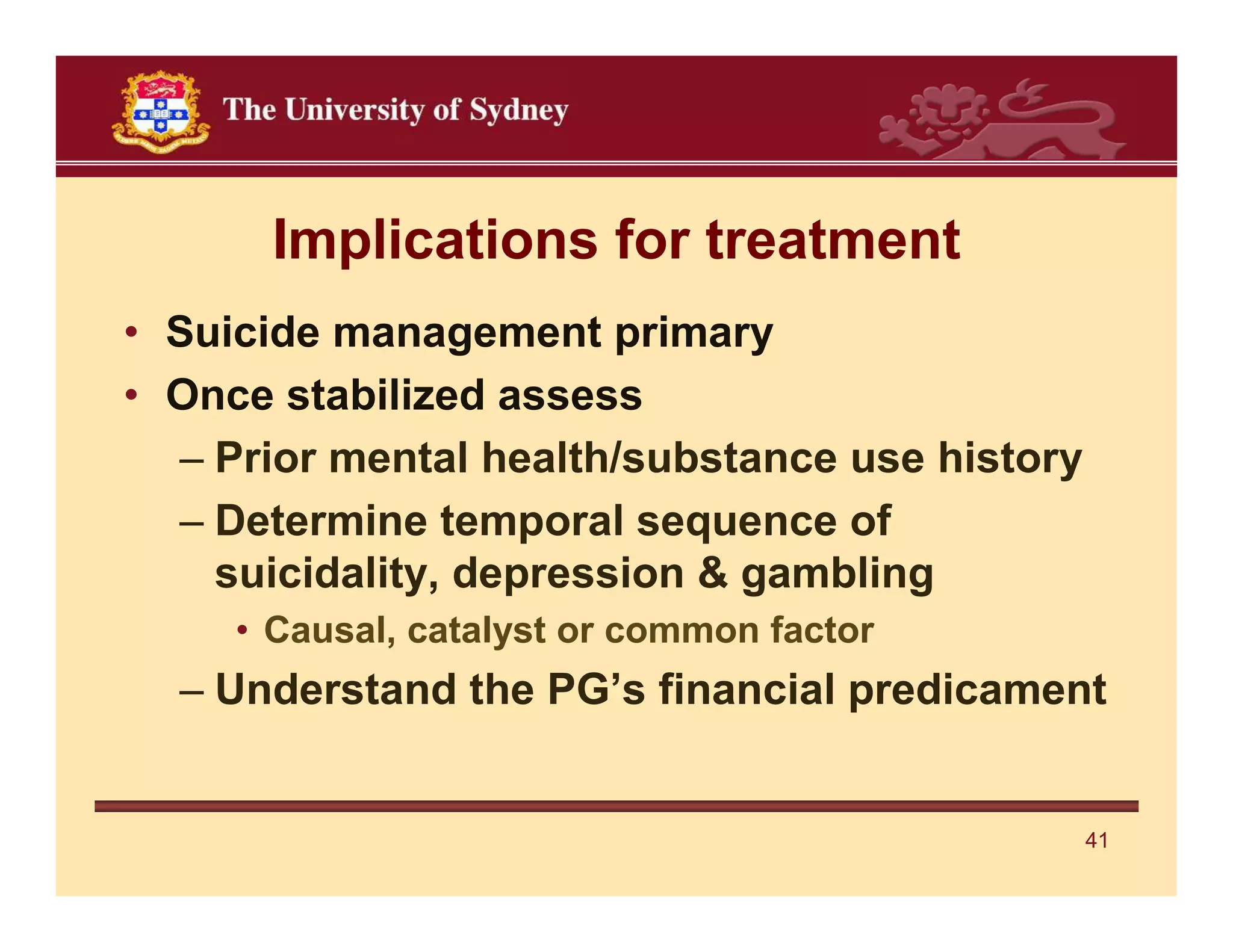
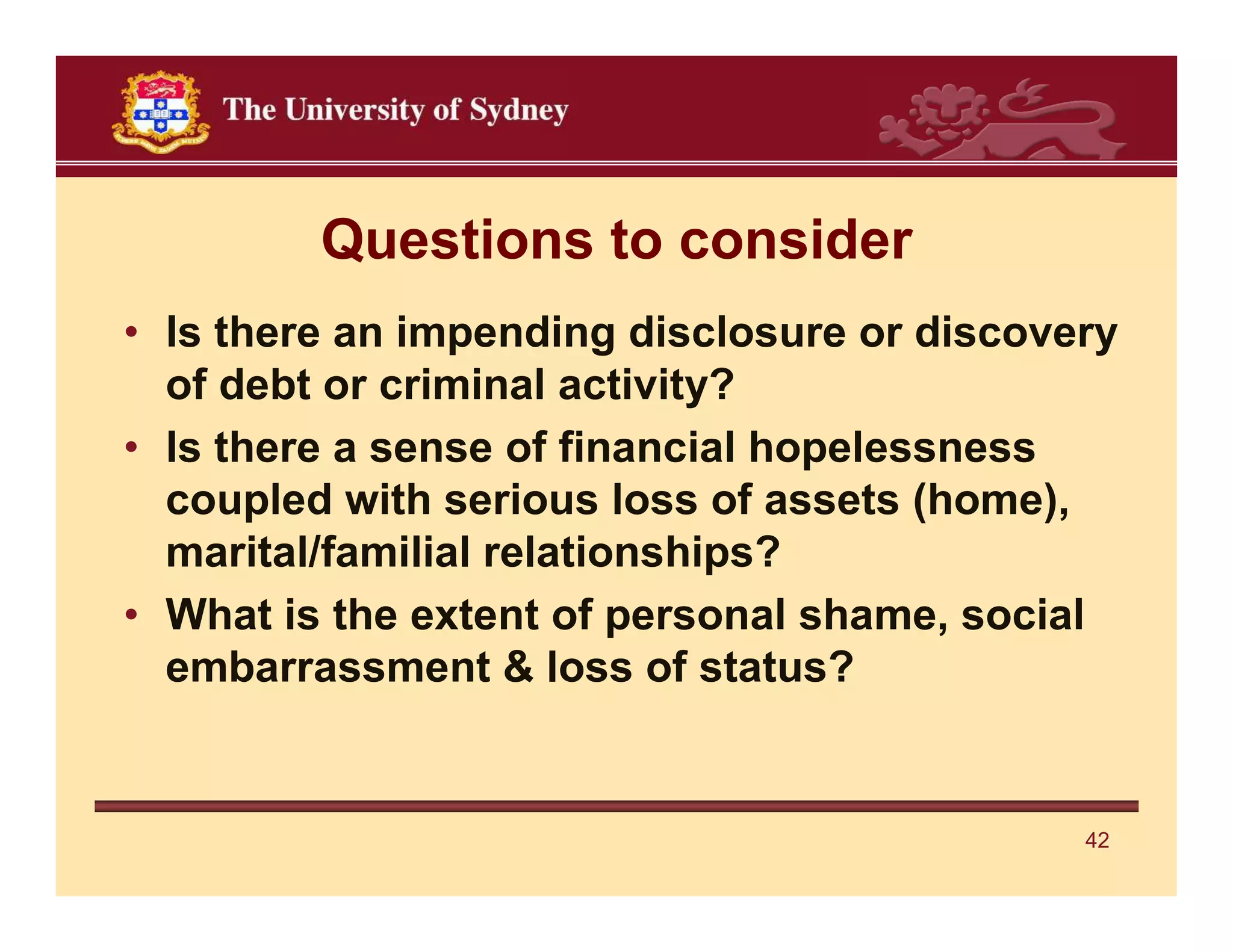
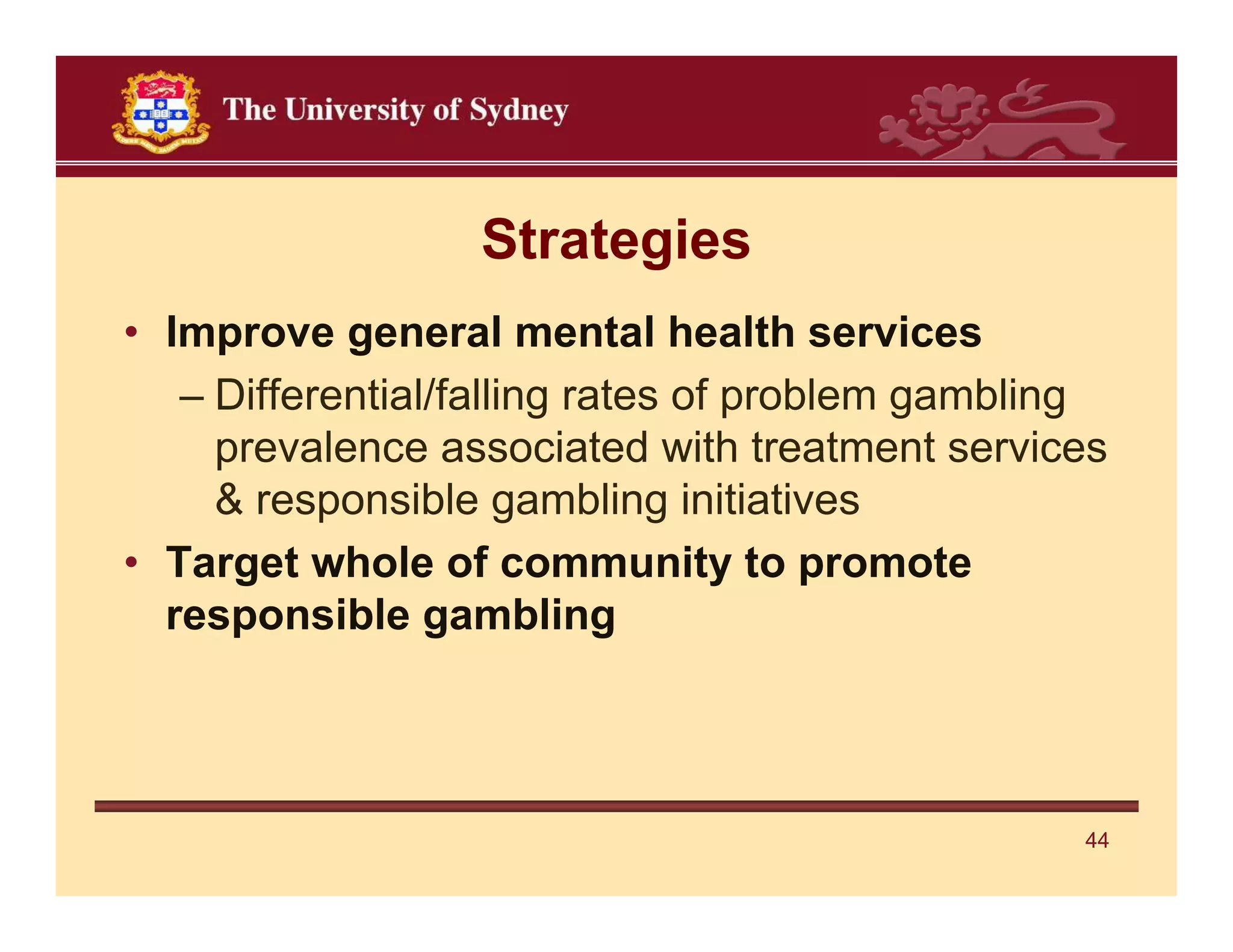
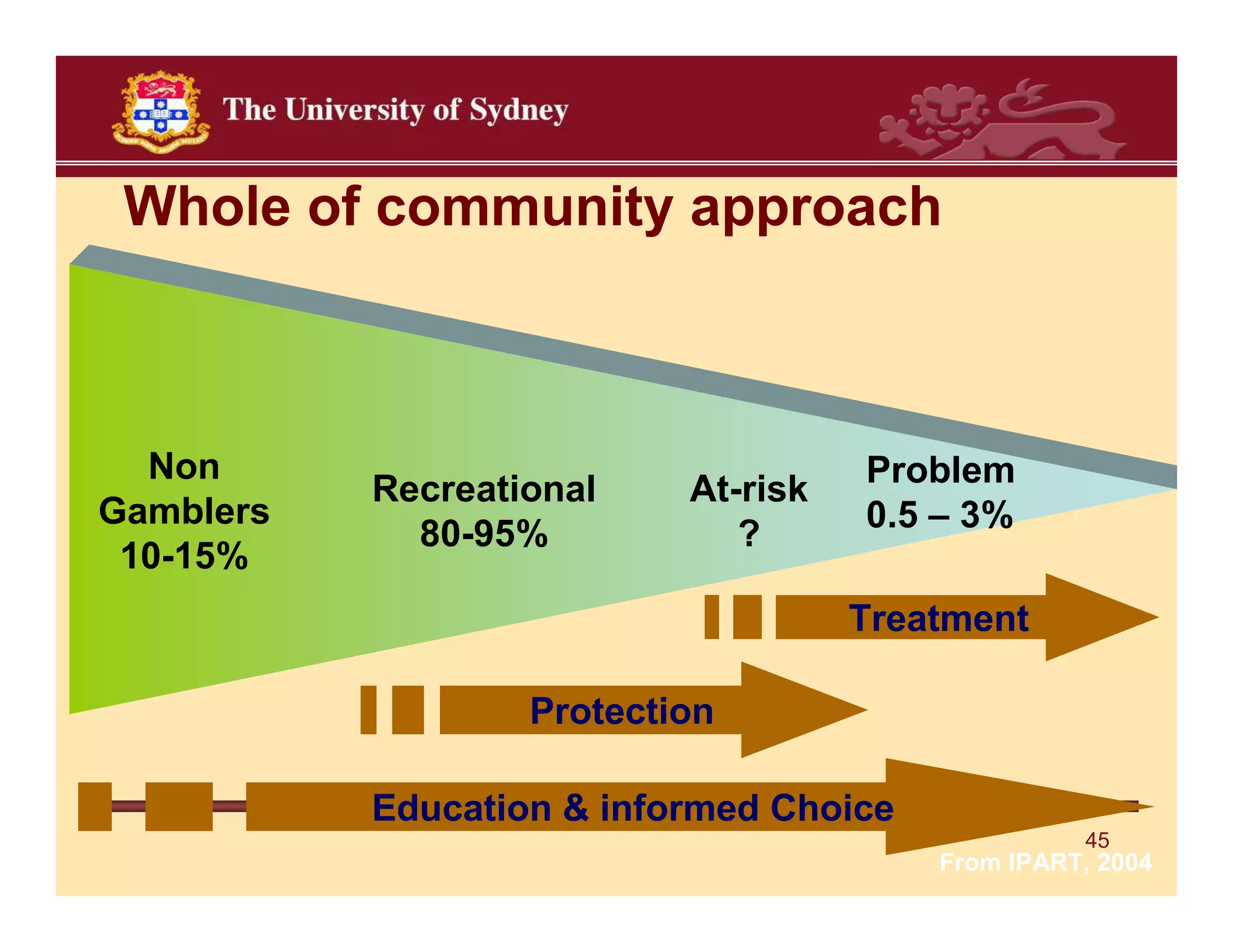
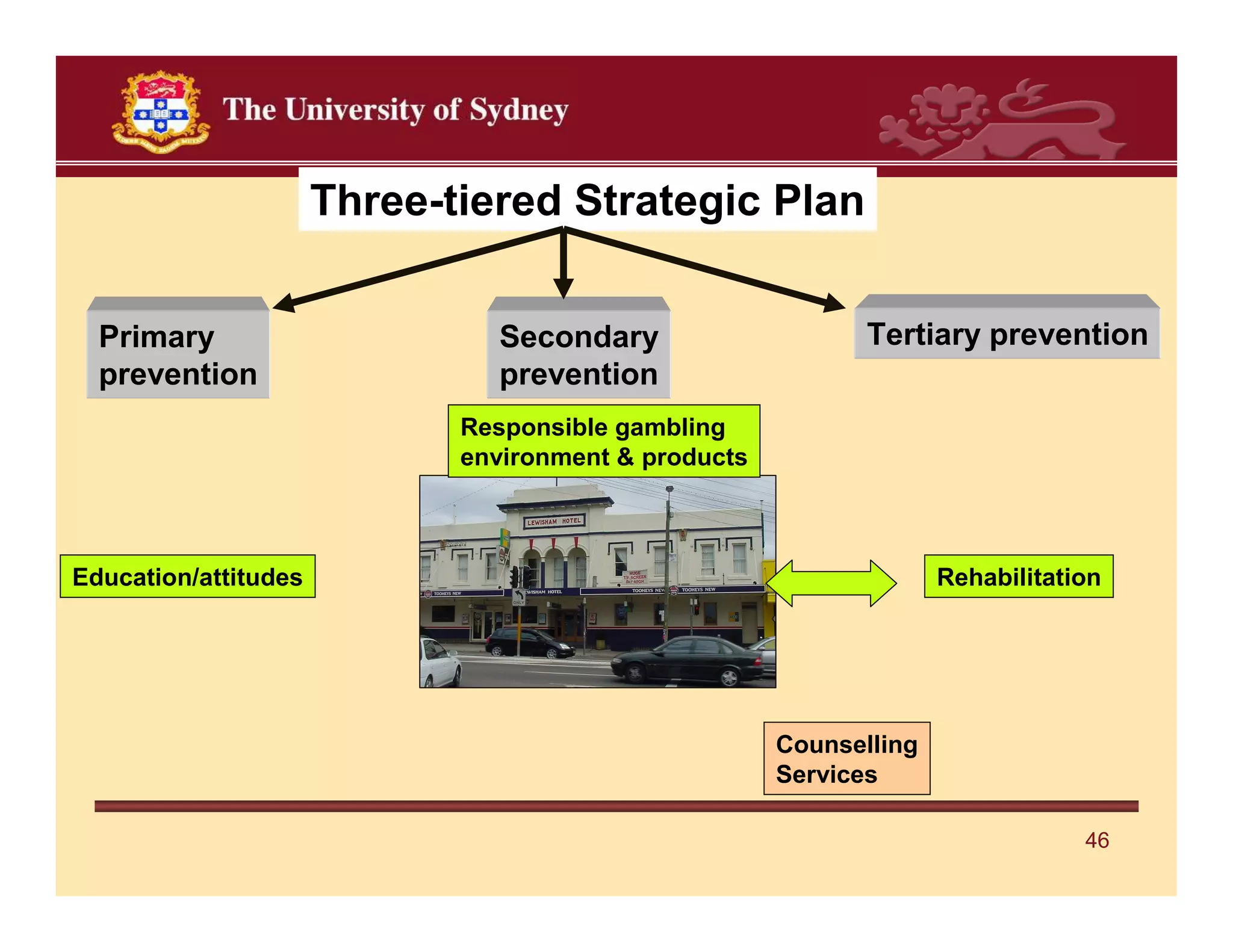
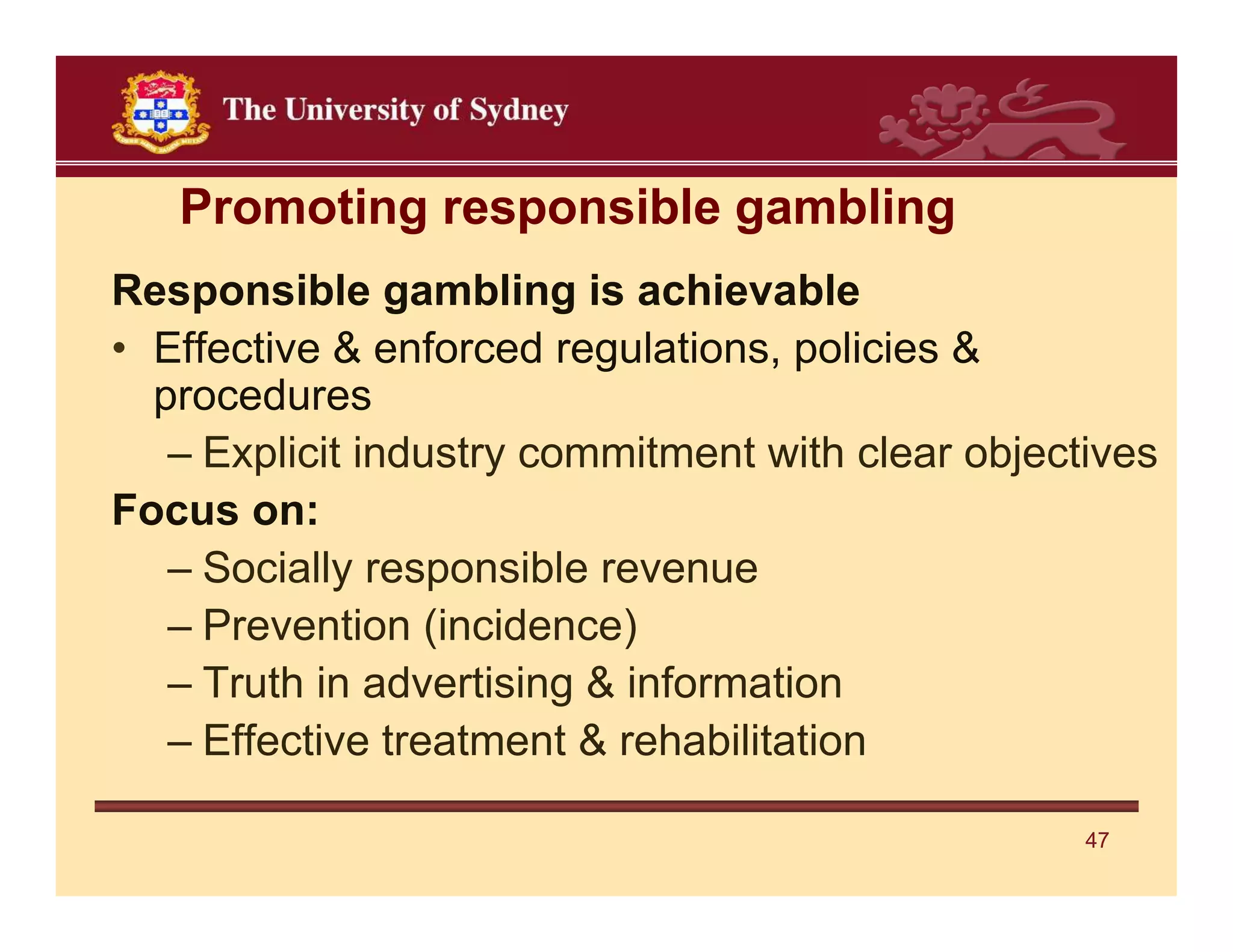

This document discusses problem gambling and suicidality. It presents the following key points in 3 sentences: 1. Elevated rates of depression are found in pathological gamblers, and clinicians should assess for suicidality, especially where prior mental health issues exist, as the relationship between suicidality and gambling is complex and causal factors remain unknown. 2. While most people gamble recreationally, problem gamblers represent 0.5-3% of the population and have high rates of suicidal ideation, attempts, and completions, though gambling-related suicides are relatively rare. 3. Effective public health policies and treatment interventions require responsible gambling regulations and education, secondary prevention


![Apporach to lung biopsy [Auto-saved].pptx latest](https://cdn.slidesharecdn.com/ss_thumbnails/apporachtolungbiopsyauto-saved-251211225655-93258539-thumbnail.jpg?width=640&height=640&fit=bounds)


