New Product Strategy
How to increase your chances of building new
products customers will buy
Presented by Jonathan Gowins
Problem:
Many new product initiatives are
expensive and ineffective.
“
“If you build it, they will come…”
Or will they?
◉ Consultants
◉ Executive leadership
◉ Product management
◉ Sales
◉ Customers
? Where do new product ideas come from?
Market problem1
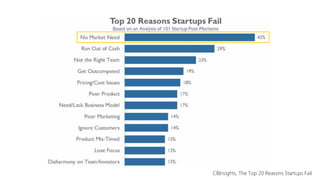
CBInsights, The Top 20 Reasons Startups Fail
“
“Startups fail when they are not solving a market problem…
We had great technology, great data, great reputation as a
thought leader, great expertise, great advisors, etc., but
what we didn’t have was the technology or business model
that solved a pain point in a scalable way.”
– Treehouse Logic
◉ Urgent, pervasive, and customers will pay for it1
◉ An unmet need that is important to the customer,
but poorly satisfied2
?
1. Pragmatic Marketing
2. Jobs-to-be-Done theory, Clay Christensen
What is a market problem?
“
“Customers are not buying your product, they are
hiring it to get a job done.”
- Clay Christensen
What job do your customers
want to hire you for?
“
“Can we rent a movie!?”
- All kids, Everywhere
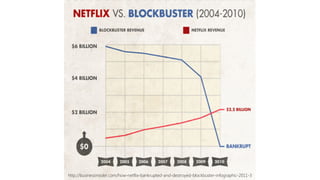
http://businessinsider.com/how-netflix-bankrupted-and-destroyed-blockbuster-infographic-2011-3
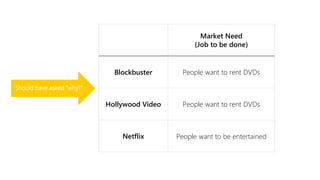
Market Need
(Job to be done)
Blockbuster People want to rent DVDs
Hollywood Video People want to rent DVDs
Netflix
Should have asked “why?”
People want to be entertained
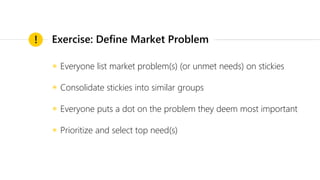
◉ Everyone list market problem(s) (or unmet needs) on stickies
◉ Consolidate stickies into similar groups
◉ Everyone puts a dot on the problem they deem most important
◉ Prioritize and select top need(s)
! Exercise: Define Market Problem
Enterprise needs2
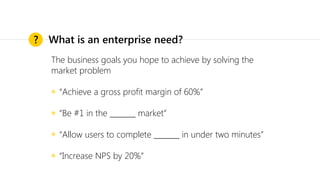
The business goals you hope to achieve by solving the
market problem
◉ “Achieve a gross profit margin of 60%”
◉ “Be #1 in the _______ market”
◉ “Allow users to complete _______ in under two minutes”
◉ “Increase NPS by 20%”
? What is an enterprise need?
“
“Features and services are outputs. The
business goals they are meant to achieve
are outcomes.”
– Jeff Gothelf, Lean UX
◉ Everyone list business goal(s) on stickies
◉ Consolidate stickies into similar groups
◉ Everyone puts a dot on the goals they deem most important
◉ Prioritize and select top goal(s)
! Exercise: Business goals
User needs3
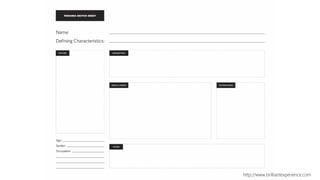
http://www.brilliantexperience.com
Hypothesis & assumptions4
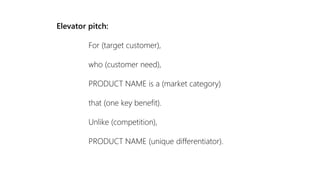
Elevator pitch:
For (target customer),
who (customer need),
PRODUCT NAME is a (market category)
that (one key benefit).
Unlike (competition),
PRODUCT NAME (unique differentiator).
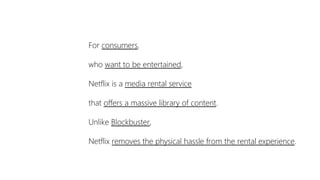
For consumers,
who want to be entertained,
Netflix is a media rental service
that offers a massive library of content.
Unlike Blockbuster,
Netflix removes the physical hassle from the rental experience.
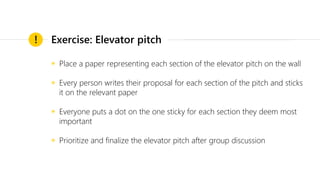
◉ Place a paper representing each section of the elevator pitch on the wall
◉ Every person writes their proposal for each section of the pitch and sticks
it on the relevant paper
◉ Everyone puts a dot on the one sticky for each section they deem most
important
◉ Prioritize and finalize the elevator pitch after group discussion
! Exercise: Elevator pitch
Part 1: Based on your elevator pitch, list out what you believe to be true (assumptions)
◉ Have everyone write assumptions on stickies and put them on the wall.
◉ Everyone gets seven dots. Put them on the seven riskiest assumptions.
◉ Prioritize. These are the assumptions you will want to test first.
Part 2: Write a hypothesis statement for each assumption
“We believe [this statement is true]. We will know we’re [right/wrong] when we see the
following feedback from the market: [qualitative feedback] and/or [quantitative feedback]
and/or [key performance indicator change].”
! Exercise: Assumptions
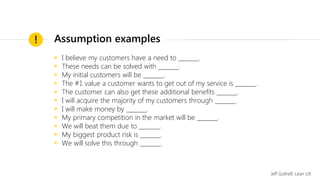
◉ I believe my customers have a need to _______.
◉ These needs can be solved with _______.
◉ My initial customers will be _______.
◉ The #1 value a customer wants to get out of my service is _______.
◉ The customer can also get these additional benefits _______.
◉ I will acquire the majority of my customers through _______.
◉ I will make money by _______.
◉ My primary competition in the market will be _______.
◉ We will beat them due to _______.
◉ My biggest product risk is _______.
◉ We will solve this through _______.
!
Jeff Gothelf, Lean UX
Assumption examples
Iterate (Design & Test)5
“
“You perfect results. What I can promise you is that you
won’t get it right if you don’t commit to keep trying.”
– Clay Christensen, How Will You Measure Your Life?
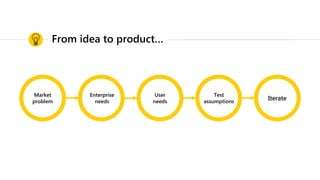
From idea to product…
Market
problem
User
needs
Iterate
Test
assumptions
Enterprise
needs
You can find me at
◉ Linkedin.com/in/JonathanGowins
◉ Jonathan.Gowins@gmail.com
Thanks!
Credits
Special thanks and credit to the following:
◉ Presentation template by SlidesCarnival
◉ John W alen, Brilliant Experience
◉ Pragmatic Marketing
◉ Clay Christensen
◉ Jeff Gothelf, Lean UX

New Product Strategy

  • 1.
    New Product Strategy Howto increase your chances of building new products customers will buy Presented by Jonathan Gowins
  • 2.
    Problem: Many new productinitiatives are expensive and ineffective.
  • 3.
    “ “If you buildit, they will come…” Or will they?
  • 4.
    ◉ Consultants ◉ Executiveleadership ◉ Product management ◉ Sales ◉ Customers ? Where do new product ideas come from?
  • 6.
  • 7.
    CBInsights, The Top20 Reasons Startups Fail
  • 8.
    “ “Startups fail whenthey are not solving a market problem… We had great technology, great data, great reputation as a thought leader, great expertise, great advisors, etc., but what we didn’t have was the technology or business model that solved a pain point in a scalable way.” – Treehouse Logic
  • 9.
    ◉ Urgent, pervasive,and customers will pay for it1 ◉ An unmet need that is important to the customer, but poorly satisfied2 ? 1. Pragmatic Marketing 2. Jobs-to-be-Done theory, Clay Christensen What is a market problem?
  • 10.
    “ “Customers are notbuying your product, they are hiring it to get a job done.” - Clay Christensen
  • 11.
    What job doyour customers want to hire you for?
  • 12.
    “ “Can we renta movie!?” - All kids, Everywhere
  • 13.
  • 14.
    Market Need (Job tobe done) Blockbuster People want to rent DVDs Hollywood Video People want to rent DVDs Netflix Should have asked “why?” People want to be entertained
  • 15.
    ◉ Everyone listmarket problem(s) (or unmet needs) on stickies ◉ Consolidate stickies into similar groups ◉ Everyone puts a dot on the problem they deem most important ◉ Prioritize and select top need(s) ! Exercise: Define Market Problem
  • 16.
  • 17.
    The business goalsyou hope to achieve by solving the market problem ◉ “Achieve a gross profit margin of 60%” ◉ “Be #1 in the _______ market” ◉ “Allow users to complete _______ in under two minutes” ◉ “Increase NPS by 20%” ? What is an enterprise need?
  • 18.
    “ “Features and servicesare outputs. The business goals they are meant to achieve are outcomes.” – Jeff Gothelf, Lean UX
  • 19.
    ◉ Everyone listbusiness goal(s) on stickies ◉ Consolidate stickies into similar groups ◉ Everyone puts a dot on the goals they deem most important ◉ Prioritize and select top goal(s) ! Exercise: Business goals
  • 20.
  • 21.
  • 23.
  • 24.
    Elevator pitch: For (targetcustomer), who (customer need), PRODUCT NAME is a (market category) that (one key benefit). Unlike (competition), PRODUCT NAME (unique differentiator).
  • 25.
    For consumers, who wantto be entertained, Netflix is a media rental service that offers a massive library of content. Unlike Blockbuster, Netflix removes the physical hassle from the rental experience.
  • 26.
    ◉ Place apaper representing each section of the elevator pitch on the wall ◉ Every person writes their proposal for each section of the pitch and sticks it on the relevant paper ◉ Everyone puts a dot on the one sticky for each section they deem most important ◉ Prioritize and finalize the elevator pitch after group discussion ! Exercise: Elevator pitch
  • 27.
    Part 1: Basedon your elevator pitch, list out what you believe to be true (assumptions) ◉ Have everyone write assumptions on stickies and put them on the wall. ◉ Everyone gets seven dots. Put them on the seven riskiest assumptions. ◉ Prioritize. These are the assumptions you will want to test first. Part 2: Write a hypothesis statement for each assumption “We believe [this statement is true]. We will know we’re [right/wrong] when we see the following feedback from the market: [qualitative feedback] and/or [quantitative feedback] and/or [key performance indicator change].” ! Exercise: Assumptions
  • 28.
    ◉ I believemy customers have a need to _______. ◉ These needs can be solved with _______. ◉ My initial customers will be _______. ◉ The #1 value a customer wants to get out of my service is _______. ◉ The customer can also get these additional benefits _______. ◉ I will acquire the majority of my customers through _______. ◉ I will make money by _______. ◉ My primary competition in the market will be _______. ◉ We will beat them due to _______. ◉ My biggest product risk is _______. ◉ We will solve this through _______. ! Jeff Gothelf, Lean UX Assumption examples
  • 29.
  • 30.
    “ “You perfect results.What I can promise you is that you won’t get it right if you don’t commit to keep trying.” – Clay Christensen, How Will You Measure Your Life?
  • 31.
    From idea toproduct… Market problem User needs Iterate Test assumptions Enterprise needs
  • 32.
    You can findme at ◉ Linkedin.com/in/JonathanGowins ◉ Jonathan.Gowins@gmail.com Thanks!
  • 33.
    Credits Special thanks andcredit to the following: ◉ Presentation template by SlidesCarnival ◉ John W alen, Brilliant Experience ◉ Pragmatic Marketing ◉ Clay Christensen ◉ Jeff Gothelf, Lean UX