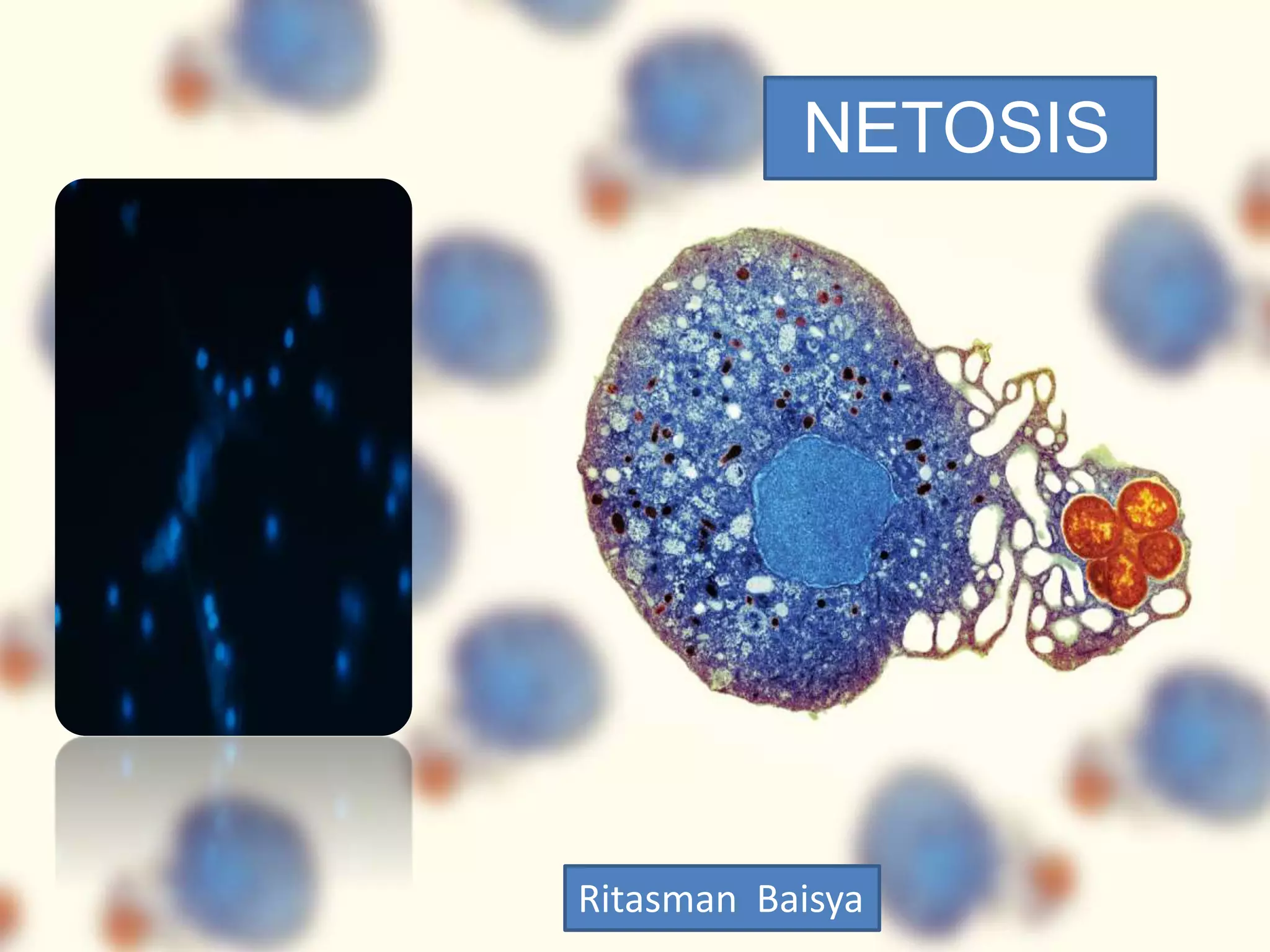
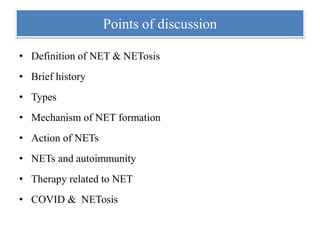
NETOSIS
Ritasman Baisya
Points of discussion
• Definition of NET & NETosis
• Brief history
• Types
• Mechanism of NET formation
• Action of NETs
• NETs and autoimmunity
• Therapy related to NET
• COVID & NETosis
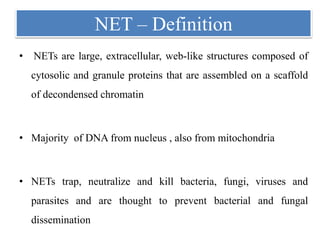
NET – Definition
• NETs are large, extracellular, web-like structures composed of
cytosolic and granule proteins that are assembled on a scaffold
of decondensed chromatin
• Majority of DNA from nucleus , also from mitochondria
• NETs trap, neutralize and kill bacteria, fungi, viruses and
parasites and are thought to prevent bacterial and fungal
dissemination
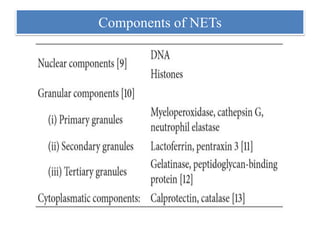
Components of NETs
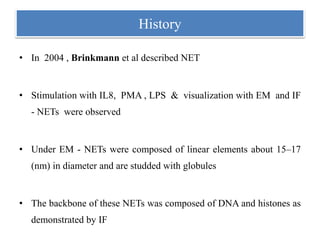
History
• In 2004 , Brinkmann et al described NET
• Stimulation with IL8, PMA , LPS & visualization with EM and IF
- NETs were observed
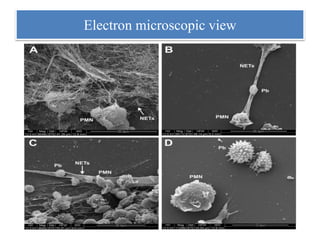
• Under EM - NETs were composed of linear elements about 15–17
(nm) in diameter and are studded with globules
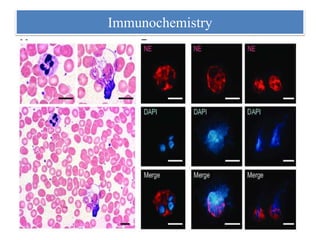
• The backbone of these NETs was composed of DNA and histones as
demonstrated by IF
Electron microscopic view
Immunochemistry
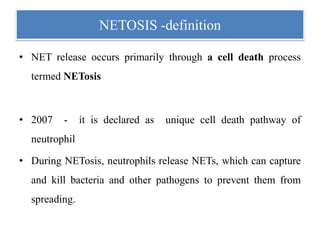
NETOSIS -definition
• NET release occurs primarily through a cell death process
termed NETosis
• 2007 - it is declared as unique cell death pathway of
neutrophil
• During NETosis, neutrophils release NETs, which can capture
and kill bacteria and other pathogens to prevent them from
spreading.
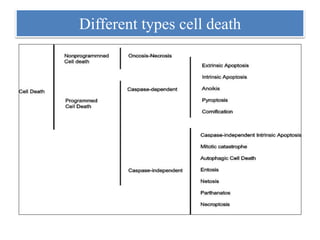
Different types cell death
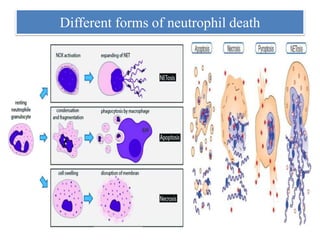
Different forms of neutrophil death
Types of NETosis
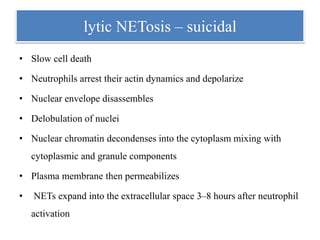
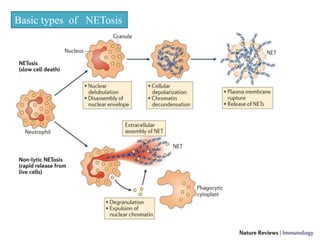
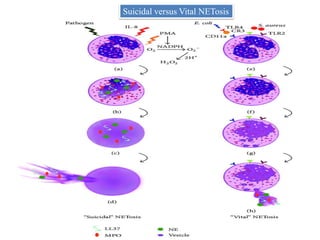
lytic NETosis – suicidal
• Slow cell death
• Neutrophils arrest their actin dynamics and depolarize
• Nuclear envelope disassembles
• Delobulation of nuclei
• Nuclear chromatin decondenses into the cytoplasm mixing with
cytoplasmic and granule components
• Plasma membrane then permeabilizes
• NETs expand into the extracellular space 3–8 hours after neutrophil
activation
Basic types of NETosis
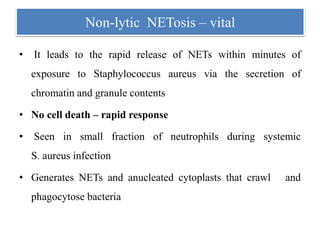
Non-lytic NETosis – vital
• It leads to the rapid release of NETs within minutes of
exposure to Staphylococcus aureus via the secretion of
chromatin and granule contents
• No cell death – rapid response
• Seen in small fraction of neutrophils during systemic
S. aureus infection
• Generates NETs and anucleated cytoplasts that crawl and
phagocytose bacteria
Suicidal versus Vital NETosis
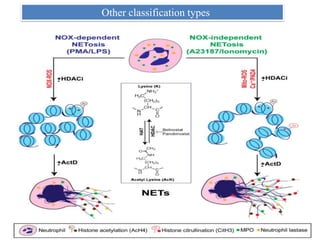
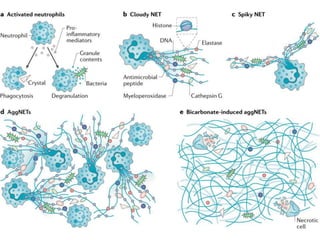
Other classification types
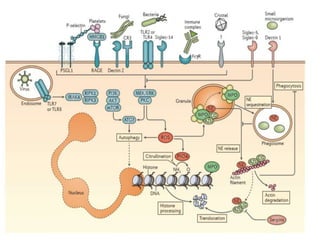
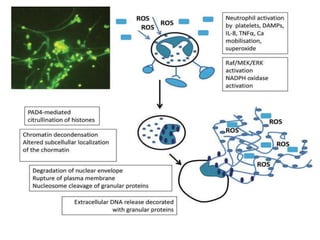
Mechanism of NET formation
Basic steps
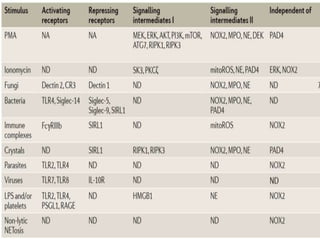
1. Activation of ROS by NOX or NOX independent pathway
2. Release of NE and translocation to nucleus
3. MPO- NE mediated chromatin decondensation
4. Hyper-citrullination of chromatin
5. Nuclear and cell membrane permeabilization
6. Release of NET
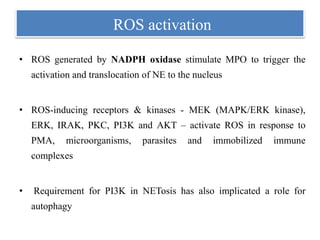
ROS activation
• ROS generated by NADPH oxidase stimulate MPO to trigger the
activation and translocation of NE to the nucleus
• ROS-inducing receptors & kinases - MEK (MAPK/ERK kinase),
ERK, IRAK, PKC, PI3K and AKT – activate ROS in response to
PMA, microorganisms, parasites and immobilized immune
complexes
• Requirement for PI3K in NETosis has also implicated a role for
autophagy
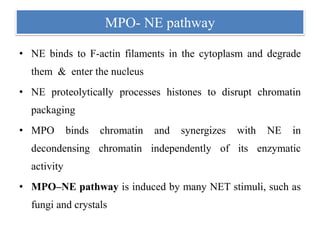
MPO- NE pathway
• NE binds to F-actin filaments in the cytoplasm and degrade
them & enter the nucleus
• NE proteolytically processes histones to disrupt chromatin
packaging
• MPO binds chromatin and synergizes with NE in
decondensing chromatin independently of its enzymatic
activity
• MPO–NE pathway is induced by many NET stimuli, such as
fungi and crystals
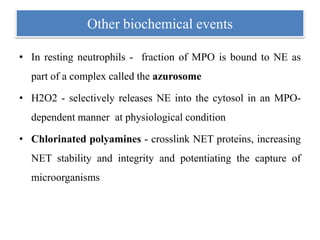
Other biochemical events
• In resting neutrophils - fraction of MPO is bound to NE as
part of a complex called the azurosome
• H2O2 - selectively releases NE into the cytosol in an MPO-
dependent manner at physiological condition
• Chlorinated polyamines - crosslink NET proteins, increasing
NET stability and integrity and potentiating the capture of
microorganisms
NOX – independent pathway
• Immune complexes, ionomycin and nicotine, trigger NETosis
independently of NOX , relying instead on mitochondrial
ROS
• Non-lytic NETosis is also thought to occur independently of
ROS
• Glycans in saliva induce NETs via an unknown mechanism
Chromatin decondensation
• Histone deamination or hyper citrullination
• Driven by peptidylarginine deiminase 4 (PAD4)
• H202 - is sufficient to activate PAD4 which requires calcium
and is activated by PKC
• PAD4 inhibition blocks NET release in mouse models of
sepsis and cancer
• Histone citrullination and MPO-NE activity lead to
chromatin decondensation
Membrane permeabilization
• Plasma membrane permeabilization occurs in a programmed
manner & not as a consequence of physical disruption by the
expanding chromatin
• Monosodium urate (MSU) crystals promote necroptosis with
receptor-interacting serine/threonine-protein kinase 1 (RIPK1)
and RIPK3,
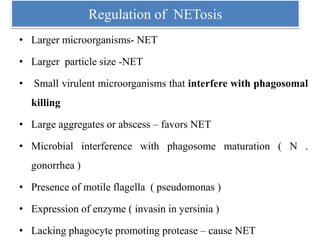
Regulation of NETosis
• Larger microorganisms- NET
• Larger particle size -NET
• Small virulent microorganisms that interfere with phagosomal
killing
• Large aggregates or abscess – favors NET
• Microbial interference with phagosome maturation ( N .
gonorrhea )
• Presence of motile flagella ( pseudomonas )
• Expression of enzyme ( invasin in yersinia )
• Lacking phagocyte promoting protease – cause NET
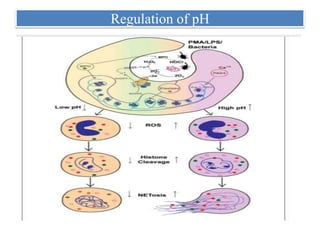
Regulation of pH
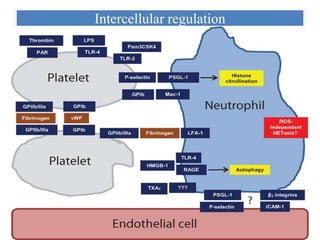
Intercellular regulation
ACTION OF NETS
Microbiocidal action
• Kill or suppress bacterial ,fungal, viral proliferation
• Underlying mechanisms poorly understood.
• Histones, defensins & cathelicidins - potent antimicrobials
in NETs
• NETosis is also likely to be the major route for the release of
calprotectin
• Physical sequestration of microorganisms by NETs is also
thought to prevent systemic dissemination
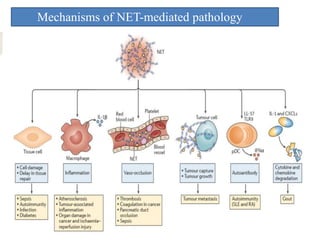
Mechanisms of NET-mediated pathology
NETs damage tissues
• NETs directly kill epithelial , endothelial cells
• Excessive NETosis damages the epithelium in pulmonary
fungal infection & endothelium in transfusion-related acute
lung injury
• NET-bound histones - central role in NET-mediated
cytotoxicity
• Defensins , permeabilize cells and NE targets extracellular
matrix proteins that disrupt cell junctions
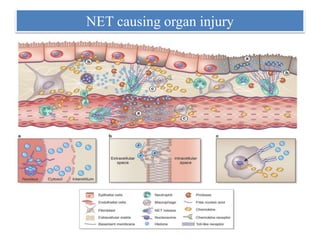
NET causing organ injury
NETs promote vaso-occlusion
• Provide a scaffold that promotes DVT
• Hypoxia-induced release of VWF & P-selectin from the endothelium
initiate NET formation
• Thromboxane A2 induces endothelial cell expression of ICAM1 to
strengthen neutrophil interactions
• Platelet- derived high mobility group protein B1 (HMGB1), ROS
and integrins trigger NETosis
Vaso-occlusion
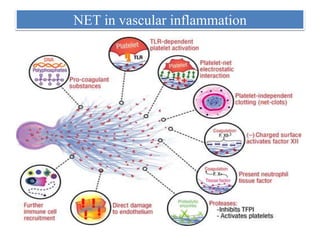
• NETs recruit Factor XIIa
• Mobilizes endothelial cell granules (Weibel–Palade bodies)
that contain VWF, P-selectin , Factor XIIa
• Extracellular NET histones bind VWF and fibrin to recruit
platelets and red blood cells
• NET-bound NE cleaves tissue factor pathway inhibitor (TFPI)
and proteolytically activates platelet receptors to increase
platelet accumulation
NET in vascular inflammation
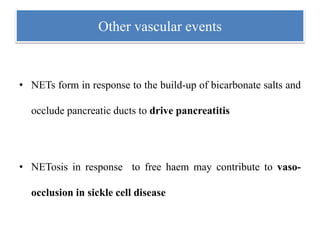
Other vascular events
• NETs form in response to the build-up of bicarbonate salts and
occlude pancreatic ducts to drive pancreatitis
• NETosis in response to free haem may contribute to vaso-
occlusion in sickle cell disease
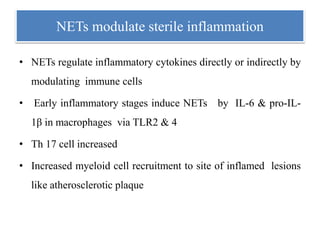
NETs modulate sterile inflammation
• NETs regulate inflammatory cytokines directly or indirectly by
modulating immune cells
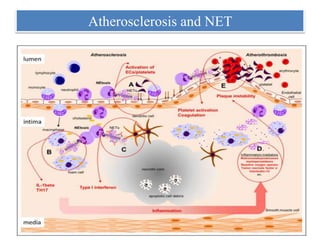
• Early inflammatory stages induce NETs by IL-6 & pro-IL-
1β in macrophages via TLR2 & 4
• Th 17 cell increased
• Increased myeloid cell recruitment to site of inflamed lesions
like atherosclerotic plaque
Atherosclerosis and NET
Sterile inflammation ( contd )
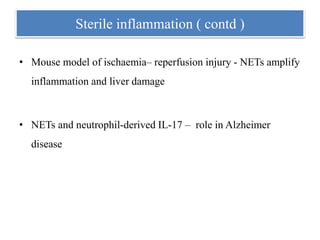
• Mouse model of ischaemia– reperfusion injury - NETs amplify
inflammation and liver damage
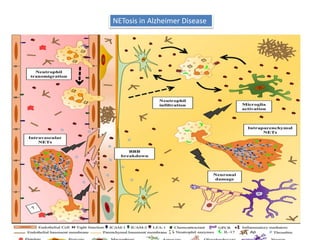
• NETs and neutrophil-derived IL-17 – role in Alzheimer
disease
NETosis in Alzheimer Disease
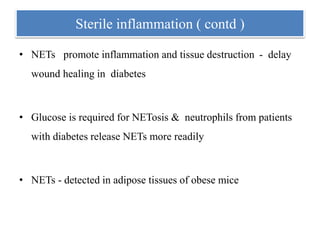
• NETs promote inflammation and tissue destruction - delay
wound healing in diabetes
• Glucose is required for NETosis & neutrophils from patients
with diabetes release NETs more readily
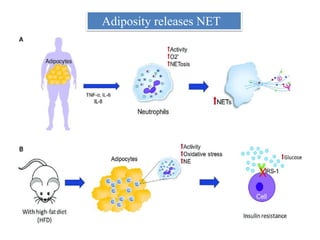
• NETs - detected in adipose tissues of obese mice
Sterile inflammation ( contd )
Adiposity releases NET
Anti-inflammatory response
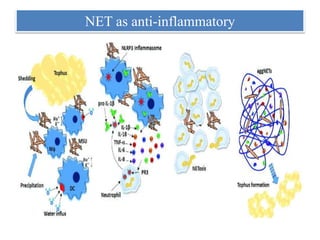
• NETs were suggested to have an anti-inflammatory
role in mouse models of gout induced by MSU
crystals
• It is possible that NETs initiate inflammation and, as
they build up over time, potentiate its resolution.
NET as anti-inflammatory
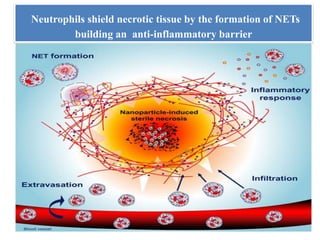
Neutrophils shield necrotic tissue by the formation of NETs
building an anti-inflammatory barrier
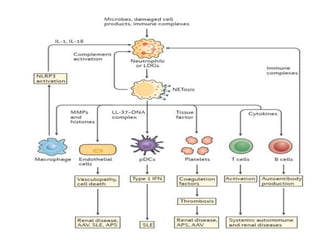
NETS in autoimmunity
• NETs - source of self-antigen in autoimmune diseases
• Autoantibodies against neutrophil- derived proteins
• NET - first reported in kidney biopsy in ANCA-
associated vasculitis - antibodies against NET
components , MPO & proteinase 3
• Nuclear material released from NETs more immunogenic
• Oxidised DNA in NET – promote IFN 1 signalling
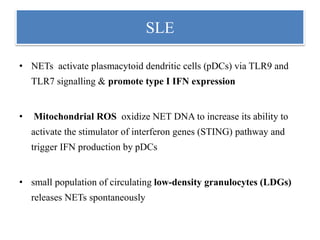
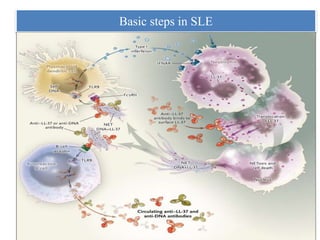
SLE
• NETs activate plasmacytoid dendritic cells (pDCs) via TLR9 and
TLR7 signalling & promote type I IFN expression
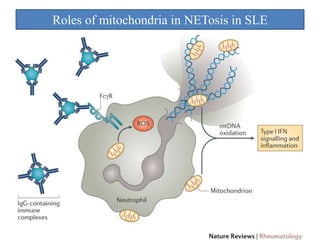
• Mitochondrial ROS oxidize NET DNA to increase its ability to
activate the stimulator of interferon genes (STING) pathway and
trigger IFN production by pDCs
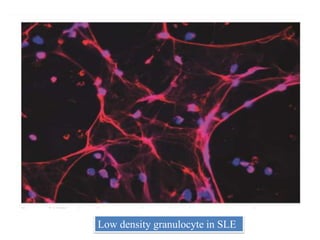
• small population of circulating low-density granulocytes (LDGs)
releases NETs spontaneously
Basic steps in SLE
Roles of mitochondria in NETosis in SLE
Low density granulocyte in SLE
Rheumatoid arthritis
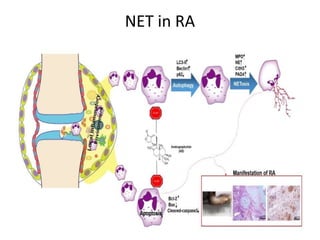
• Enhanced NETosis - detected in circulating & synovial-fluid
neutrophils, synovial tissue, rheumatoid nodules, skin of
affected patients
• NETs are a source of extracellular citrullinated autoantigens
• Release of active PAD isoforms through NETosis, citrullinate
extracellular histones and fibrinogen in RA
• It stimulate production of proinflammatory cytokines,
chemokines & adhesion molecules in synovial fibroblasts
NET in RA
ANCA associated vasculitis
• Antibodies to MPO & PR3 – pathogenic
• They activate neutrophils primed by a proinflammatory stimuli,
leading to respiratory burst
• Enhanced NET formation in vitro
• Lvels of NET remnants (MPO–DNA complexes), and
neutrophil granular proteins, such as calprotectin , were
increased in sera of AAV
• NET formation is involved in vascular damage and immune
system activation in AAV
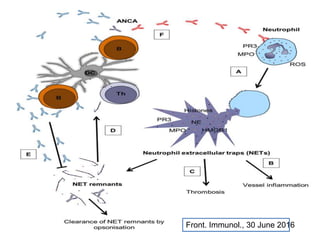
AAV – NET
• ANCA induced NETs generated by C5a-primed neutrophils cause
enhanced thrombosis & inflammation in AAV by promoting the
expression of tissue factor
• NETs can also present PR3 and MPO to dendritic cells
• NETs - important sources of modified autoantigens in the kidney.
• In necrotizing crescentic glomerulonephritis, neutrophil serine
proteases like cathepsin G, neutrophil elastase and PR3 promoted
IL-1β generation and kidney injury
Front. Immunol., 30 June 2016
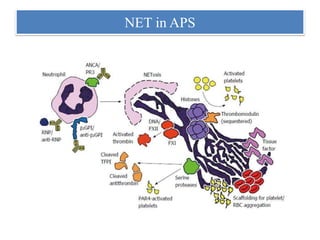
APS
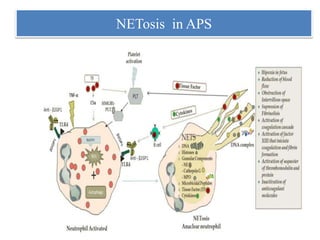
• NETs - important activators of the coagulation cascade &
integral components of arterial and venous thrombin
• Serum of APS displays - decreased ability to degrade NETs
• Elevated levels of both cell-free DNA and NET remnants
• aPLs promote the release of NETs in a ROS and TLR4-
dependent manner
• A LDG population has also been described in primary AP
NET in APS
NETosis in APS
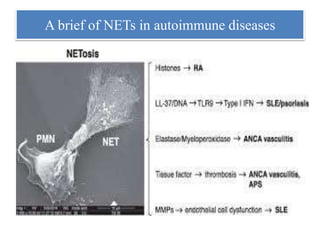
A brief of NETs in autoimmune diseases
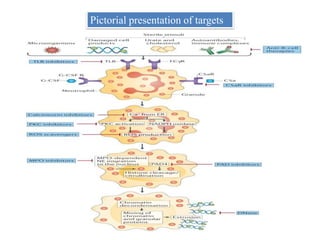
THERAPY RELATED TO NET
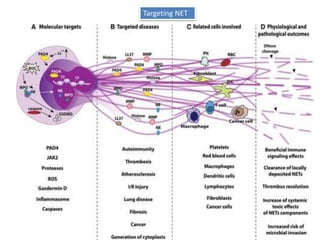
Targeting NET
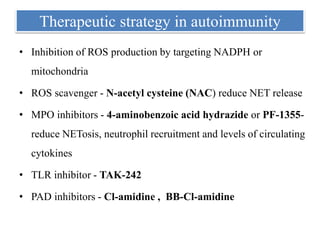
Therapeutic strategy in autoimmunity
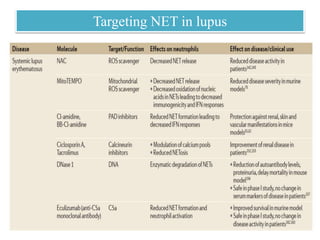
• Inhibition of ROS production by targeting NADPH or
mitochondria
• ROS scavenger - N-acetyl cysteine (NAC) reduce NET release
• MPO inhibitors - 4-aminobenzoic acid hydrazide or PF-1355-
reduce NETosis, neutrophil recruitment and levels of circulating
cytokines
• TLR inhibitor - TAK-242
• PAD inhibitors - Cl-amidine , BB-Cl-amidine
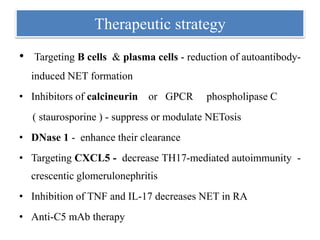
• Targeting B cells & plasma cells - reduction of autoantibody-
induced NET formation
• Inhibitors of calcineurin or GPCR phospholipase C
( staurosporine ) - suppress or modulate NETosis
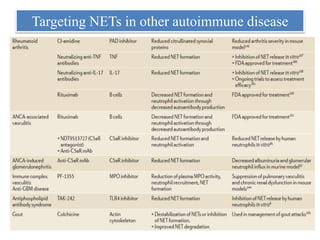
• DNase 1 - enhance their clearance
• Targeting CXCL5 - decrease TH17-mediated autoimmunity -
crescentic glomerulonephritis
• Inhibition of TNF and IL-17 decreases NET in RA
• Anti-C5 mAb therapy
Therapeutic strategy
Targeting NET in lupus
Targeting NETs in other autoimmune disease
Pictorial presentation of targets
A Role for NETosis in COVID-19 Infection?
• Cytokine storm seen with COVID-19 elaborates role of NET
• NETs can induce macrophages to secrete IL1β & form a loop
between macrophages and neutrophils, leading to progressive
inflammatory damage.
• Virus -induced NETs can circulate in an uncontrolled way, leading
to an extreme systemic response of the body like ARDS .
• NETs can be detected in tissues by immunohistochemistry & in
blood by sandwich ELISA
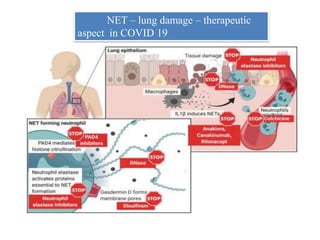
NET – lung damage – therapeutic
aspect in COVID 19
Take home message
1. NETosis- programmed cell death , unique in neutrophil
2. NETs are extracellular web like structure on scaffold of decondensed
chromatin with granules
3. Either suicidal causing cell death or vital where no lysis happens
4. Mecahnism - activation of ROS , MPO-NE pathway , chromatin
decondensation and increased permeability
5. It has multiple actions – microbiocidal , damage host tissue , sterile
inflammation ( atherosclerosis , diabetes ),vaso –occlusion(DVT) and
autoimmunity, malignancy
6. SLE , AAV ,gout ,RA , cresecentic GN – NET has important role
7. Therapeutic target of NETs are emerging
8. COVID 19 – NET – association is highly possible
References
1. Papayannopoulos, V. Neutrophil extracellular traps in immunity and disease.
Nat Rev Immunol 18, 134–147 (2018)
2. Gupta, S., Kaplan, M. The role of neutrophils and NETosis in autoimmune
and renal diseases. Nat Rev Nephrol 12, 402–413 (2016).
3. De Bont, C.M., Boelens, W.C. & Pruijn, G.J.M. NETosis, complement, and
coagulation: a triangular relationship. Cell Mol Immunol 16, 19–27 (2019).
4. Miguel Antonio Mesa1 and Gloria Vasque . NETosis . Autoimmune Diseases
/ 2013
5. Elsherif L, Sciaky N, Metts CA, et al. Machine Learning to Quantitate
Neutrophil NETosis. Sci Rep. 2019;9(1):16891.
6.. Bryan G. Yipp, Paul Kubes; NETosis: how vital is it?. Blood 2013; 122
(16): 2784–2794
7. Boilard,E., Fortin, P. Mitochondria drive NETosis and inflammation in
SLE. Nat Rev Rheumatol 12, 195–196 (2016
8. Xavier Bosch. Systemic Lupus Erythematosus and the Neutrophil. N Engl
J Med 2011; 365:758-760
9. Nicoletta Sorvillo. Circulation Research. Extracellular DNA NET-Works
With Dire Consequences for Health, Volume: 125, Issue: 4,
References
THANK YOU IN THE
WORLD OF IMMUNITY……

netosis [Autosaved].pptx

  • 1.
  • 2.
    Points of discussion •Definition of NET & NETosis • Brief history • Types • Mechanism of NET formation • Action of NETs • NETs and autoimmunity • Therapy related to NET • COVID & NETosis
  • 3.
    NET – Definition •NETs are large, extracellular, web-like structures composed of cytosolic and granule proteins that are assembled on a scaffold of decondensed chromatin • Majority of DNA from nucleus , also from mitochondria • NETs trap, neutralize and kill bacteria, fungi, viruses and parasites and are thought to prevent bacterial and fungal dissemination
  • 4.
  • 5.
    History • In 2004, Brinkmann et al described NET • Stimulation with IL8, PMA , LPS & visualization with EM and IF - NETs were observed • Under EM - NETs were composed of linear elements about 15–17 (nm) in diameter and are studded with globules • The backbone of these NETs was composed of DNA and histones as demonstrated by IF
  • 6.
  • 7.
  • 8.
    NETOSIS -definition • NETrelease occurs primarily through a cell death process termed NETosis • 2007 - it is declared as unique cell death pathway of neutrophil • During NETosis, neutrophils release NETs, which can capture and kill bacteria and other pathogens to prevent them from spreading.
  • 9.
  • 10.
    Different forms ofneutrophil death
  • 11.
  • 12.
    lytic NETosis –suicidal • Slow cell death • Neutrophils arrest their actin dynamics and depolarize • Nuclear envelope disassembles • Delobulation of nuclei • Nuclear chromatin decondenses into the cytoplasm mixing with cytoplasmic and granule components • Plasma membrane then permeabilizes • NETs expand into the extracellular space 3–8 hours after neutrophil activation
  • 13.
  • 14.
    Non-lytic NETosis –vital • It leads to the rapid release of NETs within minutes of exposure to Staphylococcus aureus via the secretion of chromatin and granule contents • No cell death – rapid response • Seen in small fraction of neutrophils during systemic S. aureus infection • Generates NETs and anucleated cytoplasts that crawl and phagocytose bacteria
  • 15.
  • 16.
  • 18.
  • 19.
    Basic steps 1. Activationof ROS by NOX or NOX independent pathway 2. Release of NE and translocation to nucleus 3. MPO- NE mediated chromatin decondensation 4. Hyper-citrullination of chromatin 5. Nuclear and cell membrane permeabilization 6. Release of NET
  • 21.
    ROS activation • ROSgenerated by NADPH oxidase stimulate MPO to trigger the activation and translocation of NE to the nucleus • ROS-inducing receptors & kinases - MEK (MAPK/ERK kinase), ERK, IRAK, PKC, PI3K and AKT – activate ROS in response to PMA, microorganisms, parasites and immobilized immune complexes • Requirement for PI3K in NETosis has also implicated a role for autophagy
  • 22.
    MPO- NE pathway •NE binds to F-actin filaments in the cytoplasm and degrade them & enter the nucleus • NE proteolytically processes histones to disrupt chromatin packaging • MPO binds chromatin and synergizes with NE in decondensing chromatin independently of its enzymatic activity • MPO–NE pathway is induced by many NET stimuli, such as fungi and crystals
  • 23.
    Other biochemical events •In resting neutrophils - fraction of MPO is bound to NE as part of a complex called the azurosome • H2O2 - selectively releases NE into the cytosol in an MPO- dependent manner at physiological condition • Chlorinated polyamines - crosslink NET proteins, increasing NET stability and integrity and potentiating the capture of microorganisms
  • 24.
    NOX – independentpathway • Immune complexes, ionomycin and nicotine, trigger NETosis independently of NOX , relying instead on mitochondrial ROS • Non-lytic NETosis is also thought to occur independently of ROS • Glycans in saliva induce NETs via an unknown mechanism
  • 25.
    Chromatin decondensation • Histonedeamination or hyper citrullination • Driven by peptidylarginine deiminase 4 (PAD4) • H202 - is sufficient to activate PAD4 which requires calcium and is activated by PKC • PAD4 inhibition blocks NET release in mouse models of sepsis and cancer • Histone citrullination and MPO-NE activity lead to chromatin decondensation
  • 26.
    Membrane permeabilization • Plasmamembrane permeabilization occurs in a programmed manner & not as a consequence of physical disruption by the expanding chromatin • Monosodium urate (MSU) crystals promote necroptosis with receptor-interacting serine/threonine-protein kinase 1 (RIPK1) and RIPK3,
  • 29.
    Regulation of NETosis •Larger microorganisms- NET • Larger particle size -NET • Small virulent microorganisms that interfere with phagosomal killing • Large aggregates or abscess – favors NET • Microbial interference with phagosome maturation ( N . gonorrhea ) • Presence of motile flagella ( pseudomonas ) • Expression of enzyme ( invasin in yersinia ) • Lacking phagocyte promoting protease – cause NET
  • 30.
  • 31.
  • 32.
  • 33.
    Microbiocidal action • Killor suppress bacterial ,fungal, viral proliferation • Underlying mechanisms poorly understood. • Histones, defensins & cathelicidins - potent antimicrobials in NETs • NETosis is also likely to be the major route for the release of calprotectin • Physical sequestration of microorganisms by NETs is also thought to prevent systemic dissemination
  • 35.
  • 36.
    NETs damage tissues •NETs directly kill epithelial , endothelial cells • Excessive NETosis damages the epithelium in pulmonary fungal infection & endothelium in transfusion-related acute lung injury • NET-bound histones - central role in NET-mediated cytotoxicity • Defensins , permeabilize cells and NE targets extracellular matrix proteins that disrupt cell junctions
  • 37.
  • 38.
    NETs promote vaso-occlusion •Provide a scaffold that promotes DVT • Hypoxia-induced release of VWF & P-selectin from the endothelium initiate NET formation • Thromboxane A2 induces endothelial cell expression of ICAM1 to strengthen neutrophil interactions • Platelet- derived high mobility group protein B1 (HMGB1), ROS and integrins trigger NETosis
  • 39.
    Vaso-occlusion • NETs recruitFactor XIIa • Mobilizes endothelial cell granules (Weibel–Palade bodies) that contain VWF, P-selectin , Factor XIIa • Extracellular NET histones bind VWF and fibrin to recruit platelets and red blood cells • NET-bound NE cleaves tissue factor pathway inhibitor (TFPI) and proteolytically activates platelet receptors to increase platelet accumulation
  • 40.
    NET in vascularinflammation
  • 41.
    Other vascular events •NETs form in response to the build-up of bicarbonate salts and occlude pancreatic ducts to drive pancreatitis • NETosis in response to free haem may contribute to vaso- occlusion in sickle cell disease
  • 42.
    NETs modulate sterileinflammation • NETs regulate inflammatory cytokines directly or indirectly by modulating immune cells • Early inflammatory stages induce NETs by IL-6 & pro-IL- 1β in macrophages via TLR2 & 4 • Th 17 cell increased • Increased myeloid cell recruitment to site of inflamed lesions like atherosclerotic plaque
  • 43.
  • 44.
    Sterile inflammation (contd ) • Mouse model of ischaemia– reperfusion injury - NETs amplify inflammation and liver damage • NETs and neutrophil-derived IL-17 – role in Alzheimer disease
  • 45.
  • 46.
    • NETs promoteinflammation and tissue destruction - delay wound healing in diabetes • Glucose is required for NETosis & neutrophils from patients with diabetes release NETs more readily • NETs - detected in adipose tissues of obese mice Sterile inflammation ( contd )
  • 47.
  • 48.
    Anti-inflammatory response • NETswere suggested to have an anti-inflammatory role in mouse models of gout induced by MSU crystals • It is possible that NETs initiate inflammation and, as they build up over time, potentiate its resolution.
  • 49.
  • 50.
    Neutrophils shield necrotictissue by the formation of NETs building an anti-inflammatory barrier
  • 51.
    NETS in autoimmunity •NETs - source of self-antigen in autoimmune diseases • Autoantibodies against neutrophil- derived proteins • NET - first reported in kidney biopsy in ANCA- associated vasculitis - antibodies against NET components , MPO & proteinase 3 • Nuclear material released from NETs more immunogenic • Oxidised DNA in NET – promote IFN 1 signalling
  • 53.
    SLE • NETs activateplasmacytoid dendritic cells (pDCs) via TLR9 and TLR7 signalling & promote type I IFN expression • Mitochondrial ROS oxidize NET DNA to increase its ability to activate the stimulator of interferon genes (STING) pathway and trigger IFN production by pDCs • small population of circulating low-density granulocytes (LDGs) releases NETs spontaneously
  • 54.
  • 55.
    Roles of mitochondriain NETosis in SLE
  • 56.
  • 57.
    Rheumatoid arthritis • EnhancedNETosis - detected in circulating & synovial-fluid neutrophils, synovial tissue, rheumatoid nodules, skin of affected patients • NETs are a source of extracellular citrullinated autoantigens • Release of active PAD isoforms through NETosis, citrullinate extracellular histones and fibrinogen in RA • It stimulate production of proinflammatory cytokines, chemokines & adhesion molecules in synovial fibroblasts
  • 58.
  • 59.
    ANCA associated vasculitis •Antibodies to MPO & PR3 – pathogenic • They activate neutrophils primed by a proinflammatory stimuli, leading to respiratory burst • Enhanced NET formation in vitro • Lvels of NET remnants (MPO–DNA complexes), and neutrophil granular proteins, such as calprotectin , were increased in sera of AAV • NET formation is involved in vascular damage and immune system activation in AAV
  • 60.
    AAV – NET •ANCA induced NETs generated by C5a-primed neutrophils cause enhanced thrombosis & inflammation in AAV by promoting the expression of tissue factor • NETs can also present PR3 and MPO to dendritic cells • NETs - important sources of modified autoantigens in the kidney. • In necrotizing crescentic glomerulonephritis, neutrophil serine proteases like cathepsin G, neutrophil elastase and PR3 promoted IL-1β generation and kidney injury
  • 61.
  • 62.
    APS • NETs -important activators of the coagulation cascade & integral components of arterial and venous thrombin • Serum of APS displays - decreased ability to degrade NETs • Elevated levels of both cell-free DNA and NET remnants • aPLs promote the release of NETs in a ROS and TLR4- dependent manner • A LDG population has also been described in primary AP
  • 63.
  • 64.
  • 65.
    A brief ofNETs in autoimmune diseases
  • 66.
  • 67.
  • 68.
    Therapeutic strategy inautoimmunity • Inhibition of ROS production by targeting NADPH or mitochondria • ROS scavenger - N-acetyl cysteine (NAC) reduce NET release • MPO inhibitors - 4-aminobenzoic acid hydrazide or PF-1355- reduce NETosis, neutrophil recruitment and levels of circulating cytokines • TLR inhibitor - TAK-242 • PAD inhibitors - Cl-amidine , BB-Cl-amidine
  • 69.
    • Targeting Bcells & plasma cells - reduction of autoantibody- induced NET formation • Inhibitors of calcineurin or GPCR phospholipase C ( staurosporine ) - suppress or modulate NETosis • DNase 1 - enhance their clearance • Targeting CXCL5 - decrease TH17-mediated autoimmunity - crescentic glomerulonephritis • Inhibition of TNF and IL-17 decreases NET in RA • Anti-C5 mAb therapy Therapeutic strategy
  • 70.
  • 71.
    Targeting NETs inother autoimmune disease
  • 72.
  • 73.
    A Role forNETosis in COVID-19 Infection? • Cytokine storm seen with COVID-19 elaborates role of NET • NETs can induce macrophages to secrete IL1β & form a loop between macrophages and neutrophils, leading to progressive inflammatory damage. • Virus -induced NETs can circulate in an uncontrolled way, leading to an extreme systemic response of the body like ARDS . • NETs can be detected in tissues by immunohistochemistry & in blood by sandwich ELISA
  • 74.
    NET – lungdamage – therapeutic aspect in COVID 19
  • 75.
    Take home message 1.NETosis- programmed cell death , unique in neutrophil 2. NETs are extracellular web like structure on scaffold of decondensed chromatin with granules 3. Either suicidal causing cell death or vital where no lysis happens 4. Mecahnism - activation of ROS , MPO-NE pathway , chromatin decondensation and increased permeability 5. It has multiple actions – microbiocidal , damage host tissue , sterile inflammation ( atherosclerosis , diabetes ),vaso –occlusion(DVT) and autoimmunity, malignancy 6. SLE , AAV ,gout ,RA , cresecentic GN – NET has important role 7. Therapeutic target of NETs are emerging 8. COVID 19 – NET – association is highly possible
  • 76.
    References 1. Papayannopoulos, V.Neutrophil extracellular traps in immunity and disease. Nat Rev Immunol 18, 134–147 (2018) 2. Gupta, S., Kaplan, M. The role of neutrophils and NETosis in autoimmune and renal diseases. Nat Rev Nephrol 12, 402–413 (2016). 3. De Bont, C.M., Boelens, W.C. & Pruijn, G.J.M. NETosis, complement, and coagulation: a triangular relationship. Cell Mol Immunol 16, 19–27 (2019). 4. Miguel Antonio Mesa1 and Gloria Vasque . NETosis . Autoimmune Diseases / 2013 5. Elsherif L, Sciaky N, Metts CA, et al. Machine Learning to Quantitate Neutrophil NETosis. Sci Rep. 2019;9(1):16891.
  • 77.
    6.. Bryan G.Yipp, Paul Kubes; NETosis: how vital is it?. Blood 2013; 122 (16): 2784–2794 7. Boilard,E., Fortin, P. Mitochondria drive NETosis and inflammation in SLE. Nat Rev Rheumatol 12, 195–196 (2016 8. Xavier Bosch. Systemic Lupus Erythematosus and the Neutrophil. N Engl J Med 2011; 365:758-760 9. Nicoletta Sorvillo. Circulation Research. Extracellular DNA NET-Works With Dire Consequences for Health, Volume: 125, Issue: 4, References
  • 78.
    THANK YOU INTHE WORLD OF IMMUNITY……