A Historical Sketch of Public
   Education in Portland,
        Connecticut.
    By John McCormick


   Presented By Jennifer Crutchfield
      Portland Historical Society
          October 25, 2011
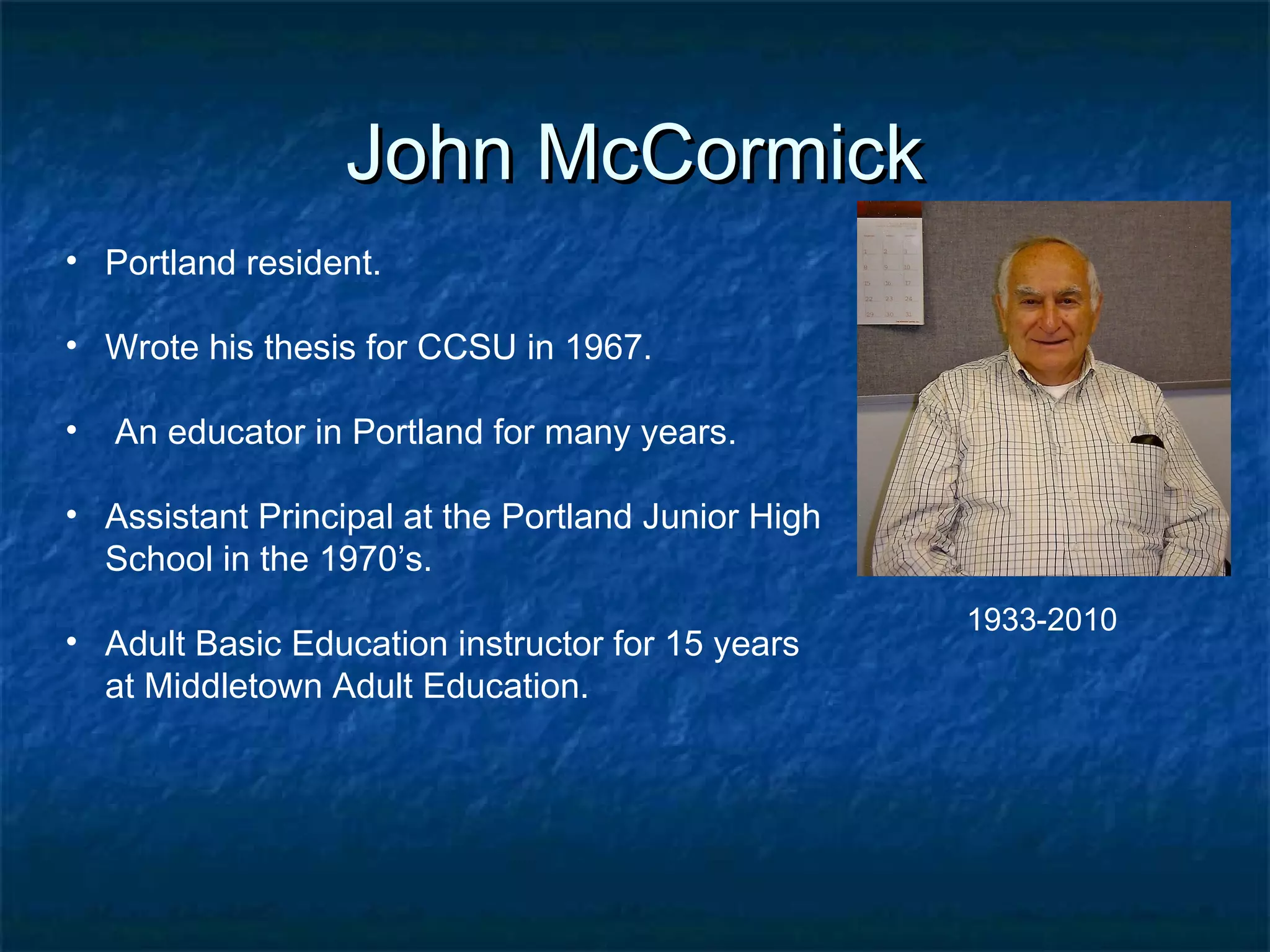
John McCormick
• Portland resident.

• Wrote his thesis for CCSU in 1967.

•   An educator in Portland for many years.

• Assistant Principal at the Portland Junior High
  School in the 1970’s.
                                                    1933-2010
• Adult Basic Education instructor for 15 years
  at Middletown Adult Education.
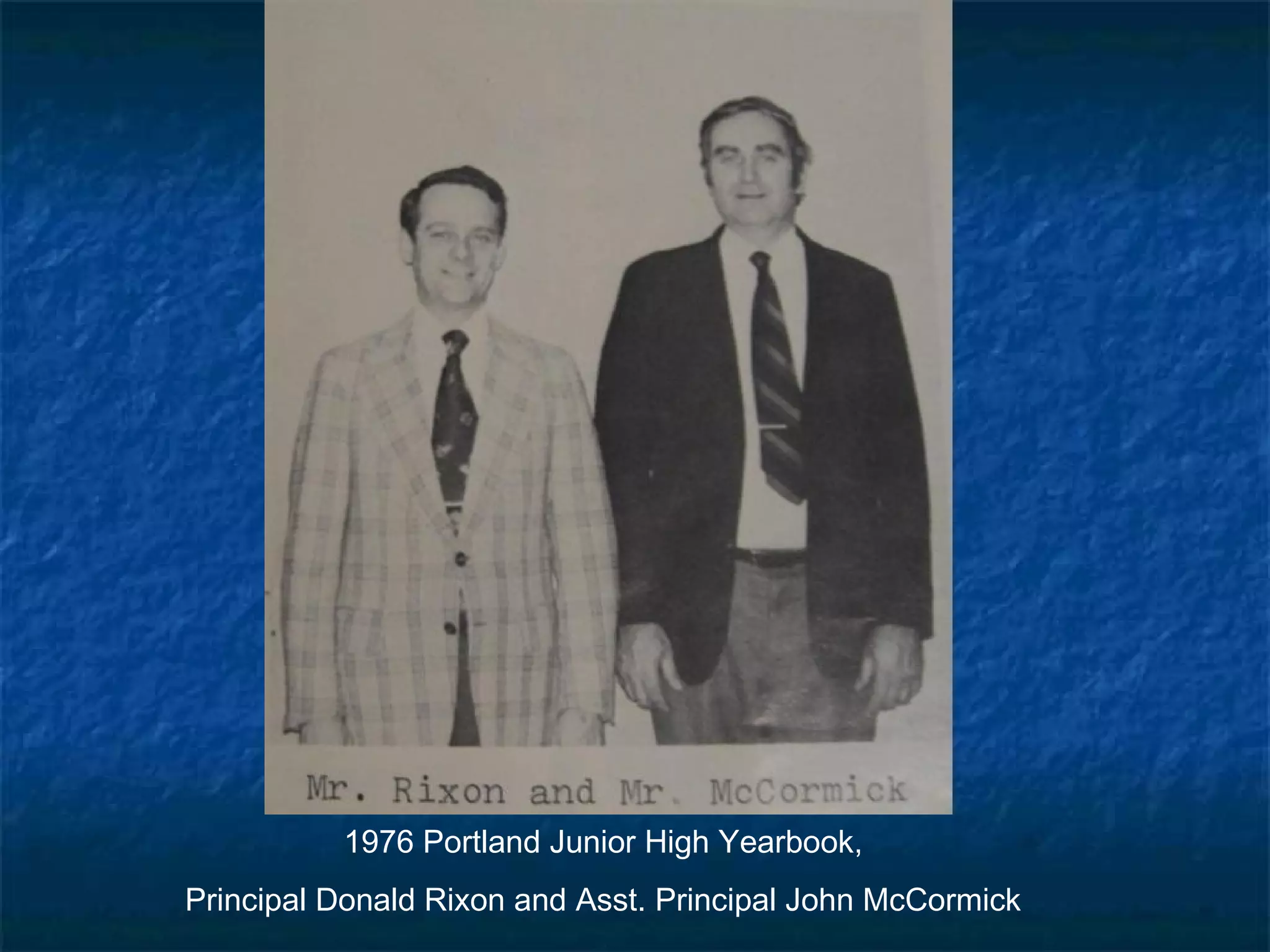
1976 Portland Junior High Yearbook,
Principal Donald Rixon and Asst. Principal John McCormick
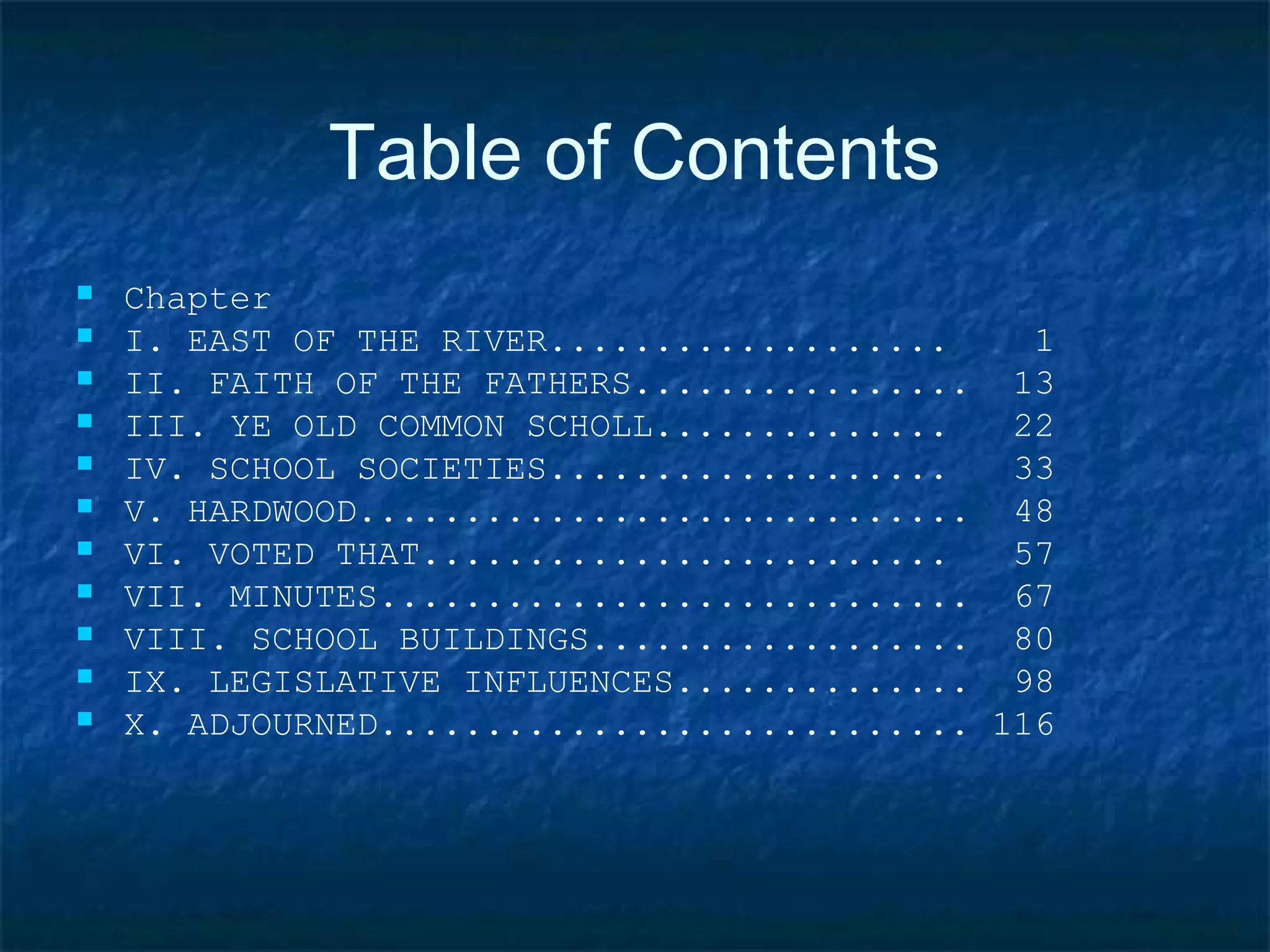
Table of Contents
   Chapter
   I. EAST OF THE RIVER...................    1
   II. FAITH OF THE FATHERS................ 13
   III. YE OLD COMMON SCHOLL..............   22
   IV. SCHOOL SOCIETIES...................   33
   V. HARDWOOD............................. 48
   VI. VOTED THAT.........................   57
   VII. MINUTES............................ 67
   VIII. SCHOOL BUILDINGS.................. 80
   IX. LEGISLATIVE INFLUENCES.............. 98
   X. ADJOURNED............................ 116
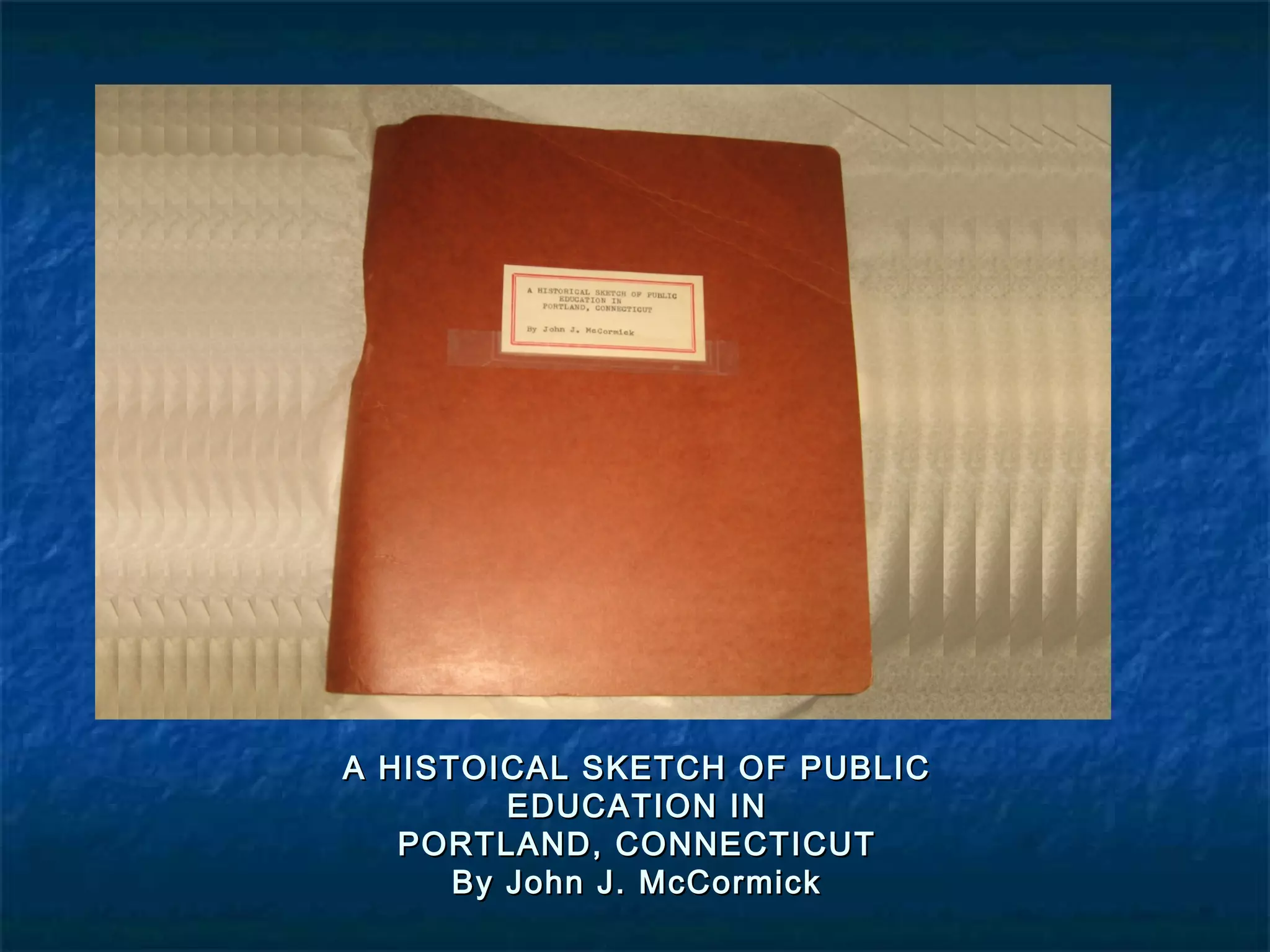
A HISTOICAL SKETCH OF PUBLIC
         EDUCATION IN
   PORTLAND, CONNECTICUT
      By John J. McCormick
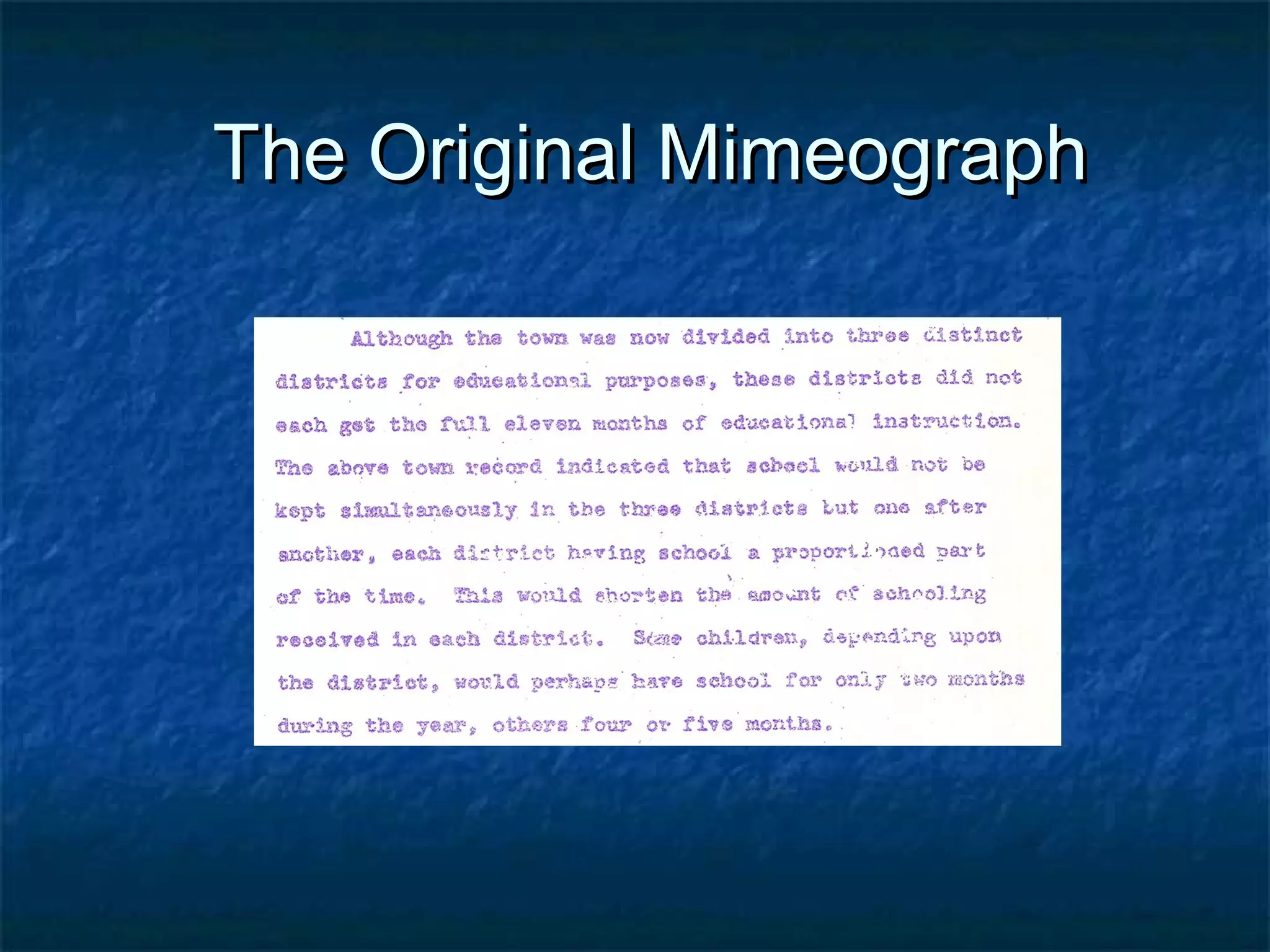
The Original Mimeograph
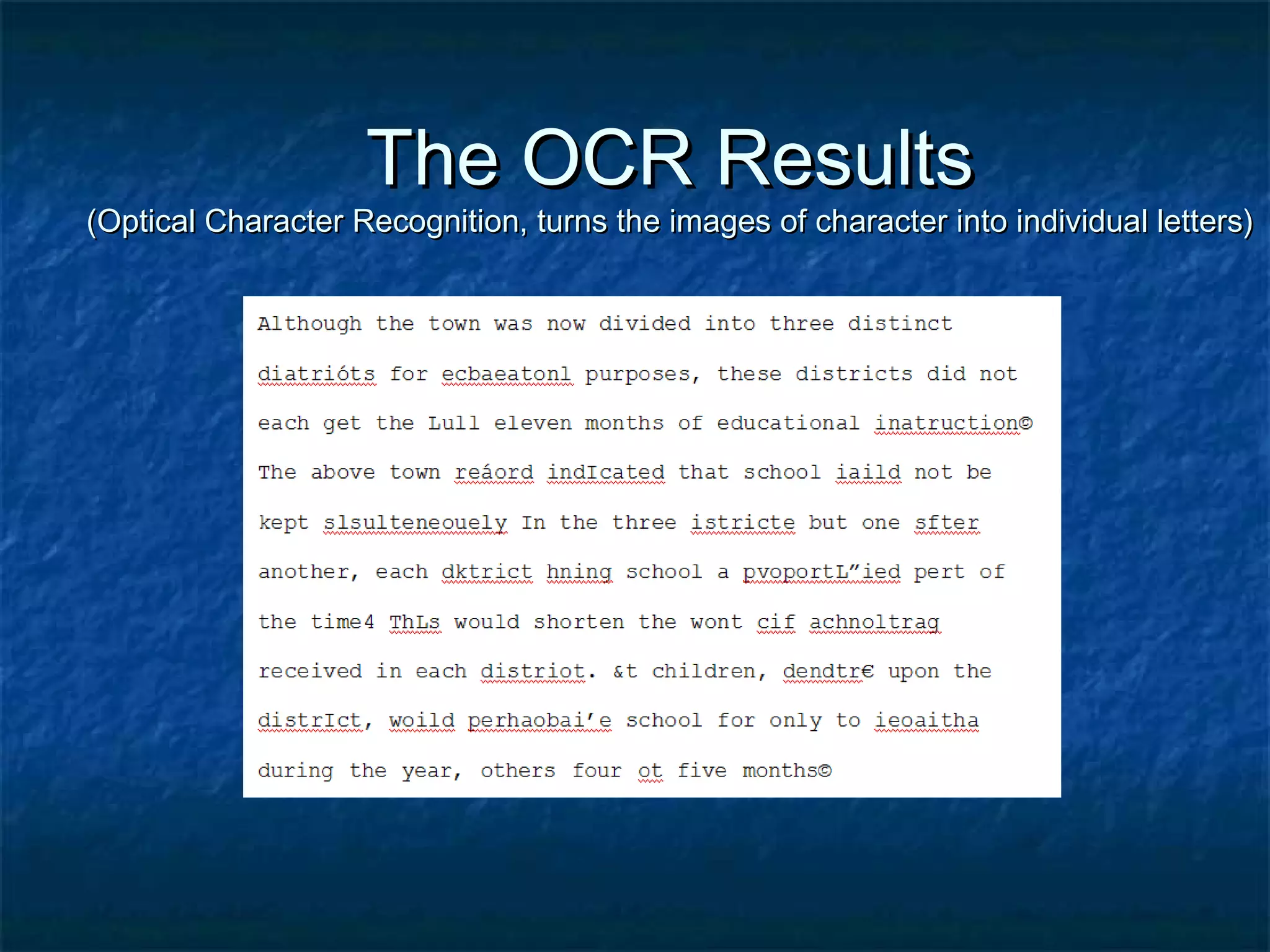
The OCR Results
(Optical Character Recognition, turns the images of character into individual letters)
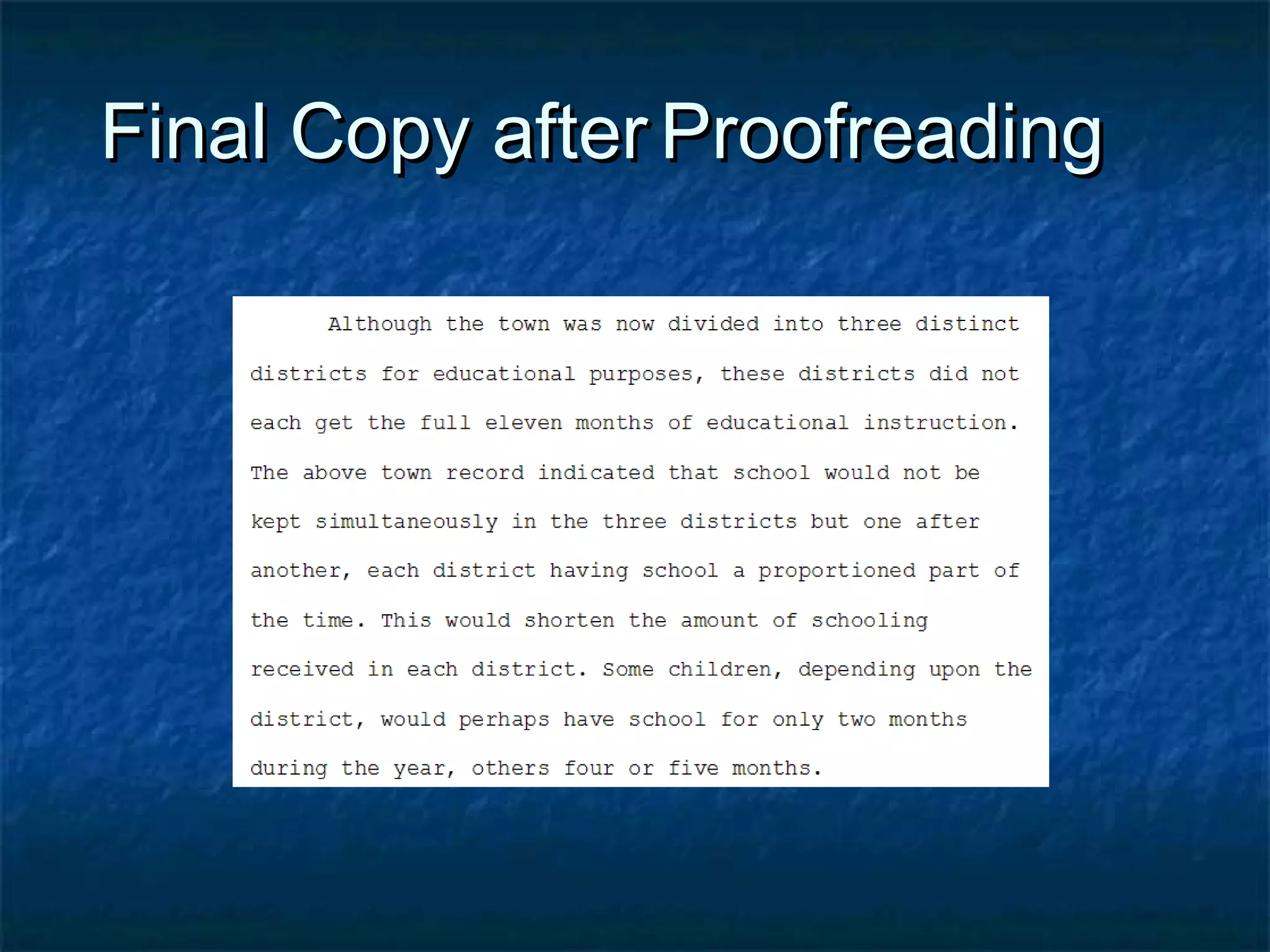
Final Copy after Proofreading
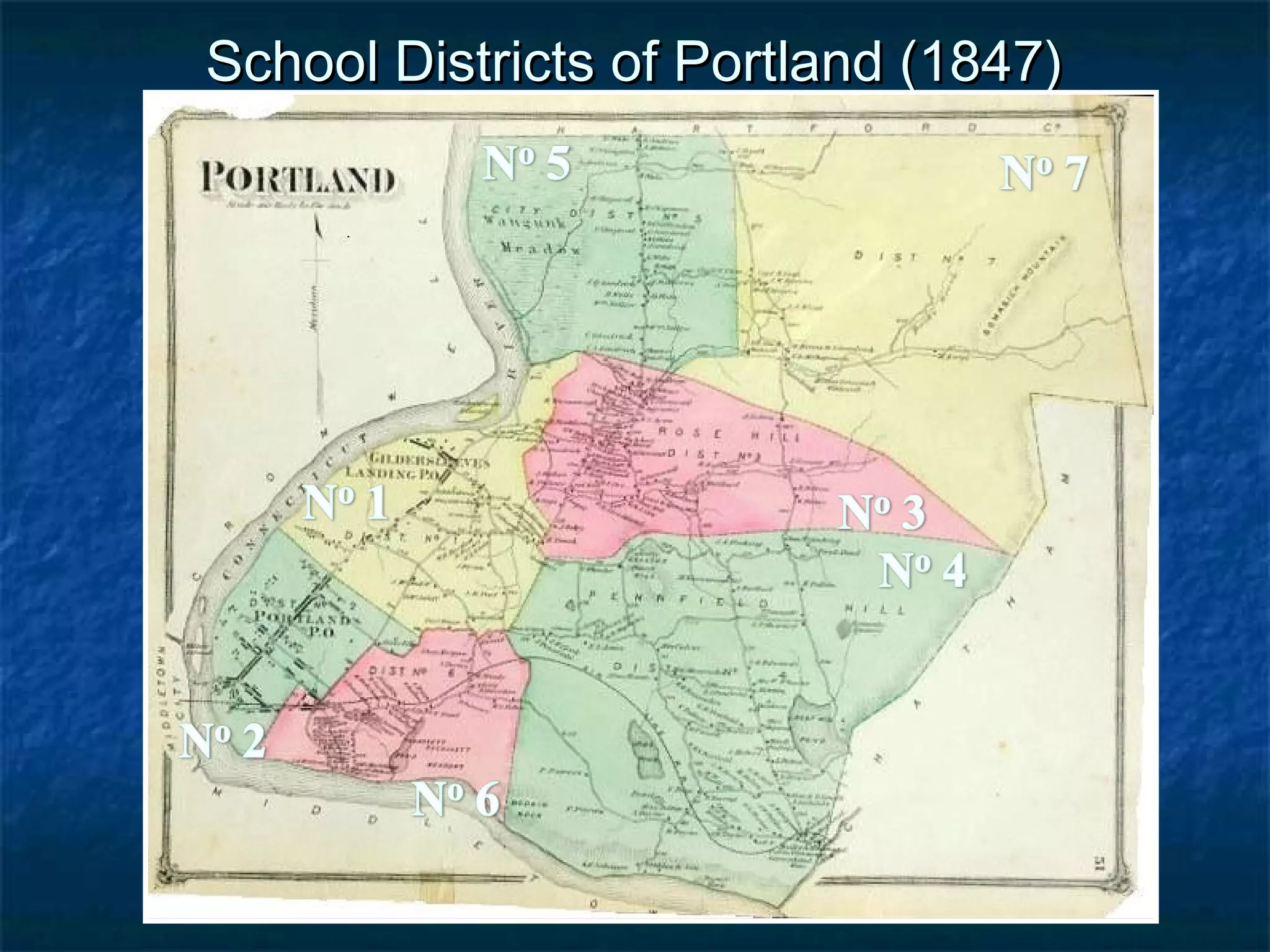
School Districts of Portland (1847)
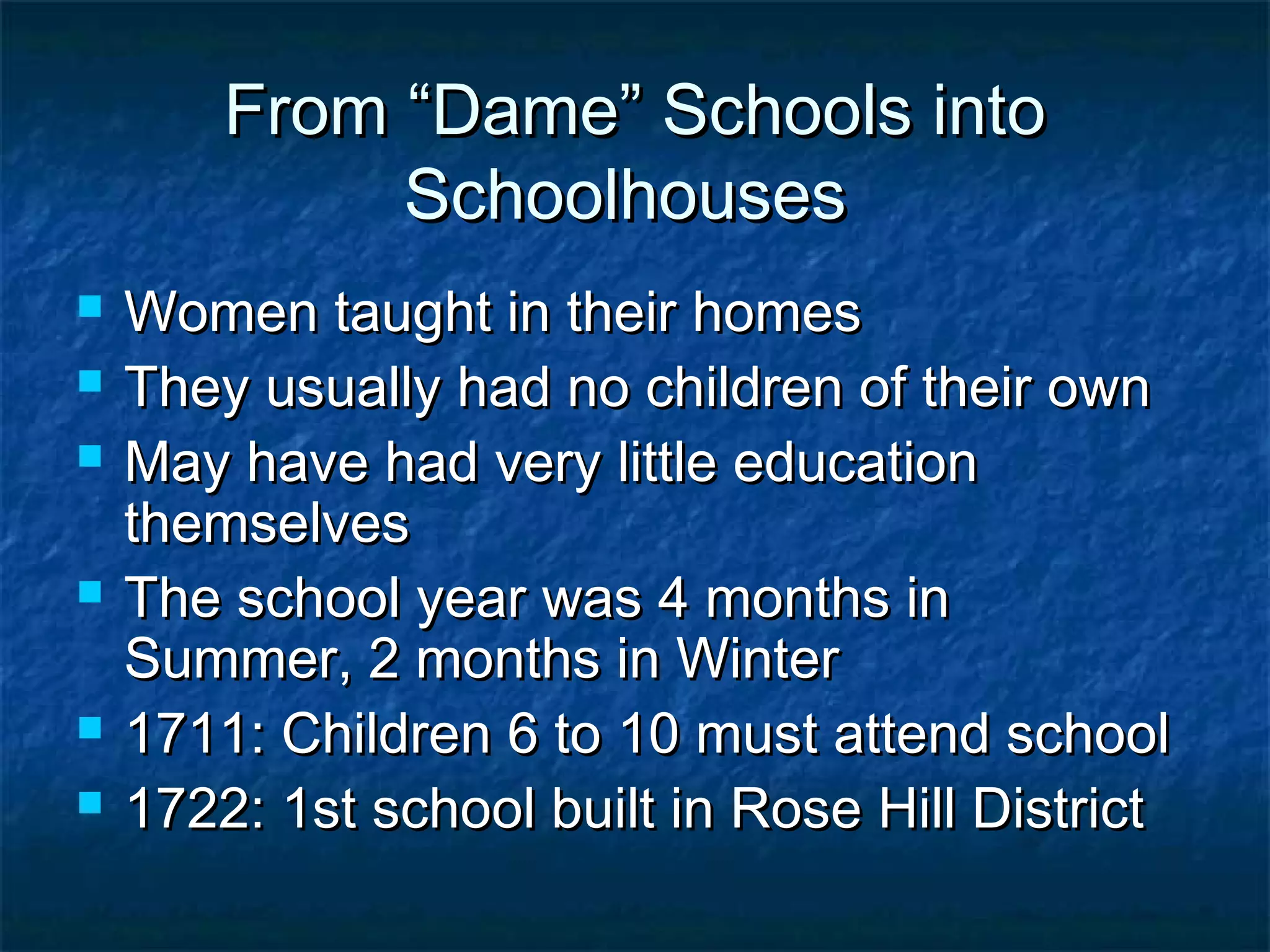
From “Dame” Schools into
             Schoolhouses
   Women taught in their homes
   They usually had no children of their own
   May have had very little education
    themselves
   The school year was 4 months in
    Summer, 2 months in Winter
   1711: Children 6 to 10 must attend school
   1722: 1st school built in Rose Hill District
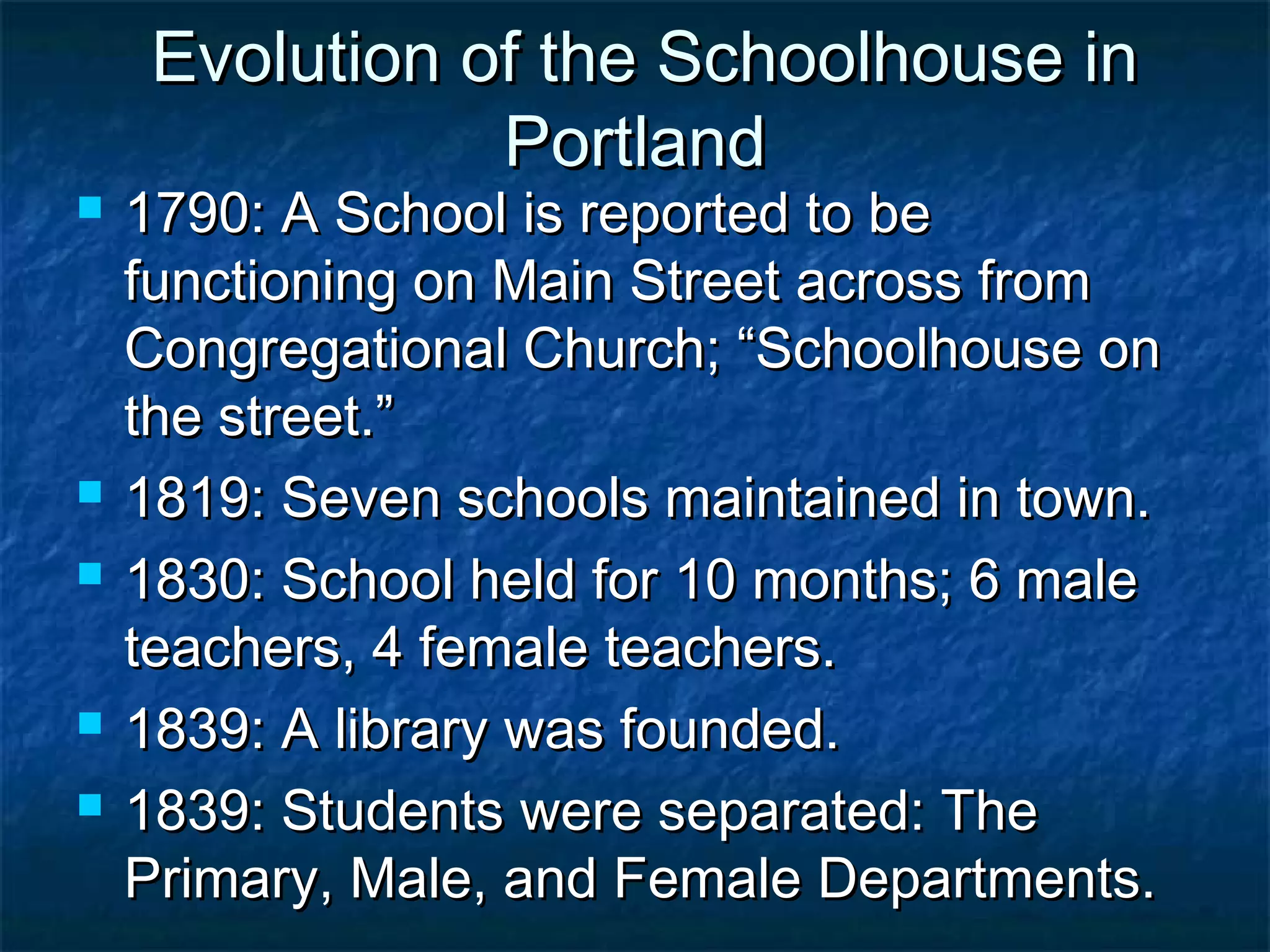
Evolution of the Schoolhouse in
                Portland
   1790: A School is reported to be
    functioning on Main Street across from
    Congregational Church; “Schoolhouse on
    the street.”
   1819: Seven schools maintained in town.
   1830: School held for 10 months; 6 male
    teachers, 4 female teachers.
   1839: A library was founded.
   1839: Students were separated: The
    Primary, Male, and Female Departments.
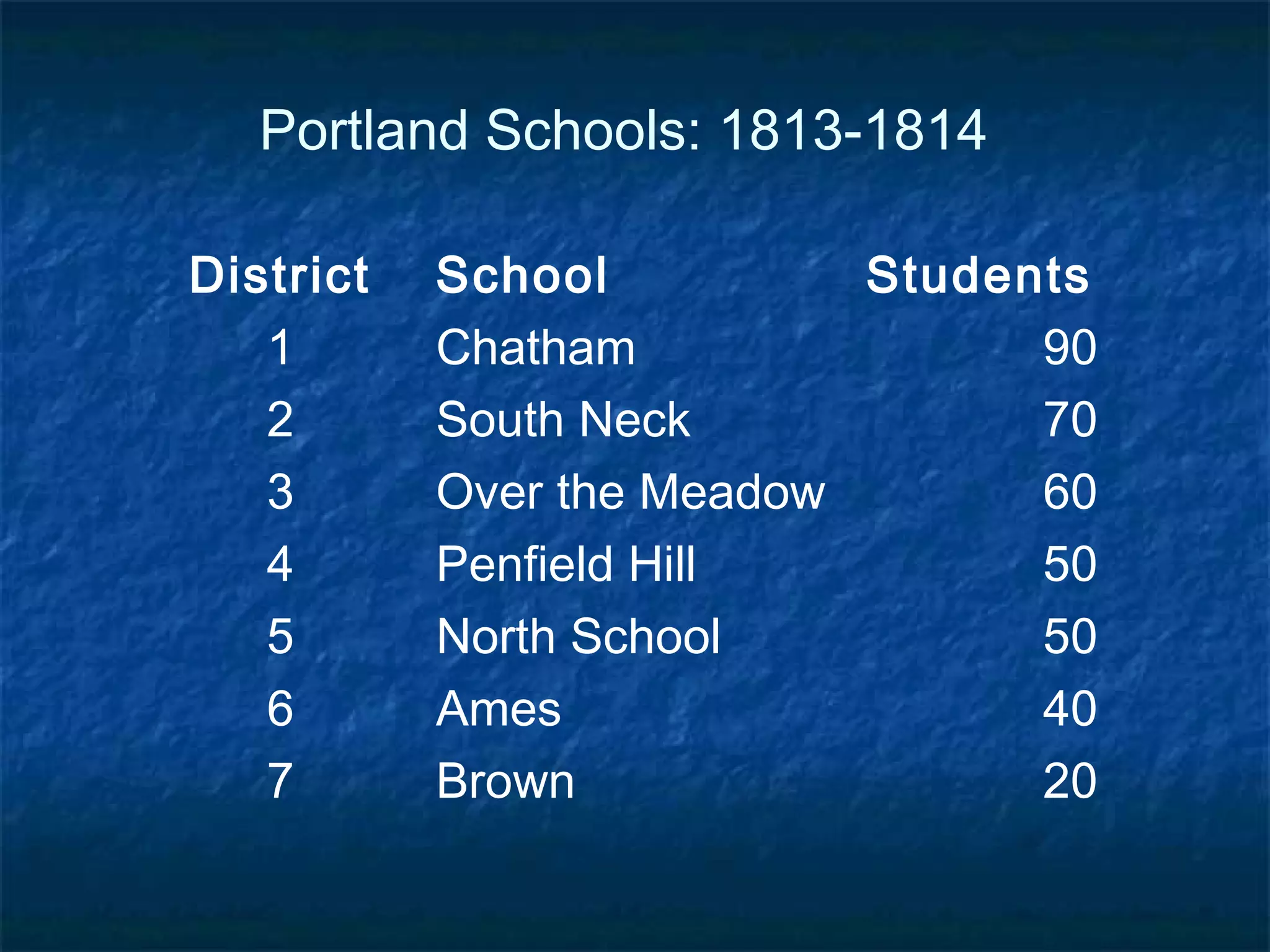
Portland Schools: 1813-1814

District   School          Students
   1       Chatham               90
   2       South Neck            70
   3       Over the Meadow       60
   4       Penfield Hill         50
   5       North School          50
   6       Ames                  40
   7       Brown                 20
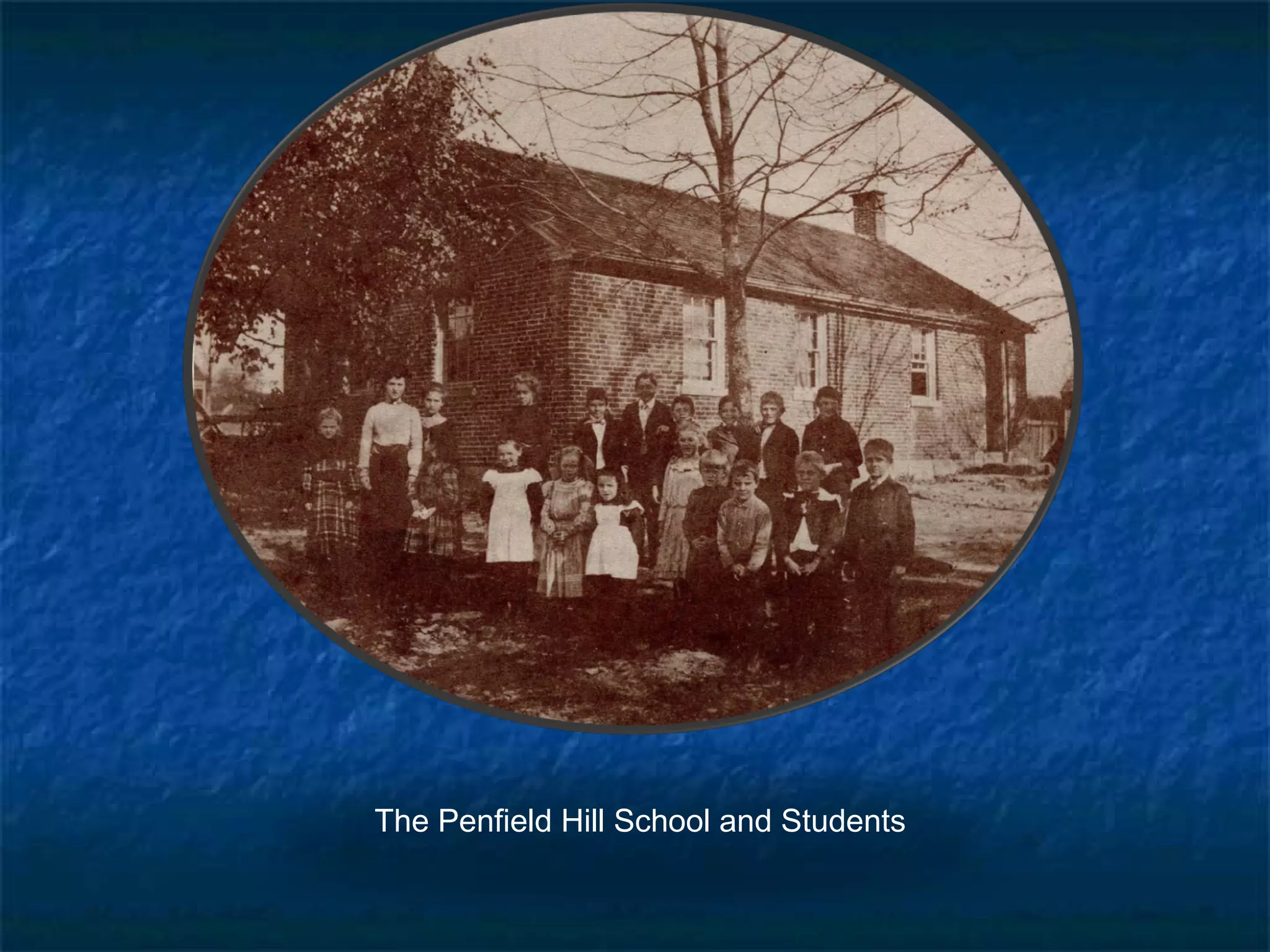
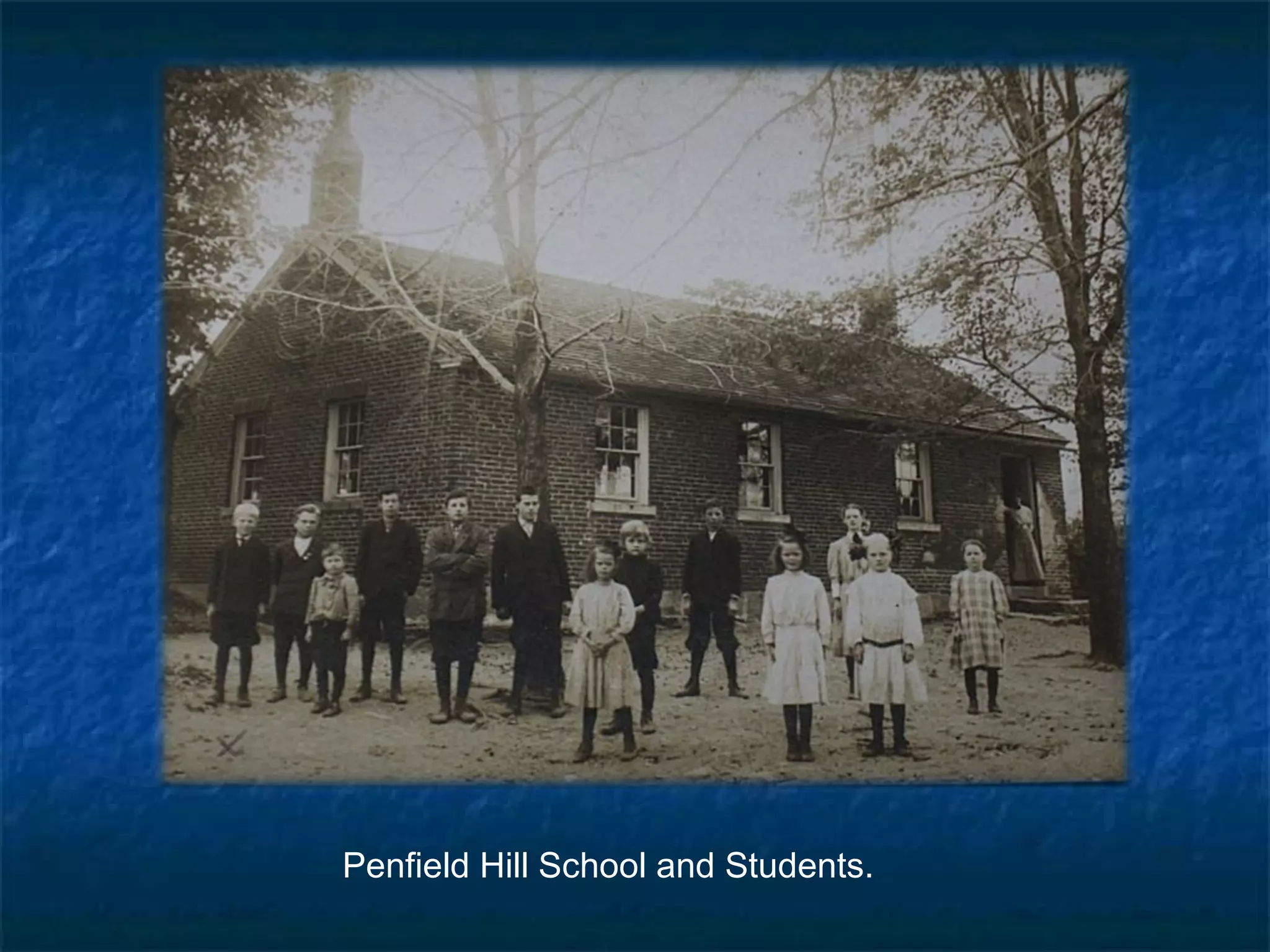
The Penfield Hill School and Students
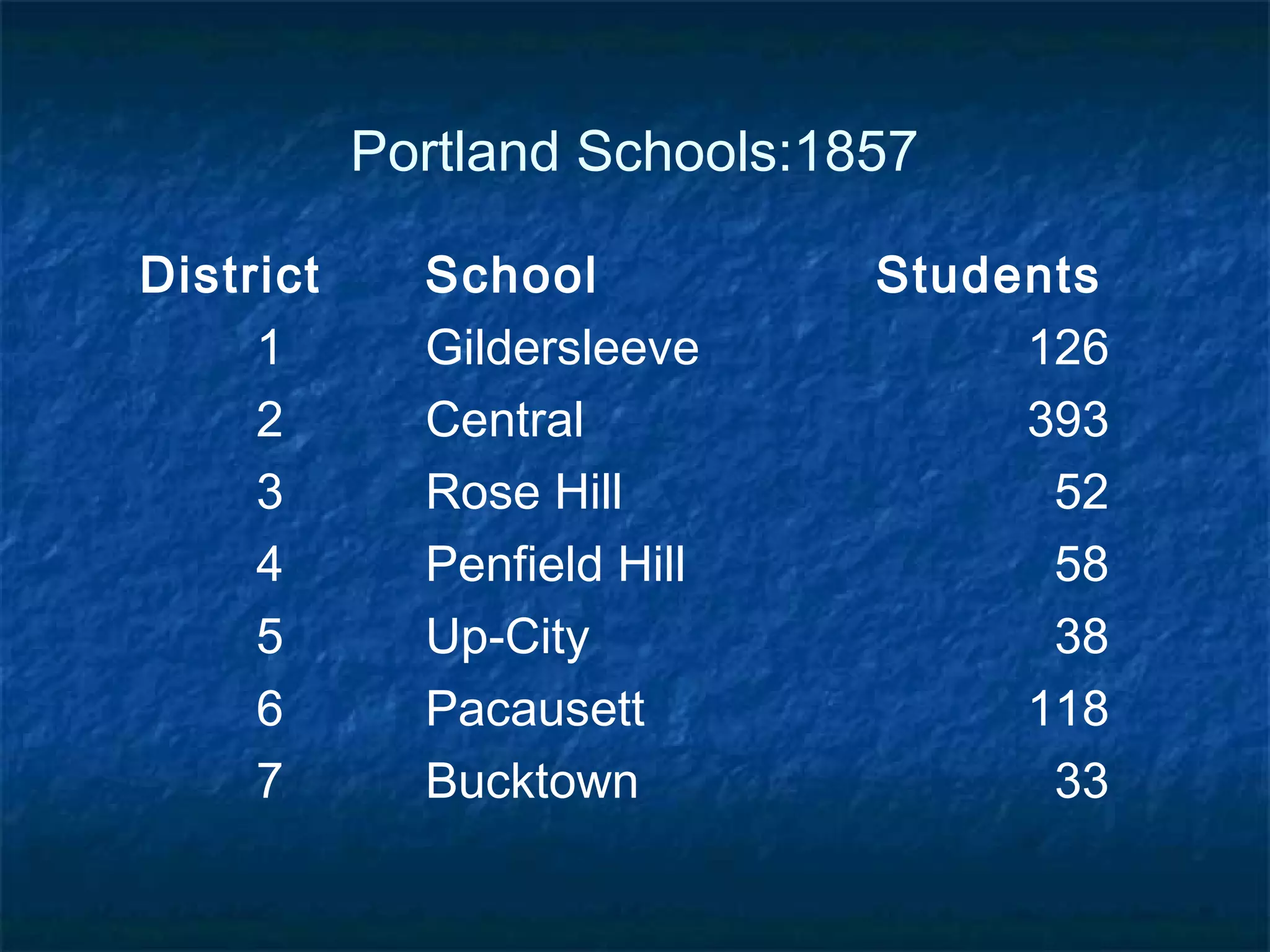
Portland Schools:1857

District     School           Students
     1       Gildersleeve          126
     2       Central               393
     3       Rose Hill              52
     4       Penfield Hill          58
     5       Up-City                38
     6       Pacausett             118
     7       Bucktown               33
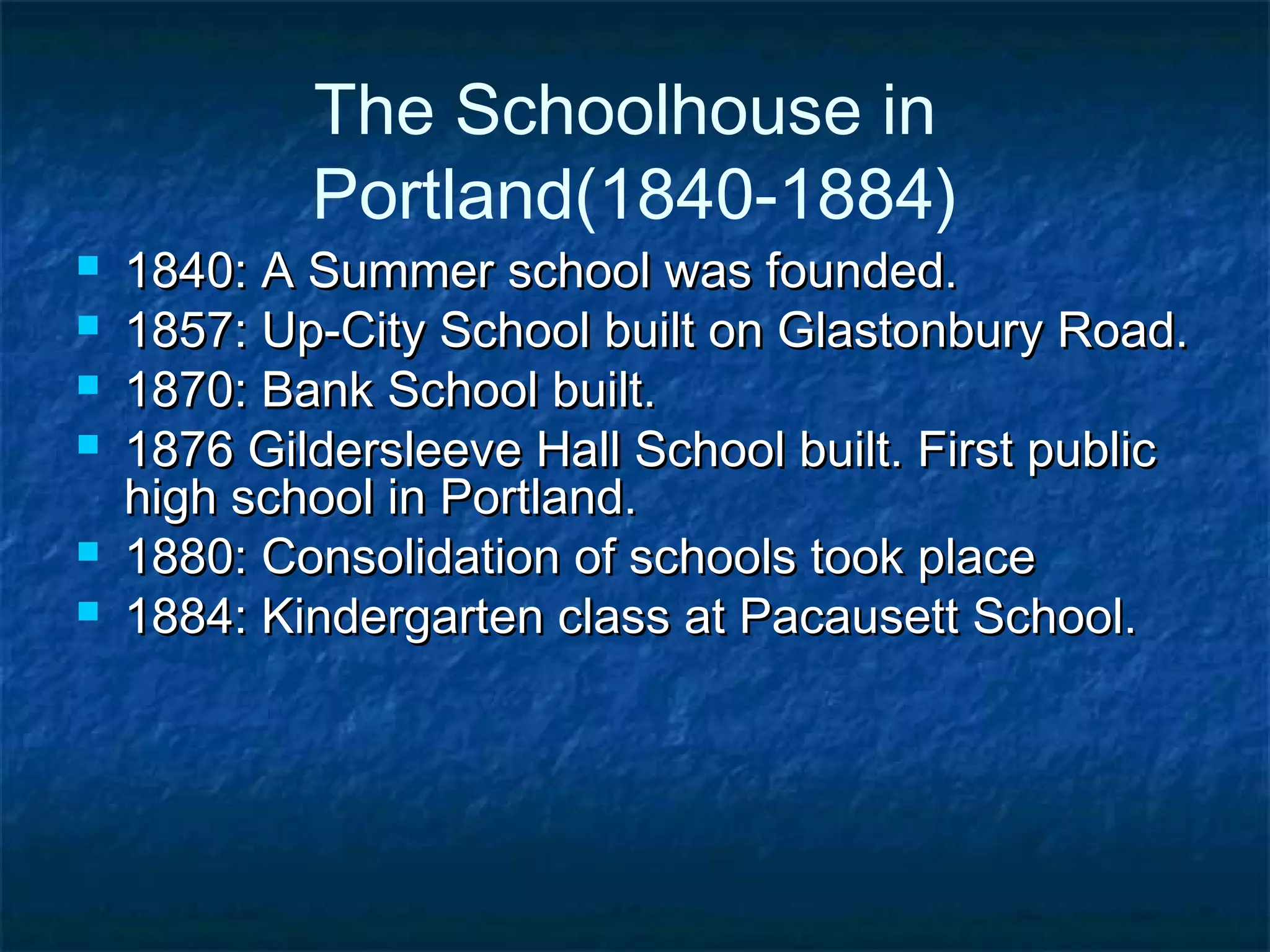
The Schoolhouse in
            Portland(1840-1884)
   1840: A Summer school was founded.
   1857: Up-City School built on Glastonbury Road.
   1870: Bank School built.
   1876 Gildersleeve Hall School built. First public
    high school in Portland.
   1880: Consolidation of schools took place
   1884: Kindergarten class at Pacausett School.
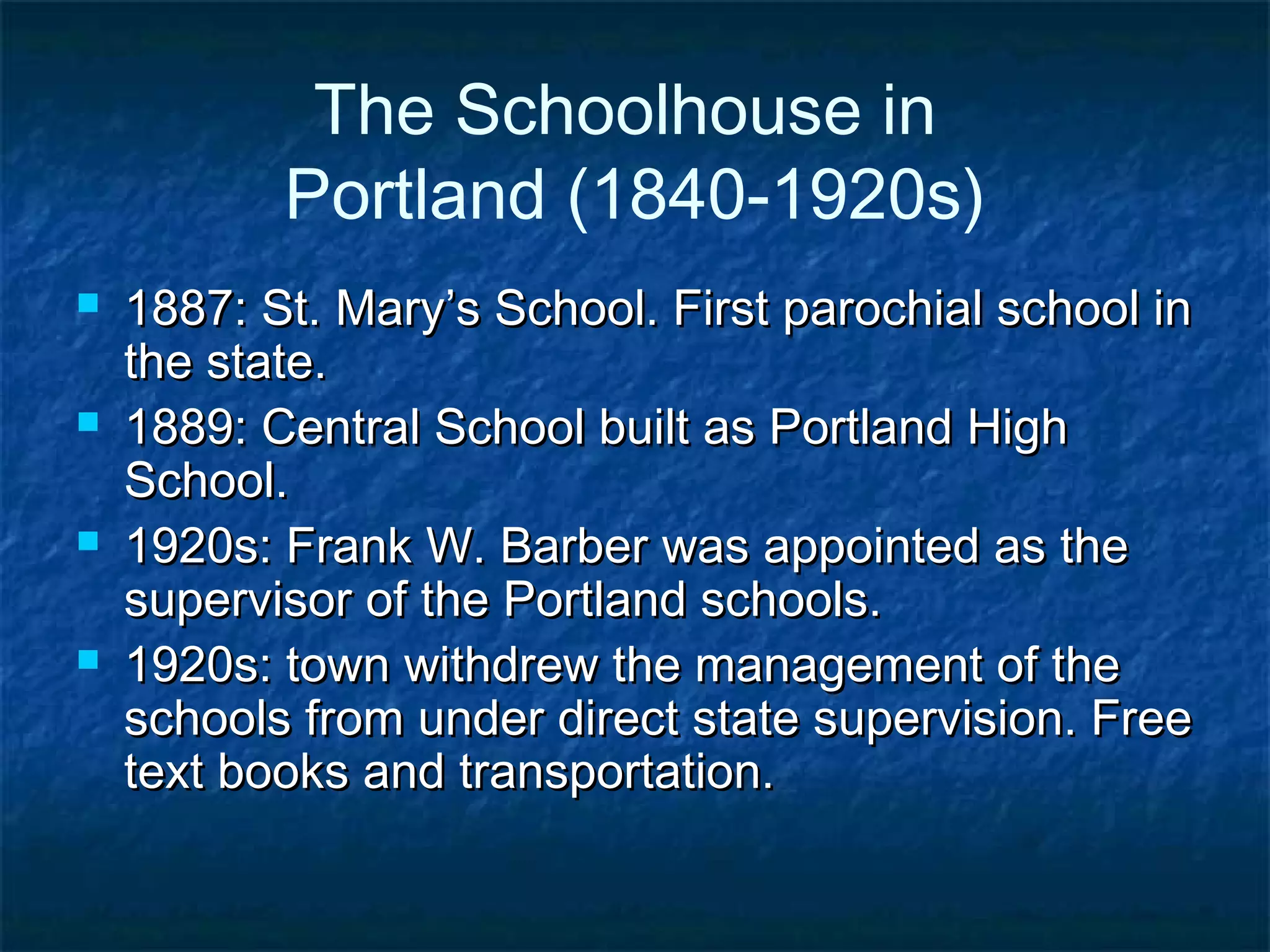
The Schoolhouse in
           Portland (1840-1920s)
   1887: St. Mary’s School. First parochial school in
    the state.
   1889: Central School built as Portland High
    School.
   1920s: Frank W. Barber was appointed as the
    supervisor of the Portland schools.
   1920s: town withdrew the management of the
    schools from under direct state supervision. Free
    text books and transportation.
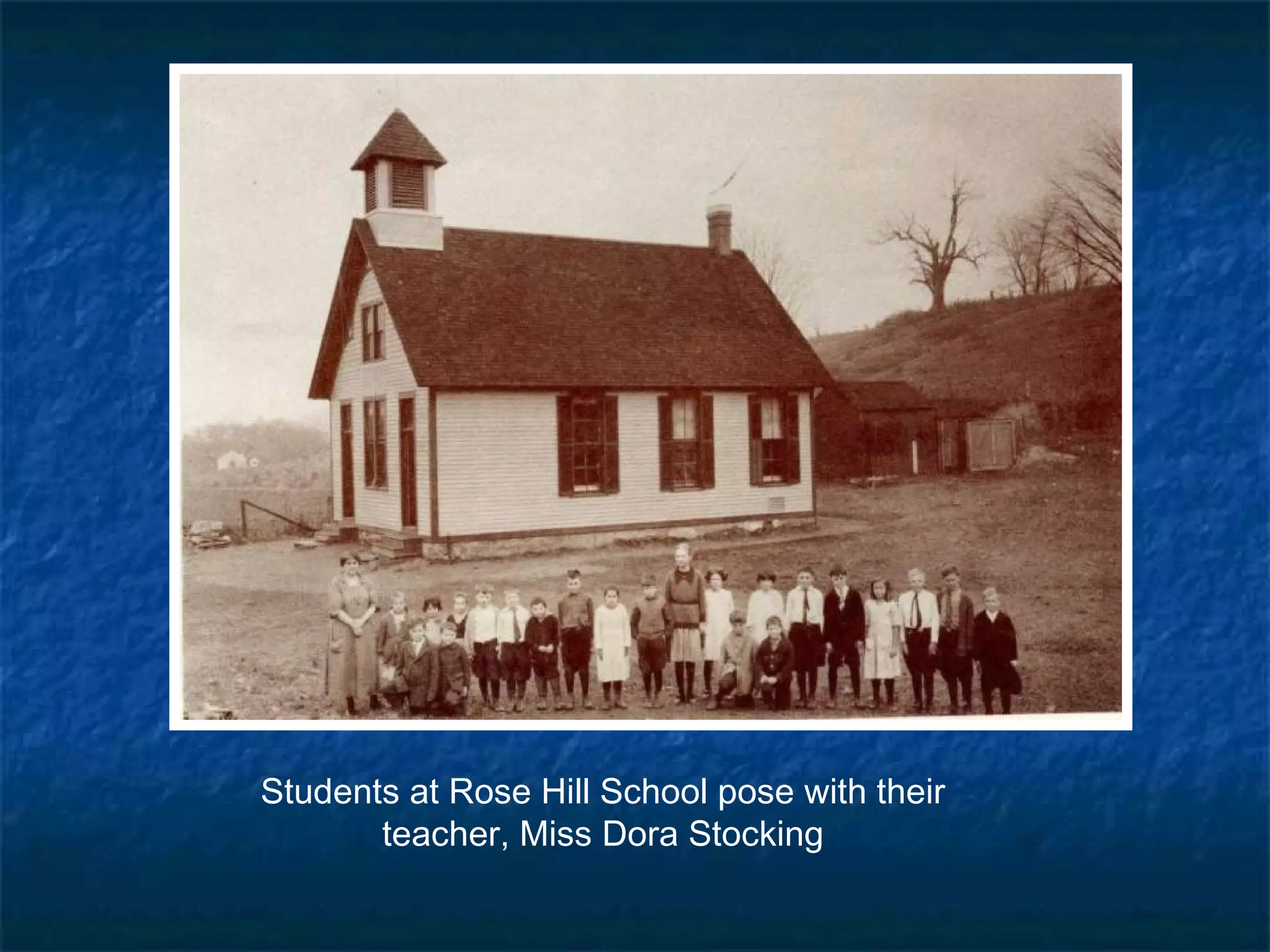
Students at Rose Hill School pose with their
       teacher, Miss Dora Stocking
Evolution of School Administration
   1600s: Church Societies controlled schools.
   1795: Church Societies become School
    Societies.
   1795: Authority goes from the Congregational
    Church to town authorities.
   1798: School Societies completely separated
    from church.
   1832: Two committees: Committee and Visitors.
   1856: “School Visitors” like present Board of
    Education.
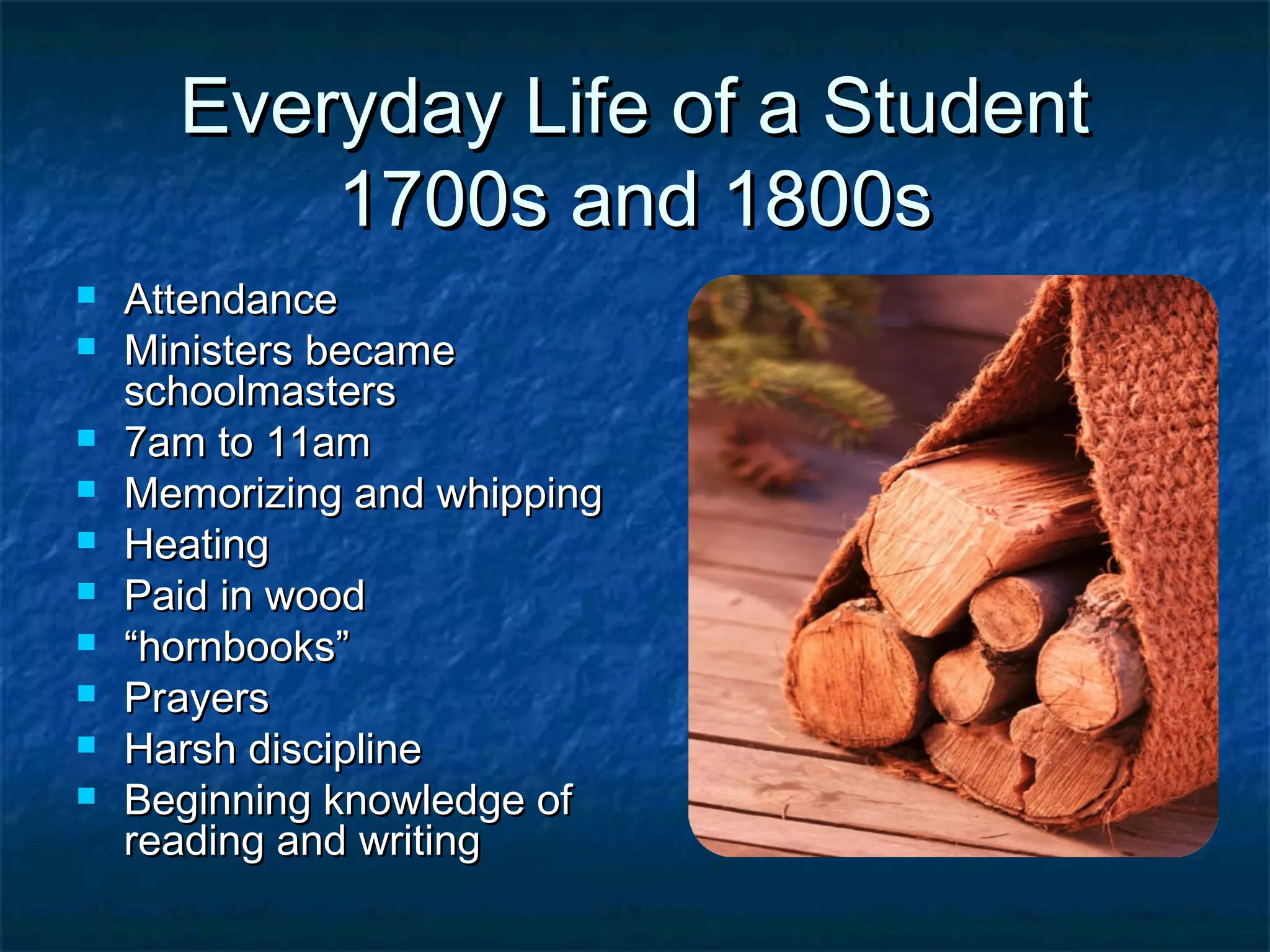
Everyday Life of a Student
          1700s and 1800s
   Attendance
   Ministers became
    schoolmasters
   7am to 11am
   Memorizing and whipping
   Heating
   Paid in wood
   “hornbooks”
   Prayers
   Harsh discipline
   Beginning knowledge of
    reading and writing
Penfield Hill School and Students.
Sylvester Gildersleeve
                         (1775-1886)


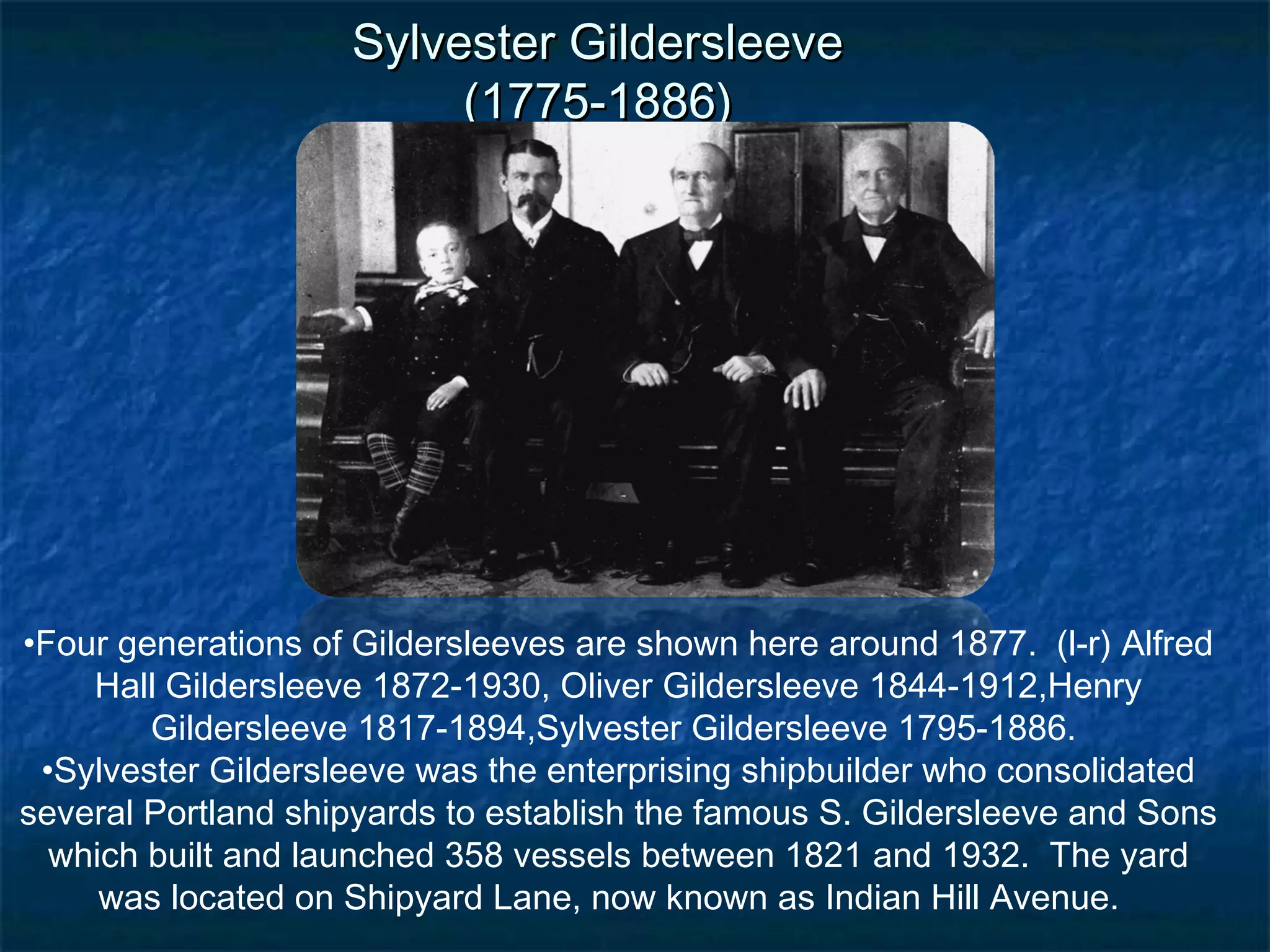
•Four generations of Gildersleeves are shown here around 1877. (l-r) Alfred
    Hall Gildersleeve 1872-1930, Oliver Gildersleeve 1844-1912,Henry
        Gildersleeve 1817-1894,Sylvester Gildersleeve 1795-1886.
 •Sylvester Gildersleeve was the enterprising shipbuilder who consolidated
several Portland shipyards to establish the famous S. Gildersleeve and Sons
  which built and launched 358 vessels between 1821 and 1932. The yard
     was located on Shipyard Lane, now known as Indian Hill Avenue.
Sylvester Gildersleeve
   1876: Gave $2000 for the second floor of Gildersleeve
    Hall
   Donation for the start of a high school.
   Established a fund worth over $14,000 to be used for
    school purposes by the school committee.
   1889: School burned down. Establishment of volunteer
    fire department.
   1890: New school built where high school classes were
    taught.
   575 ½ Main Street
   Classes held here until all classes began to be held at
    Central High School (East Main Street/Fairview Street).
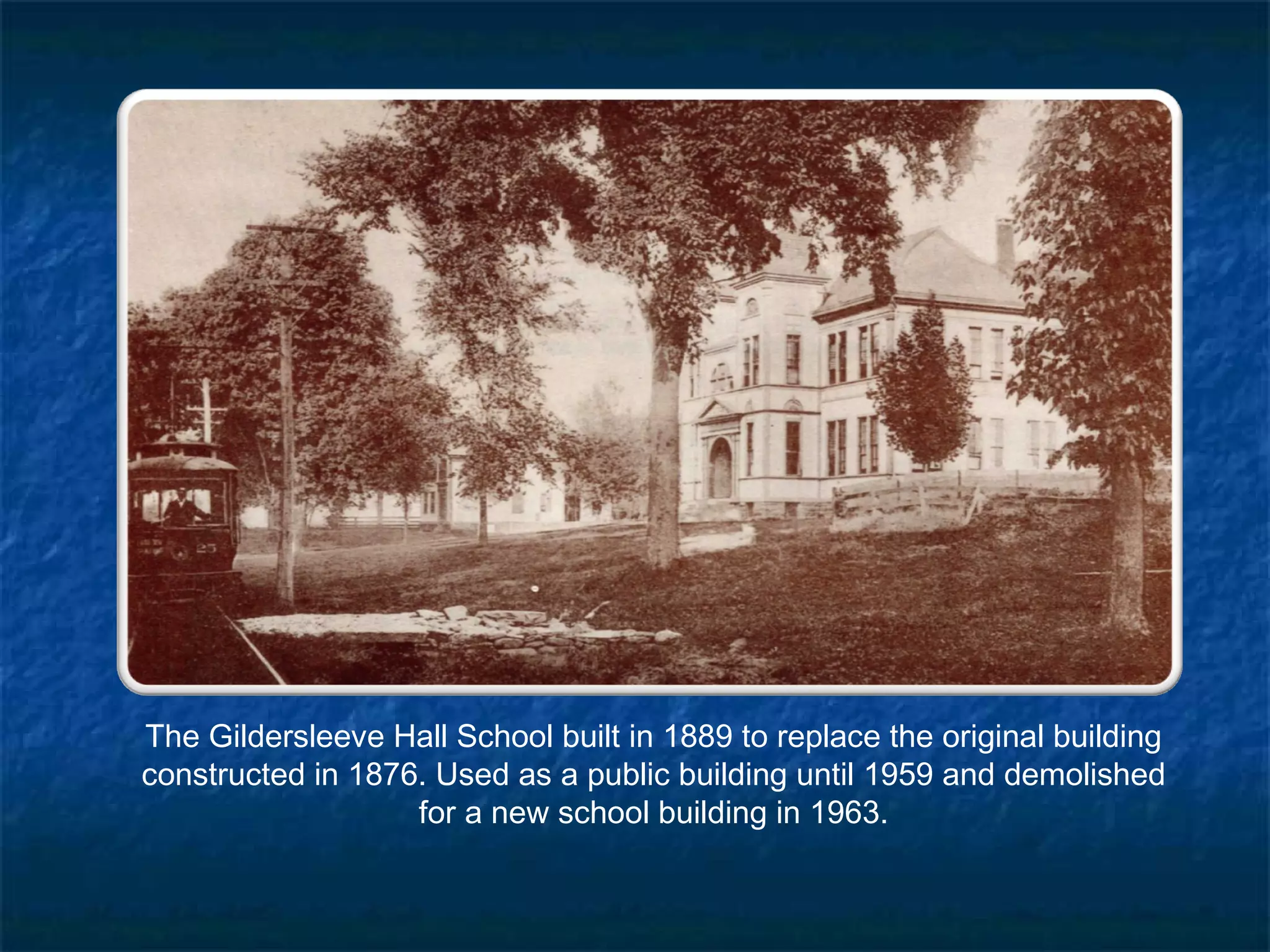
The Gildersleeve Hall School built in 1889 to replace the original building
constructed in 1876. Used as a public building until 1959 and demolished
                   for a new school building in 1963.
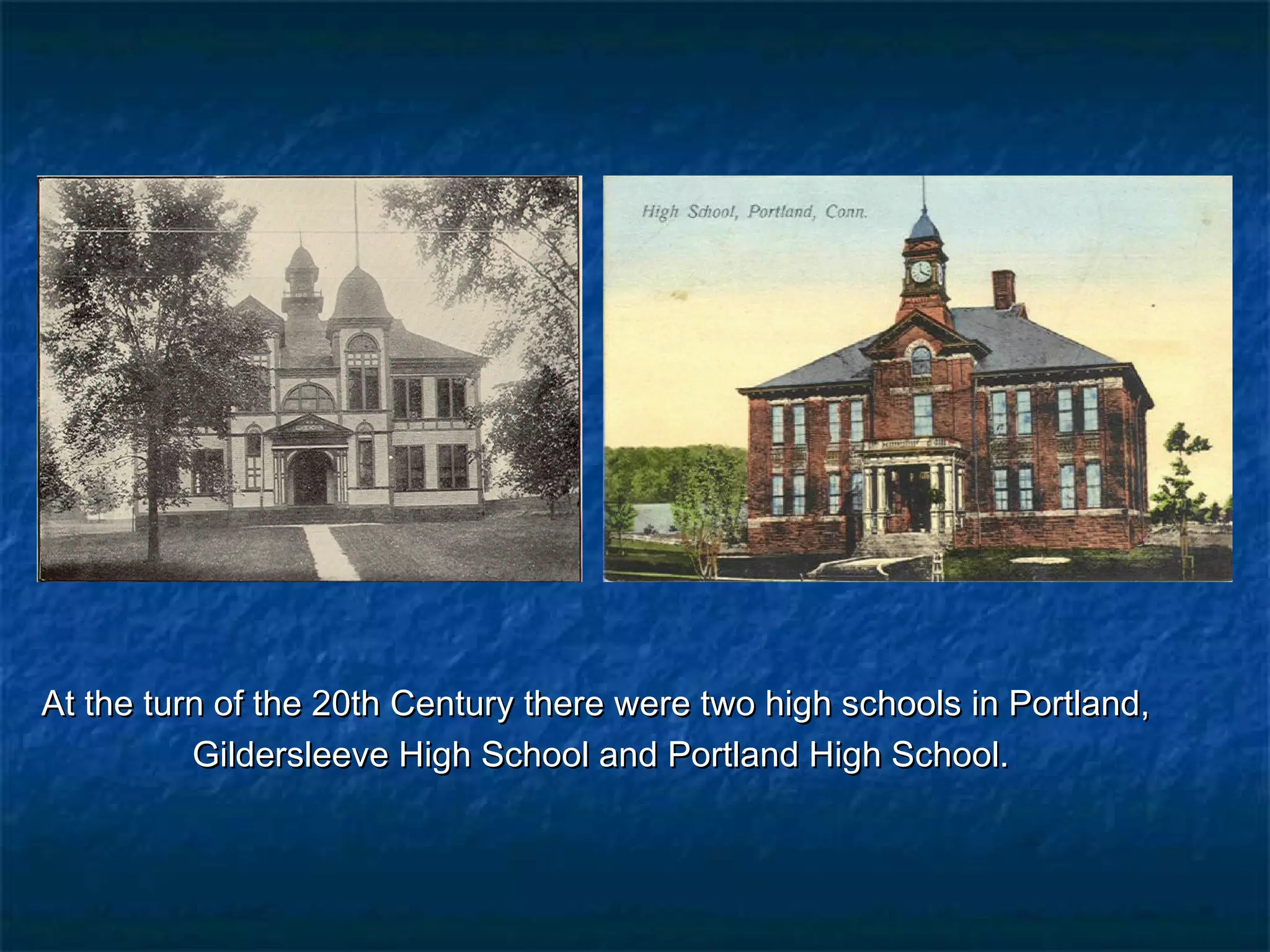
At the turn of the 20th Century there were two high schools in Portland,
          Gildersleeve High School and Portland High School.
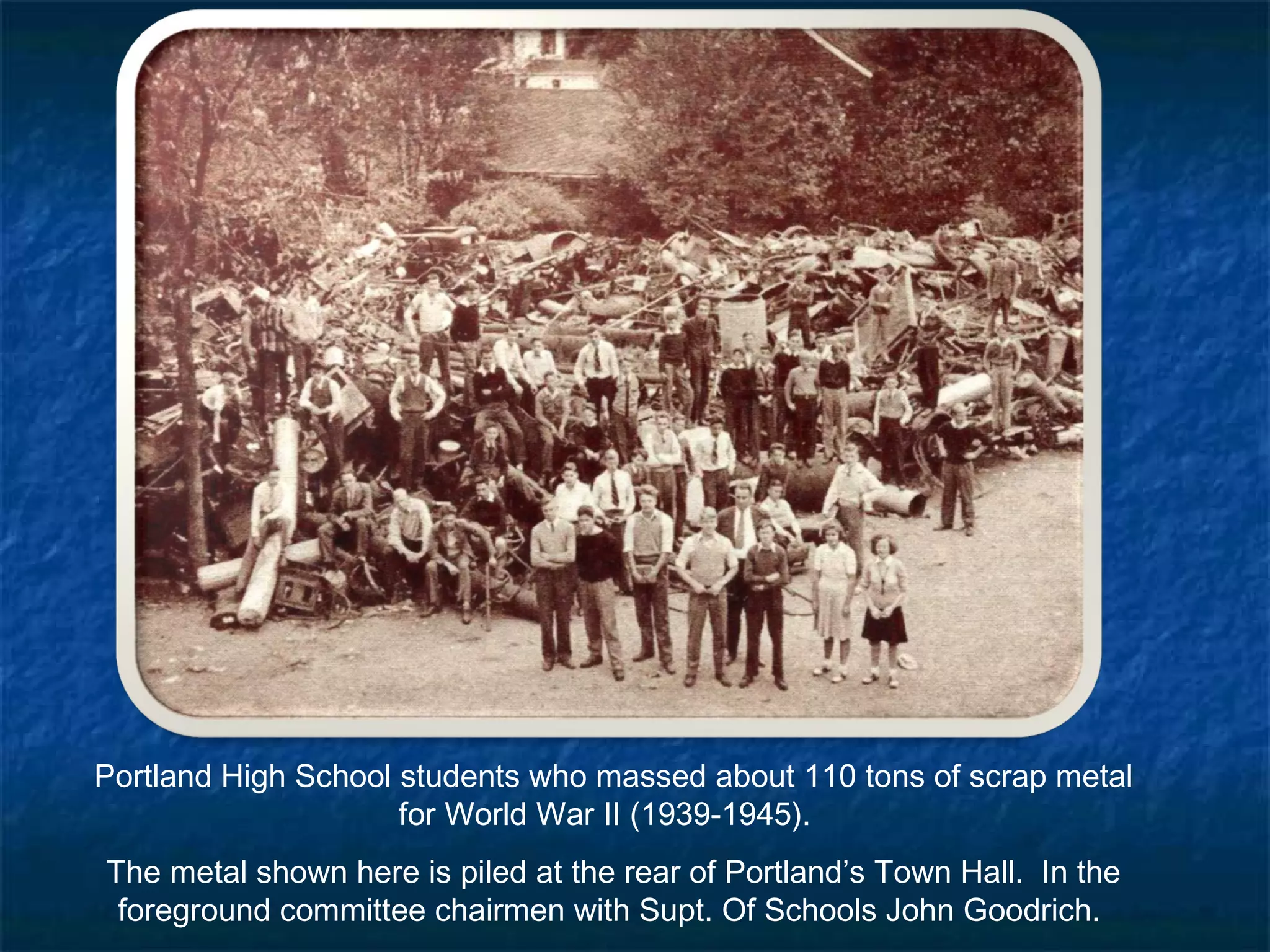
Portland High School students who massed about 110 tons of scrap metal
                     for World War II (1939-1945). 
The metal shown here is piled at the rear of Portland’s Town Hall.  In the
 foreground committee chairmen with Supt. Of Schools John Goodrich.
Where are they now?
   Pecausett school closed in 1911 (Main Street across
    from Bank of America).
   Penfield Hill School closed in 1920 is still standing and is
    used as a studio by the Noyes School.
   Rose Hill School closed in is a private residence across
    from the Bransfield Ball Fields on Rose Hill.
   Up-City school closed in 1921.
   Freestone School closed in 1932 and torn down in 1941.
   Central School on East Main Street, Portland Junior High
    on Main Street, Valley View and Portland Senior High on
    High, and the Gildersleeve School on Main Street are
    the schools presently serving the educational needs of
    over 1800 of Portland's children. (1967)

McCormick Thesis Presentation

  • 1.
    A Historical Sketchof Public Education in Portland, Connecticut. By John McCormick Presented By Jennifer Crutchfield Portland Historical Society October 25, 2011
  • 2.
    John McCormick • Portlandresident. • Wrote his thesis for CCSU in 1967. • An educator in Portland for many years. • Assistant Principal at the Portland Junior High School in the 1970’s. 1933-2010 • Adult Basic Education instructor for 15 years at Middletown Adult Education.
  • 3.
    1976 Portland JuniorHigh Yearbook, Principal Donald Rixon and Asst. Principal John McCormick
  • 4.
    Table of Contents  Chapter  I. EAST OF THE RIVER................... 1  II. FAITH OF THE FATHERS................ 13  III. YE OLD COMMON SCHOLL.............. 22  IV. SCHOOL SOCIETIES................... 33  V. HARDWOOD............................. 48  VI. VOTED THAT......................... 57  VII. MINUTES............................ 67  VIII. SCHOOL BUILDINGS.................. 80  IX. LEGISLATIVE INFLUENCES.............. 98  X. ADJOURNED............................ 116
  • 5.
    A HISTOICAL SKETCHOF PUBLIC EDUCATION IN PORTLAND, CONNECTICUT By John J. McCormick
  • 6.
  • 7.
    The OCR Results (OpticalCharacter Recognition, turns the images of character into individual letters)
  • 8.
    Final Copy afterProofreading
  • 9.
    School Districts ofPortland (1847)
  • 10.
    From “Dame” Schoolsinto Schoolhouses  Women taught in their homes  They usually had no children of their own  May have had very little education themselves  The school year was 4 months in Summer, 2 months in Winter  1711: Children 6 to 10 must attend school  1722: 1st school built in Rose Hill District
  • 11.
    Evolution of theSchoolhouse in Portland  1790: A School is reported to be functioning on Main Street across from Congregational Church; “Schoolhouse on the street.”  1819: Seven schools maintained in town.  1830: School held for 10 months; 6 male teachers, 4 female teachers.  1839: A library was founded.  1839: Students were separated: The Primary, Male, and Female Departments.
  • 12.
    Portland Schools: 1813-1814 District School Students 1 Chatham 90 2 South Neck 70 3 Over the Meadow 60 4 Penfield Hill 50 5 North School 50 6 Ames 40 7 Brown 20
  • 13.
    The Penfield HillSchool and Students
  • 14.
    Portland Schools:1857 District School Students 1 Gildersleeve 126 2 Central 393 3 Rose Hill 52 4 Penfield Hill 58 5 Up-City 38 6 Pacausett 118 7 Bucktown 33
  • 15.
    The Schoolhouse in Portland(1840-1884)  1840: A Summer school was founded.  1857: Up-City School built on Glastonbury Road.  1870: Bank School built.  1876 Gildersleeve Hall School built. First public high school in Portland.  1880: Consolidation of schools took place  1884: Kindergarten class at Pacausett School.
  • 16.
    The Schoolhouse in Portland (1840-1920s)  1887: St. Mary’s School. First parochial school in the state.  1889: Central School built as Portland High School.  1920s: Frank W. Barber was appointed as the supervisor of the Portland schools.  1920s: town withdrew the management of the schools from under direct state supervision. Free text books and transportation.
  • 17.
    Students at RoseHill School pose with their teacher, Miss Dora Stocking
  • 18.
    Evolution of SchoolAdministration  1600s: Church Societies controlled schools.  1795: Church Societies become School Societies.  1795: Authority goes from the Congregational Church to town authorities.  1798: School Societies completely separated from church.  1832: Two committees: Committee and Visitors.  1856: “School Visitors” like present Board of Education.
  • 19.
    Everyday Life ofa Student 1700s and 1800s  Attendance  Ministers became schoolmasters  7am to 11am  Memorizing and whipping  Heating  Paid in wood  “hornbooks”  Prayers  Harsh discipline  Beginning knowledge of reading and writing
  • 20.
    Penfield Hill Schooland Students.
  • 21.
    Sylvester Gildersleeve (1775-1886) •Four generations of Gildersleeves are shown here around 1877. (l-r) Alfred Hall Gildersleeve 1872-1930, Oliver Gildersleeve 1844-1912,Henry Gildersleeve 1817-1894,Sylvester Gildersleeve 1795-1886. •Sylvester Gildersleeve was the enterprising shipbuilder who consolidated several Portland shipyards to establish the famous S. Gildersleeve and Sons which built and launched 358 vessels between 1821 and 1932. The yard was located on Shipyard Lane, now known as Indian Hill Avenue.
  • 22.
    Sylvester Gildersleeve  1876: Gave $2000 for the second floor of Gildersleeve Hall  Donation for the start of a high school.  Established a fund worth over $14,000 to be used for school purposes by the school committee.  1889: School burned down. Establishment of volunteer fire department.  1890: New school built where high school classes were taught.  575 ½ Main Street  Classes held here until all classes began to be held at Central High School (East Main Street/Fairview Street).
  • 23.
    The Gildersleeve HallSchool built in 1889 to replace the original building constructed in 1876. Used as a public building until 1959 and demolished for a new school building in 1963.
  • 24.
    At the turnof the 20th Century there were two high schools in Portland, Gildersleeve High School and Portland High School.
  • 25.
    Portland High Schoolstudents who massed about 110 tons of scrap metal for World War II (1939-1945).  The metal shown here is piled at the rear of Portland’s Town Hall.  In the foreground committee chairmen with Supt. Of Schools John Goodrich.
  • 26.
    Where are theynow?  Pecausett school closed in 1911 (Main Street across from Bank of America).  Penfield Hill School closed in 1920 is still standing and is used as a studio by the Noyes School.  Rose Hill School closed in is a private residence across from the Bransfield Ball Fields on Rose Hill.  Up-City school closed in 1921.  Freestone School closed in 1932 and torn down in 1941.  Central School on East Main Street, Portland Junior High on Main Street, Valley View and Portland Senior High on High, and the Gildersleeve School on Main Street are the schools presently serving the educational needs of over 1800 of Portland's children. (1967)