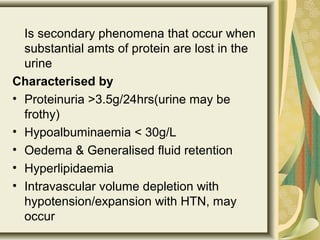
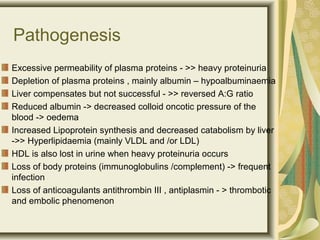
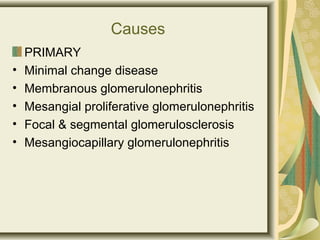
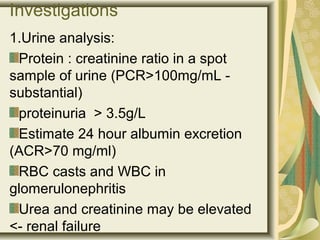
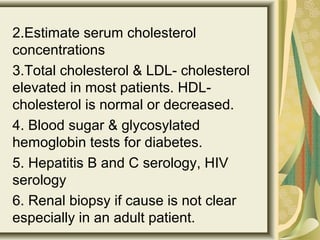
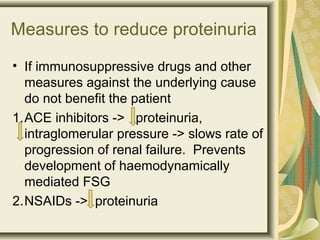
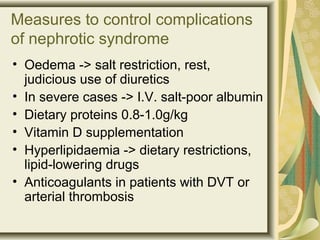
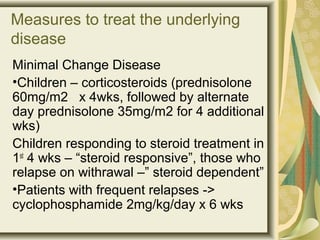
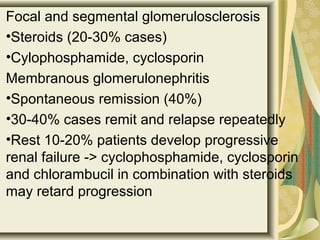
Nephrotic syndrome is characterized by heavy proteinuria, hypoalbuminemia, edema, and hyperlipidemia. It is caused by conditions that damage the glomerulus, increasing permeability to plasma proteins. Primary causes include minimal change disease, membranous glomerulonephritis, and focal segmental glomerulosclerosis. Secondary causes can be infections, connective tissue diseases, and cancers. Treatment focuses on reducing proteinuria with ACE inhibitors or NSAIDs, managing edema and hyperlipidemia, and treating the underlying condition, often with corticosteroids, cyclophosphamide, or cyclosporine.