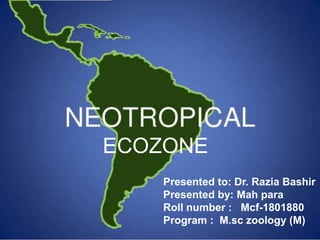
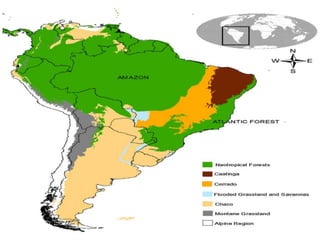
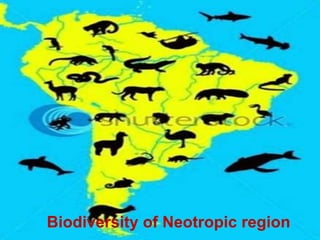
The Neotropic ecozone includes South America, most of Mexico, Central America, the Caribbean islands, and southern North America. It was originally part of the supercontinent Gondwana before breaking apart over 100 million years ago. The climate is mostly tropical but extends into temperate zones in southern South America. The region has high biodiversity, including unique families of mammals like hippopotamuses and lemurs, as well as many endemic bird, fish, insect, reptile, amphibian and plant families and species, such as potatoes, tomatoes, maize and cacao trees. The Neotropic ecozone can be divided into several subregions including the Chilian, Brazilian, Mexican, and Antille