


Group 5 – TY.BBA
• Take it or Leave it
Example:
– That's all I've got. Take it or leave it.
– That's the best offer I can make. I've done as much as I can for you now, so
you're going to have to take it or leave it.
– Well, you can take it now, or you can leave it forever. If you don't take it, I
really think you'll regret that decision for a long time.
• Split the difference
Example:
o It's lower than I really wanted, but I'd be prepared to split the difference.
o You are offering 200. I want 300. For a quick sale, I'll accept 250.
• Make a mountain out of a mole hill
Example:
 Look at this scratch! It's like second-hand goods and will cost a lot to fix, and even
then just won't be the same!
 Oh no! The box is damaged. I wanted it for a gift, too. This deserves a big discount.
 What did you call me? How dare you! I have never been so insulted in all my life!!
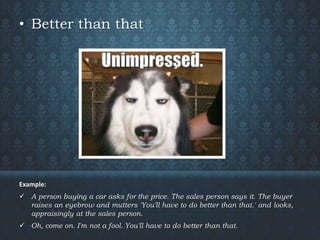
• Better than that
Example:
 A person buying a car asks for the price. The sales person says it. The buyer
raises an eyebrow and mutters 'You'll have to do better than that.' and looks,
appraisingly at the sales person.
 Oh, come on. I'm not a fool. You'll have to do better than that.
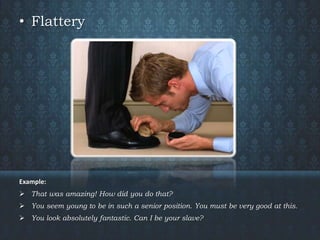
• Flattery
Example:
 That was amazing! How did you do that?
 You seem young to be in such a senior position. You must be very good at this.
 You look absolutely fantastic. Can I be your slave?
• All I’ve got !
Example:
 Look. All I've got is 27.32. Will you take this? I've not got any more.
 Oh dear. I've only got a 10. Is that enough?
 Sorry, I'll get into trouble if I spend more than 25.
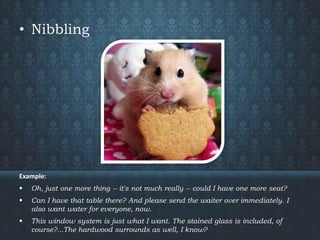
• Nibbling
Example:
 Oh, just one more thing -- it's not much really -- could I have one more seat?
 Can I have that table there? And please send the waiter over immediately. I
also want water for everyone, now.
 This window system is just what I want. The stained glass is included, of
course?...The hardwood surrounds as well, I know?
• Side Payments
Example:
 In a house exchange, where an older couple are swapping their big house with
a young family who have a smaller bungalow, the difference in value is
negotiated and the family pay this in cash.
 Look, I'll give you this Honda and five hundred extra for your Ford, which I
know is a bit newer.
• Divide and conquer
Example:
o A side member of a negotiating team spends time with some of the younger members of the
other side whilst the main negotiations are going on elsewhere. In their discussions, they
touch on how the ideas from these bright young people are being ignored by their superiors.
o A negotiator and a colleague 'privately' talk about how one person on the other side is more
successful than another. They know that they are being overheard and their talk is designed
for the listener.
o A negotiator hints in an aside to the other person how one solution will allow them to win
some of their internal battles.
Bargaining Strategies
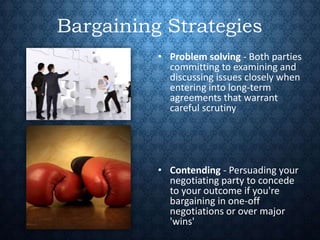
• Problem solving - Both parties
committing to examining and
discussing issues closely when
entering into long-term
agreements that warrant
careful scrutiny
• Contending - Persuading your
negotiating party to concede
to your outcome if you're
bargaining in one-off
negotiations or over major
'wins'
• Yielding - Conceding a point that is
not vital to you but is important to
the other party; valuable in ongoing
negotiations.
• Compromising - Both parties
forgoing their ideal outcomes,
settling for an outcome that is
moderately satisfactory to each
participant.
• Inaction - buying time to think
about the proposal, gather more
information or decide your next
tactics.
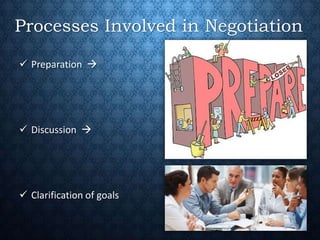
Processes Involved in Negotiation
 Preparation 
 Discussion 
 Clarification of goals
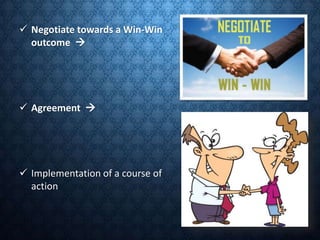
 Negotiate towards a Win-Win
outcome 
 Agreement 
 Implementation of a course of
action
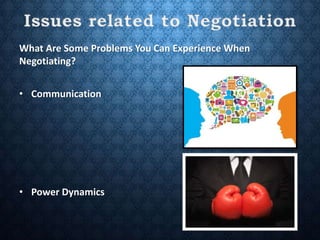
What Are Some Problems You Can Experience When
Negotiating?
• Communication
• Power Dynamics
 Give And Take 
 Resolutions 
Ways to increase negotiation
effectiveness:
 Learn to Flinch
 Recognize that people often
ask for more than they expect
to get
 The person with the most
information usually does better
 Practice at every opportunity
 Maintain your walk away power
Organisation
Organizations negotiation strategy:
Organizational effectiveness is a product of activities within a
system - internal and external.
Negotiation is critical in establishing the internal system
(structure, people, functions, plans, measures, etc.), and the
organization's relationship to the external system (markets,
suppliers, technology, etc).
Negotiation is also critical to optimising the performance of
activities internally and externally.
Negotiation Tips & Techniques
Have an alternative -
negotiate with freedom of
choice 
Negotiate when the sale is
conditionally agreed upon,
and not before that
Aim High - Aim for the best
outcome 
Let the other side go first
List all - Get the other person's
full 'shopping list' before you
start to negotiate
Trade Concessions - Don't give
them away
Keep the whole package in
mind
Keep searching for variables,
concessions, 'bargaining
chips', incentives
Keep accurate notes, and
show that you are doing it
Summarise and clarify the
negotiation as you go
THANK YOUGROUP 5 – TY.BBA

Negotiation skills ppt.odp

  • 1.
  • 4.
    • Take itor Leave it Example: – That's all I've got. Take it or leave it. – That's the best offer I can make. I've done as much as I can for you now, so you're going to have to take it or leave it. – Well, you can take it now, or you can leave it forever. If you don't take it, I really think you'll regret that decision for a long time.
  • 5.
    • Split thedifference Example: o It's lower than I really wanted, but I'd be prepared to split the difference. o You are offering 200. I want 300. For a quick sale, I'll accept 250.
  • 6.
    • Make amountain out of a mole hill Example:  Look at this scratch! It's like second-hand goods and will cost a lot to fix, and even then just won't be the same!  Oh no! The box is damaged. I wanted it for a gift, too. This deserves a big discount.  What did you call me? How dare you! I have never been so insulted in all my life!!
  • 7.
    • Better thanthat Example:  A person buying a car asks for the price. The sales person says it. The buyer raises an eyebrow and mutters 'You'll have to do better than that.' and looks, appraisingly at the sales person.  Oh, come on. I'm not a fool. You'll have to do better than that.
  • 8.
    • Flattery Example:  Thatwas amazing! How did you do that?  You seem young to be in such a senior position. You must be very good at this.  You look absolutely fantastic. Can I be your slave?
  • 9.
    • All I’vegot ! Example:  Look. All I've got is 27.32. Will you take this? I've not got any more.  Oh dear. I've only got a 10. Is that enough?  Sorry, I'll get into trouble if I spend more than 25.
  • 10.
    • Nibbling Example:  Oh,just one more thing -- it's not much really -- could I have one more seat?  Can I have that table there? And please send the waiter over immediately. I also want water for everyone, now.  This window system is just what I want. The stained glass is included, of course?...The hardwood surrounds as well, I know?
  • 11.
    • Side Payments Example: In a house exchange, where an older couple are swapping their big house with a young family who have a smaller bungalow, the difference in value is negotiated and the family pay this in cash.  Look, I'll give you this Honda and five hundred extra for your Ford, which I know is a bit newer.
  • 12.
    • Divide andconquer Example: o A side member of a negotiating team spends time with some of the younger members of the other side whilst the main negotiations are going on elsewhere. In their discussions, they touch on how the ideas from these bright young people are being ignored by their superiors. o A negotiator and a colleague 'privately' talk about how one person on the other side is more successful than another. They know that they are being overheard and their talk is designed for the listener. o A negotiator hints in an aside to the other person how one solution will allow them to win some of their internal battles.
  • 13.
    Bargaining Strategies • Problemsolving - Both parties committing to examining and discussing issues closely when entering into long-term agreements that warrant careful scrutiny • Contending - Persuading your negotiating party to concede to your outcome if you're bargaining in one-off negotiations or over major 'wins'
  • 14.
    • Yielding -Conceding a point that is not vital to you but is important to the other party; valuable in ongoing negotiations. • Compromising - Both parties forgoing their ideal outcomes, settling for an outcome that is moderately satisfactory to each participant. • Inaction - buying time to think about the proposal, gather more information or decide your next tactics.
  • 15.
    Processes Involved inNegotiation  Preparation   Discussion   Clarification of goals
  • 16.
     Negotiate towardsa Win-Win outcome   Agreement   Implementation of a course of action
  • 17.
    What Are SomeProblems You Can Experience When Negotiating? • Communication • Power Dynamics
  • 18.
     Give AndTake   Resolutions 
  • 19.
    Ways to increasenegotiation effectiveness:  Learn to Flinch  Recognize that people often ask for more than they expect to get
  • 20.
     The personwith the most information usually does better  Practice at every opportunity  Maintain your walk away power
  • 21.
    Organisation Organizations negotiation strategy: Organizationaleffectiveness is a product of activities within a system - internal and external. Negotiation is critical in establishing the internal system (structure, people, functions, plans, measures, etc.), and the organization's relationship to the external system (markets, suppliers, technology, etc). Negotiation is also critical to optimising the performance of activities internally and externally.
  • 22.
    Negotiation Tips &Techniques Have an alternative - negotiate with freedom of choice  Negotiate when the sale is conditionally agreed upon, and not before that Aim High - Aim for the best outcome 
  • 23.
    Let the otherside go first List all - Get the other person's full 'shopping list' before you start to negotiate Trade Concessions - Don't give them away
  • 24.
    Keep the wholepackage in mind Keep searching for variables, concessions, 'bargaining chips', incentives
  • 25.
    Keep accurate notes,and show that you are doing it Summarise and clarify the negotiation as you go
  • 26.
    THANK YOUGROUP 5– TY.BBA