PRELIMINARY OUTCOME EVALUATION
The National Disaster Resilience
Competition’s Resilience Academies
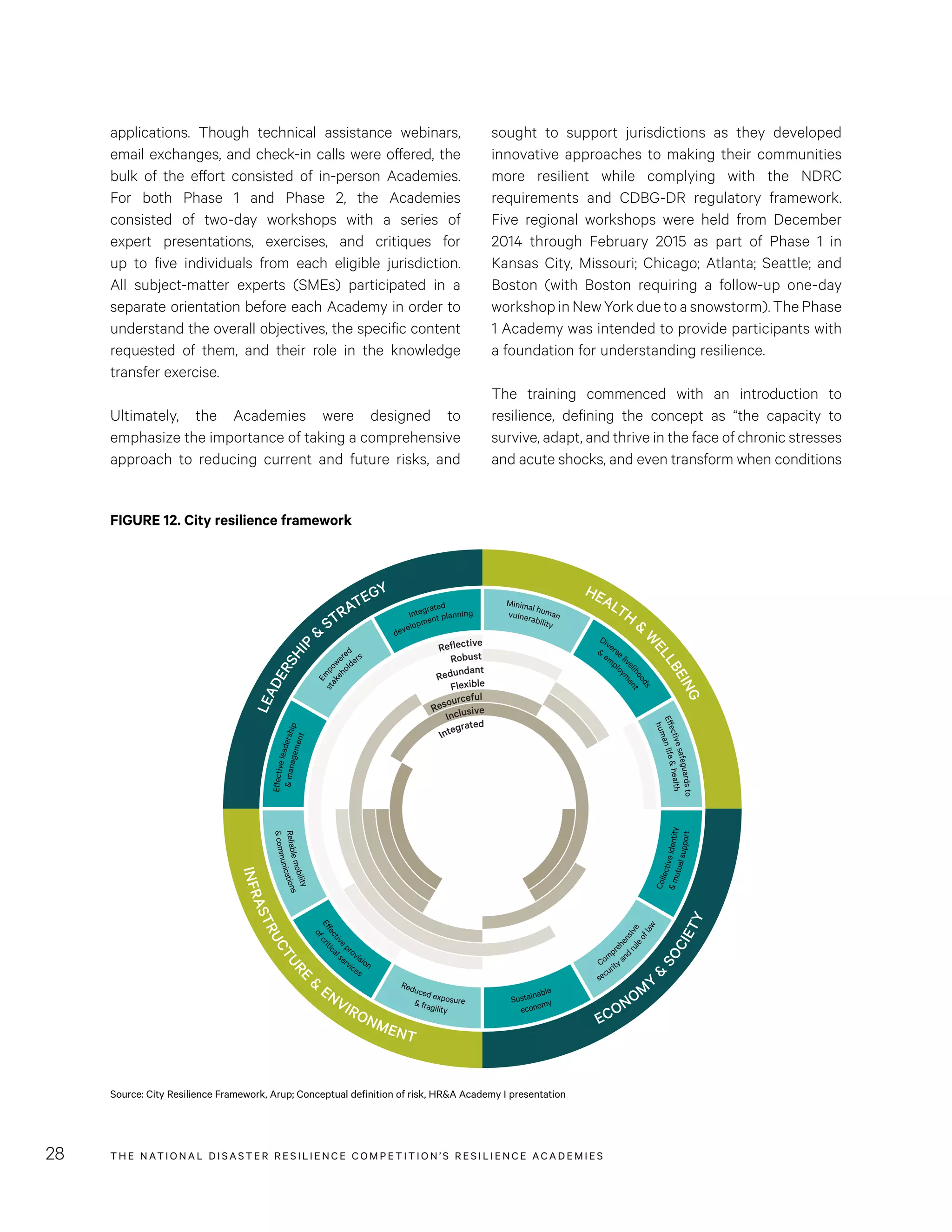
December 2016
Supported by
THE
RockefellerFoundation
MONITORING&EVALUATIONOFFICE
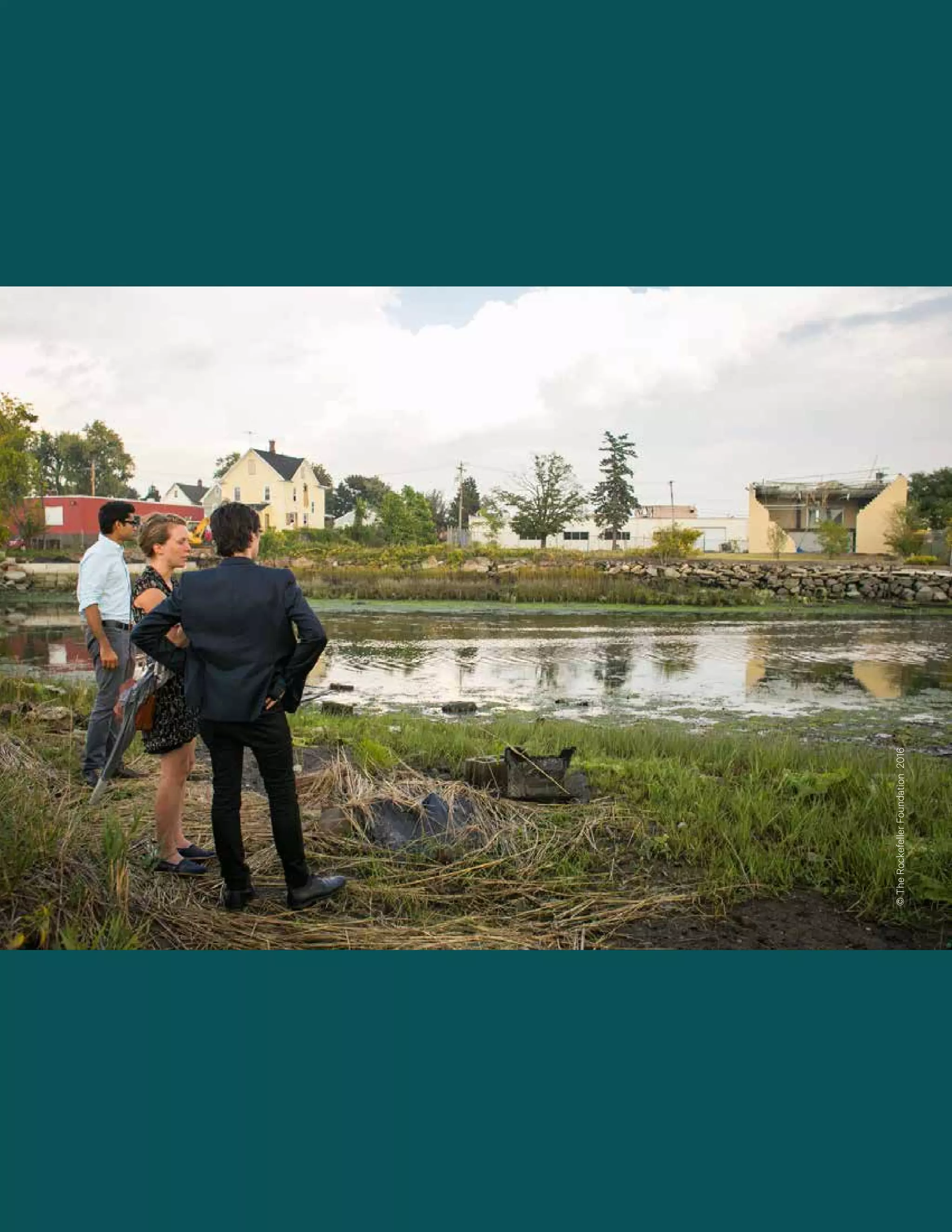
Cover photo: © The Rockefeller Foundation 2016
About the Urban Institute
The nonprofit Urban Institute is dedicated to elevating the debate on social and economic policy. For nearly five
decades, Urban Institute scholars have conducted research and offered evidence-based solutions that improve lives
and strengthen communities across a rapidly urbanizing world. Their objective research helps expand opportunities
for all, reduce hardship among the most vulnerable, and strengthen the effectiveness of the public sector.
About The Rockefeller Foundation
For more than 100 years, The Rockefeller Foundation’s mission has been to promote the well-being of humanity
throughout the world. Today, The Rockefeller Foundation pursues this mission through dual goals: advancing
inclusive economies that expand opportunities for more broadly shared prosperity, and building resilience by
helping people, communities, and institutions prepare for, withstand, and emerge stronger from acute shocks and
chronic stresses.
Monitoring and Evaluation at The Rockefeller Foundation
Committed to supporting learning, accountability, and performance improvements, the Foundation’s Monitoring
and Evaluation team works with staff, grantees, and partners to monitor and evaluate the Foundation’s pathways
to impact in the short- and long-term, and to capture lessons about what works and what doesn’t across the
Foundation’s diverse portfolio.
Supported by
The contents of this report are the views of the authors and do not
necessarily reflect the views or policies of The Rockefeller Foundation.
© 2016, The Rockefeller Foundation
Preliminary Outcome Evaluation
The National Disaster Resilience
Competition’s Resilience Academies
December 2016
Carlos Martín, PhD
Brandi Gilbert, PhD
Somala Diby
Eric Burnstein
Tanaya Srini
Shiva Kooragayala
THE
RockefellerFoundation
MONITORING&EVALUATIONOFFICE
©TheRockefellerFoundation2016
Table of Contents
Acronyms	 v
Acknowledgments	 vii
Executive summary	 viii
Introduction	 1
1 	 Study participants	 11
2	 Resilience Academies’ effectiveness, delivery, and
leverage, and the HUD Partnership	 27
3	 Knowledge reach and outcomes	 39
4	 Transactional changes	 49
5	 Progress toward resilience impact	 57
Implications for future work	 67
FIGURES
Figure 1. Timeline of NDRC and Resilience Academies activities	 3
Figure 2. Map of study jurisdictions	 6
Figure 3. Study respondents by jurisdictional type	 12
Figure 4. Study respondents by NDRC status	 12
Figure 5. Study respondents by functional office in jurisdiction	 13
Figure 6. Study respondents by Academy participation	 14
Figure 7. Study respondents by Academy participation	 15
Figure 8. Study respondents by functional office and Academy participation	 16
Figure 9. Study champion respondents by functional office	 17
Figure 10. Study jurisdictions by NDRC status	 19
Figure 11. Study sample jurisdictions by jurisdictional capacity	 22
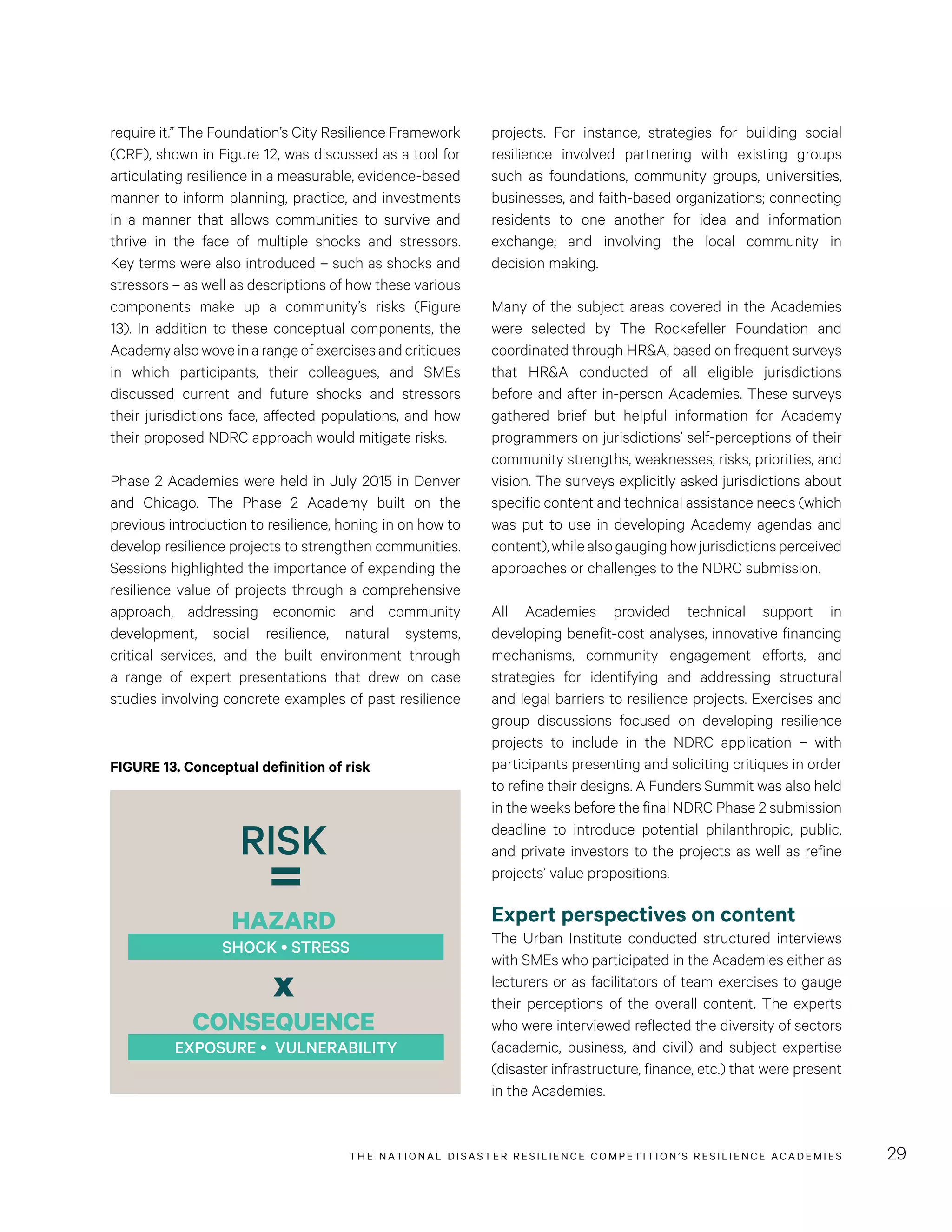
Figure 12. City resilience framework	 28
Figure 13. Conceptual definition of risk	 29
TABLES
Table 1. Study core and spillover jurisdictions	 7
Table 2. Study sample versus all NDRC-eligible jurisdictions by geographic type
and Academy participation	 19
THE NATIONAL DISASTER RESILIENCE COMPETITION’S RESILIENCE ACADEMIESiv
Table 3. Study sample versus all NDRC-eligible jurisdictions by Academy
participation 	 20
Table 4. Study sample clusters by defined cluster type with notes on potential
transactional structures	 23
ANNEXES
Annex 1. NDRC jurisdictions	
Annex 2. Crosswalk of evaluation questions	
Annex 3. Interview protocols	
Annex 4. Codebook summary	
Annex 5. Governmental capacity indicators	
All annexes listed can be found in the separate annexes documents for this report
THE NATIONAL DISASTER RESILIENCE COMPETITION’S RESILIENCE ACADEMIES v
Acronyms
100RC 100 Resilient Cities
CDBG Community Development Block Grant
CRF City Resilience Framework
DR Disaster recovery
FAQ Frequently asked question
FEMA Federal Emergency Management Agency
HUD Housing and Urban Development (US Department)
NDRC National Disaster Resilience Competition
NGO Nongovernmental organizations
NOFA Notice of Funding Availability
RBD Rebuild by Design
SME Subject-matter expert
©TheRockefellerFoundation2016
THE NATIONAL DISASTER RESILIENCE COMPETITION’S RESILIENCE ACADEMIES vii
Acknowledgments
This report was prepared by the Urban Institute for The Rockefeller Foundation’s Evaluation Office,
through Veronica Olazabal, Senior Associate Director. We are grateful to them and to all our funders, who
make it possible for the Urban Institute to advance its mission. The authors are particularly grateful to
Nancy Kete, former Managing Director, Samuel Carter, Managing Director, and Courtney Smith, Program
Associate, of the Resilience Team within the Foundation’s Program Office, for their insights.
The primary authors of this report were Dr. Carlos Martín, Dr. Brandi Gilbert, Eric Burnstein, Somala
Diby, Shiva Kooragayala, and Tanaya Srini. The data collection and analysis were supported by Rebecca
Daniels, Carl Hedman, Sierra Latham, and Maia Woluchem. We also would like to acknowledge Diane
Levy, Senior Research Associate, for the tremendous assistance she provided in her role as qualitative
methods adviser to the project.
The authors greatly appreciate the information provided by The Rockefeller Foundation’s consulting
partner for the Resilience Academies, HR&A Advisors, Inc., particularly Sara Brown, Phillip Bush, Bill
Calabrese, Theresa Cassano, Rachel Cohen, Hannah Hoyt, Douglas Land, Johanna Lovecchio, Katherine
Michonski, and the commitment and time of Kaye Matheny. Additional information provided by staff in
the Offices of Economic Resilience and Community Planning and Development at the U.S. Department of
Housing and Urban Development – Kevin Bush, Marion McFadden, Jessie Handforth Kome, and Danielle
Arigoni – was also critical for forming the research design and jurisdictional interview protocols.
Finally, this study would not have been possible without the cooperation of those Resilience Academies
stakeholders – both the subject-matter experts who served as instructors and facilitators at the
Academies and the local policymakers, public employees, and consultants throughout the country – who
took the time to answer questions in detail despite other pressures and commitments. Their willingness
to share information about the nature of their activities and their perceptions of the Resilience Academies
so that others might learn from their experiences was invaluable. We are grateful to all of them.
The views expressed are those of the authors and should not be attributed to the Urban Institute, its
trustees, or its funders. Funders do not determine research findings or the insights and recommen-
dations of Urban Institute experts. Further information on the Urban Institute’s funding principles is
available at http://www.urban.org/support.
THE NATIONAL DISASTER RESILIENCE COMPETITION’S RESILIENCE ACADEMIESviii
Executive summary
Following its successful partnership with the U.S. Department of Housing and Urban Development’s
(HUD) post–Hurricane Sandy Rebuild by Design competition, The Rockefeller Foundation launched
the Resilience Academies and Capacity-Building Initiative. Designed to support HUD’s National Disaster
Resilience Competition (NDRC), the Academies and the Initiative provide eligible state, county, and
municipal governments with subject-matter expertise and lessons from the Foundation’s years of
on-the-ground disaster recovery programming and mitigation planning. Further, the Foundation hoped
to assist these key players in moving global knowledge and resources to meet homegrown needs.
The delivery of this knowledge content was aligned with the NDRC’s rapid submission period. During a
six-month submission timeframe for Phase 1 of the competition – from September 2014 to March 2015
– most of the 67 eligible jurisdictions across the United States prepared resilience needs assessments
that would qualify them for one of the 40 slots in Phase 2.
In NDRC’s Phase 1, the Foundation’s regional in-person group workshops, webinars, and individualized
phone check-ins were designed to help jurisdictions comprehensively review their needs across multiple
social, economic, and environmental areas; introduce other resilience-building examples; and identify
comprehensive approaches aligned with jurisdiction goals. In Phase 2 – from June to October 2015
– jurisdictions operationalized their reviews into specific projects, typically physical infrastructure
improvements, with continued assistance offered through two in-person Academies. Implementation
considerations, such as benefit-cost analyses, financing options, regulatory environment scans, and
community engagement strategies, were the focus of the Phase 2 assistance.
In January 2016, HUD announced the final 13 NDRC winners. The Foundation expects the knowledge of
resilience conditions in communities – and the process of building resilience through public practices – to
be retained, shared, and applied further, even beyond the implementation of the 13 winning projects. The
Foundation was particularly interested in the process of developing the curriculum and the partnership,
as well as the short-term outcomes associated with knowledge gains, changes in transactions between
jurisdictions, and progress toward impact.
Purpose of the Evaluation
The Rockefeller Foundation partnered with the Urban Institute to assess these components in the
immediate aftermath of the HUD decisions. The Urban Institute designed and executed a short-term
outcome evaluation of a purposive sample of jurisdictions involving NDRC-eligible and Resilience Acad-
emy-participating jurisdictions and other jurisdictions that neighbored the selected jurisdictions or were
geographically relevant jurisdictions at a different level of government (for example, a city within an
eligible county or, inversely, the state in which an eligible city is located).
THE NATIONAL DISASTER RESILIENCE COMPETITION’S RESILIENCE ACADEMIES ix
Key observations, findings, and implications
Study participants
The Urban Institute conducted 134 interviews with a total of 155 respondents in 47 different jurisdictions.
Understanding the nature of these respondents is critical to framing the findings.
Summary observations
Many of the Academy participants had pre-existing resilience knowledge, particularly around core
concepts. Similarly, several jurisdictions had either implemented some level of resilience activities
or plans or had significant capacity to tap into resilience-building resources. Regional clusters of
jurisdictions collaborated through existing transactions and knowledge exchanges. High baselines
for these participants partially determined their resulting outcomes from the Academies. With a few
exceptions, jurisdictions with less existing knowledge were often unable to surmount their capacity
challenges despite their need.
Detailed observations
•	 In a majority of jurisdictional cases, respondents labeled one or more of their peers as
“champions” either explicitly or implicitly. These respondents stood out as having a pre-existing
familiarity with resilience concepts and terminology, having actively participated in the Resilience
Academies when eligible, or having played a central role in their jurisdictions’ NDRC submissions, as
applicable. Other respondents frequently referred to these champion colleagues when discussing
their jurisdictions’ resilience knowledge base, current activities, and future plans. Though not every
sampled jurisdiction had a champion, there was at least one in each cluster, and even some ineligible
spillover jurisdictions had champions.
•	 Jurisdictions entered the Academies with a wide variation in capacity based on several
contextual factors, including leadership support, political issues, disaster histories,
government structure and size (presence of silos), and technical skill sets. Many had extensive
collective experiences with resilience-related concepts which, with a few exceptions, tended to be
jurisdictions with a high capacity of financial and intellectual resources. Overall, the sample reflects
a wide variety of NDRC eligibility and status, Academy participation, and geographic types, but with
a slight over-representation of ineligible and Phase 1–losing jurisdictions to compensate for the
volume of individuals we recruited from Phase 1 and Phase 2 applicants.
•	 A wide diversity of cluster types – and histories of interjurisdictional transactions within
them – emerged. Clusters were typified by many factors, including pre-established relationships,
such as through HUD Community Development Block Grant (CDBG) entitlement status, emergency
management coordination, and metropolitan planning organizations. Cluster types included large
high-capacity cities within lower- or mid-capacity counties or states, and vice versa. In turn, there had
been no consistent pattern of collaboration before the Academies, even within similar types of clusters.
THE NATIONAL DISASTER RESILIENCE COMPETITION’S RESILIENCE ACADEMIESx
Future implications
The Foundation should consider expanding the target audience of the Academies. As noted above,
jurisdictions with less existing knowledge were generally unable to surmount their capacity challenges
despite their great need. Therefore, the Foundation may target low-capacity, low-resource jurisdictions
that cannot afford subject-matter expertise but that govern the populations most in need of resilience
efforts. The learning from hands-on tailored exercises that realize resilience goals is invaluable for these
entities. Further, much of the information provided in the Academies can, and should, be made public so
it is more easily accessible.
Resilience Academies’ effectiveness, delivery, and
leverage, and the HUD Partnership
The Foundation asked questions about the curriculum’s effectiveness, whether and how existing tools
were leveraged appropriately, and how beneficial the HUD partnership and shared delivery were. These
questions focused on the process of developing and executing the Academies.
Summary findings
Most respondents found the Resilience Academy subject matter helpful, especially those components
focused on operationalizing and implementing resilience. The team exercises and critiques were
especially noted as useful delivery mechanisms. The relationship between NDRC and the Academies
was particularly complex in structure and confusing for jurisdictions. While the Academies provided an
opportunity to consider local resilience priorities comprehensively, rules and limitations associated with
NDRC regarding tie-backs to qualifying disasters and eligible activities forced many jurisdictions either
to define projects that might not have been their resilient priority or to not define a project at all.
Detailed findings
•	 Expert and participant feedback regarding the content of the Academies was largely positive,
particularly regarding the sessions focusing on content that operationalized resilience
concepts and reviewed implementation processes. Some resilience champions and members
of high-capacity jurisdictions noted that the conceptual subject matter and resilience overviews
were not necessarily new, but that the exercises and team discussions were helpful nonetheless.
Specific content gaps identified included providing a greater range of resilience project examples
and offering more support on benefit-cost analyses.
•	 Virtually all participants described the team exercises and discussions facilitated by
subject-matter experts as particularly helpful in orienting their projects and operationalizing
resilience theory into work practices. Feedback regarding the timing of the workshops – especially
the Funders Summit – was largely negative given the NDRC’s expedited timeframe, but the amount
of time in sessions was viewed as appropriate to learning efficiently for the immediate purpose of the
NDRC. Other delivery gaps identified by participants included more cross-jurisdiction collaborations
for building a network of resilience champions beyond the NDRC and the need to make the tools
public rather than relying on in-person Academies to share learning and to allow participants to
deliver the content locally.
THE NATIONAL DISASTER RESILIENCE COMPETITION’S RESILIENCE ACADEMIES xi
•	 Respondents appreciated the partnership between The Rockefeller Foundation and HUD, but
they felt that the roles led to some confusion. This was especially the case when assistance
providers contradicted HUD responses, when HUD responses appeared inconsistent or overly
complicated, or when either partner guided jurisdictions in directions that jurisdictions felt were not
the most resilient uses of funds or that even led to their submission’s rejection. For many respondents,
then, the potential NDRC award was motivation for persevering, but the HUD requirements imposed
on NDRC made participating in and learning from the Academies particularly troublesome, given the
volume of rules perceived as inconsistent and changing.
Future implications
•	 There is a range of opportunities to include additional material that addresses content gaps
noted by the participants, such as the need for a greater range of resilience project examples
and more support on benefit-cost analyses. Participants noted other subject areas to include,
such as social justice and equity in a resilience framework, teaching and communicating resilience
to stakeholders, non–hurricane disaster resilience, rural resilience, health resilience, and leveraging
of funding.
•	 As The Rockefeller Foundation continues to work with future partners, it is crucial to consider
strategies for developing a more integrated and coordinated approach in order to effectively
disseminate resilience knowledge. In ways both profound and mundane, a partner can provide the
resources that will motivate participation in Academies but can also tie strings to those resources.
The funding sources and the competition or project terms must be directly aligned with the engaged,
holistic, and iterative activities associated with the resilience thinking taught in the Academies. The
funding’s terms, timing, and goals must mirror and support that thinking.
Knowledge reach and outcomes
The Foundation was particularly interested in whether and how knowledge about resilience goals and
resilience-building processes were conveyed and retained by participants. Assessments about the
short-term knowledge outcomes provide insight into knowledge acquisition and the Academies’ reach.
Summary findings
Academy participants displayed a familiarity and awareness with resilience concepts in ways that non-
participants could not. As reported by participants, resilience knowledge was especially helpful for
developing the NDRC submission. In particular, respondents were able to learn how to operationalize
resilience into specific working processes and arrangements. These gains were limited to those who
directly participated in the Academies.
Detailed findings	
•	 Most Academy participants – especially champions and those from higher capacity,
high-resource jurisdictions – noted modest gains in operationalizing resilience into specific
working processes and arrangements. These respondents generally came in with some resilience
knowledge, particularly around the concept and expected outcomes associated with resilience.
THE NATIONAL DISASTER RESILIENCE COMPETITION’S RESILIENCE ACADEMIESxii
Thus, they were able to build on this knowledge base. The exercises associated with the Academies
eventually led to NDRC submissions, helping make resilience thinking real.
•	 The majority of jurisdictions noted that the Academies, combined with their goal for learning
in support of their NDRC objective, helped them understand and elevate the role of social
and economic factors in building holistic resilience and in understanding the operational
processes by which to achieve it. These gains were described as modest on the whole. Champions
within high-capacity jurisdictions seemed to focus primarily on the process and implementation
components of the curriculum and their knowledge gains in those subjects.
	 Otherssolelyreportedincreasedfamiliaritywithresilienceconcepts,thoughwithafewexceptions
among ambitious jurisdictions. They recognized other components of resilience knowledge shared
at the Academies but not in any detail. Many jurisdictions relied heavily on additional consultants
that provided additional resilience-content guidance. Almost all respondents who did not participate
in the Academies were unable to articulate many of the basic concepts shared in the competition,
suggesting knowledge gains among the participants.
Future implications
•	 Knowledge acquisition is best measured by its perpetuation. Therefore it is critical to
provide participants with tools and strategies for sharing knowledge with others as well as
opportunities for continued learning as they implement resilience efforts. Academy participants
need to leave with information in hand as much as in their heads, so that they can train others and
spread the word. They must also have the resources and time to do so. Along with training the
trainer, further knowledge must be provided for implementation and monitoring of projects at this
early phase of the resilience movement.
Transactional changes
Efforts to improve the way governments function internally and with other units of government are critical
to resilience building. As such, the Foundation was also interested in whether and how transactions
changed between Academy participants and their colleagues within their home offices, with other
agencies and silos in their home jurisdictions, and with neighboring jurisdictions.
Summary findings
Resilience knowledge sharing and coordination was mainly for the NDRC application at the office,
jurisdiction, or cross-jurisdiction levels. Thus, participants were not able to share knowledge in any
sustainable way beyond the competition. There were some new intra- and interjurisdictional partnerships
with both the governmental agencies and nongovernmental organizations (NGOs) formed for the
purpose of NDRC application development. However, without an NDRC grant award, many proposed or
nascent transactions have largely dissolved.
Detailed findings
•	 Interoffice transactions were mainly within the context of NDRC application efforts among
the team members working on the submission, rather than for the purpose of general
capacity building within the organization. There were minimal shifts in the level of collaboration,
as interoffice relations, on the whole, were already strong. In the case of some champions, peers
THE NATIONAL DISASTER RESILIENCE COMPETITION’S RESILIENCE ACADEMIES xiii
commonly deferred to them – often to the point of abdicating any responsibility or interest in
resilience topics.
•	 Intrajurisdictional knowledge sharing and coordination were mainly for the NDRC application.
The new partnerships that were developed have continued, but in most cases, only for NDRC
awardees. The increase in intrajurisdictional transactions appears to have slightly advanced, due
to the participation of both the Academies and NDRC. Many high-capacity jurisdictions had a high
level of baseline intrajurisdictional collaboration, but others developed new relationships across their
jurisdictions, and some formed new partnerships with NGOs as a consequence of learning about
resilience processes (especially “de-siloing”) and developing relationships in support of their NDRC
projects. A majority of jurisdictions, however, continue to work with the same governmental agencies
as previously.
•	 Interjurisdictional knowledge sharing and coordination were predominately for the purpose
of the NDRC application. The mixed levels of pre-existing interjurisdictional collaboration largely
determined whether any new collaboration developed, especially if it went beyond the NDRC
application. Previous relationships were key predictors of the extent to which jurisdictions worked
for the purpose of the NDRC application, by bringing partners together to discuss shared language,
exchange data, consult on project ideas, and provide letters of support. In some cases, negative
pre-existing relationships were exacerbated by the pressures of NDRC or the reluctance of one or
more jurisdictions to assist.
Future implications
•	 The Rockefeller Foundation might incentivize the sharing of knowledge within and across
jurisdictions – for example, in the form of additional Academies for shared projects that could
work in parallel with direct project funding for the participating jurisdictions’ individual projects.
Collaboration is a core component of resilience processes, yet it is the hardest to institutionalize beyond
a project basis. This makes it key to develop mechanisms for fostering and further strengthening these
relationships.
Progress toward resilience impact
Finally, The Rockefeller Foundation asked whether the knowledge gained translated into real resilience-
building actions among participating jurisdictions.
Summary findings
Among winners, current plans for implementing NDRC awards are the primary steps toward applying
the knowledge gained. Other jurisdictions’ previous activities or plans largely persist, though some have
already discontinued activity. At the individual level, however, many of the participants are looking to
continue their professional resilience-building work and education.
Detailed findings
•	 Among the “champions,” the majority stated wanting to take on new resilience-related work,
subscribe to new networks, and set personal learning goals regardless of their jurisdiction’s
or neighboring jurisdiction’s NDRC win. Among other respondents, the current and future plans
THE NATIONAL DISASTER RESILIENCE COMPETITION’S RESILIENCE ACADEMIESxiv
tended to fall along the lines of implementing NDRC awards only (for the winners) or searching for
other funding opportunities.
•	 In addition to implementing their NDRC grants, several winners noted other projects and plans
such as participating in continuing regional resilience planning efforts and seeking funding
to implement aspects of their proposals that were not funded. Nonawardees tended to be less
enthusiastic about developing other initiatives, with a few exceptions such as those with committed
leadership, which are seeking other funding sources for their proposed NDRC projects. Future areas
for further developing resilience work included establishing resilience working groups, changing
funding streams to incentivize resilience, and holding local resilience conferences and trainings.
•	 Mainly only clusters that had worked jointly on successful NDRC applications had plans to
continue working across their geographic boundaries. Among this small group, plans included
going beyond the NDRC work to expand to other resilience-focused initiatives.
Future implications
•	 TobettertargettheappropriateaudienceforfutureAcademies,amoregranularunderstanding
of the jurisdiction’s constraints and opportunities across many attributes – disasters, politics,
resources, and existing knowledge – is crucial. This can help to refine curriculum content
appropriately and may lead to alternative delivery mechanisms that are more tailored to the needs
of local jurisdictions.
Conclusion
Lessons about the nature of participants, the exposure to resilience knowledge and resources, and the
implementation of that knowledge as described in this evaluation provide great insights into how the
pilot Academies can shape The Rockefeller Foundation’s future efforts.
As reflected above, the most distinct outcomes are knowledge gains among Academies’ participants
and jurisdictions, which is a typical short-term outcome of instructional or educational interventions.
However,theevaluationrevealedthattheparticipantswhoreportedhavingsubstantiveknowledgeabout
resilience tended to have engaged in the subject before the Academies. The Academies supported the
further growth and awareness of these champions, particularly in relation to operationalizing resilience
theory in actual, tenable projects. Other individuals and jurisdictions that participated in the Academies
commonly came in with very specific conditions and needs regarding their jurisdictional constraints and
challenges as well as their own perceptions about resilience. These were complicated by the exigencies
of the NDRC timeframe and requirements. In all cases, a robust understanding of the types of individuals
who might attend an Academy can help The Rockefeller Foundation refine the curriculum for target
audiences.
The evaluation focused on jurisdictions that attended the Academies and, to the maximum extent
possible, other jurisdictions that could have benefited from either their neighbors’ participation or from
attending themselves. Findings indicate that there was little activity, awareness, or even interest in
resilience among these other jurisdictions, despite the value of the award funds. Hence, jurisdictions
THE NATIONAL DISASTER RESILIENCE COMPETITION’S RESILIENCE ACADEMIES xv
that are most in need of resilience-building efforts are often the least likely to have the capacity or to
have readily identified champions. In turn, these are the least likely to participate in capacity-building
exercises and, in some cases, even care about resilience in their communities or their operations. The
Academies must be ready to address these places and people.
Fortunately, this evaluation uncovered how often there were champions among even low-capacity
jurisdictions that were ineligible, that did not apply, or that ultimately lost NDRC. Perhaps the greatest
strategy for future Academies is to identify and support those individuals for the long-term and with
a longer and more robust intervention. This may include working more closely with various groups
including tribal nations, other local governments, regional planning organizations, community-based
organizations, community institutions, hospitals and clinics, emergency managers, and jurisdictions that
have not yet been directly affected by a natural disaster – but that undoubtedly will face shocks and that
exacerbate their citizenry’s stressors in the future.
©TheRockefellerFoundation2016
THE NATIONAL DISASTER RESILIENCE COMPETITION’S RESILIENCE ACADEMIES 1
Introduction
Attention to the persistent shocks and increased
stressorsthatafflictcommunitiesgloballyhasexpanded
over the last decade, with multilateral, philanthropic,
and public programming dramatically increasing in
an effort to reduce vulnerabilities and produce social,
economic, and environmental co-benefits at the local
scale. This is the resilience movement – a collection
of popular awareness campaigns, scholarly analyses,
public assessments, and private investments that
has been catalyzed in the United States since the
disastrous effects of Hurricane Katrina in 2005 and
Superstorm Sandy in 2012. Combined with the chronic
effects of global warming, proponents contend that
contemporary hazards require strategies that traverse
the silos of emergency preparedness and mitigation
on one hand, and of response, relief, and recovery on
the other. The traditional approach of rebuilding after
a disaster to the same pre-disaster state, they argue, is
neither desirable nor tenable.
The federal government is not immune to this paradigm
shift.Domesticagencieshavelaunchedcomprehensive
assessments of community needs and challenges
along all conditions, and the term resilience has entered
into the civil service’s lexicon. The U.S. Department of
Housing and Urban Development (HUD) – the agency
charged with the bulk of the long-term redevelopment
activities in the National Disaster Recovery Framework
– has pioneered several programs in the hope of
integrating resilience thinking into public funding and
yielding resilience in recipient communities. The latest
effort includes a proposed rulemaking that incentivizes
jurisdictions to consider resilience in their required
consolidated plans.
These efforts started with Rebuild by Design (RBD), the
department’s first explicitly and distinctly resilience-
targeted project. RBD was an intensive, phased design
competition held from June 2013 to June 2014 that
produced 10 interdisciplinary and community-supported
infrastructure plans for rebuilding Hurricane Sandy–
affected communities in the Mid-Atlantic region. The
Urban Institute’s formative evaluation of RBD found that
the quantity of funding – $1 billion – that HUD provided
to winning jurisdictions, the commitment of leadership at
HUD and other federal agencies, the grit of its dedicated
staff and design team competitors, and the intellectual
and financial support from philanthropic organizations,
such as The Rockefeller Foundation, which provided
technical assistance and guidance to competitors, were
instrumental in RBD’s immediate success.
The program
In the context of that success, HUD capitalized on the
opportunity to use similar funding sources to conduct
another resilience-building competition, but one
THE NATIONAL DISASTER RESILIENCE COMPETITION’S RESILIENCE ACADEMIES2
5.	 fully inform and engage community stakeholders
about the current and projected impacts of climate
change and develop pathways to resilience based
on sound science
6.	 leverage investments from the philanthropic
community to help communities.
The competition was open to all 67 communities in the
United States that had presidentially declared disasters
between fiscal years 2011 and 2013, and could quantify
unmet recovery needs. This included approximately
48 states, the District of Columbia and Puerto Rico,
eight counties, and nine municipalities. In addition,
$181 million was reserved exclusively for the Sandy-
affected jurisdictions of the States of New York and New
Jersey, and New York City. The jurisdictions, ideally, could
redefine their recovery needs, in order to include a more
comprehensive set of social, economic, and physical
concerns that would prepare the community for future
disruptions. They would do this through two phases.
•	 Phase 1 involved defining and measuring unmet
recovery needs and resilience objectives without
specifying a project intervention.
•	 Phase 2 required the development of an actionable
resilience-enhancing disaster recovery or
revitalization project with positive and significant
projected cost benefits in addition to qualitative
community enhancements.
The phases also filtered the competition. Only 40 of
the original 67 jurisdictions were eligible to compete in
Phase 2. Applications in Phase 1 were due on March 15,
2015, and decisions made for Phase 2 were announced
on June 22, with a due date of October 27, 2015. HUD
announced its final NDRC winners on January 21,
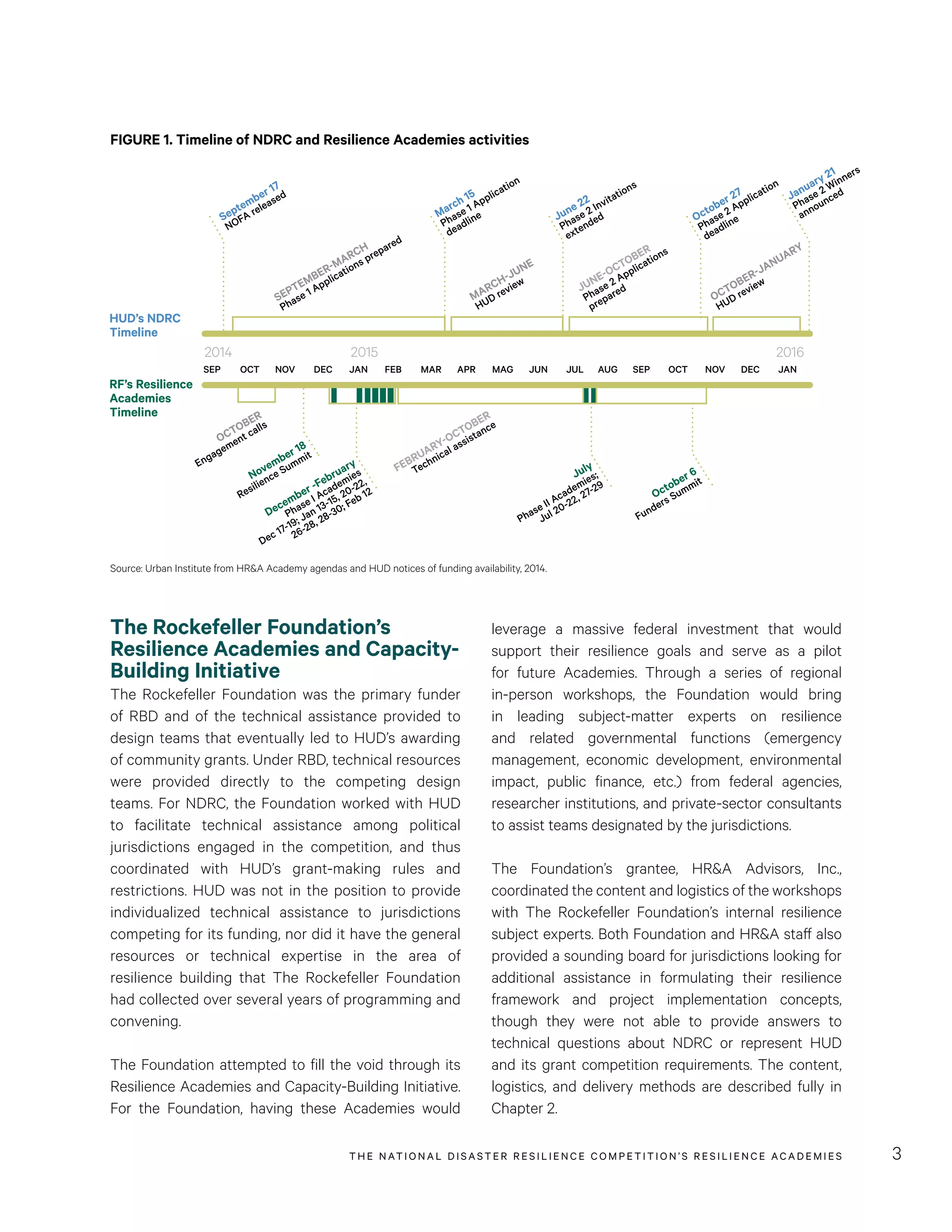
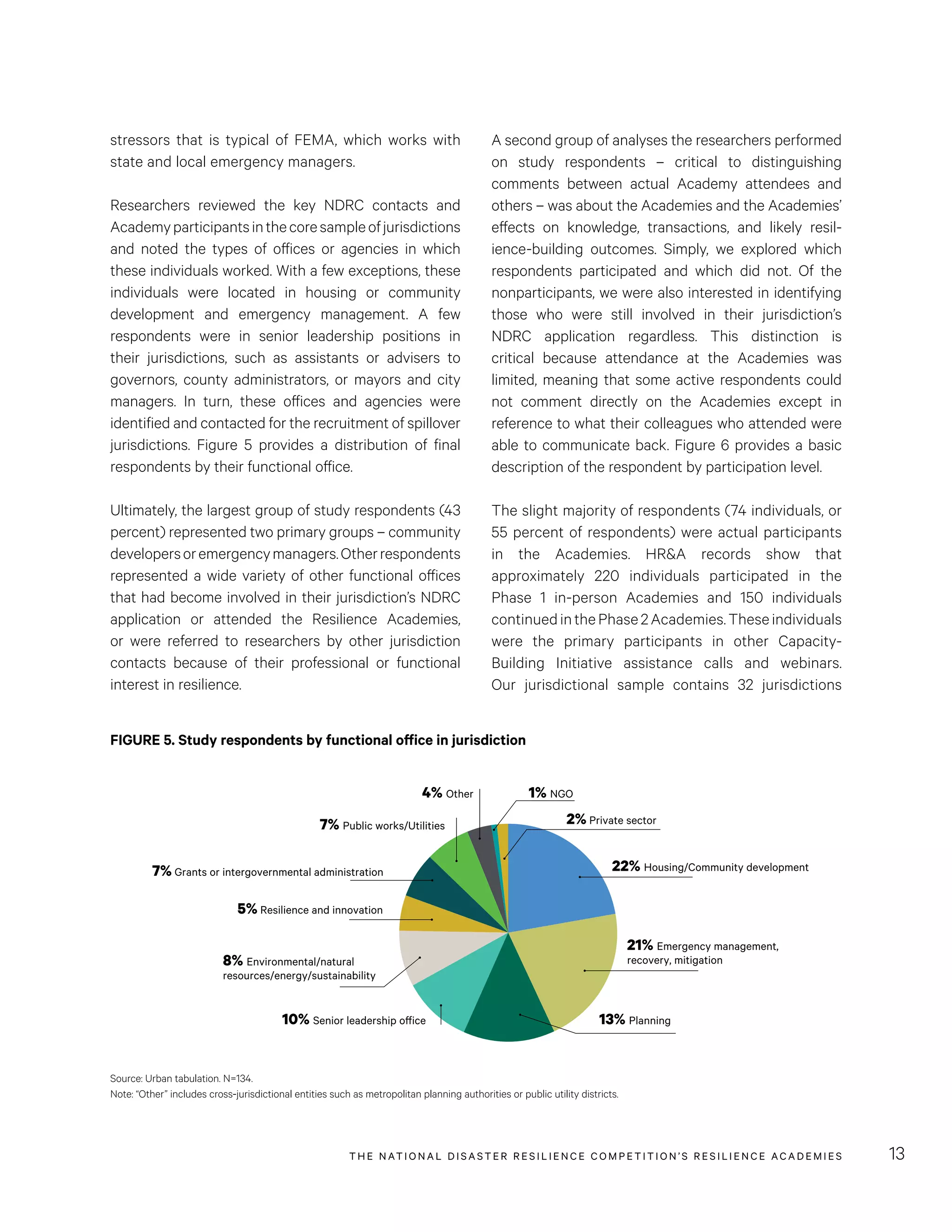
2016. Figure 1 presents the timeline of NDRC activities
and deadlines, and Annex 1 lists the status of eligible
jurisdictions and eventual winners.
To help jurisdictions articulate their comprehensive
resilience needs in Phase 1 and refine a robust project
concept and implementation plan that would be
appropriate for HUD funding in Phase 2, HUD again
enlisted the partnership of The Rockefeller Foundation.
targeted directly to eligible communities across the
country: the National Disaster Resilience Competition
(NDRC). Through this strategy, HUD hoped to insti-
tutionalize resilience-building knowledge, internal
processes, and shared collaboration within the
jurisdictionsinadditiontofundingtheinterventionsthat
would improve resilience for the winning communities
and their citizens.
HUD’s National Disaster Resilience
Competition
In November 2012 and January 2013, the U.S. Congress
passed bills appropriating approximately $60 billion to
assist states affected by Hurricane Sandy and other
U.S. regions affected by disaster during fiscal years
2011 through 2013. The largest portion, over $15 billion,
was reserved for the HUD Community Development
Block Grant Disaster Recovery (CDBG-DR) program,
a relatively flexible funding vehicle to transfer needed
resources to severely damaged states and local
jurisdictions to meet unmet recovery needs for the
most vulnerable low-income households in disaster-
struck areas. The funds traditionally have been used
for infrastructure and individual property rebuilding or
economic development recovery uses. However, the
increasing awareness of long-term risks and mitigation
provided an opportunity to depart from traditional
recovery efforts and incorporate resilient innovations.
As with RBD, almost $1 billion of the total Congressional
appropriation was reserved for a competitive grant
competition among eligible jurisdictions across the
country.
When HUD announced the NDRC on September 17,
2014, it listed six primary program goals:
1.	 fairly allocate remaining disaster recovery funds
2.	 create multiple examples of local disaster recovery
planning that applies science-based and forward-
looking risk analysis to address recovery, resilience,
and revitalization needs
3.	 leave a legacy of institutionalizing the program in
as many states and local jurisdictions as possible
4.	 provide resources to help communities plan and
implement disaster recovery that makes them
more resilient to future threats or hazards
THE NATIONAL DISASTER RESILIENCE COMPETITION’S RESILIENCE ACADEMIES 3
leverage a massive federal investment that would
support their resilience goals and serve as a pilot
for future Academies. Through a series of regional
in-person workshops, the Foundation would bring
in leading subject-matter experts on resilience
and related governmental functions (emergency
management, economic development, environmental
impact, public finance, etc.) from federal agencies,
researcher institutions, and private-sector consultants
to assist teams designated by the jurisdictions.
The Foundation’s grantee, HR&A Advisors, Inc.,
coordinated the content and logistics of the workshops
with The Rockefeller Foundation’s internal resilience
subject experts. Both Foundation and HR&A staff also
provided a sounding board for jurisdictions looking for
additional assistance in formulating their resilience
framework and project implementation concepts,
though they were not able to provide answers to
technical questions about NDRC or represent HUD
and its grant competition requirements. The content,
logistics, and delivery methods are described fully in
Chapter 2.
The Rockefeller Foundation’s
Resilience Academies and Capacity-
Building Initiative
The Rockefeller Foundation was the primary funder
of RBD and of the technical assistance provided to
design teams that eventually led to HUD’s awarding
of community grants. Under RBD, technical resources
were provided directly to the competing design
teams. For NDRC, the Foundation worked with HUD
to facilitate technical assistance among political
jurisdictions engaged in the competition, and thus
coordinated with HUD’s grant-making rules and
restrictions. HUD was not in the position to provide
individualized technical assistance to jurisdictions
competing for its funding, nor did it have the general
resources or technical expertise in the area of
resilience building that The Rockefeller Foundation
had collected over several years of programming and
convening.
The Foundation attempted to fill the void through its
Resilience Academies and Capacity-Building Initiative.
For the Foundation, having these Academies would
FIGURE 1. Timeline of NDRC and Resilience Academies activities
Source: Urban Institute from HR&A Academy agendas and HUD notices of funding availability, 2014.
SEP OCT NOV DEC JAN FEB MAR APR MAG JUN JUL AUG SEP OCT NOV DEC JAN
2015 20162014
September 17
NOFA released
SEPTEMBER-MARCH
Phase 1 Applications prepared
OCTOBER
Engagement calls
November 18
Resilience Summit
December -February
Phase I Academies
Dec 17-19; Jan 13-15, 20-22,
26-28, 28-30; Feb 12
FEBRUARY-OCTOBER
Technical assistance
July
Phase II Academies;
Jul 20-22, 27-29
October 6
Funders Summit
JUNE-OCTOBER
Phase 2 Applications
prepared
March 15
Phase 1 Application
deadline June 22
Phase 2 Invitations
extended October 27
Phase 2 Application
deadline
January 21
Phase 2 Winners
announced
MARCH-JUNE
HUD review
OCTOBER-JANUARY
HUD review
HUD’s NDRC
Timeline
RF’s Resilience
Academies
Timeline
THE NATIONAL DISASTER RESILIENCE COMPETITION’S RESILIENCE ACADEMIES4
instruction for jurisdictions that led to successful NDRC
submissions. However, several other factors could
have contributed. The existing capacity of jurisdictions
that were already engaged in resilience concepts and
terminology may have made them more apt to produce
higher-quality submissions regardless of assistance.
Severaljurisdictionsalsointegratedleadingconsultants
within their proposal teams (including some who had
served as Resilience Academy experts) rather than
relying solely on their own skill sets and assets. The
frenzy toward NDRC submission deadlines during both
phases likely shaped the retention and dissemination
of knowledge that the Academies provided. HUD and
its federal application reviewers selected final grantees
based on independent decision-making processes
and not on participation in the Resilience Academies,
though the Academies’ subject matter certainly
reflected NDRC criteria and objectives.
Through this confluence of contributing factors,
questionsremainaboutwhattheResilienceAcademies’
participants learned, how they applied it in their NDRC
submissions, and how that knowledge will be harnessed
to institutionalize resilience thinking in their work and
to build resilience in their communities in the future.
The Evaluation
The Rockefeller Foundation decided to evaluate the
Resilience Academies at an early stage – immediately
after NDRC awards – in order to glean what has worked
well and what has not in the Academies’ transmission
of knowledge about resilience projects and resilience
support. Evaluation capacity-building efforts focused on
support directed to individual government officials, to
jurisdictions in the trenches of social and environmental
vulnerability battles, and to whole regions that, in theory,
collaborate to mitigate shared risks.
Objectives and questions
As defined by the Foundation, the objectives of this
evaluation were to do the following.
•	 Assess the effectiveness of the design, strategy,
and implementation of the Resilience Academies
Mirroring HUD’s goals, the Foundation held that the
partnership with HUD would succeed if it:
•	 produced projects whose subsequent implement-
ation would increase resilience within its winning
communities and citizenry
•	 produced potential projects among the nonwinners
that could attract other public, philanthropic, and
private investment
•	 increasedtheunderstandingofresilienceprinciples,
built a core set of resilience stakeholders, and
created a resilience framework at the local level
among all participating jurisdictions.
Through the Resilience Academies’ hands-on
instructions and collaboration with national funding
sources, the Foundation sought to shift the emergency
management paradigm away from narrow responses
toward resilience building with an integrated approach
to governance, planning, and community engagement
at the state and local levels. The Academies sought to
accomplish these goals through a single intervention.
The majority of Phase 1-eligible jurisdictions – 56 out of
67 – availed themselves of one or all of the Academy and
technicalassistance(TA)offeringsatsomepoint,including
a handful that eventually chose not to apply to NDRC. The
11 jurisdictions that did not participate in the Academies
also did not apply to NDRC. Two jurisdictions successfully
moved on to Phase 2 without having participated in the
Phase 1 Academies, though they participated in the Phase
2 Academies. Ultimately, neither won NDRC grants from
HUD. All 40 jurisdictions eligible for NDRC’s Phase 2
attended the Phase 2 Academies.
Several jurisdictions were recorded, and they confirmed
during interviews held for this evaluation that they
had sent staff members to the Academies where they
actively engaged with experts and facilitators in both
phases. These staff members, along with peers in their
jurisdictions, participated in frequent calls with staff of
HR&A Advisors, and often with HUD staff as well, to link
their resilience goals with tenable projects.
The Resilience Academies, then, appear to have
provided an appropriate amount of knowledge and
THE NATIONAL DISASTER RESILIENCE COMPETITION’S RESILIENCE ACADEMIES 5
winners – would allow researchers to partially distinguish
the role of NDRC from the Academies. Similarly, sampling
across varying levels of engagement with Academies
would allow researchers to gauge whether a jurisdiction’s
increased exposure to the Academies’ knowledge base
led it to acquire and apply it more.
The Foundation expressed two more criteria of interest:
the capacity of cities as particular jurisdictions capable
of acquiring and implementing knowledge about
resilience, and the potential for knowledge to affect
the transactions and operations within and across
jurisdictions. The first interest in urban resilience led to
an additional oversampling of all NDRC-eligible cities,
resulting in a final 18 core jurisdictions for the study.
The second focus – on how resilience knowledge
alters, improves, or expedites transactions between
jurisdictions – is one that is central to the Foundation’s
focus area on resilience practices, but also one that
Urban Institute research has shown to be central to
many other resilience interventions. Governance and
public transactions between national, state, regional,
county, and city levels are significant contributors –
and, in some cases, hindrances – to implementation.
This sentiment was echoed in NDRC. HUD’s original
funding announcement highlighted how “communities
do not stand alone,” encouraging NDRC-eligible
applicants to cooperate with neighbors and
geopolitically connected jurisdictions to seek out
“regional risks and solutions.” As such, understanding
the relationship between the participating and spillover
jurisdictions could indicate whether knowledge gained
from the Resilience Academies was shared and applied
more broadly. In addition, the policy or behavioral
changes of the participating jurisdictions may influence
or require these spillover jurisdictions to alter their own
practices and policies.
Though 18 jurisdictions made up the core sample,
there are numerous other jurisdictions from which
the evaluators would need to collect data in order
to assess the spillover of knowledge. In some cases,
spillover jurisdictions were also NDRC eligible. This is
particularly true when a CDBG-DR qualifying disaster,
and Capacity-Building Initiative (the effort’s
formal title) in achieving objectives and intended
knowledge outcomes.
•	 Assess the extent to which the Resilience
Academies promoted and led to, or are leading to,
the institutionalization of the Foundation’s concep-
tualization of resilience, including the jurisdictions’
application of new knowledge and skills.
•	 Assess the extent to which the Academies
transmitted knowledge to other funders to enable
jurisdictions to build resilience locally.
•	 Assess the extent to which the Resilience
Academies enabled jurisdictions, donors,
government agencies, NGOs and foundations, and
private-sector actors to adopt resilience concepts.
•	 Capture lessons for future resilience capacity–
building work.
Subsequent discussions with the Foundation yielded
an additional objective of assessing the frequency and
quality of transactions within and between jurisdictions
during and as a consequence of the Academies and
NDRC, particularly among cities.
In short, the evaluation was meant to shed light on i) the
content, quality, and delivery mechanisms for resilience
knowledge throughout the Academies (as distinct from
information regarding the NDRC requirements); ii) the
subsequentacquisitionofandapplicationofknowledge
provided in the Resilience Academies by participants
and participating jurisdictions; and iii) the extent to
which participants institutionalized that knowledge
within their institutions and fostered the transfer
or “spillover” of knowledge into other surrounding
jurisdictions. Annex 2 summarizes The Rockefeller
Foundation’s learning questions supplemented by
those from the Urban Institute.
Sample
The selection of jurisdictions for the study was critical
for being able to provide preliminary answers to these
questions using the available resources. A purposive
sample of jurisdictions with varying NDRC outcomes –
that is, ineligible ones, those that were eligible but did
not apply, those that applied and lost, and the final NDRC
THE NATIONAL DISASTER RESILIENCE COMPETITION’S RESILIENCE ACADEMIES6
The sample is provided in Table 1 and represented
in Figure 2. Note that information collected from
the group of NDRC-ineligible spillover jurisdictions
provides some additional ability for evaluators to form a
comparison group of jurisdictions beyond the four core
jurisdictions that were selected for this purpose. These
four included jurisdictions that were ineligible for NDRC
altogether (South Carolina); were eligible for NDRC but
did not apply, nor did they participate in the Academies
(Rhode Island); or were eligible for NDRC but did not
apply, but did participate in the Academies, at least in
Phase 1 (Arizona and Luzerne County, Pennsylvania).
For the purpose of limiting attribution to individuals
interviewed for this study or their jurisdictions,
this report’s observations and findings will not
refer to any jurisdictions by name. Groups of
participants, jurisdictions, and regions are classified
such as Hurricane Katrina, affected both a metropolitan
area and its surrounding county or state, such as
the city of New Orleans, Jefferson and St. Tammany
parishes, and the State of Louisiana. In other cases,
however, the spillover of knowledge had less to do with
geographic proximity and more to do with horizontal
political governance – that is, a city’s location within a
surrounding county, parish, or tribal nation, and, in turn,
the county’s location within a state or commonwealth.
The final sample of jurisdictions, then, also needed to
accountforthisdiversityofpotentialspilloverscenarios,
and 28 additional jurisdictions were identified and
recruited. The final sample of 47 selected jurisdictions
exemplifies the diversity of jurisdictions across these
three criteria of NDRC eligibility, participation in
the Resilience Academies, and diversity of spillover
scenarios.
FIGURE 2. Map of study jurisdictions
Core jurisdictions, NDRC eligible and ineligible
Spillover jurisdictions, NDRC eligible
Spillover jurisdictions, NDRC ineligible
California
Tuolumne
Ward
Minot
Cook
DuPage
Chicago
Warren
Hattiesburg
Jackson
St. Tammany
Jefferson
Jefferson
Birmingham
Tuscaloosa
New Orleans
Springfield
New York
Dare
Moore
Joplin
Shelby
West Memphis
Pamlico
Washington
District of Columbia
Luzerne
Dauphin
Navajo nation
Arizona
North Dakota
Illinois
Missouri
Oklahoma
Louisiana
Mississippi
Alabama
Tennessee North Carolina
Pennsylvania
New York
Massachusetts
Rhode Island
South
Carolina
Arkansas
THE NATIONAL DISASTER RESILIENCE COMPETITION’S RESILIENCE ACADEMIES 7
TABLE 1. Study core and spillover jurisdictions
NDRC status
Resilience
Academy
participation
Jurisdiction
type
Spillover jurisdictions*
Phase 1
eligible
Phase 1
applied
Phase 2
eligible/
applied
Phase 2
winner
Phase 1
Phase
2
City, county,
state
All relevant types
Jurisdiction
Minot City
Ward County
State of North Dakota**
New York City City State of New York***
Springfield City Commonwealth of MA**
New Orleans City
Jefferson Parish **
St. Tammany Parish **
State of Louisiana ***
Shelby County County
State of Tennessee***
City of Memphis, TN
City of West Memphis, AR
State of Arkansas **
California State Tuolumne County
Moore City State of Oklahoma**
Chicago City
Cook County**
DuPage County**
State of Illinois**
Tuscaloosa City State of Alabama **
Mississippi State
Jackson County
Warren County
Forrest County
City of Hattiesburg
Joplin City State of Missouri**
Birmingham City
Jefferson County **
State of Alabama **
Washington
DC
City NA
North Carolina State
Pamlico County
Dare County
Washington County
Arizona State Navajo Nation
Luzerne
County
County
Commonwealth of PA **
Dauphin County **
Rhode Island State NA
Source: U.S. Department of Housing and Urban Development, Community Planning and Development “National Disaster Resilience Competition FR-5800-N-29,”
September 17, 2014; “National Resilient Disaster Recovery Phase Two, FR-5800-N-29A2,” June 22, 2015; and “National Disaster Resilience Competition: Grantee Profiles,”
January 2016; HR&A administrative files dated June 26, 2015; and Urban Institute Revised Proposal, January 21, 2015.
Notes: * A variety of spillover jurisdictions was solicited for each core jurisdiction. In most cases, respondents agreed to participate. However, several jurisdictions did
not have a single respondent willing to participate in the study. In those cases, alternate spillover jurisdictions were solicited. Only the final jurisdictions are included in
this chart.
** Indicates a spillover jurisdiction that was also NDRC eligible.
*** Indicates an NDRC-eligible spillover jurisdiction that won.
THE NATIONAL DISASTER RESILIENCE COMPETITION’S RESILIENCE ACADEMIES8
functions in which the explicit NDRC points of contact
or Resilience Academy participants worked in both core
and spillover jurisdictions found most to be working
primarily in jurisdictions’ community development and
emergency management functions, with a smattering
of additional planning, leadership, and public works
or infrastructure officers. For spillover jurisdictions,
researchers identified those equivalent staff except
where the spillover jurisdiction was also NDRC-eligible
or participated in the Academies – in which case, the
relevant individuals were recruited.
Respondents were recruited immediately before
the HUD announcement on January 21, 2016, and
researchers conducted interviews from early February
through April 2016. The timing of recruitment proved
to be a significant challenge, as many jurisdictions that
had been ineligible to participate altogether or that
had dropped out or lost during or after Phase 1 were
difficult to recruit. After the announcement of winners,
a handful of respondents from jurisdictions that did not
win were less willing to participate in the study.
Beyond the timing, recruitment also was challenged
by a general lack of interest among ineligible
jurisdictions to participate in the study because of
their limited familiarity with NDRC or the Resilience
Academies. Researchers’ outreach noted the study’s
interest in the respondent’s thoughts regardless of
his or her direct involvement or familiarity with NDRC
or the Academies, yet this reluctance persisted. This
held true as much in winning and losing jurisdictions,
as in both core (the primary sample) and spillover
(the additional jurisdictions sampled to observe
the core jurisdiction’s interaction) ones. In several
NDRC-eligible jurisdictions, respondents frequently
referred the researchers to individual contacts who
had been involved in their office’s resilience work or
their jurisdiction’s NDRC submission, and who had
attended the Resilience Academies. In ineligible
jurisdictions that had a designated resilience officer,
lead, or equivalent position, respondents similarly
referred researchers to that person rather than
participate in the study. In many of those cases, the
by case attributes, such as Academy participants or
NDRC-eligible counties.
Methods
Qualitative data were first collected through detailed
document reviews of NDRC submissions, the
jurisdictions’ most recent Consolidated Plans and plan
updates, jurisdiction strategic planning documents
and financial reports, disaster assessment records (as
applicable), governmental functions and staffing, and
other publicly available documents, such as hazard
mitigation plans. The Academies’ participation records
and materials provided by HR&A, including curricula
and reports of aggregated participant survey responses,
were additional sources of background information.
The Urban Institute supplemented this information with
transcripts of structured interviews held in January 2016
withstaffatTheRockefellerFoundation,HR&A,HUD,and
subject-matter experts identified as having participated
inoneorbothphasesoftheResilienceAcademies,either
as a lecturer or as a jurisdiction exercise lead facilitator.
The information from these interviews helped form the
structured interview protocols that were assembled
into site visit manuals for researchers. The protocols
are provided in Annex 3. They follow the categorization
of research topics and learning questions translated
into conversational interview format. The manuals also
included synthesis information collected from the public
and administrative documents assembled earlier to
populate key portions of the protocol questions and for
the researchers’ tracking.
Urban Institute researchers conducted extensive,
structured in-person and phone interviews using these
protocols and background information. Interviewees
included the primary points of contact for jurisdictions’
NDRC submissions and the primary participants in
the Academies, with other officials in those contacts’
home offices and jurisdictions. In addition, there were
interviews with their administrative counterparts in
neighboring jurisdictions or at different geographic
scales of government, namely respective city, county,
or state scales. An initial review of the government
THE NATIONAL DISASTER RESILIENCE COMPETITION’S RESILIENCE ACADEMIES 9
mention of the topic of resilience was expressed as the
reason for the referral. In NDRC-eligible jurisdictions
and otherwise, this recruitment challenge suggested
to the researchers that interoffice and intrajurisdic-
tional communications or transactions may have
been limited.
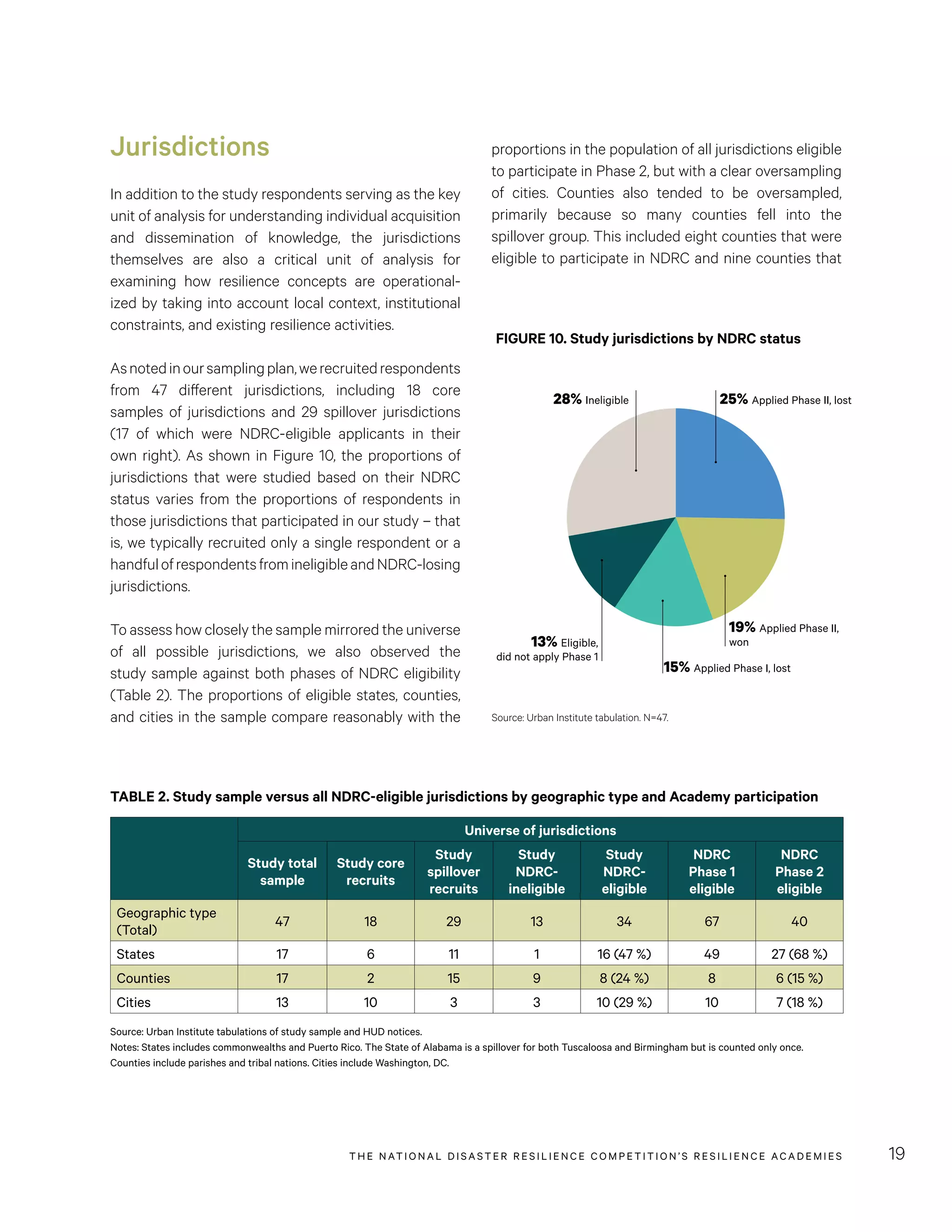
Ultimately, researchers conducted 134 interviews with
155 respondents in 47 jurisdictions. Researchers coded
transcripts from each jurisdictional interview based
on explicitly defined codes that were developed with
the original learning questions and were mapped to
interviewprotocolquestions(finalcodedescriptionsare
provided in Annex 4). Researchers then reviewed cases
for each code, based on case attributes, such as NDRC
eligibility, and competition status or jurisdictional types,
and reviewed data within cases across the progression
of codes, such as participants’ resilience knowledge
both pre-NDRC and post-Academy participation, or
jurisdictions’ pre-NDRC context and capacity and
post-Academy resilience plans or projects. In both
cases, dominant patterns were defined and explored to
produce the synthesis of observations and findings in
this report.
Report structure
The report is structured to provide preliminary answers
to The Rockefeller Foundation’s learning questions, as
this evaluation is intended to provide insights to support
learning and decision making regarding future capacity-
building efforts. Observations and findings discussed
in the report shed light on the Resilience Academies’
immediate effects on knowledge gains, transactional
challenges, and resilience action and plan changes
across the individuals, jurisdictions, and clusters of
jurisdictions (core plus spillover jurisdictions).
Chapter 1 presents a descriptive overview of the
study’s participants, including individuals as well
as the jurisdictions and clusters. This description
provides a baseline of understanding of pre-existing
resilience knowledge among individuals, resilience
activities and capacity among jurisdictions, and
transactions within clusters. Chapter 2 focuses
exclusively on participants’ perceptions of the quality
of the Resilience Academies’ content and delivery,
as well as their comments and suggestions for
improvements. Because of the inability to distinguish
between the Academies and the Capacity-Building
Initiative’s overall progression in parallel with the
NDRC activities, this report also presents participant
observations about the overall partnership while
minimizing comments exclusively about NDRC.
This chapter primarily relies on data from the study
participants who attended the Resilience Academies,
though observations of nonparticipants interested in
future Academies are occasionally noted.
Chapter 3 reviews specific knowledge acquisition
changes,includingexploringthesubstanceofresilience
knowledge that different individuals – and collectively,
those within different jurisdictions – acquired during
the Academies, including alternative sources of
supplementary knowledge such as expert consultants
or grant writers. Chapter 4 describes whether and how
Resilience Academy participants communicated with
others to disseminate the knowledge they acquired
to other individuals within their functional offices of
government, to other functional offices ( “de-siloing”),
and to other levels of government altogether (the
spillover of neighboring and cluster jurisdictions).
Chapter 5 describes the Resilience Academies’
influence on the immediate outputs of the NDRC
submissions, as well as the Academies’ contribution
to current resilience programming and future plans in
the jurisdictions. Chapters 3 through 5 include general
findings from across all respondents and cases as well
as significant patterns found for specific groups of
respondents and case types.
Each chapter section presents an aggregate finding,
and those findings are then summarized at the end of
each chapter. The concluding chapter presents a series
of implications for the future development of Resilience
Academies and similar engagements related to those
findings.
©TheRockefellerFoundation2016
1
THE NATIONAL DISASTER RESILIENCE COMPETITION’S RESILIENCE ACADEMIES 11
Study participants
•	 Clusters of jurisdictions, to note any extensive
transactions and operations occurring among
jurisdictions,withafocusonboththeNDRC-eligible
jurisdictions and the spillover jurisdictions, such as
a specific county or city and its respective state, or
vice versa.
Individuals
As described earlier, the Urban Institute reached out
to respondents who participated in the Resilience
Academies and were from NDRC-eligible jurisdictions,
as well as their office colleagues, their peers in
relevant government offices in the same jurisdiction
(such as those related to emergency management,
planning, community development, water, public
works), and their bureaucratic counterparts in spillover
jurisdictions. Because this was a nonrepresentative
sample of respondents from a purposively selected
group of jurisdictions, it is critical to understand who
these individuals are in order to understand the data
we collected and any potential biases that affect our
subsequent analyses.
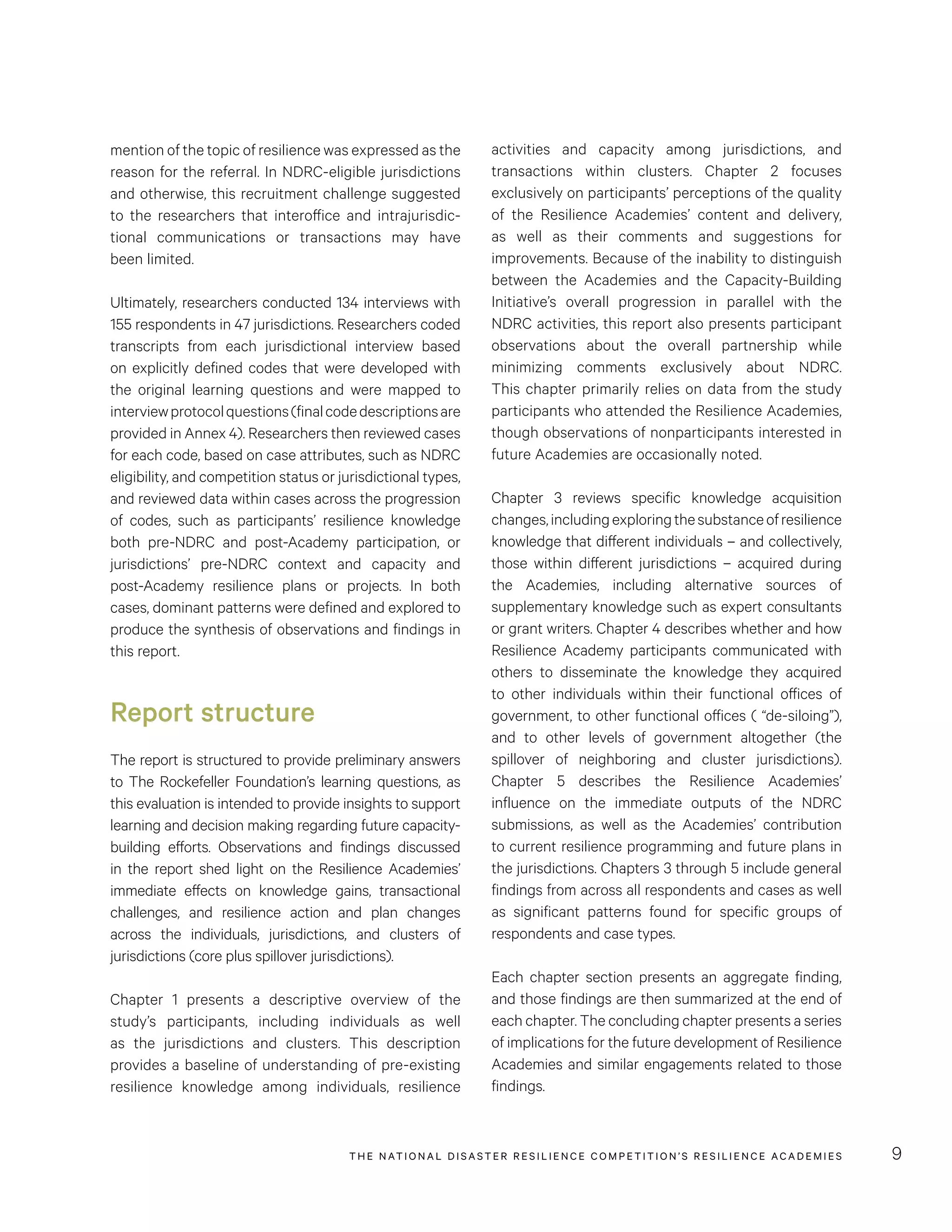
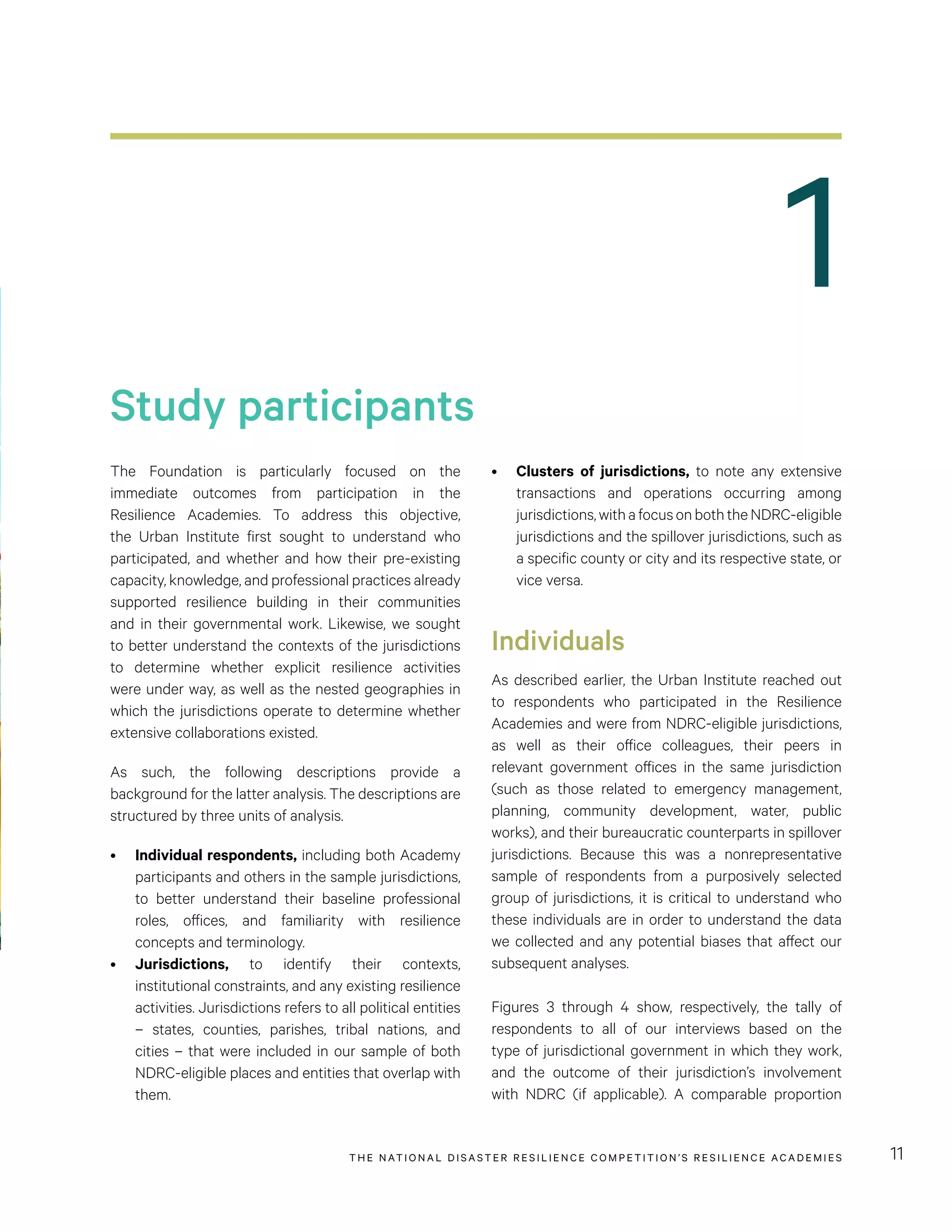
Figures 3 through 4 show, respectively, the tally of
respondents to all of our interviews based on the
type of jurisdictional government in which they work,
and the outcome of their jurisdiction’s involvement
with NDRC (if applicable). A comparable proportion
The Foundation is particularly focused on the
immediate outcomes from participation in the
Resilience Academies. To address this objective,
the Urban Institute first sought to understand who
participated, and whether and how their pre-existing
capacity, knowledge, and professional practices already
supported resilience building in their communities
and in their governmental work. Likewise, we sought
to better understand the contexts of the jurisdictions
to determine whether explicit resilience activities
were under way, as well as the nested geographies in
which the jurisdictions operate to determine whether
extensive collaborations existed.
As such, the following descriptions provide a
background for the latter analysis. The descriptions are
structured by three units of analysis.
•	 Individual respondents, including both Academy
participants and others in the sample jurisdictions,
to better understand their baseline professional
roles, offices, and familiarity with resilience
concepts and terminology.
•	 Jurisdictions, to identify their contexts,
institutional constraints, and any existing resilience
activities. Jurisdictions refers to all political entities
– states, counties, parishes, tribal nations, and
cities – that were included in our sample of both
NDRC-eligible places and entities that overlap with
them.
THE NATIONAL DISASTER RESILIENCE COMPETITION’S RESILIENCE ACADEMIES12
of respondents were interviewed from states (38
percent of respondents), counties (23 percent),
and municipalities (36 percent). Given the smaller
proportion of NDRC-eligible cities overall, however,
our final sample of respondents contains a dispropor-
tionally higher number of city-based individuals, as
intended.
Researchers went to great lengths to recruit from the
diversity of NDRC’s competition outcomes, including
jurisdictions that were ineligible to participate but
may have been involved in a neighboring jurisdiction’s
application (i.e. the spillover jurisdictions). The
overwhelming majority of respondents work in NDRC-
participating jurisdictions (77 percent), with the largest
portion of this group coming from jurisdictions that
had successfully entered into Phase 2 in NDRC (60
percent). This proportion of willing respondents likely
reflects the ongoing interest of these jurisdictions in
the NDRC competition at the time of our recruitment
phase (before Phase 2 final awards). A sizable number
of respondents from jurisdictions that were either
ineligible for NDRC and the Academies or were eligible
and did not apply at any phase were also interviewed
(23 percent in total). These respondents were
predominately from the ineligible spillover jurisdictions.
A common thread of discussion in the resilience
movement has been the functional areas within
government that are, or should be, involved in
building resilience for its community and citizenry.
This discussion hearkens back to the federal
government’s post-Katrina realignment of disaster
recovery authority between the Federal Emergency
Management Agency (FEMA) and HUD, given the
former’s typical dominance in disaster policy and
programming and the latter’s focus on community
planning, development, and low-income households.
For NDRC, this theme became even more apparent
because the grant competition was administered by
HUD, which typically has housing and community
development departments serve as state and local
grant administrators. However, NDRC required a
more comprehensive understanding of shocks and
FIGURE 3. Study respondents by jurisdictional type FIGURE 4. Study respondents by NDRC status
Source: Urban Institute tabulation. N=134.
Note: “Other” includes individuals in cross-jurisdictional entities such as
metropolitan planning authorities or public utility districts.
Source: Urban Institute tabulation. N=134.
Note: “Ineligible” includes participants in the one core NDRC-ineligible
jurisdiction and the multiple spillover jurisdictions that were NDRC-ineligible.
38% State
23% County
36% Municipality
3% Other
FIGURE 3. FIGURE 4.
30%
Applied Phase II,
lost
17%
Applied Phase I,
lost
7% Eligible, did not apply Phase I
16% Ineligible
30%
Applied Phase II,
won
38% State
23% County
36% Municipality
3% Other
FIGURE 3. FIGURE 4.
30%
Applied Phase II,
lost
17%
Applied Phase I,
lost
7% Eligible, did not apply Phase I
16% Ineligible
30%
Applied Phase II,
won
THE NATIONAL DISASTER RESILIENCE COMPETITION’S RESILIENCE ACADEMIES 13
stressors that is typical of FEMA, which works with
state and local emergency managers.
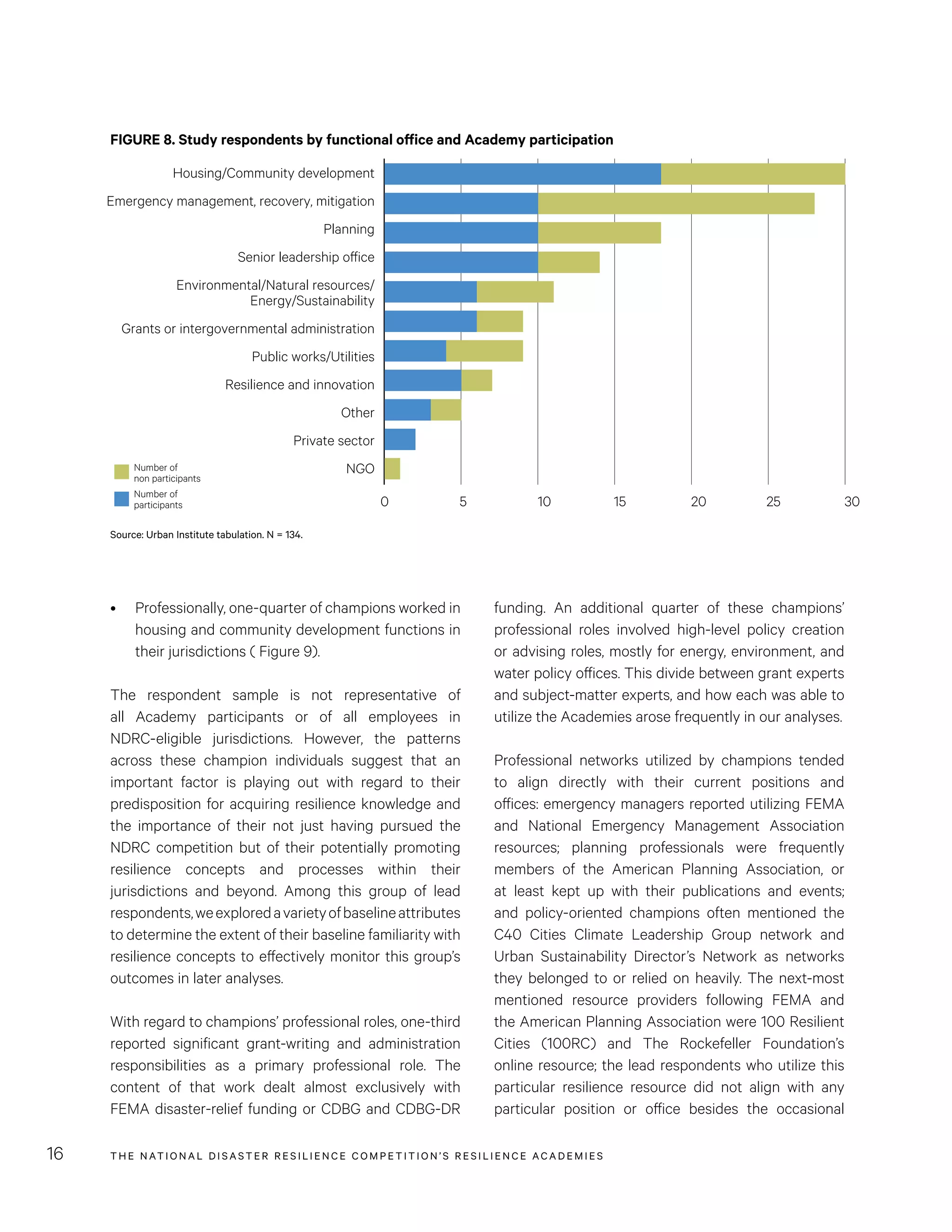
Researchers reviewed the key NDRC contacts and
Academyparticipantsinthecoresampleofjurisdictions
and noted the types of offices or agencies in which
these individuals worked. With a few exceptions, these
individuals were located in housing or community
development and emergency management. A few
respondents were in senior leadership positions in
their jurisdictions, such as assistants or advisers to
governors, county administrators, or mayors and city
managers. In turn, these offices and agencies were
identified and contacted for the recruitment of spillover
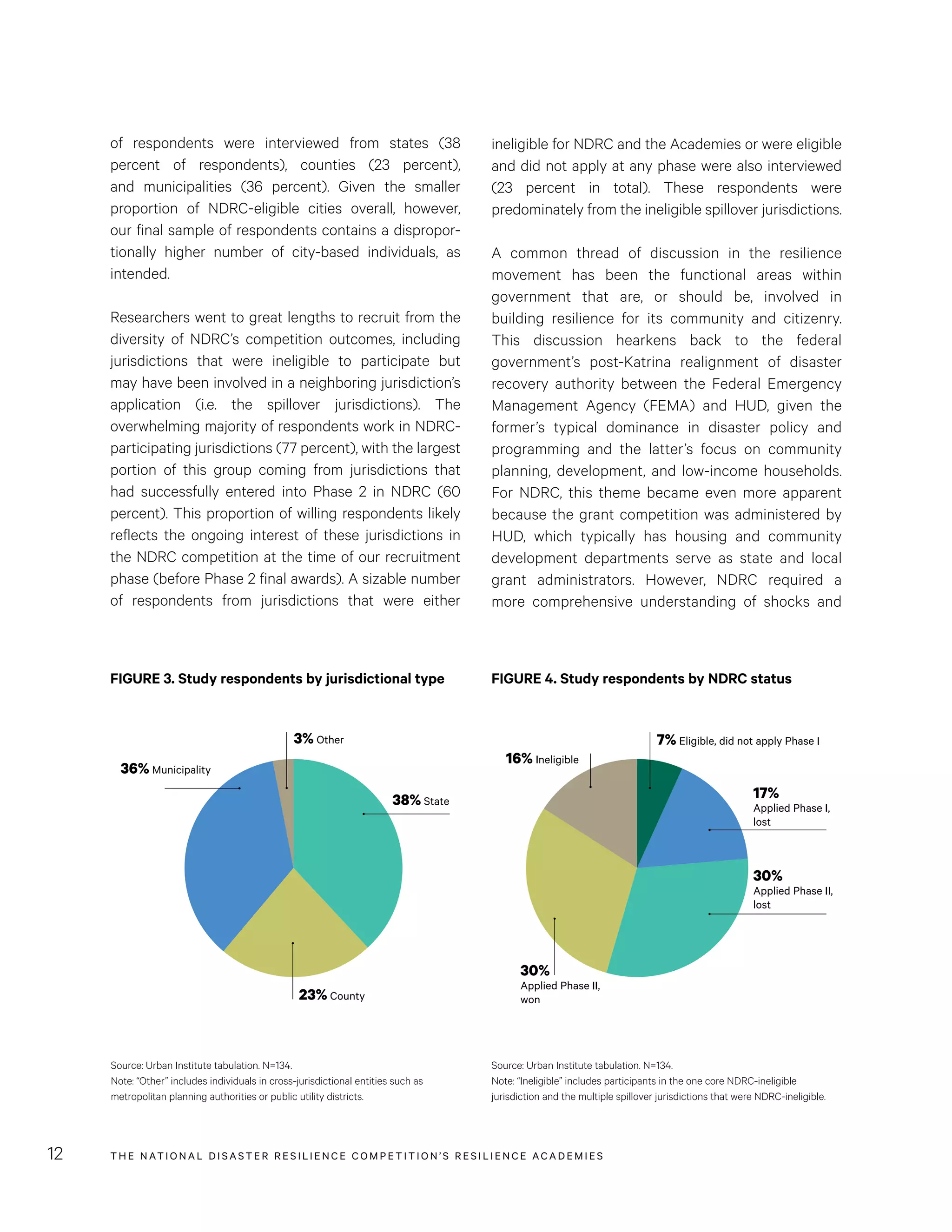
jurisdictions. Figure 5 provides a distribution of final
respondents by their functional office.
Ultimately, the largest group of study respondents (43
percent) represented two primary groups – community
developersoremergencymanagers.Otherrespondents
represented a wide variety of other functional offices
that had become involved in their jurisdiction’s NDRC
application or attended the Resilience Academies,
or were referred to researchers by other jurisdiction
contacts because of their professional or functional
interest in resilience.
A second group of analyses the researchers performed
on study respondents – critical to distinguishing
comments between actual Academy attendees and
others – was about the Academies and the Academies’
effects on knowledge, transactions, and likely resil-
ience-building outcomes. Simply, we explored which
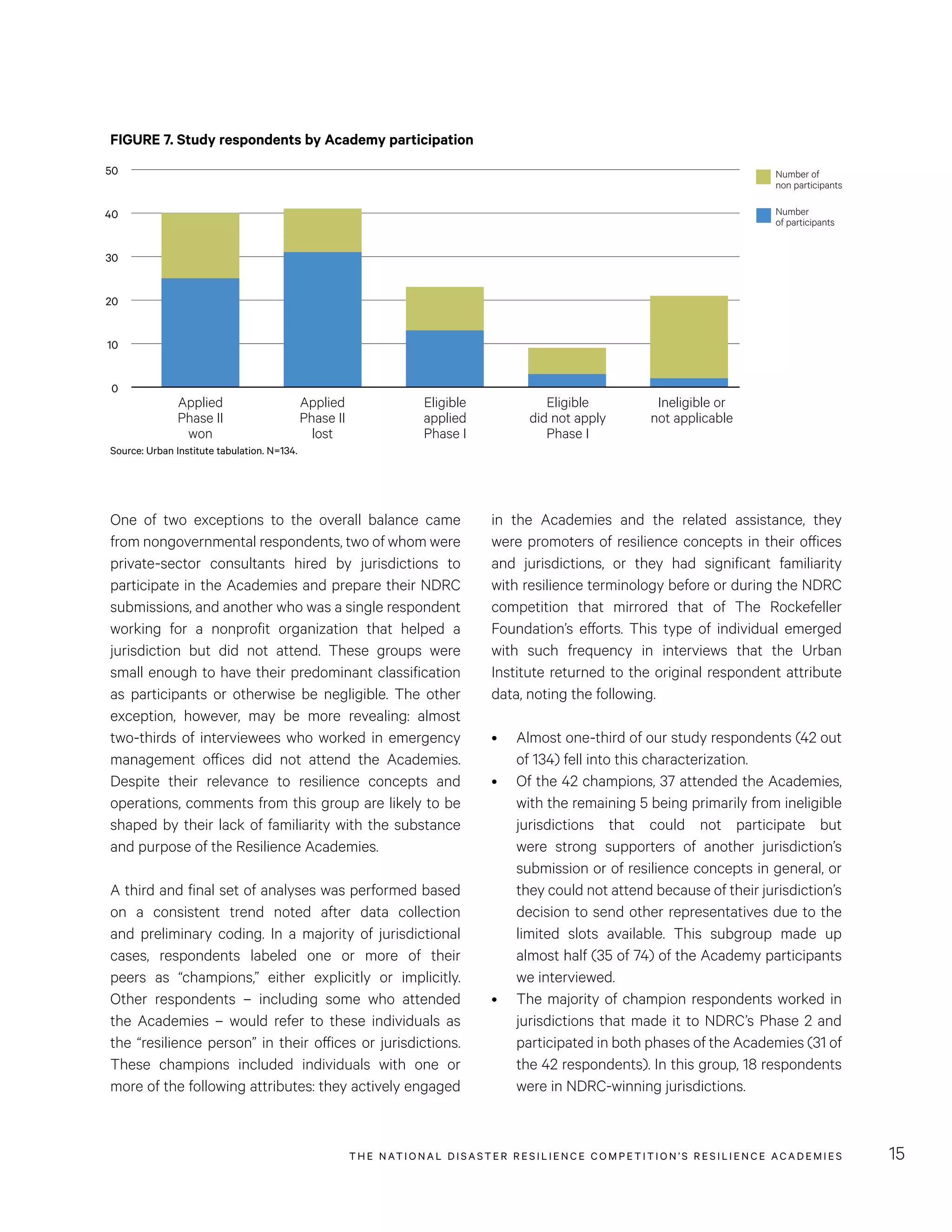
respondents participated and which did not. Of the
nonparticipants, we were also interested in identifying
those who were still involved in their jurisdiction’s
NDRC application regardless. This distinction is
critical because attendance at the Academies was
limited, meaning that some active respondents could
not comment directly on the Academies except in
reference to what their colleagues who attended were
able to communicate back. Figure 6 provides a basic
description of the respondent by participation level.
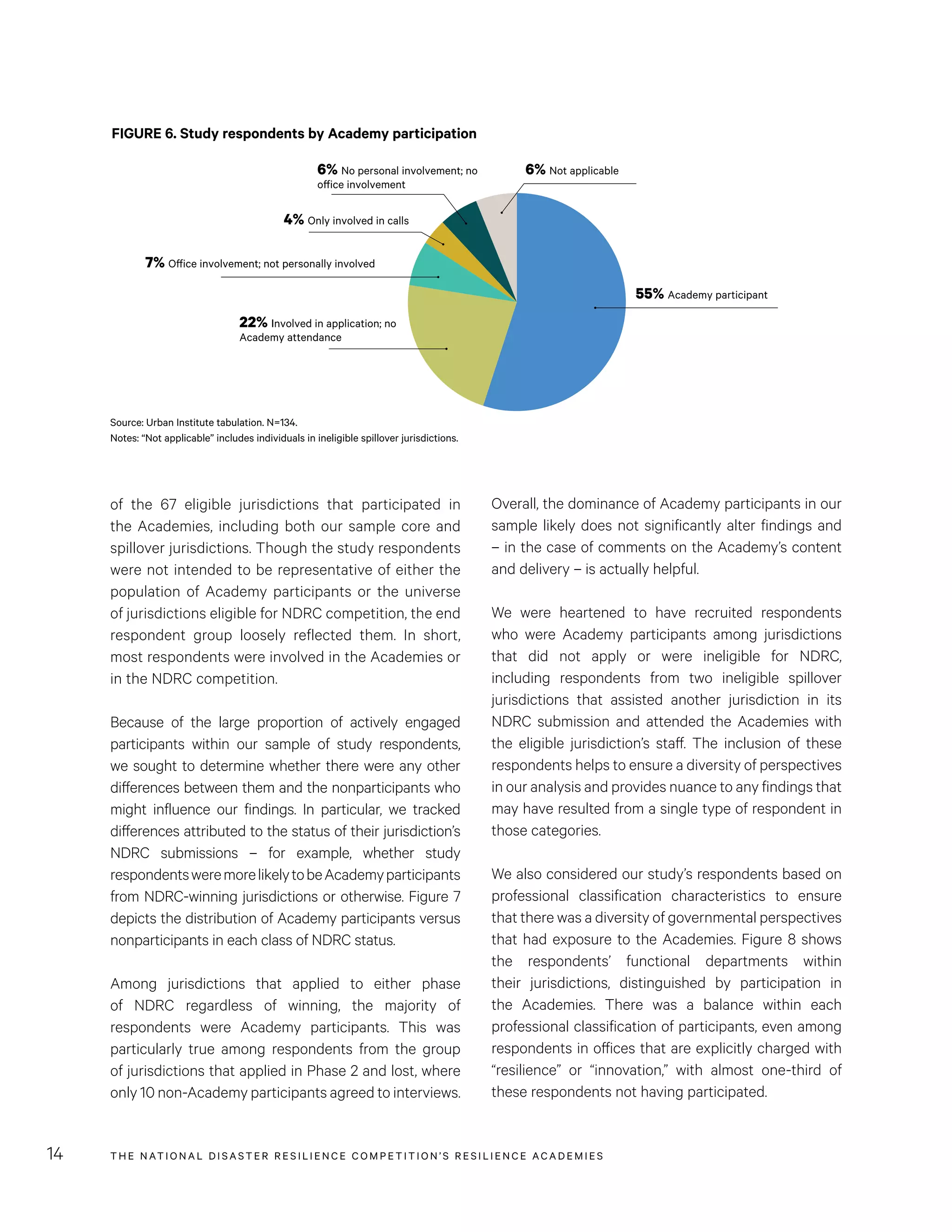
The slight majority of respondents (74 individuals, or
55 percent of respondents) were actual participants
in the Academies. HR&A records show that
approximately 220 individuals participated in the
Phase 1 in-person Academies and 150 individuals
continuedinthePhase2Academies.Theseindividuals
were the primary participants in other Capacity-
Building Initiative assistance calls and webinars.
Our jurisdictional sample contains 32 jurisdictions
FIGURE 5. Study respondents by functional office in jurisdiction
38% State
23% County
36% Municipality
3% Other
22% Housing/Community development
21% Emergency management,
recovery, mitigation
13% Planning10% Senior leadership office
8% Environmental/natural
resources/energy/sustainability
5% Resilience and innovation
7% Grants or intergovernmental administration
7% Public works/Utilities
4% Other 1% NGO
2% Private sector
FIGURE 3. FIGURE 4.
FIGURE 5.
30%
Applied Phase II,
lost
17%
Applied Phase I,
lost
4%
1%
(1 Respondents)
7% Eligible, did not apply Phase I
16% Ineligible
30%
Applied Phase II,
won
Source: Urban tabulation. N=134.
Note: “Other” includes cross-jurisdictional entities such as metropolitan planning authorities or public utility districts.
THE NATIONAL DISASTER RESILIENCE COMPETITION’S RESILIENCE ACADEMIES14
Overall, the dominance of Academy participants in our
sample likely does not significantly alter findings and
– in the case of comments on the Academy’s content
and delivery – is actually helpful.
We were heartened to have recruited respondents
who were Academy participants among jurisdictions
that did not apply or were ineligible for NDRC,
including respondents from two ineligible spillover
jurisdictions that assisted another jurisdiction in its
NDRC submission and attended the Academies with
the eligible jurisdiction’s staff. The inclusion of these
respondents helps to ensure a diversity of perspectives
in our analysis and provides nuance to any findings that
may have resulted from a single type of respondent in
those categories.
We also considered our study’s respondents based on
professional classification characteristics to ensure
that there was a diversity of governmental perspectives
that had exposure to the Academies. Figure 8 shows
the respondents’ functional departments within
their jurisdictions, distinguished by participation in
the Academies. There was a balance within each
professional classification of participants, even among
respondents in offices that are explicitly charged with
“resilience” or “innovation,” with almost one-third of
these respondents not having participated.
of the 67 eligible jurisdictions that participated in
the Academies, including both our sample core and
spillover jurisdictions. Though the study respondents
were not intended to be representative of either the
population of Academy participants or the universe
of jurisdictions eligible for NDRC competition, the end
respondent group loosely reflected them. In short,
most respondents were involved in the Academies or
in the NDRC competition.
Because of the large proportion of actively engaged
participants within our sample of study respondents,
we sought to determine whether there were any other
differences between them and the nonparticipants who
might influence our findings. In particular, we tracked
differences attributed to the status of their jurisdiction’s
NDRC submissions – for example, whether study
respondentsweremorelikelytobeAcademyparticipants
from NDRC-winning jurisdictions or otherwise. Figure 7
depicts the distribution of Academy participants versus
nonparticipants in each class of NDRC status.
Among jurisdictions that applied to either phase
of NDRC regardless of winning, the majority of
respondents were Academy participants. This was
particularly true among respondents from the group
of jurisdictions that applied in Phase 2 and lost, where
only 10 non-Academy participants agreed to interviews.
FIGURE 6. Study respondents by Academy participation
55% Academy participant
22% Involved in application; no
Academy attendance
7% Office involvement; not personally involved
4% Only involved in calls
6% No personal involvement; no
office involvement
6% Not applicable
FIGURE 6.
34
26% Housing/Community development
14% Planning
19% Emergency management
12% Environmental/
Natural resources
12% Resilience and innovation
10% Senior leadership office
7% Other
FIGURE 9.
FIGURE 10
Source: Urban Institute tabulation. N=134.
Notes: “Not applicable” includes individuals in ineligible spillover jurisdictions.
THE NATIONAL DISASTER RESILIENCE COMPETITION’S RESILIENCE ACADEMIES 15
in the Academies and the related assistance, they
were promoters of resilience concepts in their offices
and jurisdictions, or they had significant familiarity
with resilience terminology before or during the NDRC
competition that mirrored that of The Rockefeller
Foundation’s efforts. This type of individual emerged
with such frequency in interviews that the Urban
Institute returned to the original respondent attribute
data, noting the following.
•	 Almost one-third of our study respondents (42 out
of 134) fell into this characterization.
•	 Of the 42 champions, 37 attended the Academies,
with the remaining 5 being primarily from ineligible
jurisdictions that could not participate but
were strong supporters of another jurisdiction’s
submission or of resilience concepts in general, or
they could not attend because of their jurisdiction’s
decision to send other representatives due to the
limited slots available. This subgroup made up
almost half (35 of 74) of the Academy participants
we interviewed.
•	 The majority of champion respondents worked in
jurisdictions that made it to NDRC’s Phase 2 and
participated in both phases of the Academies (31 of
the 42 respondents). In this group, 18 respondents
were in NDRC-winning jurisdictions.
One of two exceptions to the overall balance came
from nongovernmental respondents, two of whom were
private-sector consultants hired by jurisdictions to
participate in the Academies and prepare their NDRC
submissions, and another who was a single respondent
working for a nonprofit organization that helped a
jurisdiction but did not attend. These groups were
small enough to have their predominant classification
as participants or otherwise be negligible. The other
exception, however, may be more revealing: almost
two-thirds of interviewees who worked in emergency
management offices did not attend the Academies.
Despite their relevance to resilience concepts and
operations, comments from this group are likely to be
shaped by their lack of familiarity with the substance
and purpose of the Resilience Academies.
A third and final set of analyses was performed based
on a consistent trend noted after data collection
and preliminary coding. In a majority of jurisdictional
cases, respondents labeled one or more of their
peers as “champions,” either explicitly or implicitly.
Other respondents – including some who attended
the Academies – would refer to these individuals as
the “resilience person” in their offices or jurisdictions.
These champions included individuals with one or
more of the following attributes: they actively engaged
FIGURE 7. Study respondents by Academy participation
FIGURE 7
FIGURE 8
Ineligible or
not applicable
Eligible
did not apply
Phase I
Eligible
applied
Phase I
Applied
Phase II
lost
Applied
Phase II
won
Number of
non participants
Number
of participants
50
40
30
20
10
0
Number of
non participants
Number of
participants
Housing/Community development
Emergency management, recovery, mitigation
Planning
Senior leadership office
Environmental/Natural resources/
Energy/Sustainability
Grants or intergovernmental administration
Public works/Utilities
Resilience and innovation
Other
Private sector
NGO
0 5 10 15 20 25 30
Source: Urban Institute tabulation. N=134.
THE NATIONAL DISASTER RESILIENCE COMPETITION’S RESILIENCE ACADEMIES16
funding. An additional quarter of these champions’
professional roles involved high-level policy creation
or advising roles, mostly for energy, environment, and
water policy offices. This divide between grant experts
and subject-matter experts, and how each was able to
utilize the Academies arose frequently in our analyses.
Professional networks utilized by champions tended
to align directly with their current positions and
offices: emergency managers reported utilizing FEMA
and National Emergency Management Association
resources; planning professionals were frequently
members of the American Planning Association, or
at least kept up with their publications and events;
and policy-oriented champions often mentioned the
C40 Cities Climate Leadership Group network and
Urban Sustainability Director’s Network as networks
they belonged to or relied on heavily. The next-most
mentioned resource providers following FEMA and
the American Planning Association were 100 Resilient
Cities (100RC) and The Rockefeller Foundation’s
online resource; the lead respondents who utilize this
particular resilience resource did not align with any
particular position or office besides the occasional
•	 Professionally, one-quarter of champions worked in
housing and community development functions in
their jurisdictions ( Figure 9).
The respondent sample is not representative of
all Academy participants or of all employees in
NDRC-eligible jurisdictions. However, the patterns
across these champion individuals suggest that an
important factor is playing out with regard to their
predisposition for acquiring resilience knowledge and
the importance of their not just having pursued the
NDRC competition but of their potentially promoting
resilience concepts and processes within their
jurisdictions and beyond. Among this group of lead
respondents,weexploredavarietyofbaselineattributes
to determine the extent of their baseline familiarity with
resilience concepts to effectively monitor this group’s
outcomes in later analyses.
With regard to champions’ professional roles, one-third
reported significant grant-writing and administration
responsibilities as a primary professional role. The
content of that work dealt almost exclusively with
FEMA disaster-relief funding or CDBG and CDBG-DR
FIGURE 8. Study respondents by functional office and Academy participation
Source: Urban Institute tabulation. N = 134.
FIGURE 8
FIGURE 11
States
Counties
Cities
Number of
non participants
Number of
participants
Housing/Community development
Emergency management, recovery, mitigation
Planning
Senior leadership office
Environmental/Natural resources/
Energy/Sustainability
Grants or intergovernmental administration
Public works/Utilities
Resilience and innovation
Other
Private sector
NGO
0 5 10 15 20 25 30
50
40
30
20
THE NATIONAL DISASTER RESILIENCE COMPETITION’S RESILIENCE ACADEMIES 17
Source: Urban Institute tabulation. N=42.
and natural resource offices, and almost half of the
champions in housing and community development
also cited post-Katrina recovery work as a primer on
the social aspects of resilience. One such community
development champion – a state development
authority disaster recovery manager – put it succinctly:
“Honestly, if you work with poor communities, the term
[resilience] is not new.”
The next most popular time of introduction to
resilience was in the past five years via The Rockefeller
Foundation itself, either through its 100RC campaign or
from the NDRC Academies. Though particular offices
or positions of champions were no more likely to have
learned about resilience from the Foundation than
others, the fifth of champions for whom this was true
all happened to work at the municipal level, perhaps
reflecting the Foundation’s focus on urban resilience
and indicating an area of welcomed investment for
future Academies.
Perceptions of the term resilience before the
Academies were less definitive. Several champions
noted the “buzzword” nature of resilience, especially
insofar as it shares key ideas with the concepts of
sustainability, mitigation, and adaptation, which have
all been promoted as key underpinnings for disaster
planning. Many, though not a majority, also commented
on the broadness of the concept in both positive and
Chief Resilience Officer (a city administrative position
funded by 100RC). Champions from states reported
having larger and more varied networks and resources
in terms of type, scale, and geography to draw on than
municipalities or counties.
Every champion had a considerably involved role in
the NDRC application process except for the handful
of champions who were in ineligible jurisdictions. The
nature of their involvement varied across jurisdictional
capacity lines. Almost all champions were engaged
in multiple capacities throughout the process: all but
six attended one or both of the Academies, and every
champion had some part in reviewing, compiling, or
writing the applications. Nearly half of the champions
identified themselves as either writing most of their
jurisdiction’s applications or were the team leads or
project managers coordinating the day-to-day process.
Applications from states were more likely to be written
in-house.
Another indicator of these individuals’ pre-existing
familiarity with resilience concepts is their recollection
of having first been introduced to them. More than a
quarter of champion respondents referred to resilience
as a “post-Katrina” term, or otherwise indicated
that Hurricane Katrina provided an introduction to
resilience concepts. This was true for the majority
of emergency managers and those in environment
FIGURE 9. Study champion respondents by functional office
26% Housing/Community development
14% Planning
19% Emergency management
12% Environmental/
Natural resources
12% Resilience and innovation
10% Senior leadership office
7% Other
FIGURE 9.
FIGURE 10
25% Applied Phase II, lost
19% Applied Phase II,
won
15% Applied Phase I, lost
13% Eligible,
did not apply Phase 1
28% Ineligible
THE NATIONAL DISASTER RESILIENCE COMPETITION’S RESILIENCE ACADEMIES18
than other applicants. When pushed to develop
the difference between resilience and other similar
concepts, another nuance that emerged was resilience
as a more “future-looking,” “proactive,” or “iterative” way
to plan for allocating resources. Many champions often
shared this procedural view of resilience in contrast to
adaptation as the idea that a community “is just going
to accept what is going to come,” as one senior policy
adviser to a governor explained, and of recovery as
being more likely to maintain baseline conditions.
Several champions in emergency management, as well
as housing and community development, articulated
the ultimate goal of resilience thinking as “working
[themselves] out of jobs.” For champions, this idea of
resilience as community self-sufficiency was not in
conflict with greater community-wide collaboration,
anotherproceduralimperativeofresilienceascompared
with its conceptual counterparts. More collaboration
was instead seen as a necessary precondition to
achieving the level of self-reinforcing resilience desired.
In subsequent chapters, we will explore whether these
individuals particularly benefited from the Resilience
Academies with regard to knowledge acquisition,
and put that knowledge to use for their own personal
careers, for their jurisdictions’ NDRC applications (when
eligible) and future resilience efforts, and for improved
collaborations and resilience-building capacity within
their jurisdictions.
negative terms. Some appreciated that resilience could
be applied widely, but more found the need to identify
tangible resilience outcomes and, more specifically, the
metrics to measure these outcomes, challenging.
The broadness of resilience and its similarity to other
terms was reflected in champions’ working definitions
of resilience. When asked how they used resilience
terminology in their work before the Academies, half
of respondents indicated some interchangeability
with “sustainability,” “mitigation,” “adaptation,” or some
combination of these terms. Emergency managers
and those in recovery and mitigation positions were
most likely to use “mitigation” and “disaster resilience”
interchangeably, as FEMA’s definitions have become
standard in their offices. A few future champions had
a fairly limited understanding of resilience before the
Academies: this was indicated by demonstrating a purely
disaster response–focused understanding of resilience
at baseline, an orientation that respondents in resource-
related offices (emergency management and energy
and natural resources) were more likely to hold.
Several respondents exhibited more subtle nuances in
their usage of the terminology: where mitigation and
adaptation were used to reference infrastructure and
ecosystems, resilience was viewed as “much more
comprehensive,” and often as being used to describe
community-level, holistic, social benefits, though this
distinction was more clearly drawn by NDRC winners
In review
In a majority of jurisdictional cases, respondents labeled one or more of their peers as
“champions” either explicitly or implicitly. These respondents stood out as having a pre-
existing familiarity with resilience concepts and terminology, having actively participated in
the Resilience Academies when eligible, or having played a central role in their jurisdictions’
NDRC submissions, as applicable. Other respondents frequently referred to these champion
colleagues when discussing their jurisdictions’ resilience knowledge base, current activities,
and future plans. Though not every sampled jurisdiction had a champion, there was at least one
in each cluster. Even some ineligible spillover jurisdictions had these individuals.
THE NATIONAL DISASTER RESILIENCE COMPETITION’S RESILIENCE ACADEMIES 19
proportions in the population of all jurisdictions eligible
to participate in Phase 2, but with a clear oversampling
of cities. Counties also tended to be oversampled,
primarily because so many counties fell into the
spillover group. This included eight counties that were
eligible to participate in NDRC and nine counties that
Jurisdictions
In addition to the study respondents serving as the key
unit of analysis for understanding individual acquisition
and dissemination of knowledge, the jurisdictions
themselves are also a critical unit of analysis for
examining how resilience concepts are operational-
ized by taking into account local context, institutional
constraints, and existing resilience activities.
Asnotedinoursamplingplan,werecruitedrespondents
from 47 different jurisdictions, including 18 core
samples of jurisdictions and 29 spillover jurisdictions
(17 of which were NDRC-eligible applicants in their
own right). As shown in Figure 10, the proportions of
jurisdictions that were studied based on their NDRC
status varies from the proportions of respondents in
those jurisdictions that participated in our study – that
is, we typically recruited only a single respondent or a
handfulofrespondentsfromineligibleandNDRC-losing
jurisdictions.
To assess how closely the sample mirrored the universe
of all possible jurisdictions, we also observed the
study sample against both phases of NDRC eligibility
(Table 2). The proportions of eligible states, counties,
and cities in the sample compare reasonably with the Source: Urban Institute tabulation. N=47.
FIGURE 10. Study jurisdictions by NDRC status
TABLE 2. Study sample versus all NDRC-eligible jurisdictions by geographic type and Academy participation
Universe of jurisdictions
Study total
sample
Study core
recruits
Study
spillover
recruits
Study
NDRC-
ineligible
Study
NDRC-
eligible
NDRC
Phase 1
eligible
NDRC
Phase 2
eligible
Geographic type
(Total)
47 18 29 13 34 67 40
States 17 6 11 1 16 (47 %) 49 27 (68 %)
Counties 17 2 15 9 8 (24 %) 8 6 (15 %)
Cities 13 10 3 3 10 (29 %) 10 7 (18 %)
Source: Urban Institute tabulations of study sample and HUD notices.
Notes: States includes commonwealths and Puerto Rico. The State of Alabama is a spillover for both Tuscaloosa and Birmingham but is counted only once.
Counties include parishes and tribal nations. Cities include Washington, DC.
FIGURE 10
TOTAL NUMBER OF RESPONDENTS: 42
25% Applied Phase II, lost
19% Applied Phase II,
won
15% Applied Phase I, lost
13% Eligible,
did not apply Phase 1
28% Ineligible
THE NATIONAL DISASTER RESILIENCE COMPETITION’S RESILIENCE ACADEMIES20
that were eligible to participate (only about 45 percent
of NDRC-eligible states highly participated in the
Academies). In short, the inclusion of individuals from
many ineligible and losing jurisdictions compensated
for the over-representation of cities and slight over-
representation of more engaged states in our study.
Like the deeper analysis of our individual respondents
who led to the designation of champions, we also
turned back to our basic attribute information about
jurisdictions after we noticed a similar pattern of
aggregate responses to our questions from different
clusters of jurisdictions. Strong administrative support
and leadership was one common thread for most of the
Phase 2 applicants, in contrast to Phase 1 applicants
and eligible jurisdictions that simply did not apply. For
both the winning and losing jurisdictions, support from
political leadership, such as a strong mayor or governor,
seemed to influence the institutional willingness to
apply for the second phase: about a third of Phase
2 state applicants explicitly indicated having the
support or direct interest of the governor or the mayor
of a major city, and Phase 2 city applicants reported
strong mayoral support at a similar rate. By contrast,
were recruited to provide additional information about
interactions with an eligible state or city. Counties
became a primary unit of inquiry, particularly in states
where the qualifying disasters for NDRC eligibility had
occurred in rural areas.
Another method for assessing any biases that could be
embedded in the sample is by comparing the level of
participation in our NDRC-eligible sampled jurisdictions
versus the universe of NDRC jurisdictions. Table 3
displays jurisdictions in the study sample as well as
overall in NDRC across levels of Academy participation
as determined through HR&A’s administrative records
with regard to the number of staff associated with
distinct Academy events.
Based on this comparison, the study appears to
oversample higher-participating jurisdictions, partially
due to the purposive additional sampling of cities.
Overall, cities tended to engage more in the Academies
than other jurisdiction types. However, the study
also included slightly more states that had higher
participation rates in the Academies (exactly half of
our state sample) than was true of all of the states
TABLE 3. Study sample versus all NDRC-eligible jurisdictions by Academy participation
Jurisdiction level of Academy participation
Study
NDRC-
eligible High Mid Low
Total
NDRC-
eligible High Mid Low
Geographic type
(Total)
34 22 (65 %) 8 (24 %) 4 (12 %) 67 36 (54 %) 19 (28 %) 12 (18 %)
States 16 8 4 4 49 22 15 12
Counties 8 6 2 0 8 6 2 0
Cities 10 8 2 0 10 8 2 0
Source: Urban tabulations of study sample and HR&A participation documentation.
Notes: Only NDRC-eligible jurisdictions are included for the comparison since, by definition, ineligible jurisdictions in the sample did not participate in the
Academies. Participation rankings were based on the ratio of number of participants involved in successful “touches” documented by HR&A against the total
possible available touches offered during the jurisdiction’s NDRC participation. For jurisdictions eligible only in Phase 1, only their Phase 1 Academies participation
was included. The ratios were then categorized into qualitative groupings of “high,” “mid,” and “low.”
THE NATIONAL DISASTER RESILIENCE COMPETITION’S RESILIENCE ACADEMIES 21
reports provided to HR&A during Phase 2. In some
cases, however, the timing of these activities is unclear,
suggesting that some of them may have occurred
as part of their NDRC proposal developments rather
than as longer-running actions. In most cases, though,
the activities consisted of forming governing bodies
across agencies (examples include a Community
Recovery and Resiliency Council or Resilience
Steering Committee), resilience plans (city Resilience
Strategy, especially among the 100RC jurisdictions,
as well as independently produced plans like the City
Resilience Framework), and information systems within
jurisdictions (such as Community Hazard Assessment
& Mitigation Planning System).
In contrast, other types of NDRC-eligible jurisdictions
(non-applicant and Phase 1 losing jurisdictions in
particular) rarely reported being engaged in prior
resilience work or actively using resilience-related
terminology. Some of them reported having engaged
in some level of resiliency work before NDRC, without
ever affirmatively engaging with the terminology.
Typically, these jurisdictions described their traditional
public functions as being resilience-building activities:
“during our day-to-day the term wasn’t used, but the
concepts were used before the academy and after.”
Among ineligible jurisdictions, there were no responses
that indicated prior usage of resiliency terminology,
though several mentioned engaging in resiliency work
by other names. Some of the ineligible jurisdictions
either expressed resistance to the term or indicated
resistance to it within their jurisdiction.
High capacity, high resource jurisdictions that
experienced regular natural disasters were the most
likely to have familiarity with resiliency terminology.
AlmostallofthesetypesofjurisdictionsmadeittoPhase
2, and many, with only one exception, also appeared
to have won. As with the champion designation for
highly engaged individuals, researchers explored the
concept of a high-capacity jurisdiction further. Though
the academic literature provides a variety of indicators
for governmental capacity, a rudimentary proxy of
annual tax revenues and tax revenues per capita was
only one-eighth of remaining jurisdictions explicitly
noted significant support from elected officials. A
handful of Phase 2 state applicants also reported being
constrained in their efforts by politically conservative
administrations – the only cases in which leadership
was a hindrance rather than a support or neutral.
Though strong administrative support was correlated
with NDRC status, the presence of silos within different
government offices affected several jurisdictions across
NDRC status. A majority of respondents who noted
challenges due to silos were states; cities – especially
smaller ones – described being able to speak to other
staff frequently and even daily in some cases. This
highlights the complications of cross-departmental
coordination in larger jurisdictions. A handful of states
indicatedthathousingagenciesunfamiliarwithdisaster
response – and conversely, emergency management
agencies unfamiliar with or disinterested in long-term
community development – exacerbated silos.
Overall, the NDRC winners of Phase 2 described having
more familiarity and institutional capacity surrounding
resilience before the Academies than their peers.
Most had long histories of dealing with disasters
or had recently experienced a string of high-profile
acute disasters; this was obvious, given why most
jurisdictions were eligible to participate in NDRC. With
only a handful of exceptions, they often reported having
existing structures specifically targeting resiliency, and
some expressed collective familiarity with resiliency
concepts. A few respondents specifically indicated a
lack of resilience capacity in rural areas, and resistance
to engaging in resilience activities in other agencies
or neighboring jurisdictions. Notably, though, one
jurisdiction among the winning group had not actively
engaged in prior resilience work, building on the idea
that the winning jurisdictions tended toward high
disaster response capacity.
Several Phase 2 applicants that did not win also
noted having resilience-related activities before the
Academies. This was corroborated both by responses
to interview questions in our study as well as by
THE NATIONAL DISASTER RESILIENCE COMPETITION’S RESILIENCE ACADEMIES22
technical skill sets to perform and execute resilience
activities and develop resilience-building processes.
Our study contains a diversity of capacities by this
measure (Figure 11).
The jurisdictions described as “higher capacity”
based on this definition also largely reflected those
noted as having more baseline resilience knowledge
and activities before participating in the Academies.
The level of learning from the Academies is tracked
particularly in relation to this group, along with their
current and future resilience activities and plans after
the Academies.
suggested in 2009 by the FEMA National Advisory
Council to the FEMA administrator in relation to the
National Disaster Recovery Framework as a potential
“success factor” for communities affected by shocks –
an indicator commonly referenced since then by FEMA
Administrator W. Craig Fugate.
Annex 5 provides a full listing of the most recently
available annual tax revenues, populations, and per
capita revenues for all of our sample jurisdictions.
Intuitively, this set of indicators reflects the capacity of
jurisdictional governments to have the resources and
staff to provide services for their citizens, including the
FIGURE 11. Study sample jurisdictions by jurisdictional capacity
In review
Jurisdictions entered the Academies with a wide variation in capacity based on several
contextual factors, including leadership support, political issues, disaster histories, government
structure and size (presence of silos), and technical skill sets. Many had extensive collective
experiences with resilience-related concepts and, with a few exceptions, these tended to be
jurisdictions with a high capacity of financial and intellectual resources. Overall, the sample
reflects a wide variety of NDRC eligibility and status, Academy participation, and geographic
types, but with a slight over-representation of ineligible and Phase 1-losing jurisdictions to
compensate for the volume of individuals we recruited from Phase 1 and Phase 2 applicants.
FIGURE 11
States
Counties
Cities
Low capacityMid capacityHigher capacity
50
40
30
20
10
0
Source: Urban Institute tabulation. N = 47.
THE NATIONAL DISASTER RESILIENCE COMPETITION’S RESILIENCE ACADEMIES 23
resilience measures on a local level. In addition, federal
and state funding structures provide opportunities
for some jurisdictions that are not available to others.
While all state-level governments are on equal footing
in terms of their inherent and enumerated powers, the
level of agency afforded to cities and counties varies
based on the state in which they reside and their legal
standing with the state government.
Most large municipalities are granted home rule,
meaning that they can, in essence, act in any domain
not expressly prohibited by their parent state. Many
smaller cities, however, are restricted to those activities
allowed by state statute, generally in the realms of
basic service provision and land use planning. Counties,
which are legally branches of the state government, are
also occasionally granted home rule, although this is
rarer than with municipalities. However, in California, for
example, counties are the major service providers for
many core local services, including transportation and
police.
Clusters of jurisdictions
Thethirdandfinalunitofanalysisofinterestinourstudy
is the cluster of jurisdictions – that is, the mix of state-,
county-, and city-level jurisdictions that are typically
grouped because of geographic proximity, such as in
a metropolitan area, or because of an interrelated level
of political governance, such as a city in a county or
a county in a state. Clusters are also dictated by the
NDRC-qualifying disaster and the specific jurisdictions
that had some involvement with recovery. Table 4
describes the type and distribution of our study’s 17
clusters across the 10 identifiable cluster types.
The jurisdictions included in this study vary in a
number of ways in their internal structures, which
affect their ability and need to engage with regional or
cluster partners. Their level of independence from their
“parent” government – the state for municipalities and
counties, the federal government for states – affects
their ability to make changes, such as incorporating
TABLE 4. Study sample clusters by defined cluster type with notes on potential transactional structures
Study sample
Sample clusters with at least one
high-capacity jurisdiction
Cluster Type 17 8
Single state or commonwealth 2 0
Single city* 1 1
One state, one county 1 1
One state, one tribal nation 1 0
One state, two or three counties 2 1
One state, one city 4 2
One state, one county, one city 1 0
One state, two or three counties, one city 3 2
One state, one county, two cities 1 0
Two states, two counties, two cities 1 1
Source: Urban tabulations of study sample.
Note: Washington, DC, is included as a single city and is marked by unique federal-city interactions compared to other US cities. Jurisdictional high capacity is defined
and described in Annex 5.
THE NATIONAL DISASTER RESILIENCE COMPETITION’S RESILIENCE ACADEMIES24
a population of 200,000, excluding the population of
any entitled cities within their boundaries. Federal law
provides HUD with the ability to administer CDBG-DR
funds to a unit of general local government that does
not meet the above requirements, at the discretion
of the HUD Secretary. As such, units of general local
governments that receive CDBG-DR funds are not
necessarily entitlement jurisdictions, and therefore
may not have the regulatory or administrative
knowledge that comes with administering federal
CDBG allocations.
This unequal access to CDBG and CDBG-DR funds
can create different levels of capacity – and different
histories of interactions – between jurisdictions that
may otherwise appear similar. This is particularly
true in areas where disasters have affected multiple
jurisdictions, only some which have access to
CDBG-DR funds. In addition, entitlement and exception
jurisdictions may have more experience interacting
with HUD and managing federal grants than their non-
entitlement counterparts. While non-entitlement local
jurisdictions can still access CDBG allocations through
their state governments, these funds are not as reliable,
and may require alignment with state priorities, adding
greater restrictions on their use.
As discussed above, jurisdictions vary both in terms
of legal contexts and direct access to HUD CDBG
funding. These factors commonly shaped pre-existing
interactions between jurisdictions within a cluster,
which for some had the potential to shift if NDRC
required them to collaborate in new ways or form an
entirely new transactional structure.
The nature of pre-existing jurisdictional transactions
within our sample is also complicated by the capacity
of the specific jurisdictions in question. For example, a
high-capacity city in a low-capacity county will have a
very different history of transactions and collaboration
compared to several high-capacity cities located within
a high-capacity county. Table 4 shows that only half
of the clusters in our sample also had a jurisdiction
ranked as high capacity.
In addition to differing legal structures, jurisdictions
vary based on their ability to receive financial transfers
from higher levels of government in areas related to
resilience planning. While most immediate disaster-
response funding comes from FEMA, the bulk of
long-term reconstruction and recovery money comes
from HUD in the form of CDBG-DR funds. CDBG-DR
funds are available to cities, counties, and states that
have experienced a federally declared disaster and are
intended to provide extra support for low-income areas
with unmet disaster recovery needs.
Jurisdictions must also be deemed to have the
capacity to use the funds, usually through their prior
receipt of direct CDBG or similar allocations. By
definition this includes all states – the primary recipient
of CDBG funds – but also some cities and counties
that have been deemed “entitlement communities,”
and therefore receive these funds directly from
HUD, rather than through an allocation from their
respective states. In order to qualify as an entitlement
community, a municipality must be the principal city of
a census-defined Metropolitan Statistical Area, or have
a population of at least 50,000. Counties must have
©TheRockefellerFoundation2016
THE NATIONAL DISASTER RESILIENCE COMPETITION’S RESILIENCE ACADEMIES 25
Summary
The purpose of this chapter was to introduce the
types of individuals who were recruited for the study,
their distribution across different kinds of jurisdictions,
and the clusters in which those jurisdictions were
likely to interact with each other – either historically,
in general with regard to a qualifying disaster, or with
NDRC submissions in particular. There were no specific
learning questions related to this inquiry, but the
following patterns in baseline characteristics emerged
across the three units of analysis.
•	 Among 134 individual professionals, the study
recruitedrespondentsfromNDRC-eligiblecitiesand
counties more than states to purposely oversample
them. This recruitment resulted in a high number
of respondents from jurisdictions that moved to
Phase 2 in NDRC and that had participated in the
Academies – a consequence that is helpful to the
ensuing analysis about the Academies themselves
as well as about what participants in particular
learned and acted upon afterward. Fortunately, this
This contributing factor to a cluster’s ability to
collaborate is, then, too varied for cross-case analysis.
For example, only two clusters within the cluster type
with the highest frequency in our sample clusters (“one
state, one city,” with four clusters) have a high-capacity
jurisdiction; in one case, the cluster has a high-capacity
state, and the other case has a high-capacity city.
In review
A wide diversity of cluster types – and histories of interjurisdictional transactions within
them – emerged. Clusters were typified by many factors, including pre-existing relationships,
such as through HUD CDBG entitlement status, emergency management coordination, and
metropolitan planning organizations. Cluster types included large high-capacity cities within
lower- or mid-capacity counties or states, and vice versa. In turn, there was no consistent
pattern of collaboration before the Academies, even within similar types of clusters.
oversampling allowed us still to collect information
from a diversity of jurisdictional types, NDRC-
eligibility statuses, and professional backgrounds
(particularly between emergency management
and community development functions) in both
the core and spillover jurisdictions in our study.
•	 The most interesting pattern to arise from this
review came after preliminary analysis of responses
from a class of individuals we refer to as champions.
These lead respondents had significantly higher
rates of pre-Academy familiarity with resilience
terminology and concepts, and ultimately were the
lead drafters and proponents of their jurisdiction’s
NDRC submission or even of other jurisdictions’
submissions (with the exception of a few individuals
whose jurisdictions were ineligible). We track
this group separately from other groups in the
subsequent chapters.
•	 The 43 jurisdictions in our study also varied across
different kinds of geographies, NDRC submission
outcomes, and collective engagement with
the Academies. Researchers actively recruited
respondents from Academy participants’ offices
and other departments within their jurisdictions
Because of the lack of pattern in cluster attributes or
types, assessing changes in collaborations will focus
on individual cases rather than patterns across them.
However, these clusters are still valuable units of
analysis for understanding how regional collaboration
did occur, as well as for assessing any intergovernmen-
tal knowledge transfers.
THE NATIONAL DISASTER RESILIENCE COMPETITION’S RESILIENCE ACADEMIES26
to help determine how the jurisdiction collectively
engaged in the Academies and shared their
learning with others.
•	 Upon further exploration of any pre-existing
resilience activities or plans conducted by the
jurisdictions before the Academies, we also noted
how a variety of contextual factors shaped the
jurisdictions’ capacity to engage in resilience
building, even well before they passed through
the Academies’ doors. Political contexts, disaster
histories, and the support of leadership all played
into their ability to engage early on. Independent
factors such as tax revenues and population
also defined the overall governmental staff size,
resources, and capacity for engagement in any
innovative initiative. The study noted a clear
divergence between jurisdictions with higher
qualitative and quantitative capacity and those
with less when it came to their level of resilience
knowledge and activity before the Academies. Like
the champions, the high-capacity jurisdictions
are likely to have different outcomes from their
peers when it comes to knowledge acquisition,
dissemination, and resilience action.
•	 Finally,wealsoconductedadditionaldatacollection
among spillover jurisdictions that could shed light
on whether there had been shared knowledge
dissemination, new collaborations, or changes in
traditional transactions. These jurisdictions often
were eligible for NDRC participation and Resilience
Academy attendance as well, making up clusters
of jurisdictions across our sample. Each cluster
is influenced by a wide range of historical and
governance structures ranging from statewide
county and municipal law, federal grant entitlement
rules, and regional planning collaborations.
Ultimately, these clusters varied to such an extent
that there were no distinguishing patterns across
their baseline levels of interaction and knowledge
exchange.
Though executed for descriptive purposes and to
review any potential biases that may emerge from
our analyses, the observations from this chapter’s
review define who was studied for the purposes of
all subsequent analysis. Having a sense of the whole
universe of individuals, jurisdictions, and clusters helps
to contextualize the collective responses and data
we acquired. Just as important, it helps frame our
conception of how different respondents participated
and learned from the Academies, how different
jurisdictions enacted resilience actions or plans after
participating, and about the interactions within clusters.
Further, these observations could help The Rockefeller
Foundation better define the target audiences for
future Academies.
THE NATIONAL DISASTER RESILIENCE COMPETITION’S RESILIENCE ACADEMIES 27
2
•	 How effective were the design and implementation
of the partnership with HUD and the Foundation’s
grantees?
Thischapterreliesprimarilyoninterviewsfromthestudy
participants who attended the Resilience Academies,
though observations from nonparticipants interested
in future Academies are also noted. Curricular materials
and administrative records provided by HR&A also help
to corroborate specific findings. The former were used
to identify key subject-matter content and events, and
to assist respondents with recall, while the latter were
used to confirm respondents’ comments or concerns
about the Academies in the different phases.
Content
The Rockefeller Foundation coordinated with 350
experts from public and private sectors to host nine
Resilience Academies. The goal of the Academies
was to i) build capacity to create more resilient
communities over the long term and ii) provide support
and tools to generate compelling, competitive NDRC
This chapter focuses exclusively on participants’
perceptions of the quality of the Resilience Academies’
content and delivery, and their suggestions for
improvements. Because of many respondents’
inability to distinguish between the Academies and
the Capacity-Building Initiative’s overall progression
in parallel with the NDRC activities, we also present
participants’ observations about the overall partnership
while minimizing comments exclusively about NDRC.
Key learning questions posed for this chapter include
the following:
•	 Did the curriculum contain the right information
for the levels and types of participants of the
Academies?
•	 To what extent did the Resilience Academies i)
reinforce existing capacity-building resources
available to eligible NDRC applicants and ii)
disseminate available tools and resources? Was
this a successful strategy? Why or why not?
•	 How effective was the piloting of the Resilience
Academies’ curriculum in communities across the
United States?
•	 What are lessons from the piloting to consider for
future Academies?
Resilience Academies' effectiveness,
delivery, leverage, and partnership
with HUD
THE NATIONAL DISASTER RESILIENCE COMPETITION’S RESILIENCE ACADEMIES28
applications. Though technical assistance webinars,
email exchanges, and check-in calls were offered, the
bulk of the effort consisted of in-person Academies.
For both Phase 1 and Phase 2, the Academies
consisted of two-day workshops with a series of
expert presentations, exercises, and critiques for
up to five individuals from each eligible jurisdiction.
All subject-matter experts (SMEs) participated in a
separate orientation before each Academy in order to
understand the overall objectives, the specific content
requested of them, and their role in the knowledge
transfer exercise.
Ultimately, the Academies were designed to
emphasize the importance of taking a comprehensive
approach to reducing current and future risks, and
Source: City Resilience Framework, Arup; Conceptual definition of risk, HR&A Academy I presentation
F
lexible
Resourceful
Inclusive
Integrated
HEALTH
&
W
ELLBEING
LEADERSHIP
&
STRATEGY
ECONOM
Y
&
SOCIETY
INFRASTRUCTURE
&
ENVIRONMENT
Reflective
Robust
Redundant
Flexible
Resourceful
Inclusive
Integrated
Integrated
economy
Empo
wered
security an
druleoflaw
Effectiveleadership
&mutualsupport
&communications
Effectivesafeguardsto
ofcritica
lservices
Diverse liv
elihoods
& fragility
Minimal human
development planning
Sustainable
stakeh
olders
Compre
hensive
&management
Collectiveidentity
Reliablemobility
humanlife&health
Effective
provision
&
emplo
yment
Reduced exposure
vulnerability
sought to support jurisdictions as they developed
innovative approaches to making their communities
more resilient while complying with the NDRC
requirements and CDBG-DR regulatory framework.
Five regional workshops were held from December
2014 through February 2015 as part of Phase 1 in
Kansas City, Missouri; Chicago; Atlanta; Seattle; and
Boston (with Boston requiring a follow-up one-day
workshop in New York due to a snowstorm). The Phase
1 Academy was intended to provide participants with
a foundation for understanding resilience.
The training commenced with an introduction to
resilience, defining the concept as “the capacity to
survive, adapt, and thrive in the face of chronic stresses
and acute shocks, and even transform when conditions
FIGURE 12. City resilience framework
THE NATIONAL DISASTER RESILIENCE COMPETITION’S RESILIENCE ACADEMIES 29
projects. For instance, strategies for building social
resilience involved partnering with existing groups
such as foundations, community groups, universities,
businesses, and faith-based organizations; connecting
residents to one another for idea and information
exchange; and involving the local community in
decision making.
Many of the subject areas covered in the Academies
were selected by The Rockefeller Foundation and
coordinated through HR&A, based on frequent surveys
that HR&A conducted of all eligible jurisdictions
before and after in-person Academies. These surveys
gathered brief but helpful information for Academy
programmers on jurisdictions’ self-perceptions of their
community strengths, weaknesses, risks, priorities, and
vision. The surveys explicitly asked jurisdictions about
specific content and technical assistance needs (which
was put to use in developing Academy agendas and
content),whilealsogauginghowjurisdictionsperceived
approaches or challenges to the NDRC submission.
All Academies provided technical support in
developing benefit-cost analyses, innovative financing
mechanisms, community engagement efforts, and
strategies for identifying and addressing structural
and legal barriers to resilience projects. Exercises and
group discussions focused on developing resilience
projects to include in the NDRC application – with
participants presenting and soliciting critiques in order
to refine their designs. A Funders Summit was also held
in the weeks before the final NDRC Phase 2 submission
deadline to introduce potential philanthropic, public,
and private investors to the projects as well as refine
projects’ value propositions.
Expert perspectives on content
The Urban Institute conducted structured interviews
with SMEs who participated in the Academies either as
lecturers or as facilitators of team exercises to gauge
their perceptions of the overall content. The experts
who were interviewed reflected the diversity of sectors
(academic, business, and civil) and subject expertise
(disaster infrastructure, finance, etc.) that were present
in the Academies.
require it.” The Foundation’s City Resilience Framework
(CRF), shown in Figure 12, was discussed as a tool for
articulating resilience in a measurable, evidence-based
manner to inform planning, practice, and investments
in a manner that allows communities to survive and
thrive in the face of multiple shocks and stressors.
Key terms were also introduced – such as shocks and
stressors – as well as descriptions of how these various
components make up a community’s risks (Figure
13). In addition to these conceptual components, the
Academyalsowoveinarangeofexercisesandcritiques
in which participants, their colleagues, and SMEs
discussed current and future shocks and stressors
their jurisdictions face, affected populations, and how
their proposed NDRC approach would mitigate risks.
Phase 2 Academies were held in July 2015 in Denver
and Chicago. The Phase 2 Academy built on the
previous introduction to resilience, honing in on how to
develop resilience projects to strengthen communities.
Sessions highlighted the importance of expanding the
resilience value of projects through a comprehensive
approach, addressing economic and community
development, social resilience, natural systems,
critical services, and the built environment through
a range of expert presentations that drew on case
studies involving concrete examples of past resilience
FIGURE 13. Conceptual definition of risk
Risk = HAZARD X CONSEQUENCE
Shock
Stress
Exposure
Vulnerability
Risk = HAZARD X CONSEQUENCE
RISK
=
HAZARD
x
CONSEQUENCE
SHOCK • STRESS
EXPOSURE • VULNERABILITY
THE NATIONAL DISASTER RESILIENCE COMPETITION’S RESILIENCE ACADEMIES30
While participants commended the Academies at
large for expanding their thinking around resilience,
several expressed a preference for Phase 2 over Phase
1 Academies, as they felt it was more hands-on and
practical. These participants lauded the discourse
on economic resilience and appreciated being able
to focus exclusively on the application development
process during Phase 2. By comparison, Phase 1 was
viewed by a few as “touchy-feely,” “too high-level and
tooacademic,”andmisleadingly“limitless.”Nonetheless,
severalparticipantsfeltthattheAcademieswerecrucial
to developing a high-level, comprehensive, conceptual
framing around resilience specifically for their NDRC
applications. These participants used words such as
“bigger picture,” “macro point of view,” “cohesiveness,”
“framework,” and “cobwebbing” to describe their main
Academy takeaways.
The framework put forth by the Academies – the City
Resilience Framework – received varied feedback.
Overall, most of the 39 participants who responded to
the prompt found the CRF relevant to their applications
and beyond. A few participants noted that the CRF was
difficult to comprehend at first glance. A breakdown of
that feedback follows.
•	 Over one-third of participant respondents
applied the CRF to their applications, either
directly, by re-creating the diagram for their
jurisdictions, or implicitly, by using it to guide
the development of their application framework.
One respondent referred to it as a handy “values
assessment” more than a measurement tool.
The majority of these participants are from
nonawardee jurisdictions.
•	 One-third of respondents recognized or
remembered the CRF but had never used it in their
own work and did not make a statement about
its relevance to their own work. Most of these
participants are nonchampions from nonawardee
jurisdictions.
•	 Almost one-fourth of participants confirmed the
relevance and importance of the CRF to their
resilience understanding, although they did not
indicate that they applied it to the application or to
All of the SME respondents shared that the NDRC
represented an opportunity for a paradigm shift from
HUD’s and the federal government’s normal operations.
One expert noted: “What appeared here is that there
was a valiant effort being made both on the HUD
side and on the Foundation side to substantially
reorganize and reconfigure the approach to problems
of safety and sustainability and recognize the aspects
such as social and institutional contexts. This is a
significant development over past federal government
efforts, which are focused primarily on engineering
and physical systems and property protection.” This
sentiment was repeated by all experts, including the
private-sector professionals who had participated
primarily for business development purposes.
Participant perspectives on content
HR&A conducted surveys before and after every
Academy with a primary focus on identifying i)
general perceptions about the structure of Academies
and ii) the subject-matter areas of most interest
to participants. To a lesser extent, feedback about
the quality of individual content providers was also
requested, along with requests for information about
the jurisdictions’ proposal progress.
From the aggregate reports from these surveys,
participants clearly noted a preference for content
that operationalized resilience concepts. Presentations
such as “Innovation and Design Thinking Applied” and
“Innovative Financing,” and exercise sessions such
as “Refining the Approach,” “Designing Innovative
Resilience Projects,” and “Project Implementation,”
were consistently ranked higher than others.
The Academies featured a variety of content areas
that resonated strongly with participants. Chief among
these content areas is the expansion of resilience
across the realms of social and economic vulnerability
and economic development; this is true for participants
across jurisdiction types, NDRC status, and champion
status. This expanded conceptual framing of resilience
and disaster recovery work stood out as new to several
participants,evenforthosewhowerepreviouslyfamiliar
with the concept of social and economic disparity.
THE NATIONAL DISASTER RESILIENCE COMPETITION’S RESILIENCE ACADEMIES 31
Participants felt a number of content areas could
have been enhanced or were missing altogether. One
widely shared sentiment was that the Academies did
not provide enough support on benefit-cost analysis.
This emerged as one of the more challenging aspects
of the application, yet a few champion participants
felt the Academies had spent too little time reviewing
it and that they could have offered more support and
guidance. Of these participants, a couple highlighted
the distinctiveness of the NDRC benefit-cost analysis
as a challenge to completing the application, because
the fact that no other federal agency or grant
application has used one similar made it difficult to
adopt.
In addition, a handful of participants were dismayed at
the lack of a more diverse set of case studies – namely,
examples of resilience failures, resilience projects
that are not retroactively designated as successes,
and those that addressed a wider variety of risks. In
particular, a few champion participants originating
in southern jurisdictions felt the Academies lacked
expertise in wind resistance, rural community needs
assessments, and examples beyond the major
catastrophes of Hurricanes Sandy and Katrina and
the urban recoveries. Generally, several respondents
noted their interest in more instruction and examples
around resilience governance – that is, examples of
the day-to-day governmental processes that illustrate
what implementation of resilience looks like on a
quotidian scale (such as how to de-silo government,
how to build out content on social justice or
economic resilience, or how to engage disadvantaged
communities).
Participants whose tie-back disaster was a tornado
were challenged to weave resilience thinking into
their applications, in part because they felt that the
Academies did not provide enough support for that
type of geographically dispersed disaster that could
not be planned for in the same way as flooding – a
dominant disaster type discussed in the Academies.
References to the need for more examples and
attention to local resilience contexts – from the level
of urbanity to disaster types and local capacity – were
their own work. A majority of these participants are
designated resilience champions.
•	 A handful of respondents who participated in the
Academy said they did not remember the CRF at
all. All three are from nonawardee jurisdictions and
are nonchampions.
A handful of participants from nonawardee cities
and counties felt the Academies’ content sufficiently
equipped them to engage their communities in
resilience planning. These participants also reported
that the Academies encouraged jurisdictions to seek
local partnerships with organizations that were not
previously engaged. As one water infrastructure
professional shared, “[The Academies] did lay a
foundation for having a conversation with different
community leaders here and to help explore the
concept of resilience here.”
Several participants learned about new resilience
strategies through case studies and lessons learned
based on experiences of their peer participants. These
individuals appreciated being able to see the full scope
of resilience-related challenges and approaches across
the country, which helped in defining the scope of their
respective applications. “As part of the process, when
we had the opportunity to speak with others I learned
a great deal by listening to folks in Denver and Kansas
City,” said a city manager. “[It was a great] opportunity
to see how other communities perfected the steps that
they were taking. I had some personal ideas on what
steps I thought [jurisdiction redacted] should take,
but after attending the two Resilience Academies the
benefit was listening to other communities as well.”
TheSocialVulnerabilityIndexprovedtobeaparticularly
novel and useful tool to participants across jurisdiction
types, NDRC status, and champion status. Participants
were intrigued by the related presentation given on this
index, though only a handful of participants used it to
develop their applications. Other content areas were
identified as valuable, including leveraging, funding,
and innovative planning strategies. However, almost no
participants highlighted them as critically illuminating
for their NDRC projects.
THE NATIONAL DISASTER RESILIENCE COMPETITION’S RESILIENCE ACADEMIES32
each jurisdiction. The search for leveraged finance
and additional funders was aired by all respondents
in the HR&A surveys. This sentiment was repeated
by a few of our study respondents, many of whom
noted that they thought they could leverage its
philanthropic connections more, given that several
jurisdictions lack local philanthropy.
Beyond the in-person Academies, feedback on the
additional technical assistance provided by HR&A
varied by NDRC status. Those in awardee jurisdictions
felt that HR&A staff was very responsive and
knowledgeable on the applications of their assigned
jurisdictions. A few noted that HR&A aided in problem
solving, clarified the NOFA, and helped applicants do
a “reality-check” and refine proposal ideas. Almost no
applicants criticized the advisory technical assistance
– those who did were nonchampion, nonawardee
applicants from cities and states who complained
that the advisory calls were too broad and therefore
unhelpful, and that advisers sometimes referred
applicants back to HUD for certain questions about
the NOFA, much to the frustration of these applicants.
In general, most champions felt that there was an
even split between NDRC- and resilience-related
information.
One final comment that was repeated by a few NDRC
winners was that they felt that they now needed even
more assistance and resilience content given their
need to implement the projects.
uniform. A few respondents noted that they realized
that they themselves were the innovators who would
need to produce the first examples that they sought.
Findings are mixed on the balance of topic areas
within the Academies between resilience-related
information versus technical NDRC information.
Generally, there was a split between those who
felt the Academies focused most on i) resilience-
related information, ii) a combination of NDRC- and
resilience-related information, and iii) NDRC-related
material. Regardless of where respondents thought
the bulk of the Academies’ time was spent, there was
widespread agreement that the NDRC submission
provided a concrete opportunity to apply lessons
learned from the Capacity-Building Initiative.
However, a few participants highlighted that that the
demands and timeline of the competition limited the
overall education of participants around resilience.
This feedback came almost entirely from champions
in nonawardee jurisdictions. One floodplain mapping
program director noted, “If you’re thinking about
resiliency you have to think outside the box. We
thought outside the box, but the problem is the
box became so small through the NOFA [Notice of
Funding Availability] that we were basically snuffed
out.”
Few respondents felt that they benefited from the
Funders Summit, though responses on this subject
were few, given the limited number of attendees from
In review
Expert and participant feedback regarding the content of the Academies was largely positive,
particularly regarding the sessions focusing on content that operationalized resilience
concepts and reviewed implementation processes. Some resilience champions and members
of high-capacity jurisdictions noted that the conceptual subject matter and resilience
overviews were not necessarily new, but that the exercises and team discussions were helpful
nonetheless. Specific content gaps identified included providing a greater range of resilience
project examples and offering more support on benefit-cost analyses.
THE NATIONAL DISASTER RESILIENCE COMPETITION’S RESILIENCE ACADEMIES 33
Participants felt the workshops were complementary
to the brainstorming exercises, allowing them to refine
brainstormed information, define broader resilience
goals, formulate concise mission statements, and
develop their application strategy and approach. Several
participants specifically noted the use of large sticky
notes, tear sheets, and whiteboards as effective.
In addition, these activities kept participants engaged
and invested over the course of the Academies. A grants
program manager said, “It was nice to go through some
planning exercises rather than just sitting through
trainings. That’s generally how trainings go. The content
is usually good but it is hard to stay engaged for that long.
So having the actual activities to work through with other
people and getting the critiques was very helpful.” While
the planners and architects of the group were previously
familiar with these exercises, the brainstorming and
visioning methods were entirely new to participants from
other professional backgrounds or functional offices. A
few others complained that the instructions for these
exercises were not clear and, consequently, they were
overwhelmed.
Several participants felt they benefited from having
subject-matter experts embedded within their
jurisdictional group as facilitators. They enjoyed the
opportunity to work alongside professionals who were
easily accessible and responsive to questions. These
participants developed a good rapport with SME
facilitatorsasaresult.Apublicworksdirectorsaid,“Ididn’t
look at them as a Subject Matter [Experts], using their
knowledge to help us as a team group. He was actually
part of the team itself. He participated just as though he
waspartofourteam,whichwasgreat–justadifferentway
of thinking.” For these participants, facilitator feedback on
their application ideas in turn helped jurisdictions narrow
down, synthesize, and refine application approaches.
These participants also appreciated the diversity of
disciplines reflected in the selection of SMEs, and a few
remarkedthatSMEsbroughtnewdisciplinaryperspective
to their respective teams.
Criticism of SMEs differed by champion status.
Nonchampion participants from nonawardee counties
Delivery
Through a variety of pedagogical methods, participants
learned about resilience strategies and simulated
implementation through planning exercises. Certain
methods were more successful than others in imparting
information to participants and facilitating application
development; others had unanticipated but beneficial
secondary outcomes.
For more than half of Academy participants, the
planning process as simulated through the Academies’
agenda stood out as the most valued method overall.
This process included interactive activities involving
SME engagement, feedback, and critique – exercises
through which participants focused on the challenges
and opportunities specific to their jurisdictions, both
in preparation for the application but also in service of
devising a broader resilience approach. This preference
was echoed across jurisdiction types, NDRC awardees
and nonawardees, and resilience champions and
nonchampions.
Through these individualized, jurisdiction-specific,
and project-oriented activities, participants felt they
gained a more substantive understanding of the NOFA,
tangible application planning and framing materials,
and actionable application recommendations. One
housing mitigation manager noted, “The whole process
really helped us to think through it and come up with
something viable, but then to talk about the tactics of
what we needed to do in the last two months before
the proposal was due, which really helped us.” As
mentioned above, at least 14 participants adopted the
City Resilience Framework for their applications; others
used the brainstorming and jury presentation materials
to anchor application development and to disseminate
information in their jurisdictions after the Academy.
Group application workshops and interactive
brainstorming and visioning exercises were highly
popular among participants. Through brainstorming
exercises, participants gained an understanding of
the landscape of their resiliency-related challenges
and mapped out assets in their jurisdictions.
THE NATIONAL DISASTER RESILIENCE COMPETITION’S RESILIENCE ACADEMIES34
presented to a panel and to get that feedback was very
helpful to understand if we were getting our ideas across
clearlyenough,”said acommunitydevelopmentprogram
manager. “You wanted to be sure you were clearly telling
your story and making it clear what shocks, stressors,
and vulnerable communities it would address. It was
helpful to get feedback to see if you were headed in the
right direction.”
This instructional model – from brainstorming, to
workshops, to presentations – offered secondary
benefits to participants, such as team collaboration, peer
learning, and networking. Several participants found that
the Academies effectively facilitated team collaboration
within jurisdictions around application preparation.
According to these participants, rarely can they afford to
set aside time for conceptual framing around resilience
and planning in general. They also admitted that the
day-to-day demands of their jobs sometimes limited
NDRC-related collaboration with other offices within
their jurisdictions. “We’d be lucky to get an hour a week
to get on the phone to do this,” said one executive
official. The Academies offered participants necessary
time and space for high-level, collaborative planning –
for a few, this helped jurisdictions develop a common,
unified understanding of resilience. A few participants
also noted that being away from their home jurisdictions
was also beneficial to team collaboration. One resilience
policy adviser said, “Being pulled out of work is always
helpful when you’re just dealing with the day to day, so
it’s good to step out of that and have the time to think
through those issues more and bounce ideas off of
people you don’t normally work with.”
The Academies also effectively facilitated peer learning
and networking. Several participants commended The
Rockefeller Foundation for convening a diverse set
of communities and experts. Though only a handful
of participants cited formal case studies included in
presentations as useful, more participants learned
about other communities through the critiques on
both a competitive and educational basis. “Bringing
communities together that faced disasters and learning
how they approached it – we learned from each other,”
said one planning manager. The venue also facilitated
informal peer learning and networking outside of
academy sessions.
and states complained that SME facilitators offered
mixed, inconsistent, and misleading guidance that
felt misaligned with the NOFA as well as the guidance
of other SMEs. As one housing and community
development deputy recalled, “The Academies were
very frustrating for us. We got messages that were told
[sic] that we were going too small and then when we
did some of the feedback sessions and critiques, we
were told that we were going too big. It seemed to us
that it depended on who you asked. There were a lot
of inconsistencies on what we were supposed to be
doing and how we were supposed to be presenting that
information.” At the same time, these same participants
also noted that they relied almost entirely on SMEs to
guide their applications; two of these participants felt the
confusing guidance they received may have contributed
to their unsuccessful application outcome.
Bycontrast,ahandfulofchampionparticipantsbelonging
to awardee cities complained more about facilitator
quality: a few felt that certain SMEs were more difficult to
engage than others and less energetic, or that they had
difficulty facilitating discussions. A few also preferred to
have consistent SME facilitator assignments, expressing
frustration at having to orient a new facilitator to their
projects. A few participants named particular SMEs who
they felt had been exceptional facilitators and guides
through the planning process.
Many participants, though not a majority, also extolled
critiques as one of the most helpful Academy activities.
Notably, most of these participants are classified
as resilience champions. These participants felt the
presentations forced them to refine and clearly articulate
their ideas through the presentation. One architect
noted, “The review format was a really good one and
it was good for our team. The solidarity of our team
was strengthened and the clarity of our proposal was
strengthened and the drawing that we did for the final
presentation stayed up on the wall . . . where we had all
our community meetings.”
For a few of these participants, the critiques were an
opportunity to do a reality-check of proposals and were
therefore crucial to application and team development.
Positive feedback gave participants a new confidence
and momentum. “At the end of both Academies we
THE NATIONAL DISASTER RESILIENCE COMPETITION’S RESILIENCE ACADEMIES 35
“I think the Academies may have been a bit over-pro-
grammed in that there was a lot of moving around when
maybe something just as valuable would have been time
with team and consultants.” A community development
director added, “I think there was a lot of information
communicated in a very short period of time. I think
many of us would’ve liked to explore these concepts a
little bit further.”
A few more logistical concerns were noted. Some
participantscomplainedthatTheRockefellerFoundation
did not adequately communicate to jurisdictions what to
expect both before and at the start of the Academies.
These participants complained that the Foundation
had not sent out agendas in advance, the disseminated
agendas were unclear, and it had not properly briefed
participants on the procession of the day. Attending
regional workshops was complicated for some of the
jurisdictions with limited resources, while others noted
that it was helpful to be away from work to focus.
A final minor comment on the delivery mechanisms
suggests that some participants would have
preferred financial incentives or reimbursement for
Academy participation, which would have allowed
more participants to attend from each jurisdiction
(particularly to allow nongovernmental employees
from their jurisdictional government to attend, such
as those from regional authorities or utilities and more
rank-and-file staff), though many acknowledged that
attendance was part of their jurisdiction’s investment
toward NDRC.
When asked how the Academies expanded his definition
of resilience, one housing and community development
director said, “It was honestly the byproduct of putting
a bunch of committed and brilliant people in a small
space for a long time. It wasn’t just the Academies. It was
going to dinner, having cocktails and all of those things
we did over the course of several days where we were
always talking about this particular topic.” To that end,
several participants noted that additional peer learning
or explicit incentives to collaborate with their regional
counterparts or neighbors would have been helpful.
On the spectrum of instructional methods, presentations
were a notably less popular delivery mechanism. Only
a handful of participants mentioned presentations
at all. Among those who did, some felt too much time
was spent on presentations altogether and would
have preferred to spend that time in working sessions
with their jurisdictions. Still, the presentations on the
national climate assessment report and the Social
Vulnerability Index stood out as particularly interesting
and convincing.
Asfaraslogisticalaspects,severalparticipantsexpressed
frustration with the overall Academy format, specifically
that the density of activities limited knowledge
absorption, reduced time spent in jurisdiction working
sessions, and, in a few cases, shortened presentation
time for jurisdictions during critiques. These participants
complained that the amount of activities made
transitions difficult, especially when having to move
between buildings. A federal relations director said,
In review
Virtually all participants described the team exercises and discussions facilitated by subject-
matter experts as particularly helpful in orienting their projects and operationalizing resilience
theory into work practices. Feedback regarding the timing of the workshops – especially the
Funders Summit – was largely negative given the NDRC’s expedited timeframe, but the amount
of time in sessions was viewed as appropriate to learning efficiently for the immediate purpose
of the NDRC. Other delivery gaps identified by participants included more cross-jurisdiction
collaborations for building a network of resilience champions beyond the NDRC, and the need
to make the tools public rather than relying on in-person Academies to share learning and to
allow participants to deliver the content locally.
THE NATIONAL DISASTER RESILIENCE COMPETITION’S RESILIENCE ACADEMIES36
of HUD staff and NDRC-specific guidance sessions
during the Academies further linked the two, though
participants noted those sessions as especially helpful
from a submission development perspective in HR&A
post-Academy surveys.
HUD’s severely limiting timeframe posed a challenge
for applicants who were already familiar with resilience
concepts and were struggling to operationalize them,
let alone those that were just being introduced to
them. For many respondents, then, the potential NDRC
award was motivation for persevering, but the HUD
requirements imposed on NDRC made participation
and learning from the Academies particularly
troublesome – especially given the volume of rules that
were perceived as inconsistent and changing.
Though not designed or focused on NDRC’s formation
andexecution,ourevaluationteamcollectedinformation
and feedback on HUD’s technical assistance resources
as it was provided by respondents without prompting.
A handful of champion applicants were pleased with
HUD’s on-site Q&A session during the Academies. The
few applicants who commented on HUD’s webinars
found them helpful as references for NOFA-related
Q&A, but not beyond that purpose.
Both The Rockefeller Foundation and HUD highlighted
the importance of each entity operating independently
in its distinct roles, with HUD leading and making
decisions regarding the NDRC and the Foundation
developing and implementing the technical assistance
curriculumtogenerallybuildthecapacityofjurisdictions
and support them in developing NDRC applications.
Both entities indicated that this structure allowed The
Rockefeller Foundation to provide jurisdictions with
customized technical assistance and allowed HUD to
ensure that it did not show preferential treatment to
any jurisdictions engaged in the competition.
In developing the Capacity-Building Initiative, The
Rockefeller Foundation drew on HUD for feedback
on the overall strategic thinking of the Capacity-
Building Initiative and curriculum development and to
help identify federal and nonfederal staff to serve as
subject-matter experts. The Rockefeller Foundation
The HUD and The
Rockefeller Foundation
Partnership
All jurisdictions have struggled since the NDRC’s
conception to link resilience as a broad community
condition to the rules and regulations associated with
the competition itself. This challenge is manifested
most readily when jurisdictions attempt to merge the
needs and priorities identified by their communities’
comprehensive resilience assessments in Phase 1, with a
tangible project that could produce measurable benefits
worthy of the federal and potentially other investment
required in Phase 2. As one respondent to HR&A’s
Academy survey succinctly noted: “How can we possibly
meet HUD national objectives and also get the types
of meaningful projects and programs our community
really needs to drive growth and resiliency?” Similarly,
another noted: “We are struggling to balance the need
for a regional approach to a problem that affects millions
of people in our state with the need to show data from
sub-county-level unmet needs and distress.”
According to the HR&A survey responses before
Phase 2, the majority (79 percent) of respondents
reported understanding the NDRC NOFA as being their
primary challenge during Phase 1. These respondents
noted concerns both about the strictures of the NDRC
requirements and about HUD’s clarity in providing
guidance at an early stage and being consistent with
that guidance.
Many jurisdictions took this challenge on as an
opportunity to operationalize resilience concepts into
a real project with actual funding constraints and
specifications. Others analogized that their ultimate
NDRC project would be the proverbial square peg being
fit into the resilience movement’s round hole. Almost
uniformly, however, jurisdictions noted this concern
as being one that affected their ability to benefit from
the more general technical assistance that was offered
by HR&A (that is, beyond the in-person Academies),
which could not extend into guidance on NDRC rules
but often came up to the line of providing guidance
on jurisdictions’ NDRC strategy. The introduction
THE NATIONAL DISASTER RESILIENCE COMPETITION’S RESILIENCE ACADEMIES 37
respondents indicated that the Academies introduced
new content to participants which spurred their creativity
and innovation. However, the lack of clarity around the
NOFA obstructed the implementation of those ideas
within the application. As one participant noted:
“Overall the competition, it was like vegetable soup
that you threw strawberries and bananas into. It
doesn’t taste good, it doesn’t go together but you
have to eat it. What I mean by that is that everyone
knows what goes in vegetable soup, and everyone
knows what goes in CDBG. It’s by the book, etcetera.
But then [The] Rockefeller [Foundation] brought
these big ideas, and grants [and] things that we
need to do – a second and third effect, lasting
effects, innovative and very unique and artistic and
it was basically like juxtaposition between architects
and engineers or artists and mathematicians. We
were caught in the middle trying to meet all of the
requirements and data that HUD wanted, but have
this artistic and conceptual idea that the Foundation
wanted. We erred on the side of the innovative and
artistic for our application and we didn’t meet all the
HUD requirements. That was a challenge.”
Some respondents laid the blame for this confusion at
HUD’s or the federal government’s doorstep. Ultimately,
participants noted that it would have been helpful if
The Rockefeller Foundation and HUD had been more
unified and consistent, so that there was a clearer
understanding of shared goals and standards between
the NDRC application process and the technical
assistance that supported it.
also included HUD staff in the Resilience Academy
implementation to respond to questions regarding
the NOFA. Overall, HUD staff stressed the importance
of maintaining a neutral presence, as one staff person
noted: “During the Academies, the HUD staff couldn’t
go into the breakout rooms. We were consciously trying
to remove ourselves where it would seem like we were
helping one applicant more than the other.” They further
discussed how they managed and shared an ongoing list
of frequently asked questions (FAQs), which was a key
communication tool to equally disseminate competition-
related information to jurisdictions.
Overall, participants generally expressed confusion
about the roles of the Foundation and HUD and
sometimes felt frustrated when they were not able to get
timely responses to their questions regarding the NOFA
from either entity. For instance, a number of participants
indicated that they were delayed in getting responses to
important questions when The Rockefeller Foundation
deferred to HUD and was not able or willing to respond
itself throughout the Capacity-Building Initiative. Others
felt that the partnership established two competing goals
in the Academies, which made it difficult for jurisdictions
to filter and select the most important and relevant
information for their applications.
The terms “parallel,” “lack of overlap,” and “two masters”
were found repeatedly throughout the responses. In
addition,severalapplicantsfeltthattheguidanceprovided
by the Foundation and the application feedback were
fundamentally and frustratingly misaligned. Furthermore,
In review
Respondents appreciated the partnership between The Rockefeller Foundation and HUD,
but they felt that the roles led to some confusion, especially when assistance providers
contradicted HUD responses, when HUD responses appeared inconsistent or overly
complicated, or when either partner guided jurisdictions in directions that jurisdictions felt
were not the most resilient uses of funds or that even led to their submission’s rejection. For
many respondents, then, the potential NDRC award was motivation for persevering, but the
HUD requirements imposed on NDRC made participating in and learning from the Academies
particularly troublesome, given the volume of rules perceived as inconsistent and changing.
THE NATIONAL DISASTER RESILIENCE COMPETITION’S RESILIENCE ACADEMIES38
Summary
Participants and SME facilitators are a helpful source
for reviewing the quality and delivery of the Resilience
Academies’ content and the Academies’ relationship to
the NDRC through the partnership between HUD and
The Rockefeller Foundation. The following overview of
key findings reflects themes that emerged from this
component of the analysis.
•	 On the whole, respondents felt that the curriculum
provided the right amount of information, though
there was some concern that the participants’
focus on NDRC submission required them to
commit exclusive attention to the content on op-
erationalizing and implementing resilience. Even
among participants with pre-existing familiarity
with resilience or from high-capacity jurisdictions,
these topics were the most beneficial anyway.
•	 A number of additional content and delivery
gaps were identified – particularly with regard to
the range of disaster examples and governance
processes that could match all of the jurisdictions’
unique contexts. The operational exercises and
critiques were described as the most helpful
curricular component. Facilitators tailored the
concepts and lessons directly for the jurisdictions,
becoming team consultants and, in some cases,
members. These Academy components were
described as providing the best information for the
task at hand.
•	 This piloting of the Resilience Academies’
curriculum was effective to the extent that several
jurisdictions were able to develop and propose
projects for tangible implementation while still
being introduced to broader resilience concepts.
The partnership with HUD for the NDRC served as
a challenge for Academy implementation. The strict
and confusing rules associated with the NDRC led
many jurisdictions to focus their attention on those
requirements during the Academies and, in some
cases, to develop projects that may not have been
the most preferred options. Though NDRC was not
the focus of this evaluation, HUD may consider
this finding regarding alignment when seeking
knowledge partners.
Several of the participants’ suggestions for the content
and delivery of the Academies are provided in the final
chapter. However, the underlying comment regarding
providing a curriculum that meets jurisdictions where
they are with regard to environmental, social, and
governance contexts cannot be understated. These
factors contributed not only to the jurisdictions’
perceptions of the Academies, but also to the
respondents’ ability to comprehend the Academies’
lessons and apply them both to their communities and
to their work processes. 
THE NATIONAL DISASTER RESILIENCE COMPETITION’S RESILIENCE ACADEMIES 39
3
governance relationships, in engagement with citizenry,
and in the development of comprehensive visions and
plans – or resilience as a process. These dimensions
werenotedasearlyasthepre–Phase1Academysurveys
conducted by HR&A, in which jurisdictions had both
resilience visions for their communities and resilience
operational goals for their governments. In response to
one survey question regarding the jurisdiction’s current
thinking on approaches to NDRC, one respondent
noted the goal of “removal of silos at every project
level.” Another referred to “creating true integration
between approaches,” while a third noted wanting to
“take this as an opportunity to make resiliency a part of
the decision-making in those communities.” Processes
or resilience thinking was as critical as the community
benefits or products from resilience.
In all cases, the Academies provided both lessons. The
individual respondents and the collective jurisdiction
are relevant units for this analysis, since individuals
were the conduit for learning, but jurisdictions
collectively absorbed the lessons. Data came primarily
from interviews with Academy participants about their
current, post-Academies familiarity with resilience
terms. These responses were aggregated across
participants from the same jurisdiction to identify
collective knowledge gains.
Thischapteristhefirstofthreetoexploretheoutcomes
of having participated in the Academies. Here, the
focus is the most direct: knowledge acquisition from the
Academies’ knowledge provision. Learning questions
associated with this domain include the following.
•	 Have Academy participants increased their
knowledge and understanding of resilience
principles from exposure to the Resilience
Academies’ pilot curriculum?
•	 Do the Academies’ participants have the requisite
knowledge, skills, and competencies to translate
resilience thinking into action post-training? Why
or why not?
In this category of knowledge outcomes, additional
patterns of interest include those that describe the
“students,” that distinguish between “lessons,” and
that suggest how different students learned which
lessons. In this case, the students are different
subgroups of individual respondents (particularly, the
resilience champions) and jurisdictional types (namely,
jurisdictions of different pre-existing capacity). The
lessons include those related to resilience concepts,
conditions, and community outcomes – or resilience as
a product.
Justasimportantarethelessonsabouthowjurisdictions
operationalize resilience concepts in actual projects, in
Knowledge reach and outcomes
THE NATIONAL DISASTER RESILIENCE COMPETITION’S RESILIENCE ACADEMIES40
Another utilities director in a city energy and
resources office explained that despite the fact that
recovery will always be a function of her role, she is
now able to be more strategic about projects, to look
at how “we can do flood control with a park … [or] …
look at how the bike path will connect a school to a
playground instead of just a berm.” A champion in
another city resilience office shared a new co-benefits
rule of thumb concerning thinking about resilience:
“Something we learned is that you should always say
‘I’m doing this infrastructure project and …’ and figure
out what the ‘and’ is.” In short, respondents reported
similar definitions of resilience and used resilience
terminology in ways that echoed The Rockefeller
Foundation’s perspective.
Though patterns across jurisdiction types did not
emerge, there were some interesting ideas held
in common by specific offices. For instance, many
planners reprioritized economic aspects of resilience
during and after the Academies. In particular, the idea
of chronic shocks and stressors was characterized as
“new or useful” material by many planner champions,
especiallyinhowitemphasizedvulnerablepopulations
and the “everyday burdens those communities live
with.” Moreover, the linkages between “economic
factors, a better built environment, and a stronger
and more connected community” were made more
readily apparent during the Academies than in
resilience literature. For those in senior leadership
offices, whose baseline understanding of resilience
was comparatively sophisticated, the Academies
confirmed previously held ideas to the extent that
these champions could move forward with resilience
initiatives confidently and could approach others to
join efforts or communicate with constituents.
The knowledge acquired regarding resilience as
process was more unified in its content. Almost all
champions mentioned that they were able to gain
strategies for “operationalizing things [we] already
knew were a good idea,” as one state senior emergency
manager put it. These “good ideas” broadly include
Individual participants
On the whole, there was a modest familiarity with the
resilience concepts presented to participants across
all respondents. While several dissenters noted having
learned little, the majority of respondents were more
positive about the lessons shared. Study respondents
who did not attend the Academies reported little
to no knowledge gains – suggesting gaps in the
transactions and the transfer of knowledge discussed
more fully in the next chapter.
The knowledge acquisition of champions was in
many ways more substantial than for other Academy
participants – even though most champions already
had some baseline understanding of resilience. The
Academies served as an opportunity to question,
clarify, and make concrete their resilience approaches.
Aside from technical knowledge gains such as
understanding the intricacies of the NDRC NOFA and
becoming more familiar with HUD’s CDBG funding
processes, the Academies provided the important
details that made resilience thinking more readily
applicable to problems faced by champions in their
respective jurisdictions.
In terms of resilience as a product, knowledge
acquisition ranged from incorporating and
highlighting certain theoretical aspects of resilience
that were previously absent or ignored, to being
able to apply those elements in both concrete
(project-based) and hypothetical ways (outside of
the competition’s scope). For those champions who
had been prone to using resilience interchange-
ably with similar concepts such as “sustainability”
or “mitigation,” the Academies helped to distinguish
resilience as promoting co-benefits. For example, a
community development officer in a resilience office
explained, “I see [resilience] in more things in my
day-to-day life. Instead of just laying a sewer line,
we’re thinking about [how] to also add in broadband
Internet, really thinking about all the co-benefits of
one project.”
THE NATIONAL DISASTER RESILIENCE COMPETITION’S RESILIENCE ACADEMIES 41
to many champions who were well versed in the broad
and interdisciplinary nature of resilience concepts,
these future champions started the Academies
process with natural disaster-centric conceptions of
resilience, and by extension had utility- or infrastruc-
ture-centric solutions to resilience problems. The
Academies seem to have helped these individuals
catchuptochampionswithbroaderinitialexperiences,
as their post-Academy knowledge acquisition
stresses the economic and social intersections with
environmental and infrastructural issues in measures
equal to those of the other champions.
Though our understanding of the full career and training
trajectories of champions is incomplete, it appears as if
championswhoenteredtheAcademieswithlimitedinitial
experiences benefited from support of their respective
home offices and from being in senior enough positions
at their respective offices – offices which ranged from
housing and community development to specialized
resilienceandinnovationtoemergencymanagementand
utilities. The NDRC application outcome for this subset
of champions seemed to have no discernible effect on
knowledge acquisition; differences were much clearer
when comparing champions to other nonchampion
participants. The knowledge changes for champions
with greater initial understandings progressed in subtler
ways that are easier to detect when looking at future
plans.
increasing stakeholder engagement, institutionalizing
resilience planning processes in some way (beyond
the scope of the NDRC application), and generally
adopting and/or reprioritizing a people-centered
approach to planning in the future.
One interesting difference emerged when comparing
champions’ procedural knowledge acquisition by
jurisdiction type: while state-level champions were
particularly concerned with building resilience
capacity at different scales, municipality-level
champions were more explicitly focused on leveraging
new and different funding streams or instating new
partnerships at the local level to account for capacity
shortfalls in the short term. This is by no means a
mutually exclusive distinction, as there was certainly
liberal mention of both of these ideas across all
champions’ responses. It is raised here to point to a
potentialareaofinvestmentinscale-specificAcademy
content that could then link back to other cross-juris-
dictional content. Since the state-level champions’
concern for capacity across scales is expected,
the independent thinking of some municipalities
suggests a new way to foster knowledge transfer –
from municipality to municipality.
Among the champions, a few respondents could
be characterized as having more limited baseline
understandings of resilience than others. In contrast
In review
Most Academy participants – especially champions and those from higher capacity, high
resource jurisdictions – noted modest gains in operationalizing resilience into specific working
processes and arrangements. These respondents generally came in with some resilience
knowledge, particularly around the concept and expected outcomes associated with resilience;
thus they were able to build on this knowledge base. The exercises associated with the
Academies – leading to eventual NDRC submissions – helped make resilience thinking real.
THE NATIONAL DISASTER RESILIENCE COMPETITION’S RESILIENCE ACADEMIES42
indicator of their knowledge regarding resilience. There
are various sources from which jurisdictions first were
introduced to resilience. For many respondents in
more than half of the sample jurisdictions, the NOFA
announcing the NDRC competition served as the
initial encounter with the concept of resilience in its
explicit form. A jurisdiction’s overall capacity had little
bearing on this lack of familiarity with the concept. One
Academy participant stated that his “first introduction
really came about when [he received] the information
about the pending NOFA. This was language that was
new as it relates to dealing with it from the emergency
management perspective.” However, in the majority of
jurisdictions, at least one respondent reported having
some familiarity with the concept as it related to
disaster management.
With those for whom the NOFA was not the initial
introduction, prior knowledge of resilience mostly came
through the following sources.
•	 Through experience working with 100 Resilient
Cities or Rebuild by Design. A few jurisdictions
demonstrated an advanced understanding of
resilience due to prior engagement with other
Foundation-funded programs such as 100 Resilient
Cities and Rebuild by Design. In at least two
jurisdictions,respondentssharedthattheResilience
Academies did not expand their conceptualiza-
tions of resilience because of the high level of their
pre-existingknowledge.Onerespondentsaid,“Iwas
first introduced [to resilience] at initial meetings
[when] applying for and kicking off 100RC.” The
same respondent went on to demonstrate a high
level of familiarity with the tools and frameworks
that were shared in the Academies: “There was also
when [The] Rockefeller [Foundation] hired Arup to
do this preliminary study of resilience, and that’s
where the ‘wheel’ came out.”
•	 Throughworkaftercertainrecentpresidentially
declared disasters, including Hurricanes
Sandy and Katrina. Respondents in a several
jurisdictions, primarily coastal communities, cited
learning about resilience because of the very
Jurisdictions
While students are the recipients of lessons, the state
of the classroom as a whole often shapes whether
and how students learn. In our analogy, the group of
respondents from a single jurisdiction helps us gauge
whether the jurisdiction collectively had knowledge
gains. This section documents the breadth and extent
to which jurisdictions acquired knowledge on the
concept and framework of resilience as presented at
the Phase 1 and Phase 2 Academies.
This section first describes jurisdictions’ pre-Academy
knowledge regarding resilience, constituting the
baseline. From there, this section documents the
changes in understanding of resilience both as a
product and as a process for those jurisdictions
that participated in the Capacity-Building Initiative.
Then there is a comparative analysis of knowledge
acquisition between resilience champions and others
at the jurisdictional level. Finally, there is a discussion
of the relative influences of jurisdictional capacity,
NDRC status, and level of Academy participation on
jurisdictional knowledge outcomes.
In this analysis, the Urban Institute measured
knowledge acquisition along two different dimensions
of resilience: resilience as a product and resilience as a
process. Resilience as a product refers to the concept
as it relates to outcomes or conditions, particularly as
it concerns physical structures and infrastructure, and
uses communities as the units of analysis. Resilience
as a process defines the concept as it relates to a
jurisdiction’s work and operations. This dimension
of resilience includes descriptions of community
engagement, cross-sector collaboration, and the
planning process, using the government as the unit of
analysis.
To determine the extent to which jurisdictions gained
knowledge after the Academies, Urban first worked
to develop a baseline of knowledge before the
Academies. For respondents who did not participate
in the Resilience Academies, their baseline is the only
THE NATIONAL DISASTER RESILIENCE COMPETITION’S RESILIENCE ACADEMIES 43
with resilience albeit in different terminology. And
respondents in housing and community and economic
development entities had prior experience working
on resilience after receiving different types of federal
grants. One emergency management professional
working at the county level articulated, “[Resilience]
is just another component of the whole emergency
management process from preparation through
response and mitigation and all that stuff; resiliency is
just a piece of it.” In another jurisdiction, a respondent
simply stated, “I’m a planner by profession and
[resilience is]… one of those buzzwords we hear all the
time, [similar to] sustainability…. To me what it means is
disaster recovery… It’s one of those terms that mean[s]
less to the general public, [but] that people who work
in this field use a lot. I don’t use that terminology. I just
don’t.”
When asked to share how they defined resilience
before attending the Academies, respondents
provided a range of operative definitions. As stated
above, this analysis looks at jurisdictional definitions
as they relate to resilience as a product and process.
A portion of respondents in almost every jurisdiction
views resilience as the latest buzzword. For example,
one respondent stated that resilience “is certainly just
a buzzword that gets thrown around a lot in academic
and planning professional contexts.” One respondent
referred to the term as “the new flavor of the month.”
Some respondents, particularly in emergency
management agencies, view resilience as the latest
iteration of sustainability; however, a subset of these
respondents argues that despite being a buzzword,
resilience is both substantively meaningful and
important for their communities. Several respondents
worry that as with sustainability, resilience will lose its
substantive and practical relevance if it continues to
gain recognition as a buzzword in the field.
The most common definitions of resilience as a
product were stated along the lines of “the ability to
bounce back and become stronger.” In the numerous
variations along this theme, respondents included
the notions of a community’s ability to “thrive” or to
fact that their communities are disaster prone. Of
these, some respondents learned about resilience
because of requirements and language set forth
in recent CDBG-DR funding cycles after their
last presidentially declared natural disasters.
For example, a respondent in a high-capacity
jurisdiction stated, “Working on the CDBG-DR
funds, I had to help the community development
group talk about how the projects we were doing
would help the area become more resilient …
we worked to take the previous methods and
language we used and translated it to the resilience
language.” Some others said that having a view
toward resilience is ingrained in their communities’
cultural and planning structures because of the
frequency and severity of shocks. A respondent in
a particularly natural disaster–prone community
said, “because of all the disasters we have, we
almost live resilience. So the concepts … are things
we do almost every day.”
•	 Professionalization of departments. As
mentioned in the previous section, some of the
jurisdictions represented in this sample are profes-
sionalized and employ staffers with field-specific
education and training. A number of respondents,
particularly newer hires, at these departments
demonstrated a high level of expertise on resilience
thattheycredittotheireducationalandprofessional
training. A respondent working in a low-capacity
county said that “in planning, the concept has been
around for a while.” Such sentiments were also
vocalized in emergency management departments
and departments of community and economic
development, both of which fields are undergoing
a process of professionalization.
Respondentsinmanyjurisdictionscitedpriorknowledge
of resilience concepts and theories from past work
experiences. Emergency managers and urban planners
or community development officials in particular noted
this. However, their definitions often did not exactly
align with those of The Rockefeller Foundation in many
cases. In the case of emergency management, many
felt that their daily work was very much in alignment
THE NATIONAL DISASTER RESILIENCE COMPETITION’S RESILIENCE ACADEMIES44
said that she was familiar with climate adaptation but
found resilience interesting because “it talked about
the larger issues of how communities deal with major
shocks that happen.” Importantly, jurisdictions that
demonstrated pre-existing knowledge of resilience
as a process did not necessarily see this element of
resilience as new.
In addition, commenting on community involvement,
respondents in several jurisdictions discussed that
building resilience requires engaging a range of
stakeholder groups in the planning process. One
respondent said, “we see it as the community –
the people, families, neighborhood organizations,
institutional structures, organizational structures,
physical structures – best prepared to respond
successfully to natural disasters or other financial
shocks that [sic] they will face in the 21st century.”
Often this response was provided as a deviation from
the status quo in which only one or two agencies from
the public sector led the work of disaster management.
Respondents in a minority of the jurisdictions generally
expressed a positive outlook toward resilience before
attending the Academies. More often expressed,
however, is the sentiment that the actual terminology of
resilience is less important than the actions the concept
prompts. One respondent in an ineligible jurisdiction
said that “resiliency isn’t going to mean anything to
somebody whose house is flooded. They are going to
say, ‘How fast is this going to come back? How fast can
I bounce back?’… That is what we are here for.” This
sentiment was shared by many respondents in several
jurisdictions, regardless of their participation and
success in the NDRC competition. These respondents
feel that the concept is “out of touch,” “academic,” or
“fluffy.” More specifically, they feel that the time spent
on articulating precise definitions and frameworks is
less important than what their communities are facing
every day.
After developing this baseline, this analysis looks at
jurisdictional knowledge acquisition along the two
dimensions of resilience, namely, resilience as a product
“withstand external pressures and shocks.” Some
respondents in more than half of the jurisdictions cited
that resilience is simply a new term for an old concept.
Many respondents conflated mitigation and adaptation
with resilience as almost synonymous concepts. This
sentiment is especially dominant among respondents
working for emergency management agencies and
departments. In these departments, respondents often
say that resilience has always played a part of the fourth
pillar of emergency management, namely mitigation.
Respondents in high-capacity jurisdictions tended
to have an advanced knowledge of resilience. Many
respondentsreportedfamiliaritywithvariousdefinitions
and frameworks for resilience, including those from
the Intergovernmental Panel on Climate Change, The
Rockefeller Foundation, the United Nations, and Arup.
Their familiarity stemmed from past engagements with
these organizations and from recent allocations of
CDBG-DR funding. Importantly, there appears to be a
recent professionalization of the agencies relevant to
this work in these jurisdictions. Respondents in these
jurisdictions report that they are more often hiring staff
with this prerequisite knowledge. In particular, there
appears to be a professionalization of the emergency
management sector in certain high-capacity
jurisdictions.
Collectively, jurisdictions were more likely to describe
and define resilience as a product rather than as a
process before their participation in the Academies.
Jurisdictional understanding of resilience as a process
was mainly based on community involvement along
with cross-agency and cross-sector collaboration.
Several respondents emphasized that community
involvement and buy-in are integral components of
resilience, particularly as opposed to mitigation or
recovery. One respondent described that resilience is
“more driven by community processes in the beginning
and throughout.” And another respondent who worked
in emergency management said that in order to plan
for resilience, “You need to go to the communities and
see what they need.” Along the same lines, another
respondent also working in emergency management
THE NATIONAL DISASTER RESILIENCE COMPETITION’S RESILIENCE ACADEMIES 45
Many of the changes in knowledge articulated by
jurisdictions that attended the Academies pertained
moretoresilienceasaprocess.First,severaljurisdictions
alsoreportedthattheynowseeresilienceasalong-term
process. One respondent said that “when you are
moving toward resilience, you think about longer-term
goals … clearly articulating and developing that process
is what I got from the Academies.” Moreover, several
emergency management departments described
this approach as “future-looking,” in opposition to the
more reactive model of disaster management. While
mitigation and adaptation are long-term activities, they
occur in a reactive nature given the allocation of FEMA
and HUD funding after disasters. One respondent
described her jurisdiction’s realization after attending
the Academies: “It is about being ready when the
hazards happen rather than waiting for that trigger to
happen. Just be proactive and get out of the reactive
mode.”
Some respondents, primarily employed in emergency
management, noted that the Foundation’s treatment
of resilience transcended the typical project-based
nature of mitigation. Related to the discussion of
changes pertaining to resilience as a product, a
majority of jurisdictions used the term “holistic” to
describe resilience after attending the Academies.
Beyond striving for a range of outcomes, jurisdictions
took away the notion that the process of resilience
requires collaboration with a range of stakeholders
and actors in communities. One respondent spoke
about the need to pay attention to the “interactions
between strategies,” and another shared that “I already
had a basic understanding but it was really about
making those connections between all of the areas
that resilience touches.” One respondent said that his
jurisdiction “looks at it as a systems approach versus
just a project approach like mitigation.”
Three jurisdictions articulated no changes in their
understanding of resilience after attending the
Academies. In one case, the jurisdiction started with
an advanced grasp of the concept before attending
the Academies. Another jurisdiction articulated
and resilience as a process. The majority of jurisdictions
that participated in the Academies reported that
the Academies “broadened” and/or “expanded” their
understanding of resilience, both as a product and a
process. These jurisdictions reported that they “better
understood how resilience is beyond housing and
infrastructure.” One respondent said: “We had to think
of it from the social and economic perspective; it wasn’t
just infrastructure and environmental perspective,
so that, to me, was the biggest shift in my thinking.”
For housing and community development agencies
typically working on housing rehabilitation and
development post-disaster, the emphasis on the social
and economic conditions in communities marked a
departure from practice as normal. Moreover, several
jurisdictions expressed a newfound realization that
resilience, as opposed to mitigation or adaptation,
places people at its core.
Relatedly, several jurisdictions explicitly noted a
newfound consideration of multiple or co-benefits
resulting from interventions that build resilience. For
example, in an explanation of their proposed plans, one
respondent gave the example of incorporating in the
development of a retention basin an accessible park
commemorating a community tragedy; the respondent
said that “If we’d done this retention basin a year and
a half ago, we’d have dug a hole in the ground and
dumped the water in it and that would have been it,”
thereby demonstrating a clear change in approach.
This explicit acknowledgement of the co-benefits was
not shared by all respondents and was found more in
jurisdictions with an advanced baseline of knowledge.
Importantly, respondents in almost every jurisdiction
rarely used the term “buzzword” in their description of
their takeaways from the Academies. Even in the cases
where respondents felt that the Academies largely
confirmed their pre-existing knowledge, it appears that
the Academies added substance to the concept. One
respondent went as far as to say that “Some people
don’t get it. They think it’s a buzzword and it’s not – it’s
real, you can quantify [it], you can work it, and I think I
got that from the Academy.”
THE NATIONAL DISASTER RESILIENCE COMPETITION’S RESILIENCE ACADEMIES46
reported that the Academies primarily expanded their
capacity to develop the NDRC applications and did not
explicitly see long-term potential for the application of
their knowledge.
There are three primary themes that capture the
impact of jurisdictional capacity on knowledge
acquisition. First, respondents in high-capacity
jurisdictions were more likely to enter the Academies
with a deeper understanding of resilience stemming
from professional or educational experience or through
prior formal engagement with resilience.
Second, over half of the high-capacity jurisdictions
who participated in the Academies reported having
expanded their understanding of resilience to
include the social and economic components of The
Rockefeller Foundation’s City Resilience Framework.
At the other end of the capacity spectrum, only a
minority of low- and medium-capacity jurisdictions
explicitly mentioned having an expanded view of
resilience to include these nonphysical dimensions.
In particular, for many of the respondents from
high-capacity jurisdictions, the Academies helped
them better understand what resilience planning looks
like in practice. As one respondent said, “We kind of
knew [about resilience] going in, but the Academies
helped us operationalize it." Another said that while
the content shared in the Academies was not new,
“there were benefits to getting everyone together, and
definitely getting all the other applicants together and
all the experts in the field together.” These discussions
of the soft skill development are almost entirely missing
in respondents from low-capacity jurisdictions.
Third, only two of the low-capacity jurisdictions cited
a deeper understanding of resilience as process; the
majority of the learning for these jurisdictions was
relevant to the outcomes and scope of more resilient
futures.
It appears that knowledge gains were deeply polarized
at the two ends of the NDRC participation spectrum.
Those who were eligible but did not apply were most
that the Academies only helped build its capacity to
apply to the NDRC and to learn the terminology and
technical aspects of the application. And the remaining
jurisdiction attended the Academies but did not apply
for NDRC. The respondents in that jurisdiction felt that
they would have learned more if they had engaged
in the application process, and therefore had a more
targeted opportunity to apply information shared
during the Academies. And among those that cited
knowledge gains, there was often dissidence between
each of the respondents within the jurisdictions.
Often, respondents who had less-involved roles in the
application processes cited that the Academies simply
confirmed their pre-existing conceptions of resilience.
This analysis observed variances in knowledge
acquisition based on several attributes of the
jurisdictions and respondents. These included
comparing knowledge acquisition between champions
and nonchampions, jurisdictional capacity, and NDRC
status.
When comparing the breadth and extent of knowledge
acquisition for champions and nonchampions,
champions more often articulated that their concep-
tualization of resilience was broadened and expanded
as a result of the Academies. While perhaps influenced
by this analysis’s criteria for champions, champions
seemed to enter the Academies with a base-level
understanding of resilience, and the Academies then
contributed and expanded their understanding. The
majority of champions reported having broadened
their understanding of resilience to include economic
and social resilience.
Nonchampions were more likely to report either i) that
the Academies confirmed their prior understanding or
ii) that the Academies were mostly useful in informing
the application process for NDRC. Though not
representative of all nonchampions, one respondent
from a jurisdiction that applied in Phase 1 said that “as
far as something I learned that I would apply later, no.
Mostly, I picked up on words you want to see in the
application.” Second, a larger number of nonchampions
THE NATIONAL DISASTER RESILIENCE COMPETITION’S RESILIENCE ACADEMIES 47
resilience as holistic, requiring systems-level change, or
acknowledgingthecentralityofco-benefitsinresilience
planning. There is no clearly discernible effect of any
other intermediate NDRC status on jurisdictions’ stated
changes in knowledge.
likely to display no change in knowledge acquisition,
irrespective of their baseline familiarity with resilience.
At the other end, at least one respondent in almost
every jurisdiction who applied and won in Phase 2 of
the competition spoke about an expanded knowledge
of resilience, most notably speaking about viewing
In review
The majority of jurisdictions noted that the Academies, combined with their goal for learning
in support of their NDRC objective, helped them understand and elevate the role of social and
economic factors in building holistic resilience and in understanding the operational processes
to achieve it. These gains were described as modest on the whole.
Champions within high-capacity jurisdictions focused primarily on the process and
implementation components of the curriculum and their knowledge gains in those subjects.
Other participants solely reported increased familiarity with resilience concepts, though with a
few exceptions among ambitious jurisdictions. They recognized other components of resilience
knowledge shared at the Academies but not in any detail. Many jurisdictions relied heavily
on additional consultants who provided additional resilience-content guidance. Almost all
respondents who did not participate in the Academies were unable to articulate many of the
basic concepts shared in the competition, suggesting knowledge gains among the
participants.
Summary
As the first set of the Academies’ immediate outcomes
assessed in this study, knowledge gains among
individual Academies’ participants and across groups
of participants within a jurisdiction are theoretically the
first to be realized from an instructional or knowledge-
providing intervention. For both units of analysis, there
appear to be modest positive signs of learning new
resilience concepts, as described in the following.
•	 Participants with significant pre-existing familiarity
with resilience terminology noted the benefit of
learning how to operationalize and implement
approaches for the purposes of a tangible project.
Participants with less familiarity noted awareness
of both concepts and application with regard
to the desired resilience end products in their
communities and processes for their work.
•	 Because the level of Academy participation
varied by jurisdiction, some participants obviously
learned more and learned different things. Phase
2 participants benefited from the operational and
process content. These participants also tended to
be more the sophisticated champions, with a few
notable exceptions of jurisdictions that absorbed
the Phase 1 lessons without much pre-existing
resilience knowledge.
THE NATIONAL DISASTER RESILIENCE COMPETITION’S RESILIENCE ACADEMIES48
•	 Jurisdictions reported more modest gains in
collective knowledge, though these gains were
clearly recognizable compared with the state of
resilience knowledge among jurisdictions that
did not participate. Jurisdictions with existing
collective resilience activities and familiarity
reported benefiting from lessons on operationaliz-
ing resilience. Others reported increased familiarity
with resilience in general from participation in both
the Academies and NDRC competition.
While there were a few dissenters, most participants
in the Academies reported some level of knowledge
gain. However, the fact bears repeating that many of
these participants were motivated to learn either due
to a pre-existing interest or because of their NDRC
ambitions. The seeds of knowledge acquired in these
cases fell on good soil. Other outcomes – whether
they shared this knowledge and whether they acted
on it – create nuances in these knowledge acquisition
findings.
THE NATIONAL DISASTER RESILIENCE COMPETITION’S RESILIENCE ACADEMIES 49
Transactional changes
This chapter reviews the data and findings surrounding
the second group of outcomes in the study. The focus
here is on the changes in transactions, collaborations,
and knowledge exchanges between the Academy
participants and i) their colleagues in their home
offices, ii) their peers in other agencies and offices
within their jurisdiction, and iii) their counterparts in
spillover jurisdictions nearby and at higher or lower
levels of government. Relevant learning questions
include the following:
•	 How did Academy participants share knowledge
internally? What were the challenges and barriers
to sharing?
•	 Did clusters of jurisdictions share knowledge? How
did they coordinate and negotiate this?
This chapter relies on interviews from the study
participants who attended the Resilience Academies
and on interviews with respondents who did not attend,
in order to corroborate transactions at the three scales.
Where available, researchers found public information
about transactions in, for example, press releases or
website announcements about office reorganizations
or institutionalizations in the form of new resilience
positions, offices, or working groups. These data were
aggregated at the jurisdictional level to triangulate
responses and then clustered by similar cases for this
analysis.
Interoffice transactions
Overall, there were strong interoffice collaborations
among respondents before NDRC. Throughout The
Rockefeller Foundation’s Capacity-Building Initiative,
internal knowledge sharing was mainly within the
context of NDRC application efforts among the team
members working on the submission, rather than
for the broader purpose of general capacity building
within the organization. Across all jurisdictions, there
was a limited amount of data regarding interoffice
transactions before the Capacity-Building Initiative,
such as those that reported commonly discussed
organizational functions, roles of staff members, and
team dynamics. There were very positive interactions
among staff and high levels of collaboration, with one
exception in which a participant noted strains on
interoffice collaboration due to her department having
being spread across various poorly maintained trailers
since Hurricane Katrina. Therefore she was not in
regular, close communication with some staff members.
The respondent noted that they recently moved into a
new building where everyone is collocated.
Those who were involved in the Capacity-Building
Initiative shared resilience knowledge with internal
staff, leadership, and NDRC application team members.
The greatest level of resilience knowledge sharing
4
THE NATIONAL DISASTER RESILIENCE COMPETITION’S RESILIENCE ACADEMIES50
discuss progress updates and exchange ideas. Overall,
most of these transactions – with the exception of
the NDRC application team – involved a low-level
engagement, as almost all respondents stressed
the need to focus their efforts on the submission
process within the short time span allotted. Thus
the respondents stated that there were no shifts
in interoffice relations in the aftermath of The
Rockefeller Foundation’s Capacity-Building Initiative,
with the exception of two participants who noted
strengthened working relationships among staff
members involved in the NDRC process due to the
close level of collaboration it required.
In addition to challenges to resilience knowledge
sharing regarding limited time constraints, a few
respondents mentioned other barriers. For instance,
a respondent noted that one individual in the office
took the lead on the application and became the
go-to person for all things resilience in their office, and
therefore others delegated to that person and ceased
any other resilience work. Another participant stated
that a significant barrier to collaboration was competing
office priorities and lack of understanding around
resilience,specificallynotingthatsomecolleagueswere
advocating to have previously developed pet projects
or those from the capital funding list incorporated
into the application, rather than drawing on resilience
knowledge and best practices.
and collaboration occurred among those directly
involved in the NDRC application, when those who
were involved in the submission were coordinating
and discussing Academy content that was directly
relevant to application development. Academy
participants also commonly communicated with their
organizational leadership for direction and feedback
on submission development. For some jurisdictions,
Academy participants communicated widely with the
organizational staff, providing high-level updates on
lessons learned from the Academies and status of
application development.
Most resilience knowledge sharing was through
informal discussion. Some Academy attendees
shared The Rockefeller Foundation materials
collected from the Academies, such as presentations,
exercises, maps, and poster-size worksheets. As
one respondent noted, the office conference room
became their “resilience headquarters,” where they
went through Academy exercises again and posted
materials from the workshops on the walls. Platforms
for information-sharing transactions included staff
meeting presentations, staff-wide or small group
debriefings, and informal brainstorming sessions.
Academy participants also shared lessons learned
in written form, providing summary emails or notes.
Respondents engaged in the application process
commonly reported having standing meetings to
In review
Interoffice transactions were mainly within the context of NDRC application efforts among the
team members working on the submission, rather than for the purpose of general capacity-
building within the organization. There were minimal shifts in the level of collaboration, as there
were already strong interoffice relations on the whole. In the case of some champions, peers
commonly deferred to them – often to the point of abdicating any responsibility or interest in
resilience topics.
THE NATIONAL DISASTER RESILIENCE COMPETITION’S RESILIENCE ACADEMIES 51
partners were doing and identify ways to collaborate
and leverage resources.
For the purposes of The Rockefeller Foundation’s
Capacity-Building Initiative and the NDRC application
process,manyintervieweessaidtheycontinuedworking
with the same governmental agencies, while some also
developed relationships with new organizations or
strengthened ties with former partners. The Capacity-
Building Initiative and application requirements
stressed the importance of stakeholder engagement
and some jurisdictions saw this is an opportunity to
work in a more collaborative nature. As one Academy
participant noted:
In many ways [NDRC] strengthened working
relationships with public works and housing and
city engineering. In both Phase 1 and Phase 2, not
only did we try to engage the typical partners that
Office of Sustainability works with, but we really
strived to pull in each division of city and county
government,aswellasthesuburbanmunicipalities,
at least for one conversation, whether it be a
stakeholder meeting or public meeting.
A number of participants reported developing new
relationships with nongovernmental agencies, such
as power companies, health clinics, universities, and
nonprofits. These organizations played a critical role
as stakeholders and partners in proposed NDRC
projects in order to develop comprehensive efforts
that would have co-benefits for community members.
For instance, one participant spoke passionately about
how she learned about the importance of engaging
stakeholder organizations to develop a project with
co-benefits at the Academies, highlighting a new
collaboration to develop a women’s center with a
social resilience focus:
“That was an idea of one of the organizations we
met with after the Academies when we came
back. It gave us an example of the out of the box
things we can do with other organizations to bring
an activity that had so many benefits. We were so
used to doing housing and economic development
Intrajurisdictional
transactions
Overall, respondents reported a high level of baseline
intrajurisdictional collaboration, with most continuing
to work with the same governmental agencies and
some forming new partnerships with NGOs. Knowledge
sharing and coordination were mainly for the purposes
of the NDRC application. Before The Rockefeller
Foundation’s Capacity-Building Initiative, participants
commonly worked with governmental organizations,
including their local economic development,
community development, housing authority,
emergency management, public works, administration
and finance, code enforcement, and mayor’s offices.
Some identified other governmental partners – such
as FEMA, HUD, and the U.S. Environmental Protection
Agency – that were represented at a combination of
levels, including the local, state, and federal levels. A
number of jurisdictions also maintained relationships
with nongovernmental entities such as nonprofits,
businesses, faith-based organizations, universities, and
foundations.
Many partners had established collaborations from
past disaster grants. This included their qualifying
disasters for the NDRC, occurring between 2011 and
2013, as well as other disasters during which they
worked collectively on response and recovery efforts.
Organizations within the jurisdiction also commonly
collaborated on infrastructure, housing, public
awareness, disaster preparedness projects, and efforts
todevelopandupdateplans,suchasclimateadaptation
plans, annual consolidation plans, comprehensive
plans, and continuity of operations plans. A number
of participants also mentioned formal collaborative
groups at the jurisdictional level, such as the Climate
Action Team, Executive Climate Change Coordination
Council, Green Leadership Team, and other working
groups, collaboratives, and task forces that meet
regularly. These groups provided an opportunity to
engage with a range of entities to discuss work that
THE NATIONAL DISASTER RESILIENCE COMPETITION’S RESILIENCE ACADEMIES52
resilience and develop aligning metrics, and of partner
organizations wanting a commitment about how much
of the funding would be allocated to them. For instance,
one respondent noted the challenges with integrating
resilience concepts, stating, “The local jurisdictions are
so overwhelmed and the people who do CDBG funding
wear six hats, so learning something new is really
wonderful for someone, but adding something new can
be a bit scary.” An excerpt from another respondent
highlights issues with partners that may not have the
authority and understanding to engage in and measure
resilience efforts:
“I think he [local partner] gets it [resilience] but I
don’t think he has the ownership of enough area
to actually get it done. They can put out guidelines
but they can’t own outcomes [at the] local or
regional level. I think what it will come down to
is getting more people intimately understanding
why it’s important to embed resilience and for
those who can understand it how do you know
you’re moving closer – you know, metrics.”
Ultimately,thesechallenges,alongwithtimeconstraints,
posed barriers for knowledge sharing, particularly
within the context of exchanging lessons learned in
order to build intrajurisdictional collaboration beyond
the NDRC application process.
and this helped us think about how to work with
other organizations to develop projects that filled
so many different needs.”
Additionally, a number of respondents highlighted that
theNDRCprocessprovidedsomethingconcretearound
whichtocentercollaboration,whichhelpedtogetbuy-in
from organizations and a better understanding of what
other organizations are doing and how their work is
connected. For example, one respondent called NDRC
the “impetus for collaboration,” and another said it was
“a unique way to engage during peace time.” Similar to
interoffice transactions, most engagement was for the
purpose of the NDRC application development, rather
than general capacity building. This involved coming
together to make presentations on lessons learned
from the Capacity-Building Initiative; to collect and
share data, especially for the unmet need component
of the application; to discuss proposed project ideas;
and to do public engagement.
There was a great deal of discussion about the
challengesthatorganizationsfacedinintrajurisdictional
resilience knowledge sharing and application, including
limited capacity to meet pre-existing demands, lack of
power or influence among partners to make changes in
practices and policies, understanding of how to embed
In review
Intrajurisdictional knowledge sharing and coordination were mainly for the NDRC application;
new partnerships that were developed in most cases have continued only for NDRC awardees.
The increase in intrajurisdictional transactions appears to have slightly advanced as a
consequence of both the Academies and NDRC participation. Many high-capacity jurisdictions
had a high level of baseline intrajurisdictional collaboration, but others developed new
relationships across their jurisdiction, and some formed new partnerships with NGOs as a
consequence of learning about resilience processes (especially “de-siloing”) and developing
relationships in support of their NDRC projects. A majority of jurisdictions, however, continue
to work with the same governmental agencies as previously.
THE NATIONAL DISASTER RESILIENCE COMPETITION’S RESILIENCE ACADEMIES 53
the region, that $60 million, not to the district. So
those are things that we have to work together on.
Because it’s regional money. Creates opportunity
to constantly coordinate and share info.”
Most clusters also had some form of regional
collaborative group, which varied in terms of the level
of engagement of partners and the centrality of the
group to accomplishing cross-cutting, shared goals. A
few of these groups were established in the aftermath of
disastersandhavealsoplayedakeyroleinstrengthening
ties among jurisdictions, such as the Hurricane Sandy
Task Force. In contrast, some clusters reported minimal
collaboration before the Capacity-Building Initiative,
noting a lack of desire and motivation to work jointly due
to a number of factors. For example, some noted that
individual jurisdictions have their own unique priorities
and challenges to address and must concentrate their
time, efforts, and resources more inwardly. Others
pointed out that rural jurisdictions in particular can be
more geographically spread out, making it challenging
to come together to work collectively.
Consistent with findings regarding interoffice and
intrajurisdictional transactions, interjurisdictional
resilience knowledge sharing was mainly for the
purpose of the NDRC application. These collaborations
occurred i) among multiple jurisdictions competing in
the NDRC and ii) between competing jurisdictions and
surrounding jurisdictions supporting or contributing
to the application development. Multiple competing
jurisdictions commonly worked together to develop
shared language and ensure that projects were
coordinated and that they represented a regional
approach. Competing jurisdictions also worked
with those that were not directly involved with the
competition or the Capacity-Building Initiative, in order
to collect feedback regarding projects to include in the
application and get stakeholder buy-in. All jurisdictions
also commonly shared data and garnered letters of
support from one another.
Ultimately, cross-jurisdictional knowledge sharing was
most commonly shaped by pre-existing relationships.
Cluster transactions
Overall there were mixed levels of pre-existing inter-
jurisdictional collaborations within a cluster, ranging
from those with minimal desire and motivation to work
together to those with a strong emphasis on collective
efforts. The extent to which jurisdictions took a regional
approach was commonly reflective of these pre-
established relationships. When discussing interjuris-
dictional collaborative efforts before The Rockefeller
Foundation’s Capacity-Building Initiative, respondents
reported working with a range of organizations in
surrounding jurisdictions and at the state and federal
levels. HUD and FEMA were the most commonly noted
partners;otheragenciesrepeatedlymentionedwerethe
U.S. Environmental Protection Agency, Departments of
Agriculture, Health and Human Services, Homeland
Security, and Transportation, and the U.S. Army Corps
ofEngineers.Oneofthemostcommonlyreportedforms
of collaboration was funding relationships, in which
the state served as the funder or conduit of funding
to cities and counties. Some respondents pointed out
that they have not worked as closely with entitlement
communities because they are able to secure their
own HUD funding, rather than working directly with
the state, but they still work together through other
funding streams and projects.
Partnersmainlyworkedtogetherincapacitiessimilarto
the interjurisdictional collaborations discussed above
– within the context of disaster response and recovery
work, project development and implementation, data
sharing, and planning. Many participants reported
collaborating on projects and proposal development
for CDBG-DR, CDBG, and Neighborhood Stabilization
Program funds. As one participant highlighted, inter-
jurisdictional collaboration can be a key component in
securing funding, especially for jurisdictions that take
a more regional approach in their funding strategy and
therefore must also achieve their work collectively:
“We collaborate with them all the time. Because this
is such a regional approach because we are forced
together because we work on a lot of grant dollars
on a regional basis. Those [grant dollars] come to
THE NATIONAL DISASTER RESILIENCE COMPETITION’S RESILIENCE ACADEMIES54
their relationship. However, in clusters where there is
a combination of funded and unfunded jurisdictions,
this has created some tension among partners that
ultimately may have a negative impact on regional
collaboration. As one participant pointed out, funding
opportunities and decisions can significantly influence
collaboration:
“I’ve been involved in these collaborative efforts in
the past and I think generally speaking what you’ll
find is that groups will come together if there’s
opportunity and really only for that opportunity.
If a relationship was going to flourish, if it didn’t
already exist, it would depend almost wholly on
whether or not they get funded. There has got to
be some financial motivation … to operate under
one goal. I think that we all moved ahead with
some intent to collaborate, but as soon as the
awards were announced and no one got it, there
wasn’t any [further collaboration].”
Because data were collected starting shortly after
NDRC award decisions were made, it was unclear how
many more partnerships may unfold in the future,
particularly within clusters with a combination of
funded and unfunded jurisdictions.
Clusters that already had strong relationships
continued to work together collectively, collaborating
and exchanging lessons learned from the Capacity-
Building Initiative to apply to the application process.
Negative cross-jurisdictional relations were also
exacerbated by the time constraints of the NDRC
and level of coordination it required. Some clusters
tended to have one core jurisdiction that was of
the highest capacity and already had tremendous
experience engaging in resilience efforts. As a result,
they maintained a leadership role in collaborative
efforts with those that were still developing a
foundation.
Respondents discussed a variety of challenges and
barriers to cross-jurisdictional knowledge sharing. For
example, a caveat that some participants hinted at was
the tension between collaboration and competition,
in terms of the extent to which jurisdictions in the
same region should work together when they must
compete for limited resources and also address their
own distinct vulnerable populations, local risks, and
distinct needs. Some participants pointed out that
if all jurisdictions in a cluster are funded, the NDRC
implementation provides an opportunity to strengthen
In review
Interjurisdictional knowledge sharing and coordination were predominately for the purpose of
the NDRC application. The mixed levels of pre-existing interjurisdictional collaboration largely
determined whether any new collaboration developed, especially if it went beyond the NDRC
application. Previous relationships were key predictors of the extent to which jurisdictions
worked for the purpose of the NDRC application bringing partners together to discuss shared
language, exchange data, consult on project ideas, and provide letters of support. In some
cases, negative pre-existing relationships were exacerbated by the pressures of NDRC or the
reluctance of one or more jurisdictions to assist.
THE NATIONAL DISASTER RESILIENCE COMPETITION’S RESILIENCE ACADEMIES 55
between emergency management and community
development staff within larger jurisdictions was
noted. Many participants reached out to previously
untapped offices for the purposes of their NDRC
submission, and reported enjoying or hoping to
continue these contacts. However, many of these
engagements did not endure after an NDRC loss.
•	 Across jurisdictions in a cluster, change in
transactions was negligible except among winning
NDRC jurisdictions. In some cases, strong and
positive pre-existing relationships existed that
were used to support NDRC submissions and
benefited from Academies’ participation. In a few
of these cases, jurisdictions worked directly on
other jurisdictions’ applications and even attended
the Academies with them. In others, negative
existing relationships were aggravated by NDRC
exigencies. On the whole, though, the state of these
relationships has not changed. One state-level
jurisdiction noted a desire to address these gaps in
relation to other jurisdictions beyond the one it had
worked with on NDRC and in the Academies.
Many respondents noted how NDRC  had been an
unintended deterrent to improved collaborations
at all scales because of the time limitations in which
participants worked and the volume of activity required
for completing a submission. Improved collaborations
were both a personal goal of many champion
respondents and a core lesson they had learned at the
Academies. Unfortunately, there were few opportunities
to realize those goals.
Summary
Outcomes in transactions, collaborations, and
knowledge exchanges between Academy participants
and others were less pronounced than the knowledge
outcomes among the participants themselves. In most
cases, the timing of the NDRC deadlines prohibited
more robust engagement with peers, colleagues,
and counterparts beyond the most rudimentary of
transactions for the purposes of the submission.
Without an NDRC grant, many proposed or nascent
transactions have largely dissolved. Findings across
the three scales of transactions were slightly nuanced.
•	 Within their own offices, Academies’ participants
typically had frequent and substantial exchanges
before the Academies began – especially in smaller
governments where the number of employees
is modest. Typically, participants had little time
to share the knowledge they had acquired at the
Academies except by displaying posters or briefing
leadership. Peers typically were informally aware
of the Academies. When asked about resilience-
related terms or concepts, though, peers often
referred to the participants. This was most notable
among peers of champions, who were supportive
but largely delegated resilience responsibilities to
the champions.
•	 With other offices in their jurisdiction, Academy
participants typically had established relationships
either due to their formal role or because of
a pre-existing effort to de-silo or reorganize
government. A typically challenging relationship
©TheRockefellerFoundation2016
THE NATIONAL DISASTER RESILIENCE COMPETITION’S RESILIENCE ACADEMIES 57
5
Progress toward resilience impact
This chapter focuses on the progress that individuals,
jurisdictions, and clusters have made toward resilience
on their respective levels. Whereas earlier chapters
focused on what people learned in the Academies and
how that information was disseminated, this chapter
investigates the application of that knowledge, both in
the NDRC process and in general operations. As such,
this chapter seeks to answer the following questions:
•	 To what extent have resilience knowledge and
its associated skills translated into actions, such
as the development of a resilience-building plan
or identification of other resilience-building
opportunities?
•	 Have they applied this knowledge in demonstrable
ways since the Academies?
Just as individuals and jurisdictions came into the
Academies with their own challenges and capacities,
they also had prior experiences with resilience as
a concept and as a practice, ranging from having no
exposure to having coordinated extensive resilience
plans and policies. This chapter discusses the level of
experience that each jurisdiction had with resilience,
before reporting the levels of impact the Academies
have had on continuing activities as of April 2016.
Perhaps unsurprisingly, the data show that those
individuals and jurisdictions with the most prior
experience also had the most uptake of resilience
ideas and practices. However, this was not universal,
nor does it indicate that lower-capacity “newbies” did
not utilize the skills and concepts they acquired from
the Academies.
Individuals
Inassessingchampions’knowledgeapplicationthrough
the NDRC, it is clear that this subset of respondents
found the Resilience Academies useful. From a
technical standpoint, the Academies built participant
capacity by providing resilience performance metrics
and by guiding applicants through the benefit-cost
analysis, which was new for many of them. All
champions who attended agreed that the Academies
greatly accelerated their application process, either
because of these technical components or because
the time they dedicated to making headway on the
application generated momentum within their teams –
especially for those trying to engage new partners or
garner support from their jurisdictions’ leadership.
The Academies allowed participants to identify gaps in
their existing applications. These gaps appeared in two
ways: in available data on vulnerable populations and
in outreach strategies for engaging these vulnerable
populations. As one NDRC project manager explained,
“Our failure to progress further in the process kind of
highlighted the voids we needed to fill in order to really
THE NATIONAL DISASTER RESILIENCE COMPETITION’S RESILIENCE ACADEMIES58
to identify project-based applications of resilience.
Respondents from smaller jurisdictions often noted
that the opportunity to interact with subject-matter
experts dedicated to their projects was invaluable.
Likewise, planning professionals appreciated the tools
provided to operationalize definitions into concrete
resilience practices, since they could apply these tools
in their work developing future comprehensive plans.
Champions again responded positively to the
Academies in terms of their effect on priorities and work
practices related to resilience. Almost all agreed that
the Academies elevated “resilience among leadership”
as a valid, and even pressing, use of resources. Some
champions reported that their offices are now charged
with pursuing alternative funding streams for projects
that remain unfunded from NDRC, since the planning
processes produced such high-impact projects. A few
champions attributed an improvement in interdisciplin-
ary policy work in general to the Academies.
One such improvement a number of champions
discussed at length was the need to work across
and, in some cases, deconstruct silos for NDRC.
Many champions detailed how the NDRC application
process inspired their jurisdictions to build new
networks spanning separate offices. While these new
collaborations were born mostly out of necessity, given
the breadth of the NDRC submission requirements,
champions recognized that this provides them the
opportunity to continue working across administrative
boundaries. One Chief Resilience Officer, in describing
how her work processes have been shaped by the
Academies, explained:
“In city government you often had things that cross
your desk that are other people’s issues. You don’t
focus on the whole, you focus on the individual … our
education was changed up based on the competition,
so it’s almost the perfect time to look at a collaborative
effort.”
Still, institutionalizing resilience and collaborative
processes was a concern for all respondents, though
take a step forward to resiliency… we had a general
understanding of the needs but we needed to go out
and do additional outreach to the whole community
to drill down to true areas of concern.” This sentiment
was often expressed in relation to the unmet need and
tieback sections of the applications, which were the
most data intensive.
Even for jurisdictions that did not struggle with these
gaps, the articulation process offered by the Resilience
Academies proved invaluable as they crafted their
applications. Workshopping translations of NOFA
requirements or other technical jargon elements of
applications developed at the Academies helped the
Academy participants present the competition to
their communities in an accessible format for public
consultation. On a higher level, many respondents
mentioned “adding narrative” to NDRC submissions
as a result of the Academies. Given that champions
generally had a more robust knowledge base going in,
it is unsurprising that these more advanced “mission-
driven” goals were embedded in their submissions. As
one mayor’s office official recalled of the most valuable
Academy contribution to her jurisdiction’s submission, “I
think it was forcing the city to clearly state the vision for
why the project was necessary. To us, it’s almost intuitive.
But it was a helpful exercise to first convince others.”
Anumberofpatternsinknowledgeapplicationemerged
across office and jurisdiction type despite limited data.
Emergency managers often mentioned data limitations
with regard to vulnerable populations; they observed
that outreach to fill in missing data would be a priority
moving forward. Housing and community development
professionals, on the other hand, focused on an
increased ability to translate between the technically
complicated “HUD lingo” and the broader concepts
offered by The Rockefeller Foundation.
Respondents from states and counties were more
likely to reference this translation benefit than their
counterparts in municipalities. Respondents who work
in resilience-dedicated offices applauded the technical
assistance provided at the Academies for helping
THE NATIONAL DISASTER RESILIENCE COMPETITION’S RESILIENCE ACADEMIES 59
apply Academy learning to different contexts. These
more ambitious learning goals mostly came from
state-level employees who, as previously stated, were
more concerned with applying knowledge acquired
at different scales and included figuring out how to
apply urban- and flood-centric Academy content to
suburban settings, since the Academies “focused
on economic hubs.” Their goals include building a
version of the City Resilience Framework for rural
areas and compiling more robust guidance for non-
flood-related hazards such as tornadoes or fires.
Despite the appetite for learning, however, even
champions expressed concern over where to seek
out high-quality resources. Those in resilience offices
commonly reported a desire for credentialed training
opportunities or, at the very least, some kind of annual
conference related to 100RC.
Champions on the whole appear confident that
resilience-promoting work will continue within their
jurisdictions. In fact, a majority of champions reported
that their jurisdictions were taking steps to build
resilience into comprehensive plans, thus ensuring
that resilience thinking is embedded into the way
jurisdictions operate. Aside from these activities,
champions conveyed interest in courting new funding
sources for resilience projects and positions, and
developing new interoffice collaborations to continue
breaking down silos. Moving forward, the challenge
remains of spreading support for resilience beyond
champions so that the achievements of the Resilience
Academy can be shared and scaled.
champions were certainly more optimistic than other
Academy participants and respondents in general. To
make resilience a priority, some champions reported
fundamental changes in their jurisdictions’ planning
processes, ranging from instituting new proposal
criteria to overhauling office organizational structures.
One county planning director credited the NDRC
process with his jurisdiction’s steps to “put specific
resilience preferences on infrastructure projects, like
green infrastructure,” so that proposals contributing to
community resilience are rewarded. Other jurisdictions
are undergoing “huge internal restructuring” to enable
collaboration more organically.
One risk that accompanies the prioritization of resil-
ience-related work is that champions would become
silos of resilience knowledge – the “resilience person”
– in their own offices. A director of a regional planning
commission explained the personal responsibility
she now feels about making sure resilience “stays
embedded, even when we don’t have a resilience
project or resilience committee,” but given turnover
in government positions, it remains to be seen
how sustainable the champion model of resilience
promotion will be in the future.
At least for current champions, the appetite to
learn more about resilience is apparent. Among
champions, personal commitment to continued
resilience learning ranged from keeping updated
on issues via newsletters, to seeking out resilience
conferences, to employing sophisticated efforts to
In review
Among the “champions,” the majority stated wanting to take on new resilience-related work,
subscribe to new networks, and set personal learning goals regardless of their jurisdiction’s
or neighboring jurisdiction’s NDRC win. Among other respondents, the current and future
plans tended to fall along the lines of implementing NDRC awards only (for the winners) or
searching for other funding opportunities such as more traditional mitigation and community
development grants.
THE NATIONAL DISASTER RESILIENCE COMPETITION’S RESILIENCE ACADEMIES60
least one respondent mentioning prior work explicitly
labeled resilience.
Almost half of all respondents reported activities
that they would label as resilience building, though,
upon describing them, they appeared to be the
typical activities associated with the respondent’s
office. Overall, a majority of counties reported some
experience with resilience, whether explicitly or not. By
contrast, almost all municipalities and states included
in this study reported some experience with resilience.
However, half of participating states reported prior
projects explicitly labeled resilience, about twice the
rate of municipalities.
In addition to the type of jurisdiction, the likelihood of
having prior experience with resilience activities varies
by the jurisdictions’ levels of capacity. Whereas just over
half of high-capacity jurisdictions reported previous
activities explicitly labeled as resilience, only a third of
mid-capacity jurisdictions have had prior resilience-
related activities, and only a handful of low-capacity
jurisdictions report having done so. Likewise, only one
high-capacity jurisdiction reports no previous activities
labeled resilience, versus three mid-capacity and six
low-capacity jurisdictions.
The majority of low-capacity jurisdictions report work
that respondents would consider resilience, but it
was not labeled as such – a much higher proportion
than for high- and mid-capacity jurisdictions. While
this high proportion would suggest that low-capacity
jurisdictions are more likely to engage in resilience
activities without labeling them as such, the work
respondents cite as resilience related ranges from
basic disaster mitigation, such as ensuring homes in
tornado-prone areas have safe rooms, to basic public
infrastructure projects that have green elements.
While some of these jurisdictions have done high-level
resilience work, such as creating a resilience plan, many
have done little to none.
A handful of respondents attributed their jurisdictions’
prior experiences with resilience work to other
Jurisdictions
While the NDRC is generally the largest resilience-
related activity in which most participating jurisdictions
have engaged, a number have previous experience with
resilience, either through projects explicitly labeled
as resilience, or through practices that respondents
have identified as having components with resilience
values. Indeed, respondents from the majority of
jurisdictions reported that they had, either explicitly
or implicitly, engaged in resilience work before NDRC.
Of these, a minority reported work explicitly labeled
as resilience, with about half reporting activities that
utilized resilience values or ideas. A handful reported
no experience with resilience.
It should be noted again that, from our preliminary
analysis of jurisdictions in Chapter 1, the level of
experiencewithresilienceorresilience-relatedactivities
varies within this group, from those jurisdictions that
have done a single project with “green components,”
to those that are active in 100RC, or other national,
state, or local initiatives. In addition, prior experiences
with resilience are not standard across jurisdictions.
In almost all cases where one or more respondents
noted that they had participated in a resilience-related
activity, at least one other respondent reported no
prior contact or experience with the term or concept.
While this may in part be due to differing interpreta-
tions of what counts as resilience, it is likely that many
of those reporting no prior experience with resilience
were not aware of the activities of other offices within
their jurisdictions.
The likelihood of a jurisdiction having prior experience
with resilience varies significantly based on whether it
is a municipality, a county, or a state government. Based
on the jurisdictions included in our study, counties and
equivalent bodies (parishes and tribal nations) are by
far the least likely to have any prior experience with
resilience, with just under half having no respondents
reporting any prior work. They are also the least likely
to have any previous projects explicitly using the term
resilience, with only a handful of jurisdictions having at
THE NATIONAL DISASTER RESILIENCE COMPETITION’S RESILIENCE ACADEMIES 61
from slightly over half of participating states reported
changes, while only roughly a third of counties or
equivalent-level jurisdictions did so. Likewise, over half
of county-level governments reported no change in
their operations or did not mention any impact, much
higher than the handful of states that did so. Only two
municipalities reported no change.
Respondents from the majority of jurisdictions
with high levels of participation in the Resilience
Academies report operational changes resulting
from their involvement. Of the jurisdictions with high
levels of engagement, almost all indicated changes.
Respondents in this category note the impact of the
Academies on their offices: “We think about it when
we’re thinking about projects. We kind of institutionally
changed how we plan here during the NDRC process,
and that’s something we are continuing to do.”
Perhaps expectedly, those jurisdictions that made it
to the end of the competition were the most likely to
report restructuring their work to incorporate resilience.
Almost all NDRC winners report changes, while the
majority of those who made it to Phase 2 but did not
win did so. Those who applied but did not pass Phase
1 reported at almost the same level, with the majority
noting changes. Only a handful of the jurisdictions that
did not apply or were ineligible for NDRC reported any
changes.
Exploring the resilience activities by capacity shows
that high-capacity jurisdictions are significantly
more likely to report operational changes as a result
of the Resilience Academies, regardless of how far
they got in the competition. Almost all high-capacity
jurisdictions reported changing their activities, versus
a lower proportion for mid-capacity and a minority of
low-capacity jurisdictions. In interviews, respondents
from high-capacity jurisdictions that did not win often
noted that their governments would pursue resilience
regardless while seeking other sources. For example,
one respondent noted, “We’ll find some way to move the
important pieces even without the money.” In contrast,
low-capacity governments may not have the resources
characteristics, including their geographic location –
either coastal or in the Gulf Coast states. Indeed, almost
half of jurisdictions included in this study that reported
having engaged in explicitly labeled resilience work
before NDRC were coastal, whereas only a handful of
noncoastal jurisdictions had done so. While a minority
of Gulf Coast jurisdictions reported having engaged
in resilience-labeled activities, a smaller proportion of
non-Gulf Coast communities noted similar prior work.
Respondents reported a variety of impacts that the
resilience Academies had on their office activities
beyond aiding in writing the NDRC application.
Broadly speaking, these impacts can be broken into
two categories: the implementation of new activities,
and the incorporation of resilience measures into their
existing work. Examples of the former include holding
local resilience conferences such as a statewide
preparedness symposium and a global resilience
conference, creating resilience plans, and reaching out
to other organizations such as the United Nations to
continue research on the current level of resilience in
local communities.
Examples of incorporating resilience measures
into existing work include adding resilience points
into project evaluation schemes, officially adopting
resilience values as a jurisdiction, adding resilience
as a requirement in applications for CDBG funding
(from the state level), increasing public engagement in
disaster and floodplain planning, and generally seeing
work “through a resilience lens.” In the words of one
respondent, “I think definitely more, and we are looking
at projects more with resiliency glasses on. Before
it would be ‘this is a transportation or public safety
project,’ but now we are looking at it as a resiliency
project.”
Overall, respondents reported incorporating
resilience into their existing work in approximately
half of jurisdictions included in this study. Of these,
municipalities were most likely to have reported these
kindsofactivities,withrespondentsfromalargemajority
of municipalities reporting changes. Respondents
THE NATIONAL DISASTER RESILIENCE COMPETITION’S RESILIENCE ACADEMIES62
jurisdictions that were ineligible or did not apply, where
only one reported strengthened collaboration and one
reported new partners. Of those who applied but did
not pass Phase 1, over half reported no changes in
collaborations.
Jurisdiction type appears to have less impact on
collaboration. While counties were more likely to report
no collaboration than cities or states, the difference
is small, and probably is attributable to counties
often having less autonomy than states or many
municipalities. In addition, it should be noted that over
half of counties were ineligible, compared with only a
quarter of the municipalities included and only one
state. In fact, of the counties that applied, only one
reported no change in collaboration.
The degree of changes in collaboration also increases
by capacity. The majority of high-capacity jurisdictions
report strengthened relationships with existing
or new partners. This number declines with the
level of capacity. Half of mid-capacity jurisdictions
report increases, where only a third of low-capacity
jurisdictions report increased collaborations, either
with new or existing partners. While this may indicate
more success engaging high-capacity organizations,
this may be a reflection of higher levels of resources,
both in the jurisdiction and in the surrounding areas.
For example, a number of low-capacity jurisdictions
reported challenges in identifying local funding sources
due to a dearth of foundations.
Beyond the implementation tasks of the competition
winners, respondents from a number of jurisdictions
have reported plans to engage in future resilience
activities. Those that made it to Phase 2 of the
competition often have the most concrete plans; in
a number of cases they are pursuing portions of the
projects they included in their applications. This is
particularly true in high-capacity jurisdictions with high
levels of participation in the Resilience Academies. In
addition, a handful noted their intention to continue
to work with regional partners in standing resilience
committees. In one case, this will include contributing
to do so, as a number of respondents noted not having
the ability to pursue their resilience plans without
funding. However, some low-capacity jurisdictions are
still seeing small-scale changes, such as changes in the
perspective of participants. As one respondent from a
low-capacity jurisdiction reported:
“It broadened my exposure to the concept – before
it was an embedded idea, the concept of resilience
in planning. Now, I think because of the Academy,
it stands on its own feet as not just as a concept
but a practice that needs, that deserves and
warrants singular attention. It really needs to be a
topic of conversation and not something that’s not
understandable.”
One of the goals of the Resilience Academies was to
foster increased local collaboration around resilience,
and the data show that involvement in the Academies
is associated with increased collaboration, although in
some cases, the degree of continued collaboration is
unclear, and some respondents expressed uncertainty
over whether increases in collaboration are permanent.
Respondents at approximately half of included
jurisdictions reported increases in collaboration, either
through strengthened relationships with existing
partners or through new connections. However, further
examination shows that increased collaboration is
reported at a much higher rate by jurisdictions that
had high participation. In fact, a significant majority
of jurisdictions that had high levels of participation
reported strengthened ties with existing partners. While
only a small handful of high-participation jurisdictions
reported new collaborations, this count was low across
the board.
Examining the collaborations reported by final
competition outcome shows similar results. Most
of the winning jurisdictions report strengthened
ties with existing partners, and a number report
new collaborations. Of those who lost in Phase 2, an
even higher proportion reported strengthened ties
with existing partners, although only one reported
new collaborations. This stands in contrast to those
THE NATIONAL DISASTER RESILIENCE COMPETITION’S RESILIENCE ACADEMIES 63
Finally, responses from jurisdictions not applying
or ineligible indicate that nonparticipation is not
the same as noninterest. While the majority in this
group said nothing or had no plans, a handful noted
intentions to pursue the concept, ranging from
seeking out mitigation grants from FEMA to working
on “potentially tying state funding to localities based
on their participation in resilience activities.” While this
is not directly attributable to NDRC or the Resilience
Academies, it is a signal that the value of the concept
is moving beyond those jurisdictions that were directly
involved.
to a regional economic resilience research project,
whereas in another, they are working collectively to
seek out resources to implement aspects of their
application.
The competition winners also have plans beyond the
funding that they will receive. Several have concrete
plans to pursue other resilience-related activities with
enthusiasm. These include forming new partnerships,
seeking funding for aspects of their proposals that
didn’t get funded, and even contributing to the further
promotion of resilience. As one noted, “We’ve actually
worked a lot in terms of trying to establish a road map
on the history of community resilience that we would
like to publish eventually so that it would act as a road
map to the new restrictions.”
The jurisdictions that did not make it past Phase 1 that
commented on future plans expressed an interest in
continuing to be engaged with resilience, but they
express less certainty in their plans. “We wish we could
help individuals and make communities more resilient,”
notes one respondent from such a jurisdiction, “where
the citizens were impacted to be able help them in
the next event, especially the low-income individuals
with few resources. We saw [the Academies] as a
wonderful opportunity to bring resources into these
communities.”
In review
In addition to implementing their NDRC grants, several winners noted other projects and plans
such as participating in continuing regional resilience planning efforts and seeking funding
to implement aspects of their proposals that were not funded. Nonawardees tended to be
less enthusiastic about developing other initiatives, with a few exceptions such as those with
committed leadership, which are seeking other funding sources for their proposed NDRC
projects. Future areas for further developing resilience work included establishing resilience
working groups, changing funding streams to incentivize resilience, and holding local resilience
conferences and trainings.
©TheRockefellerFoundation2016
THE NATIONAL DISASTER RESILIENCE COMPETITION’S RESILIENCE ACADEMIES64
Unfortunately, despite early enthusiasm, an
examination of external sources has indicated that
many of these regional collaborative bodies have
not continued beyond the competition. At least two
clusters have reported an end to their collaborative
bodies, and another appears dormant because the
main organizing point of contact has left the region.
The exception to this is in winning jurisdictions, where
continued funding provides an incentive for further
coordination. Where more than one jurisdiction in a
cluster received NDRC funding, participants had a
platform from which to move forward. Moreover, in
a handful of cases, the state-level entity provides an
impetus for further involvement by local jurisdictions
that did not win, as they still may receive support
through state-level projects.
Clusters
As mentioned in previous chapters, developing
sustainable collaboration among applicant clusters
to advance resilience was an important aspect of
the Resilience Academies’ goals. Data from the
pre-Phase 2 survey conducted by HR&A indicates
that this collaboration did occur. According to the
survey, 81 percent of respondents reported taking
steps to launch a regional collaboration. In addition,
some of these collaborative efforts were formalized
as standing committees, often housed under a
regional planning body. In Urban Institute interviews,
eight jurisdictions – seven of them in the “high
participation” category – reported having continued
involvement in a regional committee or other body
that was created to address resilience issues. Some
of these have been called resilience committee,
resilience cabinet, and others.
In review
Mainly only clusters that had worked jointly on successful NDRC applications had plans to
continue working across their geographic boundaries. Among this small group, plans included
going beyond the NDRC work to expand to other resilience-focused projects and initiatives.
Summary
This chapter examined the progress that individuals,
jurisdictions, and clusters have made in incorporating
resilience into both their NDRC applications and their
external activities. In order to assess resilience impact,
the chapter has examined the level at which the
knowledge and skills that participants gained through
the Resilience Academies have been translated into
plans and actions. In doing so, the chapter outlined
the responses and actions taken by subgroups of
individuals, namely the identified resilience champions
from participating jurisdictions, people working in
disaster management, and those working in community
development.Inexaminingjurisdictions,itexploredhow
implementation of knowledge differed by the type of
jurisdiction – state, municipality, or county equivalent;
by their NDRC outcome; by their level of participation
in the Academies; and by their operational capacity.
Finally, it looked to the implementation of resilience
ideas within jurisdiction clusters.
The data show that individual participants, in general,
found the Resilience Academies helpful, particularly in
identifying and addressing gaps in NDRC applications,
including identifying outreach mechanisms for
vulnerable populations and identifying available
data. Champions in particular noted assistance
with identifying resilience performance metrics and
benefit-cost analysis. In addition, champions reported
that the skills and concepts they gained from the
Academieshelpedthemtoraisethepriorityofresilience
THE NATIONAL DISASTER RESILIENCE COMPETITION’S RESILIENCE ACADEMIES 65
low-capacity jurisdictions expressed commitment to
the ideas, regardless of whether they were able to put
together a strong application or implement any of the
ideas in their own operations.
Clusters showed strong initial signs of increased
collaboration, including the establishment of standing
regional resilience committees. Further exploration
shows that, despite good intentions, many of these
efforts have not been sustained past the end of the
competition, with the notable exception of clusters
with multiple winners. Without a pool of resources
tying them together, the direct benefit to unfunded
jurisdictions diminished, and with it, the impetus to put
resources toward regional collaboration of this kind.
Moreover, in cases where individual linchpin organizers
were no longer participating, momentum for further
coordination dropped off.
In sum, the implementation of concepts and skills from
the Academies did occur at all levels, although with
uneven results. In future endeavors of this kind, special
care should be taken to ensure that low-capacity
jurisdictionshavethefundsandresourcestoimplement
their ideas, both within the grant application and within
their jurisdictions.
with local leadership, identifying it as an essential use of
local resources. Champions also reported a heightened
understanding of the need to work across traditional
government silos in order to accomplish their work,
although there is some concern that in doing so, they
may establish themselves as a resilience silo rather than
fully mainstreaming their concepts. Participants from
community development offices noted an increased
ability to translate technical language, or “HUD lingo,” to
the public and other important stakeholders, especially
in counties and states. Disaster managers, on the other
hand, expressed an increased need to prioritize finding
better local data on vulnerable populations.
On the jurisdictional level, implementation of new
resilience knowledge and skills varied, based on the
type and the capacity of the jurisdiction, the level of
engagement in the process, and the results of the
competition. High-capacity and high-involvement
jurisdictions were significantly more likely to have prior
experience with resilience, which may have given them
a leg up in understanding and implementing resilience
concepts after the Academies. Likewise, high-capacity
jurisdictions were more likely to have implemented
changes in their NDRC applications and in their general
work as a result of the Academies. However, certain
©TheRockefellerFoundation2016
THE NATIONAL DISASTER RESILIENCE COMPETITION’S RESILIENCE ACADEMIES 67
Implications for future work
The data for this evaluation were collected between
six to eight months after the last in-person Resilience
Academy was held, and immediately after the NDRC
final grant awards were announced. While the effects
of both the Academies and NDRC may still be
measured for years (especially in the winners’ project
implementation), there are immediate outcomes that
emerge at the current time. As described in this report,
themostdistinctoutcomesareknowledgegainsamong
Academies’participantsandjurisdictions–ashort-term
outcome typical of instructional or educational
interventions. To lesser degrees, the Academies, in
conjunction with the NDRC, are associated with a few
observable changes in jurisdictional transactions and
in resilience-building activity beyond NDRC.
Despitetheearlystageoflearninginwhichthisevaluation
is situated, there are several implications for future
Academies that can be gleaned from this evaluation’s
observations and findings. These are structured by
the chapters’ topic areas and are based on internal
brainstorming of opportunities either to overcome the
challenges noted in this evaluation or to enhance the
positive components of future Resilience Academies.
Study participants
The evaluation found an obvious, though overlooked
reality: the individual participants and participating
jurisdictions that were eligible for NDRC came to the
Academies with a diversity of needs, capacity, and
contextual baggage and supports. Understanding
these contexts at a granular level of each jurisdiction’s
constraints and opportunities across many attributes
– disasters, politics, resources, and existing knowledge
– before initiating Academies can help to define the
appropriate audience for future Academies, and refine
the curricular content appropriately.
Particular subgroups that emerged across the
population of respondents were champion individuals
and high-capacity jurisdictions – with their specific
needs, interests, and resources for promoting
resilience. The Academies were helpful in allowing
these individuals to become even stronger champions,
arming them with new information about resilience
concepts and, more directly, with information on how to
operationalize the concepts into comprehensive needs
assessments and concrete projects. Advanced content
and different delivery mechanisms – such as mediated
exercises in person and online – may be ideal for this
group.
However, other participants have less pre-existing
understanding and familiarity. In fact, nonparticipat-
ing individuals and jurisdictions are the wide potential
market for the Academies, but the ones least likely to
know about and engage with them. The Foundation
and its consultants could better suit curricula to
THE NATIONAL DISASTER RESILIENCE COMPETITION’S RESILIENCE ACADEMIES68
gaps likely will vary depending on the audience and
project to which the Academies are linked. Many of the
jurisdictions involved in the NDRC-linked Resilience
Academies are likely to provide useful future examples.
Other comments focused around the preferred delivery
mechanisms, such as hands-on exercises with subject
matter experts, more regionally themed Academies,
registration subsidies for lower-income jurisdictions.
Extending the workshops to provide more frequent
touches over time, beyond the two 2-day workshops,
could ensure more knowledge retention. These
comments are helpful from a curricular development
perspective.
More significantly, suggestions for including more
process and implementation examples, best practices,
and exercises (such as ways to de-silo, or to establish
alternative community engagement media) were
repeated, especially by participants who already
understood the broader conceptual underpinnings of
resilience. Taking into account this feedback would
provide participants with clearer paths forward and
reduce the perception of resilience as a buzzword.
In short, the feedback discussed above highlights
the opportunity for expanding the Academies into
additionaltopicareas.Muchoftheinformationprovided
in the Academies can and should be made public. The
learning from hands-on tailored exercises that realize
resilience goals is invaluable for public entities, from
leaders down to the rank-and-file. This is especially
true for low-capacity, low-resource jurisdictions that
cannot afford resilience subject-matter expertise but
that govern the populations that are most in need of
resilience efforts.
Partnerships
NDRC was both a support and a hindrance for the
Resilience Academies. Participants readily admitted
that the possibility for funding through NDRC was
a primary motivator for attending the Academies.
different pre-existing skill sets and match feasible
actions that a diversity of target jurisdictions would be
able to take. Numerous participants noted how helpful
the Academies’ knowledge could be to other groups,
including tribal nations, other local governments,
regional planning organizations, community-based
organizations, community institutions, hospitals
and clinics, emergency managers, and jurisdictions
that have not yet been directly affected by a natural
disaster. As disasters become more prevalent, even the
most basic disaster recovery capacity-building effort
can better prepare jurisdictions to implement resilience
strategies.
A number of participants felt that The Rockefeller
Foundation staff members should visit areas and get
to know their target populations and the challenges
they face in order to provide effective assistance and
bring about real change. Developing a resilience-
capacity needs assessment for professionals and
jurisdictional scales – as opposed to the communities’
resilience needs – could be instrumental in refining the
Foundation’s targets efficiently. Ultimately, this tour
could be important for identifying champions and other
professionals who could become seed champions in
low-capacity, vulnerable communities, and level the
uneven playing field that NDRC had to consciously
ignore.
Resilience Academy
content and delivery
A large number of suggestions for content and delivery
came directly from participants themselves. Most
of these suggestions focused on gaps in specific
subject areas, such as social justice and equity in a
resilience framework, teaching and communicating
about resilience to stakeholders, non-hurricane
disaster resilience, rural resilience, health resilience,
and leveraging of funding. Other comments focused
on specific tools, such as the benefit-cost analysis
or social vulnerability index. These kinds of content
THE NATIONAL DISASTER RESILIENCE COMPETITION’S RESILIENCE ACADEMIES 69
Second, reconvening awardees and nonawardees may
perpetuatethemomentum.Giventhatchampionswould
likely be the only participants who find a way to meet
and engage, the Foundation could encourage further
learning and reflection by providing opportunities
for continued technical assistance. Future topics
could focus more explicitly on implementing projects
and on nurturing and maintaining relationships with
new partners. Nonawardees may also benefit from
additional technical assistance on how to refine
their proposed projects for other funding sources.
Continuing engagement with previous Academies’
participants may also support the Foundation’s goal
of cultivating a community of practice among those
engaged in resilience work.
Finally, developing and widely sharing the resilience
tools from the Academies could benefit all jurisdictions,
especially those without resources to meet in person.
Several participants identified various resilience
materials they felt would be useful for The Rockefeller
Foundation to provide, such as webinars, best
practices, lessons learned, “Resilience 101” videos,
resilience checklists, performance measures, and
toolboxes. Additionally, it would be helpful to make
Academies’ presentations and materials widely
available for reference. As further discussed in the
future implications for transactional outcomes noted
below,  access to these tools allows participants to
share lessons learned more easily with others in their
network.
Transactional outcomes
ParticipantsfeltthattheAcademieswereanappropriate
venue for convening individuals in disaster-related
work, particularly regional jurisdictions that often
have limited contact beyond relief and response. Yet
the evaluation findings indicate that there was limited
sharing of resilience knowledge beyond transactions
focused on the NDRC submission. Knowledge
acquisition is best measured by its perpetuation.
Academy participants need to leave with information
However, the strictures imposed on projects conflicted
somewhat with the Academies’ process of developing
projects that would satisfy a comprehensively defined
priority. NDRC’s timing also forced some decisions
to occur on short order, exacerbating some negative
pre-existing relationships between jurisdictions and,
on occasion, between jurisdictions and its citizenry.
Inconsistent guidance for jurisdictions between the
partnered efforts led to additional confusion.
The integration of partners is crucial for aligning the
Academies’ goals – disseminating resilience knowledge
–tothepotofresourcesavailabletoimplementresilience
knowledge. Having clear objectives and goals, and a
consistent understanding of funding specifications and
processes helps to overcome challenges to partner
integration. However, this is often not possible given
the limited number of funding resources on the order
of NDRC without complex strings attached. In all cases,
though, a fund’s terms, timing, and goals should ideally
mirror and support the resilience thinking that the
Foundation and its Academies enable.
Knowledge outcomes
Positive, though modest, knowledge gains were noted
by many of the Academies’ participants – including
those that could already be defined as champions
beforeenteringthedoorsofthefirstworkshops.Astime
passes, there is a danger that these gains will dissolve
– a risk particularly true among NDRC losers. Three
suggestions are offered to combat this possibility.
First, the Foundation can capitalize on existing
professional networks in a strategic manner.
Respondents noted regular involvement in a range
of national and international networks and training
opportunities, such as statewide hazard mitigation
conferences and professional member associations.
Therefore the Foundation may consider targeting
these captive audiences, supporting their champions
to promote the knowledge they acquired in their
existing networks.
THE NATIONAL DISASTER RESILIENCE COMPETITION’S RESILIENCE ACADEMIES70
Two corollaries for this support of champions as
the medium for knowledge exchange include i)
encouraging local leaders to support knowledge
sharing and ii) directly facilitating regional, cross-juris-
dictional collaborations. With regard to leadership, it is
essential to have buy-in from local leadership, which
includes organizational as well as political leaders. Thus,
the Foundation must support participants in getting
leaders on board with key conceptual shifts. This work
can involve exploring tools and strategies for framing
resilience concepts in ways that appeal to various
audiences and draw on benefits and advantages that
are most relevant to them.
Direct support for collaboration could take the form of
specific exercises within the Academies that require
cluster members to interact, overcoming potentially
negative historical relationships they may have
developed. Having the final grant include a bonus for
regional collaboration above and beyond the sum of the
possible individual jurisdiction’s submission is another
incentive. Certainly, Academies served as a useful
venue for convening individuals in disaster-related
work, particularly regional jurisdictions that typically
have limited contact. The Rockefeller Foundation
should continue to play this convening role, while also
working to foster continued sharing of lessons learned
among partners that face similar stressors, capacity
challenges, and contextual considerations. This
convening support was especially helpful for regional
jurisdictions to develop a better understanding of how
their work is intertwined or sometimes in conflict, and
to identify areas for potential collaboration, particularly
in cases where joint funding can be secured.
Progress toward resilience
Though it is still early in the post-Academies stage,
there was little to no sustained change in resilience-
building plans or activities attributable directly to
the Academies or even to NDRC, with the obvious
exception of the implementation for the NDRC winners.
in hand as much as in their heads so that they can train
others and spread the word. They also must have the
resources and time to do so. Along with training the
trainers, additional knowledge could be provided about
resilience implementation and monitoring of projects
at this early phase of the resilience movement.
To foster more in-depth and sustainable knowledge
sharing at the office, in the jurisdiction, and across
jurisdictions, both participants and the evaluation team
encourage The Rockefeller Foundation to continue to
play a role and convene a narrow set of stakeholders
(for example, by region, common and shared stressors,
or capacity level) to foster regional collaboration.
Collaboration is a core component of resilience
processes, yet it is the hardest to institutional-
ize beyond a project basis. Defining an incentive for
sharing knowledge across borders – for example, in
the form of additional Academies for shared projects
– could work in parallel with incentives such as project
funding for individual jurisdiction goals. Champions
played key roles in the NDRC submission process
and therefore were core to many of the knowledge-
sharing transactions that took place. In order to draw
on champions as a critical resource, The Rockefeller
Foundation should seek to identify champions at the
outset of the Capacity-Building Initiative and then
provide them with additional tools and resources to
foster collaboration. This effort includes ensuring that
they have key PowerPoint presentations, talking points,
handouts, and exercises in a form which they can share
with others.
Eventhechampionsneedthetime(whichNDRCdidnot
allow), the knowledge resources (materials, handouts,
exercises, etc., that the Academies produced), and
the incentive (potentially in the form of microgrants
to fund the holding of a few Academies) for spreading
the word. Ultimately, The Rockefeller Foundation may
consider taking on components of a train-the-trainer
model, incorporating a more focused effort on building
the capacity of champions to facilitate knowledge
sharing.
THE NATIONAL DISASTER RESILIENCE COMPETITION’S RESILIENCE ACADEMIES 71
A proactive strategy for engaging low-capacity
jurisdictions and strategically identifying potential
champions are two ways to overcome this challenge.
The Foundation may also consider helping to secure
funding for those individuals, particularly through other
philanthropic sources.
In order to track longer-term outcomes, The Rockefeller
Foundation may continue to track the champions
from this pilot set of Academies regardless of their
jurisdictions’ NDRC outcomes. In some cases, these
champions have already changed employment and
may no longer be the local go-to person for all things
resilience. In others, the NDRC loss may serve as
fodder for local dissenters and naysayers. In all cases,
these individuals need to be supported in order for all
of the Foundation’s target communities to build their
resilience.
Those few jurisdictions with plans noted that many of
these plans were under development before NDRC.
Likewise, most individual champions reported having
had personal knowledge and career goals in resilience
for some time.
While The Rockefeller Foundation’s contributions to
the global intellectual capital surrounding resilience has
certainly shaped these personal and collective efforts,
the potential distinct impacts from the Academies
themselves appear limited given their interconnec-
tion with NDRC winning and losing. Because NDRC
had to assume a level playing field, champions and
high-capacity jurisdictions that are likely to continue
resilience work on their own accord also are more
likely to have self-selected to engage heavily in the
Academies’ materials and pursue the NDRC grants.
Though a few exceptions were noted in the evaluation
(and are worthy of further exploration), progress
toward resilience appears to be made by those actively
capable of seeking progress anyway.
THE NATIONAL DISASTER RESILIENCE COMPETITION’S RESILIENCE ACADEMIES72
©TheRockefellerFoundation2016
www.rockefellerfoundation.org
Supported by

NDRC Resilience Academies Evaluation Report 2016

  • 1.
    PRELIMINARY OUTCOME EVALUATION TheNational Disaster Resilience Competition’s Resilience Academies December 2016 Supported by THE RockefellerFoundation MONITORING&EVALUATIONOFFICE
  • 2.
    Cover photo: ©The Rockefeller Foundation 2016 About the Urban Institute The nonprofit Urban Institute is dedicated to elevating the debate on social and economic policy. For nearly five decades, Urban Institute scholars have conducted research and offered evidence-based solutions that improve lives and strengthen communities across a rapidly urbanizing world. Their objective research helps expand opportunities for all, reduce hardship among the most vulnerable, and strengthen the effectiveness of the public sector. About The Rockefeller Foundation For more than 100 years, The Rockefeller Foundation’s mission has been to promote the well-being of humanity throughout the world. Today, The Rockefeller Foundation pursues this mission through dual goals: advancing inclusive economies that expand opportunities for more broadly shared prosperity, and building resilience by helping people, communities, and institutions prepare for, withstand, and emerge stronger from acute shocks and chronic stresses. Monitoring and Evaluation at The Rockefeller Foundation Committed to supporting learning, accountability, and performance improvements, the Foundation’s Monitoring and Evaluation team works with staff, grantees, and partners to monitor and evaluate the Foundation’s pathways to impact in the short- and long-term, and to capture lessons about what works and what doesn’t across the Foundation’s diverse portfolio.
  • 3.
    Supported by The contentsof this report are the views of the authors and do not necessarily reflect the views or policies of The Rockefeller Foundation. © 2016, The Rockefeller Foundation Preliminary Outcome Evaluation The National Disaster Resilience Competition’s Resilience Academies December 2016 Carlos Martín, PhD Brandi Gilbert, PhD Somala Diby Eric Burnstein Tanaya Srini Shiva Kooragayala THE RockefellerFoundation MONITORING&EVALUATIONOFFICE
  • 4.
  • 5.
    Table of Contents Acronyms v Acknowledgments vii Executive summary viii Introduction 1 1 Study participants 11 2 Resilience Academies’ effectiveness, delivery, and leverage, and the HUD Partnership 27 3 Knowledge reach and outcomes 39 4 Transactional changes 49 5 Progress toward resilience impact 57 Implications for future work 67 FIGURES Figure 1. Timeline of NDRC and Resilience Academies activities 3 Figure 2. Map of study jurisdictions 6 Figure 3. Study respondents by jurisdictional type 12 Figure 4. Study respondents by NDRC status 12 Figure 5. Study respondents by functional office in jurisdiction 13 Figure 6. Study respondents by Academy participation 14 Figure 7. Study respondents by Academy participation 15 Figure 8. Study respondents by functional office and Academy participation 16 Figure 9. Study champion respondents by functional office 17 Figure 10. Study jurisdictions by NDRC status 19 Figure 11. Study sample jurisdictions by jurisdictional capacity 22 Figure 12. City resilience framework 28 Figure 13. Conceptual definition of risk 29 TABLES Table 1. Study core and spillover jurisdictions 7 Table 2. Study sample versus all NDRC-eligible jurisdictions by geographic type and Academy participation 19
  • 6.
    THE NATIONAL DISASTERRESILIENCE COMPETITION’S RESILIENCE ACADEMIESiv Table 3. Study sample versus all NDRC-eligible jurisdictions by Academy participation 20 Table 4. Study sample clusters by defined cluster type with notes on potential transactional structures 23 ANNEXES Annex 1. NDRC jurisdictions Annex 2. Crosswalk of evaluation questions Annex 3. Interview protocols Annex 4. Codebook summary Annex 5. Governmental capacity indicators All annexes listed can be found in the separate annexes documents for this report
  • 7.
    THE NATIONAL DISASTERRESILIENCE COMPETITION’S RESILIENCE ACADEMIES v Acronyms 100RC 100 Resilient Cities CDBG Community Development Block Grant CRF City Resilience Framework DR Disaster recovery FAQ Frequently asked question FEMA Federal Emergency Management Agency HUD Housing and Urban Development (US Department) NDRC National Disaster Resilience Competition NGO Nongovernmental organizations NOFA Notice of Funding Availability RBD Rebuild by Design SME Subject-matter expert
  • 8.
  • 9.
    THE NATIONAL DISASTERRESILIENCE COMPETITION’S RESILIENCE ACADEMIES vii Acknowledgments This report was prepared by the Urban Institute for The Rockefeller Foundation’s Evaluation Office, through Veronica Olazabal, Senior Associate Director. We are grateful to them and to all our funders, who make it possible for the Urban Institute to advance its mission. The authors are particularly grateful to Nancy Kete, former Managing Director, Samuel Carter, Managing Director, and Courtney Smith, Program Associate, of the Resilience Team within the Foundation’s Program Office, for their insights. The primary authors of this report were Dr. Carlos Martín, Dr. Brandi Gilbert, Eric Burnstein, Somala Diby, Shiva Kooragayala, and Tanaya Srini. The data collection and analysis were supported by Rebecca Daniels, Carl Hedman, Sierra Latham, and Maia Woluchem. We also would like to acknowledge Diane Levy, Senior Research Associate, for the tremendous assistance she provided in her role as qualitative methods adviser to the project. The authors greatly appreciate the information provided by The Rockefeller Foundation’s consulting partner for the Resilience Academies, HR&A Advisors, Inc., particularly Sara Brown, Phillip Bush, Bill Calabrese, Theresa Cassano, Rachel Cohen, Hannah Hoyt, Douglas Land, Johanna Lovecchio, Katherine Michonski, and the commitment and time of Kaye Matheny. Additional information provided by staff in the Offices of Economic Resilience and Community Planning and Development at the U.S. Department of Housing and Urban Development – Kevin Bush, Marion McFadden, Jessie Handforth Kome, and Danielle Arigoni – was also critical for forming the research design and jurisdictional interview protocols. Finally, this study would not have been possible without the cooperation of those Resilience Academies stakeholders – both the subject-matter experts who served as instructors and facilitators at the Academies and the local policymakers, public employees, and consultants throughout the country – who took the time to answer questions in detail despite other pressures and commitments. Their willingness to share information about the nature of their activities and their perceptions of the Resilience Academies so that others might learn from their experiences was invaluable. We are grateful to all of them. The views expressed are those of the authors and should not be attributed to the Urban Institute, its trustees, or its funders. Funders do not determine research findings or the insights and recommen- dations of Urban Institute experts. Further information on the Urban Institute’s funding principles is available at http://www.urban.org/support.
  • 10.
    THE NATIONAL DISASTERRESILIENCE COMPETITION’S RESILIENCE ACADEMIESviii Executive summary Following its successful partnership with the U.S. Department of Housing and Urban Development’s (HUD) post–Hurricane Sandy Rebuild by Design competition, The Rockefeller Foundation launched the Resilience Academies and Capacity-Building Initiative. Designed to support HUD’s National Disaster Resilience Competition (NDRC), the Academies and the Initiative provide eligible state, county, and municipal governments with subject-matter expertise and lessons from the Foundation’s years of on-the-ground disaster recovery programming and mitigation planning. Further, the Foundation hoped to assist these key players in moving global knowledge and resources to meet homegrown needs. The delivery of this knowledge content was aligned with the NDRC’s rapid submission period. During a six-month submission timeframe for Phase 1 of the competition – from September 2014 to March 2015 – most of the 67 eligible jurisdictions across the United States prepared resilience needs assessments that would qualify them for one of the 40 slots in Phase 2. In NDRC’s Phase 1, the Foundation’s regional in-person group workshops, webinars, and individualized phone check-ins were designed to help jurisdictions comprehensively review their needs across multiple social, economic, and environmental areas; introduce other resilience-building examples; and identify comprehensive approaches aligned with jurisdiction goals. In Phase 2 – from June to October 2015 – jurisdictions operationalized their reviews into specific projects, typically physical infrastructure improvements, with continued assistance offered through two in-person Academies. Implementation considerations, such as benefit-cost analyses, financing options, regulatory environment scans, and community engagement strategies, were the focus of the Phase 2 assistance. In January 2016, HUD announced the final 13 NDRC winners. The Foundation expects the knowledge of resilience conditions in communities – and the process of building resilience through public practices – to be retained, shared, and applied further, even beyond the implementation of the 13 winning projects. The Foundation was particularly interested in the process of developing the curriculum and the partnership, as well as the short-term outcomes associated with knowledge gains, changes in transactions between jurisdictions, and progress toward impact. Purpose of the Evaluation The Rockefeller Foundation partnered with the Urban Institute to assess these components in the immediate aftermath of the HUD decisions. The Urban Institute designed and executed a short-term outcome evaluation of a purposive sample of jurisdictions involving NDRC-eligible and Resilience Acad- emy-participating jurisdictions and other jurisdictions that neighbored the selected jurisdictions or were geographically relevant jurisdictions at a different level of government (for example, a city within an eligible county or, inversely, the state in which an eligible city is located).
  • 11.
    THE NATIONAL DISASTERRESILIENCE COMPETITION’S RESILIENCE ACADEMIES ix Key observations, findings, and implications Study participants The Urban Institute conducted 134 interviews with a total of 155 respondents in 47 different jurisdictions. Understanding the nature of these respondents is critical to framing the findings. Summary observations Many of the Academy participants had pre-existing resilience knowledge, particularly around core concepts. Similarly, several jurisdictions had either implemented some level of resilience activities or plans or had significant capacity to tap into resilience-building resources. Regional clusters of jurisdictions collaborated through existing transactions and knowledge exchanges. High baselines for these participants partially determined their resulting outcomes from the Academies. With a few exceptions, jurisdictions with less existing knowledge were often unable to surmount their capacity challenges despite their need. Detailed observations • In a majority of jurisdictional cases, respondents labeled one or more of their peers as “champions” either explicitly or implicitly. These respondents stood out as having a pre-existing familiarity with resilience concepts and terminology, having actively participated in the Resilience Academies when eligible, or having played a central role in their jurisdictions’ NDRC submissions, as applicable. Other respondents frequently referred to these champion colleagues when discussing their jurisdictions’ resilience knowledge base, current activities, and future plans. Though not every sampled jurisdiction had a champion, there was at least one in each cluster, and even some ineligible spillover jurisdictions had champions. • Jurisdictions entered the Academies with a wide variation in capacity based on several contextual factors, including leadership support, political issues, disaster histories, government structure and size (presence of silos), and technical skill sets. Many had extensive collective experiences with resilience-related concepts which, with a few exceptions, tended to be jurisdictions with a high capacity of financial and intellectual resources. Overall, the sample reflects a wide variety of NDRC eligibility and status, Academy participation, and geographic types, but with a slight over-representation of ineligible and Phase 1–losing jurisdictions to compensate for the volume of individuals we recruited from Phase 1 and Phase 2 applicants. • A wide diversity of cluster types – and histories of interjurisdictional transactions within them – emerged. Clusters were typified by many factors, including pre-established relationships, such as through HUD Community Development Block Grant (CDBG) entitlement status, emergency management coordination, and metropolitan planning organizations. Cluster types included large high-capacity cities within lower- or mid-capacity counties or states, and vice versa. In turn, there had been no consistent pattern of collaboration before the Academies, even within similar types of clusters.
  • 12.
    THE NATIONAL DISASTERRESILIENCE COMPETITION’S RESILIENCE ACADEMIESx Future implications The Foundation should consider expanding the target audience of the Academies. As noted above, jurisdictions with less existing knowledge were generally unable to surmount their capacity challenges despite their great need. Therefore, the Foundation may target low-capacity, low-resource jurisdictions that cannot afford subject-matter expertise but that govern the populations most in need of resilience efforts. The learning from hands-on tailored exercises that realize resilience goals is invaluable for these entities. Further, much of the information provided in the Academies can, and should, be made public so it is more easily accessible. Resilience Academies’ effectiveness, delivery, and leverage, and the HUD Partnership The Foundation asked questions about the curriculum’s effectiveness, whether and how existing tools were leveraged appropriately, and how beneficial the HUD partnership and shared delivery were. These questions focused on the process of developing and executing the Academies. Summary findings Most respondents found the Resilience Academy subject matter helpful, especially those components focused on operationalizing and implementing resilience. The team exercises and critiques were especially noted as useful delivery mechanisms. The relationship between NDRC and the Academies was particularly complex in structure and confusing for jurisdictions. While the Academies provided an opportunity to consider local resilience priorities comprehensively, rules and limitations associated with NDRC regarding tie-backs to qualifying disasters and eligible activities forced many jurisdictions either to define projects that might not have been their resilient priority or to not define a project at all. Detailed findings • Expert and participant feedback regarding the content of the Academies was largely positive, particularly regarding the sessions focusing on content that operationalized resilience concepts and reviewed implementation processes. Some resilience champions and members of high-capacity jurisdictions noted that the conceptual subject matter and resilience overviews were not necessarily new, but that the exercises and team discussions were helpful nonetheless. Specific content gaps identified included providing a greater range of resilience project examples and offering more support on benefit-cost analyses. • Virtually all participants described the team exercises and discussions facilitated by subject-matter experts as particularly helpful in orienting their projects and operationalizing resilience theory into work practices. Feedback regarding the timing of the workshops – especially the Funders Summit – was largely negative given the NDRC’s expedited timeframe, but the amount of time in sessions was viewed as appropriate to learning efficiently for the immediate purpose of the NDRC. Other delivery gaps identified by participants included more cross-jurisdiction collaborations for building a network of resilience champions beyond the NDRC and the need to make the tools public rather than relying on in-person Academies to share learning and to allow participants to deliver the content locally.
  • 13.
    THE NATIONAL DISASTERRESILIENCE COMPETITION’S RESILIENCE ACADEMIES xi • Respondents appreciated the partnership between The Rockefeller Foundation and HUD, but they felt that the roles led to some confusion. This was especially the case when assistance providers contradicted HUD responses, when HUD responses appeared inconsistent or overly complicated, or when either partner guided jurisdictions in directions that jurisdictions felt were not the most resilient uses of funds or that even led to their submission’s rejection. For many respondents, then, the potential NDRC award was motivation for persevering, but the HUD requirements imposed on NDRC made participating in and learning from the Academies particularly troublesome, given the volume of rules perceived as inconsistent and changing. Future implications • There is a range of opportunities to include additional material that addresses content gaps noted by the participants, such as the need for a greater range of resilience project examples and more support on benefit-cost analyses. Participants noted other subject areas to include, such as social justice and equity in a resilience framework, teaching and communicating resilience to stakeholders, non–hurricane disaster resilience, rural resilience, health resilience, and leveraging of funding. • As The Rockefeller Foundation continues to work with future partners, it is crucial to consider strategies for developing a more integrated and coordinated approach in order to effectively disseminate resilience knowledge. In ways both profound and mundane, a partner can provide the resources that will motivate participation in Academies but can also tie strings to those resources. The funding sources and the competition or project terms must be directly aligned with the engaged, holistic, and iterative activities associated with the resilience thinking taught in the Academies. The funding’s terms, timing, and goals must mirror and support that thinking. Knowledge reach and outcomes The Foundation was particularly interested in whether and how knowledge about resilience goals and resilience-building processes were conveyed and retained by participants. Assessments about the short-term knowledge outcomes provide insight into knowledge acquisition and the Academies’ reach. Summary findings Academy participants displayed a familiarity and awareness with resilience concepts in ways that non- participants could not. As reported by participants, resilience knowledge was especially helpful for developing the NDRC submission. In particular, respondents were able to learn how to operationalize resilience into specific working processes and arrangements. These gains were limited to those who directly participated in the Academies. Detailed findings • Most Academy participants – especially champions and those from higher capacity, high-resource jurisdictions – noted modest gains in operationalizing resilience into specific working processes and arrangements. These respondents generally came in with some resilience knowledge, particularly around the concept and expected outcomes associated with resilience.
  • 14.
    THE NATIONAL DISASTERRESILIENCE COMPETITION’S RESILIENCE ACADEMIESxii Thus, they were able to build on this knowledge base. The exercises associated with the Academies eventually led to NDRC submissions, helping make resilience thinking real. • The majority of jurisdictions noted that the Academies, combined with their goal for learning in support of their NDRC objective, helped them understand and elevate the role of social and economic factors in building holistic resilience and in understanding the operational processes by which to achieve it. These gains were described as modest on the whole. Champions within high-capacity jurisdictions seemed to focus primarily on the process and implementation components of the curriculum and their knowledge gains in those subjects. Otherssolelyreportedincreasedfamiliaritywithresilienceconcepts,thoughwithafewexceptions among ambitious jurisdictions. They recognized other components of resilience knowledge shared at the Academies but not in any detail. Many jurisdictions relied heavily on additional consultants that provided additional resilience-content guidance. Almost all respondents who did not participate in the Academies were unable to articulate many of the basic concepts shared in the competition, suggesting knowledge gains among the participants. Future implications • Knowledge acquisition is best measured by its perpetuation. Therefore it is critical to provide participants with tools and strategies for sharing knowledge with others as well as opportunities for continued learning as they implement resilience efforts. Academy participants need to leave with information in hand as much as in their heads, so that they can train others and spread the word. They must also have the resources and time to do so. Along with training the trainer, further knowledge must be provided for implementation and monitoring of projects at this early phase of the resilience movement. Transactional changes Efforts to improve the way governments function internally and with other units of government are critical to resilience building. As such, the Foundation was also interested in whether and how transactions changed between Academy participants and their colleagues within their home offices, with other agencies and silos in their home jurisdictions, and with neighboring jurisdictions. Summary findings Resilience knowledge sharing and coordination was mainly for the NDRC application at the office, jurisdiction, or cross-jurisdiction levels. Thus, participants were not able to share knowledge in any sustainable way beyond the competition. There were some new intra- and interjurisdictional partnerships with both the governmental agencies and nongovernmental organizations (NGOs) formed for the purpose of NDRC application development. However, without an NDRC grant award, many proposed or nascent transactions have largely dissolved. Detailed findings • Interoffice transactions were mainly within the context of NDRC application efforts among the team members working on the submission, rather than for the purpose of general capacity building within the organization. There were minimal shifts in the level of collaboration, as interoffice relations, on the whole, were already strong. In the case of some champions, peers
  • 15.
    THE NATIONAL DISASTERRESILIENCE COMPETITION’S RESILIENCE ACADEMIES xiii commonly deferred to them – often to the point of abdicating any responsibility or interest in resilience topics. • Intrajurisdictional knowledge sharing and coordination were mainly for the NDRC application. The new partnerships that were developed have continued, but in most cases, only for NDRC awardees. The increase in intrajurisdictional transactions appears to have slightly advanced, due to the participation of both the Academies and NDRC. Many high-capacity jurisdictions had a high level of baseline intrajurisdictional collaboration, but others developed new relationships across their jurisdictions, and some formed new partnerships with NGOs as a consequence of learning about resilience processes (especially “de-siloing”) and developing relationships in support of their NDRC projects. A majority of jurisdictions, however, continue to work with the same governmental agencies as previously. • Interjurisdictional knowledge sharing and coordination were predominately for the purpose of the NDRC application. The mixed levels of pre-existing interjurisdictional collaboration largely determined whether any new collaboration developed, especially if it went beyond the NDRC application. Previous relationships were key predictors of the extent to which jurisdictions worked for the purpose of the NDRC application, by bringing partners together to discuss shared language, exchange data, consult on project ideas, and provide letters of support. In some cases, negative pre-existing relationships were exacerbated by the pressures of NDRC or the reluctance of one or more jurisdictions to assist. Future implications • The Rockefeller Foundation might incentivize the sharing of knowledge within and across jurisdictions – for example, in the form of additional Academies for shared projects that could work in parallel with direct project funding for the participating jurisdictions’ individual projects. Collaboration is a core component of resilience processes, yet it is the hardest to institutionalize beyond a project basis. This makes it key to develop mechanisms for fostering and further strengthening these relationships. Progress toward resilience impact Finally, The Rockefeller Foundation asked whether the knowledge gained translated into real resilience- building actions among participating jurisdictions. Summary findings Among winners, current plans for implementing NDRC awards are the primary steps toward applying the knowledge gained. Other jurisdictions’ previous activities or plans largely persist, though some have already discontinued activity. At the individual level, however, many of the participants are looking to continue their professional resilience-building work and education. Detailed findings • Among the “champions,” the majority stated wanting to take on new resilience-related work, subscribe to new networks, and set personal learning goals regardless of their jurisdiction’s or neighboring jurisdiction’s NDRC win. Among other respondents, the current and future plans
  • 16.
    THE NATIONAL DISASTERRESILIENCE COMPETITION’S RESILIENCE ACADEMIESxiv tended to fall along the lines of implementing NDRC awards only (for the winners) or searching for other funding opportunities. • In addition to implementing their NDRC grants, several winners noted other projects and plans such as participating in continuing regional resilience planning efforts and seeking funding to implement aspects of their proposals that were not funded. Nonawardees tended to be less enthusiastic about developing other initiatives, with a few exceptions such as those with committed leadership, which are seeking other funding sources for their proposed NDRC projects. Future areas for further developing resilience work included establishing resilience working groups, changing funding streams to incentivize resilience, and holding local resilience conferences and trainings. • Mainly only clusters that had worked jointly on successful NDRC applications had plans to continue working across their geographic boundaries. Among this small group, plans included going beyond the NDRC work to expand to other resilience-focused initiatives. Future implications • TobettertargettheappropriateaudienceforfutureAcademies,amoregranularunderstanding of the jurisdiction’s constraints and opportunities across many attributes – disasters, politics, resources, and existing knowledge – is crucial. This can help to refine curriculum content appropriately and may lead to alternative delivery mechanisms that are more tailored to the needs of local jurisdictions. Conclusion Lessons about the nature of participants, the exposure to resilience knowledge and resources, and the implementation of that knowledge as described in this evaluation provide great insights into how the pilot Academies can shape The Rockefeller Foundation’s future efforts. As reflected above, the most distinct outcomes are knowledge gains among Academies’ participants and jurisdictions, which is a typical short-term outcome of instructional or educational interventions. However,theevaluationrevealedthattheparticipantswhoreportedhavingsubstantiveknowledgeabout resilience tended to have engaged in the subject before the Academies. The Academies supported the further growth and awareness of these champions, particularly in relation to operationalizing resilience theory in actual, tenable projects. Other individuals and jurisdictions that participated in the Academies commonly came in with very specific conditions and needs regarding their jurisdictional constraints and challenges as well as their own perceptions about resilience. These were complicated by the exigencies of the NDRC timeframe and requirements. In all cases, a robust understanding of the types of individuals who might attend an Academy can help The Rockefeller Foundation refine the curriculum for target audiences. The evaluation focused on jurisdictions that attended the Academies and, to the maximum extent possible, other jurisdictions that could have benefited from either their neighbors’ participation or from attending themselves. Findings indicate that there was little activity, awareness, or even interest in resilience among these other jurisdictions, despite the value of the award funds. Hence, jurisdictions
  • 17.
    THE NATIONAL DISASTERRESILIENCE COMPETITION’S RESILIENCE ACADEMIES xv that are most in need of resilience-building efforts are often the least likely to have the capacity or to have readily identified champions. In turn, these are the least likely to participate in capacity-building exercises and, in some cases, even care about resilience in their communities or their operations. The Academies must be ready to address these places and people. Fortunately, this evaluation uncovered how often there were champions among even low-capacity jurisdictions that were ineligible, that did not apply, or that ultimately lost NDRC. Perhaps the greatest strategy for future Academies is to identify and support those individuals for the long-term and with a longer and more robust intervention. This may include working more closely with various groups including tribal nations, other local governments, regional planning organizations, community-based organizations, community institutions, hospitals and clinics, emergency managers, and jurisdictions that have not yet been directly affected by a natural disaster – but that undoubtedly will face shocks and that exacerbate their citizenry’s stressors in the future.
  • 18.
  • 19.
    THE NATIONAL DISASTERRESILIENCE COMPETITION’S RESILIENCE ACADEMIES 1 Introduction Attention to the persistent shocks and increased stressorsthatafflictcommunitiesgloballyhasexpanded over the last decade, with multilateral, philanthropic, and public programming dramatically increasing in an effort to reduce vulnerabilities and produce social, economic, and environmental co-benefits at the local scale. This is the resilience movement – a collection of popular awareness campaigns, scholarly analyses, public assessments, and private investments that has been catalyzed in the United States since the disastrous effects of Hurricane Katrina in 2005 and Superstorm Sandy in 2012. Combined with the chronic effects of global warming, proponents contend that contemporary hazards require strategies that traverse the silos of emergency preparedness and mitigation on one hand, and of response, relief, and recovery on the other. The traditional approach of rebuilding after a disaster to the same pre-disaster state, they argue, is neither desirable nor tenable. The federal government is not immune to this paradigm shift.Domesticagencieshavelaunchedcomprehensive assessments of community needs and challenges along all conditions, and the term resilience has entered into the civil service’s lexicon. The U.S. Department of Housing and Urban Development (HUD) – the agency charged with the bulk of the long-term redevelopment activities in the National Disaster Recovery Framework – has pioneered several programs in the hope of integrating resilience thinking into public funding and yielding resilience in recipient communities. The latest effort includes a proposed rulemaking that incentivizes jurisdictions to consider resilience in their required consolidated plans. These efforts started with Rebuild by Design (RBD), the department’s first explicitly and distinctly resilience- targeted project. RBD was an intensive, phased design competition held from June 2013 to June 2014 that produced 10 interdisciplinary and community-supported infrastructure plans for rebuilding Hurricane Sandy– affected communities in the Mid-Atlantic region. The Urban Institute’s formative evaluation of RBD found that the quantity of funding – $1 billion – that HUD provided to winning jurisdictions, the commitment of leadership at HUD and other federal agencies, the grit of its dedicated staff and design team competitors, and the intellectual and financial support from philanthropic organizations, such as The Rockefeller Foundation, which provided technical assistance and guidance to competitors, were instrumental in RBD’s immediate success. The program In the context of that success, HUD capitalized on the opportunity to use similar funding sources to conduct another resilience-building competition, but one
  • 20.
    THE NATIONAL DISASTERRESILIENCE COMPETITION’S RESILIENCE ACADEMIES2 5. fully inform and engage community stakeholders about the current and projected impacts of climate change and develop pathways to resilience based on sound science 6. leverage investments from the philanthropic community to help communities. The competition was open to all 67 communities in the United States that had presidentially declared disasters between fiscal years 2011 and 2013, and could quantify unmet recovery needs. This included approximately 48 states, the District of Columbia and Puerto Rico, eight counties, and nine municipalities. In addition, $181 million was reserved exclusively for the Sandy- affected jurisdictions of the States of New York and New Jersey, and New York City. The jurisdictions, ideally, could redefine their recovery needs, in order to include a more comprehensive set of social, economic, and physical concerns that would prepare the community for future disruptions. They would do this through two phases. • Phase 1 involved defining and measuring unmet recovery needs and resilience objectives without specifying a project intervention. • Phase 2 required the development of an actionable resilience-enhancing disaster recovery or revitalization project with positive and significant projected cost benefits in addition to qualitative community enhancements. The phases also filtered the competition. Only 40 of the original 67 jurisdictions were eligible to compete in Phase 2. Applications in Phase 1 were due on March 15, 2015, and decisions made for Phase 2 were announced on June 22, with a due date of October 27, 2015. HUD announced its final NDRC winners on January 21, 2016. Figure 1 presents the timeline of NDRC activities and deadlines, and Annex 1 lists the status of eligible jurisdictions and eventual winners. To help jurisdictions articulate their comprehensive resilience needs in Phase 1 and refine a robust project concept and implementation plan that would be appropriate for HUD funding in Phase 2, HUD again enlisted the partnership of The Rockefeller Foundation. targeted directly to eligible communities across the country: the National Disaster Resilience Competition (NDRC). Through this strategy, HUD hoped to insti- tutionalize resilience-building knowledge, internal processes, and shared collaboration within the jurisdictionsinadditiontofundingtheinterventionsthat would improve resilience for the winning communities and their citizens. HUD’s National Disaster Resilience Competition In November 2012 and January 2013, the U.S. Congress passed bills appropriating approximately $60 billion to assist states affected by Hurricane Sandy and other U.S. regions affected by disaster during fiscal years 2011 through 2013. The largest portion, over $15 billion, was reserved for the HUD Community Development Block Grant Disaster Recovery (CDBG-DR) program, a relatively flexible funding vehicle to transfer needed resources to severely damaged states and local jurisdictions to meet unmet recovery needs for the most vulnerable low-income households in disaster- struck areas. The funds traditionally have been used for infrastructure and individual property rebuilding or economic development recovery uses. However, the increasing awareness of long-term risks and mitigation provided an opportunity to depart from traditional recovery efforts and incorporate resilient innovations. As with RBD, almost $1 billion of the total Congressional appropriation was reserved for a competitive grant competition among eligible jurisdictions across the country. When HUD announced the NDRC on September 17, 2014, it listed six primary program goals: 1. fairly allocate remaining disaster recovery funds 2. create multiple examples of local disaster recovery planning that applies science-based and forward- looking risk analysis to address recovery, resilience, and revitalization needs 3. leave a legacy of institutionalizing the program in as many states and local jurisdictions as possible 4. provide resources to help communities plan and implement disaster recovery that makes them more resilient to future threats or hazards
  • 21.
    THE NATIONAL DISASTERRESILIENCE COMPETITION’S RESILIENCE ACADEMIES 3 leverage a massive federal investment that would support their resilience goals and serve as a pilot for future Academies. Through a series of regional in-person workshops, the Foundation would bring in leading subject-matter experts on resilience and related governmental functions (emergency management, economic development, environmental impact, public finance, etc.) from federal agencies, researcher institutions, and private-sector consultants to assist teams designated by the jurisdictions. The Foundation’s grantee, HR&A Advisors, Inc., coordinated the content and logistics of the workshops with The Rockefeller Foundation’s internal resilience subject experts. Both Foundation and HR&A staff also provided a sounding board for jurisdictions looking for additional assistance in formulating their resilience framework and project implementation concepts, though they were not able to provide answers to technical questions about NDRC or represent HUD and its grant competition requirements. The content, logistics, and delivery methods are described fully in Chapter 2. The Rockefeller Foundation’s Resilience Academies and Capacity- Building Initiative The Rockefeller Foundation was the primary funder of RBD and of the technical assistance provided to design teams that eventually led to HUD’s awarding of community grants. Under RBD, technical resources were provided directly to the competing design teams. For NDRC, the Foundation worked with HUD to facilitate technical assistance among political jurisdictions engaged in the competition, and thus coordinated with HUD’s grant-making rules and restrictions. HUD was not in the position to provide individualized technical assistance to jurisdictions competing for its funding, nor did it have the general resources or technical expertise in the area of resilience building that The Rockefeller Foundation had collected over several years of programming and convening. The Foundation attempted to fill the void through its Resilience Academies and Capacity-Building Initiative. For the Foundation, having these Academies would FIGURE 1. Timeline of NDRC and Resilience Academies activities Source: Urban Institute from HR&A Academy agendas and HUD notices of funding availability, 2014. SEP OCT NOV DEC JAN FEB MAR APR MAG JUN JUL AUG SEP OCT NOV DEC JAN 2015 20162014 September 17 NOFA released SEPTEMBER-MARCH Phase 1 Applications prepared OCTOBER Engagement calls November 18 Resilience Summit December -February Phase I Academies Dec 17-19; Jan 13-15, 20-22, 26-28, 28-30; Feb 12 FEBRUARY-OCTOBER Technical assistance July Phase II Academies; Jul 20-22, 27-29 October 6 Funders Summit JUNE-OCTOBER Phase 2 Applications prepared March 15 Phase 1 Application deadline June 22 Phase 2 Invitations extended October 27 Phase 2 Application deadline January 21 Phase 2 Winners announced MARCH-JUNE HUD review OCTOBER-JANUARY HUD review HUD’s NDRC Timeline RF’s Resilience Academies Timeline
  • 22.
    THE NATIONAL DISASTERRESILIENCE COMPETITION’S RESILIENCE ACADEMIES4 instruction for jurisdictions that led to successful NDRC submissions. However, several other factors could have contributed. The existing capacity of jurisdictions that were already engaged in resilience concepts and terminology may have made them more apt to produce higher-quality submissions regardless of assistance. Severaljurisdictionsalsointegratedleadingconsultants within their proposal teams (including some who had served as Resilience Academy experts) rather than relying solely on their own skill sets and assets. The frenzy toward NDRC submission deadlines during both phases likely shaped the retention and dissemination of knowledge that the Academies provided. HUD and its federal application reviewers selected final grantees based on independent decision-making processes and not on participation in the Resilience Academies, though the Academies’ subject matter certainly reflected NDRC criteria and objectives. Through this confluence of contributing factors, questionsremainaboutwhattheResilienceAcademies’ participants learned, how they applied it in their NDRC submissions, and how that knowledge will be harnessed to institutionalize resilience thinking in their work and to build resilience in their communities in the future. The Evaluation The Rockefeller Foundation decided to evaluate the Resilience Academies at an early stage – immediately after NDRC awards – in order to glean what has worked well and what has not in the Academies’ transmission of knowledge about resilience projects and resilience support. Evaluation capacity-building efforts focused on support directed to individual government officials, to jurisdictions in the trenches of social and environmental vulnerability battles, and to whole regions that, in theory, collaborate to mitigate shared risks. Objectives and questions As defined by the Foundation, the objectives of this evaluation were to do the following. • Assess the effectiveness of the design, strategy, and implementation of the Resilience Academies Mirroring HUD’s goals, the Foundation held that the partnership with HUD would succeed if it: • produced projects whose subsequent implement- ation would increase resilience within its winning communities and citizenry • produced potential projects among the nonwinners that could attract other public, philanthropic, and private investment • increasedtheunderstandingofresilienceprinciples, built a core set of resilience stakeholders, and created a resilience framework at the local level among all participating jurisdictions. Through the Resilience Academies’ hands-on instructions and collaboration with national funding sources, the Foundation sought to shift the emergency management paradigm away from narrow responses toward resilience building with an integrated approach to governance, planning, and community engagement at the state and local levels. The Academies sought to accomplish these goals through a single intervention. The majority of Phase 1-eligible jurisdictions – 56 out of 67 – availed themselves of one or all of the Academy and technicalassistance(TA)offeringsatsomepoint,including a handful that eventually chose not to apply to NDRC. The 11 jurisdictions that did not participate in the Academies also did not apply to NDRC. Two jurisdictions successfully moved on to Phase 2 without having participated in the Phase 1 Academies, though they participated in the Phase 2 Academies. Ultimately, neither won NDRC grants from HUD. All 40 jurisdictions eligible for NDRC’s Phase 2 attended the Phase 2 Academies. Several jurisdictions were recorded, and they confirmed during interviews held for this evaluation that they had sent staff members to the Academies where they actively engaged with experts and facilitators in both phases. These staff members, along with peers in their jurisdictions, participated in frequent calls with staff of HR&A Advisors, and often with HUD staff as well, to link their resilience goals with tenable projects. The Resilience Academies, then, appear to have provided an appropriate amount of knowledge and
  • 23.
    THE NATIONAL DISASTERRESILIENCE COMPETITION’S RESILIENCE ACADEMIES 5 winners – would allow researchers to partially distinguish the role of NDRC from the Academies. Similarly, sampling across varying levels of engagement with Academies would allow researchers to gauge whether a jurisdiction’s increased exposure to the Academies’ knowledge base led it to acquire and apply it more. The Foundation expressed two more criteria of interest: the capacity of cities as particular jurisdictions capable of acquiring and implementing knowledge about resilience, and the potential for knowledge to affect the transactions and operations within and across jurisdictions. The first interest in urban resilience led to an additional oversampling of all NDRC-eligible cities, resulting in a final 18 core jurisdictions for the study. The second focus – on how resilience knowledge alters, improves, or expedites transactions between jurisdictions – is one that is central to the Foundation’s focus area on resilience practices, but also one that Urban Institute research has shown to be central to many other resilience interventions. Governance and public transactions between national, state, regional, county, and city levels are significant contributors – and, in some cases, hindrances – to implementation. This sentiment was echoed in NDRC. HUD’s original funding announcement highlighted how “communities do not stand alone,” encouraging NDRC-eligible applicants to cooperate with neighbors and geopolitically connected jurisdictions to seek out “regional risks and solutions.” As such, understanding the relationship between the participating and spillover jurisdictions could indicate whether knowledge gained from the Resilience Academies was shared and applied more broadly. In addition, the policy or behavioral changes of the participating jurisdictions may influence or require these spillover jurisdictions to alter their own practices and policies. Though 18 jurisdictions made up the core sample, there are numerous other jurisdictions from which the evaluators would need to collect data in order to assess the spillover of knowledge. In some cases, spillover jurisdictions were also NDRC eligible. This is particularly true when a CDBG-DR qualifying disaster, and Capacity-Building Initiative (the effort’s formal title) in achieving objectives and intended knowledge outcomes. • Assess the extent to which the Resilience Academies promoted and led to, or are leading to, the institutionalization of the Foundation’s concep- tualization of resilience, including the jurisdictions’ application of new knowledge and skills. • Assess the extent to which the Academies transmitted knowledge to other funders to enable jurisdictions to build resilience locally. • Assess the extent to which the Resilience Academies enabled jurisdictions, donors, government agencies, NGOs and foundations, and private-sector actors to adopt resilience concepts. • Capture lessons for future resilience capacity– building work. Subsequent discussions with the Foundation yielded an additional objective of assessing the frequency and quality of transactions within and between jurisdictions during and as a consequence of the Academies and NDRC, particularly among cities. In short, the evaluation was meant to shed light on i) the content, quality, and delivery mechanisms for resilience knowledge throughout the Academies (as distinct from information regarding the NDRC requirements); ii) the subsequentacquisitionofandapplicationofknowledge provided in the Resilience Academies by participants and participating jurisdictions; and iii) the extent to which participants institutionalized that knowledge within their institutions and fostered the transfer or “spillover” of knowledge into other surrounding jurisdictions. Annex 2 summarizes The Rockefeller Foundation’s learning questions supplemented by those from the Urban Institute. Sample The selection of jurisdictions for the study was critical for being able to provide preliminary answers to these questions using the available resources. A purposive sample of jurisdictions with varying NDRC outcomes – that is, ineligible ones, those that were eligible but did not apply, those that applied and lost, and the final NDRC
  • 24.
    THE NATIONAL DISASTERRESILIENCE COMPETITION’S RESILIENCE ACADEMIES6 The sample is provided in Table 1 and represented in Figure 2. Note that information collected from the group of NDRC-ineligible spillover jurisdictions provides some additional ability for evaluators to form a comparison group of jurisdictions beyond the four core jurisdictions that were selected for this purpose. These four included jurisdictions that were ineligible for NDRC altogether (South Carolina); were eligible for NDRC but did not apply, nor did they participate in the Academies (Rhode Island); or were eligible for NDRC but did not apply, but did participate in the Academies, at least in Phase 1 (Arizona and Luzerne County, Pennsylvania). For the purpose of limiting attribution to individuals interviewed for this study or their jurisdictions, this report’s observations and findings will not refer to any jurisdictions by name. Groups of participants, jurisdictions, and regions are classified such as Hurricane Katrina, affected both a metropolitan area and its surrounding county or state, such as the city of New Orleans, Jefferson and St. Tammany parishes, and the State of Louisiana. In other cases, however, the spillover of knowledge had less to do with geographic proximity and more to do with horizontal political governance – that is, a city’s location within a surrounding county, parish, or tribal nation, and, in turn, the county’s location within a state or commonwealth. The final sample of jurisdictions, then, also needed to accountforthisdiversityofpotentialspilloverscenarios, and 28 additional jurisdictions were identified and recruited. The final sample of 47 selected jurisdictions exemplifies the diversity of jurisdictions across these three criteria of NDRC eligibility, participation in the Resilience Academies, and diversity of spillover scenarios. FIGURE 2. Map of study jurisdictions Core jurisdictions, NDRC eligible and ineligible Spillover jurisdictions, NDRC eligible Spillover jurisdictions, NDRC ineligible California Tuolumne Ward Minot Cook DuPage Chicago Warren Hattiesburg Jackson St. Tammany Jefferson Jefferson Birmingham Tuscaloosa New Orleans Springfield New York Dare Moore Joplin Shelby West Memphis Pamlico Washington District of Columbia Luzerne Dauphin Navajo nation Arizona North Dakota Illinois Missouri Oklahoma Louisiana Mississippi Alabama Tennessee North Carolina Pennsylvania New York Massachusetts Rhode Island South Carolina Arkansas
  • 25.
    THE NATIONAL DISASTERRESILIENCE COMPETITION’S RESILIENCE ACADEMIES 7 TABLE 1. Study core and spillover jurisdictions NDRC status Resilience Academy participation Jurisdiction type Spillover jurisdictions* Phase 1 eligible Phase 1 applied Phase 2 eligible/ applied Phase 2 winner Phase 1 Phase 2 City, county, state All relevant types Jurisdiction Minot City Ward County State of North Dakota** New York City City State of New York*** Springfield City Commonwealth of MA** New Orleans City Jefferson Parish ** St. Tammany Parish ** State of Louisiana *** Shelby County County State of Tennessee*** City of Memphis, TN City of West Memphis, AR State of Arkansas ** California State Tuolumne County Moore City State of Oklahoma** Chicago City Cook County** DuPage County** State of Illinois** Tuscaloosa City State of Alabama ** Mississippi State Jackson County Warren County Forrest County City of Hattiesburg Joplin City State of Missouri** Birmingham City Jefferson County ** State of Alabama ** Washington DC City NA North Carolina State Pamlico County Dare County Washington County Arizona State Navajo Nation Luzerne County County Commonwealth of PA ** Dauphin County ** Rhode Island State NA Source: U.S. Department of Housing and Urban Development, Community Planning and Development “National Disaster Resilience Competition FR-5800-N-29,” September 17, 2014; “National Resilient Disaster Recovery Phase Two, FR-5800-N-29A2,” June 22, 2015; and “National Disaster Resilience Competition: Grantee Profiles,” January 2016; HR&A administrative files dated June 26, 2015; and Urban Institute Revised Proposal, January 21, 2015. Notes: * A variety of spillover jurisdictions was solicited for each core jurisdiction. In most cases, respondents agreed to participate. However, several jurisdictions did not have a single respondent willing to participate in the study. In those cases, alternate spillover jurisdictions were solicited. Only the final jurisdictions are included in this chart. ** Indicates a spillover jurisdiction that was also NDRC eligible. *** Indicates an NDRC-eligible spillover jurisdiction that won.
  • 26.
    THE NATIONAL DISASTERRESILIENCE COMPETITION’S RESILIENCE ACADEMIES8 functions in which the explicit NDRC points of contact or Resilience Academy participants worked in both core and spillover jurisdictions found most to be working primarily in jurisdictions’ community development and emergency management functions, with a smattering of additional planning, leadership, and public works or infrastructure officers. For spillover jurisdictions, researchers identified those equivalent staff except where the spillover jurisdiction was also NDRC-eligible or participated in the Academies – in which case, the relevant individuals were recruited. Respondents were recruited immediately before the HUD announcement on January 21, 2016, and researchers conducted interviews from early February through April 2016. The timing of recruitment proved to be a significant challenge, as many jurisdictions that had been ineligible to participate altogether or that had dropped out or lost during or after Phase 1 were difficult to recruit. After the announcement of winners, a handful of respondents from jurisdictions that did not win were less willing to participate in the study. Beyond the timing, recruitment also was challenged by a general lack of interest among ineligible jurisdictions to participate in the study because of their limited familiarity with NDRC or the Resilience Academies. Researchers’ outreach noted the study’s interest in the respondent’s thoughts regardless of his or her direct involvement or familiarity with NDRC or the Academies, yet this reluctance persisted. This held true as much in winning and losing jurisdictions, as in both core (the primary sample) and spillover (the additional jurisdictions sampled to observe the core jurisdiction’s interaction) ones. In several NDRC-eligible jurisdictions, respondents frequently referred the researchers to individual contacts who had been involved in their office’s resilience work or their jurisdiction’s NDRC submission, and who had attended the Resilience Academies. In ineligible jurisdictions that had a designated resilience officer, lead, or equivalent position, respondents similarly referred researchers to that person rather than participate in the study. In many of those cases, the by case attributes, such as Academy participants or NDRC-eligible counties. Methods Qualitative data were first collected through detailed document reviews of NDRC submissions, the jurisdictions’ most recent Consolidated Plans and plan updates, jurisdiction strategic planning documents and financial reports, disaster assessment records (as applicable), governmental functions and staffing, and other publicly available documents, such as hazard mitigation plans. The Academies’ participation records and materials provided by HR&A, including curricula and reports of aggregated participant survey responses, were additional sources of background information. The Urban Institute supplemented this information with transcripts of structured interviews held in January 2016 withstaffatTheRockefellerFoundation,HR&A,HUD,and subject-matter experts identified as having participated inoneorbothphasesoftheResilienceAcademies,either as a lecturer or as a jurisdiction exercise lead facilitator. The information from these interviews helped form the structured interview protocols that were assembled into site visit manuals for researchers. The protocols are provided in Annex 3. They follow the categorization of research topics and learning questions translated into conversational interview format. The manuals also included synthesis information collected from the public and administrative documents assembled earlier to populate key portions of the protocol questions and for the researchers’ tracking. Urban Institute researchers conducted extensive, structured in-person and phone interviews using these protocols and background information. Interviewees included the primary points of contact for jurisdictions’ NDRC submissions and the primary participants in the Academies, with other officials in those contacts’ home offices and jurisdictions. In addition, there were interviews with their administrative counterparts in neighboring jurisdictions or at different geographic scales of government, namely respective city, county, or state scales. An initial review of the government
  • 27.
    THE NATIONAL DISASTERRESILIENCE COMPETITION’S RESILIENCE ACADEMIES 9 mention of the topic of resilience was expressed as the reason for the referral. In NDRC-eligible jurisdictions and otherwise, this recruitment challenge suggested to the researchers that interoffice and intrajurisdic- tional communications or transactions may have been limited. Ultimately, researchers conducted 134 interviews with 155 respondents in 47 jurisdictions. Researchers coded transcripts from each jurisdictional interview based on explicitly defined codes that were developed with the original learning questions and were mapped to interviewprotocolquestions(finalcodedescriptionsare provided in Annex 4). Researchers then reviewed cases for each code, based on case attributes, such as NDRC eligibility, and competition status or jurisdictional types, and reviewed data within cases across the progression of codes, such as participants’ resilience knowledge both pre-NDRC and post-Academy participation, or jurisdictions’ pre-NDRC context and capacity and post-Academy resilience plans or projects. In both cases, dominant patterns were defined and explored to produce the synthesis of observations and findings in this report. Report structure The report is structured to provide preliminary answers to The Rockefeller Foundation’s learning questions, as this evaluation is intended to provide insights to support learning and decision making regarding future capacity- building efforts. Observations and findings discussed in the report shed light on the Resilience Academies’ immediate effects on knowledge gains, transactional challenges, and resilience action and plan changes across the individuals, jurisdictions, and clusters of jurisdictions (core plus spillover jurisdictions). Chapter 1 presents a descriptive overview of the study’s participants, including individuals as well as the jurisdictions and clusters. This description provides a baseline of understanding of pre-existing resilience knowledge among individuals, resilience activities and capacity among jurisdictions, and transactions within clusters. Chapter 2 focuses exclusively on participants’ perceptions of the quality of the Resilience Academies’ content and delivery, as well as their comments and suggestions for improvements. Because of the inability to distinguish between the Academies and the Capacity-Building Initiative’s overall progression in parallel with the NDRC activities, this report also presents participant observations about the overall partnership while minimizing comments exclusively about NDRC. This chapter primarily relies on data from the study participants who attended the Resilience Academies, though observations of nonparticipants interested in future Academies are occasionally noted. Chapter 3 reviews specific knowledge acquisition changes,includingexploringthesubstanceofresilience knowledge that different individuals – and collectively, those within different jurisdictions – acquired during the Academies, including alternative sources of supplementary knowledge such as expert consultants or grant writers. Chapter 4 describes whether and how Resilience Academy participants communicated with others to disseminate the knowledge they acquired to other individuals within their functional offices of government, to other functional offices ( “de-siloing”), and to other levels of government altogether (the spillover of neighboring and cluster jurisdictions). Chapter 5 describes the Resilience Academies’ influence on the immediate outputs of the NDRC submissions, as well as the Academies’ contribution to current resilience programming and future plans in the jurisdictions. Chapters 3 through 5 include general findings from across all respondents and cases as well as significant patterns found for specific groups of respondents and case types. Each chapter section presents an aggregate finding, and those findings are then summarized at the end of each chapter. The concluding chapter presents a series of implications for the future development of Resilience Academies and similar engagements related to those findings.
  • 28.
  • 29.
    1 THE NATIONAL DISASTERRESILIENCE COMPETITION’S RESILIENCE ACADEMIES 11 Study participants • Clusters of jurisdictions, to note any extensive transactions and operations occurring among jurisdictions,withafocusonboththeNDRC-eligible jurisdictions and the spillover jurisdictions, such as a specific county or city and its respective state, or vice versa. Individuals As described earlier, the Urban Institute reached out to respondents who participated in the Resilience Academies and were from NDRC-eligible jurisdictions, as well as their office colleagues, their peers in relevant government offices in the same jurisdiction (such as those related to emergency management, planning, community development, water, public works), and their bureaucratic counterparts in spillover jurisdictions. Because this was a nonrepresentative sample of respondents from a purposively selected group of jurisdictions, it is critical to understand who these individuals are in order to understand the data we collected and any potential biases that affect our subsequent analyses. Figures 3 through 4 show, respectively, the tally of respondents to all of our interviews based on the type of jurisdictional government in which they work, and the outcome of their jurisdiction’s involvement with NDRC (if applicable). A comparable proportion The Foundation is particularly focused on the immediate outcomes from participation in the Resilience Academies. To address this objective, the Urban Institute first sought to understand who participated, and whether and how their pre-existing capacity, knowledge, and professional practices already supported resilience building in their communities and in their governmental work. Likewise, we sought to better understand the contexts of the jurisdictions to determine whether explicit resilience activities were under way, as well as the nested geographies in which the jurisdictions operate to determine whether extensive collaborations existed. As such, the following descriptions provide a background for the latter analysis. The descriptions are structured by three units of analysis. • Individual respondents, including both Academy participants and others in the sample jurisdictions, to better understand their baseline professional roles, offices, and familiarity with resilience concepts and terminology. • Jurisdictions, to identify their contexts, institutional constraints, and any existing resilience activities. Jurisdictions refers to all political entities – states, counties, parishes, tribal nations, and cities – that were included in our sample of both NDRC-eligible places and entities that overlap with them.
  • 30.
    THE NATIONAL DISASTERRESILIENCE COMPETITION’S RESILIENCE ACADEMIES12 of respondents were interviewed from states (38 percent of respondents), counties (23 percent), and municipalities (36 percent). Given the smaller proportion of NDRC-eligible cities overall, however, our final sample of respondents contains a dispropor- tionally higher number of city-based individuals, as intended. Researchers went to great lengths to recruit from the diversity of NDRC’s competition outcomes, including jurisdictions that were ineligible to participate but may have been involved in a neighboring jurisdiction’s application (i.e. the spillover jurisdictions). The overwhelming majority of respondents work in NDRC- participating jurisdictions (77 percent), with the largest portion of this group coming from jurisdictions that had successfully entered into Phase 2 in NDRC (60 percent). This proportion of willing respondents likely reflects the ongoing interest of these jurisdictions in the NDRC competition at the time of our recruitment phase (before Phase 2 final awards). A sizable number of respondents from jurisdictions that were either ineligible for NDRC and the Academies or were eligible and did not apply at any phase were also interviewed (23 percent in total). These respondents were predominately from the ineligible spillover jurisdictions. A common thread of discussion in the resilience movement has been the functional areas within government that are, or should be, involved in building resilience for its community and citizenry. This discussion hearkens back to the federal government’s post-Katrina realignment of disaster recovery authority between the Federal Emergency Management Agency (FEMA) and HUD, given the former’s typical dominance in disaster policy and programming and the latter’s focus on community planning, development, and low-income households. For NDRC, this theme became even more apparent because the grant competition was administered by HUD, which typically has housing and community development departments serve as state and local grant administrators. However, NDRC required a more comprehensive understanding of shocks and FIGURE 3. Study respondents by jurisdictional type FIGURE 4. Study respondents by NDRC status Source: Urban Institute tabulation. N=134. Note: “Other” includes individuals in cross-jurisdictional entities such as metropolitan planning authorities or public utility districts. Source: Urban Institute tabulation. N=134. Note: “Ineligible” includes participants in the one core NDRC-ineligible jurisdiction and the multiple spillover jurisdictions that were NDRC-ineligible. 38% State 23% County 36% Municipality 3% Other FIGURE 3. FIGURE 4. 30% Applied Phase II, lost 17% Applied Phase I, lost 7% Eligible, did not apply Phase I 16% Ineligible 30% Applied Phase II, won 38% State 23% County 36% Municipality 3% Other FIGURE 3. FIGURE 4. 30% Applied Phase II, lost 17% Applied Phase I, lost 7% Eligible, did not apply Phase I 16% Ineligible 30% Applied Phase II, won
  • 31.
    THE NATIONAL DISASTERRESILIENCE COMPETITION’S RESILIENCE ACADEMIES 13 stressors that is typical of FEMA, which works with state and local emergency managers. Researchers reviewed the key NDRC contacts and Academyparticipantsinthecoresampleofjurisdictions and noted the types of offices or agencies in which these individuals worked. With a few exceptions, these individuals were located in housing or community development and emergency management. A few respondents were in senior leadership positions in their jurisdictions, such as assistants or advisers to governors, county administrators, or mayors and city managers. In turn, these offices and agencies were identified and contacted for the recruitment of spillover jurisdictions. Figure 5 provides a distribution of final respondents by their functional office. Ultimately, the largest group of study respondents (43 percent) represented two primary groups – community developersoremergencymanagers.Otherrespondents represented a wide variety of other functional offices that had become involved in their jurisdiction’s NDRC application or attended the Resilience Academies, or were referred to researchers by other jurisdiction contacts because of their professional or functional interest in resilience. A second group of analyses the researchers performed on study respondents – critical to distinguishing comments between actual Academy attendees and others – was about the Academies and the Academies’ effects on knowledge, transactions, and likely resil- ience-building outcomes. Simply, we explored which respondents participated and which did not. Of the nonparticipants, we were also interested in identifying those who were still involved in their jurisdiction’s NDRC application regardless. This distinction is critical because attendance at the Academies was limited, meaning that some active respondents could not comment directly on the Academies except in reference to what their colleagues who attended were able to communicate back. Figure 6 provides a basic description of the respondent by participation level. The slight majority of respondents (74 individuals, or 55 percent of respondents) were actual participants in the Academies. HR&A records show that approximately 220 individuals participated in the Phase 1 in-person Academies and 150 individuals continuedinthePhase2Academies.Theseindividuals were the primary participants in other Capacity- Building Initiative assistance calls and webinars. Our jurisdictional sample contains 32 jurisdictions FIGURE 5. Study respondents by functional office in jurisdiction 38% State 23% County 36% Municipality 3% Other 22% Housing/Community development 21% Emergency management, recovery, mitigation 13% Planning10% Senior leadership office 8% Environmental/natural resources/energy/sustainability 5% Resilience and innovation 7% Grants or intergovernmental administration 7% Public works/Utilities 4% Other 1% NGO 2% Private sector FIGURE 3. FIGURE 4. FIGURE 5. 30% Applied Phase II, lost 17% Applied Phase I, lost 4% 1% (1 Respondents) 7% Eligible, did not apply Phase I 16% Ineligible 30% Applied Phase II, won Source: Urban tabulation. N=134. Note: “Other” includes cross-jurisdictional entities such as metropolitan planning authorities or public utility districts.
  • 32.
    THE NATIONAL DISASTERRESILIENCE COMPETITION’S RESILIENCE ACADEMIES14 Overall, the dominance of Academy participants in our sample likely does not significantly alter findings and – in the case of comments on the Academy’s content and delivery – is actually helpful. We were heartened to have recruited respondents who were Academy participants among jurisdictions that did not apply or were ineligible for NDRC, including respondents from two ineligible spillover jurisdictions that assisted another jurisdiction in its NDRC submission and attended the Academies with the eligible jurisdiction’s staff. The inclusion of these respondents helps to ensure a diversity of perspectives in our analysis and provides nuance to any findings that may have resulted from a single type of respondent in those categories. We also considered our study’s respondents based on professional classification characteristics to ensure that there was a diversity of governmental perspectives that had exposure to the Academies. Figure 8 shows the respondents’ functional departments within their jurisdictions, distinguished by participation in the Academies. There was a balance within each professional classification of participants, even among respondents in offices that are explicitly charged with “resilience” or “innovation,” with almost one-third of these respondents not having participated. of the 67 eligible jurisdictions that participated in the Academies, including both our sample core and spillover jurisdictions. Though the study respondents were not intended to be representative of either the population of Academy participants or the universe of jurisdictions eligible for NDRC competition, the end respondent group loosely reflected them. In short, most respondents were involved in the Academies or in the NDRC competition. Because of the large proportion of actively engaged participants within our sample of study respondents, we sought to determine whether there were any other differences between them and the nonparticipants who might influence our findings. In particular, we tracked differences attributed to the status of their jurisdiction’s NDRC submissions – for example, whether study respondentsweremorelikelytobeAcademyparticipants from NDRC-winning jurisdictions or otherwise. Figure 7 depicts the distribution of Academy participants versus nonparticipants in each class of NDRC status. Among jurisdictions that applied to either phase of NDRC regardless of winning, the majority of respondents were Academy participants. This was particularly true among respondents from the group of jurisdictions that applied in Phase 2 and lost, where only 10 non-Academy participants agreed to interviews. FIGURE 6. Study respondents by Academy participation 55% Academy participant 22% Involved in application; no Academy attendance 7% Office involvement; not personally involved 4% Only involved in calls 6% No personal involvement; no office involvement 6% Not applicable FIGURE 6. 34 26% Housing/Community development 14% Planning 19% Emergency management 12% Environmental/ Natural resources 12% Resilience and innovation 10% Senior leadership office 7% Other FIGURE 9. FIGURE 10 Source: Urban Institute tabulation. N=134. Notes: “Not applicable” includes individuals in ineligible spillover jurisdictions.
  • 33.
    THE NATIONAL DISASTERRESILIENCE COMPETITION’S RESILIENCE ACADEMIES 15 in the Academies and the related assistance, they were promoters of resilience concepts in their offices and jurisdictions, or they had significant familiarity with resilience terminology before or during the NDRC competition that mirrored that of The Rockefeller Foundation’s efforts. This type of individual emerged with such frequency in interviews that the Urban Institute returned to the original respondent attribute data, noting the following. • Almost one-third of our study respondents (42 out of 134) fell into this characterization. • Of the 42 champions, 37 attended the Academies, with the remaining 5 being primarily from ineligible jurisdictions that could not participate but were strong supporters of another jurisdiction’s submission or of resilience concepts in general, or they could not attend because of their jurisdiction’s decision to send other representatives due to the limited slots available. This subgroup made up almost half (35 of 74) of the Academy participants we interviewed. • The majority of champion respondents worked in jurisdictions that made it to NDRC’s Phase 2 and participated in both phases of the Academies (31 of the 42 respondents). In this group, 18 respondents were in NDRC-winning jurisdictions. One of two exceptions to the overall balance came from nongovernmental respondents, two of whom were private-sector consultants hired by jurisdictions to participate in the Academies and prepare their NDRC submissions, and another who was a single respondent working for a nonprofit organization that helped a jurisdiction but did not attend. These groups were small enough to have their predominant classification as participants or otherwise be negligible. The other exception, however, may be more revealing: almost two-thirds of interviewees who worked in emergency management offices did not attend the Academies. Despite their relevance to resilience concepts and operations, comments from this group are likely to be shaped by their lack of familiarity with the substance and purpose of the Resilience Academies. A third and final set of analyses was performed based on a consistent trend noted after data collection and preliminary coding. In a majority of jurisdictional cases, respondents labeled one or more of their peers as “champions,” either explicitly or implicitly. Other respondents – including some who attended the Academies – would refer to these individuals as the “resilience person” in their offices or jurisdictions. These champions included individuals with one or more of the following attributes: they actively engaged FIGURE 7. Study respondents by Academy participation FIGURE 7 FIGURE 8 Ineligible or not applicable Eligible did not apply Phase I Eligible applied Phase I Applied Phase II lost Applied Phase II won Number of non participants Number of participants 50 40 30 20 10 0 Number of non participants Number of participants Housing/Community development Emergency management, recovery, mitigation Planning Senior leadership office Environmental/Natural resources/ Energy/Sustainability Grants or intergovernmental administration Public works/Utilities Resilience and innovation Other Private sector NGO 0 5 10 15 20 25 30 Source: Urban Institute tabulation. N=134.
  • 34.
    THE NATIONAL DISASTERRESILIENCE COMPETITION’S RESILIENCE ACADEMIES16 funding. An additional quarter of these champions’ professional roles involved high-level policy creation or advising roles, mostly for energy, environment, and water policy offices. This divide between grant experts and subject-matter experts, and how each was able to utilize the Academies arose frequently in our analyses. Professional networks utilized by champions tended to align directly with their current positions and offices: emergency managers reported utilizing FEMA and National Emergency Management Association resources; planning professionals were frequently members of the American Planning Association, or at least kept up with their publications and events; and policy-oriented champions often mentioned the C40 Cities Climate Leadership Group network and Urban Sustainability Director’s Network as networks they belonged to or relied on heavily. The next-most mentioned resource providers following FEMA and the American Planning Association were 100 Resilient Cities (100RC) and The Rockefeller Foundation’s online resource; the lead respondents who utilize this particular resilience resource did not align with any particular position or office besides the occasional • Professionally, one-quarter of champions worked in housing and community development functions in their jurisdictions ( Figure 9). The respondent sample is not representative of all Academy participants or of all employees in NDRC-eligible jurisdictions. However, the patterns across these champion individuals suggest that an important factor is playing out with regard to their predisposition for acquiring resilience knowledge and the importance of their not just having pursued the NDRC competition but of their potentially promoting resilience concepts and processes within their jurisdictions and beyond. Among this group of lead respondents,weexploredavarietyofbaselineattributes to determine the extent of their baseline familiarity with resilience concepts to effectively monitor this group’s outcomes in later analyses. With regard to champions’ professional roles, one-third reported significant grant-writing and administration responsibilities as a primary professional role. The content of that work dealt almost exclusively with FEMA disaster-relief funding or CDBG and CDBG-DR FIGURE 8. Study respondents by functional office and Academy participation Source: Urban Institute tabulation. N = 134. FIGURE 8 FIGURE 11 States Counties Cities Number of non participants Number of participants Housing/Community development Emergency management, recovery, mitigation Planning Senior leadership office Environmental/Natural resources/ Energy/Sustainability Grants or intergovernmental administration Public works/Utilities Resilience and innovation Other Private sector NGO 0 5 10 15 20 25 30 50 40 30 20
  • 35.
    THE NATIONAL DISASTERRESILIENCE COMPETITION’S RESILIENCE ACADEMIES 17 Source: Urban Institute tabulation. N=42. and natural resource offices, and almost half of the champions in housing and community development also cited post-Katrina recovery work as a primer on the social aspects of resilience. One such community development champion – a state development authority disaster recovery manager – put it succinctly: “Honestly, if you work with poor communities, the term [resilience] is not new.” The next most popular time of introduction to resilience was in the past five years via The Rockefeller Foundation itself, either through its 100RC campaign or from the NDRC Academies. Though particular offices or positions of champions were no more likely to have learned about resilience from the Foundation than others, the fifth of champions for whom this was true all happened to work at the municipal level, perhaps reflecting the Foundation’s focus on urban resilience and indicating an area of welcomed investment for future Academies. Perceptions of the term resilience before the Academies were less definitive. Several champions noted the “buzzword” nature of resilience, especially insofar as it shares key ideas with the concepts of sustainability, mitigation, and adaptation, which have all been promoted as key underpinnings for disaster planning. Many, though not a majority, also commented on the broadness of the concept in both positive and Chief Resilience Officer (a city administrative position funded by 100RC). Champions from states reported having larger and more varied networks and resources in terms of type, scale, and geography to draw on than municipalities or counties. Every champion had a considerably involved role in the NDRC application process except for the handful of champions who were in ineligible jurisdictions. The nature of their involvement varied across jurisdictional capacity lines. Almost all champions were engaged in multiple capacities throughout the process: all but six attended one or both of the Academies, and every champion had some part in reviewing, compiling, or writing the applications. Nearly half of the champions identified themselves as either writing most of their jurisdiction’s applications or were the team leads or project managers coordinating the day-to-day process. Applications from states were more likely to be written in-house. Another indicator of these individuals’ pre-existing familiarity with resilience concepts is their recollection of having first been introduced to them. More than a quarter of champion respondents referred to resilience as a “post-Katrina” term, or otherwise indicated that Hurricane Katrina provided an introduction to resilience concepts. This was true for the majority of emergency managers and those in environment FIGURE 9. Study champion respondents by functional office 26% Housing/Community development 14% Planning 19% Emergency management 12% Environmental/ Natural resources 12% Resilience and innovation 10% Senior leadership office 7% Other FIGURE 9. FIGURE 10 25% Applied Phase II, lost 19% Applied Phase II, won 15% Applied Phase I, lost 13% Eligible, did not apply Phase 1 28% Ineligible
  • 36.
    THE NATIONAL DISASTERRESILIENCE COMPETITION’S RESILIENCE ACADEMIES18 than other applicants. When pushed to develop the difference between resilience and other similar concepts, another nuance that emerged was resilience as a more “future-looking,” “proactive,” or “iterative” way to plan for allocating resources. Many champions often shared this procedural view of resilience in contrast to adaptation as the idea that a community “is just going to accept what is going to come,” as one senior policy adviser to a governor explained, and of recovery as being more likely to maintain baseline conditions. Several champions in emergency management, as well as housing and community development, articulated the ultimate goal of resilience thinking as “working [themselves] out of jobs.” For champions, this idea of resilience as community self-sufficiency was not in conflict with greater community-wide collaboration, anotherproceduralimperativeofresilienceascompared with its conceptual counterparts. More collaboration was instead seen as a necessary precondition to achieving the level of self-reinforcing resilience desired. In subsequent chapters, we will explore whether these individuals particularly benefited from the Resilience Academies with regard to knowledge acquisition, and put that knowledge to use for their own personal careers, for their jurisdictions’ NDRC applications (when eligible) and future resilience efforts, and for improved collaborations and resilience-building capacity within their jurisdictions. negative terms. Some appreciated that resilience could be applied widely, but more found the need to identify tangible resilience outcomes and, more specifically, the metrics to measure these outcomes, challenging. The broadness of resilience and its similarity to other terms was reflected in champions’ working definitions of resilience. When asked how they used resilience terminology in their work before the Academies, half of respondents indicated some interchangeability with “sustainability,” “mitigation,” “adaptation,” or some combination of these terms. Emergency managers and those in recovery and mitigation positions were most likely to use “mitigation” and “disaster resilience” interchangeably, as FEMA’s definitions have become standard in their offices. A few future champions had a fairly limited understanding of resilience before the Academies: this was indicated by demonstrating a purely disaster response–focused understanding of resilience at baseline, an orientation that respondents in resource- related offices (emergency management and energy and natural resources) were more likely to hold. Several respondents exhibited more subtle nuances in their usage of the terminology: where mitigation and adaptation were used to reference infrastructure and ecosystems, resilience was viewed as “much more comprehensive,” and often as being used to describe community-level, holistic, social benefits, though this distinction was more clearly drawn by NDRC winners In review In a majority of jurisdictional cases, respondents labeled one or more of their peers as “champions” either explicitly or implicitly. These respondents stood out as having a pre- existing familiarity with resilience concepts and terminology, having actively participated in the Resilience Academies when eligible, or having played a central role in their jurisdictions’ NDRC submissions, as applicable. Other respondents frequently referred to these champion colleagues when discussing their jurisdictions’ resilience knowledge base, current activities, and future plans. Though not every sampled jurisdiction had a champion, there was at least one in each cluster. Even some ineligible spillover jurisdictions had these individuals.
  • 37.
    THE NATIONAL DISASTERRESILIENCE COMPETITION’S RESILIENCE ACADEMIES 19 proportions in the population of all jurisdictions eligible to participate in Phase 2, but with a clear oversampling of cities. Counties also tended to be oversampled, primarily because so many counties fell into the spillover group. This included eight counties that were eligible to participate in NDRC and nine counties that Jurisdictions In addition to the study respondents serving as the key unit of analysis for understanding individual acquisition and dissemination of knowledge, the jurisdictions themselves are also a critical unit of analysis for examining how resilience concepts are operational- ized by taking into account local context, institutional constraints, and existing resilience activities. Asnotedinoursamplingplan,werecruitedrespondents from 47 different jurisdictions, including 18 core samples of jurisdictions and 29 spillover jurisdictions (17 of which were NDRC-eligible applicants in their own right). As shown in Figure 10, the proportions of jurisdictions that were studied based on their NDRC status varies from the proportions of respondents in those jurisdictions that participated in our study – that is, we typically recruited only a single respondent or a handfulofrespondentsfromineligibleandNDRC-losing jurisdictions. To assess how closely the sample mirrored the universe of all possible jurisdictions, we also observed the study sample against both phases of NDRC eligibility (Table 2). The proportions of eligible states, counties, and cities in the sample compare reasonably with the Source: Urban Institute tabulation. N=47. FIGURE 10. Study jurisdictions by NDRC status TABLE 2. Study sample versus all NDRC-eligible jurisdictions by geographic type and Academy participation Universe of jurisdictions Study total sample Study core recruits Study spillover recruits Study NDRC- ineligible Study NDRC- eligible NDRC Phase 1 eligible NDRC Phase 2 eligible Geographic type (Total) 47 18 29 13 34 67 40 States 17 6 11 1 16 (47 %) 49 27 (68 %) Counties 17 2 15 9 8 (24 %) 8 6 (15 %) Cities 13 10 3 3 10 (29 %) 10 7 (18 %) Source: Urban Institute tabulations of study sample and HUD notices. Notes: States includes commonwealths and Puerto Rico. The State of Alabama is a spillover for both Tuscaloosa and Birmingham but is counted only once. Counties include parishes and tribal nations. Cities include Washington, DC. FIGURE 10 TOTAL NUMBER OF RESPONDENTS: 42 25% Applied Phase II, lost 19% Applied Phase II, won 15% Applied Phase I, lost 13% Eligible, did not apply Phase 1 28% Ineligible
  • 38.
    THE NATIONAL DISASTERRESILIENCE COMPETITION’S RESILIENCE ACADEMIES20 that were eligible to participate (only about 45 percent of NDRC-eligible states highly participated in the Academies). In short, the inclusion of individuals from many ineligible and losing jurisdictions compensated for the over-representation of cities and slight over- representation of more engaged states in our study. Like the deeper analysis of our individual respondents who led to the designation of champions, we also turned back to our basic attribute information about jurisdictions after we noticed a similar pattern of aggregate responses to our questions from different clusters of jurisdictions. Strong administrative support and leadership was one common thread for most of the Phase 2 applicants, in contrast to Phase 1 applicants and eligible jurisdictions that simply did not apply. For both the winning and losing jurisdictions, support from political leadership, such as a strong mayor or governor, seemed to influence the institutional willingness to apply for the second phase: about a third of Phase 2 state applicants explicitly indicated having the support or direct interest of the governor or the mayor of a major city, and Phase 2 city applicants reported strong mayoral support at a similar rate. By contrast, were recruited to provide additional information about interactions with an eligible state or city. Counties became a primary unit of inquiry, particularly in states where the qualifying disasters for NDRC eligibility had occurred in rural areas. Another method for assessing any biases that could be embedded in the sample is by comparing the level of participation in our NDRC-eligible sampled jurisdictions versus the universe of NDRC jurisdictions. Table 3 displays jurisdictions in the study sample as well as overall in NDRC across levels of Academy participation as determined through HR&A’s administrative records with regard to the number of staff associated with distinct Academy events. Based on this comparison, the study appears to oversample higher-participating jurisdictions, partially due to the purposive additional sampling of cities. Overall, cities tended to engage more in the Academies than other jurisdiction types. However, the study also included slightly more states that had higher participation rates in the Academies (exactly half of our state sample) than was true of all of the states TABLE 3. Study sample versus all NDRC-eligible jurisdictions by Academy participation Jurisdiction level of Academy participation Study NDRC- eligible High Mid Low Total NDRC- eligible High Mid Low Geographic type (Total) 34 22 (65 %) 8 (24 %) 4 (12 %) 67 36 (54 %) 19 (28 %) 12 (18 %) States 16 8 4 4 49 22 15 12 Counties 8 6 2 0 8 6 2 0 Cities 10 8 2 0 10 8 2 0 Source: Urban tabulations of study sample and HR&A participation documentation. Notes: Only NDRC-eligible jurisdictions are included for the comparison since, by definition, ineligible jurisdictions in the sample did not participate in the Academies. Participation rankings were based on the ratio of number of participants involved in successful “touches” documented by HR&A against the total possible available touches offered during the jurisdiction’s NDRC participation. For jurisdictions eligible only in Phase 1, only their Phase 1 Academies participation was included. The ratios were then categorized into qualitative groupings of “high,” “mid,” and “low.”
  • 39.
    THE NATIONAL DISASTERRESILIENCE COMPETITION’S RESILIENCE ACADEMIES 21 reports provided to HR&A during Phase 2. In some cases, however, the timing of these activities is unclear, suggesting that some of them may have occurred as part of their NDRC proposal developments rather than as longer-running actions. In most cases, though, the activities consisted of forming governing bodies across agencies (examples include a Community Recovery and Resiliency Council or Resilience Steering Committee), resilience plans (city Resilience Strategy, especially among the 100RC jurisdictions, as well as independently produced plans like the City Resilience Framework), and information systems within jurisdictions (such as Community Hazard Assessment & Mitigation Planning System). In contrast, other types of NDRC-eligible jurisdictions (non-applicant and Phase 1 losing jurisdictions in particular) rarely reported being engaged in prior resilience work or actively using resilience-related terminology. Some of them reported having engaged in some level of resiliency work before NDRC, without ever affirmatively engaging with the terminology. Typically, these jurisdictions described their traditional public functions as being resilience-building activities: “during our day-to-day the term wasn’t used, but the concepts were used before the academy and after.” Among ineligible jurisdictions, there were no responses that indicated prior usage of resiliency terminology, though several mentioned engaging in resiliency work by other names. Some of the ineligible jurisdictions either expressed resistance to the term or indicated resistance to it within their jurisdiction. High capacity, high resource jurisdictions that experienced regular natural disasters were the most likely to have familiarity with resiliency terminology. AlmostallofthesetypesofjurisdictionsmadeittoPhase 2, and many, with only one exception, also appeared to have won. As with the champion designation for highly engaged individuals, researchers explored the concept of a high-capacity jurisdiction further. Though the academic literature provides a variety of indicators for governmental capacity, a rudimentary proxy of annual tax revenues and tax revenues per capita was only one-eighth of remaining jurisdictions explicitly noted significant support from elected officials. A handful of Phase 2 state applicants also reported being constrained in their efforts by politically conservative administrations – the only cases in which leadership was a hindrance rather than a support or neutral. Though strong administrative support was correlated with NDRC status, the presence of silos within different government offices affected several jurisdictions across NDRC status. A majority of respondents who noted challenges due to silos were states; cities – especially smaller ones – described being able to speak to other staff frequently and even daily in some cases. This highlights the complications of cross-departmental coordination in larger jurisdictions. A handful of states indicatedthathousingagenciesunfamiliarwithdisaster response – and conversely, emergency management agencies unfamiliar with or disinterested in long-term community development – exacerbated silos. Overall, the NDRC winners of Phase 2 described having more familiarity and institutional capacity surrounding resilience before the Academies than their peers. Most had long histories of dealing with disasters or had recently experienced a string of high-profile acute disasters; this was obvious, given why most jurisdictions were eligible to participate in NDRC. With only a handful of exceptions, they often reported having existing structures specifically targeting resiliency, and some expressed collective familiarity with resiliency concepts. A few respondents specifically indicated a lack of resilience capacity in rural areas, and resistance to engaging in resilience activities in other agencies or neighboring jurisdictions. Notably, though, one jurisdiction among the winning group had not actively engaged in prior resilience work, building on the idea that the winning jurisdictions tended toward high disaster response capacity. Several Phase 2 applicants that did not win also noted having resilience-related activities before the Academies. This was corroborated both by responses to interview questions in our study as well as by
  • 40.
    THE NATIONAL DISASTERRESILIENCE COMPETITION’S RESILIENCE ACADEMIES22 technical skill sets to perform and execute resilience activities and develop resilience-building processes. Our study contains a diversity of capacities by this measure (Figure 11). The jurisdictions described as “higher capacity” based on this definition also largely reflected those noted as having more baseline resilience knowledge and activities before participating in the Academies. The level of learning from the Academies is tracked particularly in relation to this group, along with their current and future resilience activities and plans after the Academies. suggested in 2009 by the FEMA National Advisory Council to the FEMA administrator in relation to the National Disaster Recovery Framework as a potential “success factor” for communities affected by shocks – an indicator commonly referenced since then by FEMA Administrator W. Craig Fugate. Annex 5 provides a full listing of the most recently available annual tax revenues, populations, and per capita revenues for all of our sample jurisdictions. Intuitively, this set of indicators reflects the capacity of jurisdictional governments to have the resources and staff to provide services for their citizens, including the FIGURE 11. Study sample jurisdictions by jurisdictional capacity In review Jurisdictions entered the Academies with a wide variation in capacity based on several contextual factors, including leadership support, political issues, disaster histories, government structure and size (presence of silos), and technical skill sets. Many had extensive collective experiences with resilience-related concepts and, with a few exceptions, these tended to be jurisdictions with a high capacity of financial and intellectual resources. Overall, the sample reflects a wide variety of NDRC eligibility and status, Academy participation, and geographic types, but with a slight over-representation of ineligible and Phase 1-losing jurisdictions to compensate for the volume of individuals we recruited from Phase 1 and Phase 2 applicants. FIGURE 11 States Counties Cities Low capacityMid capacityHigher capacity 50 40 30 20 10 0 Source: Urban Institute tabulation. N = 47.
  • 41.
    THE NATIONAL DISASTERRESILIENCE COMPETITION’S RESILIENCE ACADEMIES 23 resilience measures on a local level. In addition, federal and state funding structures provide opportunities for some jurisdictions that are not available to others. While all state-level governments are on equal footing in terms of their inherent and enumerated powers, the level of agency afforded to cities and counties varies based on the state in which they reside and their legal standing with the state government. Most large municipalities are granted home rule, meaning that they can, in essence, act in any domain not expressly prohibited by their parent state. Many smaller cities, however, are restricted to those activities allowed by state statute, generally in the realms of basic service provision and land use planning. Counties, which are legally branches of the state government, are also occasionally granted home rule, although this is rarer than with municipalities. However, in California, for example, counties are the major service providers for many core local services, including transportation and police. Clusters of jurisdictions Thethirdandfinalunitofanalysisofinterestinourstudy is the cluster of jurisdictions – that is, the mix of state-, county-, and city-level jurisdictions that are typically grouped because of geographic proximity, such as in a metropolitan area, or because of an interrelated level of political governance, such as a city in a county or a county in a state. Clusters are also dictated by the NDRC-qualifying disaster and the specific jurisdictions that had some involvement with recovery. Table 4 describes the type and distribution of our study’s 17 clusters across the 10 identifiable cluster types. The jurisdictions included in this study vary in a number of ways in their internal structures, which affect their ability and need to engage with regional or cluster partners. Their level of independence from their “parent” government – the state for municipalities and counties, the federal government for states – affects their ability to make changes, such as incorporating TABLE 4. Study sample clusters by defined cluster type with notes on potential transactional structures Study sample Sample clusters with at least one high-capacity jurisdiction Cluster Type 17 8 Single state or commonwealth 2 0 Single city* 1 1 One state, one county 1 1 One state, one tribal nation 1 0 One state, two or three counties 2 1 One state, one city 4 2 One state, one county, one city 1 0 One state, two or three counties, one city 3 2 One state, one county, two cities 1 0 Two states, two counties, two cities 1 1 Source: Urban tabulations of study sample. Note: Washington, DC, is included as a single city and is marked by unique federal-city interactions compared to other US cities. Jurisdictional high capacity is defined and described in Annex 5.
  • 42.
    THE NATIONAL DISASTERRESILIENCE COMPETITION’S RESILIENCE ACADEMIES24 a population of 200,000, excluding the population of any entitled cities within their boundaries. Federal law provides HUD with the ability to administer CDBG-DR funds to a unit of general local government that does not meet the above requirements, at the discretion of the HUD Secretary. As such, units of general local governments that receive CDBG-DR funds are not necessarily entitlement jurisdictions, and therefore may not have the regulatory or administrative knowledge that comes with administering federal CDBG allocations. This unequal access to CDBG and CDBG-DR funds can create different levels of capacity – and different histories of interactions – between jurisdictions that may otherwise appear similar. This is particularly true in areas where disasters have affected multiple jurisdictions, only some which have access to CDBG-DR funds. In addition, entitlement and exception jurisdictions may have more experience interacting with HUD and managing federal grants than their non- entitlement counterparts. While non-entitlement local jurisdictions can still access CDBG allocations through their state governments, these funds are not as reliable, and may require alignment with state priorities, adding greater restrictions on their use. As discussed above, jurisdictions vary both in terms of legal contexts and direct access to HUD CDBG funding. These factors commonly shaped pre-existing interactions between jurisdictions within a cluster, which for some had the potential to shift if NDRC required them to collaborate in new ways or form an entirely new transactional structure. The nature of pre-existing jurisdictional transactions within our sample is also complicated by the capacity of the specific jurisdictions in question. For example, a high-capacity city in a low-capacity county will have a very different history of transactions and collaboration compared to several high-capacity cities located within a high-capacity county. Table 4 shows that only half of the clusters in our sample also had a jurisdiction ranked as high capacity. In addition to differing legal structures, jurisdictions vary based on their ability to receive financial transfers from higher levels of government in areas related to resilience planning. While most immediate disaster- response funding comes from FEMA, the bulk of long-term reconstruction and recovery money comes from HUD in the form of CDBG-DR funds. CDBG-DR funds are available to cities, counties, and states that have experienced a federally declared disaster and are intended to provide extra support for low-income areas with unmet disaster recovery needs. Jurisdictions must also be deemed to have the capacity to use the funds, usually through their prior receipt of direct CDBG or similar allocations. By definition this includes all states – the primary recipient of CDBG funds – but also some cities and counties that have been deemed “entitlement communities,” and therefore receive these funds directly from HUD, rather than through an allocation from their respective states. In order to qualify as an entitlement community, a municipality must be the principal city of a census-defined Metropolitan Statistical Area, or have a population of at least 50,000. Counties must have ©TheRockefellerFoundation2016
  • 43.
    THE NATIONAL DISASTERRESILIENCE COMPETITION’S RESILIENCE ACADEMIES 25 Summary The purpose of this chapter was to introduce the types of individuals who were recruited for the study, their distribution across different kinds of jurisdictions, and the clusters in which those jurisdictions were likely to interact with each other – either historically, in general with regard to a qualifying disaster, or with NDRC submissions in particular. There were no specific learning questions related to this inquiry, but the following patterns in baseline characteristics emerged across the three units of analysis. • Among 134 individual professionals, the study recruitedrespondentsfromNDRC-eligiblecitiesand counties more than states to purposely oversample them. This recruitment resulted in a high number of respondents from jurisdictions that moved to Phase 2 in NDRC and that had participated in the Academies – a consequence that is helpful to the ensuing analysis about the Academies themselves as well as about what participants in particular learned and acted upon afterward. Fortunately, this This contributing factor to a cluster’s ability to collaborate is, then, too varied for cross-case analysis. For example, only two clusters within the cluster type with the highest frequency in our sample clusters (“one state, one city,” with four clusters) have a high-capacity jurisdiction; in one case, the cluster has a high-capacity state, and the other case has a high-capacity city. In review A wide diversity of cluster types – and histories of interjurisdictional transactions within them – emerged. Clusters were typified by many factors, including pre-existing relationships, such as through HUD CDBG entitlement status, emergency management coordination, and metropolitan planning organizations. Cluster types included large high-capacity cities within lower- or mid-capacity counties or states, and vice versa. In turn, there was no consistent pattern of collaboration before the Academies, even within similar types of clusters. oversampling allowed us still to collect information from a diversity of jurisdictional types, NDRC- eligibility statuses, and professional backgrounds (particularly between emergency management and community development functions) in both the core and spillover jurisdictions in our study. • The most interesting pattern to arise from this review came after preliminary analysis of responses from a class of individuals we refer to as champions. These lead respondents had significantly higher rates of pre-Academy familiarity with resilience terminology and concepts, and ultimately were the lead drafters and proponents of their jurisdiction’s NDRC submission or even of other jurisdictions’ submissions (with the exception of a few individuals whose jurisdictions were ineligible). We track this group separately from other groups in the subsequent chapters. • The 43 jurisdictions in our study also varied across different kinds of geographies, NDRC submission outcomes, and collective engagement with the Academies. Researchers actively recruited respondents from Academy participants’ offices and other departments within their jurisdictions Because of the lack of pattern in cluster attributes or types, assessing changes in collaborations will focus on individual cases rather than patterns across them. However, these clusters are still valuable units of analysis for understanding how regional collaboration did occur, as well as for assessing any intergovernmen- tal knowledge transfers.
  • 44.
    THE NATIONAL DISASTERRESILIENCE COMPETITION’S RESILIENCE ACADEMIES26 to help determine how the jurisdiction collectively engaged in the Academies and shared their learning with others. • Upon further exploration of any pre-existing resilience activities or plans conducted by the jurisdictions before the Academies, we also noted how a variety of contextual factors shaped the jurisdictions’ capacity to engage in resilience building, even well before they passed through the Academies’ doors. Political contexts, disaster histories, and the support of leadership all played into their ability to engage early on. Independent factors such as tax revenues and population also defined the overall governmental staff size, resources, and capacity for engagement in any innovative initiative. The study noted a clear divergence between jurisdictions with higher qualitative and quantitative capacity and those with less when it came to their level of resilience knowledge and activity before the Academies. Like the champions, the high-capacity jurisdictions are likely to have different outcomes from their peers when it comes to knowledge acquisition, dissemination, and resilience action. • Finally,wealsoconductedadditionaldatacollection among spillover jurisdictions that could shed light on whether there had been shared knowledge dissemination, new collaborations, or changes in traditional transactions. These jurisdictions often were eligible for NDRC participation and Resilience Academy attendance as well, making up clusters of jurisdictions across our sample. Each cluster is influenced by a wide range of historical and governance structures ranging from statewide county and municipal law, federal grant entitlement rules, and regional planning collaborations. Ultimately, these clusters varied to such an extent that there were no distinguishing patterns across their baseline levels of interaction and knowledge exchange. Though executed for descriptive purposes and to review any potential biases that may emerge from our analyses, the observations from this chapter’s review define who was studied for the purposes of all subsequent analysis. Having a sense of the whole universe of individuals, jurisdictions, and clusters helps to contextualize the collective responses and data we acquired. Just as important, it helps frame our conception of how different respondents participated and learned from the Academies, how different jurisdictions enacted resilience actions or plans after participating, and about the interactions within clusters. Further, these observations could help The Rockefeller Foundation better define the target audiences for future Academies.
  • 45.
    THE NATIONAL DISASTERRESILIENCE COMPETITION’S RESILIENCE ACADEMIES 27 2 • How effective were the design and implementation of the partnership with HUD and the Foundation’s grantees? Thischapterreliesprimarilyoninterviewsfromthestudy participants who attended the Resilience Academies, though observations from nonparticipants interested in future Academies are also noted. Curricular materials and administrative records provided by HR&A also help to corroborate specific findings. The former were used to identify key subject-matter content and events, and to assist respondents with recall, while the latter were used to confirm respondents’ comments or concerns about the Academies in the different phases. Content The Rockefeller Foundation coordinated with 350 experts from public and private sectors to host nine Resilience Academies. The goal of the Academies was to i) build capacity to create more resilient communities over the long term and ii) provide support and tools to generate compelling, competitive NDRC This chapter focuses exclusively on participants’ perceptions of the quality of the Resilience Academies’ content and delivery, and their suggestions for improvements. Because of many respondents’ inability to distinguish between the Academies and the Capacity-Building Initiative’s overall progression in parallel with the NDRC activities, we also present participants’ observations about the overall partnership while minimizing comments exclusively about NDRC. Key learning questions posed for this chapter include the following: • Did the curriculum contain the right information for the levels and types of participants of the Academies? • To what extent did the Resilience Academies i) reinforce existing capacity-building resources available to eligible NDRC applicants and ii) disseminate available tools and resources? Was this a successful strategy? Why or why not? • How effective was the piloting of the Resilience Academies’ curriculum in communities across the United States? • What are lessons from the piloting to consider for future Academies? Resilience Academies' effectiveness, delivery, leverage, and partnership with HUD
  • 46.
    THE NATIONAL DISASTERRESILIENCE COMPETITION’S RESILIENCE ACADEMIES28 applications. Though technical assistance webinars, email exchanges, and check-in calls were offered, the bulk of the effort consisted of in-person Academies. For both Phase 1 and Phase 2, the Academies consisted of two-day workshops with a series of expert presentations, exercises, and critiques for up to five individuals from each eligible jurisdiction. All subject-matter experts (SMEs) participated in a separate orientation before each Academy in order to understand the overall objectives, the specific content requested of them, and their role in the knowledge transfer exercise. Ultimately, the Academies were designed to emphasize the importance of taking a comprehensive approach to reducing current and future risks, and Source: City Resilience Framework, Arup; Conceptual definition of risk, HR&A Academy I presentation F lexible Resourceful Inclusive Integrated HEALTH & W ELLBEING LEADERSHIP & STRATEGY ECONOM Y & SOCIETY INFRASTRUCTURE & ENVIRONMENT Reflective Robust Redundant Flexible Resourceful Inclusive Integrated Integrated economy Empo wered security an druleoflaw Effectiveleadership &mutualsupport &communications Effectivesafeguardsto ofcritica lservices Diverse liv elihoods & fragility Minimal human development planning Sustainable stakeh olders Compre hensive &management Collectiveidentity Reliablemobility humanlife&health Effective provision & emplo yment Reduced exposure vulnerability sought to support jurisdictions as they developed innovative approaches to making their communities more resilient while complying with the NDRC requirements and CDBG-DR regulatory framework. Five regional workshops were held from December 2014 through February 2015 as part of Phase 1 in Kansas City, Missouri; Chicago; Atlanta; Seattle; and Boston (with Boston requiring a follow-up one-day workshop in New York due to a snowstorm). The Phase 1 Academy was intended to provide participants with a foundation for understanding resilience. The training commenced with an introduction to resilience, defining the concept as “the capacity to survive, adapt, and thrive in the face of chronic stresses and acute shocks, and even transform when conditions FIGURE 12. City resilience framework
  • 47.
    THE NATIONAL DISASTERRESILIENCE COMPETITION’S RESILIENCE ACADEMIES 29 projects. For instance, strategies for building social resilience involved partnering with existing groups such as foundations, community groups, universities, businesses, and faith-based organizations; connecting residents to one another for idea and information exchange; and involving the local community in decision making. Many of the subject areas covered in the Academies were selected by The Rockefeller Foundation and coordinated through HR&A, based on frequent surveys that HR&A conducted of all eligible jurisdictions before and after in-person Academies. These surveys gathered brief but helpful information for Academy programmers on jurisdictions’ self-perceptions of their community strengths, weaknesses, risks, priorities, and vision. The surveys explicitly asked jurisdictions about specific content and technical assistance needs (which was put to use in developing Academy agendas and content),whilealsogauginghowjurisdictionsperceived approaches or challenges to the NDRC submission. All Academies provided technical support in developing benefit-cost analyses, innovative financing mechanisms, community engagement efforts, and strategies for identifying and addressing structural and legal barriers to resilience projects. Exercises and group discussions focused on developing resilience projects to include in the NDRC application – with participants presenting and soliciting critiques in order to refine their designs. A Funders Summit was also held in the weeks before the final NDRC Phase 2 submission deadline to introduce potential philanthropic, public, and private investors to the projects as well as refine projects’ value propositions. Expert perspectives on content The Urban Institute conducted structured interviews with SMEs who participated in the Academies either as lecturers or as facilitators of team exercises to gauge their perceptions of the overall content. The experts who were interviewed reflected the diversity of sectors (academic, business, and civil) and subject expertise (disaster infrastructure, finance, etc.) that were present in the Academies. require it.” The Foundation’s City Resilience Framework (CRF), shown in Figure 12, was discussed as a tool for articulating resilience in a measurable, evidence-based manner to inform planning, practice, and investments in a manner that allows communities to survive and thrive in the face of multiple shocks and stressors. Key terms were also introduced – such as shocks and stressors – as well as descriptions of how these various components make up a community’s risks (Figure 13). In addition to these conceptual components, the Academyalsowoveinarangeofexercisesandcritiques in which participants, their colleagues, and SMEs discussed current and future shocks and stressors their jurisdictions face, affected populations, and how their proposed NDRC approach would mitigate risks. Phase 2 Academies were held in July 2015 in Denver and Chicago. The Phase 2 Academy built on the previous introduction to resilience, honing in on how to develop resilience projects to strengthen communities. Sessions highlighted the importance of expanding the resilience value of projects through a comprehensive approach, addressing economic and community development, social resilience, natural systems, critical services, and the built environment through a range of expert presentations that drew on case studies involving concrete examples of past resilience FIGURE 13. Conceptual definition of risk Risk = HAZARD X CONSEQUENCE Shock Stress Exposure Vulnerability Risk = HAZARD X CONSEQUENCE RISK = HAZARD x CONSEQUENCE SHOCK • STRESS EXPOSURE • VULNERABILITY
  • 48.
    THE NATIONAL DISASTERRESILIENCE COMPETITION’S RESILIENCE ACADEMIES30 While participants commended the Academies at large for expanding their thinking around resilience, several expressed a preference for Phase 2 over Phase 1 Academies, as they felt it was more hands-on and practical. These participants lauded the discourse on economic resilience and appreciated being able to focus exclusively on the application development process during Phase 2. By comparison, Phase 1 was viewed by a few as “touchy-feely,” “too high-level and tooacademic,”andmisleadingly“limitless.”Nonetheless, severalparticipantsfeltthattheAcademieswerecrucial to developing a high-level, comprehensive, conceptual framing around resilience specifically for their NDRC applications. These participants used words such as “bigger picture,” “macro point of view,” “cohesiveness,” “framework,” and “cobwebbing” to describe their main Academy takeaways. The framework put forth by the Academies – the City Resilience Framework – received varied feedback. Overall, most of the 39 participants who responded to the prompt found the CRF relevant to their applications and beyond. A few participants noted that the CRF was difficult to comprehend at first glance. A breakdown of that feedback follows. • Over one-third of participant respondents applied the CRF to their applications, either directly, by re-creating the diagram for their jurisdictions, or implicitly, by using it to guide the development of their application framework. One respondent referred to it as a handy “values assessment” more than a measurement tool. The majority of these participants are from nonawardee jurisdictions. • One-third of respondents recognized or remembered the CRF but had never used it in their own work and did not make a statement about its relevance to their own work. Most of these participants are nonchampions from nonawardee jurisdictions. • Almost one-fourth of participants confirmed the relevance and importance of the CRF to their resilience understanding, although they did not indicate that they applied it to the application or to All of the SME respondents shared that the NDRC represented an opportunity for a paradigm shift from HUD’s and the federal government’s normal operations. One expert noted: “What appeared here is that there was a valiant effort being made both on the HUD side and on the Foundation side to substantially reorganize and reconfigure the approach to problems of safety and sustainability and recognize the aspects such as social and institutional contexts. This is a significant development over past federal government efforts, which are focused primarily on engineering and physical systems and property protection.” This sentiment was repeated by all experts, including the private-sector professionals who had participated primarily for business development purposes. Participant perspectives on content HR&A conducted surveys before and after every Academy with a primary focus on identifying i) general perceptions about the structure of Academies and ii) the subject-matter areas of most interest to participants. To a lesser extent, feedback about the quality of individual content providers was also requested, along with requests for information about the jurisdictions’ proposal progress. From the aggregate reports from these surveys, participants clearly noted a preference for content that operationalized resilience concepts. Presentations such as “Innovation and Design Thinking Applied” and “Innovative Financing,” and exercise sessions such as “Refining the Approach,” “Designing Innovative Resilience Projects,” and “Project Implementation,” were consistently ranked higher than others. The Academies featured a variety of content areas that resonated strongly with participants. Chief among these content areas is the expansion of resilience across the realms of social and economic vulnerability and economic development; this is true for participants across jurisdiction types, NDRC status, and champion status. This expanded conceptual framing of resilience and disaster recovery work stood out as new to several participants,evenforthosewhowerepreviouslyfamiliar with the concept of social and economic disparity.
  • 49.
    THE NATIONAL DISASTERRESILIENCE COMPETITION’S RESILIENCE ACADEMIES 31 Participants felt a number of content areas could have been enhanced or were missing altogether. One widely shared sentiment was that the Academies did not provide enough support on benefit-cost analysis. This emerged as one of the more challenging aspects of the application, yet a few champion participants felt the Academies had spent too little time reviewing it and that they could have offered more support and guidance. Of these participants, a couple highlighted the distinctiveness of the NDRC benefit-cost analysis as a challenge to completing the application, because the fact that no other federal agency or grant application has used one similar made it difficult to adopt. In addition, a handful of participants were dismayed at the lack of a more diverse set of case studies – namely, examples of resilience failures, resilience projects that are not retroactively designated as successes, and those that addressed a wider variety of risks. In particular, a few champion participants originating in southern jurisdictions felt the Academies lacked expertise in wind resistance, rural community needs assessments, and examples beyond the major catastrophes of Hurricanes Sandy and Katrina and the urban recoveries. Generally, several respondents noted their interest in more instruction and examples around resilience governance – that is, examples of the day-to-day governmental processes that illustrate what implementation of resilience looks like on a quotidian scale (such as how to de-silo government, how to build out content on social justice or economic resilience, or how to engage disadvantaged communities). Participants whose tie-back disaster was a tornado were challenged to weave resilience thinking into their applications, in part because they felt that the Academies did not provide enough support for that type of geographically dispersed disaster that could not be planned for in the same way as flooding – a dominant disaster type discussed in the Academies. References to the need for more examples and attention to local resilience contexts – from the level of urbanity to disaster types and local capacity – were their own work. A majority of these participants are designated resilience champions. • A handful of respondents who participated in the Academy said they did not remember the CRF at all. All three are from nonawardee jurisdictions and are nonchampions. A handful of participants from nonawardee cities and counties felt the Academies’ content sufficiently equipped them to engage their communities in resilience planning. These participants also reported that the Academies encouraged jurisdictions to seek local partnerships with organizations that were not previously engaged. As one water infrastructure professional shared, “[The Academies] did lay a foundation for having a conversation with different community leaders here and to help explore the concept of resilience here.” Several participants learned about new resilience strategies through case studies and lessons learned based on experiences of their peer participants. These individuals appreciated being able to see the full scope of resilience-related challenges and approaches across the country, which helped in defining the scope of their respective applications. “As part of the process, when we had the opportunity to speak with others I learned a great deal by listening to folks in Denver and Kansas City,” said a city manager. “[It was a great] opportunity to see how other communities perfected the steps that they were taking. I had some personal ideas on what steps I thought [jurisdiction redacted] should take, but after attending the two Resilience Academies the benefit was listening to other communities as well.” TheSocialVulnerabilityIndexprovedtobeaparticularly novel and useful tool to participants across jurisdiction types, NDRC status, and champion status. Participants were intrigued by the related presentation given on this index, though only a handful of participants used it to develop their applications. Other content areas were identified as valuable, including leveraging, funding, and innovative planning strategies. However, almost no participants highlighted them as critically illuminating for their NDRC projects.
  • 50.
    THE NATIONAL DISASTERRESILIENCE COMPETITION’S RESILIENCE ACADEMIES32 each jurisdiction. The search for leveraged finance and additional funders was aired by all respondents in the HR&A surveys. This sentiment was repeated by a few of our study respondents, many of whom noted that they thought they could leverage its philanthropic connections more, given that several jurisdictions lack local philanthropy. Beyond the in-person Academies, feedback on the additional technical assistance provided by HR&A varied by NDRC status. Those in awardee jurisdictions felt that HR&A staff was very responsive and knowledgeable on the applications of their assigned jurisdictions. A few noted that HR&A aided in problem solving, clarified the NOFA, and helped applicants do a “reality-check” and refine proposal ideas. Almost no applicants criticized the advisory technical assistance – those who did were nonchampion, nonawardee applicants from cities and states who complained that the advisory calls were too broad and therefore unhelpful, and that advisers sometimes referred applicants back to HUD for certain questions about the NOFA, much to the frustration of these applicants. In general, most champions felt that there was an even split between NDRC- and resilience-related information. One final comment that was repeated by a few NDRC winners was that they felt that they now needed even more assistance and resilience content given their need to implement the projects. uniform. A few respondents noted that they realized that they themselves were the innovators who would need to produce the first examples that they sought. Findings are mixed on the balance of topic areas within the Academies between resilience-related information versus technical NDRC information. Generally, there was a split between those who felt the Academies focused most on i) resilience- related information, ii) a combination of NDRC- and resilience-related information, and iii) NDRC-related material. Regardless of where respondents thought the bulk of the Academies’ time was spent, there was widespread agreement that the NDRC submission provided a concrete opportunity to apply lessons learned from the Capacity-Building Initiative. However, a few participants highlighted that that the demands and timeline of the competition limited the overall education of participants around resilience. This feedback came almost entirely from champions in nonawardee jurisdictions. One floodplain mapping program director noted, “If you’re thinking about resiliency you have to think outside the box. We thought outside the box, but the problem is the box became so small through the NOFA [Notice of Funding Availability] that we were basically snuffed out.” Few respondents felt that they benefited from the Funders Summit, though responses on this subject were few, given the limited number of attendees from In review Expert and participant feedback regarding the content of the Academies was largely positive, particularly regarding the sessions focusing on content that operationalized resilience concepts and reviewed implementation processes. Some resilience champions and members of high-capacity jurisdictions noted that the conceptual subject matter and resilience overviews were not necessarily new, but that the exercises and team discussions were helpful nonetheless. Specific content gaps identified included providing a greater range of resilience project examples and offering more support on benefit-cost analyses.
  • 51.
    THE NATIONAL DISASTERRESILIENCE COMPETITION’S RESILIENCE ACADEMIES 33 Participants felt the workshops were complementary to the brainstorming exercises, allowing them to refine brainstormed information, define broader resilience goals, formulate concise mission statements, and develop their application strategy and approach. Several participants specifically noted the use of large sticky notes, tear sheets, and whiteboards as effective. In addition, these activities kept participants engaged and invested over the course of the Academies. A grants program manager said, “It was nice to go through some planning exercises rather than just sitting through trainings. That’s generally how trainings go. The content is usually good but it is hard to stay engaged for that long. So having the actual activities to work through with other people and getting the critiques was very helpful.” While the planners and architects of the group were previously familiar with these exercises, the brainstorming and visioning methods were entirely new to participants from other professional backgrounds or functional offices. A few others complained that the instructions for these exercises were not clear and, consequently, they were overwhelmed. Several participants felt they benefited from having subject-matter experts embedded within their jurisdictional group as facilitators. They enjoyed the opportunity to work alongside professionals who were easily accessible and responsive to questions. These participants developed a good rapport with SME facilitatorsasaresult.Apublicworksdirectorsaid,“Ididn’t look at them as a Subject Matter [Experts], using their knowledge to help us as a team group. He was actually part of the team itself. He participated just as though he waspartofourteam,whichwasgreat–justadifferentway of thinking.” For these participants, facilitator feedback on their application ideas in turn helped jurisdictions narrow down, synthesize, and refine application approaches. These participants also appreciated the diversity of disciplines reflected in the selection of SMEs, and a few remarkedthatSMEsbroughtnewdisciplinaryperspective to their respective teams. Criticism of SMEs differed by champion status. Nonchampion participants from nonawardee counties Delivery Through a variety of pedagogical methods, participants learned about resilience strategies and simulated implementation through planning exercises. Certain methods were more successful than others in imparting information to participants and facilitating application development; others had unanticipated but beneficial secondary outcomes. For more than half of Academy participants, the planning process as simulated through the Academies’ agenda stood out as the most valued method overall. This process included interactive activities involving SME engagement, feedback, and critique – exercises through which participants focused on the challenges and opportunities specific to their jurisdictions, both in preparation for the application but also in service of devising a broader resilience approach. This preference was echoed across jurisdiction types, NDRC awardees and nonawardees, and resilience champions and nonchampions. Through these individualized, jurisdiction-specific, and project-oriented activities, participants felt they gained a more substantive understanding of the NOFA, tangible application planning and framing materials, and actionable application recommendations. One housing mitigation manager noted, “The whole process really helped us to think through it and come up with something viable, but then to talk about the tactics of what we needed to do in the last two months before the proposal was due, which really helped us.” As mentioned above, at least 14 participants adopted the City Resilience Framework for their applications; others used the brainstorming and jury presentation materials to anchor application development and to disseminate information in their jurisdictions after the Academy. Group application workshops and interactive brainstorming and visioning exercises were highly popular among participants. Through brainstorming exercises, participants gained an understanding of the landscape of their resiliency-related challenges and mapped out assets in their jurisdictions.
  • 52.
    THE NATIONAL DISASTERRESILIENCE COMPETITION’S RESILIENCE ACADEMIES34 presented to a panel and to get that feedback was very helpful to understand if we were getting our ideas across clearlyenough,”said acommunitydevelopmentprogram manager. “You wanted to be sure you were clearly telling your story and making it clear what shocks, stressors, and vulnerable communities it would address. It was helpful to get feedback to see if you were headed in the right direction.” This instructional model – from brainstorming, to workshops, to presentations – offered secondary benefits to participants, such as team collaboration, peer learning, and networking. Several participants found that the Academies effectively facilitated team collaboration within jurisdictions around application preparation. According to these participants, rarely can they afford to set aside time for conceptual framing around resilience and planning in general. They also admitted that the day-to-day demands of their jobs sometimes limited NDRC-related collaboration with other offices within their jurisdictions. “We’d be lucky to get an hour a week to get on the phone to do this,” said one executive official. The Academies offered participants necessary time and space for high-level, collaborative planning – for a few, this helped jurisdictions develop a common, unified understanding of resilience. A few participants also noted that being away from their home jurisdictions was also beneficial to team collaboration. One resilience policy adviser said, “Being pulled out of work is always helpful when you’re just dealing with the day to day, so it’s good to step out of that and have the time to think through those issues more and bounce ideas off of people you don’t normally work with.” The Academies also effectively facilitated peer learning and networking. Several participants commended The Rockefeller Foundation for convening a diverse set of communities and experts. Though only a handful of participants cited formal case studies included in presentations as useful, more participants learned about other communities through the critiques on both a competitive and educational basis. “Bringing communities together that faced disasters and learning how they approached it – we learned from each other,” said one planning manager. The venue also facilitated informal peer learning and networking outside of academy sessions. and states complained that SME facilitators offered mixed, inconsistent, and misleading guidance that felt misaligned with the NOFA as well as the guidance of other SMEs. As one housing and community development deputy recalled, “The Academies were very frustrating for us. We got messages that were told [sic] that we were going too small and then when we did some of the feedback sessions and critiques, we were told that we were going too big. It seemed to us that it depended on who you asked. There were a lot of inconsistencies on what we were supposed to be doing and how we were supposed to be presenting that information.” At the same time, these same participants also noted that they relied almost entirely on SMEs to guide their applications; two of these participants felt the confusing guidance they received may have contributed to their unsuccessful application outcome. Bycontrast,ahandfulofchampionparticipantsbelonging to awardee cities complained more about facilitator quality: a few felt that certain SMEs were more difficult to engage than others and less energetic, or that they had difficulty facilitating discussions. A few also preferred to have consistent SME facilitator assignments, expressing frustration at having to orient a new facilitator to their projects. A few participants named particular SMEs who they felt had been exceptional facilitators and guides through the planning process. Many participants, though not a majority, also extolled critiques as one of the most helpful Academy activities. Notably, most of these participants are classified as resilience champions. These participants felt the presentations forced them to refine and clearly articulate their ideas through the presentation. One architect noted, “The review format was a really good one and it was good for our team. The solidarity of our team was strengthened and the clarity of our proposal was strengthened and the drawing that we did for the final presentation stayed up on the wall . . . where we had all our community meetings.” For a few of these participants, the critiques were an opportunity to do a reality-check of proposals and were therefore crucial to application and team development. Positive feedback gave participants a new confidence and momentum. “At the end of both Academies we
  • 53.
    THE NATIONAL DISASTERRESILIENCE COMPETITION’S RESILIENCE ACADEMIES 35 “I think the Academies may have been a bit over-pro- grammed in that there was a lot of moving around when maybe something just as valuable would have been time with team and consultants.” A community development director added, “I think there was a lot of information communicated in a very short period of time. I think many of us would’ve liked to explore these concepts a little bit further.” A few more logistical concerns were noted. Some participantscomplainedthatTheRockefellerFoundation did not adequately communicate to jurisdictions what to expect both before and at the start of the Academies. These participants complained that the Foundation had not sent out agendas in advance, the disseminated agendas were unclear, and it had not properly briefed participants on the procession of the day. Attending regional workshops was complicated for some of the jurisdictions with limited resources, while others noted that it was helpful to be away from work to focus. A final minor comment on the delivery mechanisms suggests that some participants would have preferred financial incentives or reimbursement for Academy participation, which would have allowed more participants to attend from each jurisdiction (particularly to allow nongovernmental employees from their jurisdictional government to attend, such as those from regional authorities or utilities and more rank-and-file staff), though many acknowledged that attendance was part of their jurisdiction’s investment toward NDRC. When asked how the Academies expanded his definition of resilience, one housing and community development director said, “It was honestly the byproduct of putting a bunch of committed and brilliant people in a small space for a long time. It wasn’t just the Academies. It was going to dinner, having cocktails and all of those things we did over the course of several days where we were always talking about this particular topic.” To that end, several participants noted that additional peer learning or explicit incentives to collaborate with their regional counterparts or neighbors would have been helpful. On the spectrum of instructional methods, presentations were a notably less popular delivery mechanism. Only a handful of participants mentioned presentations at all. Among those who did, some felt too much time was spent on presentations altogether and would have preferred to spend that time in working sessions with their jurisdictions. Still, the presentations on the national climate assessment report and the Social Vulnerability Index stood out as particularly interesting and convincing. Asfaraslogisticalaspects,severalparticipantsexpressed frustration with the overall Academy format, specifically that the density of activities limited knowledge absorption, reduced time spent in jurisdiction working sessions, and, in a few cases, shortened presentation time for jurisdictions during critiques. These participants complained that the amount of activities made transitions difficult, especially when having to move between buildings. A federal relations director said, In review Virtually all participants described the team exercises and discussions facilitated by subject- matter experts as particularly helpful in orienting their projects and operationalizing resilience theory into work practices. Feedback regarding the timing of the workshops – especially the Funders Summit – was largely negative given the NDRC’s expedited timeframe, but the amount of time in sessions was viewed as appropriate to learning efficiently for the immediate purpose of the NDRC. Other delivery gaps identified by participants included more cross-jurisdiction collaborations for building a network of resilience champions beyond the NDRC, and the need to make the tools public rather than relying on in-person Academies to share learning and to allow participants to deliver the content locally.
  • 54.
    THE NATIONAL DISASTERRESILIENCE COMPETITION’S RESILIENCE ACADEMIES36 of HUD staff and NDRC-specific guidance sessions during the Academies further linked the two, though participants noted those sessions as especially helpful from a submission development perspective in HR&A post-Academy surveys. HUD’s severely limiting timeframe posed a challenge for applicants who were already familiar with resilience concepts and were struggling to operationalize them, let alone those that were just being introduced to them. For many respondents, then, the potential NDRC award was motivation for persevering, but the HUD requirements imposed on NDRC made participation and learning from the Academies particularly troublesome – especially given the volume of rules that were perceived as inconsistent and changing. Though not designed or focused on NDRC’s formation andexecution,ourevaluationteamcollectedinformation and feedback on HUD’s technical assistance resources as it was provided by respondents without prompting. A handful of champion applicants were pleased with HUD’s on-site Q&A session during the Academies. The few applicants who commented on HUD’s webinars found them helpful as references for NOFA-related Q&A, but not beyond that purpose. Both The Rockefeller Foundation and HUD highlighted the importance of each entity operating independently in its distinct roles, with HUD leading and making decisions regarding the NDRC and the Foundation developing and implementing the technical assistance curriculumtogenerallybuildthecapacityofjurisdictions and support them in developing NDRC applications. Both entities indicated that this structure allowed The Rockefeller Foundation to provide jurisdictions with customized technical assistance and allowed HUD to ensure that it did not show preferential treatment to any jurisdictions engaged in the competition. In developing the Capacity-Building Initiative, The Rockefeller Foundation drew on HUD for feedback on the overall strategic thinking of the Capacity- Building Initiative and curriculum development and to help identify federal and nonfederal staff to serve as subject-matter experts. The Rockefeller Foundation The HUD and The Rockefeller Foundation Partnership All jurisdictions have struggled since the NDRC’s conception to link resilience as a broad community condition to the rules and regulations associated with the competition itself. This challenge is manifested most readily when jurisdictions attempt to merge the needs and priorities identified by their communities’ comprehensive resilience assessments in Phase 1, with a tangible project that could produce measurable benefits worthy of the federal and potentially other investment required in Phase 2. As one respondent to HR&A’s Academy survey succinctly noted: “How can we possibly meet HUD national objectives and also get the types of meaningful projects and programs our community really needs to drive growth and resiliency?” Similarly, another noted: “We are struggling to balance the need for a regional approach to a problem that affects millions of people in our state with the need to show data from sub-county-level unmet needs and distress.” According to the HR&A survey responses before Phase 2, the majority (79 percent) of respondents reported understanding the NDRC NOFA as being their primary challenge during Phase 1. These respondents noted concerns both about the strictures of the NDRC requirements and about HUD’s clarity in providing guidance at an early stage and being consistent with that guidance. Many jurisdictions took this challenge on as an opportunity to operationalize resilience concepts into a real project with actual funding constraints and specifications. Others analogized that their ultimate NDRC project would be the proverbial square peg being fit into the resilience movement’s round hole. Almost uniformly, however, jurisdictions noted this concern as being one that affected their ability to benefit from the more general technical assistance that was offered by HR&A (that is, beyond the in-person Academies), which could not extend into guidance on NDRC rules but often came up to the line of providing guidance on jurisdictions’ NDRC strategy. The introduction
  • 55.
    THE NATIONAL DISASTERRESILIENCE COMPETITION’S RESILIENCE ACADEMIES 37 respondents indicated that the Academies introduced new content to participants which spurred their creativity and innovation. However, the lack of clarity around the NOFA obstructed the implementation of those ideas within the application. As one participant noted: “Overall the competition, it was like vegetable soup that you threw strawberries and bananas into. It doesn’t taste good, it doesn’t go together but you have to eat it. What I mean by that is that everyone knows what goes in vegetable soup, and everyone knows what goes in CDBG. It’s by the book, etcetera. But then [The] Rockefeller [Foundation] brought these big ideas, and grants [and] things that we need to do – a second and third effect, lasting effects, innovative and very unique and artistic and it was basically like juxtaposition between architects and engineers or artists and mathematicians. We were caught in the middle trying to meet all of the requirements and data that HUD wanted, but have this artistic and conceptual idea that the Foundation wanted. We erred on the side of the innovative and artistic for our application and we didn’t meet all the HUD requirements. That was a challenge.” Some respondents laid the blame for this confusion at HUD’s or the federal government’s doorstep. Ultimately, participants noted that it would have been helpful if The Rockefeller Foundation and HUD had been more unified and consistent, so that there was a clearer understanding of shared goals and standards between the NDRC application process and the technical assistance that supported it. also included HUD staff in the Resilience Academy implementation to respond to questions regarding the NOFA. Overall, HUD staff stressed the importance of maintaining a neutral presence, as one staff person noted: “During the Academies, the HUD staff couldn’t go into the breakout rooms. We were consciously trying to remove ourselves where it would seem like we were helping one applicant more than the other.” They further discussed how they managed and shared an ongoing list of frequently asked questions (FAQs), which was a key communication tool to equally disseminate competition- related information to jurisdictions. Overall, participants generally expressed confusion about the roles of the Foundation and HUD and sometimes felt frustrated when they were not able to get timely responses to their questions regarding the NOFA from either entity. For instance, a number of participants indicated that they were delayed in getting responses to important questions when The Rockefeller Foundation deferred to HUD and was not able or willing to respond itself throughout the Capacity-Building Initiative. Others felt that the partnership established two competing goals in the Academies, which made it difficult for jurisdictions to filter and select the most important and relevant information for their applications. The terms “parallel,” “lack of overlap,” and “two masters” were found repeatedly throughout the responses. In addition,severalapplicantsfeltthattheguidanceprovided by the Foundation and the application feedback were fundamentally and frustratingly misaligned. Furthermore, In review Respondents appreciated the partnership between The Rockefeller Foundation and HUD, but they felt that the roles led to some confusion, especially when assistance providers contradicted HUD responses, when HUD responses appeared inconsistent or overly complicated, or when either partner guided jurisdictions in directions that jurisdictions felt were not the most resilient uses of funds or that even led to their submission’s rejection. For many respondents, then, the potential NDRC award was motivation for persevering, but the HUD requirements imposed on NDRC made participating in and learning from the Academies particularly troublesome, given the volume of rules perceived as inconsistent and changing.
  • 56.
    THE NATIONAL DISASTERRESILIENCE COMPETITION’S RESILIENCE ACADEMIES38 Summary Participants and SME facilitators are a helpful source for reviewing the quality and delivery of the Resilience Academies’ content and the Academies’ relationship to the NDRC through the partnership between HUD and The Rockefeller Foundation. The following overview of key findings reflects themes that emerged from this component of the analysis. • On the whole, respondents felt that the curriculum provided the right amount of information, though there was some concern that the participants’ focus on NDRC submission required them to commit exclusive attention to the content on op- erationalizing and implementing resilience. Even among participants with pre-existing familiarity with resilience or from high-capacity jurisdictions, these topics were the most beneficial anyway. • A number of additional content and delivery gaps were identified – particularly with regard to the range of disaster examples and governance processes that could match all of the jurisdictions’ unique contexts. The operational exercises and critiques were described as the most helpful curricular component. Facilitators tailored the concepts and lessons directly for the jurisdictions, becoming team consultants and, in some cases, members. These Academy components were described as providing the best information for the task at hand. • This piloting of the Resilience Academies’ curriculum was effective to the extent that several jurisdictions were able to develop and propose projects for tangible implementation while still being introduced to broader resilience concepts. The partnership with HUD for the NDRC served as a challenge for Academy implementation. The strict and confusing rules associated with the NDRC led many jurisdictions to focus their attention on those requirements during the Academies and, in some cases, to develop projects that may not have been the most preferred options. Though NDRC was not the focus of this evaluation, HUD may consider this finding regarding alignment when seeking knowledge partners. Several of the participants’ suggestions for the content and delivery of the Academies are provided in the final chapter. However, the underlying comment regarding providing a curriculum that meets jurisdictions where they are with regard to environmental, social, and governance contexts cannot be understated. These factors contributed not only to the jurisdictions’ perceptions of the Academies, but also to the respondents’ ability to comprehend the Academies’ lessons and apply them both to their communities and to their work processes. 
  • 57.
    THE NATIONAL DISASTERRESILIENCE COMPETITION’S RESILIENCE ACADEMIES 39 3 governance relationships, in engagement with citizenry, and in the development of comprehensive visions and plans – or resilience as a process. These dimensions werenotedasearlyasthepre–Phase1Academysurveys conducted by HR&A, in which jurisdictions had both resilience visions for their communities and resilience operational goals for their governments. In response to one survey question regarding the jurisdiction’s current thinking on approaches to NDRC, one respondent noted the goal of “removal of silos at every project level.” Another referred to “creating true integration between approaches,” while a third noted wanting to “take this as an opportunity to make resiliency a part of the decision-making in those communities.” Processes or resilience thinking was as critical as the community benefits or products from resilience. In all cases, the Academies provided both lessons. The individual respondents and the collective jurisdiction are relevant units for this analysis, since individuals were the conduit for learning, but jurisdictions collectively absorbed the lessons. Data came primarily from interviews with Academy participants about their current, post-Academies familiarity with resilience terms. These responses were aggregated across participants from the same jurisdiction to identify collective knowledge gains. Thischapteristhefirstofthreetoexploretheoutcomes of having participated in the Academies. Here, the focus is the most direct: knowledge acquisition from the Academies’ knowledge provision. Learning questions associated with this domain include the following. • Have Academy participants increased their knowledge and understanding of resilience principles from exposure to the Resilience Academies’ pilot curriculum? • Do the Academies’ participants have the requisite knowledge, skills, and competencies to translate resilience thinking into action post-training? Why or why not? In this category of knowledge outcomes, additional patterns of interest include those that describe the “students,” that distinguish between “lessons,” and that suggest how different students learned which lessons. In this case, the students are different subgroups of individual respondents (particularly, the resilience champions) and jurisdictional types (namely, jurisdictions of different pre-existing capacity). The lessons include those related to resilience concepts, conditions, and community outcomes – or resilience as a product. Justasimportantarethelessonsabouthowjurisdictions operationalize resilience concepts in actual projects, in Knowledge reach and outcomes
  • 58.
    THE NATIONAL DISASTERRESILIENCE COMPETITION’S RESILIENCE ACADEMIES40 Another utilities director in a city energy and resources office explained that despite the fact that recovery will always be a function of her role, she is now able to be more strategic about projects, to look at how “we can do flood control with a park … [or] … look at how the bike path will connect a school to a playground instead of just a berm.” A champion in another city resilience office shared a new co-benefits rule of thumb concerning thinking about resilience: “Something we learned is that you should always say ‘I’m doing this infrastructure project and …’ and figure out what the ‘and’ is.” In short, respondents reported similar definitions of resilience and used resilience terminology in ways that echoed The Rockefeller Foundation’s perspective. Though patterns across jurisdiction types did not emerge, there were some interesting ideas held in common by specific offices. For instance, many planners reprioritized economic aspects of resilience during and after the Academies. In particular, the idea of chronic shocks and stressors was characterized as “new or useful” material by many planner champions, especiallyinhowitemphasizedvulnerablepopulations and the “everyday burdens those communities live with.” Moreover, the linkages between “economic factors, a better built environment, and a stronger and more connected community” were made more readily apparent during the Academies than in resilience literature. For those in senior leadership offices, whose baseline understanding of resilience was comparatively sophisticated, the Academies confirmed previously held ideas to the extent that these champions could move forward with resilience initiatives confidently and could approach others to join efforts or communicate with constituents. The knowledge acquired regarding resilience as process was more unified in its content. Almost all champions mentioned that they were able to gain strategies for “operationalizing things [we] already knew were a good idea,” as one state senior emergency manager put it. These “good ideas” broadly include Individual participants On the whole, there was a modest familiarity with the resilience concepts presented to participants across all respondents. While several dissenters noted having learned little, the majority of respondents were more positive about the lessons shared. Study respondents who did not attend the Academies reported little to no knowledge gains – suggesting gaps in the transactions and the transfer of knowledge discussed more fully in the next chapter. The knowledge acquisition of champions was in many ways more substantial than for other Academy participants – even though most champions already had some baseline understanding of resilience. The Academies served as an opportunity to question, clarify, and make concrete their resilience approaches. Aside from technical knowledge gains such as understanding the intricacies of the NDRC NOFA and becoming more familiar with HUD’s CDBG funding processes, the Academies provided the important details that made resilience thinking more readily applicable to problems faced by champions in their respective jurisdictions. In terms of resilience as a product, knowledge acquisition ranged from incorporating and highlighting certain theoretical aspects of resilience that were previously absent or ignored, to being able to apply those elements in both concrete (project-based) and hypothetical ways (outside of the competition’s scope). For those champions who had been prone to using resilience interchange- ably with similar concepts such as “sustainability” or “mitigation,” the Academies helped to distinguish resilience as promoting co-benefits. For example, a community development officer in a resilience office explained, “I see [resilience] in more things in my day-to-day life. Instead of just laying a sewer line, we’re thinking about [how] to also add in broadband Internet, really thinking about all the co-benefits of one project.”
  • 59.
    THE NATIONAL DISASTERRESILIENCE COMPETITION’S RESILIENCE ACADEMIES 41 to many champions who were well versed in the broad and interdisciplinary nature of resilience concepts, these future champions started the Academies process with natural disaster-centric conceptions of resilience, and by extension had utility- or infrastruc- ture-centric solutions to resilience problems. The Academies seem to have helped these individuals catchuptochampionswithbroaderinitialexperiences, as their post-Academy knowledge acquisition stresses the economic and social intersections with environmental and infrastructural issues in measures equal to those of the other champions. Though our understanding of the full career and training trajectories of champions is incomplete, it appears as if championswhoenteredtheAcademieswithlimitedinitial experiences benefited from support of their respective home offices and from being in senior enough positions at their respective offices – offices which ranged from housing and community development to specialized resilienceandinnovationtoemergencymanagementand utilities. The NDRC application outcome for this subset of champions seemed to have no discernible effect on knowledge acquisition; differences were much clearer when comparing champions to other nonchampion participants. The knowledge changes for champions with greater initial understandings progressed in subtler ways that are easier to detect when looking at future plans. increasing stakeholder engagement, institutionalizing resilience planning processes in some way (beyond the scope of the NDRC application), and generally adopting and/or reprioritizing a people-centered approach to planning in the future. One interesting difference emerged when comparing champions’ procedural knowledge acquisition by jurisdiction type: while state-level champions were particularly concerned with building resilience capacity at different scales, municipality-level champions were more explicitly focused on leveraging new and different funding streams or instating new partnerships at the local level to account for capacity shortfalls in the short term. This is by no means a mutually exclusive distinction, as there was certainly liberal mention of both of these ideas across all champions’ responses. It is raised here to point to a potentialareaofinvestmentinscale-specificAcademy content that could then link back to other cross-juris- dictional content. Since the state-level champions’ concern for capacity across scales is expected, the independent thinking of some municipalities suggests a new way to foster knowledge transfer – from municipality to municipality. Among the champions, a few respondents could be characterized as having more limited baseline understandings of resilience than others. In contrast In review Most Academy participants – especially champions and those from higher capacity, high resource jurisdictions – noted modest gains in operationalizing resilience into specific working processes and arrangements. These respondents generally came in with some resilience knowledge, particularly around the concept and expected outcomes associated with resilience; thus they were able to build on this knowledge base. The exercises associated with the Academies – leading to eventual NDRC submissions – helped make resilience thinking real.
  • 60.
    THE NATIONAL DISASTERRESILIENCE COMPETITION’S RESILIENCE ACADEMIES42 indicator of their knowledge regarding resilience. There are various sources from which jurisdictions first were introduced to resilience. For many respondents in more than half of the sample jurisdictions, the NOFA announcing the NDRC competition served as the initial encounter with the concept of resilience in its explicit form. A jurisdiction’s overall capacity had little bearing on this lack of familiarity with the concept. One Academy participant stated that his “first introduction really came about when [he received] the information about the pending NOFA. This was language that was new as it relates to dealing with it from the emergency management perspective.” However, in the majority of jurisdictions, at least one respondent reported having some familiarity with the concept as it related to disaster management. With those for whom the NOFA was not the initial introduction, prior knowledge of resilience mostly came through the following sources. • Through experience working with 100 Resilient Cities or Rebuild by Design. A few jurisdictions demonstrated an advanced understanding of resilience due to prior engagement with other Foundation-funded programs such as 100 Resilient Cities and Rebuild by Design. In at least two jurisdictions,respondentssharedthattheResilience Academies did not expand their conceptualiza- tions of resilience because of the high level of their pre-existingknowledge.Onerespondentsaid,“Iwas first introduced [to resilience] at initial meetings [when] applying for and kicking off 100RC.” The same respondent went on to demonstrate a high level of familiarity with the tools and frameworks that were shared in the Academies: “There was also when [The] Rockefeller [Foundation] hired Arup to do this preliminary study of resilience, and that’s where the ‘wheel’ came out.” • Throughworkaftercertainrecentpresidentially declared disasters, including Hurricanes Sandy and Katrina. Respondents in a several jurisdictions, primarily coastal communities, cited learning about resilience because of the very Jurisdictions While students are the recipients of lessons, the state of the classroom as a whole often shapes whether and how students learn. In our analogy, the group of respondents from a single jurisdiction helps us gauge whether the jurisdiction collectively had knowledge gains. This section documents the breadth and extent to which jurisdictions acquired knowledge on the concept and framework of resilience as presented at the Phase 1 and Phase 2 Academies. This section first describes jurisdictions’ pre-Academy knowledge regarding resilience, constituting the baseline. From there, this section documents the changes in understanding of resilience both as a product and as a process for those jurisdictions that participated in the Capacity-Building Initiative. Then there is a comparative analysis of knowledge acquisition between resilience champions and others at the jurisdictional level. Finally, there is a discussion of the relative influences of jurisdictional capacity, NDRC status, and level of Academy participation on jurisdictional knowledge outcomes. In this analysis, the Urban Institute measured knowledge acquisition along two different dimensions of resilience: resilience as a product and resilience as a process. Resilience as a product refers to the concept as it relates to outcomes or conditions, particularly as it concerns physical structures and infrastructure, and uses communities as the units of analysis. Resilience as a process defines the concept as it relates to a jurisdiction’s work and operations. This dimension of resilience includes descriptions of community engagement, cross-sector collaboration, and the planning process, using the government as the unit of analysis. To determine the extent to which jurisdictions gained knowledge after the Academies, Urban first worked to develop a baseline of knowledge before the Academies. For respondents who did not participate in the Resilience Academies, their baseline is the only
  • 61.
    THE NATIONAL DISASTERRESILIENCE COMPETITION’S RESILIENCE ACADEMIES 43 with resilience albeit in different terminology. And respondents in housing and community and economic development entities had prior experience working on resilience after receiving different types of federal grants. One emergency management professional working at the county level articulated, “[Resilience] is just another component of the whole emergency management process from preparation through response and mitigation and all that stuff; resiliency is just a piece of it.” In another jurisdiction, a respondent simply stated, “I’m a planner by profession and [resilience is]… one of those buzzwords we hear all the time, [similar to] sustainability…. To me what it means is disaster recovery… It’s one of those terms that mean[s] less to the general public, [but] that people who work in this field use a lot. I don’t use that terminology. I just don’t.” When asked to share how they defined resilience before attending the Academies, respondents provided a range of operative definitions. As stated above, this analysis looks at jurisdictional definitions as they relate to resilience as a product and process. A portion of respondents in almost every jurisdiction views resilience as the latest buzzword. For example, one respondent stated that resilience “is certainly just a buzzword that gets thrown around a lot in academic and planning professional contexts.” One respondent referred to the term as “the new flavor of the month.” Some respondents, particularly in emergency management agencies, view resilience as the latest iteration of sustainability; however, a subset of these respondents argues that despite being a buzzword, resilience is both substantively meaningful and important for their communities. Several respondents worry that as with sustainability, resilience will lose its substantive and practical relevance if it continues to gain recognition as a buzzword in the field. The most common definitions of resilience as a product were stated along the lines of “the ability to bounce back and become stronger.” In the numerous variations along this theme, respondents included the notions of a community’s ability to “thrive” or to fact that their communities are disaster prone. Of these, some respondents learned about resilience because of requirements and language set forth in recent CDBG-DR funding cycles after their last presidentially declared natural disasters. For example, a respondent in a high-capacity jurisdiction stated, “Working on the CDBG-DR funds, I had to help the community development group talk about how the projects we were doing would help the area become more resilient … we worked to take the previous methods and language we used and translated it to the resilience language.” Some others said that having a view toward resilience is ingrained in their communities’ cultural and planning structures because of the frequency and severity of shocks. A respondent in a particularly natural disaster–prone community said, “because of all the disasters we have, we almost live resilience. So the concepts … are things we do almost every day.” • Professionalization of departments. As mentioned in the previous section, some of the jurisdictions represented in this sample are profes- sionalized and employ staffers with field-specific education and training. A number of respondents, particularly newer hires, at these departments demonstrated a high level of expertise on resilience thattheycredittotheireducationalandprofessional training. A respondent working in a low-capacity county said that “in planning, the concept has been around for a while.” Such sentiments were also vocalized in emergency management departments and departments of community and economic development, both of which fields are undergoing a process of professionalization. Respondentsinmanyjurisdictionscitedpriorknowledge of resilience concepts and theories from past work experiences. Emergency managers and urban planners or community development officials in particular noted this. However, their definitions often did not exactly align with those of The Rockefeller Foundation in many cases. In the case of emergency management, many felt that their daily work was very much in alignment
  • 62.
    THE NATIONAL DISASTERRESILIENCE COMPETITION’S RESILIENCE ACADEMIES44 said that she was familiar with climate adaptation but found resilience interesting because “it talked about the larger issues of how communities deal with major shocks that happen.” Importantly, jurisdictions that demonstrated pre-existing knowledge of resilience as a process did not necessarily see this element of resilience as new. In addition, commenting on community involvement, respondents in several jurisdictions discussed that building resilience requires engaging a range of stakeholder groups in the planning process. One respondent said, “we see it as the community – the people, families, neighborhood organizations, institutional structures, organizational structures, physical structures – best prepared to respond successfully to natural disasters or other financial shocks that [sic] they will face in the 21st century.” Often this response was provided as a deviation from the status quo in which only one or two agencies from the public sector led the work of disaster management. Respondents in a minority of the jurisdictions generally expressed a positive outlook toward resilience before attending the Academies. More often expressed, however, is the sentiment that the actual terminology of resilience is less important than the actions the concept prompts. One respondent in an ineligible jurisdiction said that “resiliency isn’t going to mean anything to somebody whose house is flooded. They are going to say, ‘How fast is this going to come back? How fast can I bounce back?’… That is what we are here for.” This sentiment was shared by many respondents in several jurisdictions, regardless of their participation and success in the NDRC competition. These respondents feel that the concept is “out of touch,” “academic,” or “fluffy.” More specifically, they feel that the time spent on articulating precise definitions and frameworks is less important than what their communities are facing every day. After developing this baseline, this analysis looks at jurisdictional knowledge acquisition along the two dimensions of resilience, namely, resilience as a product “withstand external pressures and shocks.” Some respondents in more than half of the jurisdictions cited that resilience is simply a new term for an old concept. Many respondents conflated mitigation and adaptation with resilience as almost synonymous concepts. This sentiment is especially dominant among respondents working for emergency management agencies and departments. In these departments, respondents often say that resilience has always played a part of the fourth pillar of emergency management, namely mitigation. Respondents in high-capacity jurisdictions tended to have an advanced knowledge of resilience. Many respondentsreportedfamiliaritywithvariousdefinitions and frameworks for resilience, including those from the Intergovernmental Panel on Climate Change, The Rockefeller Foundation, the United Nations, and Arup. Their familiarity stemmed from past engagements with these organizations and from recent allocations of CDBG-DR funding. Importantly, there appears to be a recent professionalization of the agencies relevant to this work in these jurisdictions. Respondents in these jurisdictions report that they are more often hiring staff with this prerequisite knowledge. In particular, there appears to be a professionalization of the emergency management sector in certain high-capacity jurisdictions. Collectively, jurisdictions were more likely to describe and define resilience as a product rather than as a process before their participation in the Academies. Jurisdictional understanding of resilience as a process was mainly based on community involvement along with cross-agency and cross-sector collaboration. Several respondents emphasized that community involvement and buy-in are integral components of resilience, particularly as opposed to mitigation or recovery. One respondent described that resilience is “more driven by community processes in the beginning and throughout.” And another respondent who worked in emergency management said that in order to plan for resilience, “You need to go to the communities and see what they need.” Along the same lines, another respondent also working in emergency management
  • 63.
    THE NATIONAL DISASTERRESILIENCE COMPETITION’S RESILIENCE ACADEMIES 45 Many of the changes in knowledge articulated by jurisdictions that attended the Academies pertained moretoresilienceasaprocess.First,severaljurisdictions alsoreportedthattheynowseeresilienceasalong-term process. One respondent said that “when you are moving toward resilience, you think about longer-term goals … clearly articulating and developing that process is what I got from the Academies.” Moreover, several emergency management departments described this approach as “future-looking,” in opposition to the more reactive model of disaster management. While mitigation and adaptation are long-term activities, they occur in a reactive nature given the allocation of FEMA and HUD funding after disasters. One respondent described her jurisdiction’s realization after attending the Academies: “It is about being ready when the hazards happen rather than waiting for that trigger to happen. Just be proactive and get out of the reactive mode.” Some respondents, primarily employed in emergency management, noted that the Foundation’s treatment of resilience transcended the typical project-based nature of mitigation. Related to the discussion of changes pertaining to resilience as a product, a majority of jurisdictions used the term “holistic” to describe resilience after attending the Academies. Beyond striving for a range of outcomes, jurisdictions took away the notion that the process of resilience requires collaboration with a range of stakeholders and actors in communities. One respondent spoke about the need to pay attention to the “interactions between strategies,” and another shared that “I already had a basic understanding but it was really about making those connections between all of the areas that resilience touches.” One respondent said that his jurisdiction “looks at it as a systems approach versus just a project approach like mitigation.” Three jurisdictions articulated no changes in their understanding of resilience after attending the Academies. In one case, the jurisdiction started with an advanced grasp of the concept before attending the Academies. Another jurisdiction articulated and resilience as a process. The majority of jurisdictions that participated in the Academies reported that the Academies “broadened” and/or “expanded” their understanding of resilience, both as a product and a process. These jurisdictions reported that they “better understood how resilience is beyond housing and infrastructure.” One respondent said: “We had to think of it from the social and economic perspective; it wasn’t just infrastructure and environmental perspective, so that, to me, was the biggest shift in my thinking.” For housing and community development agencies typically working on housing rehabilitation and development post-disaster, the emphasis on the social and economic conditions in communities marked a departure from practice as normal. Moreover, several jurisdictions expressed a newfound realization that resilience, as opposed to mitigation or adaptation, places people at its core. Relatedly, several jurisdictions explicitly noted a newfound consideration of multiple or co-benefits resulting from interventions that build resilience. For example, in an explanation of their proposed plans, one respondent gave the example of incorporating in the development of a retention basin an accessible park commemorating a community tragedy; the respondent said that “If we’d done this retention basin a year and a half ago, we’d have dug a hole in the ground and dumped the water in it and that would have been it,” thereby demonstrating a clear change in approach. This explicit acknowledgement of the co-benefits was not shared by all respondents and was found more in jurisdictions with an advanced baseline of knowledge. Importantly, respondents in almost every jurisdiction rarely used the term “buzzword” in their description of their takeaways from the Academies. Even in the cases where respondents felt that the Academies largely confirmed their pre-existing knowledge, it appears that the Academies added substance to the concept. One respondent went as far as to say that “Some people don’t get it. They think it’s a buzzword and it’s not – it’s real, you can quantify [it], you can work it, and I think I got that from the Academy.”
  • 64.
    THE NATIONAL DISASTERRESILIENCE COMPETITION’S RESILIENCE ACADEMIES46 reported that the Academies primarily expanded their capacity to develop the NDRC applications and did not explicitly see long-term potential for the application of their knowledge. There are three primary themes that capture the impact of jurisdictional capacity on knowledge acquisition. First, respondents in high-capacity jurisdictions were more likely to enter the Academies with a deeper understanding of resilience stemming from professional or educational experience or through prior formal engagement with resilience. Second, over half of the high-capacity jurisdictions who participated in the Academies reported having expanded their understanding of resilience to include the social and economic components of The Rockefeller Foundation’s City Resilience Framework. At the other end of the capacity spectrum, only a minority of low- and medium-capacity jurisdictions explicitly mentioned having an expanded view of resilience to include these nonphysical dimensions. In particular, for many of the respondents from high-capacity jurisdictions, the Academies helped them better understand what resilience planning looks like in practice. As one respondent said, “We kind of knew [about resilience] going in, but the Academies helped us operationalize it." Another said that while the content shared in the Academies was not new, “there were benefits to getting everyone together, and definitely getting all the other applicants together and all the experts in the field together.” These discussions of the soft skill development are almost entirely missing in respondents from low-capacity jurisdictions. Third, only two of the low-capacity jurisdictions cited a deeper understanding of resilience as process; the majority of the learning for these jurisdictions was relevant to the outcomes and scope of more resilient futures. It appears that knowledge gains were deeply polarized at the two ends of the NDRC participation spectrum. Those who were eligible but did not apply were most that the Academies only helped build its capacity to apply to the NDRC and to learn the terminology and technical aspects of the application. And the remaining jurisdiction attended the Academies but did not apply for NDRC. The respondents in that jurisdiction felt that they would have learned more if they had engaged in the application process, and therefore had a more targeted opportunity to apply information shared during the Academies. And among those that cited knowledge gains, there was often dissidence between each of the respondents within the jurisdictions. Often, respondents who had less-involved roles in the application processes cited that the Academies simply confirmed their pre-existing conceptions of resilience. This analysis observed variances in knowledge acquisition based on several attributes of the jurisdictions and respondents. These included comparing knowledge acquisition between champions and nonchampions, jurisdictional capacity, and NDRC status. When comparing the breadth and extent of knowledge acquisition for champions and nonchampions, champions more often articulated that their concep- tualization of resilience was broadened and expanded as a result of the Academies. While perhaps influenced by this analysis’s criteria for champions, champions seemed to enter the Academies with a base-level understanding of resilience, and the Academies then contributed and expanded their understanding. The majority of champions reported having broadened their understanding of resilience to include economic and social resilience. Nonchampions were more likely to report either i) that the Academies confirmed their prior understanding or ii) that the Academies were mostly useful in informing the application process for NDRC. Though not representative of all nonchampions, one respondent from a jurisdiction that applied in Phase 1 said that “as far as something I learned that I would apply later, no. Mostly, I picked up on words you want to see in the application.” Second, a larger number of nonchampions
  • 65.
    THE NATIONAL DISASTERRESILIENCE COMPETITION’S RESILIENCE ACADEMIES 47 resilience as holistic, requiring systems-level change, or acknowledgingthecentralityofco-benefitsinresilience planning. There is no clearly discernible effect of any other intermediate NDRC status on jurisdictions’ stated changes in knowledge. likely to display no change in knowledge acquisition, irrespective of their baseline familiarity with resilience. At the other end, at least one respondent in almost every jurisdiction who applied and won in Phase 2 of the competition spoke about an expanded knowledge of resilience, most notably speaking about viewing In review The majority of jurisdictions noted that the Academies, combined with their goal for learning in support of their NDRC objective, helped them understand and elevate the role of social and economic factors in building holistic resilience and in understanding the operational processes to achieve it. These gains were described as modest on the whole. Champions within high-capacity jurisdictions focused primarily on the process and implementation components of the curriculum and their knowledge gains in those subjects. Other participants solely reported increased familiarity with resilience concepts, though with a few exceptions among ambitious jurisdictions. They recognized other components of resilience knowledge shared at the Academies but not in any detail. Many jurisdictions relied heavily on additional consultants who provided additional resilience-content guidance. Almost all respondents who did not participate in the Academies were unable to articulate many of the basic concepts shared in the competition, suggesting knowledge gains among the participants. Summary As the first set of the Academies’ immediate outcomes assessed in this study, knowledge gains among individual Academies’ participants and across groups of participants within a jurisdiction are theoretically the first to be realized from an instructional or knowledge- providing intervention. For both units of analysis, there appear to be modest positive signs of learning new resilience concepts, as described in the following. • Participants with significant pre-existing familiarity with resilience terminology noted the benefit of learning how to operationalize and implement approaches for the purposes of a tangible project. Participants with less familiarity noted awareness of both concepts and application with regard to the desired resilience end products in their communities and processes for their work. • Because the level of Academy participation varied by jurisdiction, some participants obviously learned more and learned different things. Phase 2 participants benefited from the operational and process content. These participants also tended to be more the sophisticated champions, with a few notable exceptions of jurisdictions that absorbed the Phase 1 lessons without much pre-existing resilience knowledge.
  • 66.
    THE NATIONAL DISASTERRESILIENCE COMPETITION’S RESILIENCE ACADEMIES48 • Jurisdictions reported more modest gains in collective knowledge, though these gains were clearly recognizable compared with the state of resilience knowledge among jurisdictions that did not participate. Jurisdictions with existing collective resilience activities and familiarity reported benefiting from lessons on operationaliz- ing resilience. Others reported increased familiarity with resilience in general from participation in both the Academies and NDRC competition. While there were a few dissenters, most participants in the Academies reported some level of knowledge gain. However, the fact bears repeating that many of these participants were motivated to learn either due to a pre-existing interest or because of their NDRC ambitions. The seeds of knowledge acquired in these cases fell on good soil. Other outcomes – whether they shared this knowledge and whether they acted on it – create nuances in these knowledge acquisition findings.
  • 67.
    THE NATIONAL DISASTERRESILIENCE COMPETITION’S RESILIENCE ACADEMIES 49 Transactional changes This chapter reviews the data and findings surrounding the second group of outcomes in the study. The focus here is on the changes in transactions, collaborations, and knowledge exchanges between the Academy participants and i) their colleagues in their home offices, ii) their peers in other agencies and offices within their jurisdiction, and iii) their counterparts in spillover jurisdictions nearby and at higher or lower levels of government. Relevant learning questions include the following: • How did Academy participants share knowledge internally? What were the challenges and barriers to sharing? • Did clusters of jurisdictions share knowledge? How did they coordinate and negotiate this? This chapter relies on interviews from the study participants who attended the Resilience Academies and on interviews with respondents who did not attend, in order to corroborate transactions at the three scales. Where available, researchers found public information about transactions in, for example, press releases or website announcements about office reorganizations or institutionalizations in the form of new resilience positions, offices, or working groups. These data were aggregated at the jurisdictional level to triangulate responses and then clustered by similar cases for this analysis. Interoffice transactions Overall, there were strong interoffice collaborations among respondents before NDRC. Throughout The Rockefeller Foundation’s Capacity-Building Initiative, internal knowledge sharing was mainly within the context of NDRC application efforts among the team members working on the submission, rather than for the broader purpose of general capacity building within the organization. Across all jurisdictions, there was a limited amount of data regarding interoffice transactions before the Capacity-Building Initiative, such as those that reported commonly discussed organizational functions, roles of staff members, and team dynamics. There were very positive interactions among staff and high levels of collaboration, with one exception in which a participant noted strains on interoffice collaboration due to her department having being spread across various poorly maintained trailers since Hurricane Katrina. Therefore she was not in regular, close communication with some staff members. The respondent noted that they recently moved into a new building where everyone is collocated. Those who were involved in the Capacity-Building Initiative shared resilience knowledge with internal staff, leadership, and NDRC application team members. The greatest level of resilience knowledge sharing 4
  • 68.
    THE NATIONAL DISASTERRESILIENCE COMPETITION’S RESILIENCE ACADEMIES50 discuss progress updates and exchange ideas. Overall, most of these transactions – with the exception of the NDRC application team – involved a low-level engagement, as almost all respondents stressed the need to focus their efforts on the submission process within the short time span allotted. Thus the respondents stated that there were no shifts in interoffice relations in the aftermath of The Rockefeller Foundation’s Capacity-Building Initiative, with the exception of two participants who noted strengthened working relationships among staff members involved in the NDRC process due to the close level of collaboration it required. In addition to challenges to resilience knowledge sharing regarding limited time constraints, a few respondents mentioned other barriers. For instance, a respondent noted that one individual in the office took the lead on the application and became the go-to person for all things resilience in their office, and therefore others delegated to that person and ceased any other resilience work. Another participant stated that a significant barrier to collaboration was competing office priorities and lack of understanding around resilience,specificallynotingthatsomecolleagueswere advocating to have previously developed pet projects or those from the capital funding list incorporated into the application, rather than drawing on resilience knowledge and best practices. and collaboration occurred among those directly involved in the NDRC application, when those who were involved in the submission were coordinating and discussing Academy content that was directly relevant to application development. Academy participants also commonly communicated with their organizational leadership for direction and feedback on submission development. For some jurisdictions, Academy participants communicated widely with the organizational staff, providing high-level updates on lessons learned from the Academies and status of application development. Most resilience knowledge sharing was through informal discussion. Some Academy attendees shared The Rockefeller Foundation materials collected from the Academies, such as presentations, exercises, maps, and poster-size worksheets. As one respondent noted, the office conference room became their “resilience headquarters,” where they went through Academy exercises again and posted materials from the workshops on the walls. Platforms for information-sharing transactions included staff meeting presentations, staff-wide or small group debriefings, and informal brainstorming sessions. Academy participants also shared lessons learned in written form, providing summary emails or notes. Respondents engaged in the application process commonly reported having standing meetings to In review Interoffice transactions were mainly within the context of NDRC application efforts among the team members working on the submission, rather than for the purpose of general capacity- building within the organization. There were minimal shifts in the level of collaboration, as there were already strong interoffice relations on the whole. In the case of some champions, peers commonly deferred to them – often to the point of abdicating any responsibility or interest in resilience topics.
  • 69.
    THE NATIONAL DISASTERRESILIENCE COMPETITION’S RESILIENCE ACADEMIES 51 partners were doing and identify ways to collaborate and leverage resources. For the purposes of The Rockefeller Foundation’s Capacity-Building Initiative and the NDRC application process,manyintervieweessaidtheycontinuedworking with the same governmental agencies, while some also developed relationships with new organizations or strengthened ties with former partners. The Capacity- Building Initiative and application requirements stressed the importance of stakeholder engagement and some jurisdictions saw this is an opportunity to work in a more collaborative nature. As one Academy participant noted: In many ways [NDRC] strengthened working relationships with public works and housing and city engineering. In both Phase 1 and Phase 2, not only did we try to engage the typical partners that Office of Sustainability works with, but we really strived to pull in each division of city and county government,aswellasthesuburbanmunicipalities, at least for one conversation, whether it be a stakeholder meeting or public meeting. A number of participants reported developing new relationships with nongovernmental agencies, such as power companies, health clinics, universities, and nonprofits. These organizations played a critical role as stakeholders and partners in proposed NDRC projects in order to develop comprehensive efforts that would have co-benefits for community members. For instance, one participant spoke passionately about how she learned about the importance of engaging stakeholder organizations to develop a project with co-benefits at the Academies, highlighting a new collaboration to develop a women’s center with a social resilience focus: “That was an idea of one of the organizations we met with after the Academies when we came back. It gave us an example of the out of the box things we can do with other organizations to bring an activity that had so many benefits. We were so used to doing housing and economic development Intrajurisdictional transactions Overall, respondents reported a high level of baseline intrajurisdictional collaboration, with most continuing to work with the same governmental agencies and some forming new partnerships with NGOs. Knowledge sharing and coordination were mainly for the purposes of the NDRC application. Before The Rockefeller Foundation’s Capacity-Building Initiative, participants commonly worked with governmental organizations, including their local economic development, community development, housing authority, emergency management, public works, administration and finance, code enforcement, and mayor’s offices. Some identified other governmental partners – such as FEMA, HUD, and the U.S. Environmental Protection Agency – that were represented at a combination of levels, including the local, state, and federal levels. A number of jurisdictions also maintained relationships with nongovernmental entities such as nonprofits, businesses, faith-based organizations, universities, and foundations. Many partners had established collaborations from past disaster grants. This included their qualifying disasters for the NDRC, occurring between 2011 and 2013, as well as other disasters during which they worked collectively on response and recovery efforts. Organizations within the jurisdiction also commonly collaborated on infrastructure, housing, public awareness, disaster preparedness projects, and efforts todevelopandupdateplans,suchasclimateadaptation plans, annual consolidation plans, comprehensive plans, and continuity of operations plans. A number of participants also mentioned formal collaborative groups at the jurisdictional level, such as the Climate Action Team, Executive Climate Change Coordination Council, Green Leadership Team, and other working groups, collaboratives, and task forces that meet regularly. These groups provided an opportunity to engage with a range of entities to discuss work that
  • 70.
    THE NATIONAL DISASTERRESILIENCE COMPETITION’S RESILIENCE ACADEMIES52 resilience and develop aligning metrics, and of partner organizations wanting a commitment about how much of the funding would be allocated to them. For instance, one respondent noted the challenges with integrating resilience concepts, stating, “The local jurisdictions are so overwhelmed and the people who do CDBG funding wear six hats, so learning something new is really wonderful for someone, but adding something new can be a bit scary.” An excerpt from another respondent highlights issues with partners that may not have the authority and understanding to engage in and measure resilience efforts: “I think he [local partner] gets it [resilience] but I don’t think he has the ownership of enough area to actually get it done. They can put out guidelines but they can’t own outcomes [at the] local or regional level. I think what it will come down to is getting more people intimately understanding why it’s important to embed resilience and for those who can understand it how do you know you’re moving closer – you know, metrics.” Ultimately,thesechallenges,alongwithtimeconstraints, posed barriers for knowledge sharing, particularly within the context of exchanging lessons learned in order to build intrajurisdictional collaboration beyond the NDRC application process. and this helped us think about how to work with other organizations to develop projects that filled so many different needs.” Additionally, a number of respondents highlighted that theNDRCprocessprovidedsomethingconcretearound whichtocentercollaboration,whichhelpedtogetbuy-in from organizations and a better understanding of what other organizations are doing and how their work is connected. For example, one respondent called NDRC the “impetus for collaboration,” and another said it was “a unique way to engage during peace time.” Similar to interoffice transactions, most engagement was for the purpose of the NDRC application development, rather than general capacity building. This involved coming together to make presentations on lessons learned from the Capacity-Building Initiative; to collect and share data, especially for the unmet need component of the application; to discuss proposed project ideas; and to do public engagement. There was a great deal of discussion about the challengesthatorganizationsfacedinintrajurisdictional resilience knowledge sharing and application, including limited capacity to meet pre-existing demands, lack of power or influence among partners to make changes in practices and policies, understanding of how to embed In review Intrajurisdictional knowledge sharing and coordination were mainly for the NDRC application; new partnerships that were developed in most cases have continued only for NDRC awardees. The increase in intrajurisdictional transactions appears to have slightly advanced as a consequence of both the Academies and NDRC participation. Many high-capacity jurisdictions had a high level of baseline intrajurisdictional collaboration, but others developed new relationships across their jurisdiction, and some formed new partnerships with NGOs as a consequence of learning about resilience processes (especially “de-siloing”) and developing relationships in support of their NDRC projects. A majority of jurisdictions, however, continue to work with the same governmental agencies as previously.
  • 71.
    THE NATIONAL DISASTERRESILIENCE COMPETITION’S RESILIENCE ACADEMIES 53 the region, that $60 million, not to the district. So those are things that we have to work together on. Because it’s regional money. Creates opportunity to constantly coordinate and share info.” Most clusters also had some form of regional collaborative group, which varied in terms of the level of engagement of partners and the centrality of the group to accomplishing cross-cutting, shared goals. A few of these groups were established in the aftermath of disastersandhavealsoplayedakeyroleinstrengthening ties among jurisdictions, such as the Hurricane Sandy Task Force. In contrast, some clusters reported minimal collaboration before the Capacity-Building Initiative, noting a lack of desire and motivation to work jointly due to a number of factors. For example, some noted that individual jurisdictions have their own unique priorities and challenges to address and must concentrate their time, efforts, and resources more inwardly. Others pointed out that rural jurisdictions in particular can be more geographically spread out, making it challenging to come together to work collectively. Consistent with findings regarding interoffice and intrajurisdictional transactions, interjurisdictional resilience knowledge sharing was mainly for the purpose of the NDRC application. These collaborations occurred i) among multiple jurisdictions competing in the NDRC and ii) between competing jurisdictions and surrounding jurisdictions supporting or contributing to the application development. Multiple competing jurisdictions commonly worked together to develop shared language and ensure that projects were coordinated and that they represented a regional approach. Competing jurisdictions also worked with those that were not directly involved with the competition or the Capacity-Building Initiative, in order to collect feedback regarding projects to include in the application and get stakeholder buy-in. All jurisdictions also commonly shared data and garnered letters of support from one another. Ultimately, cross-jurisdictional knowledge sharing was most commonly shaped by pre-existing relationships. Cluster transactions Overall there were mixed levels of pre-existing inter- jurisdictional collaborations within a cluster, ranging from those with minimal desire and motivation to work together to those with a strong emphasis on collective efforts. The extent to which jurisdictions took a regional approach was commonly reflective of these pre- established relationships. When discussing interjuris- dictional collaborative efforts before The Rockefeller Foundation’s Capacity-Building Initiative, respondents reported working with a range of organizations in surrounding jurisdictions and at the state and federal levels. HUD and FEMA were the most commonly noted partners;otheragenciesrepeatedlymentionedwerethe U.S. Environmental Protection Agency, Departments of Agriculture, Health and Human Services, Homeland Security, and Transportation, and the U.S. Army Corps ofEngineers.Oneofthemostcommonlyreportedforms of collaboration was funding relationships, in which the state served as the funder or conduit of funding to cities and counties. Some respondents pointed out that they have not worked as closely with entitlement communities because they are able to secure their own HUD funding, rather than working directly with the state, but they still work together through other funding streams and projects. Partnersmainlyworkedtogetherincapacitiessimilarto the interjurisdictional collaborations discussed above – within the context of disaster response and recovery work, project development and implementation, data sharing, and planning. Many participants reported collaborating on projects and proposal development for CDBG-DR, CDBG, and Neighborhood Stabilization Program funds. As one participant highlighted, inter- jurisdictional collaboration can be a key component in securing funding, especially for jurisdictions that take a more regional approach in their funding strategy and therefore must also achieve their work collectively: “We collaborate with them all the time. Because this is such a regional approach because we are forced together because we work on a lot of grant dollars on a regional basis. Those [grant dollars] come to
  • 72.
    THE NATIONAL DISASTERRESILIENCE COMPETITION’S RESILIENCE ACADEMIES54 their relationship. However, in clusters where there is a combination of funded and unfunded jurisdictions, this has created some tension among partners that ultimately may have a negative impact on regional collaboration. As one participant pointed out, funding opportunities and decisions can significantly influence collaboration: “I’ve been involved in these collaborative efforts in the past and I think generally speaking what you’ll find is that groups will come together if there’s opportunity and really only for that opportunity. If a relationship was going to flourish, if it didn’t already exist, it would depend almost wholly on whether or not they get funded. There has got to be some financial motivation … to operate under one goal. I think that we all moved ahead with some intent to collaborate, but as soon as the awards were announced and no one got it, there wasn’t any [further collaboration].” Because data were collected starting shortly after NDRC award decisions were made, it was unclear how many more partnerships may unfold in the future, particularly within clusters with a combination of funded and unfunded jurisdictions. Clusters that already had strong relationships continued to work together collectively, collaborating and exchanging lessons learned from the Capacity- Building Initiative to apply to the application process. Negative cross-jurisdictional relations were also exacerbated by the time constraints of the NDRC and level of coordination it required. Some clusters tended to have one core jurisdiction that was of the highest capacity and already had tremendous experience engaging in resilience efforts. As a result, they maintained a leadership role in collaborative efforts with those that were still developing a foundation. Respondents discussed a variety of challenges and barriers to cross-jurisdictional knowledge sharing. For example, a caveat that some participants hinted at was the tension between collaboration and competition, in terms of the extent to which jurisdictions in the same region should work together when they must compete for limited resources and also address their own distinct vulnerable populations, local risks, and distinct needs. Some participants pointed out that if all jurisdictions in a cluster are funded, the NDRC implementation provides an opportunity to strengthen In review Interjurisdictional knowledge sharing and coordination were predominately for the purpose of the NDRC application. The mixed levels of pre-existing interjurisdictional collaboration largely determined whether any new collaboration developed, especially if it went beyond the NDRC application. Previous relationships were key predictors of the extent to which jurisdictions worked for the purpose of the NDRC application bringing partners together to discuss shared language, exchange data, consult on project ideas, and provide letters of support. In some cases, negative pre-existing relationships were exacerbated by the pressures of NDRC or the reluctance of one or more jurisdictions to assist.
  • 73.
    THE NATIONAL DISASTERRESILIENCE COMPETITION’S RESILIENCE ACADEMIES 55 between emergency management and community development staff within larger jurisdictions was noted. Many participants reached out to previously untapped offices for the purposes of their NDRC submission, and reported enjoying or hoping to continue these contacts. However, many of these engagements did not endure after an NDRC loss. • Across jurisdictions in a cluster, change in transactions was negligible except among winning NDRC jurisdictions. In some cases, strong and positive pre-existing relationships existed that were used to support NDRC submissions and benefited from Academies’ participation. In a few of these cases, jurisdictions worked directly on other jurisdictions’ applications and even attended the Academies with them. In others, negative existing relationships were aggravated by NDRC exigencies. On the whole, though, the state of these relationships has not changed. One state-level jurisdiction noted a desire to address these gaps in relation to other jurisdictions beyond the one it had worked with on NDRC and in the Academies. Many respondents noted how NDRC  had been an unintended deterrent to improved collaborations at all scales because of the time limitations in which participants worked and the volume of activity required for completing a submission. Improved collaborations were both a personal goal of many champion respondents and a core lesson they had learned at the Academies. Unfortunately, there were few opportunities to realize those goals. Summary Outcomes in transactions, collaborations, and knowledge exchanges between Academy participants and others were less pronounced than the knowledge outcomes among the participants themselves. In most cases, the timing of the NDRC deadlines prohibited more robust engagement with peers, colleagues, and counterparts beyond the most rudimentary of transactions for the purposes of the submission. Without an NDRC grant, many proposed or nascent transactions have largely dissolved. Findings across the three scales of transactions were slightly nuanced. • Within their own offices, Academies’ participants typically had frequent and substantial exchanges before the Academies began – especially in smaller governments where the number of employees is modest. Typically, participants had little time to share the knowledge they had acquired at the Academies except by displaying posters or briefing leadership. Peers typically were informally aware of the Academies. When asked about resilience- related terms or concepts, though, peers often referred to the participants. This was most notable among peers of champions, who were supportive but largely delegated resilience responsibilities to the champions. • With other offices in their jurisdiction, Academy participants typically had established relationships either due to their formal role or because of a pre-existing effort to de-silo or reorganize government. A typically challenging relationship
  • 74.
  • 75.
    THE NATIONAL DISASTERRESILIENCE COMPETITION’S RESILIENCE ACADEMIES 57 5 Progress toward resilience impact This chapter focuses on the progress that individuals, jurisdictions, and clusters have made toward resilience on their respective levels. Whereas earlier chapters focused on what people learned in the Academies and how that information was disseminated, this chapter investigates the application of that knowledge, both in the NDRC process and in general operations. As such, this chapter seeks to answer the following questions: • To what extent have resilience knowledge and its associated skills translated into actions, such as the development of a resilience-building plan or identification of other resilience-building opportunities? • Have they applied this knowledge in demonstrable ways since the Academies? Just as individuals and jurisdictions came into the Academies with their own challenges and capacities, they also had prior experiences with resilience as a concept and as a practice, ranging from having no exposure to having coordinated extensive resilience plans and policies. This chapter discusses the level of experience that each jurisdiction had with resilience, before reporting the levels of impact the Academies have had on continuing activities as of April 2016. Perhaps unsurprisingly, the data show that those individuals and jurisdictions with the most prior experience also had the most uptake of resilience ideas and practices. However, this was not universal, nor does it indicate that lower-capacity “newbies” did not utilize the skills and concepts they acquired from the Academies. Individuals Inassessingchampions’knowledgeapplicationthrough the NDRC, it is clear that this subset of respondents found the Resilience Academies useful. From a technical standpoint, the Academies built participant capacity by providing resilience performance metrics and by guiding applicants through the benefit-cost analysis, which was new for many of them. All champions who attended agreed that the Academies greatly accelerated their application process, either because of these technical components or because the time they dedicated to making headway on the application generated momentum within their teams – especially for those trying to engage new partners or garner support from their jurisdictions’ leadership. The Academies allowed participants to identify gaps in their existing applications. These gaps appeared in two ways: in available data on vulnerable populations and in outreach strategies for engaging these vulnerable populations. As one NDRC project manager explained, “Our failure to progress further in the process kind of highlighted the voids we needed to fill in order to really
  • 76.
    THE NATIONAL DISASTERRESILIENCE COMPETITION’S RESILIENCE ACADEMIES58 to identify project-based applications of resilience. Respondents from smaller jurisdictions often noted that the opportunity to interact with subject-matter experts dedicated to their projects was invaluable. Likewise, planning professionals appreciated the tools provided to operationalize definitions into concrete resilience practices, since they could apply these tools in their work developing future comprehensive plans. Champions again responded positively to the Academies in terms of their effect on priorities and work practices related to resilience. Almost all agreed that the Academies elevated “resilience among leadership” as a valid, and even pressing, use of resources. Some champions reported that their offices are now charged with pursuing alternative funding streams for projects that remain unfunded from NDRC, since the planning processes produced such high-impact projects. A few champions attributed an improvement in interdisciplin- ary policy work in general to the Academies. One such improvement a number of champions discussed at length was the need to work across and, in some cases, deconstruct silos for NDRC. Many champions detailed how the NDRC application process inspired their jurisdictions to build new networks spanning separate offices. While these new collaborations were born mostly out of necessity, given the breadth of the NDRC submission requirements, champions recognized that this provides them the opportunity to continue working across administrative boundaries. One Chief Resilience Officer, in describing how her work processes have been shaped by the Academies, explained: “In city government you often had things that cross your desk that are other people’s issues. You don’t focus on the whole, you focus on the individual … our education was changed up based on the competition, so it’s almost the perfect time to look at a collaborative effort.” Still, institutionalizing resilience and collaborative processes was a concern for all respondents, though take a step forward to resiliency… we had a general understanding of the needs but we needed to go out and do additional outreach to the whole community to drill down to true areas of concern.” This sentiment was often expressed in relation to the unmet need and tieback sections of the applications, which were the most data intensive. Even for jurisdictions that did not struggle with these gaps, the articulation process offered by the Resilience Academies proved invaluable as they crafted their applications. Workshopping translations of NOFA requirements or other technical jargon elements of applications developed at the Academies helped the Academy participants present the competition to their communities in an accessible format for public consultation. On a higher level, many respondents mentioned “adding narrative” to NDRC submissions as a result of the Academies. Given that champions generally had a more robust knowledge base going in, it is unsurprising that these more advanced “mission- driven” goals were embedded in their submissions. As one mayor’s office official recalled of the most valuable Academy contribution to her jurisdiction’s submission, “I think it was forcing the city to clearly state the vision for why the project was necessary. To us, it’s almost intuitive. But it was a helpful exercise to first convince others.” Anumberofpatternsinknowledgeapplicationemerged across office and jurisdiction type despite limited data. Emergency managers often mentioned data limitations with regard to vulnerable populations; they observed that outreach to fill in missing data would be a priority moving forward. Housing and community development professionals, on the other hand, focused on an increased ability to translate between the technically complicated “HUD lingo” and the broader concepts offered by The Rockefeller Foundation. Respondents from states and counties were more likely to reference this translation benefit than their counterparts in municipalities. Respondents who work in resilience-dedicated offices applauded the technical assistance provided at the Academies for helping
  • 77.
    THE NATIONAL DISASTERRESILIENCE COMPETITION’S RESILIENCE ACADEMIES 59 apply Academy learning to different contexts. These more ambitious learning goals mostly came from state-level employees who, as previously stated, were more concerned with applying knowledge acquired at different scales and included figuring out how to apply urban- and flood-centric Academy content to suburban settings, since the Academies “focused on economic hubs.” Their goals include building a version of the City Resilience Framework for rural areas and compiling more robust guidance for non- flood-related hazards such as tornadoes or fires. Despite the appetite for learning, however, even champions expressed concern over where to seek out high-quality resources. Those in resilience offices commonly reported a desire for credentialed training opportunities or, at the very least, some kind of annual conference related to 100RC. Champions on the whole appear confident that resilience-promoting work will continue within their jurisdictions. In fact, a majority of champions reported that their jurisdictions were taking steps to build resilience into comprehensive plans, thus ensuring that resilience thinking is embedded into the way jurisdictions operate. Aside from these activities, champions conveyed interest in courting new funding sources for resilience projects and positions, and developing new interoffice collaborations to continue breaking down silos. Moving forward, the challenge remains of spreading support for resilience beyond champions so that the achievements of the Resilience Academy can be shared and scaled. champions were certainly more optimistic than other Academy participants and respondents in general. To make resilience a priority, some champions reported fundamental changes in their jurisdictions’ planning processes, ranging from instituting new proposal criteria to overhauling office organizational structures. One county planning director credited the NDRC process with his jurisdiction’s steps to “put specific resilience preferences on infrastructure projects, like green infrastructure,” so that proposals contributing to community resilience are rewarded. Other jurisdictions are undergoing “huge internal restructuring” to enable collaboration more organically. One risk that accompanies the prioritization of resil- ience-related work is that champions would become silos of resilience knowledge – the “resilience person” – in their own offices. A director of a regional planning commission explained the personal responsibility she now feels about making sure resilience “stays embedded, even when we don’t have a resilience project or resilience committee,” but given turnover in government positions, it remains to be seen how sustainable the champion model of resilience promotion will be in the future. At least for current champions, the appetite to learn more about resilience is apparent. Among champions, personal commitment to continued resilience learning ranged from keeping updated on issues via newsletters, to seeking out resilience conferences, to employing sophisticated efforts to In review Among the “champions,” the majority stated wanting to take on new resilience-related work, subscribe to new networks, and set personal learning goals regardless of their jurisdiction’s or neighboring jurisdiction’s NDRC win. Among other respondents, the current and future plans tended to fall along the lines of implementing NDRC awards only (for the winners) or searching for other funding opportunities such as more traditional mitigation and community development grants.
  • 78.
    THE NATIONAL DISASTERRESILIENCE COMPETITION’S RESILIENCE ACADEMIES60 least one respondent mentioning prior work explicitly labeled resilience. Almost half of all respondents reported activities that they would label as resilience building, though, upon describing them, they appeared to be the typical activities associated with the respondent’s office. Overall, a majority of counties reported some experience with resilience, whether explicitly or not. By contrast, almost all municipalities and states included in this study reported some experience with resilience. However, half of participating states reported prior projects explicitly labeled resilience, about twice the rate of municipalities. In addition to the type of jurisdiction, the likelihood of having prior experience with resilience activities varies by the jurisdictions’ levels of capacity. Whereas just over half of high-capacity jurisdictions reported previous activities explicitly labeled as resilience, only a third of mid-capacity jurisdictions have had prior resilience- related activities, and only a handful of low-capacity jurisdictions report having done so. Likewise, only one high-capacity jurisdiction reports no previous activities labeled resilience, versus three mid-capacity and six low-capacity jurisdictions. The majority of low-capacity jurisdictions report work that respondents would consider resilience, but it was not labeled as such – a much higher proportion than for high- and mid-capacity jurisdictions. While this high proportion would suggest that low-capacity jurisdictions are more likely to engage in resilience activities without labeling them as such, the work respondents cite as resilience related ranges from basic disaster mitigation, such as ensuring homes in tornado-prone areas have safe rooms, to basic public infrastructure projects that have green elements. While some of these jurisdictions have done high-level resilience work, such as creating a resilience plan, many have done little to none. A handful of respondents attributed their jurisdictions’ prior experiences with resilience work to other Jurisdictions While the NDRC is generally the largest resilience- related activity in which most participating jurisdictions have engaged, a number have previous experience with resilience, either through projects explicitly labeled as resilience, or through practices that respondents have identified as having components with resilience values. Indeed, respondents from the majority of jurisdictions reported that they had, either explicitly or implicitly, engaged in resilience work before NDRC. Of these, a minority reported work explicitly labeled as resilience, with about half reporting activities that utilized resilience values or ideas. A handful reported no experience with resilience. It should be noted again that, from our preliminary analysis of jurisdictions in Chapter 1, the level of experiencewithresilienceorresilience-relatedactivities varies within this group, from those jurisdictions that have done a single project with “green components,” to those that are active in 100RC, or other national, state, or local initiatives. In addition, prior experiences with resilience are not standard across jurisdictions. In almost all cases where one or more respondents noted that they had participated in a resilience-related activity, at least one other respondent reported no prior contact or experience with the term or concept. While this may in part be due to differing interpreta- tions of what counts as resilience, it is likely that many of those reporting no prior experience with resilience were not aware of the activities of other offices within their jurisdictions. The likelihood of a jurisdiction having prior experience with resilience varies significantly based on whether it is a municipality, a county, or a state government. Based on the jurisdictions included in our study, counties and equivalent bodies (parishes and tribal nations) are by far the least likely to have any prior experience with resilience, with just under half having no respondents reporting any prior work. They are also the least likely to have any previous projects explicitly using the term resilience, with only a handful of jurisdictions having at
  • 79.
    THE NATIONAL DISASTERRESILIENCE COMPETITION’S RESILIENCE ACADEMIES 61 from slightly over half of participating states reported changes, while only roughly a third of counties or equivalent-level jurisdictions did so. Likewise, over half of county-level governments reported no change in their operations or did not mention any impact, much higher than the handful of states that did so. Only two municipalities reported no change. Respondents from the majority of jurisdictions with high levels of participation in the Resilience Academies report operational changes resulting from their involvement. Of the jurisdictions with high levels of engagement, almost all indicated changes. Respondents in this category note the impact of the Academies on their offices: “We think about it when we’re thinking about projects. We kind of institutionally changed how we plan here during the NDRC process, and that’s something we are continuing to do.” Perhaps expectedly, those jurisdictions that made it to the end of the competition were the most likely to report restructuring their work to incorporate resilience. Almost all NDRC winners report changes, while the majority of those who made it to Phase 2 but did not win did so. Those who applied but did not pass Phase 1 reported at almost the same level, with the majority noting changes. Only a handful of the jurisdictions that did not apply or were ineligible for NDRC reported any changes. Exploring the resilience activities by capacity shows that high-capacity jurisdictions are significantly more likely to report operational changes as a result of the Resilience Academies, regardless of how far they got in the competition. Almost all high-capacity jurisdictions reported changing their activities, versus a lower proportion for mid-capacity and a minority of low-capacity jurisdictions. In interviews, respondents from high-capacity jurisdictions that did not win often noted that their governments would pursue resilience regardless while seeking other sources. For example, one respondent noted, “We’ll find some way to move the important pieces even without the money.” In contrast, low-capacity governments may not have the resources characteristics, including their geographic location – either coastal or in the Gulf Coast states. Indeed, almost half of jurisdictions included in this study that reported having engaged in explicitly labeled resilience work before NDRC were coastal, whereas only a handful of noncoastal jurisdictions had done so. While a minority of Gulf Coast jurisdictions reported having engaged in resilience-labeled activities, a smaller proportion of non-Gulf Coast communities noted similar prior work. Respondents reported a variety of impacts that the resilience Academies had on their office activities beyond aiding in writing the NDRC application. Broadly speaking, these impacts can be broken into two categories: the implementation of new activities, and the incorporation of resilience measures into their existing work. Examples of the former include holding local resilience conferences such as a statewide preparedness symposium and a global resilience conference, creating resilience plans, and reaching out to other organizations such as the United Nations to continue research on the current level of resilience in local communities. Examples of incorporating resilience measures into existing work include adding resilience points into project evaluation schemes, officially adopting resilience values as a jurisdiction, adding resilience as a requirement in applications for CDBG funding (from the state level), increasing public engagement in disaster and floodplain planning, and generally seeing work “through a resilience lens.” In the words of one respondent, “I think definitely more, and we are looking at projects more with resiliency glasses on. Before it would be ‘this is a transportation or public safety project,’ but now we are looking at it as a resiliency project.” Overall, respondents reported incorporating resilience into their existing work in approximately half of jurisdictions included in this study. Of these, municipalities were most likely to have reported these kindsofactivities,withrespondentsfromalargemajority of municipalities reporting changes. Respondents
  • 80.
    THE NATIONAL DISASTERRESILIENCE COMPETITION’S RESILIENCE ACADEMIES62 jurisdictions that were ineligible or did not apply, where only one reported strengthened collaboration and one reported new partners. Of those who applied but did not pass Phase 1, over half reported no changes in collaborations. Jurisdiction type appears to have less impact on collaboration. While counties were more likely to report no collaboration than cities or states, the difference is small, and probably is attributable to counties often having less autonomy than states or many municipalities. In addition, it should be noted that over half of counties were ineligible, compared with only a quarter of the municipalities included and only one state. In fact, of the counties that applied, only one reported no change in collaboration. The degree of changes in collaboration also increases by capacity. The majority of high-capacity jurisdictions report strengthened relationships with existing or new partners. This number declines with the level of capacity. Half of mid-capacity jurisdictions report increases, where only a third of low-capacity jurisdictions report increased collaborations, either with new or existing partners. While this may indicate more success engaging high-capacity organizations, this may be a reflection of higher levels of resources, both in the jurisdiction and in the surrounding areas. For example, a number of low-capacity jurisdictions reported challenges in identifying local funding sources due to a dearth of foundations. Beyond the implementation tasks of the competition winners, respondents from a number of jurisdictions have reported plans to engage in future resilience activities. Those that made it to Phase 2 of the competition often have the most concrete plans; in a number of cases they are pursuing portions of the projects they included in their applications. This is particularly true in high-capacity jurisdictions with high levels of participation in the Resilience Academies. In addition, a handful noted their intention to continue to work with regional partners in standing resilience committees. In one case, this will include contributing to do so, as a number of respondents noted not having the ability to pursue their resilience plans without funding. However, some low-capacity jurisdictions are still seeing small-scale changes, such as changes in the perspective of participants. As one respondent from a low-capacity jurisdiction reported: “It broadened my exposure to the concept – before it was an embedded idea, the concept of resilience in planning. Now, I think because of the Academy, it stands on its own feet as not just as a concept but a practice that needs, that deserves and warrants singular attention. It really needs to be a topic of conversation and not something that’s not understandable.” One of the goals of the Resilience Academies was to foster increased local collaboration around resilience, and the data show that involvement in the Academies is associated with increased collaboration, although in some cases, the degree of continued collaboration is unclear, and some respondents expressed uncertainty over whether increases in collaboration are permanent. Respondents at approximately half of included jurisdictions reported increases in collaboration, either through strengthened relationships with existing partners or through new connections. However, further examination shows that increased collaboration is reported at a much higher rate by jurisdictions that had high participation. In fact, a significant majority of jurisdictions that had high levels of participation reported strengthened ties with existing partners. While only a small handful of high-participation jurisdictions reported new collaborations, this count was low across the board. Examining the collaborations reported by final competition outcome shows similar results. Most of the winning jurisdictions report strengthened ties with existing partners, and a number report new collaborations. Of those who lost in Phase 2, an even higher proportion reported strengthened ties with existing partners, although only one reported new collaborations. This stands in contrast to those
  • 81.
    THE NATIONAL DISASTERRESILIENCE COMPETITION’S RESILIENCE ACADEMIES 63 Finally, responses from jurisdictions not applying or ineligible indicate that nonparticipation is not the same as noninterest. While the majority in this group said nothing or had no plans, a handful noted intentions to pursue the concept, ranging from seeking out mitigation grants from FEMA to working on “potentially tying state funding to localities based on their participation in resilience activities.” While this is not directly attributable to NDRC or the Resilience Academies, it is a signal that the value of the concept is moving beyond those jurisdictions that were directly involved. to a regional economic resilience research project, whereas in another, they are working collectively to seek out resources to implement aspects of their application. The competition winners also have plans beyond the funding that they will receive. Several have concrete plans to pursue other resilience-related activities with enthusiasm. These include forming new partnerships, seeking funding for aspects of their proposals that didn’t get funded, and even contributing to the further promotion of resilience. As one noted, “We’ve actually worked a lot in terms of trying to establish a road map on the history of community resilience that we would like to publish eventually so that it would act as a road map to the new restrictions.” The jurisdictions that did not make it past Phase 1 that commented on future plans expressed an interest in continuing to be engaged with resilience, but they express less certainty in their plans. “We wish we could help individuals and make communities more resilient,” notes one respondent from such a jurisdiction, “where the citizens were impacted to be able help them in the next event, especially the low-income individuals with few resources. We saw [the Academies] as a wonderful opportunity to bring resources into these communities.” In review In addition to implementing their NDRC grants, several winners noted other projects and plans such as participating in continuing regional resilience planning efforts and seeking funding to implement aspects of their proposals that were not funded. Nonawardees tended to be less enthusiastic about developing other initiatives, with a few exceptions such as those with committed leadership, which are seeking other funding sources for their proposed NDRC projects. Future areas for further developing resilience work included establishing resilience working groups, changing funding streams to incentivize resilience, and holding local resilience conferences and trainings. ©TheRockefellerFoundation2016
  • 82.
    THE NATIONAL DISASTERRESILIENCE COMPETITION’S RESILIENCE ACADEMIES64 Unfortunately, despite early enthusiasm, an examination of external sources has indicated that many of these regional collaborative bodies have not continued beyond the competition. At least two clusters have reported an end to their collaborative bodies, and another appears dormant because the main organizing point of contact has left the region. The exception to this is in winning jurisdictions, where continued funding provides an incentive for further coordination. Where more than one jurisdiction in a cluster received NDRC funding, participants had a platform from which to move forward. Moreover, in a handful of cases, the state-level entity provides an impetus for further involvement by local jurisdictions that did not win, as they still may receive support through state-level projects. Clusters As mentioned in previous chapters, developing sustainable collaboration among applicant clusters to advance resilience was an important aspect of the Resilience Academies’ goals. Data from the pre-Phase 2 survey conducted by HR&A indicates that this collaboration did occur. According to the survey, 81 percent of respondents reported taking steps to launch a regional collaboration. In addition, some of these collaborative efforts were formalized as standing committees, often housed under a regional planning body. In Urban Institute interviews, eight jurisdictions – seven of them in the “high participation” category – reported having continued involvement in a regional committee or other body that was created to address resilience issues. Some of these have been called resilience committee, resilience cabinet, and others. In review Mainly only clusters that had worked jointly on successful NDRC applications had plans to continue working across their geographic boundaries. Among this small group, plans included going beyond the NDRC work to expand to other resilience-focused projects and initiatives. Summary This chapter examined the progress that individuals, jurisdictions, and clusters have made in incorporating resilience into both their NDRC applications and their external activities. In order to assess resilience impact, the chapter has examined the level at which the knowledge and skills that participants gained through the Resilience Academies have been translated into plans and actions. In doing so, the chapter outlined the responses and actions taken by subgroups of individuals, namely the identified resilience champions from participating jurisdictions, people working in disaster management, and those working in community development.Inexaminingjurisdictions,itexploredhow implementation of knowledge differed by the type of jurisdiction – state, municipality, or county equivalent; by their NDRC outcome; by their level of participation in the Academies; and by their operational capacity. Finally, it looked to the implementation of resilience ideas within jurisdiction clusters. The data show that individual participants, in general, found the Resilience Academies helpful, particularly in identifying and addressing gaps in NDRC applications, including identifying outreach mechanisms for vulnerable populations and identifying available data. Champions in particular noted assistance with identifying resilience performance metrics and benefit-cost analysis. In addition, champions reported that the skills and concepts they gained from the Academieshelpedthemtoraisethepriorityofresilience
  • 83.
    THE NATIONAL DISASTERRESILIENCE COMPETITION’S RESILIENCE ACADEMIES 65 low-capacity jurisdictions expressed commitment to the ideas, regardless of whether they were able to put together a strong application or implement any of the ideas in their own operations. Clusters showed strong initial signs of increased collaboration, including the establishment of standing regional resilience committees. Further exploration shows that, despite good intentions, many of these efforts have not been sustained past the end of the competition, with the notable exception of clusters with multiple winners. Without a pool of resources tying them together, the direct benefit to unfunded jurisdictions diminished, and with it, the impetus to put resources toward regional collaboration of this kind. Moreover, in cases where individual linchpin organizers were no longer participating, momentum for further coordination dropped off. In sum, the implementation of concepts and skills from the Academies did occur at all levels, although with uneven results. In future endeavors of this kind, special care should be taken to ensure that low-capacity jurisdictionshavethefundsandresourcestoimplement their ideas, both within the grant application and within their jurisdictions. with local leadership, identifying it as an essential use of local resources. Champions also reported a heightened understanding of the need to work across traditional government silos in order to accomplish their work, although there is some concern that in doing so, they may establish themselves as a resilience silo rather than fully mainstreaming their concepts. Participants from community development offices noted an increased ability to translate technical language, or “HUD lingo,” to the public and other important stakeholders, especially in counties and states. Disaster managers, on the other hand, expressed an increased need to prioritize finding better local data on vulnerable populations. On the jurisdictional level, implementation of new resilience knowledge and skills varied, based on the type and the capacity of the jurisdiction, the level of engagement in the process, and the results of the competition. High-capacity and high-involvement jurisdictions were significantly more likely to have prior experience with resilience, which may have given them a leg up in understanding and implementing resilience concepts after the Academies. Likewise, high-capacity jurisdictions were more likely to have implemented changes in their NDRC applications and in their general work as a result of the Academies. However, certain
  • 84.
  • 85.
    THE NATIONAL DISASTERRESILIENCE COMPETITION’S RESILIENCE ACADEMIES 67 Implications for future work The data for this evaluation were collected between six to eight months after the last in-person Resilience Academy was held, and immediately after the NDRC final grant awards were announced. While the effects of both the Academies and NDRC may still be measured for years (especially in the winners’ project implementation), there are immediate outcomes that emerge at the current time. As described in this report, themostdistinctoutcomesareknowledgegainsamong Academies’participantsandjurisdictions–ashort-term outcome typical of instructional or educational interventions. To lesser degrees, the Academies, in conjunction with the NDRC, are associated with a few observable changes in jurisdictional transactions and in resilience-building activity beyond NDRC. Despitetheearlystageoflearninginwhichthisevaluation is situated, there are several implications for future Academies that can be gleaned from this evaluation’s observations and findings. These are structured by the chapters’ topic areas and are based on internal brainstorming of opportunities either to overcome the challenges noted in this evaluation or to enhance the positive components of future Resilience Academies. Study participants The evaluation found an obvious, though overlooked reality: the individual participants and participating jurisdictions that were eligible for NDRC came to the Academies with a diversity of needs, capacity, and contextual baggage and supports. Understanding these contexts at a granular level of each jurisdiction’s constraints and opportunities across many attributes – disasters, politics, resources, and existing knowledge – before initiating Academies can help to define the appropriate audience for future Academies, and refine the curricular content appropriately. Particular subgroups that emerged across the population of respondents were champion individuals and high-capacity jurisdictions – with their specific needs, interests, and resources for promoting resilience. The Academies were helpful in allowing these individuals to become even stronger champions, arming them with new information about resilience concepts and, more directly, with information on how to operationalize the concepts into comprehensive needs assessments and concrete projects. Advanced content and different delivery mechanisms – such as mediated exercises in person and online – may be ideal for this group. However, other participants have less pre-existing understanding and familiarity. In fact, nonparticipat- ing individuals and jurisdictions are the wide potential market for the Academies, but the ones least likely to know about and engage with them. The Foundation and its consultants could better suit curricula to
  • 86.
    THE NATIONAL DISASTERRESILIENCE COMPETITION’S RESILIENCE ACADEMIES68 gaps likely will vary depending on the audience and project to which the Academies are linked. Many of the jurisdictions involved in the NDRC-linked Resilience Academies are likely to provide useful future examples. Other comments focused around the preferred delivery mechanisms, such as hands-on exercises with subject matter experts, more regionally themed Academies, registration subsidies for lower-income jurisdictions. Extending the workshops to provide more frequent touches over time, beyond the two 2-day workshops, could ensure more knowledge retention. These comments are helpful from a curricular development perspective. More significantly, suggestions for including more process and implementation examples, best practices, and exercises (such as ways to de-silo, or to establish alternative community engagement media) were repeated, especially by participants who already understood the broader conceptual underpinnings of resilience. Taking into account this feedback would provide participants with clearer paths forward and reduce the perception of resilience as a buzzword. In short, the feedback discussed above highlights the opportunity for expanding the Academies into additionaltopicareas.Muchoftheinformationprovided in the Academies can and should be made public. The learning from hands-on tailored exercises that realize resilience goals is invaluable for public entities, from leaders down to the rank-and-file. This is especially true for low-capacity, low-resource jurisdictions that cannot afford resilience subject-matter expertise but that govern the populations that are most in need of resilience efforts. Partnerships NDRC was both a support and a hindrance for the Resilience Academies. Participants readily admitted that the possibility for funding through NDRC was a primary motivator for attending the Academies. different pre-existing skill sets and match feasible actions that a diversity of target jurisdictions would be able to take. Numerous participants noted how helpful the Academies’ knowledge could be to other groups, including tribal nations, other local governments, regional planning organizations, community-based organizations, community institutions, hospitals and clinics, emergency managers, and jurisdictions that have not yet been directly affected by a natural disaster. As disasters become more prevalent, even the most basic disaster recovery capacity-building effort can better prepare jurisdictions to implement resilience strategies. A number of participants felt that The Rockefeller Foundation staff members should visit areas and get to know their target populations and the challenges they face in order to provide effective assistance and bring about real change. Developing a resilience- capacity needs assessment for professionals and jurisdictional scales – as opposed to the communities’ resilience needs – could be instrumental in refining the Foundation’s targets efficiently. Ultimately, this tour could be important for identifying champions and other professionals who could become seed champions in low-capacity, vulnerable communities, and level the uneven playing field that NDRC had to consciously ignore. Resilience Academy content and delivery A large number of suggestions for content and delivery came directly from participants themselves. Most of these suggestions focused on gaps in specific subject areas, such as social justice and equity in a resilience framework, teaching and communicating about resilience to stakeholders, non-hurricane disaster resilience, rural resilience, health resilience, and leveraging of funding. Other comments focused on specific tools, such as the benefit-cost analysis or social vulnerability index. These kinds of content
  • 87.
    THE NATIONAL DISASTERRESILIENCE COMPETITION’S RESILIENCE ACADEMIES 69 Second, reconvening awardees and nonawardees may perpetuatethemomentum.Giventhatchampionswould likely be the only participants who find a way to meet and engage, the Foundation could encourage further learning and reflection by providing opportunities for continued technical assistance. Future topics could focus more explicitly on implementing projects and on nurturing and maintaining relationships with new partners. Nonawardees may also benefit from additional technical assistance on how to refine their proposed projects for other funding sources. Continuing engagement with previous Academies’ participants may also support the Foundation’s goal of cultivating a community of practice among those engaged in resilience work. Finally, developing and widely sharing the resilience tools from the Academies could benefit all jurisdictions, especially those without resources to meet in person. Several participants identified various resilience materials they felt would be useful for The Rockefeller Foundation to provide, such as webinars, best practices, lessons learned, “Resilience 101” videos, resilience checklists, performance measures, and toolboxes. Additionally, it would be helpful to make Academies’ presentations and materials widely available for reference. As further discussed in the future implications for transactional outcomes noted below,  access to these tools allows participants to share lessons learned more easily with others in their network. Transactional outcomes ParticipantsfeltthattheAcademieswereanappropriate venue for convening individuals in disaster-related work, particularly regional jurisdictions that often have limited contact beyond relief and response. Yet the evaluation findings indicate that there was limited sharing of resilience knowledge beyond transactions focused on the NDRC submission. Knowledge acquisition is best measured by its perpetuation. Academy participants need to leave with information However, the strictures imposed on projects conflicted somewhat with the Academies’ process of developing projects that would satisfy a comprehensively defined priority. NDRC’s timing also forced some decisions to occur on short order, exacerbating some negative pre-existing relationships between jurisdictions and, on occasion, between jurisdictions and its citizenry. Inconsistent guidance for jurisdictions between the partnered efforts led to additional confusion. The integration of partners is crucial for aligning the Academies’ goals – disseminating resilience knowledge –tothepotofresourcesavailabletoimplementresilience knowledge. Having clear objectives and goals, and a consistent understanding of funding specifications and processes helps to overcome challenges to partner integration. However, this is often not possible given the limited number of funding resources on the order of NDRC without complex strings attached. In all cases, though, a fund’s terms, timing, and goals should ideally mirror and support the resilience thinking that the Foundation and its Academies enable. Knowledge outcomes Positive, though modest, knowledge gains were noted by many of the Academies’ participants – including those that could already be defined as champions beforeenteringthedoorsofthefirstworkshops.Astime passes, there is a danger that these gains will dissolve – a risk particularly true among NDRC losers. Three suggestions are offered to combat this possibility. First, the Foundation can capitalize on existing professional networks in a strategic manner. Respondents noted regular involvement in a range of national and international networks and training opportunities, such as statewide hazard mitigation conferences and professional member associations. Therefore the Foundation may consider targeting these captive audiences, supporting their champions to promote the knowledge they acquired in their existing networks.
  • 88.
    THE NATIONAL DISASTERRESILIENCE COMPETITION’S RESILIENCE ACADEMIES70 Two corollaries for this support of champions as the medium for knowledge exchange include i) encouraging local leaders to support knowledge sharing and ii) directly facilitating regional, cross-juris- dictional collaborations. With regard to leadership, it is essential to have buy-in from local leadership, which includes organizational as well as political leaders. Thus, the Foundation must support participants in getting leaders on board with key conceptual shifts. This work can involve exploring tools and strategies for framing resilience concepts in ways that appeal to various audiences and draw on benefits and advantages that are most relevant to them. Direct support for collaboration could take the form of specific exercises within the Academies that require cluster members to interact, overcoming potentially negative historical relationships they may have developed. Having the final grant include a bonus for regional collaboration above and beyond the sum of the possible individual jurisdiction’s submission is another incentive. Certainly, Academies served as a useful venue for convening individuals in disaster-related work, particularly regional jurisdictions that typically have limited contact. The Rockefeller Foundation should continue to play this convening role, while also working to foster continued sharing of lessons learned among partners that face similar stressors, capacity challenges, and contextual considerations. This convening support was especially helpful for regional jurisdictions to develop a better understanding of how their work is intertwined or sometimes in conflict, and to identify areas for potential collaboration, particularly in cases where joint funding can be secured. Progress toward resilience Though it is still early in the post-Academies stage, there was little to no sustained change in resilience- building plans or activities attributable directly to the Academies or even to NDRC, with the obvious exception of the implementation for the NDRC winners. in hand as much as in their heads so that they can train others and spread the word. They also must have the resources and time to do so. Along with training the trainers, additional knowledge could be provided about resilience implementation and monitoring of projects at this early phase of the resilience movement. To foster more in-depth and sustainable knowledge sharing at the office, in the jurisdiction, and across jurisdictions, both participants and the evaluation team encourage The Rockefeller Foundation to continue to play a role and convene a narrow set of stakeholders (for example, by region, common and shared stressors, or capacity level) to foster regional collaboration. Collaboration is a core component of resilience processes, yet it is the hardest to institutional- ize beyond a project basis. Defining an incentive for sharing knowledge across borders – for example, in the form of additional Academies for shared projects – could work in parallel with incentives such as project funding for individual jurisdiction goals. Champions played key roles in the NDRC submission process and therefore were core to many of the knowledge- sharing transactions that took place. In order to draw on champions as a critical resource, The Rockefeller Foundation should seek to identify champions at the outset of the Capacity-Building Initiative and then provide them with additional tools and resources to foster collaboration. This effort includes ensuring that they have key PowerPoint presentations, talking points, handouts, and exercises in a form which they can share with others. Eventhechampionsneedthetime(whichNDRCdidnot allow), the knowledge resources (materials, handouts, exercises, etc., that the Academies produced), and the incentive (potentially in the form of microgrants to fund the holding of a few Academies) for spreading the word. Ultimately, The Rockefeller Foundation may consider taking on components of a train-the-trainer model, incorporating a more focused effort on building the capacity of champions to facilitate knowledge sharing.
  • 89.
    THE NATIONAL DISASTERRESILIENCE COMPETITION’S RESILIENCE ACADEMIES 71 A proactive strategy for engaging low-capacity jurisdictions and strategically identifying potential champions are two ways to overcome this challenge. The Foundation may also consider helping to secure funding for those individuals, particularly through other philanthropic sources. In order to track longer-term outcomes, The Rockefeller Foundation may continue to track the champions from this pilot set of Academies regardless of their jurisdictions’ NDRC outcomes. In some cases, these champions have already changed employment and may no longer be the local go-to person for all things resilience. In others, the NDRC loss may serve as fodder for local dissenters and naysayers. In all cases, these individuals need to be supported in order for all of the Foundation’s target communities to build their resilience. Those few jurisdictions with plans noted that many of these plans were under development before NDRC. Likewise, most individual champions reported having had personal knowledge and career goals in resilience for some time. While The Rockefeller Foundation’s contributions to the global intellectual capital surrounding resilience has certainly shaped these personal and collective efforts, the potential distinct impacts from the Academies themselves appear limited given their interconnec- tion with NDRC winning and losing. Because NDRC had to assume a level playing field, champions and high-capacity jurisdictions that are likely to continue resilience work on their own accord also are more likely to have self-selected to engage heavily in the Academies’ materials and pursue the NDRC grants. Though a few exceptions were noted in the evaluation (and are worthy of further exploration), progress toward resilience appears to be made by those actively capable of seeking progress anyway.
  • 90.
    THE NATIONAL DISASTERRESILIENCE COMPETITION’S RESILIENCE ACADEMIES72
  • 91.
  • 92.