Dr. Lori Langer de Ramirez [email_address] Chair, ESL & World Language Department Herricks Public Schools, NY Folktales, Fables and Fun for the language classroom
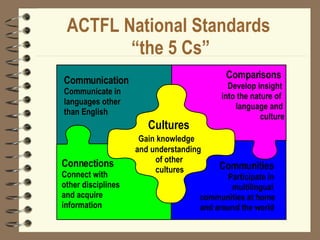
ACTFL National Standards  “the 5 Cs” Communication Communicate in  languages other  than English Connections   Connect with  other disciplines  and acquire  information Comparisons Develop insight into the nature of  language and  culture Communities Participate in  multilingual communities at home  and around the world Cultures Gain knowledge  and understanding of other  cultures
WHY   use folktales ? “… the great power of the story is that it engages us  affectively  as well as requiring our cognitive attention; we learn the content of the story  while we are  emotionally  engaged  by its  characters or events.”   - Kieran Egan,  Teaching as Storytelling
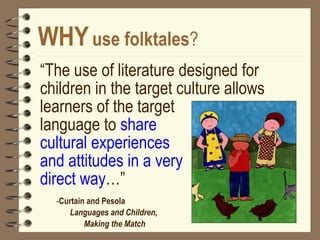
“ The use of literature designed for children in the target culture allows learners of the target  language to  share  cultural experiences  and attitudes in a very  direct way …” WHY   use folktales ? Curtain and Pesola Languages and Children,  Making the Match
Through the characters on the  page, children are able to live  out their worst fears and their  fondest wishes.  Valuable life  lessons  are conveyed through  the stories which children  readily absorb in a  non-  threatening and even  enjoyable context .   -Bruno Bettelheim,  The Uses of Enchantment WHY   use folktales ?
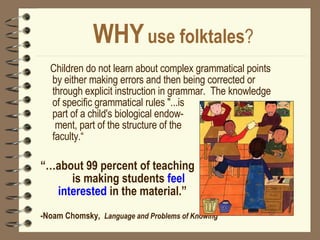
Children do not learn about complex grammatical points by either making errors and then being corrected or through explicit instruction in grammar.  The knowledge of specific grammatical rules "...is  part of a child's biological endow-  ment, part of the structure of the  language faculty.“ “… about 99 percent of teaching  is making students  feel  interested  in the material.” -Noam Chomsky,  Language and Problems of Knowing   WHY   use folktales ?
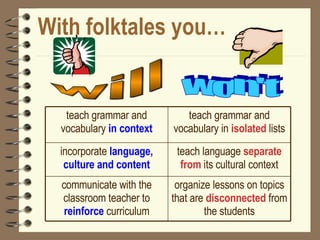
With folktales you… will won't organize lessons on topics that are  disconnected  from the students communicate with the classroom teacher to  reinforce  curriculum teach language  separate   from  its cultural context incorporate  language, culture and content teach grammar and vocabulary in  isolated  lists teach grammar and vocabulary  in context
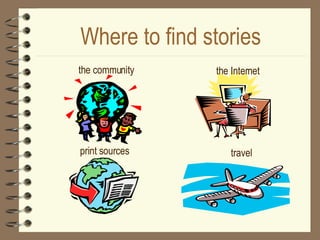
Where to find stories the community the Internet print sources travel
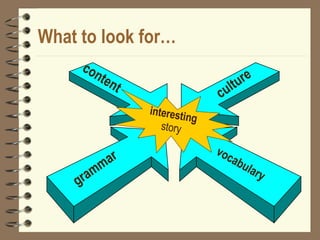
What to look for… grammar vocabulary culture content interesting story
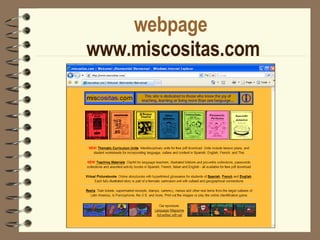
webpage   www.miscositas.com
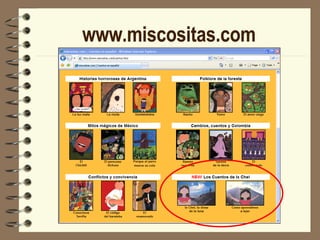
www.miscositas.com              
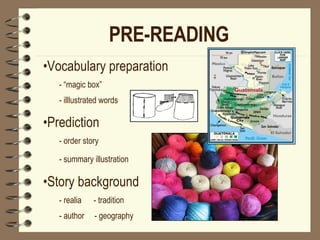
PRE-READING   Vocabulary preparation - “magic box” - illlustrated words Prediction - order story - summary illustration   Story background - realia  - tradition - author  - geography            
Pre-reading and prediction “ Stories allow students to  anticipate  and  predict   thus involving  them in activity.” (Barton and Booth,  Stories  in the Classroom , 1990)
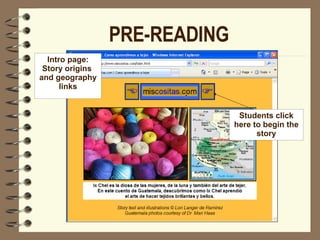
PRE-READING Story background   Intro page: Story origins  and geography links Students click here to begin the story                  
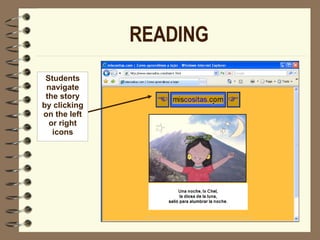
READING   Students navigate the story by clicking on the left or right icons            
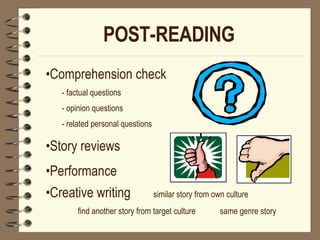
POST-READING   Comprehension check - factual questions - opinion questions - related personal questions Story reviews Performance Creative writing  similar story from own culture  find another story from target culture  same genre story            
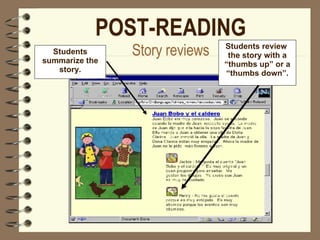
POST-READING Story reviews Students summarize the story. Students review  the story with a “thumbs up” or a “thumbs down”.
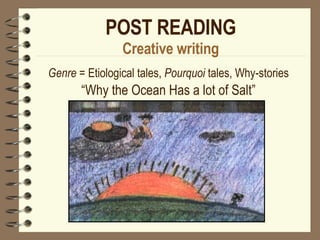
POST READING Creative writing Genre  = Etiological tales,  Pourquoi  tales, Why-stories “ Why the Ocean Has a lot of Salt”
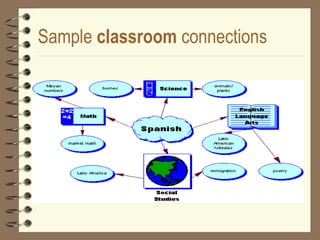
Sample  classroom  connections
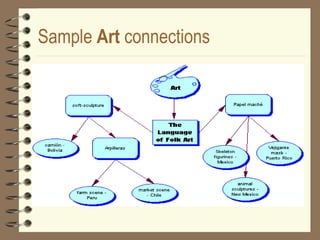
Sample  Art  connections
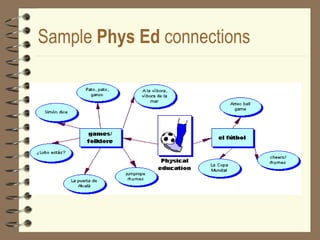
Sample  Phys Ed  connections
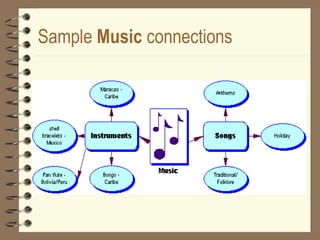
Sample  Music  connections
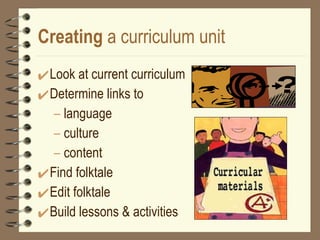
Creating  a curriculum unit Look at current curriculum  Determine links to language culture content Find folktale Edit folktale Build lessons & activities
Stories are everywhere … Go out  and find  them!
Questions? Ideas? Comments?

Folktales PPT

  • 1.
    Dr. Lori Langerde Ramirez [email_address] Chair, ESL & World Language Department Herricks Public Schools, NY Folktales, Fables and Fun for the language classroom
  • 2.
    ACTFL National Standards “the 5 Cs” Communication Communicate in languages other than English Connections Connect with other disciplines and acquire information Comparisons Develop insight into the nature of language and culture Communities Participate in multilingual communities at home and around the world Cultures Gain knowledge and understanding of other cultures
  • 3.
    WHY use folktales ? “… the great power of the story is that it engages us affectively as well as requiring our cognitive attention; we learn the content of the story while we are emotionally engaged by its characters or events.” - Kieran Egan, Teaching as Storytelling
  • 4.
    “ The useof literature designed for children in the target culture allows learners of the target language to share cultural experiences and attitudes in a very direct way …” WHY use folktales ? Curtain and Pesola Languages and Children, Making the Match
  • 5.
    Through the characterson the page, children are able to live out their worst fears and their fondest wishes. Valuable life lessons are conveyed through the stories which children readily absorb in a non- threatening and even enjoyable context . -Bruno Bettelheim, The Uses of Enchantment WHY use folktales ?
  • 6.
    Children do notlearn about complex grammatical points by either making errors and then being corrected or through explicit instruction in grammar. The knowledge of specific grammatical rules "...is part of a child's biological endow- ment, part of the structure of the language faculty.“ “… about 99 percent of teaching is making students feel interested in the material.” -Noam Chomsky, Language and Problems of Knowing WHY use folktales ?
  • 7.
    With folktales you…will won't organize lessons on topics that are disconnected from the students communicate with the classroom teacher to reinforce curriculum teach language separate from its cultural context incorporate language, culture and content teach grammar and vocabulary in isolated lists teach grammar and vocabulary in context
  • 8.
    Where to findstories the community the Internet print sources travel
  • 9.
    What to lookfor… grammar vocabulary culture content interesting story
  • 10.
    webpage www.miscositas.com
  • 11.
  • 12.
    PRE-READING   Vocabularypreparation - “magic box” - illlustrated words Prediction - order story - summary illustration Story background - realia - tradition - author - geography            
  • 13.
    Pre-reading and prediction“ Stories allow students to anticipate and predict thus involving them in activity.” (Barton and Booth, Stories in the Classroom , 1990)
  • 14.
    PRE-READING Story background  Intro page: Story origins and geography links Students click here to begin the story                  
  • 15.
    READING   Studentsnavigate the story by clicking on the left or right icons            
  • 16.
    POST-READING   Comprehensioncheck - factual questions - opinion questions - related personal questions Story reviews Performance Creative writing similar story from own culture find another story from target culture same genre story            
  • 17.
    POST-READING Story reviewsStudents summarize the story. Students review the story with a “thumbs up” or a “thumbs down”.
  • 18.
    POST READING Creativewriting Genre = Etiological tales, Pourquoi tales, Why-stories “ Why the Ocean Has a lot of Salt”
  • 19.
    Sample classroom connections
  • 20.
    Sample Art connections
  • 21.
    Sample PhysEd connections
  • 22.
    Sample Music connections
  • 23.
    Creating acurriculum unit Look at current curriculum Determine links to language culture content Find folktale Edit folktale Build lessons & activities
  • 24.
    Stories are everywhere… Go out and find them!
  • 25.