Group 1
Aiswarya
Ameera
Amina
Anakha
Bushra
Chanchal
Farzana
Fatima Amir
Fathima Basheer
Gigi
OUTLINE
National integration
History of national integration
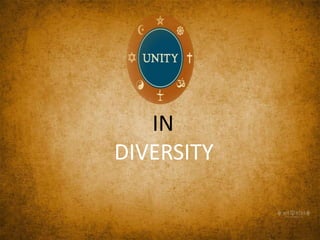
Unity in Diversity
Challenges
An inspirational tale
Destabilizing forces within country :
challenges to a nation
Promotion of national integration
Forces Promoting National Integration
National integration after independence
Spirit of Unity
• A multi-
lingual,
multi-racial
country like
India demands
greater
attention and
fullest co-
operation on
the part of
the national
leaders to
cope with the
problems. To
defend our
democracy, to
stop the
History of national
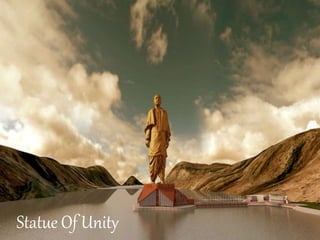
Statue Of Unity
Swadeshi movement
Non co-operation movement
Dandi march or salt satyagraha
IN
DIVERSITY
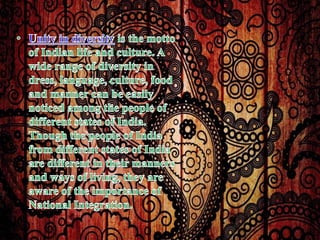
Unity in diversity is a concept of “unity without
uniformity and diversity without fragmentation based
on a mere tolerance of social ,cultural , religious
psychological differences towards a more complex
unity based on an understanding that difference
enriches human interactions .
“UNITY IN DIVERSITY” is a popular motto within
and among nation states ,and also in political and
social movements.
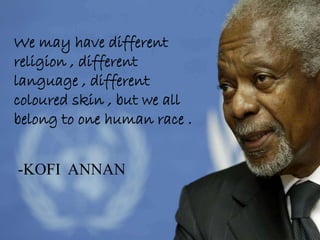
-KOFI ANNAN
We may have different
religion , different
language , different
coloured skin , but we all
belong to one human race .
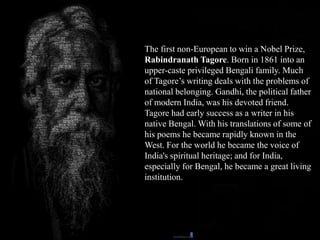
The first non-European to win a Nobel Prize,
Rabindranath Tagore. Born in 1861 into an
upper-caste privileged Bengali family. Much
of Tagore’s writing deals with the problems of
national belonging. Gandhi, the political father
of modern India, was his devoted friend.
Tagore had early success as a writer in his
native Bengal. With his translations of some of
his poems he became rapidly known in the
West. For the world he became the voice of
India's spiritual heritage; and for India,
especially for Bengal, he became a great living
institution.
For Tagore it was of the highest
importance that people be able to
live, and reason, in freedom. His
attitudes toward politics and
culture, nationalism and
internationalism, tradition and
modernity, can all be seen in the
light of this belief. Nothing,
perhaps, expresses his values as
clearly as a poem in Gitanjali :-
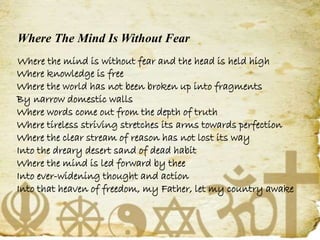
Where The Mind Is Without Fear
Where the mind is without fear and the head is held high
Where knowledge is free
Where the world has not been broken up into fragments
By narrow domestic walls
Where words come out from the depth of truth
Where tireless striving stretches its arms towards perfection
Where the clear stream of reason has not lost its way
Into the dreary desert sand of dead habit
Where the mind is led forward by thee
Into ever-widening thought and action
Into that heaven of freedom, my Father, let my country awake
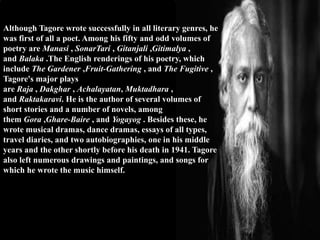
Although Tagore wrote successfully in all literary genres, he
was first of all a poet. Among his fifty and odd volumes of
poetry are Manasi , SonarTari , Gitanjali ,Gitimalya ,
and Balaka .The English renderings of his poetry, which
include The Gardener ,Fruit-Gathering , and The Fugitive ,
Tagore's major plays
are Raja , Dakghar , Achalayatan, Muktadhara ,
and Raktakaravi. He is the author of several volumes of
short stories and a number of novels, among
them Gora ,Ghare-Baire , and Yogayog . Besides these, he
wrote musical dramas, dance dramas, essays of all types,
travel diaries, and two autobiographies, one in his middle
years and the other shortly before his death in 1941. Tagore
also left numerous drawings and paintings, and songs for
which he wrote the music himself.
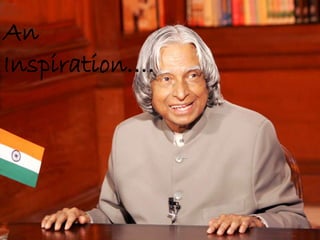
An
Inspiration….
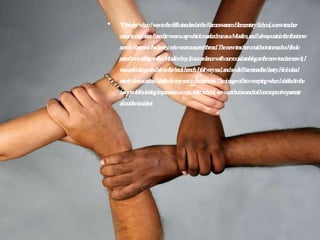
• “OnedaywhenIwasinthefifthstandardattheRameswaramElementarySchool,anewteacher
cametoourclass.IusedtowearacapwhichmarkedmeasaMuslim,andIalwayssatinthefrontrow
nexttoRamanadhaSastry,whoworeasacredthread.ThenewteachercouldnotstomachaHindu
priest’ssonsittingwithaMuslimboy.Inaccordancewithoursocialrankingasthenewteachersawit,I
wasaskedtogoandsitonthebackbench.Ifeltverysad,andsodidRamanadhaSastry.Helooked
utterlydowncastasIshiftedtomyseatinthelastrow.TheimageofhimweepingwhenIshiftedtothe
lastrowleftalastingimpressiononme.Afterschool,wewenthomeandtoldourrespectiveparents
abouttheincident.
DESTABILIZING FORCES
WITHIN COUNTRY:
CHALLENGES TO A
NATION
• Patriotic doctrine that for a citizen,
the country comes first and all other
issues come second, doesn’t always
work to motivate the people for
national causes.
• Individuals with extra ordinary
capability to gather and organize
followers are often present posing
threat to national integration for
narrow political goals.
• Lingual preferences
should be
peacefully dealt
with so that no
excessive bias or
favour for any one
language brings
about agitation in
their country.
• Religious
fanaticism is
another dangerous
force that often
leads to violence
 Regional aspirations of the
people, if not controlled,
may be dangerous for the
country as it may break it
up or create more and
more new states .
 Communalism may
encourage clashes between
communities. No
community should be
placed above the nation.
• Constitution, territorial
continuity art, literature,
music, national festivals,
national flag, national
anthem, sports and
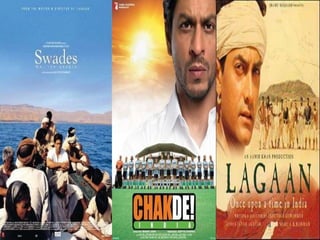
bollywood are vital aspects
that may be exploited to
promote national
integration.
“ We’re in the same boat brother,
We’re in the same boat brother,
And if you shale one end,
You gonna rock the other
It’s the same boat brother.”
- Huddie Ledbetter
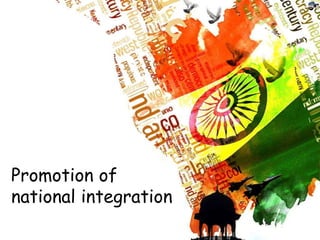
Promotion of
national integration
MOVIES
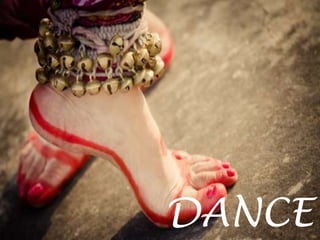
DANCE
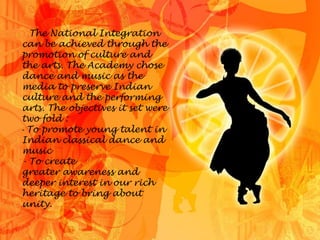
The National Integration
can be achieved through the
promotion of culture and
the arts. The Academy chose
dance and music as the
media to preserve Indian
culture and the performing
arts. The objectives it set were
two fold :
- To promote young talent in
Indian classical dance and
music
- To create
greater awareness and
deeper interest in our rich
heritage to bring about
unity.
MUSIC
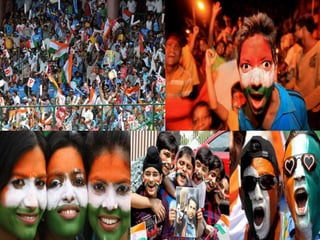
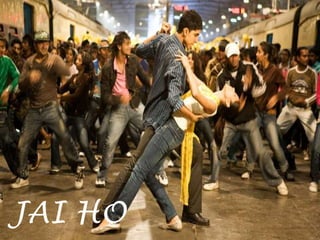
JAI HO
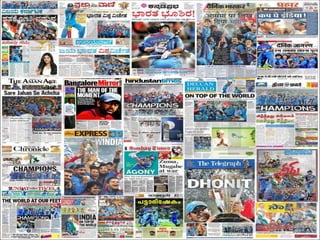
SPORTS
Forces Promoting National
Integration
• Indian Constitution - Our founding fathers
were aware that there were threats to our
unity from various forces. Consequently,
certain safeguards were placed in our
Constitution. These took the form of certain
ideals and principles like Democracy,
Secularism, and Social Equality that are
guaranteed under our Fundamental Rights.
Thus, our Constitution is the most important
force that promotes national integration.
India is a secular
state. This means
that each citizen of
our country has the
right to practice his
or her religion. The
government cannot
show preference to
one religion at the
expense of another.
Democracy as a democratic
states all the citizens of India
are equal under the law of
the country. As studied
earlier, our Fundamental
Rights and Directive
Principles of State Policy
specifically state that each
citizen is equal in every way.
People cannot be
discriminated against on the
basis of differences of caste,
religion, language, and
culture.
 Different regions of the
country are dependent on each
other for supplying and
consuming various kinds of
products that result in their
economic growth. Wheat
grown in Punjab may be sold
in Tamil Nadu and cotton
textiles from Gujarat may be
sold in Bihar. No region is so
self-sufficient that it can do
without the other. These
factors also bind the country
together.
 National festivals also
act as an important
unifying force.
Independence Day,
Republic Day, and Gandhi
Jayanti are festivals that
are celebrated by all
Indians and in all parts of
the country, regardless of
language, religion or
culture. They remind us of
our common nationality.
Our National Symbols like
the National Flag, the
National Anthem, and the
National Emblem also help to
remind us that we are all
identity. For this reason we
stress on the importance of
showing proper respect to
these symbols. These act as
strong unifying forces both in
times of celebration and
adversity.
Other forces like the
communication system
and the mass media
help in the exposure to
all the cultures of
different regions of
India. Thus, bringing
the whole country
together as one nation.
NATIONAL INTEGRATIONAFTER
INDEPENDENCE
• Simultaneously the
Government of
India , through a
combination of
diplomatic and
military , means
acquired control
over the remaining
colonial enclaves ,
which too were
integrated into
India.
SPIRIT OF
UNITY
RESCUE
Human trafficking is modern slavery,
rampant in the world.
It has become the fastest growing
criminal industries in the world.
Indian rescue mission was started in
2009 to offer help and support the
young children.
RELIEF FEATURES
 The physical shape of the surface of the earth is
known as relief.
 The relief of India is carried out in the following
physical units:
 Northern mountains or the Himalayas
 Northern plains
 Peninsular plateau
 Western and eastern coastal plains
 The islands
REHABILITATION
The rehabilitation council of india is the
apex body of the government.
It is to regulate training programmes and
courses for disabled,disadvantages and
special education requirement communities.
In the year 2000,the rehabilitation council
of india act ,2000 ,was introduced and
notified by the government of india.
National Integration cannot be
built by brick and mortar, by
chisel and hammer. It has to
grow slowly in the minds and
hearts of men.
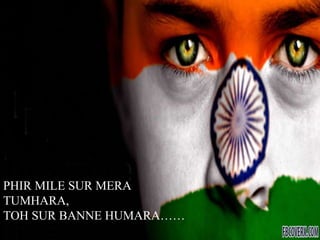
PHIR MILE SUR MERA
TUMHARA,
TOH SUR BANNE HUMARA……

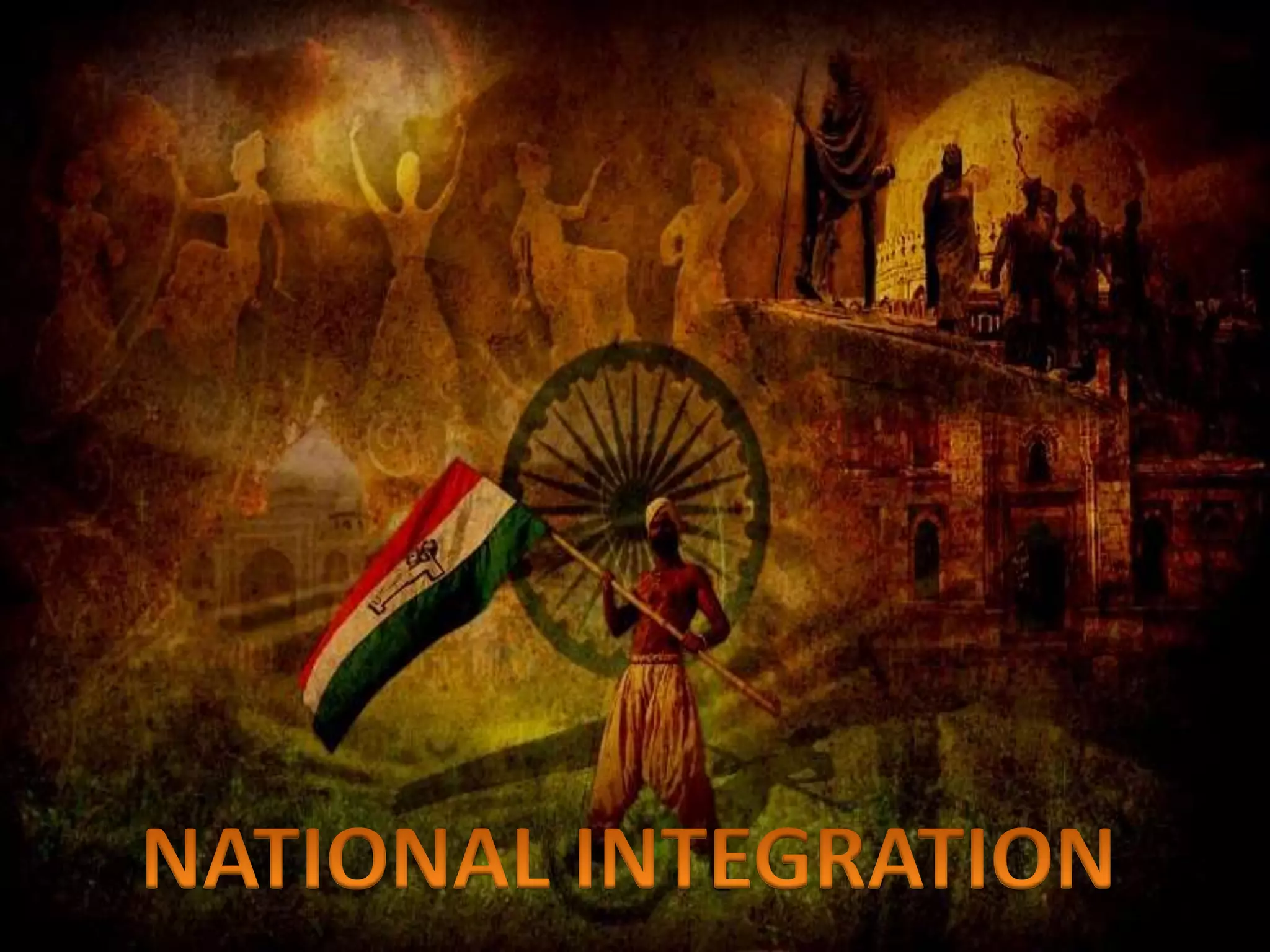
National Integration

  • 2.
  • 3.
    OUTLINE National integration History ofnational integration Unity in Diversity Challenges An inspirational tale Destabilizing forces within country : challenges to a nation Promotion of national integration Forces Promoting National Integration National integration after independence Spirit of Unity
  • 8.
    • A multi- lingual, multi-racial countrylike India demands greater attention and fullest co- operation on the part of the national leaders to cope with the problems. To defend our democracy, to stop the
  • 9.
  • 10.
  • 11.
    Swadeshi movement Non co-operationmovement Dandi march or salt satyagraha
  • 12.
  • 13.
    Unity in diversityis a concept of “unity without uniformity and diversity without fragmentation based on a mere tolerance of social ,cultural , religious psychological differences towards a more complex unity based on an understanding that difference enriches human interactions . “UNITY IN DIVERSITY” is a popular motto within and among nation states ,and also in political and social movements.
  • 15.
    -KOFI ANNAN We mayhave different religion , different language , different coloured skin , but we all belong to one human race .
  • 16.
    The first non-Europeanto win a Nobel Prize, Rabindranath Tagore. Born in 1861 into an upper-caste privileged Bengali family. Much of Tagore’s writing deals with the problems of national belonging. Gandhi, the political father of modern India, was his devoted friend. Tagore had early success as a writer in his native Bengal. With his translations of some of his poems he became rapidly known in the West. For the world he became the voice of India's spiritual heritage; and for India, especially for Bengal, he became a great living institution.
  • 17.
    For Tagore itwas of the highest importance that people be able to live, and reason, in freedom. His attitudes toward politics and culture, nationalism and internationalism, tradition and modernity, can all be seen in the light of this belief. Nothing, perhaps, expresses his values as clearly as a poem in Gitanjali :-
  • 18.
    Where The MindIs Without Fear Where the mind is without fear and the head is held high Where knowledge is free Where the world has not been broken up into fragments By narrow domestic walls Where words come out from the depth of truth Where tireless striving stretches its arms towards perfection Where the clear stream of reason has not lost its way Into the dreary desert sand of dead habit Where the mind is led forward by thee Into ever-widening thought and action Into that heaven of freedom, my Father, let my country awake
  • 19.
    Although Tagore wrotesuccessfully in all literary genres, he was first of all a poet. Among his fifty and odd volumes of poetry are Manasi , SonarTari , Gitanjali ,Gitimalya , and Balaka .The English renderings of his poetry, which include The Gardener ,Fruit-Gathering , and The Fugitive , Tagore's major plays are Raja , Dakghar , Achalayatan, Muktadhara , and Raktakaravi. He is the author of several volumes of short stories and a number of novels, among them Gora ,Ghare-Baire , and Yogayog . Besides these, he wrote musical dramas, dance dramas, essays of all types, travel diaries, and two autobiographies, one in his middle years and the other shortly before his death in 1941. Tagore also left numerous drawings and paintings, and songs for which he wrote the music himself.
  • 20.
  • 22.
  • 25.
  • 26.
    • Patriotic doctrinethat for a citizen, the country comes first and all other issues come second, doesn’t always work to motivate the people for national causes. • Individuals with extra ordinary capability to gather and organize followers are often present posing threat to national integration for narrow political goals.
  • 27.
    • Lingual preferences shouldbe peacefully dealt with so that no excessive bias or favour for any one language brings about agitation in their country. • Religious fanaticism is another dangerous force that often leads to violence
  • 28.
     Regional aspirationsof the people, if not controlled, may be dangerous for the country as it may break it up or create more and more new states .  Communalism may encourage clashes between communities. No community should be placed above the nation.
  • 29.
    • Constitution, territorial continuityart, literature, music, national festivals, national flag, national anthem, sports and bollywood are vital aspects that may be exploited to promote national integration.
  • 30.
    “ We’re inthe same boat brother, We’re in the same boat brother, And if you shale one end, You gonna rock the other It’s the same boat brother.” - Huddie Ledbetter
  • 31.
  • 32.
  • 34.
  • 35.
    The National Integration canbe achieved through the promotion of culture and the arts. The Academy chose dance and music as the media to preserve Indian culture and the performing arts. The objectives it set were two fold : - To promote young talent in Indian classical dance and music - To create greater awareness and deeper interest in our rich heritage to bring about unity.
  • 36.
  • 38.
  • 39.
  • 42.
  • 43.
    • Indian Constitution- Our founding fathers were aware that there were threats to our unity from various forces. Consequently, certain safeguards were placed in our Constitution. These took the form of certain ideals and principles like Democracy, Secularism, and Social Equality that are guaranteed under our Fundamental Rights. Thus, our Constitution is the most important force that promotes national integration.
  • 44.
    India is asecular state. This means that each citizen of our country has the right to practice his or her religion. The government cannot show preference to one religion at the expense of another.
  • 45.
    Democracy as ademocratic states all the citizens of India are equal under the law of the country. As studied earlier, our Fundamental Rights and Directive Principles of State Policy specifically state that each citizen is equal in every way. People cannot be discriminated against on the basis of differences of caste, religion, language, and culture.
  • 46.
     Different regionsof the country are dependent on each other for supplying and consuming various kinds of products that result in their economic growth. Wheat grown in Punjab may be sold in Tamil Nadu and cotton textiles from Gujarat may be sold in Bihar. No region is so self-sufficient that it can do without the other. These factors also bind the country together.
  • 47.
     National festivalsalso act as an important unifying force. Independence Day, Republic Day, and Gandhi Jayanti are festivals that are celebrated by all Indians and in all parts of the country, regardless of language, religion or culture. They remind us of our common nationality.
  • 48.
    Our National Symbolslike the National Flag, the National Anthem, and the National Emblem also help to remind us that we are all identity. For this reason we stress on the importance of showing proper respect to these symbols. These act as strong unifying forces both in times of celebration and adversity.
  • 49.
    Other forces likethe communication system and the mass media help in the exposure to all the cultures of different regions of India. Thus, bringing the whole country together as one nation.
  • 50.
  • 53.
    • Simultaneously the Governmentof India , through a combination of diplomatic and military , means acquired control over the remaining colonial enclaves , which too were integrated into India.
  • 54.
  • 55.
    RESCUE Human trafficking ismodern slavery, rampant in the world. It has become the fastest growing criminal industries in the world. Indian rescue mission was started in 2009 to offer help and support the young children.
  • 56.
    RELIEF FEATURES  Thephysical shape of the surface of the earth is known as relief.  The relief of India is carried out in the following physical units:  Northern mountains or the Himalayas  Northern plains  Peninsular plateau  Western and eastern coastal plains  The islands
  • 57.
    REHABILITATION The rehabilitation councilof india is the apex body of the government. It is to regulate training programmes and courses for disabled,disadvantages and special education requirement communities. In the year 2000,the rehabilitation council of india act ,2000 ,was introduced and notified by the government of india.

  • 58.
    National Integration cannotbe built by brick and mortar, by chisel and hammer. It has to grow slowly in the minds and hearts of men.
  • 59.
    PHIR MILE SURMERA TUMHARA, TOH SUR BANNE HUMARA……

Editor's Notes

  • #17   Although Tagore wrote successfully in all literary genres, he was first of all a poet. Among his fifty and odd volumes of poetry are Manasi , SonarTari , Gitanjali ,Gitimalya , and Balaka .The English renderings of his poetry, which include The Gardener ,Fruit-Gathering , and The Fugitive , Tagore's major plays are Raja , Dakghar , Achalayatan, Muktadhara , and Raktakaravi. He is the author of several volumes of short stories and a number of novels, among them Gora ,Ghare-Baire , and Yogayog . Besides these, he wrote musical dramas, dance dramas, essays of all types, travel diaries, and two autobiographies, one in his middle years and the other shortly before his death in 1941. Tagore also left numerous drawings and paintings, and songs for which he wrote the music himself.
  • #18 For Tagore it was of the highest importance that people be able to live, and reason, in freedom. His attitudes toward politics and culture, nationalism and internationalism, tradition and modernity, can all be seen in the light of this belief.11 Nothing, perhaps, expresses his values as clearly as a poem inGitanjali:
  • #20   Although Tagore wrote successfully in all literary genres, he was first of all a poet. Among his fifty and odd volumes of poetry are Manasi , SonarTari , Gitanjali ,Gitimalya , and Balaka .The English renderings of his poetry, which include The Gardener ,Fruit-Gathering , and The Fugitive , Tagore's major plays are Raja , Dakghar , Achalayatan, Muktadhara , and Raktakaravi. He is the author of several volumes of short stories and a number of novels, among them Gora ,Ghare-Baire , and Yogayog . Besides these, he wrote musical dramas, dance dramas, essays of all types, travel diaries, and two autobiographies, one in his middle years and the other shortly before his death in 1941. Tagore also left numerous drawings and paintings, and songs for which he wrote the music himself.