AustriaAustria
Austrian food is rich in texture and has a
unique flavor. Austrian cuisine was
influenced by the countries surrounding it.
These countries are Germany, Hungary,
and Italy. The most consumed meats in
Austria are chicken, beef, and pork.
Pastries, sweets, jams, and cakes are also
Austrian favorites. Some famous Austrian
dishes are Wiener Schnitzel and Apple
Strudel. It is believed that the Wiener
Schnitzel originally came from Milan, Italy
and was introduced to Viennese cuisine in
the 16th century.
NorwayNorway
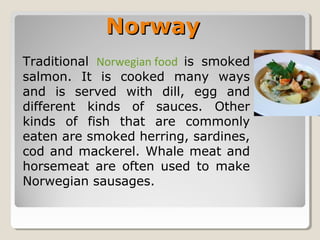
Traditional Norwegian food is smoked
salmon. It is cooked many ways
and is served with dill, egg and
different kinds of sauces. Other
kinds of fish that are commonly
eaten are smoked herring, sardines,
cod and mackerel. Whale meat and
horsemeat are often used to make
Norwegian sausages.
EnglandEngland
The English have healthy and filling
meals everyday. Because England
began to trade with India in the 18th
century, India had a great influence
on English food. The food became
more flavorful with many herbs and
spices. Tarts, cakes, pastries, pies,
and pudding are very common in
English cuisine. Toast, coffee, and
cereal are also often eaten, especially
during breakfast.
SpainSpain
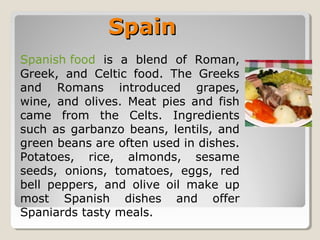
Spanish food is a blend of Roman,
Greek, and Celtic food. The Greeks
and Romans introduced grapes,
wine, and olives. Meat pies and fish
came from the Celts. Ingredients
such as garbanzo beans, lentils, and
green beans are often used in dishes.
Potatoes, rice, almonds, sesame
seeds, onions, tomatoes, eggs, red
bell peppers, and olive oil make up
most Spanish dishes and offer
Spaniards tasty meals.
FranceFrance
French cuisine has a rich history of
sophisticated dishes and plentiful
feasts. Because of the rich soil,
many herbs, fruits, grains, and
vegetables are grown in France.
Brandy and wine are the most
popular French alcoholic drinks.
Cheese is very important for French
cuisine and is used in numerous
dishes. Veal, chicken, goose, duck,
mutton, and pork are great meats
that French dishes have to offer.
GermanyGermany
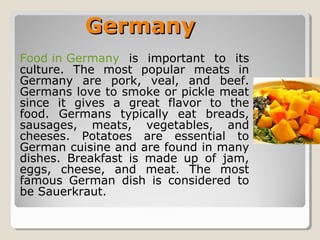
Food in Germany is important to its
culture. The most popular meats in
Germany are pork, veal, and beef.
Germans love to smoke or pickle meat
since it gives a great flavor to the
food. Germans typically eat breads,
sausages, meats, vegetables, and
cheeses. Potatoes are essential to
German cuisine and are found in many
dishes. Breakfast is made up of jam,
eggs, cheese, and meat. The most
famous German dish is considered to
be Sauerkraut.
GreeceGreece
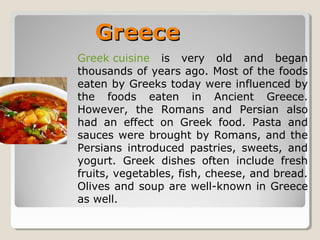
Greek cuisine is very old and began
thousands of years ago. Most of the foods
eaten by Greeks today were influenced by
the foods eaten in Ancient Greece.
However, the Romans and Persian also
had an effect on Greek food. Pasta and
sauces were brought by Romans, and the
Persians introduced pastries, sweets, and
yogurt. Greek dishes often include fresh
fruits, vegetables, fish, cheese, and bread.
Olives and soup are well-known in Greece
as well.
ItalyItaly
France, Austria, and the former
Yugoslavia had a great effect on the
cooking techniques and food of Italy.
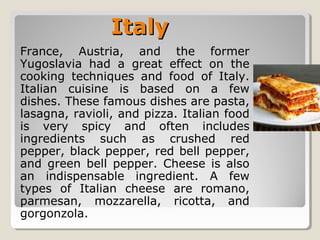
Italian cuisine is based on a few
dishes. These famous dishes are pasta,
lasagna, ravioli, and pizza. Italian food
is very spicy and often includes
ingredients such as crushed red
pepper, black pepper, red bell pepper,
and green bell pepper. Cheese is also
an indispensable ingredient. A few
types of Italian cheese are romano,
parmesan, mozzarella, ricotta, and
gorgonzola.
PortugalPortugal
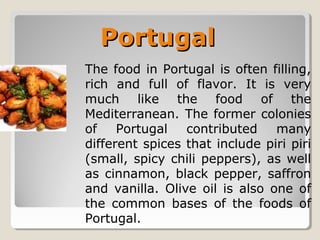
The food in Portugal is often filling,
rich and full of flavor. It is very
much like the food of the
Mediterranean. The former colonies
of Portugal contributed many
different spices that include piri piri
(small, spicy chili peppers), as well
as cinnamon, black pepper, saffron
and vanilla. Olive oil is also one of
the common bases of the foods of
Portugal.
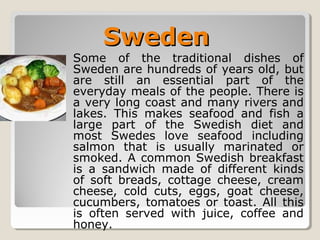
Some of the traditional dishes of
Sweden are hundreds of years old, but
are still an essential part of the
everyday meals of the people. There is
a very long coast and many rivers and
lakes. This makes seafood and fish a
large part of the Swedish diet and
most Swedes love seafood including
salmon that is usually marinated or
smoked. A common Swedish breakfast
is a sandwich made of different kinds
of soft breads, cottage cheese, cream
cheese, cold cuts, eggs, goat cheese,
cucumbers, tomatoes or toast. All this
is often served with juice, coffee and
honey.
SwedenSweden
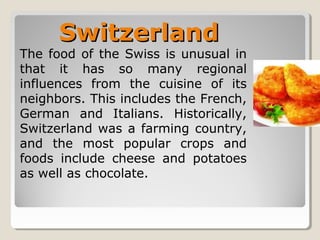
The food of the Swiss is unusual in
that it has so many regional
influences from the cuisine of its
neighbors. This includes the French,
German and Italians. Historically,
Switzerland was a farming country,
and the most popular crops and
foods include cheese and potatoes
as well as chocolate.
SwitzerlandSwitzerland
CyprusCyprus
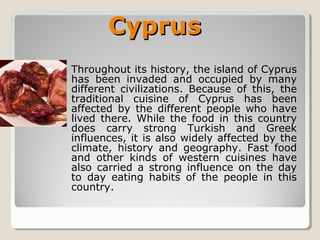
Throughout its history, the island of Cyprus
has been invaded and occupied by many
different civilizations. Because of this, the
traditional cuisine of Cyprus has been
affected by the different people who have
lived there. While the food in this country
does carry strong Turkish and Greek
influences, it is also widely affected by the
climate, history and geography. Fast food
and other kinds of western cuisines have
also carried a strong influence on the day
to day eating habits of the people in this
country.

National cuisine

  • 2.
    AustriaAustria Austrian food isrich in texture and has a unique flavor. Austrian cuisine was influenced by the countries surrounding it. These countries are Germany, Hungary, and Italy. The most consumed meats in Austria are chicken, beef, and pork. Pastries, sweets, jams, and cakes are also Austrian favorites. Some famous Austrian dishes are Wiener Schnitzel and Apple Strudel. It is believed that the Wiener Schnitzel originally came from Milan, Italy and was introduced to Viennese cuisine in the 16th century.
  • 3.
    NorwayNorway Traditional Norwegian foodis smoked salmon. It is cooked many ways and is served with dill, egg and different kinds of sauces. Other kinds of fish that are commonly eaten are smoked herring, sardines, cod and mackerel. Whale meat and horsemeat are often used to make Norwegian sausages.
  • 4.
    EnglandEngland The English havehealthy and filling meals everyday. Because England began to trade with India in the 18th century, India had a great influence on English food. The food became more flavorful with many herbs and spices. Tarts, cakes, pastries, pies, and pudding are very common in English cuisine. Toast, coffee, and cereal are also often eaten, especially during breakfast.
  • 5.
    SpainSpain Spanish food isa blend of Roman, Greek, and Celtic food. The Greeks and Romans introduced grapes, wine, and olives. Meat pies and fish came from the Celts. Ingredients such as garbanzo beans, lentils, and green beans are often used in dishes. Potatoes, rice, almonds, sesame seeds, onions, tomatoes, eggs, red bell peppers, and olive oil make up most Spanish dishes and offer Spaniards tasty meals.
  • 6.
    FranceFrance French cuisine hasa rich history of sophisticated dishes and plentiful feasts. Because of the rich soil, many herbs, fruits, grains, and vegetables are grown in France. Brandy and wine are the most popular French alcoholic drinks. Cheese is very important for French cuisine and is used in numerous dishes. Veal, chicken, goose, duck, mutton, and pork are great meats that French dishes have to offer.
  • 7.
    GermanyGermany Food in Germanyis important to its culture. The most popular meats in Germany are pork, veal, and beef. Germans love to smoke or pickle meat since it gives a great flavor to the food. Germans typically eat breads, sausages, meats, vegetables, and cheeses. Potatoes are essential to German cuisine and are found in many dishes. Breakfast is made up of jam, eggs, cheese, and meat. The most famous German dish is considered to be Sauerkraut.
  • 8.
    GreeceGreece Greek cuisine isvery old and began thousands of years ago. Most of the foods eaten by Greeks today were influenced by the foods eaten in Ancient Greece. However, the Romans and Persian also had an effect on Greek food. Pasta and sauces were brought by Romans, and the Persians introduced pastries, sweets, and yogurt. Greek dishes often include fresh fruits, vegetables, fish, cheese, and bread. Olives and soup are well-known in Greece as well.
  • 9.
    ItalyItaly France, Austria, andthe former Yugoslavia had a great effect on the cooking techniques and food of Italy. Italian cuisine is based on a few dishes. These famous dishes are pasta, lasagna, ravioli, and pizza. Italian food is very spicy and often includes ingredients such as crushed red pepper, black pepper, red bell pepper, and green bell pepper. Cheese is also an indispensable ingredient. A few types of Italian cheese are romano, parmesan, mozzarella, ricotta, and gorgonzola.
  • 10.
    PortugalPortugal The food inPortugal is often filling, rich and full of flavor. It is very much like the food of the Mediterranean. The former colonies of Portugal contributed many different spices that include piri piri (small, spicy chili peppers), as well as cinnamon, black pepper, saffron and vanilla. Olive oil is also one of the common bases of the foods of Portugal.
  • 11.
    Some of thetraditional dishes of Sweden are hundreds of years old, but are still an essential part of the everyday meals of the people. There is a very long coast and many rivers and lakes. This makes seafood and fish a large part of the Swedish diet and most Swedes love seafood including salmon that is usually marinated or smoked. A common Swedish breakfast is a sandwich made of different kinds of soft breads, cottage cheese, cream cheese, cold cuts, eggs, goat cheese, cucumbers, tomatoes or toast. All this is often served with juice, coffee and honey. SwedenSweden
  • 12.
    The food ofthe Swiss is unusual in that it has so many regional influences from the cuisine of its neighbors. This includes the French, German and Italians. Historically, Switzerland was a farming country, and the most popular crops and foods include cheese and potatoes as well as chocolate. SwitzerlandSwitzerland
  • 13.
    CyprusCyprus Throughout its history,the island of Cyprus has been invaded and occupied by many different civilizations. Because of this, the traditional cuisine of Cyprus has been affected by the different people who have lived there. While the food in this country does carry strong Turkish and Greek influences, it is also widely affected by the climate, history and geography. Fast food and other kinds of western cuisines have also carried a strong influence on the day to day eating habits of the people in this country.