Narrative Structure
   Subversive Productions
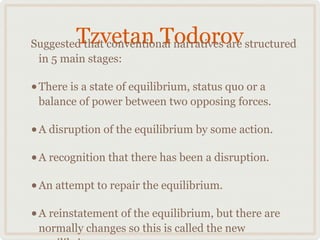
Tzvetan Todorov
Suggested that conventional narratives are structured
 in 5 main stages:

• There is a state of equilibrium, status quo or a
 balance of power between two opposing forces.

• A disruption of the equilibrium by some action.
• A recognition that there has been a disruption.
• An attempt to repair the equilibrium.
• A reinstatement of the equilibrium, but there are
 normally changes so this is called the new
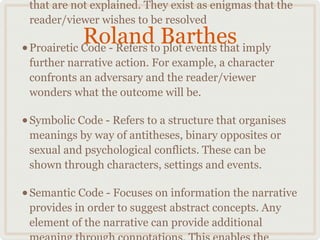
that are not explained. They exist as enigmas that the
 reader/viewer wishes to be resolved
             Roland Barthes imply
• Proairetic Code - Refers to plot events that
 further narrative action. For example, a character
 confronts an adversary and the reader/viewer
 wonders what the outcome will be.

• Symbolic Code - Refers to a structure that organises
 meanings by way of antitheses, binary opposites or
 sexual and psychological conflicts. These can be
 shown through characters, settings and events.

• Semantic Code - Focuses on information the narrative
 provides in order to suggest abstract concepts. Any
 element of the narrative can provide additional
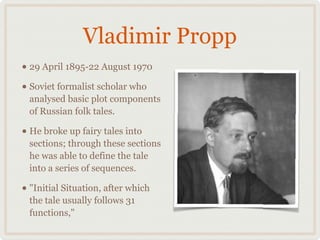
Vladimir Propp
• 29 April 1895-22 August 1970
• Soviet formalist scholar who
  analysed basic plot components
  of Russian folk tales.

• He broke up fairy tales into
  sections; through these sections
  he was able to define the tale
  into a series of sequences.

• "Initial Situation, after which
  the tale usually follows 31
  functions,"
Functions
Two Distinct Types:

•Text is described to follow the chronological order or
 linear sequence of elements. Also "Diachronic" gives
 the audience the sense of "going through" the high
 and lows of a story.

•The elements are taken out of the given order and are
 regrouped. Also "Synchronic" is where the story is
 taken in all at one time like in the pattern of a circle.
 Offers a sense of unity among the components of a
 story.
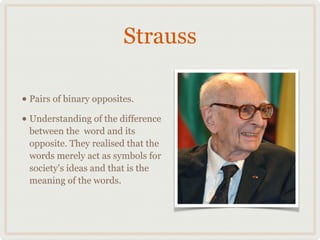
Strauss

• Pairs of binary opposites.
• Understanding of the difference
 between the word and its
 opposite. They realised that the
 words merely act as symbols for
 society's ideas and that is the
 meaning of the words.
• We could use the semantic code effectively in our
 narrative, as we could use it to cleverly imply that the
 main character is dead rather than just telling the
   How We Will Use These
 audience.

• Depending on which direction we go with our
 narrative, we could use Todorov's idea of
 equilibriums. For example, the man could have been
 living with the woman for a while when she suddenly
 gets a boyfriend, hence disrupting the equilibrium.

• We could use many of the functions found in Propps
 theory but we would use them in a "Synchronic" form
 as we wont be using them all e.g. Wedding. But we
 will also use "Departure", "First function of the
 Donor" and "Exposé". Also there is set characters but
 we will only be using two so there will either be

Narrative structure 2

  • 1.
    Narrative Structure Subversive Productions
  • 2.
    Tzvetan Todorov Suggested thatconventional narratives are structured in 5 main stages: • There is a state of equilibrium, status quo or a balance of power between two opposing forces. • A disruption of the equilibrium by some action. • A recognition that there has been a disruption. • An attempt to repair the equilibrium. • A reinstatement of the equilibrium, but there are normally changes so this is called the new
  • 3.
    that are notexplained. They exist as enigmas that the reader/viewer wishes to be resolved Roland Barthes imply • Proairetic Code - Refers to plot events that further narrative action. For example, a character confronts an adversary and the reader/viewer wonders what the outcome will be. • Symbolic Code - Refers to a structure that organises meanings by way of antitheses, binary opposites or sexual and psychological conflicts. These can be shown through characters, settings and events. • Semantic Code - Focuses on information the narrative provides in order to suggest abstract concepts. Any element of the narrative can provide additional
  • 4.
    Vladimir Propp • 29April 1895-22 August 1970 • Soviet formalist scholar who analysed basic plot components of Russian folk tales. • He broke up fairy tales into sections; through these sections he was able to define the tale into a series of sequences. • "Initial Situation, after which the tale usually follows 31 functions,"
  • 5.
    Functions Two Distinct Types: •Textis described to follow the chronological order or linear sequence of elements. Also "Diachronic" gives the audience the sense of "going through" the high and lows of a story. •The elements are taken out of the given order and are regrouped. Also "Synchronic" is where the story is taken in all at one time like in the pattern of a circle. Offers a sense of unity among the components of a story.
  • 6.
    Strauss • Pairs ofbinary opposites. • Understanding of the difference between the word and its opposite. They realised that the words merely act as symbols for society's ideas and that is the meaning of the words.
  • 7.
    • We coulduse the semantic code effectively in our narrative, as we could use it to cleverly imply that the main character is dead rather than just telling the How We Will Use These audience. • Depending on which direction we go with our narrative, we could use Todorov's idea of equilibriums. For example, the man could have been living with the woman for a while when she suddenly gets a boyfriend, hence disrupting the equilibrium. • We could use many of the functions found in Propps theory but we would use them in a "Synchronic" form as we wont be using them all e.g. Wedding. But we will also use "Departure", "First function of the Donor" and "Exposé". Also there is set characters but we will only be using two so there will either be