FINANCIAL FREEDOM


Presented by
Today, we will cover,
5 steps to Financial Freedom:

   Net Worth and Financial Goals
   Budget Analysis
   Spending Plans
   Wise use of Credit
   Savings
Where are you now?


Take the One-Minute Financial Quiz…
Assess Your situation
NEVER= 0 points     SOMETIMES- 1 point         ALWAYS=2 points

0-10 Points: Indicates a need to take control of your finances.
  Develop and practice better money management skills.

10-15 Points: Reflects a good effort to effectively manage your
  money. Determine what changes can be made to improve your
  financial well- being

16-20 Points: Demonstrates ability to successfully manage your
  finances. Continue to make money management a priority.
Benefits of Managing Money


Free up time      Do things you enjoy
Less stress          Better health
Achieve goals           Satisfaction
Greater control             Peace of mind
TIPS to Achieve Financial Independence

Spend less than you earn
Write it down (track what you have and what you owe)
Work with professionals (accountant, financial advisors,
credit unions and those you trust)
Do your own research: (study, listen, research)
Define financial freedom: What is your definition?
Dream big. How would you spend your life if you
were financially independent?
Your Net Worth

 Net worth, not income,
 not lifestyle, is a true
 measure        of   your
 financial health

   Subtract what you OWE
  from what you OWN
Are you going ahead?
Are you falling behind?
Establish Financial Goals

         Short-term
(within the next six months)

    Intermediate-term
  (within the next one to
         five years)

        Long-term
(more than five years away)
Set Clear Financial Goals

Dream!                        SMART GOALS
Reduce dreams to writing        Specific
(SMART goals)                   Measurable
Organize your dreams            Adjustable
Put plan in action              Realistic
Celebrate                       Time-Oriented
accomplishments
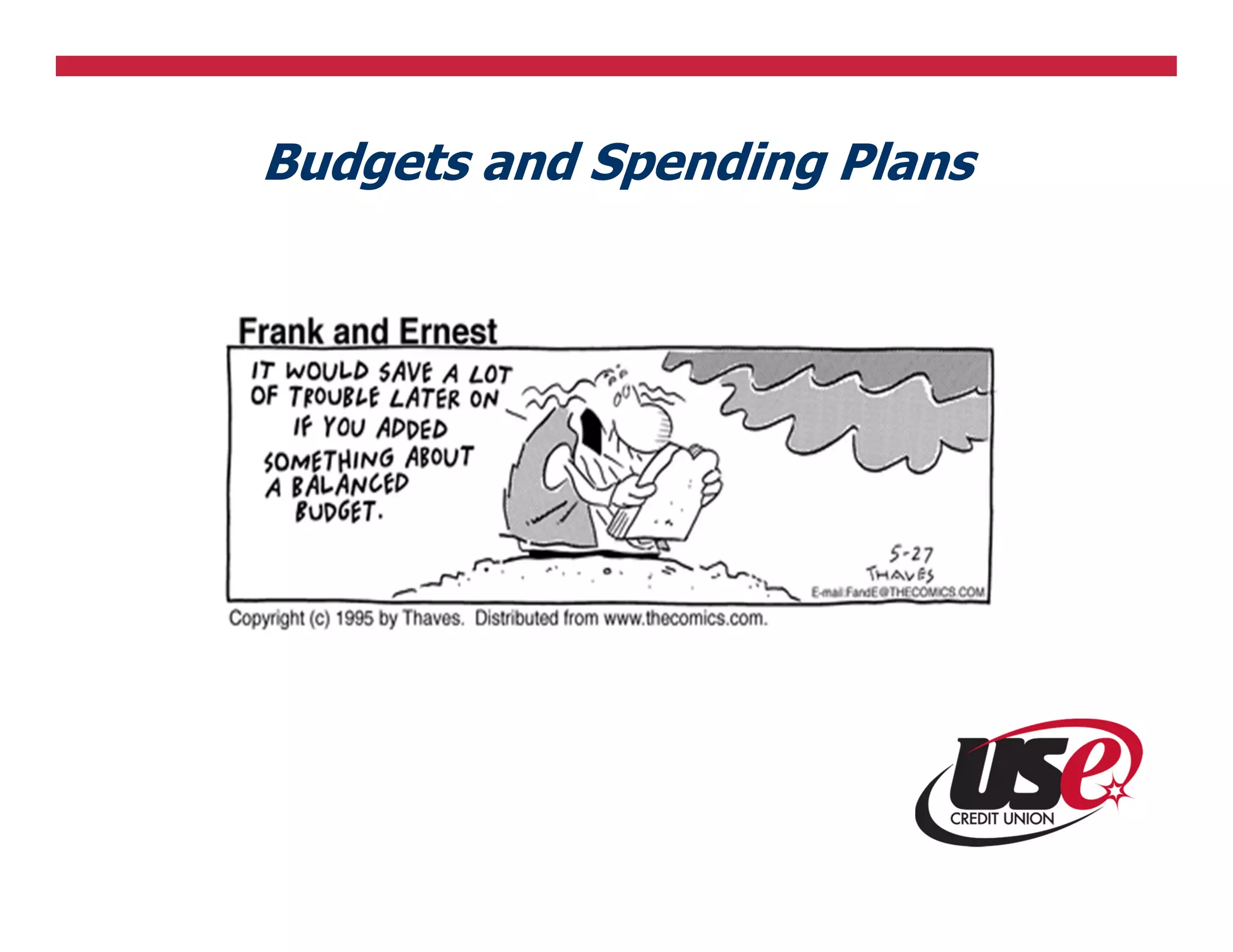
Budgets and Spending Plans
Budget Analysis
        A blueprint of your day to
          day personal finances:

        Two key components:
           – Income
           – Expenses
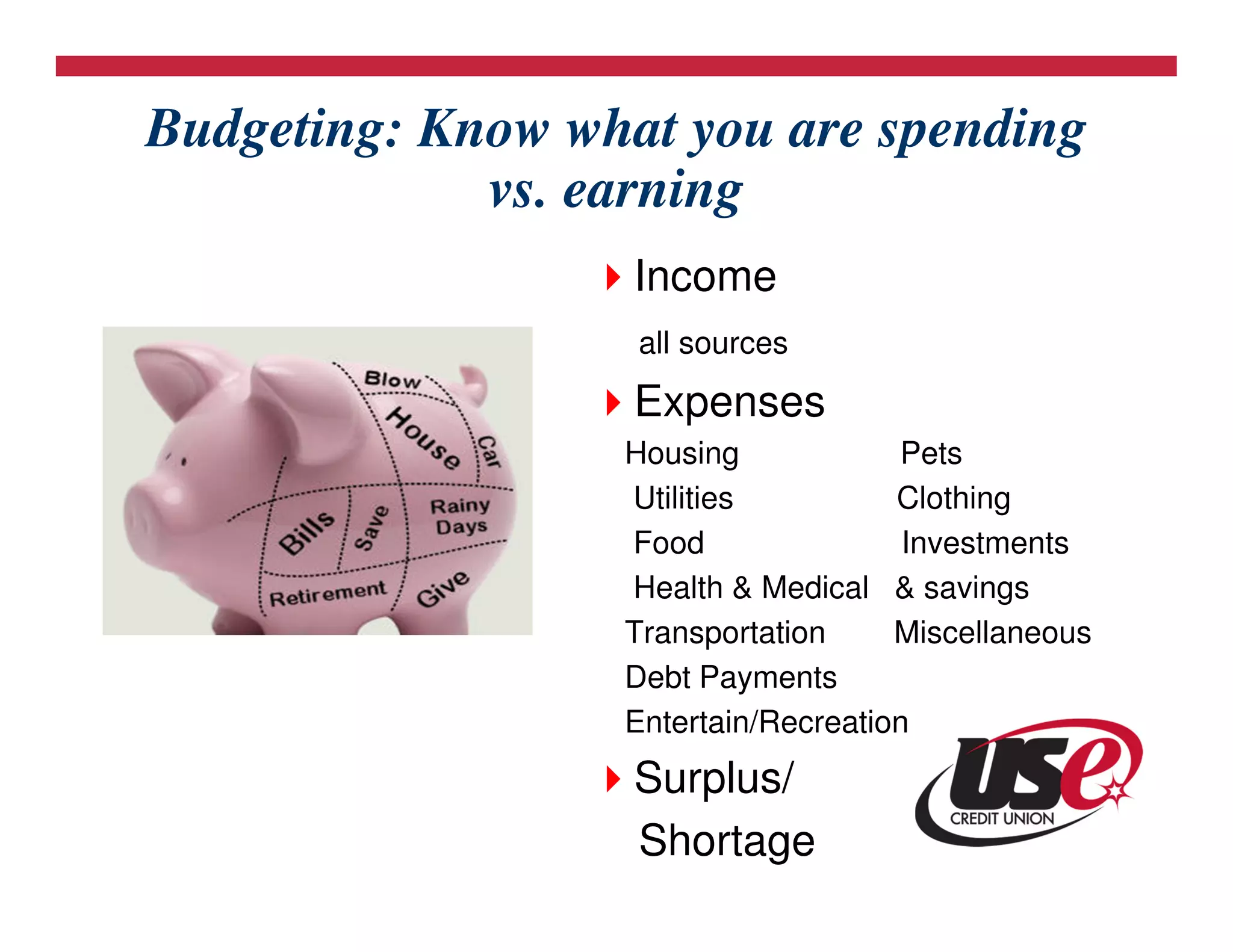
Budgeting: Know what you are spending
             vs. earning
                   Income
                   all sources

                   Expenses
                  Housing            Pets
                  Utilities          Clothing
                  Food                Investments
                  Health & Medical & savings
                  Transportation     Miscellaneous
                  Debt Payments
                  Entertain/Recreation
                   Surplus/
                   Shortage
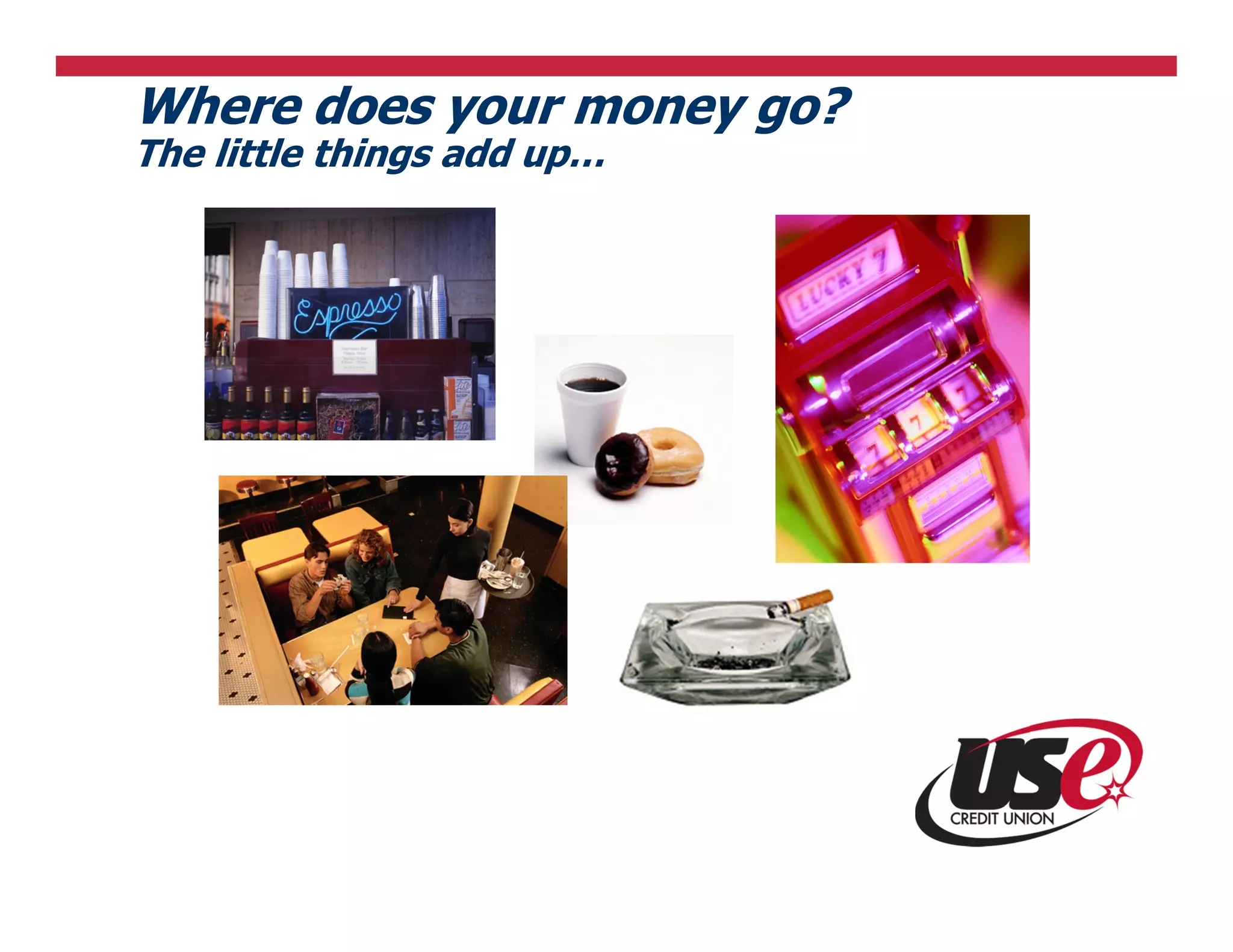
Where does your money go?
The little things add up…
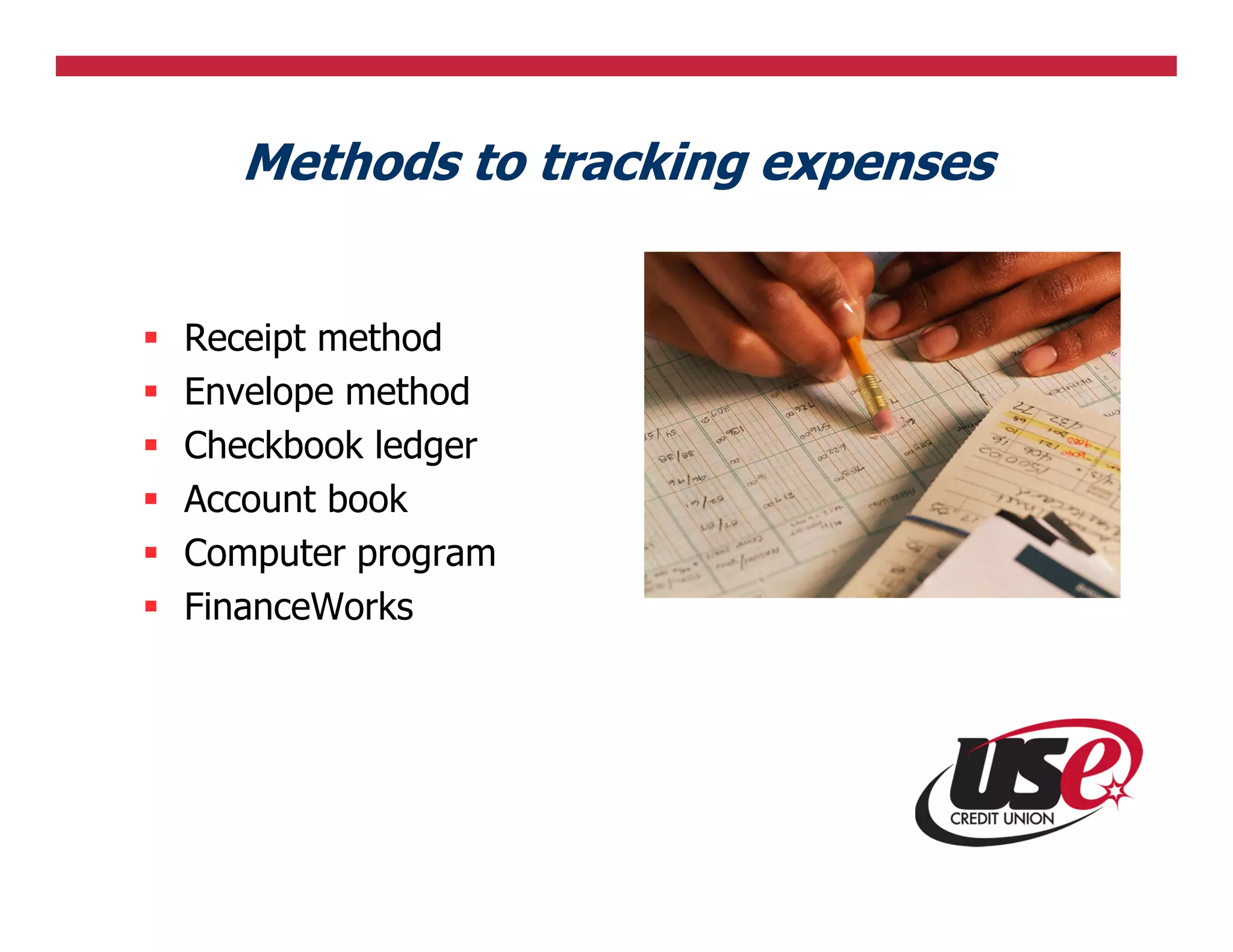
Methods to tracking expenses


Receipt method
Envelope method
Checkbook ledger
Account book
Computer program
FinanceWorks
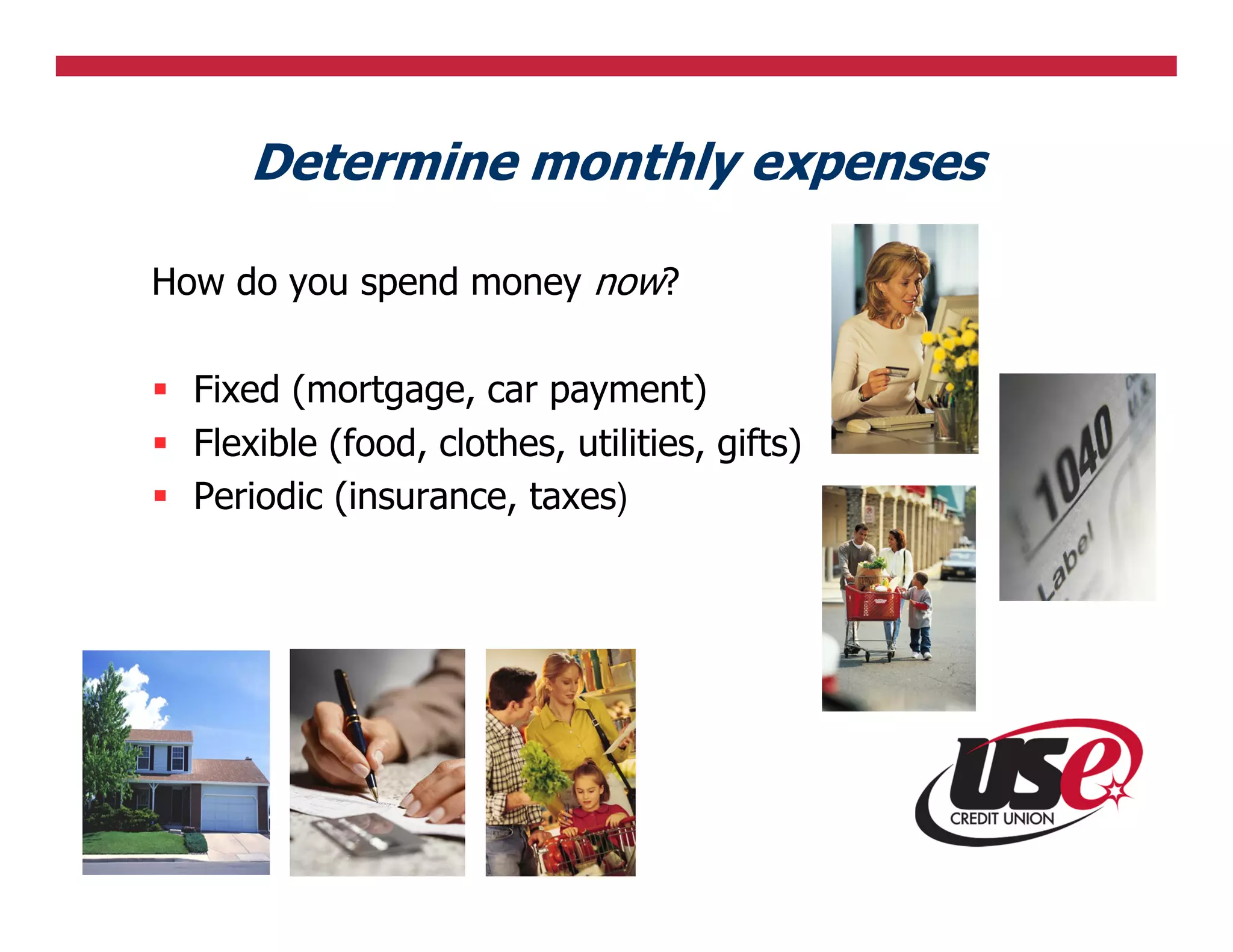
Determine monthly expenses

How do you spend money now?

  Fixed (mortgage, car payment)
  Flexible (food, clothes, utilities, gifts)
  Periodic (insurance, taxes)
Spending Plan Guidelines


 25%
               35%   Housing
                     Savings
                     Transport
                     Debt
15%                  Other

             10%
       15%
Use Credit Wisely
Bad debt means borrowing      money   strictly   for
consumption purposes:


Necessary debt means borrowing money to obtain a
home, a vehicle, or an asset needed in your work.
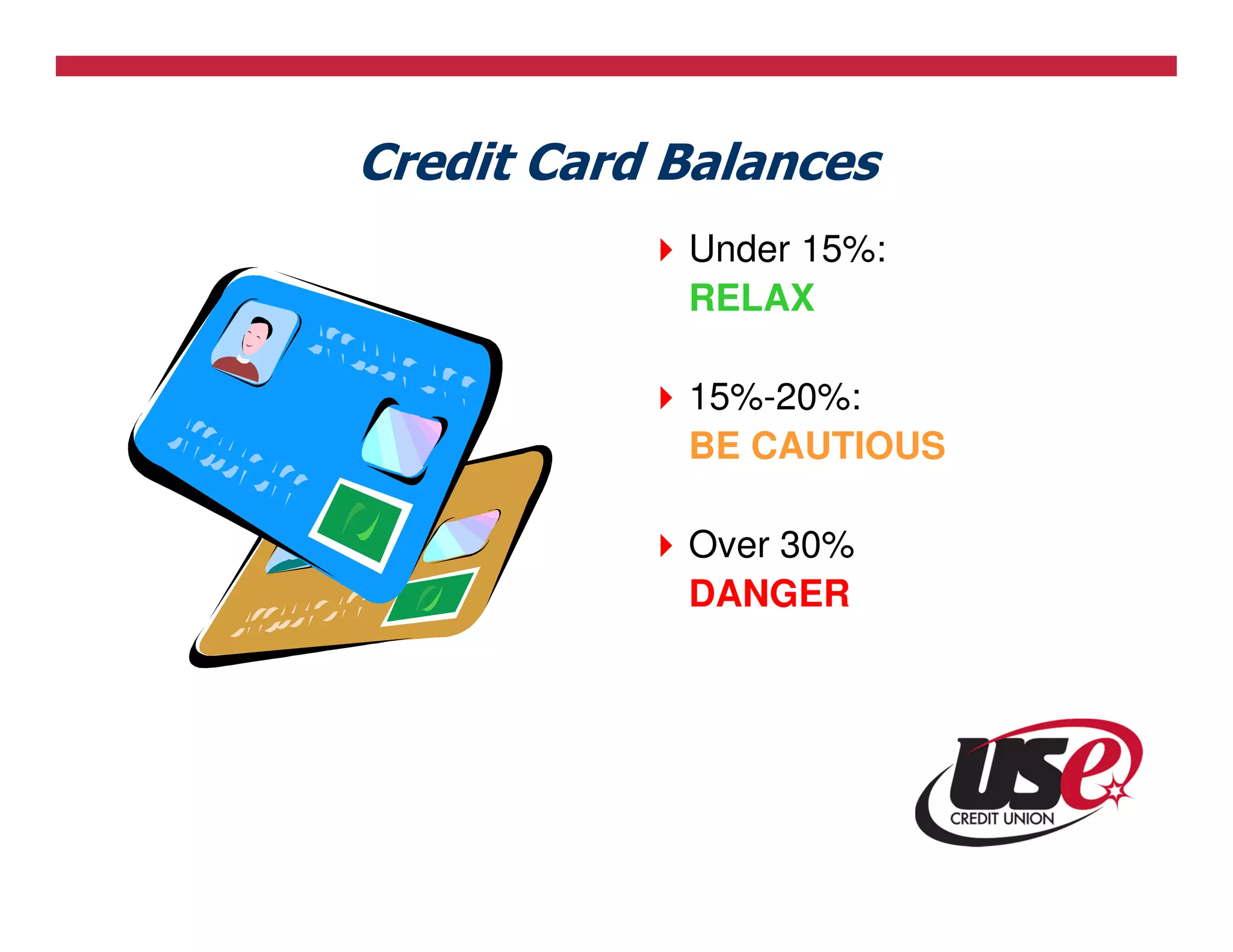
Credit Card Balances
            Under 15%:
            RELAX

            15%-20%:
            BE CAUTIOUS

            Over 30%
            DANGER
Use Credit Wisely
Only charge what you can pay in full
Eliminate late payment fees; pay on time
Understand terms and conditions of each card
Never skip a payment
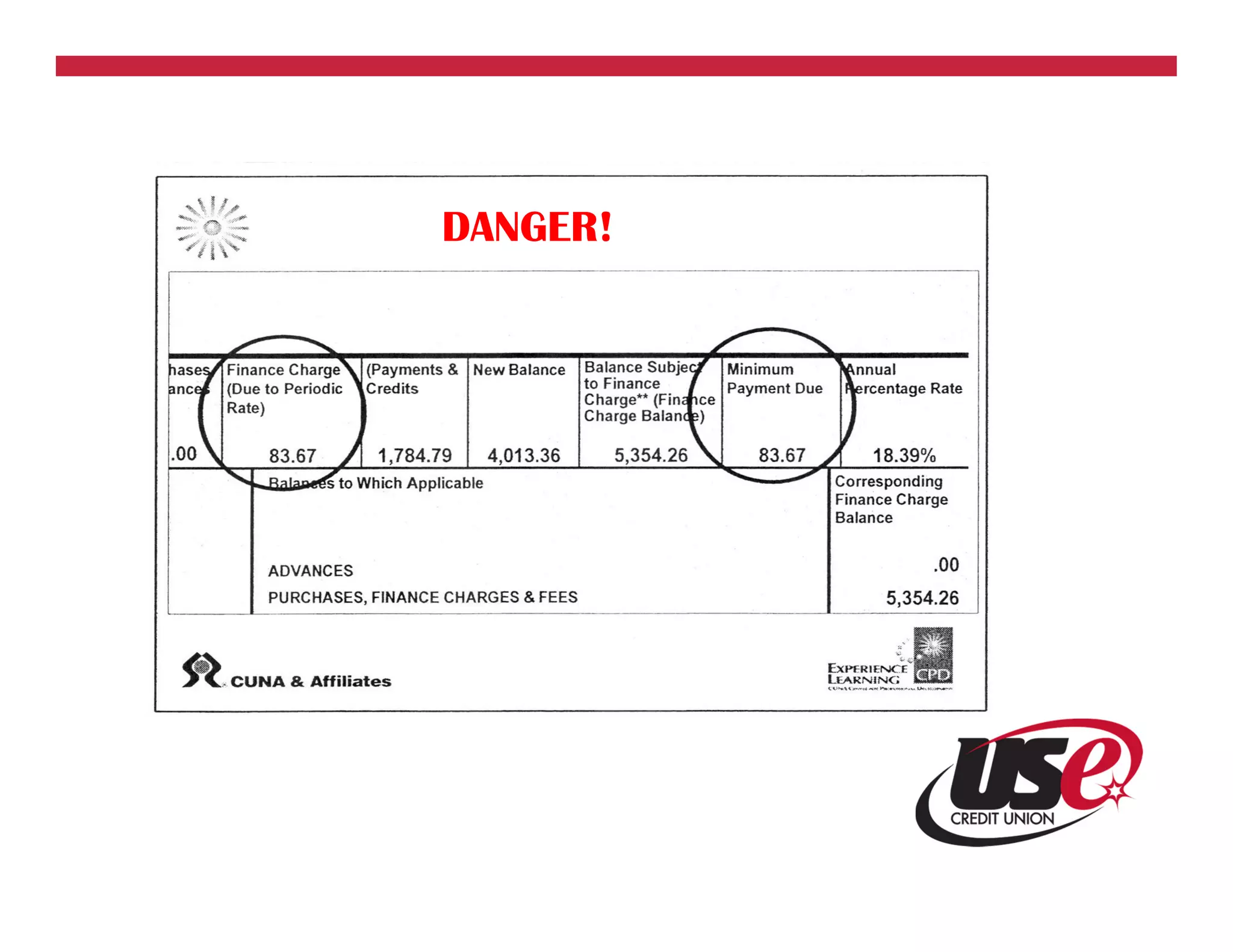
Read the APR on your statement
Avoid credit card check offers!
Know when to use credit vs. debit cards
The Cost of Credit


Outstanding balance              $1,000
Interest rate                    16.9%
Minimum monthly payment          $20.00 (2%)
Years to pay off                 7 YEARS!
Interest cost over loan period   $742.00
The Cost of Credit

Outstanding balance                    $1,000
Interest rate                          16.9%
Minimum monthly payment                $45.00
Years to pay off                 2 years and 3 months
Interest cost over loan period         $208.00

By paying just $25.00 more than the minimum, you
would save over $525 and be paid off 5 years earlier!
DANGER!
Savings
43% of Americans live paycheck to paycheck
50% of Americans have less than $1,000 in liquid assets
Pay yourself first… if you wait to see what’s left over, you
wont ever begin saving
Reasons to Save
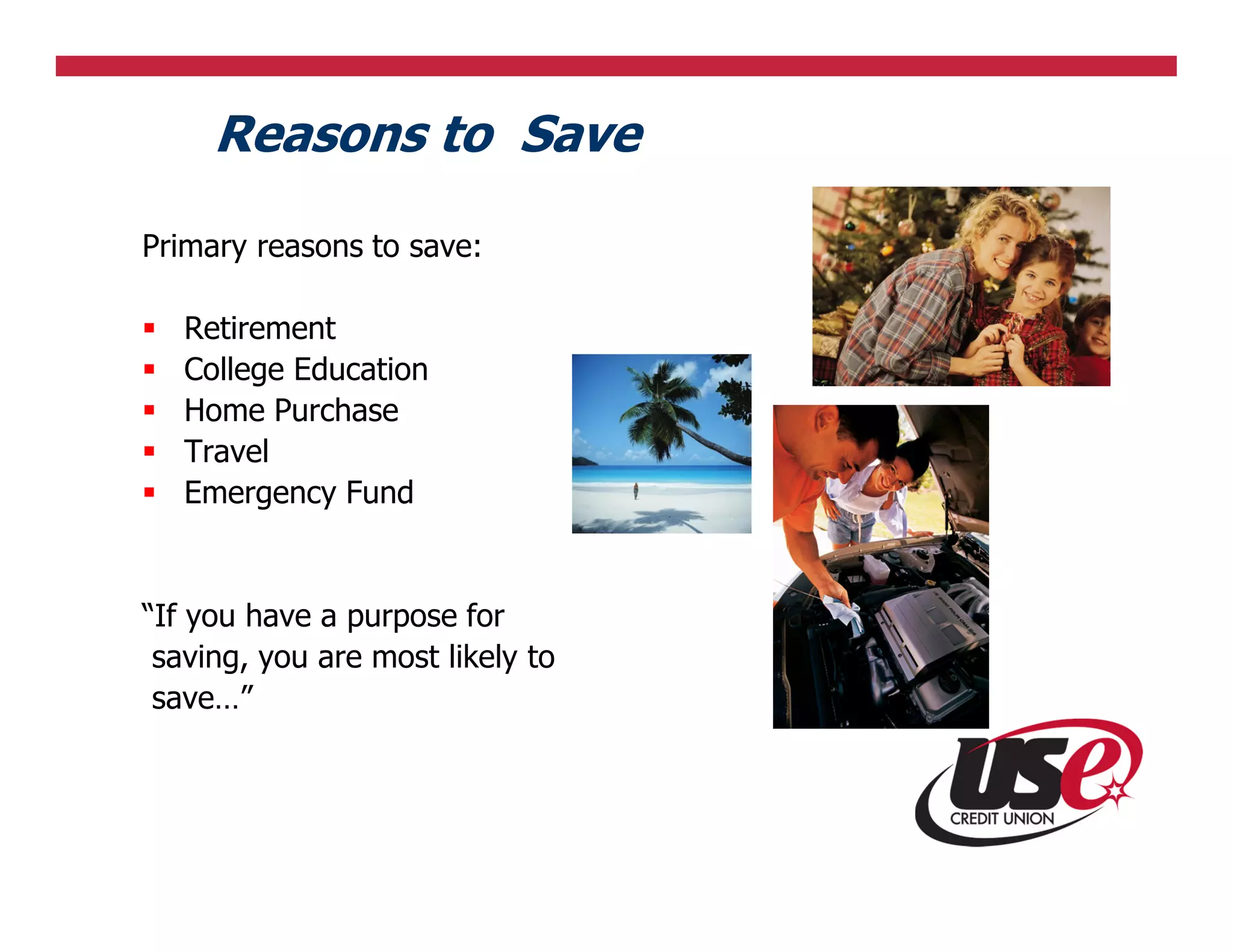
Primary reasons to save:

   Retirement
   College Education
   Home Purchase
   Travel
   Emergency Fund


“If you have a purpose for
 saving, you are most likely to
 save…”
3 Keys to ALL Savings

Spend less than you earn

Savings is an Insulation
   From   the shocks life hands out
   From   natural anxiety about future
   From   loss of integrity
   From   loss of dignity
Watch your Savings Grow
                                                  76,301

Save $50
a Month
 With a
5% Yield
                                        29,775


                              7,764
                     3,400
            614
            1 year   5 year   10 year   25 year   40 year


   The key to successful saving is
           starting early
Financial Freedom


               “Money is only a tool.
It will take you wherever you wish, but it will not
             replace you as the driver”

                            -Ayn Rand.
THANK YOU!

Questions?

Please Fill out the Evaluation Form

Finacial Freedom 12/13/2011

  • 1.
  • 2.
    Today, we willcover, 5 steps to Financial Freedom: Net Worth and Financial Goals Budget Analysis Spending Plans Wise use of Credit Savings
  • 3.
    Where are younow? Take the One-Minute Financial Quiz…
  • 4.
    Assess Your situation NEVER=0 points SOMETIMES- 1 point ALWAYS=2 points 0-10 Points: Indicates a need to take control of your finances. Develop and practice better money management skills. 10-15 Points: Reflects a good effort to effectively manage your money. Determine what changes can be made to improve your financial well- being 16-20 Points: Demonstrates ability to successfully manage your finances. Continue to make money management a priority.
  • 5.
    Benefits of ManagingMoney Free up time Do things you enjoy Less stress Better health Achieve goals Satisfaction Greater control Peace of mind
  • 6.
    TIPS to AchieveFinancial Independence Spend less than you earn Write it down (track what you have and what you owe) Work with professionals (accountant, financial advisors, credit unions and those you trust) Do your own research: (study, listen, research) Define financial freedom: What is your definition? Dream big. How would you spend your life if you were financially independent?
  • 7.
    Your Net Worth Net worth, not income, not lifestyle, is a true measure of your financial health Subtract what you OWE from what you OWN Are you going ahead? Are you falling behind?
  • 8.
    Establish Financial Goals Short-term (within the next six months) Intermediate-term (within the next one to five years) Long-term (more than five years away)
  • 9.
    Set Clear FinancialGoals Dream! SMART GOALS Reduce dreams to writing Specific (SMART goals) Measurable Organize your dreams Adjustable Put plan in action Realistic Celebrate Time-Oriented accomplishments
  • 10.
  • 11.
    Budget Analysis A blueprint of your day to day personal finances: Two key components: – Income – Expenses
  • 12.
    Budgeting: Know whatyou are spending vs. earning Income all sources Expenses Housing Pets Utilities Clothing Food Investments Health & Medical & savings Transportation Miscellaneous Debt Payments Entertain/Recreation Surplus/ Shortage
  • 13.
    Where does yourmoney go? The little things add up…
  • 14.
    Methods to trackingexpenses Receipt method Envelope method Checkbook ledger Account book Computer program FinanceWorks
  • 15.
    Determine monthly expenses Howdo you spend money now? Fixed (mortgage, car payment) Flexible (food, clothes, utilities, gifts) Periodic (insurance, taxes)
  • 16.
    Spending Plan Guidelines 25% 35% Housing Savings Transport Debt 15% Other 10% 15%
  • 18.
    Use Credit Wisely Baddebt means borrowing money strictly for consumption purposes: Necessary debt means borrowing money to obtain a home, a vehicle, or an asset needed in your work.
  • 19.
    Credit Card Balances Under 15%: RELAX 15%-20%: BE CAUTIOUS Over 30% DANGER
  • 20.
    Use Credit Wisely Onlycharge what you can pay in full Eliminate late payment fees; pay on time Understand terms and conditions of each card Never skip a payment Read the APR on your statement Avoid credit card check offers! Know when to use credit vs. debit cards
  • 21.
    The Cost ofCredit Outstanding balance $1,000 Interest rate 16.9% Minimum monthly payment $20.00 (2%) Years to pay off 7 YEARS! Interest cost over loan period $742.00
  • 22.
    The Cost ofCredit Outstanding balance $1,000 Interest rate 16.9% Minimum monthly payment $45.00 Years to pay off 2 years and 3 months Interest cost over loan period $208.00 By paying just $25.00 more than the minimum, you would save over $525 and be paid off 5 years earlier!
  • 23.
  • 24.
    Savings 43% of Americanslive paycheck to paycheck 50% of Americans have less than $1,000 in liquid assets Pay yourself first… if you wait to see what’s left over, you wont ever begin saving
  • 25.
    Reasons to Save Primaryreasons to save: Retirement College Education Home Purchase Travel Emergency Fund “If you have a purpose for saving, you are most likely to save…”
  • 26.
    3 Keys toALL Savings Spend less than you earn Spend less than you earn Spend less than you earn Savings is an Insulation From the shocks life hands out From natural anxiety about future From loss of integrity From loss of dignity
  • 27.
    Watch your SavingsGrow 76,301 Save $50 a Month With a 5% Yield 29,775 7,764 3,400 614 1 year 5 year 10 year 25 year 40 year The key to successful saving is starting early
  • 28.
    Financial Freedom “Money is only a tool. It will take you wherever you wish, but it will not replace you as the driver” -Ayn Rand.
  • 29.
    THANK YOU! Questions? Please Fillout the Evaluation Form