”AID FOR TRADE: Pavingtheway
for futureinvestments and
Growth in Africa”
Janvier M. Nzigo
WHY POVERTY IN AFRICA:
1. Colonial Period
2. Independence and Post-Independence period
3. Africa and Cold war
4. Bad governance; which has brought/ influence:
• Absolute poverty
• High level of unemployment
• High level of inequality
• Lack of Human capital structures
(…)
• Foreign debt: USD 300 billions, in 2009
(NEPAD)
• Wars, Conflicts and uprisings (47 countries
since independence)
• Bad (or non existing) infrastructures
• Capital flight
• Lack of Trade and FDI
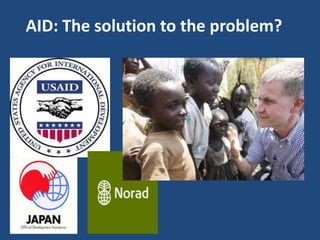
AID: The solution to the problem?
• The USA gives +/- USD 25 billions per year
• Germany: USD 13 billions
• Scandinavian countries, Luxembourg and the
Netherlands gives each 1% of their GNI to aid
• Other OECD countries: 0.7%
• ”Over thepast 60 years at least $1 trillion
ofdevelopment-relatedaid has beentransferred
from richcountries to Africa.” (DambisaMoyo)
Case: Fighting Malaria
• An estimated 3.3 billion people throughout the
globe were at risk of malaria in 2010.
• Malaria has been reduced worldwide
by approximately 17% since 2000.
• 91% of all malaria deaths worldwide occur in Africa.
• Delivery of insecticide-treated bed nets (ITNs) has
risen from 5.6 million in 2004 to 145 million in
2010.
• The most effective treatment for malaria (ACT) has
increased in availability from 11.2 million in 2005 to
181 million in 2010.
• MileniumDevelopment Goals:
- The Africancontinent has thehighestimprovements
in terms ofaccess to education for women and girls.
MDG 2 (Achieve Universal Primary Education is
most likely to be achieved by 2015)
- ”With onlythreeyearsleft to achievethe Millennium
Development Goals, Africa is reportingmixed
progress in achievingthegoals: there is still a lot
ofwork to do in specific areas such as gender and
health, and manychallengesremain…”
Mr. Nnadozie, UNECA Press Release No010/2012
REMITTANCES: an alternative solution (?)
• Remittancesdominateaidyetremainunspoken
• The World Bank believes global remittanceswill be
close to $600 billion a year.
• ”Money transfers from workersabroad to family
back home have tripled in a decade and arethree
times largerthan global aidbudgets”. – The
Guardian
• AID has helped reduce child and maternal mortality,
malaria and other deadly diseases
• AID has helped African countries to score points on
the Millennium development goals
• AID has helped maintain poor countries budgets;…
• But, after 60 years AID did not lift Africa out of
poverty
IS IT THE TIME TO TRY SOMETHING ELSE?
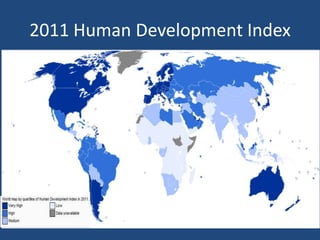
2011 Human Development Index
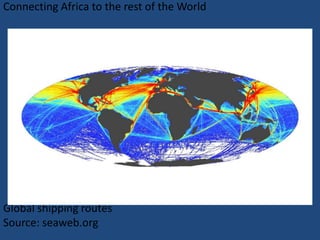
Connecting Africa to the rest of the World
Global shipping routes
Source: seaweb.org
• ” Africa is disconnected from the global economy,
which is very bad news for a continent that
desperately needs international trade (the
disconnection is both symptom and cause of the
lack of trade). Lack of international trade = poverty
for small economies. This lack of trade links reflects
many factors:rich country protectionism, domestic
policies on customs & tariffs & foreign investment,
poor port and road infrastructure, thus very high
land transport costs within Africa, barriers crossing
borders within Africa; Africa stereotypes that
discourage foreign investors and so on…
- William Easterly
Africa’slioneconomies
The Africancontinent is thenextfrontier. With
sevenoftheten fastest growingeconomiesofthe
world beingAfricancountries, this is a market
thatcan not be overlooked by Norwegian
investors or
companieswithinternationalambitions.
- NABA
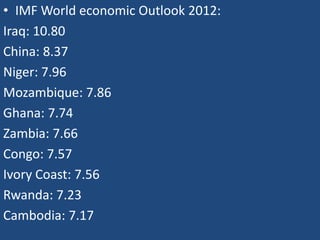
• IMF World economic Outlook 2012:
Iraq: 10.80
China: 8.37
Niger: 7.96
Mozambique: 7.86
Ghana: 7.74
Zambia: 7.66
Congo: 7.57
Ivory Coast: 7.56
Rwanda: 7.23
Cambodia: 7.17
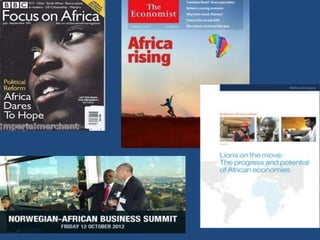
WHY INVESTMENTS IN AFRICA
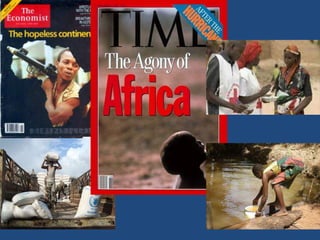
• From “the Hopeless continent” to “Africa rising (The
economist)
• Massive Chinese investments in a decade
• “100 millions Africans lives like an average Norwegian”
(Aftenposten, Web edition Dec 24, 2010)
- In contrast to Aid, Investments creates job opportunities
- Jobs generates economic growth
- Investments lifts people from poverty to middleclass.
• OnlyfourAfricancountrieswereembroiled in
armedconflict in 2010, comparedwith 14 at the
end ofthe 1990s. (Ban Ki-Moon, july 2010)
• In 22 countriesofsub-SaharanAfrica, the HIV
incidence rate declined by more than 25
percentbetween 2001 and 2009 (UNAidsreports)
• And the most under-communicatednewsflash is
this: Africa is currentlyoneoftheworld’sfastest-
growing regions in the world.
SUSTAINABLE INVESTMENT
• CSR and Local Content: The Norwegian way
• Respecting international Laws on Trade,
Human rights
• Example: STATOIL in Angola (23 out of 46 are
locals)
AID+ INVESTMENTS
• Aid that focuses on Education, the Environment
and the transfer of technology
• Aid that pave the way for future investments
• WHY EDUCATION?
Innovation
Knowledge transmission
Natural resources management
Self discipline
Modernity
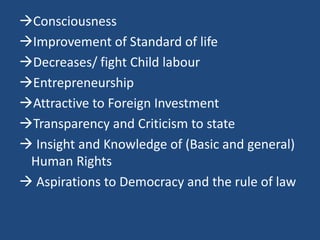
Consciousness
Improvement of Standard of life
Decreases/ fight Child labour
Entrepreneurship
Attractive to Foreign Investment
Transparency and Criticism to state
 Insight and Knowledge of (Basic and general)
Human Rights
 Aspirations to Democracy and the rule of law
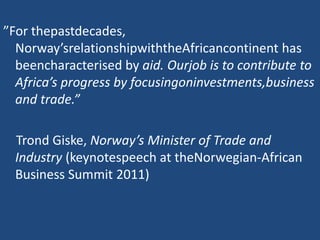
”For thepastdecades,
Norway’srelationshipwiththeAfricancontinent has
beencharacterised by aid. Ourjob is to contribute to
Africa’s progress by focusingoninvestments,business
and trade.”
Trond Giske, Norway’s Minister of Trade and
Industry (keynotespeech at theNorwegian-African
Business Summit 2011)
www.investinafrica.no

"Aid for Trade: The NABA perspective" by Janvier Nzigo (Norwegian-African Business Association)

  • 1.
    ”AID FOR TRADE:Pavingtheway for futureinvestments and Growth in Africa” Janvier M. Nzigo
  • 3.
    WHY POVERTY INAFRICA: 1. Colonial Period 2. Independence and Post-Independence period 3. Africa and Cold war 4. Bad governance; which has brought/ influence: • Absolute poverty • High level of unemployment • High level of inequality • Lack of Human capital structures (…)
  • 4.
    • Foreign debt:USD 300 billions, in 2009 (NEPAD) • Wars, Conflicts and uprisings (47 countries since independence) • Bad (or non existing) infrastructures • Capital flight • Lack of Trade and FDI
  • 5.
    AID: The solutionto the problem?
  • 6.
    • The USAgives +/- USD 25 billions per year • Germany: USD 13 billions • Scandinavian countries, Luxembourg and the Netherlands gives each 1% of their GNI to aid • Other OECD countries: 0.7% • ”Over thepast 60 years at least $1 trillion ofdevelopment-relatedaid has beentransferred from richcountries to Africa.” (DambisaMoyo)
  • 7.
    Case: Fighting Malaria •An estimated 3.3 billion people throughout the globe were at risk of malaria in 2010. • Malaria has been reduced worldwide by approximately 17% since 2000. • 91% of all malaria deaths worldwide occur in Africa. • Delivery of insecticide-treated bed nets (ITNs) has risen from 5.6 million in 2004 to 145 million in 2010. • The most effective treatment for malaria (ACT) has increased in availability from 11.2 million in 2005 to 181 million in 2010.
  • 8.
    • MileniumDevelopment Goals: -The Africancontinent has thehighestimprovements in terms ofaccess to education for women and girls. MDG 2 (Achieve Universal Primary Education is most likely to be achieved by 2015) - ”With onlythreeyearsleft to achievethe Millennium Development Goals, Africa is reportingmixed progress in achievingthegoals: there is still a lot ofwork to do in specific areas such as gender and health, and manychallengesremain…” Mr. Nnadozie, UNECA Press Release No010/2012
  • 9.
    REMITTANCES: an alternativesolution (?) • Remittancesdominateaidyetremainunspoken • The World Bank believes global remittanceswill be close to $600 billion a year. • ”Money transfers from workersabroad to family back home have tripled in a decade and arethree times largerthan global aidbudgets”. – The Guardian
  • 10.
    • AID hashelped reduce child and maternal mortality, malaria and other deadly diseases • AID has helped African countries to score points on the Millennium development goals • AID has helped maintain poor countries budgets;… • But, after 60 years AID did not lift Africa out of poverty IS IT THE TIME TO TRY SOMETHING ELSE?
  • 11.
  • 12.
    Connecting Africa tothe rest of the World Global shipping routes Source: seaweb.org
  • 13.
    • ” Africais disconnected from the global economy, which is very bad news for a continent that desperately needs international trade (the disconnection is both symptom and cause of the lack of trade). Lack of international trade = poverty for small economies. This lack of trade links reflects many factors:rich country protectionism, domestic policies on customs & tariffs & foreign investment, poor port and road infrastructure, thus very high land transport costs within Africa, barriers crossing borders within Africa; Africa stereotypes that discourage foreign investors and so on… - William Easterly
  • 14.
    Africa’slioneconomies The Africancontinent isthenextfrontier. With sevenoftheten fastest growingeconomiesofthe world beingAfricancountries, this is a market thatcan not be overlooked by Norwegian investors or companieswithinternationalambitions. - NABA
  • 15.
    • IMF Worldeconomic Outlook 2012: Iraq: 10.80 China: 8.37 Niger: 7.96 Mozambique: 7.86 Ghana: 7.74 Zambia: 7.66 Congo: 7.57 Ivory Coast: 7.56 Rwanda: 7.23 Cambodia: 7.17
  • 17.
    WHY INVESTMENTS INAFRICA • From “the Hopeless continent” to “Africa rising (The economist) • Massive Chinese investments in a decade • “100 millions Africans lives like an average Norwegian” (Aftenposten, Web edition Dec 24, 2010) - In contrast to Aid, Investments creates job opportunities - Jobs generates economic growth - Investments lifts people from poverty to middleclass.
  • 18.
    • OnlyfourAfricancountrieswereembroiled in armedconflictin 2010, comparedwith 14 at the end ofthe 1990s. (Ban Ki-Moon, july 2010) • In 22 countriesofsub-SaharanAfrica, the HIV incidence rate declined by more than 25 percentbetween 2001 and 2009 (UNAidsreports) • And the most under-communicatednewsflash is this: Africa is currentlyoneoftheworld’sfastest- growing regions in the world.
  • 19.
    SUSTAINABLE INVESTMENT • CSRand Local Content: The Norwegian way • Respecting international Laws on Trade, Human rights • Example: STATOIL in Angola (23 out of 46 are locals)
  • 20.
    AID+ INVESTMENTS • Aidthat focuses on Education, the Environment and the transfer of technology • Aid that pave the way for future investments • WHY EDUCATION? Innovation Knowledge transmission Natural resources management Self discipline Modernity
  • 21.
    Consciousness Improvement of Standardof life Decreases/ fight Child labour Entrepreneurship Attractive to Foreign Investment Transparency and Criticism to state  Insight and Knowledge of (Basic and general) Human Rights  Aspirations to Democracy and the rule of law
  • 22.
    ”For thepastdecades, Norway’srelationshipwiththeAfricancontinent has beencharacterisedby aid. Ourjob is to contribute to Africa’s progress by focusingoninvestments,business and trade.” Trond Giske, Norway’s Minister of Trade and Industry (keynotespeech at theNorwegian-African Business Summit 2011)
  • 23.