MYP
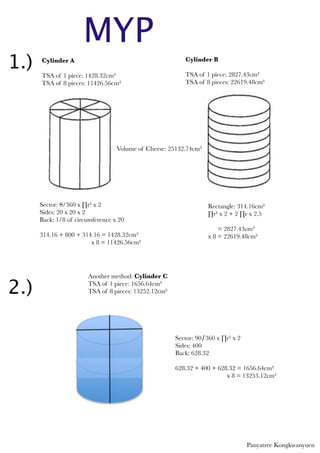
1.)   Cylinder A

      TSA of 1 piece: 1428.32cm²
                                                         Cylinder B

                                                         TSA of 1 piece: 2827.43cm²
      TSA of 8 pieces: 11426.56cm²                       TSA of 8 pieces: 22619.48cm²


                                  Volume of Cheese: 25132.74cm²


      Sector: θ/360 x ∏r² x 2                                     Rectangle: 314.16cm²
      Sides: 20 x 20 x 2                                          ∏r² x 2 + 2 ∏r x 2.5
      Back: 1/8 of circumference x 20
                                                                      = 2827.43cm²
      314.16 + 800 + 314.16 = 1428.32cm²                          x 8 = 22619.48cm²
      
      
          x 8 = 11426.56cm²


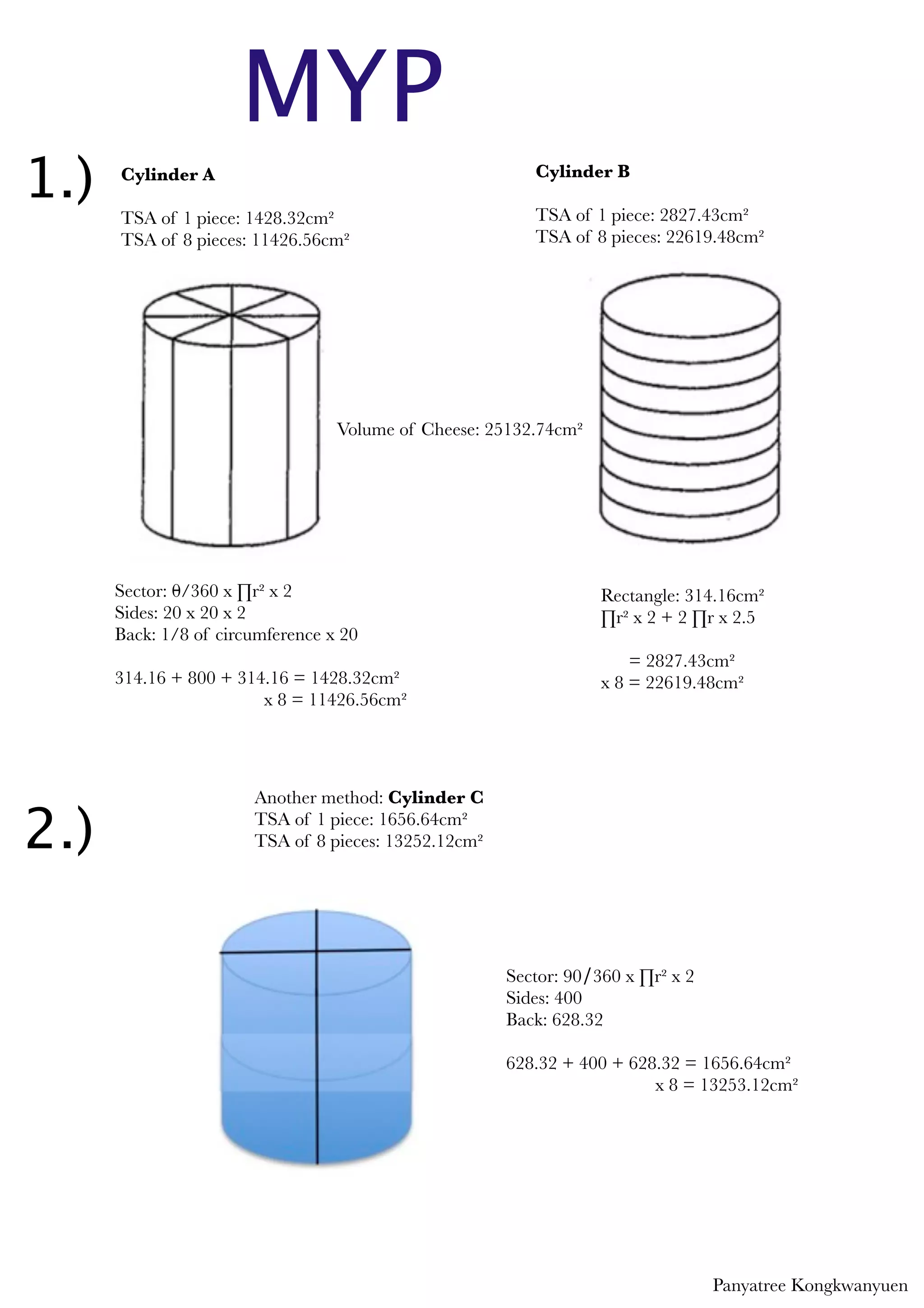
                       Another method: Cylinder C

2.)                    TSA of 1 piece: 1656.64cm²
                       TSA of 8 pieces: 13252.12cm²


                                                      Sector: 90∕360 x ∏r² x 2
                                                      Sides: 400
                                                      Back: 628.32

                                                      628.32 + 400 + 628.32 = 1656.64cm²
                                                      
      
          x 8 = 13253.12cm²


                                                                                 Panyatree Kongkwanyuen
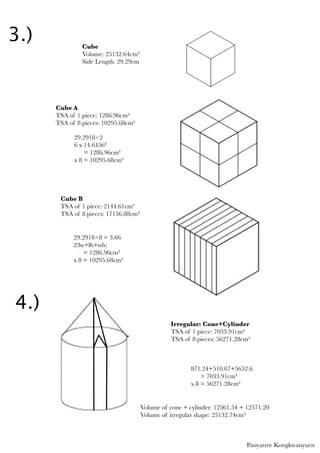
3.)            Cube
               Volume: 25132.64cm³
               Side Length: 29.29cm


      Cube A
      TSA of 1 piece: 1286.96cm²
      TSA of 8 pieces: 10295.68cm²

            29.2918÷2
            6 x 14.6456²
                = 1286.96cm²
            x 8 = 10295.68cm²


       Cube B
       TSA of 1 piece: 2144.61cm²
       TSA of 8 pieces: 17156.88cm²


            29.2918÷8 = 3.66
            2(lw+lh+wh)
                = 1286.96cm²
            x 8 = 10295.68cm²


4.)
                                                Irregular: Cone+Cylinder
                                                TSA of 1 piece: 7033.91cm²
                                                TSA of 8 pieces: 56271.28cm²


                                                        871.24+510.07+5652.6
                                                            = 7033.91cm²
                                                        x 8 = 56271.28cm²


                                      Volume of cone + cylinder: 12561.54 + 12571.20
                                      Volume of irregular shape: 25132.74cm³


                                                                           Panyatree Kongkwanyuen
Table
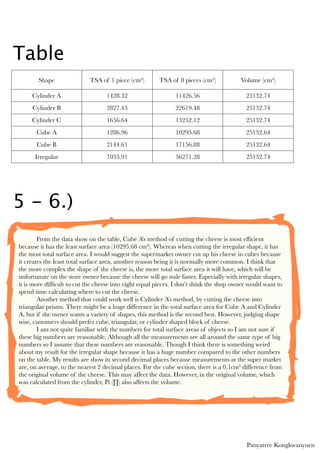
       Shape                TSA of 1 piece (cm²)        TSA of 8 pieces (cm²)           Volume (cm³)

     Cylinder A                    1428.32                    11426.56                    25132.74
     Cylinder B                    2827.43                    22619.48                    25132.74
     Cylinder C                    1656.64                    13252.12                    25132.74
       Cube A                      1286.96                    10295.68                    25132.64
       Cube B                      2144.61                    17156.88                    25132.64
      Irregular                    7033.91                    56271.28                    25132.74


5 - 6.)
  	

       From the data show on the table, Cube A’s method of cutting the cheese is most efficient
because it has the least surface area (10295.68 cm²). Whereas when cutting the irregular shape, it has
the most total surface area. I would suggest the supermarket owner cut up his cheese in cubes because
it creates the least total surface area, another reason being it is normally more common. I think that
the more complex the shape of the cheese is, the more total surface area it will have, which will be
unfortunate on the store owner because the cheese will go stale faster. Especially with irregular shapes,
it is more difficult to cut the cheese into eight equal pieces. I don’t think the shop owner would want to
spend time calculating where to cut the cheese.

       Another method that could work well is Cylinder A’s method, by cutting the cheese into
triangular prisms. There might be a huge difference in the total surface area for Cube A and Cylinder
A, but if the owner wants a variety of shapes, this method is the second best. However, judging shape
wise, customers should prefer cube, triangular, or cylinder shaped block of cheese.

       I am not quite familiar with the numbers for total surface areas of objects so I am not sure if
these big numbers are reasonable. Although all the measurements are all around the same type of big
numbers so I assume that these numbers are reasonable. Though I think there is something weird
about my result for the irregular shape because it has a huge number compared to the other numbers
on the table. My results are show in second decimal places because measurements at the super market
are, on average, to the nearest 2 decimal places. For the cube section, there is a 0.1cm² difference from
the original volume of the cheese. This may affect the data. However, in the original volume, which
was calculated from the cylinder, Pi (∏) also affects the volume.


                                                                                          Panyatree Kongkwanyuen

MYP Cheese Assignment

  • 1.
    MYP 1.) Cylinder A TSA of 1 piece: 1428.32cm² Cylinder B TSA of 1 piece: 2827.43cm² TSA of 8 pieces: 11426.56cm² TSA of 8 pieces: 22619.48cm² Volume of Cheese: 25132.74cm² Sector: θ/360 x ∏r² x 2 Rectangle: 314.16cm² Sides: 20 x 20 x 2 ∏r² x 2 + 2 ∏r x 2.5 Back: 1/8 of circumference x 20 = 2827.43cm² 314.16 + 800 + 314.16 = 1428.32cm² x 8 = 22619.48cm² x 8 = 11426.56cm² Another method: Cylinder C 2.) TSA of 1 piece: 1656.64cm² TSA of 8 pieces: 13252.12cm² Sector: 90∕360 x ∏r² x 2 Sides: 400 Back: 628.32 628.32 + 400 + 628.32 = 1656.64cm² x 8 = 13253.12cm² Panyatree Kongkwanyuen
  • 2.
    3.) Cube Volume: 25132.64cm³ Side Length: 29.29cm Cube A TSA of 1 piece: 1286.96cm² TSA of 8 pieces: 10295.68cm² 29.2918÷2 6 x 14.6456² = 1286.96cm² x 8 = 10295.68cm² Cube B TSA of 1 piece: 2144.61cm² TSA of 8 pieces: 17156.88cm² 29.2918÷8 = 3.66 2(lw+lh+wh) = 1286.96cm² x 8 = 10295.68cm² 4.) Irregular: Cone+Cylinder TSA of 1 piece: 7033.91cm² TSA of 8 pieces: 56271.28cm² 871.24+510.07+5652.6 = 7033.91cm² x 8 = 56271.28cm² Volume of cone + cylinder: 12561.54 + 12571.20 Volume of irregular shape: 25132.74cm³ Panyatree Kongkwanyuen
  • 3.
    Table Shape TSA of 1 piece (cm²) TSA of 8 pieces (cm²) Volume (cm³) Cylinder A 1428.32 11426.56 25132.74 Cylinder B 2827.43 22619.48 25132.74 Cylinder C 1656.64 13252.12 25132.74 Cube A 1286.96 10295.68 25132.64 Cube B 2144.61 17156.88 25132.64 Irregular 7033.91 56271.28 25132.74 5 - 6.) From the data show on the table, Cube A’s method of cutting the cheese is most efficient because it has the least surface area (10295.68 cm²). Whereas when cutting the irregular shape, it has the most total surface area. I would suggest the supermarket owner cut up his cheese in cubes because it creates the least total surface area, another reason being it is normally more common. I think that the more complex the shape of the cheese is, the more total surface area it will have, which will be unfortunate on the store owner because the cheese will go stale faster. Especially with irregular shapes, it is more difficult to cut the cheese into eight equal pieces. I don’t think the shop owner would want to spend time calculating where to cut the cheese. Another method that could work well is Cylinder A’s method, by cutting the cheese into triangular prisms. There might be a huge difference in the total surface area for Cube A and Cylinder A, but if the owner wants a variety of shapes, this method is the second best. However, judging shape wise, customers should prefer cube, triangular, or cylinder shaped block of cheese. I am not quite familiar with the numbers for total surface areas of objects so I am not sure if these big numbers are reasonable. Although all the measurements are all around the same type of big numbers so I assume that these numbers are reasonable. Though I think there is something weird about my result for the irregular shape because it has a huge number compared to the other numbers on the table. My results are show in second decimal places because measurements at the super market are, on average, to the nearest 2 decimal places. For the cube section, there is a 0.1cm² difference from the original volume of the cheese. This may affect the data. However, in the original volume, which was calculated from the cylinder, Pi (∏) also affects the volume. Panyatree Kongkwanyuen